 yupi-translate-app[bot]
15 KiB
AI Model Selection Guide
Hello, I'm Yupi.
We've already explored the three main types of AI programming tools. Whether you choose a no-code platform, a code editor, or a command-line tool, they all share a common core — AI models.
You might be curious:
- In Cursor, you can choose between Claude, ChatGPT, and Gemini. What are the differences between them?
- Why do some people say Claude is the best for programming, while others recommend ChatGPT?
- Are domestic large models reliable? How big is the gap compared to international models?
Don't worry, in this article, I'll explain the characteristics of mainstream AI models in the most straightforward way and guide you on how to choose the right model based on your needs.
It's important to note that AI models evolve quickly. The content of this article is based on the situation as of January 2026. New models may emerge in the future, or the capabilities of existing models may change. Therefore, it's essential to stay updated on the latest developments and adjust your choices flexibly.
1. What is an AI Model?
First, let's clarify a basic concept: What is an AI model?
Simply put, an AI model is the "brain" behind Vibe Coding tools.
When you input a requirement into an AI programming tool, it's the AI model that understands what you're saying; when you see the generated code, it's also written by the AI model. Different AI models are like experts in different fields, each with their own strengths. Some are good at writing code, some are good at organizing literature, some are fast, and some produce high-quality results.
To put it another way:
- AI programming tools (Cursor, Bolt.new) = Workbench
- AI models (Claude, ChatGPT) = Programmers sitting at the workbench
So, even when using Cursor, choosing Claude versus ChatGPT is like hiring two programmers with different styles to write code for you, and the final results will naturally differ.

2. Mainstream AI Models
As of January 2026, the market is rich with AI models. Based on their origin and positioning, they can be divided into three major camps:
- International top-tier models: The three giants — Claude, ChatGPT, and Gemini
- Domestic excellent models: Cost-effective options like DeepSeek, Zhipu GLM, Tongyi Qianwen, Kimi, etc.
- Open-source models: Llama, Qwen, etc., which require some technical expertise to deploy
For learning Vibe Coding, focusing on the first two categories is sufficient. Open-source models, while flexible, have higher configuration and usage barriers and are less suitable for beginners.
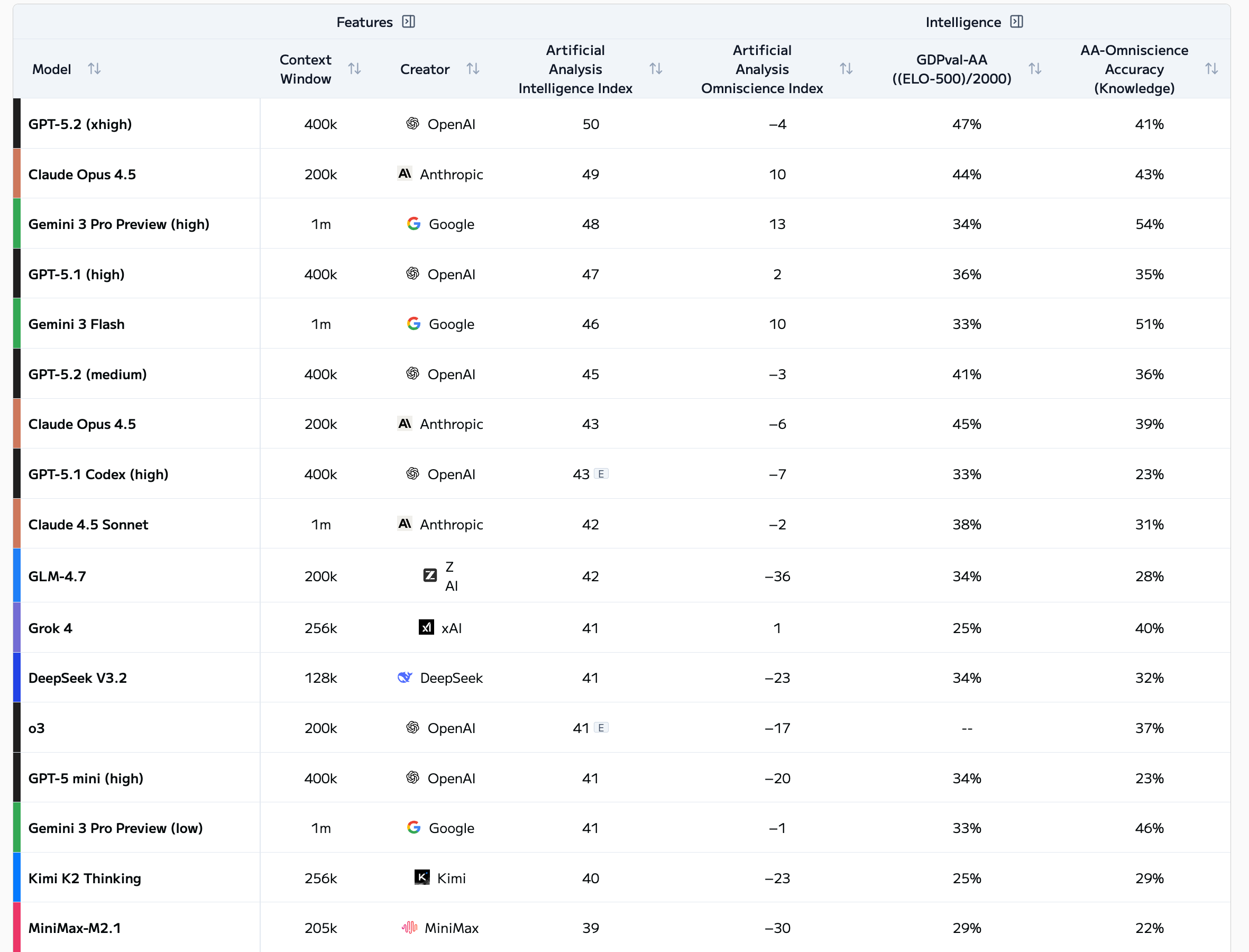
Next, I'll introduce the characteristics of these mainstream models one by one to help you find the one that best suits your needs.
3. Claude — The Strongest Coding Capability
Claude 4.5, launched by Anthropic in 2025, remains the most recognized AI model for programming as of January 2026.
Claude 4.5 mainly has two versions: Opus 4.5 is the top-tier version with the strongest programming capabilities but slower speed and higher cost; Sonnet 4.5 is a balanced version that strikes a good balance between performance and speed, offering the best value for money.
Why is Claude the Best for Programming?
In the authoritative SWE-bench (Software Engineering Benchmark), Claude Opus 4.5 scored higher than GPT-5 and Gemini 3 Pro, firmly securing its position as the SOTA (State of the Art) in the programming field. Specifically, Claude excels in code understanding, refactoring, debugging, and more. It accurately understands complex code logic, is adept at optimizing and improving existing code, quickly locates and fixes bugs, and has excellent contextual memory, making it less prone to forgetting.
These advantages make Claude particularly suitable for developers who need high-quality code, those working on complex projects, and scenarios where code quality is critical.
Of course, this assumes your budget is sufficient.
Pricing and Access Methods
Claude mainly offers three usage methods:
- Official subscription: Claude Pro at $20 per month (approximately ¥145)
- Through Cursor: Subscribing to Cursor Pro at $20 per month includes Claude usage credits
- API calls: Pay-as-you-go based on Token usage, offering flexibility
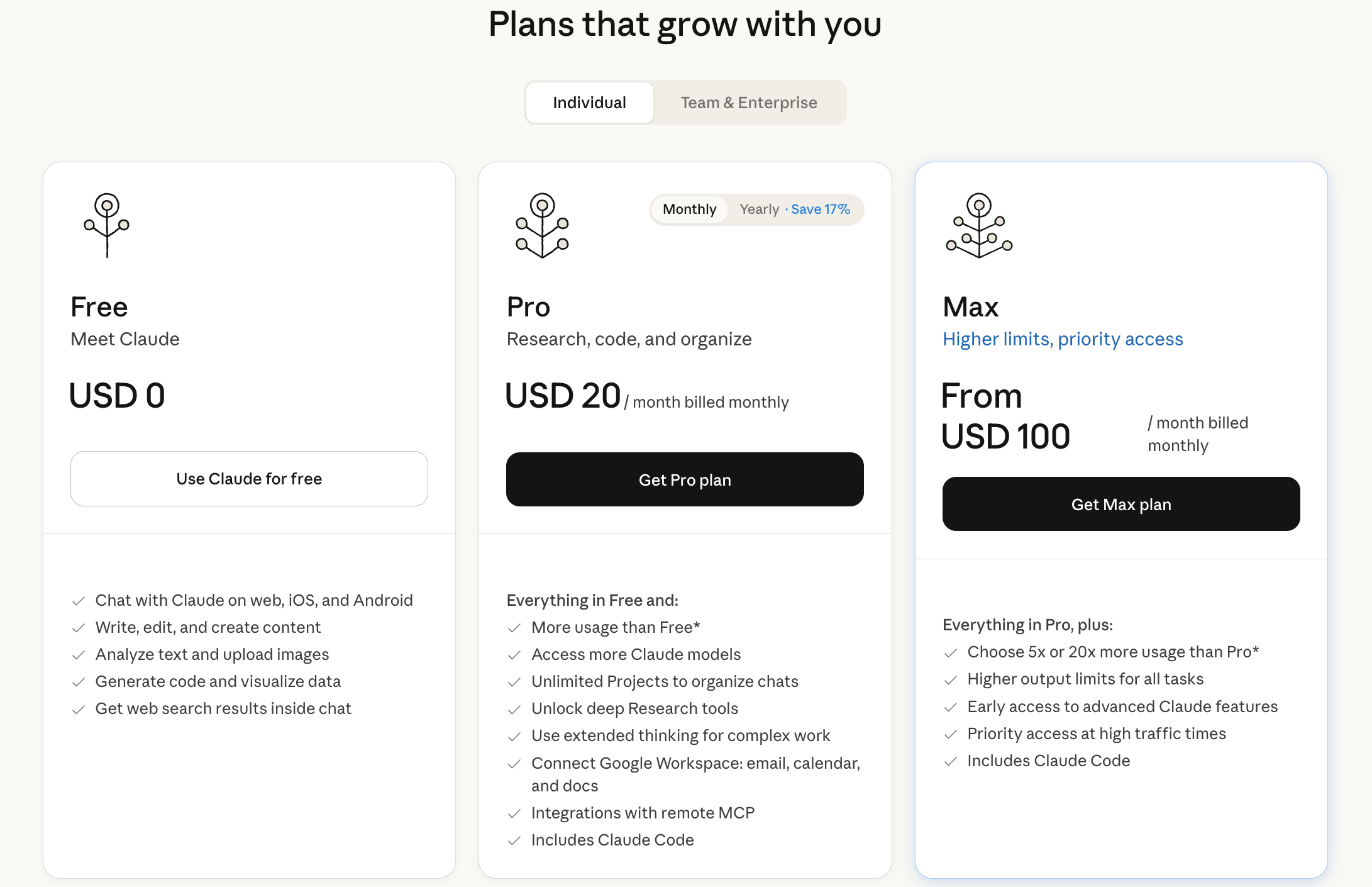
If you're serious about learning Vibe Coding and want to build a commercial-grade product, I recommend subscribing to Cursor Pro. For the same $20, you not only get access to Claude but can also switch to other models, offering the best value for money.
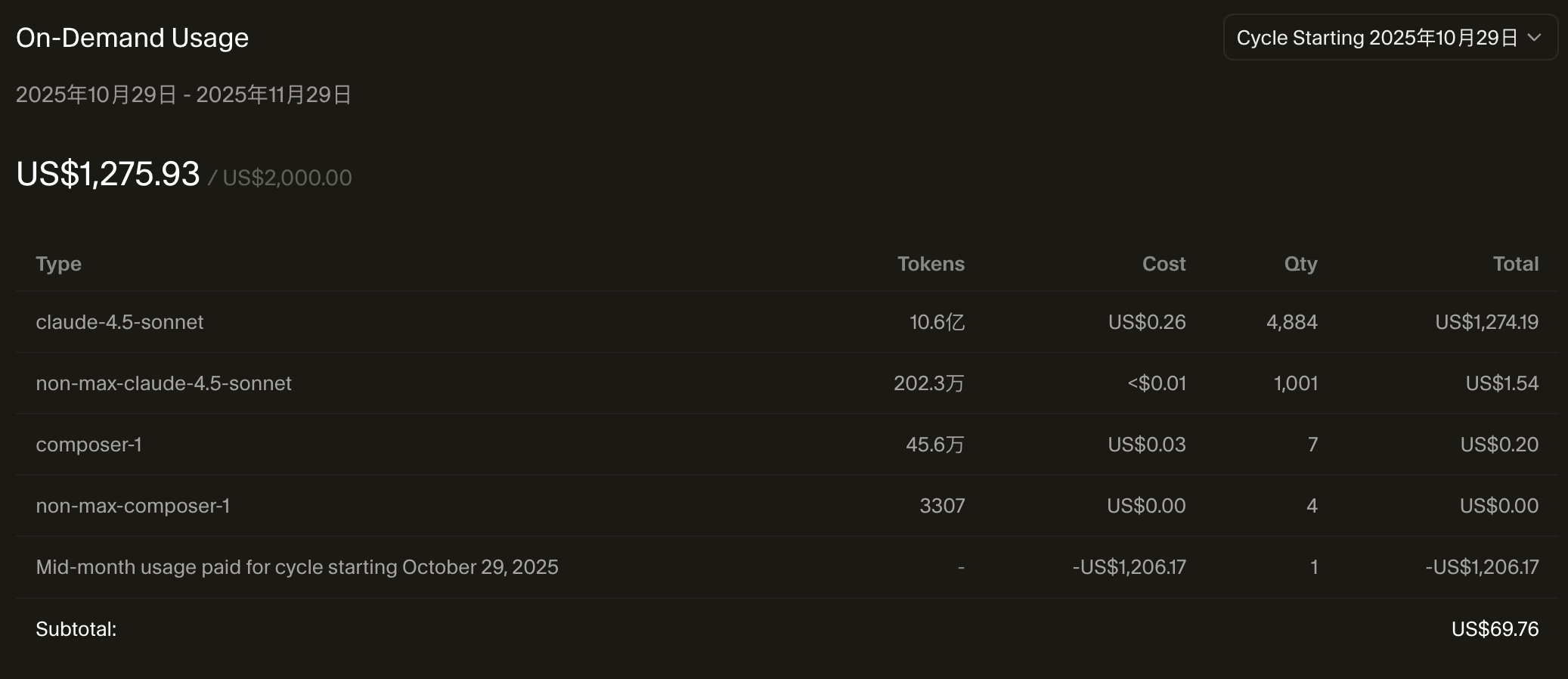
However, note that Cursor packages are not unlimited; exceeding the limit incurs additional charges. Here's a look at my bill:
Also, I recommend a learning resource: Claude Cookbooks. This is a collection of Claude usage tips and code examples provided by Anthropic, covering tool invocation, RAG, classification, summarization, multimodal scenarios, and more. It's highly valuable for learning.
4. ChatGPT — Intelligence and Speed Combined
After discussing Claude, let's look at ChatGPT.
ChatGPT is a product of OpenAI and the tool that first popularized AI chatbots globally. By 2025, OpenAI launched the GPT-5 series, including the general-purpose GPT-5, the more reasoning-capable GPT-5 Pro, and the o3 version optimized for logic, math, and programming.
While ChatGPT slightly lags behind Claude in pure programming capability, it has its unique advantages.
First, it's faster, generating code much quicker than Claude, making it ideal for scenarios requiring rapid iteration. Second, it updates knowledge more promptly, staying abreast of the latest technologies and frameworks. Additionally, it has a better ecosystem with richer plugin and tool support, and stronger Chinese language understanding and generation capabilities.
Therefore, if you need rapid prototyping, prioritize speed, or require various plugins and tools, ChatGPT is also a good choice.
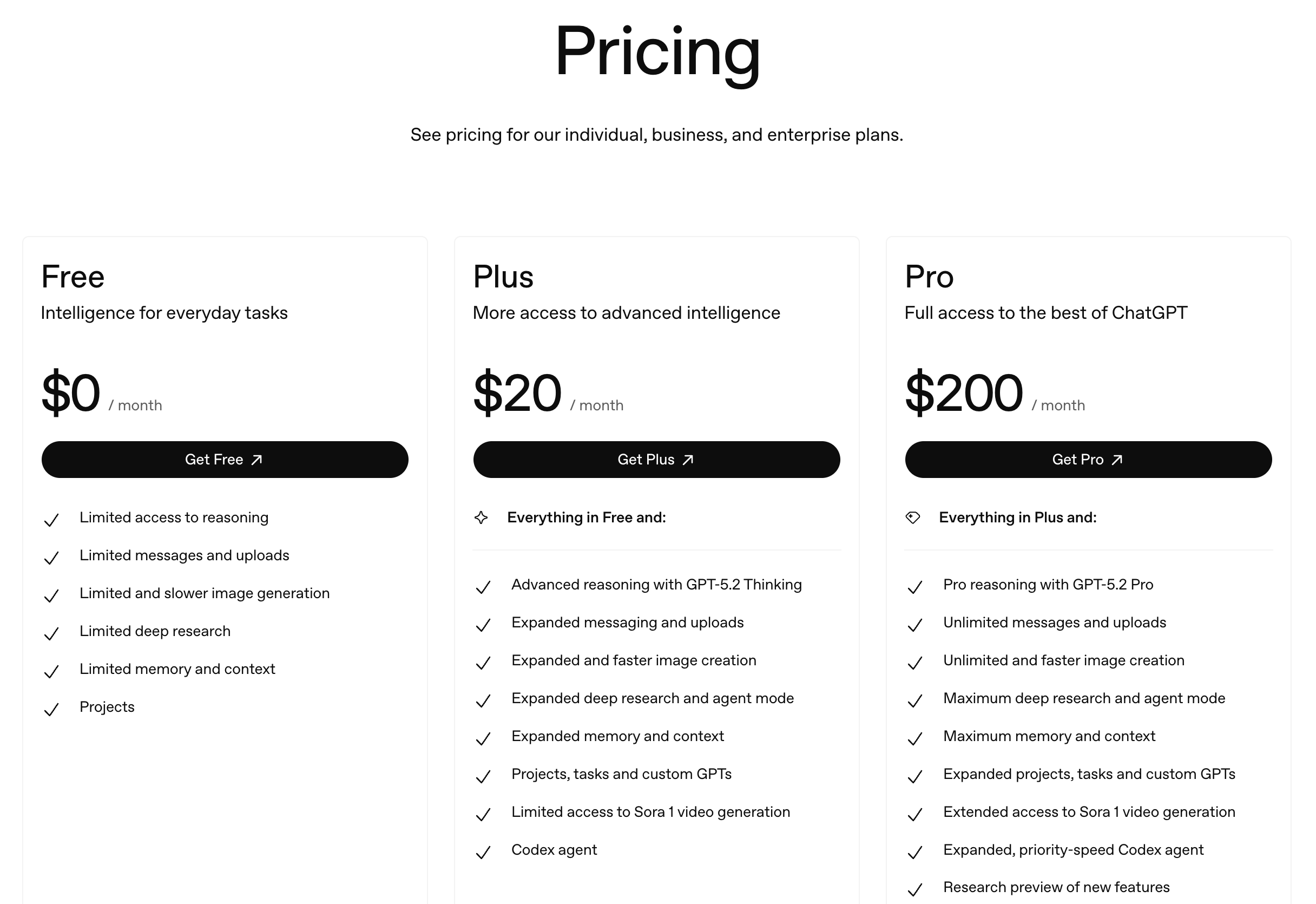
ChatGPT pricing and access methods:
- ChatGPT Plus: $20 per month
- ChatGPT Pro: $200 per month (includes advanced models like o3)
- API calls: Pay-as-you-go based on Token usage
5. Gemini 3.0 — The King of Long Context
Next is Gemini, Google's AI model. The Gemini 3.0 series in 2025 mainly has two versions: the top-tier Gemini 3 Pro, which is comprehensive in all aspects, and the lightweight Gemini 3 Flash, which is extremely fast and affordable.
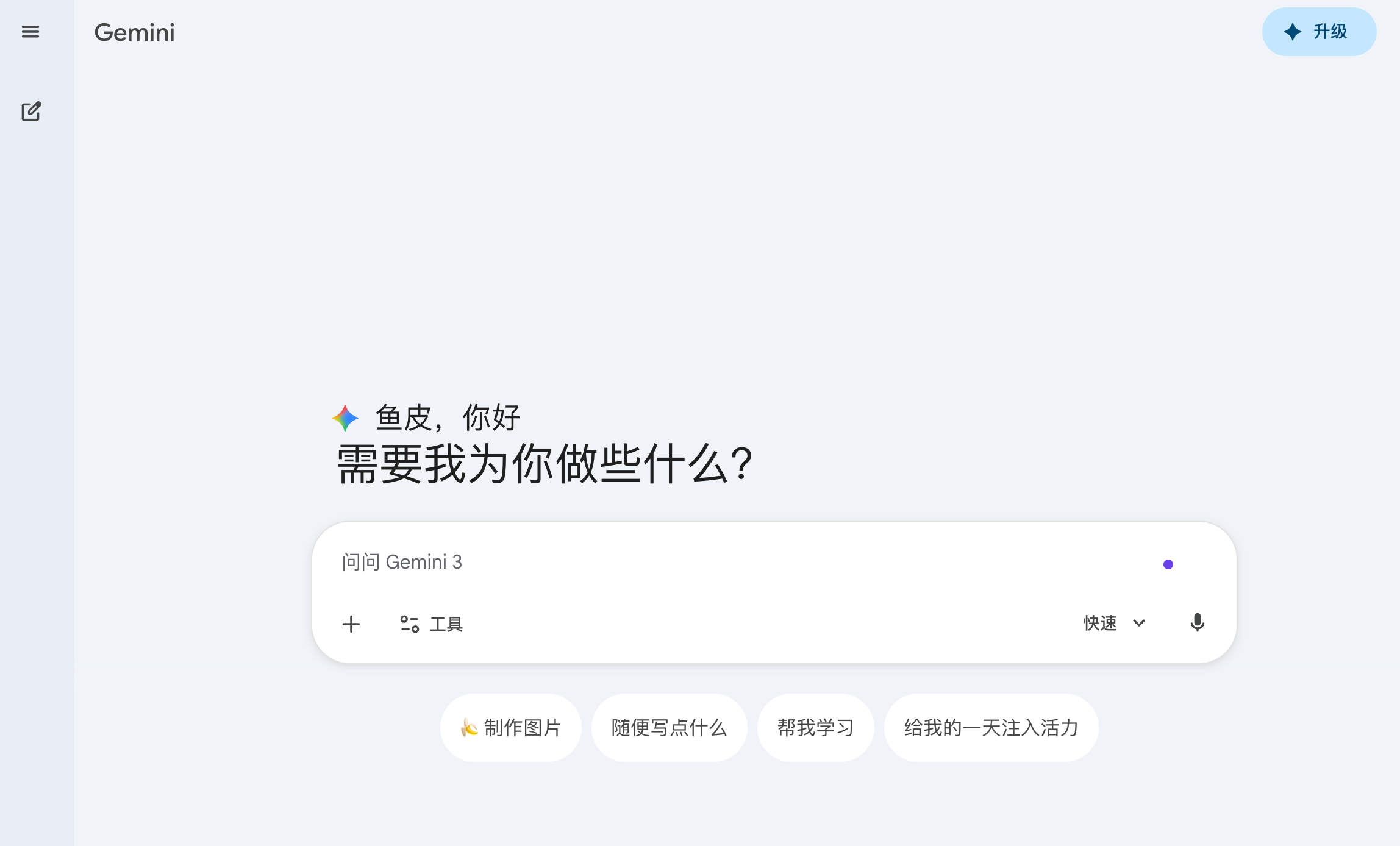
Gemini's most impressive feature is its ultra-long context window. Gemini 3 Pro supports 1M Tokens (approximately 1 million characters) of input context.
What does this mean?
It can read the entire codebase of a large project in one go, remember extremely long conversation histories without easily forgetting, and analyze vast amounts of documents and materials simultaneously.
Moreover, Gemini 3 Pro excels in UI construction. According to tests, it performs exceptionally well in front-end UI design, 3D model construction, and other areas, even surpassing Claude and GPT-5 in certain scenarios.
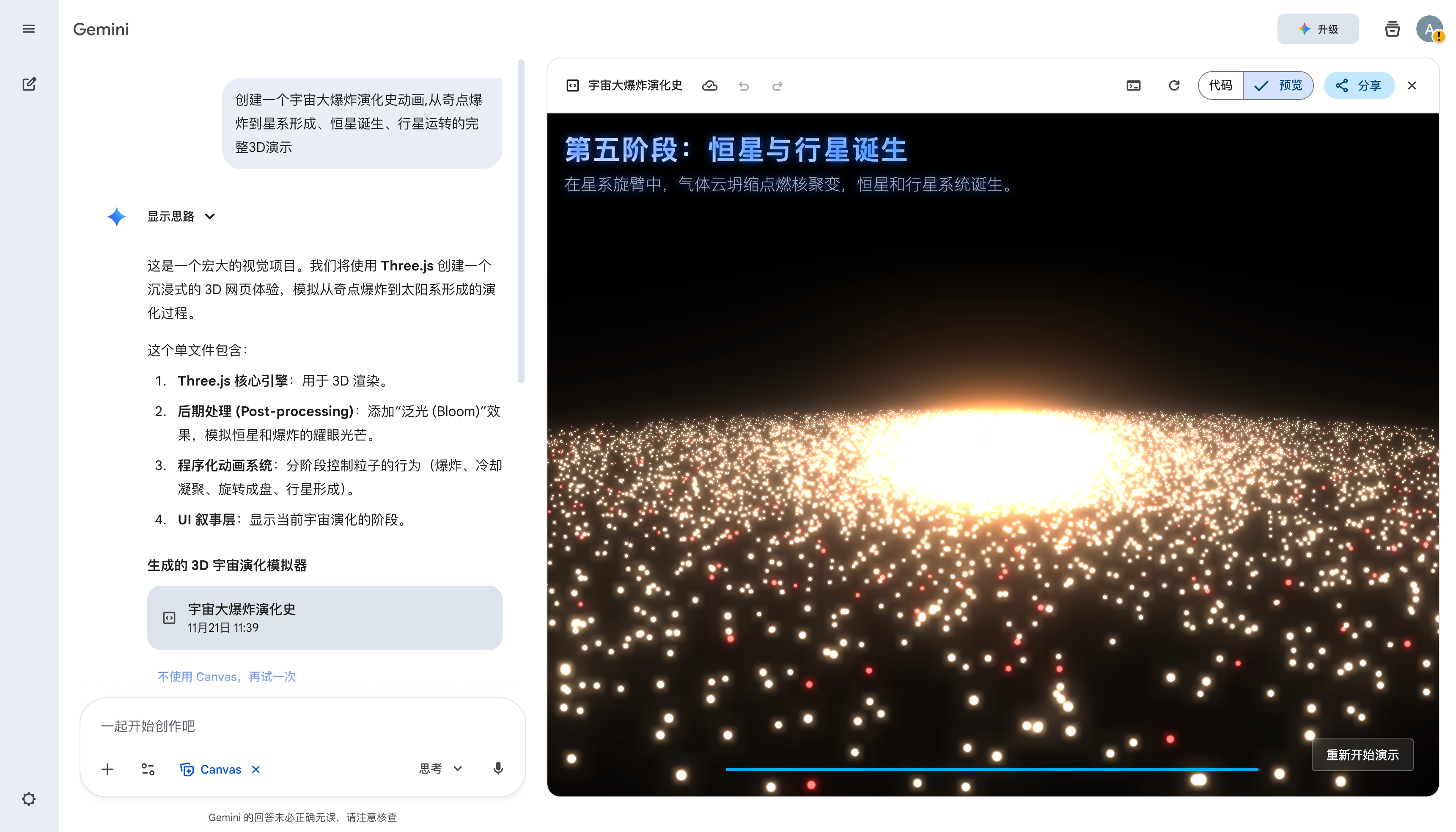
So, if you're handling large projects, need to analyze extensive code, are involved in UI/front-end development, or have a limited budget but require powerful capabilities, Gemini is an excellent choice.
Gemini pricing and access methods:
- Gemini 3 Pro: $19.99 per month
- API calls: Much cheaper than Claude and GPT
- Free version: Gemini 3 Flash offers some free credits and daily trial uses of the thinking model
6. Domestic Large Models — Cost-Effective Choices
What Are the Main Domestic Models?
After discussing the international giants, let's look at domestic large models. Nowadays, domestic models have caught up in programming capabilities and even surpassed international models in some aspects!
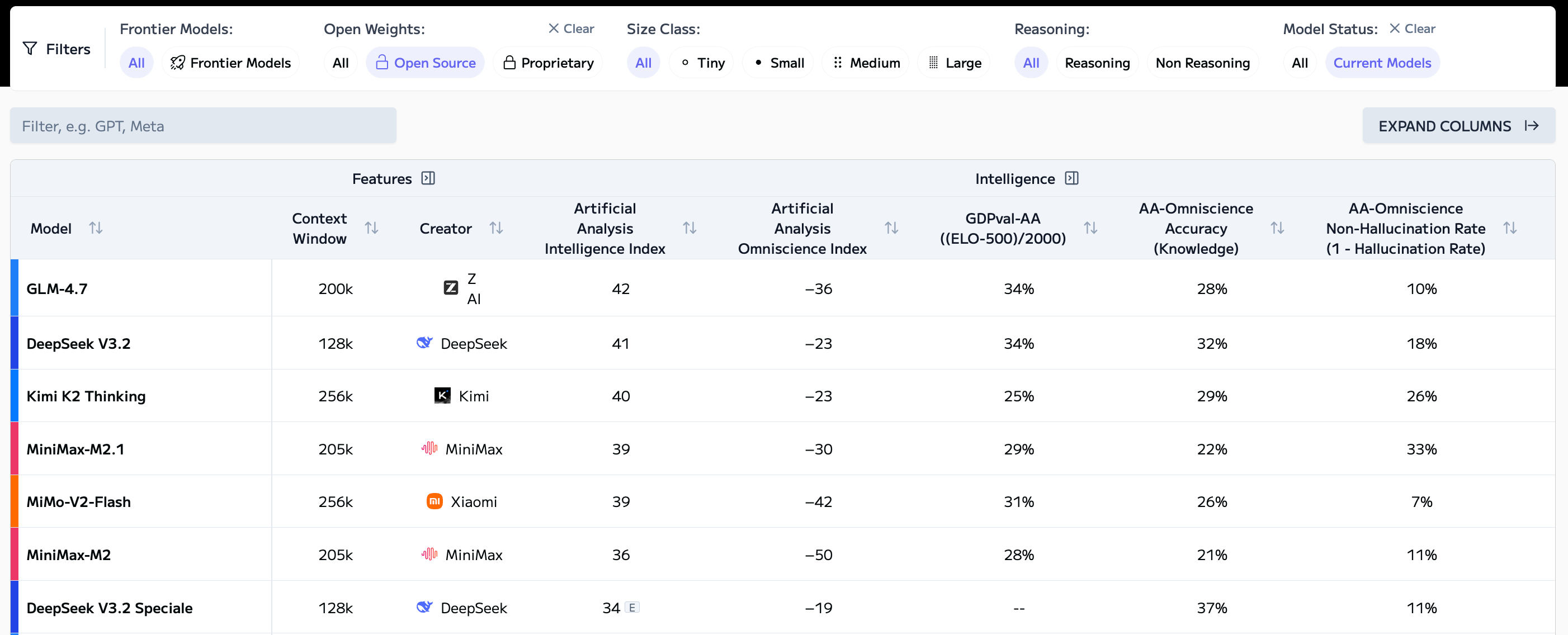
- DeepSeek-V3 is an open-source model, completely free to use, and ranks among the top domestic models in programming capabilities. Its API price is extremely low, making it ideal for scenarios requiring extensive API calls.
- Alibaba's Tongyi Qianwen Qwen outperformed GPT-5 in the LiveCodeBench evaluation, with exceptional Chinese language understanding, making it particularly accurate for Chinese requirements.
- Zhipu GLM-4.7, developed by Tsinghua University, excels in multilingual programming and is optimized for Chinese development scenarios. It supports 200K Tokens of context and performs well in complex task execution and creative writing. I've been using GLM for development, and its speed and effectiveness in generating complete projects are impressive.
- Moon's Dark Side Kimi has supported ultra-long context capabilities (2 million characters) for a long time, standing out among domestic models. It's particularly suitable for handling large project codebases, capable of processing 500 files at once.
- Tencent's Hunyuan CodeBuddy integrates deeply with Tencent Cloud services, natively connecting to over 3000 cloud APIs, and has Level 3 security certification, making it suitable for enterprises and affordable.
- Baidu's ERNIE Bot offers free credits and integrates deeply with Baidu's ecosystem (e.g., Baidu Miaoda Platform), making it ideal for quickly commercializing creative small projects.
Advantages and Limitations of Domestic Models
The biggest advantage of domestic models is their affordability, with API prices typically 1/10th of international models. They also understand Chinese more accurately, offer faster domestic access, and comply with domestic regulations.
However, there are some limitations. In the most complex tasks, their top-tier capabilities still lag behind Claude Opus 4.5, and their tool and plugin support isn't as rich as international models.
But for students and individual developers with limited budgets, those primarily working on Chinese projects, users with restricted access to international services, or scenarios requiring extensive API calls, domestic models are excellent choices. Many of my AI products integrate DeepSeek, Tongyi Qianwen, or GLM, and their free credits are sufficient for daily learning and use.
Moreover, I believe domestic models have the potential to surpass international models, and I trust in the power of open source!
7. How to Choose the Right Model?
With so many models, each with its own strengths, how do you choose the right one?
Essentially, choosing a model depends on two dimensions: your budget and your usage scenario.
Choosing Based on Budget
Your budget directly determines the tools you can use.
If you have a sufficient budget (over ¥100 per month), you can subscribe to Cursor Pro ($20) and use Claude Opus 4.5 or Sonnet 4.5, which currently offers a good experience. Claude's high code quality makes it particularly suitable for complex and commercial projects.
If your budget is limited, make full use of free resources. DeepSeek is completely free, Tongyi Qianwen offers free credits, and Gemini 3 Flash provides daily free credits. These free resources combined are sufficient for learning and personal projects. Additionally, domestic models' API prices are very affordable, and even with paid usage, you can enjoy a lot for just tens of yuan per month.
Choosing Based on Scenario
Different development scenarios suit different models.
-
Learning Stage: If you're still learning, primarily use free DeepSeek or Tongyi Qianwen, supplemented by Gemini 3 Flash's free credits. The focus at this stage is familiarizing yourself with AI programming, and free models are entirely sufficient.
-
Front-end/UI Projects: Gemini 3 Pro excels in front-end UI design, capable of generating high-quality interfaces and strong 3D model construction. If you're mainly doing front-end work, Gemini is a great choice.
-
Full-stack Projects: Prioritize Claude Sonnet for its strong programming capabilities, handling both front-end and back-end tasks. Using it with Cursor offers a good development experience. If you need to quickly generate complete projects, Zhipu GLM-4.7 is also fast and effective.
-
Handling Large Codebases: Gemini 3 Pro (1M Tokens) is best suited for its ultra-long context capability, allowing analysis of entire projects. Zhipu GLM-4.7 supports 200K Tokens and can handle medium to large projects with complete front-end and back-end code.
-
Rapid Iteration Development: GPT-5 responds the fastest, making it ideal for quickly validating ideas. Zhipu GLM also has advantages in generation speed.
-
Extensive Testing and API Calls: DeepSeek is completely free, and both DeepSeek and Tongyi Qianwen have extremely low API prices, making them suitable for extensive API call scenarios, allowing worry-free testing.
Personal Choice
For me, with extensive project development experience and several commercial projects under my belt, I generally prioritize more powerful large models when choosing. For daily development, I mainly use Cursor + Claude Sonnet, as this combination is comprehensive and effective.
Other scenarios:
- When encountering particularly complex problems, I switch to Claude Opus.
- For rapid prototyping or idea validation, I use Gemini.
- When speed is crucial, I choose Zhipu GLM, which performs well in quickly generating complete projects.
- For extensive testing, I use DeepSeek or Tongyi Qianwen APIs due to their affordability.
Final Thoughts
By now, you should have a clear understanding of the mainstream AI models.
I want to emphasize again: There is no absolute best model, only the model that best suits your current needs.
Moreover, AI models evolve rapidly. New models may emerge, or existing models' capabilities may change. I recommend checking monthly for updates on mainstream models, trying out new models upon release, or following technical community reviews and comparisons. You never know when a better, cheaper model might appear!
So don't blindly trust any single model; learn to choose flexibly based on actual circumstances.
Tools and models are just means; what truly matters is what you want to do and what you can achieve. Choosing the right tool can make you more efficient, but ultimately, your ideas and execution determine success or failure.
In the next article, I'll delve into the usage of no-code platforms, guiding you through the simplest and fastest Vibe Coding development methods.
Let's keep moving forward, full speed ahead!
Recommended Resources
-
Yupi AI Navigation Website: Comprehensive AI Resources, Latest AI News, Free AI Tutorials
-
Programming Navigation Learning Circle: Learning Paths, Programming Tutorials, Practical Projects, Job Hunting Guide, Q&A
-
Programmer Interview Cheatsheet: Internship/Campus Recruitment/Social Recruitment High-frequency Topics, Enterprise Exam Analysis
-
Programmer Resume Writing Tool: Professional Templates, Rich Examples, Direct to Interview
-
1-on-1 Mock Interview: Essential for Internship/Campus Recruitment/Social Recruitment Interviews to Secure Offers