Compare commits
414 Commits
| Author | SHA1 | Date | |
|---|---|---|---|
 Willem Jiang Willem Jiang
|
7052978a43 | ||
|
Willem Jiang
|
d9f7f658be | ||
|
Willem Jiang
|
a55de566b9 | ||
|
Willem Jiang
|
9dc25987e0 | ||
|
Willem Jiang
|
8a044142cb | ||
|
ming1523
|
410f0c48b5 | ||
|
Octopus
|
1f59e945af | ||
|
IECspace
|
f394c0d8c8 | ||
|
orbisai0security
|
950821cb9b | ||
|
pyp0327
|
2bb1a2dfa2 | ||
|
DanielWalnut
|
b970993425 | ||
|
DanielWalnut
|
ec8a8cae38 | ||
|
DanielWalnut
|
d78ed5c8f2 | ||
|
Nan Gao
|
f9ff3a698d | ||
|
Admire
|
c2332bb790 | ||
|
He Wang
|
3a61126824 | ||
|
Airene Fang
|
11f557a2c6 | ||
|
d 🔹
|
e8572b9d0c | ||
|
Willem Jiang
|
80a7446fd6 | ||
|
Willem Jiang
|
cd12821134 | ||
|
Xinmin Zeng
|
30d619de08 | ||
|
JerryChaox
|
4e72410154 | ||
|
He Wang
|
c42ae3af79 | ||
|
dependabot[bot]
|
bd35cd39aa | ||
|
d 🔹
|
b90f219bd1 | ||
|
dependabot[bot]
|
96d00f6073 | ||
|
He Wang
|
c43c803f66 | ||
|
dependabot[bot]
|
dbd777fe62 | ||
|
dependabot[bot]
|
1ca2621285 | ||
|
Shawn Jasper
|
5ba1dacf25 | ||
|
Reuben Bowlby
|
085c13edc7 | ||
|
Copilot
|
ef04174194 | ||
|
Ansel
|
6dce26a52e | ||
|
imhaoran
|
fc94e90f6c | ||
|
Eilen Shin
|
f2013f47aa | ||
|
KiteEater
|
4be857f64b | ||
|
Admire
|
c99865f53d | ||
|
YYMa
|
05f1da03e5 | ||
|
Xun
|
a62ca5dd47 | ||
|
Nan Gao
|
f514e35a36 | ||
|
Xun
|
7c87dc5bca | ||
|
Hinotobi
|
80e210f5bb | ||
|
dependabot[bot]
|
5656f90792 | ||
|
Shawn Jasper
|
55474011c9 | ||
|
imhaoran
|
24fe5fbd8c | ||
|
Willem Jiang
|
be4663505a | ||
|
dependabot[bot]
|
aa6098e6a4 | ||
|
Airene Fang
|
1221448029 | ||
|
Jason
|
3b91df2b18 | ||
|
Shawn Jasper
|
ca1b7d5f48 | ||
|
yangzheli
|
c6b0423558 | ||
|
DanielWalnut
|
898f4e8ac2 | ||
|
dependabot[bot]
|
259a6844bf | ||
|
d 🔹
|
a664d2f5c4 | ||
|
YuJitang
|
105db00987 | ||
|
Nan Gao
|
0e16a7fe55 | ||
|
Nan Gao
|
4d3038a7b6 | ||
|
Hinotobi
|
2176b2bbfc | ||
|
Wen
|
8e3591312a | ||
|
Willem Jiang
|
242c654075 | ||
|
Willem Jiang
|
0c21cbf01f | ||
|
Jason
|
772538ddba | ||
|
Jason
|
35fb3dd65a | ||
|
Jason
|
692f79452d | ||
|
DanielWalnut
|
8760937439 | ||
|
DanielWalnut
|
4ba3167f48 | ||
|
Octopus
|
e4f896e90d | ||
|
luo jiyin
|
07fc25d285 | ||
|
Nan Gao
|
55bc09ac33 | ||
|
dependabot[bot]
|
c43a45ea40 | ||
|
Admire
|
9cf7153b1d | ||
|
Octopus
|
c91785dd68 | ||
|
sqsge
|
053e18e1a6 | ||
|
Hinotobi
|
a7e7c6d667 | ||
|
Nan Gao
|
f4c17c66ce | ||
|
lesliewangwyc-dev
|
1df389b9d0 | ||
|
肖
|
5db71cb68c | ||
|
yangzheli
|
4efc8d404f | ||
|
Jin
|
4d4ddb3d3f | ||
|
luo jiyin
|
979a461af5 | ||
|
Javen Fang
|
ac04f2704f | ||
|
Matt Van Horn
|
c4d273a68a | ||
|
Jason
|
dc50a7fdfb | ||
|
ZHANG Ning
|
5b633449f8 | ||
|
yorick
|
02569136df | ||
|
dependabot[bot]
|
024ac0e464 | ||
|
dependabot[bot]
|
19030928e0 | ||
|
Asish Kumar
|
092bf13f5e | ||
|
JeffJiang
|
fe2595a05c | ||
|
Jin
|
718dddde75 | ||
|
Willem Jiang
|
679ca657ee | ||
|
Zic-Wang
|
fa96acdf4b | ||
|
Willem Jiang
|
90299e2710 | ||
|
JeffJiang
|
7dc0c7d01f | ||
|
JeffJiang
|
809b341350 | ||
|
greatmengqi
|
b1aabe88b8 | ||
|
KKK
|
654354c624 | ||
|
DanielWalnut
|
eef0a6e2da | ||
|
Javen Fang
|
b107444878 | ||
|
KKK
|
16aa51c9b3 | ||
|
Javen Fang
|
133ffe7174 | ||
|
yangzheli
|
f88970985a | ||
|
knukn
|
6572fa5b75 | ||
|
shivam johri
|
194bab4691 | ||
|
luo jiyin
|
35f141fc48 | ||
|
Xinmin Zeng
|
0b6fa8b9e1 | ||
|
Admire
|
140907ce1d | ||
|
yangzheli
|
52718b0f23 | ||
|
Admire
|
563383c60f | ||
|
Xun
|
1b74d84590 | ||
|
Zhou
|
823f3af98c | ||
|
Gao Mingfei
|
13664e99e7 | ||
|
肖
|
60e0abfdb8 | ||
|
Octopus
|
616caa92b1 | ||
|
knukn
|
31a3c9a3de | ||
|
Xinmin Zeng
|
ad6d934a5f | ||
|
hung_ng__
|
5350b2fb24 | ||
|
Gao Mingfei
|
29817c3b34 | ||
|
Saber
|
e5b149068c | ||
|
肖
|
85b7ed3cec | ||
|
siwuai
|
24805200f0 | ||
|
13ernkastel
|
722a9c4753 | ||
|
Xinmin Zeng
|
d1baf7212b | ||
|
Async23
|
0948c7a4e1 | ||
|
koppx
|
c3170f22da | ||
|
Anson Li
|
1193ac64dc | ||
|
Admire
|
ab41de2961 | ||
|
KKK
|
3b3e8e1b0b | ||
|
Admire
|
4004fb849f | ||
|
Henry Li
|
f467e613b6 | ||
|
lulusiyuyu
|
f0dd8cb0d2 | ||
|
DanielWalnut
|
7643a46fca | ||
|
Markus Corazzione
|
c4da0e8ca9 | ||
|
yangzheli
|
3acdf79beb | ||
|
jie
|
2d068cc075 | ||
|
JilongSun
|
88e535269e | ||
|
DanielWalnut
|
888f7bfb9d | ||
|
KKK
|
055e4df049 | ||
|
Zhou
|
1ced6e977c | ||
|
Zhou
|
f5088ed70d | ||
|
Zhou
|
55e78de6fc | ||
|
NmanQAQ
|
dd30e609f7 | ||
|
yangzheli
|
5fd2c581f6 | ||
|
Chincherry93
|
d7a3eff23e | ||
|
qqwas
|
ee06440205 | ||
|
肖
|
7c68dd4ad4 | ||
|
suyua9
|
29575c32f9 | ||
|
amonduuuul
|
ed90a2ee9d | ||
|
Willem Jiang
|
993fb0ff9d | ||
|
greatmengqi
|
ca2fb95ee6 | ||
|
Chris Z
|
117fa9b05d | ||
|
肖
|
28474c47cb | ||
|
thefoolgy
|
8049785de6 | ||
|
Evan Wu
|
9ca68ffaaa | ||
|
Markus Corazzione
|
0ffe5a73c1 | ||
|
Echo-Nie
|
d3b59a7931 | ||
|
yangzheli
|
e5416b539a | ||
|
SHIYAO ZHANG
|
72d4347adb | ||
|
Octopus
|
a283d4a02d | ||
|
yangzheli
|
5f8dac66e6 | ||
|
Adem Akdoğan
|
8bb14fa1a7 | ||
|
DanielWalnut
|
2a150f5d4a | ||
|
luobo
|
1c0051c1db | ||
|
luobo
|
144c9b2464 | ||
|
SHIYAO ZHANG
|
163121d327 | ||
|
fengxsong
|
19809800f1 | ||
|
Albert Zheng
|
6473d38917 | ||
|
luobo
|
4ceb18c6e4 | ||
|
SHIYAO ZHANG
|
bbd0866374 | ||
|
Octopus
|
fd310582bd | ||
|
Octopus
|
fb2d99fd86 | ||
|
ppyt
|
db82b59254 | ||
|
SHIYAO ZHANG
|
ddfc988bef | ||
|
SHIYAO ZHANG
|
5ff230eafd | ||
|
SHIYAO ZHANG
|
46d0c329c1 | ||
|
Rain120
|
a2aba23962 | ||
|
d 🔹
|
6dbdd4674f | ||
|
Octopus
|
83039fa22c | ||
|
Admire
|
3d4f9a88fe | ||
|
finallylly
|
1694c616ef | ||
|
DanielWalnut
|
c6cdf200ce | ||
|
Admire
|
9735d73b83 | ||
|
Admire
|
48565664e0 | ||
|
knukn
|
76fad8b08d | ||
|
ppyt
|
5664b9d413 | ||
|
Subham Singhania
|
6de9c7b43f | ||
|
JeffJiang
|
c1366cf559 | ||
|
ming1523
|
ef711a48b3 | ||
|
Admire
|
952059eb51 | ||
|
greatmengqi
|
8128a3bc57 | ||
|
yangzheli
|
636053fb6d | ||
|
moose-lab
|
f56d0b4869 | ||
|
Varian_米泽
|
a2cb38f62b | ||
|
dependabot[bot]
|
3aab2445a6 | ||
|
knukn
|
f8fb8d6fb1 | ||
|
totoyang
|
2d1f90d5dc | ||
|
肖
|
3a672b39c7 | ||
|
SHIYAO ZHANG
|
df5339b5d0 | ||
|
Admire
|
0eb6550cf4 | ||
|
LYU Yichen
|
0a379602b8 | ||
|
Jason
|
1fb5acee39 | ||
|
Admire
|
82c3dbbc6b | ||
|
Alian
|
e97c8c9943 | ||
|
DanielWalnut
|
68d44f6755 | ||
|
rayhpeng
|
c2ff59a5b1 | ||
|
Shengyuan Wang
|
2f3744f807 | ||
|
Llugaes
|
52c8c06cf2 | ||
|
AochenShen99
|
0cdecf7b30 | ||
|
LYU Yichen
|
3e461d9d08 | ||
|
JeffJiang
|
cf43584d24 | ||
|
d 🔹
|
6ff60f2af1 | ||
|
Matt Van Horn
|
a3bfea631c | ||
|
Admire
|
aae59a8ba8 | ||
|
Admire
|
3ff15423d6 | ||
|
SHIYAO ZHANG
|
c2f7be37b3 | ||
|
tryag
|
09a9209724 | ||
|
Rosemary1812
|
b356a13da5 | ||
|
1316151417
|
ac9a6ee6a2 | ||
|
ZHANG Ning
|
64e0f5329a | ||
|
Admire
|
9e3d484858 | ||
|
Admire
|
4bb3c101a8 | ||
|
ZHANG Ning
|
b21792d9be | ||
|
ZHANG Ning
|
0f1b023a2a | ||
|
Admire
|
9a557751d6 | ||
|
JeffJiang
|
2330c38209 | ||
|
rayhpeng
|
34e835bc33 | ||
|
张凯强
|
7db95926b0 | ||
|
d 🔹
|
9bcdba6038 | ||
|
finallylly
|
ef58bb8d3c | ||
|
Jason
|
c5034c03c7 | ||
|
SHIYAO ZHANG
|
9aa3ff7c48 | ||
|
Markus Corazzione
|
5ceb19f6f6 | ||
|
Admire
|
fc7de7fffe | ||
|
SHIYAO ZHANG
|
cdb2a3a017 | ||
|
Sleepy Ranx 🌙
|
866cf4ef73 | ||
|
Echo-Nie
|
d475de7997 | ||
|
passer
|
75c4757f48 | ||
|
tryag
|
580920ef63 | ||
|
Admire
|
68c9e09a7a | ||
|
13ernkastel
|
92c7a20cb7 | ||
|
mlbo
|
8b6c333afc | ||
|
knukn
|
6091ba83c4 | ||
|
greatmengqi
|
70e9f2dd2c | ||
|
SHIYAO ZHANG
|
118485a7cb | ||
|
DAN
|
9e5ba74ecd | ||
|
greatmengqi
|
25df82cbfd | ||
|
greatmengqi
|
084dc7e748 | ||
|
greatmengqi
|
06a623f9c8 | ||
|
Admire
|
7eb3a150b5 | ||
|
knukn
|
481494b9c0 | ||
|
Nan Gao
|
89183ae76a | ||
|
DanielWalnut
|
18e3487888 | ||
|
Nan Gao
|
520c0352b5 | ||
|
SHIYAO ZHANG
|
690d80f46f | ||
|
DanielWalnut
|
c2dd8937ed | ||
|
zihao
|
9caea0266e | ||
|
7. Sun
|
49f2e38fbf | ||
|
JeffJiang
|
d22cab8614 | ||
|
taka6745
|
43ef3691a5 | ||
|
luo jiyin
|
ca20b48601 | ||
|
moose-lab
|
03b144f9c9 | ||
|
luo jiyin
|
9a4e8f438a | ||
|
Zeng Qingwen
|
6bf23ba0a3 | ||
|
luo jiyin
|
50db51d0fb | ||
|
Zeng Qingwen
|
18b0794125 | ||
|
Andrew Barnes
|
50f50d7654 | ||
|
DanielWalnut
|
8590249db4 | ||
|
Admire
|
40a4acbbed | ||
|
Jason
|
4708700723 | ||
|
luo jiyin
|
43a19f9627 | ||
|
yangzheli
|
a4e4bb21e3 | ||
|
Matt Van Horn
|
99965057c1 | ||
|
Kaushik Rajan
|
8ae023574e | ||
|
SCPZ24
|
6b13f5c9fb | ||
|
Ben Piper
|
c13793386f | ||
|
knukn
|
1c542ab7f1 | ||
|
DanielWalnut
|
e1853df06a | ||
|
Henry Li
|
f80d1743ab | ||
|
7. Sun
|
d7bdb1a4b9 | ||
|
Henry Li
|
227967df3d | ||
|
13ernkastel
|
0d3cefaa5a | ||
|
Admire
|
b9583f7204 | ||
|
dependabot[bot]
|
b3d3287b80 | ||
|
RockeyDon
|
c0a6b81852 | ||
|
JeffJiang
|
4d1a69a938 | ||
|
Willem Jiang
|
a087fe7bcc | ||
|
Admire
|
080a03f3bc | ||
|
xiangxiang-all-in-AI
|
ae6a791c71 | ||
|
DanielWalnut
|
d119214fee | ||
|
Hiren Thakore
|
792c49e6af | ||
|
Andrew Barnes
|
ac97dc6d42 | ||
|
Andrew Barnes
|
1f0ae64e02 | ||
|
offliner
|
afe325d34e | ||
|
吴旭云
|
d7e510763d | ||
|
Simon Su
|
adc51e541c | ||
|
zhoutianwang
|
fdfe08d4aa | ||
|
Henry Li
|
12875664f1 | ||
|
greatmengqi
|
b8bc80d89b | ||
|
Andrew Barnes
|
ec46ae075d | ||
|
Andrew Barnes
|
afb0f66c73 | ||
|
luo jiyin
|
97ad67db6b | ||
|
Matthew
|
2eca58bd86 | ||
|
Anna Terek
|
f499f37e94 | ||
|
Emile Jouannet
|
21febe1cc9 | ||
|
greatmengqi
|
16ed797e0e | ||
|
d 🔹
|
77b8ef79ca | ||
|
Jason
|
067b19af00 | ||
|
knukn
|
a9940c391c | ||
|
kristoffern
|
6bf526748d | ||
|
orbisai0security
|
14a3fa5290 | ||
|
evenboos
|
4b15f14647 | ||
|
dependabot[bot]
|
c5ddc6a171 | ||
|
Willem Jiang
|
d0049ad904 | ||
|
Willem Jiang
|
48a197555b | ||
|
Gao Mingfei
|
0431a67b68 | ||
|
Matt Van Horn
|
b40b05f623 | ||
|
amdoi7.
|
8b0f3fe233 | ||
|
Jason
|
79acc3939a | ||
|
Willem Jiang
|
3be1d841aa | ||
|
Matt Van Horn
|
48031e506b | ||
|
Uchi Uchibeke
|
a29134d7c9 | ||
|
knukn
|
fe75cb35ca | ||
|
infoquest-byteplus
|
f6c54e0308 | ||
|
Ben Ghorbel Mohamed Aziz
|
38ace61617 | ||
|
Jason
|
1c981ead2a | ||
|
Purricane
|
835ba041f8 | ||
|
mxyhi
|
e119dc74ae | ||
|
Gao Mingfei
|
644501ae07 | ||
|
haoliangxu
|
e6c6770b70 | ||
|
Ryanba
|
894875ab1b | ||
|
Chetan Sharma
|
7a90055ede | ||
|
Willem Jiang
|
72f01a1638 | ||
|
haoliangxu
|
3af709097e | ||
|
dependabot[bot]
|
9fad717977 | ||
|
Ikko Eltociear Ashimine
|
9dbcca579d | ||
|
haoliangxu
|
06cba217c3 | ||
|
Chetan Sharma
|
e69dc2961f | ||
|
dependabot[bot]
|
9a99485905 | ||
|
Simon Su
|
ceab7fac14 | ||
|
knukn
|
3b235fd182 | ||
|
JilongSun
|
c037ed6739 | ||
|
greatmengqi
|
accf5b5f8e | ||
|
Ryanba
|
f67c3d2c9e | ||
|
BillionToken
|
423ea59491 | ||
|
Ryanba
|
4c78188896 | ||
|
Ryanba
|
f737fbeae8 | ||
|
dependabot[bot]
|
beb0eab711 | ||
|
dependabot[bot]
|
4977c43974 | ||
|
dependabot[bot]
|
5b37de60b7 | ||
|
DanielWalnut
|
feac03ecbc | ||
|
lhd
|
0091d9f071 | ||
|
Henry Li
|
f29db80be7 | ||
|
Henry Li
|
cb4cae4064 | ||
|
Karesansui
|
75c96300cf | ||
|
lailoo
|
9809af1f26 | ||
|
Ryanba
|
b1913a1902 | ||
|
Karesansui
|
ab0c10f002 | ||
|
Matt Van Horn
|
609ff5849f | ||
|
Karesansui
|
3212c7c5a2 | ||
|
-Astraia-
|
191b60a326 | ||
|
DanielWalnut
|
76803b826f | ||
|
YolenSong
|
9b49a80dda | ||
|
virtaava
|
d18a9ae5aa | ||
|
Octopus
|
bbd87df6eb | ||
|
dependabot[bot]
|
cc192a9846 | ||
|
dependabot[bot]
|
9983f9d296 | ||
|
Matt(허철진)
|
d197d50146 | ||
|
dependabot[bot]
|
d6bfadab12 | ||
|
Willem Jiang
|
253fe4d87f | ||
|
Frank
|
918ba6b5bf | ||
|
Ryanba
|
5a8481416f | ||
|
Willem Jiang
|
a79d414695 | ||
|
Ryanba
|
b155923ab0 | ||
|
Ryanba
|
cda9fb7bca | ||
|
Ryanba
|
03cafea715 | ||
|
Willem Jiang
|
b5fcb1334a | ||
|
Liu Jice
|
3521cc2668 | ||
|
JeffJiang
|
08ea9d3038 | ||
|
JeffJiang
|
fdacb1c3a5 | ||
|
Willem Jiang
|
e5a21b9ba0 | ||
|
Ryanba
|
4bae3c724c | ||
|
Orion
|
a0c38a5cf3 | ||
|
LofiSu
|
5d4fd9cf72 | ||
|
JeffJiang
|
2e7964d0aa | ||
|
Willem Jiang
|
06c4b0c828 | ||
|
Willem Jiang
|
96dbee00e3 | ||
|
JeffJiang
|
f836d8e17c | ||
|
aworki
|
6ae7f0c0ee | ||
|
Xinmin Zeng
|
d5135ab757 | ||
|
-Astraia-
|
19604e7f47 | ||
|
JeffJiang
|
f5bd691172 | ||
|
Willem Jiang
|
cf1c4a68ea | ||
|
DanielWalnut
|
33f086b612 | ||
|
momorebi
|
0409f8cefd | ||
|
JeffJiang
|
f6508e0677 | ||
|
Willem Jiang
|
46918f0786 | ||
|
aworki
|
2f47f1ced2 | ||
|
lailoo
|
959b4f2b09 | ||
|
Ashwek-Werghi
|
4f0a8da2ee | ||
|
aworki
|
ac1e1915ef | ||
|
DanielWalnut
|
8871fca5cb | ||
|
JeffJiang
|
3721c82ba8 | ||
|
Willem Jiang
|
6b5c4fe6dd | ||
|
JeffJiang
|
cf9af1fe75 | ||
|
JeffJiang
|
3512279ce3 | ||
|
Jason
|
511e9eaf5e | ||
|
DanielWalnut
|
75b7302000 | ||
|
JeffJiang
|
d664ae5a4b | ||
|
Xinmin Zeng
|
09325ca28f | ||
|
null4536251
|
9d2144d431 | ||
|
Willem Jiang
|
2e90101be8 | ||
|
Willem Jiang
|
cfae751902 | ||
|
infoquest-byteplus
|
28e1257e1e | ||
|
FangHao
|
3e4a24f48b |
@@ -0,0 +1,181 @@
|
||||
---
|
||||
name: smoke-test
|
||||
description: End-to-end smoke test skill for DeerFlow. Guides through: 1) Pulling latest code, 2) Docker OR Local installation and deployment (user preference, default to Local if Docker network issues), 3) Service availability verification, 4) Health check, 5) Final test report. Use when the user says "run smoke test", "smoke test deployment", "verify installation", "test service availability", "end-to-end test", or similar.
|
||||
---
|
||||
|
||||
# DeerFlow Smoke Test Skill
|
||||
|
||||
This skill guides the Agent through DeerFlow's full end-to-end smoke test workflow, including code updates, deployment (supporting both Docker and local installation modes), service availability verification, and health checks.
|
||||
|
||||
## Deployment Mode Selection
|
||||
|
||||
This skill supports two deployment modes:
|
||||
- **Local installation mode** (recommended, especially when network issues occur) - Run all services directly on the local machine
|
||||
- **Docker mode** - Run all services inside Docker containers
|
||||
|
||||
**Selection strategy**:
|
||||
- If the user explicitly asks for Docker mode, use Docker
|
||||
- If network issues occur (such as slow image pulls), automatically switch to local mode
|
||||
- Default to local mode whenever possible
|
||||
|
||||
## Structure
|
||||
|
||||
```
|
||||
smoke-test/
|
||||
├── SKILL.md ← You are here - core workflow and logic
|
||||
├── scripts/
|
||||
│ ├── check_docker.sh ← Check the Docker environment
|
||||
│ ├── check_local_env.sh ← Check local environment dependencies
|
||||
│ ├── frontend_check.sh ← Frontend page smoke check
|
||||
│ ├── pull_code.sh ← Pull the latest code
|
||||
│ ├── deploy_docker.sh ← Docker deployment
|
||||
│ ├── deploy_local.sh ← Local deployment
|
||||
│ └── health_check.sh ← Service health check
|
||||
├── references/
|
||||
│ ├── SOP.md ← Standard operating procedure
|
||||
│ └── troubleshooting.md ← Troubleshooting guide
|
||||
└── templates/
|
||||
├── report.local.template.md ← Local mode smoke test report template
|
||||
└── report.docker.template.md ← Docker mode smoke test report template
|
||||
```
|
||||
|
||||
## Standard Operating Procedure (SOP)
|
||||
|
||||
### Phase 1: Code Update Check
|
||||
|
||||
1. **Confirm current directory** - Verify that the current working directory is the DeerFlow project root
|
||||
2. **Check Git status** - See whether there are uncommitted changes
|
||||
3. **Pull the latest code** - Use `git pull origin main` to get the latest updates
|
||||
4. **Confirm code update** - Verify that the latest code was pulled successfully
|
||||
|
||||
### Phase 2: Deployment Mode Selection and Environment Check
|
||||
|
||||
**Choose deployment mode**:
|
||||
- Ask for user preference, or choose automatically based on network conditions
|
||||
- Default to local installation mode
|
||||
|
||||
**Local mode environment check**:
|
||||
1. **Check Node.js version** - Requires 22+
|
||||
2. **Check pnpm** - Package manager
|
||||
3. **Check uv** - Python package manager
|
||||
4. **Check nginx** - Reverse proxy
|
||||
5. **Check required ports** - Confirm that ports 2026, 3000, 8001, and 2024 are not occupied
|
||||
|
||||
**Docker mode environment check** (if Docker is selected):
|
||||
1. **Check whether Docker is installed** - Run `docker --version`
|
||||
2. **Check Docker daemon status** - Run `docker info`
|
||||
3. **Check Docker Compose availability** - Run `docker compose version`
|
||||
4. **Check required ports** - Confirm that port 2026 is not occupied
|
||||
|
||||
### Phase 3: Configuration Preparation
|
||||
|
||||
1. **Check whether config.yaml exists**
|
||||
- If it does not exist, run `make config` to generate it
|
||||
- If it already exists, check whether it needs an upgrade with `make config-upgrade`
|
||||
2. **Check the .env file**
|
||||
- Verify that required environment variables are configured
|
||||
- Especially model API keys such as `OPENAI_API_KEY`
|
||||
|
||||
### Phase 4: Deployment Execution
|
||||
|
||||
**Local mode deployment**:
|
||||
1. **Check dependencies** - Run `make check`
|
||||
2. **Install dependencies** - Run `make install`
|
||||
3. **(Optional) Pre-pull the sandbox image** - If needed, run `make setup-sandbox`
|
||||
4. **Start services** - Run `make dev-daemon` (background mode, recommended) or `make dev` (foreground mode)
|
||||
5. **Wait for startup** - Give all services enough time to start completely (90-120 seconds recommended)
|
||||
|
||||
**Docker mode deployment** (if Docker is selected):
|
||||
1. **Initialize Docker environment** - Run `make docker-init`
|
||||
2. **Start Docker services** - Run `make docker-start`
|
||||
3. **Wait for startup** - Give all containers enough time to start completely (60 seconds recommended)
|
||||
|
||||
### Phase 5: Service Health Check
|
||||
|
||||
**Local mode health check**:
|
||||
1. **Check process status** - Confirm that LangGraph, Gateway, Frontend, and Nginx processes are all running
|
||||
2. **Check frontend service** - Visit `http://localhost:2026` and verify that the page loads
|
||||
3. **Check API Gateway** - Verify the `http://localhost:2026/health` endpoint
|
||||
4. **Check LangGraph service** - Verify the availability of relevant endpoints
|
||||
5. **Frontend route smoke check** - Run `bash .agent/skills/smoke-test/scripts/frontend_check.sh` to verify key routes under `/workspace`
|
||||
|
||||
**Docker mode health check** (when using Docker):
|
||||
1. **Check container status** - Run `docker ps` and confirm that all containers are running
|
||||
2. **Check frontend service** - Visit `http://localhost:2026` and verify that the page loads
|
||||
3. **Check API Gateway** - Verify the `http://localhost:2026/health` endpoint
|
||||
4. **Check LangGraph service** - Verify the availability of relevant endpoints
|
||||
5. **Frontend route smoke check** - Run `bash .agent/skills/smoke-test/scripts/frontend_check.sh` to verify key routes under `/workspace`
|
||||
|
||||
### Optional Functional Verification
|
||||
|
||||
1. **List available models** - Verify that model configuration loads correctly
|
||||
2. **List available skills** - Verify that the skill directory is mounted correctly
|
||||
3. **Simple chat test** - Send a simple message to verify the end-to-end flow
|
||||
|
||||
### Phase 6: Generate Test Report
|
||||
|
||||
1. **Collect all test results** - Summarize execution status for each phase
|
||||
2. **Record encountered issues** - If anything fails, record the error details
|
||||
3. **Generate the final report** - Use the template that matches the selected deployment mode to create the complete test report, including overall conclusion, detailed key test cases, and explicit frontend page / route results
|
||||
4. **Provide follow-up recommendations** - Offer suggestions based on the test results
|
||||
|
||||
## Execution Rules
|
||||
|
||||
- **Follow the sequence** - Execute strictly in the order described above
|
||||
- **Idempotency** - Every step should be safe to repeat
|
||||
- **Error handling** - If a step fails, stop and report the issue, then provide troubleshooting suggestions
|
||||
- **Detailed logging** - Record the execution result and status of each step
|
||||
- **User confirmation** - Ask for confirmation before potentially risky operations such as overwriting config
|
||||
- **Mode preference** - Prefer local mode to avoid network-related issues
|
||||
- **Template requirement** - The final report must use the matching template under `templates/`; do not output a free-form summary instead of the template-based report
|
||||
- **Report clarity** - The execution summary must include the overall pass/fail conclusion plus per-case result explanations, and frontend smoke check results must be listed explicitly in the report
|
||||
- **Optional phase handling** - If functional verification is not executed, do not present it as a separate skipped phase in the final report
|
||||
|
||||
## Known Acceptable Warnings
|
||||
|
||||
The following warnings can appear during smoke testing and do not block a successful result:
|
||||
- Feishu/Lark SSL errors in Gateway logs (certificate verification failure) can be ignored if that channel is not enabled
|
||||
- Warnings in LangGraph logs about missing methods in the custom checkpointer, such as `adelete_for_runs` or `aprune`, do not affect the core functionality
|
||||
|
||||
## Key Tools
|
||||
|
||||
Use the following tools during execution:
|
||||
|
||||
1. **bash** - Run shell commands
|
||||
2. **present_file** - Show generated reports and important files
|
||||
3. **task_tool** - Organize complex steps with subtasks when needed
|
||||
|
||||
## Success Criteria
|
||||
|
||||
Smoke test pass criteria (local mode):
|
||||
- [x] Latest code is pulled successfully
|
||||
- [x] Local environment check passes (Node.js 22+, pnpm, uv, nginx)
|
||||
- [x] Configuration files are set up correctly
|
||||
- [x] `make check` passes
|
||||
- [x] `make install` completes successfully
|
||||
- [x] `make dev` starts successfully
|
||||
- [x] All service processes run normally
|
||||
- [x] Frontend page is accessible
|
||||
- [x] Frontend route smoke check passes (`/workspace` key routes)
|
||||
- [x] API Gateway health check passes
|
||||
- [x] Test report is generated completely
|
||||
|
||||
Smoke test pass criteria (Docker mode):
|
||||
- [x] Latest code is pulled successfully
|
||||
- [x] Docker environment check passes
|
||||
- [x] Configuration files are set up correctly
|
||||
- [x] `make docker-init` completes successfully
|
||||
- [x] `make docker-start` completes successfully
|
||||
- [x] All Docker containers run normally
|
||||
- [x] Frontend page is accessible
|
||||
- [x] Frontend route smoke check passes (`/workspace` key routes)
|
||||
- [x] API Gateway health check passes
|
||||
- [x] Test report is generated completely
|
||||
|
||||
## Read Reference Files
|
||||
|
||||
Before starting execution, read the following reference files:
|
||||
1. `references/SOP.md` - Detailed step-by-step operating instructions
|
||||
2. `references/troubleshooting.md` - Common issues and solutions
|
||||
3. `templates/report.local.template.md` - Local mode test report template
|
||||
4. `templates/report.docker.template.md` - Docker mode test report template
|
||||
@@ -0,0 +1,452 @@
|
||||
# DeerFlow Smoke Test Standard Operating Procedure (SOP)
|
||||
|
||||
This document describes the detailed operating steps for each phase of the DeerFlow smoke test.
|
||||
|
||||
## Phase 1: Code Update Check
|
||||
|
||||
### 1.1 Confirm Current Directory
|
||||
|
||||
**Objective**: Verify that the current working directory is the DeerFlow project root.
|
||||
|
||||
**Steps**:
|
||||
1. Run `pwd` to view the current working directory
|
||||
2. Check whether the directory contains the following files/directories:
|
||||
- `Makefile`
|
||||
- `backend/`
|
||||
- `frontend/`
|
||||
- `config.example.yaml`
|
||||
|
||||
**Success Criteria**: The current directory contains all of the files/directories listed above.
|
||||
|
||||
---
|
||||
|
||||
### 1.2 Check Git Status
|
||||
|
||||
**Objective**: Check whether there are uncommitted changes.
|
||||
|
||||
**Steps**:
|
||||
1. Run `git status`
|
||||
2. Check whether the output includes "Changes not staged for commit" or "Untracked files"
|
||||
|
||||
**Notes**:
|
||||
- If there are uncommitted changes, recommend that the user commit or stash them first to avoid conflicts while pulling
|
||||
- If the user confirms that they want to continue, this step can be skipped
|
||||
|
||||
---
|
||||
|
||||
### 1.3 Pull the Latest Code
|
||||
|
||||
**Objective**: Fetch the latest code updates.
|
||||
|
||||
**Steps**:
|
||||
1. Run `git fetch origin main`
|
||||
2. Run `git pull origin main`
|
||||
|
||||
**Success Criteria**:
|
||||
- The commands succeed without errors
|
||||
- The output shows "Already up to date" or indicates that new commits were pulled successfully
|
||||
|
||||
---
|
||||
|
||||
### 1.4 Confirm Code Update
|
||||
|
||||
**Objective**: Verify that the latest code was pulled successfully.
|
||||
|
||||
**Steps**:
|
||||
1. Run `git log -1 --oneline` to view the latest commit
|
||||
2. Record the commit hash and message
|
||||
|
||||
---
|
||||
|
||||
## Phase 2: Deployment Mode Selection and Environment Check
|
||||
|
||||
### 2.1 Choose Deployment Mode
|
||||
|
||||
**Objective**: Decide whether to use local mode or Docker mode.
|
||||
|
||||
**Decision Flow**:
|
||||
1. Prefer local mode first to avoid network-related issues
|
||||
2. If the user explicitly requests Docker, use Docker
|
||||
3. If Docker network issues occur, switch to local mode automatically
|
||||
|
||||
---
|
||||
|
||||
### 2.2 Local Mode Environment Check
|
||||
|
||||
**Objective**: Verify that local development environment dependencies are satisfied.
|
||||
|
||||
#### 2.2.1 Check Node.js Version
|
||||
|
||||
**Steps**:
|
||||
1. If nvm is used, run `nvm use 22` to switch to Node 22+
|
||||
2. Run `node --version`
|
||||
|
||||
**Success Criteria**: Version >= 22.x
|
||||
|
||||
**Failure Handling**:
|
||||
- If the version is too low, ask the user to install/switch Node.js with nvm:
|
||||
```bash
|
||||
nvm install 22
|
||||
nvm use 22
|
||||
```
|
||||
- Or install it from the official website: https://nodejs.org/
|
||||
|
||||
---
|
||||
|
||||
#### 2.2.2 Check pnpm
|
||||
|
||||
**Steps**:
|
||||
1. Run `pnpm --version`
|
||||
|
||||
**Success Criteria**: The command returns pnpm version information.
|
||||
|
||||
**Failure Handling**:
|
||||
- If pnpm is not installed, ask the user to install it with `npm install -g pnpm`
|
||||
|
||||
---
|
||||
|
||||
#### 2.2.3 Check uv
|
||||
|
||||
**Steps**:
|
||||
1. Run `uv --version`
|
||||
|
||||
**Success Criteria**: The command returns uv version information.
|
||||
|
||||
**Failure Handling**:
|
||||
- If uv is not installed, ask the user to install uv
|
||||
|
||||
---
|
||||
|
||||
#### 2.2.4 Check nginx
|
||||
|
||||
**Steps**:
|
||||
1. Run `nginx -v`
|
||||
|
||||
**Success Criteria**: The command returns nginx version information.
|
||||
|
||||
**Failure Handling**:
|
||||
- macOS: install with Homebrew using `brew install nginx`
|
||||
- Linux: install using the system package manager
|
||||
|
||||
---
|
||||
|
||||
#### 2.2.5 Check Required Ports
|
||||
|
||||
**Steps**:
|
||||
1. Run the following commands to check ports:
|
||||
```bash
|
||||
lsof -i :2026 # Main port
|
||||
lsof -i :3000 # Frontend
|
||||
lsof -i :8001 # Gateway
|
||||
lsof -i :2024 # LangGraph
|
||||
```
|
||||
|
||||
**Success Criteria**: All ports are free, or they are occupied only by DeerFlow-related processes.
|
||||
|
||||
**Failure Handling**:
|
||||
- If a port is occupied, ask the user to stop the related process
|
||||
|
||||
---
|
||||
|
||||
### 2.3 Docker Mode Environment Check (If Docker Is Selected)
|
||||
|
||||
#### 2.3.1 Check Whether Docker Is Installed
|
||||
|
||||
**Steps**:
|
||||
1. Run `docker --version`
|
||||
|
||||
**Success Criteria**: The command returns Docker version information, such as "Docker version 24.x.x".
|
||||
|
||||
---
|
||||
|
||||
#### 2.3.2 Check Docker Daemon Status
|
||||
|
||||
**Steps**:
|
||||
1. Run `docker info`
|
||||
|
||||
**Success Criteria**: The command runs successfully and shows Docker system information.
|
||||
|
||||
**Failure Handling**:
|
||||
- If it fails, ask the user to start Docker Desktop or the Docker service
|
||||
|
||||
---
|
||||
|
||||
#### 2.3.3 Check Docker Compose Availability
|
||||
|
||||
**Steps**:
|
||||
1. Run `docker compose version`
|
||||
|
||||
**Success Criteria**: The command returns Docker Compose version information.
|
||||
|
||||
---
|
||||
|
||||
#### 2.3.4 Check Required Ports
|
||||
|
||||
**Steps**:
|
||||
1. Run `lsof -i :2026` (macOS/Linux) or `netstat -ano | findstr :2026` (Windows)
|
||||
|
||||
**Success Criteria**: Port 2026 is free, or it is occupied only by a DeerFlow-related process.
|
||||
|
||||
**Failure Handling**:
|
||||
- If the port is occupied by another process, ask the user to stop that process or change the configuration
|
||||
|
||||
---
|
||||
|
||||
## Phase 3: Configuration Preparation
|
||||
|
||||
### 3.1 Check config.yaml
|
||||
|
||||
**Steps**:
|
||||
1. Check whether `config.yaml` exists
|
||||
2. If it does not exist, run `make config`
|
||||
3. If it already exists, consider running `make config-upgrade` to merge new fields
|
||||
|
||||
**Validation**:
|
||||
- Check whether at least one model is configured in config.yaml
|
||||
- Check whether the model configuration references the correct environment variables
|
||||
|
||||
---
|
||||
|
||||
### 3.2 Check the .env File
|
||||
|
||||
**Steps**:
|
||||
1. Check whether the `.env` file exists
|
||||
2. If it does not exist, copy it from `.env.example`
|
||||
3. Check whether the following environment variables are configured:
|
||||
- `OPENAI_API_KEY` (or other model API keys)
|
||||
- Other required settings
|
||||
|
||||
---
|
||||
|
||||
## Phase 4: Deployment Execution
|
||||
|
||||
### 4.1 Local Mode Deployment
|
||||
|
||||
#### 4.1.1 Check Dependencies
|
||||
|
||||
**Steps**:
|
||||
1. Run `make check`
|
||||
|
||||
**Description**: This command validates all required tools (Node.js 22+, pnpm, uv, nginx).
|
||||
|
||||
---
|
||||
|
||||
#### 4.1.2 Install Dependencies
|
||||
|
||||
**Steps**:
|
||||
1. Run `make install`
|
||||
|
||||
**Description**: This command installs both backend and frontend dependencies.
|
||||
|
||||
**Notes**:
|
||||
- This step may take some time
|
||||
- If network issues cause failures, try using a closer or mirrored package registry
|
||||
|
||||
---
|
||||
|
||||
#### 4.1.3 (Optional) Pre-pull the Sandbox Image
|
||||
|
||||
**Steps**:
|
||||
1. If Docker / Container sandbox is used, run `make setup-sandbox`
|
||||
|
||||
**Description**: This step is optional and not needed for local sandbox mode.
|
||||
|
||||
---
|
||||
|
||||
#### 4.1.4 Start Services
|
||||
|
||||
**Steps**:
|
||||
1. Run `make dev-daemon` (background mode)
|
||||
|
||||
**Description**: This command starts all services (LangGraph, Gateway, Frontend, Nginx).
|
||||
|
||||
**Notes**:
|
||||
- `make dev` runs in the foreground and stops with Ctrl+C
|
||||
- `make dev-daemon` runs in the background
|
||||
- Use `make stop` to stop services
|
||||
|
||||
---
|
||||
|
||||
#### 4.1.5 Wait for Services to Start
|
||||
|
||||
**Steps**:
|
||||
1. Wait 90-120 seconds for all services to start completely
|
||||
2. You can monitor startup progress by checking these log files:
|
||||
- `logs/langgraph.log`
|
||||
- `logs/gateway.log`
|
||||
- `logs/frontend.log`
|
||||
- `logs/nginx.log`
|
||||
|
||||
---
|
||||
|
||||
### 4.2 Docker Mode Deployment (If Docker Is Selected)
|
||||
|
||||
#### 4.2.1 Initialize the Docker Environment
|
||||
|
||||
**Steps**:
|
||||
1. Run `make docker-init`
|
||||
|
||||
**Description**: This command pulls the sandbox image if needed.
|
||||
|
||||
---
|
||||
|
||||
#### 4.2.2 Start Docker Services
|
||||
|
||||
**Steps**:
|
||||
1. Run `make docker-start`
|
||||
|
||||
**Description**: This command builds and starts all required Docker containers.
|
||||
|
||||
---
|
||||
|
||||
#### 4.2.3 Wait for Services to Start
|
||||
|
||||
**Steps**:
|
||||
1. Wait 60-90 seconds for all services to start completely
|
||||
2. You can run `make docker-logs` to monitor startup progress
|
||||
|
||||
---
|
||||
|
||||
## Phase 5: Service Health Check
|
||||
|
||||
### 5.1 Local Mode Health Check
|
||||
|
||||
#### 5.1.1 Check Process Status
|
||||
|
||||
**Steps**:
|
||||
1. Run the following command to check processes:
|
||||
```bash
|
||||
ps aux | grep -E "(langgraph|uvicorn|next|nginx)" | grep -v grep
|
||||
```
|
||||
|
||||
**Success Criteria**: Confirm that the following processes are running:
|
||||
- LangGraph (`langgraph dev`)
|
||||
- Gateway (`uvicorn app.gateway.app:app`)
|
||||
- Frontend (`next dev` or `next start`)
|
||||
- Nginx (`nginx`)
|
||||
|
||||
---
|
||||
|
||||
#### 5.1.2 Check Frontend Service
|
||||
|
||||
**Steps**:
|
||||
1. Use curl or a browser to visit `http://localhost:2026`
|
||||
2. Verify that the page loads normally
|
||||
|
||||
**Example curl command**:
|
||||
```bash
|
||||
curl -I http://localhost:2026
|
||||
```
|
||||
|
||||
**Success Criteria**: Returns an HTTP 200 status code.
|
||||
|
||||
---
|
||||
|
||||
#### 5.1.3 Check API Gateway
|
||||
|
||||
**Steps**:
|
||||
1. Visit `http://localhost:2026/health`
|
||||
|
||||
**Example curl command**:
|
||||
```bash
|
||||
curl http://localhost:2026/health
|
||||
```
|
||||
|
||||
**Success Criteria**: Returns health status JSON.
|
||||
|
||||
---
|
||||
|
||||
#### 5.1.4 Check LangGraph Service
|
||||
|
||||
**Steps**:
|
||||
1. Visit relevant LangGraph endpoints to verify availability
|
||||
|
||||
---
|
||||
|
||||
### 5.2 Docker Mode Health Check (When Using Docker)
|
||||
|
||||
#### 5.2.1 Check Container Status
|
||||
|
||||
**Steps**:
|
||||
1. Run `docker ps`
|
||||
2. Confirm that the following containers are running:
|
||||
- `deer-flow-nginx`
|
||||
- `deer-flow-frontend`
|
||||
- `deer-flow-gateway`
|
||||
- `deer-flow-langgraph` (if not in gateway mode)
|
||||
|
||||
---
|
||||
|
||||
#### 5.2.2 Check Frontend Service
|
||||
|
||||
**Steps**:
|
||||
1. Use curl or a browser to visit `http://localhost:2026`
|
||||
2. Verify that the page loads normally
|
||||
|
||||
**Example curl command**:
|
||||
```bash
|
||||
curl -I http://localhost:2026
|
||||
```
|
||||
|
||||
**Success Criteria**: Returns an HTTP 200 status code.
|
||||
|
||||
---
|
||||
|
||||
#### 5.2.3 Check API Gateway
|
||||
|
||||
**Steps**:
|
||||
1. Visit `http://localhost:2026/health`
|
||||
|
||||
**Example curl command**:
|
||||
```bash
|
||||
curl http://localhost:2026/health
|
||||
```
|
||||
|
||||
**Success Criteria**: Returns health status JSON.
|
||||
|
||||
---
|
||||
|
||||
#### 5.2.4 Check LangGraph Service
|
||||
|
||||
**Steps**:
|
||||
1. Visit relevant LangGraph endpoints to verify availability
|
||||
|
||||
---
|
||||
|
||||
## Optional Functional Verification
|
||||
|
||||
### 6.1 List Available Models
|
||||
|
||||
**Steps**: Verify the model list through the API or UI.
|
||||
|
||||
---
|
||||
|
||||
### 6.2 List Available Skills
|
||||
|
||||
**Steps**: Verify the skill list through the API or UI.
|
||||
|
||||
---
|
||||
|
||||
### 6.3 Simple Chat Test
|
||||
|
||||
**Steps**: Send a simple message to test the complete workflow.
|
||||
|
||||
---
|
||||
|
||||
## Phase 6: Generate the Test Report
|
||||
|
||||
### 6.1 Collect Test Results
|
||||
|
||||
Summarize the execution status of each phase and record successful and failed items.
|
||||
|
||||
### 6.2 Record Issues
|
||||
|
||||
If anything fails, record detailed error information.
|
||||
|
||||
### 6.3 Generate the Report
|
||||
|
||||
Use the template to create a complete test report.
|
||||
|
||||
### 6.4 Provide Recommendations
|
||||
|
||||
Provide follow-up recommendations based on the test results.
|
||||
@@ -0,0 +1,612 @@
|
||||
# Troubleshooting Guide
|
||||
|
||||
This document lists common issues encountered during DeerFlow smoke testing and how to resolve them.
|
||||
|
||||
## Code Update Issues
|
||||
|
||||
### Issue: `git pull` Fails with a Merge Conflict Warning
|
||||
|
||||
**Symptoms**:
|
||||
```
|
||||
error: Your local changes to the following files would be overwritten by merge
|
||||
```
|
||||
|
||||
**Solutions**:
|
||||
1. Option A: Commit local changes first
|
||||
```bash
|
||||
git add .
|
||||
git commit -m "Save local changes"
|
||||
git pull origin main
|
||||
```
|
||||
|
||||
2. Option B: Stash local changes
|
||||
```bash
|
||||
git stash
|
||||
git pull origin main
|
||||
git stash pop # Restore changes later if needed
|
||||
```
|
||||
|
||||
3. Option C: Discard local changes (use with caution)
|
||||
```bash
|
||||
git reset --hard HEAD
|
||||
git pull origin main
|
||||
```
|
||||
|
||||
---
|
||||
|
||||
## Local Mode Environment Issues
|
||||
|
||||
### Issue: Node.js Version Is Too Old
|
||||
|
||||
**Symptoms**:
|
||||
```
|
||||
Node.js version is too old. Requires 22+, got x.x.x
|
||||
```
|
||||
|
||||
**Solutions**:
|
||||
1. Install or upgrade Node.js with nvm:
|
||||
```bash
|
||||
nvm install 22
|
||||
nvm use 22
|
||||
```
|
||||
|
||||
2. Or download and install it from the official website: https://nodejs.org/
|
||||
|
||||
3. Verify the version:
|
||||
```bash
|
||||
node --version
|
||||
```
|
||||
|
||||
---
|
||||
|
||||
### Issue: pnpm Is Not Installed
|
||||
|
||||
**Symptoms**:
|
||||
```
|
||||
command not found: pnpm
|
||||
```
|
||||
|
||||
**Solutions**:
|
||||
1. Install pnpm with npm:
|
||||
```bash
|
||||
npm install -g pnpm
|
||||
```
|
||||
|
||||
2. Or use the official installation script:
|
||||
```bash
|
||||
curl -fsSL https://get.pnpm.io/install.sh | sh -
|
||||
```
|
||||
|
||||
3. Verify the installation:
|
||||
```bash
|
||||
pnpm --version
|
||||
```
|
||||
|
||||
---
|
||||
|
||||
### Issue: uv Is Not Installed
|
||||
|
||||
**Symptoms**:
|
||||
```
|
||||
command not found: uv
|
||||
```
|
||||
|
||||
**Solutions**:
|
||||
1. Use the official installation script:
|
||||
```bash
|
||||
curl -LsSf https://astral.sh/uv/install.sh | sh
|
||||
```
|
||||
|
||||
2. macOS users can also install it with Homebrew:
|
||||
```bash
|
||||
brew install uv
|
||||
```
|
||||
|
||||
3. Verify the installation:
|
||||
```bash
|
||||
uv --version
|
||||
```
|
||||
|
||||
---
|
||||
|
||||
### Issue: nginx Is Not Installed
|
||||
|
||||
**Symptoms**:
|
||||
```
|
||||
command not found: nginx
|
||||
```
|
||||
|
||||
**Solutions**:
|
||||
1. macOS (Homebrew):
|
||||
```bash
|
||||
brew install nginx
|
||||
```
|
||||
|
||||
2. Ubuntu/Debian:
|
||||
```bash
|
||||
sudo apt update
|
||||
sudo apt install nginx
|
||||
```
|
||||
|
||||
3. CentOS/RHEL:
|
||||
```bash
|
||||
sudo yum install nginx
|
||||
```
|
||||
|
||||
4. Verify the installation:
|
||||
```bash
|
||||
nginx -v
|
||||
```
|
||||
|
||||
---
|
||||
|
||||
### Issue: Port Is Already in Use
|
||||
|
||||
**Symptoms**:
|
||||
```
|
||||
Error: listen EADDRINUSE: address already in use :::2026
|
||||
```
|
||||
|
||||
**Solutions**:
|
||||
1. Find the process using the port:
|
||||
```bash
|
||||
lsof -i :2026 # macOS/Linux
|
||||
netstat -ano | findstr :2026 # Windows
|
||||
```
|
||||
|
||||
2. Stop that process:
|
||||
```bash
|
||||
kill -9 <PID> # macOS/Linux
|
||||
taskkill /PID <PID> /F # Windows
|
||||
```
|
||||
|
||||
3. Or stop DeerFlow services first:
|
||||
```bash
|
||||
make stop
|
||||
```
|
||||
|
||||
---
|
||||
|
||||
## Local Mode Dependency Installation Issues
|
||||
|
||||
### Issue: `make install` Fails Due to Network Timeout
|
||||
|
||||
**Symptoms**:
|
||||
Network timeouts or connection failures occur during dependency installation.
|
||||
|
||||
**Solutions**:
|
||||
1. Configure pnpm to use a mirror registry:
|
||||
```bash
|
||||
pnpm config set registry https://registry.npmmirror.com
|
||||
```
|
||||
|
||||
2. Configure uv to use a mirror registry:
|
||||
```bash
|
||||
uv pip config set global.index-url https://pypi.tuna.tsinghua.edu.cn/simple
|
||||
```
|
||||
|
||||
3. Retry the installation:
|
||||
```bash
|
||||
make install
|
||||
```
|
||||
|
||||
---
|
||||
|
||||
### Issue: Python Dependency Installation Fails
|
||||
|
||||
**Symptoms**:
|
||||
Errors occur during `uv sync`.
|
||||
|
||||
**Solutions**:
|
||||
1. Clean the uv cache:
|
||||
```bash
|
||||
cd backend
|
||||
uv cache clean
|
||||
```
|
||||
|
||||
2. Resync dependencies:
|
||||
```bash
|
||||
cd backend
|
||||
uv sync
|
||||
```
|
||||
|
||||
3. View detailed error logs:
|
||||
```bash
|
||||
cd backend
|
||||
uv sync --verbose
|
||||
```
|
||||
|
||||
---
|
||||
|
||||
### Issue: Frontend Dependency Installation Fails
|
||||
|
||||
**Symptoms**:
|
||||
Errors occur during `pnpm install`.
|
||||
|
||||
**Solutions**:
|
||||
1. Clean the pnpm cache:
|
||||
```bash
|
||||
cd frontend
|
||||
pnpm store prune
|
||||
```
|
||||
|
||||
2. Remove node_modules and the lock file:
|
||||
```bash
|
||||
cd frontend
|
||||
rm -rf node_modules pnpm-lock.yaml
|
||||
```
|
||||
|
||||
3. Reinstall:
|
||||
```bash
|
||||
cd frontend
|
||||
pnpm install
|
||||
```
|
||||
|
||||
---
|
||||
|
||||
## Local Mode Service Startup Issues
|
||||
|
||||
### Issue: Services Exit Immediately After Startup
|
||||
|
||||
**Symptoms**:
|
||||
Processes exit quickly after running `make dev-daemon`.
|
||||
|
||||
**Solutions**:
|
||||
1. Check log files:
|
||||
```bash
|
||||
tail -f logs/langgraph.log
|
||||
tail -f logs/gateway.log
|
||||
tail -f logs/frontend.log
|
||||
tail -f logs/nginx.log
|
||||
```
|
||||
|
||||
2. Check whether config.yaml is configured correctly
|
||||
3. Check environment variables in the .env file
|
||||
4. Confirm that required ports are not occupied
|
||||
5. Stop all services and restart:
|
||||
```bash
|
||||
make stop
|
||||
make dev-daemon
|
||||
```
|
||||
|
||||
---
|
||||
|
||||
### Issue: Nginx Fails to Start Because Temp Directories Do Not Exist
|
||||
|
||||
**Symptoms**:
|
||||
```
|
||||
nginx: [emerg] mkdir() "/opt/homebrew/var/run/nginx/client_body_temp" failed (2: No such file or directory)
|
||||
```
|
||||
|
||||
**Solutions**:
|
||||
Add local temp directory configuration to `docker/nginx/nginx.local.conf` so nginx uses the repository's temp directory.
|
||||
|
||||
Add the following at the beginning of the `http` block:
|
||||
```nginx
|
||||
client_body_temp_path temp/client_body_temp;
|
||||
proxy_temp_path temp/proxy_temp;
|
||||
fastcgi_temp_path temp/fastcgi_temp;
|
||||
uwsgi_temp_path temp/uwsgi_temp;
|
||||
scgi_temp_path temp/scgi_temp;
|
||||
```
|
||||
|
||||
Note: The `temp/` directory under the repository root is created automatically by `make dev` or `make dev-daemon`.
|
||||
|
||||
---
|
||||
|
||||
### Issue: Nginx Fails to Start (General)
|
||||
|
||||
**Symptoms**:
|
||||
The nginx process fails to start or reports an error.
|
||||
|
||||
**Solutions**:
|
||||
1. Check the nginx configuration:
|
||||
```bash
|
||||
nginx -t -c docker/nginx/nginx.local.conf -p .
|
||||
```
|
||||
|
||||
2. Check nginx logs:
|
||||
```bash
|
||||
tail -f logs/nginx.log
|
||||
```
|
||||
|
||||
3. Ensure no other nginx process is running:
|
||||
```bash
|
||||
ps aux | grep nginx
|
||||
```
|
||||
|
||||
4. If needed, stop existing nginx processes:
|
||||
```bash
|
||||
pkill -9 nginx
|
||||
```
|
||||
|
||||
---
|
||||
|
||||
### Issue: Frontend Compilation Fails
|
||||
|
||||
**Symptoms**:
|
||||
Compilation errors appear in `frontend.log`.
|
||||
|
||||
**Solutions**:
|
||||
1. Check frontend logs:
|
||||
```bash
|
||||
tail -f logs/frontend.log
|
||||
```
|
||||
|
||||
2. Check whether Node.js version is 22+
|
||||
3. Reinstall frontend dependencies:
|
||||
```bash
|
||||
cd frontend
|
||||
rm -rf node_modules .next
|
||||
pnpm install
|
||||
```
|
||||
|
||||
4. Restart services:
|
||||
```bash
|
||||
make stop
|
||||
make dev-daemon
|
||||
```
|
||||
|
||||
---
|
||||
|
||||
### Issue: Gateway Fails to Start
|
||||
|
||||
**Symptoms**:
|
||||
Errors appear in `gateway.log`.
|
||||
|
||||
**Solutions**:
|
||||
1. Check gateway logs:
|
||||
```bash
|
||||
tail -f logs/gateway.log
|
||||
```
|
||||
|
||||
2. Check whether config.yaml exists and has valid formatting
|
||||
3. Check whether Python dependencies are complete:
|
||||
```bash
|
||||
cd backend
|
||||
uv sync
|
||||
```
|
||||
|
||||
4. Confirm that the LangGraph service is running normally (if not in gateway mode)
|
||||
|
||||
---
|
||||
|
||||
### Issue: LangGraph Fails to Start
|
||||
|
||||
**Symptoms**:
|
||||
Errors appear in `langgraph.log`.
|
||||
|
||||
**Solutions**:
|
||||
1. Check LangGraph logs:
|
||||
```bash
|
||||
tail -f logs/langgraph.log
|
||||
```
|
||||
|
||||
2. Check config.yaml
|
||||
3. Check whether Python dependencies are complete
|
||||
4. Confirm that port 2024 is not occupied
|
||||
|
||||
---
|
||||
|
||||
## Docker-Related Issues
|
||||
|
||||
### Issue: Docker Commands Cannot Run
|
||||
|
||||
**Symptoms**:
|
||||
```
|
||||
Cannot connect to the Docker daemon
|
||||
```
|
||||
|
||||
**Solutions**:
|
||||
1. Confirm that Docker Desktop is running
|
||||
2. macOS: check whether the Docker icon appears in the top menu bar
|
||||
3. Linux: run `sudo systemctl start docker`
|
||||
4. Run `docker info` again to verify
|
||||
|
||||
---
|
||||
|
||||
### Issue: `make docker-init` Fails to Pull the Image
|
||||
|
||||
**Symptoms**:
|
||||
```
|
||||
Error pulling image: connection refused
|
||||
```
|
||||
|
||||
**Solutions**:
|
||||
1. Check network connectivity
|
||||
2. Configure a Docker image mirror if needed
|
||||
3. Check whether a proxy is required
|
||||
4. Switch to local installation mode if necessary (recommended)
|
||||
|
||||
---
|
||||
|
||||
## Configuration File Issues
|
||||
|
||||
### Issue: config.yaml Is Missing or Invalid
|
||||
|
||||
**Symptoms**:
|
||||
```
|
||||
Error: could not read config.yaml
|
||||
```
|
||||
|
||||
**Solutions**:
|
||||
1. Regenerate the configuration file:
|
||||
```bash
|
||||
make config
|
||||
```
|
||||
|
||||
2. Check YAML syntax:
|
||||
- Make sure indentation is correct (use 2 spaces)
|
||||
- Make sure there are no tab characters
|
||||
- Check that there is a space after each colon
|
||||
|
||||
3. Use a YAML validation tool to check the format
|
||||
|
||||
---
|
||||
|
||||
### Issue: Model API Key Is Not Configured
|
||||
|
||||
**Symptoms**:
|
||||
After services start, API requests fail with authentication errors.
|
||||
|
||||
**Solutions**:
|
||||
1. Edit the .env file and add the API key:
|
||||
```bash
|
||||
OPENAI_API_KEY=your-actual-api-key-here
|
||||
```
|
||||
|
||||
2. Restart services (local mode):
|
||||
```bash
|
||||
make stop
|
||||
make dev-daemon
|
||||
```
|
||||
|
||||
3. Restart services (Docker mode):
|
||||
```bash
|
||||
make docker-stop
|
||||
make docker-start
|
||||
```
|
||||
|
||||
4. Confirm that the model configuration in config.yaml references the environment variable correctly
|
||||
|
||||
---
|
||||
|
||||
## Service Health Check Issues
|
||||
|
||||
### Issue: Frontend Page Is Not Accessible
|
||||
|
||||
**Symptoms**:
|
||||
The browser shows a connection failure when visiting http://localhost:2026.
|
||||
|
||||
**Solutions** (local mode):
|
||||
1. Confirm that the nginx process is running:
|
||||
```bash
|
||||
ps aux | grep nginx
|
||||
```
|
||||
|
||||
2. Check nginx logs:
|
||||
```bash
|
||||
tail -f logs/nginx.log
|
||||
```
|
||||
|
||||
3. Check firewall settings
|
||||
|
||||
**Solutions** (Docker mode):
|
||||
1. Confirm that the nginx container is running:
|
||||
```bash
|
||||
docker ps | grep nginx
|
||||
```
|
||||
|
||||
2. Check nginx logs:
|
||||
```bash
|
||||
cd docker && docker compose -p deer-flow-dev -f docker-compose-dev.yaml logs nginx
|
||||
```
|
||||
|
||||
3. Check firewall settings
|
||||
|
||||
---
|
||||
|
||||
### Issue: API Gateway Health Check Fails
|
||||
|
||||
**Symptoms**:
|
||||
Accessing `/health` returns an error or times out.
|
||||
|
||||
**Solutions** (local mode):
|
||||
1. Check gateway logs:
|
||||
```bash
|
||||
tail -f logs/gateway.log
|
||||
```
|
||||
|
||||
2. Confirm that config.yaml exists and has valid formatting
|
||||
3. Check whether Python dependencies are complete
|
||||
4. Confirm that the LangGraph service is running normally
|
||||
|
||||
**Solutions** (Docker mode):
|
||||
1. Check gateway container logs:
|
||||
```bash
|
||||
make docker-logs-gateway
|
||||
```
|
||||
|
||||
2. Confirm that config.yaml is mounted correctly
|
||||
3. Check whether Python dependencies are complete
|
||||
4. Confirm that the LangGraph service is running normally
|
||||
|
||||
---
|
||||
|
||||
## Common Diagnostic Commands
|
||||
|
||||
### Local Mode Diagnostics
|
||||
|
||||
#### View All Service Processes
|
||||
```bash
|
||||
ps aux | grep -E "(langgraph|uvicorn|next|nginx)" | grep -v grep
|
||||
```
|
||||
|
||||
#### View Service Logs
|
||||
```bash
|
||||
# View all logs
|
||||
tail -f logs/*.log
|
||||
|
||||
# View specific service logs
|
||||
tail -f logs/langgraph.log
|
||||
tail -f logs/gateway.log
|
||||
tail -f logs/frontend.log
|
||||
tail -f logs/nginx.log
|
||||
```
|
||||
|
||||
#### Stop All Services
|
||||
```bash
|
||||
make stop
|
||||
```
|
||||
|
||||
#### Fully Reset the Local Environment
|
||||
```bash
|
||||
make stop
|
||||
make clean
|
||||
make config
|
||||
make install
|
||||
make dev-daemon
|
||||
```
|
||||
|
||||
---
|
||||
|
||||
### Docker Mode Diagnostics
|
||||
|
||||
#### View All Container Status
|
||||
```bash
|
||||
docker ps -a
|
||||
```
|
||||
|
||||
#### View Container Resource Usage
|
||||
```bash
|
||||
docker stats
|
||||
```
|
||||
|
||||
#### Enter a Container for Debugging
|
||||
```bash
|
||||
docker exec -it deer-flow-gateway sh
|
||||
```
|
||||
|
||||
#### Clean Up All DeerFlow-Related Containers and Images
|
||||
```bash
|
||||
make docker-stop
|
||||
cd docker && docker compose -p deer-flow-dev -f docker-compose-dev.yaml down -v
|
||||
```
|
||||
|
||||
#### Fully Reset the Docker Environment
|
||||
```bash
|
||||
make docker-stop
|
||||
make clean
|
||||
make config
|
||||
make docker-init
|
||||
make docker-start
|
||||
```
|
||||
|
||||
---
|
||||
|
||||
## Get More Help
|
||||
|
||||
If the solutions above do not resolve the issue:
|
||||
1. Check the GitHub issues for the project: https://github.com/bytedance/deer-flow/issues
|
||||
2. Review the project documentation: README.md and the `backend/docs/` directory
|
||||
3. Open a new issue and include detailed error logs
|
||||
+80
@@ -0,0 +1,80 @@
|
||||
#!/usr/bin/env bash
|
||||
set -e
|
||||
|
||||
echo "=========================================="
|
||||
echo " Checking Docker Environment"
|
||||
echo "=========================================="
|
||||
echo ""
|
||||
|
||||
# Check whether Docker is installed
|
||||
if command -v docker >/dev/null 2>&1; then
|
||||
echo "✓ Docker is installed"
|
||||
docker --version
|
||||
else
|
||||
echo "✗ Docker is not installed"
|
||||
exit 1
|
||||
fi
|
||||
echo ""
|
||||
|
||||
# Check the Docker daemon
|
||||
if docker info >/dev/null 2>&1; then
|
||||
echo "✓ Docker daemon is running normally"
|
||||
else
|
||||
echo "✗ Docker daemon is not running"
|
||||
echo " Please start Docker Desktop or the Docker service"
|
||||
exit 1
|
||||
fi
|
||||
echo ""
|
||||
|
||||
# Check Docker Compose
|
||||
if docker compose version >/dev/null 2>&1; then
|
||||
echo "✓ Docker Compose is available"
|
||||
docker compose version
|
||||
else
|
||||
echo "✗ Docker Compose is not available"
|
||||
exit 1
|
||||
fi
|
||||
echo ""
|
||||
|
||||
# Check port 2026
|
||||
if ! command -v lsof >/dev/null 2>&1; then
|
||||
echo "✗ lsof is required to check whether port 2026 is available"
|
||||
exit 1
|
||||
fi
|
||||
|
||||
port_2026_usage="$(lsof -nP -iTCP:2026 -sTCP:LISTEN 2>/dev/null || true)"
|
||||
if [ -n "$port_2026_usage" ]; then
|
||||
echo "⚠ Port 2026 is already in use"
|
||||
echo " Occupying process:"
|
||||
echo "$port_2026_usage"
|
||||
|
||||
deerflow_process_found=0
|
||||
while IFS= read -r pid; do
|
||||
if [ -z "$pid" ]; then
|
||||
continue
|
||||
fi
|
||||
|
||||
process_command="$(ps -p "$pid" -o command= 2>/dev/null || true)"
|
||||
case "$process_command" in
|
||||
*[Dd]eer[Ff]low*|*[Dd]eerflow*|*[Nn]ginx*deerflow*|*deerflow/*[Nn]ginx*)
|
||||
deerflow_process_found=1
|
||||
;;
|
||||
esac
|
||||
done <<EOF
|
||||
$(printf '%s\n' "$port_2026_usage" | awk 'NR > 1 {print $2}')
|
||||
EOF
|
||||
|
||||
if [ "$deerflow_process_found" -eq 1 ]; then
|
||||
echo "✓ Port 2026 is occupied by DeerFlow"
|
||||
else
|
||||
echo "✗ Port 2026 must be free before starting DeerFlow"
|
||||
exit 1
|
||||
fi
|
||||
else
|
||||
echo "✓ Port 2026 is available"
|
||||
fi
|
||||
echo ""
|
||||
|
||||
echo "=========================================="
|
||||
echo " Docker Environment Check Complete"
|
||||
echo "=========================================="
|
||||
+93
@@ -0,0 +1,93 @@
|
||||
#!/usr/bin/env bash
|
||||
set -e
|
||||
|
||||
echo "=========================================="
|
||||
echo " Checking Local Development Environment"
|
||||
echo "=========================================="
|
||||
echo ""
|
||||
|
||||
all_passed=true
|
||||
|
||||
# Check Node.js
|
||||
echo "1. Checking Node.js..."
|
||||
if command -v node >/dev/null 2>&1; then
|
||||
NODE_VERSION=$(node --version | sed 's/v//')
|
||||
NODE_MAJOR=$(echo "$NODE_VERSION" | cut -d. -f1)
|
||||
if [ "$NODE_MAJOR" -ge 22 ]; then
|
||||
echo "✓ Node.js is installed (version: $NODE_VERSION)"
|
||||
else
|
||||
echo "✗ Node.js version is too old (current: $NODE_VERSION, required: 22+)"
|
||||
all_passed=false
|
||||
fi
|
||||
else
|
||||
echo "✗ Node.js is not installed"
|
||||
all_passed=false
|
||||
fi
|
||||
echo ""
|
||||
|
||||
# Check pnpm
|
||||
echo "2. Checking pnpm..."
|
||||
if command -v pnpm >/dev/null 2>&1; then
|
||||
echo "✓ pnpm is installed (version: $(pnpm --version))"
|
||||
else
|
||||
echo "✗ pnpm is not installed"
|
||||
echo " Install command: npm install -g pnpm"
|
||||
all_passed=false
|
||||
fi
|
||||
echo ""
|
||||
|
||||
# Check uv
|
||||
echo "3. Checking uv..."
|
||||
if command -v uv >/dev/null 2>&1; then
|
||||
echo "✓ uv is installed (version: $(uv --version))"
|
||||
else
|
||||
echo "✗ uv is not installed"
|
||||
all_passed=false
|
||||
fi
|
||||
echo ""
|
||||
|
||||
# Check nginx
|
||||
echo "4. Checking nginx..."
|
||||
if command -v nginx >/dev/null 2>&1; then
|
||||
echo "✓ nginx is installed (version: $(nginx -v 2>&1))"
|
||||
else
|
||||
echo "✗ nginx is not installed"
|
||||
echo " macOS: brew install nginx"
|
||||
echo " Linux: install it with the system package manager"
|
||||
all_passed=false
|
||||
fi
|
||||
echo ""
|
||||
|
||||
# Check ports
|
||||
echo "5. Checking ports..."
|
||||
if ! command -v lsof >/dev/null 2>&1; then
|
||||
echo "✗ lsof is not installed, so port availability cannot be verified"
|
||||
echo " Install lsof and rerun this check"
|
||||
all_passed=false
|
||||
else
|
||||
for port in 2026 3000 8001 2024; do
|
||||
if lsof -i :$port >/dev/null 2>&1; then
|
||||
echo "⚠ Port $port is already in use:"
|
||||
lsof -i :$port | head -2
|
||||
all_passed=false
|
||||
else
|
||||
echo "✓ Port $port is available"
|
||||
fi
|
||||
done
|
||||
fi
|
||||
echo ""
|
||||
|
||||
# Summary
|
||||
echo "=========================================="
|
||||
echo " Environment Check Summary"
|
||||
echo "=========================================="
|
||||
echo ""
|
||||
if [ "$all_passed" = true ]; then
|
||||
echo "✅ All environment checks passed!"
|
||||
echo ""
|
||||
echo "Next step: run make install to install dependencies"
|
||||
exit 0
|
||||
else
|
||||
echo "❌ Some checks failed. Please fix the issues above first"
|
||||
exit 1
|
||||
fi
|
||||
+65
@@ -0,0 +1,65 @@
|
||||
#!/usr/bin/env bash
|
||||
set -e
|
||||
|
||||
echo "=========================================="
|
||||
echo " Docker Deployment"
|
||||
echo "=========================================="
|
||||
echo ""
|
||||
|
||||
# Check config.yaml
|
||||
if [ ! -f "config.yaml" ]; then
|
||||
echo "config.yaml does not exist. Generating it..."
|
||||
make config
|
||||
echo ""
|
||||
echo "⚠ Please edit config.yaml to configure your models and API keys"
|
||||
echo " Then run this script again"
|
||||
exit 1
|
||||
else
|
||||
echo "✓ config.yaml exists"
|
||||
fi
|
||||
echo ""
|
||||
|
||||
# Check the .env file
|
||||
if [ ! -f ".env" ]; then
|
||||
echo ".env does not exist. Copying it from the example..."
|
||||
if [ -f ".env.example" ]; then
|
||||
cp .env.example .env
|
||||
echo "✓ Created the .env file"
|
||||
else
|
||||
echo "⚠ .env.example does not exist. Please create the .env file manually"
|
||||
fi
|
||||
else
|
||||
echo "✓ .env file exists"
|
||||
fi
|
||||
echo ""
|
||||
|
||||
# Check the frontend .env file
|
||||
if [ ! -f "frontend/.env" ]; then
|
||||
echo "frontend/.env does not exist. Copying it from the example..."
|
||||
if [ -f "frontend/.env.example" ]; then
|
||||
cp frontend/.env.example frontend/.env
|
||||
echo "✓ Created the frontend/.env file"
|
||||
else
|
||||
echo "⚠ frontend/.env.example does not exist. Please create frontend/.env manually"
|
||||
fi
|
||||
else
|
||||
echo "✓ frontend/.env file exists"
|
||||
fi
|
||||
echo ""
|
||||
# Initialize the Docker environment
|
||||
echo "Initializing the Docker environment..."
|
||||
make docker-init
|
||||
echo ""
|
||||
|
||||
# Start Docker services
|
||||
echo "Starting Docker services..."
|
||||
make docker-start
|
||||
echo ""
|
||||
|
||||
echo "=========================================="
|
||||
echo " Deployment Complete"
|
||||
echo "=========================================="
|
||||
echo ""
|
||||
echo "🌐 Access URL: http://localhost:2026"
|
||||
echo "📋 View logs: make docker-logs"
|
||||
echo "🛑 Stop services: make docker-stop"
|
||||
+63
@@ -0,0 +1,63 @@
|
||||
#!/usr/bin/env bash
|
||||
set -e
|
||||
|
||||
echo "=========================================="
|
||||
echo " Local Mode Deployment"
|
||||
echo "=========================================="
|
||||
echo ""
|
||||
|
||||
# Check config.yaml
|
||||
if [ ! -f "config.yaml" ]; then
|
||||
echo "config.yaml does not exist. Generating it..."
|
||||
make config
|
||||
echo ""
|
||||
echo "⚠ Please edit config.yaml to configure your models and API keys"
|
||||
echo " Then run this script again"
|
||||
exit 1
|
||||
else
|
||||
echo "✓ config.yaml exists"
|
||||
fi
|
||||
echo ""
|
||||
|
||||
# Check the .env file
|
||||
if [ ! -f ".env" ]; then
|
||||
echo ".env does not exist. Copying it from the example..."
|
||||
if [ -f ".env.example" ]; then
|
||||
cp .env.example .env
|
||||
echo "✓ Created the .env file"
|
||||
else
|
||||
echo "⚠ .env.example does not exist. Please create the .env file manually"
|
||||
fi
|
||||
else
|
||||
echo "✓ .env file exists"
|
||||
fi
|
||||
echo ""
|
||||
|
||||
# Check dependencies
|
||||
echo "Checking dependencies..."
|
||||
make check
|
||||
echo ""
|
||||
|
||||
# Install dependencies
|
||||
echo "Installing dependencies..."
|
||||
make install
|
||||
echo ""
|
||||
|
||||
# Start services
|
||||
echo "Starting services (background mode)..."
|
||||
make dev-daemon
|
||||
echo ""
|
||||
|
||||
echo "=========================================="
|
||||
echo " Deployment Complete"
|
||||
echo "=========================================="
|
||||
echo ""
|
||||
echo "🌐 Access URL: http://localhost:2026"
|
||||
echo "📋 View logs:"
|
||||
echo " - logs/langgraph.log"
|
||||
echo " - logs/gateway.log"
|
||||
echo " - logs/frontend.log"
|
||||
echo " - logs/nginx.log"
|
||||
echo "🛑 Stop services: make stop"
|
||||
echo ""
|
||||
echo "Please wait 90-120 seconds for all services to start completely, then run the health check"
|
||||
@@ -0,0 +1,70 @@
|
||||
#!/usr/bin/env bash
|
||||
set +e
|
||||
|
||||
echo "=========================================="
|
||||
echo " Frontend Page Smoke Check"
|
||||
echo "=========================================="
|
||||
echo ""
|
||||
|
||||
BASE_URL="${BASE_URL:-http://localhost:2026}"
|
||||
DOC_PATH="${DOC_PATH:-/en/docs}"
|
||||
|
||||
all_passed=true
|
||||
|
||||
check_status() {
|
||||
local name="$1"
|
||||
local url="$2"
|
||||
local expected_re="$3"
|
||||
|
||||
local status
|
||||
status="$(curl -s -o /dev/null -w "%{http_code}" -L "$url")"
|
||||
if echo "$status" | grep -Eq "$expected_re"; then
|
||||
echo "✓ $name ($url) -> $status"
|
||||
else
|
||||
echo "✗ $name ($url) -> $status (expected: $expected_re)"
|
||||
all_passed=false
|
||||
fi
|
||||
}
|
||||
|
||||
check_final_url() {
|
||||
local name="$1"
|
||||
local url="$2"
|
||||
local expected_path_re="$3"
|
||||
|
||||
local effective
|
||||
effective="$(curl -s -o /dev/null -w "%{url_effective}" -L "$url")"
|
||||
if echo "$effective" | grep -Eq "$expected_path_re"; then
|
||||
echo "✓ $name redirect target -> $effective"
|
||||
else
|
||||
echo "✗ $name redirect target -> $effective (expected path: $expected_path_re)"
|
||||
all_passed=false
|
||||
fi
|
||||
}
|
||||
|
||||
echo "1. Checking entry pages..."
|
||||
check_status "Landing page" "${BASE_URL}/" "200"
|
||||
check_status "Workspace redirect" "${BASE_URL}/workspace" "200|301|302|307|308"
|
||||
check_final_url "Workspace redirect" "${BASE_URL}/workspace" "/workspace/chats/"
|
||||
echo ""
|
||||
|
||||
echo "2. Checking key workspace routes..."
|
||||
check_status "New chat page" "${BASE_URL}/workspace/chats/new" "200"
|
||||
check_status "Chats list page" "${BASE_URL}/workspace/chats" "200"
|
||||
check_status "Agents gallery page" "${BASE_URL}/workspace/agents" "200"
|
||||
echo ""
|
||||
|
||||
echo "3. Checking docs route (optional)..."
|
||||
check_status "Docs page" "${BASE_URL}${DOC_PATH}" "200|404"
|
||||
echo ""
|
||||
|
||||
echo "=========================================="
|
||||
echo " Frontend Smoke Check Summary"
|
||||
echo "=========================================="
|
||||
echo ""
|
||||
if [ "$all_passed" = true ]; then
|
||||
echo "✅ Frontend smoke checks passed!"
|
||||
exit 0
|
||||
else
|
||||
echo "❌ Frontend smoke checks failed"
|
||||
exit 1
|
||||
fi
|
||||
+125
@@ -0,0 +1,125 @@
|
||||
#!/usr/bin/env bash
|
||||
set +e
|
||||
|
||||
echo "=========================================="
|
||||
echo " Service Health Check"
|
||||
echo "=========================================="
|
||||
echo ""
|
||||
|
||||
all_passed=true
|
||||
mode="${SMOKE_TEST_MODE:-auto}"
|
||||
summary_hint="make logs"
|
||||
|
||||
print_step() {
|
||||
echo "$1"
|
||||
}
|
||||
|
||||
check_http_status() {
|
||||
local name="$1"
|
||||
local url="$2"
|
||||
local expected_re="$3"
|
||||
local status
|
||||
|
||||
status="$(curl -s -o /dev/null -w "%{http_code}" "$url" 2>/dev/null)"
|
||||
if echo "$status" | grep -Eq "$expected_re"; then
|
||||
echo "✓ $name is accessible ($url -> $status)"
|
||||
else
|
||||
echo "✗ $name is not accessible ($url -> ${status:-000})"
|
||||
all_passed=false
|
||||
fi
|
||||
}
|
||||
|
||||
check_listen_port() {
|
||||
local name="$1"
|
||||
local port="$2"
|
||||
|
||||
if lsof -nP -iTCP:"$port" -sTCP:LISTEN >/dev/null 2>&1; then
|
||||
echo "✓ $name is listening on port $port"
|
||||
else
|
||||
echo "✗ $name is not listening on port $port"
|
||||
all_passed=false
|
||||
fi
|
||||
}
|
||||
|
||||
docker_available() {
|
||||
command -v docker >/dev/null 2>&1 && docker info >/dev/null 2>&1
|
||||
}
|
||||
|
||||
detect_mode() {
|
||||
case "$mode" in
|
||||
local|docker)
|
||||
echo "$mode"
|
||||
return
|
||||
;;
|
||||
esac
|
||||
|
||||
if docker_available && docker ps --format "{{.Names}}" | grep -q "deer-flow"; then
|
||||
echo "docker"
|
||||
else
|
||||
echo "local"
|
||||
fi
|
||||
}
|
||||
|
||||
mode="$(detect_mode)"
|
||||
|
||||
echo "Deployment mode: $mode"
|
||||
echo ""
|
||||
|
||||
if [ "$mode" = "docker" ]; then
|
||||
summary_hint="make docker-logs"
|
||||
print_step "1. Checking container status..."
|
||||
if docker ps --format "{{.Names}}" | grep -q "deer-flow"; then
|
||||
echo "✓ Containers are running:"
|
||||
docker ps --format " - {{.Names}} ({{.Status}})"
|
||||
else
|
||||
echo "✗ No DeerFlow-related containers are running"
|
||||
all_passed=false
|
||||
fi
|
||||
else
|
||||
summary_hint="logs/{langgraph,gateway,frontend,nginx}.log"
|
||||
print_step "1. Checking local service ports..."
|
||||
check_listen_port "Nginx" 2026
|
||||
check_listen_port "Frontend" 3000
|
||||
check_listen_port "Gateway" 8001
|
||||
check_listen_port "LangGraph" 2024
|
||||
fi
|
||||
echo ""
|
||||
|
||||
echo "2. Waiting for services to fully start (30 seconds)..."
|
||||
sleep 30
|
||||
echo ""
|
||||
|
||||
echo "3. Checking frontend service..."
|
||||
check_http_status "Frontend service" "http://localhost:2026" "200|301|302|307|308"
|
||||
echo ""
|
||||
|
||||
echo "4. Checking API Gateway..."
|
||||
health_response=$(curl -s http://localhost:2026/health 2>/dev/null)
|
||||
if [ $? -eq 0 ] && [ -n "$health_response" ]; then
|
||||
echo "✓ API Gateway health check passed"
|
||||
echo " Response: $health_response"
|
||||
else
|
||||
echo "✗ API Gateway health check failed"
|
||||
all_passed=false
|
||||
fi
|
||||
echo ""
|
||||
|
||||
echo "5. Checking LangGraph service..."
|
||||
check_http_status "LangGraph service" "http://localhost:2024/" "200|301|302|307|308|404"
|
||||
echo ""
|
||||
|
||||
echo "=========================================="
|
||||
echo " Health Check Summary"
|
||||
echo "=========================================="
|
||||
echo ""
|
||||
if [ "$all_passed" = true ]; then
|
||||
echo "✅ All checks passed!"
|
||||
echo ""
|
||||
echo "🌐 Application URL: http://localhost:2026"
|
||||
exit 0
|
||||
else
|
||||
echo "❌ Some checks failed"
|
||||
echo ""
|
||||
echo "Please review: $summary_hint"
|
||||
exit 1
|
||||
fi
|
||||
+49
@@ -0,0 +1,49 @@
|
||||
#!/usr/bin/env bash
|
||||
set -e
|
||||
|
||||
echo "=========================================="
|
||||
echo " Pulling the Latest Code"
|
||||
echo "=========================================="
|
||||
echo ""
|
||||
|
||||
# Check whether the current directory is a Git repository
|
||||
if [ ! -d ".git" ]; then
|
||||
echo "✗ The current directory is not a Git repository"
|
||||
exit 1
|
||||
fi
|
||||
|
||||
# Check Git status
|
||||
echo "Checking Git status..."
|
||||
if git status --porcelain | grep -q .; then
|
||||
echo "⚠ Uncommitted changes detected:"
|
||||
git status --short
|
||||
echo ""
|
||||
echo "Please commit or stash your changes before continuing"
|
||||
echo "Options:"
|
||||
echo " 1. git add . && git commit -m 'Save changes'"
|
||||
echo " 2. git stash (stash changes and restore them later)"
|
||||
echo " 3. git reset --hard HEAD (discard local changes - use with caution)"
|
||||
exit 1
|
||||
else
|
||||
echo "✓ Working tree is clean"
|
||||
fi
|
||||
echo ""
|
||||
|
||||
# Fetch remote updates
|
||||
echo "Fetching remote updates..."
|
||||
git fetch origin main
|
||||
echo ""
|
||||
|
||||
# Pull the latest code
|
||||
echo "Pulling the latest code..."
|
||||
git pull origin main
|
||||
echo ""
|
||||
|
||||
# Show the latest commit
|
||||
echo "Latest commit:"
|
||||
git log -1 --oneline
|
||||
echo ""
|
||||
|
||||
echo "=========================================="
|
||||
echo " Code Update Complete"
|
||||
echo "=========================================="
|
||||
@@ -0,0 +1,180 @@
|
||||
# DeerFlow Smoke Test Report
|
||||
|
||||
**Test Date**: {{test_date}}
|
||||
**Test Environment**: {{test_environment}}
|
||||
**Deployment Mode**: Docker
|
||||
**Test Version**: {{git_commit}}
|
||||
|
||||
---
|
||||
|
||||
## Execution Summary
|
||||
|
||||
| Metric | Status |
|
||||
|------|------|
|
||||
| Total Test Phases | 6 |
|
||||
| Passed Phases | {{passed_stages}} |
|
||||
| Failed Phases | {{failed_stages}} |
|
||||
| Overall Conclusion | **{{overall_status}}** |
|
||||
|
||||
### Key Test Cases
|
||||
|
||||
| Case | Result | Details |
|
||||
|------|--------|---------|
|
||||
| Code update check | {{case_code_update}} | {{case_code_update_details}} |
|
||||
| Environment check | {{case_env_check}} | {{case_env_check_details}} |
|
||||
| Configuration preparation | {{case_config_prep}} | {{case_config_prep_details}} |
|
||||
| Deployment | {{case_deploy}} | {{case_deploy_details}} |
|
||||
| Health check | {{case_health_check}} | {{case_health_check_details}} |
|
||||
| Frontend routes | {{case_frontend_routes_overall}} | {{case_frontend_routes_details}} |
|
||||
|
||||
---
|
||||
|
||||
## Detailed Test Results
|
||||
|
||||
### Phase 1: Code Update Check
|
||||
|
||||
- [x] Confirm current directory - {{status_dir_check}}
|
||||
- [x] Check Git status - {{status_git_status}}
|
||||
- [x] Pull latest code - {{status_git_pull}}
|
||||
- [x] Confirm code update - {{status_git_verify}}
|
||||
|
||||
**Phase Status**: {{stage1_status}}
|
||||
|
||||
---
|
||||
|
||||
### Phase 2: Docker Environment Check
|
||||
|
||||
- [x] Docker version - {{status_docker_version}}
|
||||
- [x] Docker daemon - {{status_docker_daemon}}
|
||||
- [x] Docker Compose - {{status_docker_compose}}
|
||||
- [x] Port check - {{status_port_check}}
|
||||
|
||||
**Phase Status**: {{stage2_status}}
|
||||
|
||||
---
|
||||
|
||||
### Phase 3: Configuration Preparation
|
||||
|
||||
- [x] config.yaml - {{status_config_yaml}}
|
||||
- [x] .env file - {{status_env_file}}
|
||||
- [x] Model configuration - {{status_model_config}}
|
||||
|
||||
**Phase Status**: {{stage3_status}}
|
||||
|
||||
---
|
||||
|
||||
### Phase 4: Docker Deployment
|
||||
|
||||
- [x] docker-init - {{status_docker_init}}
|
||||
- [x] docker-start - {{status_docker_start}}
|
||||
- [x] Service startup wait - {{status_wait_startup}}
|
||||
|
||||
**Phase Status**: {{stage4_status}}
|
||||
|
||||
---
|
||||
|
||||
### Phase 5: Service Health Check
|
||||
|
||||
- [x] Container status - {{status_containers}}
|
||||
- [x] Frontend service - {{status_frontend}}
|
||||
- [x] API Gateway - {{status_api_gateway}}
|
||||
- [x] LangGraph service - {{status_langgraph}}
|
||||
|
||||
**Phase Status**: {{stage5_status}}
|
||||
|
||||
---
|
||||
|
||||
### Frontend Routes Smoke Results
|
||||
|
||||
| Route | Status | Details |
|
||||
|-------|--------|---------|
|
||||
| Landing `/` | {{landing_status}} | {{landing_details}} |
|
||||
| Workspace redirect `/workspace` | {{workspace_redirect_status}} | target {{workspace_redirect_target}} |
|
||||
| New chat `/workspace/chats/new` | {{new_chat_status}} | {{new_chat_details}} |
|
||||
| Chats list `/workspace/chats` | {{chats_list_status}} | {{chats_list_details}} |
|
||||
| Agents gallery `/workspace/agents` | {{agents_gallery_status}} | {{agents_gallery_details}} |
|
||||
| Docs `{{docs_path}}` | {{docs_status}} | {{docs_details}} |
|
||||
|
||||
**Summary**: {{frontend_routes_summary}}
|
||||
|
||||
---
|
||||
|
||||
### Phase 6: Test Report Generation
|
||||
|
||||
- [x] Result summary - {{status_summary}}
|
||||
- [x] Issue log - {{status_issues}}
|
||||
- [x] Report generation - {{status_report}}
|
||||
|
||||
**Phase Status**: {{stage6_status}}
|
||||
|
||||
---
|
||||
|
||||
## Issue Log
|
||||
|
||||
### Issue 1
|
||||
**Description**: {{issue1_description}}
|
||||
**Severity**: {{issue1_severity}}
|
||||
**Solution**: {{issue1_solution}}
|
||||
|
||||
---
|
||||
|
||||
## Environment Information
|
||||
|
||||
### Docker Version
|
||||
```text
|
||||
{{docker_version_output}}
|
||||
```
|
||||
|
||||
### Git Information
|
||||
```text
|
||||
Repository: {{git_repo}}
|
||||
Branch: {{git_branch}}
|
||||
Commit: {{git_commit}}
|
||||
Commit Message: {{git_commit_message}}
|
||||
```
|
||||
|
||||
### Configuration Summary
|
||||
- config.yaml exists: {{config_exists}}
|
||||
- .env file exists: {{env_exists}}
|
||||
- Number of configured models: {{model_count}}
|
||||
|
||||
---
|
||||
|
||||
## Container Status
|
||||
|
||||
| Container Name | Status | Uptime |
|
||||
|----------|------|----------|
|
||||
| deer-flow-nginx | {{nginx_status}} | {{nginx_uptime}} |
|
||||
| deer-flow-frontend | {{frontend_status}} | {{frontend_uptime}} |
|
||||
| deer-flow-gateway | {{gateway_status}} | {{gateway_uptime}} |
|
||||
| deer-flow-langgraph | {{langgraph_status}} | {{langgraph_uptime}} |
|
||||
|
||||
---
|
||||
|
||||
## Recommendations and Next Steps
|
||||
|
||||
### If the Test Passes
|
||||
1. [ ] Visit http://localhost:2026 to start using DeerFlow
|
||||
2. [ ] Configure your preferred model if it is not configured yet
|
||||
3. [ ] Explore available skills
|
||||
4. [ ] Refer to the documentation to learn more features
|
||||
|
||||
### If the Test Fails
|
||||
1. [ ] Review references/troubleshooting.md for common solutions
|
||||
2. [ ] Check Docker logs: `make docker-logs`
|
||||
3. [ ] Verify configuration file format and content
|
||||
4. [ ] If needed, fully reset the environment: `make clean && make config && make docker-init && make docker-start`
|
||||
|
||||
---
|
||||
|
||||
## Appendix
|
||||
|
||||
### Full Logs
|
||||
{{full_logs}}
|
||||
|
||||
### Tester
|
||||
{{tester_name}}
|
||||
|
||||
---
|
||||
|
||||
*Report generated at: {{report_time}}*
|
||||
@@ -0,0 +1,185 @@
|
||||
# DeerFlow Smoke Test Report
|
||||
|
||||
**Test Date**: {{test_date}}
|
||||
**Test Environment**: {{test_environment}}
|
||||
**Deployment Mode**: Local
|
||||
**Test Version**: {{git_commit}}
|
||||
|
||||
---
|
||||
|
||||
## Execution Summary
|
||||
|
||||
| Metric | Status |
|
||||
|------|------|
|
||||
| Total Test Phases | 6 |
|
||||
| Passed Phases | {{passed_stages}} |
|
||||
| Failed Phases | {{failed_stages}} |
|
||||
| Overall Conclusion | **{{overall_status}}** |
|
||||
|
||||
### Key Test Cases
|
||||
|
||||
| Case | Result | Details |
|
||||
|------|--------|---------|
|
||||
| Code update check | {{case_code_update}} | {{case_code_update_details}} |
|
||||
| Environment check | {{case_env_check}} | {{case_env_check_details}} |
|
||||
| Configuration preparation | {{case_config_prep}} | {{case_config_prep_details}} |
|
||||
| Deployment | {{case_deploy}} | {{case_deploy_details}} |
|
||||
| Health check | {{case_health_check}} | {{case_health_check_details}} |
|
||||
| Frontend routes | {{case_frontend_routes_overall}} | {{case_frontend_routes_details}} |
|
||||
|
||||
---
|
||||
|
||||
## Detailed Test Results
|
||||
|
||||
### Phase 1: Code Update Check
|
||||
|
||||
- [x] Confirm current directory - {{status_dir_check}}
|
||||
- [x] Check Git status - {{status_git_status}}
|
||||
- [x] Pull latest code - {{status_git_pull}}
|
||||
- [x] Confirm code update - {{status_git_verify}}
|
||||
|
||||
**Phase Status**: {{stage1_status}}
|
||||
|
||||
---
|
||||
|
||||
### Phase 2: Local Environment Check
|
||||
|
||||
- [x] Node.js version - {{status_node_version}}
|
||||
- [x] pnpm - {{status_pnpm}}
|
||||
- [x] uv - {{status_uv}}
|
||||
- [x] nginx - {{status_nginx}}
|
||||
- [x] Port check - {{status_port_check}}
|
||||
|
||||
**Phase Status**: {{stage2_status}}
|
||||
|
||||
---
|
||||
|
||||
### Phase 3: Configuration Preparation
|
||||
|
||||
- [x] config.yaml - {{status_config_yaml}}
|
||||
- [x] .env file - {{status_env_file}}
|
||||
- [x] Model configuration - {{status_model_config}}
|
||||
|
||||
**Phase Status**: {{stage3_status}}
|
||||
|
||||
---
|
||||
|
||||
### Phase 4: Local Deployment
|
||||
|
||||
- [x] make check - {{status_make_check}}
|
||||
- [x] make install - {{status_make_install}}
|
||||
- [x] make dev-daemon / make dev - {{status_local_start}}
|
||||
- [x] Service startup wait - {{status_wait_startup}}
|
||||
|
||||
**Phase Status**: {{stage4_status}}
|
||||
|
||||
---
|
||||
|
||||
### Phase 5: Service Health Check
|
||||
|
||||
- [x] Process status - {{status_processes}}
|
||||
- [x] Frontend service - {{status_frontend}}
|
||||
- [x] API Gateway - {{status_api_gateway}}
|
||||
- [x] LangGraph service - {{status_langgraph}}
|
||||
|
||||
**Phase Status**: {{stage5_status}}
|
||||
|
||||
---
|
||||
|
||||
### Frontend Routes Smoke Results
|
||||
|
||||
| Route | Status | Details |
|
||||
|-------|--------|---------|
|
||||
| Landing `/` | {{landing_status}} | {{landing_details}} |
|
||||
| Workspace redirect `/workspace` | {{workspace_redirect_status}} | target {{workspace_redirect_target}} |
|
||||
| New chat `/workspace/chats/new` | {{new_chat_status}} | {{new_chat_details}} |
|
||||
| Chats list `/workspace/chats` | {{chats_list_status}} | {{chats_list_details}} |
|
||||
| Agents gallery `/workspace/agents` | {{agents_gallery_status}} | {{agents_gallery_details}} |
|
||||
| Docs `{{docs_path}}` | {{docs_status}} | {{docs_details}} |
|
||||
|
||||
**Summary**: {{frontend_routes_summary}}
|
||||
|
||||
---
|
||||
|
||||
### Phase 6: Test Report Generation
|
||||
|
||||
- [x] Result summary - {{status_summary}}
|
||||
- [x] Issue log - {{status_issues}}
|
||||
- [x] Report generation - {{status_report}}
|
||||
|
||||
**Phase Status**: {{stage6_status}}
|
||||
|
||||
---
|
||||
|
||||
## Issue Log
|
||||
|
||||
### Issue 1
|
||||
**Description**: {{issue1_description}}
|
||||
**Severity**: {{issue1_severity}}
|
||||
**Solution**: {{issue1_solution}}
|
||||
|
||||
---
|
||||
|
||||
## Environment Information
|
||||
|
||||
### Local Dependency Versions
|
||||
```text
|
||||
Node.js: {{node_version_output}}
|
||||
pnpm: {{pnpm_version_output}}
|
||||
uv: {{uv_version_output}}
|
||||
nginx: {{nginx_version_output}}
|
||||
```
|
||||
|
||||
### Git Information
|
||||
```text
|
||||
Repository: {{git_repo}}
|
||||
Branch: {{git_branch}}
|
||||
Commit: {{git_commit}}
|
||||
Commit Message: {{git_commit_message}}
|
||||
```
|
||||
|
||||
### Configuration Summary
|
||||
- config.yaml exists: {{config_exists}}
|
||||
- .env file exists: {{env_exists}}
|
||||
- Number of configured models: {{model_count}}
|
||||
|
||||
---
|
||||
|
||||
## Local Service Status
|
||||
|
||||
| Service | Status | Endpoint |
|
||||
|---------|--------|----------|
|
||||
| Nginx | {{nginx_status}} | {{nginx_endpoint}} |
|
||||
| Frontend | {{frontend_status}} | {{frontend_endpoint}} |
|
||||
| Gateway | {{gateway_status}} | {{gateway_endpoint}} |
|
||||
| LangGraph | {{langgraph_status}} | {{langgraph_endpoint}} |
|
||||
|
||||
---
|
||||
|
||||
## Recommendations and Next Steps
|
||||
|
||||
### If the Test Passes
|
||||
1. [ ] Visit http://localhost:2026 to start using DeerFlow
|
||||
2. [ ] Configure your preferred model if it is not configured yet
|
||||
3. [ ] Explore available skills
|
||||
4. [ ] Refer to the documentation to learn more features
|
||||
|
||||
### If the Test Fails
|
||||
1. [ ] Review references/troubleshooting.md for common solutions
|
||||
2. [ ] Check local logs: `logs/{langgraph,gateway,frontend,nginx}.log`
|
||||
3. [ ] Verify configuration file format and content
|
||||
4. [ ] If needed, fully reset the environment: `make stop && make clean && make install && make dev-daemon`
|
||||
|
||||
---
|
||||
|
||||
## Appendix
|
||||
|
||||
### Full Logs
|
||||
{{full_logs}}
|
||||
|
||||
### Tester
|
||||
{{tester_name}}
|
||||
|
||||
---
|
||||
|
||||
*Report generated at: {{report_time}}*
|
||||
+23
-1
@@ -4,6 +4,8 @@ TAVILY_API_KEY=your-tavily-api-key
|
||||
# Jina API Key
|
||||
JINA_API_KEY=your-jina-api-key
|
||||
|
||||
# InfoQuest API Key
|
||||
INFOQUEST_API_KEY=your-infoquest-api-key
|
||||
# CORS Origins (comma-separated) - e.g., http://localhost:3000,http://localhost:3001
|
||||
# CORS_ORIGINS=http://localhost:3000
|
||||
|
||||
@@ -13,4 +15,24 @@ JINA_API_KEY=your-jina-api-key
|
||||
# OPENAI_API_KEY=your-openai-api-key
|
||||
# GEMINI_API_KEY=your-gemini-api-key
|
||||
# DEEPSEEK_API_KEY=your-deepseek-api-key
|
||||
# NOVITA_API_KEY=your-novita-api-key # OpenAI-compatible, see https://novita.ai
|
||||
# NOVITA_API_KEY=your-novita-api-key # OpenAI-compatible, see https://novita.ai
|
||||
# MINIMAX_API_KEY=your-minimax-api-key # OpenAI-compatible, see https://platform.minimax.io
|
||||
# VLLM_API_KEY=your-vllm-api-key # OpenAI-compatible
|
||||
# FEISHU_APP_ID=your-feishu-app-id
|
||||
# FEISHU_APP_SECRET=your-feishu-app-secret
|
||||
|
||||
# SLACK_BOT_TOKEN=your-slack-bot-token
|
||||
# SLACK_APP_TOKEN=your-slack-app-token
|
||||
# TELEGRAM_BOT_TOKEN=your-telegram-bot-token
|
||||
# DISCORD_BOT_TOKEN=your-discord-bot-token
|
||||
|
||||
# Enable LangSmith to monitor and debug your LLM calls, agent runs, and tool executions.
|
||||
# LANGSMITH_TRACING=true
|
||||
# LANGSMITH_ENDPOINT=https://api.smith.langchain.com
|
||||
# LANGSMITH_API_KEY=your-langsmith-api-key
|
||||
# LANGSMITH_PROJECT=your-langsmith-project
|
||||
|
||||
# GitHub API Token
|
||||
# GITHUB_TOKEN=your-github-token
|
||||
# WECOM_BOT_ID=your-wecom-bot-id
|
||||
# WECOM_BOT_SECRET=your-wecom-bot-secret
|
||||
|
||||
@@ -0,0 +1,128 @@
|
||||
name: Runtime Information
|
||||
description: Report runtime/environment details to help reproduce an issue.
|
||||
title: "[runtime] "
|
||||
labels:
|
||||
- needs-triage
|
||||
body:
|
||||
- type: markdown
|
||||
attributes:
|
||||
value: |
|
||||
Thanks for sharing runtime details.
|
||||
Complete this form so maintainers can quickly reproduce and diagnose the problem.
|
||||
|
||||
- type: input
|
||||
id: summary
|
||||
attributes:
|
||||
label: Problem summary
|
||||
description: Short summary of the issue.
|
||||
placeholder: e.g. make dev fails to start gateway service
|
||||
validations:
|
||||
required: true
|
||||
|
||||
- type: textarea
|
||||
id: expected
|
||||
attributes:
|
||||
label: Expected behavior
|
||||
placeholder: What did you expect to happen?
|
||||
validations:
|
||||
required: true
|
||||
|
||||
- type: textarea
|
||||
id: actual
|
||||
attributes:
|
||||
label: Actual behavior
|
||||
placeholder: What happened instead? Include key error lines.
|
||||
validations:
|
||||
required: true
|
||||
|
||||
- type: dropdown
|
||||
id: os
|
||||
attributes:
|
||||
label: Operating system
|
||||
options:
|
||||
- macOS
|
||||
- Linux
|
||||
- Windows
|
||||
- Other
|
||||
validations:
|
||||
required: true
|
||||
|
||||
- type: input
|
||||
id: platform_details
|
||||
attributes:
|
||||
label: Platform details
|
||||
description: Add architecture and shell if relevant.
|
||||
placeholder: e.g. arm64, zsh
|
||||
|
||||
- type: input
|
||||
id: python_version
|
||||
attributes:
|
||||
label: Python version
|
||||
placeholder: e.g. Python 3.12.9
|
||||
|
||||
- type: input
|
||||
id: node_version
|
||||
attributes:
|
||||
label: Node.js version
|
||||
placeholder: e.g. v23.11.0
|
||||
|
||||
- type: input
|
||||
id: pnpm_version
|
||||
attributes:
|
||||
label: pnpm version
|
||||
placeholder: e.g. 10.26.2
|
||||
|
||||
- type: input
|
||||
id: uv_version
|
||||
attributes:
|
||||
label: uv version
|
||||
placeholder: e.g. 0.7.20
|
||||
|
||||
- type: dropdown
|
||||
id: run_mode
|
||||
attributes:
|
||||
label: How are you running DeerFlow?
|
||||
options:
|
||||
- Local (make dev)
|
||||
- Docker (make docker-dev)
|
||||
- CI
|
||||
- Other
|
||||
validations:
|
||||
required: true
|
||||
|
||||
- type: textarea
|
||||
id: reproduce
|
||||
attributes:
|
||||
label: Reproduction steps
|
||||
description: Provide exact commands and sequence.
|
||||
placeholder: |
|
||||
1. make check
|
||||
2. make install
|
||||
3. make dev
|
||||
4. ...
|
||||
validations:
|
||||
required: true
|
||||
|
||||
- type: textarea
|
||||
id: logs
|
||||
attributes:
|
||||
label: Relevant logs
|
||||
description: Paste key lines from logs (for example logs/gateway.log, logs/frontend.log).
|
||||
render: shell
|
||||
validations:
|
||||
required: true
|
||||
|
||||
- type: textarea
|
||||
id: git_info
|
||||
attributes:
|
||||
label: Git state
|
||||
description: Share output of git branch and latest commit SHA.
|
||||
placeholder: |
|
||||
branch: feature/my-branch
|
||||
commit: abcdef1
|
||||
|
||||
- type: textarea
|
||||
id: additional
|
||||
attributes:
|
||||
label: Additional context
|
||||
description: Add anything else that might help triage.
|
||||
@@ -0,0 +1,213 @@
|
||||
# Copilot Onboarding Instructions for DeerFlow
|
||||
|
||||
Use this file as the default operating guide for this repository. Follow it first, and only search the codebase when this file is incomplete or incorrect.
|
||||
|
||||
## 1) Repository Summary
|
||||
|
||||
DeerFlow is a full-stack "super agent harness".
|
||||
|
||||
- Backend: Python 3.12, LangGraph + FastAPI gateway, sandbox/tool system, memory, MCP integration.
|
||||
- Frontend: Next.js 16 + React 19 + TypeScript + pnpm.
|
||||
- Local dev entrypoint: root `Makefile` starts backend + frontend + nginx on `http://localhost:2026`.
|
||||
- Docker dev entrypoint: `make docker-*` (mode-aware provisioner startup from `config.yaml`).
|
||||
|
||||
Current repo footprint is medium-large (backend service, frontend app, docker stack, skills library, docs).
|
||||
|
||||
## 2) Runtime and Toolchain Requirements
|
||||
|
||||
Validated in this repo on macOS:
|
||||
|
||||
- Node.js `>=22` (validated with Node `23.11.0`)
|
||||
- pnpm (repo expects lockfile generated by pnpm 10; validated with pnpm `10.26.2` and `10.15.0`)
|
||||
- Python `>=3.12` (CI uses `3.12`)
|
||||
- `uv` (validated with `0.7.20`)
|
||||
- `nginx` (required for `make dev` unified local endpoint)
|
||||
|
||||
Always run from repo root unless a command explicitly says otherwise.
|
||||
|
||||
## 3) Build/Test/Lint/Run - Verified Command Sequences
|
||||
|
||||
These were executed and validated in this repository.
|
||||
|
||||
### A. Bootstrap and install
|
||||
|
||||
1. Check prerequisites:
|
||||
|
||||
```bash
|
||||
make check
|
||||
```
|
||||
|
||||
Observed: passes when required tools are installed.
|
||||
|
||||
2. Install dependencies (recommended order: backend then frontend, as implemented by `make install`):
|
||||
|
||||
```bash
|
||||
make install
|
||||
```
|
||||
|
||||
### B. Backend CI-equivalent validation
|
||||
|
||||
Run from `backend/`:
|
||||
|
||||
```bash
|
||||
make lint
|
||||
make test
|
||||
```
|
||||
|
||||
Validated results:
|
||||
|
||||
- `make lint`: pass (`ruff check .`)
|
||||
- `make test`: pass (`277 passed, 15 warnings in ~76.6s`)
|
||||
|
||||
CI parity:
|
||||
|
||||
- `.github/workflows/backend-unit-tests.yml` runs on pull requests.
|
||||
- CI executes `uv sync --group dev`, then `make lint`, then `make test` in `backend/`.
|
||||
|
||||
### C. Frontend validation
|
||||
|
||||
Run from `frontend/`.
|
||||
|
||||
Recommended reliable sequence:
|
||||
|
||||
```bash
|
||||
pnpm lint
|
||||
pnpm typecheck
|
||||
BETTER_AUTH_SECRET=local-dev-secret pnpm build
|
||||
```
|
||||
|
||||
Observed failure modes and workarounds:
|
||||
|
||||
- `pnpm build` fails without `BETTER_AUTH_SECRET` in production-mode env validation.
|
||||
- Workaround: set `BETTER_AUTH_SECRET` (best) or set `SKIP_ENV_VALIDATION=1`.
|
||||
- Even with `SKIP_ENV_VALIDATION=1`, Better Auth can still warn/error in logs about default secret; prefer setting a real non-default secret.
|
||||
- `pnpm check` currently fails (`next lint` invocation is incompatible here and resolves to an invalid directory). Do not rely on `pnpm check`; run `pnpm lint` and `pnpm typecheck` explicitly.
|
||||
|
||||
### D. Run locally (all services)
|
||||
|
||||
From root:
|
||||
|
||||
```bash
|
||||
make dev
|
||||
```
|
||||
|
||||
Behavior:
|
||||
|
||||
- Stops existing local services first.
|
||||
- Starts LangGraph (`2024`), Gateway (`8001`), Frontend (`3000`), nginx (`2026`).
|
||||
- Unified app endpoint: `http://localhost:2026`.
|
||||
- Logs: `logs/langgraph.log`, `logs/gateway.log`, `logs/frontend.log`, `logs/nginx.log`.
|
||||
|
||||
Stop services:
|
||||
|
||||
```bash
|
||||
make stop
|
||||
```
|
||||
|
||||
If tool sessions/timeouts interrupt `make dev`, run `make stop` again to ensure cleanup.
|
||||
|
||||
### E. Config bootstrap
|
||||
|
||||
From root:
|
||||
|
||||
```bash
|
||||
make config
|
||||
```
|
||||
|
||||
Important behavior:
|
||||
|
||||
- This intentionally aborts if `config.yaml` (or `config.yml`/`configure.yml`) already exists.
|
||||
- Use `make config` only for first-time setup in a clean clone.
|
||||
|
||||
## 4) Command Order That Minimizes Failures
|
||||
|
||||
Use this exact order for local code changes:
|
||||
|
||||
1. `make check`
|
||||
2. `make install` (if frontend fails with proxy errors, rerun frontend install with proxy vars unset)
|
||||
3. Backend checks: `cd backend && make lint && make test`
|
||||
4. Frontend checks: `cd frontend && pnpm lint && pnpm typecheck`
|
||||
5. Frontend build (if UI changes or release-sensitive changes): `BETTER_AUTH_SECRET=... pnpm build`
|
||||
|
||||
Always run backend lint/tests before opening PRs because that is what CI enforces.
|
||||
|
||||
## 5) Project Layout and Architecture (High-Value Paths)
|
||||
|
||||
Root-level orchestration and config:
|
||||
|
||||
- `Makefile` - main local/dev/docker command entrypoints
|
||||
- `config.example.yaml` - primary app config template
|
||||
- `config.yaml` - local active config (gitignored)
|
||||
- `docker/docker-compose-dev.yaml` - Docker dev topology
|
||||
- `.github/workflows/backend-unit-tests.yml` - PR validation workflow
|
||||
|
||||
Backend core:
|
||||
|
||||
- `backend/packages/harness/deerflow/agents/` - lead agent, middleware chain, memory
|
||||
- `backend/app/gateway/` - FastAPI gateway API
|
||||
- `backend/packages/harness/deerflow/sandbox/` - sandbox provider + tool wrappers
|
||||
- `backend/packages/harness/deerflow/subagents/` - subagent registry/execution
|
||||
- `backend/packages/harness/deerflow/mcp/` - MCP integration
|
||||
- `backend/langgraph.json` - graph entrypoint (`deerflow.agents:make_lead_agent`)
|
||||
- `backend/pyproject.toml` - Python deps and `requires-python`
|
||||
- `backend/ruff.toml` - lint/format policy
|
||||
- `backend/tests/` - backend unit and integration-like tests
|
||||
|
||||
Frontend core:
|
||||
|
||||
- `frontend/src/app/` - Next.js routes/pages
|
||||
- `frontend/src/components/` - UI components
|
||||
- `frontend/src/core/` - app logic (threads, tools, API, models)
|
||||
- `frontend/src/env.js` - env schema/validation (critical for build behavior)
|
||||
- `frontend/package.json` - scripts/deps
|
||||
- `frontend/eslint.config.js` - lint rules
|
||||
- `frontend/tsconfig.json` - TS config
|
||||
|
||||
Skills and assets:
|
||||
|
||||
- `skills/public/` - built-in skill packs loaded by agent runtime
|
||||
|
||||
## 6) Pre-Checkin / Validation Expectations
|
||||
|
||||
Before submitting changes, run at minimum:
|
||||
|
||||
- Backend: `cd backend && make lint && make test`
|
||||
- Frontend (if touched): `cd frontend && pnpm lint && pnpm typecheck`
|
||||
- Frontend build when changing env/auth/routing/build-sensitive files: `BETTER_AUTH_SECRET=... pnpm build`
|
||||
|
||||
If touching orchestration/config (`Makefile`, `docker/*`, `config*.yaml`), also run `make dev` and verify the four services start.
|
||||
|
||||
## 7) Non-Obvious Dependencies and Gotchas
|
||||
|
||||
- Proxy env vars can silently break frontend network operations (`pnpm install`/registry access).
|
||||
- `BETTER_AUTH_SECRET` is effectively required for reliable frontend production build validation.
|
||||
- Next.js may warn about multiple lockfiles and workspace root inference; this is currently a warning, not a build blocker.
|
||||
- `make config` is non-idempotent by design when config already exists.
|
||||
- `make dev` includes process cleanup and can emit shutdown logs/noise if interrupted; this is expected.
|
||||
|
||||
## 8) Root Inventory (quick reference)
|
||||
|
||||
Important root entries:
|
||||
|
||||
- `.github/`
|
||||
- `backend/`
|
||||
- `frontend/`
|
||||
- `docker/`
|
||||
- `skills/`
|
||||
- `scripts/`
|
||||
- `docs/`
|
||||
- `README.md`
|
||||
- `CONTRIBUTING.md`
|
||||
- `Makefile`
|
||||
- `config.example.yaml`
|
||||
- `extensions_config.example.json`
|
||||
|
||||
## 9) Instruction Priority
|
||||
|
||||
Trust this onboarding guide first.
|
||||
|
||||
Only do broad repo searches (`grep/find/code search`) when:
|
||||
|
||||
- you need file-level implementation details not listed here,
|
||||
- a command here fails and you need updated replacement behavior,
|
||||
- or CI/workflow definitions have changed since this file was written.
|
||||
@@ -1,6 +1,8 @@
|
||||
name: Unit Tests
|
||||
|
||||
on:
|
||||
push:
|
||||
branches: [ 'main' ]
|
||||
pull_request:
|
||||
types: [opened, synchronize, reopened, ready_for_review]
|
||||
|
||||
@@ -8,6 +10,9 @@ concurrency:
|
||||
group: unit-tests-${{ github.event.pull_request.number || github.ref }}
|
||||
cancel-in-progress: true
|
||||
|
||||
permissions:
|
||||
contents: read
|
||||
|
||||
jobs:
|
||||
backend-unit-tests:
|
||||
if: github.event.pull_request.draft == false
|
||||
@@ -30,10 +35,6 @@ jobs:
|
||||
working-directory: backend
|
||||
run: uv sync --group dev
|
||||
|
||||
- name: Lint backend
|
||||
working-directory: backend
|
||||
run: make lint
|
||||
|
||||
- name: Run unit tests of backend
|
||||
working-directory: backend
|
||||
run: make test
|
||||
|
||||
@@ -0,0 +1,63 @@
|
||||
name: E2E Tests
|
||||
|
||||
on:
|
||||
push:
|
||||
branches: [ 'main' ]
|
||||
paths:
|
||||
- 'frontend/**'
|
||||
- '.github/workflows/e2e-tests.yml'
|
||||
pull_request:
|
||||
types: [opened, synchronize, reopened, ready_for_review]
|
||||
paths:
|
||||
- 'frontend/**'
|
||||
- '.github/workflows/e2e-tests.yml'
|
||||
|
||||
concurrency:
|
||||
group: e2e-tests-${{ github.event.pull_request.number || github.ref }}
|
||||
cancel-in-progress: true
|
||||
|
||||
permissions:
|
||||
contents: read
|
||||
|
||||
jobs:
|
||||
e2e-tests:
|
||||
if: ${{ github.event_name != 'pull_request' || github.event.pull_request.draft == false }}
|
||||
runs-on: ubuntu-latest
|
||||
timeout-minutes: 15
|
||||
|
||||
steps:
|
||||
- name: Checkout
|
||||
uses: actions/checkout@v6
|
||||
|
||||
- name: Setup Node.js
|
||||
uses: actions/setup-node@v4
|
||||
with:
|
||||
node-version: '22'
|
||||
|
||||
- name: Enable Corepack
|
||||
run: corepack enable
|
||||
|
||||
- name: Use pinned pnpm version
|
||||
run: corepack prepare pnpm@10.26.2 --activate
|
||||
|
||||
- name: Install frontend dependencies
|
||||
working-directory: frontend
|
||||
run: pnpm install --frozen-lockfile
|
||||
|
||||
- name: Install Playwright Chromium
|
||||
working-directory: frontend
|
||||
run: npx playwright install chromium --with-deps
|
||||
|
||||
- name: Run E2E tests
|
||||
working-directory: frontend
|
||||
run: pnpm exec playwright test
|
||||
env:
|
||||
SKIP_ENV_VALIDATION: '1'
|
||||
|
||||
- name: Upload Playwright report
|
||||
uses: actions/upload-artifact@v4
|
||||
if: ${{ !cancelled() }}
|
||||
with:
|
||||
name: playwright-report
|
||||
path: frontend/playwright-report/
|
||||
retention-days: 7
|
||||
@@ -0,0 +1,43 @@
|
||||
name: Frontend Unit Tests
|
||||
|
||||
on:
|
||||
push:
|
||||
branches: [ 'main' ]
|
||||
pull_request:
|
||||
types: [opened, synchronize, reopened, ready_for_review]
|
||||
|
||||
concurrency:
|
||||
group: frontend-unit-tests-${{ github.event.pull_request.number || github.ref }}
|
||||
cancel-in-progress: true
|
||||
|
||||
permissions:
|
||||
contents: read
|
||||
|
||||
jobs:
|
||||
frontend-unit-tests:
|
||||
if: github.event.pull_request.draft == false
|
||||
runs-on: ubuntu-latest
|
||||
timeout-minutes: 15
|
||||
|
||||
steps:
|
||||
- name: Checkout
|
||||
uses: actions/checkout@v6
|
||||
|
||||
- name: Setup Node.js
|
||||
uses: actions/setup-node@v4
|
||||
with:
|
||||
node-version: '22'
|
||||
|
||||
- name: Enable Corepack
|
||||
run: corepack enable
|
||||
|
||||
- name: Use pinned pnpm version
|
||||
run: corepack prepare pnpm@10.26.2 --activate
|
||||
|
||||
- name: Install frontend dependencies
|
||||
working-directory: frontend
|
||||
run: pnpm install --frozen-lockfile
|
||||
|
||||
- name: Run unit tests of frontend
|
||||
working-directory: frontend
|
||||
run: make test
|
||||
@@ -0,0 +1,74 @@
|
||||
name: Lint Check
|
||||
|
||||
on:
|
||||
push:
|
||||
branches: [ 'main' ]
|
||||
pull_request:
|
||||
branches: [ '*' ]
|
||||
|
||||
permissions:
|
||||
contents: read
|
||||
|
||||
jobs:
|
||||
lint:
|
||||
runs-on: ubuntu-latest
|
||||
steps:
|
||||
- uses: actions/checkout@v6
|
||||
|
||||
- name: Set up Python
|
||||
uses: actions/setup-python@v6
|
||||
with:
|
||||
python-version: '3.12'
|
||||
|
||||
- name: Install uv
|
||||
uses: astral-sh/setup-uv@v7
|
||||
|
||||
- name: Install dependencies
|
||||
working-directory: backend
|
||||
run: |
|
||||
uv sync --group dev
|
||||
|
||||
- name: Lint backend
|
||||
working-directory: backend
|
||||
run: make lint
|
||||
|
||||
lint-frontend:
|
||||
runs-on: ubuntu-latest
|
||||
steps:
|
||||
- uses: actions/checkout@v6
|
||||
|
||||
- name: Setup Node.js
|
||||
uses: actions/setup-node@v4
|
||||
with:
|
||||
node-version: '22'
|
||||
|
||||
- name: Enable Corepack
|
||||
run: corepack enable
|
||||
|
||||
- name: Use pinned pnpm version
|
||||
run: corepack prepare pnpm@10.26.2 --activate
|
||||
|
||||
- name: Install frontend dependencies
|
||||
run: |
|
||||
cd frontend
|
||||
pnpm install --frozen-lockfile
|
||||
|
||||
- name: Check frontend formatting
|
||||
run: |
|
||||
cd frontend
|
||||
pnpm format
|
||||
|
||||
- name: Run frontend linting
|
||||
run: |
|
||||
cd frontend
|
||||
pnpm lint
|
||||
|
||||
- name: Check TypeScript types
|
||||
run: |
|
||||
cd frontend
|
||||
pnpm typecheck
|
||||
|
||||
- name: Build frontend
|
||||
run: |
|
||||
cd frontend
|
||||
BETTER_AUTH_SECRET=local-dev-secret pnpm build
|
||||
+12
@@ -1,5 +1,7 @@
|
||||
# DeerFlow docker image cache
|
||||
docker/.cache/
|
||||
# oh-my-claudecode state
|
||||
.omc/
|
||||
# OS generated files
|
||||
.DS_Store
|
||||
*.local
|
||||
@@ -38,6 +40,7 @@ coverage/
|
||||
skills/custom/*
|
||||
logs/
|
||||
log/
|
||||
debug.log
|
||||
|
||||
# Local git hooks (keep only on this machine, do not push)
|
||||
.githooks/
|
||||
@@ -48,3 +51,12 @@ sandbox_image_cache.tar
|
||||
|
||||
# ignore the legacy `web` folder
|
||||
web/
|
||||
|
||||
# Deployment artifacts
|
||||
backend/Dockerfile.langgraph
|
||||
config.yaml.bak
|
||||
.playwright-mcp
|
||||
/frontend/test-results/
|
||||
/frontend/playwright-report/
|
||||
.gstack/
|
||||
.worktrees
|
||||
|
||||
@@ -0,0 +1,33 @@
|
||||
repos:
|
||||
# Backend: ruff lint + format via uv (uses the same ruff version as backend deps)
|
||||
- repo: local
|
||||
hooks:
|
||||
- id: ruff
|
||||
name: ruff lint
|
||||
entry: bash -c 'cd backend && uv run ruff check --fix "${@/#backend\//}"' --
|
||||
language: system
|
||||
types_or: [python]
|
||||
files: ^backend/
|
||||
- id: ruff-format
|
||||
name: ruff format
|
||||
entry: bash -c 'cd backend && uv run ruff format "${@/#backend\//}"' --
|
||||
language: system
|
||||
types_or: [python]
|
||||
files: ^backend/
|
||||
|
||||
# Frontend: eslint + prettier (must run from frontend/ for node_modules resolution)
|
||||
- repo: local
|
||||
hooks:
|
||||
- id: frontend-eslint
|
||||
name: eslint (frontend)
|
||||
entry: bash -c 'cd frontend && npx eslint --fix "${@/#frontend\//}"' --
|
||||
language: system
|
||||
types_or: [javascript, tsx, ts]
|
||||
files: ^frontend/
|
||||
|
||||
- id: frontend-prettier
|
||||
name: prettier (frontend)
|
||||
entry: bash -c 'cd frontend && npx prettier --write "${@/#frontend\//}"' --
|
||||
language: system
|
||||
files: ^frontend/
|
||||
types_or: [javascript, tsx, ts, json, css]
|
||||
@@ -0,0 +1,128 @@
|
||||
# Contributor Covenant Code of Conduct
|
||||
|
||||
## Our Pledge
|
||||
|
||||
We as members, contributors, and leaders pledge to make participation in our
|
||||
community a harassment-free experience for everyone, regardless of age, body
|
||||
size, visible or invisible disability, ethnicity, sex characteristics, gender
|
||||
identity and expression, level of experience, education, socio-economic status,
|
||||
nationality, personal appearance, race, religion, or sexual identity
|
||||
and orientation.
|
||||
|
||||
We pledge to act and interact in ways that contribute to an open, welcoming,
|
||||
diverse, inclusive, and healthy community.
|
||||
|
||||
## Our Standards
|
||||
|
||||
Examples of behavior that contributes to a positive environment for our
|
||||
community include:
|
||||
|
||||
* Demonstrating empathy and kindness toward other people
|
||||
* Being respectful of differing opinions, viewpoints, and experiences
|
||||
* Giving and gracefully accepting constructive feedback
|
||||
* Accepting responsibility and apologizing to those affected by our mistakes,
|
||||
and learning from the experience
|
||||
* Focusing on what is best not just for us as individuals, but for the
|
||||
overall community
|
||||
|
||||
Examples of unacceptable behavior include:
|
||||
|
||||
* The use of sexualized language or imagery, and sexual attention or
|
||||
advances of any kind
|
||||
* Trolling, insulting or derogatory comments, and personal or political attacks
|
||||
* Public or private harassment
|
||||
* Publishing others' private information, such as a physical or email
|
||||
address, without their explicit permission
|
||||
* Other conduct which could reasonably be considered inappropriate in a
|
||||
professional setting
|
||||
|
||||
## Enforcement Responsibilities
|
||||
|
||||
Community leaders are responsible for clarifying and enforcing our standards of
|
||||
acceptable behavior and will take appropriate and fair corrective action in
|
||||
response to any behavior that they deem inappropriate, threatening, offensive,
|
||||
or harmful.
|
||||
|
||||
Community leaders have the right and responsibility to remove, edit, or reject
|
||||
comments, commits, code, wiki edits, issues, and other contributions that are
|
||||
not aligned to this Code of Conduct, and will communicate reasons for moderation
|
||||
decisions when appropriate.
|
||||
|
||||
## Scope
|
||||
|
||||
This Code of Conduct applies within all community spaces, and also applies when
|
||||
an individual is officially representing the community in public spaces.
|
||||
Examples of representing our community include using an official e-mail address,
|
||||
posting via an official social media account, or acting as an appointed
|
||||
representative at an online or offline event.
|
||||
|
||||
## Enforcement
|
||||
|
||||
Instances of abusive, harassing, or otherwise unacceptable behavior may be
|
||||
reported to the community leaders responsible for enforcement at
|
||||
willem.jiang@gmail.com.
|
||||
All complaints will be reviewed and investigated promptly and fairly.
|
||||
|
||||
All community leaders are obligated to respect the privacy and security of the
|
||||
reporter of any incident.
|
||||
|
||||
## Enforcement Guidelines
|
||||
|
||||
Community leaders will follow these Community Impact Guidelines in determining
|
||||
the consequences for any action they deem in violation of this Code of Conduct:
|
||||
|
||||
### 1. Correction
|
||||
|
||||
**Community Impact**: Use of inappropriate language or other behavior deemed
|
||||
unprofessional or unwelcome in the community.
|
||||
|
||||
**Consequence**: A private, written warning from community leaders, providing
|
||||
clarity around the nature of the violation and an explanation of why the
|
||||
behavior was inappropriate. A public apology may be requested.
|
||||
|
||||
### 2. Warning
|
||||
|
||||
**Community Impact**: A violation through a single incident or series
|
||||
of actions.
|
||||
|
||||
**Consequence**: A warning with consequences for continued behavior. No
|
||||
interaction with the people involved, including unsolicited interaction with
|
||||
those enforcing the Code of Conduct, for a specified period of time. This
|
||||
includes avoiding interactions in community spaces as well as external channels
|
||||
like social media. Violating these terms may lead to a temporary or
|
||||
permanent ban.
|
||||
|
||||
### 3. Temporary Ban
|
||||
|
||||
**Community Impact**: A serious violation of community standards, including
|
||||
sustained inappropriate behavior.
|
||||
|
||||
**Consequence**: A temporary ban from any sort of interaction or public
|
||||
communication with the community for a specified period of time. No public or
|
||||
private interaction with the people involved, including unsolicited interaction
|
||||
with those enforcing the Code of Conduct, is allowed during this period.
|
||||
Violating these terms may lead to a permanent ban.
|
||||
|
||||
### 4. Permanent Ban
|
||||
|
||||
**Community Impact**: Demonstrating a pattern of violation of community
|
||||
standards, including sustained inappropriate behavior, harassment of an
|
||||
individual, or aggression toward or disparagement of classes of individuals.
|
||||
|
||||
**Consequence**: A permanent ban from any sort of public interaction within
|
||||
the community.
|
||||
|
||||
## Attribution
|
||||
|
||||
This Code of Conduct is adapted from the [Contributor Covenant][homepage],
|
||||
version 2.0, available at
|
||||
https://www.contributor-covenant.org/version/2/0/code_of_conduct.html.
|
||||
|
||||
Community Impact Guidelines were inspired by [Mozilla's code of conduct
|
||||
enforcement ladder](https://github.com/mozilla/diversity).
|
||||
|
||||
[homepage]: https://www.contributor-covenant.org
|
||||
|
||||
For answers to common questions about this code of conduct, see the FAQ at
|
||||
https://www.contributor-covenant.org/faq. Translations are available at
|
||||
https://www.contributor-covenant.org/translations.
|
||||
+83
-13
@@ -70,6 +70,59 @@ make docker-logs-frontend
|
||||
make docker-logs-gateway
|
||||
```
|
||||
|
||||
If Docker builds are slow in your network, you can override the default package registries before running `make docker-init` or `make docker-start`:
|
||||
|
||||
```bash
|
||||
export UV_INDEX_URL=https://pypi.org/simple
|
||||
export NPM_REGISTRY=https://registry.npmjs.org
|
||||
```
|
||||
|
||||
#### Recommended host resources
|
||||
|
||||
Use these as practical starting points for development and review environments:
|
||||
|
||||
| Scenario | Starting point | Recommended | Notes |
|
||||
|---------|-----------|------------|-------|
|
||||
| `make dev` on one machine | 4 vCPU, 8 GB RAM | 8 vCPU, 16 GB RAM | Best when DeerFlow uses hosted model APIs. |
|
||||
| `make docker-start` review environment | 4 vCPU, 8 GB RAM | 8 vCPU, 16 GB RAM | Docker image builds and sandbox containers need extra headroom. |
|
||||
| Shared Linux test server | 8 vCPU, 16 GB RAM | 16 vCPU, 32 GB RAM | Prefer this for heavier multi-agent runs or multiple reviewers. |
|
||||
|
||||
`2 vCPU / 4 GB` environments often fail to start reliably or become unresponsive under normal DeerFlow workloads.
|
||||
|
||||
#### Linux: Docker daemon permission denied
|
||||
|
||||
If `make docker-init`, `make docker-start`, or `make docker-stop` fails on Linux with an error like below, your current user likely does not have permission to access the Docker daemon socket:
|
||||
|
||||
```text
|
||||
unable to get image 'deer-flow-dev-langgraph': permission denied while trying to connect to the Docker daemon socket at unix:///var/run/docker.sock
|
||||
```
|
||||
|
||||
Recommended fix: add your current user to the `docker` group so Docker commands work without `sudo`.
|
||||
|
||||
1. Confirm the `docker` group exists:
|
||||
```bash
|
||||
getent group docker
|
||||
```
|
||||
2. Add your current user to the `docker` group:
|
||||
```bash
|
||||
sudo usermod -aG docker $USER
|
||||
```
|
||||
3. Apply the new group membership. The most reliable option is to log out completely and then log back in. If you want to refresh the current shell session instead, run:
|
||||
```bash
|
||||
newgrp docker
|
||||
```
|
||||
4. Verify Docker access:
|
||||
```bash
|
||||
docker ps
|
||||
```
|
||||
5. Retry the DeerFlow command:
|
||||
```bash
|
||||
make docker-stop
|
||||
make docker-start
|
||||
```
|
||||
|
||||
If `docker ps` still reports a permission error after `usermod`, fully log out and log back in before retrying.
|
||||
|
||||
#### Docker Architecture
|
||||
|
||||
```
|
||||
@@ -113,7 +166,7 @@ Required tools:
|
||||
|
||||
1. **Configure the application** (same as Docker setup above)
|
||||
|
||||
2. **Install dependencies**:
|
||||
2. **Install dependencies** (this also sets up pre-commit hooks):
|
||||
```bash
|
||||
make install
|
||||
```
|
||||
@@ -216,15 +269,26 @@ Nginx (port 2026) ← Unified entry point
|
||||
|
||||
2. **Make your changes** with hot-reload enabled
|
||||
|
||||
3. **Test your changes** thoroughly
|
||||
3. **Format and lint your code** (CI will reject unformatted code):
|
||||
```bash
|
||||
# Backend
|
||||
cd backend
|
||||
make format # ruff check --fix + ruff format
|
||||
|
||||
4. **Commit your changes**:
|
||||
# Frontend
|
||||
cd frontend
|
||||
pnpm format:write # Prettier
|
||||
```
|
||||
|
||||
4. **Test your changes** thoroughly
|
||||
|
||||
5. **Commit your changes**:
|
||||
```bash
|
||||
git add .
|
||||
git commit -m "feat: description of your changes"
|
||||
```
|
||||
|
||||
5. **Push and create a Pull Request**:
|
||||
6. **Push and create a Pull Request**:
|
||||
```bash
|
||||
git push origin feature/your-feature-name
|
||||
```
|
||||
@@ -234,30 +298,36 @@ Nginx (port 2026) ← Unified entry point
|
||||
```bash
|
||||
# Backend tests
|
||||
cd backend
|
||||
uv run pytest
|
||||
make test
|
||||
|
||||
# Frontend tests
|
||||
# Frontend unit tests
|
||||
cd frontend
|
||||
pnpm test
|
||||
make test
|
||||
|
||||
# Frontend E2E tests (requires Chromium; builds and auto-starts the Next.js production server)
|
||||
cd frontend
|
||||
make test-e2e
|
||||
```
|
||||
|
||||
### PR Regression Checks
|
||||
|
||||
Every pull request runs the backend regression workflow at [.github/workflows/backend-unit-tests.yml](.github/workflows/backend-unit-tests.yml), including:
|
||||
Every pull request triggers the following CI workflows:
|
||||
|
||||
- `tests/test_provisioner_kubeconfig.py`
|
||||
- `tests/test_docker_sandbox_mode_detection.py`
|
||||
- **Backend unit tests** — [.github/workflows/backend-unit-tests.yml](.github/workflows/backend-unit-tests.yml)
|
||||
- **Frontend unit tests** — [.github/workflows/frontend-unit-tests.yml](.github/workflows/frontend-unit-tests.yml)
|
||||
- **Frontend E2E tests** — [.github/workflows/e2e-tests.yml](.github/workflows/e2e-tests.yml) (triggered only when `frontend/` files change)
|
||||
|
||||
## Code Style
|
||||
|
||||
- **Backend (Python)**: We use `ruff` for linting and formatting
|
||||
- **Frontend (TypeScript)**: We use ESLint and Prettier
|
||||
- **Backend (Python)**: We use `ruff` for linting and formatting. Run `make format` before committing.
|
||||
- **Frontend (TypeScript)**: We use ESLint and Prettier. Run `pnpm format:write` before committing.
|
||||
- CI enforces formatting — PRs with unformatted code will fail the lint check.
|
||||
|
||||
## Documentation
|
||||
|
||||
- [Configuration Guide](backend/docs/CONFIGURATION.md) - Setup and configuration
|
||||
- [Architecture Overview](backend/CLAUDE.md) - Technical architecture
|
||||
- [MCP Setup Guide](MCP_SETUP.md) - Model Context Protocol configuration
|
||||
- [MCP Setup Guide](backend/docs/MCP_SERVER.md) - Model Context Protocol configuration
|
||||
|
||||
## Need Help?
|
||||
|
||||
|
||||
+87
@@ -0,0 +1,87 @@
|
||||
# DeerFlow Install
|
||||
|
||||
This file is for coding agents. If the DeerFlow repository is not already cloned and open, clone `https://github.com/bytedance/deer-flow.git` first, then continue from the repository root.
|
||||
|
||||
## Goal
|
||||
|
||||
Bootstrap a DeerFlow local development workspace on the user's machine with the least risky path available.
|
||||
|
||||
Default preference:
|
||||
|
||||
1. Docker development environment
|
||||
2. Local development environment
|
||||
|
||||
Do not assume API keys or model credentials exist. Set up everything that can be prepared safely, then stop with a concise summary of what the user still needs to provide.
|
||||
|
||||
## Operating Rules
|
||||
|
||||
- Be idempotent. Re-running this document should not damage an existing setup.
|
||||
- Prefer existing repo commands over ad hoc shell commands.
|
||||
- Do not use `sudo` or install system packages without explicit user approval.
|
||||
- Do not overwrite existing user config values unless the user asks.
|
||||
- If a step fails, stop, explain the blocker, and provide the smallest next action.
|
||||
- If multiple setup paths are possible, prefer Docker when Docker is already available.
|
||||
|
||||
## Success Criteria
|
||||
|
||||
Consider the setup successful when all of the following are true:
|
||||
|
||||
- The DeerFlow repository is cloned and the current working directory is the repo root.
|
||||
- `config.yaml` exists.
|
||||
- For Docker setup, `make docker-init` completed successfully and Docker prerequisites are prepared, but services are not assumed to be running yet.
|
||||
- For local setup, `make check` passed or reported no missing prerequisites, and `make install` completed successfully.
|
||||
- The user receives the exact next command to launch DeerFlow.
|
||||
- The user also receives any missing model configuration or referenced environment variable names from `config.yaml`, without inspecting secret-bearing files for actual values.
|
||||
|
||||
## Steps
|
||||
|
||||
- If the current directory is not the DeerFlow repository root, clone `https://github.com/bytedance/deer-flow.git` if needed, then change into the repository root.
|
||||
- Confirm the current directory is the DeerFlow repository root by checking that `Makefile`, `backend/`, `frontend/`, and `config.example.yaml` exist.
|
||||
- Detect whether `config.yaml` already exists.
|
||||
- If `config.yaml` does not exist, run `make config`.
|
||||
- Detect whether Docker is available and the daemon is reachable with `docker info`.
|
||||
- If Docker is available:
|
||||
- Run `make docker-init`.
|
||||
- Treat this as Docker prerequisite preparation only. Do not claim that app services, compose validation, or image builds have already succeeded.
|
||||
- Do not start long-running services unless the user explicitly asks or this setup request clearly includes launch verification.
|
||||
- Tell the user the recommended next command is `make docker-start`.
|
||||
- If Docker is not available:
|
||||
- Run `make check`.
|
||||
- If `make check` reports missing system dependencies such as `node`, `pnpm`, `uv`, or `nginx`, stop and report the missing tools instead of attempting privileged installs.
|
||||
- If prerequisites are satisfied, run `make install`.
|
||||
- Tell the user the recommended next command is `make dev`.
|
||||
- Inspect `config.yaml` only for missing model entries or referenced environment variable placeholders. Do not read `.env`, `frontend/.env`, or other secret-bearing files.
|
||||
- If no model is configured, tell the user they must add at least one entry under `models` in `config.yaml`.
|
||||
- If `config.yaml` references variables such as `$OPENAI_API_KEY`, tell the user which variable names still need real values, but do not verify them by opening secret-bearing files.
|
||||
- If the repository already appears configured, avoid repeating expensive work unless it is necessary to verify the environment.
|
||||
|
||||
## Verification
|
||||
|
||||
Use the lightest verification that matches the chosen setup path.
|
||||
|
||||
For Docker setup:
|
||||
|
||||
- Confirm `make docker-init` completed successfully.
|
||||
- Confirm `config.yaml` exists.
|
||||
- State explicitly that Docker services were not started and `make docker-start` is still the first real launch step.
|
||||
- Do not leave background services running unless the user asked for that.
|
||||
|
||||
For local setup:
|
||||
|
||||
- Confirm `make install` completed successfully.
|
||||
- Confirm `config.yaml` exists.
|
||||
- Do not leave background services running unless the user asked for that.
|
||||
|
||||
## Final Response Format
|
||||
|
||||
Return a short status report with:
|
||||
|
||||
1. Setup path used: Docker or local
|
||||
2. Setup level reached: Docker prerequisites prepared or local dependencies installed
|
||||
3. Files created or detected: for example `config.yaml`
|
||||
4. Remaining user action: model config, env var values, auth files, or nothing
|
||||
5. Exact next command to start DeerFlow
|
||||
|
||||
## EXECUTE NOW
|
||||
|
||||
Complete the steps above. When finished, stop after the setup boundary and report status instead of continuing into unrelated project work.
|
||||
@@ -1,108 +1,71 @@
|
||||
# DeerFlow - Unified Development Environment
|
||||
|
||||
.PHONY: help config check install dev stop clean docker-init docker-start docker-stop docker-logs docker-logs-frontend docker-logs-gateway
|
||||
.PHONY: help config config-upgrade check install setup doctor dev dev-pro dev-daemon dev-daemon-pro start start-pro start-daemon start-daemon-pro stop up up-pro down clean docker-init docker-start docker-start-pro docker-stop docker-logs docker-logs-frontend docker-logs-gateway
|
||||
|
||||
BASH ?= bash
|
||||
BACKEND_UV_RUN = cd backend && uv run
|
||||
|
||||
# Detect OS for Windows compatibility
|
||||
ifeq ($(OS),Windows_NT)
|
||||
SHELL := cmd.exe
|
||||
PYTHON ?= python
|
||||
# Run repo shell scripts through Git Bash when Make is launched from cmd.exe / PowerShell.
|
||||
RUN_WITH_GIT_BASH = call scripts\run-with-git-bash.cmd
|
||||
else
|
||||
PYTHON ?= python3
|
||||
RUN_WITH_GIT_BASH =
|
||||
endif
|
||||
|
||||
help:
|
||||
@echo "DeerFlow Development Commands:"
|
||||
@echo " make setup - Interactive setup wizard (recommended for new users)"
|
||||
@echo " make doctor - Check configuration and system requirements"
|
||||
@echo " make config - Generate local config files (aborts if config already exists)"
|
||||
@echo " make config-upgrade - Merge new fields from config.example.yaml into config.yaml"
|
||||
@echo " make check - Check if all required tools are installed"
|
||||
@echo " make install - Install all dependencies (frontend + backend)"
|
||||
@echo " make install - Install all dependencies (frontend + backend + pre-commit hooks)"
|
||||
@echo " make setup-sandbox - Pre-pull sandbox container image (recommended)"
|
||||
@echo " make dev - Start all services (frontend + backend + nginx on localhost:2026)"
|
||||
@echo " make dev - Start all services in development mode (with hot-reloading)"
|
||||
@echo " make dev-pro - Start in dev + Gateway mode (experimental, no LangGraph server)"
|
||||
@echo " make dev-daemon - Start dev services in background (daemon mode)"
|
||||
@echo " make dev-daemon-pro - Start dev daemon + Gateway mode (experimental)"
|
||||
@echo " make start - Start all services in production mode (optimized, no hot-reloading)"
|
||||
@echo " make start-pro - Start in prod + Gateway mode (experimental)"
|
||||
@echo " make start-daemon - Start prod services in background (daemon mode)"
|
||||
@echo " make start-daemon-pro - Start prod daemon + Gateway mode (experimental)"
|
||||
@echo " make stop - Stop all running services"
|
||||
@echo " make clean - Clean up processes and temporary files"
|
||||
@echo ""
|
||||
@echo "Docker Production Commands:"
|
||||
@echo " make up - Build and start production Docker services (localhost:2026)"
|
||||
@echo " make up-pro - Build and start production Docker in Gateway mode (experimental)"
|
||||
@echo " make down - Stop and remove production Docker containers"
|
||||
@echo ""
|
||||
@echo "Docker Development Commands:"
|
||||
@echo " make docker-init - Build the custom k3s image (with pre-cached sandbox image)"
|
||||
@echo " make docker-init - Pull the sandbox image"
|
||||
@echo " make docker-start - Start Docker services (mode-aware from config.yaml, localhost:2026)"
|
||||
@echo " make docker-start-pro - Start Docker in Gateway mode (experimental, no LangGraph container)"
|
||||
@echo " make docker-stop - Stop Docker development services"
|
||||
@echo " make docker-logs - View Docker development logs"
|
||||
@echo " make docker-logs-frontend - View Docker frontend logs"
|
||||
@echo " make docker-logs-gateway - View Docker gateway logs"
|
||||
|
||||
## Setup & Diagnosis
|
||||
setup:
|
||||
@$(BACKEND_UV_RUN) python ../scripts/setup_wizard.py
|
||||
|
||||
doctor:
|
||||
@$(BACKEND_UV_RUN) python ../scripts/doctor.py
|
||||
|
||||
config:
|
||||
@if [ -f config.yaml ] || [ -f config.yml ] || [ -f configure.yml ]; then \
|
||||
echo "Error: configuration file already exists (config.yaml/config.yml/configure.yml). Aborting."; \
|
||||
exit 1; \
|
||||
fi
|
||||
@cp config.example.yaml config.yaml
|
||||
@test -f .env || cp .env.example .env
|
||||
@test -f frontend/.env || cp frontend/.env.example frontend/.env
|
||||
@$(PYTHON) ./scripts/configure.py
|
||||
|
||||
config-upgrade:
|
||||
@$(RUN_WITH_GIT_BASH) ./scripts/config-upgrade.sh
|
||||
|
||||
# Check required tools
|
||||
check:
|
||||
@echo "=========================================="
|
||||
@echo " Checking Required Dependencies"
|
||||
@echo "=========================================="
|
||||
@echo ""
|
||||
@FAILED=0; \
|
||||
echo "Checking Node.js..."; \
|
||||
if command -v node >/dev/null 2>&1; then \
|
||||
NODE_VERSION=$$(node -v | sed 's/v//'); \
|
||||
NODE_MAJOR=$$(echo $$NODE_VERSION | cut -d. -f1); \
|
||||
if [ $$NODE_MAJOR -ge 22 ]; then \
|
||||
echo " ✓ Node.js $$NODE_VERSION (>= 22 required)"; \
|
||||
else \
|
||||
echo " ✗ Node.js $$NODE_VERSION found, but version 22+ is required"; \
|
||||
echo " Install from: https://nodejs.org/"; \
|
||||
FAILED=1; \
|
||||
fi; \
|
||||
else \
|
||||
echo " ✗ Node.js not found (version 22+ required)"; \
|
||||
echo " Install from: https://nodejs.org/"; \
|
||||
FAILED=1; \
|
||||
fi; \
|
||||
echo ""; \
|
||||
echo "Checking pnpm..."; \
|
||||
if command -v pnpm >/dev/null 2>&1; then \
|
||||
PNPM_VERSION=$$(pnpm -v); \
|
||||
echo " ✓ pnpm $$PNPM_VERSION"; \
|
||||
else \
|
||||
echo " ✗ pnpm not found"; \
|
||||
echo " Install: npm install -g pnpm"; \
|
||||
echo " Or visit: https://pnpm.io/installation"; \
|
||||
FAILED=1; \
|
||||
fi; \
|
||||
echo ""; \
|
||||
echo "Checking uv..."; \
|
||||
if command -v uv >/dev/null 2>&1; then \
|
||||
UV_VERSION=$$(uv --version | awk '{print $$2}'); \
|
||||
echo " ✓ uv $$UV_VERSION"; \
|
||||
else \
|
||||
echo " ✗ uv not found"; \
|
||||
echo " Install: curl -LsSf https://astral.sh/uv/install.sh | sh"; \
|
||||
echo " Or visit: https://docs.astral.sh/uv/getting-started/installation/"; \
|
||||
FAILED=1; \
|
||||
fi; \
|
||||
echo ""; \
|
||||
echo "Checking nginx..."; \
|
||||
if command -v nginx >/dev/null 2>&1; then \
|
||||
NGINX_VERSION=$$(nginx -v 2>&1 | awk -F'/' '{print $$2}'); \
|
||||
echo " ✓ nginx $$NGINX_VERSION"; \
|
||||
else \
|
||||
echo " ✗ nginx not found"; \
|
||||
echo " macOS: brew install nginx"; \
|
||||
echo " Ubuntu: sudo apt install nginx"; \
|
||||
echo " Or visit: https://nginx.org/en/download.html"; \
|
||||
FAILED=1; \
|
||||
fi; \
|
||||
echo ""; \
|
||||
if [ $$FAILED -eq 0 ]; then \
|
||||
echo "=========================================="; \
|
||||
echo " ✓ All dependencies are installed!"; \
|
||||
echo "=========================================="; \
|
||||
echo ""; \
|
||||
echo "You can now run:"; \
|
||||
echo " make install - Install project dependencies"; \
|
||||
echo " make dev - Start development server"; \
|
||||
else \
|
||||
echo "=========================================="; \
|
||||
echo " ✗ Some dependencies are missing"; \
|
||||
echo "=========================================="; \
|
||||
echo ""; \
|
||||
echo "Please install the missing tools and run 'make check' again."; \
|
||||
exit 1; \
|
||||
fi
|
||||
@$(PYTHON) ./scripts/check.py
|
||||
|
||||
# Install all dependencies
|
||||
install:
|
||||
@@ -110,6 +73,8 @@ install:
|
||||
@cd backend && uv sync
|
||||
@echo "Installing frontend dependencies..."
|
||||
@cd frontend && pnpm install
|
||||
@echo "Installing pre-commit hooks..."
|
||||
@$(BACKEND_UV_RUN) --with pre-commit pre-commit install
|
||||
@echo "✓ All dependencies installed"
|
||||
@echo ""
|
||||
@echo "=========================================="
|
||||
@@ -136,113 +101,72 @@ setup-sandbox:
|
||||
echo ""; \
|
||||
if command -v container >/dev/null 2>&1 && [ "$$(uname)" = "Darwin" ]; then \
|
||||
echo "Detected Apple Container on macOS, pulling image..."; \
|
||||
container pull "$$IMAGE" || echo "⚠ Apple Container pull failed, will try Docker"; \
|
||||
container image pull "$$IMAGE" || echo "⚠ Apple Container pull failed, will try Docker"; \
|
||||
fi; \
|
||||
if command -v docker >/dev/null 2>&1; then \
|
||||
echo "Pulling image using Docker..."; \
|
||||
docker pull "$$IMAGE"; \
|
||||
echo ""; \
|
||||
echo "✓ Sandbox image pulled successfully"; \
|
||||
if docker pull "$$IMAGE"; then \
|
||||
echo ""; \
|
||||
echo "✓ Sandbox image pulled successfully"; \
|
||||
else \
|
||||
echo ""; \
|
||||
echo "⚠ Failed to pull sandbox image (this is OK for local sandbox mode)"; \
|
||||
fi; \
|
||||
else \
|
||||
echo "✗ Neither Docker nor Apple Container is available"; \
|
||||
echo " Please install Docker: https://docs.docker.com/get-docker/"; \
|
||||
exit 1; \
|
||||
fi
|
||||
|
||||
# Start all services
|
||||
# Start all services in development mode (with hot-reloading)
|
||||
dev:
|
||||
@echo "Stopping existing services if any..."
|
||||
@-pkill -f "langgraph dev" 2>/dev/null || true
|
||||
@-pkill -f "uvicorn src.gateway.app:app" 2>/dev/null || true
|
||||
@-pkill -f "next dev" 2>/dev/null || true
|
||||
@-nginx -c $(PWD)/docker/nginx/nginx.local.conf -p $(PWD) -s quit 2>/dev/null || true
|
||||
@sleep 1
|
||||
@-pkill -9 nginx 2>/dev/null || true
|
||||
@-./scripts/cleanup-containers.sh deer-flow-sandbox 2>/dev/null || true
|
||||
@sleep 1
|
||||
@echo ""
|
||||
@echo "=========================================="
|
||||
@echo " Starting DeerFlow Development Server"
|
||||
@echo "=========================================="
|
||||
@echo ""
|
||||
@echo "Services starting up..."
|
||||
@echo " → Backend: LangGraph + Gateway"
|
||||
@echo " → Frontend: Next.js"
|
||||
@echo " → Nginx: Reverse Proxy"
|
||||
@echo ""
|
||||
@cleanup() { \
|
||||
trap - INT TERM; \
|
||||
echo ""; \
|
||||
echo "Shutting down services..."; \
|
||||
pkill -f "langgraph dev" 2>/dev/null || true; \
|
||||
pkill -f "uvicorn src.gateway.app:app" 2>/dev/null || true; \
|
||||
pkill -f "next dev" 2>/dev/null || true; \
|
||||
nginx -c $(PWD)/docker/nginx/nginx.local.conf -p $(PWD) -s quit 2>/dev/null || true; \
|
||||
sleep 1; \
|
||||
pkill -9 nginx 2>/dev/null || true; \
|
||||
echo "Cleaning up sandbox containers..."; \
|
||||
./scripts/cleanup-containers.sh deer-flow-sandbox 2>/dev/null || true; \
|
||||
echo "✓ All services stopped"; \
|
||||
exit 0; \
|
||||
}; \
|
||||
trap cleanup INT TERM; \
|
||||
mkdir -p logs; \
|
||||
echo "Starting LangGraph server..."; \
|
||||
cd backend && NO_COLOR=1 uv run langgraph dev --no-browser --allow-blocking --no-reload > ../logs/langgraph.log 2>&1 & \
|
||||
sleep 3; \
|
||||
echo "✓ LangGraph server started on localhost:2024"; \
|
||||
echo "Starting Gateway API..."; \
|
||||
cd backend && uv run uvicorn src.gateway.app:app --host 0.0.0.0 --port 8001 > ../logs/gateway.log 2>&1 & \
|
||||
sleep 3; \
|
||||
if ! lsof -i :8001 -sTCP:LISTEN -t >/dev/null 2>&1; then \
|
||||
echo "✗ Gateway API failed to start. Last log output:"; \
|
||||
tail -30 logs/gateway.log; \
|
||||
cleanup; \
|
||||
fi; \
|
||||
echo "✓ Gateway API started on localhost:8001"; \
|
||||
echo "Starting Frontend..."; \
|
||||
cd frontend && pnpm run dev > ../logs/frontend.log 2>&1 & \
|
||||
sleep 3; \
|
||||
echo "✓ Frontend started on localhost:3000"; \
|
||||
echo "Starting Nginx reverse proxy..."; \
|
||||
mkdir -p logs && nginx -g 'daemon off;' -c $(PWD)/docker/nginx/nginx.local.conf -p $(PWD) > logs/nginx.log 2>&1 & \
|
||||
sleep 2; \
|
||||
echo "✓ Nginx started on localhost:2026"; \
|
||||
echo ""; \
|
||||
echo "=========================================="; \
|
||||
echo " DeerFlow is ready!"; \
|
||||
echo "=========================================="; \
|
||||
echo ""; \
|
||||
echo " 🌐 Application: http://localhost:2026"; \
|
||||
echo " 📡 API Gateway: http://localhost:2026/api/*"; \
|
||||
echo " 🤖 LangGraph: http://localhost:2026/api/langgraph/*"; \
|
||||
echo ""; \
|
||||
echo " 📋 Logs:"; \
|
||||
echo " - LangGraph: logs/langgraph.log"; \
|
||||
echo " - Gateway: logs/gateway.log"; \
|
||||
echo " - Frontend: logs/frontend.log"; \
|
||||
echo " - Nginx: logs/nginx.log"; \
|
||||
echo ""; \
|
||||
echo "Press Ctrl+C to stop all services"; \
|
||||
echo ""; \
|
||||
wait
|
||||
@$(PYTHON) ./scripts/check.py
|
||||
@$(RUN_WITH_GIT_BASH) ./scripts/serve.sh --dev
|
||||
|
||||
# Start all services in dev + Gateway mode (experimental: agent runtime embedded in Gateway)
|
||||
dev-pro:
|
||||
@$(PYTHON) ./scripts/check.py
|
||||
@$(RUN_WITH_GIT_BASH) ./scripts/serve.sh --dev --gateway
|
||||
|
||||
# Start all services in production mode (with optimizations)
|
||||
start:
|
||||
@$(PYTHON) ./scripts/check.py
|
||||
@$(RUN_WITH_GIT_BASH) ./scripts/serve.sh --prod
|
||||
|
||||
# Start all services in prod + Gateway mode (experimental)
|
||||
start-pro:
|
||||
@$(PYTHON) ./scripts/check.py
|
||||
@$(RUN_WITH_GIT_BASH) ./scripts/serve.sh --prod --gateway
|
||||
|
||||
# Start all services in daemon mode (background)
|
||||
dev-daemon:
|
||||
@$(PYTHON) ./scripts/check.py
|
||||
@$(RUN_WITH_GIT_BASH) ./scripts/serve.sh --dev --daemon
|
||||
|
||||
# Start daemon + Gateway mode (experimental)
|
||||
dev-daemon-pro:
|
||||
@$(PYTHON) ./scripts/check.py
|
||||
@$(RUN_WITH_GIT_BASH) ./scripts/serve.sh --dev --gateway --daemon
|
||||
|
||||
# Start prod services in daemon mode (background)
|
||||
start-daemon:
|
||||
@$(PYTHON) ./scripts/check.py
|
||||
@$(RUN_WITH_GIT_BASH) ./scripts/serve.sh --prod --daemon
|
||||
|
||||
# Start prod daemon + Gateway mode (experimental)
|
||||
start-daemon-pro:
|
||||
@$(PYTHON) ./scripts/check.py
|
||||
@$(RUN_WITH_GIT_BASH) ./scripts/serve.sh --prod --gateway --daemon
|
||||
|
||||
# Stop all services
|
||||
stop:
|
||||
@echo "Stopping all services..."
|
||||
@-pkill -f "langgraph dev" 2>/dev/null || true
|
||||
@-pkill -f "uvicorn src.gateway.app:app" 2>/dev/null || true
|
||||
@-pkill -f "next dev" 2>/dev/null || true
|
||||
@-nginx -c $(PWD)/docker/nginx/nginx.local.conf -p $(PWD) -s quit 2>/dev/null || true
|
||||
@sleep 1
|
||||
@-pkill -9 nginx 2>/dev/null || true
|
||||
@echo "Cleaning up sandbox containers..."
|
||||
@-./scripts/cleanup-containers.sh deer-flow-sandbox 2>/dev/null || true
|
||||
@echo "✓ All services stopped"
|
||||
@$(RUN_WITH_GIT_BASH) ./scripts/serve.sh --stop
|
||||
|
||||
# Clean up
|
||||
clean: stop
|
||||
@echo "Cleaning up..."
|
||||
@-rm -rf backend/.deer-flow 2>/dev/null || true
|
||||
@-rm -rf backend/.langgraph_api 2>/dev/null || true
|
||||
@-rm -rf logs/*.log 2>/dev/null || true
|
||||
@echo "✓ Cleanup complete"
|
||||
|
||||
@@ -252,22 +176,42 @@ clean: stop
|
||||
|
||||
# Initialize Docker containers and install dependencies
|
||||
docker-init:
|
||||
@./scripts/docker.sh init
|
||||
@$(RUN_WITH_GIT_BASH) ./scripts/docker.sh init
|
||||
|
||||
# Start Docker development environment
|
||||
docker-start:
|
||||
@./scripts/docker.sh start
|
||||
@$(RUN_WITH_GIT_BASH) ./scripts/docker.sh start
|
||||
|
||||
# Start Docker in Gateway mode (experimental)
|
||||
docker-start-pro:
|
||||
@$(RUN_WITH_GIT_BASH) ./scripts/docker.sh start --gateway
|
||||
|
||||
# Stop Docker development environment
|
||||
docker-stop:
|
||||
@./scripts/docker.sh stop
|
||||
@$(RUN_WITH_GIT_BASH) ./scripts/docker.sh stop
|
||||
|
||||
# View Docker development logs
|
||||
docker-logs:
|
||||
@./scripts/docker.sh logs
|
||||
@$(RUN_WITH_GIT_BASH) ./scripts/docker.sh logs
|
||||
|
||||
# View Docker development logs
|
||||
docker-logs-frontend:
|
||||
@./scripts/docker.sh logs --frontend
|
||||
@$(RUN_WITH_GIT_BASH) ./scripts/docker.sh logs --frontend
|
||||
docker-logs-gateway:
|
||||
@./scripts/docker.sh logs --gateway
|
||||
@$(RUN_WITH_GIT_BASH) ./scripts/docker.sh logs --gateway
|
||||
|
||||
# ==========================================
|
||||
# Production Docker Commands
|
||||
# ==========================================
|
||||
|
||||
# Build and start production services
|
||||
up:
|
||||
@$(RUN_WITH_GIT_BASH) ./scripts/deploy.sh
|
||||
|
||||
# Build and start production services in Gateway mode
|
||||
up-pro:
|
||||
@$(RUN_WITH_GIT_BASH) ./scripts/deploy.sh --gateway
|
||||
|
||||
# Stop and remove production containers
|
||||
down:
|
||||
@$(RUN_WITH_GIT_BASH) ./scripts/deploy.sh down
|
||||
|
||||
@@ -1,5 +1,11 @@
|
||||
# 🦌 DeerFlow - 2.0
|
||||
|
||||
English | [中文](./README_zh.md) | [日本語](./README_ja.md) | [Français](./README_fr.md) | [Русский](./README_ru.md)
|
||||
|
||||
[](./backend/pyproject.toml)
|
||||
[](./Makefile)
|
||||
[](./LICENSE)
|
||||
|
||||
<a href="https://trendshift.io/repositories/14699" target="_blank"><img src="https://trendshift.io/api/badge/repositories/14699" alt="bytedance%2Fdeer-flow | Trendshift" style="width: 250px; height: 55px;" width="250" height="55"/></a>
|
||||
> On February 28th, 2026, DeerFlow claimed the 🏆 #1 spot on GitHub Trending following the launch of version 2. Thanks a million to our incredible community — you made this happen! 💪🔥
|
||||
|
||||
@@ -12,9 +18,27 @@ https://github.com/user-attachments/assets/a8bcadc4-e040-4cf2-8fda-dd768b999c18
|
||||
|
||||
## Official Website
|
||||
|
||||
Learn more and see **real demos** on our official website.
|
||||
[<img width="2880" height="1600" alt="image" src="https://github.com/user-attachments/assets/a598c49f-3b2f-41ea-a052-05e21349188a" />](https://deerflow.tech)
|
||||
|
||||
**[deerflow.tech](https://deerflow.tech/)**
|
||||
Learn more and see **real demos** on our [**official website**](https://deerflow.tech).
|
||||
|
||||
## Coding Plan from ByteDance Volcengine
|
||||
|
||||
<img width="4808" height="2400" alt="英文方舟" src="https://github.com/user-attachments/assets/2ecc7b9d-50be-4185-b1f7-5542d222fb2d" />
|
||||
|
||||
- We strongly recommend using Doubao-Seed-2.0-Code, DeepSeek v3.2 and Kimi 2.5 to run DeerFlow
|
||||
- [Learn more](https://www.byteplus.com/en/activity/codingplan?utm_campaign=deer_flow&utm_content=deer_flow&utm_medium=devrel&utm_source=OWO&utm_term=deer_flow)
|
||||
- [中国大陆地区的开发者请点击这里](https://www.volcengine.com/activity/codingplan?utm_campaign=deer_flow&utm_content=deer_flow&utm_medium=devrel&utm_source=OWO&utm_term=deer_flow)
|
||||
|
||||
## InfoQuest
|
||||
|
||||
DeerFlow has newly integrated the intelligent search and crawling toolset independently developed by BytePlus--[InfoQuest (supports free online experience)](https://docs.byteplus.com/en/docs/InfoQuest/What_is_Info_Quest)
|
||||
|
||||
<a href="https://docs.byteplus.com/en/docs/InfoQuest/What_is_Info_Quest" target="_blank">
|
||||
<img
|
||||
src="https://sf16-sg.tiktokcdn.com/obj/eden-sg/hubseh7bsbps/20251208-160108.png" alt="InfoQuest_banner"
|
||||
/>
|
||||
</a>
|
||||
|
||||
---
|
||||
|
||||
@@ -22,30 +46,53 @@ Learn more and see **real demos** on our official website.
|
||||
|
||||
- [🦌 DeerFlow - 2.0](#-deerflow---20)
|
||||
- [Official Website](#official-website)
|
||||
- [Coding Plan from ByteDance Volcengine](#coding-plan-from-bytedance-volcengine)
|
||||
- [InfoQuest](#infoquest)
|
||||
- [Table of Contents](#table-of-contents)
|
||||
- [One-Line Agent Setup](#one-line-agent-setup)
|
||||
- [Quick Start](#quick-start)
|
||||
- [Configuration](#configuration)
|
||||
- [Running the Application](#running-the-application)
|
||||
- [Deployment Sizing](#deployment-sizing)
|
||||
- [Option 1: Docker (Recommended)](#option-1-docker-recommended)
|
||||
- [Option 2: Local Development](#option-2-local-development)
|
||||
- [Advanced](#advanced)
|
||||
- [Sandbox Mode](#sandbox-mode)
|
||||
- [MCP Server](#mcp-server)
|
||||
- [IM Channels](#im-channels)
|
||||
- [LangSmith Tracing](#langsmith-tracing)
|
||||
- [Langfuse Tracing](#langfuse-tracing)
|
||||
- [Using Both Providers](#using-both-providers)
|
||||
- [From Deep Research to Super Agent Harness](#from-deep-research-to-super-agent-harness)
|
||||
- [Core Features](#core-features)
|
||||
- [Skills \& Tools](#skills--tools)
|
||||
- [Claude Code Integration](#claude-code-integration)
|
||||
- [Sub-Agents](#sub-agents)
|
||||
- [Sandbox \& File System](#sandbox--file-system)
|
||||
- [Context Engineering](#context-engineering)
|
||||
- [Long-Term Memory](#long-term-memory)
|
||||
- [Recommended Models](#recommended-models)
|
||||
- [Embedded Python Client](#embedded-python-client)
|
||||
- [Documentation](#documentation)
|
||||
- [⚠️ Security Notice](#️-security-notice)
|
||||
- [Improper Deployment May Introduce Security Risks](#improper-deployment-may-introduce-security-risks)
|
||||
- [Security Recommendations](#security-recommendations)
|
||||
- [Contributing](#contributing)
|
||||
- [License](#license)
|
||||
- [Acknowledgments](#acknowledgments)
|
||||
- [Key Contributors](#key-contributors)
|
||||
- [Star History](#star-history)
|
||||
|
||||
## One-Line Agent Setup
|
||||
|
||||
If you use Claude Code, Codex, Cursor, Windsurf, or another coding agent, you can hand it the setup instructions in one sentence:
|
||||
|
||||
```text
|
||||
Help me clone DeerFlow if needed, then bootstrap it for local development by following https://raw.githubusercontent.com/bytedance/deer-flow/main/Install.md
|
||||
```
|
||||
|
||||
That prompt is intended for coding agents. It tells the agent to clone the repo if needed, choose Docker when available, and stop with the exact next command plus any missing config the user still needs to provide.
|
||||
|
||||
## Quick Start
|
||||
|
||||
### Configuration
|
||||
@@ -57,74 +104,149 @@ Learn more and see **real demos** on our official website.
|
||||
cd deer-flow
|
||||
```
|
||||
|
||||
2. **Generate local configuration files**
|
||||
2. **Run the setup wizard**
|
||||
|
||||
From the project root directory (`deer-flow/`), run:
|
||||
|
||||
```bash
|
||||
make config
|
||||
make setup
|
||||
```
|
||||
|
||||
This command creates local configuration files based on the provided example templates.
|
||||
This launches an interactive wizard that guides you through choosing an LLM provider, optional web search, and execution/safety preferences such as sandbox mode, bash access, and file-write tools. It generates a minimal `config.yaml` and writes your keys to `.env`. Takes about 2 minutes.
|
||||
|
||||
3. **Configure your preferred model(s)**
|
||||
The wizard also lets you configure an optional web search provider, or skip it for now.
|
||||
|
||||
Edit `config.yaml` and define at least one model:
|
||||
Run `make doctor` at any time to verify your setup and get actionable fix hints.
|
||||
|
||||
> **Advanced / manual configuration**: If you prefer to edit `config.yaml` directly, run `make config` instead to copy the full template. See `config.example.yaml` for the complete reference including CLI-backed providers (Codex CLI, Claude Code OAuth), OpenRouter, Responses API, and more.
|
||||
|
||||
<details>
|
||||
<summary>Manual model configuration examples</summary>
|
||||
|
||||
```yaml
|
||||
models:
|
||||
- name: gpt-4 # Internal identifier
|
||||
display_name: GPT-4 # Human-readable name
|
||||
use: langchain_openai:ChatOpenAI # LangChain class path
|
||||
model: gpt-4 # Model identifier for API
|
||||
api_key: $OPENAI_API_KEY # API key (recommended: use env var)
|
||||
max_tokens: 4096 # Maximum tokens per request
|
||||
temperature: 0.7 # Sampling temperature
|
||||
- name: gpt-4o
|
||||
display_name: GPT-4o
|
||||
use: langchain_openai:ChatOpenAI
|
||||
model: gpt-4o
|
||||
api_key: $OPENAI_API_KEY
|
||||
|
||||
- name: openrouter-gemini-2.5-flash
|
||||
display_name: Gemini 2.5 Flash (OpenRouter)
|
||||
use: langchain_openai:ChatOpenAI
|
||||
model: google/gemini-2.5-flash-preview
|
||||
api_key: $OPENROUTER_API_KEY
|
||||
base_url: https://openrouter.ai/api/v1
|
||||
|
||||
- name: gpt-5-responses
|
||||
display_name: GPT-5 (Responses API)
|
||||
use: langchain_openai:ChatOpenAI
|
||||
model: gpt-5
|
||||
api_key: $OPENAI_API_KEY
|
||||
use_responses_api: true
|
||||
output_version: responses/v1
|
||||
|
||||
- name: qwen3-32b-vllm
|
||||
display_name: Qwen3 32B (vLLM)
|
||||
use: deerflow.models.vllm_provider:VllmChatModel
|
||||
model: Qwen/Qwen3-32B
|
||||
api_key: $VLLM_API_KEY
|
||||
base_url: http://localhost:8000/v1
|
||||
supports_thinking: true
|
||||
when_thinking_enabled:
|
||||
extra_body:
|
||||
chat_template_kwargs:
|
||||
enable_thinking: true
|
||||
```
|
||||
|
||||
|
||||
4. **Set API keys for your configured model(s)**
|
||||
OpenRouter and similar OpenAI-compatible gateways should be configured with `langchain_openai:ChatOpenAI` plus `base_url`. If you prefer a provider-specific environment variable name, point `api_key` at that variable explicitly (for example `api_key: $OPENROUTER_API_KEY`).
|
||||
|
||||
Choose one of the following methods:
|
||||
To route OpenAI models through `/v1/responses`, keep using `langchain_openai:ChatOpenAI` and set `use_responses_api: true` with `output_version: responses/v1`.
|
||||
|
||||
- Option A: Edit the `.env` file in the project root (Recommended)
|
||||
For vLLM 0.19.0, use `deerflow.models.vllm_provider:VllmChatModel`. For Qwen-style reasoning models, DeerFlow toggles reasoning with `extra_body.chat_template_kwargs.enable_thinking` and preserves vLLM's non-standard `reasoning` field across multi-turn tool-call conversations. Legacy `thinking` configs are normalized automatically for backward compatibility. Reasoning models may also require the server to be started with `--reasoning-parser ...`. If your local vLLM deployment accepts any non-empty API key, you can still set `VLLM_API_KEY` to a placeholder value.
|
||||
|
||||
CLI-backed provider examples:
|
||||
|
||||
```yaml
|
||||
models:
|
||||
- name: gpt-5.4
|
||||
display_name: GPT-5.4 (Codex CLI)
|
||||
use: deerflow.models.openai_codex_provider:CodexChatModel
|
||||
model: gpt-5.4
|
||||
supports_thinking: true
|
||||
supports_reasoning_effort: true
|
||||
|
||||
- name: claude-sonnet-4.6
|
||||
display_name: Claude Sonnet 4.6 (Claude Code OAuth)
|
||||
use: deerflow.models.claude_provider:ClaudeChatModel
|
||||
model: claude-sonnet-4-6
|
||||
max_tokens: 4096
|
||||
supports_thinking: true
|
||||
```
|
||||
|
||||
- Codex CLI reads `~/.codex/auth.json`
|
||||
- Claude Code accepts `CLAUDE_CODE_OAUTH_TOKEN`, `ANTHROPIC_AUTH_TOKEN`, `CLAUDE_CODE_CREDENTIALS_PATH`, or `~/.claude/.credentials.json`
|
||||
- ACP agent entries are separate from model providers — if you configure `acp_agents.codex`, point it at a Codex ACP adapter such as `npx -y @zed-industries/codex-acp`
|
||||
- On macOS, export Claude Code auth explicitly if needed:
|
||||
|
||||
```bash
|
||||
eval "$(python3 scripts/export_claude_code_oauth.py --print-export)"
|
||||
```
|
||||
|
||||
API keys can also be set manually in `.env` (recommended) or exported in your shell:
|
||||
|
||||
```bash
|
||||
TAVILY_API_KEY=your-tavily-api-key
|
||||
OPENAI_API_KEY=your-openai-api-key
|
||||
# Add other provider keys as needed
|
||||
TAVILY_API_KEY=your-tavily-api-key
|
||||
```
|
||||
|
||||
- Option B: Export environment variables in your shell
|
||||
|
||||
```bash
|
||||
export OPENAI_API_KEY=your-openai-api-key
|
||||
```
|
||||
|
||||
- Option C: Edit `config.yaml` directly (Not recommended for production)
|
||||
|
||||
```yaml
|
||||
models:
|
||||
- name: gpt-4
|
||||
api_key: your-actual-api-key-here # Replace placeholder
|
||||
```
|
||||
</details>
|
||||
|
||||
### Running the Application
|
||||
|
||||
#### Deployment Sizing
|
||||
|
||||
Use the table below as a practical starting point when choosing how to run DeerFlow:
|
||||
|
||||
| Deployment target | Starting point | Recommended | Notes |
|
||||
|---------|-----------|------------|-------|
|
||||
| Local evaluation / `make dev` | 4 vCPU, 8 GB RAM, 20 GB free SSD | 8 vCPU, 16 GB RAM | Good for one developer or one light session with hosted model APIs. `2 vCPU / 4 GB` is usually not enough. |
|
||||
| Docker development / `make docker-start` | 4 vCPU, 8 GB RAM, 25 GB free SSD | 8 vCPU, 16 GB RAM | Image builds, bind mounts, and sandbox containers need more headroom than pure local dev. |
|
||||
| Long-running server / `make up` | 8 vCPU, 16 GB RAM, 40 GB free SSD | 16 vCPU, 32 GB RAM | Preferred for shared use, multi-agent runs, report generation, or heavier sandbox workloads. |
|
||||
|
||||
- These numbers cover DeerFlow itself. If you also host a local LLM, size that service separately.
|
||||
- Linux plus Docker is the recommended deployment target for a persistent server. macOS and Windows are best treated as development or evaluation environments.
|
||||
- If CPU or memory usage stays pinned, reduce concurrent runs first, then move to the next sizing tier.
|
||||
|
||||
#### Option 1: Docker (Recommended)
|
||||
|
||||
The fastest way to get started with a consistent environment:
|
||||
**Development** (hot-reload, source mounts):
|
||||
|
||||
1. **Initialize and start**:
|
||||
```bash
|
||||
make docker-init # Pull sandbox image (Only once or when image updates)
|
||||
make docker-start # Start services (auto-detects sandbox mode from config.yaml)
|
||||
```
|
||||
```bash
|
||||
make docker-init # Pull sandbox image (only once or when image updates)
|
||||
make docker-start # Start services (auto-detects sandbox mode from config.yaml)
|
||||
```
|
||||
|
||||
`make docker-start` now starts `provisioner` only when `config.yaml` uses provisioner mode (`sandbox.use: src.community.aio_sandbox:AioSandboxProvider` with `provisioner_url`).
|
||||
`make docker-start` starts `provisioner` only when `config.yaml` uses provisioner mode (`sandbox.use: deerflow.community.aio_sandbox:AioSandboxProvider` with `provisioner_url`).
|
||||
|
||||
2. **Access**: http://localhost:2026
|
||||
Docker builds use the upstream `uv` registry by default. If you need faster mirrors in restricted networks, export `UV_INDEX_URL=https://pypi.tuna.tsinghua.edu.cn/simple` and `NPM_REGISTRY=https://registry.npmmirror.com` before running `make docker-init` or `make docker-start`.
|
||||
|
||||
Backend processes automatically pick up `config.yaml` changes on the next config access, so model metadata updates do not require a manual restart during development.
|
||||
|
||||
> [!TIP]
|
||||
> On Linux, if Docker-based commands fail with `permission denied while trying to connect to the Docker daemon socket at unix:///var/run/docker.sock`, add your user to the `docker` group and re-login before retrying. See [CONTRIBUTING.md](CONTRIBUTING.md#linux-docker-daemon-permission-denied) for the full fix.
|
||||
|
||||
**Production** (builds images locally, mounts runtime config and data):
|
||||
|
||||
```bash
|
||||
make up # Build images and start all production services
|
||||
make down # Stop and remove containers
|
||||
```
|
||||
|
||||
> [!NOTE]
|
||||
> The LangGraph agent server currently runs via `langgraph dev` (the open-source CLI server).
|
||||
|
||||
Access: http://localhost:2026
|
||||
|
||||
See [CONTRIBUTING.md](CONTRIBUTING.md) for detailed Docker development guide.
|
||||
|
||||
@@ -132,6 +254,9 @@ See [CONTRIBUTING.md](CONTRIBUTING.md) for detailed Docker development guide.
|
||||
|
||||
If you prefer running services locally:
|
||||
|
||||
Prerequisite: complete the "Configuration" steps above first (`make setup`). `make dev` requires a valid `config.yaml` in the project root (can be overridden via `DEER_FLOW_CONFIG_PATH`). Run `make doctor` to verify your setup before starting.
|
||||
On Windows, run the local development flow from Git Bash. Native `cmd.exe` and PowerShell shells are not supported for the bash-based service scripts, and WSL is not guaranteed because some scripts rely on Git for Windows utilities such as `cygpath`.
|
||||
|
||||
1. **Check prerequisites**:
|
||||
```bash
|
||||
make check # Verifies Node.js 22+, pnpm, uv, nginx
|
||||
@@ -139,7 +264,7 @@ If you prefer running services locally:
|
||||
|
||||
2. **Install dependencies**:
|
||||
```bash
|
||||
make install # Install backend + frontend dependencies
|
||||
make install # Install backend + frontend dependencies + pre-commit hooks
|
||||
```
|
||||
|
||||
3. **(Optional) Pre-pull sandbox image**:
|
||||
@@ -148,12 +273,73 @@ If you prefer running services locally:
|
||||
make setup-sandbox
|
||||
```
|
||||
|
||||
4. **Start services**:
|
||||
4. **(Optional) Load sample memory data for local review**:
|
||||
```bash
|
||||
python scripts/load_memory_sample.py
|
||||
```
|
||||
This copies the sample fixture into the default local runtime memory file so reviewers can immediately test `Settings > Memory`.
|
||||
See [backend/docs/MEMORY_SETTINGS_REVIEW.md](backend/docs/MEMORY_SETTINGS_REVIEW.md) for the shortest review flow.
|
||||
|
||||
5. **Start services**:
|
||||
```bash
|
||||
make dev
|
||||
```
|
||||
|
||||
5. **Access**: http://localhost:2026
|
||||
6. **Access**: http://localhost:2026
|
||||
|
||||
#### Startup Modes
|
||||
|
||||
DeerFlow supports multiple startup modes across two dimensions:
|
||||
|
||||
- **Dev / Prod** — dev enables hot-reload; prod uses pre-built frontend
|
||||
- **Standard / Gateway** — standard uses a separate LangGraph server (4 processes); Gateway mode (experimental) embeds the agent runtime in the Gateway API (3 processes)
|
||||
|
||||
| | **Local Foreground** | **Local Daemon** | **Docker Dev** | **Docker Prod** |
|
||||
|---|---|---|---|---|
|
||||
| **Dev** | `./scripts/serve.sh --dev`<br/>`make dev` | `./scripts/serve.sh --dev --daemon`<br/>`make dev-daemon` | `./scripts/docker.sh start`<br/>`make docker-start` | — |
|
||||
| **Dev + Gateway** | `./scripts/serve.sh --dev --gateway`<br/>`make dev-pro` | `./scripts/serve.sh --dev --gateway --daemon`<br/>`make dev-daemon-pro` | `./scripts/docker.sh start --gateway`<br/>`make docker-start-pro` | — |
|
||||
| **Prod** | `./scripts/serve.sh --prod`<br/>`make start` | `./scripts/serve.sh --prod --daemon`<br/>`make start-daemon` | — | `./scripts/deploy.sh`<br/>`make up` |
|
||||
| **Prod + Gateway** | `./scripts/serve.sh --prod --gateway`<br/>`make start-pro` | `./scripts/serve.sh --prod --gateway --daemon`<br/>`make start-daemon-pro` | — | `./scripts/deploy.sh --gateway`<br/>`make up-pro` |
|
||||
|
||||
| Action | Local | Docker Dev | Docker Prod |
|
||||
|---|---|---|---|
|
||||
| **Stop** | `./scripts/serve.sh --stop`<br/>`make stop` | `./scripts/docker.sh stop`<br/>`make docker-stop` | `./scripts/deploy.sh down`<br/>`make down` |
|
||||
| **Restart** | `./scripts/serve.sh --restart [flags]` | `./scripts/docker.sh restart` | — |
|
||||
|
||||
> **Gateway mode** eliminates the LangGraph server process — the Gateway API handles agent execution directly via async tasks, managing its own concurrency.
|
||||
|
||||
#### Why Gateway Mode?
|
||||
|
||||
In standard mode, DeerFlow runs a dedicated [LangGraph Platform](https://langchain-ai.github.io/langgraph/) server alongside the Gateway API. This architecture works well but has trade-offs:
|
||||
|
||||
| | Standard Mode | Gateway Mode |
|
||||
|---|---|---|
|
||||
| **Architecture** | Gateway (REST API) + LangGraph (agent runtime) | Gateway embeds agent runtime |
|
||||
| **Concurrency** | `--n-jobs-per-worker` per worker (requires license) | `--workers` × async tasks (no per-worker cap) |
|
||||
| **Containers / Processes** | 4 (frontend, gateway, langgraph, nginx) | 3 (frontend, gateway, nginx) |
|
||||
| **Resource usage** | Higher (two Python runtimes) | Lower (single Python runtime) |
|
||||
| **LangGraph Platform license** | Required for production images | Not required |
|
||||
| **Cold start** | Slower (two services to initialize) | Faster |
|
||||
|
||||
Both modes are functionally equivalent — the same agents, tools, and skills work in either mode.
|
||||
|
||||
#### Docker Production Deployment
|
||||
|
||||
`deploy.sh` supports building and starting separately. Images are mode-agnostic — runtime mode is selected at start time:
|
||||
|
||||
```bash
|
||||
# One-step (build + start)
|
||||
deploy.sh # standard mode (default)
|
||||
deploy.sh --gateway # gateway mode
|
||||
|
||||
# Two-step (build once, start with any mode)
|
||||
deploy.sh build # build all images
|
||||
deploy.sh start # start in standard mode
|
||||
deploy.sh start --gateway # start in gateway mode
|
||||
|
||||
# Stop
|
||||
deploy.sh down
|
||||
```
|
||||
|
||||
### Advanced
|
||||
#### Sandbox Mode
|
||||
@@ -173,6 +359,203 @@ DeerFlow supports configurable MCP servers and skills to extend its capabilities
|
||||
For HTTP/SSE MCP servers, OAuth token flows are supported (`client_credentials`, `refresh_token`).
|
||||
See the [MCP Server Guide](backend/docs/MCP_SERVER.md) for detailed instructions.
|
||||
|
||||
#### IM Channels
|
||||
|
||||
DeerFlow supports receiving tasks from messaging apps. Channels auto-start when configured — no public IP required for any of them.
|
||||
|
||||
| Channel | Transport | Difficulty |
|
||||
|---------|-----------|------------|
|
||||
| Telegram | Bot API (long-polling) | Easy |
|
||||
| Slack | Socket Mode | Moderate |
|
||||
| Feishu / Lark | WebSocket | Moderate |
|
||||
| WeChat | Tencent iLink (long-polling) | Moderate |
|
||||
| WeCom | WebSocket | Moderate |
|
||||
|
||||
**Configuration in `config.yaml`:**
|
||||
|
||||
```yaml
|
||||
channels:
|
||||
# LangGraph Server URL (default: http://localhost:2024)
|
||||
langgraph_url: http://localhost:2024
|
||||
# Gateway API URL (default: http://localhost:8001)
|
||||
gateway_url: http://localhost:8001
|
||||
|
||||
# Optional: global session defaults for all mobile channels
|
||||
session:
|
||||
assistant_id: lead_agent # or a custom agent name; custom agents are routed via lead_agent + agent_name
|
||||
config:
|
||||
recursion_limit: 100
|
||||
context:
|
||||
thinking_enabled: true
|
||||
is_plan_mode: false
|
||||
subagent_enabled: false
|
||||
|
||||
feishu:
|
||||
enabled: true
|
||||
app_id: $FEISHU_APP_ID
|
||||
app_secret: $FEISHU_APP_SECRET
|
||||
# domain: https://open.feishu.cn # China (default)
|
||||
# domain: https://open.larksuite.com # International
|
||||
|
||||
wecom:
|
||||
enabled: true
|
||||
bot_id: $WECOM_BOT_ID
|
||||
bot_secret: $WECOM_BOT_SECRET
|
||||
|
||||
slack:
|
||||
enabled: true
|
||||
bot_token: $SLACK_BOT_TOKEN # xoxb-...
|
||||
app_token: $SLACK_APP_TOKEN # xapp-... (Socket Mode)
|
||||
allowed_users: [] # empty = allow all
|
||||
|
||||
telegram:
|
||||
enabled: true
|
||||
bot_token: $TELEGRAM_BOT_TOKEN
|
||||
allowed_users: [] # empty = allow all
|
||||
|
||||
wechat:
|
||||
enabled: false
|
||||
bot_token: $WECHAT_BOT_TOKEN
|
||||
ilink_bot_id: $WECHAT_ILINK_BOT_ID
|
||||
qrcode_login_enabled: true # optional: allow first-time QR bootstrap when bot_token is absent
|
||||
allowed_users: [] # empty = allow all
|
||||
polling_timeout: 35
|
||||
state_dir: ./.deer-flow/wechat/state
|
||||
max_inbound_image_bytes: 20971520
|
||||
max_outbound_image_bytes: 20971520
|
||||
max_inbound_file_bytes: 52428800
|
||||
max_outbound_file_bytes: 52428800
|
||||
|
||||
# Optional: per-channel / per-user session settings
|
||||
session:
|
||||
assistant_id: mobile-agent # custom agent names are also supported here
|
||||
context:
|
||||
thinking_enabled: false
|
||||
users:
|
||||
"123456789":
|
||||
assistant_id: vip-agent
|
||||
config:
|
||||
recursion_limit: 150
|
||||
context:
|
||||
thinking_enabled: true
|
||||
subagent_enabled: true
|
||||
```
|
||||
|
||||
Notes:
|
||||
- `assistant_id: lead_agent` calls the default LangGraph assistant directly.
|
||||
- If `assistant_id` is set to a custom agent name, DeerFlow still routes through `lead_agent` and injects that value as `agent_name`, so the custom agent's SOUL/config takes effect for IM channels.
|
||||
|
||||
Set the corresponding API keys in your `.env` file:
|
||||
|
||||
```bash
|
||||
# Telegram
|
||||
TELEGRAM_BOT_TOKEN=123456789:ABCdefGHIjklMNOpqrSTUvwxYZ
|
||||
|
||||
# Slack
|
||||
SLACK_BOT_TOKEN=xoxb-...
|
||||
SLACK_APP_TOKEN=xapp-...
|
||||
|
||||
# Feishu / Lark
|
||||
FEISHU_APP_ID=cli_xxxx
|
||||
FEISHU_APP_SECRET=your_app_secret
|
||||
|
||||
# WeChat iLink
|
||||
WECHAT_BOT_TOKEN=your_ilink_bot_token
|
||||
WECHAT_ILINK_BOT_ID=your_ilink_bot_id
|
||||
|
||||
# WeCom
|
||||
WECOM_BOT_ID=your_bot_id
|
||||
WECOM_BOT_SECRET=your_bot_secret
|
||||
```
|
||||
|
||||
**Telegram Setup**
|
||||
|
||||
1. Chat with [@BotFather](https://t.me/BotFather), send `/newbot`, and copy the HTTP API token.
|
||||
2. Set `TELEGRAM_BOT_TOKEN` in `.env` and enable the channel in `config.yaml`.
|
||||
|
||||
**Slack Setup**
|
||||
|
||||
1. Create a Slack App at [api.slack.com/apps](https://api.slack.com/apps) → Create New App → From scratch.
|
||||
2. Under **OAuth & Permissions**, add Bot Token Scopes: `app_mentions:read`, `chat:write`, `im:history`, `im:read`, `im:write`, `files:write`.
|
||||
3. Enable **Socket Mode** → generate an App-Level Token (`xapp-…`) with `connections:write` scope.
|
||||
4. Under **Event Subscriptions**, subscribe to bot events: `app_mention`, `message.im`.
|
||||
5. Set `SLACK_BOT_TOKEN` and `SLACK_APP_TOKEN` in `.env` and enable the channel in `config.yaml`.
|
||||
|
||||
**Feishu / Lark Setup**
|
||||
|
||||
1. Create an app on [Feishu Open Platform](https://open.feishu.cn/) → enable **Bot** capability.
|
||||
2. Add permissions: `im:message`, `im:message.p2p_msg:readonly`, `im:resource`.
|
||||
3. Under **Events**, subscribe to `im.message.receive_v1` and select **Long Connection** mode.
|
||||
4. Copy the App ID and App Secret. Set `FEISHU_APP_ID` and `FEISHU_APP_SECRET` in `.env` and enable the channel in `config.yaml`.
|
||||
|
||||
**WeChat Setup**
|
||||
|
||||
1. Enable the `wechat` channel in `config.yaml`.
|
||||
2. Either set `WECHAT_BOT_TOKEN` in `.env`, or set `qrcode_login_enabled: true` for first-time QR bootstrap.
|
||||
3. When `bot_token` is absent and QR bootstrap is enabled, watch backend logs for the QR content returned by iLink and complete the binding flow.
|
||||
4. After the QR flow succeeds, DeerFlow persists the acquired token under `state_dir` for later restarts.
|
||||
5. For Docker Compose deployments, keep `state_dir` on a persistent volume so the `get_updates_buf` cursor and saved auth state survive restarts.
|
||||
|
||||
**WeCom Setup**
|
||||
|
||||
1. Create a bot on the WeCom AI Bot platform and obtain the `bot_id` and `bot_secret`.
|
||||
2. Enable `channels.wecom` in `config.yaml` and fill in `bot_id` / `bot_secret`.
|
||||
3. Set `WECOM_BOT_ID` and `WECOM_BOT_SECRET` in `.env`.
|
||||
4. Make sure backend dependencies include `wecom-aibot-python-sdk`. The channel uses a WebSocket long connection and does not require a public callback URL.
|
||||
5. The current integration supports inbound text, image, and file messages. Final images/files generated by the agent are also sent back to the WeCom conversation.
|
||||
|
||||
When DeerFlow runs in Docker Compose, IM channels execute inside the `gateway` container. In that case, do not point `channels.langgraph_url` or `channels.gateway_url` at `localhost`; use container service names such as `http://langgraph:2024` and `http://gateway:8001`, or set `DEER_FLOW_CHANNELS_LANGGRAPH_URL` and `DEER_FLOW_CHANNELS_GATEWAY_URL`.
|
||||
|
||||
**Commands**
|
||||
|
||||
Once a channel is connected, you can interact with DeerFlow directly from the chat:
|
||||
|
||||
| Command | Description |
|
||||
|---------|-------------|
|
||||
| `/new` | Start a new conversation |
|
||||
| `/status` | Show current thread info |
|
||||
| `/models` | List available models |
|
||||
| `/memory` | View memory |
|
||||
| `/help` | Show help |
|
||||
|
||||
> Messages without a command prefix are treated as regular chat — DeerFlow creates a thread and responds conversationally.
|
||||
|
||||
#### LangSmith Tracing
|
||||
|
||||
DeerFlow has built-in [LangSmith](https://smith.langchain.com) integration for observability. When enabled, all LLM calls, agent runs, and tool executions are traced and visible in the LangSmith dashboard.
|
||||
|
||||
Add the following to your `.env` file:
|
||||
|
||||
```bash
|
||||
LANGSMITH_TRACING=true
|
||||
LANGSMITH_ENDPOINT=https://api.smith.langchain.com
|
||||
LANGSMITH_API_KEY=lsv2_pt_xxxxxxxxxxxxxxxx
|
||||
LANGSMITH_PROJECT=xxx
|
||||
```
|
||||
|
||||
#### Langfuse Tracing
|
||||
|
||||
DeerFlow also supports [Langfuse](https://langfuse.com) observability for LangChain-compatible runs.
|
||||
|
||||
Add the following to your `.env` file:
|
||||
|
||||
```bash
|
||||
LANGFUSE_TRACING=true
|
||||
LANGFUSE_PUBLIC_KEY=pk-lf-xxxxxxxxxxxxxxxx
|
||||
LANGFUSE_SECRET_KEY=sk-lf-xxxxxxxxxxxxxxxx
|
||||
LANGFUSE_BASE_URL=https://cloud.langfuse.com
|
||||
```
|
||||
|
||||
If you are using a self-hosted Langfuse instance, set `LANGFUSE_BASE_URL` to your deployment URL.
|
||||
|
||||
#### Using Both Providers
|
||||
|
||||
If both LangSmith and Langfuse are enabled, DeerFlow attaches both tracing callbacks and reports the same model activity to both systems.
|
||||
|
||||
If a provider is explicitly enabled but missing required credentials, or if its callback fails to initialize, DeerFlow fails fast when tracing is initialized during model creation and the error message names the provider that caused the failure.
|
||||
|
||||
For Docker deployments, tracing is disabled by default. Set `LANGSMITH_TRACING=true` and `LANGSMITH_API_KEY` in your `.env` to enable it.
|
||||
|
||||
## From Deep Research to Super Agent Harness
|
||||
|
||||
DeerFlow started as a Deep Research framework — and the community ran with it. Since launch, developers have pushed it far beyond research: building data pipelines, generating slide decks, spinning up dashboards, automating content workflows. Things we never anticipated.
|
||||
@@ -181,7 +564,7 @@ That told us something important: DeerFlow wasn't just a research tool. It was a
|
||||
|
||||
So we rebuilt it from scratch.
|
||||
|
||||
DeerFlow 2.0 is no longer a framework you wire together. It's a super agent harness — batteries included, fully extensible. Built on LangGraph and LangChain, it ships with everything an agent needs out of the box: a filesystem, memory, skills, sandboxed execution, and the ability to plan and spawn sub-agents for complex, multi-step tasks.
|
||||
DeerFlow 2.0 is no longer a framework you wire together. It's a super agent harness — batteries included, fully extensible. Built on LangGraph and LangChain, it ships with everything an agent needs out of the box: a filesystem, memory, skills, sandbox-aware execution, and the ability to plan and spawn sub-agents for complex, multi-step tasks.
|
||||
|
||||
Use it as-is. Or tear it apart and make it yours.
|
||||
|
||||
@@ -195,8 +578,12 @@ A standard Agent Skill is a structured capability module — a Markdown file tha
|
||||
|
||||
Skills are loaded progressively — only when the task needs them, not all at once. This keeps the context window lean and makes DeerFlow work well even with token-sensitive models.
|
||||
|
||||
When you install `.skill` archives through the Gateway, DeerFlow accepts standard optional frontmatter metadata such as `version`, `author`, and `compatibility` instead of rejecting otherwise valid external skills.
|
||||
|
||||
Tools follow the same philosophy. DeerFlow comes with a core toolset — web search, web fetch, file operations, bash execution — and supports custom tools via MCP servers and Python functions. Swap anything. Add anything.
|
||||
|
||||
Gateway-generated follow-up suggestions now normalize both plain-string model output and block/list-style rich content before parsing the JSON array response, so provider-specific content wrappers do not silently drop suggestions.
|
||||
|
||||
```
|
||||
# Paths inside the sandbox container
|
||||
/mnt/skills/public
|
||||
@@ -210,6 +597,35 @@ Tools follow the same philosophy. DeerFlow comes with a core toolset — web sea
|
||||
└── your-custom-skill/SKILL.md ← yours
|
||||
```
|
||||
|
||||
#### Claude Code Integration
|
||||
|
||||
The `claude-to-deerflow` skill lets you interact with a running DeerFlow instance directly from [Claude Code](https://docs.anthropic.com/en/docs/claude-code). Send research tasks, check status, manage threads — all without leaving the terminal.
|
||||
|
||||
**Install the skill**:
|
||||
|
||||
```bash
|
||||
npx skills add https://github.com/bytedance/deer-flow --skill claude-to-deerflow
|
||||
```
|
||||
|
||||
Then make sure DeerFlow is running (default at `http://localhost:2026`) and use the `/claude-to-deerflow` command in Claude Code.
|
||||
|
||||
**What you can do**:
|
||||
- Send messages to DeerFlow and get streaming responses
|
||||
- Choose execution modes: flash (fast), standard, pro (planning), ultra (sub-agents)
|
||||
- Check DeerFlow health, list models/skills/agents
|
||||
- Manage threads and conversation history
|
||||
- Upload files for analysis
|
||||
|
||||
**Environment variables** (optional, for custom endpoints):
|
||||
|
||||
```bash
|
||||
DEERFLOW_URL=http://localhost:2026 # Unified proxy base URL
|
||||
DEERFLOW_GATEWAY_URL=http://localhost:2026 # Gateway API
|
||||
DEERFLOW_LANGGRAPH_URL=http://localhost:2026/api/langgraph # LangGraph API
|
||||
```
|
||||
|
||||
See [`skills/public/claude-to-deerflow/SKILL.md`](skills/public/claude-to-deerflow/SKILL.md) for the full API reference.
|
||||
|
||||
### Sub-Agents
|
||||
|
||||
Complex tasks rarely fit in a single pass. DeerFlow decomposes them.
|
||||
@@ -222,7 +638,9 @@ This is how DeerFlow handles tasks that take minutes to hours: a research task m
|
||||
|
||||
DeerFlow doesn't just *talk* about doing things. It has its own computer.
|
||||
|
||||
Each task runs inside an isolated Docker container with a full filesystem — skills, workspace, uploads, outputs. The agent reads, writes, and edits files. It executes bash commands and codes. It views images. All sandboxed, all auditable, zero contamination between sessions.
|
||||
Each task gets its own execution environment with a full filesystem view — skills, workspace, uploads, outputs. The agent reads, writes, and edits files. It can view images and, when configured safely, execute shell commands.
|
||||
|
||||
With `AioSandboxProvider`, shell execution runs inside isolated containers. With `LocalSandboxProvider`, file tools still map to per-thread directories on the host, but host `bash` is disabled by default because it is not a secure isolation boundary. Re-enable host bash only for fully trusted local workflows.
|
||||
|
||||
This is the difference between a chatbot with tool access and an agent with an actual execution environment.
|
||||
|
||||
@@ -240,12 +658,16 @@ This is the difference between a chatbot with tool access and an agent with an a
|
||||
|
||||
**Summarization**: Within a session, DeerFlow manages context aggressively — summarizing completed sub-tasks, offloading intermediate results to the filesystem, compressing what's no longer immediately relevant. This lets it stay sharp across long, multi-step tasks without blowing the context window.
|
||||
|
||||
**Strict Tool-Call Recovery**: When a provider or middleware interrupts a tool-call loop, DeerFlow now strips provider-level raw tool-call metadata on forced-stop assistant messages and injects placeholder tool results for dangling calls before the next model invocation. This keeps OpenAI-compatible reasoning models that strictly validate `tool_call_id` sequences from failing with malformed history errors.
|
||||
|
||||
### Long-Term Memory
|
||||
|
||||
Most agents forget everything the moment a conversation ends. DeerFlow remembers.
|
||||
|
||||
Across sessions, DeerFlow builds a persistent memory of your profile, preferences, and accumulated knowledge. The more you use it, the better it knows you — your writing style, your technical stack, your recurring workflows. Memory is stored locally and stays under your control.
|
||||
|
||||
Memory updates now skip duplicate fact entries at apply time, so repeated preferences and context do not accumulate endlessly across sessions.
|
||||
|
||||
## Recommended Models
|
||||
|
||||
DeerFlow is model-agnostic — it works with any LLM that implements the OpenAI-compatible API. That said, it performs best with models that support:
|
||||
@@ -257,10 +679,10 @@ DeerFlow is model-agnostic — it works with any LLM that implements the OpenAI-
|
||||
|
||||
## Embedded Python Client
|
||||
|
||||
DeerFlow can be used as an embedded Python library without running the full HTTP services. The `DeerFlowClient` provides direct in-process access to all agent and Gateway capabilities, returning the same response schemas as the HTTP Gateway API:
|
||||
DeerFlow can be used as an embedded Python library without running the full HTTP services. The `DeerFlowClient` provides direct in-process access to all agent and Gateway capabilities, returning the same response schemas as the HTTP Gateway API. The HTTP Gateway also exposes `DELETE /api/threads/{thread_id}` to remove DeerFlow-managed local thread data after the LangGraph thread itself has been deleted:
|
||||
|
||||
```python
|
||||
from src.client import DeerFlowClient
|
||||
from deerflow.client import DeerFlowClient
|
||||
|
||||
client = DeerFlowClient()
|
||||
|
||||
@@ -279,7 +701,7 @@ client.update_skill("web-search", enabled=True)
|
||||
client.upload_files("thread-1", ["./report.pdf"]) # {"success": True, "files": [...]}
|
||||
```
|
||||
|
||||
All dict-returning methods are validated against Gateway Pydantic response models in CI (`TestGatewayConformance`), ensuring the embedded client stays in sync with the HTTP API schemas. See `backend/src/client.py` for full API documentation.
|
||||
All dict-returning methods are validated against Gateway Pydantic response models in CI (`TestGatewayConformance`), ensuring the embedded client stays in sync with the HTTP API schemas. See `backend/packages/harness/deerflow/client.py` for full API documentation.
|
||||
|
||||
## Documentation
|
||||
|
||||
@@ -288,11 +710,30 @@ All dict-returning methods are validated against Gateway Pydantic response model
|
||||
- [Architecture Overview](backend/CLAUDE.md) - Technical architecture details
|
||||
- [Backend Architecture](backend/README.md) - Backend architecture and API reference
|
||||
|
||||
## ⚠️ Security Notice
|
||||
|
||||
### Improper Deployment May Introduce Security Risks
|
||||
|
||||
DeerFlow has key high-privilege capabilities including **system command execution, resource operations, and business logic invocation**, and is designed by default to be **deployed in a local trusted environment (accessible only via the 127.0.0.1 loopback interface)**. If you deploy the agent in untrusted environments — such as LAN networks, public cloud servers, or other multi-endpoint accessible environments — without strict security measures, it may introduce security risks, including:
|
||||
|
||||
- **Unauthorized illegal invocation**: Agent functionality could be discovered by unauthorized third parties or malicious internet scanners, triggering bulk unauthorized requests that execute high-risk operations such as system commands and file read/write, potentially causing serious security consequences.
|
||||
- **Compliance and legal risks**: If the agent is illegally invoked to conduct cyberattacks, data theft, or other illegal activities, it may result in legal liability and compliance risks.
|
||||
|
||||
### Security Recommendations
|
||||
|
||||
**Note: We strongly recommend deploying DeerFlow in a local trusted network environment.** If you need cross-device or cross-network deployment, you must implement strict security measures, such as:
|
||||
|
||||
- **IP allowlist**: Use `iptables`, or deploy hardware firewalls / switches with Access Control Lists (ACL), to **configure IP allowlist rules** and deny access from all other IP addresses.
|
||||
- **Authentication gateway**: Configure a reverse proxy (e.g., nginx) and **enable strong pre-authentication**, blocking any unauthenticated access.
|
||||
- **Network isolation**: Where possible, place the agent and trusted devices in the **same dedicated VLAN**, isolated from other network devices.
|
||||
- **Stay updated**: Continue to follow DeerFlow's security feature updates.
|
||||
|
||||
## Contributing
|
||||
|
||||
We welcome contributions! Please see [CONTRIBUTING.md](CONTRIBUTING.md) for development setup, workflow, and guidelines.
|
||||
|
||||
Regression coverage includes Docker sandbox mode detection and provisioner kubeconfig-path handling tests in `backend/tests/`.
|
||||
Gateway artifact serving now forces active web content types (`text/html`, `application/xhtml+xml`, `image/svg+xml`) to download as attachments instead of inline rendering, reducing XSS risk for generated artifacts.
|
||||
|
||||
## License
|
||||
|
||||
|
||||
+610
@@ -0,0 +1,610 @@
|
||||
# 🦌 DeerFlow - 2.0
|
||||
|
||||
[English](./README.md) | [中文](./README_zh.md) | [日本語](./README_ja.md) | Français | [Русский](./README_ru.md)
|
||||
|
||||
[](./backend/pyproject.toml)
|
||||
[](./Makefile)
|
||||
[](./LICENSE)
|
||||
|
||||
<a href="https://trendshift.io/repositories/14699" target="_blank"><img src="https://trendshift.io/api/badge/repositories/14699" alt="bytedance%2Fdeer-flow | Trendshift" style="width: 250px; height: 55px;" width="250" height="55"/></a>
|
||||
> Le 28 février 2026, DeerFlow a décroché la 🏆 1re place sur GitHub Trending suite au lancement de la version 2. Un immense merci à notre incroyable communauté — c'est grâce à vous ! 💪🔥
|
||||
|
||||
DeerFlow (**D**eep **E**xploration and **E**fficient **R**esearch **Flow**) est un **super agent harness** open source qui orchestre des **sub-agents**, de la **mémoire** et des **sandboxes** pour accomplir pratiquement n'importe quelle tâche — le tout propulsé par des **skills extensibles**.
|
||||
|
||||
https://github.com/user-attachments/assets/a8bcadc4-e040-4cf2-8fda-dd768b999c18
|
||||
|
||||
> [!NOTE]
|
||||
> **DeerFlow 2.0 est une réécriture complète.** Il ne partage aucun code avec la v1. Si vous cherchez le framework Deep Research original, il est maintenu sur la [branche `1.x`](https://github.com/bytedance/deer-flow/tree/main-1.x) — les contributions y sont toujours les bienvenues. Le développement actif a migré vers la 2.0.
|
||||
|
||||
## Site officiel
|
||||
|
||||
[<img width="2880" height="1600" alt="image" src="https://github.com/user-attachments/assets/a598c49f-3b2f-41ea-a052-05e21349188a" />](https://deerflow.tech)
|
||||
|
||||
Découvrez-en plus et regardez des **démos réelles** sur notre [**site officiel**](https://deerflow.tech).
|
||||
|
||||
## Coding Plan de ByteDance Volcengine
|
||||
|
||||
<img width="4808" height="2400" alt="英文方舟" src="https://github.com/user-attachments/assets/2ecc7b9d-50be-4185-b1f7-5542d222fb2d" />
|
||||
|
||||
- Nous recommandons fortement d'utiliser Doubao-Seed-2.0-Code, DeepSeek v3.2 et Kimi 2.5 pour exécuter DeerFlow
|
||||
- [En savoir plus](https://www.byteplus.com/en/activity/codingplan?utm_campaign=deer_flow&utm_content=deer_flow&utm_medium=devrel&utm_source=OWO&utm_term=deer_flow)
|
||||
- [Développeurs en Chine continentale, cliquez ici](https://www.volcengine.com/activity/codingplan?utm_campaign=deer_flow&utm_content=deer_flow&utm_medium=devrel&utm_source=OWO&utm_term=deer_flow)
|
||||
|
||||
## InfoQuest
|
||||
|
||||
DeerFlow intègre désormais le toolkit de recherche et de crawling intelligent développé par BytePlus — [InfoQuest (essai gratuit en ligne)](https://docs.byteplus.com/en/docs/InfoQuest/What_is_Info_Quest)
|
||||
|
||||
<a href="https://docs.byteplus.com/en/docs/InfoQuest/What_is_Info_Quest" target="_blank">
|
||||
<img
|
||||
src="https://sf16-sg.tiktokcdn.com/obj/eden-sg/hubseh7bsbps/20251208-160108.png" alt="InfoQuest_banner"
|
||||
/>
|
||||
</a>
|
||||
|
||||
---
|
||||
|
||||
## Table des matières
|
||||
|
||||
- [🦌 DeerFlow - 2.0](#-deerflow---20)
|
||||
- [Site officiel](#site-officiel)
|
||||
- [InfoQuest](#infoquest)
|
||||
- [Table des matières](#table-des-matières)
|
||||
- [Installation en une phrase pour un coding agent](#installation-en-une-phrase-pour-un-coding-agent)
|
||||
- [Démarrage rapide](#démarrage-rapide)
|
||||
- [Configuration](#configuration)
|
||||
- [Lancer l'application](#lancer-lapplication)
|
||||
- [Option 1 : Docker (recommandé)](#option-1--docker-recommandé)
|
||||
- [Option 2 : Développement local](#option-2--développement-local)
|
||||
- [Avancé](#avancé)
|
||||
- [Mode Sandbox](#mode-sandbox)
|
||||
- [Serveur MCP](#serveur-mcp)
|
||||
- [Canaux de messagerie](#canaux-de-messagerie)
|
||||
- [Traçage LangSmith](#traçage-langsmith)
|
||||
- [Du Deep Research au Super Agent Harness](#du-deep-research-au-super-agent-harness)
|
||||
- [Fonctionnalités principales](#fonctionnalités-principales)
|
||||
- [Skills et outils](#skills-et-outils)
|
||||
- [Intégration Claude Code](#intégration-claude-code)
|
||||
- [Sub-Agents](#sub-agents)
|
||||
- [Sandbox et système de fichiers](#sandbox-et-système-de-fichiers)
|
||||
- [Context Engineering](#context-engineering)
|
||||
- [Mémoire à long terme](#mémoire-à-long-terme)
|
||||
- [Modèles recommandés](#modèles-recommandés)
|
||||
- [Client Python intégré](#client-python-intégré)
|
||||
- [Documentation](#documentation)
|
||||
- [⚠️ Avertissement de sécurité](#️-avertissement-de-sécurité)
|
||||
- [Contribuer](#contribuer)
|
||||
- [Licence](#licence)
|
||||
- [Remerciements](#remerciements)
|
||||
- [Contributeurs principaux](#contributeurs-principaux)
|
||||
- [Star History](#star-history)
|
||||
|
||||
## Installation en une phrase pour un coding agent
|
||||
|
||||
Si vous utilisez Claude Code, Codex, Cursor, Windsurf ou un autre coding agent, vous pouvez simplement lui envoyer cette phrase :
|
||||
|
||||
```text
|
||||
Aide-moi à cloner DeerFlow si nécessaire, puis à initialiser son environnement de développement local en suivant https://raw.githubusercontent.com/bytedance/deer-flow/main/Install.md
|
||||
```
|
||||
|
||||
Ce prompt est destiné aux coding agents. Il leur demande de cloner le dépôt si nécessaire, de privilégier Docker quand il est disponible, puis de s'arrêter avec la commande exacte pour lancer DeerFlow et la liste des configurations encore manquantes.
|
||||
|
||||
## Démarrage rapide
|
||||
|
||||
### Configuration
|
||||
|
||||
1. **Cloner le dépôt DeerFlow**
|
||||
|
||||
```bash
|
||||
git clone https://github.com/bytedance/deer-flow.git
|
||||
cd deer-flow
|
||||
```
|
||||
|
||||
2. **Générer les fichiers de configuration locaux**
|
||||
|
||||
Depuis le répertoire racine du projet (`deer-flow/`), exécutez :
|
||||
|
||||
```bash
|
||||
make config
|
||||
```
|
||||
|
||||
Cette commande crée les fichiers de configuration locaux à partir des templates fournis.
|
||||
|
||||
3. **Configurer le(s) modèle(s) de votre choix**
|
||||
|
||||
Éditez `config.yaml` et définissez au moins un modèle :
|
||||
|
||||
```yaml
|
||||
models:
|
||||
- name: gpt-4 # Internal identifier
|
||||
display_name: GPT-4 # Human-readable name
|
||||
use: langchain_openai:ChatOpenAI # LangChain class path
|
||||
model: gpt-4 # Model identifier for API
|
||||
api_key: $OPENAI_API_KEY # API key (recommended: use env var)
|
||||
max_tokens: 4096 # Maximum tokens per request
|
||||
temperature: 0.7 # Sampling temperature
|
||||
|
||||
- name: openrouter-gemini-2.5-flash
|
||||
display_name: Gemini 2.5 Flash (OpenRouter)
|
||||
use: langchain_openai:ChatOpenAI
|
||||
model: google/gemini-2.5-flash-preview
|
||||
api_key: $OPENAI_API_KEY # OpenRouter still uses the OpenAI-compatible field name here
|
||||
base_url: https://openrouter.ai/api/v1
|
||||
|
||||
- name: gpt-5-responses
|
||||
display_name: GPT-5 (Responses API)
|
||||
use: langchain_openai:ChatOpenAI
|
||||
model: gpt-5
|
||||
api_key: $OPENAI_API_KEY
|
||||
use_responses_api: true
|
||||
output_version: responses/v1
|
||||
```
|
||||
|
||||
OpenRouter et les passerelles compatibles OpenAI similaires doivent être configurés avec `langchain_openai:ChatOpenAI` et `base_url`. Si vous préférez utiliser un nom de variable d'environnement propre au fournisseur, pointez `api_key` vers cette variable explicitement (par exemple `api_key: $OPENROUTER_API_KEY`).
|
||||
|
||||
Pour router les modèles OpenAI via `/v1/responses`, continuez d'utiliser `langchain_openai:ChatOpenAI` et définissez `use_responses_api: true` avec `output_version: responses/v1`.
|
||||
|
||||
Exemples de providers basés sur un CLI :
|
||||
|
||||
```yaml
|
||||
models:
|
||||
- name: gpt-5.4
|
||||
display_name: GPT-5.4 (Codex CLI)
|
||||
use: deerflow.models.openai_codex_provider:CodexChatModel
|
||||
model: gpt-5.4
|
||||
supports_thinking: true
|
||||
supports_reasoning_effort: true
|
||||
|
||||
- name: claude-sonnet-4.6
|
||||
display_name: Claude Sonnet 4.6 (Claude Code OAuth)
|
||||
use: deerflow.models.claude_provider:ClaudeChatModel
|
||||
model: claude-sonnet-4-6
|
||||
max_tokens: 4096
|
||||
supports_thinking: true
|
||||
```
|
||||
|
||||
- Codex CLI lit `~/.codex/auth.json`
|
||||
- L'endpoint Responses de Codex rejette actuellement `max_tokens` et `max_output_tokens`, donc `CodexChatModel` n'expose pas de limite de tokens par requête
|
||||
- Claude Code accepte `CLAUDE_CODE_OAUTH_TOKEN`, `ANTHROPIC_AUTH_TOKEN`, `CLAUDE_CODE_OAUTH_TOKEN_FILE_DESCRIPTOR`, `CLAUDE_CODE_CREDENTIALS_PATH`, ou en clair `~/.claude/.credentials.json`
|
||||
- Sur macOS, DeerFlow ne sonde pas le Keychain automatiquement. Exportez l'auth Claude Code explicitement si nécessaire :
|
||||
|
||||
```bash
|
||||
eval "$(python3 scripts/export_claude_code_oauth.py --print-export)"
|
||||
```
|
||||
|
||||
4. **Définir les clés API pour le(s) modèle(s) configuré(s)**
|
||||
|
||||
Choisissez l'une des méthodes suivantes :
|
||||
|
||||
- Option A : Éditer le fichier `.env` à la racine du projet (recommandé)
|
||||
|
||||
|
||||
```bash
|
||||
TAVILY_API_KEY=your-tavily-api-key
|
||||
OPENAI_API_KEY=your-openai-api-key
|
||||
# OpenRouter also uses OPENAI_API_KEY when your config uses langchain_openai:ChatOpenAI + base_url.
|
||||
# Add other provider keys as needed
|
||||
INFOQUEST_API_KEY=your-infoquest-api-key
|
||||
```
|
||||
|
||||
- Option B : Exporter les variables d'environnement dans votre shell
|
||||
|
||||
```bash
|
||||
export OPENAI_API_KEY=your-openai-api-key
|
||||
```
|
||||
|
||||
Pour les providers basés sur un CLI :
|
||||
- Codex CLI : `~/.codex/auth.json`
|
||||
- Claude Code OAuth : handoff explicite via env/fichier ou `~/.claude/.credentials.json`
|
||||
|
||||
- Option C : Éditer `config.yaml` directement (non recommandé en production)
|
||||
|
||||
```yaml
|
||||
models:
|
||||
- name: gpt-4
|
||||
api_key: your-actual-api-key-here # Replace placeholder
|
||||
```
|
||||
|
||||
### Lancer l'application
|
||||
|
||||
#### Option 1 : Docker (recommandé)
|
||||
|
||||
**Développement** (hot-reload, montage des sources) :
|
||||
|
||||
```bash
|
||||
make docker-init # Pull sandbox image (only once or when image updates)
|
||||
make docker-start # Start services (auto-detects sandbox mode from config.yaml)
|
||||
```
|
||||
|
||||
`make docker-start` ne lance `provisioner` que si `config.yaml` utilise le mode provisioner (`sandbox.use: deerflow.community.aio_sandbox:AioSandboxProvider` avec `provisioner_url`).
|
||||
Les processus backend récupèrent automatiquement les changements dans `config.yaml` au prochain accès à la configuration, donc les mises à jour de métadonnées des modèles ne nécessitent pas de redémarrage manuel en développement.
|
||||
|
||||
> [!TIP]
|
||||
> Sous Linux, si les commandes Docker échouent avec `permission denied while trying to connect to the Docker daemon socket at unix:///var/run/docker.sock`, ajoutez votre utilisateur au groupe `docker` et reconnectez-vous avant de réessayer. Voir [CONTRIBUTING.md](CONTRIBUTING.md#linux-docker-daemon-permission-denied) pour la solution complète.
|
||||
|
||||
**Production** (build des images en local, montage de la config et des données) :
|
||||
|
||||
```bash
|
||||
make up # Build images and start all production services
|
||||
make down # Stop and remove containers
|
||||
```
|
||||
|
||||
> [!NOTE]
|
||||
> Le serveur d'agents LangGraph fonctionne actuellement via `langgraph dev` (le serveur CLI open source).
|
||||
|
||||
Accès : http://localhost:2026
|
||||
|
||||
Voir [CONTRIBUTING.md](CONTRIBUTING.md) pour le guide complet de développement avec Docker.
|
||||
|
||||
#### Option 2 : Développement local
|
||||
|
||||
Si vous préférez lancer les services en local :
|
||||
|
||||
Prérequis : complétez d'abord les étapes de « Configuration » ci-dessus (`make config` et clés API des modèles). `make dev` nécessite un fichier de configuration valide (par défaut `config.yaml` à la racine du projet ; modifiable via `DEER_FLOW_CONFIG_PATH`).
|
||||
|
||||
1. **Vérifier les prérequis** :
|
||||
```bash
|
||||
make check # Verifies Node.js 22+, pnpm, uv, nginx
|
||||
```
|
||||
|
||||
2. **Installer les dépendances** :
|
||||
```bash
|
||||
make install # Install backend + frontend dependencies
|
||||
```
|
||||
|
||||
3. **(Optionnel) Pré-télécharger l'image sandbox** :
|
||||
```bash
|
||||
# Recommended if using Docker/Container-based sandbox
|
||||
make setup-sandbox
|
||||
```
|
||||
|
||||
4. **Démarrer les services** :
|
||||
```bash
|
||||
make dev
|
||||
```
|
||||
|
||||
5. **Accès** : http://localhost:2026
|
||||
|
||||
### Avancé
|
||||
#### Mode Sandbox
|
||||
|
||||
DeerFlow supporte plusieurs modes d'exécution sandbox :
|
||||
- **Exécution locale** (exécute le code sandbox directement sur la machine hôte)
|
||||
- **Exécution Docker** (exécute le code sandbox dans des conteneurs Docker isolés)
|
||||
- **Exécution Docker avec Kubernetes** (exécute le code sandbox dans des pods Kubernetes via le service provisioner)
|
||||
|
||||
En développement Docker, le démarrage des services suit le mode sandbox défini dans `config.yaml`. En mode Local/Docker, `provisioner` n'est pas démarré.
|
||||
|
||||
Voir le [Guide de configuration Sandbox](backend/docs/CONFIGURATION.md#sandbox) pour configurer le mode de votre choix.
|
||||
|
||||
#### Serveur MCP
|
||||
|
||||
DeerFlow supporte des serveurs MCP et des skills configurables pour étendre ses capacités.
|
||||
Pour les serveurs MCP HTTP/SSE, les flux de tokens OAuth sont supportés (`client_credentials`, `refresh_token`).
|
||||
Voir le [Guide MCP Server](backend/docs/MCP_SERVER.md) pour les instructions détaillées.
|
||||
|
||||
#### Canaux de messagerie
|
||||
|
||||
DeerFlow peut recevoir des tâches depuis des applications de messagerie. Les canaux démarrent automatiquement une fois configurés — aucune IP publique n'est requise.
|
||||
|
||||
| Canal | Transport | Difficulté |
|
||||
|---------|-----------|------------|
|
||||
| Telegram | Bot API (long-polling) | Facile |
|
||||
| Slack | Socket Mode | Modérée |
|
||||
| Feishu / Lark | WebSocket | Modérée |
|
||||
|
||||
**Configuration dans `config.yaml` :**
|
||||
|
||||
```yaml
|
||||
channels:
|
||||
# LangGraph Server URL (default: http://localhost:2024)
|
||||
langgraph_url: http://localhost:2024
|
||||
# Gateway API URL (default: http://localhost:8001)
|
||||
gateway_url: http://localhost:8001
|
||||
|
||||
# Optional: global session defaults for all mobile channels
|
||||
session:
|
||||
assistant_id: lead_agent
|
||||
config:
|
||||
recursion_limit: 100
|
||||
context:
|
||||
thinking_enabled: true
|
||||
is_plan_mode: false
|
||||
subagent_enabled: false
|
||||
|
||||
feishu:
|
||||
enabled: true
|
||||
app_id: $FEISHU_APP_ID
|
||||
app_secret: $FEISHU_APP_SECRET
|
||||
# domain: https://open.feishu.cn # China (default)
|
||||
# domain: https://open.larksuite.com # International
|
||||
|
||||
slack:
|
||||
enabled: true
|
||||
bot_token: $SLACK_BOT_TOKEN # xoxb-...
|
||||
app_token: $SLACK_APP_TOKEN # xapp-... (Socket Mode)
|
||||
allowed_users: [] # empty = allow all
|
||||
|
||||
telegram:
|
||||
enabled: true
|
||||
bot_token: $TELEGRAM_BOT_TOKEN
|
||||
allowed_users: [] # empty = allow all
|
||||
|
||||
# Optional: per-channel / per-user session settings
|
||||
session:
|
||||
assistant_id: mobile_agent
|
||||
context:
|
||||
thinking_enabled: false
|
||||
users:
|
||||
"123456789":
|
||||
assistant_id: vip_agent
|
||||
config:
|
||||
recursion_limit: 150
|
||||
context:
|
||||
thinking_enabled: true
|
||||
subagent_enabled: true
|
||||
```
|
||||
|
||||
Définissez les clés API correspondantes dans votre fichier `.env` :
|
||||
|
||||
```bash
|
||||
# Telegram
|
||||
TELEGRAM_BOT_TOKEN=123456789:ABCdefGHIjklMNOpqrSTUvwxYZ
|
||||
|
||||
# Slack
|
||||
SLACK_BOT_TOKEN=xoxb-...
|
||||
SLACK_APP_TOKEN=xapp-...
|
||||
|
||||
# Feishu / Lark
|
||||
FEISHU_APP_ID=cli_xxxx
|
||||
FEISHU_APP_SECRET=your_app_secret
|
||||
```
|
||||
|
||||
**Configuration Telegram**
|
||||
|
||||
1. Ouvrez une conversation avec [@BotFather](https://t.me/BotFather), envoyez `/newbot`, et copiez le token HTTP API.
|
||||
2. Définissez `TELEGRAM_BOT_TOKEN` dans `.env` et activez le canal dans `config.yaml`.
|
||||
|
||||
**Configuration Slack**
|
||||
|
||||
1. Créez une Slack App sur [api.slack.com/apps](https://api.slack.com/apps) → Create New App → From scratch.
|
||||
2. Dans **OAuth & Permissions**, ajoutez les Bot Token Scopes : `app_mentions:read`, `chat:write`, `im:history`, `im:read`, `im:write`, `files:write`.
|
||||
3. Activez le **Socket Mode** → générez un App-Level Token (`xapp-…`) avec le scope `connections:write`.
|
||||
4. Dans **Event Subscriptions**, abonnez-vous aux bot events : `app_mention`, `message.im`.
|
||||
5. Définissez `SLACK_BOT_TOKEN` et `SLACK_APP_TOKEN` dans `.env` et activez le canal dans `config.yaml`.
|
||||
|
||||
**Configuration Feishu / Lark**
|
||||
|
||||
1. Créez une application sur [Feishu Open Platform](https://open.feishu.cn/) → activez la capacité **Bot**.
|
||||
2. Ajoutez les permissions : `im:message`, `im:message.p2p_msg:readonly`, `im:resource`.
|
||||
3. Dans **Events**, abonnez-vous à `im.message.receive_v1` et sélectionnez le mode **Long Connection**.
|
||||
4. Copiez l'App ID et l'App Secret. Définissez `FEISHU_APP_ID` et `FEISHU_APP_SECRET` dans `.env` et activez le canal dans `config.yaml`.
|
||||
|
||||
**Commandes**
|
||||
|
||||
Une fois un canal connecté, vous pouvez interagir avec DeerFlow directement depuis le chat :
|
||||
|
||||
| Commande | Description |
|
||||
|---------|-------------|
|
||||
| `/new` | Démarrer une nouvelle conversation |
|
||||
| `/status` | Afficher les infos du thread en cours |
|
||||
| `/models` | Lister les modèles disponibles |
|
||||
| `/memory` | Consulter la mémoire |
|
||||
| `/help` | Afficher l'aide |
|
||||
|
||||
> Les messages sans préfixe de commande sont traités comme du chat classique — DeerFlow crée un thread et répond de manière conversationnelle.
|
||||
|
||||
#### Traçage LangSmith
|
||||
|
||||
DeerFlow intègre nativement [LangSmith](https://smith.langchain.com) pour l'observabilité. Une fois activé, tous les appels LLM, les exécutions d'agents et les exécutions d'outils sont tracés et visibles dans le tableau de bord LangSmith.
|
||||
|
||||
Ajoutez les lignes suivantes à votre fichier `.env` :
|
||||
|
||||
```bash
|
||||
LANGSMITH_TRACING=true
|
||||
LANGSMITH_ENDPOINT=https://api.smith.langchain.com
|
||||
LANGSMITH_API_KEY=lsv2_pt_xxxxxxxxxxxxxxxx
|
||||
LANGSMITH_PROJECT=xxx
|
||||
```
|
||||
|
||||
Pour les déploiements Docker, le traçage est désactivé par défaut. Définissez `LANGSMITH_TRACING=true` et `LANGSMITH_API_KEY` dans votre `.env` pour l'activer.
|
||||
|
||||
## Du Deep Research au Super Agent Harness
|
||||
|
||||
DeerFlow a démarré comme un framework de Deep Research — et la communauté s'en est emparée. Depuis le lancement, les développeurs l'ont poussé bien au-delà de la recherche : construction de pipelines de données, génération de présentations, mise en place de dashboards, automatisation de workflows de contenu. Des usages qu'on n'avait jamais anticipés.
|
||||
|
||||
Ça nous a révélé quelque chose d'important : DeerFlow n'était pas qu'un simple outil de recherche. C'était un **harness** — un runtime qui donne aux agents l'infrastructure nécessaire pour vraiment accomplir du travail.
|
||||
|
||||
On l'a donc reconstruit de zéro.
|
||||
|
||||
DeerFlow 2.0 n'est plus un framework à assembler soi-même. C'est un super agent harness — clé en main et entièrement extensible. Construit sur LangGraph et LangChain, il embarque tout ce dont un agent a besoin out of the box : un système de fichiers, de la mémoire, des skills, une exécution sandboxée, et la capacité de planifier et de lancer des sub-agents pour les tâches complexes et multi-étapes.
|
||||
|
||||
Utilisez-le tel quel. Ou démontez-le et faites-en le vôtre.
|
||||
|
||||
## Fonctionnalités principales
|
||||
|
||||
### Skills et outils
|
||||
|
||||
Les skills sont ce qui permet à DeerFlow de faire *pratiquement n'importe quoi*.
|
||||
|
||||
Un Agent Skill standard est un module de capacité structuré — un fichier Markdown qui définit un workflow, des bonnes pratiques et des références vers des ressources associées. DeerFlow est livré avec des skills intégrés pour la recherche, la génération de rapports, la création de présentations, les pages web, la génération d'images et de vidéos, et bien plus. Mais la vraie force réside dans l'extensibilité : ajoutez vos propres skills, remplacez ceux fournis, ou combinez-les en workflows composites.
|
||||
|
||||
Les skills sont chargés progressivement — uniquement quand la tâche le nécessite, pas tous en même temps. Ça permet de garder la fenêtre de contexte légère et de bien fonctionner même avec des modèles sensibles au nombre de tokens.
|
||||
|
||||
Quand vous installez des archives `.skill` via le Gateway, DeerFlow accepte les métadonnées frontmatter optionnelles standard comme `version`, `author` et `compatibility`, plutôt que de rejeter des skills externes par ailleurs valides.
|
||||
|
||||
Les outils suivent la même philosophie. DeerFlow est livré avec un ensemble d'outils de base — recherche web, fetch de pages web, opérations sur les fichiers, exécution bash — et supporte les outils custom via des serveurs MCP et des fonctions Python. Remplacez n'importe quoi. Ajoutez n'importe quoi.
|
||||
|
||||
Les suggestions de suivi générées par le Gateway normalisent désormais aussi bien la sortie texte brut du modèle que le contenu riche au format bloc/liste avant de parser la réponse en tableau JSON, de sorte que les wrappers de contenu propres à chaque provider ne suppriment plus silencieusement les suggestions.
|
||||
|
||||
```
|
||||
# Paths inside the sandbox container
|
||||
/mnt/skills/public
|
||||
├── research/SKILL.md
|
||||
├── report-generation/SKILL.md
|
||||
├── slide-creation/SKILL.md
|
||||
├── web-page/SKILL.md
|
||||
└── image-generation/SKILL.md
|
||||
|
||||
/mnt/skills/custom
|
||||
└── your-custom-skill/SKILL.md ← yours
|
||||
```
|
||||
|
||||
#### Intégration Claude Code
|
||||
|
||||
Le skill `claude-to-deerflow` vous permet d'interagir avec une instance DeerFlow en cours d'exécution directement depuis [Claude Code](https://docs.anthropic.com/en/docs/claude-code). Envoyez des tâches de recherche, vérifiez le statut, gérez les threads — le tout sans quitter le terminal.
|
||||
|
||||
**Installer le skill** :
|
||||
|
||||
```bash
|
||||
npx skills add https://github.com/bytedance/deer-flow --skill claude-to-deerflow
|
||||
```
|
||||
|
||||
Assurez-vous ensuite que DeerFlow tourne (par défaut sur `http://localhost:2026`) et utilisez la commande `/claude-to-deerflow` dans Claude Code.
|
||||
|
||||
**Ce que vous pouvez faire** :
|
||||
- Envoyer des messages à DeerFlow et recevoir des réponses en streaming
|
||||
- Choisir le mode d'exécution : flash (rapide), standard, pro (planification), ultra (sub-agents)
|
||||
- Vérifier la santé de DeerFlow, lister les modèles/skills/agents
|
||||
- Gérer les threads et l'historique des conversations
|
||||
- Upload des fichiers pour analyse
|
||||
|
||||
**Variables d'environnement** (optionnel, pour des endpoints custom) :
|
||||
|
||||
```bash
|
||||
DEERFLOW_URL=http://localhost:2026 # Unified proxy base URL
|
||||
DEERFLOW_GATEWAY_URL=http://localhost:2026 # Gateway API
|
||||
DEERFLOW_LANGGRAPH_URL=http://localhost:2026/api/langgraph # LangGraph API
|
||||
```
|
||||
|
||||
Voir [`skills/public/claude-to-deerflow/SKILL.md`](skills/public/claude-to-deerflow/SKILL.md) pour la référence API complète.
|
||||
|
||||
### Sub-Agents
|
||||
|
||||
Les tâches complexes tiennent rarement en une seule passe. DeerFlow les décompose.
|
||||
|
||||
L'agent principal peut lancer des sub-agents à la volée — chacun avec son propre contexte délimité, ses outils et ses conditions d'arrêt. Les sub-agents s'exécutent en parallèle quand c'est possible, remontent des résultats structurés, et l'agent principal synthétise le tout en une sortie cohérente.
|
||||
|
||||
C'est comme ça que DeerFlow gère les tâches qui prennent de quelques minutes à plusieurs heures : une tâche de recherche peut se déployer en une dizaine de sub-agents, chacun explorant un angle différent, puis converger vers un seul rapport — ou un site web — ou un jeu de slides avec des visuels générés. Un seul harness, de nombreuses mains.
|
||||
|
||||
### Sandbox et système de fichiers
|
||||
|
||||
DeerFlow ne se contente pas de *parler* de faire les choses. Il dispose de son propre ordinateur.
|
||||
|
||||
Chaque tâche s'exécute dans un conteneur Docker isolé avec un système de fichiers complet — skills, workspace, uploads, outputs. L'agent lit, écrit et édite des fichiers. Il exécute des commandes bash et du code. Il visualise des images. Le tout sandboxé, le tout auditable, zéro contamination entre les sessions.
|
||||
|
||||
C'est la différence entre un chatbot avec accès à des outils et un agent doté d'un véritable environnement d'exécution.
|
||||
|
||||
```
|
||||
# Paths inside the sandbox container
|
||||
/mnt/user-data/
|
||||
├── uploads/ ← your files
|
||||
├── workspace/ ← agents' working directory
|
||||
└── outputs/ ← final deliverables
|
||||
```
|
||||
|
||||
### Context Engineering
|
||||
|
||||
**Contexte isolé des Sub-Agents** : chaque sub-agent s'exécute dans son propre contexte isolé. Il ne peut voir ni le contexte de l'agent principal, ni celui des autres sub-agents. L'objectif est de garantir que chaque sub-agent reste concentré sur sa tâche sans être parasité par des informations non pertinentes.
|
||||
|
||||
**Résumé** : au sein d'une session, DeerFlow gère le contexte de manière agressive — en résumant les sous-tâches terminées, en déchargeant les résultats intermédiaires vers le système de fichiers, en compressant ce qui n'est plus immédiatement pertinent. Ça lui permet de rester efficace sur des tâches longues et multi-étapes sans faire exploser la fenêtre de contexte.
|
||||
|
||||
### Mémoire à long terme
|
||||
|
||||
La plupart des agents oublient tout dès qu'une conversation se termine. DeerFlow, lui, se souvient.
|
||||
|
||||
D'une session à l'autre, DeerFlow construit une mémoire persistante de votre profil, de vos préférences et de vos connaissances accumulées. Plus vous l'utilisez, mieux il vous connaît — votre style d'écriture, votre stack technique, vos workflows récurrents. La mémoire est stockée localement et reste sous votre contrôle.
|
||||
|
||||
Les mises à jour de la mémoire ignorent désormais les entrées de faits en double au moment de l'application, de sorte que les préférences et le contexte répétés ne s'accumulent plus indéfiniment entre les sessions.
|
||||
|
||||
## Modèles recommandés
|
||||
|
||||
DeerFlow est agnostique en termes de modèle — il fonctionne avec n'importe quel LLM implémentant l'API compatible OpenAI. Cela dit, il offre de meilleures performances avec des modèles qui supportent :
|
||||
|
||||
- **De longues fenêtres de contexte** (100k+ tokens) pour la recherche approfondie et les tâches multi-étapes
|
||||
- **Des capacités de raisonnement** pour la planification adaptative et la décomposition de tâches complexes
|
||||
- **Des entrées multimodales** pour la compréhension d'images et de vidéos
|
||||
- **Un usage fiable des outils (tool use)** pour des appels de fonctions et des sorties structurées fiables
|
||||
|
||||
## Client Python intégré
|
||||
|
||||
DeerFlow peut être utilisé comme bibliothèque Python intégrée sans lancer l'ensemble des services HTTP. Le `DeerFlowClient` fournit un accès direct in-process à toutes les capacités d'agent et de Gateway, en retournant les mêmes schémas de réponse que l'API HTTP Gateway. Le HTTP Gateway expose également `DELETE /api/threads/{thread_id}` pour supprimer les données de thread locales gérées par DeerFlow après la suppression du thread LangGraph :
|
||||
|
||||
```python
|
||||
from deerflow.client import DeerFlowClient
|
||||
|
||||
client = DeerFlowClient()
|
||||
|
||||
# Chat
|
||||
response = client.chat("Analyze this paper for me", thread_id="my-thread")
|
||||
|
||||
# Streaming (LangGraph SSE protocol: values, messages-tuple, end)
|
||||
for event in client.stream("hello"):
|
||||
if event.type == "messages-tuple" and event.data.get("type") == "ai":
|
||||
print(event.data["content"])
|
||||
|
||||
# Configuration & management — returns Gateway-aligned dicts
|
||||
models = client.list_models() # {"models": [...]}
|
||||
skills = client.list_skills() # {"skills": [...]}
|
||||
client.update_skill("web-search", enabled=True)
|
||||
client.upload_files("thread-1", ["./report.pdf"]) # {"success": True, "files": [...]}
|
||||
```
|
||||
|
||||
Toutes les méthodes retournant des dicts sont validées en CI contre les modèles de réponse Pydantic du Gateway (`TestGatewayConformance`), garantissant que le client intégré reste synchronisé avec les schémas de l'API HTTP. Voir `backend/packages/harness/deerflow/client.py` pour la documentation API complète.
|
||||
|
||||
## Documentation
|
||||
|
||||
- [Guide de contribution](CONTRIBUTING.md) - Mise en place de l'environnement de développement et workflow
|
||||
- [Guide de configuration](backend/docs/CONFIGURATION.md) - Instructions d'installation et de configuration
|
||||
- [Vue d'ensemble de l'architecture](backend/CLAUDE.md) - Détails de l'architecture technique
|
||||
- [Architecture backend](backend/README.md) - Architecture backend et référence API
|
||||
|
||||
## ⚠️ Avertissement de sécurité
|
||||
|
||||
### Un déploiement inapproprié peut introduire des risques de sécurité
|
||||
|
||||
DeerFlow dispose de capacités clés à hauts privilèges, notamment **l'exécution de commandes système, les opérations sur les ressources et l'invocation de logique métier**. Il est conçu par défaut pour être **déployé dans un environnement local de confiance (accessible uniquement via l'interface de loopback 127.0.0.1)**. Si vous déployez l'agent dans des environnements non fiables — tels que des réseaux LAN, des serveurs cloud publics ou d'autres environnements accessibles depuis plusieurs terminaux — sans mesures de sécurité strictes, cela peut introduire des risques, notamment :
|
||||
|
||||
- **Invocation non autorisée** : les fonctionnalités de l'agent pourraient être découvertes par des tiers non autorisés ou des scanners malveillants, déclenchant des requêtes non autorisées en masse qui exécutent des opérations à haut risque (commandes système, lecture/écriture de fichiers), pouvant causer de graves conséquences.
|
||||
- **Risques juridiques et de conformité** : si l'agent est utilisé illégalement pour mener des cyberattaques, du vol de données ou d'autres activités illicites, cela peut entraîner des responsabilités juridiques et des risques de conformité.
|
||||
|
||||
### Recommandations de sécurité
|
||||
|
||||
**Note : nous recommandons fortement de déployer DeerFlow dans un environnement réseau local de confiance.** Si vous avez besoin d'un déploiement multi-appareils ou multi-réseaux, vous devez mettre en place des mesures de sécurité strictes, par exemple :
|
||||
|
||||
- **Liste blanche d'IP** : utilisez `iptables`, ou déployez des pare-feux matériels / commutateurs avec ACL, pour **configurer des règles de liste blanche d'IP** et refuser l'accès à toutes les autres adresses IP.
|
||||
- **Passerelle d'authentification** : configurez un proxy inverse (ex. nginx) et **activez une authentification forte en amont**, bloquant tout accès non authentifié.
|
||||
- **Isolation réseau** : si possible, placez l'agent et les appareils de confiance dans le **même VLAN dédié**, isolé des autres équipements réseau.
|
||||
- **Restez informé** : continuez à suivre les mises à jour de sécurité du projet DeerFlow.
|
||||
|
||||
## Contribuer
|
||||
|
||||
Les contributions sont les bienvenues ! Consultez [CONTRIBUTING.md](CONTRIBUTING.md) pour la mise en place de l'environnement de développement, le workflow et les conventions.
|
||||
|
||||
La couverture de tests de régression inclut la détection du mode sandbox Docker et les tests de gestion du kubeconfig-path du provisioner dans `backend/tests/`.
|
||||
|
||||
## Licence
|
||||
|
||||
Ce projet est open source et disponible sous la [Licence MIT](./LICENSE).
|
||||
|
||||
## Remerciements
|
||||
|
||||
DeerFlow est construit sur le travail remarquable de la communauté open source. Nous sommes profondément reconnaissants envers tous les projets et contributeurs dont les efforts ont rendu DeerFlow possible. Nous nous tenons véritablement sur les épaules de géants.
|
||||
|
||||
Nous tenons à exprimer notre sincère gratitude aux projets suivants pour leurs contributions inestimables :
|
||||
|
||||
- **[LangChain](https://github.com/langchain-ai/langchain)** : leur excellent framework propulse nos interactions LLM et nos chaînes, permettant une intégration et des fonctionnalités fluides.
|
||||
- **[LangGraph](https://github.com/langchain-ai/langgraph)** : leur approche innovante de l'orchestration multi-agents a été déterminante pour les workflows sophistiqués de DeerFlow.
|
||||
|
||||
Ces projets illustrent le pouvoir transformateur de la collaboration open source, et nous sommes fiers de bâtir sur leurs fondations.
|
||||
|
||||
### Contributeurs principaux
|
||||
|
||||
Un grand merci aux auteurs principaux de `DeerFlow`, dont la vision, la passion et le dévouement ont donné vie à ce projet :
|
||||
|
||||
- **[Daniel Walnut](https://github.com/hetaoBackend/)**
|
||||
- **[Henry Li](https://github.com/magiccube/)**
|
||||
|
||||
Votre engagement sans faille et votre expertise sont le moteur du succès de DeerFlow. Nous sommes honorés de vous avoir à la barre de cette aventure.
|
||||
|
||||
## Star History
|
||||
|
||||
[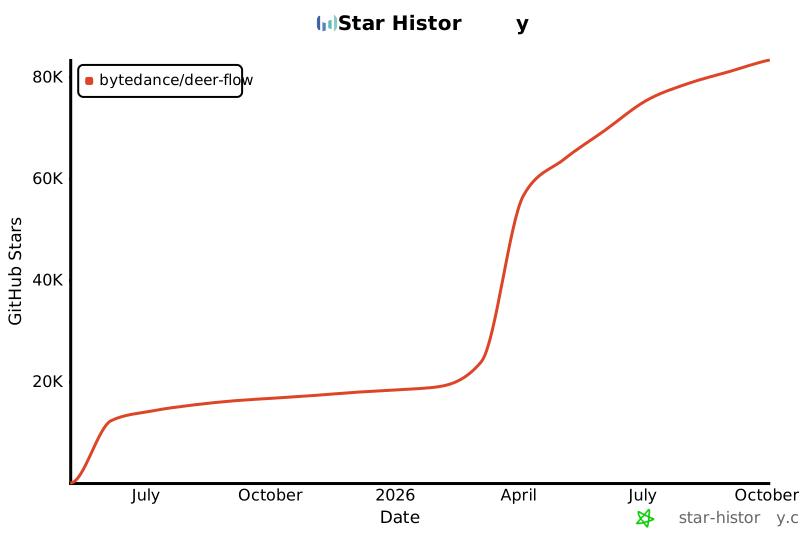](https://star-history.com/#bytedance/deer-flow&Date)
|
||||
+563
@@ -0,0 +1,563 @@
|
||||
# 🦌 DeerFlow - 2.0
|
||||
|
||||
[English](./README.md) | [中文](./README_zh.md) | 日本語 | [Français](./README_fr.md) | [Русский](./README_ru.md)
|
||||
|
||||
[](./backend/pyproject.toml)
|
||||
[](./Makefile)
|
||||
[](./LICENSE)
|
||||
|
||||
<a href="https://trendshift.io/repositories/14699" target="_blank"><img src="https://trendshift.io/api/badge/repositories/14699" alt="bytedance%2Fdeer-flow | Trendshift" style="width: 250px; height: 55px;" width="250" height="55"/></a>
|
||||
> 2026年2月28日、バージョン2のリリースに伴い、DeerFlowはGitHub Trendingで🏆 第1位を獲得しました。素晴らしいコミュニティの皆さん、ありがとうございます!💪🔥
|
||||
|
||||
DeerFlow(**D**eep **E**xploration and **E**fficient **R**esearch **Flow**)は、**サブエージェント**、**メモリ**、**サンドボックス**を統合し、**拡張可能なスキル**によってあらゆるタスクを実行できるオープンソースの**スーパーエージェントハーネス**です。
|
||||
|
||||
https://github.com/user-attachments/assets/a8bcadc4-e040-4cf2-8fda-dd768b999c18
|
||||
|
||||
> [!NOTE]
|
||||
> **DeerFlow 2.0はゼロからの完全な書き直しです。** v1とコードを共有していません。オリジナルのDeep Researchフレームワークをお探しの場合は、[`1.x`ブランチ](https://github.com/bytedance/deer-flow/tree/main-1.x)で引き続きメンテナンスされています。現在の開発は2.0に移行しています。
|
||||
|
||||
## 公式ウェブサイト
|
||||
|
||||
[<img width="2880" height="1600" alt="image" src="https://github.com/user-attachments/assets/a598c49f-3b2f-41ea-a052-05e21349188a" />](https://deerflow.tech)
|
||||
|
||||
**実際のデモ**は[**公式ウェブサイト**](https://deerflow.tech)でご覧いただけます。
|
||||
|
||||
## ByteDance Volcengine のコーディングプラン
|
||||
|
||||
<img width="4808" height="2400" alt="英文方舟" src="https://github.com/user-attachments/assets/2ecc7b9d-50be-4185-b1f7-5542d222fb2d" />
|
||||
|
||||
- DeerFlowの実行には、Doubao-Seed-2.0-Code、DeepSeek v3.2、Kimi 2.5の使用を強く推奨します
|
||||
- [詳細はこちら](https://www.byteplus.com/en/activity/codingplan?utm_campaign=deer_flow&utm_content=deer_flow&utm_medium=devrel&utm_source=OWO&utm_term=deer_flow)
|
||||
- [中国大陸の開発者はこちらをクリック](https://www.volcengine.com/activity/codingplan?utm_campaign=deer_flow&utm_content=deer_flow&utm_medium=devrel&utm_source=OWO&utm_term=deer_flow)
|
||||
|
||||
## InfoQuest
|
||||
|
||||
DeerFlowは、BytePlusが独自に開発したインテリジェント検索・クローリングツールセット「[InfoQuest(無料オンライン体験対応)](https://docs.byteplus.com/en/docs/InfoQuest/What_is_Info_Quest)」を新たに統合しました。
|
||||
|
||||
<a href="https://docs.byteplus.com/en/docs/InfoQuest/What_is_Info_Quest" target="_blank">
|
||||
<img
|
||||
src="https://sf16-sg.tiktokcdn.com/obj/eden-sg/hubseh7bsbps/20251208-160108.png" alt="InfoQuest_banner"
|
||||
/>
|
||||
</a>
|
||||
|
||||
---
|
||||
|
||||
## 目次
|
||||
|
||||
- [🦌 DeerFlow - 2.0](#-deerflow---20)
|
||||
- [公式ウェブサイト](#公式ウェブサイト)
|
||||
- [InfoQuest](#infoquest)
|
||||
- [目次](#目次)
|
||||
- [Coding Agent に一文でセットアップを依頼](#coding-agent-に一文でセットアップを依頼)
|
||||
- [クイックスタート](#クイックスタート)
|
||||
- [設定](#設定)
|
||||
- [アプリケーションの実行](#アプリケーションの実行)
|
||||
- [オプション1: Docker(推奨)](#オプション1-docker推奨)
|
||||
- [オプション2: ローカル開発](#オプション2-ローカル開発)
|
||||
- [詳細設定](#詳細設定)
|
||||
- [サンドボックスモード](#サンドボックスモード)
|
||||
- [MCPサーバー](#mcpサーバー)
|
||||
- [IMチャネル](#imチャネル)
|
||||
- [LangSmithトレーシング](#langsmithトレーシング)
|
||||
- [Deep Researchからスーパーエージェントハーネスへ](#deep-researchからスーパーエージェントハーネスへ)
|
||||
- [コア機能](#コア機能)
|
||||
- [スキルとツール](#スキルとツール)
|
||||
- [Claude Code連携](#claude-code連携)
|
||||
- [サブエージェント](#サブエージェント)
|
||||
- [サンドボックスとファイルシステム](#サンドボックスとファイルシステム)
|
||||
- [コンテキストエンジニアリング](#コンテキストエンジニアリング)
|
||||
- [長期メモリ](#長期メモリ)
|
||||
- [推奨モデル](#推奨モデル)
|
||||
- [組み込みPythonクライアント](#組み込みpythonクライアント)
|
||||
- [ドキュメント](#ドキュメント)
|
||||
- [⚠️ セキュリティに関する注意](#️-セキュリティに関する注意)
|
||||
- [コントリビュート](#コントリビュート)
|
||||
- [ライセンス](#ライセンス)
|
||||
- [謝辞](#謝辞)
|
||||
- [主要コントリビューター](#主要コントリビューター)
|
||||
- [Star History](#star-history)
|
||||
|
||||
## Coding Agent に一文でセットアップを依頼
|
||||
|
||||
Claude Code、Codex、Cursor、Windsurf などの coding agent を使っているなら、次の一文をそのまま渡せます。
|
||||
|
||||
```text
|
||||
DeerFlow がまだ clone されていなければ先に clone してから、https://raw.githubusercontent.com/bytedance/deer-flow/main/Install.md に従ってローカル開発環境を初期化してください
|
||||
```
|
||||
|
||||
このプロンプトは coding agent 向けです。必要なら先にリポジトリを clone し、Docker が使える場合は Docker を優先して初期セットアップを行い、最後に次の起動コマンドと不足している設定項目だけを返します。
|
||||
|
||||
## クイックスタート
|
||||
|
||||
### 設定
|
||||
|
||||
1. **DeerFlowリポジトリをクローン**
|
||||
|
||||
```bash
|
||||
git clone https://github.com/bytedance/deer-flow.git
|
||||
cd deer-flow
|
||||
```
|
||||
|
||||
2. **ローカル設定ファイルの生成**
|
||||
|
||||
プロジェクトルートディレクトリ(`deer-flow/`)から以下を実行します:
|
||||
|
||||
```bash
|
||||
make config
|
||||
```
|
||||
|
||||
このコマンドは、提供されたテンプレートに基づいてローカル設定ファイルを作成します。
|
||||
|
||||
3. **使用するモデルの設定**
|
||||
|
||||
`config.yaml`を編集し、少なくとも1つのモデルを定義します:
|
||||
|
||||
```yaml
|
||||
models:
|
||||
- name: gpt-4 # 内部識別子
|
||||
display_name: GPT-4 # 表示名
|
||||
use: langchain_openai:ChatOpenAI # LangChainクラスパス
|
||||
model: gpt-4 # API用モデル識別子
|
||||
api_key: $OPENAI_API_KEY # APIキー(推奨:環境変数を使用)
|
||||
max_tokens: 4096 # リクエストあたりの最大トークン数
|
||||
temperature: 0.7 # サンプリング温度
|
||||
|
||||
- name: openrouter-gemini-2.5-flash
|
||||
display_name: Gemini 2.5 Flash (OpenRouter)
|
||||
use: langchain_openai:ChatOpenAI
|
||||
model: google/gemini-2.5-flash-preview
|
||||
api_key: $OPENAI_API_KEY # OpenRouterもここではOpenAI互換のフィールド名を使用
|
||||
base_url: https://openrouter.ai/api/v1
|
||||
```
|
||||
|
||||
OpenRouterやOpenAI互換のゲートウェイは、`langchain_openai:ChatOpenAI`と`base_url`で設定します。プロバイダー固有の環境変数名を使用したい場合は、`api_key`でその変数を明示的に指定してください(例:`api_key: $OPENROUTER_API_KEY`)。
|
||||
|
||||
4. **設定したモデルのAPIキーを設定**
|
||||
|
||||
以下のいずれかの方法を選択してください:
|
||||
|
||||
- オプションA:プロジェクトルートの`.env`ファイルを編集(推奨)
|
||||
|
||||
```bash
|
||||
TAVILY_API_KEY=your-tavily-api-key
|
||||
OPENAI_API_KEY=your-openai-api-key
|
||||
# OpenRouterもlangchain_openai:ChatOpenAI + base_url使用時はOPENAI_API_KEYを使用します。
|
||||
# 必要に応じて他のプロバイダーキーを追加
|
||||
INFOQUEST_API_KEY=your-infoquest-api-key
|
||||
```
|
||||
|
||||
- オプションB:シェルで環境変数をエクスポート
|
||||
|
||||
```bash
|
||||
export OPENAI_API_KEY=your-openai-api-key
|
||||
```
|
||||
|
||||
- オプションC:`config.yaml`を直接編集(本番環境には非推奨)
|
||||
|
||||
```yaml
|
||||
models:
|
||||
- name: gpt-4
|
||||
api_key: your-actual-api-key-here # プレースホルダーを置換
|
||||
```
|
||||
|
||||
### アプリケーションの実行
|
||||
|
||||
#### オプション1: Docker(推奨)
|
||||
|
||||
**開発環境**(ホットリロード、ソースマウント):
|
||||
|
||||
```bash
|
||||
make docker-init # サンドボックスイメージをプル(初回またはイメージ更新時のみ)
|
||||
make docker-start # サービスを開始(config.yamlからサンドボックスモードを自動検出)
|
||||
```
|
||||
|
||||
`make docker-start`は、`config.yaml`がプロビジョナーモード(`sandbox.use: deerflow.community.aio_sandbox:AioSandboxProvider`と`provisioner_url`)を使用している場合にのみ`provisioner`を起動します。
|
||||
|
||||
**本番環境**(ローカルでイメージをビルドし、ランタイム設定とデータをマウント):
|
||||
|
||||
```bash
|
||||
make up # イメージをビルドして全本番サービスを開始
|
||||
make down # コンテナを停止して削除
|
||||
```
|
||||
|
||||
> [!NOTE]
|
||||
> LangGraphエージェントサーバーは現在`langgraph dev`(オープンソースCLIサーバー)経由で実行されます。
|
||||
|
||||
アクセス: http://localhost:2026
|
||||
|
||||
詳細なDocker開発ガイドは[CONTRIBUTING.md](CONTRIBUTING.md)をご覧ください。
|
||||
|
||||
#### オプション2: ローカル開発
|
||||
|
||||
サービスをローカルで実行する場合:
|
||||
|
||||
前提条件:上記の「設定」手順を先に完了してください(`make config`とモデルAPIキー)。`make dev`には有効な設定ファイルが必要です(デフォルトはプロジェクトルートの`config.yaml`。`DEER_FLOW_CONFIG_PATH`で上書き可能)。
|
||||
|
||||
1. **前提条件の確認**:
|
||||
```bash
|
||||
make check # Node.js 22+、pnpm、uv、nginxを検証
|
||||
```
|
||||
|
||||
2. **依存関係のインストール**:
|
||||
```bash
|
||||
make install # バックエンド+フロントエンドの依存関係をインストール
|
||||
```
|
||||
|
||||
3. **(オプション)サンドボックスイメージの事前プル**:
|
||||
```bash
|
||||
# Docker/コンテナベースのサンドボックス使用時に推奨
|
||||
make setup-sandbox
|
||||
```
|
||||
|
||||
4. **サービスの開始**:
|
||||
```bash
|
||||
make dev
|
||||
```
|
||||
|
||||
5. **アクセス**: http://localhost:2026
|
||||
|
||||
### 詳細設定
|
||||
#### サンドボックスモード
|
||||
|
||||
DeerFlowは複数のサンドボックス実行モードをサポートしています:
|
||||
- **ローカル実行**(ホストマシン上で直接サンドボックスコードを実行)
|
||||
- **Docker実行**(分離されたDockerコンテナ内でサンドボックスコードを実行)
|
||||
- **KubernetesによるDocker実行**(プロビジョナーサービス経由でKubernetesポッドでサンドボックスコードを実行)
|
||||
|
||||
Docker開発では、サービスの起動は`config.yaml`のサンドボックスモードに従います。ローカル/Dockerモードでは`provisioner`は起動されません。
|
||||
|
||||
お好みのモードの設定については[サンドボックス設定ガイド](backend/docs/CONFIGURATION.md#sandbox)をご覧ください。
|
||||
|
||||
#### MCPサーバー
|
||||
|
||||
DeerFlowは、機能を拡張するための設定可能なMCPサーバーとスキルをサポートしています。
|
||||
HTTP/SSE MCPサーバーでは、OAuthトークンフロー(`client_credentials`、`refresh_token`)がサポートされています。
|
||||
詳細な手順は[MCPサーバーガイド](backend/docs/MCP_SERVER.md)をご覧ください。
|
||||
|
||||
#### IMチャネル
|
||||
|
||||
DeerFlowはメッセージングアプリからのタスク受信をサポートしています。チャネルは設定時に自動的に開始されます。いずれもパブリックIPは不要です。
|
||||
|
||||
| チャネル | トランスポート | 難易度 |
|
||||
|---------|-----------|------------|
|
||||
| Telegram | Bot API(ロングポーリング) | 簡単 |
|
||||
| Slack | Socket Mode | 中程度 |
|
||||
| Feishu / Lark | WebSocket | 中程度 |
|
||||
|
||||
**`config.yaml`での設定:**
|
||||
|
||||
```yaml
|
||||
channels:
|
||||
# LangGraphサーバーURL(デフォルト: http://localhost:2024)
|
||||
langgraph_url: http://localhost:2024
|
||||
# Gateway API URL(デフォルト: http://localhost:8001)
|
||||
gateway_url: http://localhost:8001
|
||||
|
||||
# オプション: 全モバイルチャネルのグローバルセッションデフォルト
|
||||
session:
|
||||
assistant_id: lead_agent
|
||||
config:
|
||||
recursion_limit: 100
|
||||
context:
|
||||
thinking_enabled: true
|
||||
is_plan_mode: false
|
||||
subagent_enabled: false
|
||||
|
||||
feishu:
|
||||
enabled: true
|
||||
app_id: $FEISHU_APP_ID
|
||||
app_secret: $FEISHU_APP_SECRET
|
||||
# domain: https://open.feishu.cn # China (default)
|
||||
# domain: https://open.larksuite.com # International
|
||||
|
||||
slack:
|
||||
enabled: true
|
||||
bot_token: $SLACK_BOT_TOKEN # xoxb-...
|
||||
app_token: $SLACK_APP_TOKEN # xapp-...(Socket Mode)
|
||||
allowed_users: [] # 空 = 全員許可
|
||||
|
||||
telegram:
|
||||
enabled: true
|
||||
bot_token: $TELEGRAM_BOT_TOKEN
|
||||
allowed_users: [] # 空 = 全員許可
|
||||
|
||||
# オプション: チャネル/ユーザーごとのセッション設定
|
||||
session:
|
||||
assistant_id: mobile_agent
|
||||
context:
|
||||
thinking_enabled: false
|
||||
users:
|
||||
"123456789":
|
||||
assistant_id: vip_agent
|
||||
config:
|
||||
recursion_limit: 150
|
||||
context:
|
||||
thinking_enabled: true
|
||||
subagent_enabled: true
|
||||
```
|
||||
|
||||
対応するAPIキーを`.env`ファイルに設定します:
|
||||
|
||||
```bash
|
||||
# Telegram
|
||||
TELEGRAM_BOT_TOKEN=123456789:ABCdefGHIjklMNOpqrSTUvwxYZ
|
||||
|
||||
# Slack
|
||||
SLACK_BOT_TOKEN=xoxb-...
|
||||
SLACK_APP_TOKEN=xapp-...
|
||||
|
||||
# Feishu / Lark
|
||||
FEISHU_APP_ID=cli_xxxx
|
||||
FEISHU_APP_SECRET=your_app_secret
|
||||
```
|
||||
|
||||
**Telegramのセットアップ**
|
||||
|
||||
1. [@BotFather](https://t.me/BotFather)とチャットし、`/newbot`を送信してHTTP APIトークンをコピーします。
|
||||
2. `.env`に`TELEGRAM_BOT_TOKEN`を設定し、`config.yaml`でチャネルを有効にします。
|
||||
|
||||
**Slackのセットアップ**
|
||||
|
||||
1. [api.slack.com/apps](https://api.slack.com/apps)でSlackアプリを作成 → 新規アプリ作成 → 最初から作成。
|
||||
2. **OAuth & Permissions**で、Botトークンスコープを追加:`app_mentions:read`、`chat:write`、`im:history`、`im:read`、`im:write`、`files:write`。
|
||||
3. **Socket Mode**を有効化 → `connections:write`スコープのApp-Levelトークン(`xapp-…`)を生成。
|
||||
4. **Event Subscriptions**で、ボットイベントを購読:`app_mention`、`message.im`。
|
||||
5. `.env`に`SLACK_BOT_TOKEN`と`SLACK_APP_TOKEN`を設定し、`config.yaml`でチャネルを有効にします。
|
||||
|
||||
**Feishu / Larkのセットアップ**
|
||||
|
||||
1. [Feishu Open Platform](https://open.feishu.cn/)でアプリを作成 → **ボット**機能を有効化。
|
||||
2. 権限を追加:`im:message`、`im:message.p2p_msg:readonly`、`im:resource`。
|
||||
3. **イベント**で`im.message.receive_v1`を購読し、**ロングコネクション**モードを選択。
|
||||
4. App IDとApp Secretをコピー。`.env`に`FEISHU_APP_ID`と`FEISHU_APP_SECRET`を設定し、`config.yaml`でチャネルを有効にします。
|
||||
|
||||
**コマンド**
|
||||
|
||||
チャネル接続後、チャットから直接DeerFlowと対話できます:
|
||||
|
||||
| コマンド | 説明 |
|
||||
|---------|-------------|
|
||||
| `/new` | 新しい会話を開始 |
|
||||
| `/status` | 現在のスレッド情報を表示 |
|
||||
| `/models` | 利用可能なモデルを一覧表示 |
|
||||
| `/memory` | メモリを表示 |
|
||||
| `/help` | ヘルプを表示 |
|
||||
|
||||
> コマンドプレフィックスのないメッセージは通常のチャットとして扱われ、DeerFlowがスレッドを作成して会話形式で応答します。
|
||||
|
||||
#### LangSmithトレーシング
|
||||
|
||||
DeerFlowには[LangSmith](https://smith.langchain.com)による可観測性が組み込まれています。有効にすると、すべてのLLM呼び出し、エージェント実行、ツール実行がトレースされ、LangSmithダッシュボードで確認できます。
|
||||
|
||||
`.env`ファイルに以下を追加します:
|
||||
|
||||
```bash
|
||||
LANGSMITH_TRACING=true
|
||||
LANGSMITH_ENDPOINT=https://api.smith.langchain.com
|
||||
LANGSMITH_API_KEY=lsv2_pt_xxxxxxxxxxxxxxxx
|
||||
LANGSMITH_PROJECT=xxx
|
||||
```
|
||||
|
||||
Dockerデプロイでは、トレーシングはデフォルトで無効です。`.env`で`LANGSMITH_TRACING=true`と`LANGSMITH_API_KEY`を設定して有効にします。
|
||||
|
||||
## Deep Researchからスーパーエージェントハーネスへ
|
||||
|
||||
DeerFlowはDeep Researchフレームワークとして始まり、コミュニティがそれを大きく発展させました。リリース以来、開発者たちはリサーチを超えて活用してきました:データパイプラインの構築、スライドデッキの生成、ダッシュボードの立ち上げ、コンテンツワークフローの自動化。私たちが予想もしなかったことです。
|
||||
|
||||
これは重要なことを示していました:DeerFlowは単なるリサーチツールではなかったのです。それは**ハーネス**——エージェントが実際に仕事をこなすためのインフラを提供するランタイムでした。
|
||||
|
||||
そこで、ゼロから再構築しました。
|
||||
|
||||
DeerFlow 2.0は、もはやつなぎ合わせるフレームワークではありません。バッテリー同梱、完全に拡張可能なスーパーエージェントハーネスです。LangGraphとLangChainの上に構築され、エージェントが必要とするすべてを標準搭載しています:ファイルシステム、メモリ、スキル、サンドボックス実行、そして複雑なマルチステップタスクのためのプランニングとサブエージェントの生成機能。
|
||||
|
||||
そのまま使うもよし。分解して自分のものにするもよし。
|
||||
|
||||
## コア機能
|
||||
|
||||
### スキルとツール
|
||||
|
||||
スキルこそが、DeerFlowを*ほぼ何でもできる*ものにしています。
|
||||
|
||||
標準的なエージェントスキルは構造化された機能モジュールです——ワークフロー、ベストプラクティス、サポートリソースへの参照を定義するMarkdownファイルです。DeerFlowにはリサーチ、レポート生成、スライド作成、Webページ、画像・動画生成などの組み込みスキルが付属しています。しかし、真の力は拡張性にあります:独自のスキルを追加し、組み込みスキルを置き換え、複合ワークフローに組み合わせることができます。
|
||||
|
||||
スキルはプログレッシブに読み込まれます——タスクが必要とする時にのみ、一度にすべてではありません。これによりコンテキストウィンドウを軽量に保ち、トークンに敏感なモデルでもDeerFlowがうまく動作します。
|
||||
|
||||
Gateway経由で`.skill`アーカイブをインストールする際、DeerFlowは`version`、`author`、`compatibility`などの標準的なオプショナルフロントマターメタデータを受け入れ、有効な外部スキルを拒否しません。
|
||||
|
||||
ツールも同じ哲学に従います。DeerFlowにはコアツールセット——Web検索、Webフェッチ、ファイル操作、bash実行——が付属し、MCPサーバーやPython関数によるカスタムツールをサポートしています。何でも入れ替え可能、何でも追加可能です。
|
||||
|
||||
Gatewayが生成するフォローアップ提案は、プレーン文字列のモデル出力とブロック/リスト形式のリッチコンテンツの両方をJSON配列レスポンスの解析前に正規化するため、プロバイダー固有のコンテンツラッパーが提案をサイレントにドロップすることはありません。
|
||||
|
||||
```
|
||||
# サンドボックスコンテナ内のパス
|
||||
/mnt/skills/public
|
||||
├── research/SKILL.md
|
||||
├── report-generation/SKILL.md
|
||||
├── slide-creation/SKILL.md
|
||||
├── web-page/SKILL.md
|
||||
└── image-generation/SKILL.md
|
||||
|
||||
/mnt/skills/custom
|
||||
└── your-custom-skill/SKILL.md ← あなたのカスタムスキル
|
||||
```
|
||||
|
||||
#### Claude Code連携
|
||||
|
||||
`claude-to-deerflow`スキルを使えば、[Claude Code](https://docs.anthropic.com/en/docs/claude-code)から直接、実行中のDeerFlowインスタンスと対話できます。リサーチタスクの送信、ステータスの確認、スレッドの管理——すべてターミナルから離れずに実行できます。
|
||||
|
||||
**スキルのインストール**:
|
||||
|
||||
```bash
|
||||
npx skills add https://github.com/bytedance/deer-flow --skill claude-to-deerflow
|
||||
```
|
||||
|
||||
DeerFlowが実行中であることを確認し(デフォルトは`http://localhost:2026`)、Claude Codeで`/claude-to-deerflow`コマンドを使用します。
|
||||
|
||||
**できること**:
|
||||
- DeerFlowにメッセージを送信してストリーミングレスポンスを取得
|
||||
- 実行モードの選択:flash(高速)、standard、pro(プランニング)、ultra(サブエージェント)
|
||||
- DeerFlowのヘルスチェック、モデル/スキル/エージェントの一覧表示
|
||||
- スレッドと会話履歴の管理
|
||||
- 分析用ファイルのアップロード
|
||||
|
||||
**環境変数**(オプション、カスタムエンドポイント用):
|
||||
|
||||
```bash
|
||||
DEERFLOW_URL=http://localhost:2026 # 統合プロキシベースURL
|
||||
DEERFLOW_GATEWAY_URL=http://localhost:2026 # Gateway API
|
||||
DEERFLOW_LANGGRAPH_URL=http://localhost:2026/api/langgraph # LangGraph API
|
||||
```
|
||||
|
||||
完全なAPIリファレンスは[`skills/public/claude-to-deerflow/SKILL.md`](skills/public/claude-to-deerflow/SKILL.md)をご覧ください。
|
||||
|
||||
### サブエージェント
|
||||
|
||||
複雑なタスクは単一のパスに収まりません。DeerFlowはそれを分解します。
|
||||
|
||||
リードエージェントはオンザフライでサブエージェントを生成できます——それぞれ独自のスコープ付きコンテキスト、ツール、終了条件を持ちます。サブエージェントは可能な限り並列で実行され、構造化された結果を報告し、リードエージェントがすべてを一貫した出力に統合します。
|
||||
|
||||
これがDeerFlowが数分から数時間かかるタスクを処理する方法です:リサーチタスクが十数のサブエージェントに展開され、それぞれが異なる角度を探索し、1つのレポート——またはWebサイト——または生成されたビジュアル付きのスライドデッキに収束します。1つのハーネス、多くの手。
|
||||
|
||||
### サンドボックスとファイルシステム
|
||||
|
||||
DeerFlowは物事を*語る*だけではありません。自分のコンピューターを持っています。
|
||||
|
||||
各タスクは、完全なファイルシステムを持つ分離されたDockerコンテナ内で実行されます——スキル、ワークスペース、アップロード、出力。エージェントはファイルの読み書き・編集を行います。bashコマンドを実行し、コーディングを行います。画像を表示します。すべてサンドボックス化され、すべて監査可能で、セッション間の汚染はゼロです。
|
||||
|
||||
これが、ツールアクセスのあるチャットボットと、実際の実行環境を持つエージェントの違いです。
|
||||
|
||||
```
|
||||
# サンドボックスコンテナ内のパス
|
||||
/mnt/user-data/
|
||||
├── uploads/ ← あなたのファイル
|
||||
├── workspace/ ← エージェントの作業ディレクトリ
|
||||
└── outputs/ ← 最終成果物
|
||||
```
|
||||
|
||||
### コンテキストエンジニアリング
|
||||
|
||||
**分離されたサブエージェントコンテキスト**:各サブエージェントは独自の分離されたコンテキストで実行されます。これにより、サブエージェントはメインエージェントや他のサブエージェントのコンテキストを見ることができません。これは、サブエージェントが目の前のタスクに集中し、メインエージェントや他のサブエージェントのコンテキストに気を取られないようにするために重要です。
|
||||
|
||||
**要約化**:セッション内で、DeerFlowはコンテキストを積極的に管理します——完了したサブタスクの要約、中間結果のファイルシステムへのオフロード、もはや直接関係のないものの圧縮。これにより、コンテキストウィンドウを超えることなく、長いマルチステップタスク全体を通じてシャープさを維持します。
|
||||
|
||||
### 長期メモリ
|
||||
|
||||
ほとんどのエージェントは、会話が終わるとすべてを忘れます。DeerFlowは記憶します。
|
||||
|
||||
セッションをまたいで、DeerFlowはあなたのプロフィール、好み、蓄積された知識の永続的なメモリを構築します。使えば使うほど、あなたのことをよく知るようになります——あなたの文体、技術スタック、繰り返されるワークフロー。メモリはローカルに保存され、あなたの管理下にあります。
|
||||
|
||||
メモリ更新は適用時に重複するファクトエントリをスキップするようになり、繰り返される好みやコンテキストがセッションをまたいで際限なく蓄積されることはありません。
|
||||
|
||||
## 推奨モデル
|
||||
|
||||
DeerFlowはモデルに依存しません——OpenAI互換APIを実装する任意のLLMで動作します。とはいえ、以下をサポートするモデルで最高のパフォーマンスを発揮します:
|
||||
|
||||
- **長いコンテキストウィンドウ**(10万トークン以上):深いリサーチとマルチステップタスク向け
|
||||
- **推論能力**:適応的なプランニングと複雑な分解向け
|
||||
- **マルチモーダル入力**:画像理解と動画理解向け
|
||||
- **強力なツール使用**:信頼性の高いファンクションコーリングと構造化された出力向け
|
||||
|
||||
## 組み込みPythonクライアント
|
||||
|
||||
DeerFlowは、完全なHTTPサービスを実行せずに組み込みPythonライブラリとして使用できます。`DeerFlowClient`は、すべてのエージェントとGateway機能へのプロセス内直接アクセスを提供し、HTTP Gateway APIと同じレスポンススキーマを返します:
|
||||
|
||||
```python
|
||||
from deerflow.client import DeerFlowClient
|
||||
|
||||
client = DeerFlowClient()
|
||||
|
||||
# チャット
|
||||
response = client.chat("Analyze this paper for me", thread_id="my-thread")
|
||||
|
||||
# ストリーミング(LangGraph SSEプロトコル:values、messages-tuple、end)
|
||||
for event in client.stream("hello"):
|
||||
if event.type == "messages-tuple" and event.data.get("type") == "ai":
|
||||
print(event.data["content"])
|
||||
|
||||
# 設定&管理 — Gateway準拠のdictを返す
|
||||
models = client.list_models() # {"models": [...]}
|
||||
skills = client.list_skills() # {"skills": [...]}
|
||||
client.update_skill("web-search", enabled=True)
|
||||
client.upload_files("thread-1", ["./report.pdf"]) # {"success": True, "files": [...]}
|
||||
```
|
||||
|
||||
すべてのdict返却メソッドはCIでGateway Pydanticレスポンスモデルに対して検証されており(`TestGatewayConformance`)、組み込みクライアントがHTTP APIスキーマと同期していることを保証します。完全なAPIドキュメントは`backend/packages/harness/deerflow/client.py`をご覧ください。
|
||||
|
||||
## ドキュメント
|
||||
|
||||
- [コントリビュートガイド](CONTRIBUTING.md) - 開発環境のセットアップとワークフロー
|
||||
- [設定ガイド](backend/docs/CONFIGURATION.md) - セットアップと設定の手順
|
||||
- [アーキテクチャ概要](backend/CLAUDE.md) - 技術的なアーキテクチャの詳細
|
||||
- [バックエンドアーキテクチャ](backend/README.md) - バックエンドアーキテクチャとAPIリファレンス
|
||||
|
||||
## ⚠️ セキュリティに関する注意
|
||||
|
||||
### 不適切なデプロイはセキュリティリスクを引き起こす可能性があります
|
||||
|
||||
DeerFlowは**システムコマンドの実行、リソース操作、ビジネスロジックの呼び出し**などの重要な高権限機能を備えており、デフォルトでは**ローカルの信頼できる環境(127.0.0.1のループバックアクセスのみ)にデプロイされる設計**になっています。信頼できないLAN、公開クラウドサーバー、または複数のエンドポイントからアクセス可能なネットワーク環境にエージェントをデプロイし、厳格なセキュリティ対策を講じない場合、以下のようなセキュリティリスクが生じる可能性があります:
|
||||
|
||||
- **不正な違法呼び出し**:エージェントの機能が権限のない第三者や悪意のあるインターネットスキャナーに発見され、システムコマンドやファイル読み書きなどの高リスク操作を実行する不正な一括リクエストが引き起こされ、重大なセキュリティ上の問題が発生する可能性があります。
|
||||
- **コンプライアンスおよび法的リスク**:エージェントがサイバー攻撃やデータ窃取などの違法行為に不正使用された場合、法的責任やコンプライアンス上のリスクが生じる可能性があります。
|
||||
|
||||
### セキュリティ推奨事項
|
||||
|
||||
**注意:DeerFlowはローカルの信頼できるネットワーク環境にデプロイすることを強く推奨します。** クロスデバイス・クロスネットワークのデプロイが必要な場合は、以下のような厳格なセキュリティ対策を実装する必要があります:
|
||||
|
||||
- **IPホワイトリストの設定**:`iptables`を使用するか、ハードウェアファイアウォール / ACL機能付きスイッチをデプロイして**IPホワイトリストルールを設定**し、他のすべてのIPアドレスからのアクセスを拒否します。
|
||||
- **前置認証**:リバースプロキシ(nginxなど)を設定し、**強力な前置認証を有効化**して、認証なしのアクセスをブロックします。
|
||||
- **ネットワーク分離**:可能であれば、エージェントと信頼できるデバイスを**同一の専用VLAN**に配置し、他のネットワークデバイスから隔離します。
|
||||
- **アップデートを継続的に確認**:DeerFlowのセキュリティ機能のアップデートを継続的にフォローしてください。
|
||||
|
||||
## コントリビュート
|
||||
|
||||
コントリビューションを歓迎します!開発環境のセットアップ、ワークフロー、ガイドラインについては[CONTRIBUTING.md](CONTRIBUTING.md)をご覧ください。
|
||||
|
||||
回帰テストのカバレッジには、`backend/tests/`でのDockerサンドボックスモード検出とプロビジョナーkubeconfig-pathハンドリングテストが含まれます。
|
||||
|
||||
## ライセンス
|
||||
|
||||
このプロジェクトはオープンソースであり、[MITライセンス](./LICENSE)の下で提供されています。
|
||||
|
||||
## 謝辞
|
||||
|
||||
DeerFlowはオープンソースコミュニティの素晴らしい成果の上に構築されています。DeerFlowを可能にしてくれたすべてのプロジェクトとコントリビューターに深く感謝いたします。まさに、巨人の肩の上に立っています。
|
||||
|
||||
以下のプロジェクトの貴重な貢献に心からの感謝を申し上げます:
|
||||
|
||||
- **[LangChain](https://github.com/langchain-ai/langchain)**:その優れたフレームワークがLLMのインタラクションとチェーンを支え、シームレスな統合と機能を実現しています。
|
||||
- **[LangGraph](https://github.com/langchain-ai/langgraph)**:マルチエージェントオーケストレーションへの革新的なアプローチが、DeerFlowの洗練されたワークフローの実現に大きく貢献しています。
|
||||
|
||||
これらのプロジェクトはオープンソースコラボレーションの変革的な力を体現しており、その基盤の上に構築できることを誇りに思います。
|
||||
|
||||
### 主要コントリビューター
|
||||
|
||||
`DeerFlow`のコア著者に心からの感謝を捧げます。そのビジョン、情熱、献身がこのプロジェクトに命を吹き込みました:
|
||||
|
||||
- **[Daniel Walnut](https://github.com/hetaoBackend/)**
|
||||
- **[Henry Li](https://github.com/magiccube/)**
|
||||
|
||||
揺るぎないコミットメントと専門知識が、DeerFlowの成功の原動力です。この旅の先頭に立ってくださっていることを光栄に思います。
|
||||
|
||||
## Star History
|
||||
|
||||
[](https://star-history.com/#bytedance/deer-flow&Date)
|
||||
+490
@@ -0,0 +1,490 @@
|
||||
# 🦌 DeerFlow - 2.0
|
||||
|
||||
[English](./README.md) | [中文](./README_zh.md) | [日本語](./README_ja.md) | [Français](./README_fr.md) | Русский
|
||||
|
||||
[](./backend/pyproject.toml)
|
||||
[](./Makefile)
|
||||
[](./LICENSE)
|
||||
|
||||
<a href="https://trendshift.io/repositories/14699" target="_blank"><img src="https://trendshift.io/api/badge/repositories/14699" alt="bytedance%2Fdeer-flow | Trendshift" style="width: 250px; height: 55px;" width="250" height="55"/></a>
|
||||
|
||||
> 28 февраля 2026 года DeerFlow занял 🏆 #1 в GitHub Trending после релиза версии 2. Спасибо огромное нашему сообществу — всё благодаря вам! 💪🔥
|
||||
|
||||
DeerFlow (**D**eep **E**xploration and **E**fficient **R**esearch **Flow**) — open-source **Super Agent Harness**, который управляет **Sub-Agents**, **Memory** и **Sandbox** для решения почти любой задачи. Всё на основе расширяемых **Skills**.
|
||||
|
||||
https://github.com/user-attachments/assets/a8bcadc4-e040-4cf2-8fda-dd768b999c18
|
||||
|
||||
> [!NOTE]
|
||||
> **DeerFlow 2.0 — проект переписан с нуля.** Общего кода с v1 нет. Если нужен оригинальный Deep Research фреймворк — он живёт в ветке [`1.x`](https://github.com/bytedance/deer-flow/tree/main-1.x), туда тоже принимают контрибьюты. Активная разработка идёт в 2.0.
|
||||
|
||||
## Официальный сайт
|
||||
|
||||
[<img width="2880" height="1600" alt="image" src="https://github.com/user-attachments/assets/a598c49f-3b2f-41ea-a052-05e21349188a" />](https://deerflow.tech)
|
||||
|
||||
Больше информации и живые демо на [**официальном сайте**](https://deerflow.tech).
|
||||
|
||||
## Coding Plan от ByteDance Volcengine
|
||||
|
||||
<img width="4808" height="2400" alt="英文方舟" src="https://github.com/user-attachments/assets/2ecc7b9d-50be-4185-b1f7-5542d222fb2d" />
|
||||
|
||||
- Рекомендуем Doubao-Seed-2.0-Code, DeepSeek v3.2 и Kimi 2.5 для запуска DeerFlow
|
||||
- [Подробнее](https://www.byteplus.com/en/activity/codingplan?utm_campaign=deer_flow&utm_content=deer_flow&utm_medium=devrel&utm_source=OWO&utm_term=deer_flow)
|
||||
- [Для разработчиков из материкового Китая](https://www.volcengine.com/activity/codingplan?utm_campaign=deer_flow&utm_content=deer_flow&utm_medium=devrel&utm_source=OWO&utm_term=deer_flow)
|
||||
|
||||
## InfoQuest
|
||||
|
||||
DeerFlow интегрирован с инструментарием для умного поиска и краулинга от BytePlus — [InfoQuest (есть бесплатный онлайн-доступ)](https://docs.byteplus.com/en/docs/InfoQuest/What_is_Info_Quest)
|
||||
|
||||
<a href="https://docs.byteplus.com/en/docs/InfoQuest/What_is_Info_Quest" target="_blank">
|
||||
<img
|
||||
src="https://sf16-sg.tiktokcdn.com/obj/eden-sg/hubseh7bsbps/20251208-160108.png"
|
||||
alt="InfoQuest_banner"
|
||||
/>
|
||||
</a>
|
||||
|
||||
---
|
||||
|
||||
## Содержание
|
||||
|
||||
- [🦌 DeerFlow - 2.0](#-deerflow---20)
|
||||
- [Официальный сайт](#официальный-сайт)
|
||||
- [InfoQuest](#infoquest)
|
||||
- [Содержание](#содержание)
|
||||
- [Установка одной фразой для coding agent](#установка-одной-фразой-для-coding-agent)
|
||||
- [Быстрый старт](#быстрый-старт)
|
||||
- [Конфигурация](#конфигурация)
|
||||
- [Запуск](#запуск)
|
||||
- [Вариант 1: Docker (рекомендуется)](#вариант-1-docker-рекомендуется)
|
||||
- [Вариант 2: Локальная разработка](#вариант-2-локальная-разработка)
|
||||
- [Дополнительно](#дополнительно)
|
||||
- [Режим Sandbox](#режим-sandbox)
|
||||
- [MCP-сервер](#mcp-сервер)
|
||||
- [Мессенджеры](#мессенджеры)
|
||||
- [Трассировка LangSmith](#трассировка-langsmith)
|
||||
- [От Deep Research к Super Agent Harness](#от-deep-research-к-super-agent-harness)
|
||||
- [Core Features](#core-features)
|
||||
- [Skills & Tools](#skills--tools)
|
||||
- [Интеграция с Claude Code](#интеграция-с-claude-code)
|
||||
- [Sub-Agents](#sub-agents)
|
||||
- [Sandbox & файловая система](#sandbox--файловая-система)
|
||||
- [Context Engineering](#context-engineering)
|
||||
- [Long-Term Memory](#long-term-memory)
|
||||
- [Рекомендуемые модели](#рекомендуемые-модели)
|
||||
- [Встроенный Python-клиент](#встроенный-python-клиент)
|
||||
- [Документация](#документация)
|
||||
- [⚠️ Безопасность](#️-безопасность)
|
||||
- [Участие в разработке](#участие-в-разработке)
|
||||
- [Лицензия](#лицензия)
|
||||
- [Благодарности](#благодарности)
|
||||
- [Ключевые контрибьюторы](#ключевые-контрибьюторы)
|
||||
- [История звёзд](#история-звёзд)
|
||||
|
||||
## Установка одной фразой для coding agent
|
||||
|
||||
Если вы используете Claude Code, Codex, Cursor, Windsurf или другой coding agent, просто отправьте ему эту фразу:
|
||||
|
||||
```text
|
||||
Если DeerFlow еще не клонирован, сначала клонируй его, а затем подготовь локальное окружение разработки по инструкции https://raw.githubusercontent.com/bytedance/deer-flow/main/Install.md
|
||||
```
|
||||
|
||||
Этот prompt предназначен для coding agent. Он просит агента при необходимости сначала клонировать репозиторий, предпочесть Docker, если он доступен, и в конце вернуть точную команду запуска и список недостающих настроек.
|
||||
|
||||
## Быстрый старт
|
||||
|
||||
### Конфигурация
|
||||
|
||||
1. **Склонировать репозиторий DeerFlow**
|
||||
|
||||
```bash
|
||||
git clone https://github.com/bytedance/deer-flow.git
|
||||
cd deer-flow
|
||||
```
|
||||
|
||||
2. **Сгенерировать локальные конфиги**
|
||||
|
||||
Из корня проекта (`deer-flow/`) запустите:
|
||||
|
||||
```bash
|
||||
make config
|
||||
```
|
||||
|
||||
Команда создаёт локальные конфиги на основе шаблонов.
|
||||
|
||||
3. **Настроить модель**
|
||||
|
||||
Отредактируйте `config.yaml` и задайте хотя бы одну модель:
|
||||
|
||||
```yaml
|
||||
models:
|
||||
- name: gpt-4 # Внутренний идентификатор
|
||||
display_name: GPT-4 # Отображаемое имя
|
||||
use: langchain_openai:ChatOpenAI # Путь к классу LangChain
|
||||
model: gpt-4 # Идентификатор модели для API
|
||||
api_key: $OPENAI_API_KEY # API-ключ (рекомендуется: переменная окружения)
|
||||
max_tokens: 4096 # Максимальное количество токенов на запрос
|
||||
temperature: 0.7 # Температура сэмплирования
|
||||
|
||||
- name: openrouter-gemini-2.5-flash
|
||||
display_name: Gemini 2.5 Flash (OpenRouter)
|
||||
use: langchain_openai:ChatOpenAI
|
||||
model: google/gemini-2.5-flash-preview
|
||||
api_key: $OPENAI_API_KEY
|
||||
base_url: https://openrouter.ai/api/v1
|
||||
|
||||
- name: gpt-5-responses
|
||||
display_name: GPT-5 (Responses API)
|
||||
use: langchain_openai:ChatOpenAI
|
||||
model: gpt-5
|
||||
api_key: $OPENAI_API_KEY
|
||||
use_responses_api: true
|
||||
output_version: responses/v1
|
||||
```
|
||||
|
||||
OpenRouter и аналогичные OpenAI-совместимые шлюзы настраиваются через `langchain_openai:ChatOpenAI` с параметром `base_url`. Для CLI-провайдеров:
|
||||
|
||||
```yaml
|
||||
models:
|
||||
- name: gpt-5.4
|
||||
display_name: GPT-5.4 (Codex CLI)
|
||||
use: deerflow.models.openai_codex_provider:CodexChatModel
|
||||
model: gpt-5.4
|
||||
supports_thinking: true
|
||||
supports_reasoning_effort: true
|
||||
|
||||
- name: claude-sonnet-4.6
|
||||
display_name: Claude Sonnet 4.6 (Claude Code OAuth)
|
||||
use: deerflow.models.claude_provider:ClaudeChatModel
|
||||
model: claude-sonnet-4-6
|
||||
max_tokens: 4096
|
||||
supports_thinking: true
|
||||
```
|
||||
|
||||
- Codex CLI читает `~/.codex/auth.json`
|
||||
- Claude Code принимает `CLAUDE_CODE_OAUTH_TOKEN`, `ANTHROPIC_AUTH_TOKEN` или `~/.claude/.credentials.json`
|
||||
- На macOS при необходимости экспортируйте аутентификацию Claude Code явно:
|
||||
|
||||
```bash
|
||||
eval "$(python3 scripts/export_claude_code_oauth.py --print-export)"
|
||||
```
|
||||
|
||||
4. **Указать API-ключи**
|
||||
|
||||
- **Вариант А**: файл `.env` в корне проекта (рекомендуется)
|
||||
|
||||
```bash
|
||||
TAVILY_API_KEY=your-tavily-api-key
|
||||
OPENAI_API_KEY=your-openai-api-key
|
||||
INFOQUEST_API_KEY=your-infoquest-api-key
|
||||
```
|
||||
|
||||
- **Вариант Б**: переменные окружения в терминале
|
||||
|
||||
```bash
|
||||
export OPENAI_API_KEY=your-openai-api-key
|
||||
```
|
||||
|
||||
- **Вариант В**: напрямую в `config.yaml` (не рекомендуется для продакшена)
|
||||
|
||||
### Запуск
|
||||
|
||||
#### Вариант 1: Docker (рекомендуется)
|
||||
|
||||
**Разработка** (hot-reload, монтирование исходников):
|
||||
|
||||
```bash
|
||||
make docker-init # Загрузить образ Sandbox (один раз или при обновлении)
|
||||
make docker-start # Запустить сервисы
|
||||
```
|
||||
|
||||
**Продакшен** (собирает образы локально):
|
||||
|
||||
```bash
|
||||
make up # Собрать образы и запустить все сервисы
|
||||
make down # Остановить и удалить контейнеры
|
||||
```
|
||||
|
||||
> [!TIP]
|
||||
> На Linux при ошибке `permission denied` для Docker daemon добавьте пользователя в группу `docker` и перелогиньтесь. Подробнее в [CONTRIBUTING.md](CONTRIBUTING.md#linux-docker-daemon-permission-denied).
|
||||
|
||||
Адрес: http://localhost:2026
|
||||
|
||||
#### Вариант 2: Локальная разработка
|
||||
|
||||
1. **Проверить зависимости**:
|
||||
```bash
|
||||
make check # Проверяет Node.js 22+, pnpm, uv, nginx
|
||||
```
|
||||
|
||||
2. **Установить зависимости**:
|
||||
```bash
|
||||
make install
|
||||
```
|
||||
|
||||
3. **(Опционально) Загрузить образ Sandbox заранее**:
|
||||
```bash
|
||||
make setup-sandbox
|
||||
```
|
||||
|
||||
4. **Запустить сервисы**:
|
||||
```bash
|
||||
make dev
|
||||
```
|
||||
|
||||
5. **Адрес**: http://localhost:2026
|
||||
|
||||
### Дополнительно
|
||||
|
||||
#### Режим Sandbox
|
||||
|
||||
DeerFlow поддерживает несколько режимов выполнения:
|
||||
- **Локальное выполнение** — код запускается прямо на хосте
|
||||
- **Docker** — код выполняется в изолированных Docker-контейнерах
|
||||
- **Docker + Kubernetes** — выполнение в Kubernetes-подах через provisioner
|
||||
|
||||
Подробнее в [руководстве по конфигурации Sandbox](backend/docs/CONFIGURATION.md#sandbox).
|
||||
|
||||
#### MCP-сервер
|
||||
|
||||
DeerFlow поддерживает настраиваемые MCP-серверы для расширения возможностей. Для HTTP/SSE MCP-серверов поддерживаются OAuth-токены (`client_credentials`, `refresh_token`). Подробнее в [руководстве по MCP-серверу](backend/docs/MCP_SERVER.md).
|
||||
|
||||
#### Мессенджеры
|
||||
|
||||
DeerFlow принимает задачи прямо из мессенджеров. Каналы запускаются автоматически при настройке, публичный IP не нужен.
|
||||
|
||||
| Канал | Транспорт | Сложность |
|
||||
|-------|-----------|-----------|
|
||||
| Telegram | Bot API (long-polling) | Просто |
|
||||
| Slack | Socket Mode | Средне |
|
||||
| Feishu / Lark | WebSocket | Средне |
|
||||
|
||||
**Конфигурация в `config.yaml`:**
|
||||
|
||||
```yaml
|
||||
channels:
|
||||
feishu:
|
||||
enabled: true
|
||||
app_id: $FEISHU_APP_ID
|
||||
app_secret: $FEISHU_APP_SECRET
|
||||
# domain: https://open.feishu.cn # China (default)
|
||||
# domain: https://open.larksuite.com # International
|
||||
|
||||
slack:
|
||||
enabled: true
|
||||
bot_token: $SLACK_BOT_TOKEN
|
||||
app_token: $SLACK_APP_TOKEN
|
||||
allowed_users: []
|
||||
|
||||
telegram:
|
||||
enabled: true
|
||||
bot_token: $TELEGRAM_BOT_TOKEN
|
||||
allowed_users: []
|
||||
```
|
||||
|
||||
**Настройка Telegram**
|
||||
|
||||
1. Напишите [@BotFather](https://t.me/BotFather), отправьте `/newbot` и скопируйте HTTP API-токен.
|
||||
2. Укажите `TELEGRAM_BOT_TOKEN` в `.env` и включите канал в `config.yaml`.
|
||||
|
||||
**Доступные команды**
|
||||
|
||||
| Команда | Описание |
|
||||
|---------|----------|
|
||||
| `/new` | Начать новый диалог |
|
||||
| `/status` | Показать информацию о текущем треде |
|
||||
| `/models` | Список доступных моделей |
|
||||
| `/memory` | Просмотреть память |
|
||||
| `/help` | Показать справку |
|
||||
|
||||
> Сообщения без команды воспринимаются как обычный чат — DeerFlow создаёт тред и отвечает.
|
||||
|
||||
#### Трассировка LangSmith
|
||||
|
||||
DeerFlow имеет встроенную интеграцию с [LangSmith](https://smith.langchain.com) для наблюдаемости. При включении все вызовы LLM, запуски агентов и выполнения инструментов отслеживаются и отображаются в дашборде LangSmith.
|
||||
|
||||
Добавьте в файл `.env` в корне проекта:
|
||||
|
||||
```bash
|
||||
LANGSMITH_TRACING=true
|
||||
LANGSMITH_API_KEY=lsv2_pt_xxxxxxxxxxxxxxxx
|
||||
LANGSMITH_PROJECT=deer-flow
|
||||
```
|
||||
|
||||
`LANGSMITH_ENDPOINT` по умолчанию `https://api.smith.langchain.com` и может быть переопределён при необходимости. Устаревшие переменные `LANGCHAIN_*` (`LANGCHAIN_TRACING_V2`, `LANGCHAIN_API_KEY` и т.д.) также поддерживаются для обратной совместимости; `LANGSMITH_*` имеет приоритет, когда заданы обе.
|
||||
|
||||
В Docker-развёртываниях трассировка отключена по умолчанию. Установите `LANGSMITH_TRACING=true` и `LANGSMITH_API_KEY` в `.env` для включения.
|
||||
|
||||
## От Deep Research к Super Agent Harness
|
||||
|
||||
DeerFlow начинался как фреймворк для Deep Research, и сообщество вышло далеко за эти рамки. После запуска разработчики строили пайплайны, генерировали презентации, поднимали дашборды, автоматизировали контент. То, чего мы не ожидали.
|
||||
|
||||
Стало понятно: DeerFlow не просто research-инструмент. Это **harness**: runtime, который даёт агентам необходимую инфраструктуру.
|
||||
|
||||
Поэтому мы переписали всё с нуля.
|
||||
|
||||
DeerFlow 2.0 — это Super Agent Harness «из коробки». Batteries included, полностью расширяемый. Построен на LangGraph и LangChain. По умолчанию есть всё, что нужно агенту: файловая система, memory, skills, sandbox-выполнение и возможность планировать и запускать sub-agents для сложных многошаговых задач.
|
||||
|
||||
Используйте как есть. Или разберите и переделайте под себя.
|
||||
|
||||
## Core Features
|
||||
|
||||
### Skills & Tools
|
||||
|
||||
Skills — это то, что позволяет DeerFlow делать почти что угодно.
|
||||
|
||||
Agent Skill — это структурированный модуль: Markdown-файл с описанием воркфлоу, лучших практик и ссылок на ресурсы. DeerFlow поставляется со встроенными skills для ресёрча, генерации отчётов, слайдов, веб-страниц, изображений и видео. Но главное — расширяемость: добавляйте свои skills, заменяйте встроенные или собирайте из них составные воркфлоу.
|
||||
|
||||
Skills загружаются по мере необходимости, только когда задача их требует. Это держит контекстное окно чистым.
|
||||
|
||||
```
|
||||
# Пути внутри контейнера sandbox
|
||||
/mnt/skills/public
|
||||
├── research/SKILL.md
|
||||
├── report-generation/SKILL.md
|
||||
├── slide-creation/SKILL.md
|
||||
├── web-page/SKILL.md
|
||||
└── image-generation/SKILL.md
|
||||
|
||||
/mnt/skills/custom
|
||||
└── your-custom-skill/SKILL.md ← ваш skill
|
||||
```
|
||||
|
||||
#### Интеграция с Claude Code
|
||||
|
||||
Skill `claude-to-deerflow` позволяет работать с DeerFlow прямо из [Claude Code](https://docs.anthropic.com/en/docs/claude-code). Отправляйте задачи, проверяйте статус, управляйте тредами, не выходя из терминала.
|
||||
|
||||
**Установка скилла**:
|
||||
|
||||
```bash
|
||||
npx skills add https://github.com/bytedance/deer-flow --skill claude-to-deerflow
|
||||
```
|
||||
|
||||
**Что можно делать**:
|
||||
- Отправлять сообщения в DeerFlow и получать потоковые ответы
|
||||
- Выбирать режимы выполнения: flash (быстро), standard, pro (planning), ultra (sub-agents)
|
||||
- Проверять статус DeerFlow, просматривать модели, скиллы, агентов
|
||||
- Управлять тредами и историей диалога
|
||||
- Загружать файлы для анализа
|
||||
|
||||
Полный справочник API в [`skills/public/claude-to-deerflow/SKILL.md`](skills/public/claude-to-deerflow/SKILL.md).
|
||||
|
||||
### Sub-Agents
|
||||
|
||||
Сложные задачи редко решаются за один проход. DeerFlow их декомпозирует.
|
||||
|
||||
Lead agent запускает sub-agents на лету, каждый со своим изолированным контекстом, инструментами и условиями завершения. Sub-agents работают параллельно, возвращают структурированные результаты, а lead agent собирает всё в единый итог.
|
||||
|
||||
Вот как DeerFlow справляется с задачами на минуты и часы: research-задача разветвляется в дюжину sub-agents, каждый копает свой угол, потом всё сходится в один отчёт, или сайт, или слайддек со сгенерированными визуалами. Один harness, много рук.
|
||||
|
||||
### Sandbox & файловая система
|
||||
|
||||
DeerFlow не просто *говорит* о том, что умеет что-то делать. У него есть собственный компьютер.
|
||||
|
||||
Каждая задача выполняется внутри изолированного Docker-контейнера с полной файловой системой: skills, workspace, uploads, outputs. Агент читает, пишет и редактирует файлы. Выполняет bash-команды и пишет код. Смотрит на изображения. Всё изолировано, всё прозрачно, никакого пересечения между сессиями.
|
||||
|
||||
Это разница между чатботом с доступом к инструментам и агентом с реальной средой выполнения.
|
||||
|
||||
```
|
||||
# Пути внутри контейнера sandbox
|
||||
/mnt/user-data/
|
||||
├── uploads/ ← ваши файлы
|
||||
├── workspace/ ← рабочая директория агентов
|
||||
└── outputs/ ← результаты
|
||||
```
|
||||
|
||||
### Context Engineering
|
||||
|
||||
**Изолированный контекст**: каждый sub-agent работает в своём контексте и не видит контекст главного агента или других sub-agents. Агент фокусируется на своей задаче.
|
||||
|
||||
**Управление контекстом**: внутри сессии DeerFlow агрессивно сжимает контекст и суммирует завершённые подзадачи, выгружает промежуточные результаты в файловую систему, сжимает то, что уже не актуально. На длинных многошаговых задачах контекстное окно не переполняется.
|
||||
|
||||
### Long-Term Memory
|
||||
|
||||
Большинство агентов забывают всё, когда диалог заканчивается. DeerFlow помнит.
|
||||
|
||||
DeerFlow сохраняет ваш профиль, предпочтения и накопленные знания между сессиями. Чем больше используете, тем лучше он вас знает: стиль, технологический стек, повторяющиеся воркфлоу. Всё хранится локально и остаётся под вашим контролем.
|
||||
|
||||
## Рекомендуемые модели
|
||||
|
||||
DeerFlow работает с любым LLM через OpenAI-совместимый API. Лучше всего — с моделями, которые поддерживают:
|
||||
|
||||
- **Большое контекстное окно** (100k+ токенов) — для deep research и многошаговых задач
|
||||
- **Reasoning capabilities** — для адаптивного планирования и сложной декомпозиции
|
||||
- **Multimodal inputs** — для работы с изображениями и видео
|
||||
- **Strong tool-use** — для надёжного вызова функций и структурированных ответов
|
||||
|
||||
## Встроенный Python-клиент
|
||||
|
||||
DeerFlow можно использовать как Python-библиотеку прямо в коде — без запуска HTTP-сервисов. `DeerFlowClient` даёт доступ ко всем возможностям агента и Gateway, возвращает те же схемы ответов, что и HTTP Gateway API:
|
||||
|
||||
```python
|
||||
from deerflow.client import DeerFlowClient
|
||||
|
||||
client = DeerFlowClient()
|
||||
|
||||
# Chat
|
||||
response = client.chat("Analyze this paper for me", thread_id="my-thread")
|
||||
|
||||
# Streaming (LangGraph SSE protocol: values, messages-tuple, end)
|
||||
for event in client.stream("hello"):
|
||||
if event.type == "messages-tuple" and event.data.get("type") == "ai":
|
||||
print(event.data["content"])
|
||||
|
||||
# Configuration & management — returns Gateway-aligned dicts
|
||||
models = client.list_models() # {"models": [...]}
|
||||
skills = client.list_skills() # {"skills": [...]}
|
||||
client.update_skill("web-search", enabled=True)
|
||||
client.upload_files("thread-1", ["./report.pdf"]) # {"success": True, "files": [...]}
|
||||
```
|
||||
|
||||
## Документация
|
||||
|
||||
- [Руководство по участию](CONTRIBUTING.md) — настройка среды разработки, воркфлоу и гайдлайны
|
||||
- [Руководство по конфигурации](backend/docs/CONFIGURATION.md) — инструкции по настройке
|
||||
- [Обзор архитектуры](backend/CLAUDE.md) — технические детали
|
||||
- [Архитектура бэкенда](backend/README.md) — бэкенд и справочник API
|
||||
|
||||
## ⚠️ Безопасность
|
||||
|
||||
### Неправильное развёртывание может привести к угрозам безопасности
|
||||
|
||||
DeerFlow обладает ключевыми высокопривилегированными возможностями, включая **выполнение системных команд, операции с ресурсами и вызов бизнес-логики**. По умолчанию он рассчитан на **развёртывание в локальной доверенной среде (доступ только через loopback-адрес 127.0.0.1)**. Если вы разворачиваете агент в недоверенных средах — локальных сетях, публичных облачных серверах или других окружениях, доступных с нескольких устройств — без строгих мер безопасности, это может привести к следующим угрозам:
|
||||
|
||||
- **Несанкционированные вызовы**: функциональность агента может быть обнаружена неавторизованными третьими лицами или вредоносными сканерами, что приведёт к массовым несанкционированным запросам с выполнением высокорисковых операций (системные команды, чтение/запись файлов) и серьёзным последствиям для безопасности.
|
||||
- **Юридические и compliance-риски**: если агент будет незаконно использован для кибератак, кражи данных или других противоправных действий, это может повлечь юридическую ответственность и compliance-риски.
|
||||
|
||||
### Рекомендации по безопасности
|
||||
|
||||
**Примечание: настоятельно рекомендуем развёртывать DeerFlow только в локальной доверенной сети.** Если вам необходимо развёртывание через несколько устройств или сетей, обязательно реализуйте строгие меры безопасности, например:
|
||||
|
||||
- **Белый список IP-адресов**: используйте `iptables` или аппаратные межсетевые экраны / коммутаторы с ACL, чтобы **настроить правила белого списка IP** и заблокировать доступ со всех остальных адресов.
|
||||
- **Шлюз аутентификации**: настройте обратный прокси (nginx и др.) и **включите строгую предварительную аутентификацию**, запрещающую любой доступ без авторизации.
|
||||
- **Сетевая изоляция**: по возможности разместите агент и доверенные устройства в **одном выделенном VLAN**, изолированном от остальной сети.
|
||||
- **Следите за обновлениями**: регулярно отслеживайте обновления безопасности проекта DeerFlow.
|
||||
|
||||
## Участие в разработке
|
||||
|
||||
Приветствуем контрибьюторов! Настройка среды разработки, воркфлоу и гайдлайны — в [CONTRIBUTING.md](CONTRIBUTING.md).
|
||||
|
||||
## Лицензия
|
||||
|
||||
Проект распространяется под [лицензией MIT](./LICENSE).
|
||||
|
||||
## Благодарности
|
||||
|
||||
DeerFlow стоит на плечах open-source сообщества. Спасибо всем проектам и разработчикам, чья работа сделала его возможным.
|
||||
|
||||
Отдельная благодарность:
|
||||
|
||||
- **[LangChain](https://github.com/langchain-ai/langchain)** — фреймворк для взаимодействия с LLM и построения цепочек.
|
||||
- **[LangGraph](https://github.com/langchain-ai/langgraph)** — многоагентная оркестрация, на которой держатся сложные воркфлоу DeerFlow.
|
||||
|
||||
### Ключевые контрибьюторы
|
||||
|
||||
Авторы DeerFlow, без которых проекта бы не было:
|
||||
|
||||
- **[Daniel Walnut](https://github.com/hetaoBackend/)**
|
||||
- **[Henry Li](https://github.com/magiccube/)**
|
||||
|
||||
## История звёзд
|
||||
|
||||
[](https://star-history.com/#bytedance/deer-flow&Date)
|
||||
+585
@@ -0,0 +1,585 @@
|
||||
# 🦌 DeerFlow - 2.0
|
||||
|
||||
[English](./README.md) | 中文 | [日本語](./README_ja.md) | [Français](./README_fr.md) | [Русский](./README_ru.md)
|
||||
|
||||
[](./backend/pyproject.toml)
|
||||
[](./Makefile)
|
||||
[](./LICENSE)
|
||||
|
||||
<a href="https://trendshift.io/repositories/14699" target="_blank"><img src="https://trendshift.io/api/badge/repositories/14699" alt="bytedance%2Fdeer-flow | Trendshift" style="width: 250px; height: 55px;" width="250" height="55"/></a>
|
||||
> 2026 年 2 月 28 日,DeerFlow 2 发布后登上 GitHub Trending 第 1 名。非常感谢社区的支持,这是大家一起做到的。
|
||||
|
||||
DeerFlow(**D**eep **E**xploration and **E**fficient **R**esearch **Flow**)是一个开源的 **super agent harness**。它把 **sub-agents**、**memory** 和 **sandbox** 组织在一起,再配合可扩展的 **skills**,让 agent 可以完成几乎任何事情。
|
||||
|
||||
https://github.com/user-attachments/assets/a8bcadc4-e040-4cf2-8fda-dd768b999c18
|
||||
|
||||
> [!NOTE]
|
||||
> **DeerFlow 2.0 是一次彻底重写。** 它和 v1 没有共用代码。如果你要找的是最初的 Deep Research 框架,可以前往 [`1.x` 分支](https://github.com/bytedance/deer-flow/tree/main-1.x)。那里仍然欢迎贡献;当前的主要开发已经转向 2.0。
|
||||
|
||||
## 官网
|
||||
|
||||
[<img width="2880" height="1600" alt="image" src="https://github.com/user-attachments/assets/a598c49f-3b2f-41ea-a052-05e21349188a" />](https://deerflow.tech)
|
||||
|
||||
想了解更多,或者直接看**真实演示**,可以访问[**官网**](https://deerflow.tech)。
|
||||
|
||||
## 字节跳动火山引擎方舟 Coding Plan
|
||||
|
||||
[<img width="4808" height="2400" alt="codingplan -banner 素材" src="https://github.com/user-attachments/assets/d30dae52-84f2-4021-b32f-6d281252b9ea" />](https://www.volcengine.com/activity/codingplan?utm_campaign=deer_flow&utm_content=deer_flow&utm_medium=devrel&utm_source=OWO&utm_term=deer_flow)
|
||||
|
||||
- 我们推荐使用 Doubao-Seed-2.0-Code、DeepSeek v3.2 和 Kimi 2.5 运行 DeerFlow
|
||||
- [现在就加入 Coding Plan](https://www.volcengine.com/activity/codingplan?utm_campaign=deer_flow&utm_content=deer_flow&utm_medium=devrel&utm_source=OWO&utm_term=deer_flow)
|
||||
- [海外地区的开发者请点击这里](https://www.byteplus.com/en/activity/codingplan?utm_campaign=deer_flow&utm_content=deer_flow&utm_medium=devrel&utm_source=OWO&utm_term=deer_flow)
|
||||
|
||||
## 目录
|
||||
|
||||
- [🦌 DeerFlow - 2.0](#-deerflow---20)
|
||||
- [官网](#官网)
|
||||
- [InfoQuest](#infoquest)
|
||||
- [目录](#目录)
|
||||
- [一句话交给 Coding Agent 安装](#一句话交给-coding-agent-安装)
|
||||
- [快速开始](#快速开始)
|
||||
- [配置](#配置)
|
||||
- [运行应用](#运行应用)
|
||||
- [部署建议与资源规划](#部署建议与资源规划)
|
||||
- [方式一:Docker(推荐)](#方式一docker推荐)
|
||||
- [方式二:本地开发](#方式二本地开发)
|
||||
- [进阶配置](#进阶配置)
|
||||
- [Sandbox 模式](#sandbox-模式)
|
||||
- [MCP Server](#mcp-server)
|
||||
- [IM 渠道](#im-渠道)
|
||||
- [LangSmith 链路追踪](#langsmith-链路追踪)
|
||||
- [从 Deep Research 到 Super Agent Harness](#从-deep-research-到-super-agent-harness)
|
||||
- [核心特性](#核心特性)
|
||||
- [Skills 与 Tools](#skills-与-tools)
|
||||
- [Claude Code 集成](#claude-code-集成)
|
||||
- [Sub-Agents](#sub-agents)
|
||||
- [Sandbox 与文件系统](#sandbox-与文件系统)
|
||||
- [Context Engineering](#context-engineering)
|
||||
- [长期记忆](#长期记忆)
|
||||
- [推荐模型](#推荐模型)
|
||||
- [内嵌 Python Client](#内嵌-python-client)
|
||||
- [文档](#文档)
|
||||
- [⚠️ 安全使用](#️-安全使用)
|
||||
- [参与贡献](#参与贡献)
|
||||
- [许可证](#许可证)
|
||||
- [致谢](#致谢)
|
||||
- [核心贡献者](#核心贡献者)
|
||||
- [Star History](#star-history)
|
||||
|
||||
## 一句话交给 Coding Agent 安装
|
||||
|
||||
如果你在用 Claude Code、Codex、Cursor、Windsurf 或其他 coding agent,可以直接把下面这句话发给它:
|
||||
|
||||
```text
|
||||
如果还没 clone DeerFlow,就先 clone,然后按照 https://raw.githubusercontent.com/bytedance/deer-flow/main/Install.md 把它的本地开发环境初始化好
|
||||
```
|
||||
|
||||
这条提示词是给 coding agent 用的。它会在需要时先 clone 仓库,优先选择 Docker,完成初始化,并在结束时告诉你下一条启动命令,以及还缺哪些配置需要你补充。
|
||||
|
||||
## 快速开始
|
||||
|
||||
### 配置
|
||||
|
||||
1. **克隆 DeerFlow 仓库**
|
||||
|
||||
```bash
|
||||
git clone https://github.com/bytedance/deer-flow.git
|
||||
cd deer-flow
|
||||
```
|
||||
|
||||
2. **生成本地配置文件**
|
||||
|
||||
在项目根目录(`deer-flow/`)执行:
|
||||
|
||||
```bash
|
||||
make config
|
||||
```
|
||||
|
||||
这个命令会基于示例模板生成本地配置文件。
|
||||
|
||||
3. **配置你要使用的模型**
|
||||
|
||||
编辑 `config.yaml`,至少定义一个模型:
|
||||
|
||||
```yaml
|
||||
models:
|
||||
- name: gpt-4 # 内部标识
|
||||
display_name: GPT-4 # 展示名称
|
||||
use: langchain_openai:ChatOpenAI # LangChain 类路径
|
||||
model: gpt-4 # API 使用的模型标识
|
||||
api_key: $OPENAI_API_KEY # API key(推荐使用环境变量)
|
||||
max_tokens: 4096 # 单次请求最大 tokens
|
||||
temperature: 0.7 # 采样温度
|
||||
|
||||
- name: openrouter-gemini-2.5-flash
|
||||
display_name: Gemini 2.5 Flash (OpenRouter)
|
||||
use: langchain_openai:ChatOpenAI
|
||||
model: google/gemini-2.5-flash-preview
|
||||
api_key: $OPENAI_API_KEY # 这里 OpenRouter 依然沿用 OpenAI 兼容字段名
|
||||
base_url: https://openrouter.ai/api/v1
|
||||
```
|
||||
|
||||
OpenRouter 以及类似的 OpenAI 兼容网关,建议通过 `langchain_openai:ChatOpenAI` 配合 `base_url` 来配置。如果你更想用 provider 自己的环境变量名,也可以直接把 `api_key` 指向对应变量,例如 `api_key: $OPENROUTER_API_KEY`。
|
||||
|
||||
4. **为已配置的模型设置 API key**
|
||||
|
||||
可任选以下一种方式:
|
||||
|
||||
- 方式 A:编辑项目根目录下的 `.env` 文件(推荐)
|
||||
|
||||
```bash
|
||||
TAVILY_API_KEY=your-tavily-api-key
|
||||
OPENAI_API_KEY=your-openai-api-key
|
||||
# 如果配置使用的是 langchain_openai:ChatOpenAI + base_url,OpenRouter 也会读取 OPENAI_API_KEY
|
||||
# 其他 provider 的 key 按需补充
|
||||
INFOQUEST_API_KEY=your-infoquest-api-key
|
||||
```
|
||||
|
||||
- 方式 B:在 shell 中导出环境变量
|
||||
|
||||
```bash
|
||||
export OPENAI_API_KEY=your-openai-api-key
|
||||
```
|
||||
|
||||
- 方式 C:直接编辑 `config.yaml`(不建议用于生产环境)
|
||||
|
||||
```yaml
|
||||
models:
|
||||
- name: gpt-4
|
||||
api_key: your-actual-api-key-here # 替换为真实 key
|
||||
```
|
||||
|
||||
### 运行应用
|
||||
|
||||
#### 部署建议与资源规划
|
||||
|
||||
可以先按下面的资源档位来选择 DeerFlow 的运行方式:
|
||||
|
||||
| 部署场景 | 起步配置 | 推荐配置 | 说明 |
|
||||
|---------|-----------|------------|-------|
|
||||
| 本地体验 / `make dev` | 4 vCPU、8 GB 内存、20 GB SSD 可用空间 | 8 vCPU、16 GB 内存 | 适合单个开发者或单个轻量会话,且模型走外部 API。`2 核 / 4 GB` 通常跑不稳。 |
|
||||
| Docker 开发 / `make docker-start` | 4 vCPU、8 GB 内存、25 GB SSD 可用空间 | 8 vCPU、16 GB 内存 | 镜像构建、源码挂载和 sandbox 容器都会比纯本地模式更吃资源。 |
|
||||
| 长期运行服务 / `make up` | 8 vCPU、16 GB 内存、40 GB SSD 可用空间 | 16 vCPU、32 GB 内存 | 更适合共享环境、多 agent 任务、报告生成或更重的 sandbox 负载。 |
|
||||
|
||||
- 上面的配置只覆盖 DeerFlow 本身;如果你还要本机部署本地大模型,请单独为模型服务预留资源。
|
||||
- 持续运行的服务更推荐使用 Linux + Docker。macOS 和 Windows 更适合作为开发机或体验环境。
|
||||
- 如果 CPU 或内存长期打满,先降低并发会话或重任务数量,再考虑升级到更高一档配置。
|
||||
|
||||
#### 方式一:Docker(推荐)
|
||||
|
||||
**开发模式**(支持热更新,挂载源码):
|
||||
|
||||
```bash
|
||||
make docker-init # 拉取 sandbox 镜像(首次运行或镜像更新时执行)
|
||||
make docker-start # 启动服务(会根据 config.yaml 自动判断 sandbox 模式)
|
||||
```
|
||||
|
||||
如果 `config.yaml` 使用的是 provisioner 模式(`sandbox.use: deerflow.community.aio_sandbox:AioSandboxProvider` 且配置了 `provisioner_url`),`make docker-start` 才会启动 `provisioner`。
|
||||
|
||||
**生产模式**(本地构建镜像,并挂载运行期配置与数据):
|
||||
|
||||
```bash
|
||||
make up # 构建镜像并启动全部生产服务
|
||||
make down # 停止并移除容器
|
||||
```
|
||||
|
||||
> [!NOTE]
|
||||
> 当前 LangGraph agent server 通过开源 CLI 服务 `langgraph dev` 运行。
|
||||
|
||||
访问地址:http://localhost:2026
|
||||
|
||||
更完整的 Docker 开发说明见 [CONTRIBUTING.md](CONTRIBUTING.md)。
|
||||
|
||||
#### 方式二:本地开发
|
||||
|
||||
如果你更希望直接在本地启动各个服务:
|
||||
|
||||
前提:先完成上面的“配置”步骤(`make config` 和模型 API key 配置)。`make dev` 需要有效配置文件,默认读取项目根目录下的 `config.yaml`,也可以通过 `DEER_FLOW_CONFIG_PATH` 覆盖。
|
||||
在 Windows 上,请使用 Git Bash 运行本地开发流程。基于 bash 的服务脚本不支持直接在原生 `cmd.exe` 或 PowerShell 中执行,且 WSL 也不保证可用,因为部分脚本依赖 Git for Windows 的 `cygpath` 等工具。
|
||||
|
||||
1. **检查依赖环境**:
|
||||
```bash
|
||||
make check # 校验 Node.js 22+、pnpm、uv、nginx
|
||||
```
|
||||
|
||||
2. **安装依赖**:
|
||||
```bash
|
||||
make install # 安装 backend + frontend 依赖
|
||||
```
|
||||
|
||||
3. **(可选)预拉取 sandbox 镜像**:
|
||||
```bash
|
||||
# 如果使用 Docker / Container sandbox,建议先执行
|
||||
make setup-sandbox
|
||||
```
|
||||
|
||||
4. **启动服务**:
|
||||
```bash
|
||||
make dev
|
||||
```
|
||||
|
||||
5. **访问地址**:http://localhost:2026
|
||||
|
||||
### 进阶配置
|
||||
#### Sandbox 模式
|
||||
|
||||
DeerFlow 支持多种 sandbox 执行方式:
|
||||
- **本地执行**(直接在宿主机上运行 sandbox 代码)
|
||||
- **Docker 执行**(在隔离的 Docker 容器里运行 sandbox 代码)
|
||||
- **Docker + Kubernetes 执行**(通过 provisioner 服务在 Kubernetes Pod 中运行 sandbox 代码)
|
||||
|
||||
Docker 开发时,服务启动行为会遵循 `config.yaml` 里的 sandbox 模式。在 Local / Docker 模式下,不会启动 `provisioner`。
|
||||
|
||||
如果要配置你自己的模式,参见 [Sandbox 配置指南](backend/docs/CONFIGURATION.md#sandbox)。
|
||||
|
||||
#### MCP Server
|
||||
|
||||
DeerFlow 支持可配置的 MCP Server 和 skills,用来扩展能力。
|
||||
对于 HTTP/SSE MCP Server,还支持 OAuth token 流程(`client_credentials`、`refresh_token`)。
|
||||
详细说明见 [MCP Server 指南](backend/docs/MCP_SERVER.md)。
|
||||
|
||||
#### IM 渠道
|
||||
|
||||
DeerFlow 支持从即时通讯应用接收任务。只要配置完成,对应渠道会自动启动,而且都不需要公网 IP。
|
||||
|
||||
| 渠道 | 传输方式 | 上手难度 |
|
||||
|---------|-----------|------------|
|
||||
| Telegram | Bot API(long-polling) | 简单 |
|
||||
| Slack | Socket Mode | 中等 |
|
||||
| Feishu / Lark | WebSocket | 中等 |
|
||||
| 企业微信智能机器人 | WebSocket | 中等 |
|
||||
|
||||
**`config.yaml` 中的配置示例:**
|
||||
|
||||
```yaml
|
||||
channels:
|
||||
# LangGraph Server URL(默认:http://localhost:2024)
|
||||
langgraph_url: http://localhost:2024
|
||||
# Gateway API URL(默认:http://localhost:8001)
|
||||
gateway_url: http://localhost:8001
|
||||
|
||||
# 可选:所有移动端渠道共用的全局 session 默认值
|
||||
session:
|
||||
assistant_id: lead_agent # 也可以填自定义 agent 名;渠道层会自动转换为 lead_agent + agent_name
|
||||
config:
|
||||
recursion_limit: 100
|
||||
context:
|
||||
thinking_enabled: true
|
||||
is_plan_mode: false
|
||||
subagent_enabled: false
|
||||
|
||||
feishu:
|
||||
enabled: true
|
||||
app_id: $FEISHU_APP_ID
|
||||
app_secret: $FEISHU_APP_SECRET
|
||||
# domain: https://open.feishu.cn # 国内版(默认)
|
||||
# domain: https://open.larksuite.com # 国际版
|
||||
|
||||
wecom:
|
||||
enabled: true
|
||||
bot_id: $WECOM_BOT_ID
|
||||
bot_secret: $WECOM_BOT_SECRET
|
||||
|
||||
slack:
|
||||
enabled: true
|
||||
bot_token: $SLACK_BOT_TOKEN # xoxb-...
|
||||
app_token: $SLACK_APP_TOKEN # xapp-...(Socket Mode)
|
||||
allowed_users: [] # 留空表示允许所有人
|
||||
|
||||
telegram:
|
||||
enabled: true
|
||||
bot_token: $TELEGRAM_BOT_TOKEN
|
||||
allowed_users: [] # 留空表示允许所有人
|
||||
|
||||
# 可选:按渠道 / 按用户单独覆盖 session 配置
|
||||
session:
|
||||
assistant_id: mobile-agent # 这里同样支持自定义 agent 名
|
||||
context:
|
||||
thinking_enabled: false
|
||||
users:
|
||||
"123456789":
|
||||
assistant_id: vip-agent
|
||||
config:
|
||||
recursion_limit: 150
|
||||
context:
|
||||
thinking_enabled: true
|
||||
subagent_enabled: true
|
||||
```
|
||||
|
||||
说明:
|
||||
- `assistant_id: lead_agent` 会直接调用默认的 LangGraph assistant。
|
||||
- 如果 `assistant_id` 填的是自定义 agent 名,DeerFlow 仍然会走 `lead_agent`,同时把该值注入为 `agent_name`,这样 IM 渠道也会生效对应 agent 的 SOUL 和配置。
|
||||
|
||||
在 `.env` 里设置对应的 API key:
|
||||
|
||||
```bash
|
||||
# Telegram
|
||||
TELEGRAM_BOT_TOKEN=123456789:ABCdefGHIjklMNOpqrSTUvwxYZ
|
||||
|
||||
# Slack
|
||||
SLACK_BOT_TOKEN=xoxb-...
|
||||
SLACK_APP_TOKEN=xapp-...
|
||||
|
||||
# Feishu / Lark
|
||||
FEISHU_APP_ID=cli_xxxx
|
||||
FEISHU_APP_SECRET=your_app_secret
|
||||
|
||||
# 企业微信智能机器人
|
||||
WECOM_BOT_ID=your_bot_id
|
||||
WECOM_BOT_SECRET=your_bot_secret
|
||||
```
|
||||
|
||||
**Telegram 配置**
|
||||
|
||||
1. 打开 [@BotFather](https://t.me/BotFather),发送 `/newbot`,复制生成的 HTTP API token。
|
||||
2. 在 `.env` 中设置 `TELEGRAM_BOT_TOKEN`,并在 `config.yaml` 里启用该渠道。
|
||||
|
||||
**Slack 配置**
|
||||
|
||||
1. 前往 [api.slack.com/apps](https://api.slack.com/apps) 创建 Slack App:Create New App → From scratch。
|
||||
2. 在 **OAuth & Permissions** 中添加 Bot Token Scopes:`app_mentions:read`、`chat:write`、`im:history`、`im:read`、`im:write`、`files:write`。
|
||||
3. 启用 **Socket Mode**,生成带 `connections:write` 权限的 App-Level Token(`xapp-...`)。
|
||||
4. 在 **Event Subscriptions** 中订阅 bot events:`app_mention`、`message.im`。
|
||||
5. 在 `.env` 中设置 `SLACK_BOT_TOKEN` 和 `SLACK_APP_TOKEN`,并在 `config.yaml` 中启用该渠道。
|
||||
|
||||
**Feishu / Lark 配置**
|
||||
|
||||
1. 在 [飞书开放平台](https://open.feishu.cn/) 创建应用,并启用 **Bot** 能力。
|
||||
2. 添加权限:`im:message`、`im:message.p2p_msg:readonly`、`im:resource`。
|
||||
3. 在 **事件订阅** 中订阅 `im.message.receive_v1`,连接方式选择 **长连接**。
|
||||
4. 复制 App ID 和 App Secret,在 `.env` 中设置 `FEISHU_APP_ID` 和 `FEISHU_APP_SECRET`,并在 `config.yaml` 中启用该渠道。
|
||||
|
||||
**企业微信智能机器人配置**
|
||||
|
||||
1. 在企业微信智能机器人平台创建机器人,获取 `bot_id` 和 `bot_secret`。
|
||||
2. 在 `config.yaml` 中启用 `channels.wecom`,并填入 `bot_id` / `bot_secret`。
|
||||
3. 在 `.env` 中设置 `WECOM_BOT_ID` 和 `WECOM_BOT_SECRET`。
|
||||
4. 安装后端依赖时确保包含 `wecom-aibot-python-sdk`,渠道会通过 WebSocket 长连接接收消息,无需公网回调地址。
|
||||
5. 当前支持文本、图片和文件入站消息;agent 生成的最终图片/文件也会回传到企业微信会话中。
|
||||
|
||||
**命令**
|
||||
|
||||
渠道连接完成后,你可以直接在聊天窗口里和 DeerFlow 交互:
|
||||
|
||||
| 命令 | 说明 |
|
||||
|---------|-------------|
|
||||
| `/new` | 开启新对话 |
|
||||
| `/status` | 查看当前 thread 信息 |
|
||||
| `/models` | 列出可用模型 |
|
||||
| `/memory` | 查看 memory |
|
||||
| `/help` | 查看帮助 |
|
||||
|
||||
> 没有命令前缀的消息会被当作普通聊天处理。DeerFlow 会自动创建 thread,并以对话方式回复。
|
||||
|
||||
#### LangSmith 链路追踪
|
||||
|
||||
DeerFlow 内置了 [LangSmith](https://smith.langchain.com) 集成,用于可观测性。启用后,所有 LLM 调用、agent 运行和工具执行都会被追踪,并在 LangSmith 仪表盘中展示。
|
||||
|
||||
在 `.env` 文件中添加以下配置:
|
||||
|
||||
```bash
|
||||
LANGSMITH_TRACING=true
|
||||
LANGSMITH_ENDPOINT=https://api.smith.langchain.com
|
||||
LANGSMITH_API_KEY=lsv2_pt_xxxxxxxxxxxxxxxx
|
||||
LANGSMITH_PROJECT=xxx
|
||||
```
|
||||
|
||||
Docker 部署时,追踪默认关闭。在 `.env` 中设置 `LANGSMITH_TRACING=true` 和 `LANGSMITH_API_KEY` 即可启用。
|
||||
|
||||
## 从 Deep Research 到 Super Agent Harness
|
||||
|
||||
DeerFlow 最初是一个 Deep Research 框架,后来社区把它一路推到了更远的地方。上线之后,开发者拿它去做的事情早就不止研究:搭数据流水线、生成演示文稿、快速起 dashboard、自动化内容流程,很多方向一开始连我们自己都没想到。
|
||||
|
||||
这让我们意识到一件事:DeerFlow 不只是一个研究工具。它更像一个 **harness**,一个真正让 agents 把事情做完的运行时基础设施。
|
||||
|
||||
所以我们把它从头重做了一遍。
|
||||
|
||||
DeerFlow 2.0 不再是一个需要你自己拼装的 framework。它是一个开箱即用、同时又足够可扩展的 super agent harness。基于 LangGraph 和 LangChain 构建,默认就带上了 agent 真正会用到的关键能力:文件系统、memory、skills、sandbox 执行环境,以及为复杂多步骤任务做规划、拉起 sub-agents 的能力。
|
||||
|
||||
你可以直接拿来用,也可以拆开重组,改成你自己的样子。
|
||||
|
||||
## 核心特性
|
||||
|
||||
### Skills 与 Tools
|
||||
|
||||
Skills 是 DeerFlow 能做“几乎任何事”的关键。
|
||||
|
||||
标准的 Agent Skill 是一种结构化能力模块,通常就是一个 Markdown 文件,里面定义了工作流、最佳实践,以及相关的参考资源。DeerFlow 自带一批内置 skills,覆盖研究、报告生成、演示文稿制作、网页生成、图像和视频生成等场景。真正有意思的地方在于它的扩展性:你可以加自己的 skills,替换内置 skills,或者把多个 skills 组合成复合工作流。
|
||||
|
||||
Skills 采用按需渐进加载,不会一次性把所有内容都塞进上下文。只有任务确实需要时才加载,这样能把上下文窗口控制得更干净,也更适合对 token 比较敏感的模型。
|
||||
|
||||
通过 Gateway 安装 `.skill` 压缩包时,DeerFlow 会接受标准的可选 frontmatter 元数据,比如 `version`、`author`、`compatibility`,不会把本来合法的外部 skill 拒之门外。
|
||||
|
||||
Tools 也是同样的思路。DeerFlow 自带一组核心工具:网页搜索、网页抓取、文件操作、bash 执行;同时也支持通过 MCP Server 和 Python 函数扩展自定义工具。你可以替换任何一项,也可以继续往里加。
|
||||
|
||||
Gateway 生成后续建议时,现在会先把普通字符串输出和 block/list 风格的富文本内容统一归一化,再去解析 JSON 数组响应,因此不同 provider 的内容包装方式不会再悄悄把建议吞掉。
|
||||
|
||||
```text
|
||||
# sandbox 容器内的路径
|
||||
/mnt/skills/public
|
||||
├── research/SKILL.md
|
||||
├── report-generation/SKILL.md
|
||||
├── slide-creation/SKILL.md
|
||||
├── web-page/SKILL.md
|
||||
└── image-generation/SKILL.md
|
||||
|
||||
/mnt/skills/custom
|
||||
└── your-custom-skill/SKILL.md ← 你的 skill
|
||||
```
|
||||
|
||||
#### Claude Code 集成
|
||||
|
||||
借助 `claude-to-deerflow` skill,你可以直接在 [Claude Code](https://docs.anthropic.com/en/docs/claude-code) 里和正在运行的 DeerFlow 实例交互。不用离开终端,就能下发研究任务、查看状态、管理 threads。
|
||||
|
||||
**安装这个 skill:**
|
||||
|
||||
```bash
|
||||
npx skills add https://github.com/bytedance/deer-flow --skill claude-to-deerflow
|
||||
```
|
||||
|
||||
然后确认 DeerFlow 已经启动(默认地址是 `http://localhost:2026`),在 Claude Code 里使用 `/claude-to-deerflow` 命令即可。
|
||||
|
||||
**你可以做的事情包括:**
|
||||
- 给 DeerFlow 发送消息,并接收流式响应
|
||||
- 选择执行模式:flash(更快)、standard、pro(规划模式)、ultra(sub-agents 模式)
|
||||
- 检查 DeerFlow 健康状态,列出 models / skills / agents
|
||||
- 管理 threads 和会话历史
|
||||
- 上传文件做分析
|
||||
|
||||
**环境变量**(可选,用于自定义端点):
|
||||
|
||||
```bash
|
||||
DEERFLOW_URL=http://localhost:2026 # 统一代理基地址
|
||||
DEERFLOW_GATEWAY_URL=http://localhost:2026 # Gateway API
|
||||
DEERFLOW_LANGGRAPH_URL=http://localhost:2026/api/langgraph # LangGraph API
|
||||
```
|
||||
|
||||
完整 API 说明见 [`skills/public/claude-to-deerflow/SKILL.md`](skills/public/claude-to-deerflow/SKILL.md)。
|
||||
|
||||
### Sub-Agents
|
||||
|
||||
复杂任务通常不可能一次完成,DeerFlow 会先拆解,再执行。
|
||||
|
||||
lead agent 可以按需动态拉起 sub-agents。每个 sub-agent 都有自己独立的上下文、工具和终止条件。只要条件允许,它们就会并行运行,返回结构化结果,最后再由 lead agent 汇总成一份完整输出。
|
||||
|
||||
这也是 DeerFlow 能处理从几分钟到几小时任务的原因。比如一个研究任务,可以拆成十几个 sub-agents,分别探索不同方向,最后合并成一份报告,或者一个网站,或者一套带生成视觉内容的演示文稿。一个 harness,多路并行。
|
||||
|
||||
### Sandbox 与文件系统
|
||||
|
||||
DeerFlow 不只是“会说它能做”,它是真的有一台自己的“电脑”。
|
||||
|
||||
每个任务都运行在隔离的 Docker 容器里,里面有完整的文件系统,包括 skills、workspace、uploads、outputs。agent 可以读写和编辑文件,可以执行 bash 命令和代码,也可以查看图片。整个过程都在 sandbox 内完成,可审计、会隔离,不会在不同 session 之间互相污染。
|
||||
|
||||
这就是“带工具的聊天机器人”和“真正有执行环境的 agent”之间的差别。
|
||||
|
||||
```text
|
||||
# sandbox 容器内的路径
|
||||
/mnt/user-data/
|
||||
├── uploads/ ← 你的文件
|
||||
├── workspace/ ← agents 的工作目录
|
||||
└── outputs/ ← 最终交付物
|
||||
```
|
||||
|
||||
### Context Engineering
|
||||
|
||||
**隔离的 Sub-Agent Context**:每个 sub-agent 都在自己独立的上下文里运行。它看不到主 agent 的上下文,也看不到其他 sub-agents 的上下文。这样做的目的很直接,就是让它只聚焦当前任务,不被无关信息干扰。
|
||||
|
||||
**摘要压缩**:在单个 session 内,DeerFlow 会比较积极地管理上下文,包括总结已完成的子任务、把中间结果转存到文件系统、压缩暂时不重要的信息。这样在长链路、多步骤任务里,它也能保持聚焦,而不会轻易把上下文窗口打爆。
|
||||
|
||||
### 长期记忆
|
||||
|
||||
大多数 agents 会在对话结束后把一切都忘掉,DeerFlow 不一样。
|
||||
|
||||
跨 session 使用时,DeerFlow 会逐步积累关于你的持久 memory,包括你的个人偏好、知识背景,以及长期沉淀下来的工作习惯。你用得越多,它越了解你的写作风格、技术栈和重复出现的工作流。memory 保存在本地,控制权也始终在你手里。
|
||||
|
||||
## 推荐模型
|
||||
|
||||
DeerFlow 对模型没有强绑定,只要实现了 OpenAI 兼容 API 的 LLM,理论上都可以接入。不过在下面这些能力上表现更强的模型,通常会更适合 DeerFlow:
|
||||
|
||||
- **长上下文窗口**(100k+ tokens),适合深度研究和多步骤任务
|
||||
- **推理能力**,适合自适应规划和复杂拆解
|
||||
- **多模态输入**,适合理解图片和视频
|
||||
- **稳定的 tool use 能力**,适合可靠的函数调用和结构化输出
|
||||
|
||||
## 内嵌 Python Client
|
||||
|
||||
DeerFlow 也可以作为内嵌的 Python 库使用,不必启动完整的 HTTP 服务。`DeerFlowClient` 提供了进程内的直接访问方式,覆盖所有 agent 和 Gateway 能力,返回的数据结构与 HTTP Gateway API 保持一致:
|
||||
|
||||
```python
|
||||
from deerflow.client import DeerFlowClient
|
||||
|
||||
client = DeerFlowClient()
|
||||
|
||||
# Chat
|
||||
response = client.chat("Analyze this paper for me", thread_id="my-thread")
|
||||
|
||||
# Streaming(LangGraph SSE 协议:values、messages-tuple、end)
|
||||
for event in client.stream("hello"):
|
||||
if event.type == "messages-tuple" and event.data.get("type") == "ai":
|
||||
print(event.data["content"])
|
||||
|
||||
# 配置与管理:返回值与 Gateway 对齐的 dict
|
||||
models = client.list_models() # {"models": [...]}
|
||||
skills = client.list_skills() # {"skills": [...]}
|
||||
client.update_skill("web-search", enabled=True)
|
||||
client.upload_files("thread-1", ["./report.pdf"]) # {"success": True, "files": [...]}
|
||||
```
|
||||
|
||||
所有返回 dict 的方法都会在 CI 中通过 Gateway 的 Pydantic 响应模型校验(`TestGatewayConformance`),以确保内嵌 client 始终和 HTTP API schema 保持同步。完整 API 说明见 `backend/packages/harness/deerflow/client.py`。
|
||||
|
||||
## 文档
|
||||
|
||||
- [贡献指南](CONTRIBUTING.md) - 开发环境搭建与协作流程
|
||||
- [配置指南](backend/docs/CONFIGURATION.md) - 安装与配置说明
|
||||
- [架构概览](backend/CLAUDE.md) - 技术架构说明
|
||||
- [后端架构](backend/README.md) - 后端架构与 API 参考
|
||||
|
||||
## ⚠️ 安全使用
|
||||
|
||||
### 不恰当的部署可能导致安全风险
|
||||
|
||||
DeerFlow 具备**系统指令执行、资源操作、业务逻辑调用**等关键高权限能力,默认设计为**部署在本地可信环境(仅本机 127.0.0.1 回环访问)**。若您将 agent 部署至不可信局域网、公网云服务器等可被多终端访问的网络环境,且未采取严格的安全防护措施,可能导致安全风险,例如:
|
||||
|
||||
- **未授权的非法调用**:agent 功能被未授权的第三方、公网恶意扫描程序探测到,进而发起批量非法调用请求,执行系统命令、文件读写等高危操作,可能导致安全后果。
|
||||
- **合规与法律风险**:若 agent 被非法调用用于实施网络攻击、信息窃取等违法违规行为,可能产生法律责任与合规风险。
|
||||
|
||||
### 安全使用建议
|
||||
|
||||
**注意:建议您将 DeerFlow 部署在本地可信的网络环境下。** 若您有跨设备、跨网络的部署需求,必须加入严格的安全措施。例如,采取如下手段:
|
||||
|
||||
- **设置访问 IP 白名单**:使用 `iptables`,或部署硬件防火墙 / 带访问控制(ACL)功能的交换机等,**配置规则设置 IP 白名单**,拒绝其他所有 IP 进行访问。
|
||||
- **前置身份验证**:配置反向代理(nginx 等),并**开启高强度的前置身份验证功能**,禁止无任何身份验证的访问。
|
||||
- **网络隔离**:若有可能,建议将 agent 和可信设备划分到**同一个专用 VLAN**,与其他网络设备做隔离。
|
||||
- **持续关注项目更新**:请持续关注 DeerFlow 项目的安全功能更新。
|
||||
|
||||
## 参与贡献
|
||||
|
||||
欢迎参与贡献。开发环境、工作流和相关规范见 [CONTRIBUTING.md](CONTRIBUTING.md)。
|
||||
|
||||
目前回归测试已经覆盖 Docker sandbox 模式识别,以及 `backend/tests/` 中 provisioner kubeconfig-path 处理相关测试。
|
||||
|
||||
## 许可证
|
||||
|
||||
本项目采用 [MIT License](./LICENSE) 开源发布。
|
||||
|
||||
## 致谢
|
||||
|
||||
DeerFlow 建立在开源社区大量优秀工作的基础上。所有让 DeerFlow 成为可能的项目和贡献者,我们都心怀感谢。毫不夸张地说,我们是站在巨人的肩膀上继续往前走。
|
||||
|
||||
特别感谢以下项目带来的关键支持:
|
||||
|
||||
- **[LangChain](https://github.com/langchain-ai/langchain)**:它们提供的优秀框架支撑了我们的 LLM 交互与 chains,让整体集成和能力编排顺畅可用。
|
||||
- **[LangGraph](https://github.com/langchain-ai/langgraph)**:它们在多 agent 编排上的创新方式,是 DeerFlow 复杂工作流得以成立的重要基础。
|
||||
|
||||
这些项目体现了开源协作真正的力量,我们也很高兴能继续建立在这些基础之上。
|
||||
|
||||
### 核心贡献者
|
||||
|
||||
感谢 `DeerFlow` 的核心作者,是他们的判断、投入和持续推进,才让这个项目真正落地:
|
||||
|
||||
- **[Daniel Walnut](https://github.com/hetaoBackend/)**
|
||||
- **[Henry Li](https://github.com/magiccube/)**
|
||||
|
||||
## Star History
|
||||
|
||||
[](https://star-history.com/#bytedance/deer-flow&Date)
|
||||
+2
-2
@@ -2,8 +2,8 @@
|
||||
|
||||
## Supported Versions
|
||||
|
||||
As deer-flow doesn't provide an offical release yet, please use the latest version for the security updates.
|
||||
Current we have two branches to maintain:
|
||||
As deer-flow doesn't provide an official release yet, please use the latest version for the security updates.
|
||||
Currently, we have two branches to maintain:
|
||||
* main branch for deer-flow 2.x
|
||||
* main-1.x branch for deer-flow 1.x
|
||||
|
||||
|
||||
+1
-1
@@ -1,2 +1,2 @@
|
||||
For the backend architeture and design patterns:
|
||||
For the backend architecture and design patterns:
|
||||
@./CLAUDE.md
|
||||
+187
-66
@@ -8,11 +8,15 @@ DeerFlow is a LangGraph-based AI super agent system with a full-stack architectu
|
||||
|
||||
**Architecture**:
|
||||
- **LangGraph Server** (port 2024): Agent runtime and workflow execution
|
||||
- **Gateway API** (port 8001): REST API for models, MCP, skills, memory, artifacts, and uploads
|
||||
- **Gateway API** (port 8001): REST API for models, MCP, skills, memory, artifacts, uploads, and local thread cleanup
|
||||
- **Frontend** (port 3000): Next.js web interface
|
||||
- **Nginx** (port 2026): Unified reverse proxy entry point
|
||||
- **Provisioner** (port 8002, optional in Docker dev): Started only when sandbox is configured for provisioner/Kubernetes mode
|
||||
|
||||
**Runtime Modes**:
|
||||
- **Standard mode** (`make dev`): LangGraph Server handles agent execution as a separate process. 4 processes total.
|
||||
- **Gateway mode** (`make dev-pro`, experimental): Agent runtime embedded in Gateway via `RunManager` + `run_agent()` + `StreamBridge` (`packages/harness/deerflow/runtime/`). Service manages its own concurrency via async tasks. 3 processes total, no LangGraph Server.
|
||||
|
||||
**Project Structure**:
|
||||
```
|
||||
deer-flow/
|
||||
@@ -22,33 +26,38 @@ deer-flow/
|
||||
├── backend/ # Backend application (this directory)
|
||||
│ ├── Makefile # Backend-only commands (dev, gateway, lint)
|
||||
│ ├── langgraph.json # LangGraph server configuration
|
||||
│ ├── src/
|
||||
│ │ ├── agents/ # LangGraph agent system
|
||||
│ │ │ ├── lead_agent/ # Main agent (factory + system prompt)
|
||||
│ │ │ ├── middlewares/ # 10 middleware components
|
||||
│ │ │ ├── memory/ # Memory extraction, queue, prompts
|
||||
│ │ │ └── thread_state.py # ThreadState schema
|
||||
│ ├── packages/
|
||||
│ │ └── harness/ # deerflow-harness package (import: deerflow.*)
|
||||
│ │ ├── pyproject.toml
|
||||
│ │ └── deerflow/
|
||||
│ │ ├── agents/ # LangGraph agent system
|
||||
│ │ │ ├── lead_agent/ # Main agent (factory + system prompt)
|
||||
│ │ │ ├── middlewares/ # 10 middleware components
|
||||
│ │ │ ├── memory/ # Memory extraction, queue, prompts
|
||||
│ │ │ └── thread_state.py # ThreadState schema
|
||||
│ │ ├── sandbox/ # Sandbox execution system
|
||||
│ │ │ ├── local/ # Local filesystem provider
|
||||
│ │ │ ├── sandbox.py # Abstract Sandbox interface
|
||||
│ │ │ ├── tools.py # bash, ls, read/write/str_replace
|
||||
│ │ │ └── middleware.py # Sandbox lifecycle management
|
||||
│ │ ├── subagents/ # Subagent delegation system
|
||||
│ │ │ ├── builtins/ # general-purpose, bash agents
|
||||
│ │ │ ├── executor.py # Background execution engine
|
||||
│ │ │ └── registry.py # Agent registry
|
||||
│ │ ├── tools/builtins/ # Built-in tools (present_files, ask_clarification, view_image)
|
||||
│ │ ├── mcp/ # MCP integration (tools, cache, client)
|
||||
│ │ ├── models/ # Model factory with thinking/vision support
|
||||
│ │ ├── skills/ # Skills discovery, loading, parsing
|
||||
│ │ ├── config/ # Configuration system (app, model, sandbox, tool, etc.)
|
||||
│ │ ├── community/ # Community tools (tavily, jina_ai, firecrawl, image_search, aio_sandbox)
|
||||
│ │ ├── reflection/ # Dynamic module loading (resolve_variable, resolve_class)
|
||||
│ │ ├── utils/ # Utilities (network, readability)
|
||||
│ │ └── client.py # Embedded Python client (DeerFlowClient)
|
||||
│ ├── app/ # Application layer (import: app.*)
|
||||
│ │ ├── gateway/ # FastAPI Gateway API
|
||||
│ │ │ ├── app.py # FastAPI application
|
||||
│ │ │ └── routers/ # 6 route modules
|
||||
│ │ ├── sandbox/ # Sandbox execution system
|
||||
│ │ │ ├── local/ # Local filesystem provider
|
||||
│ │ │ ├── sandbox.py # Abstract Sandbox interface
|
||||
│ │ │ ├── tools.py # bash, ls, read/write/str_replace
|
||||
│ │ │ └── middleware.py # Sandbox lifecycle management
|
||||
│ │ ├── subagents/ # Subagent delegation system
|
||||
│ │ │ ├── builtins/ # general-purpose, bash agents
|
||||
│ │ │ ├── executor.py # Background execution engine
|
||||
│ │ │ └── registry.py # Agent registry
|
||||
│ │ ├── tools/builtins/ # Built-in tools (present_files, ask_clarification, view_image)
|
||||
│ │ ├── mcp/ # MCP integration (tools, cache, client)
|
||||
│ │ ├── models/ # Model factory with thinking/vision support
|
||||
│ │ ├── skills/ # Skills discovery, loading, parsing
|
||||
│ │ ├── config/ # Configuration system (app, model, sandbox, tool, etc.)
|
||||
│ │ ├── community/ # Community tools (tavily, jina_ai, firecrawl, image_search, aio_sandbox)
|
||||
│ │ ├── reflection/ # Dynamic module loading (resolve_variable, resolve_class)
|
||||
│ │ ├── utils/ # Utilities (network, readability)
|
||||
│ │ └── client.py # Embedded Python client (DeerFlowClient)
|
||||
│ │ │ └── routers/ # FastAPI route modules (models, mcp, memory, skills, uploads, threads, artifacts, agents, suggestions, channels)
|
||||
│ │ └── channels/ # IM platform integrations
|
||||
│ ├── tests/ # Test suite
|
||||
│ └── docs/ # Documentation
|
||||
├── frontend/ # Next.js frontend application
|
||||
@@ -74,7 +83,9 @@ When making code changes, you MUST update the relevant documentation:
|
||||
```bash
|
||||
make check # Check system requirements
|
||||
make install # Install all dependencies (frontend + backend)
|
||||
make dev # Start all services (LangGraph + Gateway + Frontend + Nginx)
|
||||
make dev # Start all services (LangGraph + Gateway + Frontend + Nginx), with config.yaml preflight
|
||||
make dev-pro # Gateway mode (experimental): skip LangGraph, agent runtime embedded in Gateway
|
||||
make start-pro # Production + Gateway mode (experimental)
|
||||
make stop # Stop all services
|
||||
```
|
||||
|
||||
@@ -92,19 +103,48 @@ Regression tests related to Docker/provisioner behavior:
|
||||
- `tests/test_docker_sandbox_mode_detection.py` (mode detection from `config.yaml`)
|
||||
- `tests/test_provisioner_kubeconfig.py` (kubeconfig file/directory handling)
|
||||
|
||||
Boundary check (harness → app import firewall):
|
||||
- `tests/test_harness_boundary.py` — ensures `packages/harness/deerflow/` never imports from `app.*`
|
||||
|
||||
CI runs these regression tests for every pull request via [.github/workflows/backend-unit-tests.yml](../.github/workflows/backend-unit-tests.yml).
|
||||
|
||||
## Architecture
|
||||
|
||||
### Harness / App Split
|
||||
|
||||
The backend is split into two layers with a strict dependency direction:
|
||||
|
||||
- **Harness** (`packages/harness/deerflow/`): Publishable agent framework package (`deerflow-harness`). Import prefix: `deerflow.*`. Contains agent orchestration, tools, sandbox, models, MCP, skills, config — everything needed to build and run agents.
|
||||
- **App** (`app/`): Unpublished application code. Import prefix: `app.*`. Contains the FastAPI Gateway API and IM channel integrations (Feishu, Slack, Telegram).
|
||||
|
||||
**Dependency rule**: App imports deerflow, but deerflow never imports app. This boundary is enforced by `tests/test_harness_boundary.py` which runs in CI.
|
||||
|
||||
**Import conventions**:
|
||||
```python
|
||||
# Harness internal
|
||||
from deerflow.agents import make_lead_agent
|
||||
from deerflow.models import create_chat_model
|
||||
|
||||
# App internal
|
||||
from app.gateway.app import app
|
||||
from app.channels.service import start_channel_service
|
||||
|
||||
# App → Harness (allowed)
|
||||
from deerflow.config import get_app_config
|
||||
|
||||
# Harness → App (FORBIDDEN — enforced by test_harness_boundary.py)
|
||||
# from app.gateway.routers.uploads import ... # ← will fail CI
|
||||
```
|
||||
|
||||
### Agent System
|
||||
|
||||
**Lead Agent** (`src/agents/lead_agent/agent.py`):
|
||||
**Lead Agent** (`packages/harness/deerflow/agents/lead_agent/agent.py`):
|
||||
- Entry point: `make_lead_agent(config: RunnableConfig)` registered in `langgraph.json`
|
||||
- Dynamic model selection via `create_chat_model()` with thinking/vision support
|
||||
- Tools loaded via `get_available_tools()` - combines sandbox, built-in, MCP, community, and subagent tools
|
||||
- System prompt generated by `apply_prompt_template()` with skills, memory, and subagent instructions
|
||||
|
||||
**ThreadState** (`src/agents/thread_state.py`):
|
||||
**ThreadState** (`packages/harness/deerflow/agents/thread_state.py`):
|
||||
- Extends `AgentState` with: `sandbox`, `thread_data`, `title`, `artifacts`, `todos`, `uploaded_files`, `viewed_images`
|
||||
- Uses custom reducers: `merge_artifacts` (deduplicate), `merge_viewed_images` (merge/clear)
|
||||
|
||||
@@ -116,19 +156,26 @@ CI runs these regression tests for every pull request via [.github/workflows/bac
|
||||
|
||||
### Middleware Chain
|
||||
|
||||
Middlewares execute in strict order in `src/agents/lead_agent/agent.py`:
|
||||
Lead-agent middlewares are assembled in strict append order across `packages/harness/deerflow/agents/middlewares/tool_error_handling_middleware.py` (`build_lead_runtime_middlewares`) and `packages/harness/deerflow/agents/lead_agent/agent.py` (`_build_middlewares`):
|
||||
|
||||
1. **ThreadDataMiddleware** - Creates per-thread directories (`backend/.deer-flow/threads/{thread_id}/user-data/{workspace,uploads,outputs}`)
|
||||
1. **ThreadDataMiddleware** - Creates per-thread directories (`backend/.deer-flow/threads/{thread_id}/user-data/{workspace,uploads,outputs}`); Web UI thread deletion now follows LangGraph thread removal with Gateway cleanup of the local `.deer-flow/threads/{thread_id}` directory
|
||||
2. **UploadsMiddleware** - Tracks and injects newly uploaded files into conversation
|
||||
3. **SandboxMiddleware** - Acquires sandbox, stores `sandbox_id` in state
|
||||
4. **DanglingToolCallMiddleware** - Injects placeholder ToolMessages for AIMessage tool_calls that lack responses (e.g., due to user interruption)
|
||||
5. **SummarizationMiddleware** - Context reduction when approaching token limits (optional, if enabled)
|
||||
6. **TodoListMiddleware** - Task tracking with `write_todos` tool (optional, if plan_mode)
|
||||
7. **TitleMiddleware** - Auto-generates thread title after first complete exchange
|
||||
8. **MemoryMiddleware** - Queues conversations for async memory update (filters to user + final AI responses)
|
||||
9. **ViewImageMiddleware** - Injects base64 image data before LLM call (conditional on vision support)
|
||||
10. **SubagentLimitMiddleware** - Truncates excess `task` tool calls from model response to enforce `MAX_CONCURRENT_SUBAGENTS` limit (optional, if subagent_enabled)
|
||||
11. **ClarificationMiddleware** - Intercepts `ask_clarification` tool calls, interrupts via `Command(goto=END)` (must be last)
|
||||
4. **DanglingToolCallMiddleware** - Injects placeholder ToolMessages for AIMessage tool_calls that lack responses (e.g., due to user interruption), including raw provider tool-call payloads preserved only in `additional_kwargs["tool_calls"]`
|
||||
5. **LLMErrorHandlingMiddleware** - Normalizes provider/model invocation failures into recoverable assistant-facing errors before later middleware/tool stages run
|
||||
6. **GuardrailMiddleware** - Pre-tool-call authorization via pluggable `GuardrailProvider` protocol (optional, if `guardrails.enabled` in config). Evaluates each tool call and returns error ToolMessage on deny. Three provider options: built-in `AllowlistProvider` (zero deps), OAP policy providers (e.g. `aport-agent-guardrails`), or custom providers. See [docs/GUARDRAILS.md](docs/GUARDRAILS.md) for setup, usage, and how to implement a provider.
|
||||
7. **SandboxAuditMiddleware** - Audits sandboxed shell/file operations for security logging before tool execution continues
|
||||
8. **ToolErrorHandlingMiddleware** - Converts tool exceptions into error `ToolMessage`s so the run can continue instead of aborting
|
||||
9. **SummarizationMiddleware** - Context reduction when approaching token limits (optional, if enabled)
|
||||
10. **TodoListMiddleware** - Task tracking with `write_todos` tool (optional, if plan_mode)
|
||||
11. **TokenUsageMiddleware** - Records token usage metrics when token tracking is enabled (optional)
|
||||
12. **TitleMiddleware** - Auto-generates thread title after first complete exchange and normalizes structured message content before prompting the title model
|
||||
13. **MemoryMiddleware** - Queues conversations for async memory update (filters to user + final AI responses)
|
||||
14. **ViewImageMiddleware** - Injects base64 image data before LLM call (conditional on vision support)
|
||||
15. **DeferredToolFilterMiddleware** - Hides deferred tool schemas from the bound model until tool search is enabled (optional)
|
||||
16. **SubagentLimitMiddleware** - Truncates excess `task` tool calls from model response to enforce `MAX_CONCURRENT_SUBAGENTS` limit (optional, if `subagent_enabled`)
|
||||
17. **LoopDetectionMiddleware** - Detects repeated tool-call loops; hard-stop responses clear both structured `tool_calls` and raw provider tool-call metadata before forcing a final text answer
|
||||
18. **ClarificationMiddleware** - Intercepts `ask_clarification` tool calls, interrupts via `Command(goto=END)` (must be last)
|
||||
|
||||
### Configuration System
|
||||
|
||||
@@ -136,6 +183,10 @@ Middlewares execute in strict order in `src/agents/lead_agent/agent.py`:
|
||||
|
||||
Setup: Copy `config.example.yaml` to `config.yaml` in the **project root** directory.
|
||||
|
||||
**Config Versioning**: `config.example.yaml` has a `config_version` field. On startup, `AppConfig.from_file()` compares user version vs example version and emits a warning if outdated. Missing `config_version` = version 0. Run `make config-upgrade` to auto-merge missing fields. When changing the config schema, bump `config_version` in `config.example.yaml`.
|
||||
|
||||
**Config Caching**: `get_app_config()` caches the parsed config, but automatically reloads it when the resolved config path changes or the file's mtime increases. This keeps Gateway and LangGraph reads aligned with `config.yaml` edits without requiring a manual process restart.
|
||||
|
||||
Configuration priority:
|
||||
1. Explicit `config_path` argument
|
||||
2. `DEER_FLOW_CONFIG_PATH` environment variable
|
||||
@@ -143,6 +194,7 @@ Configuration priority:
|
||||
4. `config.yaml` in parent directory (project root - **recommended location**)
|
||||
|
||||
Config values starting with `$` are resolved as environment variables (e.g., `$OPENAI_API_KEY`).
|
||||
`ModelConfig` also declares `use_responses_api` and `output_version` so OpenAI `/v1/responses` can be enabled explicitly while still using `langchain_openai:ChatOpenAI`.
|
||||
|
||||
**Extensions Configuration** (`extensions_config.json`):
|
||||
|
||||
@@ -154,7 +206,7 @@ Configuration priority:
|
||||
3. `extensions_config.json` in current directory (backend/)
|
||||
4. `extensions_config.json` in parent directory (project root - **recommended location**)
|
||||
|
||||
### Gateway API (`src/gateway/`)
|
||||
### Gateway API (`app/gateway/`)
|
||||
|
||||
FastAPI application on port 8001 with health check at `GET /health`.
|
||||
|
||||
@@ -164,20 +216,22 @@ FastAPI application on port 8001 with health check at `GET /health`.
|
||||
|--------|-----------|
|
||||
| **Models** (`/api/models`) | `GET /` - list models; `GET /{name}` - model details |
|
||||
| **MCP** (`/api/mcp`) | `GET /config` - get config; `PUT /config` - update config (saves to extensions_config.json) |
|
||||
| **Skills** (`/api/skills`) | `GET /` - list skills; `GET /{name}` - details; `PUT /{name}` - update enabled; `POST /install` - install from .skill archive |
|
||||
| **Skills** (`/api/skills`) | `GET /` - list skills; `GET /{name}` - details; `PUT /{name}` - update enabled; `POST /install` - install from .skill archive (accepts standard optional frontmatter like `version`, `author`, `compatibility`) |
|
||||
| **Memory** (`/api/memory`) | `GET /` - memory data; `POST /reload` - force reload; `GET /config` - config; `GET /status` - config + data |
|
||||
| **Uploads** (`/api/threads/{id}/uploads`) | `POST /` - upload files (auto-converts PDF/PPT/Excel/Word); `GET /list` - list; `DELETE /{filename}` - delete |
|
||||
| **Artifacts** (`/api/threads/{id}/artifacts`) | `GET /{path}` - serve artifacts; `?download=true` for file download |
|
||||
| **Threads** (`/api/threads/{id}`) | `DELETE /` - remove DeerFlow-managed local thread data after LangGraph thread deletion; unexpected failures are logged server-side and return a generic 500 detail |
|
||||
| **Artifacts** (`/api/threads/{id}/artifacts`) | `GET /{path}` - serve artifacts; active content types (`text/html`, `application/xhtml+xml`, `image/svg+xml`) are always forced as download attachments to reduce XSS risk; `?download=true` still forces download for other file types |
|
||||
| **Suggestions** (`/api/threads/{id}/suggestions`) | `POST /` - generate follow-up questions; rich list/block model content is normalized before JSON parsing |
|
||||
|
||||
Proxied through nginx: `/api/langgraph/*` → LangGraph, all other `/api/*` → Gateway.
|
||||
|
||||
### Sandbox System (`src/sandbox/`)
|
||||
### Sandbox System (`packages/harness/deerflow/sandbox/`)
|
||||
|
||||
**Interface**: Abstract `Sandbox` with `execute_command`, `read_file`, `write_file`, `list_dir`
|
||||
**Provider Pattern**: `SandboxProvider` with `acquire`, `get`, `release` lifecycle
|
||||
**Implementations**:
|
||||
- `LocalSandboxProvider` - Singleton local filesystem execution with path mappings
|
||||
- `AioSandboxProvider` (`src/community/`) - Docker-based isolation
|
||||
- `AioSandboxProvider` (`packages/harness/deerflow/community/`) - Docker-based isolation
|
||||
|
||||
**Virtual Path System**:
|
||||
- Agent sees: `/mnt/user-data/{workspace,uploads,outputs}`, `/mnt/skills`
|
||||
@@ -185,14 +239,14 @@ Proxied through nginx: `/api/langgraph/*` → LangGraph, all other `/api/*` →
|
||||
- Translation: `replace_virtual_path()` / `replace_virtual_paths_in_command()`
|
||||
- Detection: `is_local_sandbox()` checks `sandbox_id == "local"`
|
||||
|
||||
**Sandbox Tools** (in `src/sandbox/tools.py`):
|
||||
**Sandbox Tools** (in `packages/harness/deerflow/sandbox/tools.py`):
|
||||
- `bash` - Execute commands with path translation and error handling
|
||||
- `ls` - Directory listing (tree format, max 2 levels)
|
||||
- `read_file` - Read file contents with optional line range
|
||||
- `write_file` - Write/append to files, creates directories
|
||||
- `str_replace` - Substring replacement (single or all occurrences)
|
||||
- `str_replace` - Substring replacement (single or all occurrences); same-path serialization is scoped to `(sandbox.id, path)` so isolated sandboxes do not contend on identical virtual paths inside one process
|
||||
|
||||
### Subagent System (`src/subagents/`)
|
||||
### Subagent System (`packages/harness/deerflow/subagents/`)
|
||||
|
||||
**Built-in Agents**: `general-purpose` (all tools except `task`) and `bash` (command specialist)
|
||||
**Execution**: Dual thread pool - `_scheduler_pool` (3 workers) + `_execution_pool` (3 workers)
|
||||
@@ -200,7 +254,7 @@ Proxied through nginx: `/api/langgraph/*` → LangGraph, all other `/api/*` →
|
||||
**Flow**: `task()` tool → `SubagentExecutor` → background thread → poll 5s → SSE events → result
|
||||
**Events**: `task_started`, `task_running`, `task_completed`/`task_failed`/`task_timed_out`
|
||||
|
||||
### Tool System (`src/tools/`)
|
||||
### Tool System (`packages/harness/deerflow/tools/`)
|
||||
|
||||
`get_available_tools(groups, include_mcp, model_name, subagent_enabled)` assembles:
|
||||
1. **Config-defined tools** - Resolved from `config.yaml` via `resolve_variable()`
|
||||
@@ -212,13 +266,19 @@ Proxied through nginx: `/api/langgraph/*` → LangGraph, all other `/api/*` →
|
||||
4. **Subagent tool** (if enabled):
|
||||
- `task` - Delegate to subagent (description, prompt, subagent_type, max_turns)
|
||||
|
||||
**Community tools** (`src/community/`):
|
||||
**Community tools** (`packages/harness/deerflow/community/`):
|
||||
- `tavily/` - Web search (5 results default) and web fetch (4KB limit)
|
||||
- `jina_ai/` - Web fetch via Jina reader API with readability extraction
|
||||
- `firecrawl/` - Web scraping via Firecrawl API
|
||||
|
||||
**ACP agent tools**:
|
||||
- `invoke_acp_agent` - Invokes external ACP-compatible agents from `config.yaml`
|
||||
- ACP launchers must be real ACP adapters. The standard `codex` CLI is not ACP-compatible by itself; configure a wrapper such as `npx -y @zed-industries/codex-acp` or an installed `codex-acp` binary
|
||||
- Missing ACP executables now return an actionable error message instead of a raw `[Errno 2]`
|
||||
- Each ACP agent uses a per-thread workspace at `{base_dir}/threads/{thread_id}/acp-workspace/`. The workspace is accessible to the lead agent via the virtual path `/mnt/acp-workspace/` (read-only). In docker sandbox mode, the directory is volume-mounted into the container at `/mnt/acp-workspace` (read-only); in local sandbox mode, path translation is handled by `tools.py`
|
||||
- `image_search/` - Image search via DuckDuckGo
|
||||
|
||||
### MCP System (`src/mcp/`)
|
||||
### MCP System (`packages/harness/deerflow/mcp/`)
|
||||
|
||||
- Uses `langchain-mcp-adapters` `MultiServerMCPClient` for multi-server management
|
||||
- **Lazy initialization**: Tools loaded on first use via `get_cached_mcp_tools()`
|
||||
@@ -227,7 +287,7 @@ Proxied through nginx: `/api/langgraph/*` → LangGraph, all other `/api/*` →
|
||||
- **OAuth (HTTP/SSE)**: Supports token endpoint flows (`client_credentials`, `refresh_token`) with automatic token refresh + Authorization header injection
|
||||
- **Runtime updates**: Gateway API saves to extensions_config.json; LangGraph detects via mtime
|
||||
|
||||
### Skills System (`src/skills/`)
|
||||
### Skills System (`packages/harness/deerflow/skills/`)
|
||||
|
||||
- **Location**: `deer-flow/skills/{public,custom}/`
|
||||
- **Format**: Directory with `SKILL.md` (YAML frontmatter: name, description, license, allowed-tools)
|
||||
@@ -235,18 +295,55 @@ Proxied through nginx: `/api/langgraph/*` → LangGraph, all other `/api/*` →
|
||||
- **Injection**: Enabled skills listed in agent system prompt with container paths
|
||||
- **Installation**: `POST /api/skills/install` extracts .skill ZIP archive to custom/ directory
|
||||
|
||||
### Model Factory (`src/models/factory.py`)
|
||||
### Model Factory (`packages/harness/deerflow/models/factory.py`)
|
||||
|
||||
- `create_chat_model(name, thinking_enabled)` instantiates LLM from config via reflection
|
||||
- Supports `thinking_enabled` flag with per-model `when_thinking_enabled` overrides
|
||||
- Supports vLLM-style thinking toggles via `when_thinking_enabled.extra_body.chat_template_kwargs.enable_thinking` for Qwen reasoning models, while normalizing legacy `thinking` configs for backward compatibility
|
||||
- Supports `supports_vision` flag for image understanding models
|
||||
- Config values starting with `$` resolved as environment variables
|
||||
- Missing provider modules surface actionable install hints from reflection resolvers (for example `uv add langchain-google-genai`)
|
||||
|
||||
### Memory System (`src/agents/memory/`)
|
||||
### vLLM Provider (`packages/harness/deerflow/models/vllm_provider.py`)
|
||||
|
||||
- `VllmChatModel` subclasses `langchain_openai:ChatOpenAI` for vLLM 0.19.0 OpenAI-compatible endpoints
|
||||
- Preserves vLLM's non-standard assistant `reasoning` field on full responses, streaming deltas, and follow-up tool-call turns
|
||||
- Designed for configs that enable thinking through `extra_body.chat_template_kwargs.enable_thinking` on vLLM 0.19.0 Qwen reasoning models, while accepting the older `thinking` alias
|
||||
|
||||
### IM Channels System (`app/channels/`)
|
||||
|
||||
Bridges external messaging platforms (Feishu, Slack, Telegram) to the DeerFlow agent via the LangGraph Server.
|
||||
|
||||
**Architecture**: Channels communicate with the LangGraph Server through `langgraph-sdk` HTTP client (same as the frontend), ensuring threads are created and managed server-side.
|
||||
|
||||
**Components**:
|
||||
- `updater.py` - LLM-based memory updates with fact extraction and atomic file I/O
|
||||
- `message_bus.py` - Async pub/sub hub (`InboundMessage` → queue → dispatcher; `OutboundMessage` → callbacks → channels)
|
||||
- `store.py` - JSON-file persistence mapping `channel_name:chat_id[:topic_id]` → `thread_id` (keys are `channel:chat` for root conversations and `channel:chat:topic` for threaded conversations)
|
||||
- `manager.py` - Core dispatcher: creates threads via `client.threads.create()`, routes commands, keeps Slack/Telegram on `client.runs.wait()`, and uses `client.runs.stream(["messages-tuple", "values"])` for Feishu incremental outbound updates
|
||||
- `base.py` - Abstract `Channel` base class (start/stop/send lifecycle)
|
||||
- `service.py` - Manages lifecycle of all configured channels from `config.yaml`
|
||||
- `slack.py` / `feishu.py` / `telegram.py` - Platform-specific implementations (`feishu.py` tracks the running card `message_id` in memory and patches the same card in place)
|
||||
|
||||
**Message Flow**:
|
||||
1. External platform -> Channel impl -> `MessageBus.publish_inbound()`
|
||||
2. `ChannelManager._dispatch_loop()` consumes from queue
|
||||
3. For chat: look up/create thread on LangGraph Server
|
||||
4. Feishu chat: `runs.stream()` → accumulate AI text → publish multiple outbound updates (`is_final=False`) → publish final outbound (`is_final=True`)
|
||||
5. Slack/Telegram chat: `runs.wait()` → extract final response → publish outbound
|
||||
6. Feishu channel sends one running reply card up front, then patches the same card for each outbound update (card JSON sets `config.update_multi=true` for Feishu's patch API requirement)
|
||||
7. For commands (`/new`, `/status`, `/models`, `/memory`, `/help`): handle locally or query Gateway API
|
||||
8. Outbound → channel callbacks → platform reply
|
||||
|
||||
**Configuration** (`config.yaml` -> `channels`):
|
||||
- `langgraph_url` - LangGraph Server URL (default: `http://localhost:2024`)
|
||||
- `gateway_url` - Gateway API URL for auxiliary commands (default: `http://localhost:8001`)
|
||||
- In Docker Compose, IM channels run inside the `gateway` container, so `localhost` points back to that container. Use `http://langgraph:2024` / `http://gateway:8001`, or set `DEER_FLOW_CHANNELS_LANGGRAPH_URL` / `DEER_FLOW_CHANNELS_GATEWAY_URL`.
|
||||
- Per-channel configs: `feishu` (app_id, app_secret), `slack` (bot_token, app_token), `telegram` (bot_token)
|
||||
|
||||
### Memory System (`packages/harness/deerflow/agents/memory/`)
|
||||
|
||||
**Components**:
|
||||
- `updater.py` - LLM-based memory updates with fact extraction, whitespace-normalized fact deduplication (trims leading/trailing whitespace before comparing), and atomic file I/O
|
||||
- `queue.py` - Debounced update queue (per-thread deduplication, configurable wait time)
|
||||
- `prompt.py` - Prompt templates for memory updates
|
||||
|
||||
@@ -259,9 +356,11 @@ Proxied through nginx: `/api/langgraph/*` → LangGraph, all other `/api/*` →
|
||||
1. `MemoryMiddleware` filters messages (user inputs + final AI responses) and queues conversation
|
||||
2. Queue debounces (30s default), batches updates, deduplicates per-thread
|
||||
3. Background thread invokes LLM to extract context updates and facts
|
||||
4. Applies updates atomically (temp file + rename) with cache invalidation
|
||||
4. Applies updates atomically (temp file + rename) with cache invalidation, skipping duplicate fact content before append
|
||||
5. Next interaction injects top 15 facts + context into `<memory>` tags in system prompt
|
||||
|
||||
Focused regression coverage for the updater lives in `backend/tests/test_memory_updater.py`.
|
||||
|
||||
**Configuration** (`config.yaml` → `memory`):
|
||||
- `enabled` / `injection_enabled` - Master switches
|
||||
- `storage_path` - Path to memory.json
|
||||
@@ -270,7 +369,7 @@ Proxied through nginx: `/api/langgraph/*` → LangGraph, all other `/api/*` →
|
||||
- `max_facts` / `fact_confidence_threshold` - Fact storage limits (100 / 0.7)
|
||||
- `max_injection_tokens` - Token limit for prompt injection (2000)
|
||||
|
||||
### Reflection System (`src/reflection/`)
|
||||
### Reflection System (`packages/harness/deerflow/reflection/`)
|
||||
|
||||
- `resolve_variable(path)` - Import module and return variable (e.g., `module.path:variable_name`)
|
||||
- `resolve_class(path, base_class)` - Import and validate class against base class
|
||||
@@ -279,6 +378,7 @@ Proxied through nginx: `/api/langgraph/*` → LangGraph, all other `/api/*` →
|
||||
|
||||
**`config.yaml`** key sections:
|
||||
- `models[]` - LLM configs with `use` class path, `supports_thinking`, `supports_vision`, provider-specific fields
|
||||
- vLLM reasoning models should use `deerflow.models.vllm_provider:VllmChatModel`; for Qwen-style parsers prefer `when_thinking_enabled.extra_body.chat_template_kwargs.enable_thinking`, and DeerFlow will also normalize the older `thinking` alias
|
||||
- `tools[]` - Tool configs with `use` variable path and `group`
|
||||
- `tool_groups[]` - Logical groupings for tools
|
||||
- `sandbox.use` - Sandbox provider class path
|
||||
@@ -294,21 +394,23 @@ Proxied through nginx: `/api/langgraph/*` → LangGraph, all other `/api/*` →
|
||||
|
||||
Both can be modified at runtime via Gateway API endpoints or `DeerFlowClient` methods.
|
||||
|
||||
### Embedded Client (`src/client.py`)
|
||||
### Embedded Client (`packages/harness/deerflow/client.py`)
|
||||
|
||||
`DeerFlowClient` provides direct in-process access to all DeerFlow capabilities without HTTP services. All return types align with the Gateway API response schemas, so consumer code works identically in HTTP and embedded modes.
|
||||
|
||||
**Architecture**: Imports the same `src/` modules that LangGraph Server and Gateway API use. Shares the same config files and data directories. No FastAPI dependency.
|
||||
**Architecture**: Imports the same `deerflow` modules that LangGraph Server and Gateway API use. Shares the same config files and data directories. No FastAPI dependency.
|
||||
|
||||
**Agent Conversation** (replaces LangGraph Server):
|
||||
- `chat(message, thread_id)` — synchronous, returns final text
|
||||
- `stream(message, thread_id)` — yields `StreamEvent` aligned with LangGraph SSE protocol:
|
||||
- `"values"` — full state snapshot (title, messages, artifacts)
|
||||
- `"messages-tuple"` — per-message update (AI text, tool calls, tool results)
|
||||
- `"end"` — stream finished
|
||||
- `chat(message, thread_id)` — synchronous, accumulates streaming deltas per message-id and returns the final AI text
|
||||
- `stream(message, thread_id)` — subscribes to LangGraph `stream_mode=["values", "messages", "custom"]` and yields `StreamEvent`:
|
||||
- `"values"` — full state snapshot (title, messages, artifacts); AI text already delivered via `messages` mode is **not** re-synthesized here to avoid duplicate deliveries
|
||||
- `"messages-tuple"` — per-chunk update: for AI text this is a **delta** (concat per `id` to rebuild the full message); tool calls and tool results are emitted once each
|
||||
- `"custom"` — forwarded from `StreamWriter`
|
||||
- `"end"` — stream finished (carries cumulative `usage` counted once per message id)
|
||||
- Agent created lazily via `create_agent()` + `_build_middlewares()`, same as `make_lead_agent`
|
||||
- Supports `checkpointer` parameter for state persistence across turns
|
||||
- `reset_agent()` forces agent recreation (e.g. after memory or skill changes)
|
||||
- See [docs/STREAMING.md](docs/STREAMING.md) for the full design: why Gateway and DeerFlowClient are parallel paths, LangGraph's `stream_mode` semantics, the per-id dedup invariants, and regression testing strategy
|
||||
|
||||
**Gateway Equivalent Methods** (replaces Gateway API):
|
||||
|
||||
@@ -321,7 +423,7 @@ Both can be modified at runtime via Gateway API endpoints or `DeerFlowClient` me
|
||||
| Uploads | `upload_files(thread_id, files)`, `list_uploads(thread_id)`, `delete_upload(thread_id, filename)` | `{"success": true, "files": [...]}`, `{"files": [...], "count": N}` |
|
||||
| Artifacts | `get_artifact(thread_id, path)` → `(bytes, mime_type)` | tuple |
|
||||
|
||||
**Key difference from Gateway**: Upload accepts local `Path` objects instead of HTTP `UploadFile`. Artifact returns `(bytes, mime_type)` instead of HTTP Response. `update_mcp_config()` and `update_skill()` automatically invalidate the cached agent.
|
||||
**Key difference from Gateway**: Upload accepts local `Path` objects instead of HTTP `UploadFile`, rejects directory paths before copying, and reuses a single worker when document conversion must run inside an active event loop. Artifact returns `(bytes, mime_type)` instead of HTTP Response. The new Gateway-only thread cleanup route deletes `.deer-flow/threads/{thread_id}` after LangGraph thread deletion; there is no matching `DeerFlowClient` method yet. `update_mcp_config()` and `update_skill()` automatically invalidate the cached agent.
|
||||
|
||||
**Tests**: `tests/test_client.py` (77 unit tests including `TestGatewayConformance`), `tests/test_client_live.py` (live integration tests, requires config.yaml)
|
||||
|
||||
@@ -337,7 +439,7 @@ Both can be modified at runtime via Gateway API endpoints or `DeerFlowClient` me
|
||||
- Run the full suite before and after your change: `make test`
|
||||
- Tests must pass before a feature is considered complete
|
||||
- For lightweight config/utility modules, prefer pure unit tests with no external dependencies
|
||||
- If a module causes circular import issues in tests, add a `sys.modules` mock in `tests/conftest.py` (see existing example for `src.subagents.executor`)
|
||||
- If a module causes circular import issues in tests, add a `sys.modules` mock in `tests/conftest.py` (see existing example for `deerflow.subagents.executor`)
|
||||
|
||||
```bash
|
||||
# Run all tests
|
||||
@@ -356,8 +458,25 @@ make dev
|
||||
|
||||
This starts all services and makes the application available at `http://localhost:2026`.
|
||||
|
||||
**All startup modes:**
|
||||
|
||||
| | **Local Foreground** | **Local Daemon** | **Docker Dev** | **Docker Prod** |
|
||||
|---|---|---|---|---|
|
||||
| **Dev** | `./scripts/serve.sh --dev`<br/>`make dev` | `./scripts/serve.sh --dev --daemon`<br/>`make dev-daemon` | `./scripts/docker.sh start`<br/>`make docker-start` | — |
|
||||
| **Dev + Gateway** | `./scripts/serve.sh --dev --gateway`<br/>`make dev-pro` | `./scripts/serve.sh --dev --gateway --daemon`<br/>`make dev-daemon-pro` | `./scripts/docker.sh start --gateway`<br/>`make docker-start-pro` | — |
|
||||
| **Prod** | `./scripts/serve.sh --prod`<br/>`make start` | `./scripts/serve.sh --prod --daemon`<br/>`make start-daemon` | — | `./scripts/deploy.sh`<br/>`make up` |
|
||||
| **Prod + Gateway** | `./scripts/serve.sh --prod --gateway`<br/>`make start-pro` | `./scripts/serve.sh --prod --gateway --daemon`<br/>`make start-daemon-pro` | — | `./scripts/deploy.sh --gateway`<br/>`make up-pro` |
|
||||
|
||||
| Action | Local | Docker Dev | Docker Prod |
|
||||
|---|---|---|---|
|
||||
| **Stop** | `./scripts/serve.sh --stop`<br/>`make stop` | `./scripts/docker.sh stop`<br/>`make docker-stop` | `./scripts/deploy.sh down`<br/>`make down` |
|
||||
| **Restart** | `./scripts/serve.sh --restart [flags]` | `./scripts/docker.sh restart` | — |
|
||||
|
||||
Gateway mode embeds the agent runtime in Gateway, no LangGraph server.
|
||||
|
||||
**Nginx routing**:
|
||||
- `/api/langgraph/*` → LangGraph Server (2024)
|
||||
- Standard mode: `/api/langgraph/*` → LangGraph Server (2024)
|
||||
- Gateway mode: `/api/langgraph/*` → Gateway embedded runtime (8001) (via envsubst)
|
||||
- `/api/*` (other) → Gateway API (8001)
|
||||
- `/` (non-API) → Frontend (3000)
|
||||
|
||||
@@ -392,6 +511,8 @@ When using `make dev` from root, the frontend automatically connects through ngi
|
||||
Multi-file upload with automatic document conversion:
|
||||
- Endpoint: `POST /api/threads/{thread_id}/uploads`
|
||||
- Supports: PDF, PPT, Excel, Word documents (converted via `markitdown`)
|
||||
- Rejects directory inputs before copying so uploads stay all-or-nothing
|
||||
- Reuses one conversion worker per request when called from an active event loop
|
||||
- Files stored in thread-isolated directories
|
||||
- Agent receives uploaded file list via `UploadsMiddleware`
|
||||
|
||||
|
||||
+12
-12
@@ -227,7 +227,7 @@ Example test:
|
||||
|
||||
```python
|
||||
import pytest
|
||||
from src.models.factory import create_chat_model
|
||||
from deerflow.models.factory import create_chat_model
|
||||
|
||||
def test_create_chat_model_with_valid_name():
|
||||
"""Test that a valid model name creates a model instance."""
|
||||
@@ -269,10 +269,10 @@ Include in your PR description:
|
||||
|
||||
### Adding New Tools
|
||||
|
||||
1. Create tool in `src/tools/builtins/` or `src/community/`:
|
||||
1. Create tool in `packages/harness/deerflow/tools/builtins/` or `packages/harness/deerflow/community/`:
|
||||
|
||||
```python
|
||||
# src/tools/builtins/my_tool.py
|
||||
# packages/harness/deerflow/tools/builtins/my_tool.py
|
||||
from langchain_core.tools import tool
|
||||
|
||||
@tool
|
||||
@@ -294,15 +294,15 @@ def my_tool(param: str) -> str:
|
||||
tools:
|
||||
- name: my_tool
|
||||
group: my_group
|
||||
use: src.tools.builtins.my_tool:my_tool
|
||||
use: deerflow.tools.builtins.my_tool:my_tool
|
||||
```
|
||||
|
||||
### Adding New Middleware
|
||||
|
||||
1. Create middleware in `src/agents/middlewares/`:
|
||||
1. Create middleware in `packages/harness/deerflow/agents/middlewares/`:
|
||||
|
||||
```python
|
||||
# src/agents/middlewares/my_middleware.py
|
||||
# packages/harness/deerflow/agents/middlewares/my_middleware.py
|
||||
from langchain.agents.middleware import BaseMiddleware
|
||||
from langchain_core.runnables import RunnableConfig
|
||||
|
||||
@@ -315,7 +315,7 @@ class MyMiddleware(BaseMiddleware):
|
||||
return state
|
||||
```
|
||||
|
||||
2. Register in `src/agents/lead_agent/agent.py`:
|
||||
2. Register in `packages/harness/deerflow/agents/lead_agent/agent.py`:
|
||||
|
||||
```python
|
||||
middlewares = [
|
||||
@@ -329,10 +329,10 @@ middlewares = [
|
||||
|
||||
### Adding New API Endpoints
|
||||
|
||||
1. Create router in `src/gateway/routers/`:
|
||||
1. Create router in `app/gateway/routers/`:
|
||||
|
||||
```python
|
||||
# src/gateway/routers/my_router.py
|
||||
# app/gateway/routers/my_router.py
|
||||
from fastapi import APIRouter
|
||||
|
||||
router = APIRouter(prefix="/my-endpoint", tags=["my-endpoint"])
|
||||
@@ -348,10 +348,10 @@ async def create_item(data: dict):
|
||||
return {"created": data}
|
||||
```
|
||||
|
||||
2. Register in `src/gateway/app.py`:
|
||||
2. Register in `app/gateway/app.py`:
|
||||
|
||||
```python
|
||||
from src.gateway.routers import my_router
|
||||
from app.gateway.routers import my_router
|
||||
|
||||
app.include_router(my_router.router)
|
||||
```
|
||||
@@ -360,7 +360,7 @@ app.include_router(my_router.router)
|
||||
|
||||
When adding new configuration options:
|
||||
|
||||
1. Update `src/config/app_config.py` with new fields
|
||||
1. Update `packages/harness/deerflow/config/app_config.py` with new fields
|
||||
2. Add default values in `config.example.yaml`
|
||||
3. Document in `docs/CONFIGURATION.md`
|
||||
|
||||
|
||||
+68
-9
@@ -1,28 +1,87 @@
|
||||
# Backend Development Dockerfile
|
||||
FROM python:3.12-slim
|
||||
# Backend Dockerfile — multi-stage build
|
||||
# Stage 1 (builder): compiles native Python extensions with build-essential
|
||||
# Stage 2 (dev): retains toolchain for dev containers (uv sync at startup)
|
||||
# Stage 3 (runtime): clean image without compiler toolchain for production
|
||||
|
||||
# Install system dependencies
|
||||
# UV source image (override for restricted networks that cannot reach ghcr.io)
|
||||
ARG UV_IMAGE=ghcr.io/astral-sh/uv:0.7.20
|
||||
FROM ${UV_IMAGE} AS uv-source
|
||||
|
||||
# ── Stage 1: Builder ──────────────────────────────────────────────────────────
|
||||
FROM python:3.12-slim-bookworm AS builder
|
||||
|
||||
ARG NODE_MAJOR=22
|
||||
ARG APT_MIRROR
|
||||
ARG UV_INDEX_URL
|
||||
|
||||
# Optionally override apt mirror for restricted networks (e.g. APT_MIRROR=mirrors.aliyun.com)
|
||||
RUN if [ -n "${APT_MIRROR}" ]; then \
|
||||
sed -i "s|deb.debian.org|${APT_MIRROR}|g" /etc/apt/sources.list.d/debian.sources 2>/dev/null || true; \
|
||||
sed -i "s|deb.debian.org|${APT_MIRROR}|g" /etc/apt/sources.list 2>/dev/null || true; \
|
||||
fi
|
||||
|
||||
# Install build tools + Node.js (build-essential needed for native Python extensions)
|
||||
RUN apt-get update && apt-get install -y \
|
||||
curl \
|
||||
build-essential \
|
||||
gnupg \
|
||||
ca-certificates \
|
||||
&& mkdir -p /etc/apt/keyrings \
|
||||
&& curl -fsSL https://deb.nodesource.com/gpgkey/nodesource-repo.gpg.key | gpg --dearmor -o /etc/apt/keyrings/nodesource.gpg \
|
||||
&& echo "deb [signed-by=/etc/apt/keyrings/nodesource.gpg] https://deb.nodesource.com/node_${NODE_MAJOR}.x nodistro main" > /etc/apt/sources.list.d/nodesource.list \
|
||||
&& apt-get update \
|
||||
&& apt-get install -y nodejs \
|
||||
&& rm -rf /var/lib/apt/lists/*
|
||||
|
||||
# Install uv
|
||||
RUN curl -LsSf https://astral.sh/uv/install.sh | sh
|
||||
ENV PATH="/root/.local/bin:$PATH"
|
||||
# Install uv (source image overridable via UV_IMAGE build arg)
|
||||
COPY --from=uv-source /uv /uvx /usr/local/bin/
|
||||
|
||||
# Set working directory
|
||||
WORKDIR /app
|
||||
|
||||
# Copy frontend source code
|
||||
# Copy backend source code
|
||||
COPY backend ./backend
|
||||
|
||||
# Install dependencies with cache mount
|
||||
RUN --mount=type=cache,target=/root/.cache/uv \
|
||||
sh -c "cd backend && uv sync"
|
||||
sh -c "cd backend && UV_INDEX_URL=${UV_INDEX_URL:-https://pypi.org/simple} uv sync"
|
||||
|
||||
# ── Stage 2: Dev ──────────────────────────────────────────────────────────────
|
||||
# Retains compiler toolchain from builder so startup-time `uv sync` can build
|
||||
# source distributions in development containers.
|
||||
FROM builder AS dev
|
||||
|
||||
# Install Docker CLI (for DooD: allows starting sandbox containers via host Docker socket)
|
||||
COPY --from=docker:cli /usr/local/bin/docker /usr/local/bin/docker
|
||||
|
||||
EXPOSE 8001 2024
|
||||
|
||||
CMD ["sh", "-c", "cd backend && PYTHONPATH=. uv run uvicorn app.gateway.app:app --host 0.0.0.0 --port 8001"]
|
||||
|
||||
# ── Stage 3: Runtime ──────────────────────────────────────────────────────────
|
||||
# Clean image without build-essential — reduces size (~200 MB) and attack surface.
|
||||
FROM python:3.12-slim-bookworm
|
||||
|
||||
# Copy Node.js runtime from builder (provides npx for MCP servers)
|
||||
COPY --from=builder /usr/bin/node /usr/bin/node
|
||||
COPY --from=builder /usr/lib/node_modules /usr/lib/node_modules
|
||||
RUN ln -s ../lib/node_modules/npm/bin/npm-cli.js /usr/bin/npm \
|
||||
&& ln -s ../lib/node_modules/npm/bin/npx-cli.js /usr/bin/npx
|
||||
|
||||
# Install Docker CLI (for DooD: allows starting sandbox containers via host Docker socket)
|
||||
COPY --from=docker:cli /usr/local/bin/docker /usr/local/bin/docker
|
||||
|
||||
# Install uv (source image overridable via UV_IMAGE build arg)
|
||||
COPY --from=uv-source /uv /uvx /usr/local/bin/
|
||||
|
||||
# Set working directory
|
||||
WORKDIR /app
|
||||
|
||||
# Copy backend with pre-built virtualenv from builder
|
||||
COPY --from=builder /app/backend ./backend
|
||||
|
||||
# Expose ports (gateway: 8001, langgraph: 2024)
|
||||
EXPOSE 8001 2024
|
||||
|
||||
# Default command (can be overridden in docker-compose)
|
||||
CMD ["sh", "-c", "uv run uvicorn src.gateway.app:app --host 0.0.0.0 --port 8001"]
|
||||
CMD ["sh", "-c", "cd backend && PYTHONPATH=. uv run --no-sync uvicorn app.gateway.app:app --host 0.0.0.0 --port 8001"]
|
||||
|
||||
+3
-2
@@ -2,16 +2,17 @@ install:
|
||||
uv sync
|
||||
|
||||
dev:
|
||||
uv run langgraph dev --no-browser --allow-blocking --no-reload
|
||||
uv run langgraph dev --no-browser --no-reload --n-jobs-per-worker 10
|
||||
|
||||
gateway:
|
||||
uv run uvicorn src.gateway.app:app --host 0.0.0.0 --port 8001
|
||||
PYTHONPATH=. uv run uvicorn app.gateway.app:app --host 0.0.0.0 --port 8001
|
||||
|
||||
test:
|
||||
PYTHONPATH=. uv run pytest tests/ -v
|
||||
|
||||
lint:
|
||||
uvx ruff check .
|
||||
uvx ruff format --check .
|
||||
|
||||
format:
|
||||
uvx ruff check . --fix && uvx ruff format .
|
||||
|
||||
+62
-4
@@ -36,7 +36,7 @@ DeerFlow is a LangGraph-based AI super agent with sandbox execution, persistent
|
||||
|
||||
**Request Routing** (via Nginx):
|
||||
- `/api/langgraph/*` → LangGraph Server - agent interactions, threads, streaming
|
||||
- `/api/*` (other) → Gateway API - models, MCP, skills, memory, artifacts, uploads
|
||||
- `/api/*` (other) → Gateway API - models, MCP, skills, memory, artifacts, uploads, thread-local cleanup
|
||||
- `/` (non-API) → Frontend - Next.js web interface
|
||||
|
||||
---
|
||||
@@ -78,13 +78,14 @@ Per-thread isolated execution with virtual path translation:
|
||||
- **Virtual paths**: `/mnt/user-data/{workspace,uploads,outputs}` → thread-specific physical directories
|
||||
- **Skills path**: `/mnt/skills` → `deer-flow/skills/` directory
|
||||
- **Skills loading**: Recursively discovers nested `SKILL.md` files under `skills/{public,custom}` and preserves nested container paths
|
||||
- **Tools**: `bash`, `ls`, `read_file`, `write_file`, `str_replace`
|
||||
- **File-write safety**: `str_replace` serializes read-modify-write per `(sandbox.id, path)` so isolated sandboxes keep concurrency even when virtual paths match
|
||||
- **Tools**: `bash`, `ls`, `read_file`, `write_file`, `str_replace` (`bash` is disabled by default when using `LocalSandboxProvider`; use `AioSandboxProvider` for isolated shell access)
|
||||
|
||||
### Subagent System
|
||||
|
||||
Async task delegation with concurrent execution:
|
||||
|
||||
- **Built-in agents**: `general-purpose` (full toolset) and `bash` (command specialist)
|
||||
- **Built-in agents**: `general-purpose` (full toolset) and `bash` (command specialist, exposed only when shell access is available)
|
||||
- **Concurrency**: Max 3 subagents per turn, 15-minute timeout
|
||||
- **Execution**: Background thread pools with status tracking and SSE events
|
||||
- **Flow**: Agent calls `task()` tool → executor runs subagent in background → polls for completion → returns result
|
||||
@@ -123,10 +124,17 @@ FastAPI application providing REST endpoints for frontend integration:
|
||||
| `POST /api/memory/reload` | Force memory reload |
|
||||
| `GET /api/memory/config` | Memory configuration |
|
||||
| `GET /api/memory/status` | Combined config + data |
|
||||
| `POST /api/threads/{id}/uploads` | Upload files (auto-converts PDF/PPT/Excel/Word to Markdown) |
|
||||
| `POST /api/threads/{id}/uploads` | Upload files (auto-converts PDF/PPT/Excel/Word to Markdown, rejects directory paths) |
|
||||
| `GET /api/threads/{id}/uploads/list` | List uploaded files |
|
||||
| `DELETE /api/threads/{id}` | Delete DeerFlow-managed local thread data after LangGraph thread deletion; unexpected failures are logged server-side and return a generic 500 detail |
|
||||
| `GET /api/threads/{id}/artifacts/{path}` | Serve generated artifacts |
|
||||
|
||||
### IM Channels
|
||||
|
||||
The IM bridge supports Feishu, Slack, and Telegram. Slack and Telegram still use the final `runs.wait()` response path, while Feishu now streams through `runs.stream(["messages-tuple", "values"])` and updates a single in-thread card in place.
|
||||
|
||||
For Feishu card updates, DeerFlow stores the running card's `message_id` per inbound message and patches that same card until the run finishes, preserving the existing `OK` / `DONE` reaction flow.
|
||||
|
||||
---
|
||||
|
||||
## Quick Start
|
||||
@@ -163,6 +171,15 @@ models:
|
||||
api_key: $OPENAI_API_KEY
|
||||
supports_thinking: false
|
||||
supports_vision: true
|
||||
|
||||
- name: gpt-5-responses
|
||||
display_name: GPT-5 (Responses API)
|
||||
use: langchain_openai:ChatOpenAI
|
||||
model: gpt-5
|
||||
api_key: $OPENAI_API_KEY
|
||||
use_responses_api: true
|
||||
output_version: responses/v1
|
||||
supports_vision: true
|
||||
```
|
||||
|
||||
Set your API keys:
|
||||
@@ -296,6 +313,47 @@ MCP servers and skill states in a single file:
|
||||
- Model API keys: `OPENAI_API_KEY`, `ANTHROPIC_API_KEY`, `DEEPSEEK_API_KEY`, etc.
|
||||
- Tool API keys: `TAVILY_API_KEY`, `GITHUB_TOKEN`, etc.
|
||||
|
||||
### LangSmith Tracing
|
||||
|
||||
DeerFlow has built-in [LangSmith](https://smith.langchain.com) integration for observability. When enabled, all LLM calls, agent runs, tool executions, and middleware processing are traced and visible in the LangSmith dashboard.
|
||||
|
||||
**Setup:**
|
||||
|
||||
1. Sign up at [smith.langchain.com](https://smith.langchain.com) and create a project.
|
||||
2. Add the following to your `.env` file in the project root:
|
||||
|
||||
```bash
|
||||
LANGSMITH_TRACING=true
|
||||
LANGSMITH_ENDPOINT=https://api.smith.langchain.com
|
||||
LANGSMITH_API_KEY=lsv2_pt_xxxxxxxxxxxxxxxx
|
||||
LANGSMITH_PROJECT=xxx
|
||||
```
|
||||
|
||||
**Legacy variables:** The `LANGCHAIN_TRACING_V2`, `LANGCHAIN_API_KEY`, `LANGCHAIN_PROJECT`, and `LANGCHAIN_ENDPOINT` variables are also supported for backward compatibility. `LANGSMITH_*` variables take precedence when both are set.
|
||||
|
||||
### Langfuse Tracing
|
||||
|
||||
DeerFlow also supports [Langfuse](https://langfuse.com) observability for LangChain-compatible runs.
|
||||
|
||||
Add the following to your `.env` file:
|
||||
|
||||
```bash
|
||||
LANGFUSE_TRACING=true
|
||||
LANGFUSE_PUBLIC_KEY=pk-lf-xxxxxxxxxxxxxxxx
|
||||
LANGFUSE_SECRET_KEY=sk-lf-xxxxxxxxxxxxxxxx
|
||||
LANGFUSE_BASE_URL=https://cloud.langfuse.com
|
||||
```
|
||||
|
||||
If you are using a self-hosted Langfuse deployment, set `LANGFUSE_BASE_URL` to your Langfuse host.
|
||||
|
||||
### Dual Provider Behavior
|
||||
|
||||
If both LangSmith and Langfuse are enabled, DeerFlow initializes and attaches both callbacks so the same run data is reported to both systems.
|
||||
|
||||
If a provider is explicitly enabled but required credentials are missing, or the provider callback cannot be initialized, DeerFlow raises an error when tracing is initialized during model creation instead of silently disabling tracing.
|
||||
|
||||
**Docker:** In `docker-compose.yaml`, tracing is disabled by default (`LANGSMITH_TRACING=false`). Set `LANGSMITH_TRACING=true` and/or `LANGFUSE_TRACING=true` in your `.env`, together with the required credentials, to enable tracing in containerized deployments.
|
||||
|
||||
---
|
||||
|
||||
## Development
|
||||
|
||||
@@ -0,0 +1,16 @@
|
||||
"""IM Channel integration for DeerFlow.
|
||||
|
||||
Provides a pluggable channel system that connects external messaging platforms
|
||||
(Feishu/Lark, Slack, Telegram) to the DeerFlow agent via the ChannelManager,
|
||||
which uses ``langgraph-sdk`` to communicate with the underlying LangGraph Server.
|
||||
"""
|
||||
|
||||
from app.channels.base import Channel
|
||||
from app.channels.message_bus import InboundMessage, MessageBus, OutboundMessage
|
||||
|
||||
__all__ = [
|
||||
"Channel",
|
||||
"InboundMessage",
|
||||
"MessageBus",
|
||||
"OutboundMessage",
|
||||
]
|
||||
@@ -0,0 +1,126 @@
|
||||
"""Abstract base class for IM channels."""
|
||||
|
||||
from __future__ import annotations
|
||||
|
||||
import logging
|
||||
from abc import ABC, abstractmethod
|
||||
from typing import Any
|
||||
|
||||
from app.channels.message_bus import InboundMessage, InboundMessageType, MessageBus, OutboundMessage, ResolvedAttachment
|
||||
|
||||
logger = logging.getLogger(__name__)
|
||||
|
||||
|
||||
class Channel(ABC):
|
||||
"""Base class for all IM channel implementations.
|
||||
|
||||
Each channel connects to an external messaging platform and:
|
||||
1. Receives messages, wraps them as InboundMessage, publishes to the bus.
|
||||
2. Subscribes to outbound messages and sends replies back to the platform.
|
||||
|
||||
Subclasses must implement ``start``, ``stop``, and ``send``.
|
||||
"""
|
||||
|
||||
def __init__(self, name: str, bus: MessageBus, config: dict[str, Any]) -> None:
|
||||
self.name = name
|
||||
self.bus = bus
|
||||
self.config = config
|
||||
self._running = False
|
||||
|
||||
@property
|
||||
def is_running(self) -> bool:
|
||||
return self._running
|
||||
|
||||
# -- lifecycle ---------------------------------------------------------
|
||||
|
||||
@abstractmethod
|
||||
async def start(self) -> None:
|
||||
"""Start listening for messages from the external platform."""
|
||||
|
||||
@abstractmethod
|
||||
async def stop(self) -> None:
|
||||
"""Gracefully stop the channel."""
|
||||
|
||||
# -- outbound ----------------------------------------------------------
|
||||
|
||||
@abstractmethod
|
||||
async def send(self, msg: OutboundMessage) -> None:
|
||||
"""Send a message back to the external platform.
|
||||
|
||||
The implementation should use ``msg.chat_id`` and ``msg.thread_ts``
|
||||
to route the reply to the correct conversation/thread.
|
||||
"""
|
||||
|
||||
async def send_file(self, msg: OutboundMessage, attachment: ResolvedAttachment) -> bool:
|
||||
"""Upload a single file attachment to the platform.
|
||||
|
||||
Returns True if the upload succeeded, False otherwise.
|
||||
Default implementation returns False (no file upload support).
|
||||
"""
|
||||
return False
|
||||
|
||||
# -- helpers -----------------------------------------------------------
|
||||
|
||||
def _make_inbound(
|
||||
self,
|
||||
chat_id: str,
|
||||
user_id: str,
|
||||
text: str,
|
||||
*,
|
||||
msg_type: InboundMessageType = InboundMessageType.CHAT,
|
||||
thread_ts: str | None = None,
|
||||
files: list[dict[str, Any]] | None = None,
|
||||
metadata: dict[str, Any] | None = None,
|
||||
) -> InboundMessage:
|
||||
"""Convenience factory for creating InboundMessage instances."""
|
||||
return InboundMessage(
|
||||
channel_name=self.name,
|
||||
chat_id=chat_id,
|
||||
user_id=user_id,
|
||||
text=text,
|
||||
msg_type=msg_type,
|
||||
thread_ts=thread_ts,
|
||||
files=files or [],
|
||||
metadata=metadata or {},
|
||||
)
|
||||
|
||||
async def _on_outbound(self, msg: OutboundMessage) -> None:
|
||||
"""Outbound callback registered with the bus.
|
||||
|
||||
Only forwards messages targeted at this channel.
|
||||
Sends the text message first, then uploads any file attachments.
|
||||
File uploads are skipped entirely when the text send fails to avoid
|
||||
partial deliveries (files without accompanying text).
|
||||
"""
|
||||
if msg.channel_name == self.name:
|
||||
try:
|
||||
await self.send(msg)
|
||||
except Exception:
|
||||
logger.exception("Failed to send outbound message on channel %s", self.name)
|
||||
return # Do not attempt file uploads when the text message failed
|
||||
|
||||
for attachment in msg.attachments:
|
||||
try:
|
||||
success = await self.send_file(msg, attachment)
|
||||
if not success:
|
||||
logger.warning("[%s] file upload skipped for %s", self.name, attachment.filename)
|
||||
except Exception:
|
||||
logger.exception("[%s] failed to upload file %s", self.name, attachment.filename)
|
||||
|
||||
async def receive_file(self, msg: InboundMessage, thread_id: str) -> InboundMessage:
|
||||
"""
|
||||
Optionally process and materialize inbound file attachments for this channel.
|
||||
|
||||
By default, this method does nothing and simply returns the original message.
|
||||
Subclasses (e.g. FeishuChannel) may override this to download files (images, documents, etc)
|
||||
referenced in msg.files, save them to the sandbox, and update msg.text to include
|
||||
the sandbox file paths for downstream model consumption.
|
||||
|
||||
Args:
|
||||
msg: The inbound message, possibly containing file metadata in msg.files.
|
||||
thread_id: The resolved DeerFlow thread ID for sandbox path context.
|
||||
|
||||
Returns:
|
||||
The (possibly modified) InboundMessage, with text and/or files updated as needed.
|
||||
"""
|
||||
return msg
|
||||
@@ -0,0 +1,20 @@
|
||||
"""Shared command definitions used by all channel implementations.
|
||||
|
||||
Keeping the authoritative command set in one place ensures that channel
|
||||
parsers (e.g. Feishu) and the ChannelManager dispatcher stay in sync
|
||||
automatically — adding or removing a command here is the single edit
|
||||
required.
|
||||
"""
|
||||
|
||||
from __future__ import annotations
|
||||
|
||||
KNOWN_CHANNEL_COMMANDS: frozenset[str] = frozenset(
|
||||
{
|
||||
"/bootstrap",
|
||||
"/new",
|
||||
"/status",
|
||||
"/models",
|
||||
"/memory",
|
||||
"/help",
|
||||
}
|
||||
)
|
||||
@@ -0,0 +1,273 @@
|
||||
"""Discord channel integration using discord.py."""
|
||||
|
||||
from __future__ import annotations
|
||||
|
||||
import asyncio
|
||||
import logging
|
||||
import threading
|
||||
from typing import Any
|
||||
|
||||
from app.channels.base import Channel
|
||||
from app.channels.message_bus import InboundMessageType, MessageBus, OutboundMessage, ResolvedAttachment
|
||||
|
||||
logger = logging.getLogger(__name__)
|
||||
|
||||
_DISCORD_MAX_MESSAGE_LEN = 2000
|
||||
|
||||
|
||||
class DiscordChannel(Channel):
|
||||
"""Discord bot channel.
|
||||
|
||||
Configuration keys (in ``config.yaml`` under ``channels.discord``):
|
||||
- ``bot_token``: Discord Bot token.
|
||||
- ``allowed_guilds``: (optional) List of allowed Discord guild IDs. Empty = allow all.
|
||||
"""
|
||||
|
||||
def __init__(self, bus: MessageBus, config: dict[str, Any]) -> None:
|
||||
super().__init__(name="discord", bus=bus, config=config)
|
||||
self._bot_token = str(config.get("bot_token", "")).strip()
|
||||
self._allowed_guilds: set[int] = set()
|
||||
for guild_id in config.get("allowed_guilds", []):
|
||||
try:
|
||||
self._allowed_guilds.add(int(guild_id))
|
||||
except (TypeError, ValueError):
|
||||
continue
|
||||
|
||||
self._client = None
|
||||
self._thread: threading.Thread | None = None
|
||||
self._discord_loop: asyncio.AbstractEventLoop | None = None
|
||||
self._main_loop: asyncio.AbstractEventLoop | None = None
|
||||
self._discord_module = None
|
||||
|
||||
async def start(self) -> None:
|
||||
if self._running:
|
||||
return
|
||||
|
||||
try:
|
||||
import discord
|
||||
except ImportError:
|
||||
logger.error("discord.py is not installed. Install it with: uv add discord.py")
|
||||
return
|
||||
|
||||
if not self._bot_token:
|
||||
logger.error("Discord channel requires bot_token")
|
||||
return
|
||||
|
||||
intents = discord.Intents.default()
|
||||
intents.messages = True
|
||||
intents.guilds = True
|
||||
intents.message_content = True
|
||||
|
||||
client = discord.Client(
|
||||
intents=intents,
|
||||
allowed_mentions=discord.AllowedMentions.none(),
|
||||
)
|
||||
self._client = client
|
||||
self._discord_module = discord
|
||||
self._main_loop = asyncio.get_event_loop()
|
||||
|
||||
@client.event
|
||||
async def on_message(message) -> None:
|
||||
await self._on_message(message)
|
||||
|
||||
self._running = True
|
||||
self.bus.subscribe_outbound(self._on_outbound)
|
||||
|
||||
self._thread = threading.Thread(target=self._run_client, daemon=True)
|
||||
self._thread.start()
|
||||
logger.info("Discord channel started")
|
||||
|
||||
async def stop(self) -> None:
|
||||
self._running = False
|
||||
self.bus.unsubscribe_outbound(self._on_outbound)
|
||||
|
||||
if self._client and self._discord_loop and self._discord_loop.is_running():
|
||||
close_future = asyncio.run_coroutine_threadsafe(self._client.close(), self._discord_loop)
|
||||
try:
|
||||
await asyncio.wait_for(asyncio.wrap_future(close_future), timeout=10)
|
||||
except TimeoutError:
|
||||
logger.warning("[Discord] client close timed out after 10s")
|
||||
except Exception:
|
||||
logger.exception("[Discord] error while closing client")
|
||||
|
||||
if self._thread:
|
||||
self._thread.join(timeout=10)
|
||||
self._thread = None
|
||||
|
||||
self._client = None
|
||||
self._discord_loop = None
|
||||
self._discord_module = None
|
||||
logger.info("Discord channel stopped")
|
||||
|
||||
async def send(self, msg: OutboundMessage) -> None:
|
||||
target = await self._resolve_target(msg)
|
||||
if target is None:
|
||||
logger.error("[Discord] target not found for chat_id=%s thread_ts=%s", msg.chat_id, msg.thread_ts)
|
||||
return
|
||||
|
||||
text = msg.text or ""
|
||||
for chunk in self._split_text(text):
|
||||
send_future = asyncio.run_coroutine_threadsafe(target.send(chunk), self._discord_loop)
|
||||
await asyncio.wrap_future(send_future)
|
||||
|
||||
async def send_file(self, msg: OutboundMessage, attachment: ResolvedAttachment) -> bool:
|
||||
target = await self._resolve_target(msg)
|
||||
if target is None:
|
||||
logger.error("[Discord] target not found for file upload chat_id=%s thread_ts=%s", msg.chat_id, msg.thread_ts)
|
||||
return False
|
||||
|
||||
if self._discord_module is None:
|
||||
return False
|
||||
|
||||
try:
|
||||
fp = open(str(attachment.actual_path), "rb") # noqa: SIM115
|
||||
file = self._discord_module.File(fp, filename=attachment.filename)
|
||||
send_future = asyncio.run_coroutine_threadsafe(target.send(file=file), self._discord_loop)
|
||||
await asyncio.wrap_future(send_future)
|
||||
logger.info("[Discord] file uploaded: %s", attachment.filename)
|
||||
return True
|
||||
except Exception:
|
||||
logger.exception("[Discord] failed to upload file: %s", attachment.filename)
|
||||
return False
|
||||
|
||||
async def _on_message(self, message) -> None:
|
||||
if not self._running or not self._client:
|
||||
return
|
||||
|
||||
if message.author.bot:
|
||||
return
|
||||
|
||||
if self._client.user and message.author.id == self._client.user.id:
|
||||
return
|
||||
|
||||
guild = message.guild
|
||||
if self._allowed_guilds:
|
||||
if guild is None or guild.id not in self._allowed_guilds:
|
||||
return
|
||||
|
||||
text = (message.content or "").strip()
|
||||
if not text:
|
||||
return
|
||||
|
||||
if self._discord_module is None:
|
||||
return
|
||||
|
||||
if isinstance(message.channel, self._discord_module.Thread):
|
||||
chat_id = str(message.channel.parent_id or message.channel.id)
|
||||
thread_id = str(message.channel.id)
|
||||
else:
|
||||
thread = await self._create_thread(message)
|
||||
if thread is None:
|
||||
return
|
||||
chat_id = str(message.channel.id)
|
||||
thread_id = str(thread.id)
|
||||
|
||||
msg_type = InboundMessageType.COMMAND if text.startswith("/") else InboundMessageType.CHAT
|
||||
inbound = self._make_inbound(
|
||||
chat_id=chat_id,
|
||||
user_id=str(message.author.id),
|
||||
text=text,
|
||||
msg_type=msg_type,
|
||||
thread_ts=thread_id,
|
||||
metadata={
|
||||
"guild_id": str(guild.id) if guild else None,
|
||||
"channel_id": str(message.channel.id),
|
||||
"message_id": str(message.id),
|
||||
},
|
||||
)
|
||||
inbound.topic_id = thread_id
|
||||
|
||||
if self._main_loop and self._main_loop.is_running():
|
||||
future = asyncio.run_coroutine_threadsafe(self.bus.publish_inbound(inbound), self._main_loop)
|
||||
future.add_done_callback(lambda f: logger.exception("[Discord] publish_inbound failed", exc_info=f.exception()) if f.exception() else None)
|
||||
|
||||
def _run_client(self) -> None:
|
||||
self._discord_loop = asyncio.new_event_loop()
|
||||
asyncio.set_event_loop(self._discord_loop)
|
||||
try:
|
||||
self._discord_loop.run_until_complete(self._client.start(self._bot_token))
|
||||
except Exception:
|
||||
if self._running:
|
||||
logger.exception("Discord client error")
|
||||
finally:
|
||||
try:
|
||||
if self._client and not self._client.is_closed():
|
||||
self._discord_loop.run_until_complete(self._client.close())
|
||||
except Exception:
|
||||
logger.exception("Error during Discord shutdown")
|
||||
|
||||
async def _create_thread(self, message):
|
||||
try:
|
||||
thread_name = f"deerflow-{message.author.display_name}-{message.id}"[:100]
|
||||
return await message.create_thread(name=thread_name)
|
||||
except Exception:
|
||||
logger.exception("[Discord] failed to create thread for message=%s (threads may be disabled or missing permissions)", message.id)
|
||||
try:
|
||||
await message.channel.send("Could not create a thread for your message. Please check that threads are enabled in this channel.")
|
||||
except Exception:
|
||||
pass
|
||||
return None
|
||||
|
||||
async def _resolve_target(self, msg: OutboundMessage):
|
||||
if not self._client or not self._discord_loop:
|
||||
return None
|
||||
|
||||
target_ids: list[str] = []
|
||||
if msg.thread_ts:
|
||||
target_ids.append(msg.thread_ts)
|
||||
if msg.chat_id and msg.chat_id not in target_ids:
|
||||
target_ids.append(msg.chat_id)
|
||||
|
||||
for raw_id in target_ids:
|
||||
target = await self._get_channel_or_thread(raw_id)
|
||||
if target is not None:
|
||||
return target
|
||||
return None
|
||||
|
||||
async def _get_channel_or_thread(self, raw_id: str):
|
||||
if not self._client or not self._discord_loop:
|
||||
return None
|
||||
|
||||
try:
|
||||
target_id = int(raw_id)
|
||||
except (TypeError, ValueError):
|
||||
return None
|
||||
|
||||
get_future = asyncio.run_coroutine_threadsafe(self._fetch_channel(target_id), self._discord_loop)
|
||||
try:
|
||||
return await asyncio.wrap_future(get_future)
|
||||
except Exception:
|
||||
logger.exception("[Discord] failed to resolve target id=%s", raw_id)
|
||||
return None
|
||||
|
||||
async def _fetch_channel(self, target_id: int):
|
||||
if not self._client:
|
||||
return None
|
||||
|
||||
channel = self._client.get_channel(target_id)
|
||||
if channel is not None:
|
||||
return channel
|
||||
|
||||
try:
|
||||
return await self._client.fetch_channel(target_id)
|
||||
except Exception:
|
||||
return None
|
||||
|
||||
@staticmethod
|
||||
def _split_text(text: str) -> list[str]:
|
||||
if not text:
|
||||
return [""]
|
||||
|
||||
chunks: list[str] = []
|
||||
remaining = text
|
||||
while len(remaining) > _DISCORD_MAX_MESSAGE_LEN:
|
||||
split_at = remaining.rfind("\n", 0, _DISCORD_MAX_MESSAGE_LEN)
|
||||
if split_at <= 0:
|
||||
split_at = _DISCORD_MAX_MESSAGE_LEN
|
||||
chunks.append(remaining[:split_at])
|
||||
remaining = remaining[split_at:].lstrip("\n")
|
||||
|
||||
if remaining:
|
||||
chunks.append(remaining)
|
||||
|
||||
return chunks
|
||||
@@ -0,0 +1,692 @@
|
||||
"""Feishu/Lark channel — connects to Feishu via WebSocket (no public IP needed)."""
|
||||
|
||||
from __future__ import annotations
|
||||
|
||||
import asyncio
|
||||
import json
|
||||
import logging
|
||||
import re
|
||||
import threading
|
||||
from typing import Any, Literal
|
||||
|
||||
from app.channels.base import Channel
|
||||
from app.channels.commands import KNOWN_CHANNEL_COMMANDS
|
||||
from app.channels.message_bus import InboundMessage, InboundMessageType, MessageBus, OutboundMessage, ResolvedAttachment
|
||||
from deerflow.config.paths import VIRTUAL_PATH_PREFIX, get_paths
|
||||
from deerflow.sandbox.sandbox_provider import get_sandbox_provider
|
||||
|
||||
logger = logging.getLogger(__name__)
|
||||
|
||||
|
||||
def _is_feishu_command(text: str) -> bool:
|
||||
if not text.startswith("/"):
|
||||
return False
|
||||
return text.split(maxsplit=1)[0].lower() in KNOWN_CHANNEL_COMMANDS
|
||||
|
||||
|
||||
class FeishuChannel(Channel):
|
||||
"""Feishu/Lark IM channel using the ``lark-oapi`` WebSocket client.
|
||||
|
||||
Configuration keys (in ``config.yaml`` under ``channels.feishu``):
|
||||
- ``app_id``: Feishu app ID.
|
||||
- ``app_secret``: Feishu app secret.
|
||||
- ``verification_token``: (optional) Event verification token.
|
||||
|
||||
The channel uses WebSocket long-connection mode so no public IP is required.
|
||||
|
||||
Message flow:
|
||||
1. User sends a message → bot adds "OK" emoji reaction
|
||||
2. Bot replies in thread: "Working on it......"
|
||||
3. Agent processes the message and returns a result
|
||||
4. Bot replies in thread with the result
|
||||
5. Bot adds "DONE" emoji reaction to the original message
|
||||
"""
|
||||
|
||||
def __init__(self, bus: MessageBus, config: dict[str, Any]) -> None:
|
||||
super().__init__(name="feishu", bus=bus, config=config)
|
||||
self._thread: threading.Thread | None = None
|
||||
self._main_loop: asyncio.AbstractEventLoop | None = None
|
||||
self._api_client = None
|
||||
self._CreateMessageReactionRequest = None
|
||||
self._CreateMessageReactionRequestBody = None
|
||||
self._Emoji = None
|
||||
self._PatchMessageRequest = None
|
||||
self._PatchMessageRequestBody = None
|
||||
self._background_tasks: set[asyncio.Task] = set()
|
||||
self._running_card_ids: dict[str, str] = {}
|
||||
self._running_card_tasks: dict[str, asyncio.Task] = {}
|
||||
self._CreateFileRequest = None
|
||||
self._CreateFileRequestBody = None
|
||||
self._CreateImageRequest = None
|
||||
self._CreateImageRequestBody = None
|
||||
self._GetMessageResourceRequest = None
|
||||
self._thread_lock = threading.Lock()
|
||||
|
||||
async def start(self) -> None:
|
||||
if self._running:
|
||||
return
|
||||
|
||||
try:
|
||||
import lark_oapi as lark
|
||||
from lark_oapi.api.im.v1 import (
|
||||
CreateFileRequest,
|
||||
CreateFileRequestBody,
|
||||
CreateImageRequest,
|
||||
CreateImageRequestBody,
|
||||
CreateMessageReactionRequest,
|
||||
CreateMessageReactionRequestBody,
|
||||
CreateMessageRequest,
|
||||
CreateMessageRequestBody,
|
||||
Emoji,
|
||||
GetMessageResourceRequest,
|
||||
PatchMessageRequest,
|
||||
PatchMessageRequestBody,
|
||||
ReplyMessageRequest,
|
||||
ReplyMessageRequestBody,
|
||||
)
|
||||
except ImportError:
|
||||
logger.error("lark-oapi is not installed. Install it with: uv add lark-oapi")
|
||||
return
|
||||
|
||||
self._lark = lark
|
||||
self._CreateMessageRequest = CreateMessageRequest
|
||||
self._CreateMessageRequestBody = CreateMessageRequestBody
|
||||
self._ReplyMessageRequest = ReplyMessageRequest
|
||||
self._ReplyMessageRequestBody = ReplyMessageRequestBody
|
||||
self._CreateMessageReactionRequest = CreateMessageReactionRequest
|
||||
self._CreateMessageReactionRequestBody = CreateMessageReactionRequestBody
|
||||
self._Emoji = Emoji
|
||||
self._PatchMessageRequest = PatchMessageRequest
|
||||
self._PatchMessageRequestBody = PatchMessageRequestBody
|
||||
self._CreateFileRequest = CreateFileRequest
|
||||
self._CreateFileRequestBody = CreateFileRequestBody
|
||||
self._CreateImageRequest = CreateImageRequest
|
||||
self._CreateImageRequestBody = CreateImageRequestBody
|
||||
self._GetMessageResourceRequest = GetMessageResourceRequest
|
||||
|
||||
app_id = self.config.get("app_id", "")
|
||||
app_secret = self.config.get("app_secret", "")
|
||||
domain = self.config.get("domain", "https://open.feishu.cn")
|
||||
|
||||
if not app_id or not app_secret:
|
||||
logger.error("Feishu channel requires app_id and app_secret")
|
||||
return
|
||||
|
||||
self._api_client = lark.Client.builder().app_id(app_id).app_secret(app_secret).domain(domain).build()
|
||||
logger.info("[Feishu] using domain: %s", domain)
|
||||
self._main_loop = asyncio.get_event_loop()
|
||||
|
||||
self._running = True
|
||||
self.bus.subscribe_outbound(self._on_outbound)
|
||||
|
||||
# Both ws.Client construction and start() must happen in a dedicated
|
||||
# thread with its own event loop. lark-oapi caches the running loop
|
||||
# at construction time and later calls loop.run_until_complete(),
|
||||
# which conflicts with an already-running uvloop.
|
||||
self._thread = threading.Thread(
|
||||
target=self._run_ws,
|
||||
args=(app_id, app_secret, domain),
|
||||
daemon=True,
|
||||
)
|
||||
self._thread.start()
|
||||
logger.info("Feishu channel started")
|
||||
|
||||
def _run_ws(self, app_id: str, app_secret: str, domain: str) -> None:
|
||||
"""Construct and run the lark WS client in a thread with a fresh event loop.
|
||||
|
||||
The lark-oapi SDK captures a module-level event loop at import time
|
||||
(``lark_oapi.ws.client.loop``). When uvicorn uses uvloop, that
|
||||
captured loop is the *main* thread's uvloop — which is already
|
||||
running, so ``loop.run_until_complete()`` inside ``Client.start()``
|
||||
raises ``RuntimeError``.
|
||||
|
||||
We work around this by creating a plain asyncio event loop for this
|
||||
thread and patching the SDK's module-level reference before calling
|
||||
``start()``.
|
||||
"""
|
||||
loop = asyncio.new_event_loop()
|
||||
asyncio.set_event_loop(loop)
|
||||
try:
|
||||
import lark_oapi as lark
|
||||
import lark_oapi.ws.client as _ws_client_mod
|
||||
|
||||
# Replace the SDK's module-level loop so Client.start() uses
|
||||
# this thread's (non-running) event loop instead of the main
|
||||
# thread's uvloop.
|
||||
_ws_client_mod.loop = loop
|
||||
|
||||
event_handler = lark.EventDispatcherHandler.builder("", "").register_p2_im_message_receive_v1(self._on_message).build()
|
||||
ws_client = lark.ws.Client(
|
||||
app_id=app_id,
|
||||
app_secret=app_secret,
|
||||
event_handler=event_handler,
|
||||
log_level=lark.LogLevel.INFO,
|
||||
domain=domain,
|
||||
)
|
||||
ws_client.start()
|
||||
except Exception:
|
||||
if self._running:
|
||||
logger.exception("Feishu WebSocket error")
|
||||
|
||||
async def stop(self) -> None:
|
||||
self._running = False
|
||||
self.bus.unsubscribe_outbound(self._on_outbound)
|
||||
for task in list(self._background_tasks):
|
||||
task.cancel()
|
||||
self._background_tasks.clear()
|
||||
for task in list(self._running_card_tasks.values()):
|
||||
task.cancel()
|
||||
self._running_card_tasks.clear()
|
||||
if self._thread:
|
||||
self._thread.join(timeout=5)
|
||||
self._thread = None
|
||||
logger.info("Feishu channel stopped")
|
||||
|
||||
async def send(self, msg: OutboundMessage, *, _max_retries: int = 3) -> None:
|
||||
if not self._api_client:
|
||||
logger.warning("[Feishu] send called but no api_client available")
|
||||
return
|
||||
|
||||
logger.info(
|
||||
"[Feishu] sending reply: chat_id=%s, thread_ts=%s, text_len=%d",
|
||||
msg.chat_id,
|
||||
msg.thread_ts,
|
||||
len(msg.text),
|
||||
)
|
||||
|
||||
last_exc: Exception | None = None
|
||||
for attempt in range(_max_retries):
|
||||
try:
|
||||
await self._send_card_message(msg)
|
||||
return # success
|
||||
except Exception as exc:
|
||||
last_exc = exc
|
||||
if attempt < _max_retries - 1:
|
||||
delay = 2**attempt # 1s, 2s
|
||||
logger.warning(
|
||||
"[Feishu] send failed (attempt %d/%d), retrying in %ds: %s",
|
||||
attempt + 1,
|
||||
_max_retries,
|
||||
delay,
|
||||
exc,
|
||||
)
|
||||
await asyncio.sleep(delay)
|
||||
|
||||
logger.error("[Feishu] send failed after %d attempts: %s", _max_retries, last_exc)
|
||||
if last_exc is None:
|
||||
raise RuntimeError("Feishu send failed without an exception from any attempt")
|
||||
raise last_exc
|
||||
|
||||
async def send_file(self, msg: OutboundMessage, attachment: ResolvedAttachment) -> bool:
|
||||
if not self._api_client:
|
||||
return False
|
||||
|
||||
# Check size limits (image: 10MB, file: 30MB)
|
||||
if attachment.is_image and attachment.size > 10 * 1024 * 1024:
|
||||
logger.warning("[Feishu] image too large (%d bytes), skipping: %s", attachment.size, attachment.filename)
|
||||
return False
|
||||
if not attachment.is_image and attachment.size > 30 * 1024 * 1024:
|
||||
logger.warning("[Feishu] file too large (%d bytes), skipping: %s", attachment.size, attachment.filename)
|
||||
return False
|
||||
|
||||
try:
|
||||
if attachment.is_image:
|
||||
file_key = await self._upload_image(attachment.actual_path)
|
||||
msg_type = "image"
|
||||
content = json.dumps({"image_key": file_key})
|
||||
else:
|
||||
file_key = await self._upload_file(attachment.actual_path, attachment.filename)
|
||||
msg_type = "file"
|
||||
content = json.dumps({"file_key": file_key})
|
||||
|
||||
if msg.thread_ts:
|
||||
request = self._ReplyMessageRequest.builder().message_id(msg.thread_ts).request_body(self._ReplyMessageRequestBody.builder().msg_type(msg_type).content(content).reply_in_thread(True).build()).build()
|
||||
await asyncio.to_thread(self._api_client.im.v1.message.reply, request)
|
||||
else:
|
||||
request = self._CreateMessageRequest.builder().receive_id_type("chat_id").request_body(self._CreateMessageRequestBody.builder().receive_id(msg.chat_id).msg_type(msg_type).content(content).build()).build()
|
||||
await asyncio.to_thread(self._api_client.im.v1.message.create, request)
|
||||
|
||||
logger.info("[Feishu] file sent: %s (type=%s)", attachment.filename, msg_type)
|
||||
return True
|
||||
except Exception:
|
||||
logger.exception("[Feishu] failed to upload/send file: %s", attachment.filename)
|
||||
return False
|
||||
|
||||
async def _upload_image(self, path) -> str:
|
||||
"""Upload an image to Feishu and return the image_key."""
|
||||
with open(str(path), "rb") as f:
|
||||
request = self._CreateImageRequest.builder().request_body(self._CreateImageRequestBody.builder().image_type("message").image(f).build()).build()
|
||||
response = await asyncio.to_thread(self._api_client.im.v1.image.create, request)
|
||||
if not response.success():
|
||||
raise RuntimeError(f"Feishu image upload failed: code={response.code}, msg={response.msg}")
|
||||
return response.data.image_key
|
||||
|
||||
async def _upload_file(self, path, filename: str) -> str:
|
||||
"""Upload a file to Feishu and return the file_key."""
|
||||
suffix = path.suffix.lower() if hasattr(path, "suffix") else ""
|
||||
if suffix in (".xls", ".xlsx", ".csv"):
|
||||
file_type = "xls"
|
||||
elif suffix in (".ppt", ".pptx"):
|
||||
file_type = "ppt"
|
||||
elif suffix == ".pdf":
|
||||
file_type = "pdf"
|
||||
elif suffix in (".doc", ".docx"):
|
||||
file_type = "doc"
|
||||
else:
|
||||
file_type = "stream"
|
||||
|
||||
with open(str(path), "rb") as f:
|
||||
request = self._CreateFileRequest.builder().request_body(self._CreateFileRequestBody.builder().file_type(file_type).file_name(filename).file(f).build()).build()
|
||||
response = await asyncio.to_thread(self._api_client.im.v1.file.create, request)
|
||||
if not response.success():
|
||||
raise RuntimeError(f"Feishu file upload failed: code={response.code}, msg={response.msg}")
|
||||
return response.data.file_key
|
||||
|
||||
async def receive_file(self, msg: InboundMessage, thread_id: str) -> InboundMessage:
|
||||
"""Download a Feishu file into the thread uploads directory.
|
||||
|
||||
Returns the sandbox virtual path when the image is persisted successfully.
|
||||
"""
|
||||
if not msg.thread_ts:
|
||||
logger.warning("[Feishu] received file message without thread_ts, cannot associate with conversation: %s", msg)
|
||||
return msg
|
||||
files = msg.files
|
||||
if not files:
|
||||
logger.warning("[Feishu] received message with no files: %s", msg)
|
||||
return msg
|
||||
text = msg.text
|
||||
for file in files:
|
||||
if file.get("image_key"):
|
||||
virtual_path = await self._receive_single_file(msg.thread_ts, file["image_key"], "image", thread_id)
|
||||
text = text.replace("[image]", virtual_path, 1)
|
||||
elif file.get("file_key"):
|
||||
virtual_path = await self._receive_single_file(msg.thread_ts, file["file_key"], "file", thread_id)
|
||||
text = text.replace("[file]", virtual_path, 1)
|
||||
msg.text = text
|
||||
return msg
|
||||
|
||||
async def _receive_single_file(self, message_id: str, file_key: str, type: Literal["image", "file"], thread_id: str) -> str:
|
||||
request = self._GetMessageResourceRequest.builder().message_id(message_id).file_key(file_key).type(type).build()
|
||||
|
||||
def inner():
|
||||
return self._api_client.im.v1.message_resource.get(request)
|
||||
|
||||
try:
|
||||
response = await asyncio.to_thread(inner)
|
||||
except Exception:
|
||||
logger.exception("[Feishu] resource get request failed for resource_key=%s type=%s", file_key, type)
|
||||
return f"Failed to obtain the [{type}]"
|
||||
|
||||
if not response.success():
|
||||
logger.warning(
|
||||
"[Feishu] resource get failed: resource_key=%s, type=%s, code=%s, msg=%s, log_id=%s ",
|
||||
file_key,
|
||||
type,
|
||||
response.code,
|
||||
response.msg,
|
||||
response.get_log_id(),
|
||||
)
|
||||
return f"Failed to obtain the [{type}]"
|
||||
|
||||
image_stream = getattr(response, "file", None)
|
||||
if image_stream is None:
|
||||
logger.warning("[Feishu] resource get returned no file stream: resource_key=%s, type=%s", file_key, type)
|
||||
return f"Failed to obtain the [{type}]"
|
||||
|
||||
try:
|
||||
content: bytes = await asyncio.to_thread(image_stream.read)
|
||||
except Exception:
|
||||
logger.exception("[Feishu] failed to read resource stream: resource_key=%s, type=%s", file_key, type)
|
||||
return f"Failed to obtain the [{type}]"
|
||||
|
||||
if not content:
|
||||
logger.warning("[Feishu] empty resource content: resource_key=%s, type=%s", file_key, type)
|
||||
return f"Failed to obtain the [{type}]"
|
||||
|
||||
paths = get_paths()
|
||||
paths.ensure_thread_dirs(thread_id)
|
||||
uploads_dir = paths.sandbox_uploads_dir(thread_id).resolve()
|
||||
|
||||
ext = "png" if type == "image" else "bin"
|
||||
raw_filename = getattr(response, "file_name", "") or f"feishu_{file_key[-12:]}.{ext}"
|
||||
|
||||
# Sanitize filename: preserve extension, replace path chars in name part
|
||||
if "." in raw_filename:
|
||||
name_part, ext = raw_filename.rsplit(".", 1)
|
||||
name_part = re.sub(r"[./\\]", "_", name_part)
|
||||
filename = f"{name_part}.{ext}"
|
||||
else:
|
||||
filename = re.sub(r"[./\\]", "_", raw_filename)
|
||||
resolved_target = uploads_dir / filename
|
||||
|
||||
def down_load():
|
||||
# use thread_lock to avoid filename conflicts when writing
|
||||
with self._thread_lock:
|
||||
resolved_target.write_bytes(content)
|
||||
|
||||
try:
|
||||
await asyncio.to_thread(down_load)
|
||||
except Exception:
|
||||
logger.exception("[Feishu] failed to persist downloaded resource: %s, type=%s", resolved_target, type)
|
||||
return f"Failed to obtain the [{type}]"
|
||||
|
||||
virtual_path = f"{VIRTUAL_PATH_PREFIX}/uploads/{resolved_target.name}"
|
||||
|
||||
try:
|
||||
sandbox_provider = get_sandbox_provider()
|
||||
sandbox_id = sandbox_provider.acquire(thread_id)
|
||||
if sandbox_id != "local":
|
||||
sandbox = sandbox_provider.get(sandbox_id)
|
||||
if sandbox is None:
|
||||
logger.warning("[Feishu] sandbox not found for thread_id=%s", thread_id)
|
||||
return f"Failed to obtain the [{type}]"
|
||||
sandbox.update_file(virtual_path, content)
|
||||
except Exception:
|
||||
logger.exception("[Feishu] failed to sync resource into non-local sandbox: %s", virtual_path)
|
||||
return f"Failed to obtain the [{type}]"
|
||||
|
||||
logger.info("[Feishu] downloaded resource mapped: file_key=%s -> %s", file_key, virtual_path)
|
||||
return virtual_path
|
||||
|
||||
# -- message formatting ------------------------------------------------
|
||||
|
||||
@staticmethod
|
||||
def _build_card_content(text: str) -> str:
|
||||
"""Build a Feishu interactive card with markdown content.
|
||||
|
||||
Feishu's interactive card format natively renders markdown, including
|
||||
headers, bold/italic, code blocks, lists, and links.
|
||||
"""
|
||||
card = {
|
||||
"config": {"wide_screen_mode": True, "update_multi": True},
|
||||
"elements": [{"tag": "markdown", "content": text}],
|
||||
}
|
||||
return json.dumps(card)
|
||||
|
||||
# -- reaction helpers --------------------------------------------------
|
||||
|
||||
async def _add_reaction(self, message_id: str, emoji_type: str = "THUMBSUP") -> None:
|
||||
"""Add an emoji reaction to a message."""
|
||||
if not self._api_client or not self._CreateMessageReactionRequest:
|
||||
return
|
||||
try:
|
||||
request = self._CreateMessageReactionRequest.builder().message_id(message_id).request_body(self._CreateMessageReactionRequestBody.builder().reaction_type(self._Emoji.builder().emoji_type(emoji_type).build()).build()).build()
|
||||
await asyncio.to_thread(self._api_client.im.v1.message_reaction.create, request)
|
||||
logger.info("[Feishu] reaction '%s' added to message %s", emoji_type, message_id)
|
||||
except Exception:
|
||||
logger.exception("[Feishu] failed to add reaction '%s' to message %s", emoji_type, message_id)
|
||||
|
||||
async def _reply_card(self, message_id: str, text: str) -> str | None:
|
||||
"""Reply with an interactive card and return the created card message ID."""
|
||||
if not self._api_client:
|
||||
return None
|
||||
|
||||
content = self._build_card_content(text)
|
||||
request = self._ReplyMessageRequest.builder().message_id(message_id).request_body(self._ReplyMessageRequestBody.builder().msg_type("interactive").content(content).reply_in_thread(True).build()).build()
|
||||
response = await asyncio.to_thread(self._api_client.im.v1.message.reply, request)
|
||||
response_data = getattr(response, "data", None)
|
||||
return getattr(response_data, "message_id", None)
|
||||
|
||||
async def _create_card(self, chat_id: str, text: str) -> None:
|
||||
"""Create a new card message in the target chat."""
|
||||
if not self._api_client:
|
||||
return
|
||||
|
||||
content = self._build_card_content(text)
|
||||
request = self._CreateMessageRequest.builder().receive_id_type("chat_id").request_body(self._CreateMessageRequestBody.builder().receive_id(chat_id).msg_type("interactive").content(content).build()).build()
|
||||
await asyncio.to_thread(self._api_client.im.v1.message.create, request)
|
||||
|
||||
async def _update_card(self, message_id: str, text: str) -> None:
|
||||
"""Patch an existing card message in place."""
|
||||
if not self._api_client or not self._PatchMessageRequest:
|
||||
return
|
||||
|
||||
content = self._build_card_content(text)
|
||||
request = self._PatchMessageRequest.builder().message_id(message_id).request_body(self._PatchMessageRequestBody.builder().content(content).build()).build()
|
||||
await asyncio.to_thread(self._api_client.im.v1.message.patch, request)
|
||||
|
||||
def _track_background_task(self, task: asyncio.Task, *, name: str, msg_id: str) -> None:
|
||||
"""Keep a strong reference to fire-and-forget tasks and surface errors."""
|
||||
self._background_tasks.add(task)
|
||||
task.add_done_callback(lambda done_task, task_name=name, mid=msg_id: self._finalize_background_task(done_task, task_name, mid))
|
||||
|
||||
def _finalize_background_task(self, task: asyncio.Task, name: str, msg_id: str) -> None:
|
||||
self._background_tasks.discard(task)
|
||||
self._log_task_error(task, name, msg_id)
|
||||
|
||||
async def _create_running_card(self, source_message_id: str, text: str) -> str | None:
|
||||
"""Create the running card and cache its message ID when available."""
|
||||
running_card_id = await self._reply_card(source_message_id, text)
|
||||
if running_card_id:
|
||||
self._running_card_ids[source_message_id] = running_card_id
|
||||
logger.info("[Feishu] running card created: source=%s card=%s", source_message_id, running_card_id)
|
||||
else:
|
||||
logger.warning("[Feishu] running card creation returned no message_id for source=%s, subsequent updates will fall back to new replies", source_message_id)
|
||||
return running_card_id
|
||||
|
||||
def _ensure_running_card_started(self, source_message_id: str, text: str = "Working on it...") -> asyncio.Task | None:
|
||||
"""Start running-card creation once per source message."""
|
||||
running_card_id = self._running_card_ids.get(source_message_id)
|
||||
if running_card_id:
|
||||
return None
|
||||
|
||||
running_card_task = self._running_card_tasks.get(source_message_id)
|
||||
if running_card_task:
|
||||
return running_card_task
|
||||
|
||||
running_card_task = asyncio.create_task(self._create_running_card(source_message_id, text))
|
||||
self._running_card_tasks[source_message_id] = running_card_task
|
||||
running_card_task.add_done_callback(lambda done_task, mid=source_message_id: self._finalize_running_card_task(mid, done_task))
|
||||
return running_card_task
|
||||
|
||||
def _finalize_running_card_task(self, source_message_id: str, task: asyncio.Task) -> None:
|
||||
if self._running_card_tasks.get(source_message_id) is task:
|
||||
self._running_card_tasks.pop(source_message_id, None)
|
||||
self._log_task_error(task, "create_running_card", source_message_id)
|
||||
|
||||
async def _ensure_running_card(self, source_message_id: str, text: str = "Working on it...") -> str | None:
|
||||
"""Ensure the in-thread running card exists and track its message ID."""
|
||||
running_card_id = self._running_card_ids.get(source_message_id)
|
||||
if running_card_id:
|
||||
return running_card_id
|
||||
|
||||
running_card_task = self._ensure_running_card_started(source_message_id, text)
|
||||
if running_card_task is None:
|
||||
return self._running_card_ids.get(source_message_id)
|
||||
return await running_card_task
|
||||
|
||||
async def _send_running_reply(self, message_id: str) -> None:
|
||||
"""Reply to a message in-thread with a running card."""
|
||||
try:
|
||||
await self._ensure_running_card(message_id)
|
||||
except Exception:
|
||||
logger.exception("[Feishu] failed to send running reply for message %s", message_id)
|
||||
|
||||
async def _send_card_message(self, msg: OutboundMessage) -> None:
|
||||
"""Send or update the Feishu card tied to the current request."""
|
||||
source_message_id = msg.thread_ts
|
||||
if source_message_id:
|
||||
running_card_id = self._running_card_ids.get(source_message_id)
|
||||
awaited_running_card_task = False
|
||||
|
||||
if not running_card_id:
|
||||
running_card_task = self._running_card_tasks.get(source_message_id)
|
||||
if running_card_task:
|
||||
awaited_running_card_task = True
|
||||
running_card_id = await running_card_task
|
||||
|
||||
if running_card_id:
|
||||
try:
|
||||
await self._update_card(running_card_id, msg.text)
|
||||
except Exception:
|
||||
if not msg.is_final:
|
||||
raise
|
||||
logger.exception(
|
||||
"[Feishu] failed to patch running card %s, falling back to final reply",
|
||||
running_card_id,
|
||||
)
|
||||
await self._reply_card(source_message_id, msg.text)
|
||||
else:
|
||||
logger.info("[Feishu] running card updated: source=%s card=%s", source_message_id, running_card_id)
|
||||
elif msg.is_final:
|
||||
await self._reply_card(source_message_id, msg.text)
|
||||
elif awaited_running_card_task:
|
||||
logger.warning(
|
||||
"[Feishu] running card task finished without message_id for source=%s, skipping duplicate non-final creation",
|
||||
source_message_id,
|
||||
)
|
||||
else:
|
||||
await self._ensure_running_card(source_message_id, msg.text)
|
||||
|
||||
if msg.is_final:
|
||||
self._running_card_ids.pop(source_message_id, None)
|
||||
await self._add_reaction(source_message_id, "DONE")
|
||||
return
|
||||
|
||||
await self._create_card(msg.chat_id, msg.text)
|
||||
|
||||
# -- internal ----------------------------------------------------------
|
||||
|
||||
@staticmethod
|
||||
def _log_future_error(fut, name: str, msg_id: str) -> None:
|
||||
"""Callback for run_coroutine_threadsafe futures to surface errors."""
|
||||
try:
|
||||
exc = fut.exception()
|
||||
if exc:
|
||||
logger.error("[Feishu] %s failed for msg_id=%s: %s", name, msg_id, exc)
|
||||
except Exception:
|
||||
pass
|
||||
|
||||
@staticmethod
|
||||
def _log_task_error(task: asyncio.Task, name: str, msg_id: str) -> None:
|
||||
"""Callback for background asyncio tasks to surface errors."""
|
||||
try:
|
||||
exc = task.exception()
|
||||
if exc:
|
||||
logger.error("[Feishu] %s failed for msg_id=%s: %s", name, msg_id, exc)
|
||||
except asyncio.CancelledError:
|
||||
logger.info("[Feishu] %s cancelled for msg_id=%s", name, msg_id)
|
||||
except Exception:
|
||||
pass
|
||||
|
||||
async def _prepare_inbound(self, msg_id: str, inbound) -> None:
|
||||
"""Kick off Feishu side effects without delaying inbound dispatch."""
|
||||
reaction_task = asyncio.create_task(self._add_reaction(msg_id, "OK"))
|
||||
self._track_background_task(reaction_task, name="add_reaction", msg_id=msg_id)
|
||||
self._ensure_running_card_started(msg_id)
|
||||
await self.bus.publish_inbound(inbound)
|
||||
|
||||
def _on_message(self, event) -> None:
|
||||
"""Called by lark-oapi when a message is received (runs in lark thread)."""
|
||||
try:
|
||||
logger.info("[Feishu] raw event received: type=%s", type(event).__name__)
|
||||
message = event.event.message
|
||||
chat_id = message.chat_id
|
||||
msg_id = message.message_id
|
||||
sender_id = event.event.sender.sender_id.open_id
|
||||
|
||||
# root_id is set when the message is a reply within a Feishu thread.
|
||||
# Use it as topic_id so all replies share the same DeerFlow thread.
|
||||
root_id = getattr(message, "root_id", None) or None
|
||||
|
||||
# Parse message content
|
||||
content = json.loads(message.content)
|
||||
|
||||
# files_list store the any-file-key in feishu messages, which can be used to download the file content later
|
||||
# In Feishu channel, image_keys are independent of file_keys.
|
||||
# The file_key includes files, videos, and audio, but does not include stickers.
|
||||
files_list = []
|
||||
|
||||
if "text" in content:
|
||||
# Handle plain text messages
|
||||
text = content["text"]
|
||||
elif "file_key" in content:
|
||||
file_key = content.get("file_key")
|
||||
if isinstance(file_key, str) and file_key:
|
||||
files_list.append({"file_key": file_key})
|
||||
text = "[file]"
|
||||
else:
|
||||
text = ""
|
||||
elif "image_key" in content:
|
||||
image_key = content.get("image_key")
|
||||
if isinstance(image_key, str) and image_key:
|
||||
files_list.append({"image_key": image_key})
|
||||
text = "[image]"
|
||||
else:
|
||||
text = ""
|
||||
elif "content" in content and isinstance(content["content"], list):
|
||||
# Handle rich-text messages with a top-level "content" list (e.g., topic groups/posts)
|
||||
text_paragraphs: list[str] = []
|
||||
for paragraph in content["content"]:
|
||||
if isinstance(paragraph, list):
|
||||
paragraph_text_parts: list[str] = []
|
||||
for element in paragraph:
|
||||
if isinstance(element, dict):
|
||||
# Include both normal text and @ mentions
|
||||
if element.get("tag") in ("text", "at"):
|
||||
text_value = element.get("text", "")
|
||||
if text_value:
|
||||
paragraph_text_parts.append(text_value)
|
||||
elif element.get("tag") == "img":
|
||||
image_key = element.get("image_key")
|
||||
if isinstance(image_key, str) and image_key:
|
||||
files_list.append({"image_key": image_key})
|
||||
paragraph_text_parts.append("[image]")
|
||||
elif element.get("tag") in ("file", "media"):
|
||||
file_key = element.get("file_key")
|
||||
if isinstance(file_key, str) and file_key:
|
||||
files_list.append({"file_key": file_key})
|
||||
paragraph_text_parts.append("[file]")
|
||||
if paragraph_text_parts:
|
||||
# Join text segments within a paragraph with spaces to avoid "helloworld"
|
||||
text_paragraphs.append(" ".join(paragraph_text_parts))
|
||||
|
||||
# Join paragraphs with blank lines to preserve paragraph boundaries
|
||||
text = "\n\n".join(text_paragraphs)
|
||||
else:
|
||||
text = ""
|
||||
text = text.strip()
|
||||
|
||||
logger.info(
|
||||
"[Feishu] parsed message: chat_id=%s, msg_id=%s, root_id=%s, sender=%s, text=%r",
|
||||
chat_id,
|
||||
msg_id,
|
||||
root_id,
|
||||
sender_id,
|
||||
text[:100] if text else "",
|
||||
)
|
||||
|
||||
if not (text or files_list):
|
||||
logger.info("[Feishu] empty text, ignoring message")
|
||||
return
|
||||
|
||||
# Only treat known slash commands as commands; absolute paths and
|
||||
# other slash-prefixed text should be handled as normal chat.
|
||||
if _is_feishu_command(text):
|
||||
msg_type = InboundMessageType.COMMAND
|
||||
else:
|
||||
msg_type = InboundMessageType.CHAT
|
||||
|
||||
# topic_id: use root_id for replies (same topic), msg_id for new messages (new topic)
|
||||
topic_id = root_id or msg_id
|
||||
|
||||
inbound = self._make_inbound(
|
||||
chat_id=chat_id,
|
||||
user_id=sender_id,
|
||||
text=text,
|
||||
msg_type=msg_type,
|
||||
thread_ts=msg_id,
|
||||
files=files_list,
|
||||
metadata={"message_id": msg_id, "root_id": root_id},
|
||||
)
|
||||
inbound.topic_id = topic_id
|
||||
|
||||
# Schedule on the async event loop
|
||||
if self._main_loop and self._main_loop.is_running():
|
||||
logger.info("[Feishu] publishing inbound message to bus (type=%s, msg_id=%s)", msg_type.value, msg_id)
|
||||
fut = asyncio.run_coroutine_threadsafe(self._prepare_inbound(msg_id, inbound), self._main_loop)
|
||||
fut.add_done_callback(lambda f, mid=msg_id: self._log_future_error(f, "prepare_inbound", mid))
|
||||
else:
|
||||
logger.warning("[Feishu] main loop not running, cannot publish inbound message")
|
||||
except Exception:
|
||||
logger.exception("[Feishu] error processing message")
|
||||
@@ -0,0 +1,960 @@
|
||||
"""ChannelManager — consumes inbound messages and dispatches them to the DeerFlow agent via LangGraph Server."""
|
||||
|
||||
from __future__ import annotations
|
||||
|
||||
import asyncio
|
||||
import logging
|
||||
import mimetypes
|
||||
import re
|
||||
import time
|
||||
from collections.abc import Awaitable, Callable, Mapping
|
||||
from pathlib import Path
|
||||
from typing import Any
|
||||
|
||||
import httpx
|
||||
from langgraph_sdk.errors import ConflictError
|
||||
|
||||
from app.channels.commands import KNOWN_CHANNEL_COMMANDS
|
||||
from app.channels.message_bus import InboundMessage, InboundMessageType, MessageBus, OutboundMessage, ResolvedAttachment
|
||||
from app.channels.store import ChannelStore
|
||||
|
||||
logger = logging.getLogger(__name__)
|
||||
|
||||
DEFAULT_LANGGRAPH_URL = "http://localhost:2024"
|
||||
DEFAULT_GATEWAY_URL = "http://localhost:8001"
|
||||
DEFAULT_ASSISTANT_ID = "lead_agent"
|
||||
CUSTOM_AGENT_NAME_PATTERN = re.compile(r"^[A-Za-z0-9-]+$")
|
||||
|
||||
DEFAULT_RUN_CONFIG: dict[str, Any] = {"recursion_limit": 100}
|
||||
DEFAULT_RUN_CONTEXT: dict[str, Any] = {
|
||||
"thinking_enabled": True,
|
||||
"is_plan_mode": False,
|
||||
"subagent_enabled": False,
|
||||
}
|
||||
STREAM_UPDATE_MIN_INTERVAL_SECONDS = 0.35
|
||||
THREAD_BUSY_MESSAGE = "This conversation is already processing another request. Please wait for it to finish and try again."
|
||||
|
||||
CHANNEL_CAPABILITIES = {
|
||||
"discord": {"supports_streaming": False},
|
||||
"feishu": {"supports_streaming": True},
|
||||
"slack": {"supports_streaming": False},
|
||||
"telegram": {"supports_streaming": False},
|
||||
"wechat": {"supports_streaming": False},
|
||||
"wecom": {"supports_streaming": True},
|
||||
}
|
||||
|
||||
InboundFileReader = Callable[[dict[str, Any], httpx.AsyncClient], Awaitable[bytes | None]]
|
||||
|
||||
|
||||
INBOUND_FILE_READERS: dict[str, InboundFileReader] = {}
|
||||
|
||||
|
||||
def register_inbound_file_reader(channel_name: str, reader: InboundFileReader) -> None:
|
||||
INBOUND_FILE_READERS[channel_name] = reader
|
||||
|
||||
|
||||
async def _read_http_inbound_file(file_info: dict[str, Any], client: httpx.AsyncClient) -> bytes | None:
|
||||
url = file_info.get("url")
|
||||
if not isinstance(url, str) or not url:
|
||||
return None
|
||||
|
||||
resp = await client.get(url)
|
||||
resp.raise_for_status()
|
||||
return resp.content
|
||||
|
||||
|
||||
async def _read_wecom_inbound_file(file_info: dict[str, Any], client: httpx.AsyncClient) -> bytes | None:
|
||||
data = await _read_http_inbound_file(file_info, client)
|
||||
if data is None:
|
||||
return None
|
||||
|
||||
aeskey = file_info.get("aeskey") if isinstance(file_info.get("aeskey"), str) else None
|
||||
if not aeskey:
|
||||
return data
|
||||
|
||||
try:
|
||||
from aibot.crypto_utils import decrypt_file
|
||||
except Exception:
|
||||
logger.exception("[Manager] failed to import WeCom decrypt_file")
|
||||
return None
|
||||
|
||||
return decrypt_file(data, aeskey)
|
||||
|
||||
|
||||
async def _read_wechat_inbound_file(file_info: dict[str, Any], client: httpx.AsyncClient) -> bytes | None:
|
||||
raw_path = file_info.get("path")
|
||||
if isinstance(raw_path, str) and raw_path.strip():
|
||||
try:
|
||||
return await asyncio.to_thread(Path(raw_path).read_bytes)
|
||||
except OSError:
|
||||
logger.exception("[Manager] failed to read WeChat inbound file from local path: %s", raw_path)
|
||||
return None
|
||||
|
||||
full_url = file_info.get("full_url")
|
||||
if isinstance(full_url, str) and full_url.strip():
|
||||
return await _read_http_inbound_file({"url": full_url}, client)
|
||||
|
||||
return None
|
||||
|
||||
|
||||
register_inbound_file_reader("wecom", _read_wecom_inbound_file)
|
||||
register_inbound_file_reader("wechat", _read_wechat_inbound_file)
|
||||
|
||||
|
||||
class InvalidChannelSessionConfigError(ValueError):
|
||||
"""Raised when IM channel session overrides contain invalid agent config."""
|
||||
|
||||
|
||||
def _is_thread_busy_error(exc: BaseException | None) -> bool:
|
||||
if exc is None:
|
||||
return False
|
||||
if isinstance(exc, ConflictError):
|
||||
return True
|
||||
return "already running a task" in str(exc)
|
||||
|
||||
|
||||
def _as_dict(value: Any) -> dict[str, Any]:
|
||||
return dict(value) if isinstance(value, Mapping) else {}
|
||||
|
||||
|
||||
def _merge_dicts(*layers: Any) -> dict[str, Any]:
|
||||
merged: dict[str, Any] = {}
|
||||
for layer in layers:
|
||||
if isinstance(layer, Mapping):
|
||||
merged.update(layer)
|
||||
return merged
|
||||
|
||||
|
||||
def _normalize_custom_agent_name(raw_value: str) -> str:
|
||||
"""Normalize legacy channel assistant IDs into valid custom agent names."""
|
||||
normalized = raw_value.strip().lower().replace("_", "-")
|
||||
if not normalized:
|
||||
raise InvalidChannelSessionConfigError("Channel session assistant_id is empty. Use 'lead_agent' or a valid custom agent name.")
|
||||
if not CUSTOM_AGENT_NAME_PATTERN.fullmatch(normalized):
|
||||
raise InvalidChannelSessionConfigError(f"Invalid channel session assistant_id {raw_value!r}. Use 'lead_agent' or a custom agent name containing only letters, digits, and hyphens.")
|
||||
return normalized
|
||||
|
||||
|
||||
def _extract_response_text(result: dict | list) -> str:
|
||||
"""Extract the last AI message text from a LangGraph runs.wait result.
|
||||
|
||||
``runs.wait`` returns the final state dict which contains a ``messages``
|
||||
list. Each message is a dict with at least ``type`` and ``content``.
|
||||
|
||||
Handles special cases:
|
||||
- Regular AI text responses
|
||||
- Clarification interrupts (``ask_clarification`` tool messages)
|
||||
- AI messages with tool_calls but no text content
|
||||
"""
|
||||
if isinstance(result, list):
|
||||
messages = result
|
||||
elif isinstance(result, dict):
|
||||
messages = result.get("messages", [])
|
||||
else:
|
||||
return ""
|
||||
|
||||
# Walk backwards to find usable response text, but stop at the last
|
||||
# human message to avoid returning text from a previous turn.
|
||||
for msg in reversed(messages):
|
||||
if not isinstance(msg, dict):
|
||||
continue
|
||||
|
||||
msg_type = msg.get("type")
|
||||
|
||||
# Stop at the last human message — anything before it is a previous turn
|
||||
if msg_type == "human":
|
||||
break
|
||||
|
||||
# Check for tool messages from ask_clarification (interrupt case)
|
||||
if msg_type == "tool" and msg.get("name") == "ask_clarification":
|
||||
content = msg.get("content", "")
|
||||
if isinstance(content, str) and content:
|
||||
return content
|
||||
|
||||
# Regular AI message with text content
|
||||
if msg_type == "ai":
|
||||
content = msg.get("content", "")
|
||||
if isinstance(content, str) and content:
|
||||
return content
|
||||
# content can be a list of content blocks
|
||||
if isinstance(content, list):
|
||||
parts = []
|
||||
for block in content:
|
||||
if isinstance(block, dict) and block.get("type") == "text":
|
||||
parts.append(block.get("text", ""))
|
||||
elif isinstance(block, str):
|
||||
parts.append(block)
|
||||
text = "".join(parts)
|
||||
if text:
|
||||
return text
|
||||
return ""
|
||||
|
||||
|
||||
def _extract_text_content(content: Any) -> str:
|
||||
"""Extract text from a streaming payload content field."""
|
||||
if isinstance(content, str):
|
||||
return content
|
||||
if isinstance(content, list):
|
||||
parts: list[str] = []
|
||||
for block in content:
|
||||
if isinstance(block, str):
|
||||
parts.append(block)
|
||||
elif isinstance(block, Mapping):
|
||||
text = block.get("text")
|
||||
if isinstance(text, str):
|
||||
parts.append(text)
|
||||
else:
|
||||
nested = block.get("content")
|
||||
if isinstance(nested, str):
|
||||
parts.append(nested)
|
||||
return "".join(parts)
|
||||
if isinstance(content, Mapping):
|
||||
for key in ("text", "content"):
|
||||
value = content.get(key)
|
||||
if isinstance(value, str):
|
||||
return value
|
||||
return ""
|
||||
|
||||
|
||||
def _merge_stream_text(existing: str, chunk: str) -> str:
|
||||
"""Merge either delta text or cumulative text into a single snapshot."""
|
||||
if not chunk:
|
||||
return existing
|
||||
if not existing or chunk == existing:
|
||||
return chunk or existing
|
||||
if chunk.startswith(existing):
|
||||
return chunk
|
||||
if existing.endswith(chunk):
|
||||
return existing
|
||||
return existing + chunk
|
||||
|
||||
|
||||
def _extract_stream_message_id(payload: Any, metadata: Any) -> str | None:
|
||||
"""Best-effort extraction of the streamed AI message identifier."""
|
||||
candidates = [payload, metadata]
|
||||
if isinstance(payload, Mapping):
|
||||
candidates.append(payload.get("kwargs"))
|
||||
|
||||
for candidate in candidates:
|
||||
if not isinstance(candidate, Mapping):
|
||||
continue
|
||||
for key in ("id", "message_id"):
|
||||
value = candidate.get(key)
|
||||
if isinstance(value, str) and value:
|
||||
return value
|
||||
return None
|
||||
|
||||
|
||||
def _accumulate_stream_text(
|
||||
buffers: dict[str, str],
|
||||
current_message_id: str | None,
|
||||
event_data: Any,
|
||||
) -> tuple[str | None, str | None]:
|
||||
"""Convert a ``messages-tuple`` event into the latest displayable AI text."""
|
||||
payload = event_data
|
||||
metadata: Any = None
|
||||
if isinstance(event_data, (list, tuple)):
|
||||
if event_data:
|
||||
payload = event_data[0]
|
||||
if len(event_data) > 1:
|
||||
metadata = event_data[1]
|
||||
|
||||
if isinstance(payload, str):
|
||||
message_id = current_message_id or "__default__"
|
||||
buffers[message_id] = _merge_stream_text(buffers.get(message_id, ""), payload)
|
||||
return buffers[message_id], message_id
|
||||
|
||||
if not isinstance(payload, Mapping):
|
||||
return None, current_message_id
|
||||
|
||||
payload_type = str(payload.get("type", "")).lower()
|
||||
if "tool" in payload_type:
|
||||
return None, current_message_id
|
||||
|
||||
text = _extract_text_content(payload.get("content"))
|
||||
if not text and isinstance(payload.get("kwargs"), Mapping):
|
||||
text = _extract_text_content(payload["kwargs"].get("content"))
|
||||
if not text:
|
||||
return None, current_message_id
|
||||
|
||||
message_id = _extract_stream_message_id(payload, metadata) or current_message_id or "__default__"
|
||||
buffers[message_id] = _merge_stream_text(buffers.get(message_id, ""), text)
|
||||
return buffers[message_id], message_id
|
||||
|
||||
|
||||
def _extract_artifacts(result: dict | list) -> list[str]:
|
||||
"""Extract artifact paths from the last AI response cycle only.
|
||||
|
||||
Instead of reading the full accumulated ``artifacts`` state (which contains
|
||||
all artifacts ever produced in the thread), this inspects the messages after
|
||||
the last human message and collects file paths from ``present_files`` tool
|
||||
calls. This ensures only newly-produced artifacts are returned.
|
||||
"""
|
||||
if isinstance(result, list):
|
||||
messages = result
|
||||
elif isinstance(result, dict):
|
||||
messages = result.get("messages", [])
|
||||
else:
|
||||
return []
|
||||
|
||||
artifacts: list[str] = []
|
||||
for msg in reversed(messages):
|
||||
if not isinstance(msg, dict):
|
||||
continue
|
||||
# Stop at the last human message — anything before it is a previous turn
|
||||
if msg.get("type") == "human":
|
||||
break
|
||||
# Look for AI messages with present_files tool calls
|
||||
if msg.get("type") == "ai":
|
||||
for tc in msg.get("tool_calls", []):
|
||||
if isinstance(tc, dict) and tc.get("name") == "present_files":
|
||||
args = tc.get("args", {})
|
||||
paths = args.get("filepaths", [])
|
||||
if isinstance(paths, list):
|
||||
artifacts.extend(p for p in paths if isinstance(p, str))
|
||||
return artifacts
|
||||
|
||||
|
||||
def _format_artifact_text(artifacts: list[str]) -> str:
|
||||
"""Format artifact paths into a human-readable text block listing filenames."""
|
||||
import posixpath
|
||||
|
||||
filenames = [posixpath.basename(p) for p in artifacts]
|
||||
if len(filenames) == 1:
|
||||
return f"Created File: 📎 {filenames[0]}"
|
||||
return "Created Files: 📎 " + "、".join(filenames)
|
||||
|
||||
|
||||
_OUTPUTS_VIRTUAL_PREFIX = "/mnt/user-data/outputs/"
|
||||
|
||||
|
||||
def _resolve_attachments(thread_id: str, artifacts: list[str]) -> list[ResolvedAttachment]:
|
||||
"""Resolve virtual artifact paths to host filesystem paths with metadata.
|
||||
|
||||
Only paths under ``/mnt/user-data/outputs/`` are accepted; any other
|
||||
virtual path is rejected with a warning to prevent exfiltrating uploads
|
||||
or workspace files via IM channels.
|
||||
|
||||
Skips artifacts that cannot be resolved (missing files, invalid paths)
|
||||
and logs warnings for them.
|
||||
"""
|
||||
from deerflow.config.paths import get_paths
|
||||
|
||||
attachments: list[ResolvedAttachment] = []
|
||||
paths = get_paths()
|
||||
outputs_dir = paths.sandbox_outputs_dir(thread_id).resolve()
|
||||
for virtual_path in artifacts:
|
||||
# Security: only allow files from the agent outputs directory
|
||||
if not virtual_path.startswith(_OUTPUTS_VIRTUAL_PREFIX):
|
||||
logger.warning("[Manager] rejected non-outputs artifact path: %s", virtual_path)
|
||||
continue
|
||||
try:
|
||||
actual = paths.resolve_virtual_path(thread_id, virtual_path)
|
||||
# Verify the resolved path is actually under the outputs directory
|
||||
# (guards against path-traversal even after prefix check)
|
||||
try:
|
||||
actual.resolve().relative_to(outputs_dir)
|
||||
except ValueError:
|
||||
logger.warning("[Manager] artifact path escapes outputs dir: %s -> %s", virtual_path, actual)
|
||||
continue
|
||||
if not actual.is_file():
|
||||
logger.warning("[Manager] artifact not found on disk: %s -> %s", virtual_path, actual)
|
||||
continue
|
||||
mime, _ = mimetypes.guess_type(str(actual))
|
||||
mime = mime or "application/octet-stream"
|
||||
attachments.append(
|
||||
ResolvedAttachment(
|
||||
virtual_path=virtual_path,
|
||||
actual_path=actual,
|
||||
filename=actual.name,
|
||||
mime_type=mime,
|
||||
size=actual.stat().st_size,
|
||||
is_image=mime.startswith("image/"),
|
||||
)
|
||||
)
|
||||
except (ValueError, OSError) as exc:
|
||||
logger.warning("[Manager] failed to resolve artifact %s: %s", virtual_path, exc)
|
||||
return attachments
|
||||
|
||||
|
||||
def _prepare_artifact_delivery(
|
||||
thread_id: str,
|
||||
response_text: str,
|
||||
artifacts: list[str],
|
||||
) -> tuple[str, list[ResolvedAttachment]]:
|
||||
"""Resolve attachments and append filename fallbacks to the text response."""
|
||||
attachments: list[ResolvedAttachment] = []
|
||||
if not artifacts:
|
||||
return response_text, attachments
|
||||
|
||||
attachments = _resolve_attachments(thread_id, artifacts)
|
||||
resolved_virtuals = {attachment.virtual_path for attachment in attachments}
|
||||
unresolved = [path for path in artifacts if path not in resolved_virtuals]
|
||||
|
||||
if unresolved:
|
||||
artifact_text = _format_artifact_text(unresolved)
|
||||
response_text = (response_text + "\n\n" + artifact_text) if response_text else artifact_text
|
||||
|
||||
# Always include resolved attachment filenames as a text fallback so files
|
||||
# remain discoverable even when the upload is skipped or fails.
|
||||
if attachments:
|
||||
resolved_text = _format_artifact_text([attachment.virtual_path for attachment in attachments])
|
||||
response_text = (response_text + "\n\n" + resolved_text) if response_text else resolved_text
|
||||
|
||||
return response_text, attachments
|
||||
|
||||
|
||||
async def _ingest_inbound_files(thread_id: str, msg: InboundMessage) -> list[dict[str, Any]]:
|
||||
if not msg.files:
|
||||
return []
|
||||
|
||||
from deerflow.uploads.manager import claim_unique_filename, ensure_uploads_dir, normalize_filename
|
||||
|
||||
uploads_dir = ensure_uploads_dir(thread_id)
|
||||
seen_names = {entry.name for entry in uploads_dir.iterdir() if entry.is_file()}
|
||||
|
||||
created: list[dict[str, Any]] = []
|
||||
file_reader = INBOUND_FILE_READERS.get(msg.channel_name, _read_http_inbound_file)
|
||||
async with httpx.AsyncClient(timeout=httpx.Timeout(20.0)) as client:
|
||||
for idx, f in enumerate(msg.files):
|
||||
if not isinstance(f, dict):
|
||||
continue
|
||||
|
||||
ftype = f.get("type") if isinstance(f.get("type"), str) else "file"
|
||||
filename = f.get("filename") if isinstance(f.get("filename"), str) else ""
|
||||
|
||||
try:
|
||||
data = await file_reader(f, client)
|
||||
except Exception:
|
||||
logger.exception(
|
||||
"[Manager] failed to read inbound file: channel=%s, file=%s",
|
||||
msg.channel_name,
|
||||
f.get("url") or filename or idx,
|
||||
)
|
||||
continue
|
||||
|
||||
if data is None:
|
||||
logger.warning(
|
||||
"[Manager] inbound file reader returned no data: channel=%s, file=%s",
|
||||
msg.channel_name,
|
||||
f.get("url") or filename or idx,
|
||||
)
|
||||
continue
|
||||
|
||||
if not filename:
|
||||
ext = ".bin"
|
||||
if ftype == "image":
|
||||
ext = ".png"
|
||||
filename = f"{msg.thread_ts or 'msg'}_{idx}{ext}"
|
||||
|
||||
try:
|
||||
safe_name = claim_unique_filename(normalize_filename(filename), seen_names)
|
||||
except ValueError:
|
||||
logger.warning(
|
||||
"[Manager] skipping inbound file with unsafe filename: channel=%s, file=%r",
|
||||
msg.channel_name,
|
||||
filename,
|
||||
)
|
||||
continue
|
||||
|
||||
dest = uploads_dir / safe_name
|
||||
try:
|
||||
dest.write_bytes(data)
|
||||
except Exception:
|
||||
logger.exception("[Manager] failed to write inbound file: %s", dest)
|
||||
continue
|
||||
|
||||
created.append(
|
||||
{
|
||||
"filename": safe_name,
|
||||
"size": len(data),
|
||||
"path": f"/mnt/user-data/uploads/{safe_name}",
|
||||
"is_image": ftype == "image",
|
||||
}
|
||||
)
|
||||
|
||||
return created
|
||||
|
||||
|
||||
def _format_uploaded_files_block(files: list[dict[str, Any]]) -> str:
|
||||
lines = [
|
||||
"<uploaded_files>",
|
||||
"The following files were uploaded in this message:",
|
||||
"",
|
||||
]
|
||||
if not files:
|
||||
lines.append("(empty)")
|
||||
else:
|
||||
for f in files:
|
||||
filename = f.get("filename", "")
|
||||
size = int(f.get("size") or 0)
|
||||
size_kb = size / 1024 if size else 0
|
||||
size_str = f"{size_kb:.1f} KB" if size_kb < 1024 else f"{size_kb / 1024:.1f} MB"
|
||||
path = f.get("path", "")
|
||||
is_image = bool(f.get("is_image"))
|
||||
file_kind = "image" if is_image else "file"
|
||||
lines.append(f"- {filename} ({size_str})")
|
||||
lines.append(f" Type: {file_kind}")
|
||||
lines.append(f" Path: {path}")
|
||||
lines.append("")
|
||||
lines.append("Use `read_file` for text-based files and documents.")
|
||||
lines.append("Use `view_image` for image files (jpg, jpeg, png, webp) so the model can inspect the image content.")
|
||||
lines.append("</uploaded_files>")
|
||||
return "\n".join(lines)
|
||||
|
||||
|
||||
class ChannelManager:
|
||||
"""Core dispatcher that bridges IM channels to the DeerFlow agent.
|
||||
|
||||
It reads from the MessageBus inbound queue, creates/reuses threads on
|
||||
the LangGraph Server, sends messages via ``runs.wait``, and publishes
|
||||
outbound responses back through the bus.
|
||||
"""
|
||||
|
||||
def __init__(
|
||||
self,
|
||||
bus: MessageBus,
|
||||
store: ChannelStore,
|
||||
*,
|
||||
max_concurrency: int = 5,
|
||||
langgraph_url: str = DEFAULT_LANGGRAPH_URL,
|
||||
gateway_url: str = DEFAULT_GATEWAY_URL,
|
||||
assistant_id: str = DEFAULT_ASSISTANT_ID,
|
||||
default_session: dict[str, Any] | None = None,
|
||||
channel_sessions: dict[str, Any] | None = None,
|
||||
) -> None:
|
||||
self.bus = bus
|
||||
self.store = store
|
||||
self._max_concurrency = max_concurrency
|
||||
self._langgraph_url = langgraph_url
|
||||
self._gateway_url = gateway_url
|
||||
self._assistant_id = assistant_id
|
||||
self._default_session = _as_dict(default_session)
|
||||
self._channel_sessions = dict(channel_sessions or {})
|
||||
self._client = None # lazy init — langgraph_sdk async client
|
||||
self._semaphore: asyncio.Semaphore | None = None
|
||||
self._running = False
|
||||
self._task: asyncio.Task | None = None
|
||||
|
||||
@staticmethod
|
||||
def _channel_supports_streaming(channel_name: str) -> bool:
|
||||
return CHANNEL_CAPABILITIES.get(channel_name, {}).get("supports_streaming", False)
|
||||
|
||||
def _resolve_session_layer(self, msg: InboundMessage) -> tuple[dict[str, Any], dict[str, Any]]:
|
||||
channel_layer = _as_dict(self._channel_sessions.get(msg.channel_name))
|
||||
users_layer = _as_dict(channel_layer.get("users"))
|
||||
user_layer = _as_dict(users_layer.get(msg.user_id))
|
||||
return channel_layer, user_layer
|
||||
|
||||
def _resolve_run_params(self, msg: InboundMessage, thread_id: str) -> tuple[str, dict[str, Any], dict[str, Any]]:
|
||||
channel_layer, user_layer = self._resolve_session_layer(msg)
|
||||
|
||||
assistant_id = user_layer.get("assistant_id") or channel_layer.get("assistant_id") or self._default_session.get("assistant_id") or self._assistant_id
|
||||
if not isinstance(assistant_id, str) or not assistant_id.strip():
|
||||
assistant_id = self._assistant_id
|
||||
|
||||
run_config = _merge_dicts(
|
||||
DEFAULT_RUN_CONFIG,
|
||||
self._default_session.get("config"),
|
||||
channel_layer.get("config"),
|
||||
user_layer.get("config"),
|
||||
)
|
||||
|
||||
run_context = _merge_dicts(
|
||||
DEFAULT_RUN_CONTEXT,
|
||||
self._default_session.get("context"),
|
||||
channel_layer.get("context"),
|
||||
user_layer.get("context"),
|
||||
{"thread_id": thread_id},
|
||||
)
|
||||
|
||||
# Custom agents are implemented as lead_agent + agent_name context.
|
||||
# Keep backward compatibility for channel configs that set
|
||||
# assistant_id: <custom-agent-name> by routing through lead_agent.
|
||||
if assistant_id != DEFAULT_ASSISTANT_ID:
|
||||
run_context.setdefault("agent_name", _normalize_custom_agent_name(assistant_id))
|
||||
assistant_id = DEFAULT_ASSISTANT_ID
|
||||
|
||||
return assistant_id, run_config, run_context
|
||||
|
||||
# -- LangGraph SDK client (lazy) ----------------------------------------
|
||||
|
||||
def _get_client(self):
|
||||
"""Return the ``langgraph_sdk`` async client, creating it on first use."""
|
||||
if self._client is None:
|
||||
from langgraph_sdk import get_client
|
||||
|
||||
self._client = get_client(url=self._langgraph_url)
|
||||
return self._client
|
||||
|
||||
# -- lifecycle ---------------------------------------------------------
|
||||
|
||||
async def start(self) -> None:
|
||||
"""Start the dispatch loop."""
|
||||
if self._running:
|
||||
return
|
||||
self._running = True
|
||||
self._semaphore = asyncio.Semaphore(self._max_concurrency)
|
||||
self._task = asyncio.create_task(self._dispatch_loop())
|
||||
logger.info("ChannelManager started (max_concurrency=%d)", self._max_concurrency)
|
||||
|
||||
async def stop(self) -> None:
|
||||
"""Stop the dispatch loop."""
|
||||
self._running = False
|
||||
if self._task:
|
||||
self._task.cancel()
|
||||
try:
|
||||
await self._task
|
||||
except asyncio.CancelledError:
|
||||
pass
|
||||
self._task = None
|
||||
logger.info("ChannelManager stopped")
|
||||
|
||||
# -- dispatch loop -----------------------------------------------------
|
||||
|
||||
async def _dispatch_loop(self) -> None:
|
||||
logger.info("[Manager] dispatch loop started, waiting for inbound messages")
|
||||
while self._running:
|
||||
try:
|
||||
msg = await asyncio.wait_for(self.bus.get_inbound(), timeout=1.0)
|
||||
except TimeoutError:
|
||||
continue
|
||||
except asyncio.CancelledError:
|
||||
break
|
||||
|
||||
logger.info(
|
||||
"[Manager] received inbound: channel=%s, chat_id=%s, type=%s, text=%r",
|
||||
msg.channel_name,
|
||||
msg.chat_id,
|
||||
msg.msg_type.value,
|
||||
msg.text[:100] if msg.text else "",
|
||||
)
|
||||
task = asyncio.create_task(self._handle_message(msg))
|
||||
task.add_done_callback(self._log_task_error)
|
||||
|
||||
@staticmethod
|
||||
def _log_task_error(task: asyncio.Task) -> None:
|
||||
"""Surface unhandled exceptions from background tasks."""
|
||||
if task.cancelled():
|
||||
return
|
||||
exc = task.exception()
|
||||
if exc:
|
||||
logger.error("[Manager] unhandled error in message task: %s", exc, exc_info=exc)
|
||||
|
||||
async def _handle_message(self, msg: InboundMessage) -> None:
|
||||
async with self._semaphore:
|
||||
try:
|
||||
if msg.msg_type == InboundMessageType.COMMAND:
|
||||
await self._handle_command(msg)
|
||||
else:
|
||||
await self._handle_chat(msg)
|
||||
except InvalidChannelSessionConfigError as exc:
|
||||
logger.warning(
|
||||
"Invalid channel session config for %s (chat=%s): %s",
|
||||
msg.channel_name,
|
||||
msg.chat_id,
|
||||
exc,
|
||||
)
|
||||
await self._send_error(msg, str(exc))
|
||||
except Exception:
|
||||
logger.exception(
|
||||
"Error handling message from %s (chat=%s)",
|
||||
msg.channel_name,
|
||||
msg.chat_id,
|
||||
)
|
||||
await self._send_error(msg, "An internal error occurred. Please try again.")
|
||||
|
||||
# -- chat handling -----------------------------------------------------
|
||||
|
||||
async def _create_thread(self, client, msg: InboundMessage) -> str:
|
||||
"""Create a new thread on the LangGraph Server and store the mapping."""
|
||||
thread = await client.threads.create()
|
||||
thread_id = thread["thread_id"]
|
||||
self.store.set_thread_id(
|
||||
msg.channel_name,
|
||||
msg.chat_id,
|
||||
thread_id,
|
||||
topic_id=msg.topic_id,
|
||||
user_id=msg.user_id,
|
||||
)
|
||||
logger.info("[Manager] new thread created on LangGraph Server: thread_id=%s for chat_id=%s topic_id=%s", thread_id, msg.chat_id, msg.topic_id)
|
||||
return thread_id
|
||||
|
||||
async def _handle_chat(self, msg: InboundMessage, extra_context: dict[str, Any] | None = None) -> None:
|
||||
client = self._get_client()
|
||||
|
||||
# Look up existing DeerFlow thread.
|
||||
# topic_id may be None (e.g. Telegram private chats) — the store
|
||||
# handles this by using the "channel:chat_id" key without a topic suffix.
|
||||
thread_id = self.store.get_thread_id(msg.channel_name, msg.chat_id, topic_id=msg.topic_id)
|
||||
if thread_id:
|
||||
logger.info("[Manager] reusing thread: thread_id=%s for topic_id=%s", thread_id, msg.topic_id)
|
||||
|
||||
# No existing thread found — create a new one
|
||||
if thread_id is None:
|
||||
thread_id = await self._create_thread(client, msg)
|
||||
|
||||
assistant_id, run_config, run_context = self._resolve_run_params(msg, thread_id)
|
||||
|
||||
# If the inbound message contains file attachments, let the channel
|
||||
# materialize (download) them and update msg.text to include sandbox file paths.
|
||||
# This enables downstream models to access user-uploaded files by path.
|
||||
# Channels that do not support file download will simply return the original message.
|
||||
if msg.files:
|
||||
from .service import get_channel_service
|
||||
|
||||
service = get_channel_service()
|
||||
channel = service.get_channel(msg.channel_name) if service else None
|
||||
logger.info("[Manager] preparing receive file context for %d attachments", len(msg.files))
|
||||
msg = await channel.receive_file(msg, thread_id) if channel else msg
|
||||
if extra_context:
|
||||
run_context.update(extra_context)
|
||||
|
||||
uploaded = await _ingest_inbound_files(thread_id, msg)
|
||||
if uploaded:
|
||||
msg.text = f"{_format_uploaded_files_block(uploaded)}\n\n{msg.text}".strip()
|
||||
|
||||
if self._channel_supports_streaming(msg.channel_name):
|
||||
await self._handle_streaming_chat(
|
||||
client,
|
||||
msg,
|
||||
thread_id,
|
||||
assistant_id,
|
||||
run_config,
|
||||
run_context,
|
||||
)
|
||||
return
|
||||
|
||||
logger.info("[Manager] invoking runs.wait(thread_id=%s, text=%r)", thread_id, msg.text[:100])
|
||||
result = await client.runs.wait(
|
||||
thread_id,
|
||||
assistant_id,
|
||||
input={"messages": [{"role": "human", "content": msg.text}]},
|
||||
config=run_config,
|
||||
context=run_context,
|
||||
)
|
||||
|
||||
response_text = _extract_response_text(result)
|
||||
artifacts = _extract_artifacts(result)
|
||||
|
||||
logger.info(
|
||||
"[Manager] agent response received: thread_id=%s, response_len=%d, artifacts=%d",
|
||||
thread_id,
|
||||
len(response_text) if response_text else 0,
|
||||
len(artifacts),
|
||||
)
|
||||
|
||||
response_text, attachments = _prepare_artifact_delivery(thread_id, response_text, artifacts)
|
||||
|
||||
if not response_text:
|
||||
if attachments:
|
||||
response_text = _format_artifact_text([a.virtual_path for a in attachments])
|
||||
else:
|
||||
response_text = "(No response from agent)"
|
||||
|
||||
outbound = OutboundMessage(
|
||||
channel_name=msg.channel_name,
|
||||
chat_id=msg.chat_id,
|
||||
thread_id=thread_id,
|
||||
text=response_text,
|
||||
artifacts=artifacts,
|
||||
attachments=attachments,
|
||||
thread_ts=msg.thread_ts,
|
||||
)
|
||||
logger.info("[Manager] publishing outbound message to bus: channel=%s, chat_id=%s", msg.channel_name, msg.chat_id)
|
||||
await self.bus.publish_outbound(outbound)
|
||||
|
||||
async def _handle_streaming_chat(
|
||||
self,
|
||||
client,
|
||||
msg: InboundMessage,
|
||||
thread_id: str,
|
||||
assistant_id: str,
|
||||
run_config: dict[str, Any],
|
||||
run_context: dict[str, Any],
|
||||
) -> None:
|
||||
logger.info("[Manager] invoking runs.stream(thread_id=%s, text=%r)", thread_id, msg.text[:100])
|
||||
|
||||
last_values: dict[str, Any] | list | None = None
|
||||
streamed_buffers: dict[str, str] = {}
|
||||
current_message_id: str | None = None
|
||||
latest_text = ""
|
||||
last_published_text = ""
|
||||
last_publish_at = 0.0
|
||||
stream_error: BaseException | None = None
|
||||
|
||||
try:
|
||||
async for chunk in client.runs.stream(
|
||||
thread_id,
|
||||
assistant_id,
|
||||
input={"messages": [{"role": "human", "content": msg.text}]},
|
||||
config=run_config,
|
||||
context=run_context,
|
||||
stream_mode=["messages-tuple", "values"],
|
||||
multitask_strategy="reject",
|
||||
):
|
||||
event = getattr(chunk, "event", "")
|
||||
data = getattr(chunk, "data", None)
|
||||
|
||||
if event == "messages-tuple":
|
||||
accumulated_text, current_message_id = _accumulate_stream_text(streamed_buffers, current_message_id, data)
|
||||
if accumulated_text:
|
||||
latest_text = accumulated_text
|
||||
elif event == "values" and isinstance(data, (dict, list)):
|
||||
last_values = data
|
||||
snapshot_text = _extract_response_text(data)
|
||||
if snapshot_text:
|
||||
latest_text = snapshot_text
|
||||
|
||||
if not latest_text or latest_text == last_published_text:
|
||||
continue
|
||||
|
||||
now = time.monotonic()
|
||||
if last_published_text and now - last_publish_at < STREAM_UPDATE_MIN_INTERVAL_SECONDS:
|
||||
continue
|
||||
|
||||
await self.bus.publish_outbound(
|
||||
OutboundMessage(
|
||||
channel_name=msg.channel_name,
|
||||
chat_id=msg.chat_id,
|
||||
thread_id=thread_id,
|
||||
text=latest_text,
|
||||
is_final=False,
|
||||
thread_ts=msg.thread_ts,
|
||||
)
|
||||
)
|
||||
last_published_text = latest_text
|
||||
last_publish_at = now
|
||||
except Exception as exc:
|
||||
stream_error = exc
|
||||
if _is_thread_busy_error(exc):
|
||||
logger.warning("[Manager] thread busy (concurrent run rejected): thread_id=%s", thread_id)
|
||||
else:
|
||||
logger.exception("[Manager] streaming error: thread_id=%s", thread_id)
|
||||
finally:
|
||||
result = last_values if last_values is not None else {"messages": [{"type": "ai", "content": latest_text}]}
|
||||
response_text = _extract_response_text(result)
|
||||
artifacts = _extract_artifacts(result)
|
||||
response_text, attachments = _prepare_artifact_delivery(thread_id, response_text, artifacts)
|
||||
|
||||
if not response_text:
|
||||
if attachments:
|
||||
response_text = _format_artifact_text([attachment.virtual_path for attachment in attachments])
|
||||
elif stream_error:
|
||||
if _is_thread_busy_error(stream_error):
|
||||
response_text = THREAD_BUSY_MESSAGE
|
||||
else:
|
||||
response_text = "An error occurred while processing your request. Please try again."
|
||||
else:
|
||||
response_text = latest_text or "(No response from agent)"
|
||||
|
||||
logger.info(
|
||||
"[Manager] streaming response completed: thread_id=%s, response_len=%d, artifacts=%d, error=%s",
|
||||
thread_id,
|
||||
len(response_text),
|
||||
len(artifacts),
|
||||
stream_error,
|
||||
)
|
||||
await self.bus.publish_outbound(
|
||||
OutboundMessage(
|
||||
channel_name=msg.channel_name,
|
||||
chat_id=msg.chat_id,
|
||||
thread_id=thread_id,
|
||||
text=response_text,
|
||||
artifacts=artifacts,
|
||||
attachments=attachments,
|
||||
is_final=True,
|
||||
thread_ts=msg.thread_ts,
|
||||
)
|
||||
)
|
||||
|
||||
# -- command handling --------------------------------------------------
|
||||
|
||||
async def _handle_command(self, msg: InboundMessage) -> None:
|
||||
text = msg.text.strip()
|
||||
parts = text.split(maxsplit=1)
|
||||
command = parts[0].lower().lstrip("/")
|
||||
|
||||
if command == "bootstrap":
|
||||
from dataclasses import replace as _dc_replace
|
||||
|
||||
chat_text = parts[1] if len(parts) > 1 else "Initialize workspace"
|
||||
chat_msg = _dc_replace(msg, text=chat_text, msg_type=InboundMessageType.CHAT)
|
||||
await self._handle_chat(chat_msg, extra_context={"is_bootstrap": True})
|
||||
return
|
||||
|
||||
if command == "new":
|
||||
# Create a new thread on the LangGraph Server
|
||||
client = self._get_client()
|
||||
thread = await client.threads.create()
|
||||
new_thread_id = thread["thread_id"]
|
||||
self.store.set_thread_id(
|
||||
msg.channel_name,
|
||||
msg.chat_id,
|
||||
new_thread_id,
|
||||
topic_id=msg.topic_id,
|
||||
user_id=msg.user_id,
|
||||
)
|
||||
reply = "New conversation started."
|
||||
elif command == "status":
|
||||
thread_id = self.store.get_thread_id(msg.channel_name, msg.chat_id, topic_id=msg.topic_id)
|
||||
reply = f"Active thread: {thread_id}" if thread_id else "No active conversation."
|
||||
elif command == "models":
|
||||
reply = await self._fetch_gateway("/api/models", "models")
|
||||
elif command == "memory":
|
||||
reply = await self._fetch_gateway("/api/memory", "memory")
|
||||
elif command == "help":
|
||||
reply = (
|
||||
"Available commands:\n"
|
||||
"/bootstrap — Start a bootstrap session (enables agent setup)\n"
|
||||
"/new — Start a new conversation\n"
|
||||
"/status — Show current thread info\n"
|
||||
"/models — List available models\n"
|
||||
"/memory — Show memory status\n"
|
||||
"/help — Show this help"
|
||||
)
|
||||
else:
|
||||
available = " | ".join(sorted(KNOWN_CHANNEL_COMMANDS))
|
||||
reply = f"Unknown command: /{command}. Available commands: {available}"
|
||||
|
||||
outbound = OutboundMessage(
|
||||
channel_name=msg.channel_name,
|
||||
chat_id=msg.chat_id,
|
||||
thread_id=self.store.get_thread_id(msg.channel_name, msg.chat_id) or "",
|
||||
text=reply,
|
||||
thread_ts=msg.thread_ts,
|
||||
)
|
||||
await self.bus.publish_outbound(outbound)
|
||||
|
||||
async def _fetch_gateway(self, path: str, kind: str) -> str:
|
||||
"""Fetch data from the Gateway API for command responses."""
|
||||
import httpx
|
||||
|
||||
try:
|
||||
async with httpx.AsyncClient() as http:
|
||||
resp = await http.get(f"{self._gateway_url}{path}", timeout=10)
|
||||
resp.raise_for_status()
|
||||
data = resp.json()
|
||||
except Exception:
|
||||
logger.exception("Failed to fetch %s from gateway", kind)
|
||||
return f"Failed to fetch {kind} information."
|
||||
|
||||
if kind == "models":
|
||||
names = [m["name"] for m in data.get("models", [])]
|
||||
return ("Available models:\n" + "\n".join(f"• {n}" for n in names)) if names else "No models configured."
|
||||
elif kind == "memory":
|
||||
facts = data.get("facts", [])
|
||||
return f"Memory contains {len(facts)} fact(s)."
|
||||
return str(data)
|
||||
|
||||
# -- error helper ------------------------------------------------------
|
||||
|
||||
async def _send_error(self, msg: InboundMessage, error_text: str) -> None:
|
||||
outbound = OutboundMessage(
|
||||
channel_name=msg.channel_name,
|
||||
chat_id=msg.chat_id,
|
||||
thread_id=self.store.get_thread_id(msg.channel_name, msg.chat_id) or "",
|
||||
text=error_text,
|
||||
thread_ts=msg.thread_ts,
|
||||
)
|
||||
await self.bus.publish_outbound(outbound)
|
||||
@@ -0,0 +1,173 @@
|
||||
"""MessageBus — async pub/sub hub that decouples channels from the agent dispatcher."""
|
||||
|
||||
from __future__ import annotations
|
||||
|
||||
import asyncio
|
||||
import logging
|
||||
import time
|
||||
from collections.abc import Callable, Coroutine
|
||||
from dataclasses import dataclass, field
|
||||
from enum import StrEnum
|
||||
from pathlib import Path
|
||||
from typing import Any
|
||||
|
||||
logger = logging.getLogger(__name__)
|
||||
|
||||
|
||||
# ---------------------------------------------------------------------------
|
||||
# Message types
|
||||
# ---------------------------------------------------------------------------
|
||||
|
||||
|
||||
class InboundMessageType(StrEnum):
|
||||
"""Types of messages arriving from IM channels."""
|
||||
|
||||
CHAT = "chat"
|
||||
COMMAND = "command"
|
||||
|
||||
|
||||
@dataclass
|
||||
class InboundMessage:
|
||||
"""A message arriving from an IM channel toward the agent dispatcher.
|
||||
|
||||
Attributes:
|
||||
channel_name: Name of the source channel (e.g. "feishu", "slack").
|
||||
chat_id: Platform-specific chat/conversation identifier.
|
||||
user_id: Platform-specific user identifier.
|
||||
text: The message text.
|
||||
msg_type: Whether this is a regular chat message or a command.
|
||||
thread_ts: Optional platform thread identifier (for threaded replies).
|
||||
topic_id: Conversation topic identifier used to map to a DeerFlow thread.
|
||||
Messages sharing the same ``topic_id`` within a ``chat_id`` will
|
||||
reuse the same DeerFlow thread. When ``None``, each message
|
||||
creates a new thread (one-shot Q&A).
|
||||
files: Optional list of file attachments (platform-specific dicts).
|
||||
metadata: Arbitrary extra data from the channel.
|
||||
created_at: Unix timestamp when the message was created.
|
||||
"""
|
||||
|
||||
channel_name: str
|
||||
chat_id: str
|
||||
user_id: str
|
||||
text: str
|
||||
msg_type: InboundMessageType = InboundMessageType.CHAT
|
||||
thread_ts: str | None = None
|
||||
topic_id: str | None = None
|
||||
files: list[dict[str, Any]] = field(default_factory=list)
|
||||
metadata: dict[str, Any] = field(default_factory=dict)
|
||||
created_at: float = field(default_factory=time.time)
|
||||
|
||||
|
||||
@dataclass
|
||||
class ResolvedAttachment:
|
||||
"""A file attachment resolved to a host filesystem path, ready for upload.
|
||||
|
||||
Attributes:
|
||||
virtual_path: Original virtual path (e.g. /mnt/user-data/outputs/report.pdf).
|
||||
actual_path: Resolved host filesystem path.
|
||||
filename: Basename of the file.
|
||||
mime_type: MIME type (e.g. "application/pdf").
|
||||
size: File size in bytes.
|
||||
is_image: True for image/* MIME types (platforms may handle images differently).
|
||||
"""
|
||||
|
||||
virtual_path: str
|
||||
actual_path: Path
|
||||
filename: str
|
||||
mime_type: str
|
||||
size: int
|
||||
is_image: bool
|
||||
|
||||
|
||||
@dataclass
|
||||
class OutboundMessage:
|
||||
"""A message from the agent dispatcher back to a channel.
|
||||
|
||||
Attributes:
|
||||
channel_name: Target channel name (used for routing).
|
||||
chat_id: Target chat/conversation identifier.
|
||||
thread_id: DeerFlow thread ID that produced this response.
|
||||
text: The response text.
|
||||
artifacts: List of artifact paths produced by the agent.
|
||||
is_final: Whether this is the final message in the response stream.
|
||||
thread_ts: Optional platform thread identifier for threaded replies.
|
||||
metadata: Arbitrary extra data.
|
||||
created_at: Unix timestamp.
|
||||
"""
|
||||
|
||||
channel_name: str
|
||||
chat_id: str
|
||||
thread_id: str
|
||||
text: str
|
||||
artifacts: list[str] = field(default_factory=list)
|
||||
attachments: list[ResolvedAttachment] = field(default_factory=list)
|
||||
is_final: bool = True
|
||||
thread_ts: str | None = None
|
||||
metadata: dict[str, Any] = field(default_factory=dict)
|
||||
created_at: float = field(default_factory=time.time)
|
||||
|
||||
|
||||
# ---------------------------------------------------------------------------
|
||||
# MessageBus
|
||||
# ---------------------------------------------------------------------------
|
||||
|
||||
OutboundCallback = Callable[[OutboundMessage], Coroutine[Any, Any, None]]
|
||||
|
||||
|
||||
class MessageBus:
|
||||
"""Async pub/sub hub connecting channels and the agent dispatcher.
|
||||
|
||||
Channels publish inbound messages; the dispatcher consumes them.
|
||||
The dispatcher publishes outbound messages; channels receive them
|
||||
via registered callbacks.
|
||||
"""
|
||||
|
||||
def __init__(self) -> None:
|
||||
self._inbound_queue: asyncio.Queue[InboundMessage] = asyncio.Queue()
|
||||
self._outbound_listeners: list[OutboundCallback] = []
|
||||
|
||||
# -- inbound -----------------------------------------------------------
|
||||
|
||||
async def publish_inbound(self, msg: InboundMessage) -> None:
|
||||
"""Enqueue an inbound message from a channel."""
|
||||
await self._inbound_queue.put(msg)
|
||||
logger.info(
|
||||
"[Bus] inbound enqueued: channel=%s, chat_id=%s, type=%s, queue_size=%d",
|
||||
msg.channel_name,
|
||||
msg.chat_id,
|
||||
msg.msg_type.value,
|
||||
self._inbound_queue.qsize(),
|
||||
)
|
||||
|
||||
async def get_inbound(self) -> InboundMessage:
|
||||
"""Block until the next inbound message is available."""
|
||||
return await self._inbound_queue.get()
|
||||
|
||||
@property
|
||||
def inbound_queue(self) -> asyncio.Queue[InboundMessage]:
|
||||
return self._inbound_queue
|
||||
|
||||
# -- outbound ----------------------------------------------------------
|
||||
|
||||
def subscribe_outbound(self, callback: OutboundCallback) -> None:
|
||||
"""Register an async callback for outbound messages."""
|
||||
self._outbound_listeners.append(callback)
|
||||
|
||||
def unsubscribe_outbound(self, callback: OutboundCallback) -> None:
|
||||
"""Remove a previously registered outbound callback."""
|
||||
self._outbound_listeners = [cb for cb in self._outbound_listeners if cb is not callback]
|
||||
|
||||
async def publish_outbound(self, msg: OutboundMessage) -> None:
|
||||
"""Dispatch an outbound message to all registered listeners."""
|
||||
logger.info(
|
||||
"[Bus] outbound dispatching: channel=%s, chat_id=%s, listeners=%d, text_len=%d",
|
||||
msg.channel_name,
|
||||
msg.chat_id,
|
||||
len(self._outbound_listeners),
|
||||
len(msg.text),
|
||||
)
|
||||
for callback in self._outbound_listeners:
|
||||
try:
|
||||
await callback(msg)
|
||||
except Exception:
|
||||
logger.exception("Error in outbound callback for channel=%s", msg.channel_name)
|
||||
@@ -0,0 +1,219 @@
|
||||
"""ChannelService — manages the lifecycle of all IM channels."""
|
||||
|
||||
from __future__ import annotations
|
||||
|
||||
import logging
|
||||
import os
|
||||
from typing import Any
|
||||
|
||||
from app.channels.base import Channel
|
||||
from app.channels.manager import DEFAULT_GATEWAY_URL, DEFAULT_LANGGRAPH_URL, ChannelManager
|
||||
from app.channels.message_bus import MessageBus
|
||||
from app.channels.store import ChannelStore
|
||||
|
||||
logger = logging.getLogger(__name__)
|
||||
|
||||
# Channel name → import path for lazy loading
|
||||
_CHANNEL_REGISTRY: dict[str, str] = {
|
||||
"discord": "app.channels.discord:DiscordChannel",
|
||||
"feishu": "app.channels.feishu:FeishuChannel",
|
||||
"slack": "app.channels.slack:SlackChannel",
|
||||
"telegram": "app.channels.telegram:TelegramChannel",
|
||||
"wechat": "app.channels.wechat:WechatChannel",
|
||||
"wecom": "app.channels.wecom:WeComChannel",
|
||||
}
|
||||
|
||||
# Keys that indicate a user has configured credentials for a channel.
|
||||
_CHANNEL_CREDENTIAL_KEYS: dict[str, list[str]] = {
|
||||
"discord": ["bot_token"],
|
||||
"feishu": ["app_id", "app_secret"],
|
||||
"slack": ["bot_token", "app_token"],
|
||||
"telegram": ["bot_token"],
|
||||
"wecom": ["bot_id", "bot_secret"],
|
||||
"wechat": ["bot_token"],
|
||||
}
|
||||
|
||||
_CHANNELS_LANGGRAPH_URL_ENV = "DEER_FLOW_CHANNELS_LANGGRAPH_URL"
|
||||
_CHANNELS_GATEWAY_URL_ENV = "DEER_FLOW_CHANNELS_GATEWAY_URL"
|
||||
|
||||
|
||||
def _resolve_service_url(config: dict[str, Any], config_key: str, env_key: str, default: str) -> str:
|
||||
value = config.pop(config_key, None)
|
||||
if isinstance(value, str) and value.strip():
|
||||
return value
|
||||
env_value = os.getenv(env_key, "").strip()
|
||||
if env_value:
|
||||
return env_value
|
||||
return default
|
||||
|
||||
|
||||
class ChannelService:
|
||||
"""Manages the lifecycle of all configured IM channels.
|
||||
|
||||
Reads configuration from ``config.yaml`` under the ``channels`` key,
|
||||
instantiates enabled channels, and starts the ChannelManager dispatcher.
|
||||
"""
|
||||
|
||||
def __init__(self, channels_config: dict[str, Any] | None = None) -> None:
|
||||
self.bus = MessageBus()
|
||||
self.store = ChannelStore()
|
||||
config = dict(channels_config or {})
|
||||
langgraph_url = _resolve_service_url(config, "langgraph_url", _CHANNELS_LANGGRAPH_URL_ENV, DEFAULT_LANGGRAPH_URL)
|
||||
gateway_url = _resolve_service_url(config, "gateway_url", _CHANNELS_GATEWAY_URL_ENV, DEFAULT_GATEWAY_URL)
|
||||
default_session = config.pop("session", None)
|
||||
channel_sessions = {name: channel_config.get("session") for name, channel_config in config.items() if isinstance(channel_config, dict)}
|
||||
self.manager = ChannelManager(
|
||||
bus=self.bus,
|
||||
store=self.store,
|
||||
langgraph_url=langgraph_url,
|
||||
gateway_url=gateway_url,
|
||||
default_session=default_session if isinstance(default_session, dict) else None,
|
||||
channel_sessions=channel_sessions,
|
||||
)
|
||||
self._channels: dict[str, Any] = {} # name -> Channel instance
|
||||
self._config = config
|
||||
self._running = False
|
||||
|
||||
@classmethod
|
||||
def from_app_config(cls) -> ChannelService:
|
||||
"""Create a ChannelService from the application config."""
|
||||
from deerflow.config.app_config import get_app_config
|
||||
|
||||
config = get_app_config()
|
||||
channels_config = {}
|
||||
# extra fields are allowed by AppConfig (extra="allow")
|
||||
extra = config.model_extra or {}
|
||||
if "channels" in extra:
|
||||
channels_config = extra["channels"]
|
||||
return cls(channels_config=channels_config)
|
||||
|
||||
async def start(self) -> None:
|
||||
"""Start the manager and all enabled channels."""
|
||||
if self._running:
|
||||
return
|
||||
|
||||
await self.manager.start()
|
||||
|
||||
for name, channel_config in self._config.items():
|
||||
if not isinstance(channel_config, dict):
|
||||
continue
|
||||
if not channel_config.get("enabled", False):
|
||||
cred_keys = _CHANNEL_CREDENTIAL_KEYS.get(name, [])
|
||||
has_creds = any(not isinstance(channel_config.get(k), bool) and channel_config.get(k) is not None and str(channel_config[k]).strip() for k in cred_keys)
|
||||
if has_creds:
|
||||
logger.warning(
|
||||
"Channel '%s' has credentials configured but is disabled. Set enabled: true under channels.%s in config.yaml to activate it.",
|
||||
name,
|
||||
name,
|
||||
)
|
||||
else:
|
||||
logger.info("Channel %s is disabled, skipping", name)
|
||||
continue
|
||||
|
||||
await self._start_channel(name, channel_config)
|
||||
|
||||
self._running = True
|
||||
logger.info("ChannelService started with channels: %s", list(self._channels.keys()))
|
||||
|
||||
async def stop(self) -> None:
|
||||
"""Stop all channels and the manager."""
|
||||
for name, channel in list(self._channels.items()):
|
||||
try:
|
||||
await channel.stop()
|
||||
logger.info("Channel %s stopped", name)
|
||||
except Exception:
|
||||
logger.exception("Error stopping channel %s", name)
|
||||
self._channels.clear()
|
||||
|
||||
await self.manager.stop()
|
||||
self._running = False
|
||||
logger.info("ChannelService stopped")
|
||||
|
||||
async def restart_channel(self, name: str) -> bool:
|
||||
"""Restart a specific channel. Returns True if successful."""
|
||||
if name in self._channels:
|
||||
try:
|
||||
await self._channels[name].stop()
|
||||
except Exception:
|
||||
logger.exception("Error stopping channel %s for restart", name)
|
||||
del self._channels[name]
|
||||
|
||||
config = self._config.get(name)
|
||||
if not config or not isinstance(config, dict):
|
||||
logger.warning("No config for channel %s", name)
|
||||
return False
|
||||
|
||||
return await self._start_channel(name, config)
|
||||
|
||||
async def _start_channel(self, name: str, config: dict[str, Any]) -> bool:
|
||||
"""Instantiate and start a single channel."""
|
||||
import_path = _CHANNEL_REGISTRY.get(name)
|
||||
if not import_path:
|
||||
logger.warning("Unknown channel type: %s", name)
|
||||
return False
|
||||
|
||||
try:
|
||||
from deerflow.reflection import resolve_class
|
||||
|
||||
channel_cls = resolve_class(import_path, base_class=None)
|
||||
except Exception:
|
||||
logger.exception("Failed to import channel class for %s", name)
|
||||
return False
|
||||
|
||||
try:
|
||||
channel = channel_cls(bus=self.bus, config=config)
|
||||
await channel.start()
|
||||
self._channels[name] = channel
|
||||
logger.info("Channel %s started", name)
|
||||
return True
|
||||
except Exception:
|
||||
logger.exception("Failed to start channel %s", name)
|
||||
return False
|
||||
|
||||
def get_status(self) -> dict[str, Any]:
|
||||
"""Return status information for all channels."""
|
||||
channels_status = {}
|
||||
for name in _CHANNEL_REGISTRY:
|
||||
config = self._config.get(name, {})
|
||||
enabled = isinstance(config, dict) and config.get("enabled", False)
|
||||
running = name in self._channels and self._channels[name].is_running
|
||||
channels_status[name] = {
|
||||
"enabled": enabled,
|
||||
"running": running,
|
||||
}
|
||||
return {
|
||||
"service_running": self._running,
|
||||
"channels": channels_status,
|
||||
}
|
||||
|
||||
def get_channel(self, name: str) -> Channel | None:
|
||||
"""Return a running channel instance by name when available."""
|
||||
return self._channels.get(name)
|
||||
|
||||
|
||||
# -- singleton access -------------------------------------------------------
|
||||
|
||||
_channel_service: ChannelService | None = None
|
||||
|
||||
|
||||
def get_channel_service() -> ChannelService | None:
|
||||
"""Get the singleton ChannelService instance (if started)."""
|
||||
return _channel_service
|
||||
|
||||
|
||||
async def start_channel_service() -> ChannelService:
|
||||
"""Create and start the global ChannelService from app config."""
|
||||
global _channel_service
|
||||
if _channel_service is not None:
|
||||
return _channel_service
|
||||
_channel_service = ChannelService.from_app_config()
|
||||
await _channel_service.start()
|
||||
return _channel_service
|
||||
|
||||
|
||||
async def stop_channel_service() -> None:
|
||||
"""Stop the global ChannelService."""
|
||||
global _channel_service
|
||||
if _channel_service is not None:
|
||||
await _channel_service.stop()
|
||||
_channel_service = None
|
||||
@@ -0,0 +1,264 @@
|
||||
"""Slack channel — connects via Socket Mode (no public IP needed)."""
|
||||
|
||||
from __future__ import annotations
|
||||
|
||||
import asyncio
|
||||
import logging
|
||||
from typing import Any
|
||||
|
||||
from markdown_to_mrkdwn import SlackMarkdownConverter
|
||||
|
||||
from app.channels.base import Channel
|
||||
from app.channels.message_bus import InboundMessageType, MessageBus, OutboundMessage, ResolvedAttachment
|
||||
|
||||
logger = logging.getLogger(__name__)
|
||||
|
||||
_slack_md_converter = SlackMarkdownConverter()
|
||||
|
||||
|
||||
def _normalize_allowed_users(allowed_users: Any) -> set[str]:
|
||||
if allowed_users is None:
|
||||
return set()
|
||||
if isinstance(allowed_users, str):
|
||||
values = [allowed_users]
|
||||
elif isinstance(allowed_users, list | tuple | set):
|
||||
values = allowed_users
|
||||
else:
|
||||
logger.warning(
|
||||
"Slack allowed_users should be a list of Slack user IDs or a single Slack user ID string; treating %s as one string value",
|
||||
type(allowed_users).__name__,
|
||||
)
|
||||
values = [allowed_users]
|
||||
return {str(user_id) for user_id in values if str(user_id)}
|
||||
|
||||
|
||||
class SlackChannel(Channel):
|
||||
"""Slack IM channel using Socket Mode (WebSocket, no public IP).
|
||||
|
||||
Configuration keys (in ``config.yaml`` under ``channels.slack``):
|
||||
- ``bot_token``: Slack Bot User OAuth Token (xoxb-...).
|
||||
- ``app_token``: Slack App-Level Token (xapp-...) for Socket Mode.
|
||||
- ``allowed_users``: (optional) List of allowed Slack user IDs, or a
|
||||
single Slack user ID string as shorthand. Empty = allow all. Other
|
||||
scalar values are treated as a single string with a warning.
|
||||
"""
|
||||
|
||||
def __init__(self, bus: MessageBus, config: dict[str, Any]) -> None:
|
||||
super().__init__(name="slack", bus=bus, config=config)
|
||||
self._socket_client = None
|
||||
self._web_client = None
|
||||
self._loop: asyncio.AbstractEventLoop | None = None
|
||||
self._allowed_users = _normalize_allowed_users(config.get("allowed_users", []))
|
||||
|
||||
async def start(self) -> None:
|
||||
if self._running:
|
||||
return
|
||||
|
||||
try:
|
||||
from slack_sdk import WebClient
|
||||
from slack_sdk.socket_mode import SocketModeClient
|
||||
from slack_sdk.socket_mode.response import SocketModeResponse
|
||||
except ImportError:
|
||||
logger.error("slack-sdk is not installed. Install it with: uv add slack-sdk")
|
||||
return
|
||||
|
||||
self._SocketModeResponse = SocketModeResponse
|
||||
|
||||
bot_token = self.config.get("bot_token", "")
|
||||
app_token = self.config.get("app_token", "")
|
||||
|
||||
if not bot_token or not app_token:
|
||||
logger.error("Slack channel requires bot_token and app_token")
|
||||
return
|
||||
|
||||
self._web_client = WebClient(token=bot_token)
|
||||
self._socket_client = SocketModeClient(
|
||||
app_token=app_token,
|
||||
web_client=self._web_client,
|
||||
)
|
||||
self._loop = asyncio.get_event_loop()
|
||||
|
||||
self._socket_client.socket_mode_request_listeners.append(self._on_socket_event)
|
||||
|
||||
self._running = True
|
||||
self.bus.subscribe_outbound(self._on_outbound)
|
||||
|
||||
# Start socket mode in background thread
|
||||
asyncio.get_event_loop().run_in_executor(None, self._socket_client.connect)
|
||||
logger.info("Slack channel started")
|
||||
|
||||
async def stop(self) -> None:
|
||||
self._running = False
|
||||
self.bus.unsubscribe_outbound(self._on_outbound)
|
||||
if self._socket_client:
|
||||
self._socket_client.close()
|
||||
self._socket_client = None
|
||||
logger.info("Slack channel stopped")
|
||||
|
||||
async def send(self, msg: OutboundMessage, *, _max_retries: int = 3) -> None:
|
||||
if not self._web_client:
|
||||
return
|
||||
|
||||
kwargs: dict[str, Any] = {
|
||||
"channel": msg.chat_id,
|
||||
"text": _slack_md_converter.convert(msg.text),
|
||||
}
|
||||
if msg.thread_ts:
|
||||
kwargs["thread_ts"] = msg.thread_ts
|
||||
|
||||
last_exc: Exception | None = None
|
||||
for attempt in range(_max_retries):
|
||||
try:
|
||||
await asyncio.to_thread(self._web_client.chat_postMessage, **kwargs)
|
||||
# Add a completion reaction to the thread root
|
||||
if msg.thread_ts:
|
||||
await asyncio.to_thread(
|
||||
self._add_reaction,
|
||||
msg.chat_id,
|
||||
msg.thread_ts,
|
||||
"white_check_mark",
|
||||
)
|
||||
return
|
||||
except Exception as exc:
|
||||
last_exc = exc
|
||||
if attempt < _max_retries - 1:
|
||||
delay = 2**attempt # 1s, 2s
|
||||
logger.warning(
|
||||
"[Slack] send failed (attempt %d/%d), retrying in %ds: %s",
|
||||
attempt + 1,
|
||||
_max_retries,
|
||||
delay,
|
||||
exc,
|
||||
)
|
||||
await asyncio.sleep(delay)
|
||||
|
||||
logger.error("[Slack] send failed after %d attempts: %s", _max_retries, last_exc)
|
||||
# Add failure reaction on error
|
||||
if msg.thread_ts:
|
||||
try:
|
||||
await asyncio.to_thread(
|
||||
self._add_reaction,
|
||||
msg.chat_id,
|
||||
msg.thread_ts,
|
||||
"x",
|
||||
)
|
||||
except Exception:
|
||||
pass
|
||||
if last_exc is None:
|
||||
raise RuntimeError("Slack send failed without an exception from any attempt")
|
||||
raise last_exc
|
||||
|
||||
async def send_file(self, msg: OutboundMessage, attachment: ResolvedAttachment) -> bool:
|
||||
if not self._web_client:
|
||||
return False
|
||||
|
||||
try:
|
||||
kwargs: dict[str, Any] = {
|
||||
"channel": msg.chat_id,
|
||||
"file": str(attachment.actual_path),
|
||||
"filename": attachment.filename,
|
||||
"title": attachment.filename,
|
||||
}
|
||||
if msg.thread_ts:
|
||||
kwargs["thread_ts"] = msg.thread_ts
|
||||
|
||||
await asyncio.to_thread(self._web_client.files_upload_v2, **kwargs)
|
||||
logger.info("[Slack] file uploaded: %s to channel=%s", attachment.filename, msg.chat_id)
|
||||
return True
|
||||
except Exception:
|
||||
logger.exception("[Slack] failed to upload file: %s", attachment.filename)
|
||||
return False
|
||||
|
||||
# -- internal ----------------------------------------------------------
|
||||
|
||||
def _add_reaction(self, channel_id: str, timestamp: str, emoji: str) -> None:
|
||||
"""Add an emoji reaction to a message (best-effort, non-blocking)."""
|
||||
if not self._web_client:
|
||||
return
|
||||
try:
|
||||
self._web_client.reactions_add(
|
||||
channel=channel_id,
|
||||
timestamp=timestamp,
|
||||
name=emoji,
|
||||
)
|
||||
except Exception as exc:
|
||||
if "already_reacted" not in str(exc):
|
||||
logger.warning("[Slack] failed to add reaction %s: %s", emoji, exc)
|
||||
|
||||
def _send_running_reply(self, channel_id: str, thread_ts: str) -> None:
|
||||
"""Send a 'Working on it......' reply in the thread (called from SDK thread)."""
|
||||
if not self._web_client:
|
||||
return
|
||||
try:
|
||||
self._web_client.chat_postMessage(
|
||||
channel=channel_id,
|
||||
text=":hourglass_flowing_sand: Working on it...",
|
||||
thread_ts=thread_ts,
|
||||
)
|
||||
logger.info("[Slack] 'Working on it...' reply sent in channel=%s, thread_ts=%s", channel_id, thread_ts)
|
||||
except Exception:
|
||||
logger.exception("[Slack] failed to send running reply in channel=%s", channel_id)
|
||||
|
||||
def _on_socket_event(self, client, req) -> None:
|
||||
"""Called by slack-sdk for each Socket Mode event."""
|
||||
try:
|
||||
# Acknowledge the event
|
||||
response = self._SocketModeResponse(envelope_id=req.envelope_id)
|
||||
client.send_socket_mode_response(response)
|
||||
|
||||
event_type = req.type
|
||||
if event_type != "events_api":
|
||||
return
|
||||
|
||||
event = req.payload.get("event", {})
|
||||
etype = event.get("type", "")
|
||||
|
||||
# Handle message events (DM or @mention)
|
||||
if etype in ("message", "app_mention"):
|
||||
self._handle_message_event(event)
|
||||
|
||||
except Exception:
|
||||
logger.exception("Error processing Slack event")
|
||||
|
||||
def _handle_message_event(self, event: dict) -> None:
|
||||
# Ignore bot messages
|
||||
if event.get("bot_id") or event.get("subtype"):
|
||||
return
|
||||
|
||||
user_id = event.get("user", "")
|
||||
|
||||
# Check allowed users
|
||||
if self._allowed_users and user_id not in self._allowed_users:
|
||||
logger.debug("Ignoring message from non-allowed user: %s", user_id)
|
||||
return
|
||||
|
||||
text = event.get("text", "").strip()
|
||||
if not text:
|
||||
return
|
||||
|
||||
channel_id = event.get("channel", "")
|
||||
thread_ts = event.get("thread_ts") or event.get("ts", "")
|
||||
|
||||
if text.startswith("/"):
|
||||
msg_type = InboundMessageType.COMMAND
|
||||
else:
|
||||
msg_type = InboundMessageType.CHAT
|
||||
|
||||
# topic_id: use thread_ts as the topic identifier.
|
||||
# For threaded messages, thread_ts is the root message ts (shared topic).
|
||||
# For non-threaded messages, thread_ts is the message's own ts (new topic).
|
||||
inbound = self._make_inbound(
|
||||
chat_id=channel_id,
|
||||
user_id=user_id,
|
||||
text=text,
|
||||
msg_type=msg_type,
|
||||
thread_ts=thread_ts,
|
||||
)
|
||||
inbound.topic_id = thread_ts
|
||||
|
||||
if self._loop and self._loop.is_running():
|
||||
# Acknowledge with an eyes reaction
|
||||
self._add_reaction(channel_id, event.get("ts", thread_ts), "eyes")
|
||||
# Send "running" reply first (fire-and-forget from SDK thread)
|
||||
self._send_running_reply(channel_id, thread_ts)
|
||||
asyncio.run_coroutine_threadsafe(self.bus.publish_inbound(inbound), self._loop)
|
||||
@@ -0,0 +1,153 @@
|
||||
"""ChannelStore — persists IM chat-to-DeerFlow thread mappings."""
|
||||
|
||||
from __future__ import annotations
|
||||
|
||||
import json
|
||||
import logging
|
||||
import tempfile
|
||||
import threading
|
||||
import time
|
||||
from pathlib import Path
|
||||
from typing import Any
|
||||
|
||||
logger = logging.getLogger(__name__)
|
||||
|
||||
|
||||
class ChannelStore:
|
||||
"""JSON-file-backed store that maps IM conversations to DeerFlow threads.
|
||||
|
||||
Data layout (on disk)::
|
||||
|
||||
{
|
||||
"<channel_name>:<chat_id>": {
|
||||
"thread_id": "<uuid>",
|
||||
"user_id": "<platform_user>",
|
||||
"created_at": 1700000000.0,
|
||||
"updated_at": 1700000000.0
|
||||
},
|
||||
...
|
||||
}
|
||||
|
||||
The store is intentionally simple — a single JSON file that is atomically
|
||||
rewritten on every mutation. For production workloads with high concurrency,
|
||||
this can be swapped for a proper database backend.
|
||||
"""
|
||||
|
||||
def __init__(self, path: str | Path | None = None) -> None:
|
||||
if path is None:
|
||||
from deerflow.config.paths import get_paths
|
||||
|
||||
path = Path(get_paths().base_dir) / "channels" / "store.json"
|
||||
self._path = Path(path)
|
||||
self._path.parent.mkdir(parents=True, exist_ok=True)
|
||||
self._data: dict[str, dict[str, Any]] = self._load()
|
||||
self._lock = threading.Lock()
|
||||
|
||||
# -- persistence -------------------------------------------------------
|
||||
|
||||
def _load(self) -> dict[str, dict[str, Any]]:
|
||||
if self._path.exists():
|
||||
try:
|
||||
return json.loads(self._path.read_text(encoding="utf-8"))
|
||||
except (json.JSONDecodeError, OSError):
|
||||
logger.warning("Corrupt channel store at %s, starting fresh", self._path)
|
||||
return {}
|
||||
|
||||
def _save(self) -> None:
|
||||
fd = tempfile.NamedTemporaryFile(
|
||||
mode="w",
|
||||
dir=self._path.parent,
|
||||
suffix=".tmp",
|
||||
delete=False,
|
||||
)
|
||||
try:
|
||||
json.dump(self._data, fd, indent=2)
|
||||
fd.close()
|
||||
Path(fd.name).replace(self._path)
|
||||
except BaseException:
|
||||
fd.close()
|
||||
Path(fd.name).unlink(missing_ok=True)
|
||||
raise
|
||||
|
||||
# -- key helpers -------------------------------------------------------
|
||||
|
||||
@staticmethod
|
||||
def _key(channel_name: str, chat_id: str, topic_id: str | None = None) -> str:
|
||||
if topic_id:
|
||||
return f"{channel_name}:{chat_id}:{topic_id}"
|
||||
return f"{channel_name}:{chat_id}"
|
||||
|
||||
# -- public API --------------------------------------------------------
|
||||
|
||||
def get_thread_id(self, channel_name: str, chat_id: str, topic_id: str | None = None) -> str | None:
|
||||
"""Look up the DeerFlow thread_id for a given IM conversation/topic."""
|
||||
entry = self._data.get(self._key(channel_name, chat_id, topic_id))
|
||||
return entry["thread_id"] if entry else None
|
||||
|
||||
def set_thread_id(
|
||||
self,
|
||||
channel_name: str,
|
||||
chat_id: str,
|
||||
thread_id: str,
|
||||
*,
|
||||
topic_id: str | None = None,
|
||||
user_id: str = "",
|
||||
) -> None:
|
||||
"""Create or update the mapping for an IM conversation/topic."""
|
||||
with self._lock:
|
||||
key = self._key(channel_name, chat_id, topic_id)
|
||||
now = time.time()
|
||||
existing = self._data.get(key)
|
||||
self._data[key] = {
|
||||
"thread_id": thread_id,
|
||||
"user_id": user_id,
|
||||
"created_at": existing["created_at"] if existing else now,
|
||||
"updated_at": now,
|
||||
}
|
||||
self._save()
|
||||
|
||||
def remove(self, channel_name: str, chat_id: str, topic_id: str | None = None) -> bool:
|
||||
"""Remove a mapping.
|
||||
|
||||
If ``topic_id`` is provided, only that specific conversation/topic mapping is removed.
|
||||
If ``topic_id`` is omitted, all mappings whose key starts with
|
||||
``"<channel_name>:<chat_id>"`` (including topic-specific ones) are removed.
|
||||
|
||||
Returns True if at least one mapping was removed.
|
||||
"""
|
||||
with self._lock:
|
||||
# Remove a specific conversation/topic mapping.
|
||||
if topic_id is not None:
|
||||
key = self._key(channel_name, chat_id, topic_id)
|
||||
if key in self._data:
|
||||
del self._data[key]
|
||||
self._save()
|
||||
return True
|
||||
return False
|
||||
|
||||
# Remove all mappings for this channel/chat_id (base and any topic-specific keys).
|
||||
prefix = self._key(channel_name, chat_id)
|
||||
keys_to_delete = [k for k in self._data if k == prefix or k.startswith(prefix + ":")]
|
||||
if not keys_to_delete:
|
||||
return False
|
||||
|
||||
for k in keys_to_delete:
|
||||
del self._data[k]
|
||||
self._save()
|
||||
return True
|
||||
|
||||
def list_entries(self, channel_name: str | None = None) -> list[dict[str, Any]]:
|
||||
"""List all stored mappings, optionally filtered by channel."""
|
||||
results = []
|
||||
for key, entry in self._data.items():
|
||||
parts = key.split(":", 2)
|
||||
ch = parts[0]
|
||||
chat = parts[1] if len(parts) > 1 else ""
|
||||
topic = parts[2] if len(parts) > 2 else None
|
||||
if channel_name and ch != channel_name:
|
||||
continue
|
||||
item: dict[str, Any] = {"channel_name": ch, "chat_id": chat, **entry}
|
||||
if topic is not None:
|
||||
item["topic_id"] = topic
|
||||
results.append(item)
|
||||
return results
|
||||
@@ -0,0 +1,317 @@
|
||||
"""Telegram channel — connects via long-polling (no public IP needed)."""
|
||||
|
||||
from __future__ import annotations
|
||||
|
||||
import asyncio
|
||||
import logging
|
||||
import threading
|
||||
from typing import Any
|
||||
|
||||
from app.channels.base import Channel
|
||||
from app.channels.message_bus import InboundMessage, InboundMessageType, MessageBus, OutboundMessage, ResolvedAttachment
|
||||
|
||||
logger = logging.getLogger(__name__)
|
||||
|
||||
|
||||
class TelegramChannel(Channel):
|
||||
"""Telegram bot channel using long-polling.
|
||||
|
||||
Configuration keys (in ``config.yaml`` under ``channels.telegram``):
|
||||
- ``bot_token``: Telegram Bot API token (from @BotFather).
|
||||
- ``allowed_users``: (optional) List of allowed Telegram user IDs. Empty = allow all.
|
||||
"""
|
||||
|
||||
def __init__(self, bus: MessageBus, config: dict[str, Any]) -> None:
|
||||
super().__init__(name="telegram", bus=bus, config=config)
|
||||
self._application = None
|
||||
self._thread: threading.Thread | None = None
|
||||
self._tg_loop: asyncio.AbstractEventLoop | None = None
|
||||
self._main_loop: asyncio.AbstractEventLoop | None = None
|
||||
self._allowed_users: set[int] = set()
|
||||
for uid in config.get("allowed_users", []):
|
||||
try:
|
||||
self._allowed_users.add(int(uid))
|
||||
except (ValueError, TypeError):
|
||||
pass
|
||||
# chat_id -> last sent message_id for threaded replies
|
||||
self._last_bot_message: dict[str, int] = {}
|
||||
|
||||
async def start(self) -> None:
|
||||
if self._running:
|
||||
return
|
||||
|
||||
try:
|
||||
from telegram.ext import ApplicationBuilder, CommandHandler, MessageHandler, filters
|
||||
except ImportError:
|
||||
logger.error("python-telegram-bot is not installed. Install it with: uv add python-telegram-bot")
|
||||
return
|
||||
|
||||
bot_token = self.config.get("bot_token", "")
|
||||
if not bot_token:
|
||||
logger.error("Telegram channel requires bot_token")
|
||||
return
|
||||
|
||||
self._main_loop = asyncio.get_event_loop()
|
||||
self._running = True
|
||||
self.bus.subscribe_outbound(self._on_outbound)
|
||||
|
||||
# Build the application
|
||||
app = ApplicationBuilder().token(bot_token).build()
|
||||
|
||||
# Command handlers
|
||||
app.add_handler(CommandHandler("start", self._cmd_start))
|
||||
app.add_handler(CommandHandler("new", self._cmd_generic))
|
||||
app.add_handler(CommandHandler("status", self._cmd_generic))
|
||||
app.add_handler(CommandHandler("models", self._cmd_generic))
|
||||
app.add_handler(CommandHandler("memory", self._cmd_generic))
|
||||
app.add_handler(CommandHandler("help", self._cmd_generic))
|
||||
|
||||
# General message handler
|
||||
app.add_handler(MessageHandler(filters.TEXT & ~filters.COMMAND, self._on_text))
|
||||
|
||||
self._application = app
|
||||
|
||||
# Run polling in a dedicated thread with its own event loop
|
||||
self._thread = threading.Thread(target=self._run_polling, daemon=True)
|
||||
self._thread.start()
|
||||
logger.info("Telegram channel started")
|
||||
|
||||
async def stop(self) -> None:
|
||||
self._running = False
|
||||
self.bus.unsubscribe_outbound(self._on_outbound)
|
||||
if self._tg_loop and self._tg_loop.is_running():
|
||||
self._tg_loop.call_soon_threadsafe(self._tg_loop.stop)
|
||||
if self._thread:
|
||||
self._thread.join(timeout=10)
|
||||
self._thread = None
|
||||
self._application = None
|
||||
logger.info("Telegram channel stopped")
|
||||
|
||||
async def send(self, msg: OutboundMessage, *, _max_retries: int = 3) -> None:
|
||||
if not self._application:
|
||||
return
|
||||
|
||||
try:
|
||||
chat_id = int(msg.chat_id)
|
||||
except (ValueError, TypeError):
|
||||
logger.error("Invalid Telegram chat_id: %s", msg.chat_id)
|
||||
return
|
||||
|
||||
kwargs: dict[str, Any] = {"chat_id": chat_id, "text": msg.text}
|
||||
|
||||
# Reply to the last bot message in this chat for threading
|
||||
reply_to = self._last_bot_message.get(msg.chat_id)
|
||||
if reply_to:
|
||||
kwargs["reply_to_message_id"] = reply_to
|
||||
|
||||
bot = self._application.bot
|
||||
last_exc: Exception | None = None
|
||||
for attempt in range(_max_retries):
|
||||
try:
|
||||
sent = await bot.send_message(**kwargs)
|
||||
self._last_bot_message[msg.chat_id] = sent.message_id
|
||||
return
|
||||
except Exception as exc:
|
||||
last_exc = exc
|
||||
if attempt < _max_retries - 1:
|
||||
delay = 2**attempt # 1s, 2s
|
||||
logger.warning(
|
||||
"[Telegram] send failed (attempt %d/%d), retrying in %ds: %s",
|
||||
attempt + 1,
|
||||
_max_retries,
|
||||
delay,
|
||||
exc,
|
||||
)
|
||||
await asyncio.sleep(delay)
|
||||
|
||||
logger.error("[Telegram] send failed after %d attempts: %s", _max_retries, last_exc)
|
||||
if last_exc is None:
|
||||
raise RuntimeError("Telegram send failed without an exception from any attempt")
|
||||
raise last_exc
|
||||
|
||||
async def send_file(self, msg: OutboundMessage, attachment: ResolvedAttachment) -> bool:
|
||||
if not self._application:
|
||||
return False
|
||||
|
||||
try:
|
||||
chat_id = int(msg.chat_id)
|
||||
except (ValueError, TypeError):
|
||||
logger.error("[Telegram] Invalid chat_id: %s", msg.chat_id)
|
||||
return False
|
||||
|
||||
# Telegram limits: 10MB for photos, 50MB for documents
|
||||
if attachment.size > 50 * 1024 * 1024:
|
||||
logger.warning("[Telegram] file too large (%d bytes), skipping: %s", attachment.size, attachment.filename)
|
||||
return False
|
||||
|
||||
bot = self._application.bot
|
||||
reply_to = self._last_bot_message.get(msg.chat_id)
|
||||
|
||||
try:
|
||||
if attachment.is_image and attachment.size <= 10 * 1024 * 1024:
|
||||
with open(attachment.actual_path, "rb") as f:
|
||||
kwargs: dict[str, Any] = {"chat_id": chat_id, "photo": f}
|
||||
if reply_to:
|
||||
kwargs["reply_to_message_id"] = reply_to
|
||||
sent = await bot.send_photo(**kwargs)
|
||||
else:
|
||||
from telegram import InputFile
|
||||
|
||||
with open(attachment.actual_path, "rb") as f:
|
||||
input_file = InputFile(f, filename=attachment.filename)
|
||||
kwargs = {"chat_id": chat_id, "document": input_file}
|
||||
if reply_to:
|
||||
kwargs["reply_to_message_id"] = reply_to
|
||||
sent = await bot.send_document(**kwargs)
|
||||
|
||||
self._last_bot_message[msg.chat_id] = sent.message_id
|
||||
logger.info("[Telegram] file sent: %s to chat=%s", attachment.filename, msg.chat_id)
|
||||
return True
|
||||
except Exception:
|
||||
logger.exception("[Telegram] failed to send file: %s", attachment.filename)
|
||||
return False
|
||||
|
||||
# -- helpers -----------------------------------------------------------
|
||||
|
||||
async def _send_running_reply(self, chat_id: str, reply_to_message_id: int) -> None:
|
||||
"""Send a 'Working on it...' reply to the user's message."""
|
||||
if not self._application:
|
||||
return
|
||||
try:
|
||||
bot = self._application.bot
|
||||
await bot.send_message(
|
||||
chat_id=int(chat_id),
|
||||
text="Working on it...",
|
||||
reply_to_message_id=reply_to_message_id,
|
||||
)
|
||||
logger.info("[Telegram] 'Working on it...' reply sent in chat=%s", chat_id)
|
||||
except Exception:
|
||||
logger.exception("[Telegram] failed to send running reply in chat=%s", chat_id)
|
||||
|
||||
# -- internal ----------------------------------------------------------
|
||||
@staticmethod
|
||||
def _log_future_error(fut, name: str, msg_id: str):
|
||||
try:
|
||||
exc = fut.exception()
|
||||
if exc:
|
||||
logger.error("[Telegram] %s failed for msg_id=%s: %s", name, msg_id, exc)
|
||||
except Exception:
|
||||
logger.exception("[Telegram] Failed to inspect future for %s (msg_id=%s)", name, msg_id)
|
||||
|
||||
def _run_polling(self) -> None:
|
||||
"""Run telegram polling in a dedicated thread."""
|
||||
self._tg_loop = asyncio.new_event_loop()
|
||||
asyncio.set_event_loop(self._tg_loop)
|
||||
try:
|
||||
# Cannot use run_polling() because it calls add_signal_handler(),
|
||||
# which only works in the main thread. Instead, manually
|
||||
# initialize the application and start the updater.
|
||||
self._tg_loop.run_until_complete(self._application.initialize())
|
||||
self._tg_loop.run_until_complete(self._application.start())
|
||||
self._tg_loop.run_until_complete(self._application.updater.start_polling())
|
||||
self._tg_loop.run_forever()
|
||||
except Exception:
|
||||
if self._running:
|
||||
logger.exception("Telegram polling error")
|
||||
finally:
|
||||
# Graceful shutdown
|
||||
try:
|
||||
if self._application.updater.running:
|
||||
self._tg_loop.run_until_complete(self._application.updater.stop())
|
||||
self._tg_loop.run_until_complete(self._application.stop())
|
||||
self._tg_loop.run_until_complete(self._application.shutdown())
|
||||
except Exception:
|
||||
logger.exception("Error during Telegram shutdown")
|
||||
|
||||
def _check_user(self, user_id: int) -> bool:
|
||||
if not self._allowed_users:
|
||||
return True
|
||||
return user_id in self._allowed_users
|
||||
|
||||
async def _cmd_start(self, update, context) -> None:
|
||||
"""Handle /start command."""
|
||||
if not self._check_user(update.effective_user.id):
|
||||
return
|
||||
await update.message.reply_text("Welcome to DeerFlow! Send me a message to start a conversation.\nType /help for available commands.")
|
||||
|
||||
async def _process_incoming_with_reply(self, chat_id: str, msg_id: int, inbound: InboundMessage) -> None:
|
||||
await self._send_running_reply(chat_id, msg_id)
|
||||
await self.bus.publish_inbound(inbound)
|
||||
|
||||
async def _cmd_generic(self, update, context) -> None:
|
||||
"""Forward slash commands to the channel manager."""
|
||||
if not self._check_user(update.effective_user.id):
|
||||
return
|
||||
|
||||
text = update.message.text
|
||||
chat_id = str(update.effective_chat.id)
|
||||
user_id = str(update.effective_user.id)
|
||||
msg_id = str(update.message.message_id)
|
||||
|
||||
# Use the same topic_id logic as _on_text so that commands
|
||||
# like /new target the correct thread mapping.
|
||||
if update.effective_chat.type == "private":
|
||||
topic_id = None
|
||||
else:
|
||||
reply_to = update.message.reply_to_message
|
||||
if reply_to:
|
||||
topic_id = str(reply_to.message_id)
|
||||
else:
|
||||
topic_id = msg_id
|
||||
|
||||
inbound = self._make_inbound(
|
||||
chat_id=chat_id,
|
||||
user_id=user_id,
|
||||
text=text,
|
||||
msg_type=InboundMessageType.COMMAND,
|
||||
thread_ts=msg_id,
|
||||
)
|
||||
inbound.topic_id = topic_id
|
||||
|
||||
if self._main_loop and self._main_loop.is_running():
|
||||
fut = asyncio.run_coroutine_threadsafe(self._process_incoming_with_reply(chat_id, update.message.message_id, inbound), self._main_loop)
|
||||
fut.add_done_callback(lambda f: self._log_future_error(f, "process_incoming_with_reply", update.message.message_id))
|
||||
else:
|
||||
logger.warning("[Telegram] Main loop not running. Cannot publish inbound message.")
|
||||
|
||||
async def _on_text(self, update, context) -> None:
|
||||
"""Handle regular text messages."""
|
||||
if not self._check_user(update.effective_user.id):
|
||||
return
|
||||
|
||||
text = update.message.text.strip()
|
||||
if not text:
|
||||
return
|
||||
|
||||
chat_id = str(update.effective_chat.id)
|
||||
user_id = str(update.effective_user.id)
|
||||
msg_id = str(update.message.message_id)
|
||||
|
||||
# topic_id determines which DeerFlow thread the message maps to.
|
||||
# In private chats, use None so that all messages share a single
|
||||
# thread (the store key becomes "channel:chat_id").
|
||||
# In group chats, use the reply-to message id or the current
|
||||
# message id to keep separate conversation threads.
|
||||
if update.effective_chat.type == "private":
|
||||
topic_id = None
|
||||
else:
|
||||
reply_to = update.message.reply_to_message
|
||||
if reply_to:
|
||||
topic_id = str(reply_to.message_id)
|
||||
else:
|
||||
topic_id = msg_id
|
||||
|
||||
inbound = self._make_inbound(
|
||||
chat_id=chat_id,
|
||||
user_id=user_id,
|
||||
text=text,
|
||||
msg_type=InboundMessageType.CHAT,
|
||||
thread_ts=msg_id,
|
||||
)
|
||||
inbound.topic_id = topic_id
|
||||
|
||||
if self._main_loop and self._main_loop.is_running():
|
||||
fut = asyncio.run_coroutine_threadsafe(self._process_incoming_with_reply(chat_id, update.message.message_id, inbound), self._main_loop)
|
||||
fut.add_done_callback(lambda f: self._log_future_error(f, "process_incoming_with_reply", update.message.message_id))
|
||||
else:
|
||||
logger.warning("[Telegram] Main loop not running. Cannot publish inbound message.")
|
||||
File diff suppressed because it is too large
Load Diff
@@ -0,0 +1,394 @@
|
||||
from __future__ import annotations
|
||||
|
||||
import asyncio
|
||||
import base64
|
||||
import hashlib
|
||||
import logging
|
||||
from collections.abc import Awaitable, Callable
|
||||
from typing import Any, cast
|
||||
|
||||
from app.channels.base import Channel
|
||||
from app.channels.message_bus import (
|
||||
InboundMessageType,
|
||||
MessageBus,
|
||||
OutboundMessage,
|
||||
ResolvedAttachment,
|
||||
)
|
||||
|
||||
logger = logging.getLogger(__name__)
|
||||
|
||||
|
||||
class WeComChannel(Channel):
|
||||
def __init__(self, bus: MessageBus, config: dict[str, Any]) -> None:
|
||||
super().__init__(name="wecom", bus=bus, config=config)
|
||||
self._bot_id: str | None = None
|
||||
self._bot_secret: str | None = None
|
||||
self._ws_client = None
|
||||
self._ws_task: asyncio.Task | None = None
|
||||
self._ws_frames: dict[str, dict[str, Any]] = {}
|
||||
self._ws_stream_ids: dict[str, str] = {}
|
||||
self._working_message = "Working on it..."
|
||||
|
||||
def _clear_ws_context(self, thread_ts: str | None) -> None:
|
||||
if not thread_ts:
|
||||
return
|
||||
self._ws_frames.pop(thread_ts, None)
|
||||
self._ws_stream_ids.pop(thread_ts, None)
|
||||
|
||||
async def _send_ws_upload_command(self, req_id: str, body: dict[str, Any], cmd: str) -> dict[str, Any]:
|
||||
if not self._ws_client:
|
||||
raise RuntimeError("WeCom WebSocket client is not available")
|
||||
|
||||
ws_manager = getattr(self._ws_client, "_ws_manager", None)
|
||||
send_reply = getattr(ws_manager, "send_reply", None)
|
||||
if not callable(send_reply):
|
||||
raise RuntimeError("Installed wecom-aibot-python-sdk does not expose the WebSocket media upload API expected by DeerFlow. Use wecom-aibot-python-sdk==0.1.6 or update the adapter.")
|
||||
|
||||
send_reply_async = cast(Callable[[str, dict[str, Any], str], Awaitable[dict[str, Any]]], send_reply)
|
||||
return await send_reply_async(req_id, body, cmd)
|
||||
|
||||
async def start(self) -> None:
|
||||
if self._running:
|
||||
return
|
||||
|
||||
bot_id = self.config.get("bot_id")
|
||||
bot_secret = self.config.get("bot_secret")
|
||||
working_message = self.config.get("working_message")
|
||||
|
||||
self._bot_id = bot_id if isinstance(bot_id, str) and bot_id else None
|
||||
self._bot_secret = bot_secret if isinstance(bot_secret, str) and bot_secret else None
|
||||
self._working_message = working_message if isinstance(working_message, str) and working_message else "Working on it..."
|
||||
|
||||
if not self._bot_id or not self._bot_secret:
|
||||
logger.error("WeCom channel requires bot_id and bot_secret")
|
||||
return
|
||||
|
||||
try:
|
||||
from aibot import WSClient, WSClientOptions
|
||||
except ImportError:
|
||||
logger.error("wecom-aibot-python-sdk is not installed. Install it with: uv add wecom-aibot-python-sdk")
|
||||
return
|
||||
else:
|
||||
self._ws_client = WSClient(WSClientOptions(bot_id=self._bot_id, secret=self._bot_secret, logger=logger))
|
||||
self._ws_client.on("message.text", self._on_ws_text)
|
||||
self._ws_client.on("message.mixed", self._on_ws_mixed)
|
||||
self._ws_client.on("message.image", self._on_ws_image)
|
||||
self._ws_client.on("message.file", self._on_ws_file)
|
||||
self._ws_task = asyncio.create_task(self._ws_client.connect())
|
||||
|
||||
self._running = True
|
||||
self.bus.subscribe_outbound(self._on_outbound)
|
||||
logger.info("WeCom channel started")
|
||||
|
||||
async def stop(self) -> None:
|
||||
self._running = False
|
||||
self.bus.unsubscribe_outbound(self._on_outbound)
|
||||
if self._ws_task:
|
||||
try:
|
||||
self._ws_task.cancel()
|
||||
except Exception:
|
||||
pass
|
||||
self._ws_task = None
|
||||
if self._ws_client:
|
||||
try:
|
||||
self._ws_client.disconnect()
|
||||
except Exception:
|
||||
pass
|
||||
self._ws_client = None
|
||||
self._ws_frames.clear()
|
||||
self._ws_stream_ids.clear()
|
||||
logger.info("WeCom channel stopped")
|
||||
|
||||
async def send(self, msg: OutboundMessage, *, _max_retries: int = 3) -> None:
|
||||
if self._ws_client:
|
||||
await self._send_ws(msg, _max_retries=_max_retries)
|
||||
return
|
||||
logger.warning("[WeCom] send called but WebSocket client is not available")
|
||||
|
||||
async def _on_outbound(self, msg: OutboundMessage) -> None:
|
||||
if msg.channel_name != self.name:
|
||||
return
|
||||
|
||||
try:
|
||||
await self.send(msg)
|
||||
except Exception:
|
||||
logger.exception("Failed to send outbound message on channel %s", self.name)
|
||||
if msg.is_final:
|
||||
self._clear_ws_context(msg.thread_ts)
|
||||
return
|
||||
|
||||
for attachment in msg.attachments:
|
||||
try:
|
||||
success = await self.send_file(msg, attachment)
|
||||
if not success:
|
||||
logger.warning("[%s] file upload skipped for %s", self.name, attachment.filename)
|
||||
except Exception:
|
||||
logger.exception("[%s] failed to upload file %s", self.name, attachment.filename)
|
||||
|
||||
if msg.is_final:
|
||||
self._clear_ws_context(msg.thread_ts)
|
||||
|
||||
async def send_file(self, msg: OutboundMessage, attachment: ResolvedAttachment) -> bool:
|
||||
if not msg.is_final:
|
||||
return True
|
||||
if not self._ws_client:
|
||||
return False
|
||||
if not msg.thread_ts:
|
||||
return False
|
||||
frame = self._ws_frames.get(msg.thread_ts)
|
||||
if not frame:
|
||||
return False
|
||||
|
||||
media_type = "image" if attachment.is_image else "file"
|
||||
size_limit = 2 * 1024 * 1024 if attachment.is_image else 20 * 1024 * 1024
|
||||
if attachment.size > size_limit:
|
||||
logger.warning(
|
||||
"[WeCom] %s too large (%d bytes), skipping: %s",
|
||||
media_type,
|
||||
attachment.size,
|
||||
attachment.filename,
|
||||
)
|
||||
return False
|
||||
|
||||
try:
|
||||
media_id = await self._upload_media_ws(
|
||||
media_type=media_type,
|
||||
filename=attachment.filename,
|
||||
path=str(attachment.actual_path),
|
||||
size=attachment.size,
|
||||
)
|
||||
if not media_id:
|
||||
return False
|
||||
|
||||
body = {media_type: {"media_id": media_id}, "msgtype": media_type}
|
||||
await self._ws_client.reply(frame, body)
|
||||
logger.debug("[WeCom] %s sent via ws: %s", media_type, attachment.filename)
|
||||
return True
|
||||
except Exception:
|
||||
logger.exception("[WeCom] failed to upload/send file via ws: %s", attachment.filename)
|
||||
return False
|
||||
|
||||
async def _on_ws_text(self, frame: dict[str, Any]) -> None:
|
||||
body = frame.get("body", {}) or {}
|
||||
text = ((body.get("text") or {}).get("content") or "").strip()
|
||||
quote = body.get("quote", {}).get("text", {}).get("content", "").strip()
|
||||
if not text and not quote:
|
||||
return
|
||||
await self._publish_ws_inbound(frame, text + (f"\nQuote message: {quote}" if quote else ""))
|
||||
|
||||
async def _on_ws_mixed(self, frame: dict[str, Any]) -> None:
|
||||
body = frame.get("body", {}) or {}
|
||||
mixed = body.get("mixed") or {}
|
||||
items = mixed.get("msg_item") or []
|
||||
parts: list[str] = []
|
||||
files: list[dict[str, Any]] = []
|
||||
for item in items:
|
||||
item_type = (item or {}).get("msgtype")
|
||||
if item_type == "text":
|
||||
content = (((item or {}).get("text") or {}).get("content") or "").strip()
|
||||
if content:
|
||||
parts.append(content)
|
||||
elif item_type in ("image", "file"):
|
||||
payload = (item or {}).get(item_type) or {}
|
||||
url = payload.get("url")
|
||||
aeskey = payload.get("aeskey")
|
||||
if isinstance(url, str) and url:
|
||||
files.append(
|
||||
{
|
||||
"type": item_type,
|
||||
"url": url,
|
||||
"aeskey": (aeskey if isinstance(aeskey, str) and aeskey else None),
|
||||
}
|
||||
)
|
||||
text = "\n\n".join(parts).strip()
|
||||
if not text and not files:
|
||||
return
|
||||
if not text:
|
||||
text = "(receive image/file)"
|
||||
await self._publish_ws_inbound(frame, text, files=files)
|
||||
|
||||
async def _on_ws_image(self, frame: dict[str, Any]) -> None:
|
||||
body = frame.get("body", {}) or {}
|
||||
image = body.get("image") or {}
|
||||
url = image.get("url")
|
||||
aeskey = image.get("aeskey")
|
||||
if not isinstance(url, str) or not url:
|
||||
return
|
||||
await self._publish_ws_inbound(
|
||||
frame,
|
||||
"(receive image )",
|
||||
files=[
|
||||
{
|
||||
"type": "image",
|
||||
"url": url,
|
||||
"aeskey": aeskey if isinstance(aeskey, str) and aeskey else None,
|
||||
}
|
||||
],
|
||||
)
|
||||
|
||||
async def _on_ws_file(self, frame: dict[str, Any]) -> None:
|
||||
body = frame.get("body", {}) or {}
|
||||
file_obj = body.get("file") or {}
|
||||
url = file_obj.get("url")
|
||||
aeskey = file_obj.get("aeskey")
|
||||
if not isinstance(url, str) or not url:
|
||||
return
|
||||
await self._publish_ws_inbound(
|
||||
frame,
|
||||
"(receive file)",
|
||||
files=[
|
||||
{
|
||||
"type": "file",
|
||||
"url": url,
|
||||
"aeskey": aeskey if isinstance(aeskey, str) and aeskey else None,
|
||||
}
|
||||
],
|
||||
)
|
||||
|
||||
async def _publish_ws_inbound(
|
||||
self,
|
||||
frame: dict[str, Any],
|
||||
text: str,
|
||||
*,
|
||||
files: list[dict[str, Any]] | None = None,
|
||||
) -> None:
|
||||
if not self._ws_client:
|
||||
return
|
||||
try:
|
||||
from aibot import generate_req_id
|
||||
except Exception:
|
||||
return
|
||||
|
||||
body = frame.get("body", {}) or {}
|
||||
msg_id = body.get("msgid")
|
||||
if not msg_id:
|
||||
return
|
||||
|
||||
user_id = (body.get("from") or {}).get("userid")
|
||||
|
||||
inbound_type = InboundMessageType.COMMAND if text.startswith("/") else InboundMessageType.CHAT
|
||||
inbound = self._make_inbound(
|
||||
chat_id=user_id, # keep user's conversation in memory
|
||||
user_id=user_id,
|
||||
text=text,
|
||||
msg_type=inbound_type,
|
||||
thread_ts=msg_id,
|
||||
files=files or [],
|
||||
metadata={"aibotid": body.get("aibotid"), "chattype": body.get("chattype")},
|
||||
)
|
||||
inbound.topic_id = user_id # keep the same thread
|
||||
|
||||
stream_id = generate_req_id("stream")
|
||||
self._ws_frames[msg_id] = frame
|
||||
self._ws_stream_ids[msg_id] = stream_id
|
||||
|
||||
try:
|
||||
await self._ws_client.reply_stream(frame, stream_id, self._working_message, False)
|
||||
except Exception:
|
||||
pass
|
||||
|
||||
await self.bus.publish_inbound(inbound)
|
||||
|
||||
async def _send_ws(self, msg: OutboundMessage, *, _max_retries: int = 3) -> None:
|
||||
if not self._ws_client:
|
||||
return
|
||||
try:
|
||||
from aibot import generate_req_id
|
||||
except Exception:
|
||||
generate_req_id = None
|
||||
|
||||
if msg.thread_ts and msg.thread_ts in self._ws_frames:
|
||||
frame = self._ws_frames[msg.thread_ts]
|
||||
stream_id = self._ws_stream_ids.get(msg.thread_ts)
|
||||
if not stream_id and generate_req_id:
|
||||
stream_id = generate_req_id("stream")
|
||||
self._ws_stream_ids[msg.thread_ts] = stream_id
|
||||
if not stream_id:
|
||||
return
|
||||
|
||||
last_exc: Exception | None = None
|
||||
for attempt in range(_max_retries):
|
||||
try:
|
||||
await self._ws_client.reply_stream(frame, stream_id, msg.text, bool(msg.is_final))
|
||||
return
|
||||
except Exception as exc:
|
||||
last_exc = exc
|
||||
if attempt < _max_retries - 1:
|
||||
await asyncio.sleep(2**attempt)
|
||||
if last_exc:
|
||||
raise last_exc
|
||||
|
||||
body = {"msgtype": "markdown", "markdown": {"content": msg.text}}
|
||||
last_exc = None
|
||||
for attempt in range(_max_retries):
|
||||
try:
|
||||
await self._ws_client.send_message(msg.chat_id, body)
|
||||
return
|
||||
except Exception as exc:
|
||||
last_exc = exc
|
||||
if attempt < _max_retries - 1:
|
||||
await asyncio.sleep(2**attempt)
|
||||
if last_exc:
|
||||
raise last_exc
|
||||
|
||||
async def _upload_media_ws(
|
||||
self,
|
||||
*,
|
||||
media_type: str,
|
||||
filename: str,
|
||||
path: str,
|
||||
size: int,
|
||||
) -> str | None:
|
||||
if not self._ws_client:
|
||||
return None
|
||||
try:
|
||||
from aibot import generate_req_id
|
||||
except Exception:
|
||||
return None
|
||||
|
||||
chunk_size = 512 * 1024
|
||||
total_chunks = (size + chunk_size - 1) // chunk_size
|
||||
if total_chunks < 1 or total_chunks > 100:
|
||||
logger.warning("[WeCom] invalid total_chunks=%d for %s", total_chunks, filename)
|
||||
return None
|
||||
|
||||
md5_hasher = hashlib.md5()
|
||||
with open(path, "rb") as f:
|
||||
for chunk in iter(lambda: f.read(1024 * 1024), b""):
|
||||
md5_hasher.update(chunk)
|
||||
md5 = md5_hasher.hexdigest()
|
||||
|
||||
init_req_id = generate_req_id("aibot_upload_media_init")
|
||||
init_body = {
|
||||
"type": media_type,
|
||||
"filename": filename,
|
||||
"total_size": int(size),
|
||||
"total_chunks": int(total_chunks),
|
||||
"md5": md5,
|
||||
}
|
||||
init_ack = await self._send_ws_upload_command(init_req_id, init_body, "aibot_upload_media_init")
|
||||
upload_id = (init_ack.get("body") or {}).get("upload_id")
|
||||
if not upload_id:
|
||||
logger.warning("[WeCom] upload init returned no upload_id: %s", init_ack)
|
||||
return None
|
||||
|
||||
with open(path, "rb") as f:
|
||||
for idx in range(total_chunks):
|
||||
data = f.read(chunk_size)
|
||||
if not data:
|
||||
break
|
||||
chunk_req_id = generate_req_id("aibot_upload_media_chunk")
|
||||
chunk_body = {
|
||||
"upload_id": upload_id,
|
||||
"chunk_index": int(idx),
|
||||
"base64_data": base64.b64encode(data).decode("utf-8"),
|
||||
}
|
||||
await self._send_ws_upload_command(chunk_req_id, chunk_body, "aibot_upload_media_chunk")
|
||||
|
||||
finish_req_id = generate_req_id("aibot_upload_media_finish")
|
||||
finish_ack = await self._send_ws_upload_command(finish_req_id, {"upload_id": upload_id}, "aibot_upload_media_finish")
|
||||
media_id = (finish_ack.get("body") or {}).get("media_id")
|
||||
if not media_id:
|
||||
logger.warning("[WeCom] upload finish returned no media_id: %s", finish_ack)
|
||||
return None
|
||||
return media_id
|
||||
@@ -1,13 +1,28 @@
|
||||
import asyncio
|
||||
import logging
|
||||
import sys
|
||||
from collections.abc import AsyncGenerator
|
||||
from contextlib import asynccontextmanager
|
||||
|
||||
from fastapi import FastAPI
|
||||
|
||||
from src.config.app_config import get_app_config
|
||||
from src.gateway.config import get_gateway_config
|
||||
from src.gateway.routers import agents, artifacts, mcp, memory, models, skills, uploads
|
||||
from app.gateway.config import get_gateway_config
|
||||
from app.gateway.deps import langgraph_runtime
|
||||
from app.gateway.routers import (
|
||||
agents,
|
||||
artifacts,
|
||||
assistants_compat,
|
||||
channels,
|
||||
mcp,
|
||||
memory,
|
||||
models,
|
||||
runs,
|
||||
skills,
|
||||
suggestions,
|
||||
thread_runs,
|
||||
threads,
|
||||
uploads,
|
||||
)
|
||||
from deerflow.config.app_config import get_app_config
|
||||
|
||||
# Configure logging
|
||||
logging.basicConfig(
|
||||
@@ -18,6 +33,11 @@ logging.basicConfig(
|
||||
|
||||
logger = logging.getLogger(__name__)
|
||||
|
||||
# Upper bound (seconds) each lifespan shutdown hook is allowed to run.
|
||||
# Bounds worker exit time so uvicorn's reload supervisor does not keep
|
||||
# firing signals into a worker that is stuck waiting for shutdown cleanup.
|
||||
_SHUTDOWN_HOOK_TIMEOUT_SECONDS = 5.0
|
||||
|
||||
|
||||
@asynccontextmanager
|
||||
async def lifespan(app: FastAPI) -> AsyncGenerator[None, None]:
|
||||
@@ -28,17 +48,43 @@ async def lifespan(app: FastAPI) -> AsyncGenerator[None, None]:
|
||||
get_app_config()
|
||||
logger.info("Configuration loaded successfully")
|
||||
except Exception as e:
|
||||
logger.error(f"Failed to load configuration: {e}")
|
||||
sys.exit(1)
|
||||
error_msg = f"Failed to load configuration during gateway startup: {e}"
|
||||
logger.exception(error_msg)
|
||||
raise RuntimeError(error_msg) from e
|
||||
config = get_gateway_config()
|
||||
logger.info(f"Starting API Gateway on {config.host}:{config.port}")
|
||||
|
||||
# NOTE: MCP tools initialization is NOT done here because:
|
||||
# 1. Gateway doesn't use MCP tools - they are used by Agents in the LangGraph Server
|
||||
# 2. Gateway and LangGraph Server are separate processes with independent caches
|
||||
# MCP tools are lazily initialized in LangGraph Server when first needed
|
||||
# Initialize LangGraph runtime components (StreamBridge, RunManager, checkpointer, store)
|
||||
async with langgraph_runtime(app):
|
||||
logger.info("LangGraph runtime initialised")
|
||||
|
||||
# Start IM channel service if any channels are configured
|
||||
try:
|
||||
from app.channels.service import start_channel_service
|
||||
|
||||
channel_service = await start_channel_service()
|
||||
logger.info("Channel service started: %s", channel_service.get_status())
|
||||
except Exception:
|
||||
logger.exception("No IM channels configured or channel service failed to start")
|
||||
|
||||
yield
|
||||
|
||||
# Stop channel service on shutdown (bounded to prevent worker hang)
|
||||
try:
|
||||
from app.channels.service import stop_channel_service
|
||||
|
||||
await asyncio.wait_for(
|
||||
stop_channel_service(),
|
||||
timeout=_SHUTDOWN_HOOK_TIMEOUT_SECONDS,
|
||||
)
|
||||
except TimeoutError:
|
||||
logger.warning(
|
||||
"Channel service shutdown exceeded %.1fs; proceeding with worker exit.",
|
||||
_SHUTDOWN_HOOK_TIMEOUT_SECONDS,
|
||||
)
|
||||
except Exception:
|
||||
logger.exception("Failed to stop channel service")
|
||||
|
||||
yield
|
||||
logger.info("Shutting down API Gateway")
|
||||
|
||||
|
||||
@@ -100,10 +146,30 @@ This gateway provides custom endpoints for models, MCP configuration, skills, an
|
||||
"name": "uploads",
|
||||
"description": "Upload and manage user files for threads",
|
||||
},
|
||||
{
|
||||
"name": "threads",
|
||||
"description": "Manage DeerFlow thread-local filesystem data",
|
||||
},
|
||||
{
|
||||
"name": "agents",
|
||||
"description": "Create and manage custom agents with per-agent config and prompts",
|
||||
},
|
||||
{
|
||||
"name": "suggestions",
|
||||
"description": "Generate follow-up question suggestions for conversations",
|
||||
},
|
||||
{
|
||||
"name": "channels",
|
||||
"description": "Manage IM channel integrations (Feishu, Slack, Telegram)",
|
||||
},
|
||||
{
|
||||
"name": "assistants-compat",
|
||||
"description": "LangGraph Platform-compatible assistants API (stub)",
|
||||
},
|
||||
{
|
||||
"name": "runs",
|
||||
"description": "LangGraph Platform-compatible runs lifecycle (create, stream, cancel)",
|
||||
},
|
||||
{
|
||||
"name": "health",
|
||||
"description": "Health check and system status endpoints",
|
||||
@@ -132,9 +198,27 @@ This gateway provides custom endpoints for models, MCP configuration, skills, an
|
||||
# Uploads API is mounted at /api/threads/{thread_id}/uploads
|
||||
app.include_router(uploads.router)
|
||||
|
||||
# Thread cleanup API is mounted at /api/threads/{thread_id}
|
||||
app.include_router(threads.router)
|
||||
|
||||
# Agents API is mounted at /api/agents
|
||||
app.include_router(agents.router)
|
||||
|
||||
# Suggestions API is mounted at /api/threads/{thread_id}/suggestions
|
||||
app.include_router(suggestions.router)
|
||||
|
||||
# Channels API is mounted at /api/channels
|
||||
app.include_router(channels.router)
|
||||
|
||||
# Assistants compatibility API (LangGraph Platform stub)
|
||||
app.include_router(assistants_compat.router)
|
||||
|
||||
# Thread Runs API (LangGraph Platform-compatible runs lifecycle)
|
||||
app.include_router(thread_runs.router)
|
||||
|
||||
# Stateless Runs API (stream/wait without a pre-existing thread)
|
||||
app.include_router(runs.router)
|
||||
|
||||
@app.get("/health", tags=["health"])
|
||||
async def health_check() -> dict:
|
||||
"""Health check endpoint.
|
||||
@@ -0,0 +1,70 @@
|
||||
"""Centralized accessors for singleton objects stored on ``app.state``.
|
||||
|
||||
**Getters** (used by routers): raise 503 when a required dependency is
|
||||
missing, except ``get_store`` which returns ``None``.
|
||||
|
||||
Initialization is handled directly in ``app.py`` via :class:`AsyncExitStack`.
|
||||
"""
|
||||
|
||||
from __future__ import annotations
|
||||
|
||||
from collections.abc import AsyncGenerator
|
||||
from contextlib import AsyncExitStack, asynccontextmanager
|
||||
|
||||
from fastapi import FastAPI, HTTPException, Request
|
||||
|
||||
from deerflow.runtime import RunManager, StreamBridge
|
||||
|
||||
|
||||
@asynccontextmanager
|
||||
async def langgraph_runtime(app: FastAPI) -> AsyncGenerator[None, None]:
|
||||
"""Bootstrap and tear down all LangGraph runtime singletons.
|
||||
|
||||
Usage in ``app.py``::
|
||||
|
||||
async with langgraph_runtime(app):
|
||||
yield
|
||||
"""
|
||||
from deerflow.agents.checkpointer.async_provider import make_checkpointer
|
||||
from deerflow.runtime import make_store, make_stream_bridge
|
||||
|
||||
async with AsyncExitStack() as stack:
|
||||
app.state.stream_bridge = await stack.enter_async_context(make_stream_bridge())
|
||||
app.state.checkpointer = await stack.enter_async_context(make_checkpointer())
|
||||
app.state.store = await stack.enter_async_context(make_store())
|
||||
app.state.run_manager = RunManager()
|
||||
yield
|
||||
|
||||
|
||||
# ---------------------------------------------------------------------------
|
||||
# Getters – called by routers per-request
|
||||
# ---------------------------------------------------------------------------
|
||||
|
||||
|
||||
def get_stream_bridge(request: Request) -> StreamBridge:
|
||||
"""Return the global :class:`StreamBridge`, or 503."""
|
||||
bridge = getattr(request.app.state, "stream_bridge", None)
|
||||
if bridge is None:
|
||||
raise HTTPException(status_code=503, detail="Stream bridge not available")
|
||||
return bridge
|
||||
|
||||
|
||||
def get_run_manager(request: Request) -> RunManager:
|
||||
"""Return the global :class:`RunManager`, or 503."""
|
||||
mgr = getattr(request.app.state, "run_manager", None)
|
||||
if mgr is None:
|
||||
raise HTTPException(status_code=503, detail="Run manager not available")
|
||||
return mgr
|
||||
|
||||
|
||||
def get_checkpointer(request: Request):
|
||||
"""Return the global checkpointer, or 503."""
|
||||
cp = getattr(request.app.state, "checkpointer", None)
|
||||
if cp is None:
|
||||
raise HTTPException(status_code=503, detail="Checkpointer not available")
|
||||
return cp
|
||||
|
||||
|
||||
def get_store(request: Request):
|
||||
"""Return the global store (may be ``None`` if not configured)."""
|
||||
return getattr(request.app.state, "store", None)
|
||||
@@ -4,7 +4,7 @@ from pathlib import Path
|
||||
|
||||
from fastapi import HTTPException
|
||||
|
||||
from src.config.paths import get_paths
|
||||
from deerflow.config.paths import get_paths
|
||||
|
||||
|
||||
def resolve_thread_virtual_path(thread_id: str, virtual_path: str) -> Path:
|
||||
@@ -0,0 +1,3 @@
|
||||
from . import artifacts, assistants_compat, mcp, models, skills, suggestions, thread_runs, threads, uploads
|
||||
|
||||
__all__ = ["artifacts", "assistants_compat", "mcp", "models", "skills", "suggestions", "threads", "thread_runs", "uploads"]
|
||||
@@ -8,8 +8,9 @@ import yaml
|
||||
from fastapi import APIRouter, HTTPException
|
||||
from pydantic import BaseModel, Field
|
||||
|
||||
from src.config.agents_config import AgentConfig, list_custom_agents, load_agent_config, load_agent_soul
|
||||
from src.config.paths import get_paths
|
||||
from deerflow.config.agents_api_config import get_agents_api_config
|
||||
from deerflow.config.agents_config import AgentConfig, list_custom_agents, load_agent_config, load_agent_soul
|
||||
from deerflow.config.paths import get_paths
|
||||
|
||||
logger = logging.getLogger(__name__)
|
||||
router = APIRouter(prefix="/api", tags=["agents"])
|
||||
@@ -24,7 +25,8 @@ class AgentResponse(BaseModel):
|
||||
description: str = Field(default="", description="Agent description")
|
||||
model: str | None = Field(default=None, description="Optional model override")
|
||||
tool_groups: list[str] | None = Field(default=None, description="Optional tool group whitelist")
|
||||
soul: str | None = Field(default=None, description="SOUL.md content (included on GET /{name})")
|
||||
skills: list[str] | None = Field(default=None, description="Optional skill whitelist (None=all, []=none)")
|
||||
soul: str | None = Field(default=None, description="SOUL.md content")
|
||||
|
||||
|
||||
class AgentsListResponse(BaseModel):
|
||||
@@ -40,6 +42,7 @@ class AgentCreateRequest(BaseModel):
|
||||
description: str = Field(default="", description="Agent description")
|
||||
model: str | None = Field(default=None, description="Optional model override")
|
||||
tool_groups: list[str] | None = Field(default=None, description="Optional tool group whitelist")
|
||||
skills: list[str] | None = Field(default=None, description="Optional skill whitelist (None=all enabled, []=none)")
|
||||
soul: str = Field(default="", description="SOUL.md content — agent personality and behavioral guardrails")
|
||||
|
||||
|
||||
@@ -49,6 +52,7 @@ class AgentUpdateRequest(BaseModel):
|
||||
description: str | None = Field(default=None, description="Updated description")
|
||||
model: str | None = Field(default=None, description="Updated model override")
|
||||
tool_groups: list[str] | None = Field(default=None, description="Updated tool group whitelist")
|
||||
skills: list[str] | None = Field(default=None, description="Updated skill whitelist (None=all, []=none)")
|
||||
soul: str | None = Field(default=None, description="Updated SOUL.md content")
|
||||
|
||||
|
||||
@@ -73,6 +77,15 @@ def _normalize_agent_name(name: str) -> str:
|
||||
return name.lower()
|
||||
|
||||
|
||||
def _require_agents_api_enabled() -> None:
|
||||
"""Reject access unless the custom-agent management API is explicitly enabled."""
|
||||
if not get_agents_api_config().enabled:
|
||||
raise HTTPException(
|
||||
status_code=403,
|
||||
detail=("Custom-agent management API is disabled. Set agents_api.enabled=true to expose agent and user-profile routes over HTTP."),
|
||||
)
|
||||
|
||||
|
||||
def _agent_config_to_response(agent_cfg: AgentConfig, include_soul: bool = False) -> AgentResponse:
|
||||
"""Convert AgentConfig to AgentResponse."""
|
||||
soul: str | None = None
|
||||
@@ -84,6 +97,7 @@ def _agent_config_to_response(agent_cfg: AgentConfig, include_soul: bool = False
|
||||
description=agent_cfg.description,
|
||||
model=agent_cfg.model,
|
||||
tool_groups=agent_cfg.tool_groups,
|
||||
skills=agent_cfg.skills,
|
||||
soul=soul,
|
||||
)
|
||||
|
||||
@@ -92,17 +106,19 @@ def _agent_config_to_response(agent_cfg: AgentConfig, include_soul: bool = False
|
||||
"/agents",
|
||||
response_model=AgentsListResponse,
|
||||
summary="List Custom Agents",
|
||||
description="List all custom agents available in the agents directory.",
|
||||
description="List all custom agents available in the agents directory, including their soul content.",
|
||||
)
|
||||
async def list_agents() -> AgentsListResponse:
|
||||
"""List all custom agents.
|
||||
|
||||
Returns:
|
||||
List of all custom agents with their metadata (without soul content).
|
||||
List of all custom agents with their metadata and soul content.
|
||||
"""
|
||||
_require_agents_api_enabled()
|
||||
|
||||
try:
|
||||
agents = list_custom_agents()
|
||||
return AgentsListResponse(agents=[_agent_config_to_response(a) for a in agents])
|
||||
return AgentsListResponse(agents=[_agent_config_to_response(a, include_soul=True) for a in agents])
|
||||
except Exception as e:
|
||||
logger.error(f"Failed to list agents: {e}", exc_info=True)
|
||||
raise HTTPException(status_code=500, detail=f"Failed to list agents: {str(e)}")
|
||||
@@ -125,6 +141,7 @@ async def check_agent_name(name: str) -> dict:
|
||||
Raises:
|
||||
HTTPException: 422 if the name is invalid.
|
||||
"""
|
||||
_require_agents_api_enabled()
|
||||
_validate_agent_name(name)
|
||||
normalized = _normalize_agent_name(name)
|
||||
available = not get_paths().agent_dir(normalized).exists()
|
||||
@@ -149,6 +166,7 @@ async def get_agent(name: str) -> AgentResponse:
|
||||
Raises:
|
||||
HTTPException: 404 if agent not found.
|
||||
"""
|
||||
_require_agents_api_enabled()
|
||||
_validate_agent_name(name)
|
||||
name = _normalize_agent_name(name)
|
||||
|
||||
@@ -181,6 +199,7 @@ async def create_agent_endpoint(request: AgentCreateRequest) -> AgentResponse:
|
||||
Raises:
|
||||
HTTPException: 409 if agent already exists, 422 if name is invalid.
|
||||
"""
|
||||
_require_agents_api_enabled()
|
||||
_validate_agent_name(request.name)
|
||||
normalized_name = _normalize_agent_name(request.name)
|
||||
|
||||
@@ -200,6 +219,8 @@ async def create_agent_endpoint(request: AgentCreateRequest) -> AgentResponse:
|
||||
config_data["model"] = request.model
|
||||
if request.tool_groups is not None:
|
||||
config_data["tool_groups"] = request.tool_groups
|
||||
if request.skills is not None:
|
||||
config_data["skills"] = request.skills
|
||||
|
||||
config_file = agent_dir / "config.yaml"
|
||||
with open(config_file, "w", encoding="utf-8") as f:
|
||||
@@ -243,6 +264,7 @@ async def update_agent(name: str, request: AgentUpdateRequest) -> AgentResponse:
|
||||
Raises:
|
||||
HTTPException: 404 if agent not found.
|
||||
"""
|
||||
_require_agents_api_enabled()
|
||||
_validate_agent_name(name)
|
||||
name = _normalize_agent_name(name)
|
||||
|
||||
@@ -255,21 +277,32 @@ async def update_agent(name: str, request: AgentUpdateRequest) -> AgentResponse:
|
||||
|
||||
try:
|
||||
# Update config if any config fields changed
|
||||
config_changed = any(v is not None for v in [request.description, request.model, request.tool_groups])
|
||||
# Use model_fields_set to distinguish "field omitted" from "explicitly set to null".
|
||||
# This is critical for skills where None means "inherit all" (not "don't change").
|
||||
fields_set = request.model_fields_set
|
||||
config_changed = bool(fields_set & {"description", "model", "tool_groups", "skills"})
|
||||
|
||||
if config_changed:
|
||||
updated: dict = {
|
||||
"name": agent_cfg.name,
|
||||
"description": request.description if request.description is not None else agent_cfg.description,
|
||||
"description": request.description if "description" in fields_set else agent_cfg.description,
|
||||
}
|
||||
new_model = request.model if request.model is not None else agent_cfg.model
|
||||
new_model = request.model if "model" in fields_set else agent_cfg.model
|
||||
if new_model is not None:
|
||||
updated["model"] = new_model
|
||||
|
||||
new_tool_groups = request.tool_groups if request.tool_groups is not None else agent_cfg.tool_groups
|
||||
new_tool_groups = request.tool_groups if "tool_groups" in fields_set else agent_cfg.tool_groups
|
||||
if new_tool_groups is not None:
|
||||
updated["tool_groups"] = new_tool_groups
|
||||
|
||||
# skills: None = inherit all, [] = no skills, ["a","b"] = whitelist
|
||||
if "skills" in fields_set:
|
||||
new_skills = request.skills
|
||||
else:
|
||||
new_skills = agent_cfg.skills
|
||||
if new_skills is not None:
|
||||
updated["skills"] = new_skills
|
||||
|
||||
config_file = agent_dir / "config.yaml"
|
||||
with open(config_file, "w", encoding="utf-8") as f:
|
||||
yaml.dump(updated, f, default_flow_style=False, allow_unicode=True)
|
||||
@@ -315,6 +348,8 @@ async def get_user_profile() -> UserProfileResponse:
|
||||
Returns:
|
||||
UserProfileResponse with content=None if USER.md does not exist yet.
|
||||
"""
|
||||
_require_agents_api_enabled()
|
||||
|
||||
try:
|
||||
user_md_path = get_paths().user_md_file
|
||||
if not user_md_path.exists():
|
||||
@@ -341,6 +376,8 @@ async def update_user_profile(request: UserProfileUpdateRequest) -> UserProfileR
|
||||
Returns:
|
||||
UserProfileResponse with the saved content.
|
||||
"""
|
||||
_require_agents_api_enabled()
|
||||
|
||||
try:
|
||||
paths = get_paths()
|
||||
paths.base_dir.mkdir(parents=True, exist_ok=True)
|
||||
@@ -367,6 +404,7 @@ async def delete_agent(name: str) -> None:
|
||||
Raises:
|
||||
HTTPException: 404 if agent not found.
|
||||
"""
|
||||
_require_agents_api_enabled()
|
||||
_validate_agent_name(name)
|
||||
name = _normalize_agent_name(name)
|
||||
|
||||
+42
-19
@@ -5,14 +5,32 @@ from pathlib import Path
|
||||
from urllib.parse import quote
|
||||
|
||||
from fastapi import APIRouter, HTTPException, Request
|
||||
from fastapi.responses import FileResponse, HTMLResponse, PlainTextResponse, Response
|
||||
from fastapi.responses import FileResponse, PlainTextResponse, Response
|
||||
|
||||
from src.gateway.path_utils import resolve_thread_virtual_path
|
||||
from app.gateway.path_utils import resolve_thread_virtual_path
|
||||
|
||||
logger = logging.getLogger(__name__)
|
||||
|
||||
router = APIRouter(prefix="/api", tags=["artifacts"])
|
||||
|
||||
ACTIVE_CONTENT_MIME_TYPES = {
|
||||
"text/html",
|
||||
"application/xhtml+xml",
|
||||
"image/svg+xml",
|
||||
}
|
||||
|
||||
|
||||
def _build_content_disposition(disposition_type: str, filename: str) -> str:
|
||||
"""Build an RFC 5987 encoded Content-Disposition header value."""
|
||||
return f"{disposition_type}; filename*=UTF-8''{quote(filename)}"
|
||||
|
||||
|
||||
def _build_attachment_headers(filename: str, extra_headers: dict[str, str] | None = None) -> dict[str, str]:
|
||||
headers = {"Content-Disposition": _build_content_disposition("attachment", filename)}
|
||||
if extra_headers:
|
||||
headers.update(extra_headers)
|
||||
return headers
|
||||
|
||||
|
||||
def is_text_file_by_content(path: Path, sample_size: int = 8192) -> bool:
|
||||
"""Check if file is text by examining content for null bytes."""
|
||||
@@ -61,13 +79,13 @@ def _extract_file_from_skill_archive(zip_path: Path, internal_path: str) -> byte
|
||||
@router.get(
|
||||
"/threads/{thread_id}/artifacts/{path:path}",
|
||||
summary="Get Artifact File",
|
||||
description="Retrieve an artifact file generated by the AI agent. Supports text, HTML, and binary files.",
|
||||
description="Retrieve an artifact file generated by the AI agent. Text and binary files can be viewed inline, while active web content is always downloaded.",
|
||||
)
|
||||
async def get_artifact(thread_id: str, path: str, request: Request) -> FileResponse:
|
||||
async def get_artifact(thread_id: str, path: str, request: Request, download: bool = False) -> Response:
|
||||
"""Get an artifact file by its path.
|
||||
|
||||
The endpoint automatically detects file types and returns appropriate content types.
|
||||
Use the `?download=true` query parameter to force file download.
|
||||
Use the `download` query parameter to force file download for non-active content.
|
||||
|
||||
Args:
|
||||
thread_id: The thread ID.
|
||||
@@ -76,7 +94,7 @@ async def get_artifact(thread_id: str, path: str, request: Request) -> FileRespo
|
||||
|
||||
Returns:
|
||||
The file content as a FileResponse with appropriate content type:
|
||||
- HTML files: Rendered as HTML
|
||||
- Active content (HTML/XHTML/SVG): Served as download attachment
|
||||
- Text files: Plain text with proper MIME type
|
||||
- Binary files: Inline display with download option
|
||||
|
||||
@@ -87,11 +105,14 @@ async def get_artifact(thread_id: str, path: str, request: Request) -> FileRespo
|
||||
- 404 if file not found
|
||||
|
||||
Query Parameters:
|
||||
download (bool): If true, returns file as attachment for download
|
||||
download (bool): If true, forces attachment download for file types that are
|
||||
otherwise returned inline or as plain text. Active HTML/XHTML/SVG content
|
||||
is always downloaded regardless of this flag.
|
||||
|
||||
Example:
|
||||
- Get HTML file: `/api/threads/abc123/artifacts/mnt/user-data/outputs/index.html`
|
||||
- Get text file inline: `/api/threads/abc123/artifacts/mnt/user-data/outputs/notes.txt`
|
||||
- Download file: `/api/threads/abc123/artifacts/mnt/user-data/outputs/data.csv?download=true`
|
||||
- Active web content such as `.html`, `.xhtml`, and `.svg` artifacts is always downloaded
|
||||
"""
|
||||
# Check if this is a request for a file inside a .skill archive (e.g., xxx.skill/SKILL.md)
|
||||
if ".skill/" in path:
|
||||
@@ -118,6 +139,10 @@ async def get_artifact(thread_id: str, path: str, request: Request) -> FileRespo
|
||||
mime_type, _ = mimetypes.guess_type(internal_path)
|
||||
# Add cache headers to avoid repeated ZIP extraction (cache for 5 minutes)
|
||||
cache_headers = {"Cache-Control": "private, max-age=300"}
|
||||
download_name = Path(internal_path).name or actual_skill_path.stem
|
||||
if download or mime_type in ACTIVE_CONTENT_MIME_TYPES:
|
||||
return Response(content=content, media_type=mime_type or "application/octet-stream", headers=_build_attachment_headers(download_name, cache_headers))
|
||||
|
||||
if mime_type and mime_type.startswith("text/"):
|
||||
return PlainTextResponse(content=content.decode("utf-8"), media_type=mime_type, headers=cache_headers)
|
||||
|
||||
@@ -139,20 +164,18 @@ async def get_artifact(thread_id: str, path: str, request: Request) -> FileRespo
|
||||
|
||||
mime_type, _ = mimetypes.guess_type(actual_path)
|
||||
|
||||
# Encode filename for Content-Disposition header (RFC 5987)
|
||||
encoded_filename = quote(actual_path.name)
|
||||
if download:
|
||||
return FileResponse(path=actual_path, filename=actual_path.name, media_type=mime_type, headers=_build_attachment_headers(actual_path.name))
|
||||
|
||||
# if `download` query parameter is true, return the file as a download
|
||||
if request.query_params.get("download"):
|
||||
return FileResponse(path=actual_path, filename=actual_path.name, media_type=mime_type, headers={"Content-Disposition": f"attachment; filename*=UTF-8''{encoded_filename}"})
|
||||
|
||||
if mime_type and mime_type == "text/html":
|
||||
return HTMLResponse(content=actual_path.read_text())
|
||||
# Always force download for active content types to prevent script execution
|
||||
# in the application origin when users open generated artifacts.
|
||||
if mime_type in ACTIVE_CONTENT_MIME_TYPES:
|
||||
return FileResponse(path=actual_path, filename=actual_path.name, media_type=mime_type, headers=_build_attachment_headers(actual_path.name))
|
||||
|
||||
if mime_type and mime_type.startswith("text/"):
|
||||
return PlainTextResponse(content=actual_path.read_text(), media_type=mime_type)
|
||||
return PlainTextResponse(content=actual_path.read_text(encoding="utf-8"), media_type=mime_type)
|
||||
|
||||
if is_text_file_by_content(actual_path):
|
||||
return PlainTextResponse(content=actual_path.read_text(), media_type=mime_type)
|
||||
return PlainTextResponse(content=actual_path.read_text(encoding="utf-8"), media_type=mime_type)
|
||||
|
||||
return Response(content=actual_path.read_bytes(), media_type=mime_type, headers={"Content-Disposition": f"inline; filename*=UTF-8''{encoded_filename}"})
|
||||
return Response(content=actual_path.read_bytes(), media_type=mime_type, headers={"Content-Disposition": _build_content_disposition("inline", actual_path.name)})
|
||||
@@ -0,0 +1,149 @@
|
||||
"""Assistants compatibility endpoints.
|
||||
|
||||
Provides LangGraph Platform-compatible assistants API backed by the
|
||||
``langgraph.json`` graph registry and ``config.yaml`` agent definitions.
|
||||
|
||||
This is a minimal stub that satisfies the ``useStream`` React hook's
|
||||
initialization requirements (``assistants.search()`` and ``assistants.get()``).
|
||||
"""
|
||||
|
||||
from __future__ import annotations
|
||||
|
||||
import logging
|
||||
from datetime import UTC, datetime
|
||||
from typing import Any
|
||||
|
||||
from fastapi import APIRouter, HTTPException
|
||||
from pydantic import BaseModel, Field
|
||||
|
||||
logger = logging.getLogger(__name__)
|
||||
router = APIRouter(prefix="/api/assistants", tags=["assistants-compat"])
|
||||
|
||||
|
||||
class AssistantResponse(BaseModel):
|
||||
assistant_id: str
|
||||
graph_id: str
|
||||
name: str
|
||||
config: dict[str, Any] = Field(default_factory=dict)
|
||||
metadata: dict[str, Any] = Field(default_factory=dict)
|
||||
description: str | None = None
|
||||
created_at: str = ""
|
||||
updated_at: str = ""
|
||||
version: int = 1
|
||||
|
||||
|
||||
class AssistantSearchRequest(BaseModel):
|
||||
graph_id: str | None = None
|
||||
name: str | None = None
|
||||
metadata: dict[str, Any] | None = None
|
||||
limit: int = 10
|
||||
offset: int = 0
|
||||
|
||||
|
||||
def _get_default_assistant() -> AssistantResponse:
|
||||
"""Return the default lead_agent assistant."""
|
||||
now = datetime.now(UTC).isoformat()
|
||||
return AssistantResponse(
|
||||
assistant_id="lead_agent",
|
||||
graph_id="lead_agent",
|
||||
name="lead_agent",
|
||||
config={},
|
||||
metadata={"created_by": "system"},
|
||||
description="DeerFlow lead agent",
|
||||
created_at=now,
|
||||
updated_at=now,
|
||||
version=1,
|
||||
)
|
||||
|
||||
|
||||
def _list_assistants() -> list[AssistantResponse]:
|
||||
"""List all available assistants from config."""
|
||||
assistants = [_get_default_assistant()]
|
||||
|
||||
# Also include custom agents from config.yaml agents directory
|
||||
try:
|
||||
from deerflow.config.agents_config import list_custom_agents
|
||||
|
||||
for agent_cfg in list_custom_agents():
|
||||
now = datetime.now(UTC).isoformat()
|
||||
assistants.append(
|
||||
AssistantResponse(
|
||||
assistant_id=agent_cfg.name,
|
||||
graph_id="lead_agent", # All agents use the same graph
|
||||
name=agent_cfg.name,
|
||||
config={},
|
||||
metadata={"created_by": "user"},
|
||||
description=agent_cfg.description or "",
|
||||
created_at=now,
|
||||
updated_at=now,
|
||||
version=1,
|
||||
)
|
||||
)
|
||||
except Exception:
|
||||
logger.debug("Could not load custom agents for assistants list")
|
||||
|
||||
return assistants
|
||||
|
||||
|
||||
@router.post("/search", response_model=list[AssistantResponse])
|
||||
async def search_assistants(body: AssistantSearchRequest | None = None) -> list[AssistantResponse]:
|
||||
"""Search assistants.
|
||||
|
||||
Returns all registered assistants (lead_agent + custom agents from config).
|
||||
"""
|
||||
assistants = _list_assistants()
|
||||
|
||||
if body and body.graph_id:
|
||||
assistants = [a for a in assistants if a.graph_id == body.graph_id]
|
||||
if body and body.name:
|
||||
assistants = [a for a in assistants if body.name.lower() in a.name.lower()]
|
||||
|
||||
offset = body.offset if body else 0
|
||||
limit = body.limit if body else 10
|
||||
return assistants[offset : offset + limit]
|
||||
|
||||
|
||||
@router.get("/{assistant_id}", response_model=AssistantResponse)
|
||||
async def get_assistant_compat(assistant_id: str) -> AssistantResponse:
|
||||
"""Get an assistant by ID."""
|
||||
for a in _list_assistants():
|
||||
if a.assistant_id == assistant_id:
|
||||
return a
|
||||
raise HTTPException(status_code=404, detail=f"Assistant {assistant_id} not found")
|
||||
|
||||
|
||||
@router.get("/{assistant_id}/graph")
|
||||
async def get_assistant_graph(assistant_id: str) -> dict:
|
||||
"""Get the graph structure for an assistant.
|
||||
|
||||
Returns a minimal graph description. Full graph introspection is
|
||||
not supported in the Gateway — this stub satisfies SDK validation.
|
||||
"""
|
||||
found = any(a.assistant_id == assistant_id for a in _list_assistants())
|
||||
if not found:
|
||||
raise HTTPException(status_code=404, detail=f"Assistant {assistant_id} not found")
|
||||
|
||||
return {
|
||||
"graph_id": "lead_agent",
|
||||
"nodes": [],
|
||||
"edges": [],
|
||||
}
|
||||
|
||||
|
||||
@router.get("/{assistant_id}/schemas")
|
||||
async def get_assistant_schemas(assistant_id: str) -> dict:
|
||||
"""Get JSON schemas for an assistant's input/output/state.
|
||||
|
||||
Returns empty schemas — full introspection not supported in Gateway.
|
||||
"""
|
||||
found = any(a.assistant_id == assistant_id for a in _list_assistants())
|
||||
if not found:
|
||||
raise HTTPException(status_code=404, detail=f"Assistant {assistant_id} not found")
|
||||
|
||||
return {
|
||||
"graph_id": "lead_agent",
|
||||
"input_schema": {},
|
||||
"output_schema": {},
|
||||
"state_schema": {},
|
||||
"config_schema": {},
|
||||
}
|
||||
@@ -0,0 +1,52 @@
|
||||
"""Gateway router for IM channel management."""
|
||||
|
||||
from __future__ import annotations
|
||||
|
||||
import logging
|
||||
|
||||
from fastapi import APIRouter, HTTPException
|
||||
from pydantic import BaseModel
|
||||
|
||||
logger = logging.getLogger(__name__)
|
||||
|
||||
router = APIRouter(prefix="/api/channels", tags=["channels"])
|
||||
|
||||
|
||||
class ChannelStatusResponse(BaseModel):
|
||||
service_running: bool
|
||||
channels: dict[str, dict]
|
||||
|
||||
|
||||
class ChannelRestartResponse(BaseModel):
|
||||
success: bool
|
||||
message: str
|
||||
|
||||
|
||||
@router.get("/", response_model=ChannelStatusResponse)
|
||||
async def get_channels_status() -> ChannelStatusResponse:
|
||||
"""Get the status of all IM channels."""
|
||||
from app.channels.service import get_channel_service
|
||||
|
||||
service = get_channel_service()
|
||||
if service is None:
|
||||
return ChannelStatusResponse(service_running=False, channels={})
|
||||
status = service.get_status()
|
||||
return ChannelStatusResponse(**status)
|
||||
|
||||
|
||||
@router.post("/{name}/restart", response_model=ChannelRestartResponse)
|
||||
async def restart_channel(name: str) -> ChannelRestartResponse:
|
||||
"""Restart a specific IM channel."""
|
||||
from app.channels.service import get_channel_service
|
||||
|
||||
service = get_channel_service()
|
||||
if service is None:
|
||||
raise HTTPException(status_code=503, detail="Channel service is not running")
|
||||
|
||||
success = await service.restart_channel(name)
|
||||
if success:
|
||||
logger.info("Channel %s restarted successfully", name)
|
||||
return ChannelRestartResponse(success=True, message=f"Channel {name} restarted successfully")
|
||||
else:
|
||||
logger.warning("Failed to restart channel %s", name)
|
||||
return ChannelRestartResponse(success=False, message=f"Failed to restart channel {name}")
|
||||
@@ -6,7 +6,7 @@ from typing import Literal
|
||||
from fastapi import APIRouter, HTTPException
|
||||
from pydantic import BaseModel, Field
|
||||
|
||||
from src.config.extensions_config import ExtensionsConfig, get_extensions_config, reload_extensions_config
|
||||
from deerflow.config.extensions_config import ExtensionsConfig, get_extensions_config, reload_extensions_config
|
||||
|
||||
logger = logging.getLogger(__name__)
|
||||
router = APIRouter(prefix="/api", tags=["mcp"])
|
||||
@@ -152,7 +152,7 @@ async def update_mcp_configuration(request: McpConfigUpdateRequest) -> McpConfig
|
||||
}
|
||||
|
||||
# Write the configuration to file
|
||||
with open(config_path, "w") as f:
|
||||
with open(config_path, "w", encoding="utf-8") as f:
|
||||
json.dump(config_data, f, indent=2)
|
||||
|
||||
logger.info(f"MCP configuration updated and saved to: {config_path}")
|
||||
@@ -1,10 +1,18 @@
|
||||
"""Memory API router for retrieving and managing global memory data."""
|
||||
|
||||
from fastapi import APIRouter
|
||||
from fastapi import APIRouter, HTTPException
|
||||
from pydantic import BaseModel, Field
|
||||
|
||||
from src.agents.memory.updater import get_memory_data, reload_memory_data
|
||||
from src.config.memory_config import get_memory_config
|
||||
from deerflow.agents.memory.updater import (
|
||||
clear_memory_data,
|
||||
create_memory_fact,
|
||||
delete_memory_fact,
|
||||
get_memory_data,
|
||||
import_memory_data,
|
||||
reload_memory_data,
|
||||
update_memory_fact,
|
||||
)
|
||||
from deerflow.config.memory_config import get_memory_config
|
||||
|
||||
router = APIRouter(prefix="/api", tags=["memory"])
|
||||
|
||||
@@ -41,6 +49,7 @@ class Fact(BaseModel):
|
||||
confidence: float = Field(default=0.5, description="Confidence score (0-1)")
|
||||
createdAt: str = Field(default="", description="Creation timestamp")
|
||||
source: str = Field(default="unknown", description="Source thread ID")
|
||||
sourceError: str | None = Field(default=None, description="Optional description of the prior mistake or wrong approach")
|
||||
|
||||
|
||||
class MemoryResponse(BaseModel):
|
||||
@@ -53,6 +62,31 @@ class MemoryResponse(BaseModel):
|
||||
facts: list[Fact] = Field(default_factory=list)
|
||||
|
||||
|
||||
def _map_memory_fact_value_error(exc: ValueError) -> HTTPException:
|
||||
"""Convert updater validation errors into stable API responses."""
|
||||
if exc.args and exc.args[0] == "confidence":
|
||||
detail = "Invalid confidence value; must be between 0 and 1."
|
||||
else:
|
||||
detail = "Memory fact content cannot be empty."
|
||||
return HTTPException(status_code=400, detail=detail)
|
||||
|
||||
|
||||
class FactCreateRequest(BaseModel):
|
||||
"""Request model for creating a memory fact."""
|
||||
|
||||
content: str = Field(..., min_length=1, description="Fact content")
|
||||
category: str = Field(default="context", description="Fact category")
|
||||
confidence: float = Field(default=0.5, ge=0.0, le=1.0, description="Confidence score (0-1)")
|
||||
|
||||
|
||||
class FactPatchRequest(BaseModel):
|
||||
"""PATCH request model that preserves existing values for omitted fields."""
|
||||
|
||||
content: str | None = Field(default=None, min_length=1, description="Fact content")
|
||||
category: str | None = Field(default=None, description="Fact category")
|
||||
confidence: float | None = Field(default=None, ge=0.0, le=1.0, description="Confidence score (0-1)")
|
||||
|
||||
|
||||
class MemoryConfigResponse(BaseModel):
|
||||
"""Response model for memory configuration."""
|
||||
|
||||
@@ -75,6 +109,7 @@ class MemoryStatusResponse(BaseModel):
|
||||
@router.get(
|
||||
"/memory",
|
||||
response_model=MemoryResponse,
|
||||
response_model_exclude_none=True,
|
||||
summary="Get Memory Data",
|
||||
description="Retrieve the current global memory data including user context, history, and facts.",
|
||||
)
|
||||
@@ -119,6 +154,7 @@ async def get_memory() -> MemoryResponse:
|
||||
@router.post(
|
||||
"/memory/reload",
|
||||
response_model=MemoryResponse,
|
||||
response_model_exclude_none=True,
|
||||
summary="Reload Memory Data",
|
||||
description="Reload memory data from the storage file, refreshing the in-memory cache.",
|
||||
)
|
||||
@@ -135,6 +171,121 @@ async def reload_memory() -> MemoryResponse:
|
||||
return MemoryResponse(**memory_data)
|
||||
|
||||
|
||||
@router.delete(
|
||||
"/memory",
|
||||
response_model=MemoryResponse,
|
||||
response_model_exclude_none=True,
|
||||
summary="Clear All Memory Data",
|
||||
description="Delete all saved memory data and reset the memory structure to an empty state.",
|
||||
)
|
||||
async def clear_memory() -> MemoryResponse:
|
||||
"""Clear all persisted memory data."""
|
||||
try:
|
||||
memory_data = clear_memory_data()
|
||||
except OSError as exc:
|
||||
raise HTTPException(status_code=500, detail="Failed to clear memory data.") from exc
|
||||
|
||||
return MemoryResponse(**memory_data)
|
||||
|
||||
|
||||
@router.post(
|
||||
"/memory/facts",
|
||||
response_model=MemoryResponse,
|
||||
response_model_exclude_none=True,
|
||||
summary="Create Memory Fact",
|
||||
description="Create a single saved memory fact manually.",
|
||||
)
|
||||
async def create_memory_fact_endpoint(request: FactCreateRequest) -> MemoryResponse:
|
||||
"""Create a single fact manually."""
|
||||
try:
|
||||
memory_data = create_memory_fact(
|
||||
content=request.content,
|
||||
category=request.category,
|
||||
confidence=request.confidence,
|
||||
)
|
||||
except ValueError as exc:
|
||||
raise _map_memory_fact_value_error(exc) from exc
|
||||
except OSError as exc:
|
||||
raise HTTPException(status_code=500, detail="Failed to create memory fact.") from exc
|
||||
|
||||
return MemoryResponse(**memory_data)
|
||||
|
||||
|
||||
@router.delete(
|
||||
"/memory/facts/{fact_id}",
|
||||
response_model=MemoryResponse,
|
||||
response_model_exclude_none=True,
|
||||
summary="Delete Memory Fact",
|
||||
description="Delete a single saved memory fact by its fact id.",
|
||||
)
|
||||
async def delete_memory_fact_endpoint(fact_id: str) -> MemoryResponse:
|
||||
"""Delete a single fact from memory by fact id."""
|
||||
try:
|
||||
memory_data = delete_memory_fact(fact_id)
|
||||
except KeyError as exc:
|
||||
raise HTTPException(status_code=404, detail=f"Memory fact '{fact_id}' not found.") from exc
|
||||
except OSError as exc:
|
||||
raise HTTPException(status_code=500, detail="Failed to delete memory fact.") from exc
|
||||
|
||||
return MemoryResponse(**memory_data)
|
||||
|
||||
|
||||
@router.patch(
|
||||
"/memory/facts/{fact_id}",
|
||||
response_model=MemoryResponse,
|
||||
response_model_exclude_none=True,
|
||||
summary="Patch Memory Fact",
|
||||
description="Partially update a single saved memory fact by its fact id while preserving omitted fields.",
|
||||
)
|
||||
async def update_memory_fact_endpoint(fact_id: str, request: FactPatchRequest) -> MemoryResponse:
|
||||
"""Partially update a single fact manually."""
|
||||
try:
|
||||
memory_data = update_memory_fact(
|
||||
fact_id=fact_id,
|
||||
content=request.content,
|
||||
category=request.category,
|
||||
confidence=request.confidence,
|
||||
)
|
||||
except ValueError as exc:
|
||||
raise _map_memory_fact_value_error(exc) from exc
|
||||
except KeyError as exc:
|
||||
raise HTTPException(status_code=404, detail=f"Memory fact '{fact_id}' not found.") from exc
|
||||
except OSError as exc:
|
||||
raise HTTPException(status_code=500, detail="Failed to update memory fact.") from exc
|
||||
|
||||
return MemoryResponse(**memory_data)
|
||||
|
||||
|
||||
@router.get(
|
||||
"/memory/export",
|
||||
response_model=MemoryResponse,
|
||||
response_model_exclude_none=True,
|
||||
summary="Export Memory Data",
|
||||
description="Export the current global memory data as JSON for backup or transfer.",
|
||||
)
|
||||
async def export_memory() -> MemoryResponse:
|
||||
"""Export the current memory data."""
|
||||
memory_data = get_memory_data()
|
||||
return MemoryResponse(**memory_data)
|
||||
|
||||
|
||||
@router.post(
|
||||
"/memory/import",
|
||||
response_model=MemoryResponse,
|
||||
response_model_exclude_none=True,
|
||||
summary="Import Memory Data",
|
||||
description="Import and overwrite the current global memory data from a JSON payload.",
|
||||
)
|
||||
async def import_memory(request: MemoryResponse) -> MemoryResponse:
|
||||
"""Import and persist memory data."""
|
||||
try:
|
||||
memory_data = import_memory_data(request.model_dump())
|
||||
except OSError as exc:
|
||||
raise HTTPException(status_code=500, detail="Failed to import memory data.") from exc
|
||||
|
||||
return MemoryResponse(**memory_data)
|
||||
|
||||
|
||||
@router.get(
|
||||
"/memory/config",
|
||||
response_model=MemoryConfigResponse,
|
||||
@@ -175,6 +326,7 @@ async def get_memory_config_endpoint() -> MemoryConfigResponse:
|
||||
@router.get(
|
||||
"/memory/status",
|
||||
response_model=MemoryStatusResponse,
|
||||
response_model_exclude_none=True,
|
||||
summary="Get Memory Status",
|
||||
description="Retrieve both memory configuration and current data in a single request.",
|
||||
)
|
||||
@@ -1,7 +1,7 @@
|
||||
from fastapi import APIRouter, HTTPException
|
||||
from pydantic import BaseModel, Field
|
||||
|
||||
from src.config import get_app_config
|
||||
from deerflow.config import get_app_config
|
||||
|
||||
router = APIRouter(prefix="/api", tags=["models"])
|
||||
|
||||
@@ -10,16 +10,24 @@ class ModelResponse(BaseModel):
|
||||
"""Response model for model information."""
|
||||
|
||||
name: str = Field(..., description="Unique identifier for the model")
|
||||
model: str = Field(..., description="Actual provider model identifier")
|
||||
display_name: str | None = Field(None, description="Human-readable name")
|
||||
description: str | None = Field(None, description="Model description")
|
||||
supports_thinking: bool = Field(default=False, description="Whether model supports thinking mode")
|
||||
supports_reasoning_effort: bool = Field(default=False, description="Whether model supports reasoning effort")
|
||||
|
||||
|
||||
class TokenUsageResponse(BaseModel):
|
||||
"""Token usage display configuration."""
|
||||
|
||||
enabled: bool = Field(default=False, description="Whether token usage display is enabled")
|
||||
|
||||
|
||||
class ModelsListResponse(BaseModel):
|
||||
"""Response model for listing all models."""
|
||||
|
||||
models: list[ModelResponse]
|
||||
token_usage: TokenUsageResponse
|
||||
|
||||
|
||||
@router.get(
|
||||
@@ -35,7 +43,7 @@ async def list_models() -> ModelsListResponse:
|
||||
excluding sensitive fields like API keys and internal configuration.
|
||||
|
||||
Returns:
|
||||
A list of all configured models with their metadata.
|
||||
A list of all configured models with their metadata and token usage display settings.
|
||||
|
||||
Example Response:
|
||||
```json
|
||||
@@ -43,17 +51,24 @@ async def list_models() -> ModelsListResponse:
|
||||
"models": [
|
||||
{
|
||||
"name": "gpt-4",
|
||||
"model": "gpt-4",
|
||||
"display_name": "GPT-4",
|
||||
"description": "OpenAI GPT-4 model",
|
||||
"supports_thinking": false
|
||||
"supports_thinking": false,
|
||||
"supports_reasoning_effort": false
|
||||
},
|
||||
{
|
||||
"name": "claude-3-opus",
|
||||
"model": "claude-3-opus",
|
||||
"display_name": "Claude 3 Opus",
|
||||
"description": "Anthropic Claude 3 Opus model",
|
||||
"supports_thinking": true
|
||||
"supports_thinking": true,
|
||||
"supports_reasoning_effort": false
|
||||
}
|
||||
]
|
||||
],
|
||||
"token_usage": {
|
||||
"enabled": true
|
||||
}
|
||||
}
|
||||
```
|
||||
"""
|
||||
@@ -61,6 +76,7 @@ async def list_models() -> ModelsListResponse:
|
||||
models = [
|
||||
ModelResponse(
|
||||
name=model.name,
|
||||
model=model.model,
|
||||
display_name=model.display_name,
|
||||
description=model.description,
|
||||
supports_thinking=model.supports_thinking,
|
||||
@@ -68,7 +84,10 @@ async def list_models() -> ModelsListResponse:
|
||||
)
|
||||
for model in config.models
|
||||
]
|
||||
return ModelsListResponse(models=models)
|
||||
return ModelsListResponse(
|
||||
models=models,
|
||||
token_usage=TokenUsageResponse(enabled=config.token_usage.enabled),
|
||||
)
|
||||
|
||||
|
||||
@router.get(
|
||||
@@ -106,6 +125,7 @@ async def get_model(model_name: str) -> ModelResponse:
|
||||
|
||||
return ModelResponse(
|
||||
name=model.name,
|
||||
model=model.model,
|
||||
display_name=model.display_name,
|
||||
description=model.description,
|
||||
supports_thinking=model.supports_thinking,
|
||||
@@ -0,0 +1,87 @@
|
||||
"""Stateless runs endpoints -- stream and wait without a pre-existing thread.
|
||||
|
||||
These endpoints auto-create a temporary thread when no ``thread_id`` is
|
||||
supplied in the request body. When a ``thread_id`` **is** provided, it
|
||||
is reused so that conversation history is preserved across calls.
|
||||
"""
|
||||
|
||||
from __future__ import annotations
|
||||
|
||||
import asyncio
|
||||
import logging
|
||||
import uuid
|
||||
|
||||
from fastapi import APIRouter, Request
|
||||
from fastapi.responses import StreamingResponse
|
||||
|
||||
from app.gateway.deps import get_checkpointer, get_run_manager, get_stream_bridge
|
||||
from app.gateway.routers.thread_runs import RunCreateRequest
|
||||
from app.gateway.services import sse_consumer, start_run
|
||||
from deerflow.runtime import serialize_channel_values
|
||||
|
||||
logger = logging.getLogger(__name__)
|
||||
router = APIRouter(prefix="/api/runs", tags=["runs"])
|
||||
|
||||
|
||||
def _resolve_thread_id(body: RunCreateRequest) -> str:
|
||||
"""Return the thread_id from the request body, or generate a new one."""
|
||||
thread_id = (body.config or {}).get("configurable", {}).get("thread_id")
|
||||
if thread_id:
|
||||
return str(thread_id)
|
||||
return str(uuid.uuid4())
|
||||
|
||||
|
||||
@router.post("/stream")
|
||||
async def stateless_stream(body: RunCreateRequest, request: Request) -> StreamingResponse:
|
||||
"""Create a run and stream events via SSE.
|
||||
|
||||
If ``config.configurable.thread_id`` is provided, the run is created
|
||||
on the given thread so that conversation history is preserved.
|
||||
Otherwise a new temporary thread is created.
|
||||
"""
|
||||
thread_id = _resolve_thread_id(body)
|
||||
bridge = get_stream_bridge(request)
|
||||
run_mgr = get_run_manager(request)
|
||||
record = await start_run(body, thread_id, request)
|
||||
|
||||
return StreamingResponse(
|
||||
sse_consumer(bridge, record, request, run_mgr),
|
||||
media_type="text/event-stream",
|
||||
headers={
|
||||
"Cache-Control": "no-cache",
|
||||
"Connection": "keep-alive",
|
||||
"X-Accel-Buffering": "no",
|
||||
"Content-Location": f"/api/threads/{thread_id}/runs/{record.run_id}",
|
||||
},
|
||||
)
|
||||
|
||||
|
||||
@router.post("/wait", response_model=dict)
|
||||
async def stateless_wait(body: RunCreateRequest, request: Request) -> dict:
|
||||
"""Create a run and block until completion.
|
||||
|
||||
If ``config.configurable.thread_id`` is provided, the run is created
|
||||
on the given thread so that conversation history is preserved.
|
||||
Otherwise a new temporary thread is created.
|
||||
"""
|
||||
thread_id = _resolve_thread_id(body)
|
||||
record = await start_run(body, thread_id, request)
|
||||
|
||||
if record.task is not None:
|
||||
try:
|
||||
await record.task
|
||||
except asyncio.CancelledError:
|
||||
pass
|
||||
|
||||
checkpointer = get_checkpointer(request)
|
||||
config = {"configurable": {"thread_id": thread_id}}
|
||||
try:
|
||||
checkpoint_tuple = await checkpointer.aget_tuple(config)
|
||||
if checkpoint_tuple is not None:
|
||||
checkpoint = getattr(checkpoint_tuple, "checkpoint", {}) or {}
|
||||
channel_values = checkpoint.get("channel_values", {})
|
||||
return serialize_channel_values(channel_values)
|
||||
except Exception:
|
||||
logger.exception("Failed to fetch final state for run %s", record.run_id)
|
||||
|
||||
return {"status": record.status.value, "error": record.error}
|
||||
@@ -0,0 +1,362 @@
|
||||
import errno
|
||||
import json
|
||||
import logging
|
||||
import shutil
|
||||
from pathlib import Path
|
||||
|
||||
from fastapi import APIRouter, HTTPException
|
||||
from pydantic import BaseModel, Field
|
||||
|
||||
from app.gateway.path_utils import resolve_thread_virtual_path
|
||||
from deerflow.agents.lead_agent.prompt import refresh_skills_system_prompt_cache_async
|
||||
from deerflow.config.extensions_config import ExtensionsConfig, SkillStateConfig, get_extensions_config, reload_extensions_config
|
||||
from deerflow.skills import Skill, load_skills
|
||||
from deerflow.skills.installer import SkillAlreadyExistsError, install_skill_from_archive
|
||||
from deerflow.skills.manager import (
|
||||
append_history,
|
||||
atomic_write,
|
||||
custom_skill_exists,
|
||||
ensure_custom_skill_is_editable,
|
||||
get_custom_skill_dir,
|
||||
get_custom_skill_file,
|
||||
get_skill_history_file,
|
||||
read_custom_skill_content,
|
||||
read_history,
|
||||
validate_skill_markdown_content,
|
||||
)
|
||||
from deerflow.skills.security_scanner import scan_skill_content
|
||||
|
||||
logger = logging.getLogger(__name__)
|
||||
|
||||
router = APIRouter(prefix="/api", tags=["skills"])
|
||||
|
||||
|
||||
class SkillResponse(BaseModel):
|
||||
"""Response model for skill information."""
|
||||
|
||||
name: str = Field(..., description="Name of the skill")
|
||||
description: str = Field(..., description="Description of what the skill does")
|
||||
license: str | None = Field(None, description="License information")
|
||||
category: str = Field(..., description="Category of the skill (public or custom)")
|
||||
enabled: bool = Field(default=True, description="Whether this skill is enabled")
|
||||
|
||||
|
||||
class SkillsListResponse(BaseModel):
|
||||
"""Response model for listing all skills."""
|
||||
|
||||
skills: list[SkillResponse]
|
||||
|
||||
|
||||
class SkillUpdateRequest(BaseModel):
|
||||
"""Request model for updating a skill."""
|
||||
|
||||
enabled: bool = Field(..., description="Whether to enable or disable the skill")
|
||||
|
||||
|
||||
class SkillInstallRequest(BaseModel):
|
||||
"""Request model for installing a skill from a .skill file."""
|
||||
|
||||
thread_id: str = Field(..., description="The thread ID where the .skill file is located")
|
||||
path: str = Field(..., description="Virtual path to the .skill file (e.g., mnt/user-data/outputs/my-skill.skill)")
|
||||
|
||||
|
||||
class SkillInstallResponse(BaseModel):
|
||||
"""Response model for skill installation."""
|
||||
|
||||
success: bool = Field(..., description="Whether the installation was successful")
|
||||
skill_name: str = Field(..., description="Name of the installed skill")
|
||||
message: str = Field(..., description="Installation result message")
|
||||
|
||||
|
||||
class CustomSkillContentResponse(SkillResponse):
|
||||
content: str = Field(..., description="Raw SKILL.md content")
|
||||
|
||||
|
||||
class CustomSkillUpdateRequest(BaseModel):
|
||||
content: str = Field(..., description="Replacement SKILL.md content")
|
||||
|
||||
|
||||
class CustomSkillHistoryResponse(BaseModel):
|
||||
history: list[dict]
|
||||
|
||||
|
||||
class SkillRollbackRequest(BaseModel):
|
||||
history_index: int = Field(default=-1, description="History entry index to restore from, defaulting to the latest change.")
|
||||
|
||||
|
||||
def _skill_to_response(skill: Skill) -> SkillResponse:
|
||||
"""Convert a Skill object to a SkillResponse."""
|
||||
return SkillResponse(
|
||||
name=skill.name,
|
||||
description=skill.description,
|
||||
license=skill.license,
|
||||
category=skill.category,
|
||||
enabled=skill.enabled,
|
||||
)
|
||||
|
||||
|
||||
@router.get(
|
||||
"/skills",
|
||||
response_model=SkillsListResponse,
|
||||
summary="List All Skills",
|
||||
description="Retrieve a list of all available skills from both public and custom directories.",
|
||||
)
|
||||
async def list_skills() -> SkillsListResponse:
|
||||
try:
|
||||
skills = load_skills(enabled_only=False)
|
||||
return SkillsListResponse(skills=[_skill_to_response(skill) for skill in skills])
|
||||
except Exception as e:
|
||||
logger.error(f"Failed to load skills: {e}", exc_info=True)
|
||||
raise HTTPException(status_code=500, detail=f"Failed to load skills: {str(e)}")
|
||||
|
||||
|
||||
@router.post(
|
||||
"/skills/install",
|
||||
response_model=SkillInstallResponse,
|
||||
summary="Install Skill",
|
||||
description="Install a skill from a .skill file (ZIP archive) located in the thread's user-data directory.",
|
||||
)
|
||||
async def install_skill(request: SkillInstallRequest) -> SkillInstallResponse:
|
||||
try:
|
||||
skill_file_path = resolve_thread_virtual_path(request.thread_id, request.path)
|
||||
result = install_skill_from_archive(skill_file_path)
|
||||
await refresh_skills_system_prompt_cache_async()
|
||||
return SkillInstallResponse(**result)
|
||||
except FileNotFoundError as e:
|
||||
raise HTTPException(status_code=404, detail=str(e))
|
||||
except SkillAlreadyExistsError as e:
|
||||
raise HTTPException(status_code=409, detail=str(e))
|
||||
except ValueError as e:
|
||||
raise HTTPException(status_code=400, detail=str(e))
|
||||
except HTTPException:
|
||||
raise
|
||||
except Exception as e:
|
||||
logger.error(f"Failed to install skill: {e}", exc_info=True)
|
||||
raise HTTPException(status_code=500, detail=f"Failed to install skill: {str(e)}")
|
||||
|
||||
|
||||
@router.get("/skills/custom", response_model=SkillsListResponse, summary="List Custom Skills")
|
||||
async def list_custom_skills() -> SkillsListResponse:
|
||||
try:
|
||||
skills = [skill for skill in load_skills(enabled_only=False) if skill.category == "custom"]
|
||||
return SkillsListResponse(skills=[_skill_to_response(skill) for skill in skills])
|
||||
except Exception as e:
|
||||
logger.error("Failed to list custom skills: %s", e, exc_info=True)
|
||||
raise HTTPException(status_code=500, detail=f"Failed to list custom skills: {str(e)}")
|
||||
|
||||
|
||||
@router.get("/skills/custom/{skill_name}", response_model=CustomSkillContentResponse, summary="Get Custom Skill Content")
|
||||
async def get_custom_skill(skill_name: str) -> CustomSkillContentResponse:
|
||||
try:
|
||||
skills = load_skills(enabled_only=False)
|
||||
skill = next((s for s in skills if s.name == skill_name and s.category == "custom"), None)
|
||||
if skill is None:
|
||||
raise HTTPException(status_code=404, detail=f"Custom skill '{skill_name}' not found")
|
||||
return CustomSkillContentResponse(**_skill_to_response(skill).model_dump(), content=read_custom_skill_content(skill_name))
|
||||
except HTTPException:
|
||||
raise
|
||||
except Exception as e:
|
||||
logger.error("Failed to get custom skill %s: %s", skill_name, e, exc_info=True)
|
||||
raise HTTPException(status_code=500, detail=f"Failed to get custom skill: {str(e)}")
|
||||
|
||||
|
||||
@router.put("/skills/custom/{skill_name}", response_model=CustomSkillContentResponse, summary="Edit Custom Skill")
|
||||
async def update_custom_skill(skill_name: str, request: CustomSkillUpdateRequest) -> CustomSkillContentResponse:
|
||||
try:
|
||||
ensure_custom_skill_is_editable(skill_name)
|
||||
validate_skill_markdown_content(skill_name, request.content)
|
||||
scan = await scan_skill_content(request.content, executable=False, location=f"{skill_name}/SKILL.md")
|
||||
if scan.decision == "block":
|
||||
raise HTTPException(status_code=400, detail=f"Security scan blocked the edit: {scan.reason}")
|
||||
skill_file = get_custom_skill_dir(skill_name) / "SKILL.md"
|
||||
prev_content = skill_file.read_text(encoding="utf-8")
|
||||
atomic_write(skill_file, request.content)
|
||||
append_history(
|
||||
skill_name,
|
||||
{
|
||||
"action": "human_edit",
|
||||
"author": "human",
|
||||
"thread_id": None,
|
||||
"file_path": "SKILL.md",
|
||||
"prev_content": prev_content,
|
||||
"new_content": request.content,
|
||||
"scanner": {"decision": scan.decision, "reason": scan.reason},
|
||||
},
|
||||
)
|
||||
await refresh_skills_system_prompt_cache_async()
|
||||
return await get_custom_skill(skill_name)
|
||||
except HTTPException:
|
||||
raise
|
||||
except FileNotFoundError as e:
|
||||
raise HTTPException(status_code=404, detail=str(e))
|
||||
except ValueError as e:
|
||||
raise HTTPException(status_code=400, detail=str(e))
|
||||
except Exception as e:
|
||||
logger.error("Failed to update custom skill %s: %s", skill_name, e, exc_info=True)
|
||||
raise HTTPException(status_code=500, detail=f"Failed to update custom skill: {str(e)}")
|
||||
|
||||
|
||||
@router.delete("/skills/custom/{skill_name}", summary="Delete Custom Skill")
|
||||
async def delete_custom_skill(skill_name: str) -> dict[str, bool]:
|
||||
try:
|
||||
ensure_custom_skill_is_editable(skill_name)
|
||||
skill_dir = get_custom_skill_dir(skill_name)
|
||||
prev_content = read_custom_skill_content(skill_name)
|
||||
try:
|
||||
append_history(
|
||||
skill_name,
|
||||
{
|
||||
"action": "human_delete",
|
||||
"author": "human",
|
||||
"thread_id": None,
|
||||
"file_path": "SKILL.md",
|
||||
"prev_content": prev_content,
|
||||
"new_content": None,
|
||||
"scanner": {"decision": "allow", "reason": "Deletion requested."},
|
||||
},
|
||||
)
|
||||
except OSError as e:
|
||||
if not isinstance(e, PermissionError) and e.errno not in {errno.EACCES, errno.EPERM, errno.EROFS}:
|
||||
raise
|
||||
logger.warning("Skipping delete history write for custom skill %s due to readonly/permission failure; continuing with skill directory removal: %s", skill_name, e)
|
||||
shutil.rmtree(skill_dir)
|
||||
await refresh_skills_system_prompt_cache_async()
|
||||
return {"success": True}
|
||||
except FileNotFoundError as e:
|
||||
raise HTTPException(status_code=404, detail=str(e))
|
||||
except ValueError as e:
|
||||
raise HTTPException(status_code=400, detail=str(e))
|
||||
except Exception as e:
|
||||
logger.error("Failed to delete custom skill %s: %s", skill_name, e, exc_info=True)
|
||||
raise HTTPException(status_code=500, detail=f"Failed to delete custom skill: {str(e)}")
|
||||
|
||||
|
||||
@router.get("/skills/custom/{skill_name}/history", response_model=CustomSkillHistoryResponse, summary="Get Custom Skill History")
|
||||
async def get_custom_skill_history(skill_name: str) -> CustomSkillHistoryResponse:
|
||||
try:
|
||||
if not custom_skill_exists(skill_name) and not get_skill_history_file(skill_name).exists():
|
||||
raise HTTPException(status_code=404, detail=f"Custom skill '{skill_name}' not found")
|
||||
return CustomSkillHistoryResponse(history=read_history(skill_name))
|
||||
except HTTPException:
|
||||
raise
|
||||
except Exception as e:
|
||||
logger.error("Failed to read history for %s: %s", skill_name, e, exc_info=True)
|
||||
raise HTTPException(status_code=500, detail=f"Failed to read history: {str(e)}")
|
||||
|
||||
|
||||
@router.post("/skills/custom/{skill_name}/rollback", response_model=CustomSkillContentResponse, summary="Rollback Custom Skill")
|
||||
async def rollback_custom_skill(skill_name: str, request: SkillRollbackRequest) -> CustomSkillContentResponse:
|
||||
try:
|
||||
if not custom_skill_exists(skill_name) and not get_skill_history_file(skill_name).exists():
|
||||
raise HTTPException(status_code=404, detail=f"Custom skill '{skill_name}' not found")
|
||||
history = read_history(skill_name)
|
||||
if not history:
|
||||
raise HTTPException(status_code=400, detail=f"Custom skill '{skill_name}' has no history")
|
||||
record = history[request.history_index]
|
||||
target_content = record.get("prev_content")
|
||||
if target_content is None:
|
||||
raise HTTPException(status_code=400, detail="Selected history entry has no previous content to roll back to")
|
||||
validate_skill_markdown_content(skill_name, target_content)
|
||||
scan = await scan_skill_content(target_content, executable=False, location=f"{skill_name}/SKILL.md")
|
||||
skill_file = get_custom_skill_file(skill_name)
|
||||
current_content = skill_file.read_text(encoding="utf-8") if skill_file.exists() else None
|
||||
history_entry = {
|
||||
"action": "rollback",
|
||||
"author": "human",
|
||||
"thread_id": None,
|
||||
"file_path": "SKILL.md",
|
||||
"prev_content": current_content,
|
||||
"new_content": target_content,
|
||||
"rollback_from_ts": record.get("ts"),
|
||||
"scanner": {"decision": scan.decision, "reason": scan.reason},
|
||||
}
|
||||
if scan.decision == "block":
|
||||
append_history(skill_name, history_entry)
|
||||
raise HTTPException(status_code=400, detail=f"Rollback blocked by security scanner: {scan.reason}")
|
||||
atomic_write(skill_file, target_content)
|
||||
append_history(skill_name, history_entry)
|
||||
await refresh_skills_system_prompt_cache_async()
|
||||
return await get_custom_skill(skill_name)
|
||||
except HTTPException:
|
||||
raise
|
||||
except IndexError:
|
||||
raise HTTPException(status_code=400, detail="history_index is out of range")
|
||||
except FileNotFoundError as e:
|
||||
raise HTTPException(status_code=404, detail=str(e))
|
||||
except ValueError as e:
|
||||
raise HTTPException(status_code=400, detail=str(e))
|
||||
except Exception as e:
|
||||
logger.error("Failed to roll back custom skill %s: %s", skill_name, e, exc_info=True)
|
||||
raise HTTPException(status_code=500, detail=f"Failed to roll back custom skill: {str(e)}")
|
||||
|
||||
|
||||
@router.get(
|
||||
"/skills/{skill_name}",
|
||||
response_model=SkillResponse,
|
||||
summary="Get Skill Details",
|
||||
description="Retrieve detailed information about a specific skill by its name.",
|
||||
)
|
||||
async def get_skill(skill_name: str) -> SkillResponse:
|
||||
try:
|
||||
skills = load_skills(enabled_only=False)
|
||||
skill = next((s for s in skills if s.name == skill_name), None)
|
||||
|
||||
if skill is None:
|
||||
raise HTTPException(status_code=404, detail=f"Skill '{skill_name}' not found")
|
||||
|
||||
return _skill_to_response(skill)
|
||||
except HTTPException:
|
||||
raise
|
||||
except Exception as e:
|
||||
logger.error(f"Failed to get skill {skill_name}: {e}", exc_info=True)
|
||||
raise HTTPException(status_code=500, detail=f"Failed to get skill: {str(e)}")
|
||||
|
||||
|
||||
@router.put(
|
||||
"/skills/{skill_name}",
|
||||
response_model=SkillResponse,
|
||||
summary="Update Skill",
|
||||
description="Update a skill's enabled status by modifying the extensions_config.json file.",
|
||||
)
|
||||
async def update_skill(skill_name: str, request: SkillUpdateRequest) -> SkillResponse:
|
||||
try:
|
||||
skills = load_skills(enabled_only=False)
|
||||
skill = next((s for s in skills if s.name == skill_name), None)
|
||||
|
||||
if skill is None:
|
||||
raise HTTPException(status_code=404, detail=f"Skill '{skill_name}' not found")
|
||||
|
||||
config_path = ExtensionsConfig.resolve_config_path()
|
||||
if config_path is None:
|
||||
config_path = Path.cwd().parent / "extensions_config.json"
|
||||
logger.info(f"No existing extensions config found. Creating new config at: {config_path}")
|
||||
|
||||
extensions_config = get_extensions_config()
|
||||
extensions_config.skills[skill_name] = SkillStateConfig(enabled=request.enabled)
|
||||
|
||||
config_data = {
|
||||
"mcpServers": {name: server.model_dump() for name, server in extensions_config.mcp_servers.items()},
|
||||
"skills": {name: {"enabled": skill_config.enabled} for name, skill_config in extensions_config.skills.items()},
|
||||
}
|
||||
|
||||
with open(config_path, "w", encoding="utf-8") as f:
|
||||
json.dump(config_data, f, indent=2)
|
||||
|
||||
logger.info(f"Skills configuration updated and saved to: {config_path}")
|
||||
reload_extensions_config()
|
||||
await refresh_skills_system_prompt_cache_async()
|
||||
|
||||
skills = load_skills(enabled_only=False)
|
||||
updated_skill = next((s for s in skills if s.name == skill_name), None)
|
||||
|
||||
if updated_skill is None:
|
||||
raise HTTPException(status_code=500, detail=f"Failed to reload skill '{skill_name}' after update")
|
||||
|
||||
logger.info(f"Skill '{skill_name}' enabled status updated to {request.enabled}")
|
||||
return _skill_to_response(updated_skill)
|
||||
|
||||
except HTTPException:
|
||||
raise
|
||||
except Exception as e:
|
||||
logger.error(f"Failed to update skill {skill_name}: {e}", exc_info=True)
|
||||
raise HTTPException(status_code=500, detail=f"Failed to update skill: {str(e)}")
|
||||
@@ -0,0 +1,132 @@
|
||||
import json
|
||||
import logging
|
||||
|
||||
from fastapi import APIRouter
|
||||
from langchain_core.messages import HumanMessage, SystemMessage
|
||||
from pydantic import BaseModel, Field
|
||||
|
||||
from deerflow.models import create_chat_model
|
||||
|
||||
logger = logging.getLogger(__name__)
|
||||
|
||||
router = APIRouter(prefix="/api", tags=["suggestions"])
|
||||
|
||||
|
||||
class SuggestionMessage(BaseModel):
|
||||
role: str = Field(..., description="Message role: user|assistant")
|
||||
content: str = Field(..., description="Message content as plain text")
|
||||
|
||||
|
||||
class SuggestionsRequest(BaseModel):
|
||||
messages: list[SuggestionMessage] = Field(..., description="Recent conversation messages")
|
||||
n: int = Field(default=3, ge=1, le=5, description="Number of suggestions to generate")
|
||||
model_name: str | None = Field(default=None, description="Optional model override")
|
||||
|
||||
|
||||
class SuggestionsResponse(BaseModel):
|
||||
suggestions: list[str] = Field(default_factory=list, description="Suggested follow-up questions")
|
||||
|
||||
|
||||
def _strip_markdown_code_fence(text: str) -> str:
|
||||
stripped = text.strip()
|
||||
if not stripped.startswith("```"):
|
||||
return stripped
|
||||
lines = stripped.splitlines()
|
||||
if len(lines) >= 3 and lines[0].startswith("```") and lines[-1].startswith("```"):
|
||||
return "\n".join(lines[1:-1]).strip()
|
||||
return stripped
|
||||
|
||||
|
||||
def _parse_json_string_list(text: str) -> list[str] | None:
|
||||
candidate = _strip_markdown_code_fence(text)
|
||||
start = candidate.find("[")
|
||||
end = candidate.rfind("]")
|
||||
if start == -1 or end == -1 or end <= start:
|
||||
return None
|
||||
candidate = candidate[start : end + 1]
|
||||
try:
|
||||
data = json.loads(candidate)
|
||||
except Exception:
|
||||
return None
|
||||
if not isinstance(data, list):
|
||||
return None
|
||||
out: list[str] = []
|
||||
for item in data:
|
||||
if not isinstance(item, str):
|
||||
continue
|
||||
s = item.strip()
|
||||
if not s:
|
||||
continue
|
||||
out.append(s)
|
||||
return out
|
||||
|
||||
|
||||
def _extract_response_text(content: object) -> str:
|
||||
if isinstance(content, str):
|
||||
return content
|
||||
if isinstance(content, list):
|
||||
parts: list[str] = []
|
||||
for block in content:
|
||||
if isinstance(block, str):
|
||||
parts.append(block)
|
||||
elif isinstance(block, dict) and block.get("type") in {"text", "output_text"}:
|
||||
text = block.get("text")
|
||||
if isinstance(text, str):
|
||||
parts.append(text)
|
||||
return "\n".join(parts) if parts else ""
|
||||
if content is None:
|
||||
return ""
|
||||
return str(content)
|
||||
|
||||
|
||||
def _format_conversation(messages: list[SuggestionMessage]) -> str:
|
||||
parts: list[str] = []
|
||||
for m in messages:
|
||||
role = m.role.strip().lower()
|
||||
if role in ("user", "human"):
|
||||
parts.append(f"User: {m.content.strip()}")
|
||||
elif role in ("assistant", "ai"):
|
||||
parts.append(f"Assistant: {m.content.strip()}")
|
||||
else:
|
||||
parts.append(f"{m.role}: {m.content.strip()}")
|
||||
return "\n".join(parts).strip()
|
||||
|
||||
|
||||
@router.post(
|
||||
"/threads/{thread_id}/suggestions",
|
||||
response_model=SuggestionsResponse,
|
||||
summary="Generate Follow-up Questions",
|
||||
description="Generate short follow-up questions a user might ask next, based on recent conversation context.",
|
||||
)
|
||||
async def generate_suggestions(thread_id: str, request: SuggestionsRequest) -> SuggestionsResponse:
|
||||
if not request.messages:
|
||||
return SuggestionsResponse(suggestions=[])
|
||||
|
||||
n = request.n
|
||||
conversation = _format_conversation(request.messages)
|
||||
if not conversation:
|
||||
return SuggestionsResponse(suggestions=[])
|
||||
|
||||
system_instruction = (
|
||||
"You are generating follow-up questions to help the user continue the conversation.\n"
|
||||
f"Based on the conversation below, produce EXACTLY {n} short questions the user might ask next.\n"
|
||||
"Requirements:\n"
|
||||
"- Questions must be relevant to the preceding conversation.\n"
|
||||
"- Questions must be written in the same language as the user.\n"
|
||||
"- Keep each question concise (ideally <= 20 words / <= 40 Chinese characters).\n"
|
||||
"- Do NOT include numbering, markdown, or any extra text.\n"
|
||||
"- Output MUST be a JSON array of strings only.\n"
|
||||
)
|
||||
user_content = f"Conversation Context:\n{conversation}\n\nGenerate {n} follow-up questions"
|
||||
|
||||
try:
|
||||
model = create_chat_model(name=request.model_name, thinking_enabled=False)
|
||||
response = await model.ainvoke([SystemMessage(content=system_instruction), HumanMessage(content=user_content)], config={"run_name": "suggest_agent"})
|
||||
raw = _extract_response_text(response.content)
|
||||
suggestions = _parse_json_string_list(raw) or []
|
||||
cleaned = [s.replace("\n", " ").strip() for s in suggestions if s.strip()]
|
||||
cleaned = cleaned[:n]
|
||||
return SuggestionsResponse(suggestions=cleaned)
|
||||
except Exception as exc:
|
||||
logger.exception("Failed to generate suggestions: thread_id=%s err=%s", thread_id, exc)
|
||||
return SuggestionsResponse(suggestions=[])
|
||||
@@ -0,0 +1,267 @@
|
||||
"""Runs endpoints — create, stream, wait, cancel.
|
||||
|
||||
Implements the LangGraph Platform runs API on top of
|
||||
:class:`deerflow.agents.runs.RunManager` and
|
||||
:class:`deerflow.agents.stream_bridge.StreamBridge`.
|
||||
|
||||
SSE format is aligned with the LangGraph Platform protocol so that
|
||||
the ``useStream`` React hook from ``@langchain/langgraph-sdk/react``
|
||||
works without modification.
|
||||
"""
|
||||
|
||||
from __future__ import annotations
|
||||
|
||||
import asyncio
|
||||
import logging
|
||||
from typing import Any, Literal
|
||||
|
||||
from fastapi import APIRouter, HTTPException, Query, Request
|
||||
from fastapi.responses import Response, StreamingResponse
|
||||
from pydantic import BaseModel, Field
|
||||
|
||||
from app.gateway.deps import get_checkpointer, get_run_manager, get_stream_bridge
|
||||
from app.gateway.services import sse_consumer, start_run
|
||||
from deerflow.runtime import RunRecord, serialize_channel_values
|
||||
|
||||
logger = logging.getLogger(__name__)
|
||||
router = APIRouter(prefix="/api/threads", tags=["runs"])
|
||||
|
||||
|
||||
# ---------------------------------------------------------------------------
|
||||
# Request / response models
|
||||
# ---------------------------------------------------------------------------
|
||||
|
||||
|
||||
class RunCreateRequest(BaseModel):
|
||||
assistant_id: str | None = Field(default=None, description="Agent / assistant to use")
|
||||
input: dict[str, Any] | None = Field(default=None, description="Graph input (e.g. {messages: [...]})")
|
||||
command: dict[str, Any] | None = Field(default=None, description="LangGraph Command")
|
||||
metadata: dict[str, Any] | None = Field(default=None, description="Run metadata")
|
||||
config: dict[str, Any] | None = Field(default=None, description="RunnableConfig overrides")
|
||||
context: dict[str, Any] | None = Field(default=None, description="DeerFlow context overrides (model_name, thinking_enabled, etc.)")
|
||||
webhook: str | None = Field(default=None, description="Completion callback URL")
|
||||
checkpoint_id: str | None = Field(default=None, description="Resume from checkpoint")
|
||||
checkpoint: dict[str, Any] | None = Field(default=None, description="Full checkpoint object")
|
||||
interrupt_before: list[str] | Literal["*"] | None = Field(default=None, description="Nodes to interrupt before")
|
||||
interrupt_after: list[str] | Literal["*"] | None = Field(default=None, description="Nodes to interrupt after")
|
||||
stream_mode: list[str] | str | None = Field(default=None, description="Stream mode(s)")
|
||||
stream_subgraphs: bool = Field(default=False, description="Include subgraph events")
|
||||
stream_resumable: bool | None = Field(default=None, description="SSE resumable mode")
|
||||
on_disconnect: Literal["cancel", "continue"] = Field(default="cancel", description="Behaviour on SSE disconnect")
|
||||
on_completion: Literal["delete", "keep"] = Field(default="keep", description="Delete temp thread on completion")
|
||||
multitask_strategy: Literal["reject", "rollback", "interrupt", "enqueue"] = Field(default="reject", description="Concurrency strategy")
|
||||
after_seconds: float | None = Field(default=None, description="Delayed execution")
|
||||
if_not_exists: Literal["reject", "create"] = Field(default="create", description="Thread creation policy")
|
||||
feedback_keys: list[str] | None = Field(default=None, description="LangSmith feedback keys")
|
||||
|
||||
|
||||
class RunResponse(BaseModel):
|
||||
run_id: str
|
||||
thread_id: str
|
||||
assistant_id: str | None = None
|
||||
status: str
|
||||
metadata: dict[str, Any] = Field(default_factory=dict)
|
||||
kwargs: dict[str, Any] = Field(default_factory=dict)
|
||||
multitask_strategy: str = "reject"
|
||||
created_at: str = ""
|
||||
updated_at: str = ""
|
||||
|
||||
|
||||
# ---------------------------------------------------------------------------
|
||||
# Helpers
|
||||
# ---------------------------------------------------------------------------
|
||||
|
||||
|
||||
def _record_to_response(record: RunRecord) -> RunResponse:
|
||||
return RunResponse(
|
||||
run_id=record.run_id,
|
||||
thread_id=record.thread_id,
|
||||
assistant_id=record.assistant_id,
|
||||
status=record.status.value,
|
||||
metadata=record.metadata,
|
||||
kwargs=record.kwargs,
|
||||
multitask_strategy=record.multitask_strategy,
|
||||
created_at=record.created_at,
|
||||
updated_at=record.updated_at,
|
||||
)
|
||||
|
||||
|
||||
# ---------------------------------------------------------------------------
|
||||
# Endpoints
|
||||
# ---------------------------------------------------------------------------
|
||||
|
||||
|
||||
@router.post("/{thread_id}/runs", response_model=RunResponse)
|
||||
async def create_run(thread_id: str, body: RunCreateRequest, request: Request) -> RunResponse:
|
||||
"""Create a background run (returns immediately)."""
|
||||
record = await start_run(body, thread_id, request)
|
||||
return _record_to_response(record)
|
||||
|
||||
|
||||
@router.post("/{thread_id}/runs/stream")
|
||||
async def stream_run(thread_id: str, body: RunCreateRequest, request: Request) -> StreamingResponse:
|
||||
"""Create a run and stream events via SSE.
|
||||
|
||||
The response includes a ``Content-Location`` header with the run's
|
||||
resource URL, matching the LangGraph Platform protocol. The
|
||||
``useStream`` React hook uses this to extract run metadata.
|
||||
"""
|
||||
bridge = get_stream_bridge(request)
|
||||
run_mgr = get_run_manager(request)
|
||||
record = await start_run(body, thread_id, request)
|
||||
|
||||
return StreamingResponse(
|
||||
sse_consumer(bridge, record, request, run_mgr),
|
||||
media_type="text/event-stream",
|
||||
headers={
|
||||
"Cache-Control": "no-cache",
|
||||
"Connection": "keep-alive",
|
||||
"X-Accel-Buffering": "no",
|
||||
# LangGraph Platform includes run metadata in this header.
|
||||
# The SDK uses a greedy regex to extract the run id from this path,
|
||||
# so it must point at the canonical run resource without extra suffixes.
|
||||
"Content-Location": f"/api/threads/{thread_id}/runs/{record.run_id}",
|
||||
},
|
||||
)
|
||||
|
||||
|
||||
@router.post("/{thread_id}/runs/wait", response_model=dict)
|
||||
async def wait_run(thread_id: str, body: RunCreateRequest, request: Request) -> dict:
|
||||
"""Create a run and block until it completes, returning the final state."""
|
||||
record = await start_run(body, thread_id, request)
|
||||
|
||||
if record.task is not None:
|
||||
try:
|
||||
await record.task
|
||||
except asyncio.CancelledError:
|
||||
pass
|
||||
|
||||
checkpointer = get_checkpointer(request)
|
||||
config = {"configurable": {"thread_id": thread_id}}
|
||||
try:
|
||||
checkpoint_tuple = await checkpointer.aget_tuple(config)
|
||||
if checkpoint_tuple is not None:
|
||||
checkpoint = getattr(checkpoint_tuple, "checkpoint", {}) or {}
|
||||
channel_values = checkpoint.get("channel_values", {})
|
||||
return serialize_channel_values(channel_values)
|
||||
except Exception:
|
||||
logger.exception("Failed to fetch final state for run %s", record.run_id)
|
||||
|
||||
return {"status": record.status.value, "error": record.error}
|
||||
|
||||
|
||||
@router.get("/{thread_id}/runs", response_model=list[RunResponse])
|
||||
async def list_runs(thread_id: str, request: Request) -> list[RunResponse]:
|
||||
"""List all runs for a thread."""
|
||||
run_mgr = get_run_manager(request)
|
||||
records = await run_mgr.list_by_thread(thread_id)
|
||||
return [_record_to_response(r) for r in records]
|
||||
|
||||
|
||||
@router.get("/{thread_id}/runs/{run_id}", response_model=RunResponse)
|
||||
async def get_run(thread_id: str, run_id: str, request: Request) -> RunResponse:
|
||||
"""Get details of a specific run."""
|
||||
run_mgr = get_run_manager(request)
|
||||
record = run_mgr.get(run_id)
|
||||
if record is None or record.thread_id != thread_id:
|
||||
raise HTTPException(status_code=404, detail=f"Run {run_id} not found")
|
||||
return _record_to_response(record)
|
||||
|
||||
|
||||
@router.post("/{thread_id}/runs/{run_id}/cancel")
|
||||
async def cancel_run(
|
||||
thread_id: str,
|
||||
run_id: str,
|
||||
request: Request,
|
||||
wait: bool = Query(default=False, description="Block until run completes after cancel"),
|
||||
action: Literal["interrupt", "rollback"] = Query(default="interrupt", description="Cancel action"),
|
||||
) -> Response:
|
||||
"""Cancel a running or pending run.
|
||||
|
||||
- action=interrupt: Stop execution, keep current checkpoint (can be resumed)
|
||||
- action=rollback: Stop execution, revert to pre-run checkpoint state
|
||||
- wait=true: Block until the run fully stops, return 204
|
||||
- wait=false: Return immediately with 202
|
||||
"""
|
||||
run_mgr = get_run_manager(request)
|
||||
record = run_mgr.get(run_id)
|
||||
if record is None or record.thread_id != thread_id:
|
||||
raise HTTPException(status_code=404, detail=f"Run {run_id} not found")
|
||||
|
||||
cancelled = await run_mgr.cancel(run_id, action=action)
|
||||
if not cancelled:
|
||||
raise HTTPException(
|
||||
status_code=409,
|
||||
detail=f"Run {run_id} is not cancellable (status: {record.status.value})",
|
||||
)
|
||||
|
||||
if wait and record.task is not None:
|
||||
try:
|
||||
await record.task
|
||||
except asyncio.CancelledError:
|
||||
pass
|
||||
return Response(status_code=204)
|
||||
|
||||
return Response(status_code=202)
|
||||
|
||||
|
||||
@router.get("/{thread_id}/runs/{run_id}/join")
|
||||
async def join_run(thread_id: str, run_id: str, request: Request) -> StreamingResponse:
|
||||
"""Join an existing run's SSE stream."""
|
||||
bridge = get_stream_bridge(request)
|
||||
run_mgr = get_run_manager(request)
|
||||
record = run_mgr.get(run_id)
|
||||
if record is None or record.thread_id != thread_id:
|
||||
raise HTTPException(status_code=404, detail=f"Run {run_id} not found")
|
||||
|
||||
return StreamingResponse(
|
||||
sse_consumer(bridge, record, request, run_mgr),
|
||||
media_type="text/event-stream",
|
||||
headers={
|
||||
"Cache-Control": "no-cache",
|
||||
"Connection": "keep-alive",
|
||||
"X-Accel-Buffering": "no",
|
||||
},
|
||||
)
|
||||
|
||||
|
||||
@router.api_route("/{thread_id}/runs/{run_id}/stream", methods=["GET", "POST"], response_model=None)
|
||||
async def stream_existing_run(
|
||||
thread_id: str,
|
||||
run_id: str,
|
||||
request: Request,
|
||||
action: Literal["interrupt", "rollback"] | None = Query(default=None, description="Cancel action"),
|
||||
wait: int = Query(default=0, description="Block until cancelled (1) or return immediately (0)"),
|
||||
):
|
||||
"""Join an existing run's SSE stream (GET), or cancel-then-stream (POST).
|
||||
|
||||
The LangGraph SDK's ``joinStream`` and ``useStream`` stop button both use
|
||||
``POST`` to this endpoint. When ``action=interrupt`` or ``action=rollback``
|
||||
is present the run is cancelled first; the response then streams any
|
||||
remaining buffered events so the client observes a clean shutdown.
|
||||
"""
|
||||
run_mgr = get_run_manager(request)
|
||||
record = run_mgr.get(run_id)
|
||||
if record is None or record.thread_id != thread_id:
|
||||
raise HTTPException(status_code=404, detail=f"Run {run_id} not found")
|
||||
|
||||
# Cancel if an action was requested (stop-button / interrupt flow)
|
||||
if action is not None:
|
||||
cancelled = await run_mgr.cancel(run_id, action=action)
|
||||
if cancelled and wait and record.task is not None:
|
||||
try:
|
||||
await record.task
|
||||
except (asyncio.CancelledError, Exception):
|
||||
pass
|
||||
return Response(status_code=204)
|
||||
|
||||
bridge = get_stream_bridge(request)
|
||||
return StreamingResponse(
|
||||
sse_consumer(bridge, record, request, run_mgr),
|
||||
media_type="text/event-stream",
|
||||
headers={
|
||||
"Cache-Control": "no-cache",
|
||||
"Connection": "keep-alive",
|
||||
"X-Accel-Buffering": "no",
|
||||
},
|
||||
)
|
||||
@@ -0,0 +1,682 @@
|
||||
"""Thread CRUD, state, and history endpoints.
|
||||
|
||||
Combines the existing thread-local filesystem cleanup with LangGraph
|
||||
Platform-compatible thread management backed by the checkpointer.
|
||||
|
||||
Channel values returned in state responses are serialized through
|
||||
:func:`deerflow.runtime.serialization.serialize_channel_values` to
|
||||
ensure LangChain message objects are converted to JSON-safe dicts
|
||||
matching the LangGraph Platform wire format expected by the
|
||||
``useStream`` React hook.
|
||||
"""
|
||||
|
||||
from __future__ import annotations
|
||||
|
||||
import logging
|
||||
import time
|
||||
import uuid
|
||||
from typing import Any
|
||||
|
||||
from fastapi import APIRouter, HTTPException, Request
|
||||
from pydantic import BaseModel, Field
|
||||
|
||||
from app.gateway.deps import get_checkpointer, get_store
|
||||
from deerflow.config.paths import Paths, get_paths
|
||||
from deerflow.runtime import serialize_channel_values
|
||||
|
||||
# ---------------------------------------------------------------------------
|
||||
# Store namespace
|
||||
# ---------------------------------------------------------------------------
|
||||
|
||||
THREADS_NS: tuple[str, ...] = ("threads",)
|
||||
"""Namespace used by the Store for thread metadata records."""
|
||||
|
||||
logger = logging.getLogger(__name__)
|
||||
router = APIRouter(prefix="/api/threads", tags=["threads"])
|
||||
|
||||
|
||||
# ---------------------------------------------------------------------------
|
||||
# Response / request models
|
||||
# ---------------------------------------------------------------------------
|
||||
|
||||
|
||||
class ThreadDeleteResponse(BaseModel):
|
||||
"""Response model for thread cleanup."""
|
||||
|
||||
success: bool
|
||||
message: str
|
||||
|
||||
|
||||
class ThreadResponse(BaseModel):
|
||||
"""Response model for a single thread."""
|
||||
|
||||
thread_id: str = Field(description="Unique thread identifier")
|
||||
status: str = Field(default="idle", description="Thread status: idle, busy, interrupted, error")
|
||||
created_at: str = Field(default="", description="ISO timestamp")
|
||||
updated_at: str = Field(default="", description="ISO timestamp")
|
||||
metadata: dict[str, Any] = Field(default_factory=dict, description="Thread metadata")
|
||||
values: dict[str, Any] = Field(default_factory=dict, description="Current state channel values")
|
||||
interrupts: dict[str, Any] = Field(default_factory=dict, description="Pending interrupts")
|
||||
|
||||
|
||||
class ThreadCreateRequest(BaseModel):
|
||||
"""Request body for creating a thread."""
|
||||
|
||||
thread_id: str | None = Field(default=None, description="Optional thread ID (auto-generated if omitted)")
|
||||
metadata: dict[str, Any] = Field(default_factory=dict, description="Initial metadata")
|
||||
|
||||
|
||||
class ThreadSearchRequest(BaseModel):
|
||||
"""Request body for searching threads."""
|
||||
|
||||
metadata: dict[str, Any] = Field(default_factory=dict, description="Metadata filter (exact match)")
|
||||
limit: int = Field(default=100, ge=1, le=1000, description="Maximum results")
|
||||
offset: int = Field(default=0, ge=0, description="Pagination offset")
|
||||
status: str | None = Field(default=None, description="Filter by thread status")
|
||||
|
||||
|
||||
class ThreadStateResponse(BaseModel):
|
||||
"""Response model for thread state."""
|
||||
|
||||
values: dict[str, Any] = Field(default_factory=dict, description="Current channel values")
|
||||
next: list[str] = Field(default_factory=list, description="Next tasks to execute")
|
||||
metadata: dict[str, Any] = Field(default_factory=dict, description="Checkpoint metadata")
|
||||
checkpoint: dict[str, Any] = Field(default_factory=dict, description="Checkpoint info")
|
||||
checkpoint_id: str | None = Field(default=None, description="Current checkpoint ID")
|
||||
parent_checkpoint_id: str | None = Field(default=None, description="Parent checkpoint ID")
|
||||
created_at: str | None = Field(default=None, description="Checkpoint timestamp")
|
||||
tasks: list[dict[str, Any]] = Field(default_factory=list, description="Interrupted task details")
|
||||
|
||||
|
||||
class ThreadPatchRequest(BaseModel):
|
||||
"""Request body for patching thread metadata."""
|
||||
|
||||
metadata: dict[str, Any] = Field(default_factory=dict, description="Metadata to merge")
|
||||
|
||||
|
||||
class ThreadStateUpdateRequest(BaseModel):
|
||||
"""Request body for updating thread state (human-in-the-loop resume)."""
|
||||
|
||||
values: dict[str, Any] | None = Field(default=None, description="Channel values to merge")
|
||||
checkpoint_id: str | None = Field(default=None, description="Checkpoint to branch from")
|
||||
checkpoint: dict[str, Any] | None = Field(default=None, description="Full checkpoint object")
|
||||
as_node: str | None = Field(default=None, description="Node identity for the update")
|
||||
|
||||
|
||||
class HistoryEntry(BaseModel):
|
||||
"""Single checkpoint history entry."""
|
||||
|
||||
checkpoint_id: str
|
||||
parent_checkpoint_id: str | None = None
|
||||
metadata: dict[str, Any] = Field(default_factory=dict)
|
||||
values: dict[str, Any] = Field(default_factory=dict)
|
||||
created_at: str | None = None
|
||||
next: list[str] = Field(default_factory=list)
|
||||
|
||||
|
||||
class ThreadHistoryRequest(BaseModel):
|
||||
"""Request body for checkpoint history."""
|
||||
|
||||
limit: int = Field(default=10, ge=1, le=100, description="Maximum entries")
|
||||
before: str | None = Field(default=None, description="Cursor for pagination")
|
||||
|
||||
|
||||
# ---------------------------------------------------------------------------
|
||||
# Helpers
|
||||
# ---------------------------------------------------------------------------
|
||||
|
||||
|
||||
def _delete_thread_data(thread_id: str, paths: Paths | None = None) -> ThreadDeleteResponse:
|
||||
"""Delete local persisted filesystem data for a thread."""
|
||||
path_manager = paths or get_paths()
|
||||
try:
|
||||
path_manager.delete_thread_dir(thread_id)
|
||||
except ValueError as exc:
|
||||
raise HTTPException(status_code=422, detail=str(exc)) from exc
|
||||
except FileNotFoundError:
|
||||
# Not critical — thread data may not exist on disk
|
||||
logger.debug("No local thread data to delete for %s", thread_id)
|
||||
return ThreadDeleteResponse(success=True, message=f"No local data for {thread_id}")
|
||||
except Exception as exc:
|
||||
logger.exception("Failed to delete thread data for %s", thread_id)
|
||||
raise HTTPException(status_code=500, detail="Failed to delete local thread data.") from exc
|
||||
|
||||
logger.info("Deleted local thread data for %s", thread_id)
|
||||
return ThreadDeleteResponse(success=True, message=f"Deleted local thread data for {thread_id}")
|
||||
|
||||
|
||||
async def _store_get(store, thread_id: str) -> dict | None:
|
||||
"""Fetch a thread record from the Store; returns ``None`` if absent."""
|
||||
item = await store.aget(THREADS_NS, thread_id)
|
||||
return item.value if item is not None else None
|
||||
|
||||
|
||||
async def _store_put(store, record: dict) -> None:
|
||||
"""Write a thread record to the Store."""
|
||||
await store.aput(THREADS_NS, record["thread_id"], record)
|
||||
|
||||
|
||||
async def _store_upsert(store, thread_id: str, *, metadata: dict | None = None, values: dict | None = None) -> None:
|
||||
"""Create or refresh a thread record in the Store.
|
||||
|
||||
On creation the record is written with ``status="idle"``. On update only
|
||||
``updated_at`` (and optionally ``metadata`` / ``values``) are changed so
|
||||
that existing fields are preserved.
|
||||
|
||||
``values`` carries the agent-state snapshot exposed to the frontend
|
||||
(currently just ``{"title": "..."}``).
|
||||
"""
|
||||
now = time.time()
|
||||
existing = await _store_get(store, thread_id)
|
||||
if existing is None:
|
||||
await _store_put(
|
||||
store,
|
||||
{
|
||||
"thread_id": thread_id,
|
||||
"status": "idle",
|
||||
"created_at": now,
|
||||
"updated_at": now,
|
||||
"metadata": metadata or {},
|
||||
"values": values or {},
|
||||
},
|
||||
)
|
||||
else:
|
||||
val = dict(existing)
|
||||
val["updated_at"] = now
|
||||
if metadata:
|
||||
val.setdefault("metadata", {}).update(metadata)
|
||||
if values:
|
||||
val.setdefault("values", {}).update(values)
|
||||
await _store_put(store, val)
|
||||
|
||||
|
||||
def _derive_thread_status(checkpoint_tuple) -> str:
|
||||
"""Derive thread status from checkpoint metadata."""
|
||||
if checkpoint_tuple is None:
|
||||
return "idle"
|
||||
pending_writes = getattr(checkpoint_tuple, "pending_writes", None) or []
|
||||
|
||||
# Check for error in pending writes
|
||||
for pw in pending_writes:
|
||||
if len(pw) >= 2 and pw[1] == "__error__":
|
||||
return "error"
|
||||
|
||||
# Check for pending next tasks (indicates interrupt)
|
||||
tasks = getattr(checkpoint_tuple, "tasks", None)
|
||||
if tasks:
|
||||
return "interrupted"
|
||||
|
||||
return "idle"
|
||||
|
||||
|
||||
# ---------------------------------------------------------------------------
|
||||
# Endpoints
|
||||
# ---------------------------------------------------------------------------
|
||||
|
||||
|
||||
@router.delete("/{thread_id}", response_model=ThreadDeleteResponse)
|
||||
async def delete_thread_data(thread_id: str, request: Request) -> ThreadDeleteResponse:
|
||||
"""Delete local persisted filesystem data for a thread.
|
||||
|
||||
Cleans DeerFlow-managed thread directories, removes checkpoint data,
|
||||
and removes the thread record from the Store.
|
||||
"""
|
||||
# Clean local filesystem
|
||||
response = _delete_thread_data(thread_id)
|
||||
|
||||
# Remove from Store (best-effort)
|
||||
store = get_store(request)
|
||||
if store is not None:
|
||||
try:
|
||||
await store.adelete(THREADS_NS, thread_id)
|
||||
except Exception:
|
||||
logger.debug("Could not delete store record for thread %s (not critical)", thread_id)
|
||||
|
||||
# Remove checkpoints (best-effort)
|
||||
checkpointer = getattr(request.app.state, "checkpointer", None)
|
||||
if checkpointer is not None:
|
||||
try:
|
||||
if hasattr(checkpointer, "adelete_thread"):
|
||||
await checkpointer.adelete_thread(thread_id)
|
||||
except Exception:
|
||||
logger.debug("Could not delete checkpoints for thread %s (not critical)", thread_id)
|
||||
|
||||
return response
|
||||
|
||||
|
||||
@router.post("", response_model=ThreadResponse)
|
||||
async def create_thread(body: ThreadCreateRequest, request: Request) -> ThreadResponse:
|
||||
"""Create a new thread.
|
||||
|
||||
The thread record is written to the Store (for fast listing) and an
|
||||
empty checkpoint is written to the checkpointer (for state reads).
|
||||
Idempotent: returns the existing record when ``thread_id`` already exists.
|
||||
"""
|
||||
store = get_store(request)
|
||||
checkpointer = get_checkpointer(request)
|
||||
thread_id = body.thread_id or str(uuid.uuid4())
|
||||
now = time.time()
|
||||
|
||||
# Idempotency: return existing record from Store when already present
|
||||
if store is not None:
|
||||
existing_record = await _store_get(store, thread_id)
|
||||
if existing_record is not None:
|
||||
return ThreadResponse(
|
||||
thread_id=thread_id,
|
||||
status=existing_record.get("status", "idle"),
|
||||
created_at=str(existing_record.get("created_at", "")),
|
||||
updated_at=str(existing_record.get("updated_at", "")),
|
||||
metadata=existing_record.get("metadata", {}),
|
||||
)
|
||||
|
||||
# Write thread record to Store
|
||||
if store is not None:
|
||||
try:
|
||||
await _store_put(
|
||||
store,
|
||||
{
|
||||
"thread_id": thread_id,
|
||||
"status": "idle",
|
||||
"created_at": now,
|
||||
"updated_at": now,
|
||||
"metadata": body.metadata,
|
||||
},
|
||||
)
|
||||
except Exception:
|
||||
logger.exception("Failed to write thread %s to store", thread_id)
|
||||
raise HTTPException(status_code=500, detail="Failed to create thread")
|
||||
|
||||
# Write an empty checkpoint so state endpoints work immediately
|
||||
config = {"configurable": {"thread_id": thread_id, "checkpoint_ns": ""}}
|
||||
try:
|
||||
from langgraph.checkpoint.base import empty_checkpoint
|
||||
|
||||
ckpt_metadata = {
|
||||
"step": -1,
|
||||
"source": "input",
|
||||
"writes": None,
|
||||
"parents": {},
|
||||
**body.metadata,
|
||||
"created_at": now,
|
||||
}
|
||||
await checkpointer.aput(config, empty_checkpoint(), ckpt_metadata, {})
|
||||
except Exception:
|
||||
logger.exception("Failed to create checkpoint for thread %s", thread_id)
|
||||
raise HTTPException(status_code=500, detail="Failed to create thread")
|
||||
|
||||
logger.info("Thread created: %s", thread_id)
|
||||
return ThreadResponse(
|
||||
thread_id=thread_id,
|
||||
status="idle",
|
||||
created_at=str(now),
|
||||
updated_at=str(now),
|
||||
metadata=body.metadata,
|
||||
)
|
||||
|
||||
|
||||
@router.post("/search", response_model=list[ThreadResponse])
|
||||
async def search_threads(body: ThreadSearchRequest, request: Request) -> list[ThreadResponse]:
|
||||
"""Search and list threads.
|
||||
|
||||
Two-phase approach:
|
||||
|
||||
**Phase 1 — Store (fast path, O(threads))**: returns threads that were
|
||||
created or run through this Gateway. Store records are tiny metadata
|
||||
dicts so fetching all of them at once is cheap.
|
||||
|
||||
**Phase 2 — Checkpointer supplement (lazy migration)**: threads that
|
||||
were created directly by LangGraph Server (and therefore absent from the
|
||||
Store) are discovered here by iterating the shared checkpointer. Any
|
||||
newly found thread is immediately written to the Store so that the next
|
||||
search skips Phase 2 for that thread — the Store converges to a full
|
||||
index over time without a one-shot migration job.
|
||||
"""
|
||||
store = get_store(request)
|
||||
checkpointer = get_checkpointer(request)
|
||||
|
||||
# -----------------------------------------------------------------------
|
||||
# Phase 1: Store
|
||||
# -----------------------------------------------------------------------
|
||||
merged: dict[str, ThreadResponse] = {}
|
||||
|
||||
if store is not None:
|
||||
try:
|
||||
items = await store.asearch(THREADS_NS, limit=10_000)
|
||||
except Exception:
|
||||
logger.warning("Store search failed — falling back to checkpointer only", exc_info=True)
|
||||
items = []
|
||||
|
||||
for item in items:
|
||||
val = item.value
|
||||
merged[val["thread_id"]] = ThreadResponse(
|
||||
thread_id=val["thread_id"],
|
||||
status=val.get("status", "idle"),
|
||||
created_at=str(val.get("created_at", "")),
|
||||
updated_at=str(val.get("updated_at", "")),
|
||||
metadata=val.get("metadata", {}),
|
||||
values=val.get("values", {}),
|
||||
)
|
||||
|
||||
# -----------------------------------------------------------------------
|
||||
# Phase 2: Checkpointer supplement
|
||||
# Discovers threads not yet in the Store (e.g. created by LangGraph
|
||||
# Server) and lazily migrates them so future searches skip this phase.
|
||||
# -----------------------------------------------------------------------
|
||||
try:
|
||||
async for checkpoint_tuple in checkpointer.alist(None):
|
||||
cfg = getattr(checkpoint_tuple, "config", {})
|
||||
thread_id = cfg.get("configurable", {}).get("thread_id")
|
||||
if not thread_id or thread_id in merged:
|
||||
continue
|
||||
|
||||
# Skip sub-graph checkpoints (checkpoint_ns is non-empty for those)
|
||||
if cfg.get("configurable", {}).get("checkpoint_ns", ""):
|
||||
continue
|
||||
|
||||
ckpt_meta = getattr(checkpoint_tuple, "metadata", {}) or {}
|
||||
# Strip LangGraph internal keys from the user-visible metadata dict
|
||||
user_meta = {k: v for k, v in ckpt_meta.items() if k not in ("created_at", "updated_at", "step", "source", "writes", "parents")}
|
||||
|
||||
# Extract state values (title) from the checkpoint's channel_values
|
||||
checkpoint_data = getattr(checkpoint_tuple, "checkpoint", {}) or {}
|
||||
channel_values = checkpoint_data.get("channel_values", {})
|
||||
ckpt_values = {}
|
||||
if title := channel_values.get("title"):
|
||||
ckpt_values["title"] = title
|
||||
|
||||
thread_resp = ThreadResponse(
|
||||
thread_id=thread_id,
|
||||
status=_derive_thread_status(checkpoint_tuple),
|
||||
created_at=str(ckpt_meta.get("created_at", "")),
|
||||
updated_at=str(ckpt_meta.get("updated_at", ckpt_meta.get("created_at", ""))),
|
||||
metadata=user_meta,
|
||||
values=ckpt_values,
|
||||
)
|
||||
merged[thread_id] = thread_resp
|
||||
|
||||
# Lazy migration — write to Store so the next search finds it there
|
||||
if store is not None:
|
||||
try:
|
||||
await _store_upsert(store, thread_id, metadata=user_meta, values=ckpt_values or None)
|
||||
except Exception:
|
||||
logger.debug("Failed to migrate thread %s to store (non-fatal)", thread_id)
|
||||
except Exception:
|
||||
logger.exception("Checkpointer scan failed during thread search")
|
||||
# Don't raise — return whatever was collected from Store + partial scan
|
||||
|
||||
# -----------------------------------------------------------------------
|
||||
# Phase 3: Filter → sort → paginate
|
||||
# -----------------------------------------------------------------------
|
||||
results = list(merged.values())
|
||||
|
||||
if body.metadata:
|
||||
results = [r for r in results if all(r.metadata.get(k) == v for k, v in body.metadata.items())]
|
||||
|
||||
if body.status:
|
||||
results = [r for r in results if r.status == body.status]
|
||||
|
||||
results.sort(key=lambda r: r.updated_at, reverse=True)
|
||||
return results[body.offset : body.offset + body.limit]
|
||||
|
||||
|
||||
@router.patch("/{thread_id}", response_model=ThreadResponse)
|
||||
async def patch_thread(thread_id: str, body: ThreadPatchRequest, request: Request) -> ThreadResponse:
|
||||
"""Merge metadata into a thread record."""
|
||||
store = get_store(request)
|
||||
if store is None:
|
||||
raise HTTPException(status_code=503, detail="Store not available")
|
||||
|
||||
record = await _store_get(store, thread_id)
|
||||
if record is None:
|
||||
raise HTTPException(status_code=404, detail=f"Thread {thread_id} not found")
|
||||
|
||||
now = time.time()
|
||||
updated = dict(record)
|
||||
updated.setdefault("metadata", {}).update(body.metadata)
|
||||
updated["updated_at"] = now
|
||||
|
||||
try:
|
||||
await _store_put(store, updated)
|
||||
except Exception:
|
||||
logger.exception("Failed to patch thread %s", thread_id)
|
||||
raise HTTPException(status_code=500, detail="Failed to update thread")
|
||||
|
||||
return ThreadResponse(
|
||||
thread_id=thread_id,
|
||||
status=updated.get("status", "idle"),
|
||||
created_at=str(updated.get("created_at", "")),
|
||||
updated_at=str(now),
|
||||
metadata=updated.get("metadata", {}),
|
||||
)
|
||||
|
||||
|
||||
@router.get("/{thread_id}", response_model=ThreadResponse)
|
||||
async def get_thread(thread_id: str, request: Request) -> ThreadResponse:
|
||||
"""Get thread info.
|
||||
|
||||
Reads metadata from the Store and derives the accurate execution
|
||||
status from the checkpointer. Falls back to the checkpointer alone
|
||||
for threads that pre-date Store adoption (backward compat).
|
||||
"""
|
||||
store = get_store(request)
|
||||
checkpointer = get_checkpointer(request)
|
||||
|
||||
record: dict | None = None
|
||||
if store is not None:
|
||||
record = await _store_get(store, thread_id)
|
||||
|
||||
# Derive accurate status from the checkpointer
|
||||
config = {"configurable": {"thread_id": thread_id, "checkpoint_ns": ""}}
|
||||
try:
|
||||
checkpoint_tuple = await checkpointer.aget_tuple(config)
|
||||
except Exception:
|
||||
logger.exception("Failed to get checkpoint for thread %s", thread_id)
|
||||
raise HTTPException(status_code=500, detail="Failed to get thread")
|
||||
|
||||
if record is None and checkpoint_tuple is None:
|
||||
raise HTTPException(status_code=404, detail=f"Thread {thread_id} not found")
|
||||
|
||||
# If the thread exists in the checkpointer but not the store (e.g. legacy
|
||||
# data), synthesize a minimal store record from the checkpoint metadata.
|
||||
if record is None and checkpoint_tuple is not None:
|
||||
ckpt_meta = getattr(checkpoint_tuple, "metadata", {}) or {}
|
||||
record = {
|
||||
"thread_id": thread_id,
|
||||
"status": "idle",
|
||||
"created_at": ckpt_meta.get("created_at", ""),
|
||||
"updated_at": ckpt_meta.get("updated_at", ckpt_meta.get("created_at", "")),
|
||||
"metadata": {k: v for k, v in ckpt_meta.items() if k not in ("created_at", "updated_at", "step", "source", "writes", "parents")},
|
||||
}
|
||||
|
||||
if record is None:
|
||||
raise HTTPException(status_code=404, detail=f"Thread {thread_id} not found")
|
||||
|
||||
status = _derive_thread_status(checkpoint_tuple) if checkpoint_tuple is not None else record.get("status", "idle")
|
||||
checkpoint = getattr(checkpoint_tuple, "checkpoint", {}) or {} if checkpoint_tuple is not None else {}
|
||||
channel_values = checkpoint.get("channel_values", {})
|
||||
|
||||
return ThreadResponse(
|
||||
thread_id=thread_id,
|
||||
status=status,
|
||||
created_at=str(record.get("created_at", "")),
|
||||
updated_at=str(record.get("updated_at", "")),
|
||||
metadata=record.get("metadata", {}),
|
||||
values=serialize_channel_values(channel_values),
|
||||
)
|
||||
|
||||
|
||||
@router.get("/{thread_id}/state", response_model=ThreadStateResponse)
|
||||
async def get_thread_state(thread_id: str, request: Request) -> ThreadStateResponse:
|
||||
"""Get the latest state snapshot for a thread.
|
||||
|
||||
Channel values are serialized to ensure LangChain message objects
|
||||
are converted to JSON-safe dicts.
|
||||
"""
|
||||
checkpointer = get_checkpointer(request)
|
||||
|
||||
config = {"configurable": {"thread_id": thread_id, "checkpoint_ns": ""}}
|
||||
try:
|
||||
checkpoint_tuple = await checkpointer.aget_tuple(config)
|
||||
except Exception:
|
||||
logger.exception("Failed to get state for thread %s", thread_id)
|
||||
raise HTTPException(status_code=500, detail="Failed to get thread state")
|
||||
|
||||
if checkpoint_tuple is None:
|
||||
raise HTTPException(status_code=404, detail=f"Thread {thread_id} not found")
|
||||
|
||||
checkpoint = getattr(checkpoint_tuple, "checkpoint", {}) or {}
|
||||
metadata = getattr(checkpoint_tuple, "metadata", {}) or {}
|
||||
checkpoint_id = None
|
||||
ckpt_config = getattr(checkpoint_tuple, "config", {})
|
||||
if ckpt_config:
|
||||
checkpoint_id = ckpt_config.get("configurable", {}).get("checkpoint_id")
|
||||
|
||||
channel_values = checkpoint.get("channel_values", {})
|
||||
|
||||
parent_config = getattr(checkpoint_tuple, "parent_config", None)
|
||||
parent_checkpoint_id = None
|
||||
if parent_config:
|
||||
parent_checkpoint_id = parent_config.get("configurable", {}).get("checkpoint_id")
|
||||
|
||||
tasks_raw = getattr(checkpoint_tuple, "tasks", []) or []
|
||||
next_tasks = [t.name for t in tasks_raw if hasattr(t, "name")]
|
||||
tasks = [{"id": getattr(t, "id", ""), "name": getattr(t, "name", "")} for t in tasks_raw]
|
||||
|
||||
return ThreadStateResponse(
|
||||
values=serialize_channel_values(channel_values),
|
||||
next=next_tasks,
|
||||
metadata=metadata,
|
||||
checkpoint={"id": checkpoint_id, "ts": str(metadata.get("created_at", ""))},
|
||||
checkpoint_id=checkpoint_id,
|
||||
parent_checkpoint_id=parent_checkpoint_id,
|
||||
created_at=str(metadata.get("created_at", "")),
|
||||
tasks=tasks,
|
||||
)
|
||||
|
||||
|
||||
@router.post("/{thread_id}/state", response_model=ThreadStateResponse)
|
||||
async def update_thread_state(thread_id: str, body: ThreadStateUpdateRequest, request: Request) -> ThreadStateResponse:
|
||||
"""Update thread state (e.g. for human-in-the-loop resume or title rename).
|
||||
|
||||
Writes a new checkpoint that merges *body.values* into the latest
|
||||
channel values, then syncs any updated ``title`` field back to the Store
|
||||
so that ``/threads/search`` reflects the change immediately.
|
||||
"""
|
||||
checkpointer = get_checkpointer(request)
|
||||
store = get_store(request)
|
||||
|
||||
# checkpoint_ns must be present in the config for aput — default to ""
|
||||
# (the root graph namespace). checkpoint_id is optional; omitting it
|
||||
# fetches the latest checkpoint for the thread.
|
||||
read_config: dict[str, Any] = {
|
||||
"configurable": {
|
||||
"thread_id": thread_id,
|
||||
"checkpoint_ns": "",
|
||||
}
|
||||
}
|
||||
if body.checkpoint_id:
|
||||
read_config["configurable"]["checkpoint_id"] = body.checkpoint_id
|
||||
|
||||
try:
|
||||
checkpoint_tuple = await checkpointer.aget_tuple(read_config)
|
||||
except Exception:
|
||||
logger.exception("Failed to get state for thread %s", thread_id)
|
||||
raise HTTPException(status_code=500, detail="Failed to get thread state")
|
||||
|
||||
if checkpoint_tuple is None:
|
||||
raise HTTPException(status_code=404, detail=f"Thread {thread_id} not found")
|
||||
|
||||
# Work on mutable copies so we don't accidentally mutate cached objects.
|
||||
checkpoint: dict[str, Any] = dict(getattr(checkpoint_tuple, "checkpoint", {}) or {})
|
||||
metadata: dict[str, Any] = dict(getattr(checkpoint_tuple, "metadata", {}) or {})
|
||||
channel_values: dict[str, Any] = dict(checkpoint.get("channel_values", {}))
|
||||
|
||||
if body.values:
|
||||
channel_values.update(body.values)
|
||||
|
||||
checkpoint["channel_values"] = channel_values
|
||||
metadata["updated_at"] = time.time()
|
||||
|
||||
if body.as_node:
|
||||
metadata["source"] = "update"
|
||||
metadata["step"] = metadata.get("step", 0) + 1
|
||||
metadata["writes"] = {body.as_node: body.values}
|
||||
|
||||
# aput requires checkpoint_ns in the config — use the same config used for the
|
||||
# read (which always includes checkpoint_ns=""). Do NOT include checkpoint_id
|
||||
# so that aput generates a fresh checkpoint ID for the new snapshot.
|
||||
write_config: dict[str, Any] = {
|
||||
"configurable": {
|
||||
"thread_id": thread_id,
|
||||
"checkpoint_ns": "",
|
||||
}
|
||||
}
|
||||
try:
|
||||
new_config = await checkpointer.aput(write_config, checkpoint, metadata, {})
|
||||
except Exception:
|
||||
logger.exception("Failed to update state for thread %s", thread_id)
|
||||
raise HTTPException(status_code=500, detail="Failed to update thread state")
|
||||
|
||||
new_checkpoint_id: str | None = None
|
||||
if isinstance(new_config, dict):
|
||||
new_checkpoint_id = new_config.get("configurable", {}).get("checkpoint_id")
|
||||
|
||||
# Sync title changes to the Store so /threads/search reflects them immediately.
|
||||
if store is not None and body.values and "title" in body.values:
|
||||
try:
|
||||
await _store_upsert(store, thread_id, values={"title": body.values["title"]})
|
||||
except Exception:
|
||||
logger.debug("Failed to sync title to store for thread %s (non-fatal)", thread_id)
|
||||
|
||||
return ThreadStateResponse(
|
||||
values=serialize_channel_values(channel_values),
|
||||
next=[],
|
||||
metadata=metadata,
|
||||
checkpoint_id=new_checkpoint_id,
|
||||
created_at=str(metadata.get("created_at", "")),
|
||||
)
|
||||
|
||||
|
||||
@router.post("/{thread_id}/history", response_model=list[HistoryEntry])
|
||||
async def get_thread_history(thread_id: str, body: ThreadHistoryRequest, request: Request) -> list[HistoryEntry]:
|
||||
"""Get checkpoint history for a thread."""
|
||||
checkpointer = get_checkpointer(request)
|
||||
|
||||
config: dict[str, Any] = {"configurable": {"thread_id": thread_id}}
|
||||
if body.before:
|
||||
config["configurable"]["checkpoint_id"] = body.before
|
||||
|
||||
entries: list[HistoryEntry] = []
|
||||
try:
|
||||
async for checkpoint_tuple in checkpointer.alist(config, limit=body.limit):
|
||||
ckpt_config = getattr(checkpoint_tuple, "config", {})
|
||||
parent_config = getattr(checkpoint_tuple, "parent_config", None)
|
||||
metadata = getattr(checkpoint_tuple, "metadata", {}) or {}
|
||||
checkpoint = getattr(checkpoint_tuple, "checkpoint", {}) or {}
|
||||
|
||||
checkpoint_id = ckpt_config.get("configurable", {}).get("checkpoint_id", "")
|
||||
parent_id = None
|
||||
if parent_config:
|
||||
parent_id = parent_config.get("configurable", {}).get("checkpoint_id")
|
||||
|
||||
channel_values = checkpoint.get("channel_values", {})
|
||||
|
||||
# Derive next tasks
|
||||
tasks_raw = getattr(checkpoint_tuple, "tasks", []) or []
|
||||
next_tasks = [t.name for t in tasks_raw if hasattr(t, "name")]
|
||||
|
||||
entries.append(
|
||||
HistoryEntry(
|
||||
checkpoint_id=checkpoint_id,
|
||||
parent_checkpoint_id=parent_id,
|
||||
metadata=metadata,
|
||||
values=serialize_channel_values(channel_values),
|
||||
created_at=str(metadata.get("created_at", "")),
|
||||
next=next_tasks,
|
||||
)
|
||||
)
|
||||
except Exception:
|
||||
logger.exception("Failed to get history for thread %s", thread_id)
|
||||
raise HTTPException(status_code=500, detail="Failed to get thread history")
|
||||
|
||||
return entries
|
||||
@@ -0,0 +1,201 @@
|
||||
"""Upload router for handling file uploads."""
|
||||
|
||||
import logging
|
||||
import os
|
||||
import stat
|
||||
|
||||
from fastapi import APIRouter, File, HTTPException, UploadFile
|
||||
from pydantic import BaseModel
|
||||
|
||||
from deerflow.config.app_config import get_app_config
|
||||
from deerflow.config.paths import get_paths
|
||||
from deerflow.sandbox.sandbox_provider import SandboxProvider, get_sandbox_provider
|
||||
from deerflow.uploads.manager import (
|
||||
PathTraversalError,
|
||||
delete_file_safe,
|
||||
enrich_file_listing,
|
||||
ensure_uploads_dir,
|
||||
get_uploads_dir,
|
||||
list_files_in_dir,
|
||||
normalize_filename,
|
||||
upload_artifact_url,
|
||||
upload_virtual_path,
|
||||
)
|
||||
from deerflow.utils.file_conversion import CONVERTIBLE_EXTENSIONS, convert_file_to_markdown
|
||||
|
||||
logger = logging.getLogger(__name__)
|
||||
|
||||
router = APIRouter(prefix="/api/threads/{thread_id}/uploads", tags=["uploads"])
|
||||
|
||||
|
||||
class UploadResponse(BaseModel):
|
||||
"""Response model for file upload."""
|
||||
|
||||
success: bool
|
||||
files: list[dict[str, str]]
|
||||
message: str
|
||||
|
||||
|
||||
def _make_file_sandbox_writable(file_path: os.PathLike[str] | str) -> None:
|
||||
"""Ensure uploaded files remain writable when mounted into non-local sandboxes.
|
||||
|
||||
In AIO sandbox mode, the gateway writes the authoritative host-side file
|
||||
first, then the sandbox runtime may rewrite the same mounted path. Granting
|
||||
world-writable access here prevents permission mismatches between the
|
||||
gateway user and the sandbox runtime user.
|
||||
"""
|
||||
file_stat = os.lstat(file_path)
|
||||
if stat.S_ISLNK(file_stat.st_mode):
|
||||
logger.warning("Skipping sandbox chmod for symlinked upload path: %s", file_path)
|
||||
return
|
||||
|
||||
writable_mode = stat.S_IMODE(file_stat.st_mode) | stat.S_IWUSR | stat.S_IWGRP | stat.S_IWOTH
|
||||
chmod_kwargs = {"follow_symlinks": False} if os.chmod in os.supports_follow_symlinks else {}
|
||||
os.chmod(file_path, writable_mode, **chmod_kwargs)
|
||||
|
||||
|
||||
def _uses_thread_data_mounts(sandbox_provider: SandboxProvider) -> bool:
|
||||
return bool(getattr(sandbox_provider, "uses_thread_data_mounts", False))
|
||||
|
||||
|
||||
def _get_uploads_config_value(key: str, default: object) -> object:
|
||||
"""Read a value from the uploads config, supporting dict and attribute access."""
|
||||
cfg = get_app_config()
|
||||
uploads_cfg = getattr(cfg, "uploads", None)
|
||||
if isinstance(uploads_cfg, dict):
|
||||
return uploads_cfg.get(key, default)
|
||||
return getattr(uploads_cfg, key, default)
|
||||
|
||||
|
||||
def _auto_convert_documents_enabled() -> bool:
|
||||
"""Return whether automatic host-side document conversion is enabled.
|
||||
|
||||
The secure default is disabled unless an operator explicitly opts in via
|
||||
uploads.auto_convert_documents in config.yaml.
|
||||
"""
|
||||
try:
|
||||
raw = _get_uploads_config_value("auto_convert_documents", False)
|
||||
if isinstance(raw, str):
|
||||
return raw.strip().lower() in {"1", "true", "yes", "on"}
|
||||
return bool(raw)
|
||||
except Exception:
|
||||
return False
|
||||
|
||||
|
||||
@router.post("", response_model=UploadResponse)
|
||||
async def upload_files(
|
||||
thread_id: str,
|
||||
files: list[UploadFile] = File(...),
|
||||
) -> UploadResponse:
|
||||
"""Upload multiple files to a thread's uploads directory."""
|
||||
if not files:
|
||||
raise HTTPException(status_code=400, detail="No files provided")
|
||||
|
||||
try:
|
||||
uploads_dir = ensure_uploads_dir(thread_id)
|
||||
except ValueError as e:
|
||||
raise HTTPException(status_code=400, detail=str(e))
|
||||
sandbox_uploads = get_paths().sandbox_uploads_dir(thread_id)
|
||||
uploaded_files = []
|
||||
|
||||
sandbox_provider = get_sandbox_provider()
|
||||
sync_to_sandbox = not _uses_thread_data_mounts(sandbox_provider)
|
||||
sandbox = None
|
||||
if sync_to_sandbox:
|
||||
sandbox_id = sandbox_provider.acquire(thread_id)
|
||||
sandbox = sandbox_provider.get(sandbox_id)
|
||||
auto_convert_documents = _auto_convert_documents_enabled()
|
||||
|
||||
for file in files:
|
||||
if not file.filename:
|
||||
continue
|
||||
|
||||
try:
|
||||
safe_filename = normalize_filename(file.filename)
|
||||
except ValueError:
|
||||
logger.warning(f"Skipping file with unsafe filename: {file.filename!r}")
|
||||
continue
|
||||
|
||||
try:
|
||||
content = await file.read()
|
||||
file_path = uploads_dir / safe_filename
|
||||
file_path.write_bytes(content)
|
||||
|
||||
virtual_path = upload_virtual_path(safe_filename)
|
||||
|
||||
if sync_to_sandbox and sandbox is not None:
|
||||
_make_file_sandbox_writable(file_path)
|
||||
sandbox.update_file(virtual_path, content)
|
||||
|
||||
file_info = {
|
||||
"filename": safe_filename,
|
||||
"size": str(len(content)),
|
||||
"path": str(sandbox_uploads / safe_filename),
|
||||
"virtual_path": virtual_path,
|
||||
"artifact_url": upload_artifact_url(thread_id, safe_filename),
|
||||
}
|
||||
|
||||
logger.info(f"Saved file: {safe_filename} ({len(content)} bytes) to {file_info['path']}")
|
||||
|
||||
file_ext = file_path.suffix.lower()
|
||||
if auto_convert_documents and file_ext in CONVERTIBLE_EXTENSIONS:
|
||||
md_path = await convert_file_to_markdown(file_path)
|
||||
if md_path:
|
||||
md_virtual_path = upload_virtual_path(md_path.name)
|
||||
|
||||
if sync_to_sandbox and sandbox is not None:
|
||||
_make_file_sandbox_writable(md_path)
|
||||
sandbox.update_file(md_virtual_path, md_path.read_bytes())
|
||||
|
||||
file_info["markdown_file"] = md_path.name
|
||||
file_info["markdown_path"] = str(sandbox_uploads / md_path.name)
|
||||
file_info["markdown_virtual_path"] = md_virtual_path
|
||||
file_info["markdown_artifact_url"] = upload_artifact_url(thread_id, md_path.name)
|
||||
|
||||
uploaded_files.append(file_info)
|
||||
|
||||
except Exception as e:
|
||||
logger.error(f"Failed to upload {file.filename}: {e}")
|
||||
raise HTTPException(status_code=500, detail=f"Failed to upload {file.filename}: {str(e)}")
|
||||
|
||||
return UploadResponse(
|
||||
success=True,
|
||||
files=uploaded_files,
|
||||
message=f"Successfully uploaded {len(uploaded_files)} file(s)",
|
||||
)
|
||||
|
||||
|
||||
@router.get("/list", response_model=dict)
|
||||
async def list_uploaded_files(thread_id: str) -> dict:
|
||||
"""List all files in a thread's uploads directory."""
|
||||
try:
|
||||
uploads_dir = get_uploads_dir(thread_id)
|
||||
except ValueError as e:
|
||||
raise HTTPException(status_code=400, detail=str(e))
|
||||
result = list_files_in_dir(uploads_dir)
|
||||
enrich_file_listing(result, thread_id)
|
||||
|
||||
# Gateway additionally includes the sandbox-relative path.
|
||||
sandbox_uploads = get_paths().sandbox_uploads_dir(thread_id)
|
||||
for f in result["files"]:
|
||||
f["path"] = str(sandbox_uploads / f["filename"])
|
||||
|
||||
return result
|
||||
|
||||
|
||||
@router.delete("/{filename}")
|
||||
async def delete_uploaded_file(thread_id: str, filename: str) -> dict:
|
||||
"""Delete a file from a thread's uploads directory."""
|
||||
try:
|
||||
uploads_dir = get_uploads_dir(thread_id)
|
||||
except ValueError as e:
|
||||
raise HTTPException(status_code=400, detail=str(e))
|
||||
try:
|
||||
return delete_file_safe(uploads_dir, filename, convertible_extensions=CONVERTIBLE_EXTENSIONS)
|
||||
except FileNotFoundError:
|
||||
raise HTTPException(status_code=404, detail=f"File not found: {filename}")
|
||||
except PathTraversalError:
|
||||
raise HTTPException(status_code=400, detail="Invalid path")
|
||||
except Exception as e:
|
||||
logger.error(f"Failed to delete {filename}: {e}")
|
||||
raise HTTPException(status_code=500, detail=f"Failed to delete {filename}: {str(e)}")
|
||||
@@ -0,0 +1,386 @@
|
||||
"""Run lifecycle service layer.
|
||||
|
||||
Centralizes the business logic for creating runs, formatting SSE
|
||||
frames, and consuming stream bridge events. Router modules
|
||||
(``thread_runs``, ``runs``) are thin HTTP handlers that delegate here.
|
||||
"""
|
||||
|
||||
from __future__ import annotations
|
||||
|
||||
import asyncio
|
||||
import json
|
||||
import logging
|
||||
import re
|
||||
import time
|
||||
from collections.abc import Mapping
|
||||
from typing import Any
|
||||
|
||||
from fastapi import HTTPException, Request
|
||||
from langchain_core.messages import HumanMessage
|
||||
|
||||
from app.gateway.deps import get_checkpointer, get_run_manager, get_store, get_stream_bridge
|
||||
from deerflow.runtime import (
|
||||
END_SENTINEL,
|
||||
HEARTBEAT_SENTINEL,
|
||||
ConflictError,
|
||||
DisconnectMode,
|
||||
RunManager,
|
||||
RunRecord,
|
||||
RunStatus,
|
||||
StreamBridge,
|
||||
UnsupportedStrategyError,
|
||||
run_agent,
|
||||
)
|
||||
|
||||
logger = logging.getLogger(__name__)
|
||||
|
||||
|
||||
# ---------------------------------------------------------------------------
|
||||
# SSE formatting
|
||||
# ---------------------------------------------------------------------------
|
||||
|
||||
|
||||
def format_sse(event: str, data: Any, *, event_id: str | None = None) -> str:
|
||||
"""Format a single SSE frame.
|
||||
|
||||
Field order: ``event:`` -> ``data:`` -> ``id:`` (optional) -> blank line.
|
||||
This matches the LangGraph Platform wire format consumed by the
|
||||
``useStream`` React hook and the Python ``langgraph-sdk`` SSE decoder.
|
||||
"""
|
||||
payload = json.dumps(data, default=str, ensure_ascii=False)
|
||||
parts = [f"event: {event}", f"data: {payload}"]
|
||||
if event_id:
|
||||
parts.append(f"id: {event_id}")
|
||||
parts.append("")
|
||||
parts.append("")
|
||||
return "\n".join(parts)
|
||||
|
||||
|
||||
# ---------------------------------------------------------------------------
|
||||
# Input / config helpers
|
||||
# ---------------------------------------------------------------------------
|
||||
|
||||
|
||||
def normalize_stream_modes(raw: list[str] | str | None) -> list[str]:
|
||||
"""Normalize the stream_mode parameter to a list.
|
||||
|
||||
Default matches what ``useStream`` expects: values + messages-tuple.
|
||||
"""
|
||||
if raw is None:
|
||||
return ["values"]
|
||||
if isinstance(raw, str):
|
||||
return [raw]
|
||||
return raw if raw else ["values"]
|
||||
|
||||
|
||||
def normalize_input(raw_input: dict[str, Any] | None) -> dict[str, Any]:
|
||||
"""Convert LangGraph Platform input format to LangChain state dict."""
|
||||
if raw_input is None:
|
||||
return {}
|
||||
messages = raw_input.get("messages")
|
||||
if messages and isinstance(messages, list):
|
||||
converted = []
|
||||
for msg in messages:
|
||||
if isinstance(msg, dict):
|
||||
role = msg.get("role", msg.get("type", "user"))
|
||||
content = msg.get("content", "")
|
||||
if role in ("user", "human"):
|
||||
converted.append(HumanMessage(content=content))
|
||||
else:
|
||||
# TODO: handle other message types (system, ai, tool)
|
||||
converted.append(HumanMessage(content=content))
|
||||
else:
|
||||
converted.append(msg)
|
||||
return {**raw_input, "messages": converted}
|
||||
return raw_input
|
||||
|
||||
|
||||
_DEFAULT_ASSISTANT_ID = "lead_agent"
|
||||
|
||||
|
||||
def resolve_agent_factory(assistant_id: str | None):
|
||||
"""Resolve the agent factory callable from config.
|
||||
|
||||
Custom agents are implemented as ``lead_agent`` + an ``agent_name``
|
||||
injected into ``configurable`` or ``context`` — see
|
||||
:func:`build_run_config`. All ``assistant_id`` values therefore map to the
|
||||
same factory; the routing happens inside ``make_lead_agent`` when it reads
|
||||
``cfg["agent_name"]``.
|
||||
"""
|
||||
from deerflow.agents.lead_agent.agent import make_lead_agent
|
||||
|
||||
return make_lead_agent
|
||||
|
||||
|
||||
def build_run_config(
|
||||
thread_id: str,
|
||||
request_config: dict[str, Any] | None,
|
||||
metadata: dict[str, Any] | None,
|
||||
*,
|
||||
assistant_id: str | None = None,
|
||||
) -> dict[str, Any]:
|
||||
"""Build a RunnableConfig dict for the agent.
|
||||
|
||||
When *assistant_id* refers to a custom agent (anything other than
|
||||
``"lead_agent"`` / ``None``), the name is forwarded as ``agent_name`` in
|
||||
whichever runtime options container is active: ``context`` for
|
||||
LangGraph >= 0.6.0 requests, otherwise ``configurable``.
|
||||
``make_lead_agent`` reads this key to load the matching
|
||||
``agents/<name>/SOUL.md`` and per-agent config — without it the agent
|
||||
silently runs as the default lead agent.
|
||||
|
||||
This mirrors the channel manager's ``_resolve_run_params`` logic so that
|
||||
the LangGraph Platform-compatible HTTP API and the IM channel path behave
|
||||
identically.
|
||||
"""
|
||||
config: dict[str, Any] = {"recursion_limit": 100}
|
||||
if request_config:
|
||||
# LangGraph >= 0.6.0 introduced ``context`` as the preferred way to
|
||||
# pass thread-level data and rejects requests that include both
|
||||
# ``configurable`` and ``context``. If the caller already sends
|
||||
# ``context``, honour it and skip our own ``configurable`` dict.
|
||||
if "context" in request_config:
|
||||
if "configurable" in request_config:
|
||||
logger.warning(
|
||||
"build_run_config: client sent both 'context' and 'configurable'; preferring 'context' (LangGraph >= 0.6.0). thread_id=%s, caller_configurable keys=%s",
|
||||
thread_id,
|
||||
list(request_config.get("configurable", {}).keys()),
|
||||
)
|
||||
context_value = request_config["context"]
|
||||
if context_value is None:
|
||||
context = {}
|
||||
elif isinstance(context_value, Mapping):
|
||||
context = dict(context_value)
|
||||
else:
|
||||
raise ValueError("request config 'context' must be a mapping or null.")
|
||||
config["context"] = context
|
||||
else:
|
||||
configurable = {"thread_id": thread_id}
|
||||
configurable.update(request_config.get("configurable", {}))
|
||||
config["configurable"] = configurable
|
||||
for k, v in request_config.items():
|
||||
if k not in ("configurable", "context"):
|
||||
config[k] = v
|
||||
else:
|
||||
config["configurable"] = {"thread_id": thread_id}
|
||||
|
||||
# Inject custom agent name when the caller specified a non-default assistant.
|
||||
# Honour an explicit agent_name in the active runtime options container.
|
||||
if assistant_id and assistant_id != _DEFAULT_ASSISTANT_ID:
|
||||
normalized = assistant_id.strip().lower().replace("_", "-")
|
||||
if not normalized or not re.fullmatch(r"[a-z0-9-]+", normalized):
|
||||
raise ValueError(f"Invalid assistant_id {assistant_id!r}: must contain only letters, digits, and hyphens after normalization.")
|
||||
if "configurable" in config:
|
||||
target = config["configurable"]
|
||||
elif "context" in config:
|
||||
target = config["context"]
|
||||
else:
|
||||
target = config.setdefault("configurable", {})
|
||||
if target is not None and "agent_name" not in target:
|
||||
target["agent_name"] = normalized
|
||||
if metadata:
|
||||
config.setdefault("metadata", {}).update(metadata)
|
||||
return config
|
||||
|
||||
|
||||
# ---------------------------------------------------------------------------
|
||||
# Run lifecycle
|
||||
# ---------------------------------------------------------------------------
|
||||
|
||||
|
||||
async def _upsert_thread_in_store(store, thread_id: str, metadata: dict | None) -> None:
|
||||
"""Create or refresh the thread record in the Store.
|
||||
|
||||
Called from :func:`start_run` so that threads created via the stateless
|
||||
``/runs/stream`` endpoint (which never calls ``POST /threads``) still
|
||||
appear in ``/threads/search`` results.
|
||||
"""
|
||||
# Deferred import to avoid circular import with the threads router module.
|
||||
from app.gateway.routers.threads import _store_upsert
|
||||
|
||||
try:
|
||||
await _store_upsert(store, thread_id, metadata=metadata)
|
||||
except Exception:
|
||||
logger.warning("Failed to upsert thread %s in store (non-fatal)", thread_id)
|
||||
|
||||
|
||||
async def _sync_thread_title_after_run(
|
||||
run_task: asyncio.Task,
|
||||
thread_id: str,
|
||||
checkpointer: Any,
|
||||
store: Any,
|
||||
) -> None:
|
||||
"""Wait for *run_task* to finish, then persist the generated title to the Store.
|
||||
|
||||
TitleMiddleware writes the generated title to the LangGraph agent state
|
||||
(checkpointer) but the Gateway's Store record is not updated automatically.
|
||||
This coroutine closes that gap by reading the final checkpoint after the
|
||||
run completes and syncing ``values.title`` into the Store record so that
|
||||
subsequent ``/threads/search`` responses include the correct title.
|
||||
|
||||
Runs as a fire-and-forget :func:`asyncio.create_task`; failures are
|
||||
logged at DEBUG level and never propagate.
|
||||
"""
|
||||
# Wait for the background run task to complete (any outcome).
|
||||
# asyncio.wait does not propagate task exceptions — it just returns
|
||||
# when the task is done, cancelled, or failed.
|
||||
await asyncio.wait({run_task})
|
||||
|
||||
# Deferred import to avoid circular import with the threads router module.
|
||||
from app.gateway.routers.threads import _store_get, _store_put
|
||||
|
||||
try:
|
||||
ckpt_config = {"configurable": {"thread_id": thread_id, "checkpoint_ns": ""}}
|
||||
ckpt_tuple = await checkpointer.aget_tuple(ckpt_config)
|
||||
if ckpt_tuple is None:
|
||||
return
|
||||
|
||||
channel_values = ckpt_tuple.checkpoint.get("channel_values", {})
|
||||
title = channel_values.get("title")
|
||||
if not title:
|
||||
return
|
||||
|
||||
existing = await _store_get(store, thread_id)
|
||||
if existing is None:
|
||||
return
|
||||
|
||||
updated = dict(existing)
|
||||
updated.setdefault("values", {})["title"] = title
|
||||
updated["updated_at"] = time.time()
|
||||
await _store_put(store, updated)
|
||||
logger.debug("Synced title %r for thread %s", title, thread_id)
|
||||
except Exception:
|
||||
logger.debug("Failed to sync title for thread %s (non-fatal)", thread_id, exc_info=True)
|
||||
|
||||
|
||||
async def start_run(
|
||||
body: Any,
|
||||
thread_id: str,
|
||||
request: Request,
|
||||
) -> RunRecord:
|
||||
"""Create a RunRecord and launch the background agent task.
|
||||
|
||||
Parameters
|
||||
----------
|
||||
body : RunCreateRequest
|
||||
The validated request body (typed as Any to avoid circular import
|
||||
with the router module that defines the Pydantic model).
|
||||
thread_id : str
|
||||
Target thread.
|
||||
request : Request
|
||||
FastAPI request — used to retrieve singletons from ``app.state``.
|
||||
"""
|
||||
bridge = get_stream_bridge(request)
|
||||
run_mgr = get_run_manager(request)
|
||||
checkpointer = get_checkpointer(request)
|
||||
store = get_store(request)
|
||||
|
||||
disconnect = DisconnectMode.cancel if body.on_disconnect == "cancel" else DisconnectMode.continue_
|
||||
|
||||
try:
|
||||
record = await run_mgr.create_or_reject(
|
||||
thread_id,
|
||||
body.assistant_id,
|
||||
on_disconnect=disconnect,
|
||||
metadata=body.metadata or {},
|
||||
kwargs={"input": body.input, "config": body.config},
|
||||
multitask_strategy=body.multitask_strategy,
|
||||
)
|
||||
except ConflictError as exc:
|
||||
raise HTTPException(status_code=409, detail=str(exc)) from exc
|
||||
except UnsupportedStrategyError as exc:
|
||||
raise HTTPException(status_code=501, detail=str(exc)) from exc
|
||||
|
||||
# Ensure the thread is visible in /threads/search, even for threads that
|
||||
# were never explicitly created via POST /threads (e.g. stateless runs).
|
||||
store = get_store(request)
|
||||
if store is not None:
|
||||
await _upsert_thread_in_store(store, thread_id, body.metadata)
|
||||
|
||||
agent_factory = resolve_agent_factory(body.assistant_id)
|
||||
graph_input = normalize_input(body.input)
|
||||
config = build_run_config(thread_id, body.config, body.metadata, assistant_id=body.assistant_id)
|
||||
|
||||
# Merge DeerFlow-specific context overrides into configurable.
|
||||
# The ``context`` field is a custom extension for the langgraph-compat layer
|
||||
# that carries agent configuration (model_name, thinking_enabled, etc.).
|
||||
# Only agent-relevant keys are forwarded; unknown keys (e.g. thread_id) are ignored.
|
||||
context = getattr(body, "context", None)
|
||||
if context:
|
||||
_CONTEXT_CONFIGURABLE_KEYS = {
|
||||
"model_name",
|
||||
"mode",
|
||||
"thinking_enabled",
|
||||
"reasoning_effort",
|
||||
"is_plan_mode",
|
||||
"subagent_enabled",
|
||||
"max_concurrent_subagents",
|
||||
"agent_name",
|
||||
"is_bootstrap",
|
||||
}
|
||||
configurable = config.setdefault("configurable", {})
|
||||
for key in _CONTEXT_CONFIGURABLE_KEYS:
|
||||
if key in context:
|
||||
configurable.setdefault(key, context[key])
|
||||
|
||||
stream_modes = normalize_stream_modes(body.stream_mode)
|
||||
|
||||
task = asyncio.create_task(
|
||||
run_agent(
|
||||
bridge,
|
||||
run_mgr,
|
||||
record,
|
||||
checkpointer=checkpointer,
|
||||
store=store,
|
||||
agent_factory=agent_factory,
|
||||
graph_input=graph_input,
|
||||
config=config,
|
||||
stream_modes=stream_modes,
|
||||
stream_subgraphs=body.stream_subgraphs,
|
||||
interrupt_before=body.interrupt_before,
|
||||
interrupt_after=body.interrupt_after,
|
||||
)
|
||||
)
|
||||
record.task = task
|
||||
|
||||
# After the run completes, sync the title generated by TitleMiddleware from
|
||||
# the checkpointer into the Store record so that /threads/search returns the
|
||||
# correct title instead of an empty values dict.
|
||||
if store is not None:
|
||||
asyncio.create_task(_sync_thread_title_after_run(task, thread_id, checkpointer, store))
|
||||
|
||||
return record
|
||||
|
||||
|
||||
async def sse_consumer(
|
||||
bridge: StreamBridge,
|
||||
record: RunRecord,
|
||||
request: Request,
|
||||
run_mgr: RunManager,
|
||||
):
|
||||
"""Async generator that yields SSE frames from the bridge.
|
||||
|
||||
The ``finally`` block implements ``on_disconnect`` semantics:
|
||||
- ``cancel``: abort the background task on client disconnect.
|
||||
- ``continue``: let the task run; events are discarded.
|
||||
"""
|
||||
last_event_id = request.headers.get("Last-Event-ID")
|
||||
try:
|
||||
async for entry in bridge.subscribe(record.run_id, last_event_id=last_event_id):
|
||||
if await request.is_disconnected():
|
||||
break
|
||||
|
||||
if entry is HEARTBEAT_SENTINEL:
|
||||
yield ": heartbeat\n\n"
|
||||
continue
|
||||
|
||||
if entry is END_SENTINEL:
|
||||
yield format_sse("end", None, event_id=entry.id or None)
|
||||
return
|
||||
|
||||
yield format_sse(entry.event, entry.data, event_id=entry.id or None)
|
||||
|
||||
finally:
|
||||
if record.status in (RunStatus.pending, RunStatus.running):
|
||||
if record.on_disconnect == DisconnectMode.cancel:
|
||||
await run_mgr.cancel(record.run_id)
|
||||
+84
-20
@@ -3,6 +3,12 @@
|
||||
Debug script for lead_agent.
|
||||
Run this file directly in VS Code with breakpoints.
|
||||
|
||||
Requirements:
|
||||
Run with `uv run` from the backend/ directory so that the uv workspace
|
||||
resolves deerflow-harness and app packages correctly:
|
||||
|
||||
cd backend && PYTHONPATH=. uv run python debug.py
|
||||
|
||||
Usage:
|
||||
1. Set breakpoints in agent.py or other files
|
||||
2. Press F5 or use "Run and Debug" panel
|
||||
@@ -11,33 +17,80 @@ Usage:
|
||||
|
||||
import asyncio
|
||||
import logging
|
||||
import os
|
||||
import sys
|
||||
|
||||
# Ensure we can import from src
|
||||
sys.path.insert(0, os.path.dirname(os.path.abspath(__file__)))
|
||||
|
||||
# Load environment variables
|
||||
from dotenv import load_dotenv
|
||||
from langchain_core.messages import HumanMessage
|
||||
|
||||
from src.agents import make_lead_agent
|
||||
try:
|
||||
from prompt_toolkit import PromptSession
|
||||
from prompt_toolkit.history import InMemoryHistory
|
||||
|
||||
_HAS_PROMPT_TOOLKIT = True
|
||||
except ImportError:
|
||||
_HAS_PROMPT_TOOLKIT = False
|
||||
|
||||
load_dotenv()
|
||||
|
||||
# Configure logging
|
||||
logging.basicConfig(
|
||||
level=logging.INFO,
|
||||
format="%(asctime)s - %(name)s - %(levelname)s - %(message)s",
|
||||
datefmt="%Y-%m-%d %H:%M:%S",
|
||||
)
|
||||
_LOG_FMT = "%(asctime)s - %(name)s - %(levelname)s - %(message)s"
|
||||
_LOG_DATEFMT = "%Y-%m-%d %H:%M:%S"
|
||||
|
||||
|
||||
def _logging_level_from_config(name: str) -> int:
|
||||
"""Map ``config.yaml`` ``log_level`` string to a ``logging`` level constant."""
|
||||
mapping = logging.getLevelNamesMapping()
|
||||
return mapping.get((name or "info").strip().upper(), logging.INFO)
|
||||
|
||||
|
||||
def _setup_logging(log_level: str) -> None:
|
||||
"""Send application logs to ``debug.log`` at *log_level*; do not print them on the console.
|
||||
|
||||
Idempotent: any pre-existing handlers on the root logger (e.g. installed by
|
||||
``logging.basicConfig`` in transitively imported modules) are removed so the
|
||||
debug session output only lands in ``debug.log``.
|
||||
"""
|
||||
level = _logging_level_from_config(log_level)
|
||||
root = logging.root
|
||||
for h in list(root.handlers):
|
||||
root.removeHandler(h)
|
||||
h.close()
|
||||
root.setLevel(level)
|
||||
|
||||
file_handler = logging.FileHandler("debug.log", mode="a", encoding="utf-8")
|
||||
file_handler.setLevel(level)
|
||||
file_handler.setFormatter(logging.Formatter(_LOG_FMT, datefmt=_LOG_DATEFMT))
|
||||
root.addHandler(file_handler)
|
||||
|
||||
|
||||
def _update_logging_level(log_level: str) -> None:
|
||||
"""Update the root logger and existing handlers to *log_level*."""
|
||||
level = _logging_level_from_config(log_level)
|
||||
root = logging.root
|
||||
root.setLevel(level)
|
||||
for handler in root.handlers:
|
||||
handler.setLevel(level)
|
||||
|
||||
|
||||
async def main():
|
||||
# Install file logging first so warnings emitted while loading config do not
|
||||
# leak onto the interactive terminal via Python's lastResort handler.
|
||||
_setup_logging("info")
|
||||
|
||||
from deerflow.config import get_app_config
|
||||
|
||||
app_config = get_app_config()
|
||||
_update_logging_level(app_config.log_level)
|
||||
|
||||
# Delay the rest of the deerflow imports until *after* logging is installed
|
||||
# so that any import-time side effects (e.g. deerflow.agents starts a
|
||||
# background skill-loader thread on import) emit logs to debug.log instead
|
||||
# of leaking onto the interactive terminal via Python's lastResort handler.
|
||||
from langchain_core.messages import HumanMessage
|
||||
from langgraph.runtime import Runtime
|
||||
|
||||
from deerflow.agents import make_lead_agent
|
||||
from deerflow.mcp import initialize_mcp_tools
|
||||
|
||||
# Initialize MCP tools at startup
|
||||
try:
|
||||
from src.mcp import initialize_mcp_tools
|
||||
|
||||
await initialize_mcp_tools()
|
||||
except Exception as e:
|
||||
print(f"Warning: Failed to initialize MCP tools: {e}")
|
||||
@@ -53,16 +106,27 @@ async def main():
|
||||
}
|
||||
}
|
||||
|
||||
runtime = Runtime(context={"thread_id": config["configurable"]["thread_id"]})
|
||||
config["configurable"]["__pregel_runtime"] = runtime
|
||||
|
||||
agent = make_lead_agent(config)
|
||||
|
||||
session = PromptSession(history=InMemoryHistory()) if _HAS_PROMPT_TOOLKIT else None
|
||||
|
||||
print("=" * 50)
|
||||
print("Lead Agent Debug Mode")
|
||||
print("Type 'quit' or 'exit' to stop")
|
||||
print(f"Logs: debug.log (log_level={app_config.log_level})")
|
||||
if not _HAS_PROMPT_TOOLKIT:
|
||||
print("Tip: `uv sync --group dev` to enable arrow-key & history support")
|
||||
print("=" * 50)
|
||||
|
||||
while True:
|
||||
try:
|
||||
user_input = input("\nYou: ").strip()
|
||||
if session:
|
||||
user_input = (await session.prompt_async("\nYou: ")).strip()
|
||||
else:
|
||||
user_input = input("\nYou: ").strip()
|
||||
if not user_input:
|
||||
continue
|
||||
if user_input.lower() in ("quit", "exit"):
|
||||
@@ -71,15 +135,15 @@ async def main():
|
||||
|
||||
# Invoke the agent
|
||||
state = {"messages": [HumanMessage(content=user_input)]}
|
||||
result = await agent.ainvoke(state, config=config, context={"thread_id": "debug-thread-001"})
|
||||
result = await agent.ainvoke(state, config=config)
|
||||
|
||||
# Print the response
|
||||
if result.get("messages"):
|
||||
last_message = result["messages"][-1]
|
||||
print(f"\nAgent: {last_message.content}")
|
||||
|
||||
except KeyboardInterrupt:
|
||||
print("\nInterrupted. Goodbye!")
|
||||
except (KeyboardInterrupt, EOFError):
|
||||
print("\nGoodbye!")
|
||||
break
|
||||
except Exception as e:
|
||||
print(f"\nError: {e}")
|
||||
|
||||
+51
-3
@@ -86,16 +86,36 @@ Content-Type: application/json
|
||||
]
|
||||
},
|
||||
"config": {
|
||||
"recursion_limit": 100,
|
||||
"configurable": {
|
||||
"model_name": "gpt-4",
|
||||
"thinking_enabled": false,
|
||||
"is_plan_mode": false
|
||||
}
|
||||
},
|
||||
"stream_mode": ["values", "messages"]
|
||||
"stream_mode": ["values", "messages-tuple", "custom"]
|
||||
}
|
||||
```
|
||||
|
||||
**Stream Mode Compatibility:**
|
||||
- Use: `values`, `messages-tuple`, `custom`, `updates`, `events`, `debug`, `tasks`, `checkpoints`
|
||||
- Do not use: `tools` (deprecated/invalid in current `langgraph-api` and will trigger schema validation errors)
|
||||
|
||||
**Recursion Limit:**
|
||||
|
||||
`config.recursion_limit` caps the number of graph steps LangGraph will execute
|
||||
in a single run. The `/api/langgraph/*` endpoints go straight to the LangGraph
|
||||
server and therefore inherit LangGraph's native default of **25**, which is
|
||||
too low for plan-mode or subagent-heavy runs — the agent typically errors out
|
||||
with `GraphRecursionError` after the first round of subagent results comes
|
||||
back, before the lead agent can synthesize the final answer.
|
||||
|
||||
DeerFlow's own Gateway and IM-channel paths mitigate this by defaulting to
|
||||
`100` in `build_run_config` (see `backend/app/gateway/services.py`), but
|
||||
clients calling the LangGraph API directly must set `recursion_limit`
|
||||
explicitly in the request body. `100` matches the Gateway default and is a
|
||||
safe starting point; increase it if you run deeply nested subagent graphs.
|
||||
|
||||
**Configurable Options:**
|
||||
- `model_name` (string): Override the default model
|
||||
- `thinking_enabled` (boolean): Enable extended thinking for supported models
|
||||
@@ -460,6 +480,26 @@ DELETE /api/threads/{thread_id}/uploads/{filename}
|
||||
}
|
||||
```
|
||||
|
||||
### Thread Cleanup
|
||||
|
||||
Remove DeerFlow-managed local thread files under `.deer-flow/threads/{thread_id}` after the LangGraph thread itself has been deleted.
|
||||
|
||||
```http
|
||||
DELETE /api/threads/{thread_id}
|
||||
```
|
||||
|
||||
**Response:**
|
||||
```json
|
||||
{
|
||||
"success": true,
|
||||
"message": "Deleted local thread data for abc123"
|
||||
}
|
||||
```
|
||||
|
||||
**Error behavior:**
|
||||
- `422` for invalid thread IDs
|
||||
- `500` returns a generic `{"detail": "Failed to delete local thread data."}` response while full exception details stay in server logs
|
||||
|
||||
### Artifacts
|
||||
|
||||
#### Get Artifact
|
||||
@@ -555,7 +595,7 @@ async for event in client.runs.stream(
|
||||
"lead_agent",
|
||||
input={"messages": [{"role": "user", "content": "Hello"}]},
|
||||
config={"configurable": {"model_name": "gpt-4"}},
|
||||
stream_mode=["values", "messages"],
|
||||
stream_mode=["values", "messages-tuple", "custom"],
|
||||
):
|
||||
print(event)
|
||||
```
|
||||
@@ -602,6 +642,14 @@ curl -X POST http://localhost:2026/api/langgraph/threads/abc123/runs \
|
||||
-H "Content-Type: application/json" \
|
||||
-d '{
|
||||
"input": {"messages": [{"role": "user", "content": "Hello"}]},
|
||||
"config": {"configurable": {"model_name": "gpt-4"}}
|
||||
"config": {
|
||||
"recursion_limit": 100,
|
||||
"configurable": {"model_name": "gpt-4"}
|
||||
}
|
||||
}'
|
||||
```
|
||||
|
||||
> The `/api/langgraph/*` endpoints bypass DeerFlow's Gateway and inherit
|
||||
> LangGraph's native `recursion_limit` default of 25, which is too low for
|
||||
> plan-mode or subagent runs. Set `config.recursion_limit` explicitly — see
|
||||
> the [Create Run](#create-run) section for details.
|
||||
|
||||
@@ -80,7 +80,7 @@ docker stop <id> # Auto-removes due to --rm
|
||||
|
||||
### Implementation Details
|
||||
|
||||
The implementation is in `backend/src/community/aio_sandbox/aio_sandbox_provider.py`:
|
||||
The implementation is in `backend/packages/harness/deerflow/community/aio_sandbox/aio_sandbox_provider.py`:
|
||||
|
||||
- `_detect_container_runtime()`: Detects available runtime at startup
|
||||
- `_start_container()`: Uses detected runtime, skips Docker-specific options for Apple Container
|
||||
@@ -93,14 +93,14 @@ No configuration changes are needed! The system works automatically.
|
||||
However, you can verify the runtime in use by checking the logs:
|
||||
|
||||
```
|
||||
INFO:src.community.aio_sandbox.aio_sandbox_provider:Detected Apple Container: container version 0.1.0
|
||||
INFO:src.community.aio_sandbox.aio_sandbox_provider:Starting sandbox container using container: ...
|
||||
INFO:deerflow.community.aio_sandbox.aio_sandbox_provider:Detected Apple Container: container version 0.1.0
|
||||
INFO:deerflow.community.aio_sandbox.aio_sandbox_provider:Starting sandbox container using container: ...
|
||||
```
|
||||
|
||||
Or for Docker:
|
||||
```
|
||||
INFO:src.community.aio_sandbox.aio_sandbox_provider:Apple Container not available, falling back to Docker
|
||||
INFO:src.community.aio_sandbox.aio_sandbox_provider:Starting sandbox container using docker: ...
|
||||
INFO:deerflow.community.aio_sandbox.aio_sandbox_provider:Apple Container not available, falling back to Docker
|
||||
INFO:deerflow.community.aio_sandbox.aio_sandbox_provider:Starting sandbox container using docker: ...
|
||||
```
|
||||
|
||||
## Container Images
|
||||
@@ -109,7 +109,7 @@ Both runtimes use OCI-compatible images. The default image works with both:
|
||||
|
||||
```yaml
|
||||
sandbox:
|
||||
use: src.community.aio_sandbox:AioSandboxProvider
|
||||
use: deerflow.community.aio_sandbox:AioSandboxProvider
|
||||
image: enterprise-public-cn-beijing.cr.volces.com/vefaas-public/all-in-one-sandbox:latest # Default image
|
||||
```
|
||||
|
||||
@@ -139,7 +139,7 @@ This command will:
|
||||
|
||||
```bash
|
||||
# Using Apple Container
|
||||
container pull enterprise-public-cn-beijing.cr.volces.com/vefaas-public/all-in-one-sandbox:latest
|
||||
container image pull enterprise-public-cn-beijing.cr.volces.com/vefaas-public/all-in-one-sandbox:latest
|
||||
|
||||
# Using Docker
|
||||
docker pull enterprise-public-cn-beijing.cr.volces.com/vefaas-public/all-in-one-sandbox:latest
|
||||
|
||||
@@ -31,6 +31,7 @@ This document provides a comprehensive overview of the DeerFlow backend architec
|
||||
│ - Thread Mgmt │ │ - MCP Config │ │ - React UI │
|
||||
│ - SSE Streaming │ │ - Skills Mgmt │ │ - Chat Interface │
|
||||
│ - Checkpointing │ │ - File Uploads │ │ │
|
||||
│ │ │ - Thread Cleanup │ │ │
|
||||
│ │ │ - Artifacts │ │ │
|
||||
└─────────────────────┘ └─────────────────────┘ └─────────────────────┘
|
||||
│ │
|
||||
@@ -55,7 +56,7 @@ This document provides a comprehensive overview of the DeerFlow backend architec
|
||||
|
||||
The LangGraph server is the core agent runtime, built on LangGraph for robust multi-agent workflow orchestration.
|
||||
|
||||
**Entry Point**: `src/agents/lead_agent/agent.py:make_lead_agent`
|
||||
**Entry Point**: `packages/harness/deerflow/agents/lead_agent/agent.py:make_lead_agent`
|
||||
|
||||
**Key Responsibilities**:
|
||||
- Agent creation and configuration
|
||||
@@ -70,7 +71,7 @@ The LangGraph server is the core agent runtime, built on LangGraph for robust mu
|
||||
{
|
||||
"agent": {
|
||||
"type": "agent",
|
||||
"path": "src.agents:make_lead_agent"
|
||||
"path": "deerflow.agents:make_lead_agent"
|
||||
}
|
||||
}
|
||||
```
|
||||
@@ -79,14 +80,18 @@ The LangGraph server is the core agent runtime, built on LangGraph for robust mu
|
||||
|
||||
FastAPI application providing REST endpoints for non-agent operations.
|
||||
|
||||
**Entry Point**: `src/gateway/app.py`
|
||||
**Entry Point**: `app/gateway/app.py`
|
||||
|
||||
**Routers**:
|
||||
- `models.py` - `/api/models` - Model listing and details
|
||||
- `mcp.py` - `/api/mcp` - MCP server configuration
|
||||
- `skills.py` - `/api/skills` - Skills management
|
||||
- `uploads.py` - `/api/threads/{id}/uploads` - File upload
|
||||
- `threads.py` - `/api/threads/{id}` - Local DeerFlow thread data cleanup after LangGraph deletion
|
||||
- `artifacts.py` - `/api/threads/{id}/artifacts` - Artifact serving
|
||||
- `suggestions.py` - `/api/threads/{id}/suggestions` - Follow-up suggestion generation
|
||||
|
||||
The web conversation delete flow is now split across both backend surfaces: LangGraph handles `DELETE /api/langgraph/threads/{thread_id}` for thread state, then the Gateway `threads.py` router removes DeerFlow-managed filesystem data via `Paths.delete_thread_dir()`.
|
||||
|
||||
### Agent Architecture
|
||||
|
||||
@@ -158,7 +163,7 @@ class ThreadState(AgentState):
|
||||
▼ ▼
|
||||
┌─────────────────────────┐ ┌─────────────────────────┐
|
||||
│ LocalSandboxProvider │ │ AioSandboxProvider │
|
||||
│ (src/sandbox/local.py) │ │ (src/community/) │
|
||||
│ (packages/harness/deerflow/sandbox/local.py) │ │ (packages/harness/deerflow/community/) │
|
||||
│ │ │ │
|
||||
│ - Singleton instance │ │ - Docker-based │
|
||||
│ - Direct execution │ │ - Isolated containers │
|
||||
@@ -192,9 +197,9 @@ class ThreadState(AgentState):
|
||||
|
||||
┌─────────────────────┐ ┌─────────────────────┐ ┌─────────────────────┐
|
||||
│ Built-in Tools │ │ Configured Tools │ │ MCP Tools │
|
||||
│ (src/tools/) │ │ (config.yaml) │ │ (extensions.json) │
|
||||
│ (packages/harness/deerflow/tools/) │ │ (config.yaml) │ │ (extensions.json) │
|
||||
├─────────────────────┤ ├─────────────────────┤ ├─────────────────────┤
|
||||
│ - present_file │ │ - web_search │ │ - github │
|
||||
│ - present_files │ │ - web_search │ │ - github │
|
||||
│ - ask_clarification │ │ - web_fetch │ │ - filesystem │
|
||||
│ - view_image │ │ - bash │ │ - postgres │
|
||||
│ │ │ - read_file │ │ - brave-search │
|
||||
@@ -208,7 +213,7 @@ class ThreadState(AgentState):
|
||||
▼
|
||||
┌─────────────────────────┐
|
||||
│ get_available_tools() │
|
||||
│ (src/tools/__init__) │
|
||||
│ (packages/harness/deerflow/tools/__init__) │
|
||||
└─────────────────────────┘
|
||||
```
|
||||
|
||||
@@ -217,7 +222,7 @@ class ThreadState(AgentState):
|
||||
```
|
||||
┌─────────────────────────────────────────────────────────────────────────┐
|
||||
│ Model Factory │
|
||||
│ (src/models/factory.py) │
|
||||
│ (packages/harness/deerflow/models/factory.py) │
|
||||
└─────────────────────────────────────────────────────────────────────────┘
|
||||
|
||||
config.yaml:
|
||||
@@ -264,7 +269,7 @@ config.yaml:
|
||||
```
|
||||
┌─────────────────────────────────────────────────────────────────────────┐
|
||||
│ MCP Integration │
|
||||
│ (src/mcp/manager.py) │
|
||||
│ (packages/harness/deerflow/mcp/manager.py) │
|
||||
└─────────────────────────────────────────────────────────────────────────┘
|
||||
|
||||
extensions_config.json:
|
||||
@@ -302,7 +307,7 @@ extensions_config.json:
|
||||
```
|
||||
┌─────────────────────────────────────────────────────────────────────────┐
|
||||
│ Skills System │
|
||||
│ (src/skills/loader.py) │
|
||||
│ (packages/harness/deerflow/skills/loader.py) │
|
||||
└─────────────────────────────────────────────────────────────────────────┘
|
||||
|
||||
Directory Structure:
|
||||
@@ -404,6 +409,21 @@ SKILL.md Format:
|
||||
- Agent can access via virtual_path
|
||||
```
|
||||
|
||||
### Thread Cleanup Flow
|
||||
|
||||
```
|
||||
1. Client deletes conversation via LangGraph
|
||||
DELETE /api/langgraph/threads/{thread_id}
|
||||
|
||||
2. Web UI follows up with Gateway cleanup
|
||||
DELETE /api/threads/{thread_id}
|
||||
|
||||
3. Gateway removes local DeerFlow-managed files
|
||||
- Deletes .deer-flow/threads/{thread_id}/ recursively
|
||||
- Missing directories are treated as a no-op
|
||||
- Invalid thread IDs are rejected before filesystem access
|
||||
```
|
||||
|
||||
### Configuration Reload
|
||||
|
||||
```
|
||||
|
||||
@@ -6,12 +6,14 @@
|
||||
|
||||
## 实现方式
|
||||
|
||||
使用 `TitleMiddleware` 在 `after_agent` 钩子中:
|
||||
使用 `TitleMiddleware` 在 `after_model` 钩子中:
|
||||
1. 检测是否是首次对话(1个用户消息 + 1个助手回复)
|
||||
2. 检查 state 是否已有 title
|
||||
3. 调用 LLM 生成简洁的标题(默认最多6个词)
|
||||
4. 将 title 存储到 `ThreadState` 中(会被 checkpointer 持久化)
|
||||
|
||||
TitleMiddleware 会先把 LangChain message content 里的结构化 block/list 内容归一化为纯文本,再拼到 title prompt 里,避免把 Python/JSON 的原始 repr 泄漏到标题生成模型。
|
||||
|
||||
## ⚠️ 重要:存储机制
|
||||
|
||||
### Title 存储位置
|
||||
@@ -50,7 +52,7 @@ checkpointer = PostgresSaver.from_conn_string(
|
||||
```json
|
||||
{
|
||||
"graphs": {
|
||||
"lead_agent": "src.agents:lead_agent"
|
||||
"lead_agent": "deerflow.agents:lead_agent"
|
||||
},
|
||||
"checkpointer": "checkpointer:checkpointer"
|
||||
}
|
||||
@@ -71,7 +73,7 @@ title:
|
||||
或在代码中配置:
|
||||
|
||||
```python
|
||||
from src.config.title_config import TitleConfig, set_title_config
|
||||
from deerflow.config.title_config import TitleConfig, set_title_config
|
||||
|
||||
set_title_config(TitleConfig(
|
||||
enabled=True,
|
||||
@@ -185,7 +187,7 @@ sequenceDiagram
|
||||
```python
|
||||
# 测试 title 生成
|
||||
import pytest
|
||||
from src.agents.title_middleware import TitleMiddleware
|
||||
from deerflow.agents.title_middleware import TitleMiddleware
|
||||
|
||||
def test_title_generation():
|
||||
# TODO: 添加单元测试
|
||||
@@ -243,11 +245,11 @@ def after_agent(self, state: TitleMiddlewareState, runtime: Runtime) -> dict | N
|
||||
|
||||
## 相关文件
|
||||
|
||||
- [`src/agents/thread_state.py`](../src/agents/thread_state.py) - ThreadState 定义
|
||||
- [`src/agents/title_middleware.py`](../src/agents/title_middleware.py) - TitleMiddleware 实现
|
||||
- [`src/config/title_config.py`](../src/config/title_config.py) - 配置管理
|
||||
- [`config.yaml`](../config.yaml) - 配置文件
|
||||
- [`src/agents/lead_agent/agent.py`](../src/agents/lead_agent/agent.py) - Middleware 注册
|
||||
- [`packages/harness/deerflow/agents/thread_state.py`](../packages/harness/deerflow/agents/thread_state.py) - ThreadState 定义
|
||||
- [`packages/harness/deerflow/agents/middlewares/title_middleware.py`](../packages/harness/deerflow/agents/middlewares/title_middleware.py) - TitleMiddleware 实现
|
||||
- [`packages/harness/deerflow/config/title_config.py`](../packages/harness/deerflow/config/title_config.py) - 配置管理
|
||||
- [`config.yaml`](../../config.example.yaml) - 配置文件
|
||||
- [`packages/harness/deerflow/agents/lead_agent/agent.py`](../packages/harness/deerflow/agents/lead_agent/agent.py) - Middleware 注册
|
||||
|
||||
## 参考资料
|
||||
|
||||
|
||||
+141
-10
@@ -2,6 +2,19 @@
|
||||
|
||||
This guide explains how to configure DeerFlow for your environment.
|
||||
|
||||
## Config Versioning
|
||||
|
||||
`config.example.yaml` contains a `config_version` field that tracks schema changes. When the example version is higher than your local `config.yaml`, the application emits a startup warning:
|
||||
|
||||
```
|
||||
WARNING - Your config.yaml (version 0) is outdated — the latest version is 1.
|
||||
Run `make config-upgrade` to merge new fields into your config.
|
||||
```
|
||||
|
||||
- **Missing `config_version`** in your config is treated as version 0.
|
||||
- Run `make config-upgrade` to auto-merge missing fields (your existing values are preserved, a `.bak` backup is created).
|
||||
- When changing the config schema, bump `config_version` in `config.example.yaml`.
|
||||
|
||||
## Configuration Sections
|
||||
|
||||
### Models
|
||||
@@ -23,9 +36,49 @@ models:
|
||||
- OpenAI (`langchain_openai:ChatOpenAI`)
|
||||
- Anthropic (`langchain_anthropic:ChatAnthropic`)
|
||||
- DeepSeek (`langchain_deepseek:ChatDeepSeek`)
|
||||
- Claude Code OAuth (`deerflow.models.claude_provider:ClaudeChatModel`)
|
||||
- Codex CLI (`deerflow.models.openai_codex_provider:CodexChatModel`)
|
||||
- Any LangChain-compatible provider
|
||||
|
||||
For OpenAI-compatible gateways (for example Novita), keep using `langchain_openai:ChatOpenAI` and set `base_url`:
|
||||
CLI-backed provider examples:
|
||||
|
||||
```yaml
|
||||
models:
|
||||
- name: gpt-5.4
|
||||
display_name: GPT-5.4 (Codex CLI)
|
||||
use: deerflow.models.openai_codex_provider:CodexChatModel
|
||||
model: gpt-5.4
|
||||
supports_thinking: true
|
||||
supports_reasoning_effort: true
|
||||
|
||||
- name: claude-sonnet-4.6
|
||||
display_name: Claude Sonnet 4.6 (Claude Code OAuth)
|
||||
use: deerflow.models.claude_provider:ClaudeChatModel
|
||||
model: claude-sonnet-4-6
|
||||
max_tokens: 4096
|
||||
supports_thinking: true
|
||||
```
|
||||
|
||||
**Auth behavior for CLI-backed providers**:
|
||||
- `CodexChatModel` loads Codex CLI auth from `~/.codex/auth.json`
|
||||
- The Codex Responses endpoint currently rejects `max_tokens` and `max_output_tokens`, so `CodexChatModel` does not expose a request-level token cap
|
||||
- `ClaudeChatModel` accepts `CLAUDE_CODE_OAUTH_TOKEN`, `ANTHROPIC_AUTH_TOKEN`, `CLAUDE_CODE_OAUTH_TOKEN_FILE_DESCRIPTOR`, `CLAUDE_CODE_CREDENTIALS_PATH`, or plaintext `~/.claude/.credentials.json`
|
||||
- On macOS, DeerFlow does not probe Keychain automatically. Use `scripts/export_claude_code_oauth.py` to export Claude Code auth explicitly when needed
|
||||
|
||||
To use OpenAI's `/v1/responses` endpoint with LangChain, keep using `langchain_openai:ChatOpenAI` and set:
|
||||
|
||||
```yaml
|
||||
models:
|
||||
- name: gpt-5-responses
|
||||
display_name: GPT-5 (Responses API)
|
||||
use: langchain_openai:ChatOpenAI
|
||||
model: gpt-5
|
||||
api_key: $OPENAI_API_KEY
|
||||
use_responses_api: true
|
||||
output_version: responses/v1
|
||||
```
|
||||
|
||||
For OpenAI-compatible gateways (for example Novita or OpenRouter), keep using `langchain_openai:ChatOpenAI` and set `base_url`:
|
||||
|
||||
```yaml
|
||||
models:
|
||||
@@ -40,8 +93,36 @@ models:
|
||||
extra_body:
|
||||
thinking:
|
||||
type: enabled
|
||||
|
||||
- name: minimax-m2.5
|
||||
display_name: MiniMax M2.5
|
||||
use: langchain_openai:ChatOpenAI
|
||||
model: MiniMax-M2.5
|
||||
api_key: $MINIMAX_API_KEY
|
||||
base_url: https://api.minimax.io/v1
|
||||
max_tokens: 4096
|
||||
temperature: 1.0 # MiniMax requires temperature in (0.0, 1.0]
|
||||
supports_vision: true
|
||||
|
||||
- name: minimax-m2.5-highspeed
|
||||
display_name: MiniMax M2.5 Highspeed
|
||||
use: langchain_openai:ChatOpenAI
|
||||
model: MiniMax-M2.5-highspeed
|
||||
api_key: $MINIMAX_API_KEY
|
||||
base_url: https://api.minimax.io/v1
|
||||
max_tokens: 4096
|
||||
temperature: 1.0 # MiniMax requires temperature in (0.0, 1.0]
|
||||
supports_vision: true
|
||||
- name: openrouter-gemini-2.5-flash
|
||||
display_name: Gemini 2.5 Flash (OpenRouter)
|
||||
use: langchain_openai:ChatOpenAI
|
||||
model: google/gemini-2.5-flash-preview
|
||||
api_key: $OPENAI_API_KEY
|
||||
base_url: https://openrouter.ai/api/v1
|
||||
```
|
||||
|
||||
If your OpenRouter key lives in a different environment variable name, point `api_key` at that variable explicitly (for example `api_key: $OPENROUTER_API_KEY`).
|
||||
|
||||
**Thinking Models**:
|
||||
Some models support "thinking" mode for complex reasoning:
|
||||
|
||||
@@ -55,6 +136,36 @@ models:
|
||||
type: enabled
|
||||
```
|
||||
|
||||
**Gemini with thinking via OpenAI-compatible gateway**:
|
||||
|
||||
When routing Gemini through an OpenAI-compatible proxy (Vertex AI OpenAI compat endpoint, AI Studio, or third-party gateways) with thinking enabled, the API attaches a `thought_signature` to each tool-call object returned in the response. Every subsequent request that replays those assistant messages **must** echo those signatures back on the tool-call entries or the API returns:
|
||||
|
||||
```
|
||||
HTTP 400 INVALID_ARGUMENT: function call `<tool>` in the N. content block is
|
||||
missing a `thought_signature`.
|
||||
```
|
||||
|
||||
Standard `langchain_openai:ChatOpenAI` silently drops `thought_signature` when serialising messages. Use `deerflow.models.patched_openai:PatchedChatOpenAI` instead — it re-injects the tool-call signatures (sourced from `AIMessage.additional_kwargs["tool_calls"]`) into every outgoing payload:
|
||||
|
||||
```yaml
|
||||
models:
|
||||
- name: gemini-2.5-pro-thinking
|
||||
display_name: Gemini 2.5 Pro (Thinking)
|
||||
use: deerflow.models.patched_openai:PatchedChatOpenAI
|
||||
model: google/gemini-2.5-pro-preview # model name as expected by your gateway
|
||||
api_key: $GEMINI_API_KEY
|
||||
base_url: https://<your-openai-compat-gateway>/v1
|
||||
max_tokens: 16384
|
||||
supports_thinking: true
|
||||
supports_vision: true
|
||||
when_thinking_enabled:
|
||||
extra_body:
|
||||
thinking:
|
||||
type: enabled
|
||||
```
|
||||
|
||||
For Gemini accessed **without** thinking (e.g. via OpenRouter where thinking is not activated), the plain `langchain_openai:ChatOpenAI` with `supports_thinking: false` is sufficient and no patch is needed.
|
||||
|
||||
### Tool Groups
|
||||
|
||||
Organize tools into logical groups:
|
||||
@@ -75,14 +186,14 @@ Configure specific tools available to the agent:
|
||||
tools:
|
||||
- name: web_search
|
||||
group: web
|
||||
use: src.community.tavily.tools:web_search_tool
|
||||
use: deerflow.community.tavily.tools:web_search_tool
|
||||
max_results: 5
|
||||
# api_key: $TAVILY_API_KEY # Optional
|
||||
```
|
||||
|
||||
**Built-in Tools**:
|
||||
- `web_search` - Search the web (Tavily)
|
||||
- `web_fetch` - Fetch web pages (Jina AI)
|
||||
- `web_search` - Search the web (DuckDuckGo, Tavily, Exa, InfoQuest, Firecrawl)
|
||||
- `web_fetch` - Fetch web pages (Jina AI, Exa, InfoQuest, Firecrawl)
|
||||
- `ls` - List directory contents
|
||||
- `read_file` - Read file contents
|
||||
- `write_file` - Write file contents
|
||||
@@ -96,13 +207,14 @@ DeerFlow supports multiple sandbox execution modes. Configure your preferred mod
|
||||
**Local Execution** (runs sandbox code directly on the host machine):
|
||||
```yaml
|
||||
sandbox:
|
||||
use: src.sandbox.local:LocalSandboxProvider # Local execution
|
||||
use: deerflow.sandbox.local:LocalSandboxProvider # Local execution
|
||||
allow_host_bash: false # default; host bash is disabled unless explicitly re-enabled
|
||||
```
|
||||
|
||||
**Docker Execution** (runs sandbox code in isolated Docker containers):
|
||||
```yaml
|
||||
sandbox:
|
||||
use: src.community.aio_sandbox:AioSandboxProvider # Docker-based sandbox
|
||||
use: deerflow.community.aio_sandbox:AioSandboxProvider # Docker-based sandbox
|
||||
```
|
||||
|
||||
**Docker Execution with Kubernetes** (runs sandbox code in Kubernetes pods via provisioner service):
|
||||
@@ -111,26 +223,29 @@ This mode runs each sandbox in an isolated Kubernetes Pod on your **host machine
|
||||
|
||||
```yaml
|
||||
sandbox:
|
||||
use: src.community.aio_sandbox:AioSandboxProvider
|
||||
use: deerflow.community.aio_sandbox:AioSandboxProvider
|
||||
provisioner_url: http://provisioner:8002
|
||||
```
|
||||
|
||||
When using Docker development (`make docker-start`), DeerFlow starts the `provisioner` service only if this provisioner mode is configured. In local or plain Docker sandbox modes, `provisioner` is skipped.
|
||||
|
||||
See [Provisioner Setup Guide](docker/provisioner/README.md) for detailed configuration, prerequisites, and troubleshooting.
|
||||
See [Provisioner Setup Guide](../../docker/provisioner/README.md) for detailed configuration, prerequisites, and troubleshooting.
|
||||
|
||||
Choose between local execution or Docker-based isolation:
|
||||
|
||||
**Option 1: Local Sandbox** (default, simpler setup):
|
||||
```yaml
|
||||
sandbox:
|
||||
use: src.sandbox.local:LocalSandboxProvider
|
||||
use: deerflow.sandbox.local:LocalSandboxProvider
|
||||
allow_host_bash: false
|
||||
```
|
||||
|
||||
`allow_host_bash` is intentionally `false` by default. DeerFlow's local sandbox is a host-side convenience mode, not a secure shell isolation boundary. If you need `bash`, prefer `AioSandboxProvider`. Only set `allow_host_bash: true` for fully trusted single-user local workflows.
|
||||
|
||||
**Option 2: Docker Sandbox** (isolated, more secure):
|
||||
```yaml
|
||||
sandbox:
|
||||
use: src.community.aio_sandbox:AioSandboxProvider
|
||||
use: deerflow.community.aio_sandbox:AioSandboxProvider
|
||||
port: 8080
|
||||
auto_start: true
|
||||
container_prefix: deer-flow-sandbox
|
||||
@@ -142,6 +257,8 @@ sandbox:
|
||||
read_only: false
|
||||
```
|
||||
|
||||
When you configure `sandbox.mounts`, DeerFlow exposes those `container_path` values in the agent prompt so the agent can discover and operate on mounted directories directly instead of assuming everything must live under `/mnt/user-data`.
|
||||
|
||||
### Skills
|
||||
|
||||
Configure the skills directory for specialized workflows:
|
||||
@@ -161,6 +278,12 @@ skills:
|
||||
- Skills are automatically discovered and loaded
|
||||
- Available in both local and Docker sandbox via path mapping
|
||||
|
||||
**Per-Agent Skill Filtering**:
|
||||
Custom agents can restrict which skills they load by defining a `skills` field in their `config.yaml` (located at `workspace/agents/<agent_name>/config.yaml`):
|
||||
- **Omitted or `null`**: Loads all globally enabled skills (default fallback).
|
||||
- **`[]` (empty list)**: Disables all skills for this specific agent.
|
||||
- **`["skill-name"]`**: Loads only the explicitly specified skills.
|
||||
|
||||
### Title Generation
|
||||
|
||||
Automatic conversation title generation:
|
||||
@@ -173,6 +296,14 @@ title:
|
||||
model_name: null # Use first model in list
|
||||
```
|
||||
|
||||
### GitHub API Token (Optional for GitHub Deep Research Skill)
|
||||
|
||||
The default GitHub API rate limits are quite restrictive. For frequent project research, we recommend configuring a personal access token (PAT) with read-only permissions.
|
||||
|
||||
**Configuration Steps**:
|
||||
1. Uncomment the `GITHUB_TOKEN` line in the `.env` file and add your personal access token
|
||||
2. Restart the DeerFlow service to apply changes
|
||||
|
||||
## Environment Variables
|
||||
|
||||
DeerFlow supports environment variable substitution using the `$` prefix:
|
||||
|
||||
@@ -2,12 +2,12 @@
|
||||
|
||||
## 概述
|
||||
|
||||
DeerFlow 后端提供了完整的文件上传功能,支持多文件上传,并自动将 Office 文档和 PDF 转换为 Markdown 格式。
|
||||
DeerFlow 后端提供了完整的文件上传功能,支持多文件上传,并可选地将 Office 文档和 PDF 转换为 Markdown 格式。
|
||||
|
||||
## 功能特性
|
||||
|
||||
- ✅ 支持多文件同时上传
|
||||
- ✅ 自动转换文档为 Markdown(PDF、PPT、Excel、Word)
|
||||
- ✅ 可选地转换文档为 Markdown(PDF、PPT、Excel、Word)
|
||||
- ✅ 文件存储在线程隔离的目录中
|
||||
- ✅ Agent 自动感知已上传的文件
|
||||
- ✅ 支持文件列表查询和删除
|
||||
@@ -86,7 +86,7 @@ DELETE /api/threads/{thread_id}/uploads/{filename}
|
||||
|
||||
## 支持的文档格式
|
||||
|
||||
以下格式会自动转换为 Markdown:
|
||||
以下格式在显式启用 `uploads.auto_convert_documents: true` 时会自动转换为 Markdown:
|
||||
- PDF (`.pdf`)
|
||||
- PowerPoint (`.ppt`, `.pptx`)
|
||||
- Excel (`.xls`, `.xlsx`)
|
||||
@@ -94,6 +94,8 @@ DELETE /api/threads/{thread_id}/uploads/{filename}
|
||||
|
||||
转换后的 Markdown 文件会保存在同一目录下,文件名为原文件名 + `.md` 扩展名。
|
||||
|
||||
默认情况下,自动转换是关闭的,以避免在网关主机上对不受信任的 Office/PDF 上传执行解析。只有在受信任部署中明确接受此风险时,才应将 `uploads.auto_convert_documents` 设置为 `true`。
|
||||
|
||||
## Agent 集成
|
||||
|
||||
### 自动文件列举
|
||||
@@ -207,16 +209,17 @@ backend/.deer-flow/threads/
|
||||
- 最大文件大小:100MB(可在 nginx.conf 中配置 `client_max_body_size`)
|
||||
- 文件名安全性:系统会自动验证文件路径,防止目录遍历攻击
|
||||
- 线程隔离:每个线程的上传文件相互隔离,无法跨线程访问
|
||||
- 自动文档转换默认关闭;如需启用,需在 `config.yaml` 中显式设置 `uploads.auto_convert_documents: true`
|
||||
|
||||
## 技术实现
|
||||
|
||||
### 组件
|
||||
|
||||
1. **Upload Router** (`src/gateway/routers/uploads.py`)
|
||||
1. **Upload Router** (`app/gateway/routers/uploads.py`)
|
||||
- 处理文件上传、列表、删除请求
|
||||
- 使用 markitdown 转换文档
|
||||
|
||||
2. **Uploads Middleware** (`src/agents/middlewares/uploads_middleware.py`)
|
||||
2. **Uploads Middleware** (`packages/harness/deerflow/agents/middlewares/uploads_middleware.py`)
|
||||
- 在每次 Agent 请求前注入文件列表
|
||||
- 自动生成格式化的文件列表消息
|
||||
|
||||
|
||||
@@ -0,0 +1,385 @@
|
||||
# Guardrails: Pre-Tool-Call Authorization
|
||||
|
||||
> **Context:** [Issue #1213](https://github.com/bytedance/deer-flow/issues/1213) — DeerFlow has Docker sandboxing and human approval via `ask_clarification`, but no deterministic, policy-driven authorization layer for tool calls. An agent running autonomous multi-step tasks can execute any loaded tool with any arguments. Guardrails add a middleware that evaluates every tool call against a policy **before** execution.
|
||||
|
||||
## Why Guardrails
|
||||
|
||||
```
|
||||
Without guardrails: With guardrails:
|
||||
|
||||
Agent Agent
|
||||
│ │
|
||||
▼ ▼
|
||||
┌──────────┐ ┌──────────┐
|
||||
│ bash │──▶ executes immediately │ bash │──▶ GuardrailMiddleware
|
||||
│ rm -rf / │ │ rm -rf / │ │
|
||||
└──────────┘ └──────────┘ ▼
|
||||
┌──────────────┐
|
||||
│ Provider │
|
||||
│ evaluates │
|
||||
│ against │
|
||||
│ policy │
|
||||
└──────┬───────┘
|
||||
│
|
||||
┌─────┴─────┐
|
||||
│ │
|
||||
ALLOW DENY
|
||||
│ │
|
||||
▼ ▼
|
||||
Tool runs Agent sees:
|
||||
normally "Guardrail denied:
|
||||
rm -rf blocked"
|
||||
```
|
||||
|
||||
- **Sandboxing** provides process isolation but not semantic authorization. A sandboxed `bash` can still `curl` data out.
|
||||
- **Human approval** (`ask_clarification`) requires a human in the loop for every action. Not viable for autonomous workflows.
|
||||
- **Guardrails** provide deterministic, policy-driven authorization that works without human intervention.
|
||||
|
||||
## Architecture
|
||||
|
||||
```
|
||||
┌─────────────────────────────────────────────────────────────────────┐
|
||||
│ Middleware Chain │
|
||||
│ │
|
||||
│ 1. ThreadDataMiddleware ─── per-thread dirs │
|
||||
│ 2. UploadsMiddleware ─── file upload tracking │
|
||||
│ 3. SandboxMiddleware ─── sandbox acquisition │
|
||||
│ 4. DanglingToolCallMiddleware ── fix incomplete tool calls │
|
||||
│ 5. GuardrailMiddleware ◄──── EVALUATES EVERY TOOL CALL │
|
||||
│ 6. ToolErrorHandlingMiddleware ── convert exceptions to messages │
|
||||
│ 7-12. (Summarization, Title, Memory, Vision, Subagent, Clarify) │
|
||||
│ │
|
||||
└─────────────────────────────────────────────────────────────────────┘
|
||||
│
|
||||
▼
|
||||
┌──────────────────────────┐
|
||||
│ GuardrailProvider │ ◄── pluggable: any class
|
||||
│ (configured in YAML) │ with evaluate/aevaluate
|
||||
└────────────┬─────────────┘
|
||||
│
|
||||
┌─────────┼──────────────┐
|
||||
│ │ │
|
||||
▼ ▼ ▼
|
||||
Built-in OAP Passport Custom
|
||||
Allowlist Provider Provider
|
||||
(zero dep) (open standard) (your code)
|
||||
│
|
||||
Any implementation
|
||||
(e.g. APort, or
|
||||
your own evaluator)
|
||||
```
|
||||
|
||||
The `GuardrailMiddleware` implements `wrap_tool_call` / `awrap_tool_call` (the same `AgentMiddleware` pattern used by `ToolErrorHandlingMiddleware`). It:
|
||||
|
||||
1. Builds a `GuardrailRequest` with tool name, arguments, and passport reference
|
||||
2. Calls `provider.evaluate(request)` on whatever provider is configured
|
||||
3. If **deny**: returns `ToolMessage(status="error")` with the reason -- agent sees the denial and adapts
|
||||
4. If **allow**: passes through to the actual tool handler
|
||||
5. If **provider error** and `fail_closed=true` (default): blocks the call
|
||||
6. `GraphBubbleUp` exceptions (LangGraph control signals) are always propagated, never caught
|
||||
|
||||
## Three Provider Options
|
||||
|
||||
### Option 1: Built-in AllowlistProvider (Zero Dependencies)
|
||||
|
||||
The simplest option. Ships with DeerFlow. Block or allow tools by name. No external packages, no passport, no network.
|
||||
|
||||
**config.yaml:**
|
||||
```yaml
|
||||
guardrails:
|
||||
enabled: true
|
||||
provider:
|
||||
use: deerflow.guardrails.builtin:AllowlistProvider
|
||||
config:
|
||||
denied_tools: ["bash", "write_file"]
|
||||
```
|
||||
|
||||
This blocks `bash` and `write_file` for all requests. All other tools pass through.
|
||||
|
||||
You can also use an allowlist (only these tools are permitted):
|
||||
```yaml
|
||||
guardrails:
|
||||
enabled: true
|
||||
provider:
|
||||
use: deerflow.guardrails.builtin:AllowlistProvider
|
||||
config:
|
||||
allowed_tools: ["web_search", "read_file", "ls"]
|
||||
```
|
||||
|
||||
**Try it:**
|
||||
1. Add the config above to your `config.yaml`
|
||||
2. Start DeerFlow: `make dev`
|
||||
3. Ask the agent: "Use bash to run echo hello"
|
||||
4. The agent sees: `Guardrail denied: tool 'bash' was blocked (oap.tool_not_allowed)`
|
||||
|
||||
### Option 2: OAP Passport Provider (Policy-Based)
|
||||
|
||||
For policy enforcement based on the [Open Agent Passport (OAP)](https://github.com/aporthq/aport-spec) open standard. An OAP passport is a JSON document that declares an agent's identity, capabilities, and operational limits. Any provider that reads an OAP passport and returns OAP-compliant decisions works with DeerFlow.
|
||||
|
||||
```
|
||||
┌─────────────────────────────────────────────────────────────┐
|
||||
│ OAP Passport (JSON) │
|
||||
│ (open standard, any provider) │
|
||||
│ { │
|
||||
│ "spec_version": "oap/1.0", │
|
||||
│ "status": "active", │
|
||||
│ "capabilities": [ │
|
||||
│ {"id": "system.command.execute"}, │
|
||||
│ {"id": "data.file.read"}, │
|
||||
│ {"id": "data.file.write"}, │
|
||||
│ {"id": "web.fetch"}, │
|
||||
│ {"id": "mcp.tool.execute"} │
|
||||
│ ], │
|
||||
│ "limits": { │
|
||||
│ "system.command.execute": { │
|
||||
│ "allowed_commands": ["git", "npm", "node", "ls"], │
|
||||
│ "blocked_patterns": ["rm -rf", "sudo", "chmod 777"] │
|
||||
│ } │
|
||||
│ } │
|
||||
│ } │
|
||||
└──────────────────────────┬──────────────────────────────────┘
|
||||
│
|
||||
Any OAP-compliant provider
|
||||
┌────────────────┼────────────────┐
|
||||
│ │ │
|
||||
Your own APort (ref. Other future
|
||||
evaluator implementation) implementations
|
||||
```
|
||||
|
||||
**Creating a passport manually:**
|
||||
|
||||
An OAP passport is just a JSON file. You can create one by hand following the [OAP specification](https://github.com/aporthq/aport-spec/blob/main/oap/oap-spec.md) and validate it against the [JSON schema](https://github.com/aporthq/aport-spec/blob/main/oap/passport-schema.json). See the [examples](https://github.com/aporthq/aport-spec/tree/main/oap/examples) directory for templates.
|
||||
|
||||
**Using APort as a reference implementation:**
|
||||
|
||||
[APort Agent Guardrails](https://github.com/aporthq/aport-agent-guardrails) is one open-source (Apache 2.0) implementation of an OAP provider. It handles passport creation, local evaluation, and optional hosted API evaluation.
|
||||
|
||||
```bash
|
||||
pip install aport-agent-guardrails
|
||||
aport setup --framework deerflow
|
||||
```
|
||||
|
||||
This creates:
|
||||
- `~/.aport/deerflow/config.yaml` -- evaluator config (local or API mode)
|
||||
- `~/.aport/deerflow/aport/passport.json` -- OAP passport with capabilities and limits
|
||||
|
||||
**config.yaml (using APort as the provider):**
|
||||
```yaml
|
||||
guardrails:
|
||||
enabled: true
|
||||
provider:
|
||||
use: aport_guardrails.providers.generic:OAPGuardrailProvider
|
||||
```
|
||||
|
||||
**config.yaml (using your own OAP provider):**
|
||||
```yaml
|
||||
guardrails:
|
||||
enabled: true
|
||||
provider:
|
||||
use: my_oap_provider:MyOAPProvider
|
||||
config:
|
||||
passport_path: ./my-passport.json
|
||||
```
|
||||
|
||||
Any provider that accepts `framework` as a kwarg and implements `evaluate`/`aevaluate` works. The OAP standard defines the passport format and decision codes; DeerFlow doesn't care which provider reads them.
|
||||
|
||||
**What the passport controls:**
|
||||
|
||||
| Passport field | What it does | Example |
|
||||
|---|---|---|
|
||||
| `capabilities[].id` | Which tool categories the agent can use | `system.command.execute`, `data.file.write` |
|
||||
| `limits.*.allowed_commands` | Which commands are allowed | `["git", "npm", "node"]` or `["*"]` for all |
|
||||
| `limits.*.blocked_patterns` | Patterns always denied | `["rm -rf", "sudo", "chmod 777"]` |
|
||||
| `status` | Kill switch | `active`, `suspended`, `revoked` |
|
||||
|
||||
**Evaluation modes (provider-dependent):**
|
||||
|
||||
OAP providers may support different evaluation modes. For example, the APort reference implementation supports:
|
||||
|
||||
| Mode | How it works | Network | Latency |
|
||||
|---|---|---|---|
|
||||
| **Local** | Evaluates passport locally (bash script). | None | ~300ms |
|
||||
| **API** | Sends passport + context to a hosted evaluator. Signed decisions. | Yes | ~65ms |
|
||||
|
||||
A custom OAP provider can implement any evaluation strategy -- the DeerFlow middleware doesn't care how the provider reaches its decision.
|
||||
|
||||
**Try it:**
|
||||
1. Install and set up as above
|
||||
2. Start DeerFlow and ask: "Create a file called test.txt with content hello"
|
||||
3. Then ask: "Now delete it using bash rm -rf"
|
||||
4. Guardrail blocks it: `oap.blocked_pattern: Command contains blocked pattern: rm -rf`
|
||||
|
||||
### Option 3: Custom Provider (Bring Your Own)
|
||||
|
||||
Any Python class with `evaluate(request)` and `aevaluate(request)` methods works. No base class or inheritance needed -- it's a structural protocol.
|
||||
|
||||
```python
|
||||
# my_guardrail.py
|
||||
|
||||
class MyGuardrailProvider:
|
||||
name = "my-company"
|
||||
|
||||
def evaluate(self, request):
|
||||
from deerflow.guardrails.provider import GuardrailDecision, GuardrailReason
|
||||
|
||||
# Example: block any bash command containing "delete"
|
||||
if request.tool_name == "bash" and "delete" in str(request.tool_input):
|
||||
return GuardrailDecision(
|
||||
allow=False,
|
||||
reasons=[GuardrailReason(code="custom.blocked", message="delete not allowed")],
|
||||
policy_id="custom.v1",
|
||||
)
|
||||
return GuardrailDecision(allow=True, reasons=[GuardrailReason(code="oap.allowed")])
|
||||
|
||||
async def aevaluate(self, request):
|
||||
return self.evaluate(request)
|
||||
```
|
||||
|
||||
**config.yaml:**
|
||||
```yaml
|
||||
guardrails:
|
||||
enabled: true
|
||||
provider:
|
||||
use: my_guardrail:MyGuardrailProvider
|
||||
```
|
||||
|
||||
Make sure `my_guardrail.py` is on the Python path (e.g. in the backend directory or installed as a package).
|
||||
|
||||
**Try it:**
|
||||
1. Create `my_guardrail.py` in the backend directory
|
||||
2. Add the config
|
||||
3. Start DeerFlow and ask: "Use bash to delete test.txt"
|
||||
4. Your provider blocks it
|
||||
|
||||
## Implementing a Provider
|
||||
|
||||
### Required Interface
|
||||
|
||||
```
|
||||
┌──────────────────────────────────────────────────┐
|
||||
│ GuardrailProvider Protocol │
|
||||
│ │
|
||||
│ name: str │
|
||||
│ │
|
||||
│ evaluate(request: GuardrailRequest) │
|
||||
│ -> GuardrailDecision │
|
||||
│ │
|
||||
│ aevaluate(request: GuardrailRequest) (async) │
|
||||
│ -> GuardrailDecision │
|
||||
└──────────────────────────────────────────────────┘
|
||||
|
||||
┌──────────────────────────┐ ┌──────────────────────────┐
|
||||
│ GuardrailRequest │ │ GuardrailDecision │
|
||||
│ │ │ │
|
||||
│ tool_name: str │ │ allow: bool │
|
||||
│ tool_input: dict │ │ reasons: [GuardrailReason]│
|
||||
│ agent_id: str | None │ │ policy_id: str | None │
|
||||
│ thread_id: str | None │ │ metadata: dict │
|
||||
│ is_subagent: bool │ │ │
|
||||
│ timestamp: str │ │ GuardrailReason: │
|
||||
│ │ │ code: str │
|
||||
└──────────────────────────┘ │ message: str │
|
||||
└──────────────────────────┘
|
||||
```
|
||||
|
||||
### DeerFlow Tool Names
|
||||
|
||||
These are the tool names your provider will see in `request.tool_name`:
|
||||
|
||||
| Tool | What it does |
|
||||
|---|---|
|
||||
| `bash` | Shell command execution |
|
||||
| `write_file` | Create/overwrite a file |
|
||||
| `str_replace` | Edit a file (find and replace) |
|
||||
| `read_file` | Read file content |
|
||||
| `ls` | List directory |
|
||||
| `web_search` | Web search query |
|
||||
| `web_fetch` | Fetch URL content |
|
||||
| `image_search` | Image search |
|
||||
| `present_files` | Present file to user |
|
||||
| `view_image` | Display image |
|
||||
| `ask_clarification` | Ask user a question |
|
||||
| `task` | Delegate to subagent |
|
||||
| `mcp__*` | MCP tools (dynamic) |
|
||||
|
||||
### OAP Reason Codes
|
||||
|
||||
Standard codes used by the [OAP specification](https://github.com/aporthq/aport-spec):
|
||||
|
||||
| Code | Meaning |
|
||||
|---|---|
|
||||
| `oap.allowed` | Tool call authorized |
|
||||
| `oap.tool_not_allowed` | Tool not in allowlist |
|
||||
| `oap.command_not_allowed` | Command not in allowed_commands |
|
||||
| `oap.blocked_pattern` | Command matches a blocked pattern |
|
||||
| `oap.limit_exceeded` | Operation exceeds a limit |
|
||||
| `oap.passport_suspended` | Passport status is suspended/revoked |
|
||||
| `oap.evaluator_error` | Provider crashed (fail-closed) |
|
||||
|
||||
### Provider Loading
|
||||
|
||||
DeerFlow loads providers via `resolve_variable()` -- the same mechanism used for models, tools, and sandbox providers. The `use:` field is a Python class path: `package.module:ClassName`.
|
||||
|
||||
The provider is instantiated with `**config` kwargs if `config:` is set, plus `framework="deerflow"` is always injected. Accept `**kwargs` to stay forward-compatible:
|
||||
|
||||
```python
|
||||
class YourProvider:
|
||||
def __init__(self, framework: str = "generic", **kwargs):
|
||||
# framework="deerflow" tells you which config dir to use
|
||||
...
|
||||
```
|
||||
|
||||
## Configuration Reference
|
||||
|
||||
```yaml
|
||||
guardrails:
|
||||
# Enable/disable guardrail middleware (default: false)
|
||||
enabled: true
|
||||
|
||||
# Block tool calls if provider raises an exception (default: true)
|
||||
fail_closed: true
|
||||
|
||||
# Passport reference -- passed as request.agent_id to the provider.
|
||||
# File path, hosted agent ID, or null (provider resolves from its config).
|
||||
passport: null
|
||||
|
||||
# Provider: loaded by class path via resolve_variable
|
||||
provider:
|
||||
use: deerflow.guardrails.builtin:AllowlistProvider
|
||||
config: # optional kwargs passed to provider.__init__
|
||||
denied_tools: ["bash"]
|
||||
```
|
||||
|
||||
## Testing
|
||||
|
||||
```bash
|
||||
cd backend
|
||||
uv run python -m pytest tests/test_guardrail_middleware.py -v
|
||||
```
|
||||
|
||||
25 tests covering:
|
||||
- AllowlistProvider: allow, deny, both allowlist+denylist, async
|
||||
- GuardrailMiddleware: allow passthrough, deny with OAP codes, fail-closed, fail-open, passport forwarding, empty reasons fallback, empty tool name, protocol isinstance check
|
||||
- Async paths: awrap_tool_call for allow, deny, fail-closed, fail-open
|
||||
- GraphBubbleUp: LangGraph control signals propagate through (not caught)
|
||||
- Config: defaults, from_dict, singleton load/reset
|
||||
|
||||
## Files
|
||||
|
||||
```
|
||||
packages/harness/deerflow/guardrails/
|
||||
__init__.py # Public exports
|
||||
provider.py # GuardrailProvider protocol, GuardrailRequest, GuardrailDecision
|
||||
middleware.py # GuardrailMiddleware (AgentMiddleware subclass)
|
||||
builtin.py # AllowlistProvider (zero deps)
|
||||
|
||||
packages/harness/deerflow/config/
|
||||
guardrails_config.py # GuardrailsConfig Pydantic model + singleton
|
||||
|
||||
packages/harness/deerflow/agents/middlewares/
|
||||
tool_error_handling_middleware.py # Registers GuardrailMiddleware in chain
|
||||
|
||||
config.example.yaml # Three provider options documented
|
||||
tests/test_guardrail_middleware.py # 25 tests
|
||||
docs/GUARDRAILS.md # This file
|
||||
```
|
||||
@@ -0,0 +1,343 @@
|
||||
# DeerFlow 后端拆分设计文档:Harness + App
|
||||
|
||||
> 状态:Draft
|
||||
> 作者:DeerFlow Team
|
||||
> 日期:2026-03-13
|
||||
|
||||
## 1. 背景与动机
|
||||
|
||||
DeerFlow 后端当前是一个单一 Python 包(`src.*`),包含了从底层 agent 编排到上层用户产品的所有代码。随着项目发展,这种结构带来了几个问题:
|
||||
|
||||
- **复用困难**:其他产品(CLI 工具、Slack bot、第三方集成)想用 agent 能力,必须依赖整个后端,包括 FastAPI、IM SDK 等不需要的依赖
|
||||
- **职责模糊**:agent 编排逻辑和用户产品逻辑混在同一个 `src/` 下,边界不清晰
|
||||
- **依赖膨胀**:LangGraph Server 运行时不需要 FastAPI/uvicorn/Slack SDK,但当前必须安装全部依赖
|
||||
|
||||
本文档提出将后端拆分为两部分:**deerflow-harness**(可发布的 agent 框架包)和 **app**(不打包的用户产品代码)。
|
||||
|
||||
## 2. 核心概念
|
||||
|
||||
### 2.1 Harness(线束/框架层)
|
||||
|
||||
Harness 是 agent 的构建与编排框架,回答 **"如何构建和运行 agent"** 的问题:
|
||||
|
||||
- Agent 工厂与生命周期管理
|
||||
- Middleware pipeline
|
||||
- 工具系统(内置工具 + MCP + 社区工具)
|
||||
- 沙箱执行环境
|
||||
- 子 agent 委派
|
||||
- 记忆系统
|
||||
- 技能加载与注入
|
||||
- 模型工厂
|
||||
- 配置系统
|
||||
|
||||
**Harness 是一个可发布的 Python 包**(`deerflow-harness`),可以独立安装和使用。
|
||||
|
||||
**Harness 的设计原则**:对上层应用完全无感知。它不知道也不关心谁在调用它——可以是 Web App、CLI、Slack Bot、或者一个单元测试。
|
||||
|
||||
### 2.2 App(应用层)
|
||||
|
||||
App 是面向用户的产品代码,回答 **"如何将 agent 呈现给用户"** 的问题:
|
||||
|
||||
- Gateway API(FastAPI REST 接口)
|
||||
- IM Channels(飞书、Slack、Telegram 集成)
|
||||
- Custom Agent 的 CRUD 管理
|
||||
- 文件上传/下载的 HTTP 接口
|
||||
|
||||
**App 不打包、不发布**,它是 DeerFlow 项目内部的应用代码,直接运行。
|
||||
|
||||
**App 依赖 Harness,但 Harness 不依赖 App。**
|
||||
|
||||
### 2.3 边界划分
|
||||
|
||||
| 模块 | 归属 | 说明 |
|
||||
|------|------|------|
|
||||
| `config/` | Harness | 配置系统是基础设施 |
|
||||
| `reflection/` | Harness | 动态模块加载工具 |
|
||||
| `utils/` | Harness | 通用工具函数 |
|
||||
| `agents/` | Harness | Agent 工厂、middleware、state、memory |
|
||||
| `subagents/` | Harness | 子 agent 委派系统 |
|
||||
| `sandbox/` | Harness | 沙箱执行环境 |
|
||||
| `tools/` | Harness | 工具注册与发现 |
|
||||
| `mcp/` | Harness | MCP 协议集成 |
|
||||
| `skills/` | Harness | 技能加载、解析、定义 schema |
|
||||
| `models/` | Harness | LLM 模型工厂 |
|
||||
| `community/` | Harness | 社区工具(tavily、jina 等) |
|
||||
| `client.py` | Harness | 嵌入式 Python 客户端 |
|
||||
| `gateway/` | App | FastAPI REST API |
|
||||
| `channels/` | App | IM 平台集成 |
|
||||
|
||||
**关于 Custom Agents**:agent 定义格式(`config.yaml` + `SOUL.md` schema)由 Harness 层的 `config/agents_config.py` 定义,但文件的存储、CRUD、发现机制由 App 层的 `gateway/routers/agents.py` 负责。
|
||||
|
||||
## 3. 目标架构
|
||||
|
||||
### 3.1 目录结构
|
||||
|
||||
```
|
||||
backend/
|
||||
├── packages/
|
||||
│ └── harness/
|
||||
│ ├── pyproject.toml # deerflow-harness 包定义
|
||||
│ └── deerflow/ # Python 包根(import 前缀: deerflow.*)
|
||||
│ ├── __init__.py
|
||||
│ ├── config/
|
||||
│ ├── reflection/
|
||||
│ ├── utils/
|
||||
│ ├── agents/
|
||||
│ │ ├── lead_agent/
|
||||
│ │ ├── middlewares/
|
||||
│ │ ├── memory/
|
||||
│ │ ├── checkpointer/
|
||||
│ │ └── thread_state.py
|
||||
│ ├── subagents/
|
||||
│ ├── sandbox/
|
||||
│ ├── tools/
|
||||
│ ├── mcp/
|
||||
│ ├── skills/
|
||||
│ ├── models/
|
||||
│ ├── community/
|
||||
│ └── client.py
|
||||
├── app/ # 不打包(import 前缀: app.*)
|
||||
│ ├── __init__.py
|
||||
│ ├── gateway/
|
||||
│ │ ├── __init__.py
|
||||
│ │ ├── app.py
|
||||
│ │ ├── config.py
|
||||
│ │ ├── path_utils.py
|
||||
│ │ └── routers/
|
||||
│ └── channels/
|
||||
│ ├── __init__.py
|
||||
│ ├── base.py
|
||||
│ ├── manager.py
|
||||
│ ├── service.py
|
||||
│ ├── store.py
|
||||
│ ├── message_bus.py
|
||||
│ ├── feishu.py
|
||||
│ ├── slack.py
|
||||
│ └── telegram.py
|
||||
├── pyproject.toml # uv workspace root
|
||||
├── langgraph.json
|
||||
├── tests/
|
||||
├── docs/
|
||||
└── Makefile
|
||||
```
|
||||
|
||||
### 3.2 Import 规则
|
||||
|
||||
两个层使用不同的 import 前缀,职责边界一目了然:
|
||||
|
||||
```python
|
||||
# ---------------------------------------------------------------
|
||||
# Harness 内部互相引用(deerflow.* 前缀)
|
||||
# ---------------------------------------------------------------
|
||||
from deerflow.agents import make_lead_agent
|
||||
from deerflow.models import create_chat_model
|
||||
from deerflow.config import get_app_config
|
||||
from deerflow.tools import get_available_tools
|
||||
|
||||
# ---------------------------------------------------------------
|
||||
# App 内部互相引用(app.* 前缀)
|
||||
# ---------------------------------------------------------------
|
||||
from app.gateway.app import app
|
||||
from app.gateway.routers.uploads import upload_files
|
||||
from app.channels.service import start_channel_service
|
||||
|
||||
# ---------------------------------------------------------------
|
||||
# App 调用 Harness(单向依赖,Harness 永远不 import app)
|
||||
# ---------------------------------------------------------------
|
||||
from deerflow.agents import make_lead_agent
|
||||
from deerflow.models import create_chat_model
|
||||
from deerflow.skills import load_skills
|
||||
from deerflow.config.extensions_config import get_extensions_config
|
||||
```
|
||||
|
||||
**App 调用 Harness 示例 — Gateway 中启动 agent**:
|
||||
|
||||
```python
|
||||
# app/gateway/routers/chat.py
|
||||
from deerflow.agents.lead_agent.agent import make_lead_agent
|
||||
from deerflow.models import create_chat_model
|
||||
from deerflow.config import get_app_config
|
||||
|
||||
async def create_chat_session(thread_id: str, model_name: str):
|
||||
config = get_app_config()
|
||||
model = create_chat_model(name=model_name)
|
||||
agent = make_lead_agent(config=...)
|
||||
# ... 使用 agent 处理用户消息
|
||||
```
|
||||
|
||||
**App 调用 Harness 示例 — Channel 中查询 skills**:
|
||||
|
||||
```python
|
||||
# app/channels/manager.py
|
||||
from deerflow.skills import load_skills
|
||||
from deerflow.agents.memory.updater import get_memory_data
|
||||
|
||||
def handle_status_command():
|
||||
skills = load_skills(enabled_only=True)
|
||||
memory = get_memory_data()
|
||||
return f"Skills: {len(skills)}, Memory facts: {len(memory.get('facts', []))}"
|
||||
```
|
||||
|
||||
**禁止方向**:Harness 代码中绝不能出现 `from app.` 或 `import app.`。
|
||||
|
||||
### 3.3 为什么 App 不打包
|
||||
|
||||
| 方面 | 打包(放 packages/ 下) | 不打包(放 backend/app/) |
|
||||
|------|------------------------|--------------------------|
|
||||
| 命名空间 | 需要 pkgutil `extend_path` 合并,或独立前缀 | 天然独立,`app.*` vs `deerflow.*` |
|
||||
| 发布需求 | 没有——App 是项目内部代码 | 不需要 pyproject.toml |
|
||||
| 复杂度 | 需要管理两个包的构建、版本、依赖声明 | 直接运行,零额外配置 |
|
||||
| 运行方式 | `pip install deerflow-app` | `PYTHONPATH=. uvicorn app.gateway.app:app` |
|
||||
|
||||
App 的唯一消费者是 DeerFlow 项目自身,没有独立发布的需求。放在 `backend/app/` 下作为普通 Python 包,通过 `PYTHONPATH` 或 editable install 让 Python 找到即可。
|
||||
|
||||
### 3.4 依赖关系
|
||||
|
||||
```
|
||||
┌─────────────────────────────────────┐
|
||||
│ app/ (不打包,直接运行) │
|
||||
│ ├── fastapi, uvicorn │
|
||||
│ ├── slack-sdk, lark-oapi, ... │
|
||||
│ └── import deerflow.* │
|
||||
└──────────────┬──────────────────────┘
|
||||
│
|
||||
▼
|
||||
┌─────────────────────────────────────┐
|
||||
│ deerflow-harness (可发布的包) │
|
||||
│ ├── langgraph, langchain │
|
||||
│ ├── markitdown, pydantic, ... │
|
||||
│ └── 零 app 依赖 │
|
||||
└─────────────────────────────────────┘
|
||||
```
|
||||
|
||||
**依赖分类**:
|
||||
|
||||
| 分类 | 依赖包 |
|
||||
|------|--------|
|
||||
| Harness only | agent-sandbox, langchain*, langgraph*, markdownify, markitdown, pydantic, pyyaml, readabilipy, tavily-python, firecrawl-py, tiktoken, ddgs, duckdb, httpx, kubernetes, dotenv |
|
||||
| App only | fastapi, uvicorn, sse-starlette, python-multipart, lark-oapi, slack-sdk, python-telegram-bot, markdown-to-mrkdwn |
|
||||
| Shared | langgraph-sdk(channels 用 HTTP client), pydantic, httpx |
|
||||
|
||||
### 3.5 Workspace 配置
|
||||
|
||||
`backend/pyproject.toml`(workspace root):
|
||||
|
||||
```toml
|
||||
[project]
|
||||
name = "deer-flow"
|
||||
version = "0.1.0"
|
||||
requires-python = ">=3.12"
|
||||
dependencies = ["deerflow-harness"]
|
||||
|
||||
[dependency-groups]
|
||||
dev = ["pytest>=8.0.0", "ruff>=0.14.11"]
|
||||
# App 的额外依赖(fastapi 等)也声明在 workspace root,因为 app 不打包
|
||||
app = ["fastapi", "uvicorn", "sse-starlette", "python-multipart"]
|
||||
channels = ["lark-oapi", "slack-sdk", "python-telegram-bot"]
|
||||
|
||||
[tool.uv.workspace]
|
||||
members = ["packages/harness"]
|
||||
|
||||
[tool.uv.sources]
|
||||
deerflow-harness = { workspace = true }
|
||||
```
|
||||
|
||||
## 4. 当前的跨层依赖问题
|
||||
|
||||
在拆分之前,需要先解决 `client.py` 中两处从 harness 到 app 的反向依赖:
|
||||
|
||||
### 4.1 `_validate_skill_frontmatter`
|
||||
|
||||
```python
|
||||
# client.py — harness 导入了 app 层代码
|
||||
from src.gateway.routers.skills import _validate_skill_frontmatter
|
||||
```
|
||||
|
||||
**解决方案**:将该函数提取到 `deerflow/skills/validation.py`。这是一个纯逻辑函数(解析 YAML frontmatter、校验字段),与 FastAPI 无关。
|
||||
|
||||
### 4.2 `CONVERTIBLE_EXTENSIONS` + `convert_file_to_markdown`
|
||||
|
||||
```python
|
||||
# client.py — harness 导入了 app 层代码
|
||||
from src.gateway.routers.uploads import CONVERTIBLE_EXTENSIONS, convert_file_to_markdown
|
||||
```
|
||||
|
||||
**解决方案**:将它们提取到 `deerflow/utils/file_conversion.py`。仅依赖 `markitdown` + `pathlib`,是通用工具函数。
|
||||
|
||||
## 5. 基础设施变更
|
||||
|
||||
### 5.1 LangGraph Server
|
||||
|
||||
LangGraph Server 只需要 harness 包。`langgraph.json` 更新:
|
||||
|
||||
```json
|
||||
{
|
||||
"dependencies": ["./packages/harness"],
|
||||
"graphs": {
|
||||
"lead_agent": "deerflow.agents:make_lead_agent"
|
||||
},
|
||||
"checkpointer": {
|
||||
"path": "./packages/harness/deerflow/agents/checkpointer/async_provider.py:make_checkpointer"
|
||||
}
|
||||
}
|
||||
```
|
||||
|
||||
### 5.2 Gateway API
|
||||
|
||||
```bash
|
||||
# serve.sh / Makefile
|
||||
# PYTHONPATH 包含 backend/ 根目录,使 app.* 和 deerflow.* 都能被找到
|
||||
PYTHONPATH=. uvicorn app.gateway.app:app --host 0.0.0.0 --port 8001
|
||||
```
|
||||
|
||||
### 5.3 Nginx
|
||||
|
||||
无需变更(只做 URL 路由,不涉及 Python 模块路径)。
|
||||
|
||||
### 5.4 Docker
|
||||
|
||||
Dockerfile 中的 module 引用从 `src.` 改为 `deerflow.` / `app.`,`COPY` 命令需覆盖 `packages/` 和 `app/` 目录。
|
||||
|
||||
## 6. 实施计划
|
||||
|
||||
分 3 个 PR 递进执行:
|
||||
|
||||
### PR 1:提取共享工具函数(Low Risk)
|
||||
|
||||
1. 创建 `src/skills/validation.py`,从 `gateway/routers/skills.py` 提取 `_validate_skill_frontmatter`
|
||||
2. 创建 `src/utils/file_conversion.py`,从 `gateway/routers/uploads.py` 提取文件转换逻辑
|
||||
3. 更新 `client.py`、`gateway/routers/skills.py`、`gateway/routers/uploads.py` 的 import
|
||||
4. 运行全部测试确认无回归
|
||||
|
||||
### PR 2:Rename + 物理拆分(High Risk,原子操作)
|
||||
|
||||
1. 创建 `packages/harness/` 目录,创建 `pyproject.toml`
|
||||
2. `git mv` 将 harness 相关模块从 `src/` 移入 `packages/harness/deerflow/`
|
||||
3. `git mv` 将 app 相关模块从 `src/` 移入 `app/`
|
||||
4. 全局替换 import:
|
||||
- harness 模块:`src.*` → `deerflow.*`(所有 `.py` 文件、`langgraph.json`、测试、文档)
|
||||
- app 模块:`src.gateway.*` → `app.gateway.*`、`src.channels.*` → `app.channels.*`
|
||||
5. 更新 workspace root `pyproject.toml`
|
||||
6. 更新 `langgraph.json`、`Makefile`、`Dockerfile`
|
||||
7. `uv sync` + 全部测试 + 手动验证服务启动
|
||||
|
||||
### PR 3:边界检查 + 文档(Low Risk)
|
||||
|
||||
1. 添加 lint 规则:检查 harness 不 import app 模块
|
||||
2. 更新 `CLAUDE.md`、`README.md`
|
||||
|
||||
## 7. 风险与缓解
|
||||
|
||||
| 风险 | 影响 | 缓解措施 |
|
||||
|------|------|----------|
|
||||
| 全局 rename 误伤 | 字符串中的 `src` 被错误替换 | 正则精确匹配 `\bsrc\.`,review diff |
|
||||
| LangGraph Server 找不到模块 | 服务启动失败 | `langgraph.json` 的 `dependencies` 指向正确的 harness 包路径 |
|
||||
| App 的 `PYTHONPATH` 缺失 | Gateway/Channel 启动 import 报错 | Makefile/Docker 统一设置 `PYTHONPATH=.` |
|
||||
| `config.yaml` 中的 `use` 字段引用旧路径 | 运行时模块解析失败 | `config.yaml` 中的 `use` 字段同步更新为 `deerflow.*` |
|
||||
| 测试中 `sys.path` 混乱 | 测试失败 | 用 editable install(`uv sync`)确保 deerflow 可导入,`conftest.py` 中添加 `app/` 到 `sys.path` |
|
||||
|
||||
## 8. 未来演进
|
||||
|
||||
- **独立发布**:harness 可以发布到内部 PyPI,让其他项目直接 `pip install deerflow-harness`
|
||||
- **插件化 App**:不同的 app(web、CLI、bot)可以各自独立,都依赖同一个 harness
|
||||
- **更细粒度拆分**:如果 harness 内部模块继续增长,可以进一步拆分(如 `deerflow-sandbox`、`deerflow-mcp`)
|
||||
@@ -45,6 +45,41 @@ Example:
|
||||
}
|
||||
```
|
||||
|
||||
## Custom Tool Interceptors
|
||||
|
||||
You can register custom interceptors that run before every MCP tool call. This is useful for injecting per-request headers (e.g., user auth tokens from the LangGraph execution context), logging, or metrics.
|
||||
|
||||
Declare interceptors in `extensions_config.json` using the `mcpInterceptors` field:
|
||||
|
||||
```json
|
||||
{
|
||||
"mcpInterceptors": [
|
||||
"my_package.mcp.auth:build_auth_interceptor"
|
||||
],
|
||||
"mcpServers": { ... }
|
||||
}
|
||||
```
|
||||
|
||||
Each entry is a Python import path in `module:variable` format (resolved via `resolve_variable`). The variable must be a **no-arg builder function** that returns an async interceptor compatible with `MultiServerMCPClient`’s `tool_interceptors` interface, or `None` to skip.
|
||||
|
||||
Example interceptor that injects auth headers from LangGraph metadata:
|
||||
|
||||
```python
|
||||
def build_auth_interceptor():
|
||||
async def interceptor(request, handler):
|
||||
from langgraph.config import get_config
|
||||
metadata = get_config().get("metadata", {})
|
||||
headers = dict(request.headers or {})
|
||||
if token := metadata.get("auth_token"):
|
||||
headers["X-Auth-Token"] = token
|
||||
return await handler(request.override(headers=headers))
|
||||
return interceptor
|
||||
```
|
||||
|
||||
- A single string value is accepted and normalized to a one-element list.
|
||||
- Invalid paths or builder failures are logged as warnings without blocking other interceptors.
|
||||
- The builder return value must be `callable`; non-callable values are skipped with a warning.
|
||||
|
||||
## How It Works
|
||||
|
||||
MCP servers expose tools that are automatically discovered and integrated into DeerFlow’s agent system at runtime. Once enabled, these tools become available to agents without additional code changes.
|
||||
|
||||
@@ -1,281 +1,65 @@
|
||||
# Memory System Improvements
|
||||
|
||||
This document describes recent improvements to the memory system's fact injection mechanism.
|
||||
This document tracks memory injection behavior and roadmap status.
|
||||
|
||||
## Overview
|
||||
## Status (As Of 2026-03-10)
|
||||
|
||||
Two major improvements have been made to the `format_memory_for_injection` function:
|
||||
Implemented in `main`:
|
||||
- Accurate token counting via `tiktoken` in `format_memory_for_injection`.
|
||||
- Facts are injected into prompt memory context.
|
||||
- Facts are ranked by confidence (descending).
|
||||
- Injection respects `max_injection_tokens` budget.
|
||||
|
||||
1. **Similarity-Based Fact Retrieval**: Uses TF-IDF to select facts most relevant to current conversation context
|
||||
2. **Accurate Token Counting**: Uses tiktoken for precise token estimation instead of rough character-based approximation
|
||||
Planned / not yet merged:
|
||||
- TF-IDF similarity-based fact retrieval.
|
||||
- `current_context` input for context-aware scoring.
|
||||
- Configurable similarity/confidence weights (`similarity_weight`, `confidence_weight`).
|
||||
- Middleware/runtime wiring for context-aware retrieval before each model call.
|
||||
|
||||
## 1. Similarity-Based Fact Retrieval
|
||||
## Current Behavior
|
||||
|
||||
### Problem
|
||||
The original implementation selected facts based solely on confidence scores, taking the top 15 highest-confidence facts regardless of their relevance to the current conversation. This could result in injecting irrelevant facts while omitting contextually important ones.
|
||||
|
||||
### Solution
|
||||
The new implementation uses **TF-IDF (Term Frequency-Inverse Document Frequency)** vectorization with cosine similarity to measure how relevant each fact is to the current conversation context.
|
||||
|
||||
**Scoring Formula**:
|
||||
```
|
||||
final_score = (similarity × 0.6) + (confidence × 0.4)
|
||||
```
|
||||
|
||||
- **Similarity (60% weight)**: Cosine similarity between fact content and current context
|
||||
- **Confidence (40% weight)**: LLM-assigned confidence score (0-1)
|
||||
|
||||
### Benefits
|
||||
- **Context-Aware**: Prioritizes facts relevant to what the user is currently discussing
|
||||
- **Dynamic**: Different facts surface based on conversation topic
|
||||
- **Balanced**: Considers both relevance and reliability
|
||||
- **Fallback**: Gracefully degrades to confidence-only ranking if context is unavailable
|
||||
|
||||
### Example
|
||||
Given facts about Python, React, and Docker:
|
||||
- User asks: *"How should I write Python tests?"*
|
||||
- Prioritizes: Python testing, type hints, pytest
|
||||
- User asks: *"How to optimize my Next.js app?"*
|
||||
- Prioritizes: React/Next.js experience, performance optimization
|
||||
|
||||
### Configuration
|
||||
Customize weights in `config.yaml` (optional):
|
||||
```yaml
|
||||
memory:
|
||||
similarity_weight: 0.6 # Weight for TF-IDF similarity (0-1)
|
||||
confidence_weight: 0.4 # Weight for confidence score (0-1)
|
||||
```
|
||||
|
||||
**Note**: Weights should sum to 1.0 for best results.
|
||||
|
||||
## 2. Accurate Token Counting
|
||||
|
||||
### Problem
|
||||
The original implementation estimated tokens using a simple formula:
|
||||
```python
|
||||
max_chars = max_tokens * 4
|
||||
```
|
||||
|
||||
This assumes ~4 characters per token, which is:
|
||||
- Inaccurate for many languages and content types
|
||||
- Can lead to over-injection (exceeding token limits)
|
||||
- Can lead to under-injection (wasting available budget)
|
||||
|
||||
### Solution
|
||||
The new implementation uses **tiktoken**, OpenAI's official tokenizer library, to count tokens accurately:
|
||||
Function today:
|
||||
|
||||
```python
|
||||
import tiktoken
|
||||
|
||||
def _count_tokens(text: str, encoding_name: str = "cl100k_base") -> int:
|
||||
encoding = tiktoken.get_encoding(encoding_name)
|
||||
return len(encoding.encode(text))
|
||||
def format_memory_for_injection(memory_data: dict[str, Any], max_tokens: int = 2000) -> str:
|
||||
```
|
||||
|
||||
- Uses `cl100k_base` encoding (GPT-4, GPT-3.5, text-embedding-ada-002)
|
||||
- Provides exact token counts for budget management
|
||||
- Falls back to character-based estimation if tiktoken fails
|
||||
Current injection format:
|
||||
- `User Context` section from `user.*.summary`
|
||||
- `History` section from `history.*.summary`
|
||||
- `Facts` section from `facts[]`, sorted by confidence, appended until token budget is reached
|
||||
|
||||
### Benefits
|
||||
- **Precision**: Exact token counts match what the model sees
|
||||
- **Budget Optimization**: Maximizes use of available token budget
|
||||
- **No Overflows**: Prevents exceeding `max_injection_tokens` limit
|
||||
- **Better Planning**: Each section's token cost is known precisely
|
||||
Token counting:
|
||||
- Uses `tiktoken` (`cl100k_base`) when available
|
||||
- Falls back to `len(text) // 4` if tokenizer import fails
|
||||
|
||||
### Example
|
||||
```python
|
||||
text = "This is a test string to count tokens accurately using tiktoken."
|
||||
## Known Gap
|
||||
|
||||
# Old method
|
||||
char_count = len(text) # 64 characters
|
||||
old_estimate = char_count // 4 # 16 tokens (overestimate)
|
||||
Previous versions of this document described TF-IDF/context-aware retrieval as if it were already shipped.
|
||||
That was not accurate for `main` and caused confusion.
|
||||
|
||||
# New method
|
||||
accurate_count = _count_tokens(text) # 13 tokens (exact)
|
||||
Issue reference: `#1059`
|
||||
|
||||
## Roadmap (Planned)
|
||||
|
||||
Planned scoring strategy:
|
||||
|
||||
```text
|
||||
final_score = (similarity * 0.6) + (confidence * 0.4)
|
||||
```
|
||||
|
||||
**Result**: 3-token difference (18.75% error rate)
|
||||
Planned integration shape:
|
||||
1. Extract recent conversational context from filtered user/final-assistant turns.
|
||||
2. Compute TF-IDF cosine similarity between each fact and current context.
|
||||
3. Rank by weighted score and inject under token budget.
|
||||
4. Fall back to confidence-only ranking if context is unavailable.
|
||||
|
||||
In production, errors can be much larger for:
|
||||
- Code snippets (more tokens per character)
|
||||
- Non-English text (variable token ratios)
|
||||
- Technical jargon (often multi-token words)
|
||||
## Validation
|
||||
|
||||
## Implementation Details
|
||||
Current regression coverage includes:
|
||||
- facts inclusion in memory injection output
|
||||
- confidence ordering
|
||||
- token-budget-limited fact inclusion
|
||||
|
||||
### Function Signature
|
||||
```python
|
||||
def format_memory_for_injection(
|
||||
memory_data: dict[str, Any],
|
||||
max_tokens: int = 2000,
|
||||
current_context: str | None = None,
|
||||
) -> str:
|
||||
```
|
||||
|
||||
**New Parameter**:
|
||||
- `current_context`: Optional string containing recent conversation messages for similarity calculation
|
||||
|
||||
### Backward Compatibility
|
||||
The function remains **100% backward compatible**:
|
||||
- If `current_context` is `None` or empty, falls back to confidence-only ranking
|
||||
- Existing callers without the parameter work exactly as before
|
||||
- Token counting is always accurate (transparent improvement)
|
||||
|
||||
### Integration Point
|
||||
Memory is **dynamically injected** via `MemoryMiddleware.before_model()`:
|
||||
|
||||
```python
|
||||
# src/agents/middlewares/memory_middleware.py
|
||||
|
||||
def _extract_conversation_context(messages: list, max_turns: int = 3) -> str:
|
||||
"""Extract recent conversation (user input + final responses only)."""
|
||||
context_parts = []
|
||||
turn_count = 0
|
||||
|
||||
for msg in reversed(messages):
|
||||
if msg.type == "human":
|
||||
# Always include user messages
|
||||
context_parts.append(extract_text(msg))
|
||||
turn_count += 1
|
||||
if turn_count >= max_turns:
|
||||
break
|
||||
|
||||
elif msg.type == "ai" and not msg.tool_calls:
|
||||
# Only include final AI responses (no tool_calls)
|
||||
context_parts.append(extract_text(msg))
|
||||
|
||||
# Skip tool messages and AI messages with tool_calls
|
||||
|
||||
return " ".join(reversed(context_parts))
|
||||
|
||||
|
||||
class MemoryMiddleware:
|
||||
def before_model(self, state, runtime):
|
||||
"""Inject memory before EACH LLM call (not just before_agent)."""
|
||||
|
||||
# Get recent conversation context (filtered)
|
||||
conversation_context = _extract_conversation_context(
|
||||
state["messages"],
|
||||
max_turns=3
|
||||
)
|
||||
|
||||
# Load memory with context-aware fact selection
|
||||
memory_data = get_memory_data()
|
||||
memory_content = format_memory_for_injection(
|
||||
memory_data,
|
||||
max_tokens=config.max_injection_tokens,
|
||||
current_context=conversation_context, # ✅ Clean conversation only
|
||||
)
|
||||
|
||||
# Inject as system message
|
||||
memory_message = SystemMessage(
|
||||
content=f"<memory>\n{memory_content}\n</memory>",
|
||||
name="memory_context",
|
||||
)
|
||||
|
||||
return {"messages": [memory_message] + state["messages"]}
|
||||
```
|
||||
|
||||
### How It Works
|
||||
|
||||
1. **User continues conversation**:
|
||||
```
|
||||
Turn 1: "I'm working on a Python project"
|
||||
Turn 2: "It uses FastAPI and SQLAlchemy"
|
||||
Turn 3: "How do I write tests?" ← Current query
|
||||
```
|
||||
|
||||
2. **Extract recent context**: Last 3 turns combined:
|
||||
```
|
||||
"I'm working on a Python project. It uses FastAPI and SQLAlchemy. How do I write tests?"
|
||||
```
|
||||
|
||||
3. **TF-IDF scoring**: Ranks facts by relevance to this context
|
||||
- High score: "Prefers pytest for testing" (testing + Python)
|
||||
- High score: "Likes type hints in Python" (Python related)
|
||||
- High score: "Expert in Python and FastAPI" (Python + FastAPI)
|
||||
- Low score: "Uses Docker for containerization" (less relevant)
|
||||
|
||||
4. **Injection**: Top-ranked facts injected into system prompt's `<memory>` section
|
||||
|
||||
5. **Agent sees**: Full system prompt with relevant memory context
|
||||
|
||||
### Benefits of Dynamic System Prompt
|
||||
|
||||
- **Multi-Turn Context**: Uses last 3 turns, not just current question
|
||||
- Captures ongoing conversation flow
|
||||
- Better understanding of user's current focus
|
||||
- **Query-Specific Facts**: Different facts surface based on conversation topic
|
||||
- **Clean Architecture**: No middleware message manipulation
|
||||
- **LangChain Native**: Uses built-in dynamic system prompt support
|
||||
- **Runtime Flexibility**: Memory regenerated for each agent invocation
|
||||
|
||||
## Dependencies
|
||||
|
||||
New dependencies added to `pyproject.toml`:
|
||||
```toml
|
||||
dependencies = [
|
||||
# ... existing dependencies ...
|
||||
"tiktoken>=0.8.0", # Accurate token counting
|
||||
"scikit-learn>=1.6.1", # TF-IDF vectorization
|
||||
]
|
||||
```
|
||||
|
||||
Install with:
|
||||
```bash
|
||||
cd backend
|
||||
uv sync
|
||||
```
|
||||
|
||||
## Testing
|
||||
|
||||
Run the test script to verify improvements:
|
||||
```bash
|
||||
cd backend
|
||||
python test_memory_improvement.py
|
||||
```
|
||||
|
||||
Expected output shows:
|
||||
- Different fact ordering based on context
|
||||
- Accurate token counts vs old estimates
|
||||
- Budget-respecting fact selection
|
||||
|
||||
## Performance Impact
|
||||
|
||||
### Computational Cost
|
||||
- **TF-IDF Calculation**: O(n × m) where n=facts, m=vocabulary
|
||||
- Negligible for typical fact counts (10-100 facts)
|
||||
- Caching opportunities if context doesn't change
|
||||
- **Token Counting**: ~10-100µs per call
|
||||
- Faster than the old character-counting approach
|
||||
- Minimal overhead compared to LLM inference
|
||||
|
||||
### Memory Usage
|
||||
- **TF-IDF Vectorizer**: ~1-5MB for typical vocabulary
|
||||
- Instantiated once per injection call
|
||||
- Garbage collected after use
|
||||
- **Tiktoken Encoding**: ~1MB (cached singleton)
|
||||
- Loaded once per process lifetime
|
||||
|
||||
### Recommendations
|
||||
- Current implementation is optimized for accuracy over caching
|
||||
- For high-throughput scenarios, consider:
|
||||
- Pre-computing fact embeddings (store in memory.json)
|
||||
- Caching TF-IDF vectorizer between calls
|
||||
- Using approximate nearest neighbor search for >1000 facts
|
||||
|
||||
## Summary
|
||||
|
||||
| Aspect | Before | After |
|
||||
|--------|--------|-------|
|
||||
| Fact Selection | Top 15 by confidence only | Relevance-based (similarity + confidence) |
|
||||
| Token Counting | `len(text) // 4` | `tiktoken.encode(text)` |
|
||||
| Context Awareness | None | TF-IDF cosine similarity |
|
||||
| Accuracy | ±25% token estimate | Exact token count |
|
||||
| Configuration | Fixed weights | Customizable similarity/confidence weights |
|
||||
|
||||
These improvements result in:
|
||||
- **More relevant** facts injected into context
|
||||
- **Better utilization** of available token budget
|
||||
- **Fewer hallucinations** due to focused context
|
||||
- **Higher quality** agent responses
|
||||
Tests:
|
||||
- `backend/tests/test_memory_prompt_injection.py`
|
||||
|
||||
@@ -1,260 +1,38 @@
|
||||
# Memory System Improvements - Summary
|
||||
|
||||
## 改进概述
|
||||
## Sync Note (2026-03-10)
|
||||
|
||||
针对你提出的两个问题进行了优化:
|
||||
1. ✅ **粗糙的 token 计算**(`字符数 * 4`)→ 使用 tiktoken 精确计算
|
||||
2. ✅ **缺乏相似度召回** → 使用 TF-IDF + 最近对话上下文
|
||||
This summary is synchronized with the `main` branch implementation.
|
||||
TF-IDF/context-aware retrieval is **planned**, not merged yet.
|
||||
|
||||
## 核心改进
|
||||
## Implemented
|
||||
|
||||
### 1. 基于对话上下文的智能 Facts 召回
|
||||
- Accurate token counting with `tiktoken` in memory injection.
|
||||
- Facts are injected into `<memory>` prompt content.
|
||||
- Facts are ordered by confidence and bounded by `max_injection_tokens`.
|
||||
|
||||
**之前**:
|
||||
- 只按 confidence 排序取前 15 个
|
||||
- 无论用户在讨论什么都注入相同的 facts
|
||||
## Planned (Not Yet Merged)
|
||||
|
||||
**现在**:
|
||||
- 提取最近 **3 轮对话**(human + AI 消息)作为上下文
|
||||
- 使用 **TF-IDF 余弦相似度**计算每个 fact 与对话的相关性
|
||||
- 综合评分:`相似度(60%) + 置信度(40%)`
|
||||
- 动态选择最相关的 facts
|
||||
- TF-IDF cosine similarity recall based on recent conversation context.
|
||||
- `current_context` parameter for `format_memory_for_injection`.
|
||||
- Weighted ranking (`similarity` + `confidence`).
|
||||
- Runtime extraction/injection flow for context-aware fact selection.
|
||||
|
||||
**示例**:
|
||||
```
|
||||
对话历史:
|
||||
Turn 1: "我在做一个 Python 项目"
|
||||
Turn 2: "使用 FastAPI 和 SQLAlchemy"
|
||||
Turn 3: "怎么写测试?"
|
||||
## Why This Sync Was Needed
|
||||
|
||||
上下文: "我在做一个 Python 项目 使用 FastAPI 和 SQLAlchemy 怎么写测试?"
|
||||
Earlier docs described TF-IDF behavior as already implemented, which did not match code in `main`.
|
||||
This mismatch is tracked in issue `#1059`.
|
||||
|
||||
相关度高的 facts:
|
||||
✓ "Prefers pytest for testing" (Python + 测试)
|
||||
✓ "Expert in Python and FastAPI" (Python + FastAPI)
|
||||
✓ "Likes type hints in Python" (Python)
|
||||
|
||||
相关度低的 facts:
|
||||
✗ "Uses Docker for containerization" (不相关)
|
||||
```
|
||||
|
||||
### 2. 精确的 Token 计算
|
||||
|
||||
**之前**:
|
||||
```python
|
||||
max_chars = max_tokens * 4 # 粗糙估算
|
||||
```
|
||||
|
||||
**现在**:
|
||||
```python
|
||||
import tiktoken
|
||||
|
||||
def _count_tokens(text: str) -> int:
|
||||
encoding = tiktoken.get_encoding("cl100k_base") # GPT-4/3.5
|
||||
return len(encoding.encode(text))
|
||||
```
|
||||
|
||||
**效果对比**:
|
||||
```python
|
||||
text = "This is a test string to count tokens accurately."
|
||||
旧方法: len(text) // 4 = 12 tokens (估算)
|
||||
新方法: tiktoken.encode = 10 tokens (精确)
|
||||
误差: 20%
|
||||
```
|
||||
|
||||
### 3. 多轮对话上下文
|
||||
|
||||
**之前的担心**:
|
||||
> "只传最近一条 human message 会不会上下文不太够?"
|
||||
|
||||
**现在的解决方案**:
|
||||
- 提取最近 **3 轮对话**(可配置)
|
||||
- 包括 human 和 AI 消息
|
||||
- 更完整的对话上下文
|
||||
|
||||
**示例**:
|
||||
```
|
||||
单条消息: "怎么写测试?"
|
||||
→ 缺少上下文,不知道是什么项目
|
||||
|
||||
3轮对话: "Python 项目 + FastAPI + 怎么写测试?"
|
||||
→ 完整上下文,能选择更相关的 facts
|
||||
```
|
||||
|
||||
## 实现方式
|
||||
|
||||
### Middleware 动态注入
|
||||
|
||||
使用 `before_model` 钩子在**每次 LLM 调用前**注入 memory:
|
||||
## Current API Shape
|
||||
|
||||
```python
|
||||
# src/agents/middlewares/memory_middleware.py
|
||||
|
||||
def _extract_conversation_context(messages: list, max_turns: int = 3) -> str:
|
||||
"""提取最近 3 轮对话(只包含用户输入和最终回复)"""
|
||||
context_parts = []
|
||||
turn_count = 0
|
||||
|
||||
for msg in reversed(messages):
|
||||
msg_type = getattr(msg, "type", None)
|
||||
|
||||
if msg_type == "human":
|
||||
# ✅ 总是包含用户消息
|
||||
content = extract_text(msg)
|
||||
if content:
|
||||
context_parts.append(content)
|
||||
turn_count += 1
|
||||
if turn_count >= max_turns:
|
||||
break
|
||||
|
||||
elif msg_type == "ai":
|
||||
# ✅ 只包含没有 tool_calls 的 AI 消息(最终回复)
|
||||
tool_calls = getattr(msg, "tool_calls", None)
|
||||
if not tool_calls:
|
||||
content = extract_text(msg)
|
||||
if content:
|
||||
context_parts.append(content)
|
||||
|
||||
# ✅ 跳过 tool messages 和带 tool_calls 的 AI 消息
|
||||
|
||||
return " ".join(reversed(context_parts))
|
||||
|
||||
|
||||
class MemoryMiddleware:
|
||||
def before_model(self, state, runtime):
|
||||
"""在每次 LLM 调用前注入 memory(不是 before_agent)"""
|
||||
|
||||
# 1. 提取最近 3 轮对话(过滤掉 tool calls)
|
||||
messages = state["messages"]
|
||||
conversation_context = _extract_conversation_context(messages, max_turns=3)
|
||||
|
||||
# 2. 使用干净的对话上下文选择相关 facts
|
||||
memory_data = get_memory_data()
|
||||
memory_content = format_memory_for_injection(
|
||||
memory_data,
|
||||
max_tokens=config.max_injection_tokens,
|
||||
current_context=conversation_context, # ✅ 只包含真实对话内容
|
||||
)
|
||||
|
||||
# 3. 作为 system message 注入到消息列表开头
|
||||
memory_message = SystemMessage(
|
||||
content=f"<memory>\n{memory_content}\n</memory>",
|
||||
name="memory_context", # 用于去重检测
|
||||
)
|
||||
|
||||
# 4. 插入到消息列表开头
|
||||
updated_messages = [memory_message] + messages
|
||||
return {"messages": updated_messages}
|
||||
def format_memory_for_injection(memory_data: dict[str, Any], max_tokens: int = 2000) -> str:
|
||||
```
|
||||
|
||||
### 为什么这样设计?
|
||||
No `current_context` argument is currently available in `main`.
|
||||
|
||||
基于你的三个重要观察:
|
||||
## Verification Pointers
|
||||
|
||||
1. **应该用 `before_model` 而不是 `before_agent`**
|
||||
- ✅ `before_agent`: 只在整个 agent 开始时调用一次
|
||||
- ✅ `before_model`: 在**每次 LLM 调用前**都会调用
|
||||
- ✅ 这样每次 LLM 推理都能看到最新的相关 memory
|
||||
|
||||
2. **messages 数组里只有 human/ai/tool,没有 system**
|
||||
- ✅ 虽然不常见,但 LangChain 允许在对话中插入 system message
|
||||
- ✅ Middleware 可以修改 messages 数组
|
||||
- ✅ 使用 `name="memory_context"` 防止重复注入
|
||||
|
||||
3. **应该剔除 tool call 的 AI messages,只传用户输入和最终输出**
|
||||
- ✅ 过滤掉带 `tool_calls` 的 AI 消息(中间步骤)
|
||||
- ✅ 只保留: - Human 消息(用户输入)
|
||||
- AI 消息但无 tool_calls(最终回复)
|
||||
- ✅ 上下文更干净,TF-IDF 相似度计算更准确
|
||||
|
||||
## 配置选项
|
||||
|
||||
在 `config.yaml` 中可以调整:
|
||||
|
||||
```yaml
|
||||
memory:
|
||||
enabled: true
|
||||
max_injection_tokens: 2000 # ✅ 使用精确 token 计数
|
||||
|
||||
# 高级设置(可选)
|
||||
# max_context_turns: 3 # 对话轮数(默认 3)
|
||||
# similarity_weight: 0.6 # 相似度权重
|
||||
# confidence_weight: 0.4 # 置信度权重
|
||||
```
|
||||
|
||||
## 依赖变更
|
||||
|
||||
新增依赖:
|
||||
```toml
|
||||
dependencies = [
|
||||
"tiktoken>=0.8.0", # 精确 token 计数
|
||||
"scikit-learn>=1.6.1", # TF-IDF 向量化
|
||||
]
|
||||
```
|
||||
|
||||
安装:
|
||||
```bash
|
||||
cd backend
|
||||
uv sync
|
||||
```
|
||||
|
||||
## 性能影响
|
||||
|
||||
- **TF-IDF 计算**:O(n × m),n=facts 数量,m=词汇表大小
|
||||
- 典型场景(10-100 facts):< 10ms
|
||||
- **Token 计数**:~100µs per call
|
||||
- 比字符计数还快
|
||||
- **总开销**:可忽略(相比 LLM 推理)
|
||||
|
||||
## 向后兼容性
|
||||
|
||||
✅ 完全向后兼容:
|
||||
- 如果没有 `current_context`,退化为按 confidence 排序
|
||||
- 所有现有配置继续工作
|
||||
- 不影响其他功能
|
||||
|
||||
## 文件变更清单
|
||||
|
||||
1. **核心功能**
|
||||
- `src/agents/memory/prompt.py` - 添加 TF-IDF 召回和精确 token 计数
|
||||
- `src/agents/lead_agent/prompt.py` - 动态系统提示
|
||||
- `src/agents/lead_agent/agent.py` - 传入函数而非字符串
|
||||
|
||||
2. **依赖**
|
||||
- `pyproject.toml` - 添加 tiktoken 和 scikit-learn
|
||||
|
||||
3. **文档**
|
||||
- `docs/MEMORY_IMPROVEMENTS.md` - 详细技术文档
|
||||
- `docs/MEMORY_IMPROVEMENTS_SUMMARY.md` - 改进总结(本文件)
|
||||
- `CLAUDE.md` - 更新架构说明
|
||||
- `config.example.yaml` - 添加配置说明
|
||||
|
||||
## 测试验证
|
||||
|
||||
运行项目验证:
|
||||
```bash
|
||||
cd backend
|
||||
make dev
|
||||
```
|
||||
|
||||
在对话中测试:
|
||||
1. 讨论不同主题(Python、React、Docker 等)
|
||||
2. 观察不同对话注入的 facts 是否不同
|
||||
3. 检查 token 预算是否被准确控制
|
||||
|
||||
## 总结
|
||||
|
||||
| 问题 | 之前 | 现在 |
|
||||
|------|------|------|
|
||||
| Token 计算 | `len(text) // 4` (±25% 误差) | `tiktoken.encode()` (精确) |
|
||||
| Facts 选择 | 按 confidence 固定排序 | TF-IDF 相似度 + confidence |
|
||||
| 上下文 | 无 | 最近 3 轮对话 |
|
||||
| 实现方式 | 静态系统提示 | 动态系统提示函数 |
|
||||
| 配置灵活性 | 有限 | 可调轮数和权重 |
|
||||
|
||||
所有改进都实现了,并且:
|
||||
- ✅ 不修改 messages 数组
|
||||
- ✅ 使用多轮对话上下文
|
||||
- ✅ 精确 token 计数
|
||||
- ✅ 智能相似度召回
|
||||
- ✅ 完全向后兼容
|
||||
- Implementation: `packages/harness/deerflow/agents/memory/prompt.py`
|
||||
- Prompt assembly: `packages/harness/deerflow/agents/lead_agent/prompt.py`
|
||||
- Regression tests: `backend/tests/test_memory_prompt_injection.py`
|
||||
|
||||
@@ -0,0 +1,63 @@
|
||||
# Memory Settings Review
|
||||
|
||||
Use this when reviewing the Memory Settings add/edit flow locally with the fewest possible manual steps.
|
||||
|
||||
## Quick Review
|
||||
|
||||
1. Start DeerFlow locally using any working development setup you already use.
|
||||
|
||||
Examples:
|
||||
|
||||
```bash
|
||||
make dev
|
||||
```
|
||||
|
||||
or
|
||||
|
||||
```bash
|
||||
make docker-start
|
||||
```
|
||||
|
||||
If you already have DeerFlow running locally, you can reuse that existing setup.
|
||||
|
||||
2. Load the sample memory fixture.
|
||||
|
||||
```bash
|
||||
python scripts/load_memory_sample.py
|
||||
```
|
||||
|
||||
3. Open `Settings > Memory`.
|
||||
|
||||
Default local URLs:
|
||||
- App: `http://localhost:2026`
|
||||
- Local frontend-only fallback: `http://localhost:3000`
|
||||
|
||||
## Minimal Manual Test
|
||||
|
||||
1. Click `Add fact`.
|
||||
2. Create a new fact with:
|
||||
- Content: `Reviewer-added memory fact`
|
||||
- Category: `testing`
|
||||
- Confidence: `0.88`
|
||||
3. Confirm the new fact appears immediately and shows `Manual` as the source.
|
||||
4. Edit the sample fact `This sample fact is intended for edit testing.` and change it to:
|
||||
- Content: `This sample fact was edited during manual review.`
|
||||
- Category: `testing`
|
||||
- Confidence: `0.91`
|
||||
5. Confirm the edited fact updates immediately.
|
||||
6. Refresh the page and confirm both the newly added fact and the edited fact still persist.
|
||||
|
||||
## Optional Sanity Checks
|
||||
|
||||
- Search `Reviewer-added` and confirm the new fact is matched.
|
||||
- Search `workflow` and confirm category text is searchable.
|
||||
- Switch between `All`, `Facts`, and `Summaries`.
|
||||
- Delete the disposable sample fact `Delete fact testing can target this disposable sample entry.` and confirm the list updates immediately.
|
||||
- Clear all memory and confirm the page enters the empty state.
|
||||
|
||||
## Fixture Files
|
||||
|
||||
- Sample fixture: `backend/docs/memory-settings-sample.json`
|
||||
- Default local runtime target: `backend/.deer-flow/memory.json`
|
||||
|
||||
The loader script creates a timestamped backup automatically before overwriting an existing runtime memory file.
|
||||
@@ -144,7 +144,7 @@ async function uploadAndProcess(threadId: string, file: File) {
|
||||
|
||||
```python
|
||||
from pathlib import Path
|
||||
from src.agents.middlewares.thread_data_middleware import THREAD_DATA_BASE_DIR
|
||||
from deerflow.agents.middlewares.thread_data_middleware import THREAD_DATA_BASE_DIR
|
||||
|
||||
def process_uploaded_file(thread_id: str, filename: str):
|
||||
# 使用实际路径
|
||||
|
||||
@@ -15,6 +15,7 @@ This directory contains detailed documentation for the DeerFlow backend.
|
||||
|
||||
| Document | Description |
|
||||
|----------|-------------|
|
||||
| [STREAMING.md](STREAMING.md) | Token-level streaming design: Gateway vs DeerFlowClient paths, `stream_mode` semantics, per-id dedup |
|
||||
| [FILE_UPLOAD.md](FILE_UPLOAD.md) | File upload functionality |
|
||||
| [PATH_EXAMPLES.md](PATH_EXAMPLES.md) | Path types and usage examples |
|
||||
| [summarization.md](summarization.md) | Context summarization feature |
|
||||
@@ -47,6 +48,7 @@ docs/
|
||||
├── PATH_EXAMPLES.md # Path usage examples
|
||||
├── summarization.md # Summarization feature
|
||||
├── plan_mode_usage.md # Plan mode feature
|
||||
├── STREAMING.md # Token-level streaming design
|
||||
├── AUTO_TITLE_GENERATION.md # Title generation
|
||||
├── TITLE_GENERATION_IMPLEMENTATION.md # Title implementation details
|
||||
└── TODO.md # Roadmap and issues
|
||||
|
||||
@@ -30,7 +30,7 @@ DeerFlow uses a YAML configuration file that should be placed in the **project r
|
||||
4. **Verify configuration**:
|
||||
```bash
|
||||
cd backend
|
||||
python -c "from src.config import get_app_config; print('✓ Config loaded:', get_app_config().models[0].name)"
|
||||
python -c "from deerflow.config import get_app_config; print('✓ Config loaded:', get_app_config().models[0].name)"
|
||||
```
|
||||
|
||||
## Important Notes
|
||||
@@ -51,7 +51,7 @@ The backend searches for `config.yaml` in this order:
|
||||
|
||||
## Sandbox Setup (Optional but Recommended)
|
||||
|
||||
If you plan to use Docker/Container-based sandbox (configured in `config.yaml` under `sandbox.use: src.community.aio_sandbox:AioSandboxProvider`), it's highly recommended to pre-pull the container image:
|
||||
If you plan to use Docker/Container-based sandbox (configured in `config.yaml` under `sandbox.use: deerflow.community.aio_sandbox:AioSandboxProvider`), it's highly recommended to pre-pull the container image:
|
||||
|
||||
```bash
|
||||
# From project root
|
||||
@@ -72,7 +72,7 @@ If you skip this step, the image will be automatically pulled on first agent exe
|
||||
```bash
|
||||
# Check where the backend is looking
|
||||
cd deer-flow/backend
|
||||
python -c "from src.config.app_config import AppConfig; print(AppConfig.resolve_config_path())"
|
||||
python -c "from deerflow.config.app_config import AppConfig; print(AppConfig.resolve_config_path())"
|
||||
```
|
||||
|
||||
If it can't find the config:
|
||||
@@ -88,5 +88,5 @@ chmod 600 ../config.yaml # Protect sensitive configuration
|
||||
|
||||
## See Also
|
||||
|
||||
- [Configuration Guide](docs/CONFIGURATION.md) - Detailed configuration options
|
||||
- [Architecture Overview](CLAUDE.md) - System architecture
|
||||
- [Configuration Guide](CONFIGURATION.md) - Detailed configuration options
|
||||
- [Architecture Overview](../CLAUDE.md) - System architecture
|
||||
@@ -0,0 +1,351 @@
|
||||
# DeerFlow 流式输出设计
|
||||
|
||||
本文档解释 DeerFlow 是如何把 LangGraph agent 的事件流端到端送到两类消费者(HTTP 客户端、嵌入式 Python 调用方)的:两条路径为什么**必须**并存、它们各自的契约是什么、以及设计里那些 non-obvious 的不变式。
|
||||
|
||||
---
|
||||
|
||||
## TL;DR
|
||||
|
||||
- DeerFlow 有**两条并行**的流式路径:**Gateway 路径**(async / HTTP SSE / JSON 序列化)服务浏览器和 IM 渠道;**DeerFlowClient 路径**(sync / in-process / 原生 LangChain 对象)服务 Jupyter、脚本、测试。它们**无法合并**——消费者模型不同。
|
||||
- 两条路径都从 `create_agent()` 工厂出发,核心都是订阅 LangGraph 的 `stream_mode=["values", "messages", "custom"]`。`values` 是节点级 state 快照,`messages` 是 LLM token 级 delta,`custom` 是显式 `StreamWriter` 事件。**这三种模式不是详细程度的梯度,是三个独立的事件源**,要 token 流就必须显式订阅 `messages`。
|
||||
- 嵌入式 client 为每个 `stream()` 调用维护三个 `set[str]`:`seen_ids` / `streamed_ids` / `counted_usage_ids`。三者看起来相似但管理**三个独立的不变式**,不能合并。
|
||||
|
||||
---
|
||||
|
||||
## 为什么有两条流式路径
|
||||
|
||||
两条路径服务的消费者模型根本不同:
|
||||
|
||||
| 维度 | Gateway 路径 | DeerFlowClient 路径 |
|
||||
|---|---|---|
|
||||
| 入口 | FastAPI `/runs/stream` endpoint | `DeerFlowClient.stream(message)` |
|
||||
| 触发层 | `runtime/runs/worker.py::run_agent` | `packages/harness/deerflow/client.py::DeerFlowClient.stream` |
|
||||
| 执行模型 | `async def` + `agent.astream()` | sync generator + `agent.stream()` |
|
||||
| 事件传输 | `StreamBridge`(asyncio Queue)+ `sse_consumer` | 直接 `yield` |
|
||||
| 序列化 | `serialize(chunk)` → 纯 JSON dict,匹配 LangGraph Platform wire 格式 | `StreamEvent.data`,携带原生 LangChain 对象 |
|
||||
| 消费者 | 前端 `useStream` React hook、飞书/Slack/Telegram channel、LangGraph SDK 客户端 | Jupyter notebook、集成测试、内部 Python 脚本 |
|
||||
| 生命周期管理 | `RunManager`:run_id 跟踪、disconnect 语义、multitask 策略、heartbeat | 无;函数返回即结束 |
|
||||
| 断连恢复 | `Last-Event-ID` SSE 重连 | 无需要 |
|
||||
|
||||
**两条路径的存在是 DRY 的刻意妥协**:Gateway 的全部基础设施(async + Queue + JSON + RunManager)**都是为了跨网络边界把事件送给 HTTP 消费者**。当生产者(agent)和消费者(Python 调用栈)在同一个进程时,这整套东西都是纯开销。
|
||||
|
||||
### 为什么不能让 DeerFlowClient 复用 Gateway
|
||||
|
||||
曾经考虑过三种复用方案,都被否决:
|
||||
|
||||
1. **让 `client.stream()` 变成 `async def client.astream()`**
|
||||
breaking change。用户用不上的 `async for` / `asyncio.run()` 要硬塞进 Jupyter notebook 和同步脚本。DeerFlowClient 的一大卖点("把 agent 当普通函数调用")直接消失。
|
||||
|
||||
2. **在 `client.stream()` 内部起一个独立事件循环线程,用 `StreamBridge` 在 sync/async 之间做桥接**
|
||||
引入线程池、队列、信号量。为了"消除重复",把**复杂度**代替代码行数引进来。是典型的"wrong abstraction"——开销高于复用收益。
|
||||
|
||||
3. **让 `run_agent` 自己兼容 sync mode**
|
||||
给 Gateway 加一条用不到的死分支,污染 worker.py 的焦点。
|
||||
|
||||
所以两条路径的事件处理逻辑会**相似但不共享**。这是刻意设计,不是疏忽。
|
||||
|
||||
---
|
||||
|
||||
## LangGraph `stream_mode` 三层语义
|
||||
|
||||
LangGraph 的 `agent.stream(stream_mode=[...])` 是**多路复用**接口:一次订阅多个 mode,每个 mode 是一个独立的事件源。三种核心 mode:
|
||||
|
||||
```mermaid
|
||||
flowchart LR
|
||||
classDef values fill:#B8C5D1,stroke:#5A6B7A,color:#2C3E50
|
||||
classDef messages fill:#C9B8A8,stroke:#7A6B5A,color:#2C3E50
|
||||
classDef custom fill:#B5C4B1,stroke:#5A7A5A,color:#2C3E50
|
||||
|
||||
subgraph LG["LangGraph agent graph"]
|
||||
direction TB
|
||||
Node1["node: LLM call"]
|
||||
Node2["node: tool call"]
|
||||
Node3["node: reducer"]
|
||||
end
|
||||
|
||||
LG -->|"每个节点完成后"| V["values: 完整 state 快照"]
|
||||
Node1 -->|"LLM 每产生一个 token"| M["messages: (AIMessageChunk, meta)"]
|
||||
Node1 -->|"StreamWriter.write()"| C["custom: 任意 dict"]
|
||||
|
||||
class V values
|
||||
class M messages
|
||||
class C custom
|
||||
```
|
||||
|
||||
| Mode | 发射时机 | Payload | 粒度 |
|
||||
|---|---|---|---|
|
||||
| `values` | 每个 graph 节点完成后 | 完整 state dict(title、messages、artifacts)| 节点级 |
|
||||
| `messages` | LLM 每次 yield 一个 chunk;tool 节点完成时 | `(AIMessageChunk \| ToolMessage, metadata_dict)` | token 级 |
|
||||
| `custom` | 用户代码显式调用 `StreamWriter.write()` | 任意 dict | 应用定义 |
|
||||
|
||||
### 两套命名的由来
|
||||
|
||||
同一件事在**三个协议层**有三个名字:
|
||||
|
||||
```
|
||||
Application HTTP / SSE LangGraph Graph
|
||||
┌──────────────┐ ┌──────────────┐ ┌──────────────┐
|
||||
│ frontend │ │ LangGraph │ │ agent.astream│
|
||||
│ useStream │──"messages- │ Platform SDK │──"messages"──│ graph.astream│
|
||||
│ Feishu IM │ tuple"──────│ HTTP wire │ │ │
|
||||
└──────────────┘ └──────────────┘ └──────────────┘
|
||||
```
|
||||
|
||||
- **Graph 层**(`agent.stream` / `agent.astream`):LangGraph Python 直接 API,mode 叫 **`"messages"`**。
|
||||
- **Platform SDK 层**(`langgraph-sdk` HTTP client):跨进程 HTTP 契约,mode 叫 **`"messages-tuple"`**。
|
||||
- **Gateway worker** 显式做翻译:`if m == "messages-tuple": lg_modes.append("messages")`(`runtime/runs/worker.py:117-121`)。
|
||||
|
||||
**后果**:`DeerFlowClient.stream()` 直接调 `agent.stream()`(Graph 层),所以必须传 `"messages"`。`app/channels/manager.py` 通过 `langgraph-sdk` 走 HTTP SDK,所以传 `"messages-tuple"`。**这两个字符串不能互相替代**,也不能抽成"一个共享常量"——它们是不同协议层的 type alias,共享只会让某一层说不是它母语的话。
|
||||
|
||||
---
|
||||
|
||||
## Gateway 路径:async + HTTP SSE
|
||||
|
||||
```mermaid
|
||||
sequenceDiagram
|
||||
participant Client as HTTP Client
|
||||
participant API as FastAPI<br/>thread_runs.py
|
||||
participant Svc as services.py<br/>start_run
|
||||
participant Worker as worker.py<br/>run_agent (async)
|
||||
participant Bridge as StreamBridge<br/>(asyncio.Queue)
|
||||
participant Agent as LangGraph<br/>agent.astream
|
||||
participant SSE as sse_consumer
|
||||
|
||||
Client->>API: POST /runs/stream
|
||||
API->>Svc: start_run(body)
|
||||
Svc->>Bridge: create bridge
|
||||
Svc->>Worker: asyncio.create_task(run_agent(...))
|
||||
Svc-->>API: StreamingResponse(sse_consumer)
|
||||
API-->>Client: event-stream opens
|
||||
|
||||
par worker (producer)
|
||||
Worker->>Agent: astream(stream_mode=lg_modes)
|
||||
loop 每个 chunk
|
||||
Agent-->>Worker: (mode, chunk)
|
||||
Worker->>Bridge: publish(run_id, event, serialize(chunk))
|
||||
end
|
||||
Worker->>Bridge: publish_end(run_id)
|
||||
and sse_consumer (consumer)
|
||||
SSE->>Bridge: subscribe(run_id)
|
||||
loop 每个 event
|
||||
Bridge-->>SSE: StreamEvent
|
||||
SSE-->>Client: "event: <name>\ndata: <json>\n\n"
|
||||
end
|
||||
end
|
||||
```
|
||||
|
||||
关键组件:
|
||||
|
||||
- `runtime/runs/worker.py::run_agent` — 在 `asyncio.Task` 里跑 `agent.astream()`,把每个 chunk 通过 `serialize(chunk, mode=mode)` 转成 JSON,再 `bridge.publish()`。
|
||||
- `runtime/stream_bridge` — 抽象 Queue。`publish/subscribe` 解耦生产者和消费者,支持 `Last-Event-ID` 重连、心跳、多订阅者 fan-out。
|
||||
- `app/gateway/services.py::sse_consumer` — 从 bridge 订阅,格式化为 SSE wire 帧。
|
||||
- `runtime/serialization.py::serialize` — mode-aware 序列化;`messages` mode 下 `serialize_messages_tuple` 把 `(chunk, metadata)` 转成 `[chunk.model_dump(), metadata]`。
|
||||
|
||||
**`StreamBridge` 的存在价值**:当生产者(`run_agent` 任务)和消费者(HTTP 连接)在不同的 asyncio task 里运行时,需要一个可以跨 task 传递事件的中介。Queue 同时还承担断连重连的 buffer 和多订阅者的 fan-out。
|
||||
|
||||
---
|
||||
|
||||
## DeerFlowClient 路径:sync + in-process
|
||||
|
||||
```mermaid
|
||||
sequenceDiagram
|
||||
participant User as Python caller
|
||||
participant Client as DeerFlowClient.stream
|
||||
participant Agent as LangGraph<br/>agent.stream (sync)
|
||||
|
||||
User->>Client: for event in client.stream("hi"):
|
||||
Client->>Agent: stream(stream_mode=["values","messages","custom"])
|
||||
loop 每个 chunk
|
||||
Agent-->>Client: (mode, chunk)
|
||||
Client->>Client: 分发 mode<br/>构建 StreamEvent
|
||||
Client-->>User: yield StreamEvent
|
||||
end
|
||||
Client-->>User: yield StreamEvent(type="end")
|
||||
```
|
||||
|
||||
对比之下,sync 路径的每个环节都是显著更少的移动部件:
|
||||
|
||||
- 没有 `RunManager` —— 一次 `stream()` 调用对应一次生命周期,无需 run_id。
|
||||
- 没有 `StreamBridge` —— 直接 `yield`,生产和消费在同一个 Python 调用栈,不需要跨 task 中介。
|
||||
- 没有 JSON 序列化 —— `StreamEvent.data` 直接装原生 LangChain 对象(`AIMessage.content`、`usage_metadata` 的 `UsageMetadata` TypedDict)。Jupyter 用户拿到的是真正的类型,不是匿名 dict。
|
||||
- 没有 asyncio —— 调用者可以直接 `for event in ...`,不必写 `async for`。
|
||||
|
||||
---
|
||||
|
||||
## 消费语义:delta vs cumulative
|
||||
|
||||
LangGraph `messages` mode 给出的是 **delta**:每个 `AIMessageChunk.content` 只包含这一次新 yield 的 token,**不是**从头的累计文本。
|
||||
|
||||
这个语义和 LangChain 的 `fs2 Stream` 风格一致:**上游发增量,下游负责累加**。Gateway 路径里前端 `useStream` React hook 自己维护累加器;DeerFlowClient 路径里 `chat()` 方法替调用者做累加。
|
||||
|
||||
### `DeerFlowClient.chat()` 的 O(n) 累加器
|
||||
|
||||
```python
|
||||
chunks: dict[str, list[str]] = {}
|
||||
last_id: str = ""
|
||||
for event in self.stream(message, thread_id=thread_id, **kwargs):
|
||||
if event.type == "messages-tuple" and event.data.get("type") == "ai":
|
||||
msg_id = event.data.get("id") or ""
|
||||
delta = event.data.get("content", "")
|
||||
if delta:
|
||||
chunks.setdefault(msg_id, []).append(delta)
|
||||
last_id = msg_id
|
||||
return "".join(chunks.get(last_id, ()))
|
||||
```
|
||||
|
||||
**为什么不是 `buffers[id] = buffers.get(id,"") + delta`**:CPython 的字符串 in-place concat 优化仅在 refcount=1 且 LHS 是 local name 时生效;这里字符串存在 dict 里被 reassign,优化失效,每次都是 O(n) 拷贝 → 总体 O(n²)。实测 50 KB / 5000 chunk 的回复要 100-300ms 纯拷贝开销。用 `list` + `"".join()` 是 O(n)。
|
||||
|
||||
---
|
||||
|
||||
## 三个 id set 为什么不能合并
|
||||
|
||||
`DeerFlowClient.stream()` 在一次调用生命周期内维护三个 `set[str]`:
|
||||
|
||||
```python
|
||||
seen_ids: set[str] = set() # values 路径内部 dedup
|
||||
streamed_ids: set[str] = set() # messages → values 跨模式 dedup
|
||||
counted_usage_ids: set[str] = set() # usage_metadata 幂等计数
|
||||
```
|
||||
|
||||
乍看像是"三份几乎一样的东西",实际每个管**不同的不变式**。
|
||||
|
||||
| Set | 负责的不变式 | 被谁填充 | 被谁查询 |
|
||||
|---|---|---|---|
|
||||
| `seen_ids` | 连续两个 `values` 快照里同一条 message 只生成一个 `messages-tuple` 事件 | values 分支每处理一条消息就加入 | values 分支处理下一条消息前检查 |
|
||||
| `streamed_ids` | 如果一条消息已经通过 `messages` 模式 token 级流过,values 快照到达时**不要**再合成一次完整 `messages-tuple` | messages 分支每发一个 AI/tool 事件就加入 | values 分支看到消息时检查 |
|
||||
| `counted_usage_ids` | 同一个 `usage_metadata` 在 messages 末尾 chunk 和 values 快照的 final AIMessage 里各带一份,**累计总量只算一次** | `_account_usage()` 每次接受 usage 就加入 | `_account_usage()` 每次调用时检查 |
|
||||
|
||||
### 为什么不能只用一个 set
|
||||
|
||||
关键观察:**同一个 message id 在这三个 set 里的加入时机不同**。
|
||||
|
||||
```mermaid
|
||||
sequenceDiagram
|
||||
participant M as messages mode
|
||||
participant V as values mode
|
||||
participant SS as streamed_ids
|
||||
participant SU as counted_usage_ids
|
||||
participant SE as seen_ids
|
||||
|
||||
Note over M: 第一个 AI text chunk 到达
|
||||
M->>SS: add(msg_id)
|
||||
Note over M: 最后一个 chunk 带 usage
|
||||
M->>SU: add(msg_id)
|
||||
Note over V: snapshot 到达,包含同一条 AI message
|
||||
V->>SE: add(msg_id)
|
||||
V->>SS: 查询 → 已存在,跳过文本合成
|
||||
V->>SU: 查询 → 已存在,不重复计数
|
||||
```
|
||||
|
||||
- `seen_ids` **永远在 values 快照到达时**加入,所以它是 "values 已处理" 的标记。一条只出现在 messages 流里的消息(罕见但可能),`seen_ids` 里永远没有它。
|
||||
- `streamed_ids` **在 messages 流的第一个有效事件时**加入。一条只通过 values 快照到达的非 AI 消息(HumanMessage、被 truncate 的 tool 消息),`streamed_ids` 里永远没有它。
|
||||
- `counted_usage_ids` **只在看到非空 `usage_metadata` 时**加入。一条完全没有 usage 的消息(tool message、错误消息)永远不会进去。
|
||||
|
||||
**集合包含关系**:`counted_usage_ids ⊆ (streamed_ids ∪ seen_ids)` 大致成立,但**不是严格子集**,因为一条消息可以在 messages 模式流完 text 但**在最后那个带 usage 的 chunk 之前**就被 values snapshot 赶上——此时它已经在 `streamed_ids` 里,但还不在 `counted_usage_ids` 里。把它们合并成一个 dict-of-flags 会让这个微妙的时序依赖**从类型系统里消失**,变成注释里的一句话。三个独立的 set 把不变式显式化了:每个 set 名对应一个可以口头回答的问题。
|
||||
|
||||
---
|
||||
|
||||
## 端到端:一次真实对话的事件时序
|
||||
|
||||
假设调用 `client.stream("Count from 1 to 15")`,LLM 给出 "one\ntwo\n...\nfifteen"(88 字符),tokenizer 把它拆成 ~35 个 BPE chunk。下面是事件到达序列的精简版:
|
||||
|
||||
```mermaid
|
||||
sequenceDiagram
|
||||
participant U as User
|
||||
participant C as DeerFlowClient
|
||||
participant A as LangGraph<br/>agent.stream
|
||||
|
||||
U->>C: stream("Count ... 15")
|
||||
C->>A: stream(mode=["values","messages","custom"])
|
||||
|
||||
A-->>C: ("values", {messages: [HumanMessage]})
|
||||
C-->>U: StreamEvent(type="values", ...)
|
||||
|
||||
Note over A,C: LLM 开始 yield token
|
||||
loop 35 次,约 476ms
|
||||
A-->>C: ("messages", (AIMessageChunk(content="ele"), meta))
|
||||
C->>C: streamed_ids.add(ai-1)
|
||||
C-->>U: StreamEvent(type="messages-tuple",<br/>data={type:ai, content:"ele", id:ai-1})
|
||||
end
|
||||
|
||||
Note over A: LLM finish_reason=stop,最后一个 chunk 带 usage
|
||||
A-->>C: ("messages", (AIMessageChunk(content="", usage_metadata={...}), meta))
|
||||
C->>C: counted_usage_ids.add(ai-1)<br/>(无文本,不 yield)
|
||||
|
||||
A-->>C: ("values", {messages: [..., AIMessage(complete)]})
|
||||
C->>C: ai-1 in streamed_ids → 跳过合成
|
||||
C->>C: 捕获 usage (已在 counted_usage_ids,no-op)
|
||||
C-->>U: StreamEvent(type="values", ...)
|
||||
|
||||
C-->>U: StreamEvent(type="end", data={usage:{...}})
|
||||
```
|
||||
|
||||
关键观察:
|
||||
|
||||
1. 用户看到 **35 个 messages-tuple 事件**,跨越约 476ms,每个事件带一个 token delta 和同一个 `id=ai-1`。
|
||||
2. 最后一个 `values` 快照里的 `AIMessage` **不会**再触发一个完整的 `messages-tuple` 事件——因为 `ai-1 in streamed_ids` 跳过了合成。
|
||||
3. `end` 事件里的 `usage` 正好等于那一份 cumulative usage,**不是它的两倍**——`counted_usage_ids` 在 messages 末尾 chunk 上已经吸收了,values 分支的重复访问是 no-op。
|
||||
4. 消费者拿到的 `content` 是**增量**:"ele" 只包含 3 个字符,不是 "one\ntwo\n...ele"。想要完整文本要按 `id` 累加,`chat()` 已经帮你做了。
|
||||
|
||||
---
|
||||
|
||||
## 为什么这个设计容易出 bug,以及测试策略
|
||||
|
||||
本文档的直接起因是 bytedance/deer-flow#1969:`DeerFlowClient.stream()` 原本只订阅 `["values", "custom"]`,**漏了 `"messages"`**。结果 `client.stream("hello")` 等价于一次性返回,视觉上和 `chat()` 没区别。
|
||||
|
||||
这类 bug 有三个结构性原因:
|
||||
|
||||
1. **多协议层命名**:`messages` / `messages-tuple` / HTTP SSE `messages` 是同一概念的三个名字。在其中一层出错不会在另外两层报错。
|
||||
2. **多消费者模型**:Gateway 和 DeerFlowClient 是两套独立实现,**没有单一的"订阅哪些 mode"的 single source of truth**。前者订阅对了不代表后者也订阅对了。
|
||||
3. **mock 测试绕开了真实路径**:老测试用 `agent.stream.return_value = iter([dict_chunk, ...])` 喂 values 形状的 dict 模拟 state 快照。这样构造的输入**永远不会进入 `messages` mode 分支**,所以即使 `stream_mode` 里少一个元素,CI 依然全绿。
|
||||
|
||||
### 防御手段
|
||||
|
||||
真正的防线是**显式断言 "messages" mode 被订阅 + 用真实 chunk shape mock**:
|
||||
|
||||
```python
|
||||
# tests/test_client.py::test_messages_mode_emits_token_deltas
|
||||
agent.stream.return_value = iter([
|
||||
("messages", (AIMessageChunk(content="Hel", id="ai-1"), {})),
|
||||
("messages", (AIMessageChunk(content="lo ", id="ai-1"), {})),
|
||||
("messages", (AIMessageChunk(content="world!", id="ai-1"), {})),
|
||||
("values", {"messages": [HumanMessage(...), AIMessage(content="Hello world!", id="ai-1")]}),
|
||||
])
|
||||
# ...
|
||||
assert [e.data["content"] for e in ai_text_events] == ["Hel", "lo ", "world!"]
|
||||
assert len(ai_text_events) == 3 # values snapshot must NOT re-synthesize
|
||||
assert "messages" in agent.stream.call_args.kwargs["stream_mode"]
|
||||
```
|
||||
|
||||
**为什么这比"抽一个共享常量"更有效**:共享常量只能保证"用它的人写对字符串",但新增消费者的人可能根本不知道常量在哪。行为断言强制任何改动都要穿过**实际执行路径**,改回 `["values", "custom"]` 会立刻让 `assert "messages" in ...` 失败。
|
||||
|
||||
### 活体信号:BPE 子词边界
|
||||
|
||||
回归的最终验证是让真实 LLM 数 1-15,然后看是否能在输出里看到 tokenizer 的子词切分:
|
||||
|
||||
```
|
||||
[5.460s] 'ele' / 'ven' eleven 被拆成两个 token
|
||||
[5.508s] 'tw' / 'elve' twelve 拆两个
|
||||
[5.568s] 'th' / 'irteen' thirteen 拆两个
|
||||
[5.623s] 'four'/ 'teen' fourteen 拆两个
|
||||
[5.677s] 'f' / 'if' / 'teen' fifteen 拆三个
|
||||
```
|
||||
|
||||
子词切分是 tokenizer 的外部事实,**无法伪造**。能看到它就说明数据流**逐 chunk** 地穿过了整条管道,没有被任何中间层缓冲成整段。这种"活体信号"在流式系统里是比单元测试更高置信度的证据。
|
||||
|
||||
---
|
||||
|
||||
## 相关源码定位
|
||||
|
||||
| 关心什么 | 看这里 |
|
||||
|---|---|
|
||||
| DeerFlowClient 嵌入式流 | `packages/harness/deerflow/client.py::DeerFlowClient.stream` |
|
||||
| `chat()` 的 delta 累加器 | `packages/harness/deerflow/client.py::DeerFlowClient.chat` |
|
||||
| Gateway async 流 | `packages/harness/deerflow/runtime/runs/worker.py::run_agent` |
|
||||
| HTTP SSE 帧输出 | `app/gateway/services.py::sse_consumer` / `format_sse` |
|
||||
| 序列化到 wire 格式 | `packages/harness/deerflow/runtime/serialization.py` |
|
||||
| LangGraph mode 命名翻译 | `packages/harness/deerflow/runtime/runs/worker.py:117-121` |
|
||||
| 飞书渠道的增量卡片更新 | `app/channels/manager.py::_handle_streaming_chat` |
|
||||
| Channels 自带的 delta/cumulative 防御性累加 | `app/channels/manager.py::_merge_stream_text` |
|
||||
| Frontend useStream 支持的 mode 集合 | `frontend/src/core/api/stream-mode.ts` |
|
||||
| 核心回归测试 | `backend/tests/test_client.py::TestStream::test_messages_mode_emits_token_deltas` |
|
||||
@@ -4,33 +4,33 @@
|
||||
|
||||
### 1. 核心实现文件
|
||||
|
||||
#### [`src/agents/thread_state.py`](../src/agents/thread_state.py)
|
||||
#### [`packages/harness/deerflow/agents/thread_state.py`](../packages/harness/deerflow/agents/thread_state.py)
|
||||
- ✅ 添加 `title: str | None = None` 字段到 `ThreadState`
|
||||
|
||||
#### [`src/config/title_config.py`](../src/config/title_config.py) (新建)
|
||||
#### [`packages/harness/deerflow/config/title_config.py`](../packages/harness/deerflow/config/title_config.py) (新建)
|
||||
- ✅ 创建 `TitleConfig` 配置类
|
||||
- ✅ 支持配置:enabled, max_words, max_chars, model_name, prompt_template
|
||||
- ✅ 提供 `get_title_config()` 和 `set_title_config()` 函数
|
||||
- ✅ 提供 `load_title_config_from_dict()` 从配置文件加载
|
||||
|
||||
#### [`src/agents/title_middleware.py`](../src/agents/title_middleware.py) (新建)
|
||||
#### [`packages/harness/deerflow/agents/middlewares/title_middleware.py`](../packages/harness/deerflow/agents/middlewares/title_middleware.py) (新建)
|
||||
- ✅ 创建 `TitleMiddleware` 类
|
||||
- ✅ 实现 `_should_generate_title()` 检查是否需要生成
|
||||
- ✅ 实现 `_generate_title()` 调用 LLM 生成标题
|
||||
- ✅ 实现 `after_agent()` 钩子,在首次对话后自动触发
|
||||
- ✅ 包含 fallback 策略(LLM 失败时使用用户消息前几个词)
|
||||
|
||||
#### [`src/config/app_config.py`](../src/config/app_config.py)
|
||||
#### [`packages/harness/deerflow/config/app_config.py`](../packages/harness/deerflow/config/app_config.py)
|
||||
- ✅ 导入 `load_title_config_from_dict`
|
||||
- ✅ 在 `from_file()` 中加载 title 配置
|
||||
|
||||
#### [`src/agents/lead_agent/agent.py`](../src/agents/lead_agent/agent.py)
|
||||
#### [`packages/harness/deerflow/agents/lead_agent/agent.py`](../packages/harness/deerflow/agents/lead_agent/agent.py)
|
||||
- ✅ 导入 `TitleMiddleware`
|
||||
- ✅ 注册到 `middleware` 列表:`[SandboxMiddleware(), TitleMiddleware()]`
|
||||
|
||||
### 2. 配置文件
|
||||
|
||||
#### [`config.yaml`](../config.yaml)
|
||||
#### [`config.yaml`](../../config.example.yaml)
|
||||
- ✅ 添加 title 配置段:
|
||||
```yaml
|
||||
title:
|
||||
@@ -51,7 +51,7 @@ title:
|
||||
- ✅ 故障排查指南
|
||||
- ✅ State vs Metadata 对比
|
||||
|
||||
#### [`BACKEND_TODO.md`](../BACKEND_TODO.md)
|
||||
#### [`TODO.md`](TODO.md)
|
||||
- ✅ 添加功能完成记录
|
||||
|
||||
### 4. 测试
|
||||
@@ -131,7 +131,7 @@ checkpointer = SqliteSaver.from_conn_string("checkpoints.db")
|
||||
// langgraph.json
|
||||
{
|
||||
"graphs": {
|
||||
"lead_agent": "src.agents:lead_agent"
|
||||
"lead_agent": "deerflow.agents:lead_agent"
|
||||
},
|
||||
"checkpointer": "checkpointer:checkpointer"
|
||||
}
|
||||
|
||||
@@ -11,6 +11,7 @@
|
||||
- [x] Add Plan Mode with TodoList middleware
|
||||
- [x] Add vision model support with ViewImageMiddleware
|
||||
- [x] Skills system with SKILL.md format
|
||||
- [x] Replace `time.sleep(5)` with `asyncio.sleep()` in `packages/harness/deerflow/tools/builtins/task_tool.py` (subagent polling)
|
||||
|
||||
## Planned Features
|
||||
|
||||
@@ -20,6 +21,12 @@
|
||||
- [ ] Add metrics and monitoring
|
||||
- [ ] Support for more document formats in upload
|
||||
- [ ] Skill marketplace / remote skill installation
|
||||
- [ ] Optimize async concurrency in agent hot path (IM channels multi-task scenario)
|
||||
- [ ] Replace `subprocess.run()` with `asyncio.create_subprocess_shell()` in `packages/harness/deerflow/sandbox/local/local_sandbox.py`
|
||||
- Replace sync `requests` with `httpx.AsyncClient` in community tools (tavily, jina_ai, firecrawl, infoquest, image_search)
|
||||
- [x] Replace sync `model.invoke()` with async `model.ainvoke()` in title_middleware and memory updater
|
||||
- Consider `asyncio.to_thread()` wrapper for remaining blocking file I/O
|
||||
- For production: use `langgraph up` (multi-worker) instead of `langgraph dev` (single-worker)
|
||||
|
||||
## Resolved Issues
|
||||
|
||||
|
||||
@@ -0,0 +1,114 @@
|
||||
{
|
||||
"version": "1.0",
|
||||
"lastUpdated": "2026-03-28T10:30:00Z",
|
||||
"user": {
|
||||
"workContext": {
|
||||
"summary": "Working on DeerFlow memory management UX, including local search, local filters, clear-all, and single-fact deletion in Settings > Memory.",
|
||||
"updatedAt": "2026-03-28T10:30:00Z"
|
||||
},
|
||||
"personalContext": {
|
||||
"summary": "Prefers Chinese during collaboration, but wants GitHub PR titles and bodies written in English with a Chinese translation provided alongside them.",
|
||||
"updatedAt": "2026-03-28T10:28:00Z"
|
||||
},
|
||||
"topOfMind": {
|
||||
"summary": "Wants reviewers to be able to reproduce the memory search and filter flow quickly with pre-populated sample data.",
|
||||
"updatedAt": "2026-03-28T10:26:00Z"
|
||||
}
|
||||
},
|
||||
"history": {
|
||||
"recentMonths": {
|
||||
"summary": "Recently contributed multiple DeerFlow pull requests covering memory, uploads, and compatibility fixes.",
|
||||
"updatedAt": "2026-03-28T10:24:00Z"
|
||||
},
|
||||
"earlierContext": {
|
||||
"summary": "Often prefers shipping smaller, reviewable changes with explicit validation notes.",
|
||||
"updatedAt": "2026-03-28T10:22:00Z"
|
||||
},
|
||||
"longTermBackground": {
|
||||
"summary": "Actively building open-source contribution experience and improving end-to-end delivery quality.",
|
||||
"updatedAt": "2026-03-28T10:20:00Z"
|
||||
}
|
||||
},
|
||||
"facts": [
|
||||
{
|
||||
"id": "fact_review_001",
|
||||
"content": "User prefers Chinese for day-to-day collaboration.",
|
||||
"category": "preference",
|
||||
"confidence": 0.95,
|
||||
"createdAt": "2026-03-28T09:50:00Z",
|
||||
"source": "thread_pref_cn"
|
||||
},
|
||||
{
|
||||
"id": "fact_review_002",
|
||||
"content": "PR titles and bodies should be drafted in English and accompanied by a Chinese translation.",
|
||||
"category": "workflow",
|
||||
"confidence": 0.93,
|
||||
"createdAt": "2026-03-28T09:52:00Z",
|
||||
"source": "thread_pr_style"
|
||||
},
|
||||
{
|
||||
"id": "fact_review_003",
|
||||
"content": "User implemented memory search and filter improvements in the DeerFlow settings page.",
|
||||
"category": "project",
|
||||
"confidence": 0.91,
|
||||
"createdAt": "2026-03-28T09:54:00Z",
|
||||
"source": "thread_memory_filters"
|
||||
},
|
||||
{
|
||||
"id": "fact_review_004",
|
||||
"content": "User added clear-all memory support through the gateway memory API.",
|
||||
"category": "project",
|
||||
"confidence": 0.89,
|
||||
"createdAt": "2026-03-28T09:56:00Z",
|
||||
"source": "thread_memory_clear"
|
||||
},
|
||||
{
|
||||
"id": "fact_review_005",
|
||||
"content": "User added single-fact deletion support for persisted memory entries.",
|
||||
"category": "project",
|
||||
"confidence": 0.9,
|
||||
"createdAt": "2026-03-28T09:58:00Z",
|
||||
"source": "thread_memory_delete"
|
||||
},
|
||||
{
|
||||
"id": "fact_review_006",
|
||||
"content": "Reviewer can search for keyword memory to see multiple matching facts.",
|
||||
"category": "testing",
|
||||
"confidence": 0.84,
|
||||
"createdAt": "2026-03-28T10:00:00Z",
|
||||
"source": "thread_review_demo"
|
||||
},
|
||||
{
|
||||
"id": "fact_review_007",
|
||||
"content": "Reviewer can search for keyword Chinese to verify cross-category matching.",
|
||||
"category": "testing",
|
||||
"confidence": 0.82,
|
||||
"createdAt": "2026-03-28T10:02:00Z",
|
||||
"source": "thread_review_demo"
|
||||
},
|
||||
{
|
||||
"id": "fact_review_008",
|
||||
"content": "Reviewer can search for workflow to verify category text is included in local filtering.",
|
||||
"category": "testing",
|
||||
"confidence": 0.81,
|
||||
"createdAt": "2026-03-28T10:04:00Z",
|
||||
"source": "thread_review_demo"
|
||||
},
|
||||
{
|
||||
"id": "fact_review_009",
|
||||
"content": "Delete fact testing can target this disposable sample entry.",
|
||||
"category": "testing",
|
||||
"confidence": 0.78,
|
||||
"createdAt": "2026-03-28T10:06:00Z",
|
||||
"source": "thread_delete_demo"
|
||||
},
|
||||
{
|
||||
"id": "fact_review_010",
|
||||
"content": "This sample fact is intended for edit testing.",
|
||||
"category": "testing",
|
||||
"confidence": 0.8,
|
||||
"createdAt": "2026-03-28T10:08:00Z",
|
||||
"source": "manual"
|
||||
}
|
||||
]
|
||||
}
|
||||
@@ -0,0 +1,291 @@
|
||||
# Middleware 执行流程
|
||||
|
||||
## Middleware 列表
|
||||
|
||||
`create_deerflow_agent` 通过 `RuntimeFeatures` 组装的完整 middleware 链(默认全开时):
|
||||
|
||||
| # | Middleware | `before_agent` | `before_model` | `after_model` | `after_agent` | `wrap_tool_call` | 主 Agent | Subagent | 来源 |
|
||||
|---|-----------|:-:|:-:|:-:|:-:|:-:|:-:|:-:|------|
|
||||
| 0 | ThreadDataMiddleware | ✓ | | | | | ✓ | ✓ | `sandbox` |
|
||||
| 1 | UploadsMiddleware | ✓ | | | | | ✓ | ✗ | `sandbox` |
|
||||
| 2 | SandboxMiddleware | ✓ | | | ✓ | | ✓ | ✓ | `sandbox` |
|
||||
| 3 | DanglingToolCallMiddleware | | | ✓ | | | ✓ | ✗ | 始终开启 |
|
||||
| 4 | GuardrailMiddleware | | | | | ✓ | ✓ | ✓ | *Phase 2 纳入* |
|
||||
| 5 | ToolErrorHandlingMiddleware | | | | | ✓ | ✓ | ✓ | 始终开启 |
|
||||
| 6 | SummarizationMiddleware | | | ✓ | | | ✓ | ✗ | `summarization` |
|
||||
| 7 | TodoMiddleware | | | ✓ | | | ✓ | ✗ | `plan_mode` 参数 |
|
||||
| 8 | TitleMiddleware | | | ✓ | | | ✓ | ✗ | `auto_title` |
|
||||
| 9 | MemoryMiddleware | | | | ✓ | | ✓ | ✗ | `memory` |
|
||||
| 10 | ViewImageMiddleware | | ✓ | | | | ✓ | ✗ | `vision` |
|
||||
| 11 | SubagentLimitMiddleware | | | ✓ | | | ✓ | ✗ | `subagent` |
|
||||
| 12 | LoopDetectionMiddleware | | | ✓ | | | ✓ | ✗ | 始终开启 |
|
||||
| 13 | ClarificationMiddleware | | | ✓ | | | ✓ | ✗ | 始终最后 |
|
||||
|
||||
主 agent **14 个** middleware(`make_lead_agent`),subagent **4 个**(ThreadData、Sandbox、Guardrail、ToolErrorHandling)。`create_deerflow_agent` Phase 1 实现 **13 个**(Guardrail 仅支持自定义实例,无内置默认)。
|
||||
|
||||
## 执行流程
|
||||
|
||||
LangChain `create_agent` 的规则:
|
||||
- **`before_*` 正序执行**(列表位置 0 → N)
|
||||
- **`after_*` 反序执行**(列表位置 N → 0)
|
||||
|
||||
```mermaid
|
||||
graph TB
|
||||
START(["invoke"]) --> TD
|
||||
|
||||
subgraph BA ["<b>before_agent</b> 正序 0→N"]
|
||||
direction TB
|
||||
TD["[0] ThreadData<br/>创建线程目录"] --> UL["[1] Uploads<br/>扫描上传文件"] --> SB["[2] Sandbox<br/>获取沙箱"]
|
||||
end
|
||||
|
||||
subgraph BM ["<b>before_model</b> 正序 0→N"]
|
||||
direction TB
|
||||
VI["[10] ViewImage<br/>注入图片 base64"]
|
||||
end
|
||||
|
||||
SB --> VI
|
||||
VI --> M["<b>MODEL</b>"]
|
||||
|
||||
subgraph AM ["<b>after_model</b> 反序 N→0"]
|
||||
direction TB
|
||||
CL["[13] Clarification<br/>拦截 ask_clarification"] --> LD["[12] LoopDetection<br/>检测循环"] --> SL["[11] SubagentLimit<br/>截断多余 task"] --> TI["[8] Title<br/>生成标题"] --> SM["[6] Summarization<br/>上下文压缩"] --> DTC["[3] DanglingToolCall<br/>补缺失 ToolMessage"]
|
||||
end
|
||||
|
||||
M --> CL
|
||||
|
||||
subgraph AA ["<b>after_agent</b> 反序 N→0"]
|
||||
direction TB
|
||||
SBR["[2] Sandbox<br/>释放沙箱"] --> MEM["[9] Memory<br/>入队记忆"]
|
||||
end
|
||||
|
||||
DTC --> SBR
|
||||
MEM --> END(["response"])
|
||||
|
||||
classDef beforeNode fill:#a0a8b5,stroke:#636b7a,color:#2d3239
|
||||
classDef modelNode fill:#b5a8a0,stroke:#7a6b63,color:#2d3239
|
||||
classDef afterModelNode fill:#b5a0a8,stroke:#7a636b,color:#2d3239
|
||||
classDef afterAgentNode fill:#a0b5a8,stroke:#637a6b,color:#2d3239
|
||||
classDef terminalNode fill:#a8b5a0,stroke:#6b7a63,color:#2d3239
|
||||
|
||||
class TD,UL,SB,VI beforeNode
|
||||
class M modelNode
|
||||
class CL,LD,SL,TI,SM,DTC afterModelNode
|
||||
class SBR,MEM afterAgentNode
|
||||
class START,END terminalNode
|
||||
```
|
||||
|
||||
## 时序图
|
||||
|
||||
```mermaid
|
||||
sequenceDiagram
|
||||
participant U as User
|
||||
participant TD as ThreadDataMiddleware
|
||||
participant UL as UploadsMiddleware
|
||||
participant SB as SandboxMiddleware
|
||||
participant VI as ViewImageMiddleware
|
||||
participant M as MODEL
|
||||
participant CL as ClarificationMiddleware
|
||||
participant SL as SubagentLimitMiddleware
|
||||
participant TI as TitleMiddleware
|
||||
participant SM as SummarizationMiddleware
|
||||
participant DTC as DanglingToolCallMiddleware
|
||||
participant MEM as MemoryMiddleware
|
||||
|
||||
U ->> TD: invoke
|
||||
activate TD
|
||||
Note right of TD: before_agent 创建目录
|
||||
|
||||
TD ->> UL: before_agent
|
||||
activate UL
|
||||
Note right of UL: before_agent 扫描上传文件
|
||||
|
||||
UL ->> SB: before_agent
|
||||
activate SB
|
||||
Note right of SB: before_agent 获取沙箱
|
||||
|
||||
SB ->> VI: before_model
|
||||
activate VI
|
||||
Note right of VI: before_model 注入图片 base64
|
||||
|
||||
VI ->> M: messages + tools
|
||||
activate M
|
||||
M -->> CL: AI response
|
||||
deactivate M
|
||||
|
||||
activate CL
|
||||
Note right of CL: after_model 拦截 ask_clarification
|
||||
CL -->> SL: after_model
|
||||
deactivate CL
|
||||
|
||||
activate SL
|
||||
Note right of SL: after_model 截断多余 task
|
||||
SL -->> TI: after_model
|
||||
deactivate SL
|
||||
|
||||
activate TI
|
||||
Note right of TI: after_model 生成标题
|
||||
TI -->> SM: after_model
|
||||
deactivate TI
|
||||
|
||||
activate SM
|
||||
Note right of SM: after_model 上下文压缩
|
||||
SM -->> DTC: after_model
|
||||
deactivate SM
|
||||
|
||||
activate DTC
|
||||
Note right of DTC: after_model 补缺失 ToolMessage
|
||||
DTC -->> VI: done
|
||||
deactivate DTC
|
||||
|
||||
VI -->> SB: done
|
||||
deactivate VI
|
||||
|
||||
Note right of SB: after_agent 释放沙箱
|
||||
SB -->> UL: done
|
||||
deactivate SB
|
||||
|
||||
UL -->> TD: done
|
||||
deactivate UL
|
||||
|
||||
Note right of MEM: after_agent 入队记忆
|
||||
|
||||
TD -->> U: response
|
||||
deactivate TD
|
||||
```
|
||||
|
||||
## 洋葱模型
|
||||
|
||||
列表位置决定在洋葱中的层级 — 位置 0 最外层,位置 N 最内层:
|
||||
|
||||
```
|
||||
进入 before_*: [0] → [1] → [2] → ... → [10] → MODEL
|
||||
退出 after_*: MODEL → [13] → [11] → ... → [6] → [3] → [2] → [0]
|
||||
↑ 最内层最先执行
|
||||
```
|
||||
|
||||
> [!important] 核心规则
|
||||
> 列表最后的 middleware,其 `after_model` **最先执行**。
|
||||
> ClarificationMiddleware 在列表末尾,所以它第一个拦截 model 输出。
|
||||
|
||||
## 对比:真正的洋葱 vs DeerFlow 的实际情况
|
||||
|
||||
### 真正的洋葱(如 Koa/Express)
|
||||
|
||||
每个 middleware 同时负责 before 和 after,形成对称嵌套:
|
||||
|
||||
```mermaid
|
||||
sequenceDiagram
|
||||
participant U as User
|
||||
participant A as AuthMiddleware
|
||||
participant L as LogMiddleware
|
||||
participant R as RateLimitMiddleware
|
||||
participant H as Handler
|
||||
|
||||
U ->> A: request
|
||||
activate A
|
||||
Note right of A: before: 校验 token
|
||||
|
||||
A ->> L: next()
|
||||
activate L
|
||||
Note right of L: before: 记录请求时间
|
||||
|
||||
L ->> R: next()
|
||||
activate R
|
||||
Note right of R: before: 检查频率
|
||||
|
||||
R ->> H: next()
|
||||
activate H
|
||||
H -->> R: result
|
||||
deactivate H
|
||||
|
||||
Note right of R: after: 更新计数器
|
||||
R -->> L: result
|
||||
deactivate R
|
||||
|
||||
Note right of L: after: 记录耗时
|
||||
L -->> A: result
|
||||
deactivate L
|
||||
|
||||
Note right of A: after: 清理上下文
|
||||
A -->> U: response
|
||||
deactivate A
|
||||
```
|
||||
|
||||
> [!tip] 洋葱特征
|
||||
> 每个 middleware 都有 before/after 对称操作,`activate` 跨越整个内层执行,形成完美嵌套。
|
||||
|
||||
### DeerFlow 的实际情况
|
||||
|
||||
不是洋葱,是管道。大部分 middleware 只用一个钩子,不存在对称嵌套。多轮对话时 before_model / after_model 循环执行:
|
||||
|
||||
```mermaid
|
||||
sequenceDiagram
|
||||
participant U as User
|
||||
participant TD as ThreadData
|
||||
participant UL as Uploads
|
||||
participant SB as Sandbox
|
||||
participant VI as ViewImage
|
||||
participant M as MODEL
|
||||
participant CL as Clarification
|
||||
participant SL as SubagentLimit
|
||||
participant TI as Title
|
||||
participant SM as Summarization
|
||||
participant MEM as Memory
|
||||
|
||||
U ->> TD: invoke
|
||||
Note right of TD: before_agent 创建目录
|
||||
TD ->> UL: .
|
||||
Note right of UL: before_agent 扫描文件
|
||||
UL ->> SB: .
|
||||
Note right of SB: before_agent 获取沙箱
|
||||
|
||||
loop 每轮对话(tool call 循环)
|
||||
SB ->> VI: .
|
||||
Note right of VI: before_model 注入图片
|
||||
VI ->> M: messages + tools
|
||||
M -->> CL: AI response
|
||||
Note right of CL: after_model 拦截 ask_clarification
|
||||
CL -->> SL: .
|
||||
Note right of SL: after_model 截断多余 task
|
||||
SL -->> TI: .
|
||||
Note right of TI: after_model 生成标题
|
||||
TI -->> SM: .
|
||||
Note right of SM: after_model 上下文压缩
|
||||
end
|
||||
|
||||
Note right of SB: after_agent 释放沙箱
|
||||
SB -->> MEM: .
|
||||
Note right of MEM: after_agent 入队记忆
|
||||
MEM -->> U: response
|
||||
```
|
||||
|
||||
> [!warning] 不是洋葱
|
||||
> 14 个 middleware 中只有 SandboxMiddleware 有 before/after 对称(获取/释放)。其余都是单向的:要么只在 `before_*` 做事,要么只在 `after_*` 做事。`before_agent` / `after_agent` 只跑一次,`before_model` / `after_model` 每轮循环都跑。
|
||||
|
||||
硬依赖只有 2 处:
|
||||
|
||||
1. **ThreadData 在 Sandbox 之前** — sandbox 需要线程目录
|
||||
2. **Clarification 在列表最后** — `after_model` 反序时最先执行,第一个拦截 `ask_clarification`
|
||||
|
||||
### 结论
|
||||
|
||||
| | 真正的洋葱 | DeerFlow 实际 |
|
||||
|---|---|---|
|
||||
| 每个 middleware | before + after 对称 | 大多只用一个钩子 |
|
||||
| 激活条 | 嵌套(外长内短) | 不嵌套(串行) |
|
||||
| 反序的意义 | 清理与初始化配对 | 仅影响 after_model 的执行优先级 |
|
||||
| 典型例子 | Auth: 校验 token / 清理上下文 | ThreadData: 只创建目录,没有清理 |
|
||||
|
||||
## 关键设计点
|
||||
|
||||
### ClarificationMiddleware 为什么在列表最后?
|
||||
|
||||
位置最后 = `after_model` 最先执行。它需要**第一个**看到 model 输出,检查是否有 `ask_clarification` tool call。如果有,立即中断(`Command(goto=END)`),后续 middleware 的 `after_model` 不再执行。
|
||||
|
||||
### SandboxMiddleware 的对称性
|
||||
|
||||
`before_agent`(正序第 3 个)获取沙箱,`after_agent`(反序第 1 个)释放沙箱。外层进入 → 外层退出,天然的洋葱对称。
|
||||
|
||||
### 大部分 middleware 只用一个钩子
|
||||
|
||||
14 个 middleware 中,只有 SandboxMiddleware 同时用了 `before_agent` + `after_agent`(获取/释放)。其余都只在一个阶段执行。洋葱模型的反序特性主要影响 `after_model` 阶段的执行顺序。
|
||||
@@ -19,7 +19,7 @@ Plan mode is controlled via **runtime configuration** through the `is_plan_mode`
|
||||
|
||||
```python
|
||||
from langchain_core.runnables import RunnableConfig
|
||||
from src.agents.lead_agent.agent import make_lead_agent
|
||||
from deerflow.agents.lead_agent.agent import make_lead_agent
|
||||
|
||||
# Enable plan mode via runtime configuration
|
||||
config = RunnableConfig(
|
||||
@@ -72,7 +72,7 @@ The agent will skip using the todo list for:
|
||||
|
||||
```python
|
||||
from langchain_core.runnables import RunnableConfig
|
||||
from src.agents.lead_agent.agent import make_lead_agent
|
||||
from deerflow.agents.lead_agent.agent import make_lead_agent
|
||||
|
||||
# Create agent with plan mode ENABLED
|
||||
config_with_plan_mode = RunnableConfig(
|
||||
@@ -101,7 +101,7 @@ You can enable/disable plan mode dynamically for different conversations or task
|
||||
|
||||
```python
|
||||
from langchain_core.runnables import RunnableConfig
|
||||
from src.agents.lead_agent.agent import make_lead_agent
|
||||
from deerflow.agents.lead_agent.agent import make_lead_agent
|
||||
|
||||
def create_agent_for_task(task_complexity: str):
|
||||
"""Create agent with plan mode based on task complexity."""
|
||||
@@ -154,7 +154,7 @@ make_lead_agent(config)
|
||||
## Implementation Details
|
||||
|
||||
### Agent Module
|
||||
- **Location**: `src/agents/lead_agent/agent.py`
|
||||
- **Location**: `packages/harness/deerflow/agents/lead_agent/agent.py`
|
||||
- **Function**: `_create_todo_list_middleware(is_plan_mode: bool)` - Creates TodoListMiddleware if plan mode is enabled
|
||||
- **Function**: `_build_middlewares(config: RunnableConfig)` - Builds middleware chain based on runtime config
|
||||
- **Function**: `make_lead_agent(config: RunnableConfig)` - Creates agent with appropriate middlewares
|
||||
@@ -194,7 +194,7 @@ DeerFlow uses custom `system_prompt` and `tool_description` for the TodoListMidd
|
||||
- Comprehensive best practices section
|
||||
- Task completion requirements to prevent premature marking
|
||||
|
||||
The custom prompts are defined in `_create_todo_list_middleware()` in `/Users/hetao/workspace/deer-flow/backend/src/agents/lead_agent/agent.py:57`.
|
||||
The custom prompts are defined in `_create_todo_list_middleware()` in `/Users/hetao/workspace/deer-flow/backend/packages/harness/deerflow/agents/lead_agent/agent.py:57`.
|
||||
|
||||
## Notes
|
||||
|
||||
|
||||
@@ -0,0 +1,503 @@
|
||||
# RFC: `create_deerflow_agent` — 纯参数的 SDK 工厂 API
|
||||
|
||||
## 1. 问题
|
||||
|
||||
当前 harness 的唯一公开入口是 `make_lead_agent(config: RunnableConfig)`。它内部:
|
||||
|
||||
```
|
||||
make_lead_agent
|
||||
├─ get_app_config() ← 读 config.yaml
|
||||
├─ _resolve_model_name() ← 读 config.yaml
|
||||
├─ load_agent_config() ← 读 agents/{name}/config.yaml
|
||||
├─ create_chat_model(name) ← 读 config.yaml(反射加载 model class)
|
||||
├─ get_available_tools() ← 读 config.yaml + extensions_config.json
|
||||
├─ apply_prompt_template() ← 读 skills 目录 + memory.json
|
||||
└─ _build_middlewares() ← 读 config.yaml(summarization、model vision)
|
||||
```
|
||||
|
||||
**6 处隐式 I/O** — 全部依赖文件系统。如果你想把 `deerflow-harness` 当 Python 库嵌入自己的应用,你必须准备 `config.yaml` + `extensions_config.json` + skills 目录。这对 SDK 用户是不可接受的。
|
||||
|
||||
### 对比
|
||||
|
||||
| | `langchain.create_agent` | `make_lead_agent` | `DeerFlowClient`(增强后) |
|
||||
|---|---|---|---|
|
||||
| 定位 | 底层原语 | 内部工厂 | **唯一公开 API** |
|
||||
| 配置来源 | 纯参数 | YAML 文件 | **参数优先,config fallback** |
|
||||
| 内置能力 | 无 | Sandbox/Memory/Skills/Subagent/... | **按需组合 + 管理 API** |
|
||||
| 用户接口 | `graph.invoke(state)` | 内部使用 | **`client.chat("hello")`** |
|
||||
| 适合谁 | 写 LangChain 的人 | 内部使用 | **所有 DeerFlow 用户** |
|
||||
|
||||
## 2. 设计原则
|
||||
|
||||
### Python 中的 DI 最佳实践
|
||||
|
||||
1. **函数参数即注入** — 不读全局状态,所有依赖通过参数传入
|
||||
2. **Protocol 定义契约** — 不依赖具体类,依赖行为接口
|
||||
3. **合理默认值** — `sandbox=True` 等价于 `sandbox=LocalSandboxProvider()`
|
||||
4. **分层 API** — 简单用法一行搞定,复杂用法有逃生舱
|
||||
|
||||
### 分层架构
|
||||
|
||||
```
|
||||
┌──────────────────────┐
|
||||
│ DeerFlowClient │ ← 唯一公开 API(chat/stream + 管理)
|
||||
└──────────┬───────────┘
|
||||
┌──────────▼───────────┐
|
||||
│ make_lead_agent │ ← 内部:配置驱动工厂
|
||||
└──────────┬───────────┘
|
||||
┌──────────▼───────────┐
|
||||
│ create_deerflow_agent │ ← 内部:纯参数工厂
|
||||
└──────────┬───────────┘
|
||||
┌──────────▼───────────┐
|
||||
│ langchain.create_agent│ ← 底层原语
|
||||
└──────────────────────┘
|
||||
```
|
||||
|
||||
`DeerFlowClient` 是唯一公开 API。`create_deerflow_agent` 和 `make_lead_agent` 都是内部实现。
|
||||
|
||||
用户通过 `DeerFlowClient` 三个参数控制行为:
|
||||
|
||||
| 参数 | 类型 | 职责 |
|
||||
|------|------|------|
|
||||
| `config` | `dict` | 覆盖 config.yaml 的任意配置项 |
|
||||
| `features` | `RuntimeFeatures` | 替换内置 middleware 实现 |
|
||||
| `extra_middleware` | `list[AgentMiddleware]` | 新增用户 middleware |
|
||||
|
||||
不传参数 → 读 config.yaml(现有行为,完全兼容)。
|
||||
|
||||
### 核心约束
|
||||
|
||||
- **配置覆盖** — `config` dict > config.yaml > 默认值
|
||||
- **三层不重叠** — config 传参数,features 传实例,extra_middleware 传新增
|
||||
- **向前兼容** — 现有 `DeerFlowClient()` 无参构造行为不变
|
||||
- **harness 边界合规** — 不 import `app.*`(`test_harness_boundary.py` 强制)
|
||||
|
||||
## 3. API 设计
|
||||
|
||||
### 3.1 `DeerFlowClient` — 唯一公开 API
|
||||
|
||||
在现有构造函数上增加三个可选参数:
|
||||
|
||||
```python
|
||||
from deerflow.client import DeerFlowClient
|
||||
from deerflow.agents.features import RuntimeFeatures
|
||||
|
||||
client = DeerFlowClient(
|
||||
# 1. config — 覆盖 config.yaml 的任意 key(结构和 yaml 一致)
|
||||
config={
|
||||
"models": [{"name": "gpt-4o", "use": "langchain_openai:ChatOpenAI", "model": "gpt-4o", "api_key": "sk-..."}],
|
||||
"memory": {"max_facts": 50, "enabled": True},
|
||||
"title": {"enabled": False},
|
||||
"summarization": {"enabled": True, "trigger": [{"type": "tokens", "value": 10000}]},
|
||||
"sandbox": {"use": "deerflow.sandbox.local:LocalSandboxProvider"},
|
||||
},
|
||||
|
||||
# 2. features — 替换内置 middleware 实现
|
||||
features=RuntimeFeatures(
|
||||
memory=MyMemoryMiddleware(),
|
||||
auto_title=MyTitleMiddleware(),
|
||||
),
|
||||
|
||||
# 3. extra_middleware — 新增用户 middleware
|
||||
extra_middleware=[
|
||||
MyAuditMiddleware(), # @Next(SandboxMiddleware)
|
||||
MyFilterMiddleware(), # @Prev(ClarificationMiddleware)
|
||||
],
|
||||
)
|
||||
```
|
||||
|
||||
三种典型用法:
|
||||
|
||||
```python
|
||||
# 用法 1:全读 config.yaml(现有行为,不变)
|
||||
client = DeerFlowClient()
|
||||
|
||||
# 用法 2:只改参数,不换实现
|
||||
client = DeerFlowClient(config={"memory": {"max_facts": 50}})
|
||||
|
||||
# 用法 3:替换 middleware 实现
|
||||
client = DeerFlowClient(features=RuntimeFeatures(auto_title=MyTitleMiddleware()))
|
||||
|
||||
# 用法 4:添加自定义 middleware
|
||||
client = DeerFlowClient(extra_middleware=[MyAuditMiddleware()])
|
||||
|
||||
# 用法 5:纯 SDK(无 config.yaml)
|
||||
client = DeerFlowClient(config={
|
||||
"models": [{"name": "gpt-4o", "use": "langchain_openai:ChatOpenAI", ...}],
|
||||
"tools": [{"name": "bash", "use": "deerflow.sandbox.tools:bash_tool", "group": "bash"}],
|
||||
"memory": {"enabled": True},
|
||||
})
|
||||
```
|
||||
|
||||
内部实现:`final_config = deep_merge(file_config, code_config)`
|
||||
|
||||
### 3.2 `create_deerflow_agent` — 内部工厂(不公开)
|
||||
|
||||
```python
|
||||
def create_deerflow_agent(
|
||||
model: BaseChatModel,
|
||||
tools: list[BaseTool] | None = None,
|
||||
*,
|
||||
system_prompt: str | None = None,
|
||||
middleware: list[AgentMiddleware] | None = None,
|
||||
features: RuntimeFeatures | None = None,
|
||||
state_schema: type | None = None,
|
||||
checkpointer: BaseCheckpointSaver | None = None,
|
||||
name: str = "default",
|
||||
) -> CompiledStateGraph:
|
||||
...
|
||||
```
|
||||
|
||||
`DeerFlowClient` 内部调用此函数。
|
||||
|
||||
### 3.3 `RuntimeFeatures` — 内置 Middleware 替换
|
||||
|
||||
只做一件事:用自定义实例替换内置 middleware。不管配置参数(参数走 `config` dict)。
|
||||
|
||||
```python
|
||||
@dataclass
|
||||
class RuntimeFeatures:
|
||||
sandbox: bool | AgentMiddleware = True
|
||||
memory: bool | AgentMiddleware = False
|
||||
summarization: bool | AgentMiddleware = False
|
||||
subagent: bool | AgentMiddleware = False
|
||||
vision: bool | AgentMiddleware = False
|
||||
auto_title: bool | AgentMiddleware = False
|
||||
```
|
||||
|
||||
| 值 | 含义 |
|
||||
|---|---|
|
||||
| `True` | 使用默认 middleware(参数从 config 读) |
|
||||
| `False` | 关闭该功能 |
|
||||
| `AgentMiddleware` 实例 | 替换整个实现 |
|
||||
|
||||
不再有 `MemoryOptions`、`TitleOptions` 等。参数调整走 `config` dict:
|
||||
|
||||
```python
|
||||
# 改 memory 参数 → config
|
||||
client = DeerFlowClient(config={"memory": {"max_facts": 50}})
|
||||
|
||||
# 换 memory 实现 → features
|
||||
client = DeerFlowClient(features=RuntimeFeatures(memory=MyMemoryMiddleware()))
|
||||
|
||||
# 两者组合 — config 参数给默认 middleware,但 title 换实现
|
||||
client = DeerFlowClient(
|
||||
config={"memory": {"max_facts": 50}},
|
||||
features=RuntimeFeatures(auto_title=MyTitleMiddleware()),
|
||||
)
|
||||
```
|
||||
|
||||
### 3.4 Middleware 链组装
|
||||
|
||||
不使用 priority 数字排序。按固定顺序 append 构建列表:
|
||||
|
||||
```python
|
||||
def _resolve(spec, default_cls):
|
||||
"""bool → 默认实现 / AgentMiddleware → 替换"""
|
||||
if isinstance(spec, AgentMiddleware):
|
||||
return spec
|
||||
return default_cls()
|
||||
|
||||
def _assemble_from_features(feat: RuntimeFeatures, config: AppConfig) -> tuple[list, list]:
|
||||
chain = []
|
||||
extra_tools = []
|
||||
|
||||
if feat.sandbox:
|
||||
chain.append(_resolve(feat.sandbox, ThreadDataMiddleware))
|
||||
chain.append(UploadsMiddleware())
|
||||
chain.append(_resolve(feat.sandbox, SandboxMiddleware))
|
||||
|
||||
chain.append(DanglingToolCallMiddleware())
|
||||
chain.append(ToolErrorHandlingMiddleware())
|
||||
|
||||
if feat.summarization:
|
||||
chain.append(_resolve(feat.summarization, SummarizationMiddleware))
|
||||
if config.title.enabled and feat.auto_title is not False:
|
||||
chain.append(_resolve(feat.auto_title, TitleMiddleware))
|
||||
if feat.memory:
|
||||
chain.append(_resolve(feat.memory, MemoryMiddleware))
|
||||
if feat.vision:
|
||||
chain.append(ViewImageMiddleware())
|
||||
extra_tools.append(view_image_tool)
|
||||
if feat.subagent:
|
||||
chain.append(_resolve(feat.subagent, SubagentLimitMiddleware))
|
||||
extra_tools.append(task_tool)
|
||||
if feat.loop_detection:
|
||||
chain.append(_resolve(feat.loop_detection, LoopDetectionMiddleware))
|
||||
|
||||
# 插入 extra_middleware(按 @Next/@Prev 声明定位)
|
||||
_insert_extra(chain, extra_middleware)
|
||||
|
||||
# Clarification 永远最后
|
||||
chain.append(ClarificationMiddleware())
|
||||
extra_tools.append(ask_clarification_tool)
|
||||
|
||||
return chain, extra_tools
|
||||
```
|
||||
|
||||
### 3.6 Middleware 排序策略
|
||||
|
||||
**两阶段排序:内置固定 + 外置插入**
|
||||
|
||||
1. **内置链固定顺序** — 按代码中的 append 顺序确定,不参与 @Next/@Prev
|
||||
2. **外置 middleware 插入** — `extra_middleware` 中的 middleware 通过 @Next/@Prev 声明锚点,自由锚定任意 middleware(内置或其他外置均可)
|
||||
3. **冲突检测** — 两个外置 middleware 如果 @Next 或 @Prev 同一个目标 → `ValueError`
|
||||
|
||||
**这不是全排序。** 内置链的顺序在代码中已确定,外置 middleware 只做插入操作。这样可以避免内置和外置同时竞争同一个位置的问题。
|
||||
|
||||
### 3.7 `@Next` / `@Prev` 装饰器
|
||||
|
||||
用户自定义 middleware 通过装饰器声明在链中的位置,类型安全:
|
||||
|
||||
```python
|
||||
from deerflow.agents import Next, Prev
|
||||
|
||||
@Next(SandboxMiddleware)
|
||||
class MyAuditMiddleware(AgentMiddleware):
|
||||
"""排在 SandboxMiddleware 后面"""
|
||||
def before_agent(self, state, runtime):
|
||||
...
|
||||
|
||||
@Prev(ClarificationMiddleware)
|
||||
class MyFilterMiddleware(AgentMiddleware):
|
||||
"""排在 ClarificationMiddleware 前面"""
|
||||
def after_model(self, state, runtime):
|
||||
...
|
||||
```
|
||||
|
||||
实现:
|
||||
|
||||
```python
|
||||
def Next(anchor: type[AgentMiddleware]):
|
||||
"""装饰器:声明本 middleware 排在 anchor 的下一个位置。"""
|
||||
def decorator(cls: type[AgentMiddleware]) -> type[AgentMiddleware]:
|
||||
cls._next_anchor = anchor
|
||||
return cls
|
||||
return decorator
|
||||
|
||||
def Prev(anchor: type[AgentMiddleware]):
|
||||
"""装饰器:声明本 middleware 排在 anchor 的前一个位置。"""
|
||||
def decorator(cls: type[AgentMiddleware]) -> type[AgentMiddleware]:
|
||||
cls._prev_anchor = anchor
|
||||
return cls
|
||||
return decorator
|
||||
```
|
||||
|
||||
`_insert_extra` 算法:
|
||||
|
||||
1. 遍历 `extra_middleware`,读取每个 middleware 的 `_next_anchor` / `_prev_anchor`
|
||||
2. **冲突检测**:如果两个外置 middleware 的锚点相同(同方向同目标),抛出 `ValueError`
|
||||
3. 有锚点的 middleware 插入到目标位置(@Next → 目标之后,@Prev → 目标之前)
|
||||
4. 无声明的 middleware 追加到 Clarification 之前
|
||||
|
||||
## 4. Middleware 执行模型
|
||||
|
||||
### LangChain 的执行规则
|
||||
|
||||
```
|
||||
before_agent 正序 → [0] → [1] → ... → [N]
|
||||
before_model 正序 → [0] → [1] → ... → [N] ← 每轮循环
|
||||
MODEL
|
||||
after_model 反序 ← [N] → [N-1] → ... → [0] ← 每轮循环
|
||||
after_agent 反序 ← [N] → [N-1] → ... → [0]
|
||||
```
|
||||
|
||||
`before_agent` / `after_agent` 只跑一次。`before_model` / `after_model` 每轮 tool call 循环都跑。
|
||||
|
||||
### DeerFlow 的实际情况
|
||||
|
||||
**不是洋葱,是管道。** 11 个 middleware 中只有 SandboxMiddleware 有 before/after 对称(获取/释放),其余只用一个钩子。
|
||||
|
||||
硬依赖只有 2 处:
|
||||
1. **ThreadData 在 Sandbox 之前** — sandbox 需要线程目录
|
||||
2. **Clarification 在列表最后** — after_model 反序时最先执行,第一个拦截 `ask_clarification`
|
||||
|
||||
详见 [middleware-execution-flow.md](middleware-execution-flow.md)。
|
||||
|
||||
## 5. 使用示例
|
||||
|
||||
### 5.1 全读 config.yaml(现有行为不变)
|
||||
|
||||
```python
|
||||
from deerflow.client import DeerFlowClient
|
||||
|
||||
client = DeerFlowClient()
|
||||
response = client.chat("Hello")
|
||||
```
|
||||
|
||||
### 5.2 覆盖配置参数
|
||||
|
||||
```python
|
||||
client = DeerFlowClient(config={
|
||||
"memory": {"max_facts": 50},
|
||||
"title": {"enabled": False},
|
||||
"summarization": {"trigger": [{"type": "tokens", "value": 10000}]},
|
||||
})
|
||||
```
|
||||
|
||||
### 5.3 纯 SDK(无 config.yaml)
|
||||
|
||||
```python
|
||||
client = DeerFlowClient(config={
|
||||
"models": [{"name": "gpt-4o", "use": "langchain_openai:ChatOpenAI", "model": "gpt-4o", "api_key": "sk-..."}],
|
||||
"tools": [
|
||||
{"name": "bash", "group": "bash", "use": "deerflow.sandbox.tools:bash_tool"},
|
||||
{"name": "web_search", "group": "web", "use": "deerflow.community.tavily.tools:web_search_tool"},
|
||||
],
|
||||
"memory": {"enabled": True, "max_facts": 50},
|
||||
"sandbox": {"use": "deerflow.sandbox.local:LocalSandboxProvider"},
|
||||
})
|
||||
```
|
||||
|
||||
### 5.4 替换内置 middleware
|
||||
|
||||
```python
|
||||
from deerflow.agents.features import RuntimeFeatures
|
||||
|
||||
client = DeerFlowClient(
|
||||
features=RuntimeFeatures(
|
||||
memory=MyMemoryMiddleware(), # 替换
|
||||
auto_title=MyTitleMiddleware(), # 替换
|
||||
vision=False, # 关闭
|
||||
),
|
||||
)
|
||||
```
|
||||
|
||||
### 5.5 插入自定义 middleware
|
||||
|
||||
```python
|
||||
from deerflow.agents import Next, Prev
|
||||
from deerflow.sandbox.middleware import SandboxMiddleware
|
||||
from deerflow.agents.middlewares.clarification_middleware import ClarificationMiddleware
|
||||
|
||||
@Next(SandboxMiddleware)
|
||||
class MyAuditMiddleware(AgentMiddleware):
|
||||
def before_agent(self, state, runtime):
|
||||
log_sandbox_acquired(state)
|
||||
|
||||
@Prev(ClarificationMiddleware)
|
||||
class MyFilterMiddleware(AgentMiddleware):
|
||||
def after_model(self, state, runtime):
|
||||
filter_sensitive_output(state)
|
||||
|
||||
client = DeerFlowClient(
|
||||
extra_middleware=[MyAuditMiddleware(), MyFilterMiddleware()],
|
||||
)
|
||||
```
|
||||
|
||||
## 6. Phase 1 限制
|
||||
|
||||
当前实现中以下 middleware 内部仍读 `config.yaml`,SDK 用户需注意:
|
||||
|
||||
| Middleware | 读取内容 | Phase 2 解决方案 |
|
||||
|------------|---------|-----------------|
|
||||
| TitleMiddleware | `get_title_config()` + `create_chat_model()` | `TitleOptions(model=...)` 参数覆盖 |
|
||||
| MemoryMiddleware | `get_memory_config()` | `MemoryOptions(...)` 参数覆盖 |
|
||||
| SandboxMiddleware | `get_sandbox_provider()` | `SandboxProvider` 实例直传 |
|
||||
|
||||
Phase 1 中 `auto_title` 默认为 `False` 以避免无 config 时崩溃。其他有 config 依赖的 feature 默认也为 `False`。
|
||||
|
||||
## 7. 迁移路径
|
||||
|
||||
```
|
||||
Phase 1(当前 PR #1203):
|
||||
✓ 新增 create_deerflow_agent + RuntimeFeatures(内部 API)
|
||||
✓ 不改 DeerFlowClient 和 make_lead_agent
|
||||
✗ middleware 内部仍读 config(已知限制)
|
||||
|
||||
Phase 2(#1380):
|
||||
- DeerFlowClient 构造函数增加可选参数(model, tools, features, system_prompt)
|
||||
- Options 参数覆盖 config(MemoryOptions, TitleOptions 等)
|
||||
- @Next/@Prev 装饰器
|
||||
- 补缺失 middleware(Guardrail, TokenUsage, DeferredToolFilter)
|
||||
- make_lead_agent 改为薄壳调 create_deerflow_agent
|
||||
|
||||
Phase 3:
|
||||
- SDK 文档和示例
|
||||
- deerflow.client 稳定 API
|
||||
```
|
||||
|
||||
## 8. 设计决议
|
||||
|
||||
| 问题 | 决议 | 理由 |
|
||||
|------|------|------|
|
||||
| 公开 API | `DeerFlowClient` 唯一入口 | 自顶向下,先改现有 API 再抽底层 |
|
||||
| create_deerflow_agent | 内部实现,不公开 | 用户不需要接触 CompiledStateGraph |
|
||||
| 配置覆盖 | `config` dict,和 config.yaml 结构一致 | 无新概念,deep merge 覆盖 |
|
||||
| middleware 替换 | `features=RuntimeFeatures(memory=MyMW())` | bool 开关 + 实例替换 |
|
||||
| middleware 扩展 | `extra_middleware` 独立参数 | 和内置 features 分开 |
|
||||
| middleware 定位 | `@Next/@Prev` 装饰器 | 类型安全,不暴露排序细节 |
|
||||
| 排序机制 | 顺序 append + @Next/@Prev | priority 数字无功能意义 |
|
||||
| 运行时开关 | 保留 `RunnableConfig` | plan_mode、thread_id 等按请求切换 |
|
||||
|
||||
## 9. 附录:Middleware 链
|
||||
|
||||
```mermaid
|
||||
graph TB
|
||||
subgraph BA ["before_agent 正序"]
|
||||
direction TB
|
||||
TD["ThreadData<br/>创建目录"] --> UL["Uploads<br/>扫描文件"] --> SB["Sandbox<br/>获取沙箱"]
|
||||
end
|
||||
|
||||
subgraph BM ["before_model 正序 每轮"]
|
||||
direction TB
|
||||
VI["ViewImage<br/>注入图片"]
|
||||
end
|
||||
|
||||
SB --> VI
|
||||
VI --> M["MODEL"]
|
||||
|
||||
subgraph AM ["after_model 反序 每轮"]
|
||||
direction TB
|
||||
CL["Clarification<br/>拦截中断"] --> LD["LoopDetection<br/>检测循环"] --> SL["SubagentLimit<br/>截断 task"] --> TI["Title<br/>生成标题"] --> DTC["DanglingToolCall<br/>补缺失消息"]
|
||||
end
|
||||
|
||||
M --> CL
|
||||
|
||||
subgraph AA ["after_agent 反序"]
|
||||
direction TB
|
||||
SBR["Sandbox<br/>释放沙箱"] --> MEM["Memory<br/>入队记忆"]
|
||||
end
|
||||
|
||||
DTC --> SBR
|
||||
|
||||
classDef beforeNode fill:#a0a8b5,stroke:#636b7a,color:#2d3239
|
||||
classDef modelNode fill:#b5a8a0,stroke:#7a6b63,color:#2d3239
|
||||
classDef afterModelNode fill:#b5a0a8,stroke:#7a636b,color:#2d3239
|
||||
classDef afterAgentNode fill:#a0b5a8,stroke:#637a6b,color:#2d3239
|
||||
|
||||
class TD,UL,SB,VI beforeNode
|
||||
class M modelNode
|
||||
class CL,LD,SL,TI,DTC afterModelNode
|
||||
class SBR,MEM afterAgentNode
|
||||
```
|
||||
|
||||
硬依赖:
|
||||
- ThreadData → Uploads → Sandbox(before_agent 阶段)
|
||||
- Clarification 必须在列表最后(after_model 反序时最先执行)
|
||||
|
||||
## 10. 主 Agent 与 Subagent 的 Middleware 差异
|
||||
|
||||
主 agent 和 subagent 共享基础 middleware 链(`_build_runtime_middlewares`),subagent 在此基础上做精简:
|
||||
|
||||
| Middleware | 主 Agent | Subagent | 说明 |
|
||||
|------------|:-------:|:--------:|------|
|
||||
| ThreadDataMiddleware | ✓ | ✓ | 共享:创建线程目录 |
|
||||
| UploadsMiddleware | ✓ | ✗ | 主 agent 独有:扫描上传文件 |
|
||||
| SandboxMiddleware | ✓ | ✓ | 共享:获取/释放沙箱 |
|
||||
| DanglingToolCallMiddleware | ✓ | ✗ | 主 agent 独有:补缺失 ToolMessage |
|
||||
| GuardrailMiddleware | ✓ | ✓ | 共享:工具调用授权(可选) |
|
||||
| ToolErrorHandlingMiddleware | ✓ | ✓ | 共享:工具异常处理 |
|
||||
| SummarizationMiddleware | ✓ | ✗ | |
|
||||
| TodoMiddleware | ✓ | ✗ | |
|
||||
| TitleMiddleware | ✓ | ✗ | |
|
||||
| MemoryMiddleware | ✓ | ✗ | |
|
||||
| ViewImageMiddleware | ✓ | ✗ | |
|
||||
| SubagentLimitMiddleware | ✓ | ✗ | |
|
||||
| LoopDetectionMiddleware | ✓ | ✗ | |
|
||||
| ClarificationMiddleware | ✓ | ✗ | |
|
||||
|
||||
**设计原则**:
|
||||
- `RuntimeFeatures`、`@Next/@Prev`、排序机制只作用于**主 agent**
|
||||
- Subagent 链短且固定(4 个),不需要动态组装
|
||||
- `extra_middleware` 当前只影响主 agent,不传递给 subagent
|
||||
@@ -0,0 +1,190 @@
|
||||
# RFC: Extract Shared Skill Installer and Upload Manager into Harness
|
||||
|
||||
## 1. Problem
|
||||
|
||||
Gateway (`app/gateway/routers/skills.py`, `uploads.py`) and Client (`deerflow/client.py`) each independently implement the same business logic:
|
||||
|
||||
### Skill Installation
|
||||
|
||||
| Logic | Gateway (`skills.py`) | Client (`client.py`) |
|
||||
|-------|----------------------|---------------------|
|
||||
| Zip safety check | `_is_unsafe_zip_member()` | Inline `Path(info.filename).is_absolute()` |
|
||||
| Symlink filtering | `_is_symlink_member()` | `p.is_symlink()` post-extraction delete |
|
||||
| Zip bomb defence | `total_size += info.file_size` (declared) | `total_size > 100MB` (declared) |
|
||||
| macOS metadata filter | `_should_ignore_archive_entry()` | None |
|
||||
| Frontmatter validation | `_validate_skill_frontmatter()` | `_validate_skill_frontmatter()` |
|
||||
| Duplicate detection | `HTTPException(409)` | `ValueError` |
|
||||
|
||||
**Two implementations, inconsistent behaviour**: Gateway streams writes and tracks real decompressed size; Client sums declared `file_size`. Gateway skips symlinks during extraction; Client extracts everything then walks and deletes symlinks.
|
||||
|
||||
### Upload Management
|
||||
|
||||
| Logic | Gateway (`uploads.py`) | Client (`client.py`) |
|
||||
|-------|----------------------|---------------------|
|
||||
| Directory access | `get_uploads_dir()` + `mkdir` | `_get_uploads_dir()` + `mkdir` |
|
||||
| Filename safety | Inline `Path(f).name` + manual checks | No checks, uses `src_path.name` directly |
|
||||
| Duplicate handling | None (overwrites) | None (overwrites) |
|
||||
| Listing | Inline `iterdir()` | Inline `os.scandir()` |
|
||||
| Deletion | Inline `unlink()` + traversal check | Inline `unlink()` + traversal check |
|
||||
| Path traversal | `resolve().relative_to()` | `resolve().relative_to()` |
|
||||
|
||||
**The same traversal check is written twice** — any security fix must be applied to both locations.
|
||||
|
||||
## 2. Design Principles
|
||||
|
||||
### Dependency Direction
|
||||
|
||||
```
|
||||
app.gateway.routers.skills ──┐
|
||||
app.gateway.routers.uploads ──┤── calls ──→ deerflow.skills.installer
|
||||
deerflow.client ──┘ deerflow.uploads.manager
|
||||
```
|
||||
|
||||
- Shared modules live in the harness layer (`deerflow.*`), pure business logic, no FastAPI dependency
|
||||
- Gateway handles HTTP adaptation (`UploadFile` → bytes, exceptions → `HTTPException`)
|
||||
- Client handles local adaptation (`Path` → copy, exceptions → Python exceptions)
|
||||
- Satisfies `test_harness_boundary.py` constraint: harness never imports app
|
||||
|
||||
### Exception Strategy
|
||||
|
||||
| Shared Layer Exception | Gateway Maps To | Client |
|
||||
|----------------------|-----------------|--------|
|
||||
| `FileNotFoundError` | `HTTPException(404)` | Propagates |
|
||||
| `ValueError` | `HTTPException(400)` | Propagates |
|
||||
| `SkillAlreadyExistsError` | `HTTPException(409)` | Propagates |
|
||||
| `PermissionError` | `HTTPException(403)` | Propagates |
|
||||
|
||||
Replaces stringly-typed routing (`"already exists" in str(e)`) with typed exception matching (`SkillAlreadyExistsError`).
|
||||
|
||||
## 3. New Modules
|
||||
|
||||
### 3.1 `deerflow.skills.installer`
|
||||
|
||||
```python
|
||||
# Safety checks
|
||||
is_unsafe_zip_member(info: ZipInfo) -> bool # Absolute path / .. traversal
|
||||
is_symlink_member(info: ZipInfo) -> bool # Unix symlink detection
|
||||
should_ignore_archive_entry(path: Path) -> bool # __MACOSX / dotfiles
|
||||
|
||||
# Extraction
|
||||
safe_extract_skill_archive(zip_ref, dest_path, max_total_size=512MB)
|
||||
# Streaming write, accumulates real bytes (vs declared file_size)
|
||||
# Dual traversal check: member-level + resolve-level
|
||||
|
||||
# Directory resolution
|
||||
resolve_skill_dir_from_archive(temp_path: Path) -> Path
|
||||
# Auto-enters single directory, filters macOS metadata
|
||||
|
||||
# Install entry point
|
||||
install_skill_from_archive(zip_path, *, skills_root=None) -> dict
|
||||
# is_file() pre-check before extension validation
|
||||
# SkillAlreadyExistsError replaces ValueError
|
||||
|
||||
# Exception
|
||||
class SkillAlreadyExistsError(ValueError)
|
||||
```
|
||||
|
||||
### 3.2 `deerflow.uploads.manager`
|
||||
|
||||
```python
|
||||
# Directory management
|
||||
get_uploads_dir(thread_id: str) -> Path # Pure path, no side effects
|
||||
ensure_uploads_dir(thread_id: str) -> Path # Creates directory (for write paths)
|
||||
|
||||
# Filename safety
|
||||
normalize_filename(filename: str) -> str
|
||||
# Path.name extraction + rejects ".." / "." / backslash / >255 bytes
|
||||
deduplicate_filename(name: str, seen: set) -> str
|
||||
# _N suffix increment for dedup, mutates seen in place
|
||||
|
||||
# Path safety
|
||||
validate_path_traversal(path: Path, base: Path) -> None
|
||||
# resolve().relative_to(), raises PermissionError on failure
|
||||
|
||||
# File operations
|
||||
list_files_in_dir(directory: Path) -> dict
|
||||
# scandir with stat inside context (no re-stat)
|
||||
# follow_symlinks=False to prevent metadata leakage
|
||||
# Non-existent directory returns empty list
|
||||
delete_file_safe(base_dir: Path, filename: str) -> dict
|
||||
# Validates traversal first, then unlinks
|
||||
|
||||
# URL helpers
|
||||
upload_artifact_url(thread_id, filename) -> str # Percent-encoded for HTTP safety
|
||||
upload_virtual_path(filename) -> str # Sandbox-internal path
|
||||
enrich_file_listing(result, thread_id) -> dict # Adds URLs, stringifies sizes
|
||||
```
|
||||
|
||||
## 4. Changes
|
||||
|
||||
### 4.1 Gateway Slimming
|
||||
|
||||
**`app/gateway/routers/skills.py`**:
|
||||
- Remove `_is_unsafe_zip_member`, `_is_symlink_member`, `_safe_extract_skill_archive`, `_should_ignore_archive_entry`, `_resolve_skill_dir_from_archive_root` (~80 lines)
|
||||
- `install_skill` route becomes a single call to `install_skill_from_archive(path)`
|
||||
- Exception mapping: `SkillAlreadyExistsError → 409`, `ValueError → 400`, `FileNotFoundError → 404`
|
||||
|
||||
**`app/gateway/routers/uploads.py`**:
|
||||
- Remove inline `get_uploads_dir` (replaced by `ensure_uploads_dir`/`get_uploads_dir`)
|
||||
- `upload_files` uses `normalize_filename()` instead of inline safety checks
|
||||
- `list_uploaded_files` uses `list_files_in_dir()` + enrichment
|
||||
- `delete_uploaded_file` uses `delete_file_safe()` + companion markdown cleanup
|
||||
|
||||
### 4.2 Client Slimming
|
||||
|
||||
**`deerflow/client.py`**:
|
||||
- Remove `_get_uploads_dir` static method
|
||||
- Remove ~50 lines of inline zip handling in `install_skill`
|
||||
- `install_skill` delegates to `install_skill_from_archive()`
|
||||
- `upload_files` uses `deduplicate_filename()` + `ensure_uploads_dir()`
|
||||
- `list_uploads` uses `get_uploads_dir()` + `list_files_in_dir()`
|
||||
- `delete_upload` uses `get_uploads_dir()` + `delete_file_safe()`
|
||||
- `update_mcp_config` / `update_skill` now reset `_agent_config_key = None`
|
||||
|
||||
### 4.3 Read/Write Path Separation
|
||||
|
||||
| Operation | Function | Creates dir? |
|
||||
|-----------|----------|:------------:|
|
||||
| upload (write) | `ensure_uploads_dir()` | Yes |
|
||||
| list (read) | `get_uploads_dir()` | No |
|
||||
| delete (read) | `get_uploads_dir()` | No |
|
||||
|
||||
Read paths no longer have `mkdir` side effects — non-existent directories return empty lists.
|
||||
|
||||
## 5. Security Improvements
|
||||
|
||||
| Improvement | Before | After |
|
||||
|-------------|--------|-------|
|
||||
| Zip bomb detection | Sum of declared `file_size` | Streaming write, accumulates real bytes |
|
||||
| Symlink handling | Gateway skips / Client deletes post-extract | Unified skip + log |
|
||||
| Traversal check | Member-level only | Member-level + `resolve().is_relative_to()` |
|
||||
| Filename backslash | Gateway checks / Client doesn't | Unified rejection |
|
||||
| Filename length | No check | Reject > 255 bytes (OS limit) |
|
||||
| thread_id validation | None | Reject unsafe filesystem characters |
|
||||
| Listing symlink leak | `follow_symlinks=True` (default) | `follow_symlinks=False` |
|
||||
| 409 status routing | `"already exists" in str(e)` | `SkillAlreadyExistsError` type match |
|
||||
| Artifact URL encoding | Raw filename in URL | `urllib.parse.quote()` |
|
||||
|
||||
## 6. Alternatives Considered
|
||||
|
||||
| Alternative | Why Not |
|
||||
|-------------|---------|
|
||||
| Keep logic in Gateway, Client calls Gateway via HTTP | Adds network dependency to embedded Client; defeats the purpose of `DeerFlowClient` as an in-process API |
|
||||
| Abstract base class with Gateway/Client subclasses | Over-engineered for what are pure functions; no polymorphism needed |
|
||||
| Move everything into `client.py` and have Gateway import it | Violates harness/app boundary — Client is in harness, but Gateway-specific models (Pydantic response types) should stay in app layer |
|
||||
| Merge Gateway and Client into one module | They serve different consumers (HTTP vs in-process) with different adaptation needs |
|
||||
|
||||
## 7. Breaking Changes
|
||||
|
||||
**None.** All public APIs (Gateway HTTP endpoints, `DeerFlowClient` methods) retain their existing signatures and return formats. The `SkillAlreadyExistsError` is a subclass of `ValueError`, so existing `except ValueError` handlers still catch it.
|
||||
|
||||
## 8. Tests
|
||||
|
||||
| Module | Test File | Count |
|
||||
|--------|-----------|:-----:|
|
||||
| `skills.installer` | `tests/test_skills_installer.py` | 22 |
|
||||
| `uploads.manager` | `tests/test_uploads_manager.py` | 20 |
|
||||
| `client` hardening | `tests/test_client.py` (new cases) | ~40 |
|
||||
| `client` e2e | `tests/test_client_e2e.py` (new file) | ~20 |
|
||||
|
||||
Coverage: unsafe zip / symlink / zip bomb / frontmatter / duplicate / extension / macOS filter / normalize / deduplicate / traversal / list / delete / agent invalidation / upload lifecycle / thread isolation / URL encoding / config pollution.
|
||||
@@ -0,0 +1,446 @@
|
||||
# [RFC] 在 DeerFlow 中增加 `grep` 与 `glob` 文件搜索工具
|
||||
|
||||
## Summary
|
||||
|
||||
我认为这个方向是对的,而且值得做。
|
||||
|
||||
如果 DeerFlow 想更接近 Claude Code 这类 coding agent 的实际工作流,仅有 `ls` / `read_file` / `write_file` / `str_replace` 还不够。模型在进入修改前,通常还需要两类能力:
|
||||
|
||||
- `glob`: 快速按路径模式找文件
|
||||
- `grep`: 快速按内容模式找候选位置
|
||||
|
||||
这两类工具的价值,不是“功能上 bash 也能做”,而是它们能以更低 token 成本、更强约束、更稳定的输出格式,替代模型频繁走 `bash find` / `bash grep` / `rg` 的习惯。
|
||||
|
||||
但前提是实现方式要对:**它们应该是只读、结构化、受限、可审计的原生工具,而不是对 shell 命令的简单包装。**
|
||||
|
||||
## Problem
|
||||
|
||||
当前 DeerFlow 的文件工具层主要覆盖:
|
||||
|
||||
- `ls`: 浏览目录结构
|
||||
- `read_file`: 读取文件内容
|
||||
- `write_file`: 写文件
|
||||
- `str_replace`: 做局部字符串替换
|
||||
- `bash`: 兜底执行命令
|
||||
|
||||
这套能力能完成任务,但在代码库探索阶段效率不高。
|
||||
|
||||
典型问题:
|
||||
|
||||
1. 模型想找 “所有 `*.tsx` 的 page 文件” 时,只能反复 `ls` 多层目录,或者退回 `bash find`
|
||||
2. 模型想找 “某个 symbol / 文案 / 配置键在哪里出现” 时,只能逐文件 `read_file`,或者退回 `bash grep` / `rg`
|
||||
3. 一旦退回 `bash`,工具调用就失去结构化输出,结果也更难做裁剪、分页、审计和跨 sandbox 一致化
|
||||
4. 对没有开启 host bash 的本地模式,`bash` 甚至可能不可用,此时缺少足够强的只读检索能力
|
||||
|
||||
结论:DeerFlow 现在缺的不是“再多一个 shell 命令”,而是**文件系统检索层**。
|
||||
|
||||
## Goals
|
||||
|
||||
- 为 agent 提供稳定的路径搜索和内容搜索能力
|
||||
- 减少对 `bash` 的依赖,特别是在仓库探索阶段
|
||||
- 保持与现有 sandbox 安全模型一致
|
||||
- 输出格式结构化,便于模型后续串联 `read_file` / `str_replace`
|
||||
- 让本地 sandbox、容器 sandbox、未来 MCP 文件系统工具都能遵守同一语义
|
||||
|
||||
## Non-Goals
|
||||
|
||||
- 不做通用 shell 兼容层
|
||||
- 不暴露完整 grep/find/rg CLI 语法
|
||||
- 不在第一版支持二进制检索、复杂 PCRE 特性、上下文窗口高亮渲染等重功能
|
||||
- 不把它做成“任意磁盘搜索”,仍然只允许在 DeerFlow 已授权的路径内执行
|
||||
|
||||
## Why This Is Worth Doing
|
||||
|
||||
参考 Claude Code 这一类 agent 的设计思路,`glob` 和 `grep` 的核心价值不是新能力本身,而是把“探索代码库”的常见动作从开放式 shell 降到受控工具层。
|
||||
|
||||
这样有几个直接收益:
|
||||
|
||||
1. **更低的模型负担**
|
||||
模型不需要自己拼 `find`, `grep`, `rg`, `xargs`, quoting 等命令细节。
|
||||
|
||||
2. **更稳定的跨环境行为**
|
||||
本地、Docker、AIO sandbox 不必依赖容器里是否装了 `rg`,也不会因为 shell 差异导致行为漂移。
|
||||
|
||||
3. **更强的安全与审计**
|
||||
调用参数就是“搜索什么、在哪搜、最多返回多少”,天然比任意命令更容易审计和限流。
|
||||
|
||||
4. **更好的 token 效率**
|
||||
`grep` 返回的是命中摘要而不是整段文件,模型只对少数候选路径再调用 `read_file`。
|
||||
|
||||
5. **对 `tool_search` 友好**
|
||||
当 DeerFlow 持续扩展工具集时,`grep` / `glob` 会成为非常高频的基础工具,值得保留为 built-in,而不是让模型总是退回通用 bash。
|
||||
|
||||
## Proposal
|
||||
|
||||
增加两个 built-in sandbox tools:
|
||||
|
||||
- `glob`
|
||||
- `grep`
|
||||
|
||||
推荐继续放在:
|
||||
|
||||
- `backend/packages/harness/deerflow/sandbox/tools.py`
|
||||
|
||||
并在 `config.example.yaml` 中默认加入 `file:read` 组。
|
||||
|
||||
### 1. `glob` 工具
|
||||
|
||||
用途:按路径模式查找文件或目录。
|
||||
|
||||
建议 schema:
|
||||
|
||||
```python
|
||||
@tool("glob", parse_docstring=True)
|
||||
def glob_tool(
|
||||
runtime: ToolRuntime[ContextT, ThreadState],
|
||||
description: str,
|
||||
pattern: str,
|
||||
path: str,
|
||||
include_dirs: bool = False,
|
||||
max_results: int = 200,
|
||||
) -> str:
|
||||
...
|
||||
```
|
||||
|
||||
参数语义:
|
||||
|
||||
- `description`: 与现有工具保持一致
|
||||
- `pattern`: glob 模式,例如 `**/*.py`、`src/**/test_*.ts`
|
||||
- `path`: 搜索根目录,必须是绝对路径
|
||||
- `include_dirs`: 是否返回目录
|
||||
- `max_results`: 最大返回条数,防止一次性打爆上下文
|
||||
|
||||
建议返回格式:
|
||||
|
||||
```text
|
||||
Found 3 paths under /mnt/user-data/workspace
|
||||
1. /mnt/user-data/workspace/backend/app.py
|
||||
2. /mnt/user-data/workspace/backend/tests/test_app.py
|
||||
3. /mnt/user-data/workspace/scripts/build.py
|
||||
```
|
||||
|
||||
如果后续想更适合前端消费,也可以改成 JSON 字符串;但第一版为了兼容现有工具风格,返回可读文本即可。
|
||||
|
||||
### 2. `grep` 工具
|
||||
|
||||
用途:按内容模式搜索文件,返回命中位置摘要。
|
||||
|
||||
建议 schema:
|
||||
|
||||
```python
|
||||
@tool("grep", parse_docstring=True)
|
||||
def grep_tool(
|
||||
runtime: ToolRuntime[ContextT, ThreadState],
|
||||
description: str,
|
||||
pattern: str,
|
||||
path: str,
|
||||
glob: str | None = None,
|
||||
literal: bool = False,
|
||||
case_sensitive: bool = False,
|
||||
max_results: int = 100,
|
||||
) -> str:
|
||||
...
|
||||
```
|
||||
|
||||
参数语义:
|
||||
|
||||
- `pattern`: 搜索词或正则
|
||||
- `path`: 搜索根目录,必须是绝对路径
|
||||
- `glob`: 可选路径过滤,例如 `**/*.py`
|
||||
- `literal`: 为 `True` 时按普通字符串匹配,不解释为正则
|
||||
- `case_sensitive`: 是否大小写敏感
|
||||
- `max_results`: 最大返回命中数,不是文件数
|
||||
|
||||
建议返回格式:
|
||||
|
||||
```text
|
||||
Found 4 matches under /mnt/user-data/workspace
|
||||
/mnt/user-data/workspace/backend/config.py:12: TOOL_GROUPS = [...]
|
||||
/mnt/user-data/workspace/backend/config.py:48: def load_tool_config(...):
|
||||
/mnt/user-data/workspace/backend/tools.py:91: "tool_groups"
|
||||
/mnt/user-data/workspace/backend/tests/test_config.py:22: assert "tool_groups" in data
|
||||
```
|
||||
|
||||
第一版建议只返回:
|
||||
|
||||
- 文件路径
|
||||
- 行号
|
||||
- 命中行摘要
|
||||
|
||||
不返回上下文块,避免结果过大。模型如果需要上下文,再调用 `read_file(path, start_line, end_line)`。
|
||||
|
||||
## Design Principles
|
||||
|
||||
### A. 不做 shell wrapper
|
||||
|
||||
不建议把 `grep` 实现为:
|
||||
|
||||
```python
|
||||
subprocess.run("grep ...")
|
||||
```
|
||||
|
||||
也不建议在容器里直接拼 `find` / `rg` 命令。
|
||||
|
||||
原因:
|
||||
|
||||
- 会引入 shell quoting 和注入面
|
||||
- 会依赖不同 sandbox 内镜像是否安装同一套命令
|
||||
- Windows / macOS / Linux 行为不一致
|
||||
- 很难稳定控制输出条数与格式
|
||||
|
||||
正确方向是:
|
||||
|
||||
- `glob` 使用 Python 标准库路径遍历
|
||||
- `grep` 使用 Python 逐文件扫描
|
||||
- 输出由 DeerFlow 自己格式化
|
||||
|
||||
如果未来为了性能考虑要优先调用 `rg`,也应该封装在 provider 内部,并保证外部语义不变,而不是把 CLI 暴露给模型。
|
||||
|
||||
### B. 继续沿用 DeerFlow 的路径权限模型
|
||||
|
||||
这两个工具必须复用当前 `ls` / `read_file` 的路径校验逻辑:
|
||||
|
||||
- 本地模式走 `validate_local_tool_path(..., read_only=True)`
|
||||
- 支持 `/mnt/skills/...`
|
||||
- 支持 `/mnt/acp-workspace/...`
|
||||
- 支持 thread workspace / uploads / outputs 的虚拟路径解析
|
||||
- 明确拒绝越权路径与 path traversal
|
||||
|
||||
也就是说,它们属于 **file:read**,不是 `bash` 的替代越权入口。
|
||||
|
||||
### C. 结果必须硬限制
|
||||
|
||||
没有硬限制的 `glob` / `grep` 很容易炸上下文。
|
||||
|
||||
建议第一版至少限制:
|
||||
|
||||
- `glob.max_results` 默认 200,最大 1000
|
||||
- `grep.max_results` 默认 100,最大 500
|
||||
- 单行摘要最大长度,例如 200 字符
|
||||
- 二进制文件跳过
|
||||
- 超大文件跳过,例如单文件大于 1 MB 或按配置控制
|
||||
|
||||
此外,命中数超过阈值时应返回:
|
||||
|
||||
- 已展示的条数
|
||||
- 被截断的事实
|
||||
- 建议用户缩小搜索范围
|
||||
|
||||
例如:
|
||||
|
||||
```text
|
||||
Found more than 100 matches, showing first 100. Narrow the path or add a glob filter.
|
||||
```
|
||||
|
||||
### D. 工具语义要彼此互补
|
||||
|
||||
推荐模型工作流应该是:
|
||||
|
||||
1. `glob` 找候选文件
|
||||
2. `grep` 找候选位置
|
||||
3. `read_file` 读局部上下文
|
||||
4. `str_replace` / `write_file` 执行修改
|
||||
|
||||
这样工具边界清晰,也更利于 prompt 中教模型形成稳定习惯。
|
||||
|
||||
## Implementation Approach
|
||||
|
||||
## Option A: 直接在 `sandbox/tools.py` 实现第一版
|
||||
|
||||
这是我推荐的起步方案。
|
||||
|
||||
做法:
|
||||
|
||||
- 在 `sandbox/tools.py` 新增 `glob_tool` 与 `grep_tool`
|
||||
- 在 local sandbox 场景直接使用 Python 文件系统 API
|
||||
- 在非 local sandbox 场景,优先也通过 DeerFlow 自己控制的路径访问层实现
|
||||
|
||||
优点:
|
||||
|
||||
- 改动小
|
||||
- 能尽快验证 agent 效果
|
||||
- 不需要先改 `Sandbox` 抽象
|
||||
|
||||
缺点:
|
||||
|
||||
- `tools.py` 会继续变胖
|
||||
- 如果未来想在 provider 侧做性能优化,需要再抽象一次
|
||||
|
||||
## Option B: 先扩展 `Sandbox` 抽象
|
||||
|
||||
例如新增:
|
||||
|
||||
```python
|
||||
class Sandbox(ABC):
|
||||
def glob(self, path: str, pattern: str, include_dirs: bool = False, max_results: int = 200) -> list[str]:
|
||||
...
|
||||
|
||||
def grep(
|
||||
self,
|
||||
path: str,
|
||||
pattern: str,
|
||||
*,
|
||||
glob: str | None = None,
|
||||
literal: bool = False,
|
||||
case_sensitive: bool = False,
|
||||
max_results: int = 100,
|
||||
) -> list[GrepMatch]:
|
||||
...
|
||||
```
|
||||
|
||||
优点:
|
||||
|
||||
- 抽象更干净
|
||||
- 容器 / 远程 sandbox 可以各自优化
|
||||
|
||||
缺点:
|
||||
|
||||
- 首次引入成本更高
|
||||
- 需要同步改所有 sandbox provider
|
||||
|
||||
结论:
|
||||
|
||||
**第一版建议走 Option A,等工具价值验证后再下沉到 `Sandbox` 抽象层。**
|
||||
|
||||
## Detailed Behavior
|
||||
|
||||
### `glob` 行为
|
||||
|
||||
- 输入根目录不存在:返回清晰错误
|
||||
- 根路径不是目录:返回清晰错误
|
||||
- 模式非法:返回清晰错误
|
||||
- 结果为空:返回 `No files matched`
|
||||
- 默认忽略项应尽量与当前 `list_dir` 对齐,例如:
|
||||
- `.git`
|
||||
- `node_modules`
|
||||
- `__pycache__`
|
||||
- `.venv`
|
||||
- 构建产物目录
|
||||
|
||||
这里建议抽一个共享 ignore 集,避免 `ls` 与 `glob` 结果风格不一致。
|
||||
|
||||
### `grep` 行为
|
||||
|
||||
- 默认只扫描文本文件
|
||||
- 检测到二进制文件直接跳过
|
||||
- 对超大文件直接跳过或只扫前 N KB
|
||||
- regex 编译失败时返回参数错误
|
||||
- 输出中的路径继续使用虚拟路径,而不是暴露宿主真实路径
|
||||
- 建议默认按文件路径、行号排序,保持稳定输出
|
||||
|
||||
## Prompting Guidance
|
||||
|
||||
如果引入这两个工具,建议同步更新系统提示中的文件操作建议:
|
||||
|
||||
- 查找文件名模式时优先用 `glob`
|
||||
- 查找代码符号、配置项、文案时优先用 `grep`
|
||||
- 只有在工具不足以完成目标时才退回 `bash`
|
||||
|
||||
否则模型仍会习惯性先调用 `bash`。
|
||||
|
||||
## Risks
|
||||
|
||||
### 1. 与 `bash` 能力重叠
|
||||
|
||||
这是事实,但不是问题。
|
||||
|
||||
`ls` 和 `read_file` 也都能被 `bash` 替代,但我们仍然保留它们,因为结构化工具更适合 agent。
|
||||
|
||||
### 2. 性能问题
|
||||
|
||||
在大仓库上,纯 Python `grep` 可能比 `rg` 慢。
|
||||
|
||||
缓解方式:
|
||||
|
||||
- 第一版先加结果上限和文件大小上限
|
||||
- 路径上强制要求 root path
|
||||
- 提供 `glob` 过滤缩小扫描范围
|
||||
- 后续如有必要,在 provider 内部做 `rg` 优化,但保持同一 schema
|
||||
|
||||
### 3. 忽略规则不一致
|
||||
|
||||
如果 `ls` 能看到的路径,`glob` 却看不到,模型会困惑。
|
||||
|
||||
缓解方式:
|
||||
|
||||
- 统一 ignore 规则
|
||||
- 在文档里明确“默认跳过常见依赖和构建目录”
|
||||
|
||||
### 4. 正则搜索过于复杂
|
||||
|
||||
如果第一版就支持大量 grep 方言,边界会很乱。
|
||||
|
||||
缓解方式:
|
||||
|
||||
- 第一版只支持 Python `re`
|
||||
- 并提供 `literal=True` 的简单模式
|
||||
|
||||
## Alternatives Considered
|
||||
|
||||
### A. 不增加工具,完全依赖 `bash`
|
||||
|
||||
不推荐。
|
||||
|
||||
这会让 DeerFlow 在代码探索体验上持续落后,也削弱无 bash 或受限 bash 场景下的能力。
|
||||
|
||||
### B. 只加 `glob`,不加 `grep`
|
||||
|
||||
不推荐。
|
||||
|
||||
只解决“找文件”,没有解决“找位置”。模型最终还是会退回 `bash grep`。
|
||||
|
||||
### C. 只加 `grep`,不加 `glob`
|
||||
|
||||
也不推荐。
|
||||
|
||||
`grep` 缺少路径模式过滤时,扫描范围经常太大;`glob` 是它的天然前置工具。
|
||||
|
||||
### D. 直接接入 MCP filesystem server 的搜索能力
|
||||
|
||||
短期不推荐作为主路径。
|
||||
|
||||
MCP 可以是补充,但 `glob` / `grep` 作为 DeerFlow 的基础 coding tool,最好仍然是 built-in,这样才能在默认安装中稳定可用。
|
||||
|
||||
## Acceptance Criteria
|
||||
|
||||
- `config.example.yaml` 中可默认启用 `glob` 与 `grep`
|
||||
- 两个工具归属 `file:read` 组
|
||||
- 本地 sandbox 下严格遵守现有路径权限
|
||||
- 输出不泄露宿主机真实路径
|
||||
- 大结果集会被截断并明确提示
|
||||
- 模型可以通过 `glob -> grep -> read_file -> str_replace` 完成典型改码流
|
||||
- 在禁用 host bash 的本地模式下,仓库探索能力明显提升
|
||||
|
||||
## Rollout Plan
|
||||
|
||||
1. 在 `sandbox/tools.py` 中实现 `glob_tool` 与 `grep_tool`
|
||||
2. 抽取与 `list_dir` 一致的 ignore 规则,避免行为漂移
|
||||
3. 在 `config.example.yaml` 默认加入工具配置
|
||||
4. 为本地路径校验、虚拟路径映射、结果截断、二进制跳过补测试
|
||||
5. 更新 README / backend docs / prompt guidance
|
||||
6. 收集实际 agent 调用数据,再决定是否下沉到 `Sandbox` 抽象
|
||||
|
||||
## Suggested Config
|
||||
|
||||
```yaml
|
||||
tools:
|
||||
- name: glob
|
||||
group: file:read
|
||||
use: deerflow.sandbox.tools:glob_tool
|
||||
|
||||
- name: grep
|
||||
group: file:read
|
||||
use: deerflow.sandbox.tools:grep_tool
|
||||
```
|
||||
|
||||
## Final Recommendation
|
||||
|
||||
结论是:**可以加,而且应该加。**
|
||||
|
||||
但我会明确卡三个边界:
|
||||
|
||||
1. `grep` / `glob` 必须是 built-in 的只读结构化工具
|
||||
2. 第一版不要做 shell wrapper,不要把 CLI 方言直接暴露给模型
|
||||
3. 先在 `sandbox/tools.py` 验证价值,再考虑是否下沉到 `Sandbox` provider 抽象
|
||||
|
||||
如果按这个方向做,它会明显提升 DeerFlow 在 coding / repo exploration 场景下的可用性,而且风险可控。
|
||||
@@ -41,6 +41,13 @@ summarization:
|
||||
|
||||
# Custom summary prompt (optional)
|
||||
summary_prompt: null
|
||||
|
||||
# Tool names treated as skill file reads for skill rescue
|
||||
skill_file_read_tool_names:
|
||||
- read_file
|
||||
- read
|
||||
- view
|
||||
- cat
|
||||
```
|
||||
|
||||
### Configuration Options
|
||||
@@ -125,6 +132,26 @@ keep:
|
||||
- **Default**: `null` (uses LangChain's default prompt)
|
||||
- **Description**: Custom prompt template for generating summaries. The prompt should guide the model to extract the most important context.
|
||||
|
||||
#### `preserve_recent_skill_count`
|
||||
- **Type**: Integer (≥ 0)
|
||||
- **Default**: `5`
|
||||
- **Description**: Number of most-recently-loaded skill files (tool results whose tool name is in `skill_file_read_tool_names` and whose target path is under `skills.container_path`, e.g. `/mnt/skills/...`) that are rescued from summarization. Prevents the agent from losing skill instructions after compression. Set to `0` to disable skill rescue entirely.
|
||||
|
||||
#### `preserve_recent_skill_tokens`
|
||||
- **Type**: Integer (≥ 0)
|
||||
- **Default**: `25000`
|
||||
- **Description**: Total token budget reserved for rescued skill reads. Once this budget is exhausted, older skill bundles are allowed to be summarized.
|
||||
|
||||
#### `preserve_recent_skill_tokens_per_skill`
|
||||
- **Type**: Integer (≥ 0)
|
||||
- **Default**: `5000`
|
||||
- **Description**: Per-skill token cap. Any individual skill read whose tool result exceeds this size is not rescued (it falls through to the summarizer like ordinary content).
|
||||
|
||||
#### `skill_file_read_tool_names`
|
||||
- **Type**: List of strings
|
||||
- **Default**: `["read_file", "read", "view", "cat"]`
|
||||
- **Description**: Tool names treated as skill file reads during summarization rescue. A tool call is only eligible for skill rescue when its name appears in this list and its target path is under `skills.container_path`.
|
||||
|
||||
**Default Prompt Behavior:**
|
||||
The default LangChain prompt instructs the model to:
|
||||
- Extract highest quality/most relevant context
|
||||
@@ -147,6 +174,7 @@ The default LangChain prompt instructs the model to:
|
||||
- A single summary message is added
|
||||
- Recent messages are preserved
|
||||
6. **AI/Tool Pair Protection**: The system ensures AI messages and their corresponding tool messages stay together
|
||||
7. **Skill Rescue**: Before the summary is generated, the most recently loaded skill files (tool results whose tool name is in `skill_file_read_tool_names` and whose target path is under `skills.container_path`) are lifted out of the summarization set and prepended to the preserved tail. Selection walks newest-first under three budgets: `preserve_recent_skill_count`, `preserve_recent_skill_tokens`, and `preserve_recent_skill_tokens_per_skill`. The triggering AIMessage and all of its paired ToolMessages move together so tool_call ↔ tool_result pairing stays intact.
|
||||
|
||||
### Token Counting
|
||||
|
||||
@@ -269,8 +297,8 @@ The middleware intelligently preserves message context:
|
||||
|
||||
### Code Structure
|
||||
|
||||
- **Configuration**: `src/config/summarization_config.py`
|
||||
- **Integration**: `src/agents/lead_agent/agent.py`
|
||||
- **Configuration**: `packages/harness/deerflow/config/summarization_config.py`
|
||||
- **Integration**: `packages/harness/deerflow/agents/lead_agent/agent.py`
|
||||
- **Middleware**: Uses `langchain.agents.middleware.SummarizationMiddleware`
|
||||
|
||||
### Middleware Order
|
||||
|
||||
@@ -65,7 +65,7 @@ The `task_status_tool` is no longer exposed to the LLM. It's kept in the codebas
|
||||
|
||||
### Polling Logic
|
||||
|
||||
Located in `src/tools/builtins/task_tool.py`:
|
||||
Located in `packages/harness/deerflow/tools/builtins/task_tool.py`:
|
||||
|
||||
```python
|
||||
# Start background execution
|
||||
@@ -93,7 +93,7 @@ while True:
|
||||
|
||||
In addition to polling timeout, subagent execution now has a built-in timeout mechanism:
|
||||
|
||||
**Configuration** (`src/subagents/config.py`):
|
||||
**Configuration** (`packages/harness/deerflow/subagents/config.py`):
|
||||
```python
|
||||
@dataclass
|
||||
class SubagentConfig:
|
||||
|
||||
@@ -1,10 +1,14 @@
|
||||
{
|
||||
"$schema": "https://langgra.ph/schema.json",
|
||||
"python_version": "3.12",
|
||||
"dependencies": [
|
||||
"."
|
||||
],
|
||||
"env": ".env",
|
||||
"graphs": {
|
||||
"lead_agent": "src.agents:make_lead_agent"
|
||||
"lead_agent": "deerflow.agents:make_lead_agent"
|
||||
},
|
||||
"checkpointer": {
|
||||
"path": "./packages/harness/deerflow/agents/checkpointer/async_provider.py:make_checkpointer"
|
||||
}
|
||||
}
|
||||
}
|
||||
|
||||
Some files were not shown because too many files have changed in this diff Show More
Reference in New Issue
Block a user