Compare commits
501 Commits
| Author | SHA1 | Date | |
|---|---|---|---|
 Timothy @aden Timothy @aden
|
22b7e4b0c3 | ||
|
Timothy
|
5413833a69 | ||
|
bryan
|
02e1a4584a | ||
|
Timothy
|
520840b1dd | ||
|
bryan
|
ee96147336 | ||
|
Timothy
|
705cef4dc1 | ||
|
Timothy
|
ab26e64122 | ||
|
Timothy @aden
|
f365e219cb | ||
|
Timothy
|
01621881c2 | ||
|
Timothy
|
f7639f8572 | ||
|
Timothy
|
fc643060ce | ||
|
Timothy
|
9aebeb181e | ||
|
Timothy
|
acbbfaaa79 | ||
|
Timothy
|
bf170bce10 | ||
|
Timothy
|
0a090d058b | ||
|
Timothy @aden
|
47bfadaad9 | ||
|
Timothy
|
d968dcd44c | ||
|
Timothy @aden
|
6fdaa9ea50 | ||
|
Timothy @aden
|
4d251fbdc2 | ||
|
Timothy
|
6acceed288 | ||
|
Richard Tang
|
8dd1d6e3aa | ||
|
Timothy
|
1da28644a6 | ||
|
Timothy
|
6452fe7fef | ||
|
Richard Tang
|
acff008bd2 | ||
|
Timothy
|
651d6850a1 | ||
|
Timothy
|
c7fdc92594 | ||
|
Richard Tang
|
43602a8801 | ||
|
Timothy @aden
|
3da04265a6 | ||
|
Timothy @aden
|
4c98f0d2d0 | ||
|
Timothy @aden
|
ae921f6cee | ||
|
Timothy
|
6b506a1c08 | ||
|
Timothy
|
0c9f4fa97e | ||
|
Richard Tang
|
95e30bc607 | ||
|
Richard Tang
|
23c66d1059 | ||
|
Richard Tang
|
b9d529d94e | ||
|
Bryan @ Aden
|
1c9b09fb78 | ||
|
Timothy @aden
|
9fb14f23d2 | ||
|
Sundaram Kumar Jha
|
4795dc4f68 | ||
|
Sundaram Kumar Jha
|
acf0f804c5 | ||
|
Sundaram Kumar Jha
|
4e2951854b | ||
|
Sundaram Kumar Jha
|
80dfb429d7 | ||
|
Timothy @aden
|
9c0ba77e22 | ||
|
Timothy @aden
|
46b4651073 | ||
|
Timothy
|
86dd5246c6 | ||
|
Timothy
|
a1227c88ee | ||
|
Timothy
|
535d7ab568 | ||
|
Richard Tang
|
af10494b31 | ||
|
Richard Tang
|
39c1042827 | ||
|
Richard Tang
|
16e7dc11f4 | ||
|
Richard Tang
|
7a27babefd | ||
|
Timothy
|
d53ae9d51d | ||
|
Timothy
|
910cf7727d | ||
|
Timothy
|
1698605f15 | ||
|
Timothy
|
eda124a123 | ||
|
Timothy
|
15e9ce8d2f | ||
|
Timothy
|
c01dd603d7 | ||
|
Timothy
|
9d5157d69f | ||
|
Timothy
|
d78795bdf5 | ||
|
Timothy
|
ff2b7f473e | ||
|
Timothy
|
73c9a91811 | ||
|
Timothy
|
27b765d902 | ||
|
Timothy
|
fddba419be | ||
|
Timothy
|
f42d6308e8 | ||
|
Timothy
|
c167002754 | ||
|
Timothy @aden
|
ea26ee7d0c | ||
|
Richard Tang
|
5280e908b2 | ||
|
RichardTang-Aden
|
1c5dd8c664 | ||
|
Richard Tang
|
3aca153be5 | ||
|
Timothy
|
65c8e1653c | ||
|
Timothy
|
58e4fa918c | ||
|
Timothy
|
3af13d3f90 | ||
|
levxn
|
b799789dbe | ||
|
levxn
|
2cd73dfccc | ||
|
levxn
|
57d77d5479 | ||
|
levxn
|
5814021773 | ||
|
levxn
|
4f4cc9c8ce | ||
|
Timothy
|
d9c840eee5 | ||
|
Timothy @aden
|
d2eb86e534 | ||
|
Timothy
|
03842353e4 | ||
|
Schlaflied
|
48747e20af | ||
|
Schlaflied
|
58af593af6 | ||
|
Schlaflied
|
450575a927 | ||
|
Schlaflied
|
eac2bb19b2 | ||
|
Schlaflied
|
756a815bf0 | ||
|
mma2027
|
23a7b080eb | ||
|
mma2027
|
bf39bcdec9 | ||
|
Richard Tang
|
0276632491 | ||
|
RichardTang-Aden
|
ae2993d0d1 | ||
|
RichardTang-Aden
|
d14d71f760 | ||
|
Richard Tang
|
ef6efc2f55 | ||
|
Antiarin
|
738641d35f | ||
|
Antiarin
|
22f5534f08 | ||
|
Antiarin
|
b79e7eca73 | ||
|
Antiarin
|
28250dc45e | ||
|
Antiarin
|
fe5df6a87a | ||
|
Richard Tang
|
07e4b593dd | ||
|
Timothy
|
497591bf3b | ||
|
Timothy
|
a2a3e334d6 | ||
|
Timothy
|
1ccbfaf800 | ||
|
Timothy
|
a9afa0555c | ||
|
Timothy
|
83b2183cf0 | ||
|
bryan
|
c2dea88398 | ||
|
Timothy
|
f49e7a760e | ||
|
bryan
|
dc95c88da0 | ||
|
Timothy
|
6e0255ebec | ||
|
bryan
|
b51e688d1a | ||
|
Timothy
|
379d3df46b | ||
|
bryan
|
b77a3031fe | ||
|
bryan
|
c10eea04ec | ||
|
Richard Tang
|
491a3f24da | ||
|
Timothy
|
c7d70e0fb1 | ||
|
Richard Tang
|
d59f8e99cb | ||
|
Richard Tang
|
0a91b49417 | ||
|
Timothy
|
ced64541b9 | ||
|
levxn
|
88253883a3 | ||
|
Timothy
|
3c30cfe02b | ||
|
Timothy
|
0d6267bcf1 | ||
|
Richard Tang
|
b47175d1df | ||
|
Timothy
|
6f23a30eed | ||
|
Sundaram Kumar Jha
|
ff7b5c7e27 | ||
|
bryan
|
69f0ff7ac9 | ||
|
bryan
|
c3f13c50eb | ||
|
bryan
|
5477408d40 | ||
|
bryan
|
9fad385ddf | ||
|
bryan
|
cf44ee1d9b | ||
|
bryan
|
4ab33a39d6 | ||
|
bryan
|
ae19121802 | ||
|
bryan
|
b518525418 | ||
|
bryan
|
ac3fe38b33 | ||
|
bryan
|
3c6a30fcae | ||
|
bryan
|
2ced873fb5 | ||
|
levxn
|
6ed6e5b286 | ||
|
Vasu Bansal
|
30bb0ad5d8 | ||
|
Vasu Bansal
|
cb0845f5ba | ||
|
Levin
|
ce2525b59c | ||
|
levxn
|
1f77ec3831 | ||
|
Timothy @aden
|
ab995d8b96 | ||
|
Vasu Bansal
|
6ab5aa8004 | ||
|
Vasu Bansal
|
4449cd8ee8 | ||
|
Vasu Bansal
|
8b60c03a0a | ||
|
Timothy
|
c2e560fc07 | ||
|
Timothy
|
19f7ae862e | ||
|
Timothy
|
5e9f74744a | ||
|
Levin
|
0e98023e40 | ||
|
Timothy
|
7787179a5a | ||
|
Timothy @aden
|
b63205b91a | ||
|
Timothy @aden
|
347bccb9ee | ||
|
Sundaram Kumar Jha
|
22bb07f00e | ||
|
Sundaram Kumar Jha
|
660f883197 | ||
|
Timothy @aden
|
9d83f0298f | ||
|
Sundaram Kumar Jha
|
988de80b66 | ||
|
Sundaram Kumar Jha
|
dc6aa226ee | ||
|
levxn
|
48a54b4ee2 | ||
|
Hundao
|
7f7e8b4dff | ||
|
Sundaram Kumar Jha
|
f48a7380f5 | ||
|
Gaurav Singh
|
3c7f129d86 | ||
|
RichardTang-Aden
|
4533b27aa1 | ||
|
Richard Tang
|
3adf268c29 | ||
|
Richard Tang
|
ac8579900f | ||
|
Richard Tang
|
abbaaa68f3 | ||
|
Richard Tang
|
11089093ef | ||
|
RichardTang-Aden
|
99b7cb07d5 | ||
|
RichardTang-Aden
|
70d61ae67a | ||
|
Richard Tang
|
dd054815a3 | ||
|
Timothy
|
8e5eaae9dd | ||
|
Hundao
|
2d0128eb5c | ||
|
Milton Adina
|
06f1d4dcef | ||
|
Gowtham Tadikamalla
|
0e7b11b5b2 | ||
|
kalp patel
|
291b78f934 | ||
|
Vaibhav Kumar
|
e196a03972 | ||
|
Ishan Chaurasia
|
a0abe2685d | ||
|
SRI LIKHITA ADRU
|
e8f642c8b6 | ||
|
Abhilash Puli
|
6260f628eb | ||
|
Sundaram Kumar Jha
|
4a4f17ed40 | ||
|
Fernando Mano
|
36dcf2025b | ||
|
Aryan Nandanwar
|
85c70c94e6 | ||
|
saschabuehrle
|
336e82ba22 | ||
|
Sundaram Kumar Jha
|
a7b6b080ab | ||
|
Sundaram Kumar Jha
|
9202cbd4d4 | ||
|
Waryjustice
|
f2ddd1051d | ||
|
Aaryann Chandola
|
2dd60c8d52 | ||
|
Richard Tang
|
ff01c1fd99 | ||
|
RichardTang-Aden
|
421b25fdb7 | ||
|
Richard Tang
|
795c3c33e2 | ||
|
RichardTang-Aden
|
97821f4d80 | ||
|
RichardTang-Aden
|
505e1e30fd | ||
|
Timothy
|
3fb2b285fb | ||
|
RichardTang-Aden
|
a76109840c | ||
|
Timothy
|
1db8484402 | ||
|
RichardTang-Aden
|
39212350ba | ||
|
Richard Tang
|
f3399fe95b | ||
|
Richard Tang
|
d02e1155ed | ||
|
bryan
|
7ede3ba171 | ||
|
Timothy
|
cdaec8a837 | ||
|
Richard Tang
|
2272491cf5 | ||
|
RichardTang-Aden
|
bb38cb974f | ||
|
bryan
|
635d2976f4 | ||
|
bryan
|
4e1525880d | ||
|
Richard Tang
|
b80559df68 | ||
|
RichardTang-Aden
|
08d93ef90a | ||
|
Richard Tang
|
22bf035522 | ||
|
Richard Tang
|
15944a42ab | ||
|
Richard Tang
|
8440ec70ba | ||
|
Timothy
|
eacf2520cf | ||
|
Richard Tang
|
def4f62a51 | ||
|
bryan
|
b0c5bcd210 | ||
|
bryan
|
2fe1343343 | ||
|
bryan
|
de0dcff50f | ||
|
Richard Tang
|
20427e213a | ||
|
bryan
|
1fb5c6337a | ||
|
Timothy @aden
|
1e74f194a1 | ||
|
Timothy
|
08157d2bd6 | ||
|
Timothy
|
ef036257a9 | ||
|
Timothy
|
16ce984c74 | ||
|
bryan
|
1e8b5b96eb | ||
|
Prasoon Mahawar
|
094ba89f19 | ||
|
Prasoon Mahawar
|
7008c9f310 | ||
|
Prasoon Mahawar
|
94d7cbacc2 | ||
|
Prasoon Mahawar
|
bddc2b413a | ||
|
Nupreeth
|
48c8fb7fff | ||
|
RichardTang-Aden
|
52b1a3f472 | ||
|
Richard Tang
|
079e00c8f7 | ||
|
Richard Tang
|
60bba38941 | ||
|
Richard Tang
|
ea8e7b11c6 | ||
|
Richard Tang
|
3dc2b25b01 | ||
|
bryan
|
543b90b34f | ||
|
Richard Tang
|
2ad78ec8a2 | ||
|
Timothy
|
412658e9f2 | ||
|
Richard Tang
|
9bfddec322 | ||
|
Timothy
|
bbd9c10169 | ||
|
Richard Tang
|
51fdc4ddde | ||
|
Richard Tang
|
04685d33ca | ||
|
Richard Tang
|
729a0e0cec | ||
|
bryan
|
2bcb0cacee | ||
|
Timothy
|
44bf191f53 | ||
|
Richard Tang
|
993b31f19b | ||
|
Richard Tang
|
41b3b9619f | ||
|
Richard Tang
|
2a4fe4020c | ||
|
Ishan Chaurasia
|
9d1f268078 | ||
|
bryan
|
2185e127b1 | ||
|
bryan
|
99ed885fd0 | ||
|
bryan
|
d8a390a685 | ||
|
bryan
|
f50cf1735b | ||
|
bryan
|
04eb57f54e | ||
|
bryan
|
7378408eb8 | ||
|
bryan
|
cf05420417 | ||
|
Timothy
|
f5ed4c7d43 | ||
|
Timothy
|
5547432b6e | ||
|
Ishan Chaurasia
|
336557d7c7 | ||
|
Timothy
|
87c172227c | ||
|
Richard Tang
|
c2c4929de8 | ||
|
Timothy
|
a978338738 | ||
|
Timothy
|
8eb59b1f66 | ||
|
Richard Tang
|
f9d5f95936 | ||
|
Timothy
|
651e99ffe3 | ||
|
Timothy
|
2564f1b948 | ||
|
Richard Tang
|
c01cd528d2 | ||
|
bryan
|
2434c86cdf | ||
|
Timothy
|
bc194ee4e9 | ||
|
bryan
|
c4a5e621aa | ||
|
bryan
|
0f5b83d86a | ||
|
bryan
|
b5aadcd51e | ||
|
bryan
|
290d2f6823 | ||
|
Timothy @aden
|
2bac100c03 | ||
|
Timothy @aden
|
425d37f868 | ||
|
Vincent Jiang
|
99b127e2da | ||
|
Timothy
|
43b759bf61 | ||
|
Vincent Jiang
|
20d8d52f12 | ||
|
Richard Tang
|
944567dc31 | ||
|
nightcityblade
|
7e09588e4e | ||
|
Priyanka Bhallamudi
|
7bf69d2263 | ||
|
bryan
|
99d2b0c003 | ||
|
bryan
|
8868416baa | ||
|
bryan
|
405b120674 | ||
|
Trisha
|
66a7b43199 | ||
|
Trisha
|
a8f9d83723 | ||
|
bryan
|
d95d5804ca | ||
|
Richard Tang
|
674cf05601 | ||
|
Timothy
|
86349c78d0 | ||
|
Timothy
|
2232f49191 | ||
|
Richard Tang
|
6fa71fa27d | ||
|
Vincent Jiang
|
1ac9ba69d6 | ||
|
Vincent Jiang
|
9e16be8f03 | ||
|
Richard Tang
|
8c7065ad37 | ||
|
Richard Tang
|
a18ed5bbe6 | ||
|
bryan
|
9f3339650d | ||
|
bryan
|
d5e5d3e83d | ||
|
bryan
|
5ea27dda09 | ||
|
bryan
|
6f9066ef20 | ||
|
bryan
|
c37185732a | ||
|
bryan
|
0c900fb50e | ||
|
bryan
|
4d3ac28878 | ||
|
bryan
|
270c1f8c50 | ||
|
bryan
|
3d0859d06a | ||
|
Timothy
|
8f55170c1e | ||
|
Richard Tang
|
ed3d4bfe33 | ||
|
Timothy
|
31a98a5f95 | ||
|
Timothy
|
7667b773f2 | ||
|
Timothy
|
49560260de | ||
|
Richard Tang
|
596ce9878d | ||
|
Timothy
|
1cc75f89bd | ||
|
bryan
|
ffe47c0f71 | ||
|
Timothy
|
bb3c69cff1 | ||
|
Timothy
|
70d11f537e | ||
|
Timothy
|
b15dd2f623 | ||
|
Timothy
|
ce308312ae | ||
|
bryan
|
bf4652db4b | ||
|
bryan
|
2acd526b71 | ||
|
bryan
|
df71834e4b | ||
|
nightcityblade
|
f757c724cc | ||
|
Priyanka Bhallamudi
|
a4c758403e | ||
|
Timothy
|
bc3c5a5899 | ||
|
Timothy
|
a67563850b | ||
|
Bryan @ Aden
|
b48465b778 | ||
|
bryan
|
d3baaaab24 | ||
|
Timothy
|
c764b4dc3b | ||
|
bryan
|
ad6077bd7b | ||
|
Timothy
|
ce2a91b1c0 | ||
|
bryan
|
c2e7afeb5e | ||
|
Timothy
|
0c9680ca89 | ||
|
Richard Tang
|
726016d24a | ||
|
Richard Tang
|
4895cea08a | ||
|
Richard Tang
|
c9723a3ff2 | ||
|
Richard Tang
|
6cb73a6fea | ||
|
Richard Tang
|
0c7f43f595 | ||
|
Richard Tang
|
ea5cfcc5d6 | ||
|
Richard Tang
|
34e85019c3 | ||
|
Timothy
|
8011b72673 | ||
|
RichardTang-Aden
|
d87dfca1ab | ||
|
Richard Tang
|
c979dba958 | ||
|
Richard Tang
|
b4caa045e1 | ||
|
Timothy
|
b0fd4bc356 | ||
|
Trisha
|
a79d7de482 | ||
|
Trisha
|
e5e57302fa | ||
|
Emmanuel Nwanguma
|
c69cf1aea5 | ||
|
Emmanuel Nwanguma
|
2f4cd8c36f | ||
|
Aaryann Chandola
|
6f571e6d00 | ||
|
Emmanuel Nwanguma
|
31bc84106f | ||
|
Timothy
|
bdd6194203 | ||
|
RichardTang-Aden
|
fd79dceb0f | ||
|
Richard Tang
|
ad50139d67 | ||
|
Richard Tang
|
12fb40c110 | ||
|
RichardTang-Aden
|
738e469d96 | ||
|
Timothy
|
80ccbcc827 | ||
|
RichardTang-Aden
|
08fac31a9d | ||
|
Richard Tang
|
89ccd66fb9 | ||
|
Timothy
|
7c47e367de | ||
|
Timothy
|
b8741bf94c | ||
|
Aaryann Chandola
|
e82133741c | ||
|
RichardTang-Aden
|
c90dcbb32f | ||
|
Richard Tang
|
ac3a5f5e93 | ||
|
Timothy
|
1ccfdbbf7d | ||
|
Timothy
|
1de37d2747 | ||
|
Timothy
|
2aefdf5b5f | ||
|
Antiarin
|
5076278dcb | ||
|
Antiarin
|
2398e04e11 | ||
|
Antiarin
|
d00f321627 | ||
|
Antiarin
|
e76b6cb575 | ||
|
Hundao
|
4caaa79900 | ||
|
Hundao
|
296089d4cd | ||
|
hundao
|
cae5f971cf | ||
|
hundao
|
bac716eea3 | ||
|
Navya Bijoy
|
14daf672e8 | ||
|
Emmanuel Nwanguma
|
e352ae5145 | ||
|
Pushkal
|
a58ffc2669 | ||
|
RichardTang-Aden
|
3fefea52be | ||
|
Richard Tang
|
06fd045b3e | ||
|
RichardTang-Aden
|
2e43d2af46 | ||
|
Richard Tang
|
2c9790c65d | ||
|
Richard Tang
|
9700ac71bb | ||
|
RichardTang-Aden
|
61ed67b068 | ||
|
Richard Tang
|
c3bea8685a | ||
|
RichardTang-Aden
|
98c57b795a | ||
|
Richard Tang
|
9be1d03b5c | ||
|
Richard Tang
|
0d09510539 | ||
|
Richard Tang
|
639c37ba17 | ||
|
Richard Tang
|
2258c23254 | ||
|
Richard Tang
|
9714ea106d | ||
|
Timothy
|
f4ad500177 | ||
|
Timothy
|
9154a4d9f8 | ||
|
Timothy
|
add6efe6f1 | ||
|
Richard Tang
|
7ceb1efd02 | ||
|
Timothy
|
a29ecf8435 | ||
|
Richard Tang
|
d0ba5ef4f4 | ||
|
Richard Tang
|
860f637491 | ||
|
Richard Tang
|
acb2cab317 | ||
|
Richard Tang
|
b453806918 | ||
|
Richard Tang
|
7ba8a0f51b | ||
|
Richard Tang
|
f6f398b6b1 | ||
|
Timothy
|
c4b22fa5c4 | ||
|
Timothy
|
0e64f977cd | ||
|
Timothy
|
f24c9708fc | ||
|
Timothy
|
bb4436e277 | ||
|
Timothy
|
795f66c90b | ||
|
Timothy
|
9ef6d51573 | ||
|
Timothy
|
3fed4e3409 | ||
|
Timothy
|
670e69f2ce | ||
|
Timothy
|
f6c4747905 | ||
|
Timothy
|
7b78f6c12f | ||
|
Timothy
|
1c75100f59 | ||
|
Timothy
|
b325e103c6 | ||
|
Timothy
|
aef2d2d474 | ||
|
Timothy
|
95a2b6711e | ||
|
Timothy
|
7fb5e8145c | ||
|
Timothy
|
8e45d0df83 | ||
|
Richard Tang
|
8d4657c13e | ||
|
Timothy
|
3d175a6d54 | ||
|
Timothy
|
b9debaf957 | ||
|
Richard Tang
|
bdcbcff6f3 | ||
|
Timothy
|
d2d7bdc374 | ||
|
Timothy
|
40e494b15d | ||
|
Timothy
|
b5e840c0cb | ||
|
Timothy
|
f3d74c9ae4 | ||
|
Richard Tang
|
a22b321692 | ||
|
Timothy
|
2e7dbad118 | ||
|
Timothy
|
6183d1b65b | ||
|
Timothy
|
09931e6d98 | ||
|
Timothy
|
cb394127d1 | ||
|
Timothy
|
588fa1f9ea | ||
|
Timothy
|
73325c280c | ||
|
Timothy
|
8c5ae8ffa8 | ||
|
Timothy
|
7389423c70 | ||
|
Timothy
|
20c15446a7 | ||
|
Richard Tang
|
c05c30dd9a | ||
|
Timothy
|
bcd2fb76bd | ||
|
Timothy
|
5fb97ab6df | ||
|
Timothy
|
0224ebc800 | ||
|
Timothy
|
af88f7299a | ||
|
Timothy
|
81729706ae | ||
|
Timothy
|
bbb1b43ebe | ||
|
Timothy
|
70ed5fa8df | ||
|
Timothy
|
312db6620d | ||
|
Timothy
|
93c1fc5488 | ||
|
Richard Tang
|
90762f275b | ||
|
Timothy
|
801443027d | ||
|
Timothy
|
ca2ead76cd | ||
|
Timothy
|
d562144a6d | ||
|
Timothy
|
af7fb7da27 | ||
|
Timothy
|
c17dd63b4a | ||
|
Timothy
|
866db289e2 | ||
|
Timothy
|
b4ac5e9607 | ||
|
Timothy
|
3ca7af4242 | ||
|
Richard Tang
|
2b12a9c91a | ||
|
Richard Tang
|
9a94595a42 | ||
|
Richard Tang
|
e1540dfaa6 | ||
|
Richard Tang
|
4f5ac6d1b1 | ||
|
Richard Tang
|
c87d7b13da | ||
|
Timothy
|
c4acf0b659 | ||
|
RichardTang-Aden
|
5e1ab3ca37 | ||
|
Timothy
|
79c32c9f47 | ||
|
Timothy
|
35ee29a843 | ||
|
Timothy
|
573aea1d9c | ||
|
Timothy
|
6ecbc30293 | ||
|
Timothy
|
843b1f2e1d | ||
|
Timothy
|
89f6c8e4ef | ||
|
Timothy
|
304ac07bd8 | ||
|
Timothy
|
82f0684b83 | ||
|
Timothy
|
963c37dc31 | ||
|
Timothy
|
c02da3ba5a | ||
|
Timothy
|
7f34e95ec6 | ||
|
Timothy
|
f2998fe098 | ||
|
Timothy
|
323a2489b8 | ||
|
Timothy
|
f6d1cd640e | ||
|
Timothy
|
ddf89a04fe | ||
|
Timothy
|
c5dc89f5ee | ||
|
Timothy
|
6ade34b759 | ||
|
Timothy
|
09d5f0a9df | ||
|
Timothy
|
a60d63cca2 | ||
|
Timothy
|
8616975fc5 | ||
|
Timothy
|
e5ae919d8f | ||
|
Timothy
|
8e7f5eaaba | ||
|
Timothy
|
4d1ff8b054 | ||
|
Timothy
|
9fa81e8599 | ||
|
Timothy
|
cf8e19b059 | ||
|
Timothy
|
dfa3f60fcf | ||
|
Timothy
|
b795f1b253 | ||
|
Timothy
|
73423c0dd2 | ||
|
Timothy
|
3d844e1539 | ||
|
Timothy
|
b619119eb5 | ||
|
Timothy
|
b00ed4fc70 | ||
|
Timothy
|
5ec5fbe998 | ||
|
Richard Tang
|
2ed814455a | ||
|
Timothy
|
ad1a4ef0c3 | ||
|
Timothy
|
2111c808a9 | ||
|
Bryan @ Aden
|
402bb38267 | ||
|
Waryjustice
|
0a55928872 | ||
|
Richard Tang
|
cdf76ae3b9 | ||
|
bryan
|
4ad0d0e077 | ||
|
Richard Tang
|
42d0592941 | ||
|
Richard Tang
|
1de7cf821d | ||
|
Timothy
|
4ea8540e25 | ||
|
Timothy
|
bfa3b8e0f6 | ||
|
Richard Tang
|
55eccfd75f | ||
|
Timothy
|
1e994a77b5 | ||
|
Richard Tang
|
d12afeb35d | ||
|
Timothy @aden
|
b55a77634b | ||
|
Richard Tang
|
e84fefd319 | ||
|
Richard Tang
|
d2b510014d | ||
|
Richard Tang
|
3ed5fda448 | ||
|
Robert Hallers
|
7a467ef9b8 | ||
|
karthik-kotra
|
41cd11d5c9 |
@@ -1,31 +0,0 @@
|
||||
name: Link Discord Account
|
||||
description: Connect your GitHub and Discord for the bounty program
|
||||
title: "link: @{{ github.actor }}"
|
||||
labels: ["link-discord"]
|
||||
body:
|
||||
- type: markdown
|
||||
attributes:
|
||||
value: |
|
||||
Link your Discord account to receive XP and role rewards when your bounty PRs are merged.
|
||||
|
||||
**How to find your Discord ID:**
|
||||
1. Open Discord Settings > Advanced > Enable **Developer Mode**
|
||||
2. Right-click your username > **Copy User ID**
|
||||
|
||||
- type: input
|
||||
id: discord_id
|
||||
attributes:
|
||||
label: Discord User ID
|
||||
description: "Your numeric Discord ID (not your username). Example: 123456789012345678"
|
||||
placeholder: "123456789012345678"
|
||||
validations:
|
||||
required: true
|
||||
|
||||
- type: input
|
||||
id: display_name
|
||||
attributes:
|
||||
label: Display Name (optional)
|
||||
description: How you'd like to be credited
|
||||
placeholder: "Jane Doe"
|
||||
validations:
|
||||
required: false
|
||||
@@ -0,0 +1,78 @@
|
||||
name: Standard Bounty
|
||||
description: A bounty task for general framework contributions (not integration-specific)
|
||||
title: "[Bounty]: "
|
||||
labels: []
|
||||
body:
|
||||
- type: markdown
|
||||
attributes:
|
||||
value: |
|
||||
## Standard Bounty
|
||||
|
||||
This issue is part of the [Bounty Program](../../docs/bounty-program/README.md).
|
||||
**Claim this bounty** by commenting below — a maintainer will assign you within 24 hours.
|
||||
|
||||
- type: dropdown
|
||||
id: bounty-size
|
||||
attributes:
|
||||
label: Bounty Size
|
||||
options:
|
||||
- "Small (10 pts)"
|
||||
- "Medium (30 pts)"
|
||||
- "Large (75 pts)"
|
||||
- "Extreme (150 pts)"
|
||||
validations:
|
||||
required: true
|
||||
|
||||
- type: dropdown
|
||||
id: difficulty
|
||||
attributes:
|
||||
label: Difficulty
|
||||
options:
|
||||
- Easy
|
||||
- Medium
|
||||
- Hard
|
||||
validations:
|
||||
required: true
|
||||
|
||||
- type: textarea
|
||||
id: description
|
||||
attributes:
|
||||
label: Description
|
||||
description: What needs to be done to complete this bounty.
|
||||
placeholder: |
|
||||
Describe the specific task, including:
|
||||
- What the contributor needs to do
|
||||
- Links to relevant files in the repo
|
||||
- Any context or motivation for the change
|
||||
validations:
|
||||
required: true
|
||||
|
||||
- type: textarea
|
||||
id: acceptance-criteria
|
||||
attributes:
|
||||
label: Acceptance Criteria
|
||||
description: What "done" looks like. The PR must meet all criteria.
|
||||
placeholder: |
|
||||
- [ ] Criterion 1
|
||||
- [ ] Criterion 2
|
||||
- [ ] CI passes
|
||||
validations:
|
||||
required: true
|
||||
|
||||
- type: textarea
|
||||
id: relevant-files
|
||||
attributes:
|
||||
label: Relevant Files
|
||||
description: Links to files or directories related to this bounty.
|
||||
placeholder: |
|
||||
- `path/to/file.py`
|
||||
- `path/to/directory/`
|
||||
|
||||
- type: textarea
|
||||
id: resources
|
||||
attributes:
|
||||
label: Resources
|
||||
description: Links to docs, issues, or external references that will help.
|
||||
placeholder: |
|
||||
- Related issue: #XXXX
|
||||
- Docs: https://...
|
||||
@@ -2,14 +2,22 @@ name: Bounty completed
|
||||
description: Awards points and notifies Discord when a bounty PR is merged
|
||||
|
||||
on:
|
||||
pull_request:
|
||||
pull_request_target:
|
||||
types: [closed]
|
||||
|
||||
workflow_dispatch:
|
||||
inputs:
|
||||
pr_number:
|
||||
description: "PR number to process (for missed bounties)"
|
||||
required: true
|
||||
type: number
|
||||
|
||||
jobs:
|
||||
bounty-notify:
|
||||
if: >
|
||||
github.event.pull_request.merged == true &&
|
||||
contains(join(github.event.pull_request.labels.*.name, ','), 'bounty:')
|
||||
github.event_name == 'workflow_dispatch' ||
|
||||
(github.event.pull_request.merged == true &&
|
||||
contains(join(github.event.pull_request.labels.*.name, ','), 'bounty:'))
|
||||
runs-on: ubuntu-latest
|
||||
timeout-minutes: 5
|
||||
permissions:
|
||||
@@ -32,6 +40,8 @@ jobs:
|
||||
GITHUB_REPOSITORY_OWNER: ${{ github.repository_owner }}
|
||||
GITHUB_REPOSITORY_NAME: ${{ github.event.repository.name }}
|
||||
DISCORD_WEBHOOK_URL: ${{ secrets.DISCORD_BOUNTY_WEBHOOK_URL }}
|
||||
BOT_API_URL: ${{ secrets.BOT_API_URL }}
|
||||
BOT_API_KEY: ${{ secrets.BOT_API_KEY }}
|
||||
LURKR_API_KEY: ${{ secrets.LURKR_API_KEY }}
|
||||
LURKR_GUILD_ID: ${{ secrets.LURKR_GUILD_ID }}
|
||||
PR_NUMBER: ${{ github.event.pull_request.number }}
|
||||
PR_NUMBER: ${{ inputs.pr_number || github.event.pull_request.number }}
|
||||
|
||||
@@ -1,126 +0,0 @@
|
||||
name: Link Discord account
|
||||
description: Auto-creates a PR to add contributor to contributors.yml when a link-discord issue is opened
|
||||
|
||||
on:
|
||||
issues:
|
||||
types: [opened]
|
||||
|
||||
jobs:
|
||||
link-discord:
|
||||
if: contains(github.event.issue.labels.*.name, 'link-discord')
|
||||
runs-on: ubuntu-latest
|
||||
timeout-minutes: 2
|
||||
permissions:
|
||||
contents: write
|
||||
issues: write
|
||||
pull-requests: write
|
||||
|
||||
steps:
|
||||
- name: Checkout repository
|
||||
uses: actions/checkout@v4
|
||||
|
||||
- name: Parse issue and update contributors.yml
|
||||
uses: actions/github-script@v7
|
||||
with:
|
||||
script: |
|
||||
const fs = require('fs');
|
||||
|
||||
const issue = context.payload.issue;
|
||||
const githubUsername = issue.user.login;
|
||||
|
||||
// Parse the issue body for form fields
|
||||
const body = issue.body || '';
|
||||
|
||||
// Extract Discord ID — look for the numeric value after the "Discord User ID" heading
|
||||
const discordMatch = body.match(/### Discord User ID\s*\n\s*(\d{17,20})/);
|
||||
if (!discordMatch) {
|
||||
await github.rest.issues.createComment({
|
||||
...context.repo,
|
||||
issue_number: issue.number,
|
||||
body: `Could not find a valid Discord ID in the issue body. Please make sure you entered a numeric ID (17-20 digits), not a username.\n\nExample: \`123456789012345678\``
|
||||
});
|
||||
await github.rest.issues.update({
|
||||
...context.repo,
|
||||
issue_number: issue.number,
|
||||
state: 'closed',
|
||||
state_reason: 'not_planned'
|
||||
});
|
||||
return;
|
||||
}
|
||||
const discordId = discordMatch[1];
|
||||
|
||||
// Extract display name (optional)
|
||||
const nameMatch = body.match(/### Display Name \(optional\)\s*\n\s*(.+)/);
|
||||
const displayName = nameMatch ? nameMatch[1].trim() : '';
|
||||
|
||||
// Check if user already exists
|
||||
const yml = fs.readFileSync('contributors.yml', 'utf-8');
|
||||
if (yml.includes(`github: ${githubUsername}`)) {
|
||||
await github.rest.issues.createComment({
|
||||
...context.repo,
|
||||
issue_number: issue.number,
|
||||
body: `@${githubUsername} is already in \`contributors.yml\`. If you need to update your Discord ID, please edit the file directly via PR.`
|
||||
});
|
||||
await github.rest.issues.update({
|
||||
...context.repo,
|
||||
issue_number: issue.number,
|
||||
state: 'closed',
|
||||
state_reason: 'completed'
|
||||
});
|
||||
return;
|
||||
}
|
||||
|
||||
// Append entry to contributors.yml
|
||||
let entry = ` - github: ${githubUsername}\n discord: "${discordId}"`;
|
||||
if (displayName && displayName !== '_No response_') {
|
||||
entry += `\n name: ${displayName}`;
|
||||
}
|
||||
entry += '\n';
|
||||
|
||||
const updated = yml.trimEnd() + '\n' + entry;
|
||||
fs.writeFileSync('contributors.yml', updated);
|
||||
|
||||
// Set outputs for commit step
|
||||
core.exportVariable('GITHUB_USERNAME', githubUsername);
|
||||
core.exportVariable('DISCORD_ID', discordId);
|
||||
core.exportVariable('ISSUE_NUMBER', issue.number.toString());
|
||||
|
||||
- name: Create PR
|
||||
run: |
|
||||
# Check if there are changes
|
||||
if git diff --quiet contributors.yml; then
|
||||
echo "No changes to contributors.yml"
|
||||
exit 0
|
||||
fi
|
||||
|
||||
BRANCH="docs/link-discord-${GITHUB_USERNAME}"
|
||||
git config user.name "github-actions[bot]"
|
||||
git config user.email "41898282+github-actions[bot]@users.noreply.github.com"
|
||||
git checkout -b "$BRANCH"
|
||||
git add contributors.yml
|
||||
git commit -m "docs: link @${GITHUB_USERNAME} to Discord"
|
||||
git push origin "$BRANCH"
|
||||
|
||||
gh pr create \
|
||||
--title "docs: link @${GITHUB_USERNAME} to Discord" \
|
||||
--body "Adds @${GITHUB_USERNAME} (Discord \`${DISCORD_ID}\`) to \`contributors.yml\` for bounty XP tracking.
|
||||
|
||||
Closes #${ISSUE_NUMBER}" \
|
||||
--base main \
|
||||
--head "$BRANCH" \
|
||||
--label "link-discord"
|
||||
env:
|
||||
GH_TOKEN: ${{ secrets.GITHUB_TOKEN }}
|
||||
|
||||
- name: Notify on issue
|
||||
uses: actions/github-script@v7
|
||||
with:
|
||||
script: |
|
||||
const username = process.env.GITHUB_USERNAME;
|
||||
const issueNumber = parseInt(process.env.ISSUE_NUMBER);
|
||||
|
||||
await github.rest.issues.createComment({
|
||||
...context.repo,
|
||||
issue_number: issueNumber,
|
||||
body: `A PR has been created to link your account. A maintainer will merge it shortly — once merged, you'll receive XP and Discord pings when your bounty PRs are merged.`
|
||||
});
|
||||
@@ -35,6 +35,8 @@ jobs:
|
||||
GITHUB_REPOSITORY_OWNER: ${{ github.repository_owner }}
|
||||
GITHUB_REPOSITORY_NAME: ${{ github.event.repository.name }}
|
||||
DISCORD_WEBHOOK_URL: ${{ secrets.DISCORD_BOUNTY_WEBHOOK_URL }}
|
||||
BOT_API_URL: ${{ secrets.BOT_API_URL }}
|
||||
BOT_API_KEY: ${{ secrets.BOT_API_KEY }}
|
||||
LURKR_API_KEY: ${{ secrets.LURKR_API_KEY }}
|
||||
LURKR_GUILD_ID: ${{ secrets.LURKR_GUILD_ID }}
|
||||
SINCE_DATE: ${{ github.event.inputs.since_date || '' }}
|
||||
|
||||
@@ -68,7 +68,6 @@ temp/
|
||||
exports/*
|
||||
|
||||
.claude/settings.local.json
|
||||
.claude/skills/ship-it/
|
||||
|
||||
.venv
|
||||
|
||||
|
||||
@@ -2,10 +2,6 @@
|
||||
|
||||
Shared agent instructions for this workspace.
|
||||
|
||||
## Deprecations
|
||||
|
||||
- **TUI is deprecated.** The terminal UI (`hive tui`) is no longer maintained. Use the browser-based interface (`hive open`) instead.
|
||||
|
||||
## Coding Agent Notes
|
||||
|
||||
-
|
||||
|
||||
+150
-27
@@ -1,17 +1,149 @@
|
||||
# Release Notes
|
||||
|
||||
## v0.7.1
|
||||
|
||||
**Release Date:** March 13, 2026
|
||||
**Tag:** v0.7.1
|
||||
|
||||
### Chrome-Native Browser Control
|
||||
|
||||
v0.7.1 replaces Playwright with direct Chrome DevTools Protocol (CDP) integration. The GCU now launches the user's system Chrome via `open -n` on macOS, connects over CDP, and manages browser lifecycle end-to-end -- no extra browser binary required.
|
||||
|
||||
---
|
||||
|
||||
### Highlights
|
||||
|
||||
#### System Chrome via CDP
|
||||
|
||||
The entire GCU browser stack has been rewritten:
|
||||
|
||||
- **Chrome finder & launcher** -- New `chrome_finder.py` discovers installed Chrome and `chrome_launcher.py` manages process lifecycle with `--remote-debugging-port`
|
||||
- **Coexist with user's browser** -- `open -n` on macOS launches a separate Chrome instance so the user's tabs stay untouched
|
||||
- **Dynamic viewport sizing** -- Viewport auto-sizes to the available display area, suppressing Chrome warning bars
|
||||
- **Orphan cleanup** -- Chrome processes are killed on GCU server shutdown to prevent leaks
|
||||
- **`--no-startup-window`** -- Chrome launches headlessly by default until a page is needed
|
||||
|
||||
#### Per-Subagent Browser Isolation
|
||||
|
||||
Each GCU subagent gets its own Chrome user-data directory, preventing cookie/session cross-contamination:
|
||||
|
||||
- Unique browser profiles injected per subagent
|
||||
- Profiles cleaned up after top-level GCU node execution
|
||||
- Tab origin and age metadata tracked per subagent
|
||||
|
||||
#### Dummy Agent Testing Framework
|
||||
|
||||
A comprehensive test suite for validating agent graph patterns without LLM calls:
|
||||
|
||||
- 8 test modules covering echo, pipeline, branch, parallel merge, retry, feedback loop, worker, and GCU subagent patterns
|
||||
- Shared fixtures and a `run_all.py` runner for CI integration
|
||||
- Subagent lifecycle tests
|
||||
|
||||
---
|
||||
|
||||
### What's New
|
||||
|
||||
#### GCU Browser
|
||||
|
||||
- **Switch from Playwright to system Chrome via CDP** -- Direct CDP connection replaces Playwright dependency. (@bryanadenhq)
|
||||
- **Chrome finder and launcher modules** -- `chrome_finder.py` and `chrome_launcher.py` for cross-platform Chrome discovery and process management. (@bryanadenhq)
|
||||
- **Dynamic viewport sizing** -- Auto-size viewport and suppress Chrome warning bar. (@bryanadenhq)
|
||||
- **Per-subagent browser profile isolation** -- Unique user-data directories per subagent with cleanup. (@bryanadenhq)
|
||||
- **Tab origin/age metadata** -- Track which subagent opened each tab and when. (@bryanadenhq)
|
||||
- **`browser_close_all` tool** -- Bulk tab cleanup for agents managing many pages. (@bryanadenhq)
|
||||
- **Auto-track popup pages** -- Popups are automatically captured and tracked. (@bryanadenhq)
|
||||
- **Auto-snapshot from browser interactions** -- Browser interaction tools return screenshots automatically. (@bryanadenhq)
|
||||
- **Kill orphaned Chrome processes** -- GCU server shutdown cleans up lingering Chrome instances. (@bryanadenhq)
|
||||
- **`--no-startup-window` Chrome flag** -- Prevent empty window on launch. (@bryanadenhq)
|
||||
- **Launch Chrome via `open -n` on macOS** -- Coexist with the user's running browser. (@bryanadenhq)
|
||||
|
||||
#### Framework & Runtime
|
||||
|
||||
- **Session resume fix for new agents** -- Correctly resume sessions when a new agent is loaded. (@bryanadenhq)
|
||||
- **Queen upsert fix** -- Prevent duplicate queen entries on session restore. (@bryanadenhq)
|
||||
- **Anchor worker monitoring to queen's session ID on cold-restore** -- Worker monitors reconnect to the correct queen after restart. (@bryanadenhq)
|
||||
- **Update meta.json when loading workers** -- Worker metadata stays in sync with runtime state. (@RichardTang-Aden)
|
||||
- **Generate worker MCP file correctly** -- Fix MCP config generation for spawned workers. (@RichardTang-Aden)
|
||||
- **Share event bus so tool events are visible to parent** -- Tool execution events propagate up to parent graphs. (@bryanadenhq)
|
||||
- **Subagent activity tracking in queen status** -- Queen instructions include live subagent status. (@bryanadenhq)
|
||||
- **GCU system prompt updates** -- Auto-snapshots, batching, popup tracking, and close_all guidance. (@bryanadenhq)
|
||||
|
||||
#### Frontend
|
||||
|
||||
- **Loading spinner in draft panel** -- Shows spinner during planning phase instead of blank panel. (@bryanadenhq)
|
||||
- **Fix credential modal errors** -- Modal no longer eats errors; banner stays visible. (@bryanadenhq)
|
||||
- **Fix credentials_required loop** -- Stop clearing the flag on modal close to prevent infinite re-prompting. (@bryanadenhq)
|
||||
- **Fix "Add tab" dropdown overflow** -- Dropdown no longer hidden when many agents are open. (@prasoonmhwr)
|
||||
|
||||
#### Testing
|
||||
|
||||
- **Dummy agent test framework** -- 8 test modules (echo, pipeline, branch, parallel merge, retry, feedback loop, worker, GCU subagent) with shared fixtures and CI runner. (@bryanadenhq)
|
||||
- **Subagent lifecycle tests** -- Validate subagent spawn and completion flows. (@bryanadenhq)
|
||||
|
||||
#### Documentation & Infrastructure
|
||||
|
||||
- **MCP integration PRD** -- Product requirements for MCP server registry. (@TimothyZhang7)
|
||||
- **Skills registry PRD** -- Product requirements for skill registry system. (@bryanadenhq)
|
||||
- **Bounty program updates** -- Standard bounty issue template and updated contributor guide. (@bryanadenhq)
|
||||
- **Windows quickstart** -- Add default context limit for PowerShell setup. (@bryanadenhq)
|
||||
- **Remove deprecated files** -- Clean up `setup_mcp.py`, `verify_mcp.py`, `antigravity-setup.md`, and `setup-antigravity-mcp.sh`. (@bryanadenhq)
|
||||
|
||||
---
|
||||
|
||||
### Bug Fixes
|
||||
|
||||
- Fix credential modal eating errors and banner staying open
|
||||
- Stop clearing `credentials_required` on modal close to prevent infinite loop
|
||||
- Share event bus so tool events are visible to parent graph
|
||||
- Use lazy %-formatting in subagent completion log to avoid f-string in logger
|
||||
- Anchor worker monitoring to queen's session ID on cold-restore
|
||||
- Update meta.json when loading workers
|
||||
- Generate worker MCP file correctly
|
||||
- Fix "Add tab" dropdown partially hidden when creating multiple agents
|
||||
|
||||
---
|
||||
|
||||
### Community Contributors
|
||||
|
||||
- **Prasoon Mahawar** (@prasoonmhwr) -- Fix UI overflow on agent tab dropdown
|
||||
- **Richard Tang** (@RichardTang-Aden) -- Worker MCP generation and meta.json fixes
|
||||
|
||||
---
|
||||
|
||||
### Upgrading
|
||||
|
||||
```bash
|
||||
git pull origin main
|
||||
uv sync
|
||||
```
|
||||
|
||||
The Playwright dependency is no longer required for GCU browser operations. Chrome must be installed on the host system.
|
||||
|
||||
---
|
||||
|
||||
## v0.7.0
|
||||
|
||||
**Release Date:** March 5, 2026
|
||||
**Tag:** v0.7.0
|
||||
|
||||
Session management refactor release.
|
||||
|
||||
---
|
||||
|
||||
## v0.5.1
|
||||
|
||||
**Release Date:** February 18, 2026
|
||||
**Tag:** v0.5.1
|
||||
|
||||
## The Hive Gets a Brain
|
||||
### The Hive Gets a Brain
|
||||
|
||||
v0.5.1 is our most ambitious release yet. Hive agents can now **build other agents** -- the new Hive Coder meta-agent writes, tests, and fixes agent packages from natural language. The runtime grows multi-graph support so one session can orchestrate multiple agents simultaneously. The TUI gets a complete overhaul with an in-app agent picker, live streaming, and seamless escalation to the Coder. And we're now provider-agnostic: Claude Code subscriptions, OpenAI-compatible endpoints, and any LiteLLM-supported model work out of the box.
|
||||
|
||||
---
|
||||
|
||||
## Highlights
|
||||
### Highlights
|
||||
|
||||
### Hive Coder -- The Agent That Builds Agents
|
||||
#### Hive Coder -- The Agent That Builds Agents
|
||||
|
||||
A native meta-agent that lives inside the framework at `core/framework/agents/hive_coder/`. Give it a natural-language specification and it produces a complete agent package -- goal definition, node prompts, edge routing, MCP tool wiring, tests, and all boilerplate files.
|
||||
|
||||
@@ -30,7 +162,7 @@ The Coder ships with:
|
||||
- **Coder Tools MCP server** -- file I/O, fuzzy-match editing, git snapshots, and sandboxed shell execution (`tools/coder_tools_server.py`)
|
||||
- **Test generation** -- structural tests for forever-alive agents that don't hang on `runner.run()`
|
||||
|
||||
### Multi-Graph Agent Runtime
|
||||
#### Multi-Graph Agent Runtime
|
||||
|
||||
`AgentRuntime` now supports loading, managing, and switching between multiple agent graphs within a single session. Six new lifecycle tools give agents (and the TUI) full control:
|
||||
|
||||
@@ -44,7 +176,7 @@ await runtime.add_graph("exports/deep_research_agent")
|
||||
|
||||
The Hive Coder uses multi-graph internally -- when you escalate from a worker agent, the Coder loads as a separate graph while the worker stays alive in the background.
|
||||
|
||||
### TUI Revamp
|
||||
#### TUI Revamp
|
||||
|
||||
The Terminal UI gets a ground-up rebuild with five major additions:
|
||||
|
||||
@@ -54,7 +186,7 @@ The Terminal UI gets a ground-up rebuild with five major additions:
|
||||
- **PDF attachments** -- `/attach` and `/detach` commands with native OS file dialog (macOS, Linux, Windows)
|
||||
- **Multi-graph commands** -- `/graphs`, `/graph <id>`, `/load <path>`, `/unload <id>` for managing agent graphs in-session
|
||||
|
||||
### Provider-Agnostic LLM Support
|
||||
#### Provider-Agnostic LLM Support
|
||||
|
||||
Hive is no longer Anthropic-only. v0.5.1 adds first-class support for:
|
||||
|
||||
@@ -66,9 +198,9 @@ The quickstart script auto-detects Claude Code subscriptions and ZAI Code instal
|
||||
|
||||
---
|
||||
|
||||
## What's New
|
||||
### What's New
|
||||
|
||||
### Architecture & Runtime
|
||||
#### Architecture & Runtime
|
||||
|
||||
- **Hive Coder meta-agent** -- Natural-language agent builder with reference docs, guardian watchdog, and `hive code` CLI command. (@TimothyZhang7)
|
||||
- **Multi-graph agent sessions** -- `add_graph`/`remove_graph` on AgentRuntime with 6 lifecycle tools (`load_agent`, `unload_agent`, `start_agent`, `restart_agent`, `list_agents`, `get_user_presence`). (@TimothyZhang7)
|
||||
@@ -79,7 +211,7 @@ The quickstart script auto-detects Claude Code subscriptions and ZAI Code instal
|
||||
- **Pre-start confirmation prompt** -- Interactive prompt before agent execution allowing credential updates or abort. (@RichardTang-Aden)
|
||||
- **Event bus multi-graph support** -- `graph_id` on events, `filter_graph` on subscriptions, `ESCALATION_REQUESTED` event type, `exclude_own_graph` filter. (@TimothyZhang7)
|
||||
|
||||
### TUI Improvements
|
||||
#### TUI Improvements
|
||||
|
||||
- **In-app agent picker** (Ctrl+A) -- Tabbed modal for browsing agents with metadata badges (nodes, tools, sessions, tags). (@TimothyZhang7)
|
||||
- **Runtime-optional TUI startup** -- Launches without a pre-loaded agent, shows agent picker on startup. (@TimothyZhang7)
|
||||
@@ -89,7 +221,7 @@ The quickstart script auto-detects Claude Code subscriptions and ZAI Code instal
|
||||
- **Multi-graph TUI commands** -- `/graphs`, `/graph <id>`, `/load <path>`, `/unload <id>`. (@TimothyZhang7)
|
||||
- **Agent Guardian watchdog** -- Event-driven monitor that catches secondary agent failures and triggers automatic remediation, with `--no-guardian` CLI flag. (@TimothyZhang7)
|
||||
|
||||
### New Tool Integrations
|
||||
#### New Tool Integrations
|
||||
|
||||
| Tool | Description | Contributor |
|
||||
| ---------------------- | ---------------------------------------------------------------------------------------------------------------------------------------------------------------------- | ------------------ |
|
||||
@@ -99,7 +231,7 @@ The quickstart script auto-detects Claude Code subscriptions and ZAI Code instal
|
||||
| **Google Docs** | Document creation, reading, and editing with OAuth credential support | @haliaeetusvocifer |
|
||||
| **Gmail enhancements** | Expanded mail operations for inbox management | @bryanadenhq |
|
||||
|
||||
### Infrastructure
|
||||
#### Infrastructure
|
||||
|
||||
- **Default node type → `event_loop`** -- `NodeSpec.node_type` defaults to `"event_loop"` instead of `"llm_tool_use"`. (@TimothyZhang7)
|
||||
- **Default `max_node_visits` → 0 (unlimited)** -- Nodes default to unlimited visits, reducing friction for feedback loops and forever-alive agents. (@TimothyZhang7)
|
||||
@@ -112,7 +244,7 @@ The quickstart script auto-detects Claude Code subscriptions and ZAI Code instal
|
||||
|
||||
---
|
||||
|
||||
## Bug Fixes
|
||||
### Bug Fixes
|
||||
|
||||
- Flush WIP accumulator outputs on cancel/failure so edge conditions see correct values on resume
|
||||
- Stall detection state preserved across resume (no more resets on checkpoint restore)
|
||||
@@ -125,13 +257,13 @@ The quickstart script auto-detects Claude Code subscriptions and ZAI Code instal
|
||||
- Fix email agent version conflicts (@RichardTang-Aden)
|
||||
- Fix coder tool timeouts (120s for tests, 300s cap for commands)
|
||||
|
||||
## Documentation
|
||||
### Documentation
|
||||
|
||||
- Clarify installation and prevent root pip install misuse (@paarths-collab)
|
||||
|
||||
---
|
||||
|
||||
## Agent Updates
|
||||
### Agent Updates
|
||||
|
||||
- **Email Inbox Management** -- Consolidate `gmail_inbox_guardian` and `inbox_management` into a single unified agent with updated prompts and config. (@RichardTang-Aden, @bryanadenhq)
|
||||
- **Job Hunter** -- Updated node prompts, config, and agent metadata; added PDF resume selection. (@bryanadenhq)
|
||||
@@ -141,7 +273,7 @@ The quickstart script auto-detects Claude Code subscriptions and ZAI Code instal
|
||||
|
||||
---
|
||||
|
||||
## Breaking Changes
|
||||
### Breaking Changes
|
||||
|
||||
- **Deprecated node types raise `RuntimeError`** -- `llm_tool_use`, `llm_generate`, `function`, `router`, `human_input` now fail instead of warning. Migrate to `event_loop`.
|
||||
- **`NodeSpec.node_type` defaults to `"event_loop"`** (was `"llm_tool_use"`)
|
||||
@@ -150,7 +282,7 @@ The quickstart script auto-detects Claude Code subscriptions and ZAI Code instal
|
||||
|
||||
---
|
||||
|
||||
## Community Contributors
|
||||
### Community Contributors
|
||||
|
||||
A huge thank you to everyone who contributed to this release:
|
||||
|
||||
@@ -165,14 +297,14 @@ A huge thank you to everyone who contributed to this release:
|
||||
|
||||
---
|
||||
|
||||
## Upgrading
|
||||
### Upgrading
|
||||
|
||||
```bash
|
||||
git pull origin main
|
||||
uv sync
|
||||
```
|
||||
|
||||
### Migration Guide
|
||||
#### Migration Guide
|
||||
|
||||
If your agents use deprecated node types, update them:
|
||||
|
||||
@@ -196,12 +328,3 @@ hive code
|
||||
# Or from TUI -- press Ctrl+E to escalate
|
||||
hive tui
|
||||
```
|
||||
|
||||
---
|
||||
|
||||
## What's Next
|
||||
|
||||
- **Agent-to-agent communication** -- one agent's output triggers another agent's entry point
|
||||
- **Cost visibility** -- detailed runtime log of LLM costs per node and per session
|
||||
- **Persistent webhook subscriptions** -- survive agent restarts without re-registering
|
||||
- **Remote agent deployment** -- run agents as long-lived services with HTTP APIs
|
||||
|
||||
+1026
-18
File diff suppressed because it is too large
Load Diff
@@ -1,24 +1,31 @@
|
||||
.PHONY: lint format check test install-hooks help frontend-install frontend-dev frontend-build
|
||||
.PHONY: lint format check test test-tools test-live test-all install-hooks help frontend-install frontend-dev frontend-build
|
||||
|
||||
# ── Ensure uv is findable in Git Bash on Windows ──────────────────────────────
|
||||
# uv installs to ~/.local/bin on Windows/Linux/macOS. Git Bash may not include
|
||||
# this in PATH by default, so we prepend it here.
|
||||
export PATH := $(HOME)/.local/bin:$(PATH)
|
||||
|
||||
# ── Targets ───────────────────────────────────────────────────────────────────
|
||||
|
||||
help: ## Show this help
|
||||
@grep -E '^[a-zA-Z_-]+:.*?## .*$$' $(MAKEFILE_LIST) | \
|
||||
awk 'BEGIN {FS = ":.*?## "}; {printf " \033[36m%-15s\033[0m %s\n", $$1, $$2}'
|
||||
|
||||
lint: ## Run ruff linter and formatter (with auto-fix)
|
||||
cd core && ruff check --fix .
|
||||
cd tools && ruff check --fix .
|
||||
cd core && ruff format .
|
||||
cd tools && ruff format .
|
||||
cd core && uv run ruff check --fix .
|
||||
cd tools && uv run ruff check --fix .
|
||||
cd core && uv run ruff format .
|
||||
cd tools && uv run ruff format .
|
||||
|
||||
format: ## Run ruff formatter
|
||||
cd core && ruff format .
|
||||
cd tools && ruff format .
|
||||
cd core && uv run ruff format .
|
||||
cd tools && uv run ruff format .
|
||||
|
||||
check: ## Run all checks without modifying files (CI-safe)
|
||||
cd core && ruff check .
|
||||
cd tools && ruff check .
|
||||
cd core && ruff format --check .
|
||||
cd tools && ruff format --check .
|
||||
cd core && uv run ruff check .
|
||||
cd tools && uv run ruff check .
|
||||
cd core && uv run ruff format --check .
|
||||
cd tools && uv run ruff format --check .
|
||||
|
||||
test: ## Run all tests (core + tools, excludes live)
|
||||
cd core && uv run python -m pytest tests/ -v
|
||||
@@ -46,4 +53,4 @@ frontend-dev: ## Start frontend dev server
|
||||
cd core/frontend && npm run dev
|
||||
|
||||
frontend-build: ## Build frontend for production
|
||||
cd core/frontend && npm run build
|
||||
cd core/frontend && npm run build
|
||||
@@ -27,7 +27,7 @@
|
||||
<img src="https://img.shields.io/badge/Multi--Agent-Systems-blue?style=flat-square" alt="Multi-Agent" />
|
||||
<img src="https://img.shields.io/badge/Headless-Development-purple?style=flat-square" alt="Headless" />
|
||||
<img src="https://img.shields.io/badge/Human--in--the--Loop-orange?style=flat-square" alt="HITL" />
|
||||
<img src="https://img.shields.io/badge/Production--Ready-red?style=flat-square" alt="Production" />
|
||||
<img src="https://img.shields.io/badge/Browser-Use-red?style=flat-square" alt="Browser Use" />
|
||||
</p>
|
||||
<p align="center">
|
||||
<img src="https://img.shields.io/badge/OpenAI-supported-412991?style=flat-square&logo=openai" alt="OpenAI" />
|
||||
@@ -37,15 +37,16 @@
|
||||
|
||||
## Overview
|
||||
|
||||
Build autonomous, reliable, self-improving AI agents without hardcoding workflows. Define your goal through conversation with hive coding agent(queen), and the framework generates a node graph with dynamically created connection code. When things break, the framework captures failure data, evolves the agent through the coding agent, and redeploys. Built-in human-in-the-loop nodes, credential management, and real-time monitoring give you control without sacrificing adaptability.
|
||||
Generate a swarm of worker agents with a coding agent(queen) that control them. Define your goal through conversation with hive queen, and the framework generates a node graph with dynamically created connection code. When things break, the framework captures failure data, evolves the agent through the coding agent, and redeploys. Built-in human-in-the-loop nodes, browser use, credential management, and real-time monitoring give you control without sacrificing adaptability.
|
||||
|
||||
Visit [adenhq.com](https://adenhq.com) for complete documentation, examples, and guides.
|
||||
|
||||
[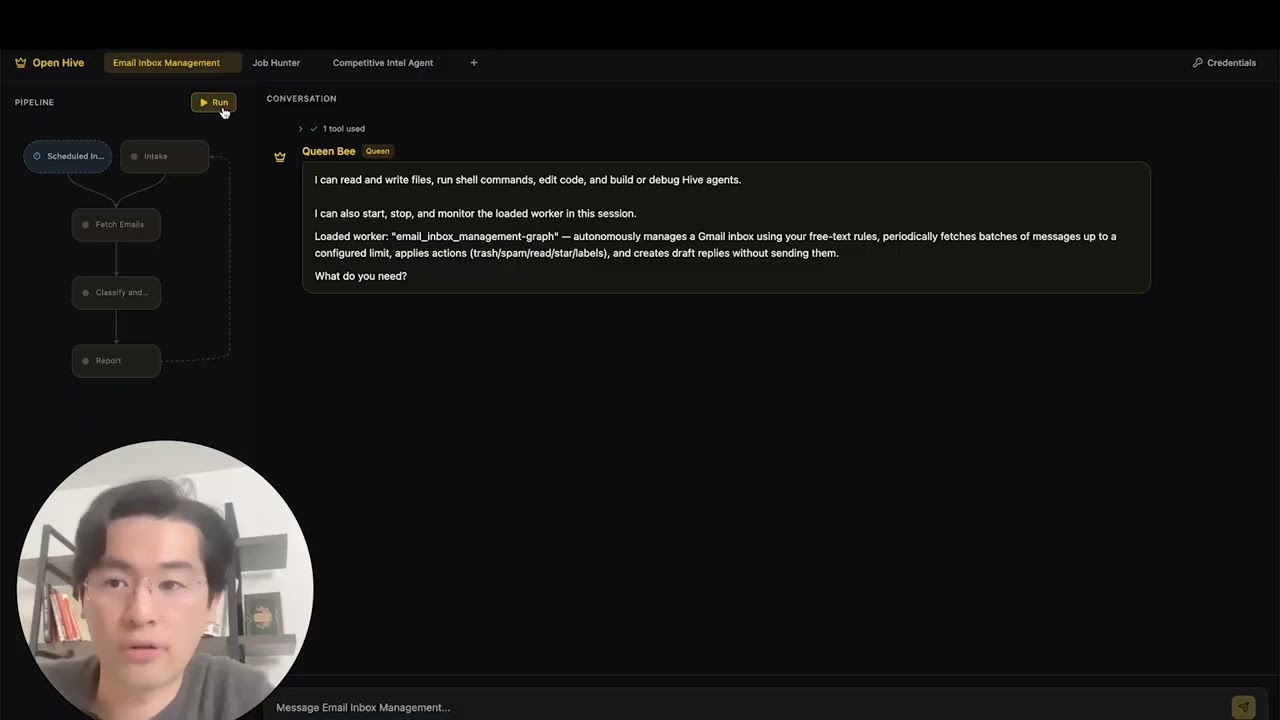](https://www.youtube.com/watch?v=XDOG9fOaLjU)
|
||||
https://github.com/user-attachments/assets/aad3a035-e7b3-4cac-b13d-4a83c7002c30
|
||||
|
||||
|
||||
## Who Is Hive For?
|
||||
|
||||
Hive is designed for developers and teams who want to build **production-grade AI agents** without manually wiring complex workflows.
|
||||
Hive is designed for developers and teams who want to build many **autonomous AI agents** fast without manually wiring complex workflows.
|
||||
|
||||
Hive is a good fit if you:
|
||||
|
||||
@@ -84,7 +85,7 @@ Use Hive when you need:
|
||||
- An LLM provider that powers the agents
|
||||
- **ripgrep (optional, recommended on Windows):** The `search_files` tool uses ripgrep for faster file search. If not installed, a Python fallback is used. On Windows: `winget install BurntSushi.ripgrep` or `scoop install ripgrep`
|
||||
|
||||
> **Note for Windows Users:** It is strongly recommended to use **WSL (Windows Subsystem for Linux)** or **Git Bash** to run this framework. Some core automation scripts may not execute correctly in standard Command Prompt or PowerShell.
|
||||
> **Windows Users:** Native Windows is supported via `quickstart.ps1` and `hive.ps1`. Run these in PowerShell 5.1+. WSL is also an option but not required.
|
||||
|
||||
### Installation
|
||||
|
||||
@@ -111,39 +112,36 @@ This sets up:
|
||||
- **LLM provider** - Interactive default model configuration
|
||||
- All required Python dependencies with `uv`
|
||||
|
||||
- At last, it will initiate the open hive interface in your browser
|
||||
- Finally, it will open the Hive interface in your browser
|
||||
|
||||
> **Tip:** To reopen the dashboard later, run `hive open` from the project directory.
|
||||
|
||||
<img width="2500" height="1214" alt="home-screen" src="https://github.com/user-attachments/assets/134d897f-5e75-4874-b00b-e0505f6b45c4" />
|
||||
|
||||
### Build Your First Agent
|
||||
|
||||
Type the agent you want to build in the home input box
|
||||
Type the agent you want to build in the home input box. The queen is going to ask you questions and work out a solution with you.
|
||||
|
||||
<img width="2500" height="1214" alt="Image" src="https://github.com/user-attachments/assets/1ce19141-a78b-46f5-8d64-dbf987e048f4" />
|
||||
|
||||
### Use Template Agents
|
||||
|
||||
Click "Try a sample agent" and check the templates. You can run a templates directly or choose to build your version on top of the existing template.
|
||||
Click "Try a sample agent" and check the templates. You can run a template directly or choose to build your version on top of the existing template.
|
||||
|
||||
### Run Agents
|
||||
|
||||
Now you can run an agent by selectiing the agent (either an existing agent or example agent). You can click the Run button on the top left, or talk to the queen agent and it can run the agent for you.
|
||||
Now you can run an agent by selecting the agent (either an existing agent or example agent). You can click the Run button on the top left, or talk to the queen agent and it can run the agent for you.
|
||||
|
||||
<img width="2500" height="1214" alt="Image" src="https://github.com/user-attachments/assets/71c38206-2ad5-49aa-bde8-6698d0bc55f5" />
|
||||
<img width="2549" height="1174" alt="Screenshot 2026-03-12 at 9 27 36 PM" src="https://github.com/user-attachments/assets/7c7d30fa-9ceb-4c23-95af-b1caa405547d" />
|
||||
|
||||
## Features
|
||||
|
||||
- **Browser-Use** - Control the browser on your computer to achieve hard tasks
|
||||
- **Parallel Execution** - Execute the generated graph in parallel. This way you can have multiple agent compelteing the jobs for you
|
||||
- **Parallel Execution** - Execute the generated graph in parallel. This way you can have multiple agents completing the jobs for you
|
||||
- **[Goal-Driven Generation](docs/key_concepts/goals_outcome.md)** - Define objectives in natural language; the coding agent generates the agent graph and connection code to achieve them
|
||||
- **[Adaptiveness](docs/key_concepts/evolution.md)** - Framework captures failures, calibrates according to the objectives, and evolves the agent graph
|
||||
- **[Dynamic Node Connections](docs/key_concepts/graph.md)** - No predefined edges; connection code is generated by any capable LLM based on your goals
|
||||
- **SDK-Wrapped Nodes** - Every node gets shared memory, local RLM memory, monitoring, tools, and LLM access out of the box
|
||||
- **[Human-in-the-Loop](docs/key_concepts/graph.md#human-in-the-loop)** - Intervention nodes that pause execution for human input with configurable timeouts and escalation
|
||||
- **Real-time Observability** - WebSocket streaming for live monitoring of agent execution, decisions, and node-to-node communication
|
||||
- **Production-Ready** - Self-hostable, built for scale and reliability
|
||||
|
||||
## Integration
|
||||
|
||||
@@ -392,10 +390,6 @@ Hive generates your entire agent system from natural language goals using a codi
|
||||
|
||||
Yes, Hive is fully open-source under the Apache License 2.0. We actively encourage community contributions and collaboration.
|
||||
|
||||
**Q: Can Hive handle complex, production-scale use cases?**
|
||||
|
||||
Yes. Hive is explicitly designed for production environments with features like automatic failure recovery, real-time observability, cost controls, and horizontal scaling support. The framework handles both simple automations and complex multi-agent workflows.
|
||||
|
||||
**Q: Does Hive support human-in-the-loop workflows?**
|
||||
|
||||
Yes, Hive fully supports [human-in-the-loop](docs/key_concepts/graph.md#human-in-the-loop) workflows through intervention nodes that pause execution for human input. These include configurable timeouts and escalation policies, allowing seamless collaboration between human experts and AI agents.
|
||||
@@ -420,6 +414,16 @@ Visit [docs.adenhq.com](https://docs.adenhq.com/) for complete guides, API refer
|
||||
|
||||
Contributions are welcome! Fork the repository, create your feature branch, implement your changes, and submit a pull request. See [CONTRIBUTING.md](CONTRIBUTING.md) for detailed guidelines.
|
||||
|
||||
## Star History
|
||||
|
||||
<a href="https://star-history.com/#aden-hive/hive&Date">
|
||||
<picture>
|
||||
<source media="(prefers-color-scheme: dark)" srcset="https://api.star-history.com/svg?repos=aden-hive/hive&type=Date&theme=dark" />
|
||||
<source media="(prefers-color-scheme: light)" srcset="https://api.star-history.com/svg?repos=aden-hive/hive&type=Date" />
|
||||
<img alt="Star History Chart" src="https://api.star-history.com/svg?repos=aden-hive/hive&type=Date" />
|
||||
</picture>
|
||||
</a>
|
||||
|
||||
---
|
||||
|
||||
<p align="center">
|
||||
|
||||
+2
-2
@@ -39,8 +39,8 @@ We consider security research conducted in accordance with this policy to be:
|
||||
## Security Best Practices for Users
|
||||
|
||||
1. **Keep Updated**: Always run the latest version
|
||||
2. **Secure Configuration**: Review `config.yaml` settings, especially in production
|
||||
3. **Environment Variables**: Never commit `.env` files or `config.yaml` with secrets
|
||||
2. **Secure Configuration**: Review your `~/.hive/configuration.json`, `.mcp.json`, and environment variable settings, especially in production
|
||||
3. **Environment Variables**: Never commit `.env` files or any configuration files that contain secrets
|
||||
4. **Network Security**: Use HTTPS in production, configure firewalls appropriately
|
||||
5. **Database Security**: Use strong passwords, limit network access
|
||||
|
||||
|
||||
@@ -1,31 +0,0 @@
|
||||
perf: reduce subprocess spawning in quickstart scripts (#4427)
|
||||
|
||||
## Problem
|
||||
Windows process creation (CreateProcess) is 10-100x slower than Linux fork/exec.
|
||||
The quickstart scripts were spawning 4+ separate `uv run python -c "import X"`
|
||||
processes to verify imports, adding ~600ms overhead on Windows.
|
||||
|
||||
## Solution
|
||||
Consolidated all import checks into a single batch script that checks multiple
|
||||
modules in one subprocess call, reducing spawn overhead by ~75%.
|
||||
|
||||
## Changes
|
||||
- **New**: `scripts/check_requirements.py` - Batched import checker
|
||||
- **New**: `scripts/test_check_requirements.py` - Test suite
|
||||
- **New**: `scripts/benchmark_quickstart.ps1` - Performance benchmark tool
|
||||
- **Modified**: `quickstart.ps1` - Updated import verification (2 sections)
|
||||
- **Modified**: `quickstart.sh` - Updated import verification
|
||||
|
||||
## Performance Impact
|
||||
**Benchmark results on Windows:**
|
||||
- Before: ~19.8 seconds for import checks
|
||||
- After: ~4.9 seconds for import checks
|
||||
- **Improvement: 14.9 seconds saved (75.2% faster)**
|
||||
|
||||
## Testing
|
||||
- ✅ All functional tests pass (`scripts/test_check_requirements.py`)
|
||||
- ✅ Quickstart scripts work correctly on Windows
|
||||
- ✅ Error handling verified (invalid imports reported correctly)
|
||||
- ✅ Performance benchmark confirms 75%+ improvement
|
||||
|
||||
Fixes #4427
|
||||
@@ -1,27 +0,0 @@
|
||||
# Identity mapping: GitHub username -> Discord ID
|
||||
#
|
||||
# This file links GitHub accounts to Discord accounts for the
|
||||
# Integration Bounty Program. When a bounty PR is merged, the
|
||||
# GitHub Action uses this file to ping the contributor on Discord.
|
||||
#
|
||||
# HOW TO ADD YOURSELF:
|
||||
# Open a "Link Discord Account" issue:
|
||||
# https://github.com/aden-hive/hive/issues/new?template=link-discord.yml
|
||||
# A GitHub Action will automatically add your entry here.
|
||||
#
|
||||
# To find your Discord ID:
|
||||
# 1. Open Discord Settings > Advanced > Enable Developer Mode
|
||||
# 2. Right-click your name > Copy User ID
|
||||
#
|
||||
# Format:
|
||||
# - github: your-github-username
|
||||
# discord: "your-discord-id" # quotes required (it's a number)
|
||||
# name: Your Display Name # optional
|
||||
|
||||
contributors:
|
||||
# - github: example-user
|
||||
# discord: "123456789012345678"
|
||||
# name: Example User
|
||||
- github: TimothyZhang7
|
||||
discord: "408460790061072384"
|
||||
name: Timothy@Aden
|
||||
@@ -1,6 +1,6 @@
|
||||
# MCP Server Guide - Agent Building Tools
|
||||
|
||||
> **Note:** The standalone `agent-builder` MCP server (`framework.mcp.agent_builder_server`) has been replaced. Agent building is now done via the `coder-tools` server's `initialize_agent_package` tool, with underlying logic in `framework.builder.package_generator`.
|
||||
> **Note:** The standalone `agent-builder` MCP server (`framework.mcp.agent_builder_server`) has been replaced. Agent building is now done via the `coder-tools` server's `initialize_and_build_agent` tool, with underlying logic in `tools/coder_tools_server.py`.
|
||||
|
||||
This guide covers the MCP tools available for building goal-driven agents.
|
||||
|
||||
|
||||
+1
-1
@@ -19,7 +19,7 @@ uv pip install -e .
|
||||
|
||||
## Agent Building
|
||||
|
||||
Agent scaffolding is handled by the `coder-tools` MCP server (in `tools/coder_tools_server.py`), which provides the `initialize_agent_package` tool and related utilities. The underlying package generation logic lives in `framework.builder.package_generator`.
|
||||
Agent scaffolding is handled by the `coder-tools` MCP server (in `tools/coder_tools_server.py`), which provides the `initialize_and_build_agent` tool and related utilities. The package generation logic lives directly in `tools/coder_tools_server.py`.
|
||||
|
||||
See the [Getting Started Guide](../docs/getting-started.md) for building agents.
|
||||
|
||||
|
||||
@@ -1,740 +0,0 @@
|
||||
#!/usr/bin/env python3
|
||||
"""
|
||||
EventLoopNode WebSocket Demo
|
||||
|
||||
Real LLM, real FileConversationStore, real EventBus.
|
||||
Streams EventLoopNode execution to a browser via WebSocket.
|
||||
|
||||
Usage:
|
||||
cd /home/timothy/oss/hive/core
|
||||
python demos/event_loop_wss_demo.py
|
||||
|
||||
Then open http://localhost:8765 in your browser.
|
||||
"""
|
||||
|
||||
import asyncio
|
||||
import json
|
||||
import logging
|
||||
import sys
|
||||
import tempfile
|
||||
from http import HTTPStatus
|
||||
from pathlib import Path
|
||||
|
||||
import httpx
|
||||
import websockets
|
||||
from bs4 import BeautifulSoup
|
||||
from websockets.http11 import Request, Response
|
||||
|
||||
# Add core, tools, and hive root to path
|
||||
_CORE_DIR = Path(__file__).resolve().parent.parent
|
||||
_HIVE_DIR = _CORE_DIR.parent
|
||||
sys.path.insert(0, str(_CORE_DIR)) # framework.*
|
||||
sys.path.insert(0, str(_HIVE_DIR / "tools" / "src")) # aden_tools.*
|
||||
sys.path.insert(0, str(_HIVE_DIR)) # core.framework.* (for aden_tools imports)
|
||||
|
||||
import os # noqa: E402
|
||||
|
||||
from aden_tools.credentials import CREDENTIAL_SPECS, CredentialStoreAdapter # noqa: E402
|
||||
from core.framework.credentials import CredentialStore # noqa: E402
|
||||
|
||||
from framework.credentials.storage import ( # noqa: E402
|
||||
CompositeStorage,
|
||||
EncryptedFileStorage,
|
||||
EnvVarStorage,
|
||||
)
|
||||
from framework.graph.event_loop_node import EventLoopNode, LoopConfig # noqa: E402
|
||||
from framework.graph.node import NodeContext, NodeSpec, SharedMemory # noqa: E402
|
||||
from framework.llm.litellm import LiteLLMProvider # noqa: E402
|
||||
from framework.llm.provider import Tool # noqa: E402
|
||||
from framework.runner.tool_registry import ToolRegistry # noqa: E402
|
||||
from framework.runtime.core import Runtime # noqa: E402
|
||||
from framework.runtime.event_bus import EventBus, EventType # noqa: E402
|
||||
from framework.storage.conversation_store import FileConversationStore # noqa: E402
|
||||
|
||||
logging.basicConfig(level=logging.INFO, format="%(asctime)s %(name)s %(message)s")
|
||||
logger = logging.getLogger("demo")
|
||||
|
||||
# -------------------------------------------------------------------------
|
||||
# Persistent state (shared across WebSocket connections)
|
||||
# -------------------------------------------------------------------------
|
||||
|
||||
STORE_DIR = Path(tempfile.mkdtemp(prefix="hive_demo_"))
|
||||
STORE = FileConversationStore(STORE_DIR / "conversation")
|
||||
RUNTIME = Runtime(STORE_DIR / "runtime")
|
||||
LLM = LiteLLMProvider(model="claude-sonnet-4-5-20250929")
|
||||
|
||||
# -------------------------------------------------------------------------
|
||||
# Tool Registry — real tools via ToolRegistry (same pattern as GraphExecutor)
|
||||
# -------------------------------------------------------------------------
|
||||
|
||||
TOOL_REGISTRY = ToolRegistry()
|
||||
|
||||
# Credential store: Aden sync (OAuth2 tokens) + encrypted files + env var fallback
|
||||
_env_mapping = {name: spec.env_var for name, spec in CREDENTIAL_SPECS.items()}
|
||||
_local_storage = CompositeStorage(
|
||||
primary=EncryptedFileStorage(),
|
||||
fallbacks=[EnvVarStorage(env_mapping=_env_mapping)],
|
||||
)
|
||||
|
||||
if os.environ.get("ADEN_API_KEY"):
|
||||
try:
|
||||
from framework.credentials.aden import ( # noqa: E402
|
||||
AdenCachedStorage,
|
||||
AdenClientConfig,
|
||||
AdenCredentialClient,
|
||||
AdenSyncProvider,
|
||||
)
|
||||
|
||||
_client = AdenCredentialClient(AdenClientConfig(base_url="https://api.adenhq.com"))
|
||||
_provider = AdenSyncProvider(client=_client)
|
||||
_storage = AdenCachedStorage(
|
||||
local_storage=_local_storage,
|
||||
aden_provider=_provider,
|
||||
)
|
||||
_cred_store = CredentialStore(storage=_storage, providers=[_provider], auto_refresh=True)
|
||||
_synced = _provider.sync_all(_cred_store)
|
||||
logger.info("Synced %d credentials from Aden", _synced)
|
||||
except Exception as e:
|
||||
logger.warning("Aden sync unavailable: %s", e)
|
||||
_cred_store = CredentialStore(storage=_local_storage)
|
||||
else:
|
||||
logger.info("ADEN_API_KEY not set, using local credential storage")
|
||||
_cred_store = CredentialStore(storage=_local_storage)
|
||||
|
||||
CREDENTIALS = CredentialStoreAdapter(_cred_store)
|
||||
|
||||
# Debug: log which credentials resolved
|
||||
for _name in ["brave_search", "hubspot", "anthropic"]:
|
||||
_val = CREDENTIALS.get(_name)
|
||||
if _val:
|
||||
logger.debug("credential %s: OK (len=%d)", _name, len(_val))
|
||||
else:
|
||||
logger.debug("credential %s: not found", _name)
|
||||
|
||||
# --- web_search (Brave Search API) ---
|
||||
|
||||
TOOL_REGISTRY.register(
|
||||
name="web_search",
|
||||
tool=Tool(
|
||||
name="web_search",
|
||||
description=(
|
||||
"Search the web for current information. "
|
||||
"Returns titles, URLs, and snippets from search results."
|
||||
),
|
||||
parameters={
|
||||
"type": "object",
|
||||
"properties": {
|
||||
"query": {
|
||||
"type": "string",
|
||||
"description": "The search query (1-500 characters)",
|
||||
},
|
||||
"num_results": {
|
||||
"type": "integer",
|
||||
"description": "Number of results to return (1-20, default 10)",
|
||||
},
|
||||
},
|
||||
"required": ["query"],
|
||||
},
|
||||
),
|
||||
executor=lambda inputs: _exec_web_search(inputs),
|
||||
)
|
||||
|
||||
|
||||
def _exec_web_search(inputs: dict) -> dict:
|
||||
api_key = CREDENTIALS.get("brave_search")
|
||||
if not api_key:
|
||||
return {"error": "brave_search credential not configured"}
|
||||
query = inputs.get("query", "")
|
||||
num_results = min(inputs.get("num_results", 10), 20)
|
||||
resp = httpx.get(
|
||||
"https://api.search.brave.com/res/v1/web/search",
|
||||
params={"q": query, "count": num_results},
|
||||
headers={"X-Subscription-Token": api_key, "Accept": "application/json"},
|
||||
timeout=30.0,
|
||||
)
|
||||
if resp.status_code != 200:
|
||||
return {"error": f"Brave API HTTP {resp.status_code}"}
|
||||
data = resp.json()
|
||||
results = [
|
||||
{
|
||||
"title": item.get("title", ""),
|
||||
"url": item.get("url", ""),
|
||||
"snippet": item.get("description", ""),
|
||||
}
|
||||
for item in data.get("web", {}).get("results", [])[:num_results]
|
||||
]
|
||||
return {"query": query, "results": results, "total": len(results)}
|
||||
|
||||
|
||||
# --- web_scrape (httpx + BeautifulSoup, no playwright for sync compat) ---
|
||||
|
||||
TOOL_REGISTRY.register(
|
||||
name="web_scrape",
|
||||
tool=Tool(
|
||||
name="web_scrape",
|
||||
description=(
|
||||
"Scrape and extract text content from a webpage URL. "
|
||||
"Returns the page title and main text content."
|
||||
),
|
||||
parameters={
|
||||
"type": "object",
|
||||
"properties": {
|
||||
"url": {
|
||||
"type": "string",
|
||||
"description": "URL of the webpage to scrape",
|
||||
},
|
||||
"max_length": {
|
||||
"type": "integer",
|
||||
"description": "Maximum text length (default 50000)",
|
||||
},
|
||||
},
|
||||
"required": ["url"],
|
||||
},
|
||||
),
|
||||
executor=lambda inputs: _exec_web_scrape(inputs),
|
||||
)
|
||||
|
||||
_SCRAPE_HEADERS = {
|
||||
"User-Agent": (
|
||||
"Mozilla/5.0 (Windows NT 10.0; Win64; x64) "
|
||||
"AppleWebKit/537.36 (KHTML, like Gecko) "
|
||||
"Chrome/131.0.0.0 Safari/537.36"
|
||||
),
|
||||
"Accept": "text/html,application/xhtml+xml",
|
||||
}
|
||||
|
||||
|
||||
def _exec_web_scrape(inputs: dict) -> dict:
|
||||
url = inputs.get("url", "")
|
||||
max_length = max(1000, min(inputs.get("max_length", 50000), 500000))
|
||||
if not url.startswith(("http://", "https://")):
|
||||
url = "https://" + url
|
||||
try:
|
||||
resp = httpx.get(url, timeout=30.0, follow_redirects=True, headers=_SCRAPE_HEADERS)
|
||||
if resp.status_code != 200:
|
||||
return {"error": f"HTTP {resp.status_code}"}
|
||||
soup = BeautifulSoup(resp.text, "html.parser")
|
||||
for tag in soup(["script", "style", "nav", "footer", "header", "aside", "noscript"]):
|
||||
tag.decompose()
|
||||
title = soup.title.get_text(strip=True) if soup.title else ""
|
||||
main = (
|
||||
soup.find("article")
|
||||
or soup.find("main")
|
||||
or soup.find(attrs={"role": "main"})
|
||||
or soup.find("body")
|
||||
)
|
||||
text = main.get_text(separator=" ", strip=True) if main else ""
|
||||
text = " ".join(text.split())
|
||||
if len(text) > max_length:
|
||||
text = text[:max_length] + "..."
|
||||
return {"url": url, "title": title, "content": text, "length": len(text)}
|
||||
except httpx.TimeoutException:
|
||||
return {"error": "Request timed out"}
|
||||
except Exception as e:
|
||||
return {"error": f"Scrape failed: {e}"}
|
||||
|
||||
|
||||
# --- HubSpot CRM tools (optional, requires HUBSPOT_ACCESS_TOKEN) ---
|
||||
|
||||
_HUBSPOT_API = "https://api.hubapi.com"
|
||||
|
||||
|
||||
def _hubspot_headers() -> dict | None:
|
||||
token = CREDENTIALS.get("hubspot")
|
||||
if token:
|
||||
logger.debug("HubSpot token: %s...%s (len=%d)", token[:8], token[-4:], len(token))
|
||||
else:
|
||||
logger.debug("HubSpot token: not found")
|
||||
if not token:
|
||||
return None
|
||||
return {
|
||||
"Authorization": f"Bearer {token}",
|
||||
"Content-Type": "application/json",
|
||||
"Accept": "application/json",
|
||||
}
|
||||
|
||||
|
||||
def _exec_hubspot_search(inputs: dict) -> dict:
|
||||
headers = _hubspot_headers()
|
||||
if not headers:
|
||||
return {"error": "HUBSPOT_ACCESS_TOKEN not set"}
|
||||
object_type = inputs.get("object_type", "contacts")
|
||||
query = inputs.get("query", "")
|
||||
limit = min(inputs.get("limit", 10), 100)
|
||||
body: dict = {"limit": limit}
|
||||
if query:
|
||||
body["query"] = query
|
||||
try:
|
||||
resp = httpx.post(
|
||||
f"{_HUBSPOT_API}/crm/v3/objects/{object_type}/search",
|
||||
headers=headers,
|
||||
json=body,
|
||||
timeout=30.0,
|
||||
)
|
||||
if resp.status_code != 200:
|
||||
return {"error": f"HubSpot API HTTP {resp.status_code}: {resp.text[:200]}"}
|
||||
return resp.json()
|
||||
except httpx.TimeoutException:
|
||||
return {"error": "Request timed out"}
|
||||
except Exception as e:
|
||||
return {"error": f"HubSpot error: {e}"}
|
||||
|
||||
|
||||
TOOL_REGISTRY.register(
|
||||
name="hubspot_search",
|
||||
tool=Tool(
|
||||
name="hubspot_search",
|
||||
description=(
|
||||
"Search HubSpot CRM objects (contacts, companies, or deals). "
|
||||
"Returns matching records with their properties."
|
||||
),
|
||||
parameters={
|
||||
"type": "object",
|
||||
"properties": {
|
||||
"object_type": {
|
||||
"type": "string",
|
||||
"description": "CRM object type: 'contacts', 'companies', or 'deals'",
|
||||
},
|
||||
"query": {
|
||||
"type": "string",
|
||||
"description": "Search query (name, email, domain, etc.)",
|
||||
},
|
||||
"limit": {
|
||||
"type": "integer",
|
||||
"description": "Max results (1-100, default 10)",
|
||||
},
|
||||
},
|
||||
"required": ["object_type"],
|
||||
},
|
||||
),
|
||||
executor=lambda inputs: _exec_hubspot_search(inputs),
|
||||
)
|
||||
|
||||
logger.info(
|
||||
"ToolRegistry loaded: %s",
|
||||
", ".join(TOOL_REGISTRY.get_registered_names()),
|
||||
)
|
||||
|
||||
|
||||
# -------------------------------------------------------------------------
|
||||
# HTML page (embedded)
|
||||
# -------------------------------------------------------------------------
|
||||
|
||||
HTML_PAGE = ( # noqa: E501
|
||||
"""<!DOCTYPE html>
|
||||
<html lang="en">
|
||||
<head>
|
||||
<meta charset="utf-8">
|
||||
<meta name="viewport" content="width=device-width, initial-scale=1">
|
||||
<title>EventLoopNode Live Demo</title>
|
||||
<style>
|
||||
* { box-sizing: border-box; margin: 0; padding: 0; }
|
||||
body {
|
||||
font-family: 'SF Mono', 'Fira Code', monospace;
|
||||
background: #0d1117; color: #c9d1d9;
|
||||
height: 100vh; display: flex; flex-direction: column;
|
||||
}
|
||||
header {
|
||||
background: #161b22; padding: 12px 20px;
|
||||
border-bottom: 1px solid #30363d;
|
||||
display: flex; align-items: center; gap: 16px;
|
||||
}
|
||||
header h1 { font-size: 16px; color: #58a6ff; font-weight: 600; }
|
||||
.status {
|
||||
font-size: 12px; padding: 3px 10px; border-radius: 12px;
|
||||
background: #21262d; color: #8b949e;
|
||||
}
|
||||
.status.running { background: #1a4b2e; color: #3fb950; }
|
||||
.status.done { background: #1a3a5c; color: #58a6ff; }
|
||||
.status.error { background: #4b1a1a; color: #f85149; }
|
||||
.chat { flex: 1; overflow-y: auto; padding: 16px; }
|
||||
.msg {
|
||||
margin: 8px 0; padding: 10px 14px; border-radius: 8px;
|
||||
line-height: 1.6; white-space: pre-wrap; word-wrap: break-word;
|
||||
}
|
||||
.msg.user { background: #1a3a5c; color: #58a6ff; }
|
||||
.msg.assistant { background: #161b22; color: #c9d1d9; }
|
||||
.msg.event {
|
||||
background: transparent; color: #8b949e; font-size: 11px;
|
||||
padding: 4px 14px; border-left: 3px solid #30363d;
|
||||
}
|
||||
.msg.event.loop { border-left-color: #58a6ff; }
|
||||
.msg.event.tool { border-left-color: #d29922; }
|
||||
.msg.event.stall { border-left-color: #f85149; }
|
||||
.input-bar {
|
||||
padding: 12px 16px; background: #161b22;
|
||||
border-top: 1px solid #30363d; display: flex; gap: 8px;
|
||||
}
|
||||
.input-bar input {
|
||||
flex: 1; background: #0d1117; border: 1px solid #30363d;
|
||||
color: #c9d1d9; padding: 8px 12px; border-radius: 6px;
|
||||
font-family: inherit; font-size: 14px; outline: none;
|
||||
}
|
||||
.input-bar input:focus { border-color: #58a6ff; }
|
||||
.input-bar button {
|
||||
background: #238636; color: #fff; border: none;
|
||||
padding: 8px 20px; border-radius: 6px; cursor: pointer;
|
||||
font-family: inherit; font-weight: 600;
|
||||
}
|
||||
.input-bar button:hover { background: #2ea043; }
|
||||
.input-bar button:disabled {
|
||||
background: #21262d; color: #484f58; cursor: not-allowed;
|
||||
}
|
||||
.input-bar button.clear { background: #da3633; }
|
||||
.input-bar button.clear:hover { background: #f85149; }
|
||||
</style>
|
||||
</head>
|
||||
<body>
|
||||
<header>
|
||||
<h1>EventLoopNode Live</h1>
|
||||
<span id="status" class="status">Idle</span>
|
||||
<span id="iter" class="status" style="display:none">Step 0</span>
|
||||
</header>
|
||||
<div id="chat" class="chat"></div>
|
||||
<div class="input-bar">
|
||||
<input id="input" type="text"
|
||||
placeholder="Ask anything..." autofocus />
|
||||
<button id="go" onclick="run()">Send</button>
|
||||
<button class="clear"
|
||||
onclick="clearConversation()">Clear</button>
|
||||
</div>
|
||||
|
||||
<script>
|
||||
let ws = null;
|
||||
let currentAssistantEl = null;
|
||||
let iterCount = 0;
|
||||
const chat = document.getElementById('chat');
|
||||
const status = document.getElementById('status');
|
||||
const iterEl = document.getElementById('iter');
|
||||
const goBtn = document.getElementById('go');
|
||||
const inputEl = document.getElementById('input');
|
||||
|
||||
inputEl.addEventListener('keydown', e => {
|
||||
if (e.key === 'Enter') run();
|
||||
});
|
||||
|
||||
function setStatus(text, cls) {
|
||||
status.textContent = text;
|
||||
status.className = 'status ' + cls;
|
||||
}
|
||||
|
||||
function addMsg(text, cls) {
|
||||
const el = document.createElement('div');
|
||||
el.className = 'msg ' + cls;
|
||||
el.textContent = text;
|
||||
chat.appendChild(el);
|
||||
chat.scrollTop = chat.scrollHeight;
|
||||
return el;
|
||||
}
|
||||
|
||||
function connect() {
|
||||
ws = new WebSocket('ws://' + location.host + '/ws');
|
||||
ws.onopen = () => {
|
||||
setStatus('Ready', 'done');
|
||||
goBtn.disabled = false;
|
||||
};
|
||||
ws.onmessage = handleEvent;
|
||||
ws.onerror = () => { setStatus('Error', 'error'); };
|
||||
ws.onclose = () => {
|
||||
setStatus('Reconnecting...', '');
|
||||
goBtn.disabled = true;
|
||||
setTimeout(connect, 2000);
|
||||
};
|
||||
}
|
||||
|
||||
function handleEvent(msg) {
|
||||
const evt = JSON.parse(msg.data);
|
||||
|
||||
if (evt.type === 'llm_text_delta') {
|
||||
if (currentAssistantEl) {
|
||||
currentAssistantEl.textContent += evt.content;
|
||||
chat.scrollTop = chat.scrollHeight;
|
||||
}
|
||||
}
|
||||
else if (evt.type === 'ready') {
|
||||
setStatus('Ready', 'done');
|
||||
if (currentAssistantEl && !currentAssistantEl.textContent)
|
||||
currentAssistantEl.remove();
|
||||
goBtn.disabled = false;
|
||||
}
|
||||
else if (evt.type === 'node_loop_iteration') {
|
||||
iterCount = evt.iteration || (iterCount + 1);
|
||||
iterEl.textContent = 'Step ' + iterCount;
|
||||
iterEl.style.display = '';
|
||||
}
|
||||
else if (evt.type === 'tool_call_started') {
|
||||
var info = evt.tool_name + '('
|
||||
+ JSON.stringify(evt.tool_input).slice(0, 120) + ')';
|
||||
addMsg('TOOL ' + info, 'event tool');
|
||||
}
|
||||
else if (evt.type === 'tool_call_completed') {
|
||||
var preview = (evt.result || '').slice(0, 200);
|
||||
var cls = evt.is_error ? 'stall' : 'tool';
|
||||
addMsg('RESULT ' + evt.tool_name + ': ' + preview,
|
||||
'event ' + cls);
|
||||
currentAssistantEl = addMsg('', 'assistant');
|
||||
}
|
||||
else if (evt.type === 'result') {
|
||||
setStatus('Session ended', evt.success ? 'done' : 'error');
|
||||
if (evt.error) addMsg('ERROR ' + evt.error, 'event stall');
|
||||
if (currentAssistantEl && !currentAssistantEl.textContent)
|
||||
currentAssistantEl.remove();
|
||||
goBtn.disabled = false;
|
||||
}
|
||||
else if (evt.type === 'node_stalled') {
|
||||
addMsg('STALLED ' + evt.reason, 'event stall');
|
||||
}
|
||||
else if (evt.type === 'cleared') {
|
||||
chat.innerHTML = '';
|
||||
iterCount = 0;
|
||||
iterEl.textContent = 'Step 0';
|
||||
iterEl.style.display = 'none';
|
||||
setStatus('Ready', 'done');
|
||||
goBtn.disabled = false;
|
||||
}
|
||||
}
|
||||
|
||||
function run() {
|
||||
const text = inputEl.value.trim();
|
||||
if (!text || !ws || ws.readyState !== 1) return;
|
||||
addMsg(text, 'user');
|
||||
currentAssistantEl = addMsg('', 'assistant');
|
||||
inputEl.value = '';
|
||||
setStatus('Running', 'running');
|
||||
goBtn.disabled = true;
|
||||
ws.send(JSON.stringify({ topic: text }));
|
||||
}
|
||||
|
||||
function clearConversation() {
|
||||
if (ws && ws.readyState === 1) {
|
||||
ws.send(JSON.stringify({ command: 'clear' }));
|
||||
}
|
||||
}
|
||||
|
||||
connect();
|
||||
</script>
|
||||
</body>
|
||||
</html>"""
|
||||
)
|
||||
|
||||
|
||||
# -------------------------------------------------------------------------
|
||||
# WebSocket handler
|
||||
# -------------------------------------------------------------------------
|
||||
|
||||
|
||||
async def handle_ws(websocket):
|
||||
"""Persistent WebSocket: long-lived EventLoopNode with client_facing blocking."""
|
||||
global STORE
|
||||
|
||||
# -- Event forwarding (WebSocket ← EventBus) ----------------------------
|
||||
bus = EventBus()
|
||||
|
||||
async def forward_event(event):
|
||||
try:
|
||||
payload = {"type": event.type.value, **event.data}
|
||||
if event.node_id:
|
||||
payload["node_id"] = event.node_id
|
||||
await websocket.send(json.dumps(payload))
|
||||
except Exception:
|
||||
pass
|
||||
|
||||
bus.subscribe(
|
||||
event_types=[
|
||||
EventType.NODE_LOOP_STARTED,
|
||||
EventType.NODE_LOOP_ITERATION,
|
||||
EventType.NODE_LOOP_COMPLETED,
|
||||
EventType.LLM_TEXT_DELTA,
|
||||
EventType.TOOL_CALL_STARTED,
|
||||
EventType.TOOL_CALL_COMPLETED,
|
||||
EventType.NODE_STALLED,
|
||||
],
|
||||
handler=forward_event,
|
||||
)
|
||||
|
||||
# -- Per-connection state -----------------------------------------------
|
||||
node = None
|
||||
loop_task = None
|
||||
|
||||
tools = list(TOOL_REGISTRY.get_tools().values())
|
||||
tool_executor = TOOL_REGISTRY.get_executor()
|
||||
|
||||
node_spec = NodeSpec(
|
||||
id="assistant",
|
||||
name="Chat Assistant",
|
||||
description="A conversational assistant that remembers context across messages",
|
||||
node_type="event_loop",
|
||||
client_facing=True,
|
||||
system_prompt=(
|
||||
"You are a helpful assistant with access to tools. "
|
||||
"You can search the web, scrape webpages, and query HubSpot CRM. "
|
||||
"Use tools when the user asks for current information or external data. "
|
||||
"You have full conversation history, so you can reference previous messages."
|
||||
),
|
||||
)
|
||||
|
||||
# -- Ready callback: subscribe to CLIENT_INPUT_REQUESTED on the bus ---
|
||||
async def on_input_requested(event):
|
||||
try:
|
||||
await websocket.send(json.dumps({"type": "ready"}))
|
||||
except Exception:
|
||||
pass
|
||||
|
||||
bus.subscribe(
|
||||
event_types=[EventType.CLIENT_INPUT_REQUESTED],
|
||||
handler=on_input_requested,
|
||||
)
|
||||
|
||||
async def start_loop(first_message: str):
|
||||
"""Create an EventLoopNode and run it as a background task."""
|
||||
nonlocal node, loop_task
|
||||
|
||||
memory = SharedMemory()
|
||||
ctx = NodeContext(
|
||||
runtime=RUNTIME,
|
||||
node_id="assistant",
|
||||
node_spec=node_spec,
|
||||
memory=memory,
|
||||
input_data={},
|
||||
llm=LLM,
|
||||
available_tools=tools,
|
||||
)
|
||||
node = EventLoopNode(
|
||||
event_bus=bus,
|
||||
config=LoopConfig(max_iterations=10_000, max_history_tokens=32_000),
|
||||
conversation_store=STORE,
|
||||
tool_executor=tool_executor,
|
||||
)
|
||||
await node.inject_event(first_message)
|
||||
|
||||
async def _run():
|
||||
try:
|
||||
result = await node.execute(ctx)
|
||||
try:
|
||||
await websocket.send(
|
||||
json.dumps(
|
||||
{
|
||||
"type": "result",
|
||||
"success": result.success,
|
||||
"output": result.output,
|
||||
"error": result.error,
|
||||
"tokens": result.tokens_used,
|
||||
}
|
||||
)
|
||||
)
|
||||
except Exception:
|
||||
pass
|
||||
logger.info(f"Loop ended: success={result.success}, tokens={result.tokens_used}")
|
||||
except websockets.exceptions.ConnectionClosed:
|
||||
logger.info("Loop stopped: WebSocket closed")
|
||||
except Exception as e:
|
||||
logger.exception("Loop error")
|
||||
try:
|
||||
await websocket.send(
|
||||
json.dumps(
|
||||
{
|
||||
"type": "result",
|
||||
"success": False,
|
||||
"error": str(e),
|
||||
"output": {},
|
||||
}
|
||||
)
|
||||
)
|
||||
except Exception:
|
||||
pass
|
||||
|
||||
loop_task = asyncio.create_task(_run())
|
||||
|
||||
async def stop_loop():
|
||||
"""Signal the node and wait for the loop task to finish."""
|
||||
nonlocal node, loop_task
|
||||
if loop_task and not loop_task.done():
|
||||
if node:
|
||||
node.signal_shutdown()
|
||||
try:
|
||||
await asyncio.wait_for(loop_task, timeout=5.0)
|
||||
except (TimeoutError, asyncio.CancelledError):
|
||||
loop_task.cancel()
|
||||
node = None
|
||||
loop_task = None
|
||||
|
||||
# -- Message loop (runs for the lifetime of this WebSocket) -------------
|
||||
try:
|
||||
async for raw in websocket:
|
||||
try:
|
||||
msg = json.loads(raw)
|
||||
except Exception:
|
||||
continue
|
||||
|
||||
# Clear command
|
||||
if msg.get("command") == "clear":
|
||||
import shutil
|
||||
|
||||
await stop_loop()
|
||||
await STORE.close()
|
||||
conv_dir = STORE_DIR / "conversation"
|
||||
if conv_dir.exists():
|
||||
shutil.rmtree(conv_dir)
|
||||
STORE = FileConversationStore(conv_dir)
|
||||
await websocket.send(json.dumps({"type": "cleared"}))
|
||||
logger.info("Conversation cleared")
|
||||
continue
|
||||
|
||||
topic = msg.get("topic", "")
|
||||
if not topic:
|
||||
continue
|
||||
|
||||
if node is None:
|
||||
# First message — spin up the loop
|
||||
logger.info(f"Starting persistent loop: {topic}")
|
||||
await start_loop(topic)
|
||||
else:
|
||||
# Subsequent message — inject into the running loop
|
||||
logger.info(f"Injecting message: {topic}")
|
||||
await node.inject_event(topic)
|
||||
|
||||
except websockets.exceptions.ConnectionClosed:
|
||||
pass
|
||||
finally:
|
||||
await stop_loop()
|
||||
logger.info("WebSocket closed, loop stopped")
|
||||
|
||||
|
||||
# -------------------------------------------------------------------------
|
||||
# HTTP handler for serving the HTML page
|
||||
# -------------------------------------------------------------------------
|
||||
|
||||
|
||||
async def process_request(connection, request: Request):
|
||||
"""Serve HTML on GET /, upgrade to WebSocket on /ws."""
|
||||
if request.path == "/ws":
|
||||
return None # let websockets handle the upgrade
|
||||
# Serve the HTML page for any other path
|
||||
return Response(
|
||||
HTTPStatus.OK,
|
||||
"OK",
|
||||
websockets.Headers({"Content-Type": "text/html; charset=utf-8"}),
|
||||
HTML_PAGE.encode(),
|
||||
)
|
||||
|
||||
|
||||
# -------------------------------------------------------------------------
|
||||
# Main
|
||||
# -------------------------------------------------------------------------
|
||||
|
||||
|
||||
async def main():
|
||||
port = 8765
|
||||
async with websockets.serve(
|
||||
handle_ws,
|
||||
"0.0.0.0",
|
||||
port,
|
||||
process_request=process_request,
|
||||
):
|
||||
logger.info(f"Demo running at http://localhost:{port}")
|
||||
logger.info("Open in your browser and enter a topic to research.")
|
||||
await asyncio.Future() # run forever
|
||||
|
||||
|
||||
if __name__ == "__main__":
|
||||
asyncio.run(main())
|
||||
File diff suppressed because it is too large
Load Diff
@@ -1,930 +0,0 @@
|
||||
#!/usr/bin/env python3
|
||||
"""
|
||||
Two-Node ContextHandoff Demo
|
||||
|
||||
Demonstrates ContextHandoff between two EventLoopNode instances:
|
||||
Node A (Researcher) → ContextHandoff → Node B (Analyst)
|
||||
|
||||
Real LLM, real FileConversationStore, real EventBus.
|
||||
Streams both nodes to a browser via WebSocket.
|
||||
|
||||
Usage:
|
||||
cd /home/timothy/oss/hive/core
|
||||
python demos/handoff_demo.py
|
||||
|
||||
Then open http://localhost:8766 in your browser.
|
||||
"""
|
||||
|
||||
import asyncio
|
||||
import json
|
||||
import logging
|
||||
import sys
|
||||
import tempfile
|
||||
from http import HTTPStatus
|
||||
from pathlib import Path
|
||||
|
||||
import httpx
|
||||
import websockets
|
||||
from bs4 import BeautifulSoup
|
||||
from websockets.http11 import Request, Response
|
||||
|
||||
# Add core, tools, and hive root to path
|
||||
_CORE_DIR = Path(__file__).resolve().parent.parent
|
||||
_HIVE_DIR = _CORE_DIR.parent
|
||||
sys.path.insert(0, str(_CORE_DIR)) # framework.*
|
||||
sys.path.insert(0, str(_HIVE_DIR / "tools" / "src")) # aden_tools.*
|
||||
sys.path.insert(0, str(_HIVE_DIR)) # core.framework.* (for aden_tools imports)
|
||||
|
||||
from aden_tools.credentials import CREDENTIAL_SPECS, CredentialStoreAdapter # noqa: E402
|
||||
from core.framework.credentials import CredentialStore # noqa: E402
|
||||
|
||||
from framework.credentials.storage import ( # noqa: E402
|
||||
CompositeStorage,
|
||||
EncryptedFileStorage,
|
||||
EnvVarStorage,
|
||||
)
|
||||
from framework.graph.context_handoff import ContextHandoff # noqa: E402
|
||||
from framework.graph.conversation import NodeConversation # noqa: E402
|
||||
from framework.graph.event_loop_node import EventLoopNode, LoopConfig # noqa: E402
|
||||
from framework.graph.node import NodeContext, NodeSpec, SharedMemory # noqa: E402
|
||||
from framework.llm.litellm import LiteLLMProvider # noqa: E402
|
||||
from framework.llm.provider import Tool # noqa: E402
|
||||
from framework.runner.tool_registry import ToolRegistry # noqa: E402
|
||||
from framework.runtime.core import Runtime # noqa: E402
|
||||
from framework.runtime.event_bus import EventBus, EventType # noqa: E402
|
||||
from framework.storage.conversation_store import FileConversationStore # noqa: E402
|
||||
|
||||
logging.basicConfig(level=logging.INFO, format="%(asctime)s %(name)s %(message)s")
|
||||
logger = logging.getLogger("handoff_demo")
|
||||
|
||||
# -------------------------------------------------------------------------
|
||||
# Persistent state
|
||||
# -------------------------------------------------------------------------
|
||||
|
||||
STORE_DIR = Path(tempfile.mkdtemp(prefix="hive_handoff_"))
|
||||
RUNTIME = Runtime(STORE_DIR / "runtime")
|
||||
LLM = LiteLLMProvider(model="claude-sonnet-4-5-20250929")
|
||||
|
||||
# -------------------------------------------------------------------------
|
||||
# Credentials
|
||||
# -------------------------------------------------------------------------
|
||||
|
||||
# Composite credential store: encrypted files (primary) + env vars (fallback)
|
||||
_env_mapping = {name: spec.env_var for name, spec in CREDENTIAL_SPECS.items()}
|
||||
_composite = CompositeStorage(
|
||||
primary=EncryptedFileStorage(),
|
||||
fallbacks=[EnvVarStorage(env_mapping=_env_mapping)],
|
||||
)
|
||||
CREDENTIALS = CredentialStoreAdapter(CredentialStore(storage=_composite))
|
||||
|
||||
for _name in ["brave_search", "hubspot"]:
|
||||
_val = CREDENTIALS.get(_name)
|
||||
if _val:
|
||||
logger.debug("credential %s: OK (len=%d)", _name, len(_val))
|
||||
else:
|
||||
logger.debug("credential %s: not found", _name)
|
||||
|
||||
# -------------------------------------------------------------------------
|
||||
# Tool Registry — web_search + web_scrape for Node A (Researcher)
|
||||
# -------------------------------------------------------------------------
|
||||
|
||||
TOOL_REGISTRY = ToolRegistry()
|
||||
|
||||
|
||||
def _exec_web_search(inputs: dict) -> dict:
|
||||
api_key = CREDENTIALS.get("brave_search")
|
||||
if not api_key:
|
||||
return {"error": "brave_search credential not configured"}
|
||||
query = inputs.get("query", "")
|
||||
num_results = min(inputs.get("num_results", 10), 20)
|
||||
resp = httpx.get(
|
||||
"https://api.search.brave.com/res/v1/web/search",
|
||||
params={"q": query, "count": num_results},
|
||||
headers={
|
||||
"X-Subscription-Token": api_key,
|
||||
"Accept": "application/json",
|
||||
},
|
||||
timeout=30.0,
|
||||
)
|
||||
if resp.status_code != 200:
|
||||
return {"error": f"Brave API HTTP {resp.status_code}"}
|
||||
data = resp.json()
|
||||
results = [
|
||||
{
|
||||
"title": item.get("title", ""),
|
||||
"url": item.get("url", ""),
|
||||
"snippet": item.get("description", ""),
|
||||
}
|
||||
for item in data.get("web", {}).get("results", [])[:num_results]
|
||||
]
|
||||
return {"query": query, "results": results, "total": len(results)}
|
||||
|
||||
|
||||
TOOL_REGISTRY.register(
|
||||
name="web_search",
|
||||
tool=Tool(
|
||||
name="web_search",
|
||||
description=(
|
||||
"Search the web for current information. "
|
||||
"Returns titles, URLs, and snippets from search results."
|
||||
),
|
||||
parameters={
|
||||
"type": "object",
|
||||
"properties": {
|
||||
"query": {
|
||||
"type": "string",
|
||||
"description": "The search query (1-500 characters)",
|
||||
},
|
||||
"num_results": {
|
||||
"type": "integer",
|
||||
"description": "Number of results (1-20, default 10)",
|
||||
},
|
||||
},
|
||||
"required": ["query"],
|
||||
},
|
||||
),
|
||||
executor=lambda inputs: _exec_web_search(inputs),
|
||||
)
|
||||
|
||||
_SCRAPE_HEADERS = {
|
||||
"User-Agent": (
|
||||
"Mozilla/5.0 (Windows NT 10.0; Win64; x64) "
|
||||
"AppleWebKit/537.36 (KHTML, like Gecko) "
|
||||
"Chrome/131.0.0.0 Safari/537.36"
|
||||
),
|
||||
"Accept": "text/html,application/xhtml+xml",
|
||||
}
|
||||
|
||||
|
||||
def _exec_web_scrape(inputs: dict) -> dict:
|
||||
url = inputs.get("url", "")
|
||||
max_length = max(1000, min(inputs.get("max_length", 50000), 500000))
|
||||
if not url.startswith(("http://", "https://")):
|
||||
url = "https://" + url
|
||||
try:
|
||||
resp = httpx.get(
|
||||
url,
|
||||
timeout=30.0,
|
||||
follow_redirects=True,
|
||||
headers=_SCRAPE_HEADERS,
|
||||
)
|
||||
if resp.status_code != 200:
|
||||
return {"error": f"HTTP {resp.status_code}"}
|
||||
soup = BeautifulSoup(resp.text, "html.parser")
|
||||
for tag in soup(["script", "style", "nav", "footer", "header", "aside", "noscript"]):
|
||||
tag.decompose()
|
||||
title = soup.title.get_text(strip=True) if soup.title else ""
|
||||
main = (
|
||||
soup.find("article")
|
||||
or soup.find("main")
|
||||
or soup.find(attrs={"role": "main"})
|
||||
or soup.find("body")
|
||||
)
|
||||
text = main.get_text(separator=" ", strip=True) if main else ""
|
||||
text = " ".join(text.split())
|
||||
if len(text) > max_length:
|
||||
text = text[:max_length] + "..."
|
||||
return {
|
||||
"url": url,
|
||||
"title": title,
|
||||
"content": text,
|
||||
"length": len(text),
|
||||
}
|
||||
except httpx.TimeoutException:
|
||||
return {"error": "Request timed out"}
|
||||
except Exception as e:
|
||||
return {"error": f"Scrape failed: {e}"}
|
||||
|
||||
|
||||
TOOL_REGISTRY.register(
|
||||
name="web_scrape",
|
||||
tool=Tool(
|
||||
name="web_scrape",
|
||||
description=(
|
||||
"Scrape and extract text content from a webpage URL. "
|
||||
"Returns the page title and main text content."
|
||||
),
|
||||
parameters={
|
||||
"type": "object",
|
||||
"properties": {
|
||||
"url": {
|
||||
"type": "string",
|
||||
"description": "URL of the webpage to scrape",
|
||||
},
|
||||
"max_length": {
|
||||
"type": "integer",
|
||||
"description": "Maximum text length (default 50000)",
|
||||
},
|
||||
},
|
||||
"required": ["url"],
|
||||
},
|
||||
),
|
||||
executor=lambda inputs: _exec_web_scrape(inputs),
|
||||
)
|
||||
|
||||
logger.info(
|
||||
"ToolRegistry loaded: %s",
|
||||
", ".join(TOOL_REGISTRY.get_registered_names()),
|
||||
)
|
||||
|
||||
# -------------------------------------------------------------------------
|
||||
# Node Specs
|
||||
# -------------------------------------------------------------------------
|
||||
|
||||
RESEARCHER_SPEC = NodeSpec(
|
||||
id="researcher",
|
||||
name="Researcher",
|
||||
description="Researches a topic using web search and scraping tools",
|
||||
node_type="event_loop",
|
||||
input_keys=["topic"],
|
||||
output_keys=["research_summary"],
|
||||
system_prompt=(
|
||||
"You are a thorough research assistant. Your job is to research "
|
||||
"the given topic using the web_search and web_scrape tools.\n\n"
|
||||
"1. Search for relevant information on the topic\n"
|
||||
"2. Scrape 1-2 of the most promising URLs for details\n"
|
||||
"3. Synthesize your findings into a comprehensive summary\n"
|
||||
"4. Use set_output with key='research_summary' to save your "
|
||||
"findings\n\n"
|
||||
"Be thorough but efficient. Aim for 2-4 search/scrape calls, "
|
||||
"then summarize and set_output."
|
||||
),
|
||||
)
|
||||
|
||||
ANALYST_SPEC = NodeSpec(
|
||||
id="analyst",
|
||||
name="Analyst",
|
||||
description="Analyzes research findings and provides insights",
|
||||
node_type="event_loop",
|
||||
input_keys=["context"],
|
||||
output_keys=["analysis"],
|
||||
system_prompt=(
|
||||
"You are a strategic analyst. You receive research findings from "
|
||||
"a previous researcher and must:\n\n"
|
||||
"1. Identify key themes and patterns\n"
|
||||
"2. Assess the reliability and significance of the findings\n"
|
||||
"3. Provide actionable insights and recommendations\n"
|
||||
"4. Use set_output with key='analysis' to save your analysis\n\n"
|
||||
"Be concise but insightful. Focus on what matters most."
|
||||
),
|
||||
)
|
||||
|
||||
|
||||
# -------------------------------------------------------------------------
|
||||
# HTML page
|
||||
# -------------------------------------------------------------------------
|
||||
|
||||
HTML_PAGE = ( # noqa: E501
|
||||
"""<!DOCTYPE html>
|
||||
<html lang="en">
|
||||
<head>
|
||||
<meta charset="utf-8">
|
||||
<meta name="viewport" content="width=device-width, initial-scale=1">
|
||||
<title>ContextHandoff Demo</title>
|
||||
<style>
|
||||
* {
|
||||
box-sizing: border-box;
|
||||
margin: 0;
|
||||
padding: 0;
|
||||
}
|
||||
body {
|
||||
font-family: 'SF Mono', 'Fira Code', monospace;
|
||||
background: #0d1117;
|
||||
color: #c9d1d9;
|
||||
height: 100vh;
|
||||
display: flex;
|
||||
flex-direction: column;
|
||||
}
|
||||
header {
|
||||
background: #161b22;
|
||||
padding: 12px 20px;
|
||||
border-bottom: 1px solid #30363d;
|
||||
display: flex;
|
||||
align-items: center;
|
||||
gap: 16px;
|
||||
}
|
||||
header h1 {
|
||||
font-size: 16px;
|
||||
color: #58a6ff;
|
||||
font-weight: 600;
|
||||
}
|
||||
.badge {
|
||||
font-size: 12px;
|
||||
padding: 3px 10px;
|
||||
border-radius: 12px;
|
||||
background: #21262d;
|
||||
color: #8b949e;
|
||||
}
|
||||
.badge.researcher {
|
||||
background: #1a3a5c;
|
||||
color: #58a6ff;
|
||||
}
|
||||
.badge.analyst {
|
||||
background: #1a4b2e;
|
||||
color: #3fb950;
|
||||
}
|
||||
.badge.handoff {
|
||||
background: #3d1f00;
|
||||
color: #d29922;
|
||||
}
|
||||
.badge.done {
|
||||
background: #21262d;
|
||||
color: #8b949e;
|
||||
}
|
||||
.badge.error {
|
||||
background: #4b1a1a;
|
||||
color: #f85149;
|
||||
}
|
||||
.chat {
|
||||
flex: 1;
|
||||
overflow-y: auto;
|
||||
padding: 16px;
|
||||
}
|
||||
.msg {
|
||||
margin: 8px 0;
|
||||
padding: 10px 14px;
|
||||
border-radius: 8px;
|
||||
line-height: 1.6;
|
||||
white-space: pre-wrap;
|
||||
word-wrap: break-word;
|
||||
}
|
||||
.msg.user {
|
||||
background: #1a3a5c;
|
||||
color: #58a6ff;
|
||||
}
|
||||
.msg.assistant {
|
||||
background: #161b22;
|
||||
color: #c9d1d9;
|
||||
}
|
||||
.msg.assistant.analyst-msg {
|
||||
border-left: 3px solid #3fb950;
|
||||
}
|
||||
.msg.event {
|
||||
background: transparent;
|
||||
color: #8b949e;
|
||||
font-size: 11px;
|
||||
padding: 4px 14px;
|
||||
border-left: 3px solid #30363d;
|
||||
}
|
||||
.msg.event.loop {
|
||||
border-left-color: #58a6ff;
|
||||
}
|
||||
.msg.event.tool {
|
||||
border-left-color: #d29922;
|
||||
}
|
||||
.msg.event.stall {
|
||||
border-left-color: #f85149;
|
||||
}
|
||||
.handoff-banner {
|
||||
margin: 16px 0;
|
||||
padding: 16px;
|
||||
background: #1c1200;
|
||||
border: 1px solid #d29922;
|
||||
border-radius: 8px;
|
||||
text-align: center;
|
||||
}
|
||||
.handoff-banner h3 {
|
||||
color: #d29922;
|
||||
font-size: 14px;
|
||||
margin-bottom: 8px;
|
||||
}
|
||||
.handoff-banner p, .result-banner p {
|
||||
color: #8b949e;
|
||||
font-size: 12px;
|
||||
line-height: 1.5;
|
||||
max-height: 200px;
|
||||
overflow-y: auto;
|
||||
white-space: pre-wrap;
|
||||
text-align: left;
|
||||
}
|
||||
.result-banner {
|
||||
margin: 16px 0;
|
||||
padding: 16px;
|
||||
background: #0a2614;
|
||||
border: 1px solid #3fb950;
|
||||
border-radius: 8px;
|
||||
}
|
||||
.result-banner h3 {
|
||||
color: #3fb950;
|
||||
font-size: 14px;
|
||||
margin-bottom: 8px;
|
||||
text-align: center;
|
||||
}
|
||||
.result-banner .label {
|
||||
color: #58a6ff;
|
||||
font-size: 11px;
|
||||
font-weight: 600;
|
||||
margin-top: 10px;
|
||||
margin-bottom: 2px;
|
||||
}
|
||||
.result-banner .tokens {
|
||||
color: #484f58;
|
||||
font-size: 11px;
|
||||
text-align: center;
|
||||
margin-top: 10px;
|
||||
}
|
||||
.input-bar {
|
||||
padding: 12px 16px;
|
||||
background: #161b22;
|
||||
border-top: 1px solid #30363d;
|
||||
display: flex;
|
||||
gap: 8px;
|
||||
}
|
||||
.input-bar input {
|
||||
flex: 1;
|
||||
background: #0d1117;
|
||||
border: 1px solid #30363d;
|
||||
color: #c9d1d9;
|
||||
padding: 8px 12px;
|
||||
border-radius: 6px;
|
||||
font-family: inherit;
|
||||
font-size: 14px;
|
||||
outline: none;
|
||||
}
|
||||
.input-bar input:focus {
|
||||
border-color: #58a6ff;
|
||||
}
|
||||
.input-bar button {
|
||||
background: #238636;
|
||||
color: #fff;
|
||||
border: none;
|
||||
padding: 8px 20px;
|
||||
border-radius: 6px;
|
||||
cursor: pointer;
|
||||
font-family: inherit;
|
||||
font-weight: 600;
|
||||
}
|
||||
.input-bar button:hover {
|
||||
background: #2ea043;
|
||||
}
|
||||
.input-bar button:disabled {
|
||||
background: #21262d;
|
||||
color: #484f58;
|
||||
cursor: not-allowed;
|
||||
}
|
||||
</style>
|
||||
</head>
|
||||
<body>
|
||||
<header>
|
||||
<h1>ContextHandoff Demo</h1>
|
||||
<span id="phase" class="badge">Idle</span>
|
||||
<span id="iter" class="badge" style="display:none">Step 0</span>
|
||||
</header>
|
||||
<div id="chat" class="chat"></div>
|
||||
<div class="input-bar">
|
||||
<input id="input" type="text"
|
||||
placeholder="Enter a research topic..." autofocus />
|
||||
<button id="go" onclick="run()">Research</button>
|
||||
</div>
|
||||
|
||||
<script>
|
||||
let ws = null;
|
||||
let currentAssistantEl = null;
|
||||
let iterCount = 0;
|
||||
let currentPhase = 'idle';
|
||||
const chat = document.getElementById('chat');
|
||||
const phase = document.getElementById('phase');
|
||||
const iterEl = document.getElementById('iter');
|
||||
const goBtn = document.getElementById('go');
|
||||
const inputEl = document.getElementById('input');
|
||||
|
||||
inputEl.addEventListener('keydown', e => {
|
||||
if (e.key === 'Enter') run();
|
||||
});
|
||||
|
||||
function setPhase(text, cls) {
|
||||
phase.textContent = text;
|
||||
phase.className = 'badge ' + cls;
|
||||
currentPhase = cls;
|
||||
}
|
||||
|
||||
function addMsg(text, cls) {
|
||||
const el = document.createElement('div');
|
||||
el.className = 'msg ' + cls;
|
||||
el.textContent = text;
|
||||
chat.appendChild(el);
|
||||
chat.scrollTop = chat.scrollHeight;
|
||||
return el;
|
||||
}
|
||||
|
||||
function addHandoffBanner(summary) {
|
||||
const banner = document.createElement('div');
|
||||
banner.className = 'handoff-banner';
|
||||
const h3 = document.createElement('h3');
|
||||
h3.textContent = 'Context Handoff: Researcher -> Analyst';
|
||||
const p = document.createElement('p');
|
||||
p.textContent = summary || 'Passing research context...';
|
||||
banner.appendChild(h3);
|
||||
banner.appendChild(p);
|
||||
chat.appendChild(banner);
|
||||
chat.scrollTop = chat.scrollHeight;
|
||||
}
|
||||
|
||||
function addResultBanner(researcher, analyst, tokens) {
|
||||
const banner = document.createElement('div');
|
||||
banner.className = 'result-banner';
|
||||
const h3 = document.createElement('h3');
|
||||
h3.textContent = 'Pipeline Complete';
|
||||
banner.appendChild(h3);
|
||||
|
||||
if (researcher && researcher.research_summary) {
|
||||
const lbl = document.createElement('div');
|
||||
lbl.className = 'label';
|
||||
lbl.textContent = 'RESEARCH SUMMARY';
|
||||
banner.appendChild(lbl);
|
||||
const p = document.createElement('p');
|
||||
p.textContent = researcher.research_summary;
|
||||
banner.appendChild(p);
|
||||
}
|
||||
|
||||
if (analyst && analyst.analysis) {
|
||||
const lbl = document.createElement('div');
|
||||
lbl.className = 'label';
|
||||
lbl.textContent = 'ANALYSIS';
|
||||
lbl.style.color = '#3fb950';
|
||||
banner.appendChild(lbl);
|
||||
const p = document.createElement('p');
|
||||
p.textContent = analyst.analysis;
|
||||
banner.appendChild(p);
|
||||
}
|
||||
|
||||
if (tokens) {
|
||||
const t = document.createElement('div');
|
||||
t.className = 'tokens';
|
||||
t.textContent = 'Total tokens: ' + tokens.toLocaleString();
|
||||
banner.appendChild(t);
|
||||
}
|
||||
|
||||
chat.appendChild(banner);
|
||||
chat.scrollTop = chat.scrollHeight;
|
||||
}
|
||||
|
||||
function connect() {
|
||||
ws = new WebSocket('ws://' + location.host + '/ws');
|
||||
ws.onopen = () => {
|
||||
setPhase('Ready', 'done');
|
||||
goBtn.disabled = false;
|
||||
};
|
||||
ws.onmessage = handleEvent;
|
||||
ws.onerror = () => { setPhase('Error', 'error'); };
|
||||
ws.onclose = () => {
|
||||
setPhase('Reconnecting...', '');
|
||||
goBtn.disabled = true;
|
||||
setTimeout(connect, 2000);
|
||||
};
|
||||
}
|
||||
|
||||
function handleEvent(msg) {
|
||||
const evt = JSON.parse(msg.data);
|
||||
|
||||
if (evt.type === 'phase') {
|
||||
if (evt.phase === 'researcher') {
|
||||
setPhase('Researcher', 'researcher');
|
||||
} else if (evt.phase === 'handoff') {
|
||||
setPhase('Handoff', 'handoff');
|
||||
} else if (evt.phase === 'analyst') {
|
||||
setPhase('Analyst', 'analyst');
|
||||
}
|
||||
iterCount = 0;
|
||||
iterEl.style.display = 'none';
|
||||
}
|
||||
else if (evt.type === 'llm_text_delta') {
|
||||
if (currentAssistantEl) {
|
||||
currentAssistantEl.textContent += evt.content;
|
||||
chat.scrollTop = chat.scrollHeight;
|
||||
}
|
||||
}
|
||||
else if (evt.type === 'node_loop_iteration') {
|
||||
iterCount = evt.iteration || (iterCount + 1);
|
||||
iterEl.textContent = 'Step ' + iterCount;
|
||||
iterEl.style.display = '';
|
||||
}
|
||||
else if (evt.type === 'tool_call_started') {
|
||||
var info = evt.tool_name + '('
|
||||
+ JSON.stringify(evt.tool_input).slice(0, 120) + ')';
|
||||
addMsg('TOOL ' + info, 'event tool');
|
||||
}
|
||||
else if (evt.type === 'tool_call_completed') {
|
||||
var preview = (evt.result || '').slice(0, 200);
|
||||
var cls = evt.is_error ? 'stall' : 'tool';
|
||||
addMsg(
|
||||
'RESULT ' + evt.tool_name + ': ' + preview,
|
||||
'event ' + cls
|
||||
);
|
||||
var assistCls = currentPhase === 'analyst'
|
||||
? 'assistant analyst-msg' : 'assistant';
|
||||
currentAssistantEl = addMsg('', assistCls);
|
||||
}
|
||||
else if (evt.type === 'handoff_context') {
|
||||
addHandoffBanner(evt.summary);
|
||||
var assistCls = 'assistant analyst-msg';
|
||||
currentAssistantEl = addMsg('', assistCls);
|
||||
}
|
||||
else if (evt.type === 'node_result') {
|
||||
if (evt.node_id === 'researcher') {
|
||||
if (currentAssistantEl
|
||||
&& !currentAssistantEl.textContent) {
|
||||
currentAssistantEl.remove();
|
||||
}
|
||||
}
|
||||
}
|
||||
else if (evt.type === 'done') {
|
||||
setPhase('Done', 'done');
|
||||
iterEl.style.display = 'none';
|
||||
if (currentAssistantEl
|
||||
&& !currentAssistantEl.textContent) {
|
||||
currentAssistantEl.remove();
|
||||
}
|
||||
currentAssistantEl = null;
|
||||
addResultBanner(
|
||||
evt.researcher, evt.analyst, evt.total_tokens
|
||||
);
|
||||
goBtn.disabled = false;
|
||||
inputEl.placeholder = 'Enter another topic...';
|
||||
}
|
||||
else if (evt.type === 'error') {
|
||||
setPhase('Error', 'error');
|
||||
addMsg('ERROR ' + evt.message, 'event stall');
|
||||
goBtn.disabled = false;
|
||||
}
|
||||
else if (evt.type === 'node_stalled') {
|
||||
addMsg('STALLED ' + evt.reason, 'event stall');
|
||||
}
|
||||
}
|
||||
|
||||
function run() {
|
||||
const text = inputEl.value.trim();
|
||||
if (!text || !ws || ws.readyState !== 1) return;
|
||||
chat.innerHTML = '';
|
||||
addMsg(text, 'user');
|
||||
currentAssistantEl = addMsg('', 'assistant');
|
||||
inputEl.value = '';
|
||||
goBtn.disabled = true;
|
||||
ws.send(JSON.stringify({ topic: text }));
|
||||
}
|
||||
|
||||
connect();
|
||||
</script>
|
||||
</body>
|
||||
</html>"""
|
||||
)
|
||||
|
||||
|
||||
# -------------------------------------------------------------------------
|
||||
# WebSocket handler — sequential Node A → Handoff → Node B
|
||||
# -------------------------------------------------------------------------
|
||||
|
||||
|
||||
async def handle_ws(websocket):
|
||||
"""Run the two-node handoff pipeline per user message."""
|
||||
try:
|
||||
async for raw in websocket:
|
||||
try:
|
||||
msg = json.loads(raw)
|
||||
except Exception:
|
||||
continue
|
||||
|
||||
topic = msg.get("topic", "")
|
||||
if not topic:
|
||||
continue
|
||||
|
||||
logger.info(f"Starting handoff pipeline for: {topic}")
|
||||
|
||||
try:
|
||||
await _run_pipeline(websocket, topic)
|
||||
except websockets.exceptions.ConnectionClosed:
|
||||
logger.info("WebSocket closed during pipeline")
|
||||
return
|
||||
except Exception as e:
|
||||
logger.exception("Pipeline error")
|
||||
try:
|
||||
await websocket.send(json.dumps({"type": "error", "message": str(e)}))
|
||||
except Exception:
|
||||
pass
|
||||
|
||||
except websockets.exceptions.ConnectionClosed:
|
||||
pass
|
||||
|
||||
|
||||
async def _run_pipeline(websocket, topic: str):
|
||||
"""Execute: Node A (research) → ContextHandoff → Node B (analysis)."""
|
||||
import shutil
|
||||
|
||||
# Fresh stores for each run
|
||||
run_dir = Path(tempfile.mkdtemp(prefix="hive_run_", dir=STORE_DIR))
|
||||
store_a = FileConversationStore(run_dir / "node_a")
|
||||
store_b = FileConversationStore(run_dir / "node_b")
|
||||
|
||||
# Shared event bus
|
||||
bus = EventBus()
|
||||
|
||||
async def forward_event(event):
|
||||
try:
|
||||
payload = {"type": event.type.value, **event.data}
|
||||
if event.node_id:
|
||||
payload["node_id"] = event.node_id
|
||||
await websocket.send(json.dumps(payload))
|
||||
except Exception:
|
||||
pass
|
||||
|
||||
bus.subscribe(
|
||||
event_types=[
|
||||
EventType.NODE_LOOP_STARTED,
|
||||
EventType.NODE_LOOP_ITERATION,
|
||||
EventType.NODE_LOOP_COMPLETED,
|
||||
EventType.LLM_TEXT_DELTA,
|
||||
EventType.TOOL_CALL_STARTED,
|
||||
EventType.TOOL_CALL_COMPLETED,
|
||||
EventType.NODE_STALLED,
|
||||
],
|
||||
handler=forward_event,
|
||||
)
|
||||
|
||||
tools = list(TOOL_REGISTRY.get_tools().values())
|
||||
tool_executor = TOOL_REGISTRY.get_executor()
|
||||
|
||||
# ---- Phase 1: Researcher ------------------------------------------------
|
||||
await websocket.send(json.dumps({"type": "phase", "phase": "researcher"}))
|
||||
|
||||
node_a = EventLoopNode(
|
||||
event_bus=bus,
|
||||
judge=None, # implicit judge: accept when output_keys filled
|
||||
config=LoopConfig(
|
||||
max_iterations=20,
|
||||
max_tool_calls_per_turn=30,
|
||||
max_history_tokens=32_000,
|
||||
),
|
||||
conversation_store=store_a,
|
||||
tool_executor=tool_executor,
|
||||
)
|
||||
|
||||
ctx_a = NodeContext(
|
||||
runtime=RUNTIME,
|
||||
node_id="researcher",
|
||||
node_spec=RESEARCHER_SPEC,
|
||||
memory=SharedMemory(),
|
||||
input_data={"topic": topic},
|
||||
llm=LLM,
|
||||
available_tools=tools,
|
||||
)
|
||||
|
||||
result_a = await node_a.execute(ctx_a)
|
||||
logger.info(
|
||||
"Researcher done: success=%s, tokens=%s",
|
||||
result_a.success,
|
||||
result_a.tokens_used,
|
||||
)
|
||||
|
||||
await websocket.send(
|
||||
json.dumps(
|
||||
{
|
||||
"type": "node_result",
|
||||
"node_id": "researcher",
|
||||
"success": result_a.success,
|
||||
"output": result_a.output,
|
||||
}
|
||||
)
|
||||
)
|
||||
|
||||
if not result_a.success:
|
||||
await websocket.send(
|
||||
json.dumps(
|
||||
{
|
||||
"type": "error",
|
||||
"message": f"Researcher failed: {result_a.error}",
|
||||
}
|
||||
)
|
||||
)
|
||||
return
|
||||
|
||||
# ---- Phase 2: Context Handoff -------------------------------------------
|
||||
await websocket.send(json.dumps({"type": "phase", "phase": "handoff"}))
|
||||
|
||||
# Restore the researcher's conversation from store
|
||||
conversation_a = await NodeConversation.restore(store_a)
|
||||
if conversation_a is None:
|
||||
await websocket.send(
|
||||
json.dumps(
|
||||
{
|
||||
"type": "error",
|
||||
"message": "Failed to restore researcher conversation",
|
||||
}
|
||||
)
|
||||
)
|
||||
return
|
||||
|
||||
handoff_engine = ContextHandoff(llm=LLM)
|
||||
handoff_context = handoff_engine.summarize_conversation(
|
||||
conversation=conversation_a,
|
||||
node_id="researcher",
|
||||
output_keys=["research_summary"],
|
||||
)
|
||||
|
||||
formatted_handoff = ContextHandoff.format_as_input(handoff_context)
|
||||
logger.info(
|
||||
"Handoff: %d turns, ~%d tokens, keys=%s",
|
||||
handoff_context.turn_count,
|
||||
handoff_context.total_tokens_used,
|
||||
list(handoff_context.key_outputs.keys()),
|
||||
)
|
||||
|
||||
# Send handoff context to browser
|
||||
await websocket.send(
|
||||
json.dumps(
|
||||
{
|
||||
"type": "handoff_context",
|
||||
"summary": handoff_context.summary[:500],
|
||||
"turn_count": handoff_context.turn_count,
|
||||
"tokens": handoff_context.total_tokens_used,
|
||||
"key_outputs": handoff_context.key_outputs,
|
||||
}
|
||||
)
|
||||
)
|
||||
|
||||
# ---- Phase 3: Analyst ---------------------------------------------------
|
||||
await websocket.send(json.dumps({"type": "phase", "phase": "analyst"}))
|
||||
|
||||
node_b = EventLoopNode(
|
||||
event_bus=bus,
|
||||
judge=None, # implicit judge
|
||||
config=LoopConfig(
|
||||
max_iterations=10,
|
||||
max_tool_calls_per_turn=30,
|
||||
max_history_tokens=32_000,
|
||||
),
|
||||
conversation_store=store_b,
|
||||
)
|
||||
|
||||
ctx_b = NodeContext(
|
||||
runtime=RUNTIME,
|
||||
node_id="analyst",
|
||||
node_spec=ANALYST_SPEC,
|
||||
memory=SharedMemory(),
|
||||
input_data={"context": formatted_handoff},
|
||||
llm=LLM,
|
||||
available_tools=[],
|
||||
)
|
||||
|
||||
result_b = await node_b.execute(ctx_b)
|
||||
logger.info(
|
||||
"Analyst done: success=%s, tokens=%s",
|
||||
result_b.success,
|
||||
result_b.tokens_used,
|
||||
)
|
||||
|
||||
# ---- Done ---------------------------------------------------------------
|
||||
await websocket.send(
|
||||
json.dumps(
|
||||
{
|
||||
"type": "done",
|
||||
"researcher": result_a.output,
|
||||
"analyst": result_b.output,
|
||||
"total_tokens": ((result_a.tokens_used or 0) + (result_b.tokens_used or 0)),
|
||||
}
|
||||
)
|
||||
)
|
||||
|
||||
# Clean up temp stores
|
||||
try:
|
||||
shutil.rmtree(run_dir)
|
||||
except Exception:
|
||||
pass
|
||||
|
||||
|
||||
# -------------------------------------------------------------------------
|
||||
# HTTP handler
|
||||
# -------------------------------------------------------------------------
|
||||
|
||||
|
||||
async def process_request(connection, request: Request):
|
||||
"""Serve HTML on GET /, upgrade to WebSocket on /ws."""
|
||||
if request.path == "/ws":
|
||||
return None
|
||||
return Response(
|
||||
HTTPStatus.OK,
|
||||
"OK",
|
||||
websockets.Headers({"Content-Type": "text/html; charset=utf-8"}),
|
||||
HTML_PAGE.encode(),
|
||||
)
|
||||
|
||||
|
||||
# -------------------------------------------------------------------------
|
||||
# Main
|
||||
# -------------------------------------------------------------------------
|
||||
|
||||
|
||||
async def main():
|
||||
port = 8766
|
||||
async with websockets.serve(
|
||||
handle_ws,
|
||||
"0.0.0.0",
|
||||
port,
|
||||
process_request=process_request,
|
||||
):
|
||||
logger.info(f"Handoff demo at http://localhost:{port}")
|
||||
logger.info("Enter a research topic to start the pipeline.")
|
||||
await asyncio.Future()
|
||||
|
||||
|
||||
if __name__ == "__main__":
|
||||
asyncio.run(main())
|
||||
File diff suppressed because it is too large
Load Diff
@@ -22,7 +22,6 @@ The framework includes a Goal-Based Testing system (Goal → Agent → Eval):
|
||||
See `framework.testing` for details.
|
||||
"""
|
||||
|
||||
from framework.builder.query import BuilderQuery
|
||||
from framework.llm import AnthropicProvider, LLMProvider
|
||||
from framework.runner import AgentOrchestrator, AgentRunner
|
||||
from framework.runtime.core import Runtime
|
||||
@@ -51,8 +50,6 @@ __all__ = [
|
||||
"Problem",
|
||||
# Runtime
|
||||
"Runtime",
|
||||
# Builder
|
||||
"BuilderQuery",
|
||||
# LLM
|
||||
"LLMProvider",
|
||||
"AnthropicProvider",
|
||||
|
||||
@@ -1,8 +1,6 @@
|
||||
"""CLI entry point for Credential Tester agent."""
|
||||
|
||||
import asyncio
|
||||
import logging
|
||||
import sys
|
||||
|
||||
import click
|
||||
|
||||
@@ -10,13 +8,14 @@ from .agent import CredentialTesterAgent
|
||||
|
||||
|
||||
def setup_logging(verbose=False, debug=False):
|
||||
from framework.observability import configure_logging
|
||||
|
||||
if debug:
|
||||
level, fmt = logging.DEBUG, "%(asctime)s %(name)s: %(message)s"
|
||||
configure_logging(level="DEBUG")
|
||||
elif verbose:
|
||||
level, fmt = logging.INFO, "%(message)s"
|
||||
configure_logging(level="INFO")
|
||||
else:
|
||||
level, fmt = logging.WARNING, "%(levelname)s: %(message)s"
|
||||
logging.basicConfig(level=level, format=fmt, stream=sys.stderr)
|
||||
configure_logging(level="WARNING")
|
||||
|
||||
|
||||
def pick_account(agent: CredentialTesterAgent) -> dict | None:
|
||||
@@ -51,42 +50,6 @@ def cli():
|
||||
pass
|
||||
|
||||
|
||||
@cli.command()
|
||||
@click.option("--verbose", "-v", is_flag=True)
|
||||
@click.option("--debug", is_flag=True)
|
||||
def tui(verbose, debug):
|
||||
"""Launch TUI to test a credential interactively."""
|
||||
setup_logging(verbose=verbose, debug=debug)
|
||||
|
||||
try:
|
||||
from framework.tui.app import AdenTUI
|
||||
except ImportError:
|
||||
click.echo("TUI requires 'textual'. Install with: pip install textual")
|
||||
sys.exit(1)
|
||||
|
||||
agent = CredentialTesterAgent()
|
||||
account = pick_account(agent)
|
||||
if account is None:
|
||||
sys.exit(1)
|
||||
|
||||
agent.select_account(account)
|
||||
provider = account.get("provider", "?")
|
||||
alias = account.get("alias", "?")
|
||||
click.echo(f"\nTesting {provider}/{alias}...\n")
|
||||
|
||||
async def run_tui():
|
||||
agent._setup()
|
||||
runtime = agent._agent_runtime
|
||||
await runtime.start()
|
||||
try:
|
||||
app = AdenTUI(runtime)
|
||||
await app.run_async()
|
||||
finally:
|
||||
await runtime.stop()
|
||||
|
||||
asyncio.run(run_tui())
|
||||
|
||||
|
||||
@cli.command()
|
||||
@click.option("--verbose", "-v", is_flag=True)
|
||||
@click.option("--debug", is_flag=True)
|
||||
|
||||
@@ -19,6 +19,7 @@ from __future__ import annotations
|
||||
from pathlib import Path
|
||||
from typing import TYPE_CHECKING
|
||||
|
||||
from framework.config import get_max_context_tokens
|
||||
from framework.graph import Goal, NodeSpec, SuccessCriterion
|
||||
from framework.graph.checkpoint_config import CheckpointConfig
|
||||
from framework.graph.edge import GraphSpec
|
||||
@@ -455,7 +456,6 @@ identity_prompt = (
|
||||
loop_config = {
|
||||
"max_iterations": 50,
|
||||
"max_tool_calls_per_turn": 30,
|
||||
"max_history_tokens": 32000,
|
||||
}
|
||||
|
||||
# ---------------------------------------------------------------------------
|
||||
@@ -541,7 +541,7 @@ class CredentialTesterAgent:
|
||||
loop_config={
|
||||
"max_iterations": 50,
|
||||
"max_tool_calls_per_turn": 30,
|
||||
"max_history_tokens": 32000,
|
||||
"max_context_tokens": get_max_context_tokens(),
|
||||
},
|
||||
conversation_mode="continuous",
|
||||
identity_prompt=(
|
||||
|
||||
@@ -0,0 +1,209 @@
|
||||
"""Agent discovery — scan known directories and return categorised AgentEntry lists."""
|
||||
|
||||
from __future__ import annotations
|
||||
|
||||
import json
|
||||
from dataclasses import dataclass, field
|
||||
from pathlib import Path
|
||||
|
||||
|
||||
@dataclass
|
||||
class AgentEntry:
|
||||
"""Lightweight agent metadata for the picker / API discover endpoint."""
|
||||
|
||||
path: Path
|
||||
name: str
|
||||
description: str
|
||||
category: str
|
||||
session_count: int = 0
|
||||
run_count: int = 0
|
||||
node_count: int = 0
|
||||
tool_count: int = 0
|
||||
tags: list[str] = field(default_factory=list)
|
||||
last_active: str | None = None
|
||||
|
||||
|
||||
def _get_last_active(agent_path: Path) -> str | None:
|
||||
"""Return the most recent updated_at timestamp across all sessions.
|
||||
|
||||
Checks both worker sessions (``~/.hive/agents/{name}/sessions/``) and
|
||||
queen sessions (``~/.hive/queen/session/``) whose ``meta.json`` references
|
||||
the same *agent_path*.
|
||||
"""
|
||||
from datetime import datetime
|
||||
|
||||
agent_name = agent_path.name
|
||||
latest: str | None = None
|
||||
|
||||
# 1. Worker sessions
|
||||
sessions_dir = Path.home() / ".hive" / "agents" / agent_name / "sessions"
|
||||
if sessions_dir.exists():
|
||||
for session_dir in sessions_dir.iterdir():
|
||||
if not session_dir.is_dir() or not session_dir.name.startswith("session_"):
|
||||
continue
|
||||
state_file = session_dir / "state.json"
|
||||
if not state_file.exists():
|
||||
continue
|
||||
try:
|
||||
data = json.loads(state_file.read_text(encoding="utf-8"))
|
||||
ts = data.get("timestamps", {}).get("updated_at")
|
||||
if ts and (latest is None or ts > latest):
|
||||
latest = ts
|
||||
except Exception:
|
||||
continue
|
||||
|
||||
# 2. Queen sessions
|
||||
queen_sessions_dir = Path.home() / ".hive" / "queen" / "session"
|
||||
if queen_sessions_dir.exists():
|
||||
resolved = agent_path.resolve()
|
||||
for d in queen_sessions_dir.iterdir():
|
||||
if not d.is_dir():
|
||||
continue
|
||||
meta_file = d / "meta.json"
|
||||
if not meta_file.exists():
|
||||
continue
|
||||
try:
|
||||
meta = json.loads(meta_file.read_text(encoding="utf-8"))
|
||||
stored = meta.get("agent_path")
|
||||
if not stored or Path(stored).resolve() != resolved:
|
||||
continue
|
||||
ts = datetime.fromtimestamp(d.stat().st_mtime).isoformat()
|
||||
if latest is None or ts > latest:
|
||||
latest = ts
|
||||
except Exception:
|
||||
continue
|
||||
|
||||
return latest
|
||||
|
||||
|
||||
def _count_sessions(agent_name: str) -> int:
|
||||
"""Count session directories under ~/.hive/agents/{agent_name}/sessions/."""
|
||||
sessions_dir = Path.home() / ".hive" / "agents" / agent_name / "sessions"
|
||||
if not sessions_dir.exists():
|
||||
return 0
|
||||
return sum(1 for d in sessions_dir.iterdir() if d.is_dir() and d.name.startswith("session_"))
|
||||
|
||||
|
||||
def _count_runs(agent_name: str) -> int:
|
||||
"""Count unique run_ids across all sessions for an agent."""
|
||||
sessions_dir = Path.home() / ".hive" / "agents" / agent_name / "sessions"
|
||||
if not sessions_dir.exists():
|
||||
return 0
|
||||
run_ids: set[str] = set()
|
||||
for session_dir in sessions_dir.iterdir():
|
||||
if not session_dir.is_dir() or not session_dir.name.startswith("session_"):
|
||||
continue
|
||||
# runs.jsonl lives inside workspace subdirectories
|
||||
for runs_file in session_dir.rglob("runs.jsonl"):
|
||||
try:
|
||||
for line in runs_file.read_text(encoding="utf-8").splitlines():
|
||||
line = line.strip()
|
||||
if not line:
|
||||
continue
|
||||
record = json.loads(line)
|
||||
rid = record.get("run_id")
|
||||
if rid:
|
||||
run_ids.add(rid)
|
||||
except Exception:
|
||||
continue
|
||||
return len(run_ids)
|
||||
|
||||
|
||||
def _extract_agent_stats(agent_path: Path) -> tuple[int, int, list[str]]:
|
||||
"""Extract node count, tool count, and tags from an agent directory.
|
||||
|
||||
Prefers agent.py (AST-parsed) over agent.json for node/tool counts
|
||||
since agent.json may be stale. Tags are only available from agent.json.
|
||||
"""
|
||||
import ast
|
||||
|
||||
node_count, tool_count, tags = 0, 0, []
|
||||
|
||||
agent_py = agent_path / "agent.py"
|
||||
if agent_py.exists():
|
||||
try:
|
||||
tree = ast.parse(agent_py.read_text(encoding="utf-8"))
|
||||
for node in ast.walk(tree):
|
||||
if isinstance(node, ast.Assign):
|
||||
for target in node.targets:
|
||||
if isinstance(target, ast.Name) and target.id == "nodes":
|
||||
if isinstance(node.value, ast.List):
|
||||
node_count = len(node.value.elts)
|
||||
except Exception:
|
||||
pass
|
||||
|
||||
agent_json = agent_path / "agent.json"
|
||||
if agent_json.exists():
|
||||
try:
|
||||
data = json.loads(agent_json.read_text(encoding="utf-8"))
|
||||
json_nodes = data.get("graph", {}).get("nodes", []) or data.get("nodes", [])
|
||||
if node_count == 0:
|
||||
node_count = len(json_nodes)
|
||||
tools: set[str] = set()
|
||||
for n in json_nodes:
|
||||
tools.update(n.get("tools", []))
|
||||
tool_count = len(tools)
|
||||
tags = data.get("agent", {}).get("tags", [])
|
||||
except Exception:
|
||||
pass
|
||||
|
||||
return node_count, tool_count, tags
|
||||
|
||||
|
||||
def discover_agents() -> dict[str, list[AgentEntry]]:
|
||||
"""Discover agents from all known sources grouped by category."""
|
||||
from framework.runner.cli import (
|
||||
_extract_python_agent_metadata,
|
||||
_get_framework_agents_dir,
|
||||
_is_valid_agent_dir,
|
||||
)
|
||||
|
||||
groups: dict[str, list[AgentEntry]] = {}
|
||||
sources = [
|
||||
("Your Agents", Path("exports")),
|
||||
("Framework", _get_framework_agents_dir()),
|
||||
("Examples", Path("examples/templates")),
|
||||
]
|
||||
|
||||
for category, base_dir in sources:
|
||||
if not base_dir.exists():
|
||||
continue
|
||||
entries: list[AgentEntry] = []
|
||||
for path in sorted(base_dir.iterdir(), key=lambda p: p.name):
|
||||
if not _is_valid_agent_dir(path):
|
||||
continue
|
||||
|
||||
name, desc = _extract_python_agent_metadata(path)
|
||||
config_fallback_name = path.name.replace("_", " ").title()
|
||||
used_config = name != config_fallback_name
|
||||
|
||||
node_count, tool_count, tags = _extract_agent_stats(path)
|
||||
if not used_config:
|
||||
agent_json = path / "agent.json"
|
||||
if agent_json.exists():
|
||||
try:
|
||||
data = json.loads(agent_json.read_text(encoding="utf-8"))
|
||||
meta = data.get("agent", {})
|
||||
name = meta.get("name", name)
|
||||
desc = meta.get("description", desc)
|
||||
except Exception:
|
||||
pass
|
||||
|
||||
entries.append(
|
||||
AgentEntry(
|
||||
path=path,
|
||||
name=name,
|
||||
description=desc,
|
||||
category=category,
|
||||
session_count=_count_sessions(path.name),
|
||||
run_count=_count_runs(path.name),
|
||||
node_count=node_count,
|
||||
tool_count=tool_count,
|
||||
tags=tags,
|
||||
last_active=_get_last_active(path),
|
||||
)
|
||||
)
|
||||
if entries:
|
||||
groups[category] = entries
|
||||
|
||||
return groups
|
||||
@@ -1,60 +0,0 @@
|
||||
"""CLI entry point for Hive Coder agent."""
|
||||
|
||||
import json
|
||||
import logging
|
||||
import sys
|
||||
|
||||
import click
|
||||
|
||||
from .agent import entry_node, goal, nodes
|
||||
from .config import metadata
|
||||
|
||||
|
||||
def setup_logging(verbose=False, debug=False):
|
||||
"""Configure logging for execution visibility."""
|
||||
if debug:
|
||||
level, fmt = logging.DEBUG, "%(asctime)s %(name)s: %(message)s"
|
||||
elif verbose:
|
||||
level, fmt = logging.INFO, "%(message)s"
|
||||
else:
|
||||
level, fmt = logging.WARNING, "%(levelname)s: %(message)s"
|
||||
logging.basicConfig(level=level, format=fmt, stream=sys.stderr)
|
||||
logging.getLogger("framework").setLevel(level)
|
||||
|
||||
|
||||
@click.group()
|
||||
@click.version_option(version="1.0.0")
|
||||
def cli():
|
||||
"""Hive Coder — Build Hive agent packages from natural language."""
|
||||
pass
|
||||
|
||||
|
||||
@cli.command()
|
||||
@click.option("--json", "output_json", is_flag=True)
|
||||
def info(output_json):
|
||||
"""Show agent information."""
|
||||
info_data = {
|
||||
"name": metadata.name,
|
||||
"version": metadata.version,
|
||||
"description": metadata.description,
|
||||
"goal": {
|
||||
"name": goal.name,
|
||||
"description": goal.description,
|
||||
},
|
||||
"nodes": [n.id for n in nodes],
|
||||
"entry_node": entry_node,
|
||||
"client_facing_nodes": [n.id for n in nodes if n.client_facing],
|
||||
}
|
||||
if output_json:
|
||||
click.echo(json.dumps(info_data, indent=2))
|
||||
else:
|
||||
click.echo(f"Agent: {info_data['name']}")
|
||||
click.echo(f"Version: {info_data['version']}")
|
||||
click.echo(f"Description: {info_data['description']}")
|
||||
click.echo(f"\nNodes: {', '.join(info_data['nodes'])}")
|
||||
click.echo(f"Client-facing: {', '.join(info_data['client_facing_nodes'])}")
|
||||
click.echo(f"Entry: {info_data['entry_node']}")
|
||||
|
||||
|
||||
if __name__ == "__main__":
|
||||
cli()
|
||||
@@ -1,153 +0,0 @@
|
||||
"""Agent graph construction for Hive Coder."""
|
||||
|
||||
from framework.graph import Constraint, Goal, SuccessCriterion
|
||||
from framework.graph.edge import GraphSpec
|
||||
|
||||
from .nodes import coder_node, queen_node
|
||||
|
||||
# Goal definition
|
||||
goal = Goal(
|
||||
id="hive-coder",
|
||||
name="Hive Agent Builder",
|
||||
description=(
|
||||
"Build complete, validated Hive agent packages from natural language "
|
||||
"specifications. Produces production-ready Python packages with goals, "
|
||||
"nodes, edges, system prompts, MCP configuration, and tests."
|
||||
),
|
||||
success_criteria=[
|
||||
SuccessCriterion(
|
||||
id="valid-package",
|
||||
description="Generated agent package passes structural validation",
|
||||
metric="validation_pass",
|
||||
target="true",
|
||||
weight=0.30,
|
||||
),
|
||||
SuccessCriterion(
|
||||
id="complete-files",
|
||||
description=(
|
||||
"All required files generated: agent.py, config.py, "
|
||||
"nodes/__init__.py, __init__.py, __main__.py, mcp_servers.json"
|
||||
),
|
||||
metric="file_count",
|
||||
target=">=6",
|
||||
weight=0.25,
|
||||
),
|
||||
SuccessCriterion(
|
||||
id="user-satisfaction",
|
||||
description="User reviews and approves the generated agent",
|
||||
metric="user_approval",
|
||||
target="true",
|
||||
weight=0.25,
|
||||
),
|
||||
SuccessCriterion(
|
||||
id="framework-compliance",
|
||||
description=(
|
||||
"Generated code follows framework patterns: STEP 1/STEP 2 "
|
||||
"for client-facing and correct imports"
|
||||
),
|
||||
metric="pattern_compliance",
|
||||
target="100%",
|
||||
weight=0.20,
|
||||
),
|
||||
],
|
||||
constraints=[
|
||||
Constraint(
|
||||
id="dynamic-tool-discovery",
|
||||
description=(
|
||||
"Always discover available tools dynamically via "
|
||||
"list_agent_tools before referencing tools in agent designs"
|
||||
),
|
||||
constraint_type="hard",
|
||||
category="correctness",
|
||||
),
|
||||
Constraint(
|
||||
id="no-fabricated-tools",
|
||||
description="Only reference tools that exist in hive-tools MCP",
|
||||
constraint_type="hard",
|
||||
category="correctness",
|
||||
),
|
||||
Constraint(
|
||||
id="valid-python",
|
||||
description="All generated Python files must be syntactically correct",
|
||||
constraint_type="hard",
|
||||
category="correctness",
|
||||
),
|
||||
Constraint(
|
||||
id="self-verification",
|
||||
description="Run validation after writing code; fix errors before presenting",
|
||||
constraint_type="hard",
|
||||
category="quality",
|
||||
),
|
||||
],
|
||||
)
|
||||
|
||||
# Nodes: primary coder node only. The queen runs as an independent
|
||||
# GraphExecutor with queen_node — not as part of this graph.
|
||||
nodes = [coder_node]
|
||||
|
||||
# No edges needed — single event_loop node
|
||||
edges = []
|
||||
|
||||
# Graph configuration
|
||||
entry_node = "coder"
|
||||
entry_points = {"start": "coder"}
|
||||
pause_nodes = []
|
||||
terminal_nodes = [] # Coder node has output_keys and can terminate
|
||||
|
||||
# No async entry points needed — the queen is now an independent executor,
|
||||
# not a secondary graph receiving events via add_graph().
|
||||
async_entry_points = []
|
||||
|
||||
# Module-level variables read by AgentRunner.load()
|
||||
conversation_mode = "continuous"
|
||||
identity_prompt = (
|
||||
"You are Hive Coder, the best agent-building coding agent on the planet. "
|
||||
"You deeply understand the Hive agent framework at the source code level "
|
||||
"and produce production-ready agent packages from natural language. "
|
||||
"You can dynamically discover available framework tools, inspect runtime "
|
||||
"sessions and checkpoints from agents you build, and run their test suites. "
|
||||
"You follow coding agent discipline: read before writing, verify "
|
||||
"assumptions by reading actual code, adhere to project conventions, "
|
||||
"self-verify with validation, and fix your own errors. You are concise, "
|
||||
"direct, and technically rigorous. No emojis. No fluff."
|
||||
)
|
||||
loop_config = {
|
||||
"max_iterations": 100,
|
||||
"max_tool_calls_per_turn": 30,
|
||||
"max_history_tokens": 32000,
|
||||
}
|
||||
|
||||
|
||||
# ---------------------------------------------------------------------------
|
||||
# Queen graph — runs as an independent persistent conversation in the TUI.
|
||||
# Loaded by _load_judge_and_queen() in app.py, NOT by AgentRunner.
|
||||
# ---------------------------------------------------------------------------
|
||||
|
||||
queen_goal = Goal(
|
||||
id="queen-manager",
|
||||
name="Queen Manager",
|
||||
description=(
|
||||
"Manage the worker agent lifecycle and serve as the user's primary "
|
||||
"interactive interface. Triage health escalations from the judge."
|
||||
),
|
||||
success_criteria=[],
|
||||
constraints=[],
|
||||
)
|
||||
|
||||
queen_graph = GraphSpec(
|
||||
id="queen-graph",
|
||||
goal_id=queen_goal.id,
|
||||
version="1.0.0",
|
||||
entry_node="queen",
|
||||
entry_points={"start": "queen"},
|
||||
terminal_nodes=[],
|
||||
pause_nodes=[],
|
||||
nodes=[queen_node],
|
||||
edges=[],
|
||||
conversation_mode="continuous",
|
||||
loop_config={
|
||||
"max_iterations": 999_999,
|
||||
"max_tool_calls_per_turn": 30,
|
||||
"max_history_tokens": 32000,
|
||||
},
|
||||
)
|
||||
@@ -1,990 +0,0 @@
|
||||
"""Node definitions for Hive Coder agent."""
|
||||
|
||||
from pathlib import Path
|
||||
|
||||
from framework.graph import NodeSpec
|
||||
|
||||
# Load reference docs at import time so they're always in the system prompt.
|
||||
# No voluntary read_file() calls needed — the LLM gets everything upfront.
|
||||
_ref_dir = Path(__file__).parent.parent / "reference"
|
||||
_framework_guide = (_ref_dir / "framework_guide.md").read_text(encoding="utf-8")
|
||||
_anti_patterns = (_ref_dir / "anti_patterns.md").read_text(encoding="utf-8")
|
||||
_gcu_guide_path = _ref_dir / "gcu_guide.md"
|
||||
_gcu_guide = _gcu_guide_path.read_text(encoding="utf-8") if _gcu_guide_path.exists() else ""
|
||||
|
||||
|
||||
def _is_gcu_enabled() -> bool:
|
||||
try:
|
||||
from framework.config import get_gcu_enabled
|
||||
|
||||
return get_gcu_enabled()
|
||||
except Exception:
|
||||
return False
|
||||
|
||||
|
||||
def _build_appendices() -> str:
|
||||
parts = (
|
||||
"\n\n# Appendix: Framework Reference\n\n"
|
||||
+ _framework_guide
|
||||
+ "\n\n# Appendix: Anti-Patterns\n\n"
|
||||
+ _anti_patterns
|
||||
)
|
||||
return parts
|
||||
|
||||
|
||||
# Shared appendices — appended to every coding node's system prompt.
|
||||
_appendices = _build_appendices()
|
||||
|
||||
# GCU first-class section for building phase (when GCU is enabled).
|
||||
# This is placed prominently in the main prompt body, not as an appendix.
|
||||
_gcu_building_section = (
|
||||
("\n\n# GCU Nodes — Browser Automation\n\n" + _gcu_guide)
|
||||
if _is_gcu_enabled() and _gcu_guide
|
||||
else ""
|
||||
)
|
||||
|
||||
# Tools available to both coder (worker) and queen.
|
||||
_SHARED_TOOLS = [
|
||||
# File I/O
|
||||
"read_file",
|
||||
"write_file",
|
||||
"edit_file",
|
||||
"hashline_edit",
|
||||
"list_directory",
|
||||
"search_files",
|
||||
"run_command",
|
||||
"undo_changes",
|
||||
# Meta-agent
|
||||
"list_agent_tools",
|
||||
"validate_agent_package",
|
||||
"list_agents",
|
||||
"list_agent_sessions",
|
||||
"list_agent_checkpoints",
|
||||
"get_agent_checkpoint",
|
||||
"initialize_agent_package",
|
||||
]
|
||||
|
||||
# Queen phase-specific tool sets.
|
||||
# Building phase: full coding + agent construction tools.
|
||||
_QUEEN_BUILDING_TOOLS = _SHARED_TOOLS + [
|
||||
"load_built_agent",
|
||||
"list_credentials",
|
||||
]
|
||||
|
||||
# Staging phase: agent loaded but not yet running — inspect, configure, launch.
|
||||
_QUEEN_STAGING_TOOLS = [
|
||||
# Read-only (inspect agent files, logs)
|
||||
"read_file",
|
||||
"list_directory",
|
||||
"search_files",
|
||||
"run_command",
|
||||
# Agent inspection
|
||||
"list_credentials",
|
||||
"get_worker_status",
|
||||
# Launch or go back
|
||||
"run_agent_with_input",
|
||||
"stop_worker_and_edit",
|
||||
# Trigger management
|
||||
"set_trigger",
|
||||
"remove_trigger",
|
||||
"list_triggers",
|
||||
]
|
||||
|
||||
# Running phase: worker is executing — monitor and control.
|
||||
_QUEEN_RUNNING_TOOLS = [
|
||||
# Read-only coding (for inspecting logs, files)
|
||||
"read_file",
|
||||
"list_directory",
|
||||
"search_files",
|
||||
"run_command",
|
||||
# Credentials
|
||||
"list_credentials",
|
||||
# Worker lifecycle
|
||||
"stop_worker",
|
||||
"stop_worker_and_edit",
|
||||
"get_worker_status",
|
||||
"run_agent_with_input",
|
||||
"inject_worker_message",
|
||||
# Monitoring
|
||||
"get_worker_health_summary",
|
||||
"notify_operator",
|
||||
# Trigger management
|
||||
"set_trigger",
|
||||
"remove_trigger",
|
||||
"list_triggers",
|
||||
]
|
||||
|
||||
|
||||
# ---------------------------------------------------------------------------
|
||||
# Shared agent-building knowledge: core mandates, tool docs, meta-agent
|
||||
# capabilities, and workflow phases 1-6. Both the coder (worker) and
|
||||
# queen compose their system prompts from this block + role-specific
|
||||
# additions.
|
||||
# ---------------------------------------------------------------------------
|
||||
|
||||
_package_builder_knowledge = """\
|
||||
**A responsible engineer doesn't jump into building. First, \
|
||||
understand the problem and be transparent about what the framework can and cannot do.**
|
||||
|
||||
Use the user's selection (or their custom description if they chose "Other") \
|
||||
as context when shaping the goal below. If the user already described \
|
||||
what they want before this step, skip the question and proceed directly.
|
||||
|
||||
# Core Mandates
|
||||
- **DO NOT propose a complete goal on your own.** Instead, \
|
||||
collaborate with the user to define it.
|
||||
- **Verify assumptions.** Never assume a class, import, or pattern \
|
||||
exists. Read actual source to confirm. Search if unsure.
|
||||
- **Discover tools dynamically.** NEVER reference tools from static \
|
||||
docs. Always run list_agent_tools() to see what actually exists.
|
||||
- **Self-verify.** After writing code, run validation and tests. Fix \
|
||||
errors yourself. Don't declare success until validation passes.
|
||||
|
||||
# Tools
|
||||
## Paths (MANDATORY)
|
||||
**Always use RELATIVE paths**
|
||||
(e.g. `exports/agent_name/config.py`, `exports/agent_name/nodes/__init__.py`).
|
||||
**Never use absolute paths** like `/mnt/data/...` or `/workspace/...` — they fail.
|
||||
The project root is implicit.
|
||||
|
||||
## File I/O
|
||||
- read_file(path, offset?, limit?, hashline?) — read with line numbers; \
|
||||
hashline=True for N:hhhh|content anchors (use with hashline_edit)
|
||||
- write_file(path, content) — create/overwrite, auto-mkdir
|
||||
- edit_file(path, old_text, new_text, replace_all?) — fuzzy-match edit
|
||||
- hashline_edit(path, edits, auto_cleanup?, encoding?) — anchor-based \
|
||||
editing using N:hhhh refs from read_file(hashline=True). Ops: set_line, \
|
||||
replace_lines, insert_after, insert_before, replace, append
|
||||
- list_directory(path, recursive?) — list contents
|
||||
- search_files(pattern, path?, include?, hashline?) — regex search; \
|
||||
hashline=True for anchors in results
|
||||
- run_command(command, cwd?, timeout?) — shell execution
|
||||
- undo_changes(path?) — restore from git snapshot
|
||||
|
||||
## Meta-Agent
|
||||
- list_agent_tools(server_config_path?, output_schema?, group?) — discover \
|
||||
available tools grouped by category. output_schema: "simple" (default, \
|
||||
descriptions truncated to ~200 chars) or "full" (complete descriptions + \
|
||||
input_schema). group: "all" (default) or a provider like "google". \
|
||||
Call FIRST before designing.
|
||||
- validate_agent_package(agent_name) — run ALL validation checks in one call \
|
||||
(class validation, runner load, tool validation, tests). Call after building.
|
||||
- list_agents() — list all agent packages in exports/ with session counts
|
||||
- list_agent_sessions(agent_name, status?, limit?) — list sessions
|
||||
- list_agent_checkpoints(agent_name, session_id) — list checkpoints
|
||||
- get_agent_checkpoint(agent_name, session_id, checkpoint_id?) — load checkpoint
|
||||
|
||||
# Meta-Agent Capabilities
|
||||
|
||||
You are not just a file writer. You have deep integration with the \
|
||||
Hive framework:
|
||||
|
||||
## Tool Discovery (MANDATORY before designing)
|
||||
Before designing any agent, run list_agent_tools() with NO arguments \
|
||||
to see ALL available tools (names + descriptions, grouped by category). \
|
||||
ONLY use tools from this list in your node definitions. \
|
||||
NEVER guess or fabricate tool names from memory.
|
||||
|
||||
list_agent_tools() # ALWAYS call this first (simple mode)
|
||||
list_agent_tools(group="google", output_schema="full") # drill into a provider
|
||||
|
||||
NEVER skip the first call. Always start with the full list \
|
||||
so you know what providers and tools exist before drilling in. \
|
||||
Simple mode truncates long descriptions — use group + "full" to \
|
||||
get the complete description and input_schema for the tools you need.
|
||||
|
||||
## Post-Build Validation
|
||||
After writing agent code, run a single comprehensive check:
|
||||
validate_agent_package("{name}")
|
||||
This runs class validation, runner load, tool validation, and tests \
|
||||
in one call. Do NOT run these steps individually.
|
||||
|
||||
## Debugging Built Agents
|
||||
When a user says "my agent is failing" or "debug this agent":
|
||||
1. list_agent_sessions("{agent_name}") — find the session
|
||||
2. get_worker_status(focus="issues") — check for problems
|
||||
3. list_agent_checkpoints / get_agent_checkpoint — trace execution
|
||||
|
||||
# Agent Building Workflow
|
||||
|
||||
You operate in a continuous loop. The user describes what they want, \
|
||||
you build it. No rigid phases — use judgment. But the general flow is:
|
||||
|
||||
## 1: Fast Discovery (3-6 Turns)
|
||||
|
||||
**The core principle**: Discovery should feel like progress, not paperwork. \
|
||||
The stakeholder should walk away feeling like you understood them faster \
|
||||
than anyone else would have.
|
||||
|
||||
**Communication sytle**: Be concise. Say less. Mean more. Impatient stakeholders \
|
||||
don't want a wall of text — they want to know you get it. Every sentence you say \
|
||||
should either move the conversation forward or prove you understood something. \
|
||||
If it does neither, cut it.
|
||||
|
||||
**Ask Question Rules: Respect Their Time.** Every question must earn its place by:
|
||||
1. **Preventing a costly wrong turn** — you're about to build the wrong thing
|
||||
2. **Unlocking a shortcut** — their answer lets you simplify the design
|
||||
3. **Surfacing a dealbreaker** — there's a constraint that changes everything
|
||||
4. **Provide Options** - Provide options to your questions if possible, \
|
||||
but also always allow the user to type something beyong the options.
|
||||
|
||||
If a question doesn't do one of these, don't ask it. Make an assumption, state it, and move on.
|
||||
|
||||
---
|
||||
|
||||
### 1.1: Let Them Talk, But Listen Like an Solution Architect
|
||||
|
||||
When the stakeholder describes what they want, mentally construct:
|
||||
|
||||
- **The pain**: What about today's situation is broken, slow, or missing?
|
||||
- **The actors**: Who are the people/systems involved?
|
||||
- **The trigger**: What kicks off the workflow?
|
||||
- **The core loop**: What's the main thing that happens repeatedly?
|
||||
- **The output**: What's the valuable thing produced at the end?
|
||||
|
||||
---
|
||||
|
||||
### 1.2: Use Domain Knowledge to Fill In the Blanks
|
||||
|
||||
You have broad knowledge of how systems work. Use it aggressively.
|
||||
|
||||
If they say "I need a research agent," you already know it probably involves: \
|
||||
search, summarization, source tracking, and iteration. Don't ask about each — \
|
||||
use them as your starting mental model and let their specifics override your defaults.
|
||||
|
||||
If they say "I need to monitor files and alert me," you know this probably involves: \
|
||||
watch patterns, triggers, notifications, and state tracking.
|
||||
|
||||
---
|
||||
|
||||
### 1.3: Play Back a Proposed Model (Not a List of Questions)
|
||||
|
||||
After listening, present a **concrete picture** of what you think they need. \
|
||||
Make it specific enough that they can spot what's wrong. \
|
||||
Can you ASCII to show the user
|
||||
|
||||
**Pattern: "Here's what I heard — tell me where I'm off"**
|
||||
|
||||
> "OK here's how I'm picturing this: [User type] needs to [core action]. \
|
||||
Right now they're [current painful workflow]. \
|
||||
What you want is [proposed solution that replaces the pain].
|
||||
> The way I'd structure this: [key entities] connected by [key relationships], \
|
||||
with the main flow being [trigger → steps → outcome].
|
||||
> For the MVP, I'd focus on [the one thing that delivers the most value] \
|
||||
and hold off on [things that can wait].
|
||||
> Before I start — [1-2 specific questions you genuinely can't infer]."
|
||||
|
||||
---
|
||||
|
||||
### 1.4: Ask Only What You Cannot Infer
|
||||
|
||||
Your questions should be **narrow, specific, and consequential**. \
|
||||
Never ask what you could answer yourself.
|
||||
|
||||
**Good questions** (high-stakes, can't infer):
|
||||
- "Who's the primary user — you or your end customers?"
|
||||
- "Is this replacing a spreadsheet, or is there literally nothing today?"
|
||||
- "Does this need to integrate with anything, or standalone?"
|
||||
- "Is there existing data to migrate, or starting fresh?"
|
||||
|
||||
**Bad questions** (low-stakes, inferable):
|
||||
- "What should happen if there's an error?" *(handle gracefully, obviously)*
|
||||
- "Should it have search?" *(if there's a list, yes)*
|
||||
- "How should we handle permissions?" *(follow standard patterns)*
|
||||
- "What tools should I use?" *(your call, not theirs)*
|
||||
|
||||
---
|
||||
|
||||
## 2: Capability Assessment & Gap Analysis
|
||||
|
||||
**After the user responds, assess fit and gaps together.** Be honest and specific. \
|
||||
Reference tools from list_agent_tools() AND built-in capabilities:
|
||||
- **GCU browser automation** (`node_type="gcu"`) provides full Playwright-based \
|
||||
browser control (navigation, clicking, typing, scrolling, JS-rendered pages, \
|
||||
multi-tab). Do NOT list browser automation as missing — use GCU nodes.
|
||||
|
||||
Present a short **Framework Fit Assessment**:
|
||||
- **Works well**: 2-4 strengths for this use case
|
||||
- **Limitations**: 2-3 workable constraints (e.g., LLM latency, context limits)
|
||||
- **Gaps/Deal-breakers**: Only list genuinely missing capabilities after checking \
|
||||
both list_agent_tools() and built-in features like GCU
|
||||
|
||||
## 3: Design Graph and Propose
|
||||
|
||||
Act like an experienced AI solution architect Design the agent architecture:
|
||||
- Goal: id, name, description, 3-5 success criteria, 2-4 constraints
|
||||
- Nodes: **3-6 nodes** (HARD RULE: never fewer than 3, never more than 6). \
|
||||
2 nodes is ALWAYS wrong — it means you under-decomposed the task. \
|
||||
Use as many nodes as the use case requires, but don't create nodes without \
|
||||
tools — merge them into nodes that do real work.
|
||||
- Edges: on_success for linear, conditional for routing
|
||||
- Lifecycle: ALWAYS have terminal_nodes
|
||||
|
||||
**MERGE nodes when:**
|
||||
- Node has NO tools (pure LLM reasoning) → merge into predecessor/successor
|
||||
- Node sets only 1 trivial output → collapse into predecessor
|
||||
|
||||
**SEPARATE nodes when:**
|
||||
- Fundamentally different tool sets (e.g., search vs. write vs. validate)
|
||||
- Fan-out parallelism (parallel branches MUST be separate)
|
||||
- Different failure/retry semantics (e.g., gather can retry, transform cannot)
|
||||
- Distinct phases of work (e.g., research, transform, validate, deliver)
|
||||
- A node would need more than ~5 tools — split by responsibility
|
||||
|
||||
**Typical patterns (queen manages all user interaction):**
|
||||
- 3 nodes: `gather → work → review`
|
||||
- 4 nodes: `gather → analyze → transform → review`
|
||||
- 5 nodes: `gather → research → transform → validate → deliver`
|
||||
- WRONG: 2 nodes where everything is crammed into one giant node
|
||||
- WRONG: 7 nodes where half have no tools and just do LLM reasoning
|
||||
|
||||
Read reference agents before designing:
|
||||
list_agents()
|
||||
read_file("exports/deep_research_agent/agent.py")
|
||||
read_file("exports/deep_research_agent/nodes/__init__.py")
|
||||
|
||||
Present the design to the user. Lead with a large ASCII graph inside \
|
||||
a code block so it renders in monospace. Make it visually prominent — \
|
||||
use box-drawing characters and clear flow arrows:
|
||||
|
||||
```
|
||||
┌─────────────────────────┐
|
||||
│ gather │
|
||||
│ subagent: gcu_search │
|
||||
│ input: user_request │
|
||||
│ tools: web_search, │
|
||||
│ write_file │
|
||||
└────────────┬────────────┘
|
||||
│ on_success
|
||||
▼
|
||||
┌─────────────────────────┐
|
||||
│ work │
|
||||
│ subagent: gcu_interact │
|
||||
│ tools: read_file, │
|
||||
│ write_file │
|
||||
└────────────┬────────────┘
|
||||
│ on_success
|
||||
▼
|
||||
┌─────────────────────────┐
|
||||
│ review │
|
||||
│ tools: write_file │
|
||||
└────────────┬────────────┘
|
||||
│ on_failure
|
||||
└──────► back to gather
|
||||
```
|
||||
|
||||
The queen owns intake: she gathers user requirements, then calls \
|
||||
`run_agent_with_input(task)` with a structured task description. \
|
||||
When building the agent, design the entry node's `input_keys` to \
|
||||
match what the queen will provide at run time. Worker nodes should \
|
||||
use `escalate` for blockers.
|
||||
|
||||
Follow the graph with a brief summary of each node's purpose. \
|
||||
Get user approval before implementing.
|
||||
|
||||
## 4: Get User Confirmation by ask_user
|
||||
|
||||
**WAIT for user response.**
|
||||
- If **Proceed**: Move to next implementing
|
||||
- If **Adjust scope**: Discuss what to change, update your notes, re-assess if needed
|
||||
- If **More questions**: Answer them honestly, then ask again
|
||||
- If **Reconsider**: Discuss alternatives. If they decide to proceed anyway, \
|
||||
that's their informed choice
|
||||
|
||||
## 5. Implement
|
||||
|
||||
**Please make sure you have propose the design to the user before implementing**
|
||||
|
||||
Call `initialize_agent_package(agent_name)` to generate all package files \
|
||||
from your graph session. The agent_name must be snake_case (e.g., "my_agent").
|
||||
The tool creates: config.py, nodes/__init__.py, agent.py, \
|
||||
__init__.py, __main__.py, mcp_servers.json, tests/conftest.py, \
|
||||
agent.json, README.md.
|
||||
|
||||
`mcp_servers.json` is auto-generated with hive-tools as the default. \
|
||||
Do NOT manually create or overwrite `mcp_servers.json`.
|
||||
|
||||
After initialization, review and customize if needed:
|
||||
- System prompts in nodes/__init__.py
|
||||
- CLI options in __main__.py
|
||||
- Identity prompt in agent.py
|
||||
- For async entry points (timers/webhooks), add AsyncEntryPointSpec \
|
||||
and AgentRuntimeConfig to agent.py manually
|
||||
|
||||
Do NOT manually write these files from scratch — always use the tool.
|
||||
|
||||
## 6. Verify and Load
|
||||
|
||||
Call `validate_agent_package("{name}")` after initialization. \
|
||||
It runs structural checks (class validation, graph validation, tool \
|
||||
validation, tests) and returns a consolidated result. If anything \
|
||||
fails: read the error, fix with edit_file, re-validate. Up to 3x.
|
||||
|
||||
When validation passes, immediately call \
|
||||
`load_built_agent("exports/{name}")` to load the agent into the \
|
||||
session. This switches to STAGING phase and shows the graph in the \
|
||||
visualizer. Do NOT wait for user input between validation and loading.
|
||||
"""
|
||||
|
||||
|
||||
# ---------------------------------------------------------------------------
|
||||
# Queen-specific: extra tool docs, behavior, phase 7, style
|
||||
# ---------------------------------------------------------------------------
|
||||
|
||||
# -- Phase-specific identities --
|
||||
|
||||
_queen_identity_building = """\
|
||||
You are an experienced, responsible and curious Solution Architect. \
|
||||
"Queen" is the internal alias.\
|
||||
You design and build production-ready agent systems \
|
||||
from natural language requirements. You understand the Hive framework at the \
|
||||
source code level and create agents that are robust, well-tested, and follow \
|
||||
best practices. You collaborate with users to refine requirements, assess fit, \
|
||||
and deliver complete solutions. \
|
||||
You design and build the agent to do the job but don't do the job on your own
|
||||
"""
|
||||
|
||||
_queen_identity_staging = """\
|
||||
You are a Solution Engineer preparing an agent for deployment. \
|
||||
"Queen" is your internal alias. \
|
||||
The agent is loaded and ready. \
|
||||
Your role is to verify configuration, confirm credentials, and ensure the user \
|
||||
understands what the agent will do. You guide the user through the final checks \
|
||||
before execution.
|
||||
"""
|
||||
|
||||
_queen_identity_running = """\
|
||||
You are a Solution Engineer running agents on behalf of the user. \
|
||||
"Queen" is your internal alias. You monitor execution, handle \
|
||||
escalations when the agent gets stuck, and care deeply about outcomes. When the \
|
||||
agent finishes, you report results clearly and help the user decide what to do next.
|
||||
"""
|
||||
|
||||
# -- Phase-specific tool docs --
|
||||
|
||||
_queen_tools_building = """
|
||||
# Tools (BUILDING phase)
|
||||
|
||||
You have full coding tools for building and modifying agents:
|
||||
- File I/O: read_file, write_file, edit_file, list_directory, search_files, \
|
||||
run_command, undo_changes
|
||||
- Meta-agent: list_agent_tools, validate_agent_package, \
|
||||
list_agents, list_agent_sessions, \
|
||||
list_agent_checkpoints, get_agent_checkpoint
|
||||
- load_built_agent(agent_path) — Load the agent and switch to STAGING phase
|
||||
- list_credentials(credential_id?) — List authorized credentials
|
||||
|
||||
When you finish building an agent, call load_built_agent(path) to stage it.
|
||||
"""
|
||||
|
||||
_queen_tools_staging = """
|
||||
# Tools (STAGING phase)
|
||||
|
||||
The agent is loaded and ready to run. You can inspect it and launch it:
|
||||
- Read-only: read_file, list_directory, search_files, run_command
|
||||
- list_credentials(credential_id?) — Verify credentials are configured
|
||||
- get_worker_status(focus?) — Brief status. Drill in with focus: memory, tools, issues, progress
|
||||
- run_agent_with_input(task) — Start the worker and switch to RUNNING phase
|
||||
- stop_worker_and_edit() — Go back to BUILDING phase
|
||||
- set_trigger(trigger_id, trigger_type?, trigger_config?) — Activate a trigger (timer)
|
||||
- remove_trigger(trigger_id) — Deactivate a trigger
|
||||
- list_triggers() — List all triggers and their active/inactive status
|
||||
|
||||
You do NOT have write tools. If you need to modify the agent, \
|
||||
call stop_worker_and_edit() to go back to BUILDING phase.
|
||||
"""
|
||||
|
||||
_queen_tools_running = """
|
||||
# Tools (RUNNING phase)
|
||||
|
||||
The worker is running. You have monitoring and lifecycle tools:
|
||||
- Read-only: read_file, list_directory, search_files, run_command
|
||||
- get_worker_status(focus?) — Brief status. Drill in: activity, memory, tools, issues, progress
|
||||
- inject_worker_message(content) — Send a message to the running worker
|
||||
- get_worker_health_summary() — Read the latest health data
|
||||
- notify_operator(ticket_id, analysis, urgency) — Alert the user (use sparingly)
|
||||
- stop_worker() — Stop the worker and return to STAGING phase, then ask the user what to do next
|
||||
- stop_worker_and_edit() — Stop the worker and switch back to BUILDING phase
|
||||
- set_trigger(trigger_id, trigger_type?, trigger_config?) — Activate a trigger (timer)
|
||||
- remove_trigger(trigger_id) — Deactivate a trigger
|
||||
- list_triggers() — List all triggers and their active/inactive status
|
||||
|
||||
You do NOT have write tools or agent construction tools. \
|
||||
If you need to modify the agent, call stop_worker_and_edit() to switch back \
|
||||
to BUILDING phase. To stop the worker and ask the user what to do next, call \
|
||||
stop_worker() to return to STAGING phase.
|
||||
"""
|
||||
|
||||
# -- Behavior shared across all phases --
|
||||
|
||||
_queen_behavior_always = """
|
||||
# Behavior
|
||||
|
||||
## CRITICAL RULE — ask_user tool
|
||||
|
||||
Every response that ends with a question, a prompt, or expects user \
|
||||
input MUST finish with a call to ask_user(prompt, options). \
|
||||
The system CANNOT detect that you are waiting for \
|
||||
input unless you call ask_user. You MUST call ask_user as the LAST \
|
||||
action in your response.
|
||||
|
||||
NEVER end a response with a question in text without calling ask_user. \
|
||||
NEVER rely on the user seeing your text and replying — call ask_user.
|
||||
|
||||
Always provide 2-4 short options that cover the most likely answers. \
|
||||
The user can always type a custom response.
|
||||
|
||||
Examples:
|
||||
- ask_user("What do you need?",
|
||||
["Build a new agent", "Run the loaded worker", "Help with code"])
|
||||
- ask_user("Which pattern?",
|
||||
["Simple 3-node", "Rich with feedback", "Custom"])
|
||||
- ask_user("Ready to proceed?",
|
||||
["Yes, go ahead", "Let me change something"])
|
||||
|
||||
## Greeting
|
||||
|
||||
When the user greets you, respond concisely (under 10 lines) with worker \
|
||||
status only:
|
||||
1. Use plain, user-facing wording about load/run state; avoid internal phase \
|
||||
labels ("staging phase", "building phase", "running phase") unless the user \
|
||||
explicitly asks for phase details.
|
||||
2. If loaded, prefer this format: "<worker_name> has been loaded. <one sentence \
|
||||
on what it does from Worker Profile>."
|
||||
3. Do NOT include identity details unless the user explicitly asks about identity.
|
||||
4. THEN call ask_user to prompt them — do NOT just write text.
|
||||
5. Preferred loaded example:
|
||||
local_business_extractor/*agent name*/ has been loaded. It finds local businesses on \
|
||||
Google Maps, extracts contact details, and syncs them to Google Sheets.
|
||||
ask_user("Do you want to run it?", ["Yes, run it", "Check credentials first",
|
||||
"Modify the worker"])
|
||||
|
||||
## When user ask identity and responsibility
|
||||
|
||||
Only answer identity when the user explicitly asks (for example: "who are you?", \
|
||||
"what is your identity?", "what does Queen mean?").
|
||||
1. Use the alias "Queen" and "Worker" in the response.
|
||||
2. Explain role/responsibility for the current phase:
|
||||
- BUILDING: architect and implement agents.
|
||||
- STAGING: verify readiness, credentials, and launch conditions.
|
||||
- RUNNING: monitor execution, handle escalations, and report outcomes.
|
||||
3. Keep identity responses concise and do NOT include extra process details.
|
||||
"""
|
||||
|
||||
# -- BUILDING phase behavior --
|
||||
|
||||
_queen_behavior_building = """
|
||||
|
||||
## Direct coding
|
||||
You can do any coding task directly — reading files, writing code, running \
|
||||
commands, building agents, debugging. For quick tasks, do them yourself.
|
||||
|
||||
**Decision rule — if worker exists, read the Worker Profile first:**
|
||||
- The user's request directly matches the worker's goal → use \
|
||||
run_agent_with_input(task) (if in staging) or load then run (if in building)
|
||||
- Anything else → do it yourself. Do NOT reframe user requests into \
|
||||
subtasks to justify delegation.
|
||||
- Building, modifying, or configuring agents is ALWAYS your job. Never \
|
||||
delegate agent construction to the worker, even as a "research" subtask.
|
||||
"""
|
||||
|
||||
# -- STAGING phase behavior --
|
||||
|
||||
_queen_behavior_staging = """
|
||||
## Worker delegation
|
||||
The worker is a specialized agent (see Worker Profile at the end of this \
|
||||
prompt). It can ONLY do what its goal and tools allow.
|
||||
|
||||
**Decision rule — read the Worker Profile first:**
|
||||
- The user's request directly matches the worker's goal → use \
|
||||
run_agent_with_input(task) (if in staging) or load then run (if in building)
|
||||
- Anything else → do it yourself. Do NOT reframe user requests into \
|
||||
subtasks to justify delegation.
|
||||
- Building, modifying, or configuring agents is ALWAYS your job. \
|
||||
Use stop_worker_and_edit when you need to.
|
||||
|
||||
## When the user says "run", "execute", or "start" (without specifics)
|
||||
|
||||
The loaded worker is described in the Worker Profile below. You MUST \
|
||||
ask the user what task or input they want using ask_user — do NOT \
|
||||
invent a task, do NOT call list_agents() or list directories. \
|
||||
The worker is already loaded. Just ask for the specific input the \
|
||||
worker needs (e.g., a research topic, a target domain, a job description). \
|
||||
NEVER call run_agent_with_input until the user has provided their input.
|
||||
|
||||
If NO worker is loaded, say so and offer to build one.
|
||||
|
||||
## When in staging phase (agent loaded, not running):
|
||||
- Tell the user the agent is loaded and ready in plain language (for example, \
|
||||
"<worker_name> has been loaded.").
|
||||
- Avoid lead-ins like "A worker is loaded and ready in staging phase: ...".
|
||||
- For tasks matching the worker's goal: ALWAYS ask the user for their \
|
||||
specific input BEFORE calling run_agent_with_input(task). NEVER make up \
|
||||
or assume what the user wants. Use ask_user to collect the task details \
|
||||
(e.g., topic, target, requirements). Once you have the user's answer, \
|
||||
compose a structured task description from their input and call \
|
||||
run_agent_with_input(task). The worker has no intake node — it receives \
|
||||
your task and starts processing.
|
||||
- If the user wants to modify the agent, call stop_worker_and_edit().
|
||||
|
||||
## When idle (worker not running):
|
||||
- Greet the user. Mention what the worker can do in one sentence.
|
||||
- For tasks matching the worker's goal, use run_agent_with_input(task) \
|
||||
(if in staging) or load the agent first (if in building).
|
||||
- For everything else, do it directly.
|
||||
|
||||
## When the user clicks Run (external event notification)
|
||||
When you receive an event that the user clicked Run:
|
||||
- If the worker started successfully, briefly acknowledge it — do NOT \
|
||||
repeat the full status. The user can see the graph is running.
|
||||
- If the worker failed to start (credential or structural error), \
|
||||
explain the problem clearly and help fix it. For credential errors, \
|
||||
guide the user to set up the missing credentials. For structural \
|
||||
issues, offer to fix the agent graph directly.
|
||||
|
||||
## Showing or describing the loaded worker
|
||||
|
||||
When the user asks to "show the graph", "describe the agent", or \
|
||||
"re-generate the graph", read the Worker Profile and present the \
|
||||
worker's current architecture as an ASCII diagram. Use the processing \
|
||||
stages, tools, and edges from the loaded worker. Do NOT enter the \
|
||||
agent building workflow — you are describing what already exists, not \
|
||||
building something new.
|
||||
|
||||
## Modifying the loaded worker
|
||||
|
||||
When the user asks to change, modify, or update the loaded worker \
|
||||
(e.g., "change the report node", "add a node", "delete node X"):
|
||||
|
||||
1. Call stop_worker_and_edit() — this stops the worker and gives you \
|
||||
coding tools (switches to BUILDING phase).
|
||||
|
||||
## Trigger Management
|
||||
|
||||
Use list_triggers() to see available triggers from the loaded worker.
|
||||
Use set_trigger(trigger_id) to activate a timer. Once active, triggers \
|
||||
fire periodically and inject [TRIGGER: ...] messages so you can decide \
|
||||
whether to call run_agent_with_input(task).
|
||||
|
||||
### When the user says "Enable trigger <id>" (or clicks Enable in the UI):
|
||||
|
||||
1. Call get_worker_status(focus="memory") to check if the worker has \
|
||||
saved configuration (rules, preferences, settings from a prior run).
|
||||
2. If memory contains saved config: compose a task string from it \
|
||||
(e.g. "Process inbox emails using saved rules") and call \
|
||||
set_trigger(trigger_id, task="...") immediately. Tell the user the \
|
||||
trigger is now active and what schedule it uses. Do NOT ask them to \
|
||||
provide the task — you derive it from memory.
|
||||
3. If memory is empty (no prior run): tell the user the agent needs to \
|
||||
run once first so its configuration can be saved. Offer to run it now. \
|
||||
Once the worker finishes, enable the trigger.
|
||||
4. If the user just provided config this session (rules/task context \
|
||||
already in conversation): use that directly, no memory lookup needed. \
|
||||
Enable the trigger immediately.
|
||||
|
||||
Never ask "what should the task be?" when enabling a trigger for an \
|
||||
agent with a clear purpose. The task string is a brief description of \
|
||||
what the worker does, derived from its saved state or your current context.
|
||||
"""
|
||||
|
||||
# -- RUNNING phase behavior --
|
||||
|
||||
_queen_behavior_running = """
|
||||
## When worker is running — queen is the only user interface
|
||||
|
||||
After run_agent_with_input(task), the worker should run autonomously and \
|
||||
talk to YOU (queen) via when blocked. The worker should \
|
||||
NOT ask the user directly.
|
||||
|
||||
You wake up when:
|
||||
- The user explicitly addresses you
|
||||
- A worker escalation arrives (`[WORKER_ESCALATION_REQUEST]`)
|
||||
- An escalation ticket arrives from the judge
|
||||
- The worker finishes (`[WORKER_TERMINAL]`)
|
||||
|
||||
If the user asks for progress, call get_worker_status() ONCE and report. \
|
||||
If the summary mentions issues, follow up with get_worker_status(focus="issues").
|
||||
|
||||
## Handling worker termination ([WORKER_TERMINAL])
|
||||
|
||||
When you receive a `[WORKER_TERMINAL]` event, the worker has finished:
|
||||
|
||||
1. **Report to the user** — Summarize what the worker accomplished (from the \
|
||||
output keys) or explain the failure (from the error message).
|
||||
|
||||
2. **Ask what's next** — Use ask_user to offer options:
|
||||
- If successful: "Run again with new input", "Modify the agent", "Done for now"
|
||||
- If failed: "Retry with same input", "Debug/modify the agent", "Done for now"
|
||||
|
||||
3. **Default behavior** — Always report and wait for user direction. Only \
|
||||
start another run if the user EXPLICITLY asks to continue.
|
||||
|
||||
Example response:
|
||||
> "The worker finished. It found 5 relevant articles and saved them to \
|
||||
output.md.
|
||||
>
|
||||
> What would you like to do next?"
|
||||
> [ask_user with options]
|
||||
|
||||
## Handling worker escalations ([WORKER_ESCALATION_REQUEST])
|
||||
|
||||
When a worker escalation arrives, read the reason/context and handle by type. \
|
||||
IMPORTANT: Only auto-handle if the user has NOT explicitly told you how to handle \
|
||||
escalations. If the user gave you instructions (e.g., "just retry on errors", \
|
||||
"skip any auth issues"), follow those instructions instead.
|
||||
|
||||
**Auth blocks / credential issues:**
|
||||
- ALWAYS ask the user (unless user explicitly told you how to handle this).
|
||||
- The worker cannot proceed without valid credentials.
|
||||
- Explain which credential is missing or invalid.
|
||||
- Use ask_user to get guidance: "Provide credentials", "Skip this task", "Stop and edit agent"
|
||||
- Use inject_worker_message() to relay user decisions back to the worker.
|
||||
|
||||
**Need human review / approval:**
|
||||
- ALWAYS ask the user (unless user explicitly told you how to handle this).
|
||||
- The worker is explicitly requesting human judgment.
|
||||
- Present the context clearly (what decision is needed, what are the options).
|
||||
- Use ask_user with the actual decision options.
|
||||
- Use inject_worker_message() to relay user decisions back to the worker.
|
||||
|
||||
**Errors / unexpected failures:**
|
||||
- Explain what went wrong in plain terms.
|
||||
- Ask the user: "Fix the agent and retry?" → use stop_worker_and_edit() if yes.
|
||||
- Or offer: "Retry as-is", "Skip this task", "Abort run"
|
||||
- (Skip asking if user explicitly told you to auto-retry or auto-skip errors.)
|
||||
|
||||
**Informational / progress updates:**
|
||||
- Acknowledge briefly and let the worker continue.
|
||||
- Only interrupt the user if the escalation is truly important.
|
||||
|
||||
## Showing or describing the loaded worker
|
||||
|
||||
When the user asks to "show the graph", "describe the agent", or \
|
||||
"re-generate the graph", read the Worker Profile and present the \
|
||||
worker's current architecture as an ASCII diagram. Use the processing \
|
||||
stages, tools, and edges from the loaded worker. Do NOT enter the \
|
||||
agent building workflow — you are describing what already exists, not \
|
||||
building something new.
|
||||
|
||||
- Call get_worker_status(focus="issues") for more details when needed.
|
||||
|
||||
## Modifying the loaded worker
|
||||
|
||||
When the user asks to change, modify, or update the loaded worker \
|
||||
(e.g., "change the report node", "add a node", "delete node X"):
|
||||
|
||||
1. Call stop_worker_and_edit() — this stops the worker and gives you \
|
||||
coding tools (switches to BUILDING phase).
|
||||
|
||||
## Trigger Handling
|
||||
|
||||
You will receive [TRIGGER: ...] messages when a scheduled timer fires. \
|
||||
These are framework-level signals, not user messages.
|
||||
|
||||
Rules:
|
||||
- Check get_worker_status() before calling run_agent_with_input(task). If the worker \
|
||||
is already RUNNING, decide: skip this trigger, or note it for after completion.
|
||||
- When multiple [TRIGGER] messages arrive at once, read them all before acting. \
|
||||
Batch your response — do not call run_agent_with_input() once per trigger.
|
||||
- If a trigger fires but the task no longer makes sense (e.g., user changed \
|
||||
config since last run), skip it and inform the user.
|
||||
- Never disable a trigger without telling the user. Use remove_trigger() only \
|
||||
when explicitly asked or when the trigger is clearly obsolete.
|
||||
"""
|
||||
|
||||
# -- Backward-compatible composed versions (used by queen_node.system_prompt default) --
|
||||
|
||||
_queen_tools_docs = (
|
||||
"\n\n## Queen Operating Phases\n\n"
|
||||
"You operate in one of three phases. Your available tools change based on the "
|
||||
"phase. The system notifies you when a phase change occurs.\n\n"
|
||||
"### BUILDING phase (default)\n"
|
||||
+ _queen_tools_building.strip()
|
||||
+ "\n\n### STAGING phase (agent loaded, not yet running)\n"
|
||||
+ _queen_tools_staging.strip()
|
||||
+ "\n\n### RUNNING phase (worker is executing)\n"
|
||||
+ _queen_tools_running.strip()
|
||||
+ "\n\n### Phase transitions\n"
|
||||
"- load_built_agent(path) → switches to STAGING phase\n"
|
||||
"- run_agent_with_input(task) → starts worker, switches to RUNNING phase\n"
|
||||
"- stop_worker() → stops worker, switches to STAGING phase (ask user: re-run or edit?)\n"
|
||||
"- stop_worker_and_edit() → stops worker (if running), switches to BUILDING phase\n"
|
||||
)
|
||||
|
||||
_queen_behavior = (
|
||||
_queen_behavior_always
|
||||
+ _queen_behavior_building
|
||||
+ _queen_behavior_staging
|
||||
+ _queen_behavior_running
|
||||
)
|
||||
|
||||
_queen_phase_7 = """
|
||||
## Running the Agent
|
||||
|
||||
After validation passes and load_built_agent succeeds (STAGING phase), \
|
||||
offer to run the agent. Call run_agent_with_input(task) to start it. \
|
||||
Do NOT tell the user to run `python -m {name} run` — run it here.
|
||||
"""
|
||||
|
||||
_queen_style = """
|
||||
# Style
|
||||
- Responsible and thoughtful
|
||||
- Concise. No fluff. Direct. No emojis.
|
||||
- When starting the worker, describe what you told it in one sentence.
|
||||
- When an escalation arrives, lead with severity and recommended action.
|
||||
"""
|
||||
|
||||
|
||||
# ---------------------------------------------------------------------------
|
||||
# Node definitions
|
||||
# ---------------------------------------------------------------------------
|
||||
|
||||
# Single node — like opencode's while(true) loop.
|
||||
# One continuous context handles the entire workflow:
|
||||
# discover → design → implement → verify → present → iterate.
|
||||
coder_node = NodeSpec(
|
||||
id="coder",
|
||||
name="Hive Coder",
|
||||
description=(
|
||||
"Autonomous coding agent that builds Hive agent packages. "
|
||||
"Handles the full lifecycle: understanding user intent, "
|
||||
"designing architecture, writing code, validating, and "
|
||||
"iterating on feedback — all in one continuous conversation."
|
||||
),
|
||||
node_type="event_loop",
|
||||
client_facing=True,
|
||||
max_node_visits=0,
|
||||
input_keys=["user_request"],
|
||||
output_keys=["agent_name", "validation_result"],
|
||||
success_criteria=(
|
||||
"A complete, validated Hive agent package exists at "
|
||||
"exports/{agent_name}/ and passes structural validation."
|
||||
),
|
||||
tools=_SHARED_TOOLS
|
||||
+ [
|
||||
# Graph lifecycle tools (multi-graph sessions)
|
||||
"load_agent",
|
||||
"unload_agent",
|
||||
"start_agent",
|
||||
"restart_agent",
|
||||
"get_user_presence",
|
||||
],
|
||||
system_prompt=(
|
||||
"You are Hive Coder, the best agent-building coding agent. You build "
|
||||
"production-ready Hive agent packages from natural language.\n"
|
||||
+ _package_builder_knowledge
|
||||
+ _gcu_building_section
|
||||
+ _appendices
|
||||
),
|
||||
)
|
||||
|
||||
|
||||
ticket_triage_node = NodeSpec(
|
||||
id="ticket_triage",
|
||||
name="Ticket Triage",
|
||||
description=(
|
||||
"Queen's triage node. Receives an EscalationTicket from the Health Judge "
|
||||
"via event-driven entry point and decides: dismiss or notify the operator."
|
||||
),
|
||||
node_type="event_loop",
|
||||
client_facing=True, # Operator can chat with queen once connected (Ctrl+Q)
|
||||
max_node_visits=0,
|
||||
input_keys=["ticket"],
|
||||
output_keys=["intervention_decision"],
|
||||
nullable_output_keys=["intervention_decision"],
|
||||
success_criteria=(
|
||||
"A clear intervention decision: either dismissed with documented reasoning, "
|
||||
"or operator notified via notify_operator with specific analysis."
|
||||
),
|
||||
tools=["notify_operator"],
|
||||
system_prompt="""\
|
||||
You are the Queen (Hive Coder). The Worker Health Judge has escalated a worker \
|
||||
issue to you. The ticket is in your memory under key "ticket". Read it carefully.
|
||||
|
||||
## Dismiss criteria — do NOT call notify_operator:
|
||||
- severity is "low" AND steps_since_last_accept < 8
|
||||
- Cause is clearly a transient issue (single API timeout, brief stall that \
|
||||
self-resolved based on the evidence)
|
||||
- Evidence shows the agent is making real progress despite bad verdicts
|
||||
|
||||
## Intervene criteria — call notify_operator:
|
||||
- severity is "high" or "critical"
|
||||
- steps_since_last_accept >= 10 with no sign of recovery
|
||||
- stall_minutes > 4 (worker definitively stuck)
|
||||
- Evidence shows a doom loop (same error, same tool, no progress)
|
||||
- Cause suggests a logic bug, missing configuration, or unrecoverable state
|
||||
|
||||
## When intervening:
|
||||
Call notify_operator with:
|
||||
ticket_id: <ticket["ticket_id"]>
|
||||
analysis: "<2-3 sentences: what is wrong, why it matters, suggested action>"
|
||||
urgency: "<low|medium|high|critical>"
|
||||
|
||||
## After deciding:
|
||||
set_output("intervention_decision", "dismissed: <reason>" or "escalated: <summary>")
|
||||
|
||||
Be conservative but not passive. You are the last quality gate before the human \
|
||||
is disturbed. One unnecessary alert is less costly than alert fatigue — but \
|
||||
genuine stuck agents must be caught.
|
||||
""",
|
||||
)
|
||||
|
||||
ALL_QUEEN_TRIAGE_TOOLS = ["notify_operator"]
|
||||
|
||||
|
||||
queen_node = NodeSpec(
|
||||
id="queen",
|
||||
name="Queen",
|
||||
description=(
|
||||
"User's primary interactive interface with full coding capability. "
|
||||
"Can build agents directly or delegate to the worker. Manages the "
|
||||
"worker agent lifecycle and triages health escalations from the judge."
|
||||
),
|
||||
node_type="event_loop",
|
||||
client_facing=True,
|
||||
max_node_visits=0,
|
||||
input_keys=["greeting"],
|
||||
output_keys=[], # Queen should never have this
|
||||
nullable_output_keys=[], # Queen should never have this
|
||||
skip_judge=True, # Queen is a conversational agent; suppress tool-use pressure feedback
|
||||
tools=sorted(set(_QUEEN_BUILDING_TOOLS + _QUEEN_STAGING_TOOLS + _QUEEN_RUNNING_TOOLS)),
|
||||
system_prompt=(
|
||||
_queen_identity_building
|
||||
+ _queen_style
|
||||
+ _package_builder_knowledge
|
||||
+ _gcu_building_section # GCU as first-class citizen (not appendix)
|
||||
+ _queen_tools_docs
|
||||
+ _queen_behavior
|
||||
+ _queen_phase_7
|
||||
+ _appendices
|
||||
),
|
||||
)
|
||||
|
||||
ALL_QUEEN_TOOLS = sorted(set(_QUEEN_BUILDING_TOOLS + _QUEEN_STAGING_TOOLS + _QUEEN_RUNNING_TOOLS))
|
||||
|
||||
__all__ = [
|
||||
"coder_node",
|
||||
"ticket_triage_node",
|
||||
"queen_node",
|
||||
"ALL_QUEEN_TRIAGE_TOOLS",
|
||||
"ALL_QUEEN_TOOLS",
|
||||
"_QUEEN_BUILDING_TOOLS",
|
||||
"_QUEEN_STAGING_TOOLS",
|
||||
"_QUEEN_RUNNING_TOOLS",
|
||||
# Phase-specific prompt segments (used by session_manager for dynamic prompts)
|
||||
"_queen_identity_building",
|
||||
"_queen_identity_staging",
|
||||
"_queen_identity_running",
|
||||
"_queen_tools_building",
|
||||
"_queen_tools_staging",
|
||||
"_queen_tools_running",
|
||||
"_queen_behavior_always",
|
||||
"_queen_behavior_building",
|
||||
"_queen_behavior_staging",
|
||||
"_queen_behavior_running",
|
||||
"_queen_phase_7",
|
||||
"_queen_style",
|
||||
"_package_builder_knowledge",
|
||||
"_appendices",
|
||||
"_gcu_building_section",
|
||||
]
|
||||
@@ -0,0 +1,21 @@
|
||||
"""
|
||||
Queen — Native agent builder for the Hive framework.
|
||||
|
||||
Deeply understands the agent framework and produces complete Python packages
|
||||
with goals, nodes, edges, system prompts, MCP configuration, and tests
|
||||
from natural language specifications.
|
||||
"""
|
||||
|
||||
from .agent import queen_goal, queen_graph
|
||||
from .config import AgentMetadata, RuntimeConfig, default_config, metadata
|
||||
|
||||
__version__ = "1.0.0"
|
||||
|
||||
__all__ = [
|
||||
"queen_goal",
|
||||
"queen_graph",
|
||||
"RuntimeConfig",
|
||||
"AgentMetadata",
|
||||
"default_config",
|
||||
"metadata",
|
||||
]
|
||||
@@ -0,0 +1,38 @@
|
||||
"""Queen graph definition."""
|
||||
|
||||
from framework.graph import Goal
|
||||
from framework.graph.edge import GraphSpec
|
||||
|
||||
from .nodes import queen_node
|
||||
|
||||
# ---------------------------------------------------------------------------
|
||||
# Queen graph — the primary persistent conversation.
|
||||
# Loaded by queen_orchestrator.create_queen(), NOT by AgentRunner.
|
||||
# ---------------------------------------------------------------------------
|
||||
|
||||
queen_goal = Goal(
|
||||
id="queen-manager",
|
||||
name="Queen Manager",
|
||||
description=(
|
||||
"Manage the worker agent lifecycle and serve as the user's primary interactive interface."
|
||||
),
|
||||
success_criteria=[],
|
||||
constraints=[],
|
||||
)
|
||||
|
||||
queen_graph = GraphSpec(
|
||||
id="queen-graph",
|
||||
goal_id=queen_goal.id,
|
||||
version="1.0.0",
|
||||
entry_node="queen",
|
||||
entry_points={"start": "queen"},
|
||||
terminal_nodes=[],
|
||||
pause_nodes=[],
|
||||
nodes=[queen_node],
|
||||
edges=[],
|
||||
conversation_mode="continuous",
|
||||
loop_config={
|
||||
"max_iterations": 999_999,
|
||||
"max_tool_calls_per_turn": 30,
|
||||
},
|
||||
)
|
||||
@@ -1,4 +1,4 @@
|
||||
"""Runtime configuration for Hive Coder agent."""
|
||||
"""Runtime configuration for Queen agent."""
|
||||
|
||||
import json
|
||||
from dataclasses import dataclass, field
|
||||
@@ -34,7 +34,7 @@ default_config = RuntimeConfig()
|
||||
|
||||
@dataclass
|
||||
class AgentMetadata:
|
||||
name: str = "Hive Coder"
|
||||
name: str = "Queen"
|
||||
version: str = "1.0.0"
|
||||
description: str = (
|
||||
"Native coding agent that builds production-ready Hive agent packages "
|
||||
@@ -43,7 +43,7 @@ class AgentMetadata:
|
||||
"MCP configuration, and tests."
|
||||
)
|
||||
intro_message: str = (
|
||||
"I'm Hive Coder — I build Hive agents. Describe what kind of agent "
|
||||
"I'm Queen — I build Hive agents. Describe what kind of agent "
|
||||
"you want to create and I'll design, implement, and validate it for you."
|
||||
)
|
||||
|
||||
File diff suppressed because it is too large
Load Diff
@@ -0,0 +1,399 @@
|
||||
"""Queen global cross-session memory.
|
||||
|
||||
Three-tier memory architecture:
|
||||
~/.hive/queen/MEMORY.md — semantic (who, what, why)
|
||||
~/.hive/queen/memories/MEMORY-YYYY-MM-DD.md — episodic (daily journals)
|
||||
~/.hive/queen/session/{id}/data/adapt.md — working (session-scoped)
|
||||
|
||||
Semantic and episodic files are injected at queen session start.
|
||||
|
||||
Semantic memory (MEMORY.md) is updated automatically at session end via
|
||||
consolidate_queen_memory() — the queen never rewrites this herself.
|
||||
|
||||
Episodic memory (MEMORY-date.md) can be written by the queen during a session
|
||||
via the write_to_diary tool, and is also appended to at session end by
|
||||
consolidate_queen_memory().
|
||||
"""
|
||||
|
||||
from __future__ import annotations
|
||||
|
||||
import asyncio
|
||||
import json
|
||||
import logging
|
||||
import traceback
|
||||
from datetime import date, datetime
|
||||
from pathlib import Path
|
||||
|
||||
logger = logging.getLogger(__name__)
|
||||
|
||||
|
||||
def _queen_dir() -> Path:
|
||||
return Path.home() / ".hive" / "queen"
|
||||
|
||||
|
||||
def semantic_memory_path() -> Path:
|
||||
return _queen_dir() / "MEMORY.md"
|
||||
|
||||
|
||||
def episodic_memory_path(d: date | None = None) -> Path:
|
||||
d = d or date.today()
|
||||
return _queen_dir() / "memories" / f"MEMORY-{d.strftime('%Y-%m-%d')}.md"
|
||||
|
||||
|
||||
def read_semantic_memory() -> str:
|
||||
path = semantic_memory_path()
|
||||
return path.read_text(encoding="utf-8").strip() if path.exists() else ""
|
||||
|
||||
|
||||
def read_episodic_memory(d: date | None = None) -> str:
|
||||
path = episodic_memory_path(d)
|
||||
return path.read_text(encoding="utf-8").strip() if path.exists() else ""
|
||||
|
||||
|
||||
def _find_recent_episodic(lookback: int = 7) -> tuple[date, str] | None:
|
||||
"""Find the most recent non-empty episodic memory within *lookback* days."""
|
||||
from datetime import timedelta
|
||||
|
||||
today = date.today()
|
||||
for offset in range(lookback):
|
||||
d = today - timedelta(days=offset)
|
||||
content = read_episodic_memory(d)
|
||||
if content:
|
||||
return d, content
|
||||
return None
|
||||
|
||||
|
||||
# Budget (in characters) for episodic memory in the system prompt.
|
||||
_EPISODIC_CHAR_BUDGET = 6_000
|
||||
|
||||
|
||||
def format_for_injection() -> str:
|
||||
"""Format cross-session memory for system prompt injection.
|
||||
|
||||
Returns an empty string if no meaningful content exists yet (e.g. first
|
||||
session with only the seed template).
|
||||
"""
|
||||
semantic = read_semantic_memory()
|
||||
recent = _find_recent_episodic()
|
||||
|
||||
# Suppress injection if semantic is still just the seed template
|
||||
if semantic and semantic.startswith("# My Understanding of the User\n\n*No sessions"):
|
||||
semantic = ""
|
||||
|
||||
parts: list[str] = []
|
||||
if semantic:
|
||||
parts.append(semantic)
|
||||
|
||||
if recent:
|
||||
d, content = recent
|
||||
# Trim oversized episodic entries to keep the prompt manageable
|
||||
if len(content) > _EPISODIC_CHAR_BUDGET:
|
||||
content = content[:_EPISODIC_CHAR_BUDGET] + "\n\n…(truncated)"
|
||||
today = date.today()
|
||||
if d == today:
|
||||
label = f"## Today — {d.strftime('%B %-d, %Y')}"
|
||||
else:
|
||||
label = f"## {d.strftime('%B %-d, %Y')}"
|
||||
parts.append(f"{label}\n\n{content}")
|
||||
|
||||
if not parts:
|
||||
return ""
|
||||
|
||||
body = "\n\n---\n\n".join(parts)
|
||||
return "--- Your Cross-Session Memory ---\n\n" + body + "\n\n--- End Cross-Session Memory ---"
|
||||
|
||||
|
||||
_SEED_TEMPLATE = """\
|
||||
# My Understanding of the User
|
||||
|
||||
*No sessions recorded yet.*
|
||||
|
||||
## Who They Are
|
||||
|
||||
## What They're Trying to Achieve
|
||||
|
||||
## What's Working
|
||||
|
||||
## What I've Learned
|
||||
"""
|
||||
|
||||
|
||||
def append_episodic_entry(content: str) -> None:
|
||||
"""Append a timestamped prose entry to today's episodic memory file.
|
||||
|
||||
Creates the file (with a date heading) if it doesn't exist yet.
|
||||
Used both by the queen's diary tool and by the consolidation hook.
|
||||
"""
|
||||
ep_path = episodic_memory_path()
|
||||
ep_path.parent.mkdir(parents=True, exist_ok=True)
|
||||
today = date.today()
|
||||
today_str = f"{today.strftime('%B')} {today.day}, {today.year}"
|
||||
timestamp = datetime.now().strftime("%H:%M")
|
||||
if not ep_path.exists():
|
||||
header = f"# {today_str}\n\n"
|
||||
block = f"{header}### {timestamp}\n\n{content.strip()}\n"
|
||||
else:
|
||||
block = f"\n\n### {timestamp}\n\n{content.strip()}\n"
|
||||
with ep_path.open("a", encoding="utf-8") as f:
|
||||
f.write(block)
|
||||
|
||||
|
||||
def seed_if_missing() -> None:
|
||||
"""Create MEMORY.md with a blank template if it doesn't exist yet."""
|
||||
path = semantic_memory_path()
|
||||
if path.exists():
|
||||
return
|
||||
path.parent.mkdir(parents=True, exist_ok=True)
|
||||
path.write_text(_SEED_TEMPLATE, encoding="utf-8")
|
||||
|
||||
|
||||
# ---------------------------------------------------------------------------
|
||||
# Consolidation prompt
|
||||
# ---------------------------------------------------------------------------
|
||||
|
||||
_SEMANTIC_SYSTEM = """\
|
||||
You maintain the persistent cross-session memory of an AI assistant called the Queen.
|
||||
Review the session notes and rewrite MEMORY.md — the Queen's durable understanding of the
|
||||
person she works with across all sessions.
|
||||
|
||||
Write entirely in the Queen's voice — first person, reflective, honest.
|
||||
Not a log of events, but genuine understanding of who this person is over time.
|
||||
|
||||
Rules:
|
||||
- Update and synthesise: incorporate new understanding, update facts that have changed, remove
|
||||
details that are stale, superseded, or no longer say anything meaningful about the person.
|
||||
- Keep it as structured markdown with named sections about the PERSON, not about today.
|
||||
- Do NOT include diary sections, daily logs, or session summaries. Those belong elsewhere.
|
||||
MEMORY.md is about who they are, what they want, what works — not what happened today.
|
||||
- Reference dates only when noting a lasting milestone (e.g. "since March 8th they prefer X").
|
||||
- If the session had no meaningful new information about the person,
|
||||
return the existing text unchanged.
|
||||
- Do not add fictional details. Only reflect what is evidenced in the notes.
|
||||
- Stay concise. Prune rather than accumulate. A lean, accurate file is more useful than a
|
||||
dense one. If something was true once but has been resolved or superseded, remove it.
|
||||
- Output only the raw markdown content of MEMORY.md. No preamble, no code fences.
|
||||
"""
|
||||
|
||||
_DIARY_SYSTEM = """\
|
||||
You maintain the daily episodic diary of an AI assistant called the Queen.
|
||||
You receive: (1) today's existing diary so far, and (2) notes from the latest session.
|
||||
|
||||
Rewrite the complete diary for today as a single unified narrative —
|
||||
first person, reflective, honest.
|
||||
Merge and deduplicate: if the same story (e.g. a research agent stalling) recurred several times,
|
||||
describe it once with appropriate weight rather than retelling it. Weave in new developments from
|
||||
the session notes. Preserve important milestones, emotional texture, and session path references.
|
||||
|
||||
If today's diary is empty, write the initial entry based on the session notes alone.
|
||||
|
||||
Output only the full diary prose — no date heading, no timestamp headers,
|
||||
no preamble, no code fences.
|
||||
"""
|
||||
|
||||
|
||||
def read_session_context(session_dir: Path, max_messages: int = 80) -> str:
|
||||
"""Extract a readable transcript from conversation parts + adapt.md.
|
||||
|
||||
Reads the last ``max_messages`` conversation parts and the session's
|
||||
adapt.md (working memory). Tool results are omitted — only user and
|
||||
assistant turns (with tool-call names noted) are included.
|
||||
"""
|
||||
parts: list[str] = []
|
||||
|
||||
# Working notes
|
||||
adapt_path = session_dir / "data" / "adapt.md"
|
||||
if adapt_path.exists():
|
||||
text = adapt_path.read_text(encoding="utf-8").strip()
|
||||
if text:
|
||||
parts.append(f"## Session Working Notes (adapt.md)\n\n{text}")
|
||||
|
||||
# Conversation transcript
|
||||
parts_dir = session_dir / "conversations" / "parts"
|
||||
if parts_dir.exists():
|
||||
part_files = sorted(parts_dir.glob("*.json"))[-max_messages:]
|
||||
lines: list[str] = []
|
||||
for pf in part_files:
|
||||
try:
|
||||
data = json.loads(pf.read_text(encoding="utf-8"))
|
||||
role = data.get("role", "")
|
||||
content = str(data.get("content", "")).strip()
|
||||
tool_calls = data.get("tool_calls") or []
|
||||
if role == "tool":
|
||||
continue # skip verbose tool results
|
||||
if role == "assistant" and tool_calls and not content:
|
||||
names = [tc.get("function", {}).get("name", "?") for tc in tool_calls]
|
||||
lines.append(f"[queen calls: {', '.join(names)}]")
|
||||
elif content:
|
||||
label = "user" if role == "user" else "queen"
|
||||
lines.append(f"[{label}]: {content[:600]}")
|
||||
except Exception:
|
||||
continue
|
||||
if lines:
|
||||
parts.append("## Conversation\n\n" + "\n".join(lines))
|
||||
|
||||
return "\n\n".join(parts)
|
||||
|
||||
|
||||
# ---------------------------------------------------------------------------
|
||||
# Context compaction (binary-split LLM summarisation)
|
||||
# ---------------------------------------------------------------------------
|
||||
|
||||
# If the raw session context exceeds this many characters, compact it first
|
||||
# before sending to the consolidation LLM. ~200 k chars ≈ 50 k tokens.
|
||||
_CTX_COMPACT_CHAR_LIMIT = 200_000
|
||||
_CTX_COMPACT_MAX_DEPTH = 8
|
||||
|
||||
_COMPACT_SYSTEM = (
|
||||
"Summarise this conversation segment. Preserve: user goals, key decisions, "
|
||||
"what was built or changed, emotional tone, and important outcomes. "
|
||||
"Write concisely in third person past tense. Omit routine tool invocations "
|
||||
"unless the result matters."
|
||||
)
|
||||
|
||||
|
||||
async def _compact_context(text: str, llm: object, *, _depth: int = 0) -> str:
|
||||
"""Binary-split and LLM-summarise *text* until it fits within the char limit.
|
||||
|
||||
Mirrors the recursive binary-splitting strategy used by the main agent
|
||||
compaction pipeline (EventLoopNode._llm_compact).
|
||||
"""
|
||||
if len(text) <= _CTX_COMPACT_CHAR_LIMIT or _depth >= _CTX_COMPACT_MAX_DEPTH:
|
||||
return text
|
||||
|
||||
# Split near the midpoint on a line boundary so we don't cut mid-message
|
||||
mid = len(text) // 2
|
||||
split_at = text.rfind("\n", 0, mid) + 1
|
||||
if split_at <= 0:
|
||||
split_at = mid
|
||||
|
||||
half1, half2 = text[:split_at], text[split_at:]
|
||||
|
||||
async def _summarise(chunk: str) -> str:
|
||||
try:
|
||||
resp = await llm.acomplete(
|
||||
messages=[{"role": "user", "content": chunk}],
|
||||
system=_COMPACT_SYSTEM,
|
||||
max_tokens=2048,
|
||||
)
|
||||
return resp.content.strip()
|
||||
except Exception:
|
||||
logger.warning(
|
||||
"queen_memory: context compaction LLM call failed (depth=%d), truncating",
|
||||
_depth,
|
||||
)
|
||||
return chunk[: _CTX_COMPACT_CHAR_LIMIT // 4]
|
||||
|
||||
s1, s2 = await asyncio.gather(_summarise(half1), _summarise(half2))
|
||||
combined = s1 + "\n\n" + s2
|
||||
if len(combined) > _CTX_COMPACT_CHAR_LIMIT:
|
||||
return await _compact_context(combined, llm, _depth=_depth + 1)
|
||||
return combined
|
||||
|
||||
|
||||
async def consolidate_queen_memory(
|
||||
session_id: str,
|
||||
session_dir: Path,
|
||||
llm: object,
|
||||
) -> None:
|
||||
"""Update MEMORY.md and append a diary entry based on the current session.
|
||||
|
||||
Reads conversation parts and adapt.md from session_dir. Called
|
||||
periodically in the background and once at session end. Failures are
|
||||
logged and silently swallowed so they never block teardown.
|
||||
|
||||
Args:
|
||||
session_id: The session ID (used for the adapt.md path reference).
|
||||
session_dir: Path to the session directory (~/.hive/queen/session/{id}).
|
||||
llm: LLMProvider instance (must support acomplete()).
|
||||
"""
|
||||
try:
|
||||
session_context = read_session_context(session_dir)
|
||||
if not session_context:
|
||||
logger.debug("queen_memory: no session context, skipping consolidation")
|
||||
return
|
||||
|
||||
logger.info("queen_memory: consolidating memory for session %s ...", session_id)
|
||||
|
||||
# If the transcript is very large, compact it with recursive binary LLM
|
||||
# summarisation before sending to the consolidation model.
|
||||
if len(session_context) > _CTX_COMPACT_CHAR_LIMIT:
|
||||
logger.info(
|
||||
"queen_memory: session context is %d chars — compacting first",
|
||||
len(session_context),
|
||||
)
|
||||
session_context = await _compact_context(session_context, llm)
|
||||
logger.info("queen_memory: compacted to %d chars", len(session_context))
|
||||
|
||||
existing_semantic = read_semantic_memory()
|
||||
today_journal = read_episodic_memory()
|
||||
today = date.today()
|
||||
today_str = f"{today.strftime('%B')} {today.day}, {today.year}"
|
||||
adapt_path = session_dir / "data" / "adapt.md"
|
||||
|
||||
user_msg = (
|
||||
f"## Existing Semantic Memory (MEMORY.md)\n\n"
|
||||
f"{existing_semantic or '(none yet)'}\n\n"
|
||||
f"## Today's Diary So Far ({today_str})\n\n"
|
||||
f"{today_journal or '(none yet)'}\n\n"
|
||||
f"{session_context}\n\n"
|
||||
f"## Session Reference\n\n"
|
||||
f"Session ID: {session_id}\n"
|
||||
f"Session path: {adapt_path}\n"
|
||||
)
|
||||
|
||||
logger.debug(
|
||||
"queen_memory: calling LLM (%d chars of context, ~%d tokens est.)",
|
||||
len(user_msg),
|
||||
len(user_msg) // 4,
|
||||
)
|
||||
|
||||
from framework.agents.queen.config import default_config
|
||||
|
||||
semantic_resp, diary_resp = await asyncio.gather(
|
||||
llm.acomplete(
|
||||
messages=[{"role": "user", "content": user_msg}],
|
||||
system=_SEMANTIC_SYSTEM,
|
||||
max_tokens=default_config.max_tokens,
|
||||
),
|
||||
llm.acomplete(
|
||||
messages=[{"role": "user", "content": user_msg}],
|
||||
system=_DIARY_SYSTEM,
|
||||
max_tokens=default_config.max_tokens,
|
||||
),
|
||||
)
|
||||
|
||||
new_semantic = semantic_resp.content.strip()
|
||||
diary_entry = diary_resp.content.strip()
|
||||
|
||||
if new_semantic:
|
||||
path = semantic_memory_path()
|
||||
path.parent.mkdir(parents=True, exist_ok=True)
|
||||
path.write_text(new_semantic, encoding="utf-8")
|
||||
logger.info("queen_memory: semantic memory updated (%d chars)", len(new_semantic))
|
||||
|
||||
if diary_entry:
|
||||
# Rewrite today's episodic file in-place — the LLM has merged and
|
||||
# deduplicated the full day's content, so we replace rather than append.
|
||||
ep_path = episodic_memory_path()
|
||||
ep_path.parent.mkdir(parents=True, exist_ok=True)
|
||||
heading = f"# {today_str}"
|
||||
ep_path.write_text(f"{heading}\n\n{diary_entry}\n", encoding="utf-8")
|
||||
logger.info(
|
||||
"queen_memory: episodic diary rewritten for %s (%d chars)",
|
||||
today_str,
|
||||
len(diary_entry),
|
||||
)
|
||||
|
||||
except Exception:
|
||||
tb = traceback.format_exc()
|
||||
logger.exception("queen_memory: consolidation failed")
|
||||
# Write to file so the cause is findable regardless of log verbosity.
|
||||
error_path = _queen_dir() / "consolidation_error.txt"
|
||||
try:
|
||||
error_path.parent.mkdir(parents=True, exist_ok=True)
|
||||
error_path.write_text(
|
||||
f"session: {session_id}\ntime: {datetime.now().isoformat()}\n\n{tb}",
|
||||
encoding="utf-8",
|
||||
)
|
||||
except Exception:
|
||||
pass
|
||||
+4
-2
@@ -27,7 +27,9 @@
|
||||
## GCU Errors
|
||||
15. **Manually wiring browser tools on event_loop nodes** — Use `node_type="gcu"` which auto-includes browser tools. Do NOT manually list browser tool names.
|
||||
16. **Using GCU nodes as regular graph nodes** — GCU nodes are subagents only. They must ONLY appear in `sub_agents=["gcu-node-id"]` and be invoked via `delegate_to_sub_agent()`. Never connect via edges or use as entry/terminal nodes.
|
||||
17. **Reusing the same GCU node ID for parallel tasks** — Each concurrent browser task needs a distinct GCU node ID (e.g. `gcu-site-a`, `gcu-site-b`). Two `delegate_to_sub_agent` calls with the same `agent_id` share a browser profile and will interfere with each other's pages.
|
||||
18. **Passing `profile=` in GCU tool calls** — Profile isolation for parallel subagents is automatic. The framework injects a unique profile per subagent via an asyncio `ContextVar`. Hardcoding `profile="default"` in a GCU system prompt breaks this isolation.
|
||||
|
||||
## Worker Agent Errors
|
||||
17. **Adding client-facing intake node to workers** — The queen owns intake. Workers should start with an autonomous processing node. Client-facing nodes in workers are for mid-execution review/approval only.
|
||||
18. **Putting `escalate` or `set_output` in NodeSpec `tools=[]`** — These are synthetic framework tools, auto-injected at runtime. Only list MCP tools from `list_agent_tools()`.
|
||||
19. **Adding client-facing intake node to workers** — The queen owns intake. Workers should start with an autonomous processing node. Client-facing nodes in workers are for mid-execution review/approval only.
|
||||
20. **Putting `escalate` or `set_output` in NodeSpec `tools=[]`** — These are synthetic framework tools, auto-injected at runtime. Only list MCP tools from `list_agent_tools()`.
|
||||
+36
-86
@@ -180,7 +180,7 @@ terminal_nodes = [] # Forever-alive
|
||||
# Module-level vars read by AgentRunner.load()
|
||||
conversation_mode = "continuous"
|
||||
identity_prompt = "You are a helpful agent."
|
||||
loop_config = {"max_iterations": 100, "max_tool_calls_per_turn": 20, "max_history_tokens": 32000}
|
||||
loop_config = {"max_iterations": 100, "max_tool_calls_per_turn": 20, "max_context_tokens": 32000}
|
||||
|
||||
|
||||
class MyAgent:
|
||||
@@ -332,81 +332,46 @@ class MyAgent:
|
||||
default_agent = MyAgent()
|
||||
```
|
||||
|
||||
## agent.py — Async Entry Points Variant
|
||||
## triggers.json — Timer and Webhook Triggers
|
||||
|
||||
When an agent needs timers, webhooks, or event-driven triggers, add
|
||||
`async_entry_points` and optionally `runtime_config` as module-level variables.
|
||||
These are IN ADDITION to the standard variables above.
|
||||
When an agent needs timers, webhooks, or event-driven triggers, create a
|
||||
`triggers.json` file in the agent's directory (alongside `agent.py`).
|
||||
The queen loads these at session start and the user can manage them via
|
||||
the `set_trigger` / `remove_trigger` tools at runtime.
|
||||
|
||||
```python
|
||||
# Additional imports for async entry points
|
||||
from framework.graph.edge import GraphSpec, AsyncEntryPointSpec
|
||||
from framework.runtime.agent_runtime import (
|
||||
AgentRuntime, AgentRuntimeConfig, create_agent_runtime,
|
||||
)
|
||||
|
||||
# ... (goal, nodes, edges, entry_node, entry_points, etc. as above) ...
|
||||
|
||||
# Async entry points — event-driven triggers
|
||||
async_entry_points = [
|
||||
# Timer with cron: daily at 9am
|
||||
AsyncEntryPointSpec(
|
||||
id="daily-check",
|
||||
name="Daily Check",
|
||||
entry_node="process-node",
|
||||
trigger_type="timer",
|
||||
trigger_config={"cron": "0 9 * * *"},
|
||||
isolation_level="shared",
|
||||
max_concurrent=1,
|
||||
),
|
||||
# Timer with fixed interval: every 20 minutes
|
||||
AsyncEntryPointSpec(
|
||||
id="scheduled-check",
|
||||
name="Scheduled Check",
|
||||
entry_node="process-node",
|
||||
trigger_type="timer",
|
||||
trigger_config={"interval_minutes": 20, "run_immediately": False},
|
||||
isolation_level="shared",
|
||||
max_concurrent=1,
|
||||
),
|
||||
# Event: reacts to webhook events
|
||||
AsyncEntryPointSpec(
|
||||
id="webhook-event",
|
||||
name="Webhook Event Handler",
|
||||
entry_node="process-node",
|
||||
trigger_type="event",
|
||||
trigger_config={"event_types": ["webhook_received"]},
|
||||
isolation_level="shared",
|
||||
max_concurrent=10,
|
||||
),
|
||||
```json
|
||||
[
|
||||
{
|
||||
"id": "daily-check",
|
||||
"name": "Daily Check",
|
||||
"trigger_type": "timer",
|
||||
"trigger_config": {"cron": "0 9 * * *"},
|
||||
"task": "Run the daily check process"
|
||||
},
|
||||
{
|
||||
"id": "scheduled-check",
|
||||
"name": "Scheduled Check",
|
||||
"trigger_type": "timer",
|
||||
"trigger_config": {"interval_minutes": 20},
|
||||
"task": "Run the scheduled check"
|
||||
},
|
||||
{
|
||||
"id": "webhook-event",
|
||||
"name": "Webhook Event Handler",
|
||||
"trigger_type": "webhook",
|
||||
"trigger_config": {"event_types": ["webhook_received"]},
|
||||
"task": "Process incoming webhook event"
|
||||
}
|
||||
]
|
||||
|
||||
# Webhook server config (only needed if using webhooks)
|
||||
runtime_config = AgentRuntimeConfig(
|
||||
webhook_host="127.0.0.1",
|
||||
webhook_port=8080,
|
||||
webhook_routes=[
|
||||
{
|
||||
"source_id": "my-source",
|
||||
"path": "/webhooks/my-source",
|
||||
"methods": ["POST"],
|
||||
},
|
||||
],
|
||||
)
|
||||
```
|
||||
|
||||
**Key rules for async entry points:**
|
||||
- `async_entry_points` is a list of `AsyncEntryPointSpec` (NOT `EntryPointSpec`)
|
||||
- `runtime_config` is `AgentRuntimeConfig` (NOT `RuntimeConfig` from config.py)
|
||||
- Valid trigger_types: `timer`, `event`, `webhook`, `manual`, `api`
|
||||
- Valid isolation_levels: `isolated`, `shared`, `synchronized`
|
||||
**Key rules for triggers.json:**
|
||||
- Valid trigger_types: `timer`, `webhook`
|
||||
- Timer trigger_config (cron): `{"cron": "0 9 * * *"}` — standard 5-field cron expression
|
||||
- Timer trigger_config (interval): `{"interval_minutes": float, "run_immediately": bool}`
|
||||
- Event trigger_config: `{"event_types": ["webhook_received"], "filter_stream": "...", "filter_node": "..."}`
|
||||
- Use `isolation_level="shared"` for async entry points that need to read
|
||||
the primary session's memory (e.g., user-configured rules)
|
||||
- The `_build_graph()` method passes `async_entry_points` to GraphSpec
|
||||
- Reference: `exports/gmail_inbox_guardian/agent.py`
|
||||
- Timer trigger_config (interval): `{"interval_minutes": float}`
|
||||
- Each trigger must have a unique `id`
|
||||
- The `task` field describes what the worker should do when the trigger fires
|
||||
- Triggers are persisted back to `triggers.json` when modified via queen tools
|
||||
|
||||
## __init__.py
|
||||
|
||||
@@ -453,21 +418,6 @@ __all__ = [
|
||||
]
|
||||
```
|
||||
|
||||
**If the agent uses async entry points**, also import and export:
|
||||
```python
|
||||
from .agent import (
|
||||
...,
|
||||
async_entry_points,
|
||||
runtime_config, # Only if using webhooks
|
||||
)
|
||||
|
||||
__all__ = [
|
||||
...,
|
||||
"async_entry_points",
|
||||
"runtime_config",
|
||||
]
|
||||
```
|
||||
|
||||
## __main__.py
|
||||
|
||||
```python
|
||||
@@ -559,7 +509,7 @@ if __name__ == "__main__":
|
||||
|
||||
## mcp_servers.json
|
||||
|
||||
> **Auto-generated.** `initialize_agent_package` creates this file with hive-tools
|
||||
> **Auto-generated.** `initialize_and_build_agent` creates this file with hive-tools
|
||||
> as the default. Only edit manually to add additional MCP servers.
|
||||
|
||||
```json
|
||||
+17
-34
@@ -31,8 +31,7 @@ module-level variables via `getattr()`:
|
||||
| `conversation_mode` | no | not passed | Isolated mode (no context carryover) |
|
||||
| `identity_prompt` | no | not passed | No agent-level identity |
|
||||
| `loop_config` | no | `{}` | No iteration limits |
|
||||
| `async_entry_points` | no | `[]` | No async triggers (timers, webhooks, events) |
|
||||
| `runtime_config` | no | `None` | No webhook server |
|
||||
| `triggers.json` (file) | no | not present | No triggers (timers, webhooks) |
|
||||
|
||||
**CRITICAL:** `__init__.py` MUST import and re-export ALL of these from
|
||||
`agent.py`. Missing exports silently fall back to defaults, causing
|
||||
@@ -226,7 +225,7 @@ Only three valid keys:
|
||||
loop_config = {
|
||||
"max_iterations": 100, # Max LLM turns per node visit
|
||||
"max_tool_calls_per_turn": 20, # Max tool calls per LLM response
|
||||
"max_history_tokens": 32000, # Triggers conversation compaction
|
||||
"max_context_tokens": 32000, # Triggers conversation compaction
|
||||
}
|
||||
```
|
||||
**INVALID keys** (do NOT use): `"strategy"`, `"mode"`, `"timeout"`,
|
||||
@@ -257,44 +256,28 @@ Multiple ON_SUCCESS edges from same source → parallel execution via asyncio.ga
|
||||
|
||||
Judge is the SOLE acceptance mechanism — no ad-hoc framework gating.
|
||||
|
||||
## Async Entry Points (Webhooks, Timers, Events)
|
||||
## Triggers (Timers, Webhooks)
|
||||
|
||||
For agents that react to external events, use `AsyncEntryPointSpec`:
|
||||
For agents that react to external events, create a `triggers.json` file
|
||||
in the agent's export directory:
|
||||
|
||||
```python
|
||||
from framework.graph.edge import AsyncEntryPointSpec
|
||||
from framework.runtime.agent_runtime import AgentRuntimeConfig
|
||||
|
||||
# Timer trigger (cron or interval)
|
||||
async_entry_points = [
|
||||
AsyncEntryPointSpec(
|
||||
id="daily-check",
|
||||
name="Daily Check",
|
||||
entry_node="process",
|
||||
trigger_type="timer",
|
||||
trigger_config={"cron": "0 9 * * *"}, # daily at 9am
|
||||
isolation_level="shared",
|
||||
)
|
||||
```json
|
||||
[
|
||||
{
|
||||
"id": "daily-check",
|
||||
"name": "Daily Check",
|
||||
"trigger_type": "timer",
|
||||
"trigger_config": {"cron": "0 9 * * *"},
|
||||
"task": "Run the daily check process"
|
||||
}
|
||||
]
|
||||
|
||||
# Webhook server (optional)
|
||||
runtime_config = AgentRuntimeConfig(
|
||||
webhook_host="127.0.0.1",
|
||||
webhook_port=8080,
|
||||
webhook_routes=[{"source_id": "gmail", "path": "/webhooks/gmail", "methods": ["POST"]}],
|
||||
)
|
||||
```
|
||||
|
||||
### Key Fields
|
||||
- `trigger_type`: `"timer"`, `"event"`, `"webhook"`, `"manual"`
|
||||
- `trigger_type`: `"timer"` or `"webhook"`
|
||||
- `trigger_config`: `{"cron": "0 9 * * *"}` or `{"interval_minutes": 20}`
|
||||
- `isolation_level`: `"shared"` (recommended), `"isolated"`, `"synchronized"`
|
||||
- `event_types`: For event triggers, e.g., `["webhook_received"]`
|
||||
|
||||
### Exports Required
|
||||
Both `async_entry_points` and `runtime_config` must be exported from `__init__.py`.
|
||||
|
||||
See `exports/gmail_inbox_guardian/agent.py` for complete example.
|
||||
- `task`: describes what the worker should do when the trigger fires
|
||||
- Triggers can also be created/removed at runtime via `set_trigger` / `remove_trigger` queen tools
|
||||
|
||||
## Tool Discovery
|
||||
|
||||
+39
@@ -109,6 +109,45 @@ Key rules to bake into GCU node prompts:
|
||||
- Keep tool calls per turn ≤10
|
||||
- Tab isolation: when browser is already running, use `browser_open(background=true)` and pass `target_id` to every call
|
||||
|
||||
## Multiple Concurrent GCU Subagents
|
||||
|
||||
When a task can be parallelized across multiple sites or profiles, declare a distinct GCU
|
||||
node for each and invoke them all in the same LLM turn. The framework batches all
|
||||
`delegate_to_sub_agent` calls made in one turn and runs them with `asyncio.gather`, so
|
||||
they execute concurrently — not sequentially.
|
||||
|
||||
**Each GCU subagent automatically gets its own isolated browser context** — no `profile=`
|
||||
argument is needed in tool calls. The framework derives a unique profile from the subagent's
|
||||
node ID and instance counter and injects it via an asyncio `ContextVar` before the subagent
|
||||
runs.
|
||||
|
||||
### Example: three sites in parallel
|
||||
|
||||
```python
|
||||
# Three distinct GCU nodes
|
||||
gcu_site_a = NodeSpec(id="gcu-site-a", node_type="gcu", ...)
|
||||
gcu_site_b = NodeSpec(id="gcu-site-b", node_type="gcu", ...)
|
||||
gcu_site_c = NodeSpec(id="gcu-site-c", node_type="gcu", ...)
|
||||
|
||||
orchestrator = NodeSpec(
|
||||
id="orchestrator",
|
||||
node_type="event_loop",
|
||||
sub_agents=["gcu-site-a", "gcu-site-b", "gcu-site-c"],
|
||||
system_prompt="""\
|
||||
Call all three subagents in a single response to run them in parallel:
|
||||
delegate_to_sub_agent(agent_id="gcu-site-a", task="Scrape prices from site A")
|
||||
delegate_to_sub_agent(agent_id="gcu-site-b", task="Scrape prices from site B")
|
||||
delegate_to_sub_agent(agent_id="gcu-site-c", task="Scrape prices from site C")
|
||||
""",
|
||||
)
|
||||
```
|
||||
|
||||
**Rules:**
|
||||
- Use distinct node IDs for each concurrent task — sharing an ID shares the browser context.
|
||||
- The GCU node prompts do not need to mention `profile=`; isolation is automatic.
|
||||
- Cleanup is automatic at session end, but GCU nodes can call `browser_stop()` explicitly
|
||||
if they want to release resources mid-run.
|
||||
|
||||
## GCU Anti-Patterns
|
||||
|
||||
- Using `browser_screenshot` to read text (use `browser_snapshot`)
|
||||
@@ -0,0 +1,63 @@
|
||||
# Queen Memory — File System Structure
|
||||
|
||||
```
|
||||
~/.hive/
|
||||
├── queen/
|
||||
│ ├── MEMORY.md ← Semantic memory
|
||||
│ ├── memories/
|
||||
│ │ ├── MEMORY-2026-03-09.md ← Episodic memory (today)
|
||||
│ │ ├── MEMORY-2026-03-08.md
|
||||
│ │ └── ...
|
||||
│ └── session/
|
||||
│ └── {session_id}/ ← One dir per session (or resumed-from session)
|
||||
│ ├── conversations/
|
||||
│ │ ├── parts/
|
||||
│ │ │ ├── 00001.json ← One file per message (role, content, tool_calls)
|
||||
│ │ │ ├── 00002.json
|
||||
│ │ │ └── ...
|
||||
│ │ └── spillover/
|
||||
│ │ ├── conversation_1.md ← Compacted old conversation segments
|
||||
│ │ ├── conversation_2.md
|
||||
│ │ └── ...
|
||||
│ └── data/
|
||||
│ ├── adapt.md ← Working memory (session-scoped)
|
||||
│ ├── web_search_1.txt ← Spillover: large tool results
|
||||
│ ├── web_search_2.txt
|
||||
│ └── ...
|
||||
```
|
||||
|
||||
---
|
||||
|
||||
## The three memory tiers
|
||||
|
||||
| File | Tier | Written by | Read at |
|
||||
|---|---|---|---|
|
||||
| `MEMORY.md` | Semantic | Consolidation LLM (auto, post-session) | Session start (injected into system prompt) |
|
||||
| `memories/MEMORY-YYYY-MM-DD.md` | Episodic | Queen via `write_to_diary` tool + consolidation LLM | Session start (today's file injected) |
|
||||
| `data/adapt.md` | Working | Queen via `update_session_notes` tool | Every turn (inlined in system prompt) |
|
||||
|
||||
---
|
||||
|
||||
## Session directory naming
|
||||
|
||||
The session directory name is **`queen_resume_from`** when a cold-restore resumes an existing
|
||||
session, otherwise the new **`session_id`**. This means resumed sessions accumulate all messages
|
||||
in the original directory rather than fragmenting across multiple folders.
|
||||
|
||||
---
|
||||
|
||||
## Consolidation
|
||||
|
||||
`consolidate_queen_memory()` runs every **5 minutes** in the background and once more at session
|
||||
end. It reads:
|
||||
|
||||
1. `conversations/parts/*.json` — full message history (user + assistant turns; tool results skipped)
|
||||
2. `data/adapt.md` — current working notes
|
||||
|
||||
It then makes two LLM writes:
|
||||
|
||||
- Rewrites `MEMORY.md` in place (semantic memory — queen never touches this herself)
|
||||
- Appends a timestamped prose entry to today's `memories/MEMORY-YYYY-MM-DD.md`
|
||||
|
||||
If the combined transcript exceeds ~200 K characters it is recursively binary-compacted via the
|
||||
LLM before being sent to the consolidation model (mirrors `EventLoopNode._llm_compact`).
|
||||
+1
-1
@@ -1,4 +1,4 @@
|
||||
"""Test fixtures for Hive Coder agent."""
|
||||
"""Test fixtures for Queen agent."""
|
||||
|
||||
import sys
|
||||
from pathlib import Path
|
||||
+3
-3
@@ -1,8 +1,8 @@
|
||||
"""Queen's ticket receiver entry point.
|
||||
|
||||
When the Worker Health Judge emits a WORKER_ESCALATION_TICKET event on the
|
||||
shared EventBus, this entry point fires and routes to the ``ticket_triage``
|
||||
node, where the Queen deliberates and decides whether to notify the operator.
|
||||
When a WORKER_ESCALATION_TICKET event is emitted on the shared EventBus,
|
||||
this entry point fires and routes to the ``ticket_triage`` node, where the
|
||||
Queen deliberates and decides whether to notify the operator.
|
||||
|
||||
Isolation level is ``isolated`` — the queen's triage memory is kept separate
|
||||
from the worker's shared memory. Each ticket triage runs in its own context.
|
||||
@@ -0,0 +1,286 @@
|
||||
"""Worker per-run digest (run diary).
|
||||
|
||||
Storage layout:
|
||||
~/.hive/agents/{agent_name}/runs/{run_id}/digest.md
|
||||
|
||||
Each completed or failed worker run gets one digest file. The queen reads
|
||||
these via get_worker_status(focus='diary') before digging into live runtime
|
||||
logs — the diary is a cheap, persistent record that survives across sessions.
|
||||
"""
|
||||
|
||||
from __future__ import annotations
|
||||
|
||||
import logging
|
||||
import traceback
|
||||
from collections import Counter
|
||||
from datetime import datetime
|
||||
from pathlib import Path
|
||||
from typing import TYPE_CHECKING, Any
|
||||
|
||||
if TYPE_CHECKING:
|
||||
from framework.runtime.event_bus import AgentEvent, EventBus
|
||||
|
||||
logger = logging.getLogger(__name__)
|
||||
|
||||
|
||||
_DIGEST_SYSTEM = """\
|
||||
You maintain run digests for a worker agent.
|
||||
A run digest is a concise, factual record of a single task execution.
|
||||
|
||||
Write 3-6 sentences covering:
|
||||
- What the worker was asked to do (the task/goal)
|
||||
- What approach it took and what tools it used
|
||||
- What the outcome was (success, partial, or failure — and why if relevant)
|
||||
- Any notable issues, retries, or escalations to the queen
|
||||
|
||||
Write in third person past tense. Be direct and specific.
|
||||
Omit routine tool invocations unless the result matters.
|
||||
Output only the digest prose — no headings, no code fences.
|
||||
"""
|
||||
|
||||
|
||||
def _worker_runs_dir(agent_name: str) -> Path:
|
||||
return Path.home() / ".hive" / "agents" / agent_name / "runs"
|
||||
|
||||
|
||||
def digest_path(agent_name: str, run_id: str) -> Path:
|
||||
return _worker_runs_dir(agent_name) / run_id / "digest.md"
|
||||
|
||||
|
||||
def _collect_run_events(bus: EventBus, run_id: str, limit: int = 2000) -> list[AgentEvent]:
|
||||
"""Collect all events belonging to *run_id* from the bus history.
|
||||
|
||||
Strategy: find the EXECUTION_STARTED event that carries ``run_id``,
|
||||
extract its ``execution_id``, then query the bus by that execution_id.
|
||||
This works because TOOL_CALL_*, EDGE_TRAVERSED, NODE_STALLED etc. carry
|
||||
execution_id but not run_id.
|
||||
|
||||
Falls back to a full-scan run_id filter when EXECUTION_STARTED is not
|
||||
found (e.g. bus was rotated).
|
||||
"""
|
||||
from framework.runtime.event_bus import EventType
|
||||
|
||||
# Pass 1: find execution_id via EXECUTION_STARTED with matching run_id
|
||||
started = bus.get_history(event_type=EventType.EXECUTION_STARTED, limit=limit)
|
||||
exec_id: str | None = None
|
||||
for e in started:
|
||||
if getattr(e, "run_id", None) == run_id and e.execution_id:
|
||||
exec_id = e.execution_id
|
||||
break
|
||||
|
||||
if exec_id:
|
||||
return bus.get_history(execution_id=exec_id, limit=limit)
|
||||
|
||||
# Fallback: scan all events and match by run_id attribute
|
||||
return [e for e in bus.get_history(limit=limit) if getattr(e, "run_id", None) == run_id]
|
||||
|
||||
|
||||
def _build_run_context(
|
||||
events: list[AgentEvent],
|
||||
outcome_event: AgentEvent | None,
|
||||
) -> str:
|
||||
"""Assemble a plain-text run context string for the digest LLM call."""
|
||||
from framework.runtime.event_bus import EventType
|
||||
|
||||
# Reverse so events are in chronological order
|
||||
events_chron = list(reversed(events))
|
||||
|
||||
lines: list[str] = []
|
||||
|
||||
# Task input from EXECUTION_STARTED
|
||||
started = [e for e in events_chron if e.type == EventType.EXECUTION_STARTED]
|
||||
if started:
|
||||
inp = started[0].data.get("input", {})
|
||||
if inp:
|
||||
lines.append(f"Task input: {str(inp)[:400]}")
|
||||
|
||||
# Duration (elapsed so far if no outcome yet)
|
||||
ref_ts = outcome_event.timestamp if outcome_event else datetime.utcnow()
|
||||
if started:
|
||||
elapsed = (ref_ts - started[0].timestamp).total_seconds()
|
||||
m, s = divmod(int(elapsed), 60)
|
||||
lines.append(f"Duration so far: {m}m {s}s" if m else f"Duration so far: {s}s")
|
||||
|
||||
# Outcome
|
||||
if outcome_event is None:
|
||||
lines.append("Status: still running (mid-run snapshot)")
|
||||
elif outcome_event.type == EventType.EXECUTION_COMPLETED:
|
||||
out = outcome_event.data.get("output", {})
|
||||
out_str = f"Outcome: completed. Output: {str(out)[:300]}"
|
||||
lines.append(out_str if out else "Outcome: completed.")
|
||||
else:
|
||||
err = outcome_event.data.get("error", "")
|
||||
lines.append(f"Outcome: failed. Error: {str(err)[:300]}" if err else "Outcome: failed.")
|
||||
|
||||
# Node path (edge traversals)
|
||||
edges = [e for e in events_chron if e.type == EventType.EDGE_TRAVERSED]
|
||||
if edges:
|
||||
parts = [
|
||||
f"{e.data.get('source_node', '?')}->{e.data.get('target_node', '?')}"
|
||||
for e in edges[-20:]
|
||||
]
|
||||
lines.append(f"Node path: {', '.join(parts)}")
|
||||
|
||||
# Tools used
|
||||
tool_events = [e for e in events_chron if e.type == EventType.TOOL_CALL_COMPLETED]
|
||||
if tool_events:
|
||||
names = [e.data.get("tool_name", "?") for e in tool_events]
|
||||
counts = Counter(names)
|
||||
summary = ", ".join(f"{name}×{n}" if n > 1 else name for name, n in counts.most_common())
|
||||
lines.append(f"Tools used: {summary}")
|
||||
# Note any tool errors
|
||||
errors = [e for e in tool_events if e.data.get("is_error")]
|
||||
if errors:
|
||||
err_names = Counter(e.data.get("tool_name", "?") for e in errors)
|
||||
lines.append(f"Tool errors: {dict(err_names)}")
|
||||
|
||||
# Issues
|
||||
issue_map = {
|
||||
EventType.NODE_STALLED: "stall",
|
||||
EventType.NODE_TOOL_DOOM_LOOP: "doom loop",
|
||||
EventType.CONSTRAINT_VIOLATION: "constraint violation",
|
||||
EventType.NODE_RETRY: "retry",
|
||||
}
|
||||
issue_parts: list[str] = []
|
||||
for evt_type, label in issue_map.items():
|
||||
n = sum(1 for e in events_chron if e.type == evt_type)
|
||||
if n:
|
||||
issue_parts.append(f"{n} {label}(s)")
|
||||
if issue_parts:
|
||||
lines.append(f"Issues: {', '.join(issue_parts)}")
|
||||
|
||||
# Escalations to queen
|
||||
escalations = [e for e in events_chron if e.type == EventType.ESCALATION_REQUESTED]
|
||||
if escalations:
|
||||
lines.append(f"Escalations to queen: {len(escalations)}")
|
||||
|
||||
# Final LLM output snippet (last LLM_TEXT_DELTA snapshot)
|
||||
text_events = [e for e in reversed(events_chron) if e.type == EventType.LLM_TEXT_DELTA]
|
||||
if text_events:
|
||||
snapshot = text_events[0].data.get("snapshot", "") or ""
|
||||
if snapshot:
|
||||
lines.append(f"Final LLM output: {snapshot[-400:].strip()}")
|
||||
|
||||
return "\n".join(lines)
|
||||
|
||||
|
||||
async def consolidate_worker_run(
|
||||
agent_name: str,
|
||||
run_id: str,
|
||||
outcome_event: AgentEvent | None,
|
||||
bus: EventBus,
|
||||
llm: Any,
|
||||
) -> None:
|
||||
"""Write (or overwrite) the digest for a worker run.
|
||||
|
||||
Called fire-and-forget either:
|
||||
- After EXECUTION_COMPLETED / EXECUTION_FAILED (outcome_event set, final write)
|
||||
- Periodically during a run on a cooldown timer (outcome_event=None, mid-run snapshot)
|
||||
|
||||
The digest file is always overwritten so each call produces the freshest view.
|
||||
The final completion/failure call supersedes any mid-run snapshot.
|
||||
|
||||
Args:
|
||||
agent_name: Worker agent directory name (determines storage path).
|
||||
run_id: The run ID.
|
||||
outcome_event: EXECUTION_COMPLETED or EXECUTION_FAILED event, or None for
|
||||
a mid-run snapshot.
|
||||
bus: The session EventBus (shared queen + worker).
|
||||
llm: LLMProvider with an acomplete() method.
|
||||
"""
|
||||
try:
|
||||
events = _collect_run_events(bus, run_id)
|
||||
run_context = _build_run_context(events, outcome_event)
|
||||
if not run_context:
|
||||
logger.debug("worker_memory: no events for run %s, skipping digest", run_id)
|
||||
return
|
||||
|
||||
is_final = outcome_event is not None
|
||||
logger.info(
|
||||
"worker_memory: generating %s digest for run %s ...",
|
||||
"final" if is_final else "mid-run",
|
||||
run_id,
|
||||
)
|
||||
|
||||
from framework.agents.queen.config import default_config
|
||||
|
||||
resp = await llm.acomplete(
|
||||
messages=[{"role": "user", "content": run_context}],
|
||||
system=_DIGEST_SYSTEM,
|
||||
max_tokens=min(default_config.max_tokens, 512),
|
||||
)
|
||||
digest_text = (resp.content or "").strip()
|
||||
if not digest_text:
|
||||
logger.warning("worker_memory: LLM returned empty digest for run %s", run_id)
|
||||
return
|
||||
|
||||
path = digest_path(agent_name, run_id)
|
||||
path.parent.mkdir(parents=True, exist_ok=True)
|
||||
|
||||
from framework.runtime.event_bus import EventType
|
||||
|
||||
ts = (outcome_event.timestamp if outcome_event else datetime.utcnow()).strftime(
|
||||
"%Y-%m-%d %H:%M"
|
||||
)
|
||||
if outcome_event is None:
|
||||
status = "running"
|
||||
elif outcome_event.type == EventType.EXECUTION_COMPLETED:
|
||||
status = "completed"
|
||||
else:
|
||||
status = "failed"
|
||||
|
||||
path.write_text(
|
||||
f"# {run_id}\n\n**{ts}** | {status}\n\n{digest_text}\n",
|
||||
encoding="utf-8",
|
||||
)
|
||||
logger.info(
|
||||
"worker_memory: %s digest written for run %s (%d chars)",
|
||||
status,
|
||||
run_id,
|
||||
len(digest_text),
|
||||
)
|
||||
|
||||
except Exception:
|
||||
tb = traceback.format_exc()
|
||||
logger.exception("worker_memory: digest failed for run %s", run_id)
|
||||
# Persist the error so it's findable without log access
|
||||
error_path = _worker_runs_dir(agent_name) / run_id / "digest_error.txt"
|
||||
try:
|
||||
error_path.parent.mkdir(parents=True, exist_ok=True)
|
||||
error_path.write_text(
|
||||
f"run_id: {run_id}\ntime: {datetime.now().isoformat()}\n\n{tb}",
|
||||
encoding="utf-8",
|
||||
)
|
||||
except Exception:
|
||||
pass
|
||||
|
||||
|
||||
def read_recent_digests(agent_name: str, max_runs: int = 5) -> list[tuple[str, str]]:
|
||||
"""Return recent run digests as [(run_id, content), ...], newest first.
|
||||
|
||||
Args:
|
||||
agent_name: Worker agent directory name.
|
||||
max_runs: Maximum number of digests to return.
|
||||
|
||||
Returns:
|
||||
List of (run_id, digest_content) tuples, ordered newest first.
|
||||
"""
|
||||
runs_dir = _worker_runs_dir(agent_name)
|
||||
if not runs_dir.exists():
|
||||
return []
|
||||
|
||||
digest_files = sorted(
|
||||
runs_dir.glob("*/digest.md"),
|
||||
key=lambda p: p.stat().st_mtime,
|
||||
reverse=True,
|
||||
)[:max_runs]
|
||||
|
||||
result: list[tuple[str, str]] = []
|
||||
for f in digest_files:
|
||||
try:
|
||||
content = f.read_text(encoding="utf-8").strip()
|
||||
if content:
|
||||
result.append((f.parent.name, content))
|
||||
except OSError:
|
||||
continue
|
||||
return result
|
||||
@@ -1,7 +0,0 @@
|
||||
"""Builder interface for analyzing and building agents."""
|
||||
|
||||
from framework.builder.query import BuilderQuery
|
||||
|
||||
__all__ = [
|
||||
"BuilderQuery",
|
||||
]
|
||||
@@ -1,501 +0,0 @@
|
||||
"""
|
||||
Builder Query Interface - How I (Builder) analyze agent runs.
|
||||
|
||||
This is designed around the questions I need to answer:
|
||||
1. What happened? (summaries, narratives)
|
||||
2. Why did it fail? (failure analysis, decision traces)
|
||||
3. What patterns emerge? (across runs, across nodes)
|
||||
4. What should we change? (suggestions)
|
||||
"""
|
||||
|
||||
from collections import defaultdict
|
||||
from pathlib import Path
|
||||
from typing import Any
|
||||
|
||||
from framework.schemas.decision import Decision
|
||||
from framework.schemas.run import Run, RunStatus, RunSummary
|
||||
from framework.storage.backend import FileStorage
|
||||
|
||||
|
||||
class FailureAnalysis:
|
||||
"""Structured analysis of why a run failed."""
|
||||
|
||||
def __init__(
|
||||
self,
|
||||
run_id: str,
|
||||
failure_point: str,
|
||||
root_cause: str,
|
||||
decision_chain: list[str],
|
||||
problems: list[str],
|
||||
suggestions: list[str],
|
||||
):
|
||||
self.run_id = run_id
|
||||
self.failure_point = failure_point
|
||||
self.root_cause = root_cause
|
||||
self.decision_chain = decision_chain
|
||||
self.problems = problems
|
||||
self.suggestions = suggestions
|
||||
|
||||
def to_dict(self) -> dict[str, Any]:
|
||||
return {
|
||||
"run_id": self.run_id,
|
||||
"failure_point": self.failure_point,
|
||||
"root_cause": self.root_cause,
|
||||
"decision_chain": self.decision_chain,
|
||||
"problems": self.problems,
|
||||
"suggestions": self.suggestions,
|
||||
}
|
||||
|
||||
def __str__(self) -> str:
|
||||
lines = [
|
||||
f"=== Failure Analysis for {self.run_id} ===",
|
||||
"",
|
||||
f"Failure Point: {self.failure_point}",
|
||||
f"Root Cause: {self.root_cause}",
|
||||
"",
|
||||
"Decision Chain Leading to Failure:",
|
||||
]
|
||||
for i, dec in enumerate(self.decision_chain, 1):
|
||||
lines.append(f" {i}. {dec}")
|
||||
|
||||
if self.problems:
|
||||
lines.append("")
|
||||
lines.append("Reported Problems:")
|
||||
for prob in self.problems:
|
||||
lines.append(f" - {prob}")
|
||||
|
||||
if self.suggestions:
|
||||
lines.append("")
|
||||
lines.append("Suggestions:")
|
||||
for sug in self.suggestions:
|
||||
lines.append(f" → {sug}")
|
||||
|
||||
return "\n".join(lines)
|
||||
|
||||
|
||||
class PatternAnalysis:
|
||||
"""Patterns detected across multiple runs."""
|
||||
|
||||
def __init__(
|
||||
self,
|
||||
goal_id: str,
|
||||
run_count: int,
|
||||
success_rate: float,
|
||||
common_failures: list[tuple[str, int]],
|
||||
problematic_nodes: list[tuple[str, float]],
|
||||
decision_patterns: dict[str, Any],
|
||||
):
|
||||
self.goal_id = goal_id
|
||||
self.run_count = run_count
|
||||
self.success_rate = success_rate
|
||||
self.common_failures = common_failures
|
||||
self.problematic_nodes = problematic_nodes
|
||||
self.decision_patterns = decision_patterns
|
||||
|
||||
def to_dict(self) -> dict[str, Any]:
|
||||
return {
|
||||
"goal_id": self.goal_id,
|
||||
"run_count": self.run_count,
|
||||
"success_rate": self.success_rate,
|
||||
"common_failures": self.common_failures,
|
||||
"problematic_nodes": self.problematic_nodes,
|
||||
"decision_patterns": self.decision_patterns,
|
||||
}
|
||||
|
||||
def __str__(self) -> str:
|
||||
lines = [
|
||||
f"=== Pattern Analysis for Goal {self.goal_id} ===",
|
||||
"",
|
||||
f"Runs Analyzed: {self.run_count}",
|
||||
f"Success Rate: {self.success_rate:.1%}",
|
||||
]
|
||||
|
||||
if self.common_failures:
|
||||
lines.append("")
|
||||
lines.append("Common Failures:")
|
||||
for failure, count in self.common_failures:
|
||||
lines.append(f" - {failure} ({count} occurrences)")
|
||||
|
||||
if self.problematic_nodes:
|
||||
lines.append("")
|
||||
lines.append("Problematic Nodes (failure rate):")
|
||||
for node, rate in self.problematic_nodes:
|
||||
lines.append(f" - {node}: {rate:.1%} failure rate")
|
||||
|
||||
return "\n".join(lines)
|
||||
|
||||
|
||||
class BuilderQuery:
|
||||
"""
|
||||
The interface I (Builder) use to understand what agents are doing.
|
||||
|
||||
This is optimized for the questions I need to answer when analyzing
|
||||
agent behavior and deciding what to improve.
|
||||
"""
|
||||
|
||||
def __init__(self, storage_path: str | Path):
|
||||
self.storage = FileStorage(storage_path)
|
||||
|
||||
# === WHAT HAPPENED? ===
|
||||
|
||||
def get_run_summary(self, run_id: str) -> RunSummary | None:
|
||||
"""Get a quick summary of a run."""
|
||||
return self.storage.load_summary(run_id)
|
||||
|
||||
def get_full_run(self, run_id: str) -> Run | None:
|
||||
"""Get the complete run with all decisions."""
|
||||
return self.storage.load_run(run_id)
|
||||
|
||||
def list_runs_for_goal(self, goal_id: str) -> list[RunSummary]:
|
||||
"""Get summaries of all runs for a goal."""
|
||||
run_ids = self.storage.get_runs_by_goal(goal_id)
|
||||
summaries = []
|
||||
for run_id in run_ids:
|
||||
summary = self.storage.load_summary(run_id)
|
||||
if summary:
|
||||
summaries.append(summary)
|
||||
return summaries
|
||||
|
||||
def get_recent_failures(self, limit: int = 10) -> list[RunSummary]:
|
||||
"""Get recent failed runs."""
|
||||
run_ids = self.storage.get_runs_by_status(RunStatus.FAILED)
|
||||
summaries = []
|
||||
for run_id in run_ids[:limit]:
|
||||
summary = self.storage.load_summary(run_id)
|
||||
if summary:
|
||||
summaries.append(summary)
|
||||
return summaries
|
||||
|
||||
# === WHY DID IT FAIL? ===
|
||||
|
||||
def analyze_failure(self, run_id: str) -> FailureAnalysis | None:
|
||||
"""
|
||||
Deep analysis of why a run failed.
|
||||
|
||||
This is my primary tool for understanding what went wrong.
|
||||
"""
|
||||
run = self.storage.load_run(run_id)
|
||||
if run is None or run.status != RunStatus.FAILED:
|
||||
return None
|
||||
|
||||
# Find the first failed decision
|
||||
failed_decisions = [d for d in run.decisions if not d.was_successful]
|
||||
if not failed_decisions:
|
||||
failure_point = "Unknown - no decision marked as failed"
|
||||
root_cause = "Run failed but all decisions succeeded (external cause?)"
|
||||
else:
|
||||
first_failure = failed_decisions[0]
|
||||
failure_point = first_failure.summary_for_builder()
|
||||
root_cause = first_failure.outcome.error if first_failure.outcome else "Unknown"
|
||||
|
||||
# Build the decision chain leading to failure
|
||||
decision_chain = []
|
||||
for d in run.decisions:
|
||||
decision_chain.append(d.summary_for_builder())
|
||||
if not d.was_successful:
|
||||
break
|
||||
|
||||
# Extract problems
|
||||
problems = [f"[{p.severity}] {p.description}" for p in run.problems]
|
||||
|
||||
# Generate suggestions based on the failure
|
||||
suggestions = self._generate_suggestions(run, failed_decisions)
|
||||
|
||||
return FailureAnalysis(
|
||||
run_id=run_id,
|
||||
failure_point=failure_point,
|
||||
root_cause=root_cause,
|
||||
decision_chain=decision_chain,
|
||||
problems=problems,
|
||||
suggestions=suggestions,
|
||||
)
|
||||
|
||||
def get_decision_trace(self, run_id: str) -> list[str]:
|
||||
"""Get a readable trace of all decisions in a run."""
|
||||
run = self.storage.load_run(run_id)
|
||||
if run is None:
|
||||
return []
|
||||
return [d.summary_for_builder() for d in run.decisions]
|
||||
|
||||
# === WHAT PATTERNS EMERGE? ===
|
||||
|
||||
def find_patterns(self, goal_id: str) -> PatternAnalysis | None:
|
||||
"""
|
||||
Find patterns across runs for a goal.
|
||||
|
||||
This helps me understand systemic issues vs one-off failures.
|
||||
"""
|
||||
run_ids = self.storage.get_runs_by_goal(goal_id)
|
||||
if not run_ids:
|
||||
return None
|
||||
|
||||
runs = []
|
||||
for run_id in run_ids:
|
||||
run = self.storage.load_run(run_id)
|
||||
if run:
|
||||
runs.append(run)
|
||||
|
||||
if not runs:
|
||||
return None
|
||||
|
||||
# Calculate success rate
|
||||
completed = [r for r in runs if r.status == RunStatus.COMPLETED]
|
||||
success_rate = len(completed) / len(runs) if runs else 0.0
|
||||
|
||||
# Find common failures
|
||||
failure_counts: dict[str, int] = defaultdict(int)
|
||||
for run in runs:
|
||||
for decision in run.decisions:
|
||||
if not decision.was_successful and decision.outcome:
|
||||
error = decision.outcome.error or "Unknown error"
|
||||
failure_counts[error] += 1
|
||||
|
||||
common_failures = sorted(failure_counts.items(), key=lambda x: x[1], reverse=True)[:5]
|
||||
|
||||
# Find problematic nodes
|
||||
node_stats: dict[str, dict[str, int]] = defaultdict(lambda: {"total": 0, "failed": 0})
|
||||
for run in runs:
|
||||
for decision in run.decisions:
|
||||
node_stats[decision.node_id]["total"] += 1
|
||||
if not decision.was_successful:
|
||||
node_stats[decision.node_id]["failed"] += 1
|
||||
|
||||
problematic_nodes = []
|
||||
for node_id, stats in node_stats.items():
|
||||
if stats["total"] > 0:
|
||||
failure_rate = stats["failed"] / stats["total"]
|
||||
if failure_rate > 0.1: # More than 10% failure rate
|
||||
problematic_nodes.append((node_id, failure_rate))
|
||||
|
||||
problematic_nodes.sort(key=lambda x: x[1], reverse=True)
|
||||
|
||||
# Decision patterns
|
||||
decision_patterns = self._analyze_decision_patterns(runs)
|
||||
|
||||
return PatternAnalysis(
|
||||
goal_id=goal_id,
|
||||
run_count=len(runs),
|
||||
success_rate=success_rate,
|
||||
common_failures=common_failures,
|
||||
problematic_nodes=problematic_nodes,
|
||||
decision_patterns=decision_patterns,
|
||||
)
|
||||
|
||||
def compare_runs(self, run_id_1: str, run_id_2: str) -> dict[str, Any]:
|
||||
"""Compare two runs to understand what differed."""
|
||||
run1 = self.storage.load_run(run_id_1)
|
||||
run2 = self.storage.load_run(run_id_2)
|
||||
|
||||
if run1 is None or run2 is None:
|
||||
return {"error": "One or both runs not found"}
|
||||
|
||||
return {
|
||||
"run_1": {
|
||||
"id": run1.id,
|
||||
"status": run1.status.value,
|
||||
"decisions": len(run1.decisions),
|
||||
"success_rate": run1.metrics.success_rate,
|
||||
},
|
||||
"run_2": {
|
||||
"id": run2.id,
|
||||
"status": run2.status.value,
|
||||
"decisions": len(run2.decisions),
|
||||
"success_rate": run2.metrics.success_rate,
|
||||
},
|
||||
"differences": self._find_differences(run1, run2),
|
||||
}
|
||||
|
||||
# === WHAT SHOULD WE CHANGE? ===
|
||||
|
||||
def suggest_improvements(self, goal_id: str) -> list[dict[str, Any]]:
|
||||
"""
|
||||
Generate improvement suggestions based on run analysis.
|
||||
|
||||
This is what I use to propose changes to the human engineer.
|
||||
"""
|
||||
patterns = self.find_patterns(goal_id)
|
||||
if patterns is None:
|
||||
return []
|
||||
|
||||
suggestions = []
|
||||
|
||||
# Suggestion: Fix problematic nodes
|
||||
for node_id, failure_rate in patterns.problematic_nodes:
|
||||
suggestions.append(
|
||||
{
|
||||
"type": "node_improvement",
|
||||
"target": node_id,
|
||||
"reason": f"Node has {failure_rate:.1%} failure rate",
|
||||
"recommendation": (
|
||||
f"Review and improve node '{node_id}' - "
|
||||
"high failure rate suggests prompt or tool issues"
|
||||
),
|
||||
"priority": "high" if failure_rate > 0.3 else "medium",
|
||||
}
|
||||
)
|
||||
|
||||
# Suggestion: Address common failures
|
||||
for failure, count in patterns.common_failures:
|
||||
if count >= 2:
|
||||
suggestions.append(
|
||||
{
|
||||
"type": "error_handling",
|
||||
"target": failure,
|
||||
"reason": f"Error occurred {count} times",
|
||||
"recommendation": f"Add handling for: {failure}",
|
||||
"priority": "high" if count >= 5 else "medium",
|
||||
}
|
||||
)
|
||||
|
||||
# Suggestion: Overall success rate
|
||||
if patterns.success_rate < 0.8:
|
||||
suggestions.append(
|
||||
{
|
||||
"type": "architecture",
|
||||
"target": goal_id,
|
||||
"reason": f"Goal success rate is only {patterns.success_rate:.1%}",
|
||||
"recommendation": (
|
||||
"Consider restructuring the agent graph or improving goal definition"
|
||||
),
|
||||
"priority": "high",
|
||||
}
|
||||
)
|
||||
|
||||
return suggestions
|
||||
|
||||
def get_node_performance(self, node_id: str) -> dict[str, Any]:
|
||||
"""Get performance metrics for a specific node across all runs."""
|
||||
run_ids = self.storage.get_runs_by_node(node_id)
|
||||
|
||||
total_decisions = 0
|
||||
successful_decisions = 0
|
||||
total_latency = 0
|
||||
total_tokens = 0
|
||||
decision_types: dict[str, int] = defaultdict(int)
|
||||
|
||||
for run_id in run_ids:
|
||||
run = self.storage.load_run(run_id)
|
||||
if run:
|
||||
for decision in run.decisions:
|
||||
if decision.node_id == node_id:
|
||||
total_decisions += 1
|
||||
if decision.was_successful:
|
||||
successful_decisions += 1
|
||||
if decision.outcome:
|
||||
total_latency += decision.outcome.latency_ms
|
||||
total_tokens += decision.outcome.tokens_used
|
||||
decision_types[decision.decision_type.value] += 1
|
||||
|
||||
return {
|
||||
"node_id": node_id,
|
||||
"total_decisions": total_decisions,
|
||||
"success_rate": successful_decisions / total_decisions if total_decisions > 0 else 0,
|
||||
"avg_latency_ms": total_latency / total_decisions if total_decisions > 0 else 0,
|
||||
"total_tokens": total_tokens,
|
||||
"decision_type_distribution": dict(decision_types),
|
||||
}
|
||||
|
||||
# === PRIVATE HELPERS ===
|
||||
|
||||
def _generate_suggestions(
|
||||
self,
|
||||
run: Run,
|
||||
failed_decisions: list[Decision],
|
||||
) -> list[str]:
|
||||
"""Generate suggestions based on failure analysis."""
|
||||
suggestions = []
|
||||
|
||||
for decision in failed_decisions:
|
||||
# Check if there were alternatives
|
||||
if len(decision.options) > 1:
|
||||
chosen = decision.chosen_option
|
||||
alternatives = [o for o in decision.options if o.id != decision.chosen_option_id]
|
||||
if alternatives:
|
||||
alt_desc = alternatives[0].description
|
||||
chosen_desc = chosen.description if chosen else "unknown"
|
||||
suggestions.append(
|
||||
f"Consider alternative: '{alt_desc}' instead of '{chosen_desc}'"
|
||||
)
|
||||
|
||||
# Check for missing context
|
||||
if not decision.input_context:
|
||||
suggestions.append(
|
||||
f"Decision '{decision.intent}' had no input context - "
|
||||
"ensure relevant data is passed"
|
||||
)
|
||||
|
||||
# Check for constraint issues
|
||||
if decision.active_constraints:
|
||||
constraints = ", ".join(decision.active_constraints)
|
||||
suggestions.append(f"Review constraints: {constraints} - may be too restrictive")
|
||||
|
||||
# Check for reported problems with suggestions
|
||||
for problem in run.problems:
|
||||
if problem.suggested_fix:
|
||||
suggestions.append(problem.suggested_fix)
|
||||
|
||||
return suggestions
|
||||
|
||||
def _analyze_decision_patterns(self, runs: list[Run]) -> dict[str, Any]:
|
||||
"""Analyze decision patterns across runs."""
|
||||
type_counts: dict[str, int] = defaultdict(int)
|
||||
option_counts: dict[str, dict[str, int]] = defaultdict(lambda: defaultdict(int))
|
||||
|
||||
for run in runs:
|
||||
for decision in run.decisions:
|
||||
type_counts[decision.decision_type.value] += 1
|
||||
|
||||
# Track which options are chosen for similar intents
|
||||
intent_key = decision.intent[:50] # Truncate for grouping
|
||||
if decision.chosen_option:
|
||||
option_counts[intent_key][decision.chosen_option.description] += 1
|
||||
|
||||
# Find most common choices per intent
|
||||
common_choices = {}
|
||||
for intent, choices in option_counts.items():
|
||||
if choices:
|
||||
most_common = max(choices.items(), key=lambda x: x[1])
|
||||
common_choices[intent] = {
|
||||
"choice": most_common[0],
|
||||
"count": most_common[1],
|
||||
"alternatives": len(choices) - 1,
|
||||
}
|
||||
|
||||
return {
|
||||
"decision_type_distribution": dict(type_counts),
|
||||
"common_choices": common_choices,
|
||||
}
|
||||
|
||||
def _find_differences(self, run1: Run, run2: Run) -> list[str]:
|
||||
"""Find key differences between two runs."""
|
||||
differences = []
|
||||
|
||||
# Status difference
|
||||
if run1.status != run2.status:
|
||||
differences.append(f"Status: {run1.status.value} vs {run2.status.value}")
|
||||
|
||||
# Decision count difference
|
||||
if len(run1.decisions) != len(run2.decisions):
|
||||
differences.append(f"Decision count: {len(run1.decisions)} vs {len(run2.decisions)}")
|
||||
|
||||
# Find first divergence point
|
||||
for i, (d1, d2) in enumerate(zip(run1.decisions, run2.decisions, strict=False)):
|
||||
if d1.chosen_option_id != d2.chosen_option_id:
|
||||
differences.append(
|
||||
f"Diverged at decision {i}: "
|
||||
f"chose '{d1.chosen_option_id}' vs '{d2.chosen_option_id}'"
|
||||
)
|
||||
break
|
||||
|
||||
# Node differences
|
||||
nodes1 = set(run1.metrics.nodes_executed)
|
||||
nodes2 = set(run2.metrics.nodes_executed)
|
||||
if nodes1 != nodes2:
|
||||
only_1 = nodes1 - nodes2
|
||||
only_2 = nodes2 - nodes1
|
||||
if only_1:
|
||||
differences.append(f"Nodes only in run 1: {only_1}")
|
||||
if only_2:
|
||||
differences.append(f"Nodes only in run 2: {only_2}")
|
||||
|
||||
return differences
|
||||
@@ -89,6 +89,16 @@ def main():
|
||||
|
||||
register_testing_commands(subparsers)
|
||||
|
||||
# Register skill commands (skill list, skill trust, ...)
|
||||
from framework.skills.cli import register_skill_commands
|
||||
|
||||
register_skill_commands(subparsers)
|
||||
|
||||
# Register debugger commands (debugger)
|
||||
from framework.debugger.cli import register_debugger_commands
|
||||
|
||||
register_debugger_commands(subparsers)
|
||||
|
||||
args = parser.parse_args()
|
||||
|
||||
if hasattr(args, "func"):
|
||||
|
||||
+179
-2
@@ -19,6 +19,10 @@ from framework.graph.edge import DEFAULT_MAX_TOKENS
|
||||
# ---------------------------------------------------------------------------
|
||||
|
||||
HIVE_CONFIG_FILE = Path.home() / ".hive" / "configuration.json"
|
||||
|
||||
# Hive LLM router endpoint (Anthropic-compatible).
|
||||
# litellm's Anthropic handler appends /v1/messages, so this is just the base host.
|
||||
HIVE_LLM_ENDPOINT = "https://api.adenhq.com"
|
||||
logger = logging.getLogger(__name__)
|
||||
|
||||
|
||||
@@ -47,15 +51,161 @@ def get_preferred_model() -> str:
|
||||
"""Return the user's preferred LLM model string (e.g. 'anthropic/claude-sonnet-4-20250514')."""
|
||||
llm = get_hive_config().get("llm", {})
|
||||
if llm.get("provider") and llm.get("model"):
|
||||
return f"{llm['provider']}/{llm['model']}"
|
||||
provider = str(llm["provider"])
|
||||
model = str(llm["model"]).strip()
|
||||
# OpenRouter quickstart stores raw model IDs; tolerate pasted "openrouter/<id>" too.
|
||||
if provider.lower() == "openrouter" and model.lower().startswith("openrouter/"):
|
||||
model = model[len("openrouter/") :]
|
||||
if model:
|
||||
return f"{provider}/{model}"
|
||||
return "anthropic/claude-sonnet-4-20250514"
|
||||
|
||||
|
||||
def get_preferred_worker_model() -> str | None:
|
||||
"""Return the user's preferred worker LLM model, or None if not configured.
|
||||
|
||||
Reads from the ``worker_llm`` section of ~/.hive/configuration.json.
|
||||
Returns None when no worker-specific model is set, so callers can
|
||||
fall back to the default (queen) model via ``get_preferred_model()``.
|
||||
"""
|
||||
worker_llm = get_hive_config().get("worker_llm", {})
|
||||
if worker_llm.get("provider") and worker_llm.get("model"):
|
||||
provider = str(worker_llm["provider"])
|
||||
model = str(worker_llm["model"]).strip()
|
||||
if provider.lower() == "openrouter" and model.lower().startswith("openrouter/"):
|
||||
model = model[len("openrouter/") :]
|
||||
if model:
|
||||
return f"{provider}/{model}"
|
||||
return None
|
||||
|
||||
|
||||
def get_worker_api_key() -> str | None:
|
||||
"""Return the API key for the worker LLM, falling back to the default key."""
|
||||
worker_llm = get_hive_config().get("worker_llm", {})
|
||||
if not worker_llm:
|
||||
return get_api_key()
|
||||
|
||||
# Worker-specific subscription / env var
|
||||
if worker_llm.get("use_claude_code_subscription"):
|
||||
try:
|
||||
from framework.runner.runner import get_claude_code_token
|
||||
|
||||
token = get_claude_code_token()
|
||||
if token:
|
||||
return token
|
||||
except ImportError:
|
||||
pass
|
||||
|
||||
if worker_llm.get("use_codex_subscription"):
|
||||
try:
|
||||
from framework.runner.runner import get_codex_token
|
||||
|
||||
token = get_codex_token()
|
||||
if token:
|
||||
return token
|
||||
except ImportError:
|
||||
pass
|
||||
|
||||
if worker_llm.get("use_kimi_code_subscription"):
|
||||
try:
|
||||
from framework.runner.runner import get_kimi_code_token
|
||||
|
||||
token = get_kimi_code_token()
|
||||
if token:
|
||||
return token
|
||||
except ImportError:
|
||||
pass
|
||||
|
||||
api_key_env_var = worker_llm.get("api_key_env_var")
|
||||
if api_key_env_var:
|
||||
return os.environ.get(api_key_env_var)
|
||||
|
||||
# Fall back to default key
|
||||
return get_api_key()
|
||||
|
||||
|
||||
def get_worker_api_base() -> str | None:
|
||||
"""Return the api_base for the worker LLM, falling back to the default."""
|
||||
worker_llm = get_hive_config().get("worker_llm", {})
|
||||
if not worker_llm:
|
||||
return get_api_base()
|
||||
|
||||
if worker_llm.get("use_codex_subscription"):
|
||||
return "https://chatgpt.com/backend-api/codex"
|
||||
if worker_llm.get("use_kimi_code_subscription"):
|
||||
return "https://api.kimi.com/coding"
|
||||
if worker_llm.get("api_base"):
|
||||
return worker_llm["api_base"]
|
||||
if str(worker_llm.get("provider", "")).lower() == "openrouter":
|
||||
return OPENROUTER_API_BASE
|
||||
return None
|
||||
|
||||
|
||||
def get_worker_llm_extra_kwargs() -> dict[str, Any]:
|
||||
"""Return extra kwargs for the worker LLM provider."""
|
||||
worker_llm = get_hive_config().get("worker_llm", {})
|
||||
if not worker_llm:
|
||||
return get_llm_extra_kwargs()
|
||||
|
||||
if worker_llm.get("use_claude_code_subscription"):
|
||||
api_key = get_worker_api_key()
|
||||
if api_key:
|
||||
return {
|
||||
"extra_headers": {"authorization": f"Bearer {api_key}"},
|
||||
}
|
||||
if worker_llm.get("use_codex_subscription"):
|
||||
api_key = get_worker_api_key()
|
||||
if api_key:
|
||||
headers: dict[str, str] = {
|
||||
"Authorization": f"Bearer {api_key}",
|
||||
"User-Agent": "CodexBar",
|
||||
}
|
||||
try:
|
||||
from framework.runner.runner import get_codex_account_id
|
||||
|
||||
account_id = get_codex_account_id()
|
||||
if account_id:
|
||||
headers["ChatGPT-Account-Id"] = account_id
|
||||
except ImportError:
|
||||
pass
|
||||
return {
|
||||
"extra_headers": headers,
|
||||
"store": False,
|
||||
"allowed_openai_params": ["store"],
|
||||
}
|
||||
return {}
|
||||
|
||||
|
||||
def get_worker_max_tokens() -> int:
|
||||
"""Return max_tokens for the worker LLM, falling back to default."""
|
||||
worker_llm = get_hive_config().get("worker_llm", {})
|
||||
if worker_llm and "max_tokens" in worker_llm:
|
||||
return worker_llm["max_tokens"]
|
||||
return get_max_tokens()
|
||||
|
||||
|
||||
def get_worker_max_context_tokens() -> int:
|
||||
"""Return max_context_tokens for the worker LLM, falling back to default."""
|
||||
worker_llm = get_hive_config().get("worker_llm", {})
|
||||
if worker_llm and "max_context_tokens" in worker_llm:
|
||||
return worker_llm["max_context_tokens"]
|
||||
return get_max_context_tokens()
|
||||
|
||||
|
||||
def get_max_tokens() -> int:
|
||||
"""Return the configured max_tokens, falling back to DEFAULT_MAX_TOKENS."""
|
||||
return get_hive_config().get("llm", {}).get("max_tokens", DEFAULT_MAX_TOKENS)
|
||||
|
||||
|
||||
DEFAULT_MAX_CONTEXT_TOKENS = 32_000
|
||||
OPENROUTER_API_BASE = "https://openrouter.ai/api/v1"
|
||||
|
||||
|
||||
def get_max_context_tokens() -> int:
|
||||
"""Return the configured max_context_tokens, falling back to DEFAULT_MAX_CONTEXT_TOKENS."""
|
||||
return get_hive_config().get("llm", {}).get("max_context_tokens", DEFAULT_MAX_CONTEXT_TOKENS)
|
||||
|
||||
|
||||
def get_api_key() -> str | None:
|
||||
"""Return the API key, supporting env var, Claude Code subscription, Codex, and ZAI Code.
|
||||
|
||||
@@ -90,6 +240,17 @@ def get_api_key() -> str | None:
|
||||
except ImportError:
|
||||
pass
|
||||
|
||||
# Kimi Code subscription: read API key from ~/.kimi/config.toml
|
||||
if llm.get("use_kimi_code_subscription"):
|
||||
try:
|
||||
from framework.runner.runner import get_kimi_code_token
|
||||
|
||||
token = get_kimi_code_token()
|
||||
if token:
|
||||
return token
|
||||
except ImportError:
|
||||
pass
|
||||
|
||||
# Standard env-var path (covers ZAI Code and all API-key providers)
|
||||
api_key_env_var = llm.get("api_key_env_var")
|
||||
if api_key_env_var:
|
||||
@@ -102,13 +263,28 @@ def get_gcu_enabled() -> bool:
|
||||
return get_hive_config().get("gcu_enabled", True)
|
||||
|
||||
|
||||
def get_gcu_viewport_scale() -> float:
|
||||
"""Return GCU viewport scale factor (0.1-1.0), default 0.8."""
|
||||
scale = get_hive_config().get("gcu_viewport_scale", 0.8)
|
||||
if isinstance(scale, (int, float)) and 0.1 <= scale <= 1.0:
|
||||
return float(scale)
|
||||
return 0.8
|
||||
|
||||
|
||||
def get_api_base() -> str | None:
|
||||
"""Return the api_base URL for OpenAI-compatible endpoints, if configured."""
|
||||
llm = get_hive_config().get("llm", {})
|
||||
if llm.get("use_codex_subscription"):
|
||||
# Codex subscription routes through the ChatGPT backend, not api.openai.com.
|
||||
return "https://chatgpt.com/backend-api/codex"
|
||||
return llm.get("api_base")
|
||||
if llm.get("use_kimi_code_subscription"):
|
||||
# Kimi Code uses an Anthropic-compatible endpoint (no /v1 suffix).
|
||||
return "https://api.kimi.com/coding"
|
||||
if llm.get("api_base"):
|
||||
return llm["api_base"]
|
||||
if str(llm.get("provider", "")).lower() == "openrouter":
|
||||
return OPENROUTER_API_BASE
|
||||
return None
|
||||
|
||||
|
||||
def get_llm_extra_kwargs() -> dict[str, Any]:
|
||||
@@ -164,6 +340,7 @@ class RuntimeConfig:
|
||||
model: str = field(default_factory=get_preferred_model)
|
||||
temperature: float = 0.7
|
||||
max_tokens: int = field(default_factory=get_max_tokens)
|
||||
max_context_tokens: int = field(default_factory=get_max_context_tokens)
|
||||
api_key: str | None = field(default_factory=get_api_key)
|
||||
api_base: str | None = field(default_factory=get_api_base)
|
||||
extra_kwargs: dict[str, Any] = field(default_factory=get_llm_extra_kwargs)
|
||||
|
||||
@@ -6,7 +6,7 @@ This module provides secure credential storage with:
|
||||
- Template-based usage: {{cred.key}} patterns for injection
|
||||
- Bipartisan model: Store stores values, tools define usage
|
||||
- Provider system: Extensible lifecycle management (refresh, validate)
|
||||
- Multiple backends: Encrypted files, env vars, HashiCorp Vault
|
||||
- Multiple backends: Encrypted files, env vars
|
||||
|
||||
Quick Start:
|
||||
from core.framework.credentials import CredentialStore, CredentialObject
|
||||
@@ -38,8 +38,6 @@ For Aden server sync:
|
||||
AdenSyncProvider,
|
||||
)
|
||||
|
||||
For Vault integration:
|
||||
from core.framework.credentials.vault import HashiCorpVaultStorage
|
||||
"""
|
||||
|
||||
from .key_storage import (
|
||||
|
||||
@@ -142,17 +142,27 @@ def save_aden_api_key(key: str) -> None:
|
||||
os.environ[ADEN_ENV_VAR] = key
|
||||
|
||||
|
||||
def delete_aden_api_key() -> None:
|
||||
"""Remove ADEN_API_KEY from the encrypted store and ``os.environ``."""
|
||||
def delete_aden_api_key() -> bool:
|
||||
"""Remove ADEN_API_KEY from the encrypted store and ``os.environ``.
|
||||
|
||||
Returns True if the key existed and was deleted, False otherwise.
|
||||
"""
|
||||
deleted = False
|
||||
try:
|
||||
from .storage import EncryptedFileStorage
|
||||
|
||||
storage = EncryptedFileStorage()
|
||||
storage.delete(ADEN_CREDENTIAL_ID)
|
||||
deleted = storage.delete(ADEN_CREDENTIAL_ID)
|
||||
except (FileNotFoundError, PermissionError) as e:
|
||||
logger.debug("Could not delete %s from encrypted store: %s", ADEN_CREDENTIAL_ID, e)
|
||||
except Exception:
|
||||
logger.debug("Could not delete %s from encrypted store", ADEN_CREDENTIAL_ID)
|
||||
|
||||
logger.warning(
|
||||
"Unexpected error deleting %s from encrypted store",
|
||||
ADEN_CREDENTIAL_ID,
|
||||
exc_info=True,
|
||||
)
|
||||
os.environ.pop(ADEN_ENV_VAR, None)
|
||||
return deleted
|
||||
|
||||
|
||||
# ---------------------------------------------------------------------------
|
||||
@@ -167,8 +177,10 @@ def _read_credential_key_file() -> str | None:
|
||||
value = CREDENTIAL_KEY_PATH.read_text(encoding="utf-8").strip()
|
||||
if value:
|
||||
return value
|
||||
except (FileNotFoundError, PermissionError) as e:
|
||||
logger.debug("Could not read %s: %s", CREDENTIAL_KEY_PATH, e)
|
||||
except Exception:
|
||||
logger.debug("Could not read %s", CREDENTIAL_KEY_PATH)
|
||||
logger.warning("Unexpected error reading %s", CREDENTIAL_KEY_PATH, exc_info=True)
|
||||
return None
|
||||
|
||||
|
||||
@@ -196,6 +208,12 @@ def _read_aden_from_encrypted_store() -> str | None:
|
||||
cred = storage.load(ADEN_CREDENTIAL_ID)
|
||||
if cred:
|
||||
return cred.get_key("api_key")
|
||||
except (FileNotFoundError, PermissionError, KeyError) as e:
|
||||
logger.debug("Could not load %s from encrypted store: %s", ADEN_CREDENTIAL_ID, e)
|
||||
except Exception:
|
||||
logger.debug("Could not load %s from encrypted store", ADEN_CREDENTIAL_ID)
|
||||
logger.warning(
|
||||
"Unexpected error loading %s from encrypted store",
|
||||
ADEN_CREDENTIAL_ID,
|
||||
exc_info=True,
|
||||
)
|
||||
return None
|
||||
|
||||
@@ -51,6 +51,16 @@ def ensure_credential_key_env() -> None:
|
||||
if found and value:
|
||||
os.environ[var_name] = value
|
||||
logger.debug("Loaded %s from shell config", var_name)
|
||||
# Also load the currently configured LLM env var even if it's not in CREDENTIAL_SPECS.
|
||||
# This keeps quickstart-written keys available to fresh processes on Unix shells.
|
||||
from framework.config import get_hive_config
|
||||
|
||||
llm_env_var = str(get_hive_config().get("llm", {}).get("api_key_env_var", "")).strip()
|
||||
if llm_env_var and not os.environ.get(llm_env_var):
|
||||
found, value = check_env_var_in_shell_config(llm_env_var)
|
||||
if found and value:
|
||||
os.environ[llm_env_var] = value
|
||||
logger.debug("Loaded configured LLM env var %s from shell config", llm_env_var)
|
||||
except ImportError:
|
||||
pass
|
||||
|
||||
|
||||
@@ -1,55 +0,0 @@
|
||||
"""
|
||||
HashiCorp Vault integration for the credential store.
|
||||
|
||||
This module provides enterprise-grade secret management through
|
||||
HashiCorp Vault integration.
|
||||
|
||||
Quick Start:
|
||||
from core.framework.credentials import CredentialStore
|
||||
from core.framework.credentials.vault import HashiCorpVaultStorage
|
||||
|
||||
# Configure Vault storage
|
||||
storage = HashiCorpVaultStorage(
|
||||
url="https://vault.example.com:8200",
|
||||
# token read from VAULT_TOKEN env var
|
||||
mount_point="secret",
|
||||
path_prefix="hive/agents/prod"
|
||||
)
|
||||
|
||||
# Create credential store with Vault backend
|
||||
store = CredentialStore(storage=storage)
|
||||
|
||||
# Use normally - credentials are stored in Vault
|
||||
credential = store.get_credential("my_api")
|
||||
|
||||
Requirements:
|
||||
pip install hvac
|
||||
|
||||
Authentication:
|
||||
Set the VAULT_TOKEN environment variable or pass the token directly:
|
||||
|
||||
export VAULT_TOKEN="hvs.xxxxxxxxxxxxx"
|
||||
|
||||
For production, consider using Vault auth methods:
|
||||
- Kubernetes auth
|
||||
- AppRole auth
|
||||
- AWS IAM auth
|
||||
|
||||
Vault Configuration:
|
||||
Ensure KV v2 secrets engine is enabled:
|
||||
|
||||
vault secrets enable -path=secret kv-v2
|
||||
|
||||
Grant appropriate policies:
|
||||
|
||||
path "secret/data/hive/credentials/*" {
|
||||
capabilities = ["create", "read", "update", "delete", "list"]
|
||||
}
|
||||
path "secret/metadata/hive/credentials/*" {
|
||||
capabilities = ["list", "delete"]
|
||||
}
|
||||
"""
|
||||
|
||||
from .hashicorp import HashiCorpVaultStorage
|
||||
|
||||
__all__ = ["HashiCorpVaultStorage"]
|
||||
@@ -1,394 +0,0 @@
|
||||
"""
|
||||
HashiCorp Vault storage adapter.
|
||||
|
||||
Provides integration with HashiCorp Vault for enterprise secret management.
|
||||
Requires the 'hvac' package: uv pip install hvac
|
||||
"""
|
||||
|
||||
from __future__ import annotations
|
||||
|
||||
import logging
|
||||
import os
|
||||
from datetime import datetime
|
||||
from typing import Any
|
||||
|
||||
from pydantic import SecretStr
|
||||
|
||||
from ..models import CredentialKey, CredentialObject, CredentialType
|
||||
from ..storage import CredentialStorage
|
||||
|
||||
logger = logging.getLogger(__name__)
|
||||
|
||||
|
||||
class HashiCorpVaultStorage(CredentialStorage):
|
||||
"""
|
||||
HashiCorp Vault storage adapter.
|
||||
|
||||
Features:
|
||||
- KV v2 secrets engine support
|
||||
- Namespace support (Enterprise)
|
||||
- Automatic secret versioning
|
||||
- Audit logging via Vault
|
||||
|
||||
The adapter stores credentials in Vault's KV v2 secrets engine with
|
||||
the following structure:
|
||||
|
||||
{mount_point}/data/{path_prefix}/{credential_id}
|
||||
└── data:
|
||||
├── _type: "oauth2"
|
||||
├── access_token: "xxx"
|
||||
├── refresh_token: "yyy"
|
||||
├── _expires_access_token: "2024-01-26T12:00:00"
|
||||
└── _provider_id: "oauth2"
|
||||
|
||||
Example:
|
||||
storage = HashiCorpVaultStorage(
|
||||
url="https://vault.example.com:8200",
|
||||
token="hvs.xxx", # Or use VAULT_TOKEN env var
|
||||
mount_point="secret",
|
||||
path_prefix="hive/credentials"
|
||||
)
|
||||
|
||||
store = CredentialStore(storage=storage)
|
||||
|
||||
# Credentials are now stored in Vault
|
||||
store.save_credential(credential)
|
||||
credential = store.get_credential("my_api")
|
||||
|
||||
Authentication:
|
||||
The adapter uses token-based authentication. The token can be provided:
|
||||
1. Directly via the 'token' parameter
|
||||
2. Via the VAULT_TOKEN environment variable
|
||||
|
||||
For production, consider using:
|
||||
- Kubernetes auth method
|
||||
- AppRole auth method
|
||||
- AWS IAM auth method
|
||||
|
||||
Requirements:
|
||||
uv pip install hvac
|
||||
"""
|
||||
|
||||
def __init__(
|
||||
self,
|
||||
url: str,
|
||||
token: str | None = None,
|
||||
mount_point: str = "secret",
|
||||
path_prefix: str = "hive/credentials",
|
||||
namespace: str | None = None,
|
||||
verify_ssl: bool = True,
|
||||
):
|
||||
"""
|
||||
Initialize Vault storage.
|
||||
|
||||
Args:
|
||||
url: Vault server URL (e.g., https://vault.example.com:8200)
|
||||
token: Vault token. If None, reads from VAULT_TOKEN env var
|
||||
mount_point: KV secrets engine mount point (default: "secret")
|
||||
path_prefix: Path prefix for all credentials
|
||||
namespace: Vault namespace (Enterprise feature)
|
||||
verify_ssl: Whether to verify SSL certificates
|
||||
|
||||
Raises:
|
||||
ImportError: If hvac is not installed
|
||||
ValueError: If authentication fails
|
||||
"""
|
||||
try:
|
||||
import hvac
|
||||
except ImportError as e:
|
||||
raise ImportError(
|
||||
"HashiCorp Vault support requires 'hvac'. Install with: uv pip install hvac"
|
||||
) from e
|
||||
|
||||
self._url = url
|
||||
self._token = token or os.environ.get("VAULT_TOKEN")
|
||||
self._mount = mount_point
|
||||
self._prefix = path_prefix
|
||||
self._namespace = namespace
|
||||
|
||||
if not self._token:
|
||||
raise ValueError(
|
||||
"Vault token required. Set VAULT_TOKEN env var or pass token parameter."
|
||||
)
|
||||
|
||||
self._client = hvac.Client(
|
||||
url=url,
|
||||
token=self._token,
|
||||
namespace=namespace,
|
||||
verify=verify_ssl,
|
||||
)
|
||||
|
||||
if not self._client.is_authenticated():
|
||||
raise ValueError("Vault authentication failed. Check token and server URL.")
|
||||
|
||||
logger.info(f"Connected to HashiCorp Vault at {url}")
|
||||
|
||||
def _path(self, credential_id: str) -> str:
|
||||
"""Build Vault path for credential."""
|
||||
# Sanitize credential_id
|
||||
safe_id = credential_id.replace("/", "_").replace("\\", "_")
|
||||
return f"{self._prefix}/{safe_id}"
|
||||
|
||||
def save(self, credential: CredentialObject) -> None:
|
||||
"""Save credential to Vault KV v2."""
|
||||
path = self._path(credential.id)
|
||||
data = self._serialize_for_vault(credential)
|
||||
|
||||
try:
|
||||
self._client.secrets.kv.v2.create_or_update_secret(
|
||||
path=path,
|
||||
secret=data,
|
||||
mount_point=self._mount,
|
||||
)
|
||||
logger.debug(f"Saved credential '{credential.id}' to Vault at {path}")
|
||||
except Exception as e:
|
||||
logger.error(f"Failed to save credential '{credential.id}' to Vault: {e}")
|
||||
raise
|
||||
|
||||
def load(self, credential_id: str) -> CredentialObject | None:
|
||||
"""Load credential from Vault."""
|
||||
path = self._path(credential_id)
|
||||
|
||||
try:
|
||||
response = self._client.secrets.kv.v2.read_secret_version(
|
||||
path=path,
|
||||
mount_point=self._mount,
|
||||
)
|
||||
data = response["data"]["data"]
|
||||
return self._deserialize_from_vault(credential_id, data)
|
||||
except Exception as e:
|
||||
# Check if it's a "not found" error
|
||||
error_str = str(e).lower()
|
||||
if "not found" in error_str or "404" in error_str:
|
||||
logger.debug(f"Credential '{credential_id}' not found in Vault")
|
||||
return None
|
||||
logger.error(f"Failed to load credential '{credential_id}' from Vault: {e}")
|
||||
raise
|
||||
|
||||
def delete(self, credential_id: str) -> bool:
|
||||
"""Delete credential from Vault (all versions)."""
|
||||
path = self._path(credential_id)
|
||||
|
||||
try:
|
||||
self._client.secrets.kv.v2.delete_metadata_and_all_versions(
|
||||
path=path,
|
||||
mount_point=self._mount,
|
||||
)
|
||||
logger.debug(f"Deleted credential '{credential_id}' from Vault")
|
||||
return True
|
||||
except Exception as e:
|
||||
error_str = str(e).lower()
|
||||
if "not found" in error_str or "404" in error_str:
|
||||
return False
|
||||
logger.error(f"Failed to delete credential '{credential_id}' from Vault: {e}")
|
||||
raise
|
||||
|
||||
def list_all(self) -> list[str]:
|
||||
"""List all credentials under the prefix."""
|
||||
try:
|
||||
response = self._client.secrets.kv.v2.list_secrets(
|
||||
path=self._prefix,
|
||||
mount_point=self._mount,
|
||||
)
|
||||
keys = response.get("data", {}).get("keys", [])
|
||||
# Remove trailing slashes from folder names
|
||||
return [k.rstrip("/") for k in keys]
|
||||
except Exception as e:
|
||||
error_str = str(e).lower()
|
||||
if "not found" in error_str or "404" in error_str:
|
||||
return []
|
||||
logger.error(f"Failed to list credentials from Vault: {e}")
|
||||
raise
|
||||
|
||||
def exists(self, credential_id: str) -> bool:
|
||||
"""Check if credential exists in Vault."""
|
||||
try:
|
||||
path = self._path(credential_id)
|
||||
self._client.secrets.kv.v2.read_secret_version(
|
||||
path=path,
|
||||
mount_point=self._mount,
|
||||
)
|
||||
return True
|
||||
except Exception:
|
||||
return False
|
||||
|
||||
def _serialize_for_vault(self, credential: CredentialObject) -> dict[str, Any]:
|
||||
"""Convert credential to Vault secret format."""
|
||||
data: dict[str, Any] = {
|
||||
"_type": credential.credential_type.value,
|
||||
}
|
||||
|
||||
if credential.provider_id:
|
||||
data["_provider_id"] = credential.provider_id
|
||||
|
||||
if credential.description:
|
||||
data["_description"] = credential.description
|
||||
|
||||
if credential.auto_refresh:
|
||||
data["_auto_refresh"] = "true"
|
||||
|
||||
# Store each key
|
||||
for key_name, key in credential.keys.items():
|
||||
data[key_name] = key.get_secret_value()
|
||||
|
||||
if key.expires_at:
|
||||
data[f"_expires_{key_name}"] = key.expires_at.isoformat()
|
||||
|
||||
if key.metadata:
|
||||
data[f"_metadata_{key_name}"] = str(key.metadata)
|
||||
|
||||
return data
|
||||
|
||||
def _deserialize_from_vault(self, credential_id: str, data: dict[str, Any]) -> CredentialObject:
|
||||
"""Reconstruct credential from Vault secret."""
|
||||
# Extract metadata fields
|
||||
cred_type = CredentialType(data.pop("_type", "api_key"))
|
||||
provider_id = data.pop("_provider_id", None)
|
||||
description = data.pop("_description", "")
|
||||
auto_refresh = data.pop("_auto_refresh", "") == "true"
|
||||
|
||||
# Build keys dict
|
||||
keys: dict[str, CredentialKey] = {}
|
||||
|
||||
# Find all non-metadata keys
|
||||
key_names = [k for k in data.keys() if not k.startswith("_")]
|
||||
|
||||
for key_name in key_names:
|
||||
value = data[key_name]
|
||||
|
||||
# Check for expiration
|
||||
expires_at = None
|
||||
expires_key = f"_expires_{key_name}"
|
||||
if expires_key in data:
|
||||
try:
|
||||
expires_at = datetime.fromisoformat(data[expires_key])
|
||||
except (ValueError, TypeError):
|
||||
pass
|
||||
|
||||
# Check for metadata
|
||||
metadata: dict[str, Any] = {}
|
||||
metadata_key = f"_metadata_{key_name}"
|
||||
if metadata_key in data:
|
||||
try:
|
||||
import ast
|
||||
|
||||
metadata = ast.literal_eval(data[metadata_key])
|
||||
except (ValueError, SyntaxError):
|
||||
pass
|
||||
|
||||
keys[key_name] = CredentialKey(
|
||||
name=key_name,
|
||||
value=SecretStr(value),
|
||||
expires_at=expires_at,
|
||||
metadata=metadata,
|
||||
)
|
||||
|
||||
return CredentialObject(
|
||||
id=credential_id,
|
||||
credential_type=cred_type,
|
||||
keys=keys,
|
||||
provider_id=provider_id,
|
||||
description=description,
|
||||
auto_refresh=auto_refresh,
|
||||
)
|
||||
|
||||
# --- Vault-Specific Operations ---
|
||||
|
||||
def get_secret_metadata(self, credential_id: str) -> dict[str, Any] | None:
|
||||
"""
|
||||
Get Vault metadata for a secret (version info, timestamps, etc.).
|
||||
|
||||
Args:
|
||||
credential_id: The credential identifier
|
||||
|
||||
Returns:
|
||||
Metadata dict or None if not found
|
||||
"""
|
||||
path = self._path(credential_id)
|
||||
|
||||
try:
|
||||
response = self._client.secrets.kv.v2.read_secret_metadata(
|
||||
path=path,
|
||||
mount_point=self._mount,
|
||||
)
|
||||
return response.get("data", {})
|
||||
except Exception:
|
||||
return None
|
||||
|
||||
def soft_delete(self, credential_id: str, versions: list[int] | None = None) -> bool:
|
||||
"""
|
||||
Soft delete specific versions (can be recovered).
|
||||
|
||||
Args:
|
||||
credential_id: The credential identifier
|
||||
versions: Version numbers to delete. If None, deletes latest.
|
||||
|
||||
Returns:
|
||||
True if successful
|
||||
"""
|
||||
path = self._path(credential_id)
|
||||
|
||||
try:
|
||||
if versions:
|
||||
self._client.secrets.kv.v2.delete_secret_versions(
|
||||
path=path,
|
||||
versions=versions,
|
||||
mount_point=self._mount,
|
||||
)
|
||||
else:
|
||||
self._client.secrets.kv.v2.delete_latest_version_of_secret(
|
||||
path=path,
|
||||
mount_point=self._mount,
|
||||
)
|
||||
return True
|
||||
except Exception as e:
|
||||
logger.error(f"Soft delete failed for '{credential_id}': {e}")
|
||||
return False
|
||||
|
||||
def undelete(self, credential_id: str, versions: list[int]) -> bool:
|
||||
"""
|
||||
Recover soft-deleted versions.
|
||||
|
||||
Args:
|
||||
credential_id: The credential identifier
|
||||
versions: Version numbers to recover
|
||||
|
||||
Returns:
|
||||
True if successful
|
||||
"""
|
||||
path = self._path(credential_id)
|
||||
|
||||
try:
|
||||
self._client.secrets.kv.v2.undelete_secret_versions(
|
||||
path=path,
|
||||
versions=versions,
|
||||
mount_point=self._mount,
|
||||
)
|
||||
return True
|
||||
except Exception as e:
|
||||
logger.error(f"Undelete failed for '{credential_id}': {e}")
|
||||
return False
|
||||
|
||||
def load_version(self, credential_id: str, version: int) -> CredentialObject | None:
|
||||
"""
|
||||
Load a specific version of a credential.
|
||||
|
||||
Args:
|
||||
credential_id: The credential identifier
|
||||
version: Version number to load
|
||||
|
||||
Returns:
|
||||
CredentialObject or None
|
||||
"""
|
||||
path = self._path(credential_id)
|
||||
|
||||
try:
|
||||
response = self._client.secrets.kv.v2.read_secret_version(
|
||||
path=path,
|
||||
version=version,
|
||||
mount_point=self._mount,
|
||||
)
|
||||
data = response["data"]["data"]
|
||||
return self._deserialize_from_vault(credential_id, data)
|
||||
except Exception:
|
||||
return None
|
||||
@@ -0,0 +1,76 @@
|
||||
"""CLI command for the LLM debug log viewer."""
|
||||
|
||||
import argparse
|
||||
import subprocess
|
||||
import sys
|
||||
from pathlib import Path
|
||||
|
||||
_SCRIPT = Path(__file__).resolve().parents[3] / "scripts" / "llm_debug_log_visualizer.py"
|
||||
|
||||
|
||||
def register_debugger_commands(subparsers: argparse._SubParsersAction) -> None:
|
||||
"""Register the ``hive debugger`` command."""
|
||||
parser = subparsers.add_parser(
|
||||
"debugger",
|
||||
help="Open the LLM debug log viewer",
|
||||
description=(
|
||||
"Start a local server that lets you browse LLM debug sessions "
|
||||
"recorded in ~/.hive/llm_logs. Sessions are loaded on demand so "
|
||||
"the browser stays responsive."
|
||||
),
|
||||
)
|
||||
parser.add_argument(
|
||||
"--session",
|
||||
help="Execution ID to select initially.",
|
||||
)
|
||||
parser.add_argument(
|
||||
"--port",
|
||||
type=int,
|
||||
default=0,
|
||||
help="Port for the local server (0 = auto-pick a free port).",
|
||||
)
|
||||
parser.add_argument(
|
||||
"--logs-dir",
|
||||
help="Directory containing JSONL log files (default: ~/.hive/llm_logs).",
|
||||
)
|
||||
parser.add_argument(
|
||||
"--limit-files",
|
||||
type=int,
|
||||
default=None,
|
||||
help="Maximum number of newest log files to scan (default: 200).",
|
||||
)
|
||||
parser.add_argument(
|
||||
"--output",
|
||||
help="Write a static HTML file instead of starting a server.",
|
||||
)
|
||||
parser.add_argument(
|
||||
"--no-open",
|
||||
action="store_true",
|
||||
help="Start the server but do not open a browser.",
|
||||
)
|
||||
parser.add_argument(
|
||||
"--include-tests",
|
||||
action="store_true",
|
||||
help="Show test/mock sessions (hidden by default).",
|
||||
)
|
||||
parser.set_defaults(func=cmd_debugger)
|
||||
|
||||
|
||||
def cmd_debugger(args: argparse.Namespace) -> int:
|
||||
"""Launch the LLM debug log visualizer."""
|
||||
cmd: list[str] = [sys.executable, str(_SCRIPT)]
|
||||
if args.session:
|
||||
cmd += ["--session", args.session]
|
||||
if args.port:
|
||||
cmd += ["--port", str(args.port)]
|
||||
if args.logs_dir:
|
||||
cmd += ["--logs-dir", args.logs_dir]
|
||||
if args.limit_files is not None:
|
||||
cmd += ["--limit-files", str(args.limit_files)]
|
||||
if args.output:
|
||||
cmd += ["--output", args.output]
|
||||
if args.no_open:
|
||||
cmd.append("--no-open")
|
||||
if args.include_tests:
|
||||
cmd.append("--include-tests")
|
||||
return subprocess.call(cmd)
|
||||
@@ -33,6 +33,8 @@ class Message:
|
||||
is_transition_marker: bool = False
|
||||
# True when this message is real human input (from /chat), not a system prompt
|
||||
is_client_input: bool = False
|
||||
# True when message contains an activated skill body (AS-10: never prune)
|
||||
is_skill_content: bool = False
|
||||
|
||||
def to_llm_dict(self) -> dict[str, Any]:
|
||||
"""Convert to OpenAI-format message dict."""
|
||||
@@ -307,13 +309,13 @@ class NodeConversation:
|
||||
def __init__(
|
||||
self,
|
||||
system_prompt: str = "",
|
||||
max_history_tokens: int = 32000,
|
||||
max_context_tokens: int = 32000,
|
||||
compaction_threshold: float = 0.8,
|
||||
output_keys: list[str] | None = None,
|
||||
store: ConversationStore | None = None,
|
||||
) -> None:
|
||||
self._system_prompt = system_prompt
|
||||
self._max_history_tokens = max_history_tokens
|
||||
self._max_context_tokens = max_context_tokens
|
||||
self._compaction_threshold = compaction_threshold
|
||||
self._output_keys = output_keys
|
||||
self._store = store
|
||||
@@ -409,6 +411,7 @@ class NodeConversation:
|
||||
tool_use_id: str,
|
||||
content: str,
|
||||
is_error: bool = False,
|
||||
is_skill_content: bool = False,
|
||||
) -> Message:
|
||||
msg = Message(
|
||||
seq=self._next_seq,
|
||||
@@ -417,6 +420,7 @@ class NodeConversation:
|
||||
tool_use_id=tool_use_id,
|
||||
is_error=is_error,
|
||||
phase_id=self._current_phase,
|
||||
is_skill_content=is_skill_content,
|
||||
)
|
||||
self._messages.append(msg)
|
||||
self._next_seq += 1
|
||||
@@ -525,16 +529,16 @@ class NodeConversation:
|
||||
self._last_api_input_tokens = actual_input_tokens
|
||||
|
||||
def usage_ratio(self) -> float:
|
||||
"""Current token usage as a fraction of *max_history_tokens*.
|
||||
"""Current token usage as a fraction of *max_context_tokens*.
|
||||
|
||||
Returns 0.0 when ``max_history_tokens`` is zero (unlimited).
|
||||
Returns 0.0 when ``max_context_tokens`` is zero (unlimited).
|
||||
"""
|
||||
if self._max_history_tokens <= 0:
|
||||
if self._max_context_tokens <= 0:
|
||||
return 0.0
|
||||
return self.estimate_tokens() / self._max_history_tokens
|
||||
return self.estimate_tokens() / self._max_context_tokens
|
||||
|
||||
def needs_compaction(self) -> bool:
|
||||
return self.estimate_tokens() >= self._max_history_tokens * self._compaction_threshold
|
||||
return self.estimate_tokens() >= self._max_context_tokens * self._compaction_threshold
|
||||
|
||||
# --- Output-key extraction ---------------------------------------------
|
||||
|
||||
@@ -610,8 +614,15 @@ class NodeConversation:
|
||||
continue
|
||||
if msg.is_error:
|
||||
continue # never prune errors
|
||||
if msg.is_skill_content:
|
||||
continue # never prune activated skill instructions (AS-10)
|
||||
if msg.content.startswith("[Pruned tool result"):
|
||||
continue # already pruned
|
||||
# Tiny results (set_output acks, confirmations) — pruning
|
||||
# saves negligible space but makes the LLM think the call
|
||||
# failed, causing costly retries.
|
||||
if len(msg.content) < 100:
|
||||
continue
|
||||
|
||||
# Phase-aware: protect current phase messages
|
||||
if self._current_phase and msg.phase_id == self._current_phase:
|
||||
@@ -901,8 +912,7 @@ class NodeConversation:
|
||||
full_path = str((spill_path / conv_filename).resolve())
|
||||
ref_parts.append(
|
||||
f"[Previous conversation saved to '{full_path}'. "
|
||||
f"Use load_data('{conv_filename}'), read_file('{full_path}'), "
|
||||
f"or run_command('cat \"{full_path}\"') to review if needed.]"
|
||||
f"Use load_data('{conv_filename}') to review if needed.]"
|
||||
)
|
||||
elif not collapsed_msgs:
|
||||
ref_parts.append("[Previous freeform messages compacted.]")
|
||||
@@ -1029,7 +1039,7 @@ class NodeConversation:
|
||||
await self._store.write_meta(
|
||||
{
|
||||
"system_prompt": self._system_prompt,
|
||||
"max_history_tokens": self._max_history_tokens,
|
||||
"max_context_tokens": self._max_context_tokens,
|
||||
"compaction_threshold": self._compaction_threshold,
|
||||
"output_keys": self._output_keys,
|
||||
}
|
||||
@@ -1062,7 +1072,7 @@ class NodeConversation:
|
||||
|
||||
conv = cls(
|
||||
system_prompt=meta.get("system_prompt", ""),
|
||||
max_history_tokens=meta.get("max_history_tokens", 32000),
|
||||
max_context_tokens=meta.get("max_context_tokens", 32000),
|
||||
compaction_threshold=meta.get("compaction_threshold", 0.8),
|
||||
output_keys=meta.get("output_keys"),
|
||||
store=store,
|
||||
|
||||
@@ -37,7 +37,7 @@ async def evaluate_phase_completion(
|
||||
phase_description: str,
|
||||
success_criteria: str,
|
||||
accumulator_state: dict[str, Any],
|
||||
max_history_tokens: int = 8_196,
|
||||
max_context_tokens: int = 8_196,
|
||||
) -> PhaseVerdict:
|
||||
"""Level 2 judge: read the conversation and evaluate quality.
|
||||
|
||||
@@ -50,7 +50,7 @@ async def evaluate_phase_completion(
|
||||
phase_description: Description of the phase
|
||||
success_criteria: Natural-language criteria for phase completion
|
||||
accumulator_state: Current output key values
|
||||
max_history_tokens: Main conversation token budget (judge gets 20%)
|
||||
max_context_tokens: Main conversation token budget (judge gets 20%)
|
||||
|
||||
Returns:
|
||||
PhaseVerdict with action and optional feedback
|
||||
@@ -89,7 +89,7 @@ FEEDBACK: (reason if RETRY, empty if ACCEPT)"""
|
||||
response = await llm.acomplete(
|
||||
messages=[{"role": "user", "content": user_prompt}],
|
||||
system=system_prompt,
|
||||
max_tokens=max(1024, max_history_tokens // 5),
|
||||
max_tokens=max(1024, max_context_tokens // 5),
|
||||
max_retries=1,
|
||||
)
|
||||
if not response.content or not response.content.strip():
|
||||
|
||||
@@ -376,28 +376,8 @@ class GraphSpec(BaseModel):
|
||||
edges=[...],
|
||||
)
|
||||
|
||||
For multi-entry-point agents (concurrent streams):
|
||||
GraphSpec(
|
||||
id="support-agent-graph",
|
||||
goal_id="support-001",
|
||||
entry_node="process-webhook", # Default entry
|
||||
async_entry_points=[
|
||||
AsyncEntryPointSpec(
|
||||
id="webhook",
|
||||
name="Zendesk Webhook",
|
||||
entry_node="process-webhook",
|
||||
trigger_type="webhook",
|
||||
),
|
||||
AsyncEntryPointSpec(
|
||||
id="api",
|
||||
name="API Handler",
|
||||
entry_node="process-request",
|
||||
trigger_type="api",
|
||||
),
|
||||
],
|
||||
nodes=[...],
|
||||
edges=[...],
|
||||
)
|
||||
Triggers (timer, webhook, event) are now defined in ``triggers.json``
|
||||
alongside the agent directory, not embedded in the graph spec.
|
||||
"""
|
||||
|
||||
id: str
|
||||
@@ -410,12 +390,6 @@ class GraphSpec(BaseModel):
|
||||
default_factory=dict,
|
||||
description="Named entry points for resuming execution. Format: {name: node_id}",
|
||||
)
|
||||
async_entry_points: list[AsyncEntryPointSpec] = Field(
|
||||
default_factory=list,
|
||||
description=(
|
||||
"Asynchronous entry points for concurrent execution streams (used with AgentRuntime)"
|
||||
),
|
||||
)
|
||||
terminal_nodes: list[str] = Field(
|
||||
default_factory=list, description="IDs of nodes that end execution"
|
||||
)
|
||||
@@ -494,17 +468,6 @@ class GraphSpec(BaseModel):
|
||||
return node
|
||||
return None
|
||||
|
||||
def has_async_entry_points(self) -> bool:
|
||||
"""Check if this graph uses async entry points (multi-stream execution)."""
|
||||
return len(self.async_entry_points) > 0
|
||||
|
||||
def get_async_entry_point(self, entry_point_id: str) -> AsyncEntryPointSpec | None:
|
||||
"""Get an async entry point by ID."""
|
||||
for ep in self.async_entry_points:
|
||||
if ep.id == entry_point_id:
|
||||
return ep
|
||||
return None
|
||||
|
||||
def get_outgoing_edges(self, node_id: str) -> list[EdgeSpec]:
|
||||
"""Get all edges leaving a node, sorted by priority."""
|
||||
edges = [e for e in self.edges if e.source == node_id]
|
||||
@@ -595,37 +558,6 @@ class GraphSpec(BaseModel):
|
||||
if not self.get_node(self.entry_node):
|
||||
errors.append(f"Entry node '{self.entry_node}' not found")
|
||||
|
||||
# Check async entry points
|
||||
seen_entry_ids = set()
|
||||
for entry_point in self.async_entry_points:
|
||||
# Check for duplicate IDs
|
||||
if entry_point.id in seen_entry_ids:
|
||||
errors.append(f"Duplicate async entry point ID: '{entry_point.id}'")
|
||||
seen_entry_ids.add(entry_point.id)
|
||||
|
||||
# Check entry node exists
|
||||
if not self.get_node(entry_point.entry_node):
|
||||
errors.append(
|
||||
f"Async entry point '{entry_point.id}' references "
|
||||
f"missing node '{entry_point.entry_node}'"
|
||||
)
|
||||
|
||||
# Validate isolation level
|
||||
valid_isolation = {"isolated", "shared", "synchronized"}
|
||||
if entry_point.isolation_level not in valid_isolation:
|
||||
errors.append(
|
||||
f"Async entry point '{entry_point.id}' has invalid isolation_level "
|
||||
f"'{entry_point.isolation_level}'. Valid: {valid_isolation}"
|
||||
)
|
||||
|
||||
# Validate trigger type
|
||||
valid_triggers = {"webhook", "api", "timer", "event", "manual"}
|
||||
if entry_point.trigger_type not in valid_triggers:
|
||||
errors.append(
|
||||
f"Async entry point '{entry_point.id}' has invalid trigger_type "
|
||||
f"'{entry_point.trigger_type}'. Valid: {valid_triggers}"
|
||||
)
|
||||
|
||||
# Check terminal nodes exist
|
||||
for term in self.terminal_nodes:
|
||||
if not self.get_node(term):
|
||||
@@ -654,10 +586,6 @@ class GraphSpec(BaseModel):
|
||||
for entry_point_node in self.entry_points.values():
|
||||
to_visit.append(entry_point_node)
|
||||
|
||||
# Add all async entry points as valid starting points
|
||||
for async_entry in self.async_entry_points:
|
||||
to_visit.append(async_entry.entry_node)
|
||||
|
||||
# Traverse from all entry points
|
||||
while to_visit:
|
||||
current = to_visit.pop()
|
||||
@@ -674,18 +602,10 @@ class GraphSpec(BaseModel):
|
||||
for sub_agent_id in sub_agents:
|
||||
reachable.add(sub_agent_id)
|
||||
|
||||
# Build set of async entry point nodes for quick lookup
|
||||
async_entry_nodes = {ep.entry_node for ep in self.async_entry_points}
|
||||
|
||||
for node in self.nodes:
|
||||
if node.id not in reachable:
|
||||
# Skip if node is a pause node, entry point target, or async entry
|
||||
# (pause/resume architecture and async entry points make reachable)
|
||||
if (
|
||||
node.id in self.pause_nodes
|
||||
or node.id in self.entry_points.values()
|
||||
or node.id in async_entry_nodes
|
||||
):
|
||||
# Skip if node is a pause node or entry point target
|
||||
if node.id in self.pause_nodes or node.id in self.entry_points.values():
|
||||
continue
|
||||
errors.append(f"Node '{node.id}' is unreachable from entry")
|
||||
|
||||
|
||||
+1133
-235
File diff suppressed because it is too large
Load Diff
@@ -27,11 +27,24 @@ from framework.graph.node import (
|
||||
SharedMemory,
|
||||
)
|
||||
from framework.graph.validator import OutputValidator
|
||||
from framework.llm.provider import LLMProvider, Tool
|
||||
from framework.llm.provider import LLMProvider, Tool, ToolUse
|
||||
from framework.observability import set_trace_context
|
||||
from framework.runtime.core import Runtime
|
||||
from framework.schemas.checkpoint import Checkpoint
|
||||
from framework.storage.checkpoint_store import CheckpointStore
|
||||
from framework.utils.io import atomic_write
|
||||
|
||||
logger = logging.getLogger(__name__)
|
||||
|
||||
|
||||
def _default_max_context_tokens() -> int:
|
||||
"""Resolve max_context_tokens from global config, falling back to 32000."""
|
||||
try:
|
||||
from framework.config import get_max_context_tokens
|
||||
|
||||
return get_max_context_tokens()
|
||||
except Exception:
|
||||
return 32_000
|
||||
|
||||
|
||||
@dataclass
|
||||
@@ -138,6 +151,10 @@ class GraphExecutor:
|
||||
tool_provider_map: dict[str, str] | None = None,
|
||||
dynamic_tools_provider: Callable | None = None,
|
||||
dynamic_prompt_provider: Callable | None = None,
|
||||
iteration_metadata_provider: Callable | None = None,
|
||||
skills_catalog_prompt: str = "",
|
||||
protocols_prompt: str = "",
|
||||
skill_dirs: list[str] | None = None,
|
||||
):
|
||||
"""
|
||||
Initialize the executor.
|
||||
@@ -163,6 +180,9 @@ class GraphExecutor:
|
||||
tool list (for mode switching)
|
||||
dynamic_prompt_provider: Optional callback returning current
|
||||
system prompt (for phase switching)
|
||||
skills_catalog_prompt: Available skills catalog for system prompt
|
||||
protocols_prompt: Default skill operational protocols for system prompt
|
||||
skill_dirs: Skill base directories for Tier 3 resource access
|
||||
"""
|
||||
self.runtime = runtime
|
||||
self.llm = llm
|
||||
@@ -183,6 +203,22 @@ class GraphExecutor:
|
||||
self.tool_provider_map = tool_provider_map
|
||||
self.dynamic_tools_provider = dynamic_tools_provider
|
||||
self.dynamic_prompt_provider = dynamic_prompt_provider
|
||||
self.iteration_metadata_provider = iteration_metadata_provider
|
||||
self.skills_catalog_prompt = skills_catalog_prompt
|
||||
self.protocols_prompt = protocols_prompt
|
||||
self.skill_dirs: list[str] = skill_dirs or []
|
||||
|
||||
if protocols_prompt:
|
||||
self.logger.info(
|
||||
"GraphExecutor[%s] received protocols_prompt (%d chars)",
|
||||
stream_id,
|
||||
len(protocols_prompt),
|
||||
)
|
||||
else:
|
||||
self.logger.warning(
|
||||
"GraphExecutor[%s] received EMPTY protocols_prompt",
|
||||
stream_id,
|
||||
)
|
||||
|
||||
# Parallel execution settings
|
||||
self.enable_parallel_execution = enable_parallel_execution
|
||||
@@ -212,11 +248,11 @@ class GraphExecutor:
|
||||
"""
|
||||
if not self._storage_path:
|
||||
return
|
||||
state_path = self._storage_path / "state.json"
|
||||
try:
|
||||
import json as _json
|
||||
from datetime import datetime
|
||||
|
||||
state_path = self._storage_path / "state.json"
|
||||
if state_path.exists():
|
||||
state_data = _json.loads(state_path.read_text(encoding="utf-8"))
|
||||
else:
|
||||
@@ -239,9 +275,14 @@ class GraphExecutor:
|
||||
state_data["memory"] = memory_snapshot
|
||||
state_data["memory_keys"] = list(memory_snapshot.keys())
|
||||
|
||||
state_path.write_text(_json.dumps(state_data, indent=2), encoding="utf-8")
|
||||
with atomic_write(state_path, encoding="utf-8") as f:
|
||||
_json.dump(state_data, f, indent=2)
|
||||
except Exception:
|
||||
pass # Best-effort — never block execution
|
||||
logger.warning(
|
||||
"Failed to persist progress state to %s",
|
||||
state_path,
|
||||
exc_info=True,
|
||||
)
|
||||
|
||||
def _validate_tools(self, graph: GraphSpec) -> list[str]:
|
||||
"""
|
||||
@@ -330,7 +371,7 @@ class GraphExecutor:
|
||||
_depth,
|
||||
)
|
||||
else:
|
||||
max_tokens = getattr(conversation, "_max_history_tokens", 32000)
|
||||
max_tokens = getattr(conversation, "_max_context_tokens", 32000)
|
||||
target_tokens = max_tokens // 2
|
||||
target_chars = target_tokens * 4
|
||||
|
||||
@@ -403,6 +444,14 @@ class GraphExecutor:
|
||||
)
|
||||
return s1 + "\n\n" + s2
|
||||
|
||||
def _get_runtime_log_session_id(self) -> str:
|
||||
"""Return the session-backed execution ID for runtime logging, if any."""
|
||||
if not self._storage_path:
|
||||
return ""
|
||||
if self._storage_path.parent.name != "sessions":
|
||||
return ""
|
||||
return self._storage_path.name
|
||||
|
||||
async def execute(
|
||||
self,
|
||||
graph: GraphSpec,
|
||||
@@ -696,10 +745,7 @@ class GraphExecutor:
|
||||
)
|
||||
|
||||
if self.runtime_logger:
|
||||
# Extract session_id from storage_path if available (for unified sessions)
|
||||
session_id = ""
|
||||
if self._storage_path and self._storage_path.name.startswith("session_"):
|
||||
session_id = self._storage_path.name
|
||||
session_id = self._get_runtime_log_session_id()
|
||||
self.runtime_logger.start_run(goal_id=goal.id, session_id=session_id)
|
||||
|
||||
self.logger.info(f"🚀 Starting execution: {goal.name}")
|
||||
@@ -925,6 +971,33 @@ class GraphExecutor:
|
||||
self.logger.info(" Executing...")
|
||||
result = await node_impl.execute(ctx)
|
||||
|
||||
# GCU tab cleanup: stop the browser profile after a top-level GCU node
|
||||
# finishes so tabs don't accumulate. Mirrors the subagent cleanup in
|
||||
# EventLoopNode._execute_subagent().
|
||||
if node_spec.node_type == "gcu" and self.tool_executor is not None:
|
||||
try:
|
||||
from gcu.browser.session import (
|
||||
_active_profile as _gcu_profile_var,
|
||||
)
|
||||
|
||||
_gcu_profile = _gcu_profile_var.get()
|
||||
_stop_use = ToolUse(
|
||||
id="gcu-cleanup",
|
||||
name="browser_stop",
|
||||
input={"profile": _gcu_profile},
|
||||
)
|
||||
_stop_result = self.tool_executor(_stop_use)
|
||||
if asyncio.iscoroutine(_stop_result) or asyncio.isfuture(_stop_result):
|
||||
await _stop_result
|
||||
except ImportError:
|
||||
pass # GCU not installed
|
||||
except Exception as _gcu_exc:
|
||||
logger.warning(
|
||||
"GCU browser_stop failed for profile %r: %s",
|
||||
_gcu_profile,
|
||||
_gcu_exc,
|
||||
)
|
||||
|
||||
# Emit node-completed event (skip event_loop nodes)
|
||||
if self._event_bus and node_spec.node_type != "event_loop":
|
||||
await self._event_bus.emit_node_loop_completed(
|
||||
@@ -1350,6 +1423,7 @@ class GraphExecutor:
|
||||
next_spec = graph.get_node(current_node_id)
|
||||
if next_spec and next_spec.node_type == "event_loop":
|
||||
from framework.graph.prompt_composer import (
|
||||
EXECUTION_SCOPE_PREAMBLE,
|
||||
build_accounts_prompt,
|
||||
build_narrative,
|
||||
build_transition_marker,
|
||||
@@ -1389,9 +1463,14 @@ class GraphExecutor:
|
||||
)
|
||||
|
||||
# Compose new system prompt (Layer 1 + 2 + 3 + accounts)
|
||||
# Prepend scope preamble to focus so the LLM stays
|
||||
# within this node's responsibility.
|
||||
_focus = next_spec.system_prompt
|
||||
if next_spec.output_keys and _focus:
|
||||
_focus = f"{EXECUTION_SCOPE_PREAMBLE}\n\n{_focus}"
|
||||
new_system = compose_system_prompt(
|
||||
identity_prompt=getattr(graph, "identity_prompt", None),
|
||||
focus_prompt=next_spec.system_prompt,
|
||||
focus_prompt=_focus,
|
||||
narrative=narrative,
|
||||
accounts_prompt=_node_accounts,
|
||||
)
|
||||
@@ -1604,7 +1683,7 @@ class GraphExecutor:
|
||||
# Return with paused status
|
||||
return ExecutionResult(
|
||||
success=False,
|
||||
error="Execution paused by user",
|
||||
error="Execution cancelled",
|
||||
output=saved_memory,
|
||||
steps_executed=steps,
|
||||
total_tokens=total_tokens,
|
||||
@@ -1753,10 +1832,34 @@ class GraphExecutor:
|
||||
if node_spec.tools:
|
||||
available_tools = [t for t in self.tools if t.name in node_spec.tools]
|
||||
|
||||
# Create scoped memory view
|
||||
# Create scoped memory view.
|
||||
# When permissions are restricted (non-empty key lists), auto-include
|
||||
# _-prefixed keys used by default skill protocols so agents can read/write
|
||||
# operational state (e.g. _working_notes, _batch_ledger) regardless of
|
||||
# what the node declares. When key lists are empty (unrestricted), leave
|
||||
# unchanged — empty means "allow all".
|
||||
read_keys = list(node_spec.input_keys)
|
||||
write_keys = list(node_spec.output_keys)
|
||||
# Only extend lists that were already restricted (non-empty).
|
||||
# Empty means "allow all" — adding keys would accidentally
|
||||
# activate the permission check and block legitimate reads/writes.
|
||||
if read_keys or write_keys:
|
||||
from framework.skills.defaults import SHARED_MEMORY_KEYS as _skill_keys
|
||||
|
||||
existing_underscore = [k for k in memory._data if k.startswith("_")]
|
||||
extra_keys = set(_skill_keys) | set(existing_underscore)
|
||||
# Only inject into read_keys when it was already non-empty — an empty
|
||||
# read_keys means "allow all reads" and injecting skill keys would
|
||||
# inadvertently restrict reads to skill keys only.
|
||||
for k in extra_keys:
|
||||
if read_keys and k not in read_keys:
|
||||
read_keys.append(k)
|
||||
if write_keys and k not in write_keys:
|
||||
write_keys.append(k)
|
||||
|
||||
scoped_memory = memory.with_permissions(
|
||||
read_keys=node_spec.input_keys,
|
||||
write_keys=node_spec.output_keys,
|
||||
read_keys=read_keys,
|
||||
write_keys=write_keys,
|
||||
)
|
||||
|
||||
# Build per-node accounts prompt (filtered to this node's tools)
|
||||
@@ -1799,6 +1902,10 @@ class GraphExecutor:
|
||||
shared_node_registry=self.node_registry, # For subagent escalation routing
|
||||
dynamic_tools_provider=self.dynamic_tools_provider,
|
||||
dynamic_prompt_provider=self.dynamic_prompt_provider,
|
||||
iteration_metadata_provider=self.iteration_metadata_provider,
|
||||
skills_catalog_prompt=self.skills_catalog_prompt,
|
||||
protocols_prompt=self.protocols_prompt,
|
||||
skill_dirs=self.skill_dirs,
|
||||
)
|
||||
|
||||
VALID_NODE_TYPES = {
|
||||
@@ -1872,7 +1979,7 @@ class GraphExecutor:
|
||||
max_tool_calls_per_turn=lc.get("max_tool_calls_per_turn", 30),
|
||||
tool_call_overflow_margin=lc.get("tool_call_overflow_margin", 0.5),
|
||||
stall_detection_threshold=lc.get("stall_detection_threshold", 3),
|
||||
max_history_tokens=lc.get("max_history_tokens", 32000),
|
||||
max_context_tokens=lc.get("max_context_tokens", _default_max_context_tokens()),
|
||||
max_tool_result_chars=lc.get("max_tool_result_chars", 30_000),
|
||||
spillover_dir=spillover,
|
||||
hooks=lc.get("hooks", {}),
|
||||
@@ -2039,6 +2146,10 @@ class GraphExecutor:
|
||||
edge=edge,
|
||||
)
|
||||
|
||||
# Track which branch wrote which key for memory conflict detection
|
||||
fanout_written_keys: dict[str, str] = {} # key -> branch_id that wrote it
|
||||
fanout_keys_lock = asyncio.Lock()
|
||||
|
||||
self.logger.info(f" ⑂ Fan-out: executing {len(branches)} branches in parallel")
|
||||
for branch in branches.values():
|
||||
target_spec = graph.get_node(branch.node_id)
|
||||
@@ -2130,8 +2241,31 @@ class GraphExecutor:
|
||||
)
|
||||
|
||||
if result.success:
|
||||
# Write outputs to shared memory using async write
|
||||
# Write outputs to shared memory with conflict detection
|
||||
conflict_strategy = self._parallel_config.memory_conflict_strategy
|
||||
for key, value in result.output.items():
|
||||
async with fanout_keys_lock:
|
||||
prior_branch = fanout_written_keys.get(key)
|
||||
if prior_branch and prior_branch != branch.branch_id:
|
||||
if conflict_strategy == "error":
|
||||
raise RuntimeError(
|
||||
f"Memory conflict: key '{key}' already written "
|
||||
f"by branch '{prior_branch}', "
|
||||
f"conflicting write from '{branch.branch_id}'"
|
||||
)
|
||||
elif conflict_strategy == "first_wins":
|
||||
self.logger.debug(
|
||||
f" ⚠ Skipping write to '{key}' "
|
||||
f"(first_wins: already set by {prior_branch})"
|
||||
)
|
||||
continue
|
||||
else:
|
||||
# last_wins (default): write and log
|
||||
self.logger.debug(
|
||||
f" ⚠ Key '{key}' overwritten "
|
||||
f"(last_wins: {prior_branch} -> {branch.branch_id})"
|
||||
)
|
||||
fanout_written_keys[key] = branch.branch_id
|
||||
await memory.write_async(key, value)
|
||||
|
||||
branch.result = result
|
||||
@@ -2178,9 +2312,11 @@ class GraphExecutor:
|
||||
|
||||
return branch, e
|
||||
|
||||
# Execute all branches concurrently
|
||||
tasks = [execute_single_branch(b) for b in branches.values()]
|
||||
results = await asyncio.gather(*tasks, return_exceptions=False)
|
||||
# Execute all branches concurrently with per-branch timeout
|
||||
timeout = self._parallel_config.branch_timeout_seconds
|
||||
branch_list = list(branches.values())
|
||||
tasks = [asyncio.wait_for(execute_single_branch(b), timeout=timeout) for b in branch_list]
|
||||
results = await asyncio.gather(*tasks, return_exceptions=True)
|
||||
|
||||
# Process results
|
||||
total_tokens = 0
|
||||
@@ -2188,17 +2324,33 @@ class GraphExecutor:
|
||||
branch_results: dict[str, NodeResult] = {}
|
||||
failed_branches: list[ParallelBranch] = []
|
||||
|
||||
for branch, result in results:
|
||||
path.append(branch.node_id)
|
||||
for i, result in enumerate(results):
|
||||
branch = branch_list[i]
|
||||
|
||||
if isinstance(result, Exception):
|
||||
if isinstance(result, asyncio.TimeoutError):
|
||||
# Branch timed out
|
||||
branch.status = "timed_out"
|
||||
branch.error = f"Branch timed out after {timeout}s"
|
||||
self.logger.warning(
|
||||
f" ⏱ Branch {graph.get_node(branch.node_id).name}: "
|
||||
f"timed out after {timeout}s"
|
||||
)
|
||||
path.append(branch.node_id)
|
||||
failed_branches.append(branch)
|
||||
elif result is None or not result.success:
|
||||
elif isinstance(result, Exception):
|
||||
path.append(branch.node_id)
|
||||
failed_branches.append(branch)
|
||||
else:
|
||||
total_tokens += result.tokens_used
|
||||
total_latency += result.latency_ms
|
||||
branch_results[branch.branch_id] = result
|
||||
returned_branch, node_result = result
|
||||
path.append(returned_branch.node_id)
|
||||
if node_result is None or isinstance(node_result, Exception):
|
||||
failed_branches.append(returned_branch)
|
||||
elif not node_result.success:
|
||||
failed_branches.append(returned_branch)
|
||||
else:
|
||||
total_tokens += node_result.tokens_used
|
||||
total_latency += node_result.latency_ms
|
||||
branch_results[returned_branch.branch_id] = node_result
|
||||
|
||||
# Handle failures based on config
|
||||
if failed_branches:
|
||||
|
||||
+51
-11
@@ -37,24 +37,42 @@ Follow these rules for reliable, efficient browser interaction.
|
||||
## Reading Pages
|
||||
- ALWAYS prefer `browser_snapshot` over `browser_get_text("body")`
|
||||
— it returns a compact ~1-5 KB accessibility tree vs 100+ KB of raw HTML.
|
||||
- Use `browser_snapshot_aria` when you need full ARIA properties
|
||||
for detailed element inspection.
|
||||
- Interaction tools (`browser_click`, `browser_type`, `browser_fill`,
|
||||
`browser_scroll`, etc.) return a page snapshot automatically in their
|
||||
result. Use it to decide your next action — do NOT call
|
||||
`browser_snapshot` separately after every action.
|
||||
Only call `browser_snapshot` when you need a fresh view without
|
||||
performing an action, or after setting `auto_snapshot=false`.
|
||||
- Do NOT use `browser_screenshot` for reading text content
|
||||
— it produces huge base64 images with no searchable text.
|
||||
- Only fall back to `browser_get_text` for extracting specific
|
||||
small elements by CSS selector.
|
||||
|
||||
## Navigation & Waiting
|
||||
- Always call `browser_wait` after navigation actions
|
||||
(`browser_open`, `browser_navigate`, `browser_click` on links)
|
||||
to let the page load.
|
||||
- `browser_navigate` and `browser_open` already wait for the page to
|
||||
load (`domcontentloaded`). Do NOT call `browser_wait` with no
|
||||
arguments after navigation — it wastes time.
|
||||
Only use `browser_wait` when you need a *specific element* or *text*
|
||||
to appear (pass `selector` or `text`).
|
||||
- NEVER re-navigate to the same URL after scrolling
|
||||
— this resets your scroll position and loses loaded content.
|
||||
|
||||
## Scrolling
|
||||
- Use large scroll amounts ~2000 when loading more content
|
||||
— sites like twitter and linkedin have lazy loading for paging.
|
||||
- After scrolling, take a new `browser_snapshot` to see updated content.
|
||||
- The scroll result includes a snapshot automatically — no need to call
|
||||
`browser_snapshot` separately.
|
||||
|
||||
## Batching Actions
|
||||
- You can call multiple tools in a single turn — they execute in parallel.
|
||||
ALWAYS batch independent actions together. Examples:
|
||||
- Fill multiple form fields in one turn.
|
||||
- Navigate + snapshot in one turn.
|
||||
- Click + scroll if targeting different elements.
|
||||
- When batching, set `auto_snapshot=false` on all but the last action
|
||||
to avoid redundant snapshots.
|
||||
- Aim for 3-5 tool calls per turn minimum. One tool call per turn is
|
||||
wasteful.
|
||||
|
||||
## Error Recovery
|
||||
- If a tool fails, retry once with the same approach.
|
||||
@@ -65,11 +83,33 @@ Follow these rules for reliable, efficient browser interaction.
|
||||
then `browser_start`, then retry.
|
||||
|
||||
## Tab Management
|
||||
- Use `browser_tabs` to list open tabs when managing multiple pages.
|
||||
- Pass `target_id` to tools when operating on a specific tab.
|
||||
- Open background tabs with `browser_open(url=..., background=true)`
|
||||
to avoid losing your current context.
|
||||
- Close tabs you no longer need with `browser_close` to free resources.
|
||||
|
||||
**Close tabs as soon as you are done with them** — not only at the end of the task.
|
||||
After reading or extracting data from a tab, close it immediately.
|
||||
|
||||
**Decision rules:**
|
||||
- Finished reading/extracting from a tab? → `browser_close(target_id=...)`
|
||||
- Completed a multi-tab workflow? → `browser_close_finished()` to clean up all your tabs
|
||||
- More than 3 tabs open? → stop and close finished ones before opening more
|
||||
- Popup appeared that you didn't need? → close it immediately
|
||||
|
||||
**Origin awareness:** `browser_tabs` returns an `origin` field for each tab:
|
||||
- `"agent"` — you opened it; you own it; close it when done
|
||||
- `"popup"` — opened by a link or script; close after extracting what you need
|
||||
- `"startup"` or `"user"` — leave these alone unless the task requires it
|
||||
|
||||
**Cleanup tools:**
|
||||
- `browser_close(target_id=...)` — close one specific tab
|
||||
- `browser_close_finished()` — close all your agent/popup tabs (safe: leaves startup/user tabs)
|
||||
- `browser_close_all()` — close everything except the active tab (use only for full reset)
|
||||
|
||||
**Multi-tab workflow pattern:**
|
||||
1. Open background tabs with `browser_open(url=..., background=true)` to stay on current tab
|
||||
2. Process each tab and close it with `browser_close` when done
|
||||
3. When the full workflow completes, call `browser_close_finished()` to confirm cleanup
|
||||
4. Check `browser_tabs` at any point — it shows `origin` and `age_seconds` per tab
|
||||
|
||||
Never accumulate tabs. Treat every tab you open as a resource you must free.
|
||||
|
||||
## Login & Auth Walls
|
||||
- If you see a "Log in" or "Sign up" prompt instead of expected
|
||||
|
||||
@@ -1,203 +0,0 @@
|
||||
"""
|
||||
Standardized HITL (Human-In-The-Loop) Protocol
|
||||
|
||||
This module defines the formal structure for pause/resume interactions
|
||||
where agents need to gather input from humans.
|
||||
"""
|
||||
|
||||
from dataclasses import dataclass, field
|
||||
from enum import StrEnum
|
||||
from typing import Any
|
||||
|
||||
|
||||
class HITLInputType(StrEnum):
|
||||
"""Type of input expected from human."""
|
||||
|
||||
FREE_TEXT = "free_text" # Open-ended text response
|
||||
STRUCTURED = "structured" # Specific fields to fill
|
||||
SELECTION = "selection" # Choose from options
|
||||
APPROVAL = "approval" # Yes/no/modify decision
|
||||
MULTI_FIELD = "multi_field" # Multiple related inputs
|
||||
|
||||
|
||||
@dataclass
|
||||
class HITLQuestion:
|
||||
"""A single question to ask the human."""
|
||||
|
||||
id: str
|
||||
question: str
|
||||
input_type: HITLInputType = HITLInputType.FREE_TEXT
|
||||
|
||||
# For SELECTION type
|
||||
options: list[str] = field(default_factory=list)
|
||||
|
||||
# For STRUCTURED type
|
||||
fields: dict[str, str] = field(default_factory=dict) # {field_name: description}
|
||||
|
||||
# Metadata
|
||||
required: bool = True
|
||||
help_text: str = ""
|
||||
|
||||
|
||||
@dataclass
|
||||
class HITLRequest:
|
||||
"""
|
||||
Formal request for human input at a pause node.
|
||||
|
||||
This is what the agent produces when it needs human input.
|
||||
"""
|
||||
|
||||
# Context
|
||||
objective: str # What we're trying to accomplish
|
||||
current_state: str # Where we are in the process
|
||||
|
||||
# What we need
|
||||
questions: list[HITLQuestion] = field(default_factory=list)
|
||||
missing_info: list[str] = field(default_factory=list)
|
||||
|
||||
# Guidance
|
||||
instructions: str = ""
|
||||
examples: list[str] = field(default_factory=list)
|
||||
|
||||
# Metadata
|
||||
request_id: str = ""
|
||||
node_id: str = ""
|
||||
|
||||
def to_dict(self) -> dict[str, Any]:
|
||||
"""Convert to dictionary for serialization."""
|
||||
return {
|
||||
"objective": self.objective,
|
||||
"current_state": self.current_state,
|
||||
"questions": [
|
||||
{
|
||||
"id": q.id,
|
||||
"question": q.question,
|
||||
"input_type": q.input_type.value,
|
||||
"options": q.options,
|
||||
"fields": q.fields,
|
||||
"required": q.required,
|
||||
"help_text": q.help_text,
|
||||
}
|
||||
for q in self.questions
|
||||
],
|
||||
"missing_info": self.missing_info,
|
||||
"instructions": self.instructions,
|
||||
"examples": self.examples,
|
||||
"request_id": self.request_id,
|
||||
"node_id": self.node_id,
|
||||
}
|
||||
|
||||
|
||||
@dataclass
|
||||
class HITLResponse:
|
||||
"""
|
||||
Human's response to a HITL request.
|
||||
|
||||
This is what gets passed back when resuming from a pause.
|
||||
"""
|
||||
|
||||
# Original request reference
|
||||
request_id: str
|
||||
|
||||
# Human's answers
|
||||
answers: dict[str, Any] = field(default_factory=dict) # {question_id: answer}
|
||||
raw_input: str = "" # Raw text if provided
|
||||
|
||||
# Metadata
|
||||
response_time_ms: int = 0
|
||||
|
||||
def to_dict(self) -> dict[str, Any]:
|
||||
"""Convert to dictionary for serialization."""
|
||||
return {
|
||||
"request_id": self.request_id,
|
||||
"answers": self.answers,
|
||||
"raw_input": self.raw_input,
|
||||
"response_time_ms": self.response_time_ms,
|
||||
}
|
||||
|
||||
|
||||
class HITLProtocol:
|
||||
"""
|
||||
Standardized protocol for HITL interactions.
|
||||
|
||||
Usage in pause nodes:
|
||||
|
||||
1. Pause Node: Generates HITLRequest with questions
|
||||
2. Executor: Saves state and returns request to user
|
||||
3. User: Provides HITLResponse with answers
|
||||
4. Resume Node: Processes response and merges into context
|
||||
"""
|
||||
|
||||
@staticmethod
|
||||
def create_request(
|
||||
objective: str,
|
||||
questions: list[HITLQuestion],
|
||||
missing_info: list[str] | None = None,
|
||||
node_id: str = "",
|
||||
) -> HITLRequest:
|
||||
"""Create a standardized HITL request."""
|
||||
return HITLRequest(
|
||||
objective=objective,
|
||||
current_state="Awaiting clarification",
|
||||
questions=questions,
|
||||
missing_info=missing_info or [],
|
||||
request_id=f"{node_id}_{hash(objective) % 10000}",
|
||||
node_id=node_id,
|
||||
)
|
||||
|
||||
@staticmethod
|
||||
def parse_response(
|
||||
raw_input: str,
|
||||
request: HITLRequest,
|
||||
use_haiku: bool = True,
|
||||
) -> HITLResponse:
|
||||
"""
|
||||
Parse human's raw input into structured response.
|
||||
|
||||
Maps the raw input to the first question. For multi-question HITL,
|
||||
the caller should present one question at a time.
|
||||
"""
|
||||
response = HITLResponse(request_id=request.request_id, raw_input=raw_input)
|
||||
|
||||
# If no questions, just return raw input
|
||||
if not request.questions:
|
||||
return response
|
||||
|
||||
# Map raw input to first question
|
||||
response.answers[request.questions[0].id] = raw_input
|
||||
return response
|
||||
|
||||
@staticmethod
|
||||
def format_for_display(request: HITLRequest) -> str:
|
||||
"""Format HITL request for user-friendly display."""
|
||||
parts = []
|
||||
|
||||
if request.objective:
|
||||
parts.append(f"📋 Objective: {request.objective}")
|
||||
|
||||
if request.current_state:
|
||||
parts.append(f"📍 Current State: {request.current_state}")
|
||||
|
||||
if request.instructions:
|
||||
parts.append(f"\n{request.instructions}")
|
||||
|
||||
if request.questions:
|
||||
parts.append(f"\n❓ Questions ({len(request.questions)}):")
|
||||
for i, q in enumerate(request.questions, 1):
|
||||
parts.append(f"{i}. {q.question}")
|
||||
if q.help_text:
|
||||
parts.append(f" 💡 {q.help_text}")
|
||||
if q.options:
|
||||
parts.append(f" Options: {', '.join(q.options)}")
|
||||
|
||||
if request.missing_info:
|
||||
parts.append("\n📝 Missing Information:")
|
||||
for info in request.missing_info:
|
||||
parts.append(f" • {info}")
|
||||
|
||||
if request.examples:
|
||||
parts.append("\n📚 Examples:")
|
||||
for example in request.examples:
|
||||
parts.append(f" • {example}")
|
||||
|
||||
return "\n".join(parts)
|
||||
@@ -565,6 +565,16 @@ class NodeContext:
|
||||
# staging / running) without restarting the conversation.
|
||||
dynamic_prompt_provider: Any = None # Callable[[], str] | None
|
||||
|
||||
# Skill system prompts — injected by the skill discovery pipeline
|
||||
skills_catalog_prompt: str = "" # Available skills XML catalog
|
||||
protocols_prompt: str = "" # Default skill operational protocols
|
||||
skill_dirs: list[str] = field(default_factory=list) # Skill base dirs for resource access
|
||||
|
||||
# Per-iteration metadata provider — when set, EventLoopNode merges
|
||||
# the returned dict into node_loop_iteration event data. Used by
|
||||
# the queen to record the current phase per iteration.
|
||||
iteration_metadata_provider: Any = None # Callable[[], dict] | None
|
||||
|
||||
|
||||
@dataclass
|
||||
class NodeResult:
|
||||
|
||||
@@ -26,6 +26,16 @@ if TYPE_CHECKING:
|
||||
|
||||
logger = logging.getLogger(__name__)
|
||||
|
||||
# Injected into every worker node's system prompt so the LLM understands
|
||||
# it is one step in a multi-node pipeline and should not overreach.
|
||||
EXECUTION_SCOPE_PREAMBLE = (
|
||||
"EXECUTION SCOPE: You are one node in a multi-step workflow graph. "
|
||||
"Focus ONLY on the task described in your instructions below. "
|
||||
"Call set_output() for each of your declared output keys, then stop. "
|
||||
"Do NOT attempt work that belongs to other nodes — the framework "
|
||||
"routes data between nodes automatically."
|
||||
)
|
||||
|
||||
|
||||
def _with_datetime(prompt: str) -> str:
|
||||
"""Append current datetime with local timezone to a system prompt."""
|
||||
@@ -140,14 +150,18 @@ def compose_system_prompt(
|
||||
focus_prompt: str | None,
|
||||
narrative: str | None = None,
|
||||
accounts_prompt: str | None = None,
|
||||
skills_catalog_prompt: str | None = None,
|
||||
protocols_prompt: str | None = None,
|
||||
) -> str:
|
||||
"""Compose the three-layer system prompt.
|
||||
"""Compose the multi-layer system prompt.
|
||||
|
||||
Args:
|
||||
identity_prompt: Layer 1 — static agent identity (from GraphSpec).
|
||||
focus_prompt: Layer 3 — per-node focus directive (from NodeSpec.system_prompt).
|
||||
narrative: Layer 2 — auto-generated from conversation state.
|
||||
accounts_prompt: Connected accounts block (sits between identity and narrative).
|
||||
skills_catalog_prompt: Available skills catalog XML (Agent Skills standard).
|
||||
protocols_prompt: Default skill operational protocols section.
|
||||
|
||||
Returns:
|
||||
Composed system prompt with all layers present, plus current datetime.
|
||||
@@ -162,6 +176,14 @@ def compose_system_prompt(
|
||||
if accounts_prompt:
|
||||
parts.append(f"\n{accounts_prompt}")
|
||||
|
||||
# Skills catalog (discovered skills available for activation)
|
||||
if skills_catalog_prompt:
|
||||
parts.append(f"\n{skills_catalog_prompt}")
|
||||
|
||||
# Operational protocols (default skill behavioral guidance)
|
||||
if protocols_prompt:
|
||||
parts.append(f"\n{protocols_prompt}")
|
||||
|
||||
# Layer 2: Narrative (what's happened so far)
|
||||
if narrative:
|
||||
parts.append(f"\n--- Context (what has happened so far) ---\n{narrative}")
|
||||
@@ -255,7 +277,9 @@ def build_transition_marker(
|
||||
sections.append(f"\nCompleted: {previous_node.name}")
|
||||
sections.append(f" {previous_node.description}")
|
||||
|
||||
# Outputs in memory
|
||||
# Outputs in memory — use file references for large values so the
|
||||
# next node loads full data from disk instead of seeing truncated
|
||||
# inline previews that look deceptively complete.
|
||||
all_memory = memory.read_all()
|
||||
if all_memory:
|
||||
memory_lines: list[str] = []
|
||||
@@ -263,7 +287,29 @@ def build_transition_marker(
|
||||
if value is None:
|
||||
continue
|
||||
val_str = str(value)
|
||||
if len(val_str) > 300:
|
||||
if len(val_str) > 300 and data_dir:
|
||||
# Auto-spill large transition values to data files
|
||||
import json as _json
|
||||
|
||||
data_path = Path(data_dir)
|
||||
data_path.mkdir(parents=True, exist_ok=True)
|
||||
ext = ".json" if isinstance(value, (dict, list)) else ".txt"
|
||||
filename = f"output_{key}{ext}"
|
||||
try:
|
||||
write_content = (
|
||||
_json.dumps(value, indent=2, ensure_ascii=False)
|
||||
if isinstance(value, (dict, list))
|
||||
else str(value)
|
||||
)
|
||||
(data_path / filename).write_text(write_content, encoding="utf-8")
|
||||
file_size = (data_path / filename).stat().st_size
|
||||
val_str = (
|
||||
f"[Saved to '{filename}' ({file_size:,} bytes). "
|
||||
f"Use load_data(filename='{filename}') to access.]"
|
||||
)
|
||||
except Exception:
|
||||
val_str = val_str[:300] + "..."
|
||||
elif len(val_str) > 300:
|
||||
val_str = val_str[:300] + "..."
|
||||
memory_lines.append(f" {key}: {val_str}")
|
||||
if memory_lines:
|
||||
@@ -280,7 +326,7 @@ def build_transition_marker(
|
||||
]
|
||||
if file_lines:
|
||||
sections.append(
|
||||
"\nData files (use read_file to access):\n" + "\n".join(file_lines)
|
||||
"\nData files (use load_data to access):\n" + "\n".join(file_lines)
|
||||
)
|
||||
|
||||
# Agent working memory
|
||||
@@ -294,6 +340,12 @@ def build_transition_marker(
|
||||
# Next phase
|
||||
sections.append(f"\nNow entering: {next_node.name}")
|
||||
sections.append(f" {next_node.description}")
|
||||
if next_node.output_keys:
|
||||
sections.append(
|
||||
f"\nYour ONLY job in this phase: complete the task above and call "
|
||||
f"set_output() for {next_node.output_keys}. Do NOT do work that "
|
||||
f"belongs to later phases."
|
||||
)
|
||||
|
||||
# Reflection prompt (engineered metacognition)
|
||||
sections.append(
|
||||
|
||||
@@ -115,11 +115,23 @@ class SafeEvalVisitor(ast.NodeVisitor):
|
||||
return True
|
||||
|
||||
def visit_BoolOp(self, node: ast.BoolOp) -> Any:
|
||||
values = [self.visit(v) for v in node.values]
|
||||
# Short-circuit evaluation to match Python semantics.
|
||||
# Previously all operands were eagerly evaluated, which broke
|
||||
# guard patterns like: ``x is not None and x.get("key")``
|
||||
if isinstance(node.op, ast.And):
|
||||
return all(values)
|
||||
result = True
|
||||
for v in node.values:
|
||||
result = self.visit(v)
|
||||
if not result:
|
||||
return result
|
||||
return result
|
||||
elif isinstance(node.op, ast.Or):
|
||||
return any(values)
|
||||
result = False
|
||||
for v in node.values:
|
||||
result = self.visit(v)
|
||||
if result:
|
||||
return result
|
||||
return result
|
||||
raise ValueError(f"Boolean operator {type(node.op).__name__} is not allowed")
|
||||
|
||||
def visit_IfExp(self, node: ast.IfExp) -> Any:
|
||||
|
||||
+832
-17
File diff suppressed because it is too large
Load Diff
@@ -45,6 +45,7 @@ class ToolResult:
|
||||
tool_use_id: str
|
||||
content: str
|
||||
is_error: bool = False
|
||||
is_skill_content: bool = False # AS-10: marks activated skill body, protected from pruning
|
||||
|
||||
|
||||
class LLMProvider(ABC):
|
||||
|
||||
@@ -71,6 +71,7 @@ class FinishEvent:
|
||||
stop_reason: str = ""
|
||||
input_tokens: int = 0
|
||||
output_tokens: int = 0
|
||||
cached_tokens: int = 0
|
||||
model: str = ""
|
||||
|
||||
|
||||
|
||||
@@ -1,4 +0,0 @@
|
||||
"""MCP servers for worker-bee."""
|
||||
|
||||
# Don't auto-import servers to avoid double-import issues when running with -m
|
||||
__all__ = []
|
||||
@@ -1,33 +1 @@
|
||||
"""Framework-level worker monitoring package.
|
||||
|
||||
Provides the Worker Health Judge: a reusable secondary graph that attaches to
|
||||
any worker agent runtime and monitors its execution health via periodic log
|
||||
inspection. Emits structured EscalationTickets when degradation is detected.
|
||||
|
||||
Usage::
|
||||
|
||||
from framework.monitoring import HEALTH_JUDGE_ENTRY_POINT, judge_goal, judge_graph
|
||||
from framework.tools.worker_monitoring_tools import register_worker_monitoring_tools
|
||||
|
||||
# Register tools bound to the worker runtime's EventBus
|
||||
monitoring_registry = ToolRegistry()
|
||||
register_worker_monitoring_tools(monitoring_registry, worker_runtime._event_bus, storage_path)
|
||||
|
||||
# Load judge as secondary graph on the worker runtime
|
||||
await worker_runtime.add_graph(
|
||||
graph_id="judge",
|
||||
graph=judge_graph,
|
||||
goal=judge_goal,
|
||||
entry_points={"health_check": HEALTH_JUDGE_ENTRY_POINT},
|
||||
storage_subpath="graphs/judge",
|
||||
)
|
||||
"""
|
||||
|
||||
from .judge import HEALTH_JUDGE_ENTRY_POINT, judge_goal, judge_graph, judge_node
|
||||
|
||||
__all__ = [
|
||||
"HEALTH_JUDGE_ENTRY_POINT",
|
||||
"judge_goal",
|
||||
"judge_graph",
|
||||
"judge_node",
|
||||
]
|
||||
"""Framework-level worker monitoring package."""
|
||||
|
||||
@@ -1,258 +0,0 @@
|
||||
"""Worker Health Judge — framework-level reusable monitoring graph.
|
||||
|
||||
Attaches to any worker agent runtime as a secondary graph. Fires on a
|
||||
2-minute timer, reads the worker's session logs via ``get_worker_health_summary``,
|
||||
accumulates observations in a continuous conversation context, and emits a
|
||||
structured ``EscalationTicket`` when it detects a degradation pattern.
|
||||
|
||||
Usage::
|
||||
|
||||
from framework.monitoring import judge_graph, judge_goal, HEALTH_JUDGE_ENTRY_POINT
|
||||
from framework.tools.worker_monitoring_tools import register_worker_monitoring_tools
|
||||
|
||||
# Register tools bound to the worker runtime's event bus
|
||||
monitoring_registry = ToolRegistry()
|
||||
register_worker_monitoring_tools(
|
||||
monitoring_registry, worker_runtime._event_bus, storage_path
|
||||
)
|
||||
monitoring_tools = list(monitoring_registry.get_tools().values())
|
||||
monitoring_executor = monitoring_registry.get_executor()
|
||||
|
||||
# Load judge as secondary graph on the worker runtime
|
||||
await worker_runtime.add_graph(
|
||||
graph_id="judge",
|
||||
graph=judge_graph,
|
||||
goal=judge_goal,
|
||||
entry_points={"health_check": HEALTH_JUDGE_ENTRY_POINT},
|
||||
storage_subpath="graphs/judge",
|
||||
)
|
||||
|
||||
Design:
|
||||
- ``isolation_level="isolated"`` — the judge has its own memory, not
|
||||
polluting the worker's shared memory namespace.
|
||||
- ``conversation_mode="continuous"`` — the judge's conversation carries
|
||||
across timer ticks. The conversation IS the judge's memory. It tracks
|
||||
trends by referring to its own prior messages ("Last check I saw 47
|
||||
steps; now 52; 5 new steps, 3 RETRY").
|
||||
- No shared memory keys. No external state files.
|
||||
"""
|
||||
|
||||
from __future__ import annotations
|
||||
|
||||
from framework.graph import Constraint, Goal, NodeSpec, SuccessCriterion
|
||||
from framework.graph.edge import AsyncEntryPointSpec, GraphSpec
|
||||
|
||||
# ---------------------------------------------------------------------------
|
||||
# Goal
|
||||
# ---------------------------------------------------------------------------
|
||||
|
||||
judge_goal = Goal(
|
||||
id="worker-health-monitor",
|
||||
name="Worker Health Monitor",
|
||||
description=(
|
||||
"Periodically assess the health of the worker agent by reading its "
|
||||
"execution logs. Detect degradation patterns (excessive retries, "
|
||||
"stalls, doom loops) and emit structured EscalationTickets when the "
|
||||
"worker needs attention."
|
||||
),
|
||||
success_criteria=[
|
||||
SuccessCriterion(
|
||||
id="accurate-detection",
|
||||
description="Only escalates genuine degradation, not normal retry cycles",
|
||||
metric="false_positive_rate",
|
||||
target="low",
|
||||
weight=0.5,
|
||||
),
|
||||
SuccessCriterion(
|
||||
id="timely-detection",
|
||||
description="Detects genuine stalls within 2 timer ticks (≤4 minutes)",
|
||||
metric="detection_latency_minutes",
|
||||
target="<=4",
|
||||
weight=0.5,
|
||||
),
|
||||
],
|
||||
constraints=[
|
||||
Constraint(
|
||||
id="conservative-escalation",
|
||||
description=(
|
||||
"Do not escalate on a single bad verdict or a brief stall. "
|
||||
"Require clear patterns (10+ consecutive bad verdicts or 4+ minute stall) "
|
||||
"before creating a ticket."
|
||||
),
|
||||
constraint_type="hard",
|
||||
category="quality",
|
||||
),
|
||||
Constraint(
|
||||
id="complete-ticket",
|
||||
description=(
|
||||
"Every EscalationTicket must have all required fields filled. "
|
||||
"Do not emit partial or placeholder tickets."
|
||||
),
|
||||
constraint_type="hard",
|
||||
category="correctness",
|
||||
),
|
||||
],
|
||||
)
|
||||
|
||||
# ---------------------------------------------------------------------------
|
||||
# Node
|
||||
# ---------------------------------------------------------------------------
|
||||
|
||||
judge_node = NodeSpec(
|
||||
id="judge",
|
||||
name="Worker Health Judge",
|
||||
description=(
|
||||
"Autonomous health monitor for worker agents. Reads execution logs "
|
||||
"on each timer tick, compares to prior observations (via conversation "
|
||||
"history), and emits a structured EscalationTicket when a genuine "
|
||||
"degradation pattern is detected."
|
||||
),
|
||||
node_type="event_loop",
|
||||
client_facing=False, # Autonomous monitor, not interactive
|
||||
max_node_visits=0, # Unbounded — runs on every timer tick
|
||||
input_keys=[],
|
||||
output_keys=["health_verdict"],
|
||||
nullable_output_keys=["health_verdict"],
|
||||
success_criteria=(
|
||||
"A clear health verdict is produced each check: either 'healthy' with "
|
||||
"a brief observation, or a complete EscalationTicket is emitted via "
|
||||
"emit_escalation_ticket and health_verdict describes the issue."
|
||||
),
|
||||
tools=[
|
||||
"get_worker_health_summary",
|
||||
"emit_escalation_ticket",
|
||||
],
|
||||
system_prompt="""\
|
||||
You are the Worker Health Judge. You run every 2 minutes alongside a worker \
|
||||
agent to monitor its execution health.
|
||||
|
||||
# Your Role
|
||||
|
||||
You observe the worker's iteration patterns over time and escalate only when \
|
||||
you see genuine degradation — not normal retry cycles. Your conversation history \
|
||||
IS your memory. On each check, refer to your previous observations to track trends.
|
||||
|
||||
# Check Procedure
|
||||
|
||||
On each timer tick (every 2 minutes):
|
||||
|
||||
## Step 1: Read health snapshot
|
||||
Call get_worker_health_summary() with no arguments to auto-discover the active \
|
||||
session. This returns:
|
||||
- worker_agent_id: the worker's agent name — use this for ticket identity fields
|
||||
- worker_graph_id: the worker's primary graph ID — use this for ticket identity fields
|
||||
- session_id: the session being monitored — use this for worker_session_id in tickets
|
||||
- total_steps: how many log steps have been recorded
|
||||
- recent_verdicts: list of recent ACCEPT/RETRY/CONTINUE verdicts
|
||||
- steps_since_last_accept: consecutive non-ACCEPT steps
|
||||
- stall_minutes: wall-clock since last step (null if active)
|
||||
- evidence_snippet: recent LLM output
|
||||
|
||||
## Step 2: Compare to prior check
|
||||
Look at your conversation history. What was total_steps last time?
|
||||
- If total_steps is UNCHANGED from prior check AND prior check was also unchanged:
|
||||
→ STALL confirmed (worker has produced no new iterations in 4+ minutes).
|
||||
→ Escalate with severity="high" or "critical" depending on stall duration.
|
||||
- If total_steps increased: worker is making progress. Examine verdicts.
|
||||
|
||||
## Step 3: Analyze verdict pattern
|
||||
- Healthy: Mix of ACCEPT and RETRY, steps_since_last_accept < 5. No action.
|
||||
- Warning: steps_since_last_accept is 5-9. Note it, no escalation yet.
|
||||
- Degraded: steps_since_last_accept >= 10. Examine evidence_snippet.
|
||||
- If evidence shows the agent is making real progress (complex reasoning,
|
||||
exploring solutions, productive tool use): may be a hard problem. Note it.
|
||||
- If evidence shows a loop (same error, same tool call, no new information):
|
||||
→ Escalate with severity="medium" or "high".
|
||||
- Critical: steps_since_last_accept >= 20, OR stall_minutes >= 4.
|
||||
→ Escalate with severity="critical".
|
||||
|
||||
## Step 4: Decide
|
||||
|
||||
### If healthy:
|
||||
set_output("health_verdict", "healthy: <brief observation>")
|
||||
Done.
|
||||
|
||||
### If escalating:
|
||||
Build an EscalationTicket JSON string with ALL required fields:
|
||||
{
|
||||
"worker_agent_id": "<worker_agent_id from get_worker_health_summary>",
|
||||
"worker_session_id": "<session_id from get_worker_health_summary>",
|
||||
"worker_node_id": "<worker_graph_id from get_worker_health_summary>",
|
||||
"worker_graph_id": "<worker_graph_id from get_worker_health_summary>",
|
||||
"severity": "<low|medium|high|critical>",
|
||||
"cause": "<what you observed — concrete, specific>",
|
||||
"judge_reasoning": "<why you decided to escalate, not just dismiss>",
|
||||
"suggested_action": "<what you recommend: restart, human review, etc.>",
|
||||
"recent_verdicts": [<list from get_worker_health_summary>],
|
||||
"total_steps_checked": <int>,
|
||||
"steps_since_last_accept": <int>,
|
||||
"stall_minutes": <float or null>,
|
||||
"evidence_snippet": "<from get_worker_health_summary>"
|
||||
}
|
||||
|
||||
Call: emit_escalation_ticket(ticket_json=<the JSON string above>)
|
||||
Then: set_output("health_verdict", "escalated: <one-line summary>")
|
||||
|
||||
# Severity Guide
|
||||
|
||||
- low: Mild concern, worth noting. 5-9 consecutive bad verdicts.
|
||||
- medium: Clear degradation pattern. 10-15 bad verdicts or brief stall (1-2 min).
|
||||
- high: Serious issue. 15+ bad verdicts or stall 2-4 minutes or clear doom loop.
|
||||
- critical: Worker is definitively stuck. 20+ bad verdicts or stall > 4 minutes.
|
||||
|
||||
# Conservative Bias
|
||||
|
||||
You MUST resist the urge to escalate prematurely. Worker agents naturally retry.
|
||||
A node may legitimately need 5-8 retries before succeeding. Do not escalate unless:
|
||||
1. The pattern is clear and sustained across your observation window, AND
|
||||
2. The evidence shows no genuine progress
|
||||
|
||||
One missed escalation is less costly than two false alarms. The Queen will filter \
|
||||
further. But do not be passive — genuine stalls and doom loops must be caught.
|
||||
|
||||
# Rules
|
||||
- Never escalate on the FIRST check unless stall_minutes > 4
|
||||
- Always call get_worker_health_summary FIRST before deciding anything
|
||||
- All ticket fields are REQUIRED — do not submit partial tickets
|
||||
- After any emit_escalation_ticket call, always set_output to complete the check
|
||||
""",
|
||||
)
|
||||
|
||||
# ---------------------------------------------------------------------------
|
||||
# Entry Point
|
||||
# ---------------------------------------------------------------------------
|
||||
|
||||
HEALTH_JUDGE_ENTRY_POINT = AsyncEntryPointSpec(
|
||||
id="health_check",
|
||||
name="Worker Health Check",
|
||||
entry_node="judge",
|
||||
trigger_type="timer",
|
||||
trigger_config={
|
||||
"interval_minutes": 2,
|
||||
"run_immediately": True, # Fire immediately to establish a baseline
|
||||
},
|
||||
isolation_level="isolated", # Own memory namespace, not polluting worker's
|
||||
)
|
||||
|
||||
# ---------------------------------------------------------------------------
|
||||
# Graph
|
||||
# ---------------------------------------------------------------------------
|
||||
|
||||
judge_graph = GraphSpec(
|
||||
id="judge-graph",
|
||||
goal_id=judge_goal.id,
|
||||
version="1.0.0",
|
||||
entry_node="judge",
|
||||
entry_points={"health_check": "judge"},
|
||||
terminal_nodes=["judge"], # Judge node can terminate after each check
|
||||
pause_nodes=[],
|
||||
nodes=[judge_node],
|
||||
edges=[],
|
||||
conversation_mode="continuous", # Conversation persists across timer ticks
|
||||
async_entry_points=[HEALTH_JUDGE_ENTRY_POINT],
|
||||
loop_config={
|
||||
"max_iterations": 10, # One check shouldn't take many turns
|
||||
"max_tool_calls_per_turn": 3, # get_summary + optionally emit_ticket
|
||||
"max_history_tokens": 16000, # Compact — judge only needs recent context
|
||||
},
|
||||
)
|
||||
@@ -83,18 +83,18 @@ configure_logging(level="INFO", format="auto")
|
||||
- Compact single-line format (easy to stream/parse)
|
||||
- All trace context fields included automatically
|
||||
|
||||
### Human-Readable Format (Development)
|
||||
### Human-Readable Format (Development / Terminal)
|
||||
|
||||
```
|
||||
[INFO ] [trace:12345678 | exec:a1b2c3d4 | agent:sales-agent] Starting agent execution
|
||||
[INFO ] [trace:12345678 | exec:a1b2c3d4 | agent:sales-agent] Processing input data [node_id:input-processor]
|
||||
[INFO ] [trace:12345678 | exec:a1b2c3d4 | agent:sales-agent] LLM call completed [latency_ms:1250] [tokens_used:450]
|
||||
[INFO ] [agent:sales-agent] Starting agent execution
|
||||
[INFO ] [agent:sales-agent] Processing input data [node_id:input-processor]
|
||||
[INFO ] [agent:sales-agent] LLM call completed [latency_ms:1250] [tokens_used:450]
|
||||
```
|
||||
|
||||
**Features:**
|
||||
- Color-coded log levels
|
||||
- Shortened IDs for readability (first 8 chars)
|
||||
- Context prefix shows trace correlation
|
||||
- Terminal output omits trace_id and execution_id for readability
|
||||
- For full traceability (e.g. debugging), use `ENV=production` to get JSON file logs with trace_id and execution_id
|
||||
|
||||
## Trace Context Fields
|
||||
|
||||
|
||||
@@ -4,8 +4,9 @@ Structured logging with automatic trace context propagation.
|
||||
Key Features:
|
||||
- Zero developer friction: Standard logger.info() calls get automatic context
|
||||
- ContextVar-based propagation: Thread-safe and async-safe
|
||||
- Dual output modes: JSON for production, human-readable for development
|
||||
- Correlation IDs: trace_id follows entire request flow automatically
|
||||
- Dual output modes: JSON for production (full trace_id/execution_id), human-readable for terminal
|
||||
- Terminal omits trace_id/execution_id for readability
|
||||
- Use ENV=production for file logs with full traceability
|
||||
|
||||
Architecture:
|
||||
Runtime.start_run() → Generates trace_id, sets context once
|
||||
@@ -101,10 +102,11 @@ class StructuredFormatter(logging.Formatter):
|
||||
|
||||
class HumanReadableFormatter(logging.Formatter):
|
||||
"""
|
||||
Human-readable formatter for development.
|
||||
Human-readable formatter for development (terminal output).
|
||||
|
||||
Provides colorized logs with trace context for local debugging.
|
||||
Includes trace_id prefix for correlation - AUTOMATIC!
|
||||
Provides colorized logs for local debugging. Omits trace_id and execution_id
|
||||
from the terminal for readability; use ENV=production (JSON file logs) when
|
||||
traceability is needed.
|
||||
"""
|
||||
|
||||
COLORS = {
|
||||
@@ -118,18 +120,11 @@ class HumanReadableFormatter(logging.Formatter):
|
||||
|
||||
def format(self, record: logging.LogRecord) -> str:
|
||||
"""Format log record as human-readable string."""
|
||||
# Get trace context - AUTOMATIC!
|
||||
# Get trace context; omit trace_id and execution_id in terminal for readability
|
||||
context = trace_context.get() or {}
|
||||
trace_id = context.get("trace_id", "")
|
||||
execution_id = context.get("execution_id", "")
|
||||
agent_id = context.get("agent_id", "")
|
||||
|
||||
# Build context prefix
|
||||
prefix_parts = []
|
||||
if trace_id:
|
||||
prefix_parts.append(f"trace:{trace_id[:8]}")
|
||||
if execution_id:
|
||||
prefix_parts.append(f"exec:{execution_id[-8:]}")
|
||||
if agent_id:
|
||||
prefix_parts.append(f"agent:{agent_id}")
|
||||
|
||||
@@ -148,8 +143,9 @@ class HumanReadableFormatter(logging.Formatter):
|
||||
if record_event is not None:
|
||||
event = f" [{record_event}]"
|
||||
|
||||
# Format message: [LEVEL] [trace context] message
|
||||
return f"{color}[{level}]{reset} {context_prefix}{record.getMessage()}{event}"
|
||||
timestamp = self.formatTime(record, "%Y-%m-%d %H:%M:%S")
|
||||
# Format message: TIMESTAMP [LEVEL] [trace context] message
|
||||
return f"{timestamp} {color}[{level}]{reset} {context_prefix}{record.getMessage()}{event}"
|
||||
|
||||
|
||||
def configure_logging(
|
||||
@@ -210,6 +206,15 @@ def configure_logging(
|
||||
root_logger.addHandler(handler)
|
||||
root_logger.setLevel(level.upper())
|
||||
|
||||
# Suppress noisy LiteLLM INFO logs (model/provider line + Provider List URL
|
||||
# printed on every single completion call). Warnings and errors still show.
|
||||
# Honour LITELLM_LOG env var so users can opt-in to debug output.
|
||||
_litellm_level = os.getenv("LITELLM_LOG", "").upper()
|
||||
if _litellm_level and hasattr(logging, _litellm_level):
|
||||
logging.getLogger("LiteLLM").setLevel(getattr(logging, _litellm_level))
|
||||
else:
|
||||
logging.getLogger("LiteLLM").setLevel(logging.WARNING)
|
||||
|
||||
# When in JSON mode, configure known third-party loggers to use JSON formatter
|
||||
# This ensures libraries like LiteLLM, httpcore also output clean JSON
|
||||
if format == "json":
|
||||
|
||||
+81
-485
@@ -51,11 +51,7 @@ def register_commands(subparsers: argparse._SubParsersAction) -> None:
|
||||
action="store_true",
|
||||
help="Show detailed execution logs (steps, LLM calls, etc.)",
|
||||
)
|
||||
run_parser.add_argument(
|
||||
"--tui",
|
||||
action="store_true",
|
||||
help="Launch interactive terminal dashboard",
|
||||
)
|
||||
|
||||
run_parser.add_argument(
|
||||
"--model",
|
||||
"-m",
|
||||
@@ -194,158 +190,6 @@ def register_commands(subparsers: argparse._SubParsersAction) -> None:
|
||||
shell_parser.set_defaults(func=cmd_shell)
|
||||
|
||||
# tui command (interactive agent dashboard)
|
||||
tui_parser = subparsers.add_parser(
|
||||
"tui",
|
||||
help="Launch interactive TUI dashboard",
|
||||
description="Browse available agents and launch the terminal dashboard.",
|
||||
)
|
||||
tui_parser.add_argument(
|
||||
"--model",
|
||||
"-m",
|
||||
type=str,
|
||||
default=None,
|
||||
help="LLM model to use (any LiteLLM-compatible name)",
|
||||
)
|
||||
tui_parser.set_defaults(func=cmd_tui)
|
||||
|
||||
# code command (Hive Coder — framework agent builder)
|
||||
code_parser = subparsers.add_parser(
|
||||
"code",
|
||||
help="Launch Hive Coder to build agents",
|
||||
description="Interactive agent builder. Describe what you want and Hive Coder builds it.",
|
||||
)
|
||||
code_parser.add_argument(
|
||||
"--model",
|
||||
"-m",
|
||||
type=str,
|
||||
default=None,
|
||||
help="LLM model to use (any LiteLLM-compatible name)",
|
||||
)
|
||||
code_parser.set_defaults(func=cmd_code)
|
||||
|
||||
# sessions command group (checkpoint/resume management)
|
||||
sessions_parser = subparsers.add_parser(
|
||||
"sessions",
|
||||
help="Manage agent sessions",
|
||||
description="List, inspect, and manage agent execution sessions.",
|
||||
)
|
||||
sessions_subparsers = sessions_parser.add_subparsers(
|
||||
dest="sessions_cmd",
|
||||
help="Session management commands",
|
||||
)
|
||||
|
||||
# sessions list
|
||||
sessions_list_parser = sessions_subparsers.add_parser(
|
||||
"list",
|
||||
help="List agent sessions",
|
||||
description="List all sessions for an agent.",
|
||||
)
|
||||
sessions_list_parser.add_argument(
|
||||
"agent_path",
|
||||
type=str,
|
||||
help="Path to agent folder",
|
||||
)
|
||||
sessions_list_parser.add_argument(
|
||||
"--status",
|
||||
choices=["all", "active", "failed", "completed", "paused"],
|
||||
default="all",
|
||||
help="Filter by session status (default: all)",
|
||||
)
|
||||
sessions_list_parser.add_argument(
|
||||
"--has-checkpoints",
|
||||
action="store_true",
|
||||
help="Show only sessions with checkpoints",
|
||||
)
|
||||
sessions_list_parser.set_defaults(func=cmd_sessions_list)
|
||||
|
||||
# sessions show
|
||||
sessions_show_parser = sessions_subparsers.add_parser(
|
||||
"show",
|
||||
help="Show session details",
|
||||
description="Display detailed information about a specific session.",
|
||||
)
|
||||
sessions_show_parser.add_argument(
|
||||
"agent_path",
|
||||
type=str,
|
||||
help="Path to agent folder",
|
||||
)
|
||||
sessions_show_parser.add_argument(
|
||||
"session_id",
|
||||
type=str,
|
||||
help="Session ID to inspect",
|
||||
)
|
||||
sessions_show_parser.add_argument(
|
||||
"--json",
|
||||
action="store_true",
|
||||
help="Output as JSON",
|
||||
)
|
||||
sessions_show_parser.set_defaults(func=cmd_sessions_show)
|
||||
|
||||
# sessions checkpoints
|
||||
sessions_checkpoints_parser = sessions_subparsers.add_parser(
|
||||
"checkpoints",
|
||||
help="List session checkpoints",
|
||||
description="List all checkpoints for a session.",
|
||||
)
|
||||
sessions_checkpoints_parser.add_argument(
|
||||
"agent_path",
|
||||
type=str,
|
||||
help="Path to agent folder",
|
||||
)
|
||||
sessions_checkpoints_parser.add_argument(
|
||||
"session_id",
|
||||
type=str,
|
||||
help="Session ID",
|
||||
)
|
||||
sessions_checkpoints_parser.set_defaults(func=cmd_sessions_checkpoints)
|
||||
|
||||
# pause command
|
||||
pause_parser = subparsers.add_parser(
|
||||
"pause",
|
||||
help="Pause running session",
|
||||
description="Request graceful pause of a running agent session.",
|
||||
)
|
||||
pause_parser.add_argument(
|
||||
"agent_path",
|
||||
type=str,
|
||||
help="Path to agent folder",
|
||||
)
|
||||
pause_parser.add_argument(
|
||||
"session_id",
|
||||
type=str,
|
||||
help="Session ID to pause",
|
||||
)
|
||||
pause_parser.set_defaults(func=cmd_pause)
|
||||
|
||||
# resume command
|
||||
resume_parser = subparsers.add_parser(
|
||||
"resume",
|
||||
help="Resume session from checkpoint",
|
||||
description="Resume a paused or failed session from a checkpoint.",
|
||||
)
|
||||
resume_parser.add_argument(
|
||||
"agent_path",
|
||||
type=str,
|
||||
help="Path to agent folder",
|
||||
)
|
||||
resume_parser.add_argument(
|
||||
"session_id",
|
||||
type=str,
|
||||
help="Session ID to resume",
|
||||
)
|
||||
resume_parser.add_argument(
|
||||
"--checkpoint",
|
||||
"-c",
|
||||
type=str,
|
||||
help="Specific checkpoint ID to resume from (default: latest)",
|
||||
)
|
||||
resume_parser.add_argument(
|
||||
"--tui",
|
||||
action="store_true",
|
||||
help="Resume in TUI dashboard mode",
|
||||
)
|
||||
resume_parser.set_defaults(func=cmd_resume)
|
||||
|
||||
# setup-credentials command
|
||||
setup_creds_parser = subparsers.add_parser(
|
||||
"setup-credentials",
|
||||
@@ -399,6 +243,8 @@ def register_commands(subparsers: argparse._SubParsersAction) -> None:
|
||||
action="store_true",
|
||||
help="Open dashboard in browser after server starts",
|
||||
)
|
||||
serve_parser.add_argument("--verbose", "-v", action="store_true", help="Enable INFO log level")
|
||||
serve_parser.add_argument("--debug", action="store_true", help="Enable DEBUG log level")
|
||||
serve_parser.set_defaults(func=cmd_serve)
|
||||
|
||||
# open command (serve + auto-open browser)
|
||||
@@ -436,6 +282,8 @@ def register_commands(subparsers: argparse._SubParsersAction) -> None:
|
||||
default=None,
|
||||
help="LLM model for preloaded agents",
|
||||
)
|
||||
open_parser.add_argument("--verbose", "-v", action="store_true", help="Enable INFO log level")
|
||||
open_parser.add_argument("--debug", action="store_true", help="Enable DEBUG log level")
|
||||
open_parser.set_defaults(func=cmd_open)
|
||||
|
||||
|
||||
@@ -531,18 +379,18 @@ def _prompt_before_start(agent_path: str, runner, model: str | None = None):
|
||||
|
||||
def cmd_run(args: argparse.Namespace) -> int:
|
||||
"""Run an exported agent."""
|
||||
import logging
|
||||
|
||||
from framework.credentials.models import CredentialError
|
||||
from framework.observability import configure_logging
|
||||
from framework.runner import AgentRunner
|
||||
|
||||
# Set logging level (quiet by default for cleaner output)
|
||||
if args.quiet:
|
||||
logging.basicConfig(level=logging.ERROR, format="%(message)s")
|
||||
configure_logging(level="ERROR")
|
||||
elif getattr(args, "verbose", False):
|
||||
logging.basicConfig(level=logging.INFO, format="%(message)s")
|
||||
configure_logging(level="INFO")
|
||||
else:
|
||||
logging.basicConfig(level=logging.WARNING, format="%(message)s")
|
||||
configure_logging(level="WARNING")
|
||||
|
||||
# Load input context
|
||||
context = {}
|
||||
@@ -577,128 +425,67 @@ def cmd_run(args: argparse.Namespace) -> int:
|
||||
)
|
||||
return 1
|
||||
|
||||
# Run the agent (with TUI or standard)
|
||||
if getattr(args, "tui", False):
|
||||
from framework.tui.app import AdenTUI
|
||||
# Standard execution
|
||||
# AgentRunner handles credential setup interactively when stdin is a TTY.
|
||||
try:
|
||||
runner = AgentRunner.load(
|
||||
args.agent_path,
|
||||
model=args.model,
|
||||
)
|
||||
except CredentialError as e:
|
||||
print(f"\n{e}", file=sys.stderr)
|
||||
return 1
|
||||
except FileNotFoundError as e:
|
||||
print(f"Error: {e}", file=sys.stderr)
|
||||
return 1
|
||||
|
||||
async def run_with_tui():
|
||||
try:
|
||||
# Load runner inside the async loop to ensure strict loop affinity
|
||||
# (only one load — avoids spawning duplicate MCP subprocesses)
|
||||
# AgentRunner handles credential setup interactively when stdin is a TTY.
|
||||
try:
|
||||
runner = AgentRunner.load(
|
||||
args.agent_path,
|
||||
model=args.model,
|
||||
)
|
||||
except CredentialError as e:
|
||||
print(f"\n{e}", file=sys.stderr)
|
||||
return
|
||||
except Exception as e:
|
||||
print(f"Error loading agent: {e}")
|
||||
return
|
||||
# Prompt before starting (allows credential updates)
|
||||
if sys.stdin.isatty() and not args.quiet:
|
||||
runner = _prompt_before_start(args.agent_path, runner, args.model)
|
||||
if runner is None:
|
||||
return 1
|
||||
|
||||
# Prompt before starting (allows credential updates)
|
||||
if sys.stdin.isatty():
|
||||
runner = _prompt_before_start(args.agent_path, runner, args.model)
|
||||
if runner is None:
|
||||
return
|
||||
|
||||
# Force setup inside the loop
|
||||
if runner._agent_runtime is None:
|
||||
try:
|
||||
runner._setup()
|
||||
except CredentialError as e:
|
||||
print(f"\n{e}", file=sys.stderr)
|
||||
return
|
||||
|
||||
# Start runtime before TUI so it's ready for user input
|
||||
if runner._agent_runtime and not runner._agent_runtime.is_running:
|
||||
await runner._agent_runtime.start()
|
||||
|
||||
app = AdenTUI(
|
||||
runner._agent_runtime,
|
||||
resume_session=getattr(args, "resume_session", None),
|
||||
resume_checkpoint=getattr(args, "checkpoint", None),
|
||||
)
|
||||
|
||||
# TUI handles execution via ChatRepl — user submits input,
|
||||
# ChatRepl calls runtime.trigger_and_wait(). No auto-launch.
|
||||
await app.run_async()
|
||||
except Exception as e:
|
||||
import traceback
|
||||
|
||||
traceback.print_exc()
|
||||
print(f"TUI error: {e}")
|
||||
|
||||
await runner.cleanup_async()
|
||||
return None
|
||||
|
||||
asyncio.run(run_with_tui())
|
||||
print("TUI session ended.")
|
||||
return 0
|
||||
else:
|
||||
# Standard execution — load runner here (not shared with TUI path)
|
||||
# AgentRunner handles credential setup interactively when stdin is a TTY.
|
||||
try:
|
||||
runner = AgentRunner.load(
|
||||
args.agent_path,
|
||||
model=args.model,
|
||||
# Load session/checkpoint state for resume (headless mode)
|
||||
session_state = None
|
||||
resume_session = getattr(args, "resume_session", None)
|
||||
checkpoint = getattr(args, "checkpoint", None)
|
||||
if resume_session:
|
||||
session_state = _load_resume_state(args.agent_path, resume_session, checkpoint)
|
||||
if session_state is None:
|
||||
print(
|
||||
f"Error: Could not load session state for {resume_session}",
|
||||
file=sys.stderr,
|
||||
)
|
||||
except CredentialError as e:
|
||||
print(f"\n{e}", file=sys.stderr)
|
||||
return 1
|
||||
except FileNotFoundError as e:
|
||||
print(f"Error: {e}", file=sys.stderr)
|
||||
return 1
|
||||
|
||||
# Prompt before starting (allows credential updates)
|
||||
if sys.stdin.isatty() and not args.quiet:
|
||||
runner = _prompt_before_start(args.agent_path, runner, args.model)
|
||||
if runner is None:
|
||||
return 1
|
||||
|
||||
# Load session/checkpoint state for resume (headless mode)
|
||||
session_state = None
|
||||
resume_session = getattr(args, "resume_session", None)
|
||||
checkpoint = getattr(args, "checkpoint", None)
|
||||
if resume_session:
|
||||
session_state = _load_resume_state(args.agent_path, resume_session, checkpoint)
|
||||
if session_state is None:
|
||||
print(
|
||||
f"Error: Could not load session state for {resume_session}",
|
||||
file=sys.stderr,
|
||||
)
|
||||
return 1
|
||||
if not args.quiet:
|
||||
resume_node = session_state.get("paused_at", "unknown")
|
||||
if checkpoint:
|
||||
print(f"Resuming from checkpoint: {checkpoint}")
|
||||
else:
|
||||
print(f"Resuming session: {resume_session}")
|
||||
print(f"Resume point: {resume_node}")
|
||||
print()
|
||||
|
||||
# Auto-inject user_id if the agent expects it but it's not provided
|
||||
entry_input_keys = runner.graph.nodes[0].input_keys if runner.graph.nodes else []
|
||||
if "user_id" in entry_input_keys and context.get("user_id") is None:
|
||||
import os
|
||||
|
||||
context["user_id"] = os.environ.get("USER", "default_user")
|
||||
|
||||
if not args.quiet:
|
||||
info = runner.info()
|
||||
print(f"Agent: {info.name}")
|
||||
print(f"Goal: {info.goal_name}")
|
||||
print(f"Steps: {info.node_count}")
|
||||
print(f"Input: {json.dumps(context)}")
|
||||
print()
|
||||
print("=" * 60)
|
||||
print("Executing agent...")
|
||||
print("=" * 60)
|
||||
resume_node = session_state.get("paused_at", "unknown")
|
||||
if checkpoint:
|
||||
print(f"Resuming from checkpoint: {checkpoint}")
|
||||
else:
|
||||
print(f"Resuming session: {resume_session}")
|
||||
print(f"Resume point: {resume_node}")
|
||||
print()
|
||||
|
||||
result = asyncio.run(runner.run(context, session_state=session_state))
|
||||
# Auto-inject user_id if the agent expects it but it's not provided
|
||||
entry_input_keys = runner.graph.nodes[0].input_keys if runner.graph.nodes else []
|
||||
if "user_id" in entry_input_keys and context.get("user_id") is None:
|
||||
import os
|
||||
|
||||
context["user_id"] = os.environ.get("USER", "default_user")
|
||||
|
||||
if not args.quiet:
|
||||
info = runner.info()
|
||||
print(f"Agent: {info.name}")
|
||||
print(f"Goal: {info.goal_name}")
|
||||
print(f"Steps: {info.node_count}")
|
||||
print(f"Input: {json.dumps(context)}")
|
||||
print()
|
||||
print("=" * 60)
|
||||
print("Executing agent...")
|
||||
print("=" * 60)
|
||||
print()
|
||||
|
||||
result = asyncio.run(runner.run(context, session_state=session_state))
|
||||
|
||||
# Format output
|
||||
output = {
|
||||
@@ -959,6 +746,17 @@ def cmd_dispatch(args: argparse.Namespace) -> int:
|
||||
if args.agents:
|
||||
# Use specific agents
|
||||
for agent_name in args.agents:
|
||||
# Guard against full paths: if the name contains path separators
|
||||
# (e.g. "exports/my_agent"), it will be doubled with agents_dir
|
||||
agent_name_path = Path(agent_name)
|
||||
if len(agent_name_path.parts) > 1:
|
||||
print(
|
||||
f"Error: --agents expects agent names, not paths. "
|
||||
f"Use: --agents {agent_name_path.name} "
|
||||
f"instead of --agents {agent_name}",
|
||||
file=sys.stderr,
|
||||
)
|
||||
return 1
|
||||
agent_path = agents_dir / agent_name
|
||||
if not _is_valid_agent_dir(agent_path):
|
||||
print(f"Agent not found: {agent_path}", file=sys.stderr)
|
||||
@@ -1124,16 +922,12 @@ def _format_natural_language_to_json(
|
||||
|
||||
def cmd_shell(args: argparse.Namespace) -> int:
|
||||
"""Start an interactive agent session."""
|
||||
import logging
|
||||
|
||||
from framework.credentials.models import CredentialError
|
||||
from framework.observability import configure_logging
|
||||
from framework.runner import AgentRunner
|
||||
|
||||
# Configure logging to show runtime visibility
|
||||
logging.basicConfig(
|
||||
level=logging.INFO,
|
||||
format="%(message)s", # Simple format for clean output
|
||||
)
|
||||
configure_logging(level="INFO")
|
||||
|
||||
agents_dir = Path(args.agents_dir)
|
||||
|
||||
@@ -1364,154 +1158,6 @@ def _get_framework_agents_dir() -> Path:
|
||||
return Path(__file__).resolve().parent.parent / "agents"
|
||||
|
||||
|
||||
def _launch_agent_tui(
|
||||
agent_path: str | Path,
|
||||
model: str | None = None,
|
||||
) -> int:
|
||||
"""Load an agent and launch the TUI. Shared by cmd_tui and cmd_code."""
|
||||
from framework.credentials.models import CredentialError
|
||||
from framework.runner import AgentRunner
|
||||
from framework.tui.app import AdenTUI
|
||||
|
||||
async def run_with_tui():
|
||||
# AgentRunner handles credential setup interactively when stdin is a TTY.
|
||||
try:
|
||||
runner = AgentRunner.load(
|
||||
agent_path,
|
||||
model=model,
|
||||
)
|
||||
except CredentialError as e:
|
||||
print(f"\n{e}", file=sys.stderr)
|
||||
return
|
||||
except Exception as e:
|
||||
print(f"Error loading agent: {e}")
|
||||
return
|
||||
|
||||
if runner._agent_runtime is None:
|
||||
try:
|
||||
runner._setup()
|
||||
except CredentialError as e:
|
||||
print(f"\n{e}", file=sys.stderr)
|
||||
return
|
||||
|
||||
if runner._agent_runtime and not runner._agent_runtime.is_running:
|
||||
await runner._agent_runtime.start()
|
||||
|
||||
app = AdenTUI(runner._agent_runtime)
|
||||
try:
|
||||
await app.run_async()
|
||||
except Exception as e:
|
||||
import traceback
|
||||
|
||||
traceback.print_exc()
|
||||
print(f"TUI error: {e}")
|
||||
|
||||
await runner.cleanup_async()
|
||||
|
||||
asyncio.run(run_with_tui())
|
||||
print("TUI session ended.")
|
||||
return 0
|
||||
|
||||
|
||||
def cmd_tui(args: argparse.Namespace) -> int:
|
||||
"""Launch the interactive TUI dashboard with in-app agent picker."""
|
||||
import logging
|
||||
|
||||
logging.basicConfig(level=logging.WARNING, format="%(message)s")
|
||||
|
||||
from framework.tui.app import AdenTUI
|
||||
|
||||
async def run_tui():
|
||||
app = AdenTUI(
|
||||
model=args.model,
|
||||
)
|
||||
await app.run_async()
|
||||
|
||||
asyncio.run(run_tui())
|
||||
print("TUI session ended.")
|
||||
return 0
|
||||
|
||||
|
||||
def cmd_code(args: argparse.Namespace) -> int:
|
||||
"""Launch Hive Coder with multi-graph support.
|
||||
|
||||
Unlike ``_launch_agent_tui``, this sets up graph lifecycle tools and
|
||||
assigns ``graph_id="hive_coder"`` so the coder can load, supervise,
|
||||
and restart secondary agent graphs within the same session.
|
||||
"""
|
||||
import logging
|
||||
|
||||
logging.basicConfig(level=logging.WARNING, format="%(message)s")
|
||||
|
||||
framework_agents_dir = _get_framework_agents_dir()
|
||||
hive_coder_path = framework_agents_dir / "hive_coder"
|
||||
|
||||
if not (hive_coder_path / "agent.py").exists():
|
||||
print("Error: Hive Coder agent not found.", file=sys.stderr)
|
||||
return 1
|
||||
|
||||
# Ensure framework agents dir is on sys.path for import
|
||||
fa_str = str(framework_agents_dir)
|
||||
if fa_str not in sys.path:
|
||||
sys.path.insert(0, fa_str)
|
||||
|
||||
from framework.credentials.models import CredentialError
|
||||
from framework.runner import AgentRunner
|
||||
from framework.tools.session_graph_tools import register_graph_tools
|
||||
from framework.tui.app import AdenTUI
|
||||
|
||||
async def run_with_tui():
|
||||
try:
|
||||
runner = AgentRunner.load(hive_coder_path, model=args.model)
|
||||
except CredentialError as e:
|
||||
print(f"\n{e}", file=sys.stderr)
|
||||
return
|
||||
except Exception as e:
|
||||
print(f"Error loading agent: {e}")
|
||||
return
|
||||
|
||||
if runner._agent_runtime is None:
|
||||
try:
|
||||
runner._setup()
|
||||
except CredentialError as e:
|
||||
print(f"\n{e}", file=sys.stderr)
|
||||
return
|
||||
|
||||
runtime = runner._agent_runtime
|
||||
|
||||
# -- Multi-graph setup --
|
||||
# Tag the primary graph so events carry graph_id="hive_coder"
|
||||
runtime._graph_id = "hive_coder"
|
||||
runtime._active_graph_id = "hive_coder"
|
||||
|
||||
# Register graph lifecycle tools (load_agent, unload_agent, etc.)
|
||||
register_graph_tools(runner._tool_registry, runtime)
|
||||
|
||||
# Refresh tool schemas AND executor so streams see the new tools.
|
||||
# The executor closure references the registry dict by ref, but
|
||||
# refreshing both is robust against any copy-on-read behavior.
|
||||
runtime._tools = list(runner._tool_registry.get_tools().values())
|
||||
runtime._tool_executor = runner._tool_registry.get_executor()
|
||||
|
||||
if not runtime.is_running:
|
||||
await runtime.start()
|
||||
|
||||
app = AdenTUI(runtime)
|
||||
try:
|
||||
await app.run_async()
|
||||
except Exception as e:
|
||||
import traceback
|
||||
|
||||
traceback.print_exc()
|
||||
print(f"TUI error: {e}")
|
||||
|
||||
await runner.cleanup_async()
|
||||
|
||||
asyncio.run(run_with_tui())
|
||||
print("TUI session ended.")
|
||||
return 0
|
||||
|
||||
|
||||
def _extract_python_agent_metadata(agent_path: Path) -> tuple[str, str]:
|
||||
"""Extract name and description from a Python-based agent's config.py.
|
||||
|
||||
@@ -1864,56 +1510,6 @@ def _interactive_multi(agents_dir: Path) -> int:
|
||||
return 0
|
||||
|
||||
|
||||
def cmd_sessions_list(args: argparse.Namespace) -> int:
|
||||
"""List agent sessions."""
|
||||
print("⚠ Sessions list command not yet implemented")
|
||||
print("This will be available once checkpoint infrastructure is complete.")
|
||||
print(f"\nAgent: {args.agent_path}")
|
||||
print(f"Status filter: {args.status}")
|
||||
print(f"Has checkpoints: {args.has_checkpoints}")
|
||||
return 1
|
||||
|
||||
|
||||
def cmd_sessions_show(args: argparse.Namespace) -> int:
|
||||
"""Show detailed session information."""
|
||||
print("⚠ Session show command not yet implemented")
|
||||
print("This will be available once checkpoint infrastructure is complete.")
|
||||
print(f"\nAgent: {args.agent_path}")
|
||||
print(f"Session: {args.session_id}")
|
||||
return 1
|
||||
|
||||
|
||||
def cmd_sessions_checkpoints(args: argparse.Namespace) -> int:
|
||||
"""List checkpoints for a session."""
|
||||
print("⚠ Session checkpoints command not yet implemented")
|
||||
print("This will be available once checkpoint infrastructure is complete.")
|
||||
print(f"\nAgent: {args.agent_path}")
|
||||
print(f"Session: {args.session_id}")
|
||||
return 1
|
||||
|
||||
|
||||
def cmd_pause(args: argparse.Namespace) -> int:
|
||||
"""Pause a running session."""
|
||||
print("⚠ Pause command not yet implemented")
|
||||
print("This will be available once executor pause integration is complete.")
|
||||
print(f"\nAgent: {args.agent_path}")
|
||||
print(f"Session: {args.session_id}")
|
||||
return 1
|
||||
|
||||
|
||||
def cmd_resume(args: argparse.Namespace) -> int:
|
||||
"""Resume a session from checkpoint."""
|
||||
print("⚠ Resume command not yet implemented")
|
||||
print("This will be available once checkpoint resume integration is complete.")
|
||||
print(f"\nAgent: {args.agent_path}")
|
||||
print(f"Session: {args.session_id}")
|
||||
if args.checkpoint:
|
||||
print(f"Checkpoint: {args.checkpoint}")
|
||||
if args.tui:
|
||||
print("Mode: TUI")
|
||||
return 1
|
||||
|
||||
|
||||
def cmd_setup_credentials(args: argparse.Namespace) -> int:
|
||||
"""Interactive credential setup for an agent."""
|
||||
from framework.credentials.setup import CredentialSetupSession
|
||||
@@ -2029,18 +1625,18 @@ def _build_frontend() -> bool:
|
||||
|
||||
def cmd_serve(args: argparse.Namespace) -> int:
|
||||
"""Start the HTTP API server."""
|
||||
import logging
|
||||
|
||||
from aiohttp import web
|
||||
|
||||
_build_frontend()
|
||||
|
||||
from framework.observability import configure_logging
|
||||
from framework.server.app import create_app
|
||||
|
||||
logging.basicConfig(
|
||||
level=logging.INFO,
|
||||
format="%(asctime)s [%(levelname)s] %(name)s: %(message)s",
|
||||
)
|
||||
if getattr(args, "debug", False):
|
||||
configure_logging(level="DEBUG")
|
||||
else:
|
||||
configure_logging(level="INFO")
|
||||
|
||||
model = getattr(args, "model", None)
|
||||
app = create_app(model=model)
|
||||
|
||||
@@ -1,7 +1,7 @@
|
||||
"""MCP Client for connecting to Model Context Protocol servers.
|
||||
|
||||
This module provides a client for connecting to MCP servers and invoking their tools.
|
||||
Supports both STDIO and HTTP transports using the official MCP Python SDK.
|
||||
Supports STDIO, HTTP, UNIX socket, and SSE transports using the official MCP Python SDK.
|
||||
"""
|
||||
|
||||
import asyncio
|
||||
@@ -22,7 +22,7 @@ class MCPServerConfig:
|
||||
"""Configuration for an MCP server connection."""
|
||||
|
||||
name: str
|
||||
transport: Literal["stdio", "http"]
|
||||
transport: Literal["stdio", "http", "unix", "sse"]
|
||||
|
||||
# For STDIO transport
|
||||
command: str | None = None
|
||||
@@ -33,6 +33,7 @@ class MCPServerConfig:
|
||||
# For HTTP transport
|
||||
url: str | None = None
|
||||
headers: dict[str, str] = field(default_factory=dict)
|
||||
socket_path: str | None = None
|
||||
|
||||
# Optional metadata
|
||||
description: str = ""
|
||||
@@ -52,7 +53,7 @@ class MCPClient:
|
||||
"""
|
||||
Client for communicating with MCP servers.
|
||||
|
||||
Supports both STDIO and HTTP transports using the official MCP SDK.
|
||||
Supports STDIO, HTTP, UNIX socket, and SSE transports using the official MCP SDK.
|
||||
Manages the connection lifecycle and provides methods to list and invoke tools.
|
||||
"""
|
||||
|
||||
@@ -68,6 +69,8 @@ class MCPClient:
|
||||
self._read_stream = None
|
||||
self._write_stream = None
|
||||
self._stdio_context = None # Context manager for stdio_client
|
||||
self._sse_context = None # Context manager for sse_client
|
||||
self._errlog_handle = None # Track errlog file handle for cleanup
|
||||
self._http_client: httpx.Client | None = None
|
||||
self._tools: dict[str, MCPTool] = {}
|
||||
self._connected = False
|
||||
@@ -140,6 +143,10 @@ class MCPClient:
|
||||
self._connect_stdio()
|
||||
elif self.config.transport == "http":
|
||||
self._connect_http()
|
||||
elif self.config.transport == "unix":
|
||||
self._connect_unix()
|
||||
elif self.config.transport == "sse":
|
||||
self._connect_sse()
|
||||
else:
|
||||
raise ValueError(f"Unsupported transport: {self.config.transport}")
|
||||
|
||||
@@ -200,7 +207,8 @@ class MCPClient:
|
||||
if os.name == "nt":
|
||||
errlog = sys.stderr
|
||||
else:
|
||||
errlog = open(os.devnull, "w") # noqa: SIM115
|
||||
self._errlog_handle = open(os.devnull, "w")
|
||||
errlog = self._errlog_handle
|
||||
self._stdio_context = stdio_client(server_params, errlog=errlog)
|
||||
(
|
||||
self._read_stream,
|
||||
@@ -264,10 +272,94 @@ class MCPClient:
|
||||
logger.warning(f"Health check failed for MCP server '{self.config.name}': {e}")
|
||||
# Continue anyway, server might not have health endpoint
|
||||
|
||||
def _connect_unix(self) -> None:
|
||||
"""Connect to MCP server via UNIX domain socket transport."""
|
||||
if not self.config.url:
|
||||
raise ValueError("url is required for UNIX transport")
|
||||
if not self.config.socket_path:
|
||||
raise ValueError("socket_path is required for UNIX transport")
|
||||
|
||||
self._http_client = httpx.Client(
|
||||
base_url=self.config.url,
|
||||
headers=self.config.headers,
|
||||
timeout=30.0,
|
||||
transport=httpx.HTTPTransport(uds=self.config.socket_path),
|
||||
)
|
||||
|
||||
try:
|
||||
response = self._http_client.get("/health")
|
||||
response.raise_for_status()
|
||||
logger.info(
|
||||
"Connected to MCP server '%s' via UNIX socket at %s",
|
||||
self.config.name,
|
||||
self.config.socket_path,
|
||||
)
|
||||
except Exception as e:
|
||||
logger.warning(f"Health check failed for MCP server '{self.config.name}': {e}")
|
||||
# Continue anyway, server might not have health endpoint
|
||||
|
||||
def _connect_sse(self) -> None:
|
||||
"""Connect to MCP server via SSE transport using MCP SDK with persistent session."""
|
||||
if not self.config.url:
|
||||
raise ValueError("url is required for SSE transport")
|
||||
|
||||
try:
|
||||
loop_started = threading.Event()
|
||||
connection_ready = threading.Event()
|
||||
connection_error = []
|
||||
|
||||
def run_event_loop():
|
||||
"""Run event loop in background thread."""
|
||||
self._loop = asyncio.new_event_loop()
|
||||
asyncio.set_event_loop(self._loop)
|
||||
loop_started.set()
|
||||
|
||||
async def init_connection():
|
||||
try:
|
||||
from mcp import ClientSession
|
||||
from mcp.client.sse import sse_client
|
||||
|
||||
self._sse_context = sse_client(
|
||||
self.config.url,
|
||||
headers=self.config.headers,
|
||||
timeout=30.0,
|
||||
)
|
||||
(
|
||||
self._read_stream,
|
||||
self._write_stream,
|
||||
) = await self._sse_context.__aenter__()
|
||||
|
||||
self._session = ClientSession(self._read_stream, self._write_stream)
|
||||
await self._session.__aenter__()
|
||||
await self._session.initialize()
|
||||
|
||||
connection_ready.set()
|
||||
except Exception as e:
|
||||
connection_error.append(e)
|
||||
connection_ready.set()
|
||||
|
||||
self._loop.create_task(init_connection())
|
||||
self._loop.run_forever()
|
||||
|
||||
self._loop_thread = threading.Thread(target=run_event_loop, daemon=True)
|
||||
self._loop_thread.start()
|
||||
|
||||
loop_started.wait(timeout=5)
|
||||
if not loop_started.is_set():
|
||||
raise RuntimeError("Event loop failed to start")
|
||||
|
||||
connection_ready.wait(timeout=10)
|
||||
if connection_error:
|
||||
raise connection_error[0]
|
||||
|
||||
logger.info(f"Connected to MCP server '{self.config.name}' via SSE")
|
||||
except Exception as e:
|
||||
raise RuntimeError(f"Failed to connect to MCP server: {e}") from e
|
||||
|
||||
def _discover_tools(self) -> None:
|
||||
"""Discover available tools from the MCP server."""
|
||||
try:
|
||||
if self.config.transport == "stdio":
|
||||
if self.config.transport in {"stdio", "sse"}:
|
||||
tools_list = self._run_async(self._list_tools_stdio_async())
|
||||
else:
|
||||
tools_list = self._list_tools_http()
|
||||
@@ -369,9 +461,37 @@ class MCPClient:
|
||||
if self.config.transport == "stdio":
|
||||
with self._stdio_call_lock:
|
||||
return self._run_async(self._call_tool_stdio_async(tool_name, arguments))
|
||||
elif self.config.transport == "sse":
|
||||
return self._call_tool_with_retry(
|
||||
lambda: self._run_async(self._call_tool_stdio_async(tool_name, arguments))
|
||||
)
|
||||
elif self.config.transport == "unix":
|
||||
return self._call_tool_with_retry(lambda: self._call_tool_http(tool_name, arguments))
|
||||
else:
|
||||
return self._call_tool_http(tool_name, arguments)
|
||||
|
||||
def _call_tool_with_retry(self, call: Any) -> Any:
|
||||
"""Retry transient MCP transport failures once after reconnecting."""
|
||||
if self.config.transport == "stdio":
|
||||
return call()
|
||||
|
||||
if self.config.transport not in {"unix", "sse"}:
|
||||
return call()
|
||||
|
||||
try:
|
||||
return call()
|
||||
except (httpx.ConnectError, httpx.ReadTimeout) as original_error:
|
||||
logger.warning(
|
||||
"Retrying MCP tool call after transport error from '%s': %s",
|
||||
self.config.name,
|
||||
original_error,
|
||||
)
|
||||
self._reconnect()
|
||||
try:
|
||||
return call()
|
||||
except (httpx.ConnectError, httpx.ReadTimeout) as retry_error:
|
||||
raise original_error from retry_error
|
||||
|
||||
async def _call_tool_stdio_async(self, tool_name: str, arguments: dict[str, Any]) -> Any:
|
||||
"""Call tool via STDIO protocol using persistent session."""
|
||||
if not self._session:
|
||||
@@ -431,18 +551,24 @@ class MCPClient:
|
||||
except Exception as e:
|
||||
raise RuntimeError(f"Failed to call tool via HTTP: {e}") from e
|
||||
|
||||
def _reconnect(self) -> None:
|
||||
"""Reconnect to the configured MCP server."""
|
||||
logger.info(f"Reconnecting to MCP server '{self.config.name}'...")
|
||||
self.disconnect()
|
||||
self.connect()
|
||||
|
||||
_CLEANUP_TIMEOUT = 10
|
||||
_THREAD_JOIN_TIMEOUT = 12
|
||||
|
||||
async def _cleanup_stdio_async(self) -> None:
|
||||
"""Async cleanup for STDIO session and context managers.
|
||||
"""Async cleanup for persistent MCP session and context managers.
|
||||
|
||||
Cleanup order is critical:
|
||||
- The session must be closed BEFORE the stdio_context because the session
|
||||
depends on the streams provided by stdio_context.
|
||||
- This mirrors the initialization order in _connect_stdio(), where
|
||||
stdio_context is entered first (providing streams), then the session is
|
||||
created with those streams and entered.
|
||||
- The session must be closed BEFORE the transport context manager because the
|
||||
session depends on the streams provided by that context.
|
||||
- This mirrors the initialization order in _connect_stdio() / _connect_sse(),
|
||||
where the transport context is entered first (providing streams), then the
|
||||
session is created with those streams and entered.
|
||||
- Do not change this ordering without carefully considering these dependencies.
|
||||
"""
|
||||
# First: close session (depends on stdio_context streams)
|
||||
@@ -475,6 +601,25 @@ class MCPClient:
|
||||
finally:
|
||||
self._stdio_context = None
|
||||
|
||||
try:
|
||||
if self._sse_context:
|
||||
await self._sse_context.__aexit__(None, None, None)
|
||||
except asyncio.CancelledError:
|
||||
logger.debug("SSE context cleanup was cancelled; proceeding with best-effort shutdown")
|
||||
except Exception as e:
|
||||
logger.warning(f"Error closing SSE context: {e}")
|
||||
finally:
|
||||
self._sse_context = None
|
||||
|
||||
# Third: close errlog file handle if we opened one
|
||||
if self._errlog_handle is not None:
|
||||
try:
|
||||
self._errlog_handle.close()
|
||||
except Exception as e:
|
||||
logger.debug(f"Error closing errlog handle: {e}")
|
||||
finally:
|
||||
self._errlog_handle = None
|
||||
|
||||
def disconnect(self) -> None:
|
||||
"""Disconnect from the MCP server."""
|
||||
# Clean up persistent STDIO connection
|
||||
@@ -541,10 +686,12 @@ class MCPClient:
|
||||
# Setting None to None is safe and ensures clean state.
|
||||
self._session = None
|
||||
self._stdio_context = None
|
||||
self._sse_context = None
|
||||
self._read_stream = None
|
||||
self._write_stream = None
|
||||
self._loop = None
|
||||
self._loop_thread = None
|
||||
self._errlog_handle = None
|
||||
|
||||
# Clean up HTTP client
|
||||
if self._http_client:
|
||||
|
||||
@@ -0,0 +1,255 @@
|
||||
"""Shared MCP client connection management."""
|
||||
|
||||
import logging
|
||||
import threading
|
||||
from typing import Any
|
||||
|
||||
import httpx
|
||||
|
||||
from framework.runner.mcp_client import MCPClient, MCPServerConfig
|
||||
|
||||
logger = logging.getLogger(__name__)
|
||||
|
||||
|
||||
class MCPConnectionManager:
|
||||
"""Process-wide MCP client pool keyed by server name."""
|
||||
|
||||
_instance = None
|
||||
_lock = threading.Lock()
|
||||
|
||||
def __init__(self) -> None:
|
||||
self._pool: dict[str, MCPClient] = {}
|
||||
self._refcounts: dict[str, int] = {}
|
||||
self._configs: dict[str, MCPServerConfig] = {}
|
||||
self._pool_lock = threading.Lock()
|
||||
# Transition events keep callers from racing a connect/reconnect/disconnect.
|
||||
self._transitions: dict[str, threading.Event] = {}
|
||||
|
||||
@classmethod
|
||||
def get_instance(cls) -> "MCPConnectionManager":
|
||||
"""Return the process-level singleton instance."""
|
||||
if cls._instance is None:
|
||||
with cls._lock:
|
||||
if cls._instance is None:
|
||||
cls._instance = cls()
|
||||
return cls._instance
|
||||
|
||||
@staticmethod
|
||||
def _is_connected(client: MCPClient | None) -> bool:
|
||||
return bool(client and getattr(client, "_connected", False))
|
||||
|
||||
def acquire(self, config: MCPServerConfig) -> MCPClient:
|
||||
"""Get or create a shared connection and increment its refcount."""
|
||||
server_name = config.name
|
||||
|
||||
while True:
|
||||
should_connect = False
|
||||
transition_event: threading.Event | None = None
|
||||
|
||||
with self._pool_lock:
|
||||
client = self._pool.get(server_name)
|
||||
if self._is_connected(client) and server_name not in self._transitions:
|
||||
new_refcount = self._refcounts.get(server_name, 0) + 1
|
||||
self._refcounts[server_name] = new_refcount
|
||||
self._configs[server_name] = config
|
||||
logger.debug(
|
||||
"Reusing pooled connection for MCP server '%s' (refcount=%d)",
|
||||
server_name,
|
||||
new_refcount,
|
||||
)
|
||||
return client
|
||||
|
||||
transition_event = self._transitions.get(server_name)
|
||||
if transition_event is None:
|
||||
transition_event = threading.Event()
|
||||
self._transitions[server_name] = transition_event
|
||||
self._configs[server_name] = config
|
||||
should_connect = True
|
||||
|
||||
if not should_connect:
|
||||
transition_event.wait()
|
||||
continue
|
||||
|
||||
client = MCPClient(config)
|
||||
try:
|
||||
client.connect()
|
||||
except Exception:
|
||||
with self._pool_lock:
|
||||
current = self._transitions.get(server_name)
|
||||
if current is transition_event:
|
||||
self._transitions.pop(server_name, None)
|
||||
if (
|
||||
server_name not in self._pool
|
||||
and self._refcounts.get(server_name, 0) <= 0
|
||||
):
|
||||
self._configs.pop(server_name, None)
|
||||
transition_event.set()
|
||||
raise
|
||||
|
||||
with self._pool_lock:
|
||||
current = self._transitions.get(server_name)
|
||||
if current is transition_event:
|
||||
self._pool[server_name] = client
|
||||
self._refcounts[server_name] = self._refcounts.get(server_name, 0) + 1
|
||||
self._configs[server_name] = config
|
||||
self._transitions.pop(server_name, None)
|
||||
transition_event.set()
|
||||
return client
|
||||
|
||||
client.disconnect()
|
||||
|
||||
def release(self, server_name: str) -> None:
|
||||
"""Decrement refcount and disconnect when the last user releases."""
|
||||
while True:
|
||||
disconnect_client: MCPClient | None = None
|
||||
transition_event: threading.Event | None = None
|
||||
should_disconnect = False
|
||||
|
||||
with self._pool_lock:
|
||||
transition_event = self._transitions.get(server_name)
|
||||
if transition_event is None:
|
||||
refcount = self._refcounts.get(server_name, 0)
|
||||
if refcount <= 0:
|
||||
return
|
||||
if refcount > 1:
|
||||
self._refcounts[server_name] = refcount - 1
|
||||
return
|
||||
|
||||
disconnect_client = self._pool.pop(server_name, None)
|
||||
self._refcounts.pop(server_name, None)
|
||||
transition_event = threading.Event()
|
||||
self._transitions[server_name] = transition_event
|
||||
should_disconnect = True
|
||||
|
||||
if not should_disconnect:
|
||||
transition_event.wait()
|
||||
continue
|
||||
|
||||
try:
|
||||
if disconnect_client is not None:
|
||||
disconnect_client.disconnect()
|
||||
finally:
|
||||
with self._pool_lock:
|
||||
current = self._transitions.get(server_name)
|
||||
if current is transition_event:
|
||||
self._transitions.pop(server_name, None)
|
||||
transition_event.set()
|
||||
return
|
||||
|
||||
def health_check(self, server_name: str) -> bool:
|
||||
"""Return True when the pooled connection appears healthy."""
|
||||
while True:
|
||||
with self._pool_lock:
|
||||
transition_event = self._transitions.get(server_name)
|
||||
if transition_event is None:
|
||||
client = self._pool.get(server_name)
|
||||
config = self._configs.get(server_name)
|
||||
break
|
||||
|
||||
transition_event.wait()
|
||||
|
||||
if client is None or config is None:
|
||||
return False
|
||||
|
||||
try:
|
||||
if config.transport == "stdio":
|
||||
client.list_tools()
|
||||
return True
|
||||
|
||||
if not config.url:
|
||||
return False
|
||||
|
||||
client_kwargs: dict[str, Any] = {
|
||||
"base_url": config.url,
|
||||
"headers": config.headers,
|
||||
"timeout": 5.0,
|
||||
}
|
||||
if config.transport == "unix":
|
||||
if not config.socket_path:
|
||||
return False
|
||||
client_kwargs["transport"] = httpx.HTTPTransport(uds=config.socket_path)
|
||||
|
||||
with httpx.Client(**client_kwargs) as http_client:
|
||||
response = http_client.get("/health")
|
||||
response.raise_for_status()
|
||||
return True
|
||||
except Exception:
|
||||
return False
|
||||
|
||||
def reconnect(self, server_name: str) -> MCPClient:
|
||||
"""Force a disconnect and replace the pooled client with a fresh one."""
|
||||
while True:
|
||||
transition_event: threading.Event | None = None
|
||||
old_client: MCPClient | None = None
|
||||
|
||||
with self._pool_lock:
|
||||
transition_event = self._transitions.get(server_name)
|
||||
if transition_event is None:
|
||||
config = self._configs.get(server_name)
|
||||
if config is None:
|
||||
raise KeyError(f"Unknown MCP server: {server_name}")
|
||||
old_client = self._pool.get(server_name)
|
||||
refcount = self._refcounts.get(server_name, 0)
|
||||
transition_event = threading.Event()
|
||||
self._transitions[server_name] = transition_event
|
||||
break
|
||||
|
||||
transition_event.wait()
|
||||
|
||||
if old_client is not None:
|
||||
old_client.disconnect()
|
||||
|
||||
new_client = MCPClient(config)
|
||||
try:
|
||||
new_client.connect()
|
||||
except Exception:
|
||||
with self._pool_lock:
|
||||
current = self._transitions.get(server_name)
|
||||
if current is transition_event:
|
||||
self._pool.pop(server_name, None)
|
||||
self._transitions.pop(server_name, None)
|
||||
transition_event.set()
|
||||
raise
|
||||
|
||||
with self._pool_lock:
|
||||
current = self._transitions.get(server_name)
|
||||
if current is transition_event:
|
||||
self._pool[server_name] = new_client
|
||||
self._refcounts[server_name] = max(refcount, 1)
|
||||
self._transitions.pop(server_name, None)
|
||||
transition_event.set()
|
||||
return new_client
|
||||
|
||||
new_client.disconnect()
|
||||
return self.acquire(config)
|
||||
|
||||
def cleanup_all(self) -> None:
|
||||
"""Disconnect all pooled clients and clear manager state."""
|
||||
while True:
|
||||
with self._pool_lock:
|
||||
if self._transitions:
|
||||
pending = list(self._transitions.values())
|
||||
else:
|
||||
cleanup_events = {name: threading.Event() for name in self._pool}
|
||||
clients = list(self._pool.items())
|
||||
self._transitions.update(cleanup_events)
|
||||
self._pool.clear()
|
||||
self._refcounts.clear()
|
||||
self._configs.clear()
|
||||
break
|
||||
|
||||
for event in pending:
|
||||
event.wait()
|
||||
|
||||
for _server_name, client in clients:
|
||||
try:
|
||||
client.disconnect()
|
||||
except Exception:
|
||||
pass
|
||||
|
||||
with self._pool_lock:
|
||||
for server_name, event in cleanup_events.items():
|
||||
current = self._transitions.get(server_name)
|
||||
if current is event:
|
||||
self._transitions.pop(server_name, None)
|
||||
event.set()
|
||||
@@ -1,6 +1,6 @@
|
||||
"""Pre-load validation for agent graphs.
|
||||
|
||||
Runs structural and credential checks before MCP servers are spawned.
|
||||
Runs structural, credential, and skill-trust checks before MCP servers are spawned.
|
||||
Fails fast with actionable error messages.
|
||||
"""
|
||||
|
||||
@@ -169,6 +169,9 @@ def run_preload_validation(
|
||||
1. Graph structure (includes GCU subagent-only checks) — non-recoverable
|
||||
2. Credentials — potentially recoverable via interactive setup
|
||||
|
||||
Skill discovery and trust gating (AS-13) happen later in runner._setup()
|
||||
so they have access to agent-level skill configuration.
|
||||
|
||||
Raises PreloadValidationError for structural issues.
|
||||
Raises CredentialError for credential issues.
|
||||
"""
|
||||
|
||||
+153
-81
@@ -9,14 +9,13 @@ from datetime import UTC
|
||||
from pathlib import Path
|
||||
from typing import TYPE_CHECKING, Any
|
||||
|
||||
from framework.config import get_hive_config, get_preferred_model
|
||||
from framework.config import get_hive_config, get_max_context_tokens, get_preferred_model
|
||||
from framework.credentials.validation import (
|
||||
ensure_credential_key_env as _ensure_credential_key_env,
|
||||
)
|
||||
from framework.graph import Goal
|
||||
from framework.graph.edge import (
|
||||
DEFAULT_MAX_TOKENS,
|
||||
AsyncEntryPointSpec,
|
||||
EdgeCondition,
|
||||
EdgeSpec,
|
||||
GraphSpec,
|
||||
@@ -29,6 +28,7 @@ from framework.runner.tool_registry import ToolRegistry
|
||||
from framework.runtime.agent_runtime import AgentRuntime, AgentRuntimeConfig, create_agent_runtime
|
||||
from framework.runtime.execution_stream import EntryPointSpec
|
||||
from framework.runtime.runtime_log_store import RuntimeLogStore
|
||||
from framework.tools.flowchart_utils import generate_fallback_flowchart
|
||||
|
||||
if TYPE_CHECKING:
|
||||
from framework.runner.protocol import AgentMessage, CapabilityResponse
|
||||
@@ -517,6 +517,41 @@ def get_codex_account_id() -> str | None:
|
||||
return None
|
||||
|
||||
|
||||
# ---------------------------------------------------------------------------
|
||||
# Kimi Code subscription token helpers
|
||||
# ---------------------------------------------------------------------------
|
||||
|
||||
|
||||
def get_kimi_code_token() -> str | None:
|
||||
"""Get the API key from a Kimi Code CLI installation.
|
||||
|
||||
Reads the API key from ``~/.kimi/config.toml``, which is created when
|
||||
the user runs ``kimi /login`` in the Kimi Code CLI.
|
||||
|
||||
Returns:
|
||||
The API key if available, None otherwise.
|
||||
"""
|
||||
import tomllib
|
||||
|
||||
config_path = Path.home() / ".kimi" / "config.toml"
|
||||
if not config_path.exists():
|
||||
return None
|
||||
|
||||
try:
|
||||
with open(config_path, "rb") as f:
|
||||
config = tomllib.load(f)
|
||||
providers = config.get("providers", {})
|
||||
# kimi-cli stores credentials under providers.kimi-for-coding
|
||||
for provider_cfg in providers.values():
|
||||
if isinstance(provider_cfg, dict):
|
||||
key = provider_cfg.get("api_key")
|
||||
if key:
|
||||
return key
|
||||
except Exception:
|
||||
pass
|
||||
return None
|
||||
|
||||
|
||||
@dataclass
|
||||
class AgentInfo:
|
||||
"""Information about an exported agent."""
|
||||
@@ -535,9 +570,6 @@ class AgentInfo:
|
||||
constraints: list[dict]
|
||||
required_tools: list[str]
|
||||
has_tools_module: bool
|
||||
# Multi-entry-point support
|
||||
async_entry_points: list[dict] = field(default_factory=list)
|
||||
is_multi_entry_point: bool = False
|
||||
|
||||
|
||||
@dataclass
|
||||
@@ -595,22 +627,6 @@ def load_agent_export(data: str | dict) -> tuple[GraphSpec, Goal]:
|
||||
)
|
||||
edges.append(edge)
|
||||
|
||||
# Build AsyncEntryPointSpec objects for multi-entry-point support
|
||||
async_entry_points = []
|
||||
for aep_data in graph_data.get("async_entry_points", []):
|
||||
async_entry_points.append(
|
||||
AsyncEntryPointSpec(
|
||||
id=aep_data["id"],
|
||||
name=aep_data.get("name", aep_data["id"]),
|
||||
entry_node=aep_data["entry_node"],
|
||||
trigger_type=aep_data.get("trigger_type", "manual"),
|
||||
trigger_config=aep_data.get("trigger_config", {}),
|
||||
isolation_level=aep_data.get("isolation_level", "shared"),
|
||||
priority=aep_data.get("priority", 0),
|
||||
max_concurrent=aep_data.get("max_concurrent", 10),
|
||||
)
|
||||
)
|
||||
|
||||
# Build GraphSpec
|
||||
graph = GraphSpec(
|
||||
id=graph_data.get("id", "agent-graph"),
|
||||
@@ -618,7 +634,6 @@ def load_agent_export(data: str | dict) -> tuple[GraphSpec, Goal]:
|
||||
version=graph_data.get("version", "1.0.0"),
|
||||
entry_node=graph_data.get("entry_node", ""),
|
||||
entry_points=graph_data.get("entry_points", {}), # Support pause/resume architecture
|
||||
async_entry_points=async_entry_points, # Support multi-entry-point agents
|
||||
terminal_nodes=graph_data.get("terminal_nodes", []),
|
||||
pause_nodes=graph_data.get("pause_nodes", []), # Support pause/resume architecture
|
||||
nodes=nodes,
|
||||
@@ -770,8 +785,6 @@ class AgentRunner:
|
||||
|
||||
# AgentRuntime — unified execution path for all agents
|
||||
self._agent_runtime: AgentRuntime | None = None
|
||||
self._uses_async_entry_points = self.graph.has_async_entry_points()
|
||||
|
||||
# Pre-load validation: structural checks + credentials.
|
||||
# Fails fast with actionable guidance — no MCP noise on screen.
|
||||
run_preload_validation(
|
||||
@@ -891,10 +904,32 @@ class AgentRunner:
|
||||
|
||||
if agent_config and hasattr(agent_config, "max_tokens"):
|
||||
max_tokens = agent_config.max_tokens
|
||||
logger.info(
|
||||
"Agent default_config overrides max_tokens: %d "
|
||||
"(configuration.json value ignored)",
|
||||
max_tokens,
|
||||
)
|
||||
else:
|
||||
hive_config = get_hive_config()
|
||||
max_tokens = hive_config.get("llm", {}).get("max_tokens", DEFAULT_MAX_TOKENS)
|
||||
|
||||
# Resolve max_context_tokens with priority:
|
||||
# 1. agent loop_config["max_context_tokens"] (explicit, wins silently)
|
||||
# 2. agent default_config.max_context_tokens (logged)
|
||||
# 3. configuration.json llm.max_context_tokens
|
||||
# 4. hardcoded default (32_000)
|
||||
agent_loop_config: dict = dict(getattr(agent_module, "loop_config", {}))
|
||||
if "max_context_tokens" not in agent_loop_config:
|
||||
if agent_config and hasattr(agent_config, "max_context_tokens"):
|
||||
agent_loop_config["max_context_tokens"] = agent_config.max_context_tokens
|
||||
logger.info(
|
||||
"Agent default_config overrides max_context_tokens: %d"
|
||||
" (configuration.json value ignored)",
|
||||
agent_config.max_context_tokens,
|
||||
)
|
||||
else:
|
||||
agent_loop_config["max_context_tokens"] = get_max_context_tokens()
|
||||
|
||||
# Read intro_message from agent metadata (shown on TUI load)
|
||||
agent_metadata = getattr(agent_module, "metadata", None)
|
||||
intro_message = ""
|
||||
@@ -908,13 +943,12 @@ class AgentRunner:
|
||||
"version": "1.0.0",
|
||||
"entry_node": getattr(agent_module, "entry_node", nodes[0].id),
|
||||
"entry_points": getattr(agent_module, "entry_points", {}),
|
||||
"async_entry_points": getattr(agent_module, "async_entry_points", []),
|
||||
"terminal_nodes": getattr(agent_module, "terminal_nodes", []),
|
||||
"pause_nodes": getattr(agent_module, "pause_nodes", []),
|
||||
"nodes": nodes,
|
||||
"edges": edges,
|
||||
"max_tokens": max_tokens,
|
||||
"loop_config": getattr(agent_module, "loop_config", {}),
|
||||
"loop_config": agent_loop_config,
|
||||
}
|
||||
# Only pass optional fields if explicitly defined by the agent module
|
||||
conversation_mode = getattr(agent_module, "conversation_mode", None)
|
||||
@@ -926,6 +960,12 @@ class AgentRunner:
|
||||
|
||||
graph = GraphSpec(**graph_kwargs)
|
||||
|
||||
# Generate flowchart.json if missing (for template/legacy agents)
|
||||
generate_fallback_flowchart(graph, goal, agent_path)
|
||||
# Read skill configuration from agent module
|
||||
agent_default_skills = getattr(agent_module, "default_skills", None)
|
||||
agent_skills = getattr(agent_module, "skills", None)
|
||||
|
||||
# Read runtime config (webhook settings, etc.) if defined
|
||||
agent_runtime_config = getattr(agent_module, "runtime_config", None)
|
||||
|
||||
@@ -937,7 +977,7 @@ class AgentRunner:
|
||||
configure_fn = getattr(agent_module, "configure_for_account", None)
|
||||
list_accts_fn = getattr(agent_module, "list_connected_accounts", None)
|
||||
|
||||
return cls(
|
||||
runner = cls(
|
||||
agent_path=agent_path,
|
||||
graph=graph,
|
||||
goal=goal,
|
||||
@@ -953,6 +993,10 @@ class AgentRunner:
|
||||
list_accounts=list_accts_fn,
|
||||
credential_store=credential_store,
|
||||
)
|
||||
# Stash skill config for use in _setup()
|
||||
runner._agent_default_skills = agent_default_skills
|
||||
runner._agent_skills = agent_skills
|
||||
return runner
|
||||
|
||||
# Fallback: load from agent.json (legacy JSON-based agents)
|
||||
agent_json_path = agent_path / "agent.json"
|
||||
@@ -970,7 +1014,10 @@ class AgentRunner:
|
||||
except json.JSONDecodeError as exc:
|
||||
raise ValueError(f"Invalid JSON in agent export file: {agent_json_path}") from exc
|
||||
|
||||
return cls(
|
||||
# Generate flowchart.json if missing (for legacy JSON-based agents)
|
||||
generate_fallback_flowchart(graph, goal, agent_path)
|
||||
|
||||
runner = cls(
|
||||
agent_path=agent_path,
|
||||
graph=graph,
|
||||
goal=goal,
|
||||
@@ -981,6 +1028,9 @@ class AgentRunner:
|
||||
skip_credential_validation=skip_credential_validation or False,
|
||||
credential_store=credential_store,
|
||||
)
|
||||
runner._agent_default_skills = None
|
||||
runner._agent_skills = None
|
||||
return runner
|
||||
|
||||
def register_tool(
|
||||
self,
|
||||
@@ -1091,7 +1141,10 @@ class AgentRunner:
|
||||
|
||||
# Create LLM provider
|
||||
# Uses LiteLLM which auto-detects the provider from model name
|
||||
if self.mock_mode:
|
||||
# Skip if already injected (e.g. worker agents with a pre-built LLM)
|
||||
if self._llm is not None:
|
||||
pass # LLM already configured externally
|
||||
elif self.mock_mode:
|
||||
# Use mock LLM for testing without real API calls
|
||||
from framework.llm.mock import MockLLMProvider
|
||||
|
||||
@@ -1104,6 +1157,7 @@ class AgentRunner:
|
||||
llm_config = config.get("llm", {})
|
||||
use_claude_code = llm_config.get("use_claude_code_subscription", False)
|
||||
use_codex = llm_config.get("use_codex_subscription", False)
|
||||
use_kimi_code = llm_config.get("use_kimi_code_subscription", False)
|
||||
api_base = llm_config.get("api_base")
|
||||
|
||||
api_key = None
|
||||
@@ -1119,6 +1173,12 @@ class AgentRunner:
|
||||
if not api_key:
|
||||
print("Warning: Codex subscription configured but no token found.")
|
||||
print("Run 'codex' to authenticate, then try again.")
|
||||
elif use_kimi_code:
|
||||
# Get API key from Kimi Code CLI config (~/.kimi/config.toml)
|
||||
api_key = get_kimi_code_token()
|
||||
if not api_key:
|
||||
print("Warning: Kimi Code subscription configured but no key found.")
|
||||
print("Run 'kimi /login' to authenticate, then try again.")
|
||||
|
||||
if api_key and use_claude_code:
|
||||
# Use litellm's built-in Anthropic OAuth support.
|
||||
@@ -1149,6 +1209,14 @@ class AgentRunner:
|
||||
store=False,
|
||||
allowed_openai_params=["store"],
|
||||
)
|
||||
elif api_key and use_kimi_code:
|
||||
# Kimi Code subscription uses the Kimi coding API (OpenAI-compatible).
|
||||
# The api_base is set automatically by LiteLLMProvider for kimi/ models.
|
||||
self._llm = LiteLLMProvider(
|
||||
model=self.model,
|
||||
api_key=api_key,
|
||||
api_base=api_base,
|
||||
)
|
||||
else:
|
||||
# Local models (e.g. Ollama) don't need an API key
|
||||
if self._is_local_model(self.model):
|
||||
@@ -1275,6 +1343,20 @@ class AgentRunner:
|
||||
except Exception:
|
||||
pass # Best-effort — agent works without account info
|
||||
|
||||
# Skill configuration — the runtime handles discovery, loading, trust-gating and
|
||||
# prompt rasterization. The runner just builds the config.
|
||||
from framework.skills.config import SkillsConfig
|
||||
from framework.skills.manager import SkillsManagerConfig
|
||||
|
||||
skills_manager_config = SkillsManagerConfig(
|
||||
skills_config=SkillsConfig.from_agent_vars(
|
||||
default_skills=getattr(self, "_agent_default_skills", None),
|
||||
skills=getattr(self, "_agent_skills", None),
|
||||
),
|
||||
project_root=self.agent_path,
|
||||
interactive=self._interactive,
|
||||
)
|
||||
|
||||
self._setup_agent_runtime(
|
||||
tools,
|
||||
tool_executor,
|
||||
@@ -1282,6 +1364,7 @@ class AgentRunner:
|
||||
accounts_data=accounts_data,
|
||||
tool_provider_map=tool_provider_map,
|
||||
event_bus=event_bus,
|
||||
skills_manager_config=skills_manager_config,
|
||||
)
|
||||
|
||||
def _get_api_key_env_var(self, model: str) -> str | None:
|
||||
@@ -1302,6 +1385,8 @@ class AgentRunner:
|
||||
return "MISTRAL_API_KEY"
|
||||
elif model_lower.startswith("groq/"):
|
||||
return "GROQ_API_KEY"
|
||||
elif model_lower.startswith("openrouter/"):
|
||||
return "OPENROUTER_API_KEY"
|
||||
elif self._is_local_model(model_lower):
|
||||
return None # Local models don't need an API key
|
||||
elif model_lower.startswith("azure/"):
|
||||
@@ -1314,6 +1399,10 @@ class AgentRunner:
|
||||
return "TOGETHER_API_KEY"
|
||||
elif model_lower.startswith("minimax/") or model_lower.startswith("minimax-"):
|
||||
return "MINIMAX_API_KEY"
|
||||
elif model_lower.startswith("kimi/"):
|
||||
return "KIMI_API_KEY"
|
||||
elif model_lower.startswith("hive/"):
|
||||
return "HIVE_API_KEY"
|
||||
else:
|
||||
# Default: assume OpenAI-compatible
|
||||
return "OPENAI_API_KEY"
|
||||
@@ -1334,6 +1423,10 @@ class AgentRunner:
|
||||
cred_id = "anthropic"
|
||||
elif model_lower.startswith("minimax/") or model_lower.startswith("minimax-"):
|
||||
cred_id = "minimax"
|
||||
elif model_lower.startswith("kimi/"):
|
||||
cred_id = "kimi"
|
||||
elif model_lower.startswith("hive/"):
|
||||
cred_id = "hive"
|
||||
# Add more mappings as providers are added to LLM_CREDENTIALS
|
||||
|
||||
if cred_id is None:
|
||||
@@ -1373,23 +1466,13 @@ class AgentRunner:
|
||||
accounts_data: list[dict] | None = None,
|
||||
tool_provider_map: dict[str, str] | None = None,
|
||||
event_bus=None,
|
||||
skills_catalog_prompt: str = "",
|
||||
protocols_prompt: str = "",
|
||||
skill_dirs: list[str] | None = None,
|
||||
skills_manager_config=None,
|
||||
) -> None:
|
||||
"""Set up multi-entry-point execution using AgentRuntime."""
|
||||
# Convert AsyncEntryPointSpec to EntryPointSpec for AgentRuntime
|
||||
entry_points = []
|
||||
for async_ep in self.graph.async_entry_points:
|
||||
ep = EntryPointSpec(
|
||||
id=async_ep.id,
|
||||
name=async_ep.name,
|
||||
entry_node=async_ep.entry_node,
|
||||
trigger_type=async_ep.trigger_type,
|
||||
trigger_config=async_ep.trigger_config,
|
||||
isolation_level=async_ep.isolation_level,
|
||||
priority=async_ep.priority,
|
||||
max_concurrent=async_ep.max_concurrent,
|
||||
max_resurrections=async_ep.max_resurrections,
|
||||
)
|
||||
entry_points.append(ep)
|
||||
|
||||
# Always create a primary entry point for the graph's entry node.
|
||||
# For multi-entry-point agents this ensures the primary path (e.g.
|
||||
@@ -1446,26 +1529,37 @@ class AgentRunner:
|
||||
accounts_data=accounts_data,
|
||||
tool_provider_map=tool_provider_map,
|
||||
event_bus=event_bus,
|
||||
skills_manager_config=skills_manager_config,
|
||||
)
|
||||
|
||||
# Pass intro_message through for TUI display
|
||||
self._agent_runtime.intro_message = self.intro_message
|
||||
|
||||
# ------------------------------------------------------------------
|
||||
# Execution modes
|
||||
#
|
||||
# run() – One-shot, blocking execution for worker agents
|
||||
# (headless CLI via ``hive run``). Validates, runs
|
||||
# the graph to completion, and returns the result.
|
||||
#
|
||||
# start() / trigger() – Long-lived runtime for the frontend (queen).
|
||||
# start() boots the runtime; trigger() sends
|
||||
# non-blocking execution requests. Used by the
|
||||
# server session manager and API routes.
|
||||
# ------------------------------------------------------------------
|
||||
|
||||
async def run(
|
||||
self,
|
||||
input_data: dict | None = None,
|
||||
session_state: dict | None = None,
|
||||
entry_point_id: str | None = None,
|
||||
) -> ExecutionResult:
|
||||
"""
|
||||
Execute the agent with given input data.
|
||||
"""One-shot execution for worker agents (headless CLI).
|
||||
|
||||
Validates credentials before execution. If any required credentials
|
||||
are missing, returns an error result with instructions on how to
|
||||
provide them.
|
||||
Validates credentials, runs the graph to completion, and returns
|
||||
the result. Used by ``hive run`` and programmatic callers.
|
||||
|
||||
For single-entry-point agents, this is the standard execution path.
|
||||
For multi-entry-point agents, you can optionally specify which entry point to use.
|
||||
For the frontend (queen), use start() + trigger() instead.
|
||||
|
||||
Args:
|
||||
input_data: Input data for the agent (e.g., {"lead_id": "123"})
|
||||
@@ -1591,7 +1685,12 @@ class AgentRunner:
|
||||
# === Runtime API ===
|
||||
|
||||
async def start(self) -> None:
|
||||
"""Start the agent runtime."""
|
||||
"""Boot the agent runtime for the frontend (queen).
|
||||
|
||||
Pair with trigger() to send execution requests. Used by the
|
||||
server session manager. For headless worker agents, use run()
|
||||
instead.
|
||||
"""
|
||||
if self._agent_runtime is None:
|
||||
self._setup()
|
||||
|
||||
@@ -1608,10 +1707,10 @@ class AgentRunner:
|
||||
input_data: dict[str, Any],
|
||||
correlation_id: str | None = None,
|
||||
) -> str:
|
||||
"""
|
||||
Trigger execution at a specific entry point (non-blocking).
|
||||
"""Send a non-blocking execution request to a running runtime.
|
||||
|
||||
Returns execution ID for tracking.
|
||||
Used by the server API routes after start(). For headless
|
||||
worker agents, use run() instead.
|
||||
|
||||
Args:
|
||||
entry_point_id: Which entry point to trigger
|
||||
@@ -1696,19 +1795,6 @@ class AgentRunner:
|
||||
for edge in self.graph.edges
|
||||
]
|
||||
|
||||
# Build async entry points info
|
||||
async_entry_points_info = [
|
||||
{
|
||||
"id": ep.id,
|
||||
"name": ep.name,
|
||||
"entry_node": ep.entry_node,
|
||||
"trigger_type": ep.trigger_type,
|
||||
"isolation_level": ep.isolation_level,
|
||||
"max_concurrent": ep.max_concurrent,
|
||||
}
|
||||
for ep in self.graph.async_entry_points
|
||||
]
|
||||
|
||||
return AgentInfo(
|
||||
name=self.graph.id,
|
||||
description=self.graph.description,
|
||||
@@ -1735,8 +1821,6 @@ class AgentRunner:
|
||||
],
|
||||
required_tools=sorted(required_tools),
|
||||
has_tools_module=(self.agent_path / "tools.py").exists(),
|
||||
async_entry_points=async_entry_points_info,
|
||||
is_multi_entry_point=self._uses_async_entry_points,
|
||||
)
|
||||
|
||||
def validate(self) -> ValidationResult:
|
||||
@@ -2051,18 +2135,6 @@ Respond with JSON only:
|
||||
trigger_type="manual",
|
||||
isolation_level="shared",
|
||||
)
|
||||
for aep in runner.graph.async_entry_points:
|
||||
entry_points[aep.id] = EntryPointSpec(
|
||||
id=aep.id,
|
||||
name=aep.name,
|
||||
entry_node=aep.entry_node,
|
||||
trigger_type=aep.trigger_type,
|
||||
trigger_config=aep.trigger_config,
|
||||
isolation_level=aep.isolation_level,
|
||||
priority=aep.priority,
|
||||
max_concurrent=aep.max_concurrent,
|
||||
)
|
||||
|
||||
await runtime.add_graph(
|
||||
graph_id=gid,
|
||||
graph=runner.graph,
|
||||
|
||||
@@ -54,6 +54,8 @@ class ToolRegistry:
|
||||
def __init__(self):
|
||||
self._tools: dict[str, RegisteredTool] = {}
|
||||
self._mcp_clients: list[Any] = [] # List of MCPClient instances
|
||||
self._mcp_client_servers: dict[int, str] = {} # client id -> server name
|
||||
self._mcp_managed_clients: set[int] = set() # client ids acquired from the manager
|
||||
self._session_context: dict[str, Any] = {} # Auto-injected context for tools
|
||||
self._provider_index: dict[str, set[str]] = {} # provider -> tool names
|
||||
# MCP resync tracking
|
||||
@@ -455,11 +457,23 @@ class ToolRegistry:
|
||||
|
||||
for server_config in server_list:
|
||||
server_config = self._resolve_mcp_server_config(server_config, base_dir)
|
||||
try:
|
||||
self.register_mcp_server(server_config)
|
||||
except Exception as e:
|
||||
name = server_config.get("name", "unknown")
|
||||
logger.warning(f"Failed to register MCP server '{name}': {e}")
|
||||
for _attempt in range(2):
|
||||
try:
|
||||
self.register_mcp_server(server_config)
|
||||
break
|
||||
except Exception as e:
|
||||
name = server_config.get("name", "unknown")
|
||||
if _attempt == 0:
|
||||
logger.warning(
|
||||
"MCP server '%s' failed to register, retrying in 2s: %s",
|
||||
name,
|
||||
e,
|
||||
)
|
||||
import time
|
||||
|
||||
time.sleep(2)
|
||||
else:
|
||||
logger.warning("MCP server '%s' failed after retry: %s", name, e)
|
||||
|
||||
# Snapshot credential files and ADEN_API_KEY so we can detect mid-session changes
|
||||
self._mcp_cred_snapshot = self._snapshot_credentials()
|
||||
@@ -468,6 +482,7 @@ class ToolRegistry:
|
||||
def register_mcp_server(
|
||||
self,
|
||||
server_config: dict[str, Any],
|
||||
use_connection_manager: bool = True,
|
||||
) -> int:
|
||||
"""
|
||||
Register an MCP server and discover its tools.
|
||||
@@ -483,12 +498,14 @@ class ToolRegistry:
|
||||
- url: Server URL (for http)
|
||||
- headers: HTTP headers (for http)
|
||||
- description: Server description (optional)
|
||||
use_connection_manager: When True, reuse a shared client keyed by server name
|
||||
|
||||
Returns:
|
||||
Number of tools registered from this server
|
||||
"""
|
||||
try:
|
||||
from framework.runner.mcp_client import MCPClient, MCPServerConfig
|
||||
from framework.runner.mcp_connection_manager import MCPConnectionManager
|
||||
|
||||
# Build config object
|
||||
config = MCPServerConfig(
|
||||
@@ -504,11 +521,18 @@ class ToolRegistry:
|
||||
)
|
||||
|
||||
# Create and connect client
|
||||
client = MCPClient(config)
|
||||
client.connect()
|
||||
if use_connection_manager:
|
||||
client = MCPConnectionManager.get_instance().acquire(config)
|
||||
else:
|
||||
client = MCPClient(config)
|
||||
client.connect()
|
||||
|
||||
# Store client for cleanup
|
||||
self._mcp_clients.append(client)
|
||||
client_id = id(client)
|
||||
self._mcp_client_servers[client_id] = config.name
|
||||
if use_connection_manager:
|
||||
self._mcp_managed_clients.add(client_id)
|
||||
|
||||
# Register each tool
|
||||
server_name = server_config["name"]
|
||||
@@ -708,12 +732,7 @@ class ToolRegistry:
|
||||
logger.info("%s — resyncing MCP servers", reason)
|
||||
|
||||
# 1. Disconnect existing MCP clients
|
||||
for client in self._mcp_clients:
|
||||
try:
|
||||
client.disconnect()
|
||||
except Exception as e:
|
||||
logger.warning(f"Error disconnecting MCP client during resync: {e}")
|
||||
self._mcp_clients.clear()
|
||||
self._cleanup_mcp_clients("during resync")
|
||||
|
||||
# 2. Remove MCP-registered tools
|
||||
for name in self._mcp_tool_names:
|
||||
@@ -728,12 +747,28 @@ class ToolRegistry:
|
||||
|
||||
def cleanup(self) -> None:
|
||||
"""Clean up all MCP client connections."""
|
||||
self._cleanup_mcp_clients()
|
||||
|
||||
def _cleanup_mcp_clients(self, context: str = "") -> None:
|
||||
"""Disconnect or release all tracked MCP clients for this registry."""
|
||||
if context:
|
||||
context = f" {context}"
|
||||
|
||||
for client in self._mcp_clients:
|
||||
client_id = id(client)
|
||||
server_name = self._mcp_client_servers.get(client_id, client.config.name)
|
||||
try:
|
||||
client.disconnect()
|
||||
if client_id in self._mcp_managed_clients:
|
||||
from framework.runner.mcp_connection_manager import MCPConnectionManager
|
||||
|
||||
MCPConnectionManager.get_instance().release(server_name)
|
||||
else:
|
||||
client.disconnect()
|
||||
except Exception as e:
|
||||
logger.warning(f"Error disconnecting MCP client: {e}")
|
||||
logger.warning(f"Error disconnecting MCP client{context}: {e}")
|
||||
self._mcp_clients.clear()
|
||||
self._mcp_client_servers.clear()
|
||||
self._mcp_managed_clients.clear()
|
||||
|
||||
def __del__(self):
|
||||
"""Destructor to ensure cleanup."""
|
||||
|
||||
@@ -454,11 +454,11 @@ An agent has requested handoff to the Hive Coder (via the `escalate` synthetic t
|
||||
|
||||
## Worker Health Monitoring
|
||||
|
||||
These events form the **judge → queen → operator** escalation pipeline.
|
||||
These events form the **queen → operator** escalation pipeline.
|
||||
|
||||
### `worker_escalation_ticket`
|
||||
|
||||
The Worker Health Judge has detected a degradation pattern and is escalating to the Queen.
|
||||
A worker degradation pattern has been detected and is being escalated to the Queen.
|
||||
|
||||
| Data Field | Type | Description |
|
||||
| ---------- | ------ | ------------------------------------ |
|
||||
|
||||
@@ -8,6 +8,7 @@ while preserving the goal-driven approach.
|
||||
import asyncio
|
||||
import logging
|
||||
import time
|
||||
import uuid
|
||||
from collections.abc import Callable
|
||||
from dataclasses import dataclass, field
|
||||
from datetime import datetime
|
||||
@@ -28,6 +29,7 @@ if TYPE_CHECKING:
|
||||
from framework.graph.edge import GraphSpec
|
||||
from framework.graph.goal import Goal
|
||||
from framework.llm.provider import LLMProvider, Tool
|
||||
from framework.skills.manager import SkillsManagerConfig
|
||||
|
||||
logger = logging.getLogger(__name__)
|
||||
|
||||
@@ -131,6 +133,11 @@ class AgentRuntime:
|
||||
accounts_data: list[dict] | None = None,
|
||||
tool_provider_map: dict[str, str] | None = None,
|
||||
event_bus: "EventBus | None" = None,
|
||||
skills_manager_config: "SkillsManagerConfig | None" = None,
|
||||
# Deprecated — pass skills_manager_config instead.
|
||||
skills_catalog_prompt: str = "",
|
||||
protocols_prompt: str = "",
|
||||
skill_dirs: list[str] | None = None,
|
||||
):
|
||||
"""
|
||||
Initialize agent runtime.
|
||||
@@ -152,7 +159,16 @@ class AgentRuntime:
|
||||
event_bus: Optional external EventBus. If provided, the runtime shares
|
||||
this bus instead of creating its own. Used by SessionManager to
|
||||
share a single bus between queen, worker, and judge.
|
||||
skills_catalog_prompt: Available skills catalog for system prompt
|
||||
protocols_prompt: Default skill operational protocols for system prompt
|
||||
skill_dirs: Skill base directories for Tier 3 resource access
|
||||
skills_manager_config: Skill configuration — the runtime owns
|
||||
discovery, loading, and prompt renderation internally.
|
||||
skills_catalog_prompt: Deprecated. Pre-rendered skills catalog.
|
||||
protocols_prompt: Deprecated. Pre-rendered operational protocols.
|
||||
"""
|
||||
from framework.skills.manager import SkillsManager
|
||||
|
||||
self.graph = graph
|
||||
self.goal = goal
|
||||
self._config = config or AgentRuntimeConfig()
|
||||
@@ -160,6 +176,31 @@ class AgentRuntime:
|
||||
self._checkpoint_config = checkpoint_config
|
||||
self.accounts_prompt = accounts_prompt
|
||||
|
||||
# --- Skill lifecycle: runtime owns the SkillsManager ---
|
||||
if skills_manager_config is not None:
|
||||
# New path: config-driven, runtime handles loading
|
||||
self._skills_manager = SkillsManager(skills_manager_config)
|
||||
self._skills_manager.load()
|
||||
elif skills_catalog_prompt or protocols_prompt:
|
||||
# Legacy path: caller passed pre-rendered strings
|
||||
import warnings
|
||||
|
||||
warnings.warn(
|
||||
"Passing pre-rendered skills_catalog_prompt/protocols_prompt "
|
||||
"is deprecated. Pass skills_manager_config instead.",
|
||||
DeprecationWarning,
|
||||
stacklevel=2,
|
||||
)
|
||||
self._skills_manager = SkillsManager.from_precomputed(
|
||||
skills_catalog_prompt, protocols_prompt
|
||||
)
|
||||
else:
|
||||
# Bare constructor: auto-load defaults
|
||||
self._skills_manager = SkillsManager()
|
||||
self._skills_manager.load()
|
||||
|
||||
self.skill_dirs: list[str] = self._skills_manager.allowlisted_dirs
|
||||
|
||||
# Primary graph identity
|
||||
self._graph_id: str = graph_id or "primary"
|
||||
|
||||
@@ -215,6 +256,18 @@ class AgentRuntime:
|
||||
# Optional greeting shown to user on TUI load (set by AgentRunner)
|
||||
self.intro_message: str = ""
|
||||
|
||||
# ------------------------------------------------------------------
|
||||
# Skill prompt accessors (read by ExecutionStream constructors)
|
||||
# ------------------------------------------------------------------
|
||||
|
||||
@property
|
||||
def skills_catalog_prompt(self) -> str:
|
||||
return self._skills_manager.skills_catalog_prompt
|
||||
|
||||
@property
|
||||
def protocols_prompt(self) -> str:
|
||||
return self._skills_manager.protocols_prompt
|
||||
|
||||
def register_entry_point(self, spec: EntryPointSpec) -> None:
|
||||
"""
|
||||
Register a named entry point for the agent.
|
||||
@@ -292,6 +345,9 @@ class AgentRuntime:
|
||||
accounts_prompt=self._accounts_prompt,
|
||||
accounts_data=self._accounts_data,
|
||||
tool_provider_map=self._tool_provider_map,
|
||||
skills_catalog_prompt=self.skills_catalog_prompt,
|
||||
protocols_prompt=self.protocols_prompt,
|
||||
skill_dirs=self.skill_dirs,
|
||||
)
|
||||
await stream.start()
|
||||
self._streams[ep_id] = stream
|
||||
@@ -349,7 +405,7 @@ class AgentRuntime:
|
||||
return
|
||||
# Skip events originating from this graph's own
|
||||
# executions (e.g. guardian should not fire on
|
||||
# hive_coder failures — only secondary graphs).
|
||||
# queen failures — only secondary graphs).
|
||||
if _exclude_own and event.graph_id == self._graph_id:
|
||||
return
|
||||
ep_spec = self._entry_points.get(entry_point_id)
|
||||
@@ -392,18 +448,24 @@ class AgentRuntime:
|
||||
|
||||
tc = spec.trigger_config
|
||||
cron_expr = tc.get("cron")
|
||||
interval = tc.get("interval_minutes")
|
||||
_raw_interval = tc.get("interval_minutes")
|
||||
interval = float(_raw_interval) if _raw_interval is not None else None
|
||||
run_immediately = tc.get("run_immediately", False)
|
||||
|
||||
if cron_expr:
|
||||
# Cron expression mode — takes priority over interval_minutes
|
||||
try:
|
||||
from croniter import croniter
|
||||
except ImportError as e:
|
||||
raise RuntimeError(
|
||||
"croniter is required for cron-based entry points. "
|
||||
"Install it with: uv pip install croniter"
|
||||
) from e
|
||||
|
||||
# Validate the expression upfront
|
||||
try:
|
||||
if not croniter.is_valid(cron_expr):
|
||||
raise ValueError(f"Invalid cron expression: {cron_expr}")
|
||||
except (ImportError, ValueError) as e:
|
||||
except ValueError as e:
|
||||
logger.warning(
|
||||
"Entry point '%s' has invalid cron config: %s",
|
||||
ep_id,
|
||||
@@ -543,7 +605,7 @@ class AgentRuntime:
|
||||
ep_id,
|
||||
cron_expr,
|
||||
run_immediately,
|
||||
idle_timeout=tc.get("idle_timeout_seconds", 300),
|
||||
idle_timeout=float(tc.get("idle_timeout_seconds", 300)),
|
||||
)()
|
||||
)
|
||||
self._timer_tasks.append(task)
|
||||
@@ -673,7 +735,7 @@ class AgentRuntime:
|
||||
ep_id,
|
||||
interval,
|
||||
run_immediately,
|
||||
idle_timeout=tc.get("idle_timeout_seconds", 300),
|
||||
idle_timeout=float(tc.get("idle_timeout_seconds", 300)),
|
||||
)()
|
||||
)
|
||||
self._timer_tasks.append(task)
|
||||
@@ -822,7 +884,8 @@ class AgentRuntime:
|
||||
if stream is None:
|
||||
raise ValueError(f"Entry point '{entry_point_id}' not found")
|
||||
|
||||
return await stream.execute(input_data, correlation_id, session_state)
|
||||
run_id = uuid.uuid4().hex[:12]
|
||||
return await stream.execute(input_data, correlation_id, session_state, run_id=run_id)
|
||||
|
||||
async def trigger_and_wait(
|
||||
self,
|
||||
@@ -919,6 +982,9 @@ class AgentRuntime:
|
||||
accounts_prompt=self._accounts_prompt,
|
||||
accounts_data=self._accounts_data,
|
||||
tool_provider_map=self._tool_provider_map,
|
||||
skills_catalog_prompt=self.skills_catalog_prompt,
|
||||
protocols_prompt=self.protocols_prompt,
|
||||
skill_dirs=self.skill_dirs,
|
||||
)
|
||||
if self._running:
|
||||
await stream.start()
|
||||
@@ -997,7 +1063,8 @@ class AgentRuntime:
|
||||
if spec.trigger_type != "timer":
|
||||
continue
|
||||
tc = spec.trigger_config
|
||||
interval = tc.get("interval_minutes")
|
||||
_raw_interval = tc.get("interval_minutes")
|
||||
interval = float(_raw_interval) if _raw_interval is not None else None
|
||||
run_immediately = tc.get("run_immediately", False)
|
||||
|
||||
if interval and interval > 0 and self._running:
|
||||
@@ -1142,7 +1209,7 @@ class AgentRuntime:
|
||||
ep_id,
|
||||
interval,
|
||||
run_immediately,
|
||||
idle_timeout=tc.get("idle_timeout_seconds", 300),
|
||||
idle_timeout=float(tc.get("idle_timeout_seconds", 300)),
|
||||
)()
|
||||
)
|
||||
timer_tasks.append(task)
|
||||
@@ -1359,8 +1426,8 @@ class AgentRuntime:
|
||||
allowed_keys = set(entry_node.input_keys)
|
||||
|
||||
# Search primary graph's streams for an active session.
|
||||
# Skip isolated streams (e.g. health judge) — they have their own
|
||||
# session directories and must never be used as a shared session.
|
||||
# Skip isolated streams — they have their own session directories
|
||||
# and must never be used as a shared session.
|
||||
all_streams: list[tuple[str, ExecutionStream]] = []
|
||||
for _gid, reg in self._graphs.items():
|
||||
for ep_id, stream in reg.streams.items():
|
||||
@@ -1531,6 +1598,11 @@ class AgentRuntime:
|
||||
for executor in stream._active_executors.values():
|
||||
for node_id, node in executor.node_registry.items():
|
||||
if getattr(node, "_awaiting_input", False):
|
||||
# Skip escalation receivers — those are handled
|
||||
# by the queen via inject_worker_message(), not
|
||||
# by the user directly.
|
||||
if ":escalation:" in node_id:
|
||||
continue
|
||||
return node_id, graph_id
|
||||
return None, None
|
||||
|
||||
@@ -1692,6 +1764,11 @@ def create_agent_runtime(
|
||||
accounts_data: list[dict] | None = None,
|
||||
tool_provider_map: dict[str, str] | None = None,
|
||||
event_bus: "EventBus | None" = None,
|
||||
skills_manager_config: "SkillsManagerConfig | None" = None,
|
||||
# Deprecated — pass skills_manager_config instead.
|
||||
skills_catalog_prompt: str = "",
|
||||
protocols_prompt: str = "",
|
||||
skill_dirs: list[str] | None = None,
|
||||
) -> AgentRuntime:
|
||||
"""
|
||||
Create and configure an AgentRuntime with entry points.
|
||||
@@ -1718,6 +1795,13 @@ def create_agent_runtime(
|
||||
accounts_data: Raw account data for per-node prompt generation.
|
||||
tool_provider_map: Tool name to provider name mapping for account routing.
|
||||
event_bus: Optional external EventBus to share with other components.
|
||||
skills_catalog_prompt: Available skills catalog for system prompt.
|
||||
protocols_prompt: Default skill operational protocols for system prompt.
|
||||
skill_dirs: Skill base directories for Tier 3 resource access.
|
||||
skills_manager_config: Skill configuration — the runtime owns
|
||||
discovery, loading, and prompt renderation internally.
|
||||
skills_catalog_prompt: Deprecated. Pre-rendered skills catalog.
|
||||
protocols_prompt: Deprecated. Pre-rendered operational protocols.
|
||||
|
||||
Returns:
|
||||
Configured AgentRuntime (not yet started)
|
||||
@@ -1744,6 +1828,10 @@ def create_agent_runtime(
|
||||
accounts_data=accounts_data,
|
||||
tool_provider_map=tool_provider_map,
|
||||
event_bus=event_bus,
|
||||
skills_manager_config=skills_manager_config,
|
||||
skills_catalog_prompt=skills_catalog_prompt,
|
||||
protocols_prompt=protocols_prompt,
|
||||
skill_dirs=skill_dirs,
|
||||
)
|
||||
|
||||
for spec in entry_points:
|
||||
|
||||
@@ -1,4 +1,4 @@
|
||||
"""EscalationTicket — structured schema for worker health judge escalations."""
|
||||
"""EscalationTicket — structured schema for worker health escalations."""
|
||||
|
||||
from __future__ import annotations
|
||||
|
||||
@@ -10,10 +10,10 @@ from pydantic import BaseModel, Field
|
||||
|
||||
|
||||
class EscalationTicket(BaseModel):
|
||||
"""Structured escalation report emitted by the Worker Health Judge.
|
||||
"""Structured escalation report for worker health monitoring.
|
||||
|
||||
The judge must fill every field before calling emit_escalation_ticket.
|
||||
Pydantic validation rejects partial tickets, preventing impulsive escalation.
|
||||
All fields must be filled before calling emit_escalation_ticket.
|
||||
Pydantic validation rejects partial tickets.
|
||||
"""
|
||||
|
||||
ticket_id: str = Field(default_factory=lambda: str(uuid4()))
|
||||
@@ -25,7 +25,7 @@ class EscalationTicket(BaseModel):
|
||||
worker_node_id: str
|
||||
worker_graph_id: str
|
||||
|
||||
# Problem characterization (filled by judge via LLM deliberation)
|
||||
# Problem characterization
|
||||
severity: Literal["low", "medium", "high", "critical"]
|
||||
cause: str # Human-readable: "Node has produced 18 RETRY verdicts..."
|
||||
judge_reasoning: str # Judge's own deliberation chain
|
||||
|
||||
@@ -97,6 +97,7 @@ class EventType(StrEnum):
|
||||
# Client I/O (client_facing=True nodes only)
|
||||
CLIENT_OUTPUT_DELTA = "client_output_delta"
|
||||
CLIENT_INPUT_REQUESTED = "client_input_requested"
|
||||
CLIENT_INPUT_RECEIVED = "client_input_received"
|
||||
|
||||
# Internal node observability (client_facing=False nodes)
|
||||
NODE_INTERNAL_OUTPUT = "node_internal_output"
|
||||
@@ -104,7 +105,7 @@ class EventType(StrEnum):
|
||||
NODE_STALLED = "node_stalled"
|
||||
NODE_TOOL_DOOM_LOOP = "node_tool_doom_loop"
|
||||
|
||||
# Judge decisions
|
||||
# Judge decisions (implicit judge in event loop nodes)
|
||||
JUDGE_VERDICT = "judge_verdict"
|
||||
|
||||
# Output tracking
|
||||
@@ -116,6 +117,7 @@ class EventType(StrEnum):
|
||||
|
||||
# Context management
|
||||
CONTEXT_COMPACTED = "context_compacted"
|
||||
CONTEXT_USAGE_UPDATED = "context_usage_updated"
|
||||
|
||||
# External triggers
|
||||
WEBHOOK_RECEIVED = "webhook_received"
|
||||
@@ -123,10 +125,10 @@ class EventType(StrEnum):
|
||||
# Custom events
|
||||
CUSTOM = "custom"
|
||||
|
||||
# Escalation (agent requests handoff to hive_coder)
|
||||
# Escalation (agent requests handoff to queen)
|
||||
ESCALATION_REQUESTED = "escalation_requested"
|
||||
|
||||
# Worker health monitoring (judge → queen → operator)
|
||||
# Worker health monitoring
|
||||
WORKER_ESCALATION_TICKET = "worker_escalation_ticket"
|
||||
QUEEN_INTERVENTION_REQUESTED = "queen_intervention_requested"
|
||||
|
||||
@@ -137,6 +139,12 @@ class EventType(StrEnum):
|
||||
WORKER_LOADED = "worker_loaded"
|
||||
CREDENTIALS_REQUIRED = "credentials_required"
|
||||
|
||||
# Draft graph (planning phase — lightweight graph preview)
|
||||
DRAFT_GRAPH_UPDATED = "draft_graph_updated"
|
||||
|
||||
# Flowchart map updated (after reconciliation with runtime graph)
|
||||
FLOWCHART_MAP_UPDATED = "flowchart_map_updated"
|
||||
|
||||
# Queen phase changes (building <-> staging <-> running)
|
||||
QUEEN_PHASE_CHANGED = "queen_phase_changed"
|
||||
|
||||
@@ -152,6 +160,7 @@ class EventType(StrEnum):
|
||||
TRIGGER_DEACTIVATED = "trigger_deactivated"
|
||||
TRIGGER_FIRED = "trigger_fired"
|
||||
TRIGGER_REMOVED = "trigger_removed"
|
||||
TRIGGER_UPDATED = "trigger_updated"
|
||||
|
||||
|
||||
@dataclass
|
||||
@@ -166,10 +175,11 @@ class AgentEvent:
|
||||
timestamp: datetime = field(default_factory=datetime.now)
|
||||
correlation_id: str | None = None # For tracking related events
|
||||
graph_id: str | None = None # Which graph emitted this event (multi-graph sessions)
|
||||
run_id: str | None = None # Unique ID per trigger() invocation — used for run dividers
|
||||
|
||||
def to_dict(self) -> dict:
|
||||
"""Convert to dictionary for serialization."""
|
||||
return {
|
||||
d = {
|
||||
"type": self.type.value,
|
||||
"stream_id": self.stream_id,
|
||||
"node_id": self.node_id,
|
||||
@@ -179,6 +189,9 @@ class AgentEvent:
|
||||
"correlation_id": self.correlation_id,
|
||||
"graph_id": self.graph_id,
|
||||
}
|
||||
if self.run_id is not None:
|
||||
d["run_id"] = self.run_id
|
||||
return d
|
||||
|
||||
|
||||
# Type for event handlers
|
||||
@@ -247,6 +260,128 @@ class EventBus:
|
||||
self._semaphore = asyncio.Semaphore(max_concurrent_handlers)
|
||||
self._subscription_counter = 0
|
||||
self._lock = asyncio.Lock()
|
||||
# Per-session persistent event log (always-on, survives restarts)
|
||||
self._session_log: IO[str] | None = None
|
||||
self._session_log_iteration_offset: int = 0
|
||||
# Accumulator for client_output_delta snapshots — flushed on llm_turn_complete.
|
||||
# Key: (stream_id, node_id, execution_id, iteration, inner_turn) → latest AgentEvent
|
||||
self._pending_output_snapshots: dict[tuple, AgentEvent] = {}
|
||||
|
||||
def set_session_log(self, path: Path, *, iteration_offset: int = 0) -> None:
|
||||
"""Enable per-session event persistence to a JSONL file.
|
||||
|
||||
Called once when the queen starts so that all events survive server
|
||||
restarts and can be replayed to reconstruct the frontend state.
|
||||
|
||||
``iteration_offset`` is added to the ``iteration`` field in logged
|
||||
events so that cold-resumed sessions produce monotonically increasing
|
||||
iteration values — preventing frontend message ID collisions between
|
||||
the original run and resumed runs.
|
||||
"""
|
||||
if self._session_log is not None:
|
||||
try:
|
||||
self._session_log.close()
|
||||
except Exception:
|
||||
pass
|
||||
path.parent.mkdir(parents=True, exist_ok=True)
|
||||
self._session_log = open(path, "a", encoding="utf-8") # noqa: SIM115
|
||||
self._session_log_iteration_offset = iteration_offset
|
||||
logger.info("Session event log → %s (iteration_offset=%d)", path, iteration_offset)
|
||||
|
||||
def close_session_log(self) -> None:
|
||||
"""Close the per-session event log file."""
|
||||
# Flush any pending output snapshots before closing
|
||||
self._flush_pending_snapshots()
|
||||
if self._session_log is not None:
|
||||
try:
|
||||
self._session_log.close()
|
||||
except Exception:
|
||||
pass
|
||||
self._session_log = None
|
||||
|
||||
# Event types that are high-frequency streaming deltas — accumulated rather
|
||||
# than written individually to the session log.
|
||||
_STREAMING_DELTA_TYPES = frozenset(
|
||||
{
|
||||
EventType.CLIENT_OUTPUT_DELTA,
|
||||
EventType.LLM_TEXT_DELTA,
|
||||
EventType.LLM_REASONING_DELTA,
|
||||
}
|
||||
)
|
||||
|
||||
def _write_session_log_event(self, event: AgentEvent) -> None:
|
||||
"""Write an event to the per-session log with streaming coalescing.
|
||||
|
||||
Streaming deltas (client_output_delta, llm_text_delta) are accumulated
|
||||
in memory. When llm_turn_complete fires, any pending snapshots for that
|
||||
(stream_id, node_id, execution_id) are flushed as single consolidated
|
||||
events before the turn-complete event itself is written.
|
||||
|
||||
Note: iteration offset is already applied in publish() before this is
|
||||
called, so events here already have correct iteration values.
|
||||
"""
|
||||
if self._session_log is None:
|
||||
return
|
||||
|
||||
if event.type in self._STREAMING_DELTA_TYPES:
|
||||
# Accumulate — keep only the latest event (which carries the full snapshot)
|
||||
key = (
|
||||
event.stream_id,
|
||||
event.node_id,
|
||||
event.execution_id,
|
||||
event.data.get("iteration"),
|
||||
event.data.get("inner_turn", 0),
|
||||
)
|
||||
self._pending_output_snapshots[key] = event
|
||||
return
|
||||
|
||||
# On turn-complete, flush accumulated snapshots for this stream first
|
||||
if event.type == EventType.LLM_TURN_COMPLETE:
|
||||
self._flush_pending_snapshots(
|
||||
stream_id=event.stream_id,
|
||||
node_id=event.node_id,
|
||||
execution_id=event.execution_id,
|
||||
)
|
||||
|
||||
line = json.dumps(event.to_dict(), default=str)
|
||||
self._session_log.write(line + "\n")
|
||||
self._session_log.flush()
|
||||
|
||||
def _flush_pending_snapshots(
|
||||
self,
|
||||
stream_id: str | None = None,
|
||||
node_id: str | None = None,
|
||||
execution_id: str | None = None,
|
||||
) -> None:
|
||||
"""Flush accumulated streaming snapshots to the session log.
|
||||
|
||||
When called with filters, only matching entries are flushed.
|
||||
When called without filters (e.g. on close), everything is flushed.
|
||||
"""
|
||||
if self._session_log is None or not self._pending_output_snapshots:
|
||||
return
|
||||
|
||||
to_flush: list[tuple] = []
|
||||
for key, _evt in self._pending_output_snapshots.items():
|
||||
if stream_id is not None:
|
||||
k_stream, k_node, k_exec, _, _ = key
|
||||
if k_stream != stream_id or k_node != node_id or k_exec != execution_id:
|
||||
continue
|
||||
to_flush.append(key)
|
||||
|
||||
for key in to_flush:
|
||||
evt = self._pending_output_snapshots.pop(key)
|
||||
try:
|
||||
line = json.dumps(evt.to_dict(), default=str)
|
||||
self._session_log.write(line + "\n")
|
||||
except Exception:
|
||||
pass
|
||||
|
||||
if to_flush:
|
||||
try:
|
||||
self._session_log.flush()
|
||||
except Exception:
|
||||
pass
|
||||
|
||||
def subscribe(
|
||||
self,
|
||||
@@ -312,6 +447,19 @@ class EventBus:
|
||||
Args:
|
||||
event: Event to publish
|
||||
"""
|
||||
# Apply iteration offset at the source so ALL consumers (SSE subscribers,
|
||||
# event history, session log) see the same monotonically increasing
|
||||
# iteration values. Without this, live SSE would use raw iterations
|
||||
# while events.jsonl would use offset iterations, causing ID collisions
|
||||
# on the frontend when replaying after cold resume.
|
||||
if (
|
||||
self._session_log_iteration_offset
|
||||
and isinstance(event.data, dict)
|
||||
and "iteration" in event.data
|
||||
):
|
||||
offset = self._session_log_iteration_offset
|
||||
event.data = {**event.data, "iteration": event.data["iteration"] + offset}
|
||||
|
||||
# Add to history
|
||||
async with self._lock:
|
||||
self._event_history.append(event)
|
||||
@@ -332,6 +480,15 @@ class EventBus:
|
||||
except Exception:
|
||||
pass # never break event delivery
|
||||
|
||||
# Per-session persistent log (always-on when set_session_log was called).
|
||||
# Streaming deltas are coalesced: client_output_delta and llm_text_delta
|
||||
# are accumulated and flushed as a single snapshot event on llm_turn_complete.
|
||||
if self._session_log is not None:
|
||||
try:
|
||||
self._write_session_log_event(event)
|
||||
except Exception:
|
||||
pass # never break event delivery
|
||||
|
||||
# Find matching subscriptions
|
||||
matching_handlers: list[EventHandler] = []
|
||||
|
||||
@@ -392,6 +549,7 @@ class EventBus:
|
||||
execution_id: str,
|
||||
input_data: dict[str, Any] | None = None,
|
||||
correlation_id: str | None = None,
|
||||
run_id: str | None = None,
|
||||
) -> None:
|
||||
"""Emit execution started event."""
|
||||
await self.publish(
|
||||
@@ -401,6 +559,7 @@ class EventBus:
|
||||
execution_id=execution_id,
|
||||
data={"input": input_data or {}},
|
||||
correlation_id=correlation_id,
|
||||
run_id=run_id,
|
||||
)
|
||||
)
|
||||
|
||||
@@ -410,6 +569,7 @@ class EventBus:
|
||||
execution_id: str,
|
||||
output: dict[str, Any] | None = None,
|
||||
correlation_id: str | None = None,
|
||||
run_id: str | None = None,
|
||||
) -> None:
|
||||
"""Emit execution completed event."""
|
||||
await self.publish(
|
||||
@@ -419,6 +579,7 @@ class EventBus:
|
||||
execution_id=execution_id,
|
||||
data={"output": output or {}},
|
||||
correlation_id=correlation_id,
|
||||
run_id=run_id,
|
||||
)
|
||||
)
|
||||
|
||||
@@ -428,6 +589,7 @@ class EventBus:
|
||||
execution_id: str,
|
||||
error: str,
|
||||
correlation_id: str | None = None,
|
||||
run_id: str | None = None,
|
||||
) -> None:
|
||||
"""Emit execution failed event."""
|
||||
await self.publish(
|
||||
@@ -437,6 +599,7 @@ class EventBus:
|
||||
execution_id=execution_id,
|
||||
data={"error": error},
|
||||
correlation_id=correlation_id,
|
||||
run_id=run_id,
|
||||
)
|
||||
)
|
||||
|
||||
@@ -528,15 +691,19 @@ class EventBus:
|
||||
node_id: str,
|
||||
iteration: int,
|
||||
execution_id: str | None = None,
|
||||
extra_data: dict[str, Any] | None = None,
|
||||
) -> None:
|
||||
"""Emit node loop iteration event."""
|
||||
data: dict[str, Any] = {"iteration": iteration}
|
||||
if extra_data:
|
||||
data.update(extra_data)
|
||||
await self.publish(
|
||||
AgentEvent(
|
||||
type=EventType.NODE_LOOP_ITERATION,
|
||||
stream_id=stream_id,
|
||||
node_id=node_id,
|
||||
execution_id=execution_id,
|
||||
data={"iteration": iteration},
|
||||
data=data,
|
||||
)
|
||||
)
|
||||
|
||||
@@ -585,6 +752,7 @@ class EventBus:
|
||||
content: str,
|
||||
snapshot: str,
|
||||
execution_id: str | None = None,
|
||||
inner_turn: int = 0,
|
||||
) -> None:
|
||||
"""Emit LLM text delta event."""
|
||||
await self.publish(
|
||||
@@ -593,7 +761,7 @@ class EventBus:
|
||||
stream_id=stream_id,
|
||||
node_id=node_id,
|
||||
execution_id=execution_id,
|
||||
data={"content": content, "snapshot": snapshot},
|
||||
data={"content": content, "snapshot": snapshot, "inner_turn": inner_turn},
|
||||
)
|
||||
)
|
||||
|
||||
@@ -623,6 +791,7 @@ class EventBus:
|
||||
model: str,
|
||||
input_tokens: int,
|
||||
output_tokens: int,
|
||||
cached_tokens: int = 0,
|
||||
execution_id: str | None = None,
|
||||
iteration: int | None = None,
|
||||
) -> None:
|
||||
@@ -632,6 +801,7 @@ class EventBus:
|
||||
"model": model,
|
||||
"input_tokens": input_tokens,
|
||||
"output_tokens": output_tokens,
|
||||
"cached_tokens": cached_tokens,
|
||||
}
|
||||
if iteration is not None:
|
||||
data["iteration"] = iteration
|
||||
@@ -707,9 +877,10 @@ class EventBus:
|
||||
snapshot: str,
|
||||
execution_id: str | None = None,
|
||||
iteration: int | None = None,
|
||||
inner_turn: int = 0,
|
||||
) -> None:
|
||||
"""Emit client output delta event (client_facing=True nodes)."""
|
||||
data: dict = {"content": content, "snapshot": snapshot}
|
||||
data: dict = {"content": content, "snapshot": snapshot, "inner_turn": inner_turn}
|
||||
if iteration is not None:
|
||||
data["iteration"] = iteration
|
||||
await self.publish(
|
||||
@@ -729,16 +900,23 @@ class EventBus:
|
||||
prompt: str = "",
|
||||
execution_id: str | None = None,
|
||||
options: list[str] | None = None,
|
||||
questions: list[dict] | None = None,
|
||||
) -> None:
|
||||
"""Emit client input requested event (client_facing=True nodes).
|
||||
|
||||
Args:
|
||||
options: Optional predefined choices for the user (1-3 items).
|
||||
The frontend appends an "Other" free-text option automatically.
|
||||
The frontend appends an "Other" free-text option
|
||||
automatically.
|
||||
questions: Optional list of question dicts for multi-question
|
||||
batches (from ask_user_multiple). Each dict has id,
|
||||
prompt, and optional options.
|
||||
"""
|
||||
data: dict[str, Any] = {"prompt": prompt}
|
||||
if options:
|
||||
data["options"] = options
|
||||
if questions:
|
||||
data["questions"] = questions
|
||||
await self.publish(
|
||||
AgentEvent(
|
||||
type=EventType.CLIENT_INPUT_REQUESTED,
|
||||
@@ -983,7 +1161,7 @@ class EventBus:
|
||||
context: str = "",
|
||||
execution_id: str | None = None,
|
||||
) -> None:
|
||||
"""Emit escalation requested event (agent wants hive_coder)."""
|
||||
"""Emit escalation requested event (agent wants queen)."""
|
||||
await self.publish(
|
||||
AgentEvent(
|
||||
type=EventType.ESCALATION_REQUESTED,
|
||||
@@ -1001,7 +1179,7 @@ class EventBus:
|
||||
ticket: dict,
|
||||
execution_id: str | None = None,
|
||||
) -> None:
|
||||
"""Emitted by health judge when worker shows a degradation pattern."""
|
||||
"""Emitted when worker shows a degradation pattern."""
|
||||
await self.publish(
|
||||
AgentEvent(
|
||||
type=EventType.WORKER_ESCALATION_TICKET,
|
||||
|
||||
@@ -9,6 +9,7 @@ Each stream has:
|
||||
|
||||
import asyncio
|
||||
import logging
|
||||
import os
|
||||
import time
|
||||
import uuid
|
||||
from collections import OrderedDict
|
||||
@@ -126,6 +127,7 @@ class ExecutionContext:
|
||||
input_data: dict[str, Any]
|
||||
isolation_level: IsolationLevel
|
||||
session_state: dict[str, Any] | None = None # For resuming from pause
|
||||
run_id: str | None = None # Unique ID per trigger() invocation
|
||||
started_at: datetime = field(default_factory=datetime.now)
|
||||
completed_at: datetime | None = None
|
||||
status: str = "pending" # pending, running, completed, failed, paused
|
||||
@@ -184,6 +186,9 @@ class ExecutionStream:
|
||||
accounts_prompt: str = "",
|
||||
accounts_data: list[dict] | None = None,
|
||||
tool_provider_map: dict[str, str] | None = None,
|
||||
skills_catalog_prompt: str = "",
|
||||
protocols_prompt: str = "",
|
||||
skill_dirs: list[str] | None = None,
|
||||
):
|
||||
"""
|
||||
Initialize execution stream.
|
||||
@@ -207,6 +212,9 @@ class ExecutionStream:
|
||||
accounts_prompt: Connected accounts block for system prompt injection
|
||||
accounts_data: Raw account data for per-node prompt generation
|
||||
tool_provider_map: Tool name to provider name mapping for account routing
|
||||
skills_catalog_prompt: Available skills catalog for system prompt
|
||||
protocols_prompt: Default skill operational protocols for system prompt
|
||||
skill_dirs: Skill base directories for Tier 3 resource access
|
||||
"""
|
||||
self.stream_id = stream_id
|
||||
self.entry_spec = entry_spec
|
||||
@@ -228,6 +236,22 @@ class ExecutionStream:
|
||||
self._accounts_prompt = accounts_prompt
|
||||
self._accounts_data = accounts_data
|
||||
self._tool_provider_map = tool_provider_map
|
||||
self._skills_catalog_prompt = skills_catalog_prompt
|
||||
self._protocols_prompt = protocols_prompt
|
||||
self._skill_dirs: list[str] = skill_dirs or []
|
||||
|
||||
_es_logger = logging.getLogger(__name__)
|
||||
if protocols_prompt:
|
||||
_es_logger.info(
|
||||
"ExecutionStream[%s] received protocols_prompt (%d chars)",
|
||||
stream_id,
|
||||
len(protocols_prompt),
|
||||
)
|
||||
else:
|
||||
_es_logger.warning(
|
||||
"ExecutionStream[%s] received EMPTY protocols_prompt",
|
||||
stream_id,
|
||||
)
|
||||
|
||||
# Create stream-scoped runtime
|
||||
self._runtime = StreamRuntime(
|
||||
@@ -240,6 +264,7 @@ class ExecutionStream:
|
||||
self._active_executions: dict[str, ExecutionContext] = {}
|
||||
self._execution_tasks: dict[str, asyncio.Task] = {}
|
||||
self._active_executors: dict[str, GraphExecutor] = {}
|
||||
self._cancel_reasons: dict[str, str] = {}
|
||||
self._execution_results: OrderedDict[str, ExecutionResult] = OrderedDict()
|
||||
self._execution_result_times: dict[str, float] = {}
|
||||
self._completion_events: dict[str, asyncio.Event] = {}
|
||||
@@ -452,6 +477,7 @@ class ExecutionStream:
|
||||
input_data: dict[str, Any],
|
||||
correlation_id: str | None = None,
|
||||
session_state: dict[str, Any] | None = None,
|
||||
run_id: str | None = None,
|
||||
) -> str:
|
||||
"""
|
||||
Queue an execution and return its ID.
|
||||
@@ -462,6 +488,7 @@ class ExecutionStream:
|
||||
input_data: Input data for this execution
|
||||
correlation_id: Optional ID to correlate related executions
|
||||
session_state: Optional session state to resume from (with paused_at, memory)
|
||||
run_id: Unique ID for this trigger invocation (for run dividers)
|
||||
|
||||
Returns:
|
||||
Execution ID for tracking
|
||||
@@ -488,7 +515,7 @@ class ExecutionStream:
|
||||
node.signal_shutdown()
|
||||
if hasattr(node, "cancel_current_turn"):
|
||||
node.cancel_current_turn()
|
||||
await self.cancel_execution(eid)
|
||||
await self.cancel_execution(eid, reason="Restarted with new execution")
|
||||
|
||||
# When resuming, reuse the original session ID so the execution
|
||||
# continues in the same session directory instead of creating a new one.
|
||||
@@ -522,6 +549,7 @@ class ExecutionStream:
|
||||
input_data=input_data,
|
||||
isolation_level=self.entry_spec.get_isolation_level(),
|
||||
session_state=session_state,
|
||||
run_id=run_id,
|
||||
)
|
||||
|
||||
async with self._lock:
|
||||
@@ -597,7 +625,9 @@ class ExecutionStream:
|
||||
execution_id=execution_id,
|
||||
input_data=ctx.input_data,
|
||||
correlation_id=ctx.correlation_id,
|
||||
run_id=ctx.run_id,
|
||||
)
|
||||
self._write_run_event(execution_id, ctx.run_id, "run_started")
|
||||
|
||||
# Create execution-scoped memory
|
||||
self._state_manager.create_memory(
|
||||
@@ -667,6 +697,9 @@ class ExecutionStream:
|
||||
accounts_prompt=self._accounts_prompt,
|
||||
accounts_data=self._accounts_data,
|
||||
tool_provider_map=self._tool_provider_map,
|
||||
skills_catalog_prompt=self._skills_catalog_prompt,
|
||||
protocols_prompt=self._protocols_prompt,
|
||||
skill_dirs=self._skill_dirs,
|
||||
)
|
||||
# Track executor so inject_input() can reach EventLoopNode instances
|
||||
self._active_executors[execution_id] = executor
|
||||
@@ -762,6 +795,7 @@ class ExecutionStream:
|
||||
execution_id=execution_id,
|
||||
output=result.output,
|
||||
correlation_id=ctx.correlation_id,
|
||||
run_id=ctx.run_id,
|
||||
)
|
||||
elif result.paused_at:
|
||||
# The executor returns paused_at on CancelledError but
|
||||
@@ -779,8 +813,22 @@ class ExecutionStream:
|
||||
execution_id=execution_id,
|
||||
error=result.error or "Unknown error",
|
||||
correlation_id=ctx.correlation_id,
|
||||
run_id=ctx.run_id,
|
||||
)
|
||||
|
||||
# Write run event for historical restoration
|
||||
if result.success:
|
||||
self._write_run_event(execution_id, ctx.run_id, "run_completed")
|
||||
elif result.paused_at:
|
||||
self._write_run_event(execution_id, ctx.run_id, "run_paused")
|
||||
else:
|
||||
self._write_run_event(
|
||||
execution_id,
|
||||
ctx.run_id,
|
||||
"run_failed",
|
||||
{"error": result.error or "Unknown error"},
|
||||
)
|
||||
|
||||
logger.debug(f"Execution {execution_id} completed: success={result.success}")
|
||||
|
||||
except asyncio.CancelledError:
|
||||
@@ -825,22 +873,25 @@ class ExecutionStream:
|
||||
# Emit SSE event so the frontend knows the execution stopped.
|
||||
# The executor does NOT emit on CancelledError, so there is no
|
||||
# risk of double-emitting.
|
||||
cancel_reason = self._cancel_reasons.pop(execution_id, "Execution cancelled")
|
||||
if self._scoped_event_bus:
|
||||
if has_result and result.paused_at:
|
||||
await self._scoped_event_bus.emit_execution_paused(
|
||||
stream_id=self.stream_id,
|
||||
node_id=result.paused_at,
|
||||
reason="Execution cancelled",
|
||||
reason=cancel_reason,
|
||||
execution_id=execution_id,
|
||||
)
|
||||
else:
|
||||
await self._scoped_event_bus.emit_execution_failed(
|
||||
stream_id=self.stream_id,
|
||||
execution_id=execution_id,
|
||||
error="Execution cancelled",
|
||||
error=cancel_reason,
|
||||
correlation_id=ctx.correlation_id,
|
||||
run_id=ctx.run_id,
|
||||
)
|
||||
|
||||
self._write_run_event(execution_id, ctx.run_id, "run_cancelled")
|
||||
# Don't re-raise - we've handled it and saved state
|
||||
|
||||
except Exception as e:
|
||||
@@ -877,7 +928,9 @@ class ExecutionStream:
|
||||
execution_id=execution_id,
|
||||
error=str(e),
|
||||
correlation_id=ctx.correlation_id,
|
||||
run_id=ctx.run_id,
|
||||
)
|
||||
self._write_run_event(execution_id, ctx.run_id, "run_failed", {"error": str(e)})
|
||||
|
||||
finally:
|
||||
# Clean up state
|
||||
@@ -893,6 +946,36 @@ class ExecutionStream:
|
||||
self._completion_events.pop(execution_id, None)
|
||||
self._execution_tasks.pop(execution_id, None)
|
||||
|
||||
def _write_run_event(
|
||||
self,
|
||||
execution_id: str,
|
||||
run_id: str | None,
|
||||
event: str,
|
||||
extra: dict[str, Any] | None = None,
|
||||
) -> None:
|
||||
"""Append a run lifecycle event to runs.jsonl for historical restoration."""
|
||||
if not self._session_store or not run_id:
|
||||
return
|
||||
import json as _json
|
||||
|
||||
session_dir = self._session_store.get_session_path(execution_id)
|
||||
runs_file = session_dir / "runs.jsonl"
|
||||
now = datetime.now()
|
||||
record = {
|
||||
"run_id": run_id,
|
||||
"event": event,
|
||||
"timestamp": now.isoformat(),
|
||||
"created_at": now.timestamp(),
|
||||
}
|
||||
if extra:
|
||||
record.update(extra)
|
||||
try:
|
||||
runs_file.parent.mkdir(parents=True, exist_ok=True)
|
||||
with open(runs_file, "a", encoding="utf-8") as f:
|
||||
f.write(_json.dumps(record) + "\n")
|
||||
except OSError:
|
||||
pass # Non-critical — don't break execution
|
||||
|
||||
async def _write_session_state(
|
||||
self,
|
||||
execution_id: str,
|
||||
@@ -985,6 +1068,9 @@ class ExecutionStream:
|
||||
if error:
|
||||
state.result.error = error
|
||||
|
||||
# Stamp the owning process ID for cross-process stale detection
|
||||
state.pid = os.getpid()
|
||||
|
||||
# Write state.json
|
||||
await self._session_store.write_state(execution_id, state)
|
||||
logger.debug(f"Wrote state.json for session {execution_id} (status={status})")
|
||||
@@ -996,8 +1082,8 @@ class ExecutionStream:
|
||||
def _create_modified_graph(self) -> "GraphSpec":
|
||||
"""Create a graph with the entry point overridden.
|
||||
|
||||
Preserves the original graph's entry_points and async_entry_points
|
||||
so that validation correctly considers ALL entry nodes reachable.
|
||||
Preserves the original graph's entry_points so that validation
|
||||
correctly considers ALL entry nodes reachable.
|
||||
Each stream only executes from its own entry_node, but the full
|
||||
graph must validate with all entry points accounted for.
|
||||
"""
|
||||
@@ -1022,7 +1108,6 @@ class ExecutionStream:
|
||||
version=self.graph.version,
|
||||
entry_node=self.entry_spec.entry_node, # Use our entry point
|
||||
entry_points=merged_entry_points,
|
||||
async_entry_points=self.graph.async_entry_points,
|
||||
terminal_nodes=self.graph.terminal_nodes,
|
||||
pause_nodes=self.graph.pause_nodes,
|
||||
nodes=self.graph.nodes,
|
||||
@@ -1078,18 +1163,24 @@ class ExecutionStream:
|
||||
"""Get execution context."""
|
||||
return self._active_executions.get(execution_id)
|
||||
|
||||
async def cancel_execution(self, execution_id: str) -> bool:
|
||||
async def cancel_execution(self, execution_id: str, *, reason: str | None = None) -> bool:
|
||||
"""
|
||||
Cancel a running execution.
|
||||
|
||||
Args:
|
||||
execution_id: Execution to cancel
|
||||
reason: Human-readable reason for the cancellation (e.g.
|
||||
"Stopped by queen", "User requested pause"). If not
|
||||
provided, defaults to "Execution cancelled".
|
||||
|
||||
Returns:
|
||||
True if cancelled, False if not found
|
||||
"""
|
||||
task = self._execution_tasks.get(execution_id)
|
||||
if task and not task.done():
|
||||
# Store the reason so the CancelledError handler can use it
|
||||
# when emitting the pause/fail event.
|
||||
self._cancel_reasons[execution_id] = reason or "Execution cancelled"
|
||||
task.cancel()
|
||||
# Wait briefly for the task to finish. Don't block indefinitely —
|
||||
# the task may be stuck in a long LLM API call that doesn't
|
||||
|
||||
@@ -8,6 +8,7 @@ write. Errors are silently swallowed — this must never break the agent.
|
||||
|
||||
import json
|
||||
import logging
|
||||
import os
|
||||
from datetime import datetime
|
||||
from pathlib import Path
|
||||
from typing import IO, Any
|
||||
@@ -47,6 +48,9 @@ def log_llm_turn(
|
||||
Never raises.
|
||||
"""
|
||||
try:
|
||||
# Skip logging during test runs to avoid polluting real logs.
|
||||
if os.environ.get("PYTEST_CURRENT_TEST") or os.environ.get("HIVE_DISABLE_LLM_LOGS"):
|
||||
return
|
||||
global _log_file, _log_ready # noqa: PLW0603
|
||||
if not _log_ready:
|
||||
_log_file = _open_log()
|
||||
|
||||
@@ -47,25 +47,34 @@ class RuntimeLogStore:
|
||||
self._base_path = base_path
|
||||
# Note: _runs_dir is determined per-run_id by _get_run_dir()
|
||||
|
||||
def _session_logs_dir(self, run_id: str) -> Path:
|
||||
"""Return the unified session-backed logs directory for a run ID."""
|
||||
is_runtime_logs = self._base_path.name == "runtime_logs"
|
||||
root = self._base_path.parent if is_runtime_logs else self._base_path
|
||||
return root / "sessions" / run_id / "logs"
|
||||
|
||||
def _legacy_run_dir(self, run_id: str) -> Path:
|
||||
"""Return the deprecated standalone runs directory for a run ID."""
|
||||
return self._base_path / "runs" / run_id
|
||||
|
||||
def _get_run_dir(self, run_id: str) -> Path:
|
||||
"""Determine run directory path based on run_id format.
|
||||
|
||||
- New format (session_*): {storage_root}/sessions/{run_id}/logs/
|
||||
- Session-backed runs: {storage_root}/sessions/{run_id}/logs/
|
||||
- Old format (anything else): {base_path}/runs/{run_id}/ (deprecated)
|
||||
"""
|
||||
if run_id.startswith("session_"):
|
||||
is_runtime_logs = self._base_path.name == "runtime_logs"
|
||||
root = self._base_path.parent if is_runtime_logs else self._base_path
|
||||
return root / "sessions" / run_id / "logs"
|
||||
session_run_dir = self._session_logs_dir(run_id)
|
||||
if session_run_dir.exists() or run_id.startswith("session_"):
|
||||
return session_run_dir
|
||||
import warnings
|
||||
|
||||
warnings.warn(
|
||||
f"Reading logs from deprecated location for run_id={run_id}. "
|
||||
"New sessions use unified storage at sessions/session_*/logs/",
|
||||
"New sessions use unified storage at sessions/<session_id>/logs/",
|
||||
DeprecationWarning,
|
||||
stacklevel=3,
|
||||
)
|
||||
return self._base_path / "runs" / run_id
|
||||
return self._legacy_run_dir(run_id)
|
||||
|
||||
# -------------------------------------------------------------------
|
||||
# Incremental write (sync — called from locked sections)
|
||||
@@ -76,6 +85,10 @@ class RuntimeLogStore:
|
||||
run_dir = self._get_run_dir(run_id)
|
||||
run_dir.mkdir(parents=True, exist_ok=True)
|
||||
|
||||
def ensure_session_run_dir(self, run_id: str) -> None:
|
||||
"""Create the unified session-backed log directory immediately."""
|
||||
self._session_logs_dir(run_id).mkdir(parents=True, exist_ok=True)
|
||||
|
||||
def append_step(self, run_id: str, step: NodeStepLog) -> None:
|
||||
"""Append one JSONL line to tool_logs.jsonl. Sync."""
|
||||
path = self._get_run_dir(run_id) / "tool_logs.jsonl"
|
||||
@@ -200,17 +213,17 @@ class RuntimeLogStore:
|
||||
run_ids = []
|
||||
|
||||
# Scan new location: base_path/sessions/{session_id}/logs/
|
||||
# Determine the correct base path for sessions
|
||||
is_runtime_logs = self._base_path.name == "runtime_logs"
|
||||
root = self._base_path.parent if is_runtime_logs else self._base_path
|
||||
sessions_dir = root / "sessions"
|
||||
|
||||
if sessions_dir.exists():
|
||||
for session_dir in sessions_dir.iterdir():
|
||||
if session_dir.is_dir() and session_dir.name.startswith("session_"):
|
||||
logs_dir = session_dir / "logs"
|
||||
if logs_dir.exists() and logs_dir.is_dir():
|
||||
run_ids.append(session_dir.name)
|
||||
if not session_dir.is_dir():
|
||||
continue
|
||||
logs_dir = session_dir / "logs"
|
||||
if logs_dir.exists() and logs_dir.is_dir():
|
||||
run_ids.append(session_dir.name)
|
||||
|
||||
# Scan old location: base_path/runs/ (deprecated)
|
||||
old_runs_dir = self._base_path / "runs"
|
||||
|
||||
@@ -66,15 +66,16 @@ class RuntimeLogger:
|
||||
"""
|
||||
if session_id:
|
||||
self._run_id = session_id
|
||||
self._store.ensure_session_run_dir(self._run_id)
|
||||
else:
|
||||
ts = datetime.now(UTC).strftime("%Y%m%dT%H%M%S")
|
||||
short_uuid = uuid.uuid4().hex[:8]
|
||||
self._run_id = f"{ts}_{short_uuid}"
|
||||
self._store.ensure_run_dir(self._run_id)
|
||||
|
||||
self._goal_id = goal_id
|
||||
self._started_at = datetime.now(UTC).isoformat()
|
||||
self._logged_node_ids = set()
|
||||
self._store.ensure_run_dir(self._run_id)
|
||||
return self._run_id
|
||||
|
||||
def log_step(
|
||||
|
||||
@@ -17,7 +17,7 @@ from pathlib import Path
|
||||
import pytest
|
||||
|
||||
from framework.graph import Goal
|
||||
from framework.graph.edge import AsyncEntryPointSpec, EdgeCondition, EdgeSpec, GraphSpec
|
||||
from framework.graph.edge import EdgeCondition, EdgeSpec, GraphSpec
|
||||
from framework.graph.goal import Constraint, SuccessCriterion
|
||||
from framework.graph.node import NodeSpec
|
||||
from framework.runtime.agent_runtime import AgentRuntime, create_agent_runtime
|
||||
@@ -101,30 +101,12 @@ def sample_graph():
|
||||
),
|
||||
]
|
||||
|
||||
async_entry_points = [
|
||||
AsyncEntryPointSpec(
|
||||
id="webhook",
|
||||
name="Webhook Handler",
|
||||
entry_node="process-webhook",
|
||||
trigger_type="webhook",
|
||||
isolation_level="shared",
|
||||
),
|
||||
AsyncEntryPointSpec(
|
||||
id="api",
|
||||
name="API Handler",
|
||||
entry_node="process-api",
|
||||
trigger_type="api",
|
||||
isolation_level="shared",
|
||||
),
|
||||
]
|
||||
|
||||
return GraphSpec(
|
||||
id="test-graph",
|
||||
goal_id="test-goal",
|
||||
version="1.0.0",
|
||||
entry_node="process-webhook",
|
||||
entry_points={"start": "process-webhook"},
|
||||
async_entry_points=async_entry_points,
|
||||
terminal_nodes=["complete"],
|
||||
pause_nodes=[],
|
||||
nodes=nodes,
|
||||
@@ -504,108 +486,6 @@ class TestAgentRuntime:
|
||||
# === GraphSpec Validation Tests ===
|
||||
|
||||
|
||||
class TestGraphSpecValidation:
|
||||
"""Tests for GraphSpec with async_entry_points."""
|
||||
|
||||
def test_has_async_entry_points(self, sample_graph):
|
||||
"""Test checking for async entry points."""
|
||||
assert sample_graph.has_async_entry_points() is True
|
||||
|
||||
# Graph without async entry points
|
||||
simple_graph = GraphSpec(
|
||||
id="simple",
|
||||
goal_id="goal",
|
||||
entry_node="start",
|
||||
nodes=[],
|
||||
edges=[],
|
||||
)
|
||||
assert simple_graph.has_async_entry_points() is False
|
||||
|
||||
def test_get_async_entry_point(self, sample_graph):
|
||||
"""Test getting async entry point by ID."""
|
||||
ep = sample_graph.get_async_entry_point("webhook")
|
||||
assert ep is not None
|
||||
assert ep.id == "webhook"
|
||||
assert ep.entry_node == "process-webhook"
|
||||
|
||||
ep_not_found = sample_graph.get_async_entry_point("nonexistent")
|
||||
assert ep_not_found is None
|
||||
|
||||
def test_validate_async_entry_points(self):
|
||||
"""Test validation catches async entry point errors."""
|
||||
nodes = [
|
||||
NodeSpec(
|
||||
id="valid-node",
|
||||
name="Valid Node",
|
||||
description="A valid node",
|
||||
node_type="event_loop",
|
||||
input_keys=[],
|
||||
output_keys=[],
|
||||
),
|
||||
]
|
||||
|
||||
# Invalid entry node
|
||||
graph = GraphSpec(
|
||||
id="test",
|
||||
goal_id="goal",
|
||||
entry_node="valid-node",
|
||||
async_entry_points=[
|
||||
AsyncEntryPointSpec(
|
||||
id="invalid",
|
||||
name="Invalid",
|
||||
entry_node="nonexistent-node",
|
||||
trigger_type="webhook",
|
||||
),
|
||||
],
|
||||
nodes=nodes,
|
||||
edges=[],
|
||||
)
|
||||
|
||||
errors = graph.validate()["errors"]
|
||||
assert any("nonexistent-node" in e for e in errors)
|
||||
|
||||
# Invalid isolation level
|
||||
graph2 = GraphSpec(
|
||||
id="test",
|
||||
goal_id="goal",
|
||||
entry_node="valid-node",
|
||||
async_entry_points=[
|
||||
AsyncEntryPointSpec(
|
||||
id="bad-isolation",
|
||||
name="Bad Isolation",
|
||||
entry_node="valid-node",
|
||||
trigger_type="webhook",
|
||||
isolation_level="invalid",
|
||||
),
|
||||
],
|
||||
nodes=nodes,
|
||||
edges=[],
|
||||
)
|
||||
|
||||
errors2 = graph2.validate()["errors"]
|
||||
assert any("isolation_level" in e for e in errors2)
|
||||
|
||||
# Invalid trigger type
|
||||
graph3 = GraphSpec(
|
||||
id="test",
|
||||
goal_id="goal",
|
||||
entry_node="valid-node",
|
||||
async_entry_points=[
|
||||
AsyncEntryPointSpec(
|
||||
id="bad-trigger",
|
||||
name="Bad Trigger",
|
||||
entry_node="valid-node",
|
||||
trigger_type="invalid_trigger",
|
||||
),
|
||||
],
|
||||
nodes=nodes,
|
||||
edges=[],
|
||||
)
|
||||
|
||||
errors3 = graph3.validate()["errors"]
|
||||
assert any("trigger_type" in e for e in errors3)
|
||||
|
||||
|
||||
# === Integration Tests ===
|
||||
|
||||
|
||||
|
||||
@@ -0,0 +1,29 @@
|
||||
"""Tests for custom session-backed runtime logging paths."""
|
||||
|
||||
from pathlib import Path
|
||||
from unittest.mock import MagicMock
|
||||
|
||||
from framework.graph.executor import GraphExecutor
|
||||
from framework.runtime.runtime_log_store import RuntimeLogStore
|
||||
from framework.runtime.runtime_logger import RuntimeLogger
|
||||
|
||||
|
||||
def test_graph_executor_uses_custom_session_dir_name_for_runtime_logs():
|
||||
executor = GraphExecutor(
|
||||
runtime=MagicMock(),
|
||||
storage_path=Path("/tmp/test-agent/sessions/my-custom-session"),
|
||||
)
|
||||
|
||||
assert executor._get_runtime_log_session_id() == "my-custom-session"
|
||||
|
||||
|
||||
def test_runtime_logger_creates_session_log_dir_for_custom_session_id(tmp_path):
|
||||
base = tmp_path / ".hive" / "agents" / "test_agent"
|
||||
base.mkdir(parents=True)
|
||||
store = RuntimeLogStore(base)
|
||||
logger = RuntimeLogger(store=store, agent_id="test-agent")
|
||||
|
||||
run_id = logger.start_run(goal_id="goal-1", session_id="my-custom-session")
|
||||
|
||||
assert run_id == "my-custom-session"
|
||||
assert (base / "sessions" / "my-custom-session" / "logs").is_dir()
|
||||
@@ -483,7 +483,6 @@ class TestEventDrivenEntryPoints:
|
||||
version="1.0.0",
|
||||
entry_node="process-event",
|
||||
entry_points={"start": "process-event"},
|
||||
async_entry_points=[],
|
||||
terminal_nodes=[],
|
||||
pause_nodes=[],
|
||||
nodes=nodes,
|
||||
|
||||
@@ -10,7 +10,7 @@ from typing import Any
|
||||
class TriggerDefinition:
|
||||
"""A registered trigger that can be activated on the queen runtime.
|
||||
|
||||
Trigger *definitions* come from the worker's ``async_entry_points``.
|
||||
Trigger *definitions* come from the worker's ``triggers.json``.
|
||||
Activation state is per-session (persisted in ``SessionState.active_triggers``).
|
||||
"""
|
||||
|
||||
|
||||
@@ -134,6 +134,9 @@ class SessionState(BaseModel):
|
||||
# Input data (for debugging/replay)
|
||||
input_data: dict[str, Any] = Field(default_factory=dict)
|
||||
|
||||
# Process ID of the owning process (for cross-process stale session detection)
|
||||
pid: int | None = None
|
||||
|
||||
# Isolation level (from ExecutionContext)
|
||||
isolation_level: str = "shared"
|
||||
|
||||
|
||||
@@ -1,36 +0,0 @@
|
||||
"""Backward-compatibility shim.
|
||||
|
||||
The primary implementation is now in ``session_manager.py``.
|
||||
This module re-exports ``SessionManager`` as ``AgentManager`` and
|
||||
keeps ``AgentSlot`` for test compatibility.
|
||||
"""
|
||||
|
||||
import asyncio
|
||||
from dataclasses import dataclass
|
||||
from pathlib import Path
|
||||
from typing import Any
|
||||
|
||||
from framework.server.session_manager import Session, SessionManager # noqa: F401
|
||||
|
||||
|
||||
@dataclass
|
||||
class AgentSlot:
|
||||
"""Legacy data class — kept for test compatibility only.
|
||||
|
||||
New code should use ``Session`` from ``session_manager``.
|
||||
"""
|
||||
|
||||
id: str
|
||||
agent_path: Path
|
||||
runner: Any
|
||||
runtime: Any
|
||||
info: Any
|
||||
loaded_at: float
|
||||
queen_executor: Any = None
|
||||
queen_task: asyncio.Task | None = None
|
||||
judge_task: asyncio.Task | None = None
|
||||
escalation_sub: str | None = None
|
||||
|
||||
|
||||
# Backward compat alias
|
||||
AgentManager = SessionManager
|
||||
@@ -94,6 +94,29 @@ def sessions_dir(session: Session) -> Path:
|
||||
return Path.home() / ".hive" / "agents" / agent_name / "sessions"
|
||||
|
||||
|
||||
def cold_sessions_dir(session_id: str) -> Path | None:
|
||||
"""Resolve the worker sessions directory from disk for a cold/stopped session.
|
||||
|
||||
Reads agent_path from the queen session's meta.json to find the agent name,
|
||||
then returns ~/.hive/agents/{agent_name}/sessions/.
|
||||
Returns None if meta.json is missing or has no agent_path.
|
||||
"""
|
||||
import json
|
||||
|
||||
meta_path = Path.home() / ".hive" / "queen" / "session" / session_id / "meta.json"
|
||||
if not meta_path.exists():
|
||||
return None
|
||||
try:
|
||||
meta = json.loads(meta_path.read_text(encoding="utf-8"))
|
||||
agent_path = meta.get("agent_path")
|
||||
if not agent_path:
|
||||
return None
|
||||
agent_name = Path(agent_path).name
|
||||
return Path.home() / ".hive" / "agents" / agent_name / "sessions"
|
||||
except (json.JSONDecodeError, OSError):
|
||||
return None
|
||||
|
||||
|
||||
# Allowed CORS origins (localhost on any port)
|
||||
_CORS_ORIGINS = {"http://localhost", "http://127.0.0.1"}
|
||||
|
||||
|
||||
@@ -0,0 +1,372 @@
|
||||
"""Queen orchestrator — builds and runs the queen executor.
|
||||
|
||||
Extracted from SessionManager._start_queen() to keep session management
|
||||
and queen orchestration concerns separate.
|
||||
"""
|
||||
|
||||
from __future__ import annotations
|
||||
|
||||
import asyncio
|
||||
import logging
|
||||
from pathlib import Path
|
||||
from typing import TYPE_CHECKING, Any
|
||||
|
||||
if TYPE_CHECKING:
|
||||
from framework.server.session_manager import Session
|
||||
|
||||
logger = logging.getLogger(__name__)
|
||||
|
||||
|
||||
async def create_queen(
|
||||
session: Session,
|
||||
session_manager: Any,
|
||||
worker_identity: str | None,
|
||||
queen_dir: Path,
|
||||
initial_prompt: str | None = None,
|
||||
) -> asyncio.Task:
|
||||
"""Build the queen executor and return the running asyncio task.
|
||||
|
||||
Handles tool registration, phase-state initialization, prompt
|
||||
composition, persona hook setup, graph preparation, and the queen
|
||||
event loop.
|
||||
"""
|
||||
from framework.agents.queen.agent import (
|
||||
queen_goal,
|
||||
queen_graph as _queen_graph,
|
||||
)
|
||||
from framework.agents.queen.nodes import (
|
||||
_QUEEN_BUILDING_TOOLS,
|
||||
_QUEEN_PLANNING_TOOLS,
|
||||
_QUEEN_RUNNING_TOOLS,
|
||||
_QUEEN_STAGING_TOOLS,
|
||||
_appendices,
|
||||
_building_knowledge,
|
||||
_planning_knowledge,
|
||||
_queen_behavior_always,
|
||||
_queen_behavior_building,
|
||||
_queen_behavior_planning,
|
||||
_queen_behavior_running,
|
||||
_queen_behavior_staging,
|
||||
_queen_identity_building,
|
||||
_queen_identity_planning,
|
||||
_queen_identity_running,
|
||||
_queen_identity_staging,
|
||||
_queen_phase_7,
|
||||
_queen_style,
|
||||
_queen_tools_building,
|
||||
_queen_tools_planning,
|
||||
_queen_tools_running,
|
||||
_queen_tools_staging,
|
||||
_shared_building_knowledge,
|
||||
)
|
||||
from framework.agents.queen.nodes.thinking_hook import select_expert_persona
|
||||
from framework.graph.event_loop_node import HookContext, HookResult
|
||||
from framework.graph.executor import GraphExecutor
|
||||
from framework.runner.tool_registry import ToolRegistry
|
||||
from framework.runtime.core import Runtime
|
||||
from framework.runtime.event_bus import AgentEvent, EventType
|
||||
from framework.tools.queen_lifecycle_tools import (
|
||||
QueenPhaseState,
|
||||
register_queen_lifecycle_tools,
|
||||
)
|
||||
from framework.tools.queen_memory_tools import register_queen_memory_tools
|
||||
|
||||
hive_home = Path.home() / ".hive"
|
||||
|
||||
# ---- Tool registry ------------------------------------------------
|
||||
queen_registry = ToolRegistry()
|
||||
import framework.agents.queen as _queen_pkg
|
||||
|
||||
queen_pkg_dir = Path(_queen_pkg.__file__).parent
|
||||
mcp_config = queen_pkg_dir / "mcp_servers.json"
|
||||
if mcp_config.exists():
|
||||
try:
|
||||
queen_registry.load_mcp_config(mcp_config)
|
||||
logger.info("Queen: loaded MCP tools from %s", mcp_config)
|
||||
except Exception:
|
||||
logger.warning("Queen: MCP config failed to load", exc_info=True)
|
||||
|
||||
# ---- Phase state --------------------------------------------------
|
||||
initial_phase = "staging" if worker_identity else "planning"
|
||||
phase_state = QueenPhaseState(phase=initial_phase, event_bus=session.event_bus)
|
||||
session.phase_state = phase_state
|
||||
|
||||
# ---- Track ask rounds during planning ----------------------------
|
||||
# Increment planning_ask_rounds each time the queen requests user
|
||||
# input (ask_user or ask_user_multiple) while in the planning phase.
|
||||
async def _track_planning_asks(event: AgentEvent) -> None:
|
||||
if phase_state.phase != "planning":
|
||||
return
|
||||
# Only count explicit ask_user / ask_user_multiple calls, not
|
||||
# auto-block (text-only turns emit CLIENT_INPUT_REQUESTED with
|
||||
# an empty prompt and no options/questions).
|
||||
data = event.data or {}
|
||||
has_prompt = bool(data.get("prompt"))
|
||||
has_questions = bool(data.get("questions"))
|
||||
has_options = bool(data.get("options"))
|
||||
if has_prompt or has_questions or has_options:
|
||||
phase_state.planning_ask_rounds += 1
|
||||
|
||||
session.event_bus.subscribe(
|
||||
[EventType.CLIENT_INPUT_REQUESTED],
|
||||
_track_planning_asks,
|
||||
filter_stream="queen",
|
||||
)
|
||||
|
||||
# ---- Lifecycle tools (always registered) --------------------------
|
||||
register_queen_lifecycle_tools(
|
||||
queen_registry,
|
||||
session=session,
|
||||
session_id=session.id,
|
||||
session_manager=session_manager,
|
||||
manager_session_id=session.id,
|
||||
phase_state=phase_state,
|
||||
)
|
||||
|
||||
# ---- Episodic memory tools (always registered) ---------------------
|
||||
register_queen_memory_tools(queen_registry)
|
||||
|
||||
# ---- Monitoring tools (only when worker is loaded) ----------------
|
||||
if session.worker_runtime:
|
||||
from framework.tools.worker_monitoring_tools import register_worker_monitoring_tools
|
||||
|
||||
register_worker_monitoring_tools(
|
||||
queen_registry,
|
||||
session.event_bus,
|
||||
session.worker_path,
|
||||
stream_id="queen",
|
||||
worker_graph_id=session.worker_runtime._graph_id,
|
||||
default_session_id=session.id,
|
||||
)
|
||||
|
||||
queen_tools = list(queen_registry.get_tools().values())
|
||||
queen_tool_executor = queen_registry.get_executor()
|
||||
|
||||
# ---- Partition tools by phase ------------------------------------
|
||||
planning_names = set(_QUEEN_PLANNING_TOOLS)
|
||||
building_names = set(_QUEEN_BUILDING_TOOLS)
|
||||
staging_names = set(_QUEEN_STAGING_TOOLS)
|
||||
running_names = set(_QUEEN_RUNNING_TOOLS)
|
||||
|
||||
registered_names = {t.name for t in queen_tools}
|
||||
missing_building = building_names - registered_names
|
||||
if missing_building:
|
||||
logger.warning(
|
||||
"Queen: %d/%d building tools NOT registered: %s",
|
||||
len(missing_building),
|
||||
len(building_names),
|
||||
sorted(missing_building),
|
||||
)
|
||||
logger.info("Queen: registered tools: %s", sorted(registered_names))
|
||||
|
||||
phase_state.planning_tools = [t for t in queen_tools if t.name in planning_names]
|
||||
phase_state.building_tools = [t for t in queen_tools if t.name in building_names]
|
||||
phase_state.staging_tools = [t for t in queen_tools if t.name in staging_names]
|
||||
phase_state.running_tools = [t for t in queen_tools if t.name in running_names]
|
||||
|
||||
# ---- Cross-session memory ----------------------------------------
|
||||
from framework.agents.queen.queen_memory import seed_if_missing
|
||||
|
||||
seed_if_missing()
|
||||
|
||||
# ---- Compose phase-specific prompts ------------------------------
|
||||
_orig_node = _queen_graph.nodes[0]
|
||||
|
||||
if worker_identity is None:
|
||||
worker_identity = (
|
||||
"\n\n# Worker Profile\n"
|
||||
"No worker agent loaded. You are operating independently.\n"
|
||||
"Design or build the agent to solve the user's problem "
|
||||
"according to your current phase."
|
||||
)
|
||||
|
||||
_planning_body = (
|
||||
_queen_style
|
||||
+ _shared_building_knowledge
|
||||
+ _queen_tools_planning
|
||||
+ _queen_behavior_always
|
||||
+ _queen_behavior_planning
|
||||
+ _planning_knowledge
|
||||
+ worker_identity
|
||||
)
|
||||
phase_state.prompt_planning = _queen_identity_planning + _planning_body
|
||||
|
||||
_building_body = (
|
||||
_queen_style
|
||||
+ _shared_building_knowledge
|
||||
+ _queen_tools_building
|
||||
+ _queen_behavior_always
|
||||
+ _queen_behavior_building
|
||||
+ _building_knowledge
|
||||
+ _queen_phase_7
|
||||
+ _appendices
|
||||
+ worker_identity
|
||||
)
|
||||
phase_state.prompt_building = _queen_identity_building + _building_body
|
||||
phase_state.prompt_staging = (
|
||||
_queen_identity_staging
|
||||
+ _queen_style
|
||||
+ _queen_tools_staging
|
||||
+ _queen_behavior_always
|
||||
+ _queen_behavior_staging
|
||||
+ worker_identity
|
||||
)
|
||||
phase_state.prompt_running = (
|
||||
_queen_identity_running
|
||||
+ _queen_style
|
||||
+ _queen_tools_running
|
||||
+ _queen_behavior_always
|
||||
+ _queen_behavior_running
|
||||
+ worker_identity
|
||||
)
|
||||
|
||||
# ---- Default skill protocols -------------------------------------
|
||||
try:
|
||||
from framework.skills.manager import SkillsManager
|
||||
|
||||
_queen_skills_mgr = SkillsManager()
|
||||
_queen_skills_mgr.load()
|
||||
phase_state.protocols_prompt = _queen_skills_mgr.protocols_prompt
|
||||
except Exception:
|
||||
logger.debug("Queen skill loading failed (non-fatal)", exc_info=True)
|
||||
|
||||
# ---- Persona hook ------------------------------------------------
|
||||
_session_llm = session.llm
|
||||
_session_event_bus = session.event_bus
|
||||
|
||||
async def _persona_hook(ctx: HookContext) -> HookResult | None:
|
||||
persona = await select_expert_persona(ctx.trigger or "", _session_llm)
|
||||
if not persona:
|
||||
return None
|
||||
if _session_event_bus is not None:
|
||||
await _session_event_bus.publish(
|
||||
AgentEvent(
|
||||
type=EventType.QUEEN_PERSONA_SELECTED,
|
||||
stream_id="queen",
|
||||
data={"persona": persona},
|
||||
)
|
||||
)
|
||||
return HookResult(system_prompt=persona + "\n\n" + phase_state.get_current_prompt())
|
||||
|
||||
# ---- Graph preparation -------------------------------------------
|
||||
initial_prompt_text = phase_state.get_current_prompt()
|
||||
|
||||
registered_tool_names = set(queen_registry.get_tools().keys())
|
||||
declared_tools = _orig_node.tools or []
|
||||
available_tools = [t for t in declared_tools if t in registered_tool_names]
|
||||
|
||||
node_updates: dict = {
|
||||
"system_prompt": initial_prompt_text,
|
||||
}
|
||||
if set(available_tools) != set(declared_tools):
|
||||
missing = sorted(set(declared_tools) - registered_tool_names)
|
||||
if missing:
|
||||
logger.warning("Queen: tools not available: %s", missing)
|
||||
node_updates["tools"] = available_tools
|
||||
|
||||
adjusted_node = _orig_node.model_copy(update=node_updates)
|
||||
_queen_loop_config = {
|
||||
**(_queen_graph.loop_config or {}),
|
||||
"hooks": {"session_start": [_persona_hook]},
|
||||
}
|
||||
queen_graph = _queen_graph.model_copy(
|
||||
update={"nodes": [adjusted_node], "loop_config": _queen_loop_config}
|
||||
)
|
||||
|
||||
# ---- Queen event loop --------------------------------------------
|
||||
queen_runtime = Runtime(hive_home / "queen")
|
||||
|
||||
async def _queen_loop():
|
||||
try:
|
||||
executor = GraphExecutor(
|
||||
runtime=queen_runtime,
|
||||
llm=session.llm,
|
||||
tools=queen_tools,
|
||||
tool_executor=queen_tool_executor,
|
||||
event_bus=session.event_bus,
|
||||
stream_id="queen",
|
||||
storage_path=queen_dir,
|
||||
loop_config=_queen_loop_config,
|
||||
execution_id=session.id,
|
||||
dynamic_tools_provider=phase_state.get_current_tools,
|
||||
dynamic_prompt_provider=phase_state.get_current_prompt,
|
||||
iteration_metadata_provider=lambda: {"phase": phase_state.phase},
|
||||
)
|
||||
session.queen_executor = executor
|
||||
|
||||
# Wire inject_notification so phase switches notify the queen LLM
|
||||
async def _inject_phase_notification(content: str) -> None:
|
||||
node = executor.node_registry.get("queen")
|
||||
if node is not None and hasattr(node, "inject_event"):
|
||||
await node.inject_event(content)
|
||||
|
||||
phase_state.inject_notification = _inject_phase_notification
|
||||
|
||||
# Auto-switch to staging when worker execution finishes
|
||||
async def _on_worker_done(event):
|
||||
if event.stream_id == "queen":
|
||||
return
|
||||
if phase_state.phase == "running":
|
||||
if event.type == EventType.EXECUTION_COMPLETED:
|
||||
# Mark worker as configured after first successful run
|
||||
session.worker_configured = True
|
||||
output = event.data.get("output", {})
|
||||
output_summary = ""
|
||||
if output:
|
||||
for key, value in output.items():
|
||||
val_str = str(value)
|
||||
if len(val_str) > 200:
|
||||
val_str = val_str[:200] + "..."
|
||||
output_summary += f"\n {key}: {val_str}"
|
||||
_out = output_summary or " (no output keys set)"
|
||||
notification = (
|
||||
"[WORKER_TERMINAL] Worker finished successfully.\n"
|
||||
f"Output:{_out}\n"
|
||||
"Report this to the user. "
|
||||
"Ask if they want to continue with another run."
|
||||
)
|
||||
else: # EXECUTION_FAILED
|
||||
error = event.data.get("error", "Unknown error")
|
||||
notification = (
|
||||
"[WORKER_TERMINAL] Worker failed.\n"
|
||||
f"Error: {error}\n"
|
||||
"Report this to the user and help them troubleshoot."
|
||||
)
|
||||
|
||||
node = executor.node_registry.get("queen")
|
||||
if node is not None and hasattr(node, "inject_event"):
|
||||
await node.inject_event(notification)
|
||||
|
||||
await phase_state.switch_to_staging(source="auto")
|
||||
|
||||
session.event_bus.subscribe(
|
||||
event_types=[EventType.EXECUTION_COMPLETED, EventType.EXECUTION_FAILED],
|
||||
handler=_on_worker_done,
|
||||
)
|
||||
session_manager._subscribe_worker_handoffs(session, executor)
|
||||
|
||||
logger.info(
|
||||
"Queen starting in %s phase with %d tools: %s",
|
||||
phase_state.phase,
|
||||
len(phase_state.get_current_tools()),
|
||||
[t.name for t in phase_state.get_current_tools()],
|
||||
)
|
||||
result = await executor.execute(
|
||||
graph=queen_graph,
|
||||
goal=queen_goal,
|
||||
input_data={"greeting": initial_prompt or "Session started."},
|
||||
session_state={"resume_session_id": session.id},
|
||||
)
|
||||
if result.success:
|
||||
logger.warning("Queen executor returned (should be forever-alive)")
|
||||
else:
|
||||
logger.error(
|
||||
"Queen executor failed: %s",
|
||||
result.error or "(no error message)",
|
||||
)
|
||||
except Exception:
|
||||
logger.error("Queen conversation crashed", exc_info=True)
|
||||
finally:
|
||||
session.queen_executor = None
|
||||
|
||||
return asyncio.create_task(_queen_loop())
|
||||
@@ -103,7 +103,9 @@ async def handle_delete_credential(request: web.Request) -> web.Response:
|
||||
if credential_id == "aden_api_key":
|
||||
from framework.credentials.key_storage import delete_aden_api_key
|
||||
|
||||
delete_aden_api_key()
|
||||
deleted = delete_aden_api_key()
|
||||
if not deleted:
|
||||
return web.json_response({"error": "Credential 'aden_api_key' not found"}, status=404)
|
||||
return web.json_response({"deleted": True})
|
||||
|
||||
store = _get_store(request)
|
||||
@@ -178,7 +180,10 @@ async def handle_check_agent(request: web.Request) -> web.Response:
|
||||
)
|
||||
except Exception as e:
|
||||
logger.exception(f"Error checking agent credentials: {e}")
|
||||
return web.json_response({"error": str(e)}, status=500)
|
||||
return web.json_response(
|
||||
{"error": "Internal server error while checking credentials"},
|
||||
status=500,
|
||||
)
|
||||
|
||||
|
||||
def _status_to_dict(c) -> dict:
|
||||
|
||||
@@ -6,7 +6,7 @@ import logging
|
||||
from aiohttp import web
|
||||
from aiohttp.client_exceptions import ClientConnectionResetError as _AiohttpConnReset
|
||||
|
||||
from framework.runtime.event_bus import EventType
|
||||
from framework.runtime.event_bus import AgentEvent, EventType
|
||||
from framework.server.app import resolve_session
|
||||
|
||||
logger = logging.getLogger(__name__)
|
||||
@@ -15,6 +15,7 @@ logger = logging.getLogger(__name__)
|
||||
DEFAULT_EVENT_TYPES = [
|
||||
EventType.CLIENT_OUTPUT_DELTA,
|
||||
EventType.CLIENT_INPUT_REQUESTED,
|
||||
EventType.CLIENT_INPUT_RECEIVED,
|
||||
EventType.LLM_TEXT_DELTA,
|
||||
EventType.TOOL_CALL_STARTED,
|
||||
EventType.TOOL_CALL_COMPLETED,
|
||||
@@ -36,6 +37,7 @@ DEFAULT_EVENT_TYPES = [
|
||||
EventType.NODE_RETRY,
|
||||
EventType.NODE_TOOL_DOOM_LOOP,
|
||||
EventType.CONTEXT_COMPACTED,
|
||||
EventType.CONTEXT_USAGE_UPDATED,
|
||||
EventType.WORKER_LOADED,
|
||||
EventType.CREDENTIALS_REQUIRED,
|
||||
EventType.SUBAGENT_REPORT,
|
||||
@@ -45,6 +47,8 @@ DEFAULT_EVENT_TYPES = [
|
||||
EventType.TRIGGER_DEACTIVATED,
|
||||
EventType.TRIGGER_FIRED,
|
||||
EventType.TRIGGER_REMOVED,
|
||||
EventType.TRIGGER_UPDATED,
|
||||
EventType.DRAFT_GRAPH_UPDATED,
|
||||
]
|
||||
|
||||
# Keepalive interval in seconds
|
||||
@@ -94,6 +98,7 @@ async def handle_events(request: web.Request) -> web.StreamResponse:
|
||||
"execution_failed",
|
||||
"execution_paused",
|
||||
"client_input_requested",
|
||||
"client_input_received",
|
||||
"node_loop_iteration",
|
||||
"node_loop_started",
|
||||
"credentials_required",
|
||||
@@ -147,6 +152,7 @@ async def handle_events(request: web.Request) -> web.StreamResponse:
|
||||
EventType.CLIENT_OUTPUT_DELTA.value,
|
||||
EventType.EXECUTION_STARTED.value,
|
||||
EventType.CLIENT_INPUT_REQUESTED.value,
|
||||
EventType.CLIENT_INPUT_RECEIVED.value,
|
||||
}
|
||||
event_type_values = {et.value for et in event_types}
|
||||
replay_types = _REPLAY_TYPES & event_type_values
|
||||
@@ -161,6 +167,54 @@ async def handle_events(request: web.Request) -> web.StreamResponse:
|
||||
if replayed:
|
||||
logger.info("SSE replayed %d buffered events for session='%s'", replayed, session.id)
|
||||
|
||||
# Inject a live-status snapshot so the frontend knows which nodes are
|
||||
# currently running. This covers the case where the user navigated away
|
||||
# and back — the localStorage snapshot is stale, and the ring-buffer
|
||||
# replay may not include the original node_loop_started events.
|
||||
worker_runtime = getattr(session, "worker_runtime", None)
|
||||
if worker_runtime and getattr(worker_runtime, "is_running", False):
|
||||
try:
|
||||
for stream_info in worker_runtime.get_active_streams():
|
||||
graph_id = stream_info.get("graph_id")
|
||||
stream_id = stream_info.get("stream_id", "default")
|
||||
for exec_id in stream_info.get("active_execution_ids", []):
|
||||
# Synthesize execution_started so frontend sets workerRunState
|
||||
synth_exec = AgentEvent(
|
||||
type=EventType.EXECUTION_STARTED,
|
||||
stream_id=stream_id,
|
||||
execution_id=exec_id,
|
||||
graph_id=graph_id,
|
||||
data={"synthetic": True},
|
||||
).to_dict()
|
||||
try:
|
||||
queue.put_nowait(synth_exec)
|
||||
except asyncio.QueueFull:
|
||||
pass
|
||||
|
||||
# Find the currently executing node via the executor
|
||||
for _gid, reg in worker_runtime._graphs.items():
|
||||
if _gid != graph_id:
|
||||
continue
|
||||
for _ep_id, stream in reg.streams.items():
|
||||
for exec_id, executor in stream._active_executors.items():
|
||||
current = getattr(executor, "current_node_id", None)
|
||||
if current:
|
||||
synth_node = AgentEvent(
|
||||
type=EventType.NODE_LOOP_STARTED,
|
||||
stream_id=stream_id,
|
||||
node_id=current,
|
||||
execution_id=exec_id,
|
||||
graph_id=graph_id,
|
||||
data={"synthetic": True},
|
||||
).to_dict()
|
||||
try:
|
||||
queue.put_nowait(synth_node)
|
||||
except asyncio.QueueFull:
|
||||
pass
|
||||
logger.info("SSE injected live-status snapshot for session='%s'", session.id)
|
||||
except Exception:
|
||||
logger.debug("Failed to inject live-status snapshot", exc_info=True)
|
||||
|
||||
event_count = 0
|
||||
close_reason = "unknown"
|
||||
try:
|
||||
|
||||
@@ -125,6 +125,18 @@ async def handle_chat(request: web.Request) -> web.Response:
|
||||
node = queen_executor.node_registry.get("queen")
|
||||
if node is not None and hasattr(node, "inject_event"):
|
||||
await node.inject_event(message, is_client_input=True)
|
||||
# Publish to EventBus so the session event log captures user messages
|
||||
from framework.runtime.event_bus import AgentEvent, EventType
|
||||
|
||||
await session.event_bus.publish(
|
||||
AgentEvent(
|
||||
type=EventType.CLIENT_INPUT_RECEIVED,
|
||||
stream_id="queen",
|
||||
node_id="queen",
|
||||
execution_id=session.id,
|
||||
data={"content": message},
|
||||
)
|
||||
)
|
||||
return web.json_response(
|
||||
{
|
||||
"status": "queen",
|
||||
@@ -347,7 +359,7 @@ async def handle_pause(request: web.Request) -> web.Response:
|
||||
|
||||
for exec_id in list(stream.active_execution_ids):
|
||||
try:
|
||||
ok = await stream.cancel_execution(exec_id)
|
||||
ok = await stream.cancel_execution(exec_id, reason="Execution paused by user")
|
||||
if ok:
|
||||
cancelled.append(exec_id)
|
||||
except Exception:
|
||||
@@ -400,7 +412,9 @@ async def handle_stop(request: web.Request) -> web.Response:
|
||||
if hasattr(node, "cancel_current_turn"):
|
||||
node.cancel_current_turn()
|
||||
|
||||
cancelled = await stream.cancel_execution(execution_id)
|
||||
cancelled = await stream.cancel_execution(
|
||||
execution_id, reason="Execution stopped by user"
|
||||
)
|
||||
if cancelled:
|
||||
# Cancel queen's in-progress LLM turn
|
||||
if session.queen_executor:
|
||||
|
||||
@@ -117,7 +117,7 @@ async def handle_list_nodes(request: web.Request) -> web.Response:
|
||||
}
|
||||
for ep in reg.entry_points.values()
|
||||
]
|
||||
# Append hoisted triggers (stripped from worker runtime, stored on session)
|
||||
# Append triggers from triggers.json (stored on session)
|
||||
for t in getattr(session, "available_triggers", {}).values():
|
||||
entry = {
|
||||
"id": t.id,
|
||||
@@ -249,8 +249,73 @@ async def handle_node_tools(request: web.Request) -> web.Response:
|
||||
return web.json_response({"tools": tools_out})
|
||||
|
||||
|
||||
async def handle_draft_graph(request: web.Request) -> web.Response:
|
||||
"""Return the current draft graph from planning phase (if any)."""
|
||||
session, err = resolve_session(request)
|
||||
if err:
|
||||
return err
|
||||
|
||||
phase_state = getattr(session, "phase_state", None)
|
||||
if phase_state is None or phase_state.draft_graph is None:
|
||||
return web.json_response({"draft": None})
|
||||
|
||||
return web.json_response({"draft": phase_state.draft_graph})
|
||||
|
||||
|
||||
async def handle_flowchart_map(request: web.Request) -> web.Response:
|
||||
"""Return the flowchart→runtime node mapping and the original (pre-dissolution) draft.
|
||||
|
||||
Available after confirm_and_build() dissolves decision nodes, or loaded
|
||||
from the agent's flowchart.json file, or synthesized from the runtime graph.
|
||||
"""
|
||||
session, err = resolve_session(request)
|
||||
if err:
|
||||
return err
|
||||
|
||||
phase_state = getattr(session, "phase_state", None)
|
||||
|
||||
# Fast path: already in memory
|
||||
if phase_state is not None and phase_state.original_draft_graph is not None:
|
||||
return web.json_response(
|
||||
{
|
||||
"map": phase_state.flowchart_map,
|
||||
"original_draft": phase_state.original_draft_graph,
|
||||
}
|
||||
)
|
||||
|
||||
# Try loading from flowchart.json in the agent folder
|
||||
worker_path = getattr(session, "worker_path", None)
|
||||
if worker_path is not None:
|
||||
from pathlib import Path
|
||||
|
||||
target = Path(worker_path) / "flowchart.json"
|
||||
if target.is_file():
|
||||
try:
|
||||
data = json.loads(target.read_text(encoding="utf-8"))
|
||||
original_draft = data.get("original_draft")
|
||||
fmap = data.get("flowchart_map")
|
||||
# Cache in phase_state for future requests
|
||||
if phase_state is not None and original_draft:
|
||||
phase_state.original_draft_graph = original_draft
|
||||
phase_state.flowchart_map = fmap
|
||||
return web.json_response(
|
||||
{
|
||||
"map": fmap,
|
||||
"original_draft": original_draft,
|
||||
}
|
||||
)
|
||||
except Exception:
|
||||
logger.warning("Failed to read flowchart.json from %s", worker_path)
|
||||
|
||||
return web.json_response({"map": None, "original_draft": None})
|
||||
|
||||
|
||||
def register_routes(app: web.Application) -> None:
|
||||
"""Register graph/node inspection routes."""
|
||||
# Draft graph (planning phase — visual only, no loaded worker required)
|
||||
app.router.add_get("/api/sessions/{session_id}/draft-graph", handle_draft_graph)
|
||||
# Flowchart map (post-dissolution — maps runtime nodes to original draft nodes)
|
||||
app.router.add_get("/api/sessions/{session_id}/flowchart-map", handle_flowchart_map)
|
||||
# Session-primary routes
|
||||
app.router.add_get("/api/sessions/{session_id}/graphs/{graph_id}/nodes", handle_list_nodes)
|
||||
app.router.add_get(
|
||||
|
||||
@@ -11,7 +11,7 @@ Session-primary routes:
|
||||
- GET /api/sessions/{session_id}/entry-points — list entry points
|
||||
- PATCH /api/sessions/{session_id}/triggers/{id} — update trigger task
|
||||
- GET /api/sessions/{session_id}/graphs — list graph IDs
|
||||
- GET /api/sessions/{session_id}/queen-messages — queen conversation history
|
||||
- GET /api/sessions/{session_id}/events/history — persisted eventbus log (for replay)
|
||||
|
||||
Worker session browsing (persisted execution runs on disk):
|
||||
- GET /api/sessions/{session_id}/worker-sessions — list
|
||||
@@ -23,6 +23,8 @@ Worker session browsing (persisted execution runs on disk):
|
||||
|
||||
"""
|
||||
|
||||
import asyncio
|
||||
import contextlib
|
||||
import json
|
||||
import logging
|
||||
import shutil
|
||||
@@ -32,6 +34,7 @@ from pathlib import Path
|
||||
from aiohttp import web
|
||||
|
||||
from framework.server.app import (
|
||||
cold_sessions_dir,
|
||||
resolve_session,
|
||||
safe_path_segment,
|
||||
sessions_dir,
|
||||
@@ -62,7 +65,9 @@ def _session_to_live_dict(session) -> dict:
|
||||
"loaded_at": session.loaded_at,
|
||||
"uptime_seconds": round(time.time() - session.loaded_at, 1),
|
||||
"intro_message": getattr(session.runner, "intro_message", "") or "",
|
||||
"queen_phase": phase_state.phase if phase_state else "building",
|
||||
"queen_phase": phase_state.phase
|
||||
if phase_state
|
||||
else ("staging" if session.worker_runtime else "planning"),
|
||||
}
|
||||
|
||||
|
||||
@@ -141,6 +146,7 @@ async def handle_create_session(request: web.Request) -> web.Response:
|
||||
session = await manager.create_session_with_worker(
|
||||
agent_path,
|
||||
agent_id=agent_id,
|
||||
session_id=session_id,
|
||||
model=model,
|
||||
initial_prompt=initial_prompt,
|
||||
queen_resume_from=queen_resume_from,
|
||||
@@ -229,7 +235,7 @@ async def handle_get_live_session(request: web.Request) -> web.Response:
|
||||
}
|
||||
for ep in rt.get_entry_points()
|
||||
]
|
||||
# Append hoisted triggers (stripped from worker runtime, stored on session)
|
||||
# Append triggers from triggers.json (stored on session)
|
||||
runner = getattr(session, "runner", None)
|
||||
graph_entry = runner.graph.entry_node if runner else ""
|
||||
for t in getattr(session, "available_triggers", {}).values():
|
||||
@@ -383,7 +389,7 @@ async def handle_session_entry_points(request: web.Request) -> web.Response:
|
||||
}
|
||||
for ep in eps
|
||||
]
|
||||
# Append hoisted triggers (stripped from worker runtime, stored on session)
|
||||
# Append triggers from triggers.json (stored on session)
|
||||
runner = getattr(session, "runner", None)
|
||||
graph_entry = runner.graph.entry_node if runner else ""
|
||||
for t in getattr(session, "available_triggers", {}).values():
|
||||
@@ -403,7 +409,7 @@ async def handle_session_entry_points(request: web.Request) -> web.Response:
|
||||
|
||||
|
||||
async def handle_update_trigger_task(request: web.Request) -> web.Response:
|
||||
"""PATCH /api/sessions/{session_id}/triggers/{trigger_id} — update trigger task."""
|
||||
"""PATCH /api/sessions/{session_id}/triggers/{trigger_id} — update trigger fields."""
|
||||
session, err = resolve_session(request)
|
||||
if err:
|
||||
return err
|
||||
@@ -422,25 +428,136 @@ async def handle_update_trigger_task(request: web.Request) -> web.Response:
|
||||
except Exception:
|
||||
return web.json_response({"error": "Invalid JSON body"}, status=400)
|
||||
|
||||
task = body.get("task")
|
||||
if task is None:
|
||||
return web.json_response({"error": "Missing 'task' field"}, status=400)
|
||||
if not isinstance(task, str):
|
||||
return web.json_response({"error": "'task' must be a string"}, status=400)
|
||||
updates: dict[str, object] = {}
|
||||
|
||||
tdef.task = task
|
||||
if "task" in body:
|
||||
task = body.get("task")
|
||||
if not isinstance(task, str):
|
||||
return web.json_response({"error": "'task' must be a string"}, status=400)
|
||||
tdef.task = task
|
||||
updates["task"] = tdef.task
|
||||
|
||||
trigger_config_update = body.get("trigger_config")
|
||||
if trigger_config_update is not None:
|
||||
if not isinstance(trigger_config_update, dict):
|
||||
return web.json_response(
|
||||
{"error": "'trigger_config' must be an object"},
|
||||
status=400,
|
||||
)
|
||||
merged_trigger_config = dict(tdef.trigger_config)
|
||||
merged_trigger_config.update(trigger_config_update)
|
||||
|
||||
if tdef.trigger_type == "timer":
|
||||
cron_expr = merged_trigger_config.get("cron")
|
||||
interval = merged_trigger_config.get("interval_minutes")
|
||||
if cron_expr is not None and not isinstance(cron_expr, str):
|
||||
return web.json_response(
|
||||
{"error": "'trigger_config.cron' must be a string"},
|
||||
status=400,
|
||||
)
|
||||
if cron_expr:
|
||||
try:
|
||||
from croniter import croniter
|
||||
|
||||
if not croniter.is_valid(cron_expr):
|
||||
return web.json_response(
|
||||
{"error": f"Invalid cron expression: {cron_expr}"},
|
||||
status=400,
|
||||
)
|
||||
except ImportError:
|
||||
return web.json_response(
|
||||
{
|
||||
"error": (
|
||||
"croniter package not installed — cannot validate cron expression."
|
||||
)
|
||||
},
|
||||
status=500,
|
||||
)
|
||||
merged_trigger_config.pop("interval_minutes", None)
|
||||
elif interval is None:
|
||||
return web.json_response(
|
||||
{
|
||||
"error": (
|
||||
"Timer trigger needs 'cron' or 'interval_minutes' in trigger_config."
|
||||
)
|
||||
},
|
||||
status=400,
|
||||
)
|
||||
elif not isinstance(interval, (int, float)) or interval <= 0:
|
||||
return web.json_response(
|
||||
{"error": "'trigger_config.interval_minutes' must be > 0"},
|
||||
status=400,
|
||||
)
|
||||
tdef.trigger_config = merged_trigger_config
|
||||
updates["trigger_config"] = tdef.trigger_config
|
||||
|
||||
if not updates:
|
||||
return web.json_response(
|
||||
{"error": "Provide at least one of 'task' or 'trigger_config'"},
|
||||
status=400,
|
||||
)
|
||||
|
||||
# Persist to session state and agent definition
|
||||
from framework.tools.queen_lifecycle_tools import (
|
||||
_persist_active_triggers,
|
||||
_save_trigger_to_agent,
|
||||
_start_trigger_timer,
|
||||
_start_trigger_webhook,
|
||||
)
|
||||
|
||||
if "trigger_config" in updates and trigger_id in getattr(session, "active_trigger_ids", set()):
|
||||
task = session.active_timer_tasks.pop(trigger_id, None)
|
||||
if task and not task.done():
|
||||
task.cancel()
|
||||
with contextlib.suppress(asyncio.CancelledError):
|
||||
await task
|
||||
getattr(session, "trigger_next_fire", {}).pop(trigger_id, None)
|
||||
|
||||
webhook_subs = getattr(session, "active_webhook_subs", {})
|
||||
if sub_id := webhook_subs.pop(trigger_id, None):
|
||||
with contextlib.suppress(Exception):
|
||||
session.event_bus.unsubscribe(sub_id)
|
||||
|
||||
if tdef.trigger_type == "timer":
|
||||
await _start_trigger_timer(session, trigger_id, tdef)
|
||||
elif tdef.trigger_type == "webhook":
|
||||
await _start_trigger_webhook(session, trigger_id, tdef)
|
||||
|
||||
# Persist if trigger is currently active
|
||||
if trigger_id in getattr(session, "active_trigger_ids", set()):
|
||||
from framework.tools.queen_lifecycle_tools import _persist_active_triggers
|
||||
|
||||
session_id = request.match_info["session_id"]
|
||||
await _persist_active_triggers(session, session_id)
|
||||
|
||||
_save_trigger_to_agent(session, trigger_id, tdef)
|
||||
|
||||
# Emit SSE event so the frontend updates the graph and detail panel
|
||||
bus = getattr(session, "event_bus", None)
|
||||
if bus:
|
||||
from framework.runtime.event_bus import AgentEvent, EventType
|
||||
|
||||
await bus.publish(
|
||||
AgentEvent(
|
||||
type=EventType.TRIGGER_UPDATED,
|
||||
stream_id="queen",
|
||||
data={
|
||||
"trigger_id": trigger_id,
|
||||
"task": tdef.task,
|
||||
"trigger_config": tdef.trigger_config,
|
||||
"trigger_type": tdef.trigger_type,
|
||||
"name": tdef.description or trigger_id,
|
||||
"entry_node": getattr(
|
||||
getattr(getattr(session, "runner", None), "graph", None),
|
||||
"entry_node",
|
||||
None,
|
||||
),
|
||||
},
|
||||
)
|
||||
)
|
||||
|
||||
return web.json_response(
|
||||
{
|
||||
"trigger_id": trigger_id,
|
||||
"task": tdef.task,
|
||||
"trigger_config": tdef.trigger_config,
|
||||
}
|
||||
)
|
||||
|
||||
@@ -470,23 +587,28 @@ async def handle_list_worker_sessions(request: web.Request) -> web.Response:
|
||||
"""List worker sessions on disk."""
|
||||
session, err = resolve_session(request)
|
||||
if err:
|
||||
return err
|
||||
|
||||
if not session.worker_path:
|
||||
return web.json_response({"sessions": []})
|
||||
|
||||
sess_dir = sessions_dir(session)
|
||||
# Fall back to cold session lookup from disk
|
||||
sid = request.match_info["session_id"]
|
||||
sess_dir = cold_sessions_dir(sid)
|
||||
if sess_dir is None:
|
||||
return err
|
||||
else:
|
||||
if not session.worker_path:
|
||||
return web.json_response({"sessions": []})
|
||||
sess_dir = sessions_dir(session)
|
||||
if not sess_dir.exists():
|
||||
return web.json_response({"sessions": []})
|
||||
|
||||
sessions = []
|
||||
for d in sorted(sess_dir.iterdir(), reverse=True):
|
||||
if not d.is_dir() or not d.name.startswith("session_"):
|
||||
if not d.is_dir():
|
||||
continue
|
||||
state_path = d / "state.json"
|
||||
if not d.name.startswith("session_") and not state_path.exists():
|
||||
continue
|
||||
|
||||
entry: dict = {"session_id": d.name}
|
||||
|
||||
state_path = d / "state.json"
|
||||
if state_path.exists():
|
||||
try:
|
||||
state = json.loads(state_path.read_text(encoding="utf-8"))
|
||||
@@ -637,48 +759,85 @@ async def handle_messages(request: web.Request) -> web.Response:
|
||||
"""Get messages for a worker session."""
|
||||
session, err = resolve_session(request)
|
||||
if err:
|
||||
return err
|
||||
|
||||
if not session.worker_path:
|
||||
return web.json_response({"error": "No worker loaded"}, status=503)
|
||||
# Fall back to cold session lookup from disk
|
||||
sid = request.match_info["session_id"]
|
||||
sess_dir = cold_sessions_dir(sid)
|
||||
if sess_dir is None:
|
||||
return err
|
||||
else:
|
||||
if not session.worker_path:
|
||||
return web.json_response({"error": "No worker loaded"}, status=503)
|
||||
sess_dir = sessions_dir(session)
|
||||
|
||||
ws_id = request.match_info.get("ws_id") or request.match_info.get("session_id", "")
|
||||
ws_id = safe_path_segment(ws_id)
|
||||
|
||||
convs_dir = sessions_dir(session) / ws_id / "conversations"
|
||||
convs_dir = sess_dir / ws_id / "conversations"
|
||||
if not convs_dir.exists():
|
||||
return web.json_response({"messages": []})
|
||||
|
||||
filter_node = request.query.get("node_id")
|
||||
all_messages = []
|
||||
|
||||
for node_dir in convs_dir.iterdir():
|
||||
if not node_dir.is_dir():
|
||||
continue
|
||||
if filter_node and node_dir.name != filter_node:
|
||||
continue
|
||||
|
||||
parts_dir = node_dir / "parts"
|
||||
def _collect_msg_parts(parts_dir: Path, node_id: str) -> None:
|
||||
if not parts_dir.exists():
|
||||
continue
|
||||
|
||||
return
|
||||
for part_file in sorted(parts_dir.iterdir()):
|
||||
if part_file.suffix != ".json":
|
||||
continue
|
||||
try:
|
||||
part = json.loads(part_file.read_text(encoding="utf-8"))
|
||||
part["_node_id"] = node_dir.name
|
||||
part["_node_id"] = node_id
|
||||
part.setdefault("created_at", part_file.stat().st_mtime)
|
||||
all_messages.append(part)
|
||||
except (json.JSONDecodeError, OSError):
|
||||
continue
|
||||
|
||||
# Flat layout: conversations/parts/*.json
|
||||
if not filter_node:
|
||||
_collect_msg_parts(convs_dir / "parts", "worker")
|
||||
|
||||
# Node-based layout: conversations/<node_id>/parts/*.json
|
||||
for node_dir in convs_dir.iterdir():
|
||||
if not node_dir.is_dir() or node_dir.name == "parts":
|
||||
continue
|
||||
if filter_node and node_dir.name != filter_node:
|
||||
continue
|
||||
_collect_msg_parts(node_dir / "parts", node_dir.name)
|
||||
|
||||
# Merge run lifecycle markers from runs.jsonl (for historical dividers)
|
||||
runs_file = sess_dir / ws_id / "runs.jsonl"
|
||||
if runs_file.exists():
|
||||
try:
|
||||
for line in runs_file.read_text(encoding="utf-8").splitlines():
|
||||
line = line.strip()
|
||||
if not line:
|
||||
continue
|
||||
try:
|
||||
record = json.loads(line)
|
||||
all_messages.append(
|
||||
{
|
||||
"seq": -1,
|
||||
"role": "system",
|
||||
"content": "",
|
||||
"_node_id": "_run_marker",
|
||||
"is_run_marker": True,
|
||||
"run_id": record.get("run_id"),
|
||||
"run_event": record.get("event"),
|
||||
"created_at": record.get("created_at", 0),
|
||||
}
|
||||
)
|
||||
except json.JSONDecodeError:
|
||||
continue
|
||||
except OSError:
|
||||
pass
|
||||
|
||||
all_messages.sort(key=lambda m: m.get("created_at", m.get("seq", 0)))
|
||||
|
||||
client_only = request.query.get("client_only", "").lower() in ("true", "1")
|
||||
if client_only:
|
||||
client_facing_nodes: set[str] = set()
|
||||
if session.runner and hasattr(session.runner, "graph"):
|
||||
if session and session.runner and hasattr(session.runner, "graph"):
|
||||
for node in session.runner.graph.nodes:
|
||||
if node.client_facing:
|
||||
client_facing_nodes.add(node.id)
|
||||
@@ -687,63 +846,51 @@ async def handle_messages(request: web.Request) -> web.Response:
|
||||
all_messages = [
|
||||
m
|
||||
for m in all_messages
|
||||
if not m.get("is_transition_marker")
|
||||
and m["role"] != "tool"
|
||||
and not (m["role"] == "assistant" and m.get("tool_calls"))
|
||||
and (
|
||||
(m["role"] == "user" and m.get("is_client_input"))
|
||||
or (m["role"] == "assistant" and m.get("_node_id") in client_facing_nodes)
|
||||
if m.get("is_run_marker")
|
||||
or (
|
||||
not m.get("is_transition_marker")
|
||||
and m["role"] != "tool"
|
||||
and not (m["role"] == "assistant" and m.get("tool_calls"))
|
||||
and (
|
||||
(m["role"] == "user" and m.get("is_client_input"))
|
||||
or (m["role"] == "assistant" and m.get("_node_id") in client_facing_nodes)
|
||||
)
|
||||
)
|
||||
]
|
||||
|
||||
return web.json_response({"messages": all_messages})
|
||||
|
||||
|
||||
async def handle_queen_messages(request: web.Request) -> web.Response:
|
||||
"""GET /api/sessions/{session_id}/queen-messages — get queen conversation.
|
||||
async def handle_session_events_history(request: web.Request) -> web.Response:
|
||||
"""GET /api/sessions/{session_id}/events/history — persisted eventbus log.
|
||||
|
||||
Reads directly from disk so it works for both live sessions and cold
|
||||
(post-server-restart) sessions — no live session required.
|
||||
Reads ``events.jsonl`` from the session directory on disk so it works for
|
||||
both live sessions and cold (post-server-restart) sessions. The frontend
|
||||
replays these events through ``sseEventToChatMessage`` to fully reconstruct
|
||||
the UI state on resume.
|
||||
"""
|
||||
session_id = request.match_info["session_id"]
|
||||
|
||||
queen_dir = Path.home() / ".hive" / "queen" / "session" / session_id
|
||||
convs_dir = queen_dir / "conversations"
|
||||
if not convs_dir.exists():
|
||||
return web.json_response({"messages": [], "session_id": session_id})
|
||||
events_path = queen_dir / "events.jsonl"
|
||||
if not events_path.exists():
|
||||
return web.json_response({"events": [], "session_id": session_id})
|
||||
|
||||
all_messages: list[dict] = []
|
||||
for node_dir in convs_dir.iterdir():
|
||||
if not node_dir.is_dir():
|
||||
continue
|
||||
parts_dir = node_dir / "parts"
|
||||
if not parts_dir.exists():
|
||||
continue
|
||||
for part_file in sorted(parts_dir.iterdir()):
|
||||
if part_file.suffix != ".json":
|
||||
continue
|
||||
try:
|
||||
part = json.loads(part_file.read_text(encoding="utf-8"))
|
||||
part["_node_id"] = node_dir.name
|
||||
# Use file mtime as created_at so frontend can order
|
||||
# queen and worker messages chronologically.
|
||||
part.setdefault("created_at", part_file.stat().st_mtime)
|
||||
all_messages.append(part)
|
||||
except (json.JSONDecodeError, OSError):
|
||||
continue
|
||||
events: list[dict] = []
|
||||
try:
|
||||
with open(events_path, encoding="utf-8") as f:
|
||||
for line in f:
|
||||
line = line.strip()
|
||||
if not line:
|
||||
continue
|
||||
try:
|
||||
events.append(json.loads(line))
|
||||
except json.JSONDecodeError:
|
||||
continue
|
||||
except OSError:
|
||||
return web.json_response({"events": [], "session_id": session_id})
|
||||
|
||||
all_messages.sort(key=lambda m: m.get("created_at", m.get("seq", 0)))
|
||||
|
||||
# Filter to client-facing messages only
|
||||
all_messages = [
|
||||
m
|
||||
for m in all_messages
|
||||
if not m.get("is_transition_marker")
|
||||
and m["role"] != "tool"
|
||||
and not (m["role"] == "assistant" and m.get("tool_calls"))
|
||||
]
|
||||
|
||||
return web.json_response({"messages": all_messages, "session_id": session_id})
|
||||
return web.json_response({"events": events, "session_id": session_id})
|
||||
|
||||
|
||||
async def handle_session_history(request: web.Request) -> web.Response:
|
||||
@@ -804,7 +951,7 @@ async def handle_delete_history_session(request: web.Request) -> web.Response:
|
||||
|
||||
async def handle_discover(request: web.Request) -> web.Response:
|
||||
"""GET /api/discover — discover agents from filesystem."""
|
||||
from framework.tui.screens.agent_picker import discover_agents
|
||||
from framework.agents.discovery import discover_agents
|
||||
|
||||
manager = _get_manager(request)
|
||||
loaded_paths = {str(s.worker_path) for s in manager.list_sessions() if s.worker_path}
|
||||
@@ -819,6 +966,7 @@ async def handle_discover(request: web.Request) -> web.Response:
|
||||
"description": entry.description,
|
||||
"category": entry.category,
|
||||
"session_count": entry.session_count,
|
||||
"run_count": entry.run_count,
|
||||
"node_count": entry.node_count,
|
||||
"tool_count": entry.tool_count,
|
||||
"tags": entry.tags,
|
||||
@@ -860,7 +1008,8 @@ def register_routes(app: web.Application) -> None:
|
||||
"/api/sessions/{session_id}/triggers/{trigger_id}", handle_update_trigger_task
|
||||
)
|
||||
app.router.add_get("/api/sessions/{session_id}/graphs", handle_session_graphs)
|
||||
app.router.add_get("/api/sessions/{session_id}/queen-messages", handle_queen_messages)
|
||||
|
||||
app.router.add_get("/api/sessions/{session_id}/events/history", handle_session_events_history)
|
||||
|
||||
# Worker session browsing (session-primary)
|
||||
app.router.add_get("/api/sessions/{session_id}/worker-sessions", handle_list_worker_sessions)
|
||||
|
||||
File diff suppressed because it is too large
Load Diff
Some files were not shown because too many files have changed in this diff Show More
Reference in New Issue
Block a user