Compare commits
2222 Commits
| Author | SHA1 | Date | |
|---|---|---|---|
 Timothy Timothy
|
8011b72673 | ||
|
Timothy
|
b0fd4bc356 | ||
|
Timothy
|
bdd6194203 | ||
|
Timothy
|
b8741bf94c | ||
|
RichardTang-Aden
|
c90dcbb32f | ||
|
Richard Tang
|
ac3a5f5e93 | ||
|
Timothy
|
1ccfdbbf7d | ||
|
Timothy
|
1de37d2747 | ||
|
Timothy
|
2aefdf5b5f | ||
|
Hundao
|
4caaa79900 | ||
|
Hundao
|
296089d4cd | ||
|
hundao
|
cae5f971cf | ||
|
hundao
|
bac716eea3 | ||
|
Navya Bijoy
|
14daf672e8 | ||
|
Emmanuel Nwanguma
|
e352ae5145 | ||
|
Pushkal
|
a58ffc2669 | ||
|
RichardTang-Aden
|
3fefea52be | ||
|
Richard Tang
|
06fd045b3e | ||
|
RichardTang-Aden
|
2e43d2af46 | ||
|
Richard Tang
|
2c9790c65d | ||
|
Richard Tang
|
9700ac71bb | ||
|
RichardTang-Aden
|
61ed67b068 | ||
|
Richard Tang
|
c3bea8685a | ||
|
RichardTang-Aden
|
98c57b795a | ||
|
Richard Tang
|
9be1d03b5c | ||
|
Richard Tang
|
0d09510539 | ||
|
Richard Tang
|
639c37ba17 | ||
|
Richard Tang
|
2258c23254 | ||
|
Richard Tang
|
9714ea106d | ||
|
Timothy
|
f4ad500177 | ||
|
Timothy
|
9154a4d9f8 | ||
|
Timothy
|
add6efe6f1 | ||
|
Richard Tang
|
7ceb1efd02 | ||
|
Timothy
|
a29ecf8435 | ||
|
Richard Tang
|
d0ba5ef4f4 | ||
|
Richard Tang
|
860f637491 | ||
|
Richard Tang
|
acb2cab317 | ||
|
Richard Tang
|
b453806918 | ||
|
Richard Tang
|
7ba8a0f51b | ||
|
Richard Tang
|
f6f398b6b1 | ||
|
Timothy
|
c4b22fa5c4 | ||
|
Timothy
|
0e64f977cd | ||
|
Timothy
|
f24c9708fc | ||
|
Timothy
|
bb4436e277 | ||
|
Timothy
|
795f66c90b | ||
|
Timothy
|
9ef6d51573 | ||
|
Timothy
|
3fed4e3409 | ||
|
Timothy
|
670e69f2ce | ||
|
Timothy
|
f6c4747905 | ||
|
Timothy
|
7b78f6c12f | ||
|
Timothy
|
1c75100f59 | ||
|
Timothy
|
b325e103c6 | ||
|
Timothy
|
aef2d2d474 | ||
|
Timothy
|
95a2b6711e | ||
|
Timothy
|
7fb5e8145c | ||
|
Timothy
|
8e45d0df83 | ||
|
Richard Tang
|
8d4657c13e | ||
|
Timothy
|
3d175a6d54 | ||
|
Timothy
|
b9debaf957 | ||
|
Richard Tang
|
bdcbcff6f3 | ||
|
Timothy
|
d2d7bdc374 | ||
|
Timothy
|
40e494b15d | ||
|
Timothy
|
b5e840c0cb | ||
|
Timothy
|
f3d74c9ae4 | ||
|
Richard Tang
|
a22b321692 | ||
|
Timothy
|
2e7dbad118 | ||
|
Timothy
|
6183d1b65b | ||
|
Timothy
|
09931e6d98 | ||
|
Timothy
|
cb394127d1 | ||
|
Timothy
|
588fa1f9ea | ||
|
Timothy
|
73325c280c | ||
|
Timothy
|
8c5ae8ffa8 | ||
|
Timothy
|
7389423c70 | ||
|
Timothy
|
20c15446a7 | ||
|
Richard Tang
|
c05c30dd9a | ||
|
Timothy
|
bcd2fb76bd | ||
|
Timothy
|
5fb97ab6df | ||
|
Timothy
|
0224ebc800 | ||
|
Timothy
|
af88f7299a | ||
|
Timothy
|
81729706ae | ||
|
Timothy
|
bbb1b43ebe | ||
|
Timothy
|
70ed5fa8df | ||
|
Timothy
|
312db6620d | ||
|
Timothy
|
93c1fc5488 | ||
|
Richard Tang
|
90762f275b | ||
|
Timothy
|
801443027d | ||
|
Timothy
|
ca2ead76cd | ||
|
Timothy
|
d562144a6d | ||
|
Timothy
|
af7fb7da27 | ||
|
Timothy
|
c17dd63b4a | ||
|
Timothy
|
866db289e2 | ||
|
Timothy
|
b4ac5e9607 | ||
|
Timothy
|
3ca7af4242 | ||
|
Richard Tang
|
2b12a9c91a | ||
|
Richard Tang
|
9a94595a42 | ||
|
Richard Tang
|
e1540dfaa6 | ||
|
Richard Tang
|
4f5ac6d1b1 | ||
|
Richard Tang
|
c87d7b13da | ||
|
Timothy
|
c4acf0b659 | ||
|
RichardTang-Aden
|
5e1ab3ca37 | ||
|
Timothy
|
79c32c9f47 | ||
|
Timothy
|
35ee29a843 | ||
|
Timothy
|
573aea1d9c | ||
|
Timothy
|
6ecbc30293 | ||
|
Timothy
|
843b1f2e1d | ||
|
Timothy
|
89f6c8e4ef | ||
|
Timothy
|
304ac07bd8 | ||
|
Timothy
|
82f0684b83 | ||
|
Timothy
|
963c37dc31 | ||
|
Timothy
|
c02da3ba5a | ||
|
Timothy
|
7f34e95ec6 | ||
|
Timothy
|
f2998fe098 | ||
|
Timothy
|
323a2489b8 | ||
|
Timothy
|
f6d1cd640e | ||
|
Timothy
|
ddf89a04fe | ||
|
Timothy
|
c5dc89f5ee | ||
|
Timothy
|
6ade34b759 | ||
|
Timothy
|
09d5f0a9df | ||
|
Timothy
|
a60d63cca2 | ||
|
Timothy
|
8616975fc5 | ||
|
Timothy
|
e5ae919d8f | ||
|
Timothy
|
8e7f5eaaba | ||
|
Timothy
|
4d1ff8b054 | ||
|
Timothy
|
9fa81e8599 | ||
|
Timothy
|
cf8e19b059 | ||
|
Timothy
|
dfa3f60fcf | ||
|
Timothy
|
b795f1b253 | ||
|
Timothy
|
73423c0dd2 | ||
|
Timothy
|
3d844e1539 | ||
|
Timothy
|
b619119eb5 | ||
|
Timothy
|
b00ed4fc70 | ||
|
Timothy
|
5ec5fbe998 | ||
|
Richard Tang
|
2ed814455a | ||
|
Timothy
|
ad1a4ef0c3 | ||
|
Timothy
|
2111c808a9 | ||
|
Bryan @ Aden
|
402bb38267 | ||
|
Waryjustice
|
0a55928872 | ||
|
Richard Tang
|
cdf76ae3b9 | ||
|
Richard Tang
|
42d0592941 | ||
|
Richard Tang
|
1de7cf821d | ||
|
Timothy
|
4ea8540e25 | ||
|
Timothy
|
bfa3b8e0f6 | ||
|
Richard Tang
|
55eccfd75f | ||
|
Timothy
|
1e994a77b5 | ||
|
Richard Tang
|
d12afeb35d | ||
|
Timothy @aden
|
b55a77634b | ||
|
Richard Tang
|
e84fefd319 | ||
|
Bryan @ Aden
|
f7db603922 | ||
|
bryan
|
b4a47a12ff | ||
|
bryan
|
2228851b16 | ||
|
Richard Tang
|
d2b510014d | ||
|
Bryan @ Aden
|
ed0a211906 | ||
|
bryan
|
63744ddaef | ||
|
bryan
|
82331acb77 | ||
|
Richard Tang
|
3ed5fda448 | ||
|
Timothy @aden
|
b96bbcaa72 | ||
|
Timothy
|
edfa49bf7a | ||
|
RichardTang-Aden
|
eb9e4ed23c | ||
|
Amdev-5
|
fed9e90271 | ||
|
Timothy
|
ca565ae664 | ||
|
Timothy
|
42ce97e0fc | ||
|
Akshaj Tiwari
|
bea17b5f79 | ||
|
Akshaj Tiwari
|
ab0d5ce8d3 | ||
|
Akshaj Tiwari
|
b374d5119a | ||
|
Robert Hallers
|
7a467ef9b8 | ||
|
RichardTang-Aden
|
9129b4a42e | ||
|
Richard Tang
|
e906646d49 | ||
|
Timothy
|
086a532521 | ||
|
Richard Tang
|
19dd40ed3a | ||
|
Richard Tang
|
196f3d645f | ||
|
Richard Tang
|
80fd91d175 | ||
|
Richard Tang
|
695410f880 | ||
|
Timothy
|
009c62dac6 | ||
|
Richard Tang
|
27c8904341 | ||
|
Richard Tang
|
ddfce58071 | ||
|
Richard Tang
|
1bb850bdbe | ||
|
Richard Tang
|
5019633ba3 | ||
|
Timothy @aden
|
b0fd8b83f0 | ||
|
Richard Tang
|
2dc58eeeb0 | ||
|
Richard Tang
|
50ab55ded5 | ||
|
Timothy
|
9f656577a2 | ||
|
Richard Tang
|
5c87b4b194 | ||
|
Timothy
|
7f866b24a1 | ||
|
Timothy
|
5eb623e931 | ||
|
Richard Tang
|
5583896429 | ||
|
Timothy
|
3a8321b975 | ||
|
Richard Tang
|
8443ec87a6 | ||
|
Richard Tang
|
1e06e87f4c | ||
|
Richard Tang
|
e2558e3f95 | ||
|
Richard Tang
|
1344d3bb8e | ||
|
Timothy
|
dc7ec6c058 | ||
|
Richard Tang
|
0ba781609a | ||
|
Richard Tang
|
5ce230b0a6 | ||
|
Timothy
|
ff1527a77a | ||
|
Timothy
|
252dea0bc3 | ||
|
Timothy
|
126cbe529f | ||
|
Richard Tang
|
207a0a0ca5 | ||
|
Richard Tang
|
d9f502173b | ||
|
Richard Tang
|
f090ce4d5a | ||
|
Richard Tang
|
1f7efcd940 | ||
|
Akshaj Tiwari
|
fbbbaadd1e | ||
|
Richard Tang
|
4de140a170 | ||
|
Richard Tang
|
ed5cfb93a4 | ||
|
Richard Tang
|
891bf08477 | ||
|
Akshaj Tiwari
|
37651e534f | ||
|
Akshaj Tiwari
|
df63c3e781 | ||
|
Akshaj Tiwari
|
838da4a16e | ||
|
Akshaj Tiwari
|
e916d573f6 | ||
|
Richard Tang
|
08d51bb377 | ||
|
Akshaj Tiwari
|
fa5ebf19a4 | ||
|
Richard Tang
|
17de0efcaf | ||
|
Timothy
|
4099603a91 | ||
|
Vasu Bansal
|
988a58c1b7 | ||
|
Vasu Bansal
|
cbc7ec3a32 | ||
|
Vasu Bansal
|
07d4bf8044 | ||
|
Vasu Bansal
|
e302e93ac9 | ||
|
Vasu Bansal
|
80f5a363d2 | ||
|
Vasu Bansal
|
7b5b6d2c51 | ||
|
Timothy
|
0b1fd72e49 | ||
|
Timothy
|
353f5c31a2 | ||
|
Richard Tang
|
ad40b049ae | ||
|
Richard Tang
|
42c9a11b1a | ||
|
Richard Tang
|
c3fb1885c3 | ||
|
Richard Tang
|
bb413bad1f | ||
|
Timothy
|
afef3cb66a | ||
|
Timothy
|
b1f3d931cd | ||
|
Richard Tang
|
297b24e061 | ||
|
Richard Tang
|
775a0fa511 | ||
|
Richard Tang
|
77abed89b9 | ||
|
Richard Tang
|
e2aeb72d49 | ||
|
Richard Tang
|
2b440f84f0 | ||
|
Richard Tang
|
8fd66a12c5 | ||
|
Richard Tang
|
f23d5a3ff5 | ||
|
Timothy
|
be8ec867e5 | ||
|
Timothy
|
b2ba42e541 | ||
|
Richard Tang
|
94d0038e03 | ||
|
Timothy
|
e1bf300e3c | ||
|
Timothy @aden
|
f36add83f0 | ||
|
Timothy Zhang
|
a57d58e8d4 | ||
|
Richard Tang
|
c6b922e831 | ||
|
Richard Tang
|
71d12a7904 | ||
|
Richard Tang
|
24c25d408c | ||
|
Richard Tang
|
2e99fc9fe5 | ||
|
Richard Tang
|
c1f066b8ba | ||
|
Richard Tang
|
e7a6074800 | ||
|
Richard Tang
|
719942d29a | ||
|
Richard Tang
|
190450a2b2 | ||
|
Richard Tang
|
44d609b719 | ||
|
Richard Tang
|
8c9892f9f6 | ||
|
Bryan @ Aden
|
85c204a442 | ||
|
Timothy @aden
|
56075a25a3 | ||
|
Timothy
|
2b0a6779cc | ||
|
Timothy @aden
|
b9ddce9d41 | ||
|
Timothy @aden
|
0c85406bc2 | ||
|
Timothy @aden
|
1051134594 | ||
|
jackthepunished
|
653d24df9d | ||
|
jackthepunished
|
b687fa9e94 | ||
|
Timothy
|
c7f0ab0444 | ||
|
Timothy @aden
|
93bf373a5b | ||
|
Timothy
|
2d87042a70 | ||
|
Timothy
|
8a28abb7b8 | ||
|
Emmanuel Nwanguma
|
0cdfbac5a1 | ||
|
alidevh
|
29a3ae471f | ||
|
singhhnitin
|
9c0f56f027 | ||
|
Hundao
|
462e303a6e | ||
|
Hundao
|
a84b3c7867 | ||
|
Anushka Punekar
|
606267d053 | ||
|
Timothy @aden
|
35791ae478 | ||
|
Timothy
|
10f0002080 | ||
|
Bryan @ Aden
|
60bff4107d | ||
|
bryan
|
be11fa4b29 | ||
|
Richard Tang
|
6ade844722 | ||
|
Bryan @ Aden
|
da8bc796d3 | ||
|
bryan
|
429619379e | ||
|
bryan
|
0fecedbbbf | ||
|
Timothy @aden
|
a2244ada75 | ||
|
bryan
|
7608ba9290 | ||
|
Richard Tang
|
b9a3c67fea | ||
|
bryan
|
f5f3396d5c | ||
|
bryan
|
ed80ae80f0 | ||
|
Timothy
|
c7a47c71f0 | ||
|
Richard Tang
|
219bbe00fc | ||
|
Timothy @aden
|
b14b8f8c52 | ||
|
bryan
|
df1a83d475 | ||
|
bryan
|
5b7727cfd1 | ||
|
Timothy
|
93e270dafb | ||
|
Timothy
|
be675dbb17 | ||
|
Timothy
|
1c24848db3 | ||
|
Richard Tang
|
ef6af5404f | ||
|
Richard Tang
|
b7d57f3d49 | ||
|
Richard Tang
|
58c892babb | ||
|
Timothy @aden
|
4b5ec796bc | ||
|
Richard Tang
|
24df4729ca | ||
|
Richard Tang
|
9e2004e33b | ||
|
Timothy @aden
|
1e6538efac | ||
|
Richard Tang
|
f9e53f58af | ||
|
Timothy
|
41388efc31 | ||
|
Timothy @aden
|
fab5ce6fd0 | ||
|
Richard Tang
|
b8be3056ed | ||
|
Timothy
|
207d6baee5 | ||
|
Timothy @aden
|
fec72bb2b6 | ||
|
Richard Tang
|
39029b82d6 | ||
|
Richard Tang
|
232890b970 | ||
|
Timothy
|
c4c4c24c59 | ||
|
Richard Tang
|
13a8e28ae2 | ||
|
bryan
|
917c7706ea | ||
|
bryan
|
8fadcd5b21 | ||
|
Timothy @aden
|
2005ba2dca | ||
|
Richard Tang
|
34a44aa83c | ||
|
Timothy
|
557d5fd6e5 | ||
|
Richard Tang
|
8468c45dc2 | ||
|
Timothy @aden
|
79d2a15f95 | ||
|
Richard Tang
|
d2c3649566 | ||
|
Timothy
|
ab32e44128 | ||
|
Bryan @ Aden
|
047059f85f | ||
|
Timothy
|
e8364f616d | ||
|
Bryan @ Aden
|
9098c9b6c6 | ||
|
Timothy
|
84fd9ebac8 | ||
|
Timothy @aden
|
23d5d76d56 | ||
|
Timothy
|
b0c86588b6 | ||
|
Timothy
|
5aff1f9489 | ||
|
Timothy Zhang
|
199cb3d8cc | ||
|
Fernando Mano
|
a98a4ca0b6 | ||
|
Fernando Mano
|
c4f49aadfa | ||
|
Fernando Mano
|
ca5ac389cf | ||
|
Fernando Mano
|
7a658f7953 | ||
|
Timothy
|
e05fc99da7 | ||
|
Bryan @ Aden
|
787090667e | ||
|
Antiarin
|
80b36b4052 | ||
|
bryan
|
0b8ed521c0 | ||
|
levxn
|
1ec7c5545f | ||
|
levxn
|
cc6b6760c3 | ||
|
Levin
|
26aed90ab2 | ||
|
Timothy
|
1c58ccb0c1 | ||
|
Timothy
|
79b80fe817 | ||
|
Antiarin
|
c0f3841af7 | ||
|
Antiarin
|
2b7d9bc471 | ||
|
Antiarin
|
98dc493a39 | ||
|
Antiarin
|
cfaa57b28d | ||
|
Timothy @aden
|
219e603de6 | ||
|
Timothy @aden
|
7663a5bce8 | ||
|
Timothy
|
f2841b945d | ||
|
bryan
|
faff64c413 | ||
|
Timothy
|
6fbcdc1d87 | ||
|
bryan
|
69a11af949 | ||
|
bryan
|
9ef272020e | ||
|
Richard Tang
|
71226d9625 | ||
|
bryan
|
258cfe7de5 | ||
|
bryan
|
0d53b21133 | ||
|
Richard Tang
|
9102328d1c | ||
|
Fernando Mano
|
704a0fd63a | ||
|
bryan
|
0ccb28ffab | ||
|
Fernando Mano
|
bf4101ac38 | ||
|
bryan
|
b30b571b44 | ||
|
bryan
|
bc44c3a401 | ||
|
bryan
|
7fbf57cbb7 | ||
|
Fernando Mano
|
bc349e8fde | ||
|
bryan
|
67d094f51a | ||
|
bryan
|
873af04c6e | ||
|
Shaurya Singh
|
2f0439dca8 | ||
|
Fernando Mano
|
8470c6a980 | ||
|
Levin
|
43092ba1d7 | ||
|
bryan
|
1920192656 | ||
|
bryan
|
61487db481 | ||
|
Waryjustice
|
f56feaf821 | ||
|
Timothy @aden
|
4cbd5a4c6c | ||
|
Timothy
|
65aa5629e8 | ||
|
bryan
|
c42c8ba505 | ||
|
Omar Shareef
|
7193d09bed | ||
|
Omar Shareef
|
49f8fae0b4 | ||
|
Omar Shareef
|
e1a490756e | ||
|
code-Miracle49
|
c313ea7ee2 | ||
|
Omar Shareef
|
91bfaf36e3 | ||
|
levxn
|
e3ea9212dd | ||
|
kostasuser01gr
|
99d41d8cc6 | ||
|
levxn
|
8988c1e760 | ||
|
Timothy @aden
|
465adf5b1f | ||
|
RichardTang-Aden
|
132d00d166 | ||
|
bryan
|
b1a5f8e730 | ||
|
Richard Tang
|
a604fee3aa | ||
|
Timothy
|
8018325923 | ||
|
Richard Tang
|
3f86bd4009 | ||
|
Timothy
|
b4cf10214b | ||
|
Bryan @ Aden
|
c7818c2c33 | ||
|
Timothy
|
e421bcc326 | ||
|
Richard Tang
|
09e5a4dcc0 | ||
|
Richard Tang
|
ce08c44235 | ||
|
Richard Tang
|
e743234324 | ||
|
Timothy
|
9b76ac48b7 | ||
|
bryan
|
06a9adb051 | ||
|
Richard Tang
|
6ae16345a8 | ||
|
Richard Tang
|
8daaf000b1 | ||
|
bryan
|
9ce753055c | ||
|
bryan
|
0ce87b5155 | ||
|
Richard Tang
|
273f411eee | ||
|
Richard Tang
|
6929cecf8a | ||
|
Richard Tang
|
9221a7ff03 | ||
|
Richard Tang
|
a6089c5b3b | ||
|
Richard Tang
|
a7ee972b32 | ||
|
Richard Tang
|
c817989b99 | ||
|
Richard Tang
|
2272a6854c | ||
|
Timothy
|
040fc1ee8d | ||
|
Richard Tang
|
f00b8d7b8c | ||
|
Timothy @aden
|
6c8c6d7048 | ||
|
Richard Tang
|
f27ef52c7a | ||
|
Richard Tang
|
0a2ff1db97 | ||
|
Timothy
|
6da48eac6f | ||
|
Timothy
|
638ff04e24 | ||
|
Timothy
|
d7075b459b | ||
|
bryan
|
d0e7aa14b6 | ||
|
bryan
|
59fee56c54 | ||
|
bryan
|
2207306169 | ||
|
Richard Tang
|
8ff2e91f2d | ||
|
bryan
|
730370a007 | ||
|
bryan
|
f87909109c | ||
|
bryan
|
d6a6d8b5ef | ||
|
bryan
|
57563abfa7 | ||
|
Richard Tang
|
61afaa4c8b | ||
|
Richard Tang
|
0de47dbc3f | ||
|
Richard Tang
|
676ef56134 | ||
|
Richard Tang
|
f0899bb35d | ||
|
Richard Tang
|
f490038e36 | ||
|
Richard Tang
|
cbf220eb00 | ||
|
Richard Tang
|
bf0d80ea20 | ||
|
Richard Tang
|
3ae889a6f8 | ||
|
Richard Tang
|
03ca1067ac | ||
|
Richard Tang
|
3cda30a40a | ||
|
Richard Tang
|
26934527b9 | ||
|
Richard Tang
|
2619acde22 | ||
|
Richard Tang
|
b983d3cfd2 | ||
|
Richard Tang
|
87a9dd15fe | ||
|
RichardTang-Aden
|
4066962ade | ||
|
Richard Tang
|
0f26e34f09 | ||
|
Richard Tang
|
d76e436e3d | ||
|
Timothy
|
4ff531dec7 | ||
|
Timothy
|
4f8b3d7aff | ||
|
Timothy
|
210fa9c474 | ||
|
Timothy
|
25361cac8c | ||
|
Timothy
|
28defebd6d | ||
|
Timothy
|
c74381619e | ||
|
Timothy
|
d58f3103dd | ||
|
Timothy
|
5d1ed35660 | ||
|
Timothy
|
1f3e305534 | ||
|
Timothy
|
7d8fdd279c | ||
|
Timothy
|
cacae9f290 | ||
|
Timothy
|
bb061b770f | ||
|
Timothy
|
a8768b9ed6 | ||
|
Timothy
|
b437aa5f6c | ||
|
Timothy
|
9248182570 | ||
|
bryan
|
511c1a6ed5 | ||
|
Timothy
|
7c77c7170f | ||
|
Timothy
|
85fcb6516c | ||
|
Timothy
|
e8e76d85f7 | ||
|
Timothy
|
5aaa5ae4d5 | ||
|
Timothy
|
c3a8ee9c7b | ||
|
Timothy
|
5d07a8aba5 | ||
|
Timothy
|
d18e0594b8 | ||
|
Timothy
|
26dcc86a24 | ||
|
Timothy
|
e928ad19e5 | ||
|
Timothy
|
6768aaa575 | ||
|
Timothy
|
f561aacbfc | ||
|
RichardTang-Aden
|
af1ece40c2 | ||
|
Timothy
|
d9edd7adf7 | ||
|
Richard Tang
|
3541fab363 | ||
|
Richard Tang
|
1160dceeff | ||
|
bryan
|
bbe8efeba2 | ||
|
Timothy
|
b4a5323009 | ||
|
Timothy
|
ade8b5b9a7 | ||
|
Timothy
|
e4ace3d484 | ||
|
Timothy
|
f3dd25adc5 | ||
|
Timothy
|
ec251f8168 | ||
|
Timothy
|
1bb9579dc5 | ||
|
Timothy
|
7ebf4146ce | ||
|
Richard Tang
|
a8db4cb2f5 | ||
|
Richard Tang
|
24433396dd | ||
|
Richard Tang
|
02bdf17641 | ||
|
Timothy
|
e0e05f3488 | ||
|
Timothy
|
c92f2510c8 | ||
|
Timothy
|
ea1fbe9ee1 | ||
|
Timothy
|
84a0be0179 | ||
|
RichardTang-Aden
|
54f5c0dc91 | ||
|
Richard Tang
|
adf1a10318 | ||
|
RichardTang-Aden
|
e2a679a265 | ||
|
Richard Tang
|
a3916a6932 | ||
|
Timothy
|
1b5780461e | ||
|
Timothy
|
c8d35b63a4 | ||
|
Timothy
|
feb1ebae04 | ||
|
Timothy
|
efe49d0a5b | ||
|
Timothy
|
e50a5ea22a | ||
|
Timothy
|
6382c94d0a | ||
|
Timothy
|
58ce84c9cc | ||
|
Timothy
|
08fd6ff765 | ||
|
Timothy
|
a9cb79909c | ||
|
Timothy
|
852f8ccd94 | ||
|
Timothy
|
9388ef3e99 | ||
|
Timothy
|
04afb0c4bb | ||
|
Timothy
|
a07fd44de3 | ||
|
Timothy
|
f6c1b13846 | ||
|
Timothy
|
654fa3dd1f | ||
|
Timothy
|
8183449d27 | ||
|
Timothy
|
a9acfb86ad | ||
|
Timothy
|
d7d070ac5f | ||
|
RichardTang-Aden
|
ead51f1eb6 | ||
|
Timothy
|
8c01b573ce | ||
|
Timothy
|
7744f21b9d | ||
|
Timothy
|
9ed23a235f | ||
|
Timothy
|
e88328321f | ||
|
Timothy
|
a4c516bea1 | ||
|
Timothy
|
1c932a04ef | ||
|
Timothy
|
76d34be4c2 | ||
|
bryan
|
cb0e9ff9ec | ||
|
Timothy
|
d6e8afe316 | ||
|
Timothy
|
a04f2bcf99 | ||
|
Timothy
|
c138e7c638 | ||
|
Timothy
|
fc08c7007f | ||
|
Timothy
|
d559bb3446 | ||
|
Timothy
|
55a8c39e4b | ||
|
Timothy
|
02d6f10e5f | ||
|
Timothy
|
77428a91cc | ||
|
Timothy
|
51403dc276 | ||
|
Timothy
|
914a07a35d | ||
|
Timothy
|
3c70d7b424 | ||
|
Timothy
|
ce1ee4ff17 | ||
|
Timothy
|
fca41d9bda | ||
|
Timothy
|
ff889e02f7 | ||
|
Richard Tang
|
cbd2c86bbf | ||
|
Timothy
|
43ab460462 | ||
|
Timothy
|
caa06e266b | ||
|
Timothy
|
3622ca78ee | ||
|
Timothy
|
019e3f9659 | ||
|
Timothy
|
208cb579a2 | ||
|
Timothy
|
17de7e4485 | ||
|
Timothy
|
810616eee1 | ||
|
Timothy
|
191f583669 | ||
|
Timothy
|
1d638cc18e | ||
|
Timothy
|
3efa1f3b88 | ||
|
Timothy
|
4daa33db09 | ||
|
Timothy
|
fab2fb0056 | ||
|
Timothy
|
ce885c120e | ||
|
Timothy
|
75b53c47ff | ||
|
Timothy
|
2936f73707 | ||
|
Timothy
|
e26426b138 | ||
|
Timothy
|
62cacb8e28 | ||
|
Timothy
|
f3e37190ce | ||
|
Timothy
|
0863bbbd2f | ||
|
Timothy
|
b23fa1daad | ||
|
Timothy
|
05cc1ce599 | ||
|
RichardTang-Aden
|
a1c045fd91 | ||
|
Timothy
|
e6939f8d51 | ||
|
Timothy
|
801fef12e1 | ||
|
Timothy
|
5845629175 | ||
|
Timothy
|
11b916301a | ||
|
Timothy
|
aa5d80b1d2 | ||
|
Timothy
|
aa5f990acd | ||
|
Timothy
|
9764c82c2a | ||
|
Richard Tang
|
f921846879 | ||
|
Richard Tang
|
a370403b16 | ||
|
Timothy
|
543a71eb6c | ||
|
Timothy
|
8285593c13 | ||
|
Timothy
|
6fbfe773fb | ||
|
Timothy
|
a8c54b1e5f | ||
|
Timothy
|
a5323abfca | ||
|
Timothy
|
ba4df2d2c4 | ||
|
Timothy
|
6510633a8c | ||
|
Timothy
|
9172e5f46b | ||
|
Timothy
|
ed3e3848c0 | ||
|
Timothy
|
ee90185d5c | ||
|
Timothy
|
6eb2633677 | ||
|
Timothy
|
c1f215dcf2 | ||
|
Timothy
|
97cc9a1045 | ||
|
Timothy
|
5f7b02a4b7 | ||
|
Richard Tang
|
ad6d504ea4 | ||
|
Timothy
|
e696b41a0e | ||
|
Timothy
|
1f9acc6135 | ||
|
Timothy
|
7e8699cb4b | ||
|
Timothy
|
fd4fc657d6 | ||
|
Timothy
|
34403648b9 | ||
|
Timothy
|
3795d50eb9 | ||
|
Timothy
|
80515dde5a | ||
|
Timothy
|
b59094d35f | ||
|
Timothy
|
efcd296d83 | ||
|
Timothy
|
802cb292b0 | ||
|
Timothy
|
8e55f74d73 | ||
|
Timothy
|
3d810485a0 | ||
|
Timothy
|
94cfd48661 | ||
|
Timothy
|
87c8e741f3 | ||
|
Timothy
|
d0e92ed18d | ||
|
Richard Tang
|
88640f9222 | ||
|
Timothy
|
1927045519 | ||
|
Timothy
|
68cffb86c9 | ||
|
Timothy
|
5bec989647 | ||
|
Timothy
|
66f5d2f36c | ||
|
Timothy
|
941f815254 | ||
|
Timothy
|
42afd10518 | ||
|
Timothy
|
3efa285a59 | ||
|
Timothy
|
4f2b4172b4 | ||
|
Timothy
|
0d7de71b94 | ||
|
Timothy
|
f0f5b4bede | ||
|
Timothy
|
bfd27e97d3 | ||
|
Timothy
|
f2def27390 | ||
|
Timothy
|
b3f7bd6cc0 | ||
|
Timothy
|
0e8e78dc5b | ||
|
Timothy
|
b259d85776 | ||
|
Timothy
|
175d9c3b7c | ||
|
Timothy
|
a2a810aabf | ||
|
Timothy
|
175c7cfd51 | ||
|
Timothy
|
5ada973d38 | ||
|
Timothy
|
0103276136 | ||
|
Timothy
|
1d9e8ec138 | ||
|
Timothy
|
83ac2e71bb | ||
|
Timothy
|
0b35a729a7 | ||
|
Timothy
|
56723a519a | ||
|
Timothy
|
ebff394c76 | ||
|
Timothy
|
ceecc97bc8 | ||
|
Timothy
|
313154f880 | ||
|
Timothy
|
3eb6417cdc | ||
|
Timothy
|
1b35d6ca0a | ||
|
Timothy
|
1d89f0ba9d | ||
|
Timothy
|
864df0e21a | ||
|
Timothy
|
3f626decc4 | ||
|
Timothy
|
bf1760b1a9 | ||
|
Timothy
|
8a58ea6344 | ||
|
Timothy
|
662ff4c35f | ||
|
Timothy
|
af02352b49 | ||
|
Timothy
|
db9f987d46 | ||
|
Timothy
|
8490ce1389 | ||
|
Timothy
|
55ea9a56a4 | ||
|
Timothy
|
bd2381b10d | ||
|
Timothy
|
443de755bd | ||
|
Timothy
|
55ec5f14ee | ||
|
Timothy
|
2e019302c9 | ||
|
Timothy
|
b1e829644b | ||
|
Timothy
|
18f773e91b | ||
|
Timothy
|
987cfee930 | ||
|
Timothy
|
57f6b8498a | ||
|
Timothy
|
9f0d35977c | ||
|
Timothy
|
e5910bbf2f | ||
|
Timothy
|
0015bf7b38 | ||
|
Timothy
|
a6b9234abb | ||
|
Timothy
|
086f3942b8 | ||
|
Timothy
|
924f4abede | ||
|
Timothy
|
02be91cb08 | ||
|
Timothy
|
c2298393ab | ||
|
Timothy
|
4b8c63bf6e | ||
|
Timothy
|
e089c3b72c | ||
|
Timothy
|
a93983b5db | ||
|
Timothy
|
20f6329004 | ||
|
Timothy
|
3c2cf71c47 | ||
|
Timothy
|
56288c3137 | ||
|
Timothy
|
79188921a5 | ||
|
RichardTang-Aden
|
65962ddf58 | ||
|
Timothy
|
5ab66008ae | ||
|
Timothy
|
f38c9ee049 | ||
|
Timothy
|
86f5e71ec2 | ||
|
Timothy
|
1e15cc8495 | ||
|
Richard Tang
|
bba44430c4 | ||
|
Timothy
|
077d82ad82 | ||
|
Timothy
|
e4cf7f3da2 | ||
|
Timothy
|
e3bdc9e8d7 | ||
|
Timothy
|
f1c1c9aab3 | ||
|
Timothy
|
97cbcf7658 | ||
|
Richard Tang
|
69c71d77fb | ||
|
Timothy
|
4860739a2f | ||
|
Timothy
|
791ee40cd6 | ||
|
Timothy
|
e0191ac52b | ||
|
Timothy
|
e0724df196 | ||
|
Timothy
|
2a56294638 | ||
|
Timothy
|
d5cd557013 | ||
|
Timothy
|
2a43f23a3d | ||
|
Timothy
|
69af8f569a | ||
|
bryan
|
dcc11c9ea3 | ||
|
Timothy
|
4b4abb47b0 | ||
|
Timothy
|
0e86dbcc9b | ||
|
Timothy
|
92c75aa6f5 | ||
|
Timothy
|
be41d848e5 | ||
|
Timothy
|
f7c299f6f0 | ||
|
Timothy
|
b6a0f65a09 | ||
|
Timothy
|
1e7b0068ed | ||
|
bryan
|
207d2fb911 | ||
|
Timothy
|
de5105f313 | ||
|
bryan
|
c65a99c87d | ||
|
bryan
|
b4d7e57250 | ||
|
bryan
|
63845a07aa | ||
|
bryan
|
68ac73aa55 | ||
|
Timothy
|
6d32f1bb36 | ||
|
Timothy
|
9c316cee28 | ||
|
Timothy
|
6af4f2d6e6 | ||
|
Timothy
|
bc9a43d5a9 | ||
|
levxn
|
7c7b60a5e9 | ||
|
levxn
|
3f0b8bff5b | ||
|
Amdev-5
|
57651900f1 | ||
|
Amdev-5
|
46b0617018 | ||
|
levxn
|
91190cf82d | ||
|
RichardTang-Aden
|
7b98a6613a | ||
|
Richard Tang
|
26481e27a6 | ||
|
Aaryann Chandola
|
87a26db779 | ||
|
Richard Tang
|
bb227b3d73 | ||
|
Richard Tang
|
8a0cf5e0ae | ||
|
Timothy
|
69218d5699 | ||
|
Timothy
|
7d1433af21 | ||
|
Richard Tang
|
0bfbf1e9c5 | ||
|
Richard Tang
|
1ca4f5b22b | ||
|
Richard Tang
|
0984e4c1e8 | ||
|
P Gokul Sree Chandra
|
7d9bd2e86b | ||
|
Sarthak Karode
|
4cbf5a7434 | ||
|
Hundao
|
b33178c5be | ||
|
Richard Tang
|
dc6a336c60 | ||
|
Antiarin
|
20ef5cb14f | ||
|
Antiarin
|
2c3ec7e74c | ||
|
Richard Tang
|
b855336448 | ||
|
Richard Tang
|
de021977fd | ||
|
Timothy
|
cd2b3fcd16 | ||
|
Timothy
|
b64024ede5 | ||
|
bryan
|
a280d23113 | ||
|
Timothy
|
41785abdba | ||
|
Timothy
|
de494c7e55 | ||
|
Timothy
|
5fa0903ea8 | ||
|
Timothy
|
7bd99fe074 | ||
|
bryan
|
c838e1ca6d | ||
|
bryan
|
f475923353 | ||
|
Timothy
|
43f43c92e3 | ||
|
Timothy
|
5463134322 | ||
|
Timothy
|
3fbb392103 | ||
|
RichardTang-Aden
|
a162da17e1 | ||
|
Richard Tang
|
b565134d57 | ||
|
Richard Tang
|
3aafc89912 | ||
|
bryan
|
93449f92fe | ||
|
Bryan @ Aden
|
d766e68d42 | ||
|
Hundao
|
1d8b1f9774 | ||
|
Rajneesh Chaudhary
|
5ea9abae83 | ||
|
ArshpreetSingh04
|
15957499c5 | ||
|
Timothy
|
0b50d9e874 | ||
|
Amdev-5
|
cce073dbdb | ||
|
Timothy
|
a1e54922bd | ||
|
Timothy
|
63c0ca34ea | ||
|
Timothy
|
135477e516 | ||
|
Timothy
|
8cac49cd91 | ||
|
Timothy
|
28dce63682 | ||
|
Timothy
|
313ac952e0 | ||
|
Timothy
|
0633d5130b | ||
|
Timothy
|
995e487b49 | ||
|
Timothy
|
64b58b57e0 | ||
|
Timothy
|
c6465908df | ||
|
Timothy
|
ca96bcc09f | ||
|
Timothy
|
65ee628fae | ||
|
Timothy
|
02043614e5 | ||
|
Timothy
|
212b9bf9d4 | ||
|
Timothy
|
6070c30a88 | ||
|
Timothy
|
8a653e51bc | ||
|
Vasu Bansal
|
6a92588264 | ||
|
Vasu Bansal
|
276aad6f0d | ||
|
Vasu Bansal
|
10620bda4f | ||
|
Vasu Bansal
|
c214401a00 | ||
|
Vasu Bansal
|
260ac33324 | ||
|
Vasu Bansal
|
d4cd643860 | ||
|
IamSayeed
|
dc16cfda21 | ||
|
RichardTang-Aden
|
d562670425 | ||
|
Timothy Zhang
|
677bee6fe5 | ||
|
Timothy Zhang
|
de27bfe76f | ||
|
Timothy
|
1c1dcb9c33 | ||
|
RichardTang-Aden
|
4ba950f155 | ||
|
bryan
|
9c3a11d7bb | ||
|
Richard Tang
|
b7d357aea2 | ||
|
bryan
|
b2fed68346 | ||
|
bryan
|
0e996928be | ||
|
Timothy
|
6ff4ec3643 | ||
|
Timothy
|
a0eda3e492 | ||
|
bryan
|
099f9514ef | ||
|
Timothy
|
b2096e4a55 | ||
|
Timothy
|
1bf2164745 | ||
|
bryan
|
48205bbde7 | ||
|
Bryan @ Aden
|
296aab6ecb | ||
|
Richard Tang
|
14182c45fc | ||
|
Richard Tang
|
2fa8f4283c | ||
|
Bryan @ Aden
|
ad3cec2361 | ||
|
bryan
|
eddb628298 | ||
|
bryan
|
f63b226d8d | ||
|
Timothy
|
cc5bd61d86 | ||
|
bryan
|
8bd14fb16f | ||
|
bryan
|
30b5472e33 | ||
|
Adam Albarghouthi
|
bc836db0f9 | ||
|
bryan
|
bd3b0fb8eb | ||
|
Adam Albarghouthi
|
7f28474967 | ||
|
bryan
|
09460b28bc | ||
|
wlkjyy
|
5d8ba1e49c | ||
|
Richard Tang
|
ccb394675b | ||
|
Richard Tang
|
931487a7d4 | ||
|
bryan
|
3654c57f66 | ||
|
Richard Tang
|
fb28280ced | ||
|
bryan
|
6215441b58 | ||
|
Richard Tang
|
52f16d5bb6 | ||
|
Antiarin
|
e5b6c8581a | ||
|
Timothy
|
e1db3a4af9 | ||
|
bryan
|
5dcca99913 | ||
|
Zhang
|
890b906f15 | ||
|
Timothy @aden
|
6a8286d4cf | ||
|
Timothy
|
680024f790 | ||
|
Timothy
|
6f7bfb92a8 | ||
|
Zhang
|
335a9603e8 | ||
|
Zhang
|
5e8a6202e7 | ||
|
Zhang
|
55a4cdefd7 | ||
|
Richard Tang
|
2b63135afb | ||
|
Timothy
|
49d8c3572d | ||
|
bryan
|
4b40962186 | ||
|
Richard Tang
|
779b376c6e | ||
|
bryan
|
4e2a9a247a | ||
|
Richard Tang
|
b1f3d6b155 | ||
|
Timothy
|
ea28a9d3c3 | ||
|
bryan
|
69a03e463f | ||
|
Richard Tang
|
e7da62e61c | ||
|
Richard Tang
|
7176745e1c | ||
|
Timothy
|
cce0e26f5c | ||
|
Timothy
|
641af16dfc | ||
|
Timothy
|
a335c427ef | ||
|
bryan
|
9ea6c959ae | ||
|
Richard Tang
|
20efd523c9 | ||
|
Timothy
|
8fc7fff496 | ||
|
Richard Tang
|
edf51e6996 | ||
|
Richard Tang
|
6b867883ce | ||
|
Richard Tang
|
35a05f4120 | ||
|
Richard Tang
|
e0e78a97ce | ||
|
Navya Bijoy
|
ddd30a950d | ||
|
Richard Tang
|
e4e476f463 | ||
|
KRYSTALM7
|
3ca0e63d54 | ||
|
hundao
|
c4c8917ecb | ||
|
hundao
|
1524d2ef00 | ||
|
bryan
|
5032834034 | ||
|
Richard Tang
|
0b83f6ea99 | ||
|
bryan
|
415201f467 | ||
|
bryan
|
73005a8498 | ||
|
Timothy
|
4edb960fbd | ||
|
Timothy
|
42d11ead01 | ||
|
bryan
|
5e18f85b10 | ||
|
Timothy
|
85b25bf006 | ||
|
Timothy
|
c1ba108489 | ||
|
Richard Tang
|
214098aaae | ||
|
bryan
|
241a0b7adc | ||
|
bryan
|
9a7b41a4be | ||
|
Timothy
|
fe918adb16 | ||
|
bryan
|
746f026654 | ||
|
Richard Tang
|
8294cd3dd9 | ||
|
Timothy
|
3bbc63b1db | ||
|
Richard Tang
|
337fb6d922 | ||
|
bryan
|
bda6b18e8a | ||
|
bryan
|
d256ff929f | ||
|
bryan
|
f71b20cf07 | ||
|
Richard Tang
|
db26b0afd6 | ||
|
Timothy
|
145860f42e | ||
|
bryan
|
d9f84648d0 | ||
|
Timothy
|
9fb7e0bae7 | ||
|
Bryan @ Aden
|
b00203702e | ||
|
bryan
|
ead85dd41f | ||
|
bryan
|
cf5bf6f174 | ||
|
bryan
|
46237e7309 | ||
|
bryan
|
afa686b47b | ||
|
Timothy
|
21e02c9e50 | ||
|
Timothy
|
30a188d7c8 | ||
|
bryan
|
355f51b25e | ||
|
Timothy
|
8e1cde86e8 | ||
|
Timothy
|
c13b02c7d9 | ||
|
bryan
|
9e72801c28 | ||
|
RichardTang-Aden
|
3a3d538b73 | ||
|
Richard Tang
|
b11bca0c67 | ||
|
Richard Tang
|
faf8975b42 | ||
|
Richard Tang
|
863168880e | ||
|
Timothy
|
384a1f0560 | ||
|
bryan
|
4bd1b1b9e6 | ||
|
Richard Tang
|
8c3866a014 | ||
|
Richard Tang
|
61283d9bd6 | ||
|
Richard Tang
|
585a7186d4 | ||
|
Timothy
|
72a31c2a65 | ||
|
RichardTang-Aden
|
10d9e54857 | ||
|
bryan
|
e68695ee92 | ||
|
RichardTang-Aden
|
11379fc0ef | ||
|
Timothy
|
6d102382bd | ||
|
bryan
|
56335927e7 | ||
|
Timothy
|
a3fe994b22 | ||
|
Timothy
|
5754bdcc78 | ||
|
Timothy
|
eef2fa9ffb | ||
|
bryan
|
7286907cd4 | ||
|
Richard Tang
|
754e33a1ae | ||
|
Timothy
|
1fbb431f1b | ||
|
Timothy
|
0ad52b90d8 | ||
|
bryan
|
c44b12cc8b | ||
|
Timothy
|
8381c95617 | ||
|
Timothy
|
3963855d1d | ||
|
Junaid
|
51154a3070 | ||
|
Richard Tang
|
b11b43bbe1 | ||
|
bryan
|
7a7ece1805 | ||
|
bryan
|
28a71b70a8 | ||
|
bryan
|
33d3a13fde | ||
|
bryan
|
5ea278a08d | ||
|
Timothy
|
fd95f8da28 | ||
|
Richard Tang
|
86f4645d1c | ||
|
Richard Tang
|
2d05e96cd5 | ||
|
bryan
|
c1d5952ad9 | ||
|
RichardTang-Aden
|
ebeac68707 | ||
|
bryan
|
72673e12fb | ||
|
Timothy
|
3867d3926b | ||
|
Timothy
|
0b2b7a2622 | ||
|
bryan
|
3951ee1a7d | ||
|
bryan
|
1afde51c7b | ||
|
bryan
|
cbeef18f0a | ||
|
SANTHAN-KUMAR
|
de5fcab933 | ||
|
SANTHAN-KUMAR
|
a7a2100472 | ||
|
Uttkarsh Joshi
|
1947d8c3ca | ||
|
austin931114
|
55c63736ef | ||
|
austin931114
|
a2b68d893f | ||
|
Kartik Saini
|
fd06e43d9c | ||
|
Kartik Saini
|
b550f6efa0 | ||
|
Saba Siddique
|
47adf88773 | ||
|
Richard Tang
|
9c44d3b793 | ||
|
Richard Tang
|
9b89ac694e | ||
|
RichardTang-Aden
|
8748da38cf | ||
|
Timothy
|
f697dc99fb | ||
|
Richard Tang
|
630d8208cf | ||
|
bryan
|
ecb038c955 | ||
|
Richard Tang
|
77ff31cec6 | ||
|
Richard Tang
|
9b342dc593 | ||
|
Richard Tang
|
5ea8677a5d | ||
|
Richard Tang
|
ad879de6ff | ||
|
Richard Tang
|
97f5b3423f | ||
|
Timothy @aden
|
4968207eef | ||
|
Timothy @aden
|
f859e2203a | ||
|
Bryan @ Aden
|
fb3dad4354 | ||
|
Timothy
|
adc82c6a65 | ||
|
bryan
|
96084fea16 | ||
|
Timothy @aden
|
6f52026c84 | ||
|
Timothy @aden
|
3576218ea9 | ||
|
vakrahul
|
4c662db530 | ||
|
Timothy
|
da1ce4e5a7 | ||
|
vakrahul
|
c4944c5662 | ||
|
Bryan @ Aden
|
d892f87651 | ||
|
Nafiyad Adane
|
447f23d157 | ||
|
Nafiyad Adane
|
aa12f0d295 | ||
|
Richard Tang
|
795266aab4 | ||
|
Richard Tang
|
4e4ef121f9 | ||
|
Richard Tang
|
ddb9126955 | ||
|
Richard Tang
|
bac6d6dd68 | ||
|
bryan
|
de9226aae0 | ||
|
Timothy
|
16e1ab1a87 | ||
|
Bryan @ Aden
|
54287e06ad | ||
|
Richard Tang
|
3451570541 | ||
|
Rudra2637
|
b33de5f0e1 | ||
|
Rudra2637
|
2d5ef20d4d | ||
|
Rudra2637
|
177346b159 | ||
|
bryan
|
08819b1609 | ||
|
Richard Tang
|
e5e939f344 | ||
|
Richard Tang
|
0d51d25482 | ||
|
Rudra2637
|
35b1332551 | ||
|
Bryan @ Aden
|
52586a024b | ||
|
bryan
|
05a314b121 | ||
|
Richard Tang
|
a0a5b10df0 | ||
|
Richard Tang
|
04bac93c14 | ||
|
Bryan @ Aden
|
8e262e2270 | ||
|
SANTHAN-KUMAR
|
4961d3ba8c | ||
|
Timothy
|
733bb4d2dd | ||
|
vakrahul
|
ba31c760a6 | ||
|
Timothy
|
a388bc6837 | ||
|
Timothy
|
3f5bbbf1e3 | ||
|
Emmanuel Nwanguma
|
002da15375 | ||
|
Shubham Yadav
|
005609da3a | ||
|
Youssef Mohammed Abdelal Mohammed
|
182d9ca6f9 | ||
|
vakrahul
|
a6b43f8016 | ||
|
vakrahul
|
31700fa8da | ||
|
Rudra2637
|
6b475ec1cf | ||
|
Timothy
|
1b27844c52 | ||
|
RichardTang-Aden
|
3a0b91f7ab | ||
|
RichardTang-Aden
|
82108e32fa | ||
|
Timothy
|
28f4fecfb3 | ||
|
Vincent Jiang
|
ff1bb08217 | ||
|
Nafiyad Adane
|
10617fee0d | ||
|
Bryan @ Aden
|
866103ddf4 | ||
|
bryan
|
fcfaca6bd0 | ||
|
bryan
|
4c7d9ab0fb | ||
|
bryan
|
061aec4b3d | ||
|
Richard Tang
|
047f4a1a0c | ||
|
Bryan @ Aden
|
f12ab10725 | ||
|
Bryan @ Aden
|
0882fa6ce5 | ||
|
Richard Tang
|
7994b90dfa | ||
|
Richard Tang
|
04b6a80370 | ||
|
RichardTang-Aden
|
0b87e4c45d | ||
|
Timothy
|
9c7e846828 | ||
|
bryan
|
30bd0e483a | ||
|
Timothy
|
13cc93c334 | ||
|
Timothy
|
564b1bb752 | ||
|
bryan
|
2f31a92d31 | ||
|
ishaannk
|
fd89c7f56f | ||
|
bryan
|
35738c8279 | ||
|
vakrahul
|
a0d14b8a25 | ||
|
Timothy @aden
|
9c781ed78e | ||
|
Timothy
|
460a24e34a | ||
|
Shivam Shahi– oss/acc
|
0f8627f17a | ||
|
JamieJiHeonKim
|
8ae030e16e | ||
|
JamieJiHeonKim
|
3c6467c814 | ||
|
ishank
|
2f11f0c911 | ||
|
ishaannk
|
c3ae67fb1d | ||
|
Timothy @aden
|
8c750c7edd | ||
|
Antiarin
|
571838a289 | ||
|
RichardTang-Aden
|
dafaaae792 | ||
|
Timothy
|
b45e14efb4 | ||
|
RichardTang-Aden
|
e70cbf26e2 | ||
|
RichardTang-Aden
|
daafdc3704 | ||
|
bryan
|
6661934fed | ||
|
Nafiyad Adane
|
f568728de1 | ||
|
bryan
|
263d35bbd6 | ||
|
Bryan @ Aden
|
bece21d217 | ||
|
bryan
|
d4788e147a | ||
|
Timothy
|
f4594ecf37 | ||
|
Bryan @ Aden
|
8f1462cb79 | ||
|
Timothy
|
76d4d0de69 | ||
|
vakrahul
|
6ab4e1d641 | ||
|
Zhang
|
fc0c3e169f | ||
|
Zhang
|
4760f95bda | ||
|
vakrahul
|
c5d87c99fd | ||
|
Schlaflied
|
f53f403022 | ||
|
Timothy
|
b887b2951e | ||
|
ishaannk
|
842b69b155 | ||
|
Nicolas Suescun
|
d6c34106fc | ||
|
Nihal
|
67cbd31280 | ||
|
Utkarsh Singh
|
cd0cf69099 | ||
|
Timothy @aden
|
cf877f2b49 | ||
|
Timothy
|
6f34cb2c8a | ||
|
Richard Tang
|
a04a8a866d | ||
|
Timothy
|
b88aa2b53c | ||
|
Timothy
|
356cab19eb | ||
|
vakrahul
|
7c6d5fa446 | ||
|
vakrahul
|
2dae3e47fd | ||
|
vakrahul
|
6fce789607 | ||
|
vakrahul
|
9bbb5b38e6 | ||
|
vakrahul
|
ac73aa93bf | ||
|
Timothy
|
52a56e4a10 | ||
|
alhousseynou-ndiaye
|
a1cede510d | ||
|
Timothy @aden
|
682c10e873 | ||
|
Timothy
|
5605e24a0d | ||
|
Timothy
|
f7268a44d9 | ||
|
Timothy
|
af7a4ff4e8 | ||
|
Timothy
|
60b9c0d763 | ||
|
Timothy @aden
|
5c550270c6 | ||
|
Timothy
|
e03fd48e48 | ||
|
Timothy
|
6420c74c24 | ||
|
Timothy
|
ad74351530 | ||
|
Timothy @aden
|
1b5f656429 | ||
|
Timothy @aden
|
132d84c529 | ||
|
Timothy @aden
|
a03b378e9b | ||
|
Timothy
|
74635e1d7d | ||
|
Bryan @ Aden
|
893053ede7 | ||
|
bryan
|
596ec6fec5 | ||
|
bryan
|
5863b83172 | ||
|
bryan
|
20c92b197a | ||
|
Richard Tang
|
8c9baa62b0 | ||
|
RichardTang-Aden
|
ec9c6b4666 | ||
|
Richard Tang
|
8a73e5c119 | ||
|
Richard Tang
|
717f0eee9a | ||
|
Richard Tang
|
09fb47f089 | ||
|
Richard Tang
|
b46d943e71 | ||
|
Richard Tang
|
262eaa6d84 | ||
|
NSkogstad-AUS
|
b980d6f6ab | ||
|
NSkogstad-AUS
|
61f27369ef | ||
|
NSkogstad-AUS
|
204b0b4744 | ||
|
Richard Tang
|
fc1a48f3bc | ||
|
Richard Tang
|
060f320cd1 | ||
|
Timothy
|
1b6ebb1e42 | ||
|
Richard Tang
|
bff32bcaa3 | ||
|
Timothy
|
7dfc75b3e6 | ||
|
Richard Tang
|
2920b5ab01 | ||
|
Richard Tang
|
81ad0467b0 | ||
|
Richard Tang
|
115ca55ea0 | ||
|
Richard Tang
|
f2814a26e6 | ||
|
Richard Tang
|
4d309950b0 | ||
|
RichardTang-Aden
|
39216a4c12 | ||
|
Aden HQ
|
c7fa621aeb | ||
|
Timothy
|
5914d28cbe | ||
|
Richard Tang
|
8c3ad3d70a | ||
|
Richard Tang
|
9eb3fc6285 | ||
|
Richard Tang
|
e95f7e7339 | ||
|
RichardTang-Aden
|
d949551399 | ||
|
Richard Tang
|
a7dbd85ed4 | ||
|
Richard Tang
|
1f288dab1c | ||
|
Richard Tang
|
021754d941 | ||
|
bryan
|
7412904fbf | ||
|
Timothy
|
cd1976e2b9 | ||
|
haliaeetusvocifer
|
5f3e9379a3 | ||
|
Richard Tang
|
0e565d6cea | ||
|
Richard Tang
|
67b249dcd5 | ||
|
Timothy
|
bbf1c8c790 | ||
|
Amdev-5
|
9744363342 | ||
|
Amdev-5
|
6fe8439e94 | ||
|
Amdev-5
|
8e61ffe377 | ||
|
Amdev-5
|
723476f7a7 | ||
|
karthik-kotra
|
41cd11d5c9 | ||
|
IamSayeed
|
0f253027ae | ||
|
Sayeed Rizwan
|
6053895a82 | ||
|
bryan
|
44a8b453b5 | ||
|
bryan
|
26511fe962 | ||
|
RichardTang-Aden
|
ce5893216a | ||
|
RichardTang-Aden
|
4e821e4dbf | ||
|
Richard Tang
|
d11e97de59 | ||
|
RichardTang-Aden
|
4b10d3e360 | ||
|
Richard Tang
|
e04479930f | ||
|
Richard Tang
|
8a8c4cc3f5 | ||
|
Richard Tang
|
1e06ff611e | ||
|
Pravin Mishra
|
1edc7bb9c7 | ||
|
Shivam Shahi– oss/acc
|
ceffa38717 | ||
|
Siddharth Varshney
|
7b1e0af155 | ||
|
Jeet Karia
|
7b15616e29 | ||
|
Your hh3538962
|
ae205fa3f2 | ||
|
Zhang
|
bd7d2277d8 | ||
|
Shivam Shahi– oss/acc
|
99ed00fd02 | ||
|
Timothy @aden
|
f7af5f9ee8 | ||
|
RichardTang-Aden
|
e5bcc8005f | ||
|
Timothy
|
352d285212 | ||
|
Timothy @aden
|
3ef60f9d14 | ||
|
Timothy
|
a103312127 | ||
|
Timothy
|
3d0bba4167 | ||
|
Timothy @aden
|
3df718cc14 | ||
|
RichardTang-Aden
|
c7497a180e | ||
|
Bryan @ Aden
|
3f39039a21 | ||
|
Bryan @ Aden
|
88fbd90fcc | ||
|
bryan
|
e0bf09dd78 | ||
|
bryan
|
3e158b07af | ||
|
Timothy
|
5319ed7ee1 | ||
|
Timothy
|
978904d2a4 | ||
|
bryan
|
4d876ecc54 | ||
|
RichardTang-Aden
|
ba327d0b9e | ||
|
Richard Tang
|
b69cf3523c | ||
|
Timothy
|
4d8c8e9308 | ||
|
Shivam Shahi– oss/acc
|
669a05892b | ||
|
Amit Kumar
|
b70885934c | ||
|
paarths-collab
|
722b087fc0 | ||
|
IamSayeed
|
4898a9759a | ||
|
Sayeed Rizwan
|
2c2fa25580 | ||
|
Sayeed Rizwan
|
56496d7dbd | ||
|
Aaryann Chandola
|
0c7ea272db | ||
|
y0sif
|
dd0696e44d | ||
|
y0sif
|
dcda273e0b | ||
|
y0sif
|
f3b159c650 | ||
|
y0sif
|
06df037e28 | ||
|
y0sif
|
e814e516d1 | ||
|
y0sif
|
0375e068ed | ||
|
y0sif
|
34ffc533d3 | ||
|
Aaryann Chandola
|
5e4f322fc0 | ||
|
zhanglinqian
|
c02e45f1aa | ||
|
LukeM94
|
a7217f138c | ||
|
mubarakar95
|
ea2ea1a4ae | ||
|
mubarakar95
|
9e11947687 | ||
|
mubarakar95
|
47117281e1 | ||
|
mubarakar95
|
032dd13f5a | ||
|
Emmanuel Nwanguma
|
3502f25048 | ||
|
mubarakar95
|
13d8ebbeff | ||
|
RichardTang-Aden
|
93c026fe31 | ||
|
bryan
|
e515977b96 | ||
|
bryan
|
045490a097 | ||
|
Richard Tang
|
b25903fb7f | ||
|
bryan
|
acf4bd5152 | ||
|
Timothy
|
1f5711e1a1 | ||
|
RichardTang-Aden
|
ca2dd90313 | ||
|
Timothy
|
21e07f3b65 | ||
|
Timothy
|
e8a06ddd34 | ||
|
bryan
|
34cc09904f | ||
|
bryan
|
f6bba8b62f | ||
|
bryan
|
d241ad60f8 | ||
|
Timothy
|
5a3fcf9a8a | ||
|
Timothy
|
1f8a47203f | ||
|
RichardTang-Aden
|
7240090274 | ||
|
Richard Tang
|
2e6a47c2df | ||
|
Richard Tang
|
7f5ecd7913 | ||
|
RichardTang-Aden
|
105b98b113 | ||
|
RichardTang-Aden
|
114e65ab41 | ||
|
RichardTang-Aden
|
0fc13a5cc3 | ||
|
Shivam Shahi– oss/acc
|
2efa0e01df | ||
|
bryan
|
e651799e9e | ||
|
Timothy @aden
|
fcd3e514de | ||
|
Timothy
|
7ab41de3a2 | ||
|
Timothy @aden
|
58e023f277 | ||
|
Timothy @aden
|
a98f2d5b86 | ||
|
Shivam Shahi– oss/acc
|
6044369fdf | ||
|
Amit Kumar
|
eca43231c0 | ||
|
Amit Kumar
|
6763077887 | ||
|
Siddharth Varshney
|
f85ff8a2f8 | ||
|
Amit Kumar
|
1a5c3480e6 | ||
|
Hima-de
|
69a7fe7b92 | ||
|
Emmanuel Nwanguma
|
a5418d760f | ||
|
T.Trinath Reddy
|
0deeb87c63 | ||
|
Timothy
|
d1d5f49c5a | ||
|
bryan
|
917e23ccc8 | ||
|
RichardTang-Aden
|
988922304f | ||
|
bryan
|
ab2bd726c3 | ||
|
bryan
|
713fefb163 | ||
|
Timothy
|
83140a1398 | ||
|
bryan
|
cafa6dd930 | ||
|
jaathavan18
|
82e1af1a7a | ||
|
jaathavan18
|
30c3dc9205 | ||
|
Timothy
|
9a3c6703e1 | ||
|
RichardTang-Aden
|
e26468aa19 | ||
|
Richard Tang
|
fe14992696 | ||
|
Richard Tang
|
d0775b95c6 | ||
|
Richard Tang
|
96121b5757 | ||
|
Timothy @aden
|
11c003c48d | ||
|
Timothy
|
fbe72c58ae | ||
|
bryan
|
816156e87f | ||
|
bryan
|
7bceab3cea | ||
|
Timothy
|
83d7f56728 | ||
|
Timothy
|
76deba2a6a | ||
|
Antiarin
|
d9d048b9e3 | ||
|
bryan
|
930f417729 | ||
|
bryan
|
8e214d06c1 | ||
|
e-cesar9
|
63e0348963 | ||
|
e-cesar9
|
b46a5f0247 | ||
|
e-cesar9
|
79dfd90068 | ||
|
Antiarin
|
f9d5c7c751 | ||
|
Antiarin
|
8958fb2d88 | ||
|
mubarakar95
|
40e74e408b | ||
|
Zhang
|
3c51f2ac36 | ||
|
RichardTang-Aden
|
170a0918f7 | ||
|
jaathavan18
|
e3da3b619c | ||
|
RichardTang-Aden
|
97440f9e8a | ||
|
RichardTang-Aden
|
6e32513b79 | ||
|
Richard Tang
|
520e1963ee | ||
|
RichardTang-Aden
|
843b9b55e2 | ||
|
Richard Tang
|
ccd305ff96 | ||
|
Richard Tang
|
3bd0d1e48c | ||
|
Richard Tang
|
d9bfa8e675 | ||
|
Richard Tang
|
27746147e2 | ||
|
Richard Tang
|
3a0b642980 | ||
|
Richard Tang
|
8c0241f087 | ||
|
Richard Tang
|
958d016174 | ||
|
Richard Tang
|
913d318ada | ||
|
Richard Tang
|
8212920cb7 | ||
|
Richard Tang
|
6414be7bd4 | ||
|
himanshu748
|
ac62a82d08 | ||
|
himanshu748
|
a670548a57 | ||
|
himanshu748
|
c4a7463f9d | ||
|
himanshu748
|
edf0ac5270 | ||
|
himanshu748
|
8ff6b76f37 | ||
|
Bryan @ Aden
|
c9f9eb365c | ||
|
e-cesar9
|
7a17c115d3 | ||
|
Bryan @ Aden
|
9a2a11055f | ||
|
bryan
|
f21aecd91c | ||
|
jaathavan18
|
4aef73c1d7 | ||
|
Rudra2637
|
906480a6e8 | ||
|
bryan
|
9df147b450 | ||
|
RichardTang-Aden
|
b71b4b0fc2 | ||
|
Richard Tang
|
1bd2510c52 | ||
|
RichardTang-Aden
|
28b81092f9 | ||
|
RichardTang-Aden
|
4b9a3abba6 | ||
|
Richard Tang
|
0c76b6dcb1 | ||
|
Richard Tang
|
090a85b41b | ||
|
jaathavan18
|
992d573573 | ||
|
e-cesar9
|
9e768e660b | ||
|
RichardTang-Aden
|
26b9ed362e | ||
|
Your hh3538962
|
765f7cae58 | ||
|
Your hh3538962
|
b455c8a2ad | ||
|
Timothy @aden
|
976ae75fde | ||
|
Timothy @aden
|
9da91b5319 | ||
|
Timothy @aden
|
2493beaf5a | ||
|
e-cesar9
|
d63dd021ab | ||
|
Sapna vishnoi
|
da25e0ffa5 | ||
|
Zhang
|
697ba89314 | ||
|
Arshad Uzzama Shaik
|
b6c65ab5d5 | ||
|
Arshad Uzzama Shaik
|
162f9a55ad | ||
|
Govindh Kishore
|
e484fdfa51 | ||
|
Amit Kumar
|
77d9ccf2e4 | ||
|
Govindh Kishore
|
94e39ee09e | ||
|
saurabh007007
|
373ad77008 | ||
|
Govindh Kishore
|
661b0c0038 | ||
|
Govindh Kishore
|
8ed38bf0e2 | ||
|
RichardTang-Aden
|
4d675dfff7 | ||
|
Richard Tang
|
b42a3293f1 | ||
|
Timothy @aden
|
87e9bf853d | ||
|
Timothy @aden
|
c56f78422a | ||
|
Timothy
|
ac311e10ba | ||
|
Timothy @aden
|
0297520263 | ||
|
Bryan @ Aden
|
4803552a7a | ||
|
Bryan @ Aden
|
b8d85ff723 | ||
|
bryan
|
7d571dfaec | ||
|
Richard Tang
|
ba02e53bdd | ||
|
Bryan @ Aden
|
153e6142ff | ||
|
Bryan @ Aden
|
228449c9d8 | ||
|
vakrahul
|
c65eed8802 | ||
|
Richard Tang
|
40d32f2e01 | ||
|
vakrahul
|
c83aac5e12 | ||
|
vakrahul
|
48b9241247 | ||
|
Richard Tang
|
7779bc5336 | ||
|
Bryan @ Aden
|
beec549f74 | ||
|
Bryan @ Aden
|
310698ecc0 | ||
|
Bryan @ Aden
|
4f719c4778 | ||
|
bryan
|
4cc00f3bdc | ||
|
bryan
|
1f9c47fef1 | ||
|
e-cesar9
|
80a4980640 | ||
|
Timothy Zhang
|
8dbe424f5a | ||
|
Timothy Zhang
|
ec9bf033e6 | ||
|
Richard Tang
|
a2d21ec7bc | ||
|
Richard Tang
|
06ccc853ee | ||
|
Richard Tang
|
4847332161 | ||
|
Richard Tang
|
8c1ee54725 | ||
|
Timothy @aden
|
5e537d9d55 | ||
|
Timothy
|
d6b95067a1 | ||
|
bryan
|
32cae75ef5 | ||
|
bryan
|
21e7554cdb | ||
|
Your hh3538962
|
e07703c01f | ||
|
Timothy
|
374442e900 | ||
|
vakrahul
|
a1a0ec5ddb | ||
|
Timothy
|
1fd56b079c | ||
|
Timothy @aden
|
a12163d63f | ||
|
RichardTang-Aden
|
0cd6f21980 | ||
|
Richard Tang
|
a88fc1d75c | ||
|
vakrahul
|
87b0037fcd | ||
|
Timothy
|
767d32d420 | ||
|
Richard Tang
|
e9bde26611 | ||
|
Richard Tang
|
c02f40622c | ||
|
vakrahul
|
929dc24e93 | ||
|
vakrahul
|
8cfb533fef | ||
|
Timothy @aden
|
3328a388b3 | ||
|
Richard Tang
|
8f632eb005 | ||
|
Richard Tang
|
c8ee961436 | ||
|
Timothy
|
6fd7efece6 | ||
|
Richard Tang
|
bc9f6b0af8 | ||
|
bryan
|
7d48f17867 | ||
|
Timothy
|
776583b3ad | ||
|
Timothy
|
9c28dae583 | ||
|
YashovardhanB
|
59a315b90b | ||
|
Timothy
|
866518f188 | ||
|
RichardTang-Aden
|
736ae65a1d | ||
|
Bryan @ Aden
|
76c9f7c9a9 | ||
|
Fernando Mano
|
32ad225d7f | ||
|
amazonproai
|
e5428bec5c | ||
|
bryan
|
7ae6f67470 | ||
|
Timothy
|
faf534511b | ||
|
Timothy @aden
|
594bceb8f5 | ||
|
bryan
|
9dc0f48ec9 | ||
|
Timothy
|
9d11f834b8 | ||
|
mishrapravin114
|
a4abf3eb2b | ||
|
mishrapravin114
|
269d72d073 | ||
|
mishrapravin114
|
c8f5dccbd2 | ||
|
mishrapravin114
|
8b797ee73f | ||
|
mishrapravin114
|
de38adb1e4 | ||
|
Sapna vishnoi
|
c169bcc5d8 | ||
|
vakrahul
|
131b72cd0c | ||
|
kubrakaradirek
|
80ea286beb | ||
|
Fernando Mano
|
ce5a2d4a81 | ||
|
kubrakaradirek
|
3499be782e | ||
|
Fernando Mano
|
7f489cee46 | ||
|
Anjali Yadav
|
3c2d669a2f | ||
|
Gordon Ng
|
16603ae49c | ||
|
Gordon Ng
|
bf6bd9ce7f | ||
|
Gordon Ng
|
a54c0f6f46 | ||
|
Gordon Ng
|
beeed11d48 | ||
|
Timothy @aden
|
ec36e96499 | ||
|
Timothy
|
9ecd4980e4 | ||
|
Timothy @aden
|
64446ff9b6 | ||
|
Timothy
|
e3d2262292 | ||
|
Timothy
|
891cfa387a | ||
|
Timothy
|
f0243fddf2 | ||
|
Bryan @ Aden
|
85ff8e364b | ||
|
Bryan @ Aden
|
75f1afe8e3 | ||
|
Bryan @ Aden
|
7b660311e5 | ||
|
Bryan @ Aden
|
98a493296d | ||
|
RichardTang-Aden
|
bc2a42aed2 | ||
|
Gaurav kapur
|
8b501d9091 | ||
|
Manas Dutta
|
25331590a7 | ||
|
Nafiyad Adane
|
cddae0ed18 | ||
|
Nafiyad Adane
|
9dca42be27 | ||
|
Nafiyad Adane
|
a1f3fe4d55 | ||
|
Fernando Mano
|
0304b392b2 | ||
|
hamzanajam7
|
ae9b4e82fe | ||
|
hamzanajam7
|
4bac5e4c46 | ||
|
Fernando Mano
|
c4d3400ec4 | ||
|
Naman Rajput
|
1da9bb0c0f | ||
|
Naman Rajput
|
760ed51ad3 | ||
|
GastonAQS
|
bff9f8976e | ||
|
Manas Dutta
|
b71628e211 | ||
|
Amit Kumar
|
6d0a3b952a | ||
|
Manas Dutta
|
8c1cb1f55b | ||
|
mishrapravin114
|
66214384a9 | ||
|
mishrapravin114
|
6d6646887c | ||
|
mishrapravin114
|
6f8db0ed08 | ||
|
mishrapravin114
|
6aaf6836ea | ||
|
mishrapravin114
|
4f2348f50e | ||
|
Subhayan Mukherjee
|
873fcd5822 | ||
|
AkhileshBabuT
|
a08f3a8925 | ||
|
RichardTang-Aden
|
2a98d3a489 | ||
|
Richard Tang
|
b681ba03b1 | ||
|
RichardTang-Aden
|
fe775a36c0 | ||
|
Timothy @aden
|
2df9adcb43 | ||
|
Richard Tang
|
c756cbf6d5 | ||
|
Timothy
|
d0ac67c9d3 | ||
|
Timothy
|
47cd55052f | ||
|
bryan
|
fb203b5bdf | ||
|
RichardTang-Aden
|
6ee47e243d | ||
|
Richard Tang
|
c1844b7a9d | ||
|
Richard Tang
|
99a29e79e5 | ||
|
Richard Tang
|
589a66ef26 | ||
|
RichardTang-Aden
|
3f960763cb | ||
|
Richard Tang
|
15f8f3783c | ||
|
Richard Tang
|
a2b045c7e3 | ||
|
Richard Tang
|
055cef2fdc | ||
|
Timothy @aden
|
6c6c69cbc3 | ||
|
Timothy
|
6fe0062e6e | ||
|
Richard Tang
|
26b8b2f448 | ||
|
Timothy @aden
|
7e40d6950a | ||
|
Timothy
|
590bfa92cb | ||
|
Timothy
|
f0e89a1720 | ||
|
Timothy @aden
|
575563b1e8 | ||
|
Timothy
|
82ea0e47ce | ||
|
RichardTang-Aden
|
2f57ca10f7 | ||
|
RichardTang-Aden
|
75c2d541c4 | ||
|
Richard Tang
|
b666f8b50b | ||
|
RichardTang-Aden
|
09f9322676 | ||
|
Richard Tang
|
f9a864ef93 | ||
|
Richard Tang
|
27f28afe9c | ||
|
Timothy @aden
|
8f85722fef | ||
|
bryan
|
5588445a01 | ||
|
Timothy
|
40529b5722 | ||
|
Timothy @aden
|
cee632f50c | ||
|
bryan
|
3453e3aa05 | ||
|
Timothy
|
8de637c421 | ||
|
Timothy
|
6c75de862c | ||
|
Timothy
|
2971134882 | ||
|
Timothy
|
6e79860b43 | ||
|
Manudeserti
|
3f6bdda2a0 | ||
|
bryan
|
74d0287ec5 | ||
|
RichardTang-Aden
|
51e81d80fc | ||
|
Richard Tang
|
cd014e41e4 | ||
|
Richard Tang
|
830f11c47d | ||
|
Timothy
|
a73239dd98 | ||
|
Timothy
|
d68783a612 | ||
|
Timothy
|
a28ea40a7d | ||
|
Sandeepa
|
f2492bd4d4 | ||
|
Timothy @aden
|
b22be7a6cb | ||
|
RichardTang-Aden
|
deb7f2f72a | ||
|
Amdev-5
|
d989d9c65a | ||
|
bryan
|
4173c606ab | ||
|
Amdev-5
|
a01430d20f | ||
|
Amdev-5
|
2a8f775732 | ||
|
bryan
|
5b00445c05 | ||
|
Timothy @aden
|
5179677e8f | ||
|
bryan
|
2c25b2eae7 | ||
|
RichardTang-Aden
|
f6705fe2d3 | ||
|
Richard Tang
|
c2771fed20 | ||
|
RichardTang-Aden
|
fc781eccd9 | ||
|
bryan
|
d5a25ae081 | ||
|
Richard Tang
|
23b6fb6391 | ||
|
Timothy
|
433967f0cf | ||
|
RichardTang-Aden
|
2a876c2a10 | ||
|
Richard Tang
|
ff0adeaba7 | ||
|
Richard Tang
|
846edbf256 | ||
|
Richard Tang
|
c68dd48f6d | ||
|
bryan
|
8b828dd139 | ||
|
Richard Tang
|
50c0a5da9e | ||
|
Timothy @aden
|
2f0e5c42f1 | ||
|
Timothy @aden
|
903288468a | ||
|
bryan
|
9e3bba6f59 | ||
|
bryan
|
bc16f0752f | ||
|
Timothy
|
86badd70fa | ||
|
Timothy @aden
|
ce5379516c | ||
|
Timothy
|
a50078bbf2 | ||
|
Timothy
|
2cef168442 | ||
|
Timothy @aden
|
0a1a9e3545 | ||
|
Timothy
|
3c8682d80c | ||
|
Timothy
|
ecc5a1608f | ||
|
RichardTang-Aden
|
bc81b55600 | ||
|
Timothy
|
28b628c1b4 | ||
|
Timothy
|
148264ac73 | ||
|
bryan
|
4046e4e379 | ||
|
Timothy
|
28298d9af2 | ||
|
Fernando Mano
|
9d156325e0 | ||
|
bryan
|
221712128d | ||
|
bryan
|
e9fc36f2d3 | ||
|
bryan
|
305b880b1d | ||
|
Anshumaan Saraf
|
34782a6b85 | ||
|
Patrick
|
d25d94e71b | ||
|
Sapna vishnoi
|
4a0d9b2855 | ||
|
y0sif
|
92c65d69ea | ||
|
Timothy @aden
|
51f1b449cd | ||
|
Timothy
|
804e47dde4 | ||
|
Yosif Soliman
|
910a8968c4 | ||
|
Timothy @aden
|
582c810d15 | ||
|
Timothy
|
cede629718 | ||
|
Timothy @aden
|
10941dc7fc | ||
|
Timothy
|
c1c16878e4 | ||
|
Timothy @aden
|
80a41b434b | ||
|
Timothy
|
9a8e117f1d | ||
|
Bryan @ Aden
|
878603033a | ||
|
Timothy
|
1c6f17e8db | ||
|
Timothy
|
8f32ef8064 | ||
|
bryan
|
7519c73f2a | ||
|
Bryan @ Aden
|
e12bc96e21 | ||
|
bryan
|
bf402aaa18 | ||
|
RichardTang-Aden
|
2355d3d729 | ||
|
Richard Tang
|
a093a59cb0 | ||
|
Gaurav Kapur
|
d7917988c3 | ||
|
Timothy @aden
|
ae566a2027 | ||
|
Timothy
|
b15473d3f3 | ||
|
RichardTang-Aden
|
265bf885ec | ||
|
Richard Tang
|
e318281989 | ||
|
Timothy
|
3e2a11d60d | ||
|
Timothy @aden
|
4b9f73310e | ||
|
Sapna vishnoi
|
cdb4679c5a | ||
|
Sapna.Vishnoi
|
1a9dce89b4 | ||
|
Levin
|
b17c26116d | ||
|
Timothy @aden
|
3114af75e4 | ||
|
Levin
|
7a6d10639b | ||
|
Timothy
|
6ff29ea6aa | ||
|
Timothy
|
a23f01973a | ||
|
bryan
|
0aaa3a3eca | ||
|
bryan
|
82f05d1102 | ||
|
Bryan @ Aden
|
8ff6d9c8bd | ||
|
Aneesh
|
cf1e4d7f88 | ||
|
Aneesh
|
f2f0b4fc61 | ||
|
bryan
|
a2e102fe15 | ||
|
Timothy
|
119280da1a | ||
|
RichardTang-Aden
|
4d49f74d5a | ||
|
Timothy
|
6a42b9c66b | ||
|
RichardTang-Aden
|
fc4a39480a | ||
|
y0sif
|
b21dd25181 | ||
|
y0sif
|
04a18bcbe5 | ||
|
y0sif
|
7f66dd67eb | ||
|
Timothy
|
b98afb01c8 | ||
|
Timothy
|
ccd6bb7656 | ||
|
bryan
|
ea30e5c631 | ||
|
y0sif
|
cfa03b89c8 | ||
|
y0sif
|
9866d7a22b | ||
|
Timothy
|
d16a3c3b22 | ||
|
Timothy
|
a03bd78c2e | ||
|
bryan
|
3cca41aab1 | ||
|
bryan
|
d19aaed946 | ||
|
RichardTang-Aden
|
9a7db8cf94 | ||
|
bryan
|
f50630c551 | ||
|
Timothy
|
0ef2e64733 | ||
|
Aden HQ
|
3a8e121d43 | ||
|
bryan
|
23e249144d | ||
|
bryan
|
25014bfa89 | ||
|
bryan
|
78ea585779 | ||
|
bryan
|
ac13c11f89 | ||
|
Timothy
|
51d341b88c | ||
|
Timothy
|
7dd70b8e31 | ||
|
GastonAQS
|
331a6e442f | ||
|
ranjithkumar9343
|
84b332d989 | ||
|
oluwasegun.haziz.omd
|
7fae57f311 | ||
|
Sashank Thapa
|
1c2295b2b5 | ||
|
Levin
|
fd1826a267 | ||
|
Anjali Yadav
|
bcc6848275 | ||
|
Hundao
|
75dd053a40 | ||
|
Yogesh Sakharam Diwate
|
20f2aa09f2 | ||
|
RichardTang-Aden
|
fb8c810b3d | ||
|
levxn
|
b99b6c5cd3 | ||
|
haliaeetusvocifer
|
1f653969a9 | ||
|
RichardTang-Aden
|
ad21cf4243 | ||
|
Richard Tang
|
1e45cfff67 | ||
|
Richard Tang
|
0280600a47 | ||
|
RichardTang-Aden
|
571ad518dc | ||
|
RichardTang-Aden
|
fe37a25cf1 | ||
|
Timothy
|
e06138628c | ||
|
Timothy
|
1ed0edd158 | ||
|
Richard Tang
|
49dbc46082 | ||
|
Richard Tang
|
a16a4adc09 | ||
|
Richard Tang
|
b4ab1cbd56 | ||
|
Timothy
|
6faa63f0d0 | ||
|
bryan
|
f4737dcfe7 | ||
|
Richard Tang
|
2b44af427f | ||
|
RichardTang-Aden
|
11f7401bc2 | ||
|
RichardTang-Aden
|
db7b5180dd | ||
|
Timothy @aden
|
5b4e56252c | ||
|
Timothy
|
e3c71f77de | ||
|
Timothy
|
b09824faec | ||
|
RichardTang-Aden
|
c69bc24598 | ||
|
Richard Tang
|
0cf17e1c63 | ||
|
Timothy @aden
|
feac803491 | ||
|
Timothy
|
4aacec30d8 | ||
|
RichardTang-Aden
|
b459a2f7a9 | ||
|
bryan
|
ca7f6d3514 | ||
|
Antiarin
|
ca8ede65f0 | ||
|
bryan
|
b033c56ae5 | ||
|
Richard Tang
|
9a177c46e1 | ||
|
bryan
|
d49e858d32 | ||
|
Timothy @aden
|
20bea9cd7f | ||
|
bryan
|
d7afa5dcf2 | ||
|
Timothy
|
22e816bf86 | ||
|
krish341360
|
a7709d489c | ||
|
Timothy @aden
|
3240616808 | ||
|
krish341360
|
18dfc997b8 | ||
|
Timothy @aden
|
92d0b6addf | ||
|
Timothy @aden
|
b9f83d4d61 | ||
|
levxn
|
694feaffd2 | ||
|
Timothy @aden
|
9c16826ad3 | ||
|
levxn
|
eb68e2143b | ||
|
Harsh Kishorani
|
f305745295 | ||
|
Timothy
|
df4d0ad3fd | ||
|
bryan
|
9034d1dc71 | ||
|
bryan
|
537172d8ce | ||
|
Timothy
|
20b2e4b3dd | ||
|
RichardTang-Aden
|
fc22586752 | ||
|
Richard Tang
|
646440eba3 | ||
|
Richard Tang
|
53e5579326 | ||
|
Richard Tang
|
29a1630d0f | ||
|
bryan
|
171f4ab2ae | ||
|
Timothy @aden
|
a86043a2ec | ||
|
Timothy
|
3947da2cf1 | ||
|
Timothy
|
17caab6563 | ||
|
Timothy @aden
|
a5ae071a03 | ||
|
bryan
|
9c33da7b8d | ||
|
Timothy
|
94d31743b0 | ||
|
Timothy
|
70db618c6e | ||
|
levxn
|
960a4549ef | ||
|
Kuldeep Raj Gour
|
363a650dfa | ||
|
Rocky Sahu
|
b6e2634537 | ||
|
Anshumaan Saraf
|
23146c8dae | ||
|
Siddharth Varshney
|
9f424f2fc0 | ||
|
levxn
|
25989d9f90 | ||
|
Lakshitaa Chellaramani
|
0715fc5498 | ||
|
lakshitaa
|
f9fddd6663 | ||
|
levxn
|
684da96a83 | ||
|
levxn
|
abae7979cb | ||
|
levxn
|
49bce57fcf | ||
|
Sashank Thapa
|
fa43ca3785 | ||
|
kozuedoingregression
|
b4a2c3bd14 | ||
|
kozuedoingregression
|
2d4ec4f462 | ||
|
kozuedoingregression
|
1e8b933da0 | ||
|
Muzzaiyyan Hussain
|
58b60b84fd | ||
|
Hundao
|
86aef3319f | ||
|
Richard Tang
|
63d017fc21 | ||
|
RichardTang-Aden
|
0015b3d43d | ||
|
RichardTang-Aden
|
9c4d44c057 | ||
|
RichardTang-Aden
|
800c7fbe11 | ||
|
Timothy @aden
|
291ba24229 | ||
|
Timothy
|
c52ce6bb49 | ||
|
RichardTang-Aden
|
ffa4096390 | ||
|
Timothy
|
bcddd4ce77 | ||
|
Timothy
|
017872f71b | ||
|
bryan
|
f2b6fc6948 | ||
|
bryan
|
acff8a0ece | ||
|
Richard Tang
|
347c222f78 | ||
|
lakshitaa
|
bfb660275e | ||
|
Timothy
|
f58619e378 | ||
|
RichardTang-Aden
|
472cfe1437 | ||
|
Richard Tang
|
8b7efe27c1 | ||
|
Timothy
|
eb00c10d9b | ||
|
Richard Tang
|
71249f4f88 | ||
|
Timothy
|
0beeda3eec | ||
|
lakshitaa
|
d6ae48bc58 | ||
|
Timothy @aden
|
dc4a40468b | ||
|
Timothy
|
7fa2295d30 | ||
|
Timothy
|
756f013ecd | ||
|
Richard Tang
|
a963d49306 | ||
|
Timothy
|
4b00852bdf | ||
|
RichardTang-Aden
|
b9b1731dc1 | ||
|
Richard Tang
|
34791e6bbd | ||
|
Richard Tang
|
d1ebdfc92f | ||
|
austin931114
|
33040b7978 | ||
|
austin931114
|
3b6b6c48a5 | ||
|
Timothy
|
c3fddd3c8c | ||
|
Richard Tang
|
41e5558715 | ||
|
austin931114
|
58969085bf | ||
|
austin931114
|
f45ad2d543 | ||
|
Timothy
|
7e670ce0a8 | ||
|
Fernando Mano
|
4310852ee6 | ||
|
mubarakar95
|
d32308b6d2 | ||
|
hundao
|
0030d6b499 | ||
|
hundao
|
5f019f44ca | ||
|
Hundao
|
0d602f92a3 | ||
|
mubarakar95
|
604d16e353 | ||
|
mubarakar95
|
db577785d6 | ||
|
RichardTang-Aden
|
b10d617166 | ||
|
RichardTang-Aden
|
348c646bab | ||
|
RichardTang-Aden
|
a8243e6746 | ||
|
RichardTang-Aden
|
9368828f94 | ||
|
RichardTang-Aden
|
51e9a3ecdf | ||
|
Timothy
|
2f03605980 | ||
|
RichardTang-Aden
|
74e754b4e1 | ||
|
RichardTang-Aden
|
f332e40000 | ||
|
Richard Tang
|
d6064147e4 | ||
|
bryan
|
1fb5005bf5 | ||
|
bryan
|
57fbb0479b | ||
|
RichardTang-Aden
|
26154cc648 | ||
|
Richard Tang
|
e207cee4ff | ||
|
Richard Tang
|
e7a2d957f5 | ||
|
bryan
|
7e5f02eebe | ||
|
Timothy
|
248716c093 | ||
|
Muzzaiyyan Hussain
|
37a3fce27d | ||
|
mubarakar95
|
c9ae3a0541 | ||
|
mubarakar95
|
ed95dab9f3 | ||
|
mubarakar95
|
a6536cef94 | ||
|
mubarakar95
|
3ccc81e81c | ||
|
Muzzaiyyan Hussain
|
7976c1dac7 | ||
|
Aden HQ
|
da2bac1b48 | ||
|
Richard Tang
|
4096eba564 | ||
|
RichardTang-Aden
|
3f3a23e4b2 | ||
|
RichardTang-Aden
|
934e3145b8 | ||
|
RichardTang-Aden
|
6155ccbf4d | ||
|
Chandradithya Janaswami
|
6cadc81be8 | ||
|
RichardTang-Aden
|
412521edb0 | ||
|
Nicklaus Wibowo
|
ec3be40ddd | ||
|
Sourabsb
|
fd00471189 | ||
|
krish341360
|
94197cbcb9 | ||
|
Muzzaiyyan Hussain
|
65c3fcf76d | ||
|
mishrapravin114
|
83f77af2ab | ||
|
suhanijindal
|
2fe83187d6 | ||
|
Ayush Pandey
|
e65052c237 | ||
|
Mrunal Nirajkumar Shah
|
38bc7c12ae | ||
|
Sourabsb
|
758c5157b8 | ||
|
Sourabsb
|
ce6b47c0d4 | ||
|
Shivam Sharma
|
22c95b62ce | ||
|
Shivam Sharma
|
9684311176 | ||
|
Timothy
|
aa0fff8ac5 | ||
|
RichardTang-Aden
|
a1229d8e98 | ||
|
RichardTang-Aden
|
ad1b10db63 | ||
|
RichardTang-Aden
|
96308637d6 | ||
|
Timothy
|
e8a4cc908c | ||
|
Timothy
|
3c8ac436bd | ||
|
Shivam Sharma
|
4d341611a4 | ||
|
Bryan @ Aden
|
ef94bfe1fb | ||
|
bryan
|
a58b52f420 | ||
|
Bryan @ Aden
|
7852990073 | ||
|
Bryan @ Aden
|
14c9478080 | ||
|
bryan
|
c5ebd91651 | ||
|
Bryan @ Aden
|
088f3cc817 | ||
|
Bryan @ Aden
|
50087bb24c | ||
|
Timothy @aden
|
ca06465305 | ||
|
Timothy
|
ea719d5441 | ||
|
Timothy
|
2627b6e69c | ||
|
RichardTang-Aden
|
c869e1955a | ||
|
RichardTang-Aden
|
8293f75152 | ||
|
Shivam Sharma
|
3ccf4bc383 | ||
|
Shivam Sharma
|
e71d850b79 | ||
|
Timothy @aden
|
774911b46c | ||
|
Timothy
|
480ade22ce | ||
|
RichardTang-Aden
|
bd31323876 | ||
|
RichardTang-Aden
|
2f3b8b27b8 | ||
|
RichardTang-Aden
|
d39abf4312 | ||
|
RichardTang-Aden
|
ec7058414f | ||
|
RichardTang-Aden
|
8dc63771ca | ||
|
Richard Tang
|
434f1d7298 | ||
|
ryanbijoy
|
ee0ae20d06 | ||
|
RichardTang-Aden
|
a7e16c84a5 | ||
|
Jai Harrish A
|
eaa54d9d4a | ||
|
RichardTang-Aden
|
2c4d034536 | ||
|
RichardTang-Aden
|
a43b7c9403 | ||
|
Richard Tang
|
752979da01 | ||
|
Timothy @aden
|
c4be938b7f | ||
|
Timothy
|
3a308ba67e | ||
|
ryanbijoy
|
cadf401f23 | ||
|
ryanbijoy
|
24dd41410a | ||
|
Timothy
|
2abf43ed21 | ||
|
Fernando Mano
|
853f1e9873 | ||
|
Anshu-bhatt
|
2e5ed77909 | ||
|
Anshu-bhatt
|
0ae0bfda83 | ||
|
mishrapravin114
|
22007e7aa9 | ||
|
mishrapravin114
|
05dde7414f | ||
|
ayushi sharma
|
721cfb1ac8 | ||
|
ayushi sharma
|
5973168a8c | ||
|
Tiago Sasaki
|
56ed24a092 | ||
|
Tiago Sasaki
|
ca031f3ee1 | ||
|
trinh31201
|
3ee6d98905 | ||
|
Fernando Mano
|
ae5fe84fb2 | ||
|
Fernando Mano
|
92b538d5ae | ||
|
Fernando Mano
|
5351703949 | ||
|
Bryan @ Aden
|
c9f3de1af6 | ||
|
Bryan @ Aden
|
d8d4b9399e | ||
|
bryan
|
30bf1da424 | ||
|
Bryan @ Aden
|
6712fa9a8a | ||
|
Bryan @ Aden
|
2306b13fdc | ||
|
Aneesh
|
48b1e0e038 | ||
|
Timothy @aden
|
14907a7c6e | ||
|
DhruvPokhriyal
|
967cbf814b | ||
|
Vikas Verma
|
0dfec38b4b | ||
|
Lachhman Singh
|
9ad4702c08 | ||
|
Kunal Parmar
|
ec89bf3622 | ||
|
Lachhman Singh
|
ab7c924b9a | ||
|
Timothy @aden
|
0c2a2f31f6 | ||
|
RichardTang-Aden
|
2b52ed6397 | ||
|
Timothy
|
1b2befaae9 | ||
|
Lachhman Singh
|
bca56f8ff6 | ||
|
Timothy @aden
|
e9f7f75c34 | ||
|
Timothy
|
69cd9ab9f5 | ||
|
Timothy @aden
|
fa1bba3320 | ||
|
Nihil
|
9b23668136 | ||
|
Timothy
|
bf347d5e78 | ||
|
Fernando Mano
|
7ba8169444 | ||
|
RichardTang-Aden
|
3cfc88c4d6 | ||
|
Bryan @ Aden
|
031b20574c | ||
|
RichardTang-Aden
|
f37448e602 | ||
|
Fernando Mano
|
d090c954ae | ||
|
Vikas Verma
|
ab5b1a254f | ||
|
Fernando Mano
|
9bee1666f1 | ||
|
Fernando Mano
|
fb94637339 | ||
|
Nicklaus Wibowo
|
5d8996fe54 | ||
|
Manuel Galdon
|
6b30c2e8e7 | ||
|
brilliantkid87
|
1298d4b379 | ||
|
Brilliantkid
|
ac3aaa9348 | ||
|
austin931114
|
bedc0eadf3 | ||
|
dekalouis
|
fe352ea54e | ||
|
austin931114
|
7c990dd90a | ||
|
austin931114
|
f93111c319 | ||
|
kozuedoingregression
|
d4b2c82d54 | ||
|
Aman
|
169827636f | ||
|
Siddharth Varshney
|
a96cd546c8 | ||
|
Siddharth Varshney
|
eb33d4f1c2 | ||
|
ryanbijoy
|
b6ef35fe55 | ||
|
Siddharth Varshney
|
4253956326 | ||
|
ryanbijoy
|
6fb84b6889 | ||
|
Muzzaiyyan Hussain
|
6e94402a8d | ||
|
Muzzaiyyan Hussain
|
d68b822687 | ||
|
Harsh Makwana
|
64299e959a | ||
|
Aarav Shukla
|
d14d23b010 | ||
|
JVSCHANDRADITHYA
|
30f1c700ce | ||
|
Abdul Taufeeq M
|
ccae478347 | ||
|
Abdul Taufeeq M
|
3a2639f565 | ||
|
Patrick
|
e241ec3341 | ||
|
Timothy
|
bc6f70933b | ||
|
Devanshu Magiawala
|
bc070c3e39 | ||
|
Bryan @ Aden
|
f30f42a4d3 | ||
|
bryan
|
e4c95c7a91 | ||
|
Bryan @ Aden
|
bfb1a81b7a | ||
|
Brilliantkid
|
257e36615a | ||
|
Bryan @ Aden
|
2a049df099 | ||
|
vakrahul
|
2194301260 | ||
|
Bryan @ Aden
|
095dd05b17 | ||
|
Aden HQ
|
6d03934452 | ||
|
RichardTang-Aden
|
5051f44543 | ||
|
Richard Tang
|
9d98f9f678 | ||
|
Timothy @aden
|
9e0c24cd3a | ||
|
Timothy
|
b66eec1e66 | ||
|
Timothy @aden
|
aca66d60ed | ||
|
RichardTang-Aden
|
8316e7c0e9 | ||
|
Emmanuel Nwanguma
|
3bbecad044 | ||
|
RichardTang-Aden
|
a8eb7127aa | ||
|
Richard Tang
|
ba2889faf8 | ||
|
Richard Tang
|
1e6c5b8e11 | ||
|
Richard Tang
|
1199c02bfd | ||
|
Bryan @ Aden
|
688451b2a9 | ||
|
Richard Tang
|
9ef3628209 | ||
|
Richard Tang
|
8695f3fea0 | ||
|
brilliantkid87
|
88b094b5de | ||
|
brilliantkid87
|
8b3b0c51f5 | ||
|
brilliantkid87
|
322ff7c470 | ||
|
Timothy @aden
|
ad968a0b54 | ||
|
Timothy
|
5d79a7078c | ||
|
Timothy
|
e4f451e3f5 | ||
|
Timothy
|
d8496c47f0 | ||
|
Timothy @aden
|
9c28284331 | ||
|
Timothy
|
075e9179c1 | ||
|
Timothy
|
e61bdfc417 | ||
|
Timothy @aden
|
f6c5c5cadb | ||
|
jaffar
|
8923011304 | ||
|
Aman
|
e6900647f8 | ||
|
Timothy @aden
|
c441494c2f | ||
|
Timothy @aden
|
e1bea18357 | ||
|
Timothy @aden
|
197f4f984a | ||
|
Tahir yamin
|
0381a5c87b | ||
|
Tahir Yamin
|
112b1baf2e | ||
|
Shivraj12
|
c61c958964 | ||
|
vrijmetse
|
a59d6ac6db | ||
|
Vikas Verma
|
37b9be3ff6 | ||
|
Hundao
|
9d39c09e27 | ||
|
root
|
ff38962ff2 | ||
|
root
|
121f33687a | ||
|
Tanuu
|
598cc8b078 | ||
|
Tanuu
|
3605f3705b | ||
|
AryanyAI
|
407816ddbf | ||
|
Hundao
|
6acdb65c1c | ||
|
Hundao
|
a4b0c66564 | ||
|
Timothy @aden
|
d1e6101a0f | ||
|
Timothy
|
330fbb19ac | ||
|
Abdul Taufeeq M
|
8cc431ee52 | ||
|
Timothy
|
39831cf4b1 | ||
|
Bryan @ Aden
|
bc8cdfd6da | ||
|
Tanuu
|
500876d65e | ||
|
Tanuu
|
e59bb2d83f | ||
|
vakrahul
|
03910d531f | ||
|
vakrahul
|
a122345f9c | ||
|
Bryan @ Aden
|
6d025c808a | ||
|
Bryan @ Aden
|
8525aec49c | ||
|
Tanuja Nair
|
b0435a188f | ||
|
Bryan @ Aden
|
3eb964eff2 | ||
|
Bryan @ Aden
|
ed88129b00 | ||
|
vakrahul
|
e1d8624483 | ||
|
vakrahul
|
68264b54d9 | ||
|
adionit7
|
fc36a5e607 | ||
|
vakrahul
|
1631d01dd2 | ||
|
Tanuu
|
e846ad6ea7 | ||
|
adionit7
|
e57cad7159 | ||
|
adionit7
|
0cf9e39f6f | ||
|
saboor2632
|
852332483a | ||
|
not-anas-ali
|
2b8604610c | ||
|
Siddharth Varshney
|
d6b05bf337 | ||
|
Yevhen Omelianenko
|
b07aff1be3 | ||
|
yevhen_omelianenko
|
f3df70e8fe | ||
|
Bryan @ Aden
|
9230ac6c20 | ||
|
Bryan @ Aden
|
5cf25c6f10 | ||
|
bryan
|
d064c98998 | ||
|
Bryan @ Aden
|
25fabd8068 | ||
|
Bryan @ Aden
|
396e5c35a6 | ||
|
RichardTang-Aden
|
0a8c30c3da | ||
|
Aden HQ
|
798f3cfd36 | ||
|
pradyumn tendulkar
|
69ad0be5ff | ||
|
Himanshu Chauhan
|
60f2e674ec | ||
|
Siddharth Varshney
|
6bb256e277 | ||
|
Bryan @ Aden
|
81ad85db5e | ||
|
Timothy @aden
|
ed25ef7562 | ||
|
bryan
|
d9c696aa22 | ||
|
bryan
|
22358a2d83 | ||
|
Timothy @aden
|
39a2a34380 | ||
|
Timothy @aden
|
07077dbb52 | ||
|
Timothy
|
e1346ae557 | ||
|
Timothy
|
4f3d34d01e | ||
|
pradyten
|
8516eba7c5 | ||
|
Timothy @aden
|
63010d45b2 | ||
|
Timothy @aden
|
59db8f99d7 | ||
|
Timothy
|
236e8e8638 | ||
|
Timothy @aden
|
3279686342 | ||
|
Timothy @aden
|
b6a77ffd7e | ||
|
Timothy
|
e0544a57f9 | ||
|
AryanRevolutionizingWorld
|
82c32e8d9f | ||
|
Bryan @ Aden
|
a180d78d0c | ||
|
Bryan @ Aden
|
9be036aa37 | ||
|
Bryan @ Aden
|
8c39dad22d | ||
|
Bryan @ Aden
|
0a7aa62c45 | ||
|
Bryan @ Aden
|
cbd34db278 | ||
|
Bryan @ Aden
|
414d86f2f0 | ||
|
Timothy @aden
|
4852d7f63b | ||
|
Timothy @aden
|
1165858a58 | ||
|
Timothy
|
4575540d69 | ||
|
Timothy @aden
|
051aa4f065 | ||
|
Timothy
|
6834dcfcb7 | ||
|
Timothy @aden
|
95c481ae52 | ||
|
Timothy @aden
|
5c266d6920 | ||
|
Timothy
|
7fe21d91f2 | ||
|
Timothy @aden
|
751715bffe | ||
|
Timothy @aden
|
a6bda9628c | ||
|
Timothy
|
ac646603c9 | ||
|
Timothy @aden
|
551e648be7 | ||
|
Timothy @aden
|
2f852a7eba | ||
|
Timothy
|
7d462ff976 | ||
|
Timothy
|
d1cfef5d8a | ||
|
Bryan @ Aden
|
f3c9c591bf | ||
|
Bryan @ Aden
|
0bbe2d5889 | ||
|
Timothy @aden
|
aa341317f5 | ||
|
Timothy
|
6ae38b66ba | ||
|
Arush Wadhawan
|
40e39d29f8 | ||
|
ayush123-bit
|
6d7d472792 | ||
|
Vishal
|
dae63214d5 | ||
|
bryan
|
46bdedcabb | ||
|
Patrick
|
5fbaae5d8d | ||
|
Abdul Taufeeq M
|
c9bc2b287e | ||
|
subhampanja28
|
5b46132c81 | ||
|
RanxinLi
|
7e65ab0b36 | ||
|
RanxinLi
|
8a86787b64 | ||
|
RanxinLi
|
b2acfb5447 | ||
|
Sourabsb
|
10ea23be34 | ||
|
Sourabsb
|
37a0324c05 | ||
|
Sourabsb
|
837ef2da59 | ||
|
Muzzaiyyan Hussain
|
e0bc265bb2 | ||
|
Sourabsb
|
a39afbea23 | ||
|
Sourabsb
|
7375b26925 | ||
|
Sourabsb
|
3626051b1a | ||
|
Sourabsb
|
fbcdaf7c6d | ||
|
Kira714
|
6934b331d4 | ||
|
Kira714
|
734fe1e4d7 | ||
|
Kira714
|
d900f38f64 | ||
|
Kira714
|
1c78174aaf | ||
|
Abdul Taufeeq M
|
b897e5bdf2 | ||
|
Abdul Taufeeq M
|
09dd990273 | ||
|
savan patel
|
af3b8b1b80 | ||
|
Sourabsb
|
fc539a5d7b | ||
|
hundao
|
d558bf4f60 | ||
|
Sourabsb
|
99efbe03bb | ||
|
gaurav
|
5168ed3cd4 | ||
|
vakrahul
|
f614ee7f15 | ||
|
Timothy @aden
|
02330653ee | ||
|
Timothy
|
ae37d9816e | ||
|
RichardTang-Aden
|
7351675795 | ||
|
RichardTang-Aden
|
fa5d5057f4 | ||
|
Bryan @ Aden
|
854a867597 | ||
|
RichardTang-Aden
|
35ef467dbe | ||
|
yumosx
|
89dbc638e1 | ||
|
Timothy @aden
|
4eac1b9e97 | ||
|
mithileshk
|
80f938a7af | ||
|
Richard T
|
2f7cf3bc57 | ||
|
vakrahul
|
1a7ed9c962 | ||
|
Bryan @ Aden
|
7004fffc08 | ||
|
vakrahul
|
06535192e6 | ||
|
vakrahul
|
5923147a71 | ||
|
Timothy @aden
|
acaa89f584 | ||
|
Timothy @aden
|
e6af1f64ac | ||
|
Richard T
|
53aebd5cea | ||
|
Shivam Sharma
|
d64020e024 | ||
|
Shivam Sharma
|
975a002796 | ||
|
Shivam Sharma
|
6e6b83848f | ||
|
Shivam Sharma
|
3fb255c906 | ||
|
Shivam Sharma
|
cd51d663fb | ||
|
Bryan @ Aden
|
28b0b6206b | ||
|
bryan
|
9859dc65e0 | ||
|
Bryan @ Aden
|
5c2288fbf5 | ||
|
yumosx
|
1b47d1cad4 | ||
|
Bryan @ Aden
|
126bbf17c3 | ||
|
Timothy
|
995ab8faaf | ||
|
RichardTang-Aden
|
9d1b1ab9d4 | ||
|
Bryan @ Aden
|
7e630b9416 | ||
|
Timothy
|
14faca3933 | ||
|
Timothy
|
e8c9cc65dc | ||
|
RichardTang-Aden
|
f0deedb1f8 | ||
|
Bryan @ Aden
|
70693f4824 | ||
|
RichardTang-Aden
|
3ee380d98f | ||
|
Timothy @aden
|
b9b0c2c844 | ||
|
bryan
|
c53acfdf77 | ||
|
bryan
|
08beffea33 | ||
|
Bryan @ Aden
|
7ed5006a70 | ||
|
Bryan @ Aden
|
e009de1c9a | ||
|
Pradyumn Tendulkar
|
df7b950e6f | ||
|
Fernando Mano
|
7f3bc811b0 | ||
|
guillermop2002
|
f0c9d4e87f | ||
|
Nihal Morshed
|
57781c520e | ||
|
Nihal Morshed
|
05b18fb312 | ||
|
Fernando Mano
|
829783749c | ||
|
Shamanth-8
|
48b38e5d95 | ||
|
Tahir Yamin
|
1527a05336 | ||
|
vakrahul
|
491e6585a4 | ||
|
koushith
|
8333ba6ec2 | ||
|
yumosx
|
a5fcb89991 | ||
|
kali
|
3fd8f9f97a | ||
|
kali
|
2180a60c21 | ||
|
Adith L S
|
f64820a13e | ||
|
Kotapati Venkata Sai Charan
|
073be1f870 | ||
|
himanshu748
|
86686fc8f9 | ||
|
himanshu748
|
8fe51a8aa9 | ||
|
Chrishabh2002
|
715df547bb | ||
|
Chrishabh2002
|
c454870ac8 | ||
|
RussellLuo
|
68766fd131 | ||
|
RussellLuo
|
ce39cb7dde | ||
|
patrick
|
e1663793c7 | ||
|
Aysun Itai
|
e2f387965e | ||
|
LunaStev
|
e75253f16a | ||
|
LunaStev
|
7d416f5421 | ||
|
Timothy @aden
|
cdbcac68b8 | ||
|
Timothy @aden
|
d52b6e8e56 | ||
|
Timothy
|
510975619d | ||
|
Timothy
|
49724b6da0 | ||
|
Richard T
|
c84e9c96f5 | ||
|
Timothy @aden
|
31b252c018 | ||
|
Timothy
|
dd2254989f | ||
|
Timothy
|
7aa56b905c | ||
|
Timothy
|
9f4948edbe | ||
|
RichardTang-Aden
|
cfba965c52 | ||
|
Timothy
|
2765c9fe93 | ||
|
RichardTang-Aden
|
bffaab6ac0 | ||
|
bryan
|
8f223ee564 | ||
|
Richard T
|
482a4933d5 | ||
|
bryan
|
b0e870d1db | ||
|
RichardTang-Aden
|
93f0181ff5 | ||
|
Viacheslav Borisov
|
4b33f2a237 | ||
|
Timothy @aden
|
17bfbf9732 | ||
|
Timothy
|
da0c0acdcf | ||
|
Timothy @aden
|
ea4c56108b | ||
|
Timothy @aden
|
73ba72ee52 | ||
|
Timothy @aden
|
b21c29b56a | ||
|
bryan
|
f83bfdf50c | ||
|
bryan
|
f67e0cc4ae | ||
|
bryan
|
8d4f107f63 | ||
|
Timothy @aden
|
e434579258 | ||
|
Timothy
|
f494c80051 | ||
|
Timothy @aden
|
6cc11590cd | ||
|
Timothy @aden
|
9619cf903b | ||
|
Timothy @aden
|
8504ad7c8c | ||
|
Timothy
|
447d25d7cc | ||
|
Sriharsha Kilaru
|
10b9db2771 | ||
|
Sriharsha Kilaru
|
5176b6a459 | ||
|
Sriharsha Kilaru
|
b23e1edea8 | ||
|
Sriharsha Kilaru
|
460ffa0260 | ||
|
Sriharsha Kilaru
|
7cab63f28d | ||
|
Sriharsha Kilaru
|
db4b79a32b | ||
|
Sriharsha Kilaru
|
d669fe132e | ||
|
Timothy @aden
|
ea0b47ce05 | ||
|
RichardTang-Aden
|
c94a94cbe0 | ||
|
Timothy
|
7c6c3a8cc2 | ||
|
Samkit Shah
|
5e4d2331d5 | ||
|
Timothy @aden
|
ffff7d0758 | ||
|
bryan
|
8051505800 | ||
|
yumosx
|
6f4c3b117d | ||
|
yumosx
|
012bf5d987 | ||
|
Timothy
|
5930a3c95d | ||
|
Timothy @aden
|
a79f9f82b0 | ||
|
bryan
|
d439fc06c7 | ||
|
RichardTang-Aden
|
111c38c943 | ||
|
bryan
|
4cab6ec387 | ||
|
Timothy @aden
|
e0019fe59d | ||
|
bryan
|
75b37a4fbd | ||
|
bryan
|
1f39b50dc0 | ||
|
dhakalrabin
|
cb80d89b72 | ||
|
bryan
|
d05d4aabd7 | ||
|
Timothy @aden
|
0a4cb748be | ||
|
Timothy
|
e3ae1c30da | ||
|
Timothy @aden
|
50e6c40941 | ||
|
Timothy
|
56fb8e27f4 | ||
|
Timothy @aden
|
c6a46294b6 | ||
|
Timothy
|
d2fa847cfb | ||
|
Timothy @aden
|
c575b2c53d | ||
|
Timothy @aden
|
3a322b9c32 | ||
|
Timothy
|
f5e887939c | ||
|
Timothy @aden
|
062eb0f148 | ||
|
Timothy @aden
|
e176cb980f | ||
|
Timothy
|
95b92c1ee2 | ||
|
Timothy @aden
|
6aaa78c8d3 | ||
|
Timothy @aden
|
c5b2b7a1f5 | ||
|
Timothy
|
47f83651ff | ||
|
Timothy
|
560ff6ad34 | ||
|
Timothy
|
24a8f04e0a | ||
|
bryan
|
8bcec7da14 | ||
|
Timothy
|
16328cbe8f | ||
|
Timothy
|
9d5f36b61e | ||
|
Timothy
|
fd36692ab0 | ||
|
RichardTang-Aden
|
0cfc8eca08 | ||
|
Timothy @aden
|
57218e08d0 | ||
|
Timothy @aden
|
ffce338459 | ||
|
Uttam Kumar
|
fc2bfc67cd | ||
|
Uttam Kumar
|
c02eba403a | ||
|
Uttam Kumar
|
cb1cac00bf | ||
|
RichardTang-Aden
|
3a02411d1e | ||
|
Timothy @aden
|
c4948b6e2e | ||
|
Uttam Kumar
|
5c11d743cd | ||
|
Akaash Thawani
|
d0b094424d | ||
|
Sriharsha Kilaru
|
4cb0ca673d | ||
|
yumosx
|
946cf91038 | ||
|
Vincent Jiang
|
11ed2398dc | ||
|
yumosx
|
4bffe17402 | ||
|
yumosx
|
d9a58dcfe6 | ||
|
Samkit Shah
|
7fbbe63955 | ||
|
Timothy @aden
|
e4cdbff58c | ||
|
Timothy @aden
|
a6e40fbc8c | ||
|
Timothy
|
2356bdb3e4 | ||
|
Timothy
|
f44c1314f9 | ||
|
Timothy
|
17fcd3f774 | ||
|
Richard T
|
406ad7924c | ||
|
bryan
|
937cbfffb6 | ||
|
Timothy @aden
|
1c9bbd7b02 | ||
|
Timothy @aden
|
c3127ecc6a | ||
|
bryan
|
bfa5305cac | ||
|
Richard T
|
1c0eb2db61 | ||
|
Richard T
|
8263835fce | ||
|
Richard T
|
dfded8f625 | ||
|
Richard T
|
989801dd77 | ||
|
Timothy @aden
|
9688236f88 | ||
|
bryan
|
888569416b | ||
|
Timothy @aden
|
e915e79704 | ||
|
Timothy @aden
|
6d939777e9 | ||
|
Vincent Jiang
|
76563a3274 | ||
|
Vincent Jiang
|
cd2e64bcc8 | ||
|
Timothy
|
aa67f028ac | ||
|
bryan
|
fba2751f73 | ||
|
bryan
|
d1e3daa532 | ||
|
Vincent Jiang
|
2d3a02d6a5 | ||
|
Vincent Jiang
|
6d516efe93 | ||
|
Timothy
|
eb29dd7fff | ||
|
RichardTang-Aden
|
2e0f3117ef | ||
|
RichardTang-Aden
|
137d5c2d45 | ||
|
RichardTang-Aden
|
d3ccb6dde0 | ||
|
Red Rose
|
1e23057849 | ||
|
Red Rose
|
af0d5b1f11 | ||
|
Red Rose
|
a7ea8a53bc | ||
|
RichardTang-Aden
|
63206ba28e | ||
|
RichardTang-Aden
|
b4adcb0ee2 | ||
|
Timothy @aden
|
ae349e133c | ||
|
Timothy
|
fc0f7767b4 | ||
|
Timothy
|
26d0ab4419 | ||
|
SimbaChasumba1
|
977ab30def | ||
|
Uttam Kumar
|
169cf970cf | ||
|
Piyush Gupta
|
1f950706ff | ||
|
Mohamed Awnallah
|
56a84d9991 | ||
|
Mohamed Awnallah
|
a50bdcfc72 | ||
|
Mohamed Awnallah
|
86d11bbf39 | ||
|
Timothy @aden
|
967318da3e | ||
|
Mohamed Awnallah
|
93a173bd94 | ||
|
Timothy
|
ebafd90b9f | ||
|
Timothy @aden
|
0870930c1e | ||
|
Timothy @aden
|
948888721c | ||
|
Richard T
|
d936ebd898 | ||
|
Richard T
|
3fee7b328f | ||
|
bryan
|
6aa5634363 | ||
|
bryan
|
e2945b6c99 | ||
|
Timothy @aden
|
4857abf008 | ||
|
Timothy @aden
|
d346865464 | ||
|
Timothy @aden
|
72d3621fc0 | ||
|
Timothy
|
ea21038daf | ||
|
Richard T
|
583f1df93b | ||
|
Timothy
|
5ec18bb673 | ||
|
Timothy
|
0dab1b32f5 | ||
|
Timothy
|
95f375547a | ||
|
Timothy
|
0e9582b56c | ||
|
Timothy
|
8a17954fdf | ||
|
Richard T
|
adf6dabccf | ||
|
Richard T
|
a098c88413 | ||
|
Richard T
|
fae84ee301 | ||
|
Richard T
|
c3b7e7d8e3 | ||
|
Richard T
|
ed82e75799 | ||
|
Timothy
|
e093e111ad | ||
|
Timothy
|
7ad521efeb | ||
|
Timothy @aden
|
e362262a24 | ||
|
Timothy @aden
|
bade37891b | ||
|
Vincent Jiang
|
93d9866297 | ||
|
Vincent Jiang
|
c51c1ff754 | ||
|
Timothy @aden
|
f3c87214eb | ||
|
Timothy @aden
|
c125544745 | ||
|
bryan
|
a342deee3e | ||
|
Timothy
|
4ff84fc06a | ||
|
bryan
|
02fbbcc8ec | ||
|
RichardTang-Aden
|
9971538bc8 | ||
|
RichardTang-Aden
|
52f9311b15 | ||
|
Richard T
|
628f5501b0 | ||
|
RichardTang-Aden
|
51f1bb14e0 | ||
|
Richard T
|
5667c4925e | ||
|
RichardTang-Aden
|
fe0794ac18 | ||
|
Richard T
|
e47cc1cf69 | ||
|
Richard T
|
4461dd4453 | ||
|
Aden HQ
|
ba4984a3e4 | ||
|
Adel
|
58de0a7391 | ||
|
Aden HQ
|
e0fd3e6401 | ||
|
bryan
|
80a75358cf | ||
|
RichardTang-Aden
|
5f7575105d | ||
|
Richard T
|
5114b95ad2 | ||
|
Timothy
|
9cb137173a | ||
|
Aden HQ
|
707dd10a1a | ||
|
bryan
|
b477894027 |
@@ -0,0 +1,15 @@
|
||||
{
|
||||
"hooks": {
|
||||
"PostToolUse": [
|
||||
{
|
||||
"matcher": "Edit|Write|NotebookEdit",
|
||||
"hooks": [
|
||||
{
|
||||
"type": "command",
|
||||
"command": "ruff check --fix \"$CLAUDE_FILE_PATH\" 2>/dev/null; ruff format \"$CLAUDE_FILE_PATH\" 2>/dev/null; true"
|
||||
}
|
||||
]
|
||||
}
|
||||
]
|
||||
}
|
||||
}
|
||||
@@ -0,0 +1,16 @@
|
||||
{
|
||||
"permissions": {
|
||||
"allow": [
|
||||
"Bash(git status:*)",
|
||||
"Bash(gh run view:*)",
|
||||
"Bash(uv run:*)",
|
||||
"Bash(env:*)",
|
||||
"Bash(python -m py_compile:*)",
|
||||
"Bash(python -m pytest:*)",
|
||||
"Bash(source:*)",
|
||||
"Bash(find:*)",
|
||||
"Bash(PYTHONPATH=core:exports:tools/src uv run pytest:*)"
|
||||
]
|
||||
},
|
||||
"enabledMcpjsonServers": ["tools"]
|
||||
}
|
||||
@@ -0,0 +1,145 @@
|
||||
# Triage Issue Skill
|
||||
|
||||
Analyze a GitHub issue, verify claims against the codebase, and close invalid issues with a technical response.
|
||||
|
||||
## Trigger
|
||||
|
||||
User provides a GitHub issue URL or number, e.g.:
|
||||
- `/triage-issue 1970`
|
||||
- `/triage-issue https://github.com/adenhq/hive/issues/1970`
|
||||
|
||||
## Workflow
|
||||
|
||||
### Step 1: Fetch Issue Details
|
||||
|
||||
```bash
|
||||
gh issue view <number> --repo adenhq/hive --json title,body,state,labels,author
|
||||
```
|
||||
|
||||
Extract:
|
||||
- Title
|
||||
- Body (the claim/bug report)
|
||||
- Current state
|
||||
- Labels
|
||||
- Author
|
||||
|
||||
If issue is already closed, inform user and stop.
|
||||
|
||||
### Step 2: Analyze the Claim
|
||||
|
||||
Read the issue body and identify:
|
||||
1. **The core claim** - What is the user asserting?
|
||||
2. **Technical specifics** - File paths, function names, code snippets mentioned
|
||||
3. **Expected behavior** - What do they think should happen?
|
||||
4. **Severity claimed** - Security issue? Bug? Feature request?
|
||||
|
||||
### Step 3: Investigate the Codebase
|
||||
|
||||
For each technical claim:
|
||||
1. Find the referenced code using Grep/Glob/Read
|
||||
2. Understand the actual implementation
|
||||
3. Check if the claim accurately describes the behavior
|
||||
4. Look for related tests, documentation, or design decisions
|
||||
|
||||
### Step 4: Evaluate Validity
|
||||
|
||||
Categorize the issue as one of:
|
||||
|
||||
| Category | Action |
|
||||
|----------|--------|
|
||||
| **Valid Bug** | Do NOT close. Inform user this is a real issue. |
|
||||
| **Valid Feature Request** | Do NOT close. Suggest labeling appropriately. |
|
||||
| **Misunderstanding** | Prepare technical explanation for why behavior is correct. |
|
||||
| **Fundamentally Flawed** | Prepare critique explaining the technical impossibility or design rationale. |
|
||||
| **Duplicate** | Find the original issue and prepare duplicate notice. |
|
||||
| **Incomplete** | Prepare request for more information. |
|
||||
|
||||
### Step 5: Draft Response
|
||||
|
||||
For issues to be closed, draft a response that:
|
||||
|
||||
1. **Acknowledges the concern** - Don't be dismissive
|
||||
2. **Explains the actual behavior** - With code references
|
||||
3. **Provides technical rationale** - Why it works this way
|
||||
4. **References industry standards** - If applicable
|
||||
5. **Offers alternatives** - If there's a better approach for the user
|
||||
|
||||
Use this template:
|
||||
|
||||
```markdown
|
||||
## Analysis
|
||||
|
||||
[Brief summary of what was investigated]
|
||||
|
||||
## Technical Details
|
||||
|
||||
[Explanation with code references]
|
||||
|
||||
## Why This Is Working As Designed
|
||||
|
||||
[Rationale]
|
||||
|
||||
## Recommendation
|
||||
|
||||
[What the user should do instead, if applicable]
|
||||
|
||||
---
|
||||
*This issue was reviewed and closed by the maintainers.*
|
||||
```
|
||||
|
||||
### Step 6: User Review
|
||||
|
||||
Present the draft to the user with:
|
||||
|
||||
```
|
||||
## Issue #<number>: <title>
|
||||
|
||||
**Claim:** <summary of claim>
|
||||
|
||||
**Finding:** <valid/invalid/misunderstanding/etc>
|
||||
|
||||
**Draft Response:**
|
||||
<the markdown response>
|
||||
|
||||
---
|
||||
Do you want me to post this comment and close the issue?
|
||||
```
|
||||
|
||||
Use AskUserQuestion with options:
|
||||
- "Post and close" - Post comment, close issue
|
||||
- "Edit response" - Let user modify the response
|
||||
- "Skip" - Don't take action
|
||||
|
||||
### Step 7: Execute Action
|
||||
|
||||
If user approves:
|
||||
|
||||
```bash
|
||||
# Post comment
|
||||
gh issue comment <number> --repo adenhq/hive --body "<response>"
|
||||
|
||||
# Close issue
|
||||
gh issue close <number> --repo adenhq/hive --reason "not planned"
|
||||
```
|
||||
|
||||
Report success with link to the issue.
|
||||
|
||||
## Important Guidelines
|
||||
|
||||
1. **Never close valid issues** - If there's any merit to the claim, don't close it
|
||||
2. **Be respectful** - The reporter took time to file the issue
|
||||
3. **Be technical** - Provide code references and evidence
|
||||
4. **Be educational** - Help them understand, don't just dismiss
|
||||
5. **Check twice** - Make sure you understand the code before declaring something invalid
|
||||
6. **Consider edge cases** - Maybe their environment reveals a real issue
|
||||
|
||||
## Example Critiques
|
||||
|
||||
### Security Misunderstanding
|
||||
> "The claim that secrets are exposed in plaintext misunderstands the encryption architecture. While `SecretStr` is used for logging protection, actual encryption is provided by Fernet (AES-128-CBC) at the storage layer. The code path is: serialize → encrypt → write. Only encrypted bytes touch disk."
|
||||
|
||||
### Impossible Request
|
||||
> "The requested feature would require [X] which violates [fundamental constraint]. This is not a limitation of our implementation but a fundamental property of [technology/protocol]."
|
||||
|
||||
### Already Handled
|
||||
> "This scenario is already handled by [code reference]. The reporter may be using an older version or misconfigured environment."
|
||||
@@ -0,0 +1,18 @@
|
||||
This project uses ruff for Python linting and formatting.
|
||||
|
||||
Rules:
|
||||
- Line length: 100 characters
|
||||
- Python target: 3.11+
|
||||
- Use double quotes for strings
|
||||
- Sort imports with isort (ruff I rules): stdlib, third-party, first-party (framework), local
|
||||
- Combine as-imports
|
||||
- Use type hints on all function signatures
|
||||
- Use `from __future__ import annotations` for modern type syntax
|
||||
- Raise exceptions with `from` in except blocks (B904)
|
||||
- No unused imports (F401), no unused variables (F841)
|
||||
- Prefer list/dict/set comprehensions over map/filter (C4)
|
||||
|
||||
Run `make lint` to auto-fix, `make check` to verify without modifying files.
|
||||
Run `make format` to apply ruff formatting.
|
||||
|
||||
The ruff config lives in core/pyproject.toml under [tool.ruff].
|
||||
@@ -11,6 +11,9 @@ indent_size = 2
|
||||
insert_final_newline = true
|
||||
trim_trailing_whitespace = true
|
||||
|
||||
[*.py]
|
||||
indent_size = 4
|
||||
|
||||
[*.md]
|
||||
trim_trailing_whitespace = false
|
||||
|
||||
|
||||
+124
@@ -0,0 +1,124 @@
|
||||
# Normalize line endings for all text files
|
||||
* text=auto
|
||||
|
||||
# Source code
|
||||
*.py text diff=python
|
||||
*.js text
|
||||
*.ts text
|
||||
*.jsx text
|
||||
*.tsx text
|
||||
*.json text
|
||||
*.yaml text
|
||||
*.yml text
|
||||
*.toml text
|
||||
*.ini text
|
||||
*.cfg text
|
||||
|
||||
# Shell scripts (must use LF)
|
||||
*.sh text eol=lf
|
||||
quickstart.sh text eol=lf
|
||||
|
||||
# PowerShell scripts (Windows-friendly)
|
||||
*.ps1 text eol=lf
|
||||
*.psm1 text eol=lf
|
||||
|
||||
# Windows batch files (must use CRLF)
|
||||
*.bat text eol=crlf
|
||||
*.cmd text eol=crlf
|
||||
|
||||
# Documentation
|
||||
*.md text
|
||||
*.txt text
|
||||
*.rst text
|
||||
*.tex text
|
||||
|
||||
# Configuration files
|
||||
.gitignore text
|
||||
.gitattributes text
|
||||
.editorconfig text
|
||||
Dockerfile text
|
||||
docker-compose.yml text
|
||||
requirements*.txt text
|
||||
pyproject.toml text
|
||||
setup.py text
|
||||
setup.cfg text
|
||||
MANIFEST.in text
|
||||
LICENSE text
|
||||
README* text
|
||||
CHANGELOG* text
|
||||
CONTRIBUTING* text
|
||||
CODE_OF_CONDUCT* text
|
||||
|
||||
# Web files
|
||||
*.html text
|
||||
*.css text
|
||||
*.scss text
|
||||
*.sass text
|
||||
|
||||
# Data files
|
||||
*.xml text
|
||||
*.csv text
|
||||
*.sql text
|
||||
|
||||
# Graphics (binary)
|
||||
*.png binary
|
||||
*.jpg binary
|
||||
*.jpeg binary
|
||||
*.gif binary
|
||||
*.ico binary
|
||||
*.svg binary
|
||||
*.eps binary
|
||||
*.bmp binary
|
||||
*.tif binary
|
||||
*.tiff binary
|
||||
|
||||
# Archives (binary)
|
||||
*.zip binary
|
||||
*.tar binary
|
||||
*.gz binary
|
||||
*.bz2 binary
|
||||
*.7z binary
|
||||
*.rar binary
|
||||
|
||||
# Python compiled (binary)
|
||||
*.pyc binary
|
||||
*.pyo binary
|
||||
*.pyd binary
|
||||
*.whl binary
|
||||
*.egg binary
|
||||
|
||||
# System libraries (binary)
|
||||
*.so binary
|
||||
*.dll binary
|
||||
*.dylib binary
|
||||
*.lib binary
|
||||
*.a binary
|
||||
|
||||
# Documents (binary)
|
||||
*.pdf binary
|
||||
*.doc binary
|
||||
*.docx binary
|
||||
*.ppt binary
|
||||
*.pptx binary
|
||||
*.xls binary
|
||||
*.xlsx binary
|
||||
|
||||
# Fonts (binary)
|
||||
*.ttf binary
|
||||
*.otf binary
|
||||
*.woff binary
|
||||
*.woff2 binary
|
||||
*.eot binary
|
||||
|
||||
# Audio/Video (binary)
|
||||
*.mp3 binary
|
||||
*.mp4 binary
|
||||
*.wav binary
|
||||
*.avi binary
|
||||
*.mov binary
|
||||
*.flv binary
|
||||
|
||||
# Database files (binary)
|
||||
*.db binary
|
||||
*.sqlite binary
|
||||
*.sqlite3 binary
|
||||
@@ -8,7 +8,6 @@
|
||||
/hive/ @adenhq/maintainers
|
||||
|
||||
# Infrastructure
|
||||
/docker-compose*.yml @adenhq/maintainers
|
||||
/.github/ @adenhq/maintainers
|
||||
|
||||
# Documentation
|
||||
|
||||
@@ -1,9 +1,10 @@
|
||||
---
|
||||
name: Bug Report
|
||||
about: Report a bug to help us improve
|
||||
title: '[Bug]: '
|
||||
labels: bug
|
||||
title: "[Bug]: "
|
||||
labels: bug, enhancement
|
||||
assignees: ''
|
||||
|
||||
---
|
||||
|
||||
## Describe the Bug
|
||||
@@ -29,13 +30,12 @@ If applicable, add screenshots to help explain your problem.
|
||||
## Environment
|
||||
|
||||
- OS: [e.g., Ubuntu 22.04, macOS 14]
|
||||
- Docker version: [e.g., 24.0.0]
|
||||
- Node version: [e.g., 20.10.0]
|
||||
- Browser (if applicable): [e.g., Chrome 120]
|
||||
- Python version: [e.g., 3.11.0]
|
||||
- Docker version (if applicable): [e.g., 24.0.0]
|
||||
|
||||
## Configuration
|
||||
|
||||
Relevant parts of your `config.yaml` (remove any sensitive data):
|
||||
Relevant parts of your agent configuration or environment setup (remove any sensitive data):
|
||||
|
||||
```yaml
|
||||
# paste here
|
||||
|
||||
@@ -1,9 +1,10 @@
|
||||
---
|
||||
name: Feature Request
|
||||
about: Suggest a new feature or enhancement
|
||||
title: '[Feature]: '
|
||||
title: "[Feature]: "
|
||||
labels: enhancement
|
||||
assignees: ''
|
||||
|
||||
---
|
||||
|
||||
## Problem Statement
|
||||
|
||||
@@ -0,0 +1,89 @@
|
||||
name: Integration Bounty
|
||||
description: A bounty task for the integration contribution program
|
||||
title: "[Bounty]: "
|
||||
labels: []
|
||||
body:
|
||||
- type: markdown
|
||||
attributes:
|
||||
value: |
|
||||
## Integration Bounty
|
||||
|
||||
This issue is part of the [Integration Bounty Program](../../docs/bounty-program/README.md).
|
||||
**Claim this bounty** by commenting below — a maintainer will assign you within 24 hours.
|
||||
|
||||
- type: dropdown
|
||||
id: bounty-type
|
||||
attributes:
|
||||
label: Bounty Type
|
||||
options:
|
||||
- "Test a Tool (20 pts)"
|
||||
- "Write Docs (20 pts)"
|
||||
- "Code Contribution (30 pts)"
|
||||
- "New Integration (75 pts)"
|
||||
validations:
|
||||
required: true
|
||||
|
||||
- type: dropdown
|
||||
id: difficulty
|
||||
attributes:
|
||||
label: Difficulty
|
||||
options:
|
||||
- Easy
|
||||
- Medium
|
||||
- Hard
|
||||
validations:
|
||||
required: true
|
||||
|
||||
- type: input
|
||||
id: tool-name
|
||||
attributes:
|
||||
label: Tool Name
|
||||
description: The integration this bounty targets (e.g., `airtable`, `salesforce`)
|
||||
placeholder: e.g., airtable
|
||||
validations:
|
||||
required: true
|
||||
|
||||
- type: textarea
|
||||
id: description
|
||||
attributes:
|
||||
label: Description
|
||||
description: What needs to be done to complete this bounty.
|
||||
placeholder: |
|
||||
Describe the specific task, including:
|
||||
- What the contributor needs to do
|
||||
- Links to relevant files in the repo
|
||||
- Any setup requirements (API keys, accounts, etc.)
|
||||
validations:
|
||||
required: true
|
||||
|
||||
- type: textarea
|
||||
id: acceptance-criteria
|
||||
attributes:
|
||||
label: Acceptance Criteria
|
||||
description: What "done" looks like. The PR or report must meet all criteria.
|
||||
placeholder: |
|
||||
- [ ] Criterion 1
|
||||
- [ ] Criterion 2
|
||||
- [ ] CI passes
|
||||
validations:
|
||||
required: true
|
||||
|
||||
- type: textarea
|
||||
id: relevant-files
|
||||
attributes:
|
||||
label: Relevant Files
|
||||
description: Links to tool directory, credential spec, health check file, etc.
|
||||
placeholder: |
|
||||
- Tool: `tools/src/aden_tools/tools/{tool_name}/`
|
||||
- Credential spec: `tools/src/aden_tools/credentials/{category}.py`
|
||||
- Health checks: `tools/src/aden_tools/credentials/health_check.py`
|
||||
|
||||
- type: textarea
|
||||
id: resources
|
||||
attributes:
|
||||
label: Resources
|
||||
description: Links to API docs, examples, or guides that will help the contributor.
|
||||
placeholder: |
|
||||
- [Building Tools Guide](../../tools/BUILDING_TOOLS.md)
|
||||
- [Tool README Template](../../docs/bounty-program/templates/tool-readme-template.md)
|
||||
- API docs: https://...
|
||||
@@ -0,0 +1,71 @@
|
||||
---
|
||||
name: Integration Request
|
||||
about: Suggest a new integration
|
||||
title: "[Integration]:"
|
||||
labels: ''
|
||||
assignees: ''
|
||||
|
||||
---
|
||||
|
||||
## Service
|
||||
|
||||
Name and brief description of the service and what it enables agents to do.
|
||||
|
||||
**Description:** [e.g., "API key for Slack Bot" — short one-liner for the credential spec]
|
||||
|
||||
## Credential Identity
|
||||
|
||||
- **credential_id:** [e.g., `slack`]
|
||||
- **env_var:** [e.g., `SLACK_BOT_TOKEN`]
|
||||
- **credential_key:** [e.g., `access_token`, `api_key`, `bot_token`]
|
||||
|
||||
## Tools
|
||||
|
||||
Tool function names that require this credential:
|
||||
|
||||
- [e.g., `slack_send_message`]
|
||||
- [e.g., `slack_list_channels`]
|
||||
|
||||
## Auth Methods
|
||||
|
||||
- **Direct API key supported:** Yes / No
|
||||
- **Aden OAuth supported:** Yes / No
|
||||
|
||||
If Aden OAuth is supported, describe the OAuth scopes/permissions required.
|
||||
|
||||
## How to Get the Credential
|
||||
|
||||
Link where users obtain the key/token:
|
||||
|
||||
[e.g., https://api.slack.com/apps]
|
||||
|
||||
Step-by-step instructions:
|
||||
|
||||
1. Go to ...
|
||||
2. Create a ...
|
||||
3. Select scopes/permissions: ...
|
||||
4. Copy the key/token
|
||||
|
||||
## Health Check
|
||||
|
||||
A lightweight API call to validate the credential (no writes, no charges).
|
||||
|
||||
- **Endpoint:** [e.g., `https://slack.com/api/auth.test`]
|
||||
- **Method:** [e.g., `GET` or `POST`]
|
||||
- **Auth header:** [e.g., `Authorization: Bearer {token}` or `X-Api-Key: {key}`]
|
||||
- **Parameters (if any):** [e.g., `?limit=1`]
|
||||
- **200 means:** [e.g., key is valid]
|
||||
- **401 means:** [e.g., invalid or expired]
|
||||
- **429 means:** [e.g., rate limited but key is valid]
|
||||
|
||||
## Credential Group
|
||||
|
||||
Does this require multiple credentials configured together? (e.g., Google Custom Search needs
|
||||
both an API key and a CSE ID)
|
||||
|
||||
- [ ] No, single credential
|
||||
- [ ] Yes — list the other credential IDs in the group:
|
||||
|
||||
## Additional Context
|
||||
|
||||
Links to API docs, rate limits, free tier availability, or anything else relevant.
|
||||
@@ -24,8 +24,8 @@ Fixes #(issue number)
|
||||
|
||||
Describe the tests you ran to verify your changes:
|
||||
|
||||
- [ ] Unit tests pass (`npm run test`)
|
||||
- [ ] Lint passes (`npm run lint`)
|
||||
- [ ] Unit tests pass (`cd core && pytest tests/`)
|
||||
- [ ] Lint passes (`cd core && ruff check .`)
|
||||
- [ ] Manual testing performed
|
||||
|
||||
## Checklist
|
||||
|
||||
@@ -0,0 +1,34 @@
|
||||
name: Auto-close duplicate issues
|
||||
description: Auto-closes issues that are duplicates of existing issues
|
||||
on:
|
||||
schedule:
|
||||
- cron: "0 */6 * * *"
|
||||
workflow_dispatch:
|
||||
|
||||
jobs:
|
||||
auto-close-duplicates:
|
||||
runs-on: ubuntu-latest
|
||||
timeout-minutes: 10
|
||||
permissions:
|
||||
contents: read
|
||||
issues: write
|
||||
|
||||
steps:
|
||||
- name: Checkout repository
|
||||
uses: actions/checkout@v4
|
||||
|
||||
- name: Setup Bun
|
||||
uses: oven-sh/setup-bun@v2
|
||||
with:
|
||||
bun-version: latest
|
||||
|
||||
- name: Run auto-close-duplicates tests
|
||||
run: bun test scripts/auto-close-duplicates
|
||||
|
||||
- name: Auto-close duplicate issues
|
||||
run: bun run scripts/auto-close-duplicates.ts
|
||||
env:
|
||||
GITHUB_TOKEN: ${{ secrets.GITHUB_TOKEN }}
|
||||
GITHUB_REPOSITORY_OWNER: ${{ github.repository_owner }}
|
||||
GITHUB_REPOSITORY_NAME: ${{ github.event.repository.name }}
|
||||
STATSIG_API_KEY: ${{ secrets.STATSIG_API_KEY }}
|
||||
@@ -0,0 +1,37 @@
|
||||
name: Bounty completed
|
||||
description: Awards points and notifies Discord when a bounty PR is merged
|
||||
|
||||
on:
|
||||
pull_request:
|
||||
types: [closed]
|
||||
|
||||
jobs:
|
||||
bounty-notify:
|
||||
if: >
|
||||
github.event.pull_request.merged == true &&
|
||||
contains(join(github.event.pull_request.labels.*.name, ','), 'bounty:')
|
||||
runs-on: ubuntu-latest
|
||||
timeout-minutes: 5
|
||||
permissions:
|
||||
contents: read
|
||||
pull-requests: read
|
||||
|
||||
steps:
|
||||
- name: Checkout repository
|
||||
uses: actions/checkout@v4
|
||||
|
||||
- name: Setup Bun
|
||||
uses: oven-sh/setup-bun@v2
|
||||
with:
|
||||
bun-version: latest
|
||||
|
||||
- name: Award XP and notify Discord
|
||||
run: bun run scripts/bounty-tracker.ts notify
|
||||
env:
|
||||
GITHUB_TOKEN: ${{ secrets.GITHUB_TOKEN }}
|
||||
GITHUB_REPOSITORY_OWNER: ${{ github.repository_owner }}
|
||||
GITHUB_REPOSITORY_NAME: ${{ github.event.repository.name }}
|
||||
DISCORD_WEBHOOK_URL: ${{ secrets.DISCORD_BOUNTY_WEBHOOK_URL }}
|
||||
LURKR_API_KEY: ${{ secrets.LURKR_API_KEY }}
|
||||
LURKR_GUILD_ID: ${{ secrets.LURKR_GUILD_ID }}
|
||||
PR_NUMBER: ${{ github.event.pull_request.number }}
|
||||
+111
-61
@@ -5,91 +5,141 @@ on:
|
||||
branches: [main]
|
||||
pull_request:
|
||||
branches: [main]
|
||||
|
||||
|
||||
concurrency:
|
||||
group: ${{ github.workflow }}-${{ github.ref }}
|
||||
cancel-in-progress: true
|
||||
|
||||
jobs:
|
||||
lint:
|
||||
name: Lint
|
||||
name: Lint Python
|
||||
runs-on: ubuntu-latest
|
||||
steps:
|
||||
- uses: actions/checkout@v4
|
||||
|
||||
- name: Setup Node.js
|
||||
uses: actions/setup-node@v4
|
||||
- name: Setup Python
|
||||
uses: actions/setup-python@v5
|
||||
with:
|
||||
node-version: '20'
|
||||
cache: 'npm'
|
||||
python-version: '3.11'
|
||||
|
||||
- name: Install uv
|
||||
uses: astral-sh/setup-uv@v4
|
||||
with:
|
||||
enable-cache: true
|
||||
|
||||
- name: Install dependencies
|
||||
run: npm ci
|
||||
run: uv sync --project core --group dev
|
||||
|
||||
- name: Run linter
|
||||
run: npm run lint
|
||||
- name: Ruff lint
|
||||
run: |
|
||||
uv run --project core ruff check core/
|
||||
uv run --project core ruff check tools/
|
||||
|
||||
- name: Ruff format
|
||||
run: |
|
||||
uv run --project core ruff format --check core/
|
||||
uv run --project core ruff format --check tools/
|
||||
|
||||
test:
|
||||
name: Test
|
||||
runs-on: ubuntu-latest
|
||||
name: Test Python Framework
|
||||
runs-on: ${{ matrix.os }}
|
||||
strategy:
|
||||
matrix:
|
||||
os: [ubuntu-latest, windows-latest]
|
||||
steps:
|
||||
- uses: actions/checkout@v4
|
||||
|
||||
- name: Setup Node.js
|
||||
uses: actions/setup-node@v4
|
||||
- name: Setup Python
|
||||
uses: actions/setup-python@v5
|
||||
with:
|
||||
node-version: '20'
|
||||
cache: 'npm'
|
||||
python-version: '3.11'
|
||||
|
||||
- name: Install uv
|
||||
uses: astral-sh/setup-uv@v4
|
||||
with:
|
||||
enable-cache: true
|
||||
|
||||
- name: Install dependencies and run tests
|
||||
working-directory: core
|
||||
run: |
|
||||
uv sync
|
||||
uv run pytest tests/ -v
|
||||
|
||||
test-tools:
|
||||
name: Test Tools (${{ matrix.os }})
|
||||
runs-on: ${{ matrix.os }}
|
||||
strategy:
|
||||
matrix:
|
||||
os: [ubuntu-latest, windows-latest]
|
||||
steps:
|
||||
- uses: actions/checkout@v4
|
||||
|
||||
- name: Setup Python
|
||||
uses: actions/setup-python@v5
|
||||
with:
|
||||
python-version: '3.11'
|
||||
|
||||
- name: Install uv
|
||||
uses: astral-sh/setup-uv@v4
|
||||
with:
|
||||
enable-cache: true
|
||||
|
||||
- name: Install dependencies and run tests
|
||||
working-directory: tools
|
||||
run: |
|
||||
uv sync --extra dev
|
||||
uv run pytest tests/ -v
|
||||
|
||||
validate:
|
||||
name: Validate Agent Exports
|
||||
runs-on: ubuntu-latest
|
||||
needs: [lint, test, test-tools]
|
||||
steps:
|
||||
- uses: actions/checkout@v4
|
||||
|
||||
- name: Setup Python
|
||||
uses: actions/setup-python@v5
|
||||
with:
|
||||
python-version: '3.11'
|
||||
|
||||
- name: Install uv
|
||||
uses: astral-sh/setup-uv@v4
|
||||
with:
|
||||
enable-cache: true
|
||||
|
||||
- name: Install dependencies
|
||||
run: npm ci
|
||||
working-directory: core
|
||||
run: |
|
||||
uv sync
|
||||
|
||||
- name: Run tests
|
||||
run: npm run test
|
||||
- name: Validate exported agents
|
||||
run: |
|
||||
# Check that agent exports have valid structure
|
||||
if [ ! -d "exports" ]; then
|
||||
echo "No exports/ directory found, skipping validation"
|
||||
exit 0
|
||||
fi
|
||||
|
||||
build:
|
||||
name: Build
|
||||
runs-on: ubuntu-latest
|
||||
needs: [lint, test]
|
||||
steps:
|
||||
- uses: actions/checkout@v4
|
||||
shopt -s nullglob
|
||||
agent_dirs=(exports/*/)
|
||||
shopt -u nullglob
|
||||
|
||||
- name: Setup Node.js
|
||||
uses: actions/setup-node@v4
|
||||
with:
|
||||
node-version: '20'
|
||||
cache: 'npm'
|
||||
if [ ${#agent_dirs[@]} -eq 0 ]; then
|
||||
echo "No agent directories in exports/, skipping validation"
|
||||
exit 0
|
||||
fi
|
||||
|
||||
- name: Install dependencies
|
||||
run: npm ci
|
||||
validated=0
|
||||
for agent_dir in "${agent_dirs[@]}"; do
|
||||
if [ -f "$agent_dir/agent.json" ]; then
|
||||
echo "Validating $agent_dir"
|
||||
uv run python -c "import json; json.load(open('$agent_dir/agent.json'))"
|
||||
validated=$((validated + 1))
|
||||
fi
|
||||
done
|
||||
|
||||
- name: Build packages
|
||||
run: npm run build
|
||||
|
||||
docker:
|
||||
name: Docker Build
|
||||
runs-on: ubuntu-latest
|
||||
needs: [lint, test]
|
||||
steps:
|
||||
- uses: actions/checkout@v4
|
||||
|
||||
- name: Set up Docker Buildx
|
||||
uses: docker/setup-buildx-action@v3
|
||||
|
||||
- name: Build frontend image
|
||||
uses: docker/build-push-action@v5
|
||||
with:
|
||||
context: ./honeycomb
|
||||
push: false
|
||||
tags: honeycomb-frontend:test
|
||||
cache-from: type=gha
|
||||
cache-to: type=gha,mode=max
|
||||
|
||||
- name: Build backend image
|
||||
uses: docker/build-push-action@v5
|
||||
with:
|
||||
context: ./hive
|
||||
push: false
|
||||
tags: honeycomb-backend:test
|
||||
cache-from: type=gha
|
||||
cache-to: type=gha,mode=max
|
||||
if [ "$validated" -eq 0 ]; then
|
||||
echo "No agent.json files found in exports/, skipping validation"
|
||||
else
|
||||
echo "Validated $validated agent(s)"
|
||||
fi
|
||||
|
||||
@@ -0,0 +1,103 @@
|
||||
name: Issue Triage
|
||||
|
||||
on:
|
||||
issues:
|
||||
types: [opened]
|
||||
|
||||
jobs:
|
||||
triage:
|
||||
runs-on: ubuntu-latest
|
||||
timeout-minutes: 10
|
||||
permissions:
|
||||
contents: read
|
||||
issues: write
|
||||
id-token: write
|
||||
|
||||
steps:
|
||||
- name: Checkout repository
|
||||
uses: actions/checkout@v4
|
||||
with:
|
||||
fetch-depth: 1
|
||||
|
||||
- name: Triage and check for duplicates
|
||||
uses: anthropics/claude-code-action@v1
|
||||
with:
|
||||
anthropic_api_key: ${{ secrets.ANTHROPIC_API_KEY }}
|
||||
github_token: ${{ secrets.GITHUB_TOKEN }}
|
||||
allowed_non_write_users: "*"
|
||||
prompt: |
|
||||
Analyze this new issue and perform triage tasks.
|
||||
|
||||
Issue: #${{ github.event.issue.number }}
|
||||
Repository: ${{ github.repository }}
|
||||
|
||||
## Your Tasks:
|
||||
|
||||
### 1. Get issue details
|
||||
Use mcp__github__get_issue to get the full details of issue #${{ github.event.issue.number }}
|
||||
|
||||
### 2. Check for duplicates
|
||||
Search for similar existing issues using mcp__github__search_issues with relevant keywords from the issue title and body.
|
||||
|
||||
Criteria for duplicates:
|
||||
- Same bug or error being reported
|
||||
- Same feature request (even if worded differently)
|
||||
- Same question being asked
|
||||
- Issues describing the same root problem
|
||||
|
||||
If you find a duplicate:
|
||||
- Add a comment using EXACTLY this format (required for auto-close to work):
|
||||
"Found a possible duplicate of #<issue_number>: <brief explanation of why it's a duplicate>"
|
||||
- Do NOT apply the "duplicate" label yet (the auto-close script will add it after 12 hours if no objections)
|
||||
- Suggest the user react with a thumbs-down if they disagree
|
||||
|
||||
### 3. Check for Low-Quality / AI Spam
|
||||
Analyze the issue quality. We are receiving many low-effort, AI-generated spam issues.
|
||||
Flag the issue as INVALID if it matches these criteria:
|
||||
- **Vague/Generic**: Title is "Fix bug" or "Error" without specific context.
|
||||
- **Hallucinated**: Refers to files or features that do not exist in this repo.
|
||||
- **Template Filler**: Body contains "Insert description here" or unrelated gibberish.
|
||||
- **Low Effort**: No reproduction steps, no logs, only 1-2 sentences.
|
||||
|
||||
If identified as spam/low-quality:
|
||||
- Add the "invalid" label.
|
||||
- Add a comment:
|
||||
"This issue has been automatically flagged as low-quality or potentially AI-generated spam. It lacks specific details (logs, reproduction steps, file references) required for us to help. Please open a new issue following the template exactly if this is a legitimate request."
|
||||
- Do NOT proceed to other steps.
|
||||
|
||||
### 4. Check for invalid issues (General)
|
||||
If the issue is not spam but still lacks information:
|
||||
- Add the "invalid" label
|
||||
- Comment asking for clarification
|
||||
|
||||
### 5. Categorize with labels (if NOT a duplicate or spam)
|
||||
Apply appropriate labels based on the issue content. Use ONLY these labels:
|
||||
- bug: Something isn't working
|
||||
- enhancement: New feature or request
|
||||
- question: Further information is requested
|
||||
- documentation: Improvements or additions to documentation
|
||||
- good first issue: Good for newcomers (if issue is well-defined and small scope)
|
||||
- help wanted: Extra attention is needed (if issue needs community input)
|
||||
- backlog: Tracked for the future, but not currently planned or prioritized
|
||||
|
||||
### 6. Estimate size (if NOT a duplicate, spam, or invalid)
|
||||
Apply exactly ONE size label to help contributors match their capacity to the task:
|
||||
- "size: small": Docs, typos, single-file fixes, config changes
|
||||
- "size: medium": Bug fixes with tests, adding a single tool, changes within one package
|
||||
- "size: large": Cross-package changes (core + tools), new modules, complex logic, architectural refactors
|
||||
|
||||
You may apply multiple labels if appropriate (e.g., "bug", "size: small", and "good first issue").
|
||||
|
||||
## Tools Available:
|
||||
- mcp__github__get_issue: Get issue details
|
||||
- mcp__github__search_issues: Search for similar issues
|
||||
- mcp__github__list_issues: List recent issues if needed
|
||||
- mcp__github__add_issue_comment: Add a comment
|
||||
- mcp__github__update_issue: Add labels
|
||||
- mcp__github__get_issue_comments: Get existing comments
|
||||
|
||||
Be thorough but efficient. Focus on accurate categorization and finding true duplicates.
|
||||
|
||||
claude_args: |
|
||||
--model claude-haiku-4-5-20251001
|
||||
--allowedTools "mcp__github__get_issue,mcp__github__search_issues,mcp__github__list_issues,mcp__github__add_issue_comment,mcp__github__update_issue,mcp__github__get_issue_comments"
|
||||
@@ -0,0 +1,126 @@
|
||||
name: Link Discord account
|
||||
description: Auto-creates a PR to add contributor to contributors.yml when a link-discord issue is opened
|
||||
|
||||
on:
|
||||
issues:
|
||||
types: [opened]
|
||||
|
||||
jobs:
|
||||
link-discord:
|
||||
if: contains(github.event.issue.labels.*.name, 'link-discord')
|
||||
runs-on: ubuntu-latest
|
||||
timeout-minutes: 2
|
||||
permissions:
|
||||
contents: write
|
||||
issues: write
|
||||
pull-requests: write
|
||||
|
||||
steps:
|
||||
- name: Checkout repository
|
||||
uses: actions/checkout@v4
|
||||
|
||||
- name: Parse issue and update contributors.yml
|
||||
uses: actions/github-script@v7
|
||||
with:
|
||||
script: |
|
||||
const fs = require('fs');
|
||||
|
||||
const issue = context.payload.issue;
|
||||
const githubUsername = issue.user.login;
|
||||
|
||||
// Parse the issue body for form fields
|
||||
const body = issue.body || '';
|
||||
|
||||
// Extract Discord ID — look for the numeric value after the "Discord User ID" heading
|
||||
const discordMatch = body.match(/### Discord User ID\s*\n\s*(\d{17,20})/);
|
||||
if (!discordMatch) {
|
||||
await github.rest.issues.createComment({
|
||||
...context.repo,
|
||||
issue_number: issue.number,
|
||||
body: `Could not find a valid Discord ID in the issue body. Please make sure you entered a numeric ID (17-20 digits), not a username.\n\nExample: \`123456789012345678\``
|
||||
});
|
||||
await github.rest.issues.update({
|
||||
...context.repo,
|
||||
issue_number: issue.number,
|
||||
state: 'closed',
|
||||
state_reason: 'not_planned'
|
||||
});
|
||||
return;
|
||||
}
|
||||
const discordId = discordMatch[1];
|
||||
|
||||
// Extract display name (optional)
|
||||
const nameMatch = body.match(/### Display Name \(optional\)\s*\n\s*(.+)/);
|
||||
const displayName = nameMatch ? nameMatch[1].trim() : '';
|
||||
|
||||
// Check if user already exists
|
||||
const yml = fs.readFileSync('contributors.yml', 'utf-8');
|
||||
if (yml.includes(`github: ${githubUsername}`)) {
|
||||
await github.rest.issues.createComment({
|
||||
...context.repo,
|
||||
issue_number: issue.number,
|
||||
body: `@${githubUsername} is already in \`contributors.yml\`. If you need to update your Discord ID, please edit the file directly via PR.`
|
||||
});
|
||||
await github.rest.issues.update({
|
||||
...context.repo,
|
||||
issue_number: issue.number,
|
||||
state: 'closed',
|
||||
state_reason: 'completed'
|
||||
});
|
||||
return;
|
||||
}
|
||||
|
||||
// Append entry to contributors.yml
|
||||
let entry = ` - github: ${githubUsername}\n discord: "${discordId}"`;
|
||||
if (displayName && displayName !== '_No response_') {
|
||||
entry += `\n name: ${displayName}`;
|
||||
}
|
||||
entry += '\n';
|
||||
|
||||
const updated = yml.trimEnd() + '\n' + entry;
|
||||
fs.writeFileSync('contributors.yml', updated);
|
||||
|
||||
// Set outputs for commit step
|
||||
core.exportVariable('GITHUB_USERNAME', githubUsername);
|
||||
core.exportVariable('DISCORD_ID', discordId);
|
||||
core.exportVariable('ISSUE_NUMBER', issue.number.toString());
|
||||
|
||||
- name: Create PR
|
||||
run: |
|
||||
# Check if there are changes
|
||||
if git diff --quiet contributors.yml; then
|
||||
echo "No changes to contributors.yml"
|
||||
exit 0
|
||||
fi
|
||||
|
||||
BRANCH="docs/link-discord-${GITHUB_USERNAME}"
|
||||
git config user.name "github-actions[bot]"
|
||||
git config user.email "41898282+github-actions[bot]@users.noreply.github.com"
|
||||
git checkout -b "$BRANCH"
|
||||
git add contributors.yml
|
||||
git commit -m "docs: link @${GITHUB_USERNAME} to Discord"
|
||||
git push origin "$BRANCH"
|
||||
|
||||
gh pr create \
|
||||
--title "docs: link @${GITHUB_USERNAME} to Discord" \
|
||||
--body "Adds @${GITHUB_USERNAME} (Discord \`${DISCORD_ID}\`) to \`contributors.yml\` for bounty XP tracking.
|
||||
|
||||
Closes #${ISSUE_NUMBER}" \
|
||||
--base main \
|
||||
--head "$BRANCH" \
|
||||
--label "link-discord"
|
||||
env:
|
||||
GH_TOKEN: ${{ secrets.GITHUB_TOKEN }}
|
||||
|
||||
- name: Notify on issue
|
||||
uses: actions/github-script@v7
|
||||
with:
|
||||
script: |
|
||||
const username = process.env.GITHUB_USERNAME;
|
||||
const issueNumber = parseInt(process.env.ISSUE_NUMBER);
|
||||
|
||||
await github.rest.issues.createComment({
|
||||
...context.repo,
|
||||
issue_number: issueNumber,
|
||||
body: `A PR has been created to link your account. A maintainer will merge it shortly — once merged, you'll receive XP and Discord pings when your bounty PRs are merged.`
|
||||
});
|
||||
@@ -0,0 +1,204 @@
|
||||
name: PR Check Command
|
||||
|
||||
on:
|
||||
issue_comment:
|
||||
types: [created]
|
||||
|
||||
jobs:
|
||||
check-pr:
|
||||
# Only run on PR comments that start with /check
|
||||
if: github.event.issue.pull_request && startsWith(github.event.comment.body, '/check')
|
||||
runs-on: ubuntu-latest
|
||||
permissions:
|
||||
pull-requests: write
|
||||
issues: write
|
||||
checks: write
|
||||
statuses: write
|
||||
|
||||
steps:
|
||||
- name: Check PR requirements
|
||||
uses: actions/github-script@v7
|
||||
with:
|
||||
script: |
|
||||
const prNumber = context.payload.issue.number;
|
||||
console.log(`Triggered by /check comment on PR #${prNumber}`);
|
||||
|
||||
// Fetch PR data
|
||||
const { data: pr } = await github.rest.pulls.get({
|
||||
owner: context.repo.owner,
|
||||
repo: context.repo.repo,
|
||||
pull_number: prNumber,
|
||||
});
|
||||
|
||||
const prBody = pr.body || '';
|
||||
const prTitle = pr.title || '';
|
||||
const prAuthor = pr.user.login;
|
||||
const headSha = pr.head.sha;
|
||||
|
||||
// Create a check run in progress
|
||||
const { data: checkRun } = await github.rest.checks.create({
|
||||
owner: context.repo.owner,
|
||||
repo: context.repo.repo,
|
||||
name: 'check-requirements',
|
||||
head_sha: headSha,
|
||||
status: 'in_progress',
|
||||
started_at: new Date().toISOString(),
|
||||
});
|
||||
|
||||
// Extract issue numbers
|
||||
const issuePattern = /(?:close[sd]?|fix(?:e[sd])?|resolve[sd]?)?\s*#(\d+)/gi;
|
||||
const allText = `${prTitle} ${prBody}`;
|
||||
const matches = [...allText.matchAll(issuePattern)];
|
||||
const issueNumbers = [...new Set(matches.map(m => parseInt(m[1], 10)))];
|
||||
|
||||
console.log(`PR #${prNumber}:`);
|
||||
console.log(` Author: ${prAuthor}`);
|
||||
console.log(` Found issue references: ${issueNumbers.length > 0 ? issueNumbers.join(', ') : 'none'}`);
|
||||
|
||||
if (issueNumbers.length === 0) {
|
||||
const message = `## PR Closed - Requirements Not Met
|
||||
|
||||
This PR has been automatically closed because it doesn't meet the requirements.
|
||||
|
||||
**Missing:** No linked issue found.
|
||||
|
||||
**To fix:**
|
||||
1. Create or find an existing issue for this work
|
||||
2. Assign yourself to the issue
|
||||
3. Re-open this PR and add \`Fixes #123\` in the description
|
||||
|
||||
**Why is this required?** See #472 for details.`;
|
||||
|
||||
await github.rest.issues.createComment({
|
||||
owner: context.repo.owner,
|
||||
repo: context.repo.repo,
|
||||
issue_number: prNumber,
|
||||
body: message,
|
||||
});
|
||||
|
||||
await github.rest.pulls.update({
|
||||
owner: context.repo.owner,
|
||||
repo: context.repo.repo,
|
||||
pull_number: prNumber,
|
||||
state: 'closed',
|
||||
});
|
||||
|
||||
// Update check run to failure
|
||||
await github.rest.checks.update({
|
||||
owner: context.repo.owner,
|
||||
repo: context.repo.repo,
|
||||
check_run_id: checkRun.id,
|
||||
status: 'completed',
|
||||
conclusion: 'failure',
|
||||
completed_at: new Date().toISOString(),
|
||||
output: {
|
||||
title: 'Missing linked issue',
|
||||
summary: 'PR must reference an issue (e.g., `Fixes #123`)',
|
||||
},
|
||||
});
|
||||
|
||||
core.setFailed('PR must reference an issue');
|
||||
return;
|
||||
}
|
||||
|
||||
// Check if PR author is assigned to any linked issue
|
||||
let issueWithAuthorAssigned = null;
|
||||
let issuesWithoutAuthor = [];
|
||||
|
||||
for (const issueNum of issueNumbers) {
|
||||
try {
|
||||
const { data: issue } = await github.rest.issues.get({
|
||||
owner: context.repo.owner,
|
||||
repo: context.repo.repo,
|
||||
issue_number: issueNum,
|
||||
});
|
||||
|
||||
const assigneeLogins = (issue.assignees || []).map(a => a.login);
|
||||
if (assigneeLogins.includes(prAuthor)) {
|
||||
issueWithAuthorAssigned = issueNum;
|
||||
console.log(` Issue #${issueNum} has PR author ${prAuthor} as assignee`);
|
||||
break;
|
||||
} else {
|
||||
issuesWithoutAuthor.push({
|
||||
number: issueNum,
|
||||
assignees: assigneeLogins
|
||||
});
|
||||
console.log(` Issue #${issueNum} assignees: ${assigneeLogins.length > 0 ? assigneeLogins.join(', ') : 'none'}`);
|
||||
}
|
||||
} catch (error) {
|
||||
console.log(` Issue #${issueNum} not found`);
|
||||
}
|
||||
}
|
||||
|
||||
if (!issueWithAuthorAssigned) {
|
||||
const issueList = issuesWithoutAuthor.map(i =>
|
||||
`#${i.number} (assignees: ${i.assignees.length > 0 ? i.assignees.join(', ') : 'none'})`
|
||||
).join(', ');
|
||||
|
||||
const message = `## PR Closed - Requirements Not Met
|
||||
|
||||
This PR has been automatically closed because it doesn't meet the requirements.
|
||||
|
||||
**PR Author:** @${prAuthor}
|
||||
**Found issues:** ${issueList}
|
||||
**Problem:** The PR author must be assigned to the linked issue.
|
||||
|
||||
**To fix:**
|
||||
1. Assign yourself (@${prAuthor}) to one of the linked issues
|
||||
2. Re-open this PR
|
||||
|
||||
**Why is this required?** See #472 for details.`;
|
||||
|
||||
await github.rest.issues.createComment({
|
||||
owner: context.repo.owner,
|
||||
repo: context.repo.repo,
|
||||
issue_number: prNumber,
|
||||
body: message,
|
||||
});
|
||||
|
||||
await github.rest.pulls.update({
|
||||
owner: context.repo.owner,
|
||||
repo: context.repo.repo,
|
||||
pull_number: prNumber,
|
||||
state: 'closed',
|
||||
});
|
||||
|
||||
// Update check run to failure
|
||||
await github.rest.checks.update({
|
||||
owner: context.repo.owner,
|
||||
repo: context.repo.repo,
|
||||
check_run_id: checkRun.id,
|
||||
status: 'completed',
|
||||
conclusion: 'failure',
|
||||
completed_at: new Date().toISOString(),
|
||||
output: {
|
||||
title: 'PR author not assigned to issue',
|
||||
summary: `PR author @${prAuthor} must be assigned to one of the linked issues: ${issueList}`,
|
||||
},
|
||||
});
|
||||
|
||||
core.setFailed('PR author must be assigned to the linked issue');
|
||||
} else {
|
||||
await github.rest.issues.createComment({
|
||||
owner: context.repo.owner,
|
||||
repo: context.repo.repo,
|
||||
issue_number: prNumber,
|
||||
body: `✅ PR requirements met! Issue #${issueWithAuthorAssigned} has @${prAuthor} as assignee.`,
|
||||
});
|
||||
|
||||
// Update check run to success
|
||||
await github.rest.checks.update({
|
||||
owner: context.repo.owner,
|
||||
repo: context.repo.repo,
|
||||
check_run_id: checkRun.id,
|
||||
status: 'completed',
|
||||
conclusion: 'success',
|
||||
completed_at: new Date().toISOString(),
|
||||
output: {
|
||||
title: 'Requirements met',
|
||||
summary: `Issue #${issueWithAuthorAssigned} has @${prAuthor} as assignee.`,
|
||||
},
|
||||
});
|
||||
|
||||
console.log(`PR requirements met!`);
|
||||
}
|
||||
@@ -0,0 +1,138 @@
|
||||
name: PR Requirements Backfill
|
||||
|
||||
on:
|
||||
workflow_dispatch:
|
||||
|
||||
jobs:
|
||||
check-all-open-prs:
|
||||
runs-on: ubuntu-latest
|
||||
permissions:
|
||||
pull-requests: write
|
||||
issues: write
|
||||
|
||||
steps:
|
||||
- name: Check all open PRs
|
||||
uses: actions/github-script@v7
|
||||
with:
|
||||
script: |
|
||||
const { data: pullRequests } = await github.rest.pulls.list({
|
||||
owner: context.repo.owner,
|
||||
repo: context.repo.repo,
|
||||
state: 'open',
|
||||
per_page: 100,
|
||||
});
|
||||
|
||||
console.log(`Found ${pullRequests.length} open PRs`);
|
||||
|
||||
for (const pr of pullRequests) {
|
||||
const prNumber = pr.number;
|
||||
const prBody = pr.body || '';
|
||||
const prTitle = pr.title || '';
|
||||
const prAuthor = pr.user.login;
|
||||
|
||||
console.log(`\nChecking PR #${prNumber}: ${prTitle}`);
|
||||
|
||||
// Extract issue numbers from body and title
|
||||
const issuePattern = /(?:close[sd]?|fix(?:e[sd])?|resolve[sd]?)?\s*#(\d+)/gi;
|
||||
const allText = `${prTitle} ${prBody}`;
|
||||
const matches = [...allText.matchAll(issuePattern)];
|
||||
const issueNumbers = [...new Set(matches.map(m => parseInt(m[1], 10)))];
|
||||
|
||||
console.log(` Found issue references: ${issueNumbers.length > 0 ? issueNumbers.join(', ') : 'none'}`);
|
||||
|
||||
if (issueNumbers.length === 0) {
|
||||
console.log(` ❌ No linked issue - closing PR`);
|
||||
|
||||
const message = `## PR Closed - Requirements Not Met
|
||||
|
||||
This PR has been automatically closed because it doesn't meet the requirements.
|
||||
|
||||
**Missing:** No linked issue found.
|
||||
|
||||
**To fix:**
|
||||
1. Create or find an existing issue for this work
|
||||
2. Assign yourself to the issue
|
||||
3. Re-open this PR and add \`Fixes #123\` in the description`;
|
||||
|
||||
await github.rest.issues.createComment({
|
||||
owner: context.repo.owner,
|
||||
repo: context.repo.repo,
|
||||
issue_number: prNumber,
|
||||
body: message,
|
||||
});
|
||||
|
||||
await github.rest.pulls.update({
|
||||
owner: context.repo.owner,
|
||||
repo: context.repo.repo,
|
||||
pull_number: prNumber,
|
||||
state: 'closed',
|
||||
});
|
||||
|
||||
continue;
|
||||
}
|
||||
|
||||
// Check if any linked issue has the PR author as assignee
|
||||
let issueWithAuthorAssigned = null;
|
||||
let issuesWithoutAuthor = [];
|
||||
|
||||
for (const issueNum of issueNumbers) {
|
||||
try {
|
||||
const { data: issue } = await github.rest.issues.get({
|
||||
owner: context.repo.owner,
|
||||
repo: context.repo.repo,
|
||||
issue_number: issueNum,
|
||||
});
|
||||
|
||||
const assigneeLogins = (issue.assignees || []).map(a => a.login);
|
||||
if (assigneeLogins.includes(prAuthor)) {
|
||||
issueWithAuthorAssigned = issueNum;
|
||||
break;
|
||||
} else {
|
||||
issuesWithoutAuthor.push({
|
||||
number: issueNum,
|
||||
assignees: assigneeLogins
|
||||
});
|
||||
}
|
||||
} catch (error) {
|
||||
console.log(` Issue #${issueNum} not found or inaccessible`);
|
||||
}
|
||||
}
|
||||
|
||||
if (!issueWithAuthorAssigned) {
|
||||
const issueList = issuesWithoutAuthor.map(i =>
|
||||
`#${i.number} (assignees: ${i.assignees.length > 0 ? i.assignees.join(', ') : 'none'})`
|
||||
).join(', ');
|
||||
|
||||
console.log(` ❌ PR author not assigned to any linked issue - closing PR`);
|
||||
|
||||
const message = `## PR Closed - Requirements Not Met
|
||||
|
||||
This PR has been automatically closed because it doesn't meet the requirements.
|
||||
|
||||
**PR Author:** @${prAuthor}
|
||||
**Found issues:** ${issueList}
|
||||
**Problem:** The PR author must be assigned to the linked issue.
|
||||
|
||||
**To fix:**
|
||||
1. Assign yourself (@${prAuthor}) to one of the linked issues
|
||||
2. Re-open this PR`;
|
||||
|
||||
await github.rest.issues.createComment({
|
||||
owner: context.repo.owner,
|
||||
repo: context.repo.repo,
|
||||
issue_number: prNumber,
|
||||
body: message,
|
||||
});
|
||||
|
||||
await github.rest.pulls.update({
|
||||
owner: context.repo.owner,
|
||||
repo: context.repo.repo,
|
||||
pull_number: prNumber,
|
||||
state: 'closed',
|
||||
});
|
||||
} else {
|
||||
console.log(` ✅ PR requirements met! Issue #${issueWithAuthorAssigned} has ${prAuthor} as assignee.`);
|
||||
}
|
||||
}
|
||||
|
||||
console.log('\nBackfill complete!');
|
||||
@@ -0,0 +1,54 @@
|
||||
# Closes PRs that still have the `pr-requirements-warning` label
|
||||
# after contributors were warned in pr-requirements.yml.
|
||||
name: PR Requirements Enforcement
|
||||
on:
|
||||
schedule:
|
||||
- cron: "0 0 * * *" # runs every day once at midnight
|
||||
jobs:
|
||||
enforce:
|
||||
name: Close PRs still failing contribution requirements
|
||||
runs-on: ubuntu-latest
|
||||
permissions:
|
||||
pull-requests: write
|
||||
issues: write
|
||||
steps:
|
||||
- name: Close PRs still failing requirements
|
||||
uses: actions/github-script@v7
|
||||
with:
|
||||
script: |
|
||||
const { owner, repo } = context.repo;
|
||||
const prs = await github.paginate(github.rest.pulls.list, {
|
||||
owner,
|
||||
repo,
|
||||
state: "open",
|
||||
per_page: 100
|
||||
});
|
||||
for (const pr of prs) {
|
||||
// Skip draft PRs — author may still be actively working toward compliance
|
||||
if (pr.draft) continue;
|
||||
const labels = pr.labels.map(l => l.name);
|
||||
if (!labels.includes("pr-requirements-warning")) continue;
|
||||
const gracePeriod = 24 * 60 * 60 * 1000;
|
||||
const lastUpdated = new Date(pr.created_at);
|
||||
const now = new Date();
|
||||
if (now - lastUpdated < gracePeriod) {
|
||||
console.log(`Skipping PR #${pr.number} — still within grace period`);
|
||||
continue;
|
||||
}
|
||||
const prNumber = pr.number;
|
||||
const prAuthor = pr.user.login;
|
||||
await github.rest.issues.createComment({
|
||||
owner,
|
||||
repo,
|
||||
issue_number: prNumber,
|
||||
body: `Closing PR because the contribution requirements were not resolved within the 24-hour grace period.
|
||||
If this was closed in error, feel free to reopen the PR after fixing the requirements.`
|
||||
});
|
||||
await github.rest.pulls.update({
|
||||
owner,
|
||||
repo,
|
||||
pull_number: prNumber,
|
||||
state: "closed"
|
||||
});
|
||||
console.log(`Closed PR #${prNumber} by ${prAuthor} (PR requirements were not met)`);
|
||||
}
|
||||
@@ -0,0 +1,203 @@
|
||||
name: PR Requirements Check
|
||||
|
||||
on:
|
||||
pull_request_target:
|
||||
types: [opened, reopened, edited, synchronize]
|
||||
|
||||
jobs:
|
||||
check-requirements:
|
||||
runs-on: ubuntu-latest
|
||||
permissions:
|
||||
pull-requests: write
|
||||
issues: write
|
||||
|
||||
steps:
|
||||
- name: Check PR has linked issue with assignee
|
||||
uses: actions/github-script@v7
|
||||
with:
|
||||
script: |
|
||||
const pr = context.payload.pull_request;
|
||||
const prNumber = pr.number;
|
||||
const prBody = pr.body || '';
|
||||
const prTitle = pr.title || '';
|
||||
const prLabels = (pr.labels || []).map(l => l.name);
|
||||
|
||||
// Allow micro-fix and documentation PRs without a linked issue
|
||||
const isMicroFix = prLabels.includes('micro-fix') || /micro-fix/i.test(prTitle);
|
||||
const isDocumentation = prLabels.includes('documentation') || /\bdocs?\b/i.test(prTitle);
|
||||
if (isMicroFix || isDocumentation) {
|
||||
const reason = isMicroFix ? 'micro-fix' : 'documentation';
|
||||
console.log(`PR #${prNumber} is a ${reason}, skipping issue requirement.`);
|
||||
return;
|
||||
}
|
||||
|
||||
// Extract issue numbers from body and title
|
||||
// Matches: fixes #123, closes #123, resolves #123, or plain #123
|
||||
const issuePattern = /(?:close[sd]?|fix(?:e[sd])?|resolve[sd]?)?\s*#(\d+)/gi;
|
||||
|
||||
const allText = `${prTitle} ${prBody}`;
|
||||
const matches = [...allText.matchAll(issuePattern)];
|
||||
const issueNumbers = [...new Set(matches.map(m => parseInt(m[1], 10)))];
|
||||
|
||||
console.log(`PR #${prNumber}:`);
|
||||
console.log(` Found issue references: ${issueNumbers.length > 0 ? issueNumbers.join(', ') : 'none'}`);
|
||||
|
||||
if (issueNumbers.length === 0) {
|
||||
const message = `## PR Requirements Warning
|
||||
|
||||
This PR does not meet the contribution requirements.
|
||||
If the issue is not fixed within ~24 hours, it may be automatically closed.
|
||||
|
||||
**Missing:** No linked issue found.
|
||||
|
||||
**To fix:**
|
||||
1. Create or find an existing issue for this work
|
||||
2. Assign yourself to the issue
|
||||
3. Re-open this PR and add \`Fixes #123\` in the description
|
||||
|
||||
**Exception:** To bypass this requirement, you can:
|
||||
- Add the \`micro-fix\` label or include \`micro-fix\` in your PR title for trivial fixes
|
||||
- Add the \`documentation\` label or include \`doc\`/\`docs\` in your PR title for documentation changes
|
||||
|
||||
**Micro-fix requirements** (must meet ALL):
|
||||
| Qualifies | Disqualifies |
|
||||
|-----------|--------------|
|
||||
| < 20 lines changed | Any functional bug fix |
|
||||
| Typos & Documentation & Linting | Refactoring for "clean code" |
|
||||
| No logic/API/DB changes | New features (even tiny ones) |
|
||||
|
||||
**Why is this required?** See #472 for details.`;
|
||||
|
||||
const comments = await github.paginate(github.rest.issues.listComments, {
|
||||
owner: context.repo.owner,
|
||||
repo: context.repo.repo,
|
||||
issue_number: prNumber,
|
||||
per_page: 100,
|
||||
});
|
||||
|
||||
const botComment = comments.find(
|
||||
(c) => c.user.type === 'Bot' && c.body.includes('PR Requirements Warning')
|
||||
);
|
||||
|
||||
if (!botComment) {
|
||||
await github.rest.issues.createComment({
|
||||
owner: context.repo.owner,
|
||||
repo: context.repo.repo,
|
||||
issue_number: prNumber,
|
||||
body: message,
|
||||
});
|
||||
}
|
||||
|
||||
await github.rest.issues.addLabels({
|
||||
owner: context.repo.owner,
|
||||
repo: context.repo.repo,
|
||||
issue_number: prNumber,
|
||||
labels: ['pr-requirements-warning'],
|
||||
});
|
||||
|
||||
core.setFailed('PR must reference an issue');
|
||||
return;
|
||||
}
|
||||
|
||||
// Check if any linked issue has the PR author as assignee
|
||||
const prAuthor = pr.user.login;
|
||||
let issueWithAuthorAssigned = null;
|
||||
let issuesWithoutAuthor = [];
|
||||
|
||||
for (const issueNum of issueNumbers) {
|
||||
try {
|
||||
const { data: issue } = await github.rest.issues.get({
|
||||
owner: context.repo.owner,
|
||||
repo: context.repo.repo,
|
||||
issue_number: issueNum,
|
||||
});
|
||||
|
||||
const assigneeLogins = (issue.assignees || []).map(a => a.login);
|
||||
if (assigneeLogins.includes(prAuthor)) {
|
||||
issueWithAuthorAssigned = issueNum;
|
||||
console.log(` Issue #${issueNum} has PR author ${prAuthor} as assignee`);
|
||||
break;
|
||||
} else {
|
||||
issuesWithoutAuthor.push({
|
||||
number: issueNum,
|
||||
assignees: assigneeLogins
|
||||
});
|
||||
console.log(` Issue #${issueNum} assignees: ${assigneeLogins.length > 0 ? assigneeLogins.join(', ') : 'none'} (PR author: ${prAuthor})`);
|
||||
}
|
||||
} catch (error) {
|
||||
console.log(` Issue #${issueNum} not found or inaccessible`);
|
||||
}
|
||||
}
|
||||
|
||||
if (!issueWithAuthorAssigned) {
|
||||
const issueList = issuesWithoutAuthor.map(i =>
|
||||
`#${i.number} (assignees: ${i.assignees.length > 0 ? i.assignees.join(', ') : 'none'})`
|
||||
).join(', ');
|
||||
|
||||
const message = `## PR Requirements Warning
|
||||
|
||||
This PR does not meet the contribution requirements.
|
||||
If the issue is not fixed within ~24 hours, it may be automatically closed.
|
||||
|
||||
**PR Author:** @${prAuthor}
|
||||
**Found issues:** ${issueList}
|
||||
**Problem:** The PR author must be assigned to the linked issue.
|
||||
|
||||
**To fix:**
|
||||
1. Assign yourself (@${prAuthor}) to one of the linked issues
|
||||
2. Re-open this PR
|
||||
|
||||
**Exception:** To bypass this requirement, you can:
|
||||
- Add the \`micro-fix\` label or include \`micro-fix\` in your PR title for trivial fixes
|
||||
- Add the \`documentation\` label or include \`doc\`/\`docs\` in your PR title for documentation changes
|
||||
|
||||
**Micro-fix requirements** (must meet ALL):
|
||||
| Qualifies | Disqualifies |
|
||||
|-----------|--------------|
|
||||
| < 20 lines changed | Any functional bug fix |
|
||||
| Typos & Documentation & Linting | Refactoring for "clean code" |
|
||||
| No logic/API/DB changes | New features (even tiny ones) |
|
||||
|
||||
**Why is this required?** See #472 for details.`;
|
||||
|
||||
const comments = await github.paginate(github.rest.issues.listComments, {
|
||||
owner: context.repo.owner,
|
||||
repo: context.repo.repo,
|
||||
issue_number: prNumber,
|
||||
per_page: 100,
|
||||
});
|
||||
|
||||
const botComment = comments.find(
|
||||
(c) => c.user.type === 'Bot' && c.body.includes('PR Requirements Warning')
|
||||
);
|
||||
|
||||
if (!botComment) {
|
||||
await github.rest.issues.createComment({
|
||||
owner: context.repo.owner,
|
||||
repo: context.repo.repo,
|
||||
issue_number: prNumber,
|
||||
body: message,
|
||||
});
|
||||
}
|
||||
|
||||
await github.rest.issues.addLabels({
|
||||
owner: context.repo.owner,
|
||||
repo: context.repo.repo,
|
||||
issue_number: prNumber,
|
||||
labels: ['pr-requirements-warning'],
|
||||
});
|
||||
|
||||
core.setFailed('PR author must be assigned to the linked issue');
|
||||
} else {
|
||||
console.log(`PR requirements met! Issue #${issueWithAuthorAssigned} has ${prAuthor} as assignee.`);
|
||||
try {
|
||||
await github.rest.issues.removeLabel({
|
||||
owner: context.repo.owner,
|
||||
repo: context.repo.repo,
|
||||
issue_number: prNumber,
|
||||
name: "pr-requirements-warning"
|
||||
});
|
||||
}catch (error){
|
||||
//ignore if label doesn't exist
|
||||
}
|
||||
}
|
||||
@@ -7,7 +7,6 @@ on:
|
||||
|
||||
permissions:
|
||||
contents: write
|
||||
packages: write
|
||||
|
||||
jobs:
|
||||
release:
|
||||
@@ -18,20 +17,23 @@ jobs:
|
||||
with:
|
||||
fetch-depth: 0
|
||||
|
||||
- name: Setup Node.js
|
||||
uses: actions/setup-node@v4
|
||||
- name: Setup Python
|
||||
uses: actions/setup-python@v5
|
||||
with:
|
||||
node-version: '20'
|
||||
cache: 'npm'
|
||||
python-version: '3.11'
|
||||
|
||||
- name: Install uv
|
||||
uses: astral-sh/setup-uv@v4
|
||||
|
||||
- name: Install dependencies
|
||||
run: npm ci
|
||||
|
||||
- name: Build packages
|
||||
run: npm run build
|
||||
run: |
|
||||
cd core
|
||||
uv sync
|
||||
|
||||
- name: Run tests
|
||||
run: npm run test
|
||||
run: |
|
||||
cd core
|
||||
uv run pytest tests/ -v
|
||||
|
||||
- name: Generate changelog
|
||||
id: changelog
|
||||
@@ -46,50 +48,3 @@ jobs:
|
||||
generate_release_notes: true
|
||||
draft: false
|
||||
prerelease: ${{ contains(github.ref, '-') }}
|
||||
|
||||
docker-publish:
|
||||
name: Publish Docker Images
|
||||
runs-on: ubuntu-latest
|
||||
needs: release
|
||||
steps:
|
||||
- uses: actions/checkout@v4
|
||||
|
||||
- name: Set up Docker Buildx
|
||||
uses: docker/setup-buildx-action@v3
|
||||
|
||||
- name: Login to GitHub Container Registry
|
||||
uses: docker/login-action@v3
|
||||
with:
|
||||
registry: ghcr.io
|
||||
username: ${{ github.actor }}
|
||||
password: ${{ secrets.GITHUB_TOKEN }}
|
||||
|
||||
- name: Extract metadata
|
||||
id: meta
|
||||
uses: docker/metadata-action@v5
|
||||
with:
|
||||
images: |
|
||||
ghcr.io/${{ github.repository }}/frontend
|
||||
ghcr.io/${{ github.repository }}/backend
|
||||
tags: |
|
||||
type=semver,pattern={{version}}
|
||||
type=semver,pattern={{major}}.{{minor}}
|
||||
type=semver,pattern={{major}}
|
||||
|
||||
- name: Build and push frontend
|
||||
uses: docker/build-push-action@v5
|
||||
with:
|
||||
context: ./honeycomb
|
||||
push: true
|
||||
tags: ghcr.io/${{ github.repository }}/frontend:${{ github.ref_name }}
|
||||
cache-from: type=gha
|
||||
cache-to: type=gha,mode=max
|
||||
|
||||
- name: Build and push backend
|
||||
uses: docker/build-push-action@v5
|
||||
with:
|
||||
context: ./hive
|
||||
push: true
|
||||
tags: ghcr.io/${{ github.repository }}/backend:${{ github.ref_name }}
|
||||
cache-from: type=gha
|
||||
cache-to: type=gha,mode=max
|
||||
|
||||
@@ -0,0 +1,40 @@
|
||||
name: Weekly bounty leaderboard
|
||||
description: Posts the integration bounty leaderboard to Discord every Monday
|
||||
|
||||
on:
|
||||
schedule:
|
||||
# Every Monday at 9:00 UTC
|
||||
- cron: "0 9 * * 1"
|
||||
workflow_dispatch:
|
||||
inputs:
|
||||
since_date:
|
||||
description: "Only count PRs merged after this date (YYYY-MM-DD). Leave empty for all-time."
|
||||
required: false
|
||||
|
||||
jobs:
|
||||
leaderboard:
|
||||
runs-on: ubuntu-latest
|
||||
timeout-minutes: 5
|
||||
permissions:
|
||||
contents: read
|
||||
pull-requests: read
|
||||
|
||||
steps:
|
||||
- name: Checkout repository
|
||||
uses: actions/checkout@v4
|
||||
|
||||
- name: Setup Bun
|
||||
uses: oven-sh/setup-bun@v2
|
||||
with:
|
||||
bun-version: latest
|
||||
|
||||
- name: Post leaderboard to Discord
|
||||
run: bun run scripts/bounty-tracker.ts leaderboard
|
||||
env:
|
||||
GITHUB_TOKEN: ${{ secrets.GITHUB_TOKEN }}
|
||||
GITHUB_REPOSITORY_OWNER: ${{ github.repository_owner }}
|
||||
GITHUB_REPOSITORY_NAME: ${{ github.event.repository.name }}
|
||||
DISCORD_WEBHOOK_URL: ${{ secrets.DISCORD_BOUNTY_WEBHOOK_URL }}
|
||||
LURKR_API_KEY: ${{ secrets.LURKR_API_KEY }}
|
||||
LURKR_GUILD_ID: ${{ secrets.LURKR_GUILD_ID }}
|
||||
SINCE_DATE: ${{ github.event.inputs.since_date || '' }}
|
||||
+29
-3
@@ -5,15 +5,14 @@ node_modules/
|
||||
# Build outputs
|
||||
dist/
|
||||
build/
|
||||
workdir/
|
||||
.next/
|
||||
out/
|
||||
|
||||
# Environment files (generated from config.yaml)
|
||||
# Environment files
|
||||
.env
|
||||
.env.local
|
||||
.env.*.local
|
||||
honeycomb/.env
|
||||
hive/.env
|
||||
|
||||
# User configuration (copied from .example)
|
||||
config.yaml
|
||||
@@ -43,12 +42,39 @@ pnpm-debug.log*
|
||||
# Testing
|
||||
coverage/
|
||||
.nyc_output/
|
||||
.pytest_cache/
|
||||
|
||||
# TypeScript
|
||||
*.tsbuildinfo
|
||||
vite.config.d.ts
|
||||
|
||||
# Python
|
||||
__pycache__/
|
||||
*.py[cod]
|
||||
*$py.class
|
||||
*.egg-info/
|
||||
.eggs/
|
||||
*.egg
|
||||
|
||||
# Generated runtime data
|
||||
core/data/
|
||||
|
||||
# Misc
|
||||
*.local
|
||||
.cache/
|
||||
tmp/
|
||||
temp/
|
||||
|
||||
exports/*
|
||||
|
||||
.claude/settings.local.json
|
||||
.claude/skills/ship-it/
|
||||
|
||||
.venv
|
||||
|
||||
docs/github-issues/*
|
||||
core/tests/*dumps/*
|
||||
|
||||
screenshots/*
|
||||
|
||||
.gemini/*
|
||||
|
||||
@@ -0,0 +1,18 @@
|
||||
repos:
|
||||
- repo: https://github.com/astral-sh/ruff-pre-commit
|
||||
rev: v0.15.0
|
||||
hooks:
|
||||
- id: ruff
|
||||
name: ruff lint (core)
|
||||
args: [--fix]
|
||||
files: ^core/
|
||||
- id: ruff
|
||||
name: ruff lint (tools)
|
||||
args: [--fix]
|
||||
files: ^tools/
|
||||
- id: ruff-format
|
||||
name: ruff format (core)
|
||||
files: ^core/
|
||||
- id: ruff-format
|
||||
name: ruff format (tools)
|
||||
files: ^tools/
|
||||
@@ -0,0 +1 @@
|
||||
3.11
|
||||
@@ -0,0 +1,30 @@
|
||||
# Repository Guidelines
|
||||
|
||||
Shared agent instructions for this workspace.
|
||||
|
||||
## Coding Agent Notes
|
||||
|
||||
-
|
||||
- When working on a GitHub Issue or PR, print the full URL at the end of the task.
|
||||
- When answering questions, respond with high-confidence answers only: verify in code; do not guess.
|
||||
- Do not update dependencies casually. Version bumps, patched dependencies, overrides, or vendored dependency changes require explicit approval.
|
||||
- Add brief comments for tricky logic. Keep files reasonably small when practical; split or refactor large files instead of growing them indefinitely.
|
||||
- If shared guardrails are available locally, review them; otherwise follow this repo's guidance.
|
||||
- Use `uv` for Python execution and package management. Do not use `python` or `python3` directly unless the user explicitly asks for it.
|
||||
- Prefer `uv run` for scripts and tests, and `uv pip` for package operations.
|
||||
|
||||
|
||||
## Multi-Agent Safety
|
||||
|
||||
- Do not create, apply, or drop `git stash` entries unless explicitly requested.
|
||||
- Do not create, remove, or modify `git worktree` checkouts unless explicitly requested.
|
||||
- Do not switch branches or check out a different branch unless explicitly requested.
|
||||
- When the user says `push`, you may `git pull --rebase` to integrate latest changes, but never discard other in-progress work.
|
||||
- When the user says `commit`, commit only your changes. When the user says `commit all`, commit everything in grouped chunks.
|
||||
- When you see unrecognized files or unrelated changes, keep going and focus on your scoped changes.
|
||||
|
||||
## Change Hygiene
|
||||
|
||||
- If staged and unstaged diffs are formatting-only, resolve them without asking.
|
||||
- If a commit or push was already requested, include formatting-only follow-up changes in that same commit when practical.
|
||||
- Only stop to ask for confirmation when changes are semantic and may alter behavior.
|
||||
+195
-28
@@ -1,40 +1,207 @@
|
||||
# Changelog
|
||||
# Release Notes
|
||||
|
||||
All notable changes to this project will be documented in this file.
|
||||
**Release Date:** February 18, 2026
|
||||
**Tag:** v0.5.1
|
||||
|
||||
The format is based on [Keep a Changelog](https://keepachangelog.com/en/1.1.0/),
|
||||
and this project adheres to [Semantic Versioning](https://semver.org/spec/v2.0.0.html).
|
||||
## The Hive Gets a Brain
|
||||
|
||||
## [Unreleased]
|
||||
v0.5.1 is our most ambitious release yet. Hive agents can now **build other agents** -- the new Hive Coder meta-agent writes, tests, and fixes agent packages from natural language. The runtime grows multi-graph support so one session can orchestrate multiple agents simultaneously. The TUI gets a complete overhaul with an in-app agent picker, live streaming, and seamless escalation to the Coder. And we're now provider-agnostic: Claude Code subscriptions, OpenAI-compatible endpoints, and any LiteLLM-supported model work out of the box.
|
||||
|
||||
### Added
|
||||
- Initial project structure
|
||||
- React frontend (honeycomb) with Vite and TypeScript
|
||||
- Node.js backend (hive) with Express and TypeScript
|
||||
- Docker Compose configuration for local development
|
||||
- Configuration system via `config.yaml`
|
||||
- GitHub Actions CI/CD workflows
|
||||
- Comprehensive documentation
|
||||
---
|
||||
|
||||
### Changed
|
||||
- N/A
|
||||
## Highlights
|
||||
|
||||
### Deprecated
|
||||
- N/A
|
||||
### Hive Coder -- The Agent That Builds Agents
|
||||
|
||||
### Removed
|
||||
- N/A
|
||||
A native meta-agent that lives inside the framework at `core/framework/agents/hive_coder/`. Give it a natural-language specification and it produces a complete agent package -- goal definition, node prompts, edge routing, MCP tool wiring, tests, and all boilerplate files.
|
||||
|
||||
### Fixed
|
||||
- N/A
|
||||
```bash
|
||||
# Launch the Coder directly
|
||||
hive code
|
||||
|
||||
### Security
|
||||
- N/A
|
||||
# Or escalate from any running agent (TUI)
|
||||
Ctrl+E # or /coder in chat
|
||||
```
|
||||
|
||||
## [0.1.0] - 2025-01-13
|
||||
The Coder ships with:
|
||||
|
||||
### Added
|
||||
- Initial release
|
||||
- **Reference documentation** -- anti-patterns, construction guide, and design patterns baked into its system prompt
|
||||
- **Guardian watchdog** -- an event-driven monitor that catches agent failures and triggers automatic remediation
|
||||
- **Coder Tools MCP server** -- file I/O, fuzzy-match editing, git snapshots, and sandboxed shell execution (`tools/coder_tools_server.py`)
|
||||
- **Test generation** -- structural tests for forever-alive agents that don't hang on `runner.run()`
|
||||
|
||||
[Unreleased]: https://github.com/adenhq/hive/compare/v0.1.0...HEAD
|
||||
[0.1.0]: https://github.com/adenhq/hive/releases/tag/v0.1.0
|
||||
### Multi-Graph Agent Runtime
|
||||
|
||||
`AgentRuntime` now supports loading, managing, and switching between multiple agent graphs within a single session. Six new lifecycle tools give agents (and the TUI) full control:
|
||||
|
||||
```python
|
||||
# Load a second agent into the runtime
|
||||
await runtime.add_graph("exports/deep_research_agent")
|
||||
|
||||
# Tools available to agents:
|
||||
# load_agent, unload_agent, start_agent, restart_agent, list_agents, get_user_presence
|
||||
```
|
||||
|
||||
The Hive Coder uses multi-graph internally -- when you escalate from a worker agent, the Coder loads as a separate graph while the worker stays alive in the background.
|
||||
|
||||
### TUI Revamp
|
||||
|
||||
The Terminal UI gets a ground-up rebuild with five major additions:
|
||||
|
||||
- **Agent Picker** (Ctrl+A) -- tabbed modal screen for browsing Your Agents, Framework agents, and Examples with metadata badges (node count, tool count, session count, tags)
|
||||
- **Runtime-optional startup** -- TUI launches without a pre-loaded agent, showing the picker on first open
|
||||
- **Live streaming pane** -- dedicated RichLog widget shows LLM tokens as they arrive, replacing the old one-token-per-line display
|
||||
- **PDF attachments** -- `/attach` and `/detach` commands with native OS file dialog (macOS, Linux, Windows)
|
||||
- **Multi-graph commands** -- `/graphs`, `/graph <id>`, `/load <path>`, `/unload <id>` for managing agent graphs in-session
|
||||
|
||||
### Provider-Agnostic LLM Support
|
||||
|
||||
Hive is no longer Anthropic-only. v0.5.1 adds first-class support for:
|
||||
|
||||
- **Claude Code subscriptions** -- `use_claude_code_subscription: true` in `~/.hive/configuration.json` reads OAuth tokens from `~/.claude/.credentials.json` with automatic refresh
|
||||
- **OpenAI-compatible endpoints** -- `api_base` config routes traffic through any compatible API (Azure OpenAI, vLLM, Ollama, etc.)
|
||||
- **Any LiteLLM model** -- `RuntimeConfig` now passes `api_key`, `api_base`, and `extra_kwargs` through to LiteLLM
|
||||
|
||||
The quickstart script auto-detects Claude Code subscriptions and ZAI Code installations.
|
||||
|
||||
---
|
||||
|
||||
## What's New
|
||||
|
||||
### Architecture & Runtime
|
||||
|
||||
- **Hive Coder meta-agent** -- Natural-language agent builder with reference docs, guardian watchdog, and `hive code` CLI command. (@TimothyZhang7)
|
||||
- **Multi-graph agent sessions** -- `add_graph`/`remove_graph` on AgentRuntime with 6 lifecycle tools (`load_agent`, `unload_agent`, `start_agent`, `restart_agent`, `list_agents`, `get_user_presence`). (@TimothyZhang7)
|
||||
- **Claude Code subscription support** -- OAuth token refresh via `use_claude_code_subscription` config, auto-detection in quickstart, LiteLLM header patching. (@TimothyZhang7)
|
||||
- **OpenAI-compatible endpoint support** -- `api_base` and `extra_kwargs` in `RuntimeConfig` for any OpenAI-compatible API. (@TimothyZhang7)
|
||||
- **Remove deprecated node types** -- Delete `FlexibleGraphExecutor`, `WorkerNode`, `HybridJudge`, `CodeSandbox`, `Plan`, `FunctionNode`, `LLMNode`, `RouterNode`. Deprecated types (`llm_tool_use`, `llm_generate`, `function`, `router`, `human_input`) now raise `RuntimeError` with migration guidance. (@TimothyZhang7)
|
||||
- **Interactive credential setup** -- Guided `CredentialSetupSession` with health checks and encrypted storage, accessible via `hive setup-credentials` or automatic prompting on credential errors. (@RichardTang-Aden)
|
||||
- **Pre-start confirmation prompt** -- Interactive prompt before agent execution allowing credential updates or abort. (@RichardTang-Aden)
|
||||
- **Event bus multi-graph support** -- `graph_id` on events, `filter_graph` on subscriptions, `ESCALATION_REQUESTED` event type, `exclude_own_graph` filter. (@TimothyZhang7)
|
||||
|
||||
### TUI Improvements
|
||||
|
||||
- **In-app agent picker** (Ctrl+A) -- Tabbed modal for browsing agents with metadata badges (nodes, tools, sessions, tags). (@TimothyZhang7)
|
||||
- **Runtime-optional TUI startup** -- Launches without a pre-loaded agent, shows agent picker on startup. (@TimothyZhang7)
|
||||
- **Hive Coder escalation** (Ctrl+E) -- Escalate to Hive Coder and return; also available via `/coder` and `/back` chat commands. (@TimothyZhang7)
|
||||
- **PDF attachment support** -- `/attach` and `/detach` commands with native OS file dialog. (@TimothyZhang7)
|
||||
- **Streaming output pane** -- Dedicated RichLog widget for live LLM token streaming. (@TimothyZhang7)
|
||||
- **Multi-graph TUI commands** -- `/graphs`, `/graph <id>`, `/load <path>`, `/unload <id>`. (@TimothyZhang7)
|
||||
- **Agent Guardian watchdog** -- Event-driven monitor that catches secondary agent failures and triggers automatic remediation, with `--no-guardian` CLI flag. (@TimothyZhang7)
|
||||
|
||||
### New Tool Integrations
|
||||
|
||||
| Tool | Description | Contributor |
|
||||
| ---------------------- | ---------------------------------------------------------------------------------------------------------------------------------------------------------------------- | ------------------ |
|
||||
| **Discord** | 4 MCP tools (`discord_list_guilds`, `discord_list_channels`, `discord_send_message`, `discord_get_messages`) with rate-limit retry and channel filtering | @mishrapravin114 |
|
||||
| **Exa Search API** | 4 AI-powered search tools (`exa_search`, `exa_find_similar`, `exa_get_contents`, `exa_answer`) with neural/keyword search, domain filters, and citation-backed answers | @JeetKaria06 |
|
||||
| **Razorpay** | 6 payment processing tools for payments, invoices, payment links, and refunds with HTTP Basic Auth | @shivamshahi07 |
|
||||
| **Google Docs** | Document creation, reading, and editing with OAuth credential support | @haliaeetusvocifer |
|
||||
| **Gmail enhancements** | Expanded mail operations for inbox management | @bryanadenhq |
|
||||
|
||||
### Infrastructure
|
||||
|
||||
- **Default node type → `event_loop`** -- `NodeSpec.node_type` defaults to `"event_loop"` instead of `"llm_tool_use"`. (@TimothyZhang7)
|
||||
- **Default `max_node_visits` → 0 (unlimited)** -- Nodes default to unlimited visits, reducing friction for feedback loops and forever-alive agents. (@TimothyZhang7)
|
||||
- **Remove `function` field from NodeSpec** -- Follows deprecation of `FunctionNode`. (@TimothyZhang7)
|
||||
- **LiteLLM OAuth patch** -- Correct header construction for OAuth tokens (remove `x-api-key` when Bearer token is present). (@TimothyZhang7)
|
||||
- **Orchestrator config centralization** -- Reads `api_key`, `api_base`, `extra_kwargs` from centralized `~/.hive/configuration.json`. (@TimothyZhang7)
|
||||
- **System prompt datetime injection** -- All system prompts now include current date/time for time-aware agent behavior. (@TimothyZhang7)
|
||||
- **Utils module exports** -- Proper `__init__.py` exports for the utils module. (@Siddharth2624)
|
||||
- **Increased default max_tokens** -- Opus 4.6 defaults to 32768, Sonnet 4.5 to 16384 (up from 8192). (@TimothyZhang7)
|
||||
|
||||
---
|
||||
|
||||
## Bug Fixes
|
||||
|
||||
- Flush WIP accumulator outputs on cancel/failure so edge conditions see correct values on resume
|
||||
- Stall detection state preserved across resume (no more resets on checkpoint restore)
|
||||
- Skip client-facing blocking for event-triggered executions (timer/webhook)
|
||||
- Executor retry override scoped to actual EventLoopNode instances only
|
||||
- Add `_awaiting_input` flag to EventLoopNode to prevent input injection race conditions
|
||||
- Fix TUI streaming display (tokens no longer appear one-per-line)
|
||||
- Fix `_return_from_escalation` crash when ChatRepl widgets not yet mounted
|
||||
- Fix tools registration problems for Google Docs credentials (@RichardTang-Aden)
|
||||
- Fix email agent version conflicts (@RichardTang-Aden)
|
||||
- Fix coder tool timeouts (120s for tests, 300s cap for commands)
|
||||
|
||||
## Documentation
|
||||
|
||||
- Clarify installation and prevent root pip install misuse (@paarths-collab)
|
||||
|
||||
---
|
||||
|
||||
## Agent Updates
|
||||
|
||||
- **Email Inbox Management** -- Consolidate `gmail_inbox_guardian` and `inbox_management` into a single unified agent with updated prompts and config. (@RichardTang-Aden, @bryanadenhq)
|
||||
- **Job Hunter** -- Updated node prompts, config, and agent metadata; added PDF resume selection. (@bryanadenhq)
|
||||
- **Deep Research Agent** -- Revised node implementations with updated prompts and output handling.
|
||||
- **Tech News Reporter** -- Revised node prompts for improved output quality.
|
||||
- **Vulnerability Assessment** -- Expanded prompts with more detailed assessment instructions. (@bryanadenhq)
|
||||
|
||||
---
|
||||
|
||||
## Breaking Changes
|
||||
|
||||
- **Deprecated node types raise `RuntimeError`** -- `llm_tool_use`, `llm_generate`, `function`, `router`, `human_input` now fail instead of warning. Migrate to `event_loop`.
|
||||
- **`NodeSpec.node_type` defaults to `"event_loop"`** (was `"llm_tool_use"`)
|
||||
- **`NodeSpec.max_node_visits` defaults to `0` / unlimited** (was `1`)
|
||||
- **`NodeSpec.function` field removed** -- `FunctionNode` is deleted; use event_loop nodes with tools instead.
|
||||
|
||||
---
|
||||
|
||||
## Community Contributors
|
||||
|
||||
A huge thank you to everyone who contributed to this release:
|
||||
|
||||
- **Richard Tang** (@RichardTang-Aden) -- Interactive credential setup, pre-start confirmation, email agent consolidation, tool registration fixes, lint and formatting
|
||||
- **Pravin Mishra** (@mishrapravin114) -- Discord integration with 4 MCP tools
|
||||
- **Jeet Karia** (@JeetKaria06) -- Exa Search API integration with 4 AI-powered search tools
|
||||
- **Shivam Shahi** (@shivamshahi07) -- Razorpay payment processing integration
|
||||
- **Siddharth Varshney** (@Siddharth2624) -- Utils module exports
|
||||
- **@haliaeetusvocifer** -- Google Docs integration with OAuth support
|
||||
- **Bryan** (@bryanadenhq) -- PDF selection, inbox agent fixes, Job Hunter and Vulnerability Assessment updates
|
||||
- **@paarths-collab** -- Documentation improvements
|
||||
|
||||
---
|
||||
|
||||
## Upgrading
|
||||
|
||||
```bash
|
||||
git pull origin main
|
||||
uv sync
|
||||
```
|
||||
|
||||
### Migration Guide
|
||||
|
||||
If your agents use deprecated node types, update them:
|
||||
|
||||
```python
|
||||
# Before (v0.5.0) -- these now raise RuntimeError
|
||||
NodeSpec(node_type="llm_tool_use", ...)
|
||||
NodeSpec(node_type="function", function=my_func, ...)
|
||||
|
||||
# After (v0.5.1) -- use event_loop for everything
|
||||
NodeSpec(node_type="event_loop", ...) # or just omit node_type (it's the default now)
|
||||
```
|
||||
|
||||
If your agents set `max_node_visits=1` explicitly, they'll still work. The only change is the _default_ -- new agents without an explicit value now get unlimited visits.
|
||||
|
||||
To try the new Hive Coder:
|
||||
|
||||
```bash
|
||||
# Launch Coder directly
|
||||
hive code
|
||||
|
||||
# Or from TUI -- press Ctrl+E to escalate
|
||||
hive tui
|
||||
```
|
||||
|
||||
---
|
||||
|
||||
## What's Next
|
||||
|
||||
- **Agent-to-agent communication** -- one agent's output triggers another agent's entry point
|
||||
- **Cost visibility** -- detailed runtime log of LLM costs per node and per session
|
||||
- **Persistent webhook subscriptions** -- survive agent restarts without re-registering
|
||||
- **Remote agent deployment** -- run agents as long-lived services with HTTP APIs
|
||||
|
||||
+138
-34
@@ -1,37 +1,116 @@
|
||||
# Contributing to Hive
|
||||
# Contributing to Aden Agent Framework
|
||||
|
||||
Thank you for your interest in contributing to Hive! This document provides guidelines and information for contributors.
|
||||
Thank you for your interest in contributing to the Aden Agent Framework! This document provides guidelines and information for contributors. We’re especially looking for help building tools, integrations ([check #2805](https://github.com/adenhq/hive/issues/2805)), and example agents for the framework. If you’re interested in extending its functionality, this is the perfect place to start.
|
||||
|
||||
## Code of Conduct
|
||||
|
||||
By participating in this project, you agree to abide by our [Code of Conduct](CODE_OF_CONDUCT.md).
|
||||
By participating in this project, you agree to abide by our [Code of Conduct](docs/CODE_OF_CONDUCT.md).
|
||||
|
||||
## Issue Assignment Policy
|
||||
|
||||
To prevent duplicate work and respect contributors' time, we require issue assignment before submitting PRs.
|
||||
|
||||
### How to Claim an Issue
|
||||
|
||||
1. **Find an Issue:** Browse existing issues or create a new one
|
||||
2. **Claim It:** Leave a comment (e.g., *"I'd like to work on this!"*)
|
||||
3. **Wait for Assignment:** A maintainer will assign you within 24 hours. Issues with reproducible steps or proposals are prioritized.
|
||||
4. **Submit Your PR:** Once assigned, you're ready to contribute
|
||||
|
||||
> **Note:** PRs for unassigned issues may be delayed or closed if someone else was already assigned.
|
||||
|
||||
### Exceptions (No Assignment Needed)
|
||||
|
||||
You may submit PRs without prior assignment for:
|
||||
- **Documentation:** Fixing typos or clarifying instructions — add the `documentation` label or include `doc`/`docs` in your PR title to bypass the linked issue requirement
|
||||
- **Micro-fixes:** Add the `micro-fix` label or include `micro-fix` in your PR title to bypass the linked issue requirement. Micro-fixes must meet **all** qualification criteria:
|
||||
|
||||
| Qualifies | Disqualifies |
|
||||
|-----------|--------------|
|
||||
| < 20 lines changed | Any functional bug fix |
|
||||
| Typos & Documentation & Linting | Refactoring for "clean code" |
|
||||
| No logic/API/DB changes | New features (even tiny ones) |
|
||||
|
||||
## Getting Started
|
||||
|
||||
1. Fork the repository
|
||||
2. Clone your fork: `git clone https://github.com/YOUR_USERNAME/hive.git`
|
||||
3. Create a feature branch: `git checkout -b feature/your-feature-name`
|
||||
4. Make your changes
|
||||
5. Run tests: `npm run test`
|
||||
6. Commit your changes following our commit conventions
|
||||
7. Push to your fork and submit a Pull Request
|
||||
3. Add the upstream repository: `git remote add upstream https://github.com/adenhq/hive.git`
|
||||
4. Sync with upstream to ensure you're starting from the latest code:
|
||||
```bash
|
||||
git fetch upstream
|
||||
git checkout main
|
||||
git merge upstream/main
|
||||
```
|
||||
5. Create a feature branch: `git checkout -b feature/your-feature-name`
|
||||
6. Make your changes
|
||||
7. Run checks and tests:
|
||||
```bash
|
||||
make check # Lint and format checks (ruff check + ruff format --check on core/ and tools/)
|
||||
make test # Core tests (cd core && pytest tests/ -v)
|
||||
```
|
||||
8. Commit your changes following our commit conventions
|
||||
9. Push to your fork and submit a Pull Request
|
||||
|
||||
## Development Setup
|
||||
|
||||
```bash
|
||||
# Install dependencies
|
||||
npm install
|
||||
|
||||
# Copy configuration
|
||||
cp config.yaml.example config.yaml
|
||||
|
||||
# Generate environment files
|
||||
npm run setup
|
||||
|
||||
# Start development environment
|
||||
docker compose up
|
||||
# Install Python packages and verify setup
|
||||
./quickstart.sh
|
||||
```
|
||||
|
||||
> **Windows Users:**
|
||||
> If you are on native Windows, it is recommended to use **WSL (Windows Subsystem for Linux)**.
|
||||
> Alternatively, make sure to run PowerShell or Git Bash with Python 3.11+ installed, and disable "App Execution Aliases" in Windows settings.
|
||||
|
||||
> **Tip:** Installing Claude Code skills is optional for running existing agents, but required if you plan to **build new agents**.
|
||||
|
||||
## Troubleshooting Setup Issues
|
||||
|
||||
If you encounter issues while setting up the development environment, the following steps may help:
|
||||
|
||||
### `make: command not found`
|
||||
Install `make` using:
|
||||
|
||||
```bash
|
||||
sudo apt install make
|
||||
|
||||
uv: command not found
|
||||
|
||||
Install uv using:
|
||||
|
||||
curl -LsSf https://astral.sh/uv/install.sh | sh
|
||||
source ~/.bashrc
|
||||
|
||||
ruff: not found
|
||||
|
||||
If linting fails due to a missing ruff command, install it with:
|
||||
|
||||
uv tool install ruff
|
||||
|
||||
WSL Path Recommendation
|
||||
|
||||
When using WSL, it is recommended to clone the repository inside your Linux home directory (e.g., ~/hive) instead of under /mnt/c/... to avoid potential performance and permission issues.
|
||||
|
||||
|
||||
---
|
||||
|
||||
# ✅ Why This Is Good
|
||||
|
||||
- Clear
|
||||
- Professional tone
|
||||
- No unnecessary explanation
|
||||
- Under micro-fix size
|
||||
- Based on real contributor experience
|
||||
- Won’t annoy maintainers
|
||||
|
||||
---
|
||||
|
||||
Now:
|
||||
|
||||
```bash
|
||||
git checkout -b docs/setup-troubleshooting
|
||||
|
||||
## Commit Convention
|
||||
|
||||
We follow [Conventional Commits](https://www.conventionalcommits.org/):
|
||||
@@ -62,10 +141,10 @@ docs(readme): update installation instructions
|
||||
|
||||
## Pull Request Process
|
||||
|
||||
1. Update documentation if needed
|
||||
2. Add tests for new functionality
|
||||
3. Ensure all tests pass
|
||||
4. Update the CHANGELOG.md if applicable
|
||||
1. **Get assigned to the issue first** (see [Issue Assignment Policy](#issue-assignment-policy))
|
||||
2. Update documentation if needed
|
||||
3. Add tests for new functionality
|
||||
4. Ensure `make check` and `make test` pass
|
||||
5. Request review from maintainers
|
||||
|
||||
### PR Title Format
|
||||
@@ -77,30 +156,55 @@ feat(component): add new feature description
|
||||
|
||||
## Project Structure
|
||||
|
||||
- `honeycomb/` - React frontend application
|
||||
- `hive/` - Node.js backend API
|
||||
- `core/` - Core framework (agent runtime, graph executor, protocols)
|
||||
- `tools/` - MCP Tools Package (tools for agent capabilities)
|
||||
- `exports/` - Agent packages and examples
|
||||
- `docs/` - Documentation
|
||||
- `scripts/` - Build and utility scripts
|
||||
- `.claude/` - Claude Code skills for building/testing agents
|
||||
|
||||
## Code Style
|
||||
|
||||
- Use TypeScript for all new code
|
||||
- Follow existing code patterns
|
||||
- Use Python 3.11+ for all new code
|
||||
- Follow PEP 8 style guide
|
||||
- Add type hints to function signatures
|
||||
- Write docstrings for classes and public functions
|
||||
- Use meaningful variable and function names
|
||||
- Add comments for complex logic
|
||||
- Keep functions focused and small
|
||||
|
||||
For linting and formatting (Ruff, pre-commit hooks), see [Linting & Formatting Setup](docs/contributing-lint-setup.md).
|
||||
|
||||
## Testing
|
||||
|
||||
```bash
|
||||
# Run all tests
|
||||
npm run test
|
||||
> **Note:** When testing agents in `exports/`, always set PYTHONPATH:
|
||||
>
|
||||
> ```bash
|
||||
> PYTHONPATH=exports uv run python -m agent_name test
|
||||
> ```
|
||||
|
||||
# Run tests for a specific package
|
||||
npm run test --workspace=honeycomb
|
||||
npm run test --workspace=hive
|
||||
```bash
|
||||
# Run lint and format checks (mirrors CI lint job)
|
||||
make check
|
||||
|
||||
# Run core framework tests (mirrors CI test job)
|
||||
make test
|
||||
|
||||
# Or run tests directly
|
||||
cd core && pytest tests/ -v
|
||||
|
||||
# Run tools package tests (when contributing to tools/)
|
||||
cd tools && uv run pytest tests/ -v
|
||||
|
||||
# Run tests for a specific agent
|
||||
PYTHONPATH=exports uv run python -m agent_name test
|
||||
```
|
||||
|
||||
> **CI also validates** that all exported agent JSON files (`exports/*/agent.json`) are well-formed JSON. Ensure your agent exports are valid before submitting.
|
||||
|
||||
## Contributor License Agreement
|
||||
|
||||
By submitting a Pull Request, you agree that your contributions will be licensed under the Aden Agent Framework license.
|
||||
|
||||
## Questions?
|
||||
|
||||
Feel free to open an issue for questions or join our [Discord community](https://discord.com/invite/MXE49hrKDk).
|
||||
|
||||
-1198
File diff suppressed because it is too large
Load Diff
@@ -0,0 +1,49 @@
|
||||
.PHONY: lint format check test install-hooks help frontend-install frontend-dev frontend-build
|
||||
|
||||
help: ## Show this help
|
||||
@grep -E '^[a-zA-Z_-]+:.*?## .*$$' $(MAKEFILE_LIST) | \
|
||||
awk 'BEGIN {FS = ":.*?## "}; {printf " \033[36m%-15s\033[0m %s\n", $$1, $$2}'
|
||||
|
||||
lint: ## Run ruff linter and formatter (with auto-fix)
|
||||
cd core && ruff check --fix .
|
||||
cd tools && ruff check --fix .
|
||||
cd core && ruff format .
|
||||
cd tools && ruff format .
|
||||
|
||||
format: ## Run ruff formatter
|
||||
cd core && ruff format .
|
||||
cd tools && ruff format .
|
||||
|
||||
check: ## Run all checks without modifying files (CI-safe)
|
||||
cd core && ruff check .
|
||||
cd tools && ruff check .
|
||||
cd core && ruff format --check .
|
||||
cd tools && ruff format --check .
|
||||
|
||||
test: ## Run all tests (core + tools, excludes live)
|
||||
cd core && uv run python -m pytest tests/ -v
|
||||
cd tools && uv run python -m pytest -v
|
||||
|
||||
test-tools: ## Run tool tests only (mocked, no credentials needed)
|
||||
cd tools && uv run python -m pytest -v
|
||||
|
||||
test-live: ## Run live integration tests (requires real API credentials)
|
||||
cd tools && uv run python -m pytest -m live -s -o "addopts=" --log-cli-level=INFO
|
||||
|
||||
test-all: ## Run everything including live tests
|
||||
cd core && uv run python -m pytest tests/ -v
|
||||
cd tools && uv run python -m pytest -v
|
||||
cd tools && uv run python -m pytest -m live -s -o "addopts=" --log-cli-level=INFO
|
||||
|
||||
install-hooks: ## Install pre-commit hooks
|
||||
uv pip install pre-commit
|
||||
pre-commit install
|
||||
|
||||
frontend-install: ## Install frontend npm packages
|
||||
cd core/frontend && npm install
|
||||
|
||||
frontend-dev: ## Start frontend dev server
|
||||
cd core/frontend && npm run dev
|
||||
|
||||
frontend-build: ## Build frontend for production
|
||||
cd core/frontend && npm run build
|
||||
@@ -1,115 +1,356 @@
|
||||
# Hive
|
||||
|
||||
Hive is an easy way to craete reliable agenst with expanding toolkits.
|
||||
|
||||
<p align="center">
|
||||
<img width="100%" alt="Hive Banner" src="https://storage.googleapis.com/aden-prod-assets/website/title-card.png" />
|
||||
<img width="100%" alt="Hive Banner" src="https://github.com/user-attachments/assets/a027429b-5d3c-4d34-88e4-0feaeaabbab3" />
|
||||
</p>
|
||||
|
||||
[](https://github.com/adenhq/hive/blob/main/LICENSE)
|
||||
[](https://www.ycombinator.com/companies/aden)
|
||||
[](https://hub.docker.com/u/adenhq)
|
||||
[](https://discord.com/invite/MXE49hrKDk)
|
||||
[](https://x.com/aden_hq)
|
||||
[](https://www.linkedin.com/company/teamaden/)
|
||||
<p align="center">
|
||||
<a href="README.md">English</a> |
|
||||
<a href="docs/i18n/zh-CN.md">简体中文</a> |
|
||||
<a href="docs/i18n/es.md">Español</a> |
|
||||
<a href="docs/i18n/hi.md">हिन्दी</a> |
|
||||
<a href="docs/i18n/pt.md">Português</a> |
|
||||
<a href="docs/i18n/ja.md">日本語</a> |
|
||||
<a href="docs/i18n/ru.md">Русский</a> |
|
||||
<a href="docs/i18n/ko.md">한국어</a>
|
||||
</p>
|
||||
|
||||
<p align="center">
|
||||
<a href="https://github.com/aden-hive/hive/blob/main/LICENSE"><img src="https://img.shields.io/badge/License-Apache%202.0-blue.svg" alt="Apache 2.0 License" /></a>
|
||||
<a href="https://www.ycombinator.com/companies/aden"><img src="https://img.shields.io/badge/Y%20Combinator-Aden-orange" alt="Y Combinator" /></a>
|
||||
<a href="https://discord.com/invite/MXE49hrKDk"><img src="https://img.shields.io/discord/1172610340073242735?logo=discord&labelColor=%235462eb&logoColor=%23f5f5f5&color=%235462eb" alt="Discord" /></a>
|
||||
<a href="https://x.com/aden_hq"><img src="https://img.shields.io/twitter/follow/teamaden?logo=X&color=%23f5f5f5" alt="Twitter Follow" /></a>
|
||||
<a href="https://www.linkedin.com/company/teamaden/"><img src="https://custom-icon-badges.demolab.com/badge/LinkedIn-0A66C2?logo=linkedin-white&logoColor=fff" alt="LinkedIn" /></a>
|
||||
<img src="https://img.shields.io/badge/MCP-102_Tools-00ADD8?style=flat-square" alt="MCP" />
|
||||
</p>
|
||||
|
||||
<p align="center">
|
||||
<img src="https://img.shields.io/badge/AI_Agents-Self--Improving-brightgreen?style=flat-square" alt="AI Agents" />
|
||||
<img src="https://img.shields.io/badge/Multi--Agent-Systems-blue?style=flat-square" alt="Multi-Agent" />
|
||||
<img src="https://img.shields.io/badge/Headless-Development-purple?style=flat-square" alt="Headless" />
|
||||
<img src="https://img.shields.io/badge/Human--in--the--Loop-orange?style=flat-square" alt="HITL" />
|
||||
<img src="https://img.shields.io/badge/Production--Ready-red?style=flat-square" alt="Production" />
|
||||
</p>
|
||||
<p align="center">
|
||||
<img src="https://img.shields.io/badge/OpenAI-supported-412991?style=flat-square&logo=openai" alt="OpenAI" />
|
||||
<img src="https://img.shields.io/badge/Anthropic-supported-d4a574?style=flat-square" alt="Anthropic" />
|
||||
<img src="https://img.shields.io/badge/Google_Gemini-supported-4285F4?style=flat-square&logo=google" alt="Gemini" />
|
||||
</p>
|
||||
|
||||
## Overview
|
||||
|
||||
Hive provides advanced runtime control for your AI agents, enabling you to observe, intervene, and dynamically adjust agent behavior as it executes. By giving you real-time visibility and control, Hive helps you build more reliable AI systems—catching and correcting issues during execution rather than reacting after failures occur.
|
||||
Build autonomous, reliable, self-improving AI agents without hardcoding workflows. Define your goal through conversation with hive coding agent(queen), and the framework generates a node graph with dynamically created connection code. When things break, the framework captures failure data, evolves the agent through the coding agent, and redeploys. Built-in human-in-the-loop nodes, credential management, and real-time monitoring give you control without sacrificing adaptability.
|
||||
|
||||
Visit [adenhq.com](https://adenhq.com) for complete documentation, examples, and guides.
|
||||
|
||||
[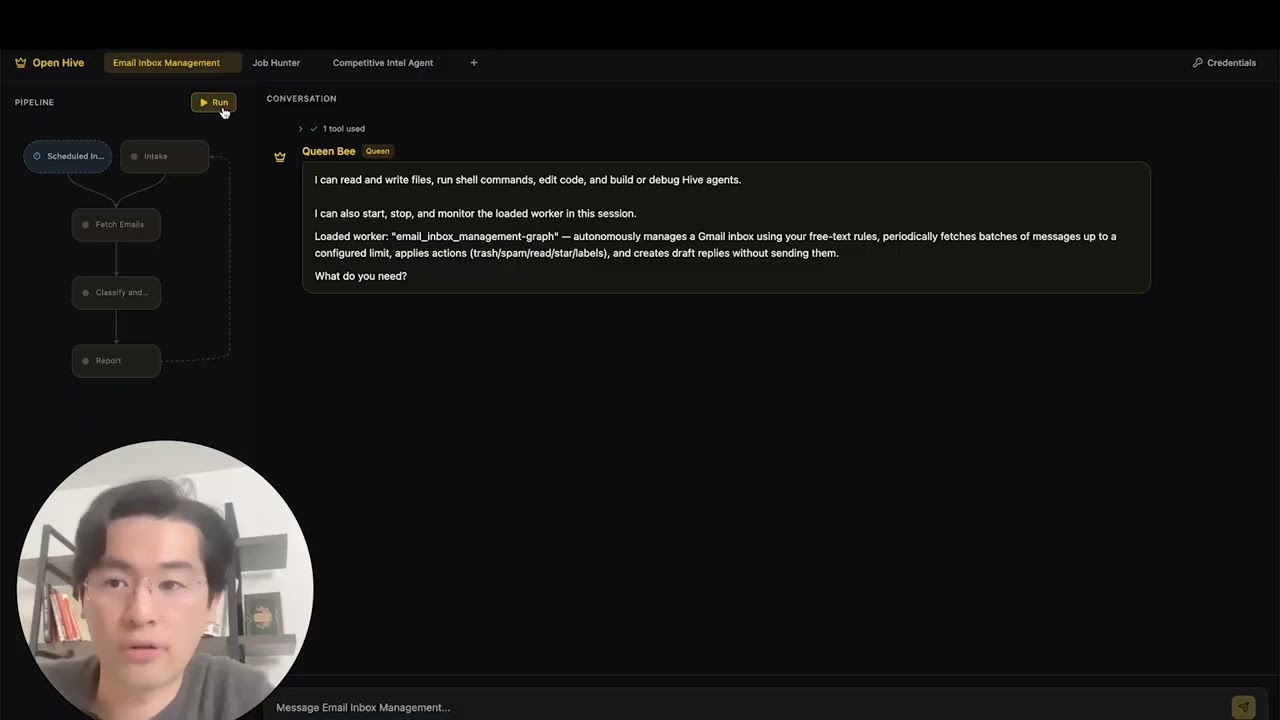](https://www.youtube.com/watch?v=XDOG9fOaLjU)
|
||||
|
||||
## Who Is Hive For?
|
||||
|
||||
Hive is designed for developers and teams who want to build **production-grade AI agents** without manually wiring complex workflows.
|
||||
|
||||
Hive is a good fit if you:
|
||||
|
||||
- Want AI agents that **execute real business processes**, not demos
|
||||
- Need **fast or high volume agent execution** over open workflow
|
||||
- Need **self-healing and adaptive agents** that improve over time
|
||||
- Require **human-in-the-loop control**, observability, and cost limits
|
||||
- Plan to run agents in **production environments**
|
||||
|
||||
Hive may not be the best fit if you’re only experimenting with simple agent chains or one-off scripts.
|
||||
|
||||
## When Should You Use Hive?
|
||||
|
||||
Use Hive when you need:
|
||||
|
||||
- Long-running, autonomous agents
|
||||
- Strong guardrails, process, and controls
|
||||
- Continuous improvement based on failures
|
||||
- Multi-agent coordination
|
||||
- A framework that evolves with your goals
|
||||
|
||||
## Quick Links
|
||||
|
||||
- **[Documentation](https://docs.adenhq.com/)** - Complete guides and API reference
|
||||
- **[Self-Hosting Guide](https://docs.adenhq.com/getting-started/quickstart)** - Deploy Hive on your infrastructure
|
||||
- **[Changelog](https://github.com/adenhq/hive/releases)** - Latest updates and releases
|
||||
<!-- - **[Roadmap](https://adenhq.com/roadmap)** - Upcoming features and plans -->
|
||||
- **[Changelog](https://github.com/aden-hive/hive/releases)** - Latest updates and releases
|
||||
- **[Roadmap](docs/roadmap.md)** - Upcoming features and plans
|
||||
- **[Report Issues](https://github.com/adenhq/hive/issues)** - Bug reports and feature requests
|
||||
- **[Contributing](CONTRIBUTING.md)** - How to contribute and submit PRs
|
||||
|
||||
## Quick Start
|
||||
|
||||
### Prerequisites
|
||||
|
||||
- [Docker](https://docs.docker.com/get-docker/) (v20.10+)
|
||||
- [Docker Compose](https://docs.docker.com/compose/install/) (v2.0+)
|
||||
- Python 3.11+ for agent development
|
||||
- An LLM provider that powers the agents
|
||||
- **ripgrep (optional, recommended on Windows):** The `search_files` tool uses ripgrep for faster file search. If not installed, a Python fallback is used. On Windows: `winget install BurntSushi.ripgrep` or `scoop install ripgrep`
|
||||
|
||||
> **Note for Windows Users:** It is strongly recommended to use **WSL (Windows Subsystem for Linux)** or **Git Bash** to run this framework. Some core automation scripts may not execute correctly in standard Command Prompt or PowerShell.
|
||||
|
||||
### Installation
|
||||
|
||||
> **Note**
|
||||
> Hive uses a `uv` workspace layout and is not installed with `pip install`.
|
||||
> Running `pip install -e .` from the repository root will create a placeholder package and Hive will not function correctly.
|
||||
> Please use the quickstart script below to set up the environment.
|
||||
|
||||
```bash
|
||||
# Clone the repository
|
||||
git clone https://github.com/adenhq/hive.git
|
||||
git clone https://github.com/aden-hive/hive.git
|
||||
cd hive
|
||||
|
||||
# Copy and configure
|
||||
cp config.yaml.example config.yaml
|
||||
|
||||
# Run setup and start services
|
||||
npm run setup
|
||||
docker compose up
|
||||
# Run quickstart setup
|
||||
./quickstart.sh
|
||||
```
|
||||
|
||||
**Access the application:**
|
||||
This sets up:
|
||||
|
||||
- Dashboard: http://localhost:3000
|
||||
- API: http://localhost:4000
|
||||
- Health: http://localhost:4000/health
|
||||
- **framework** - Core agent runtime and graph executor (in `core/.venv`)
|
||||
- **aden_tools** - MCP tools for agent capabilities (in `tools/.venv`)
|
||||
- **credential store** - Encrypted API key storage (`~/.hive/credentials`)
|
||||
- **LLM provider** - Interactive default model configuration
|
||||
- All required Python dependencies with `uv`
|
||||
|
||||
- At last, it will initiate the open hive interface in your browser
|
||||
|
||||
> **Tip:** To reopen the dashboard later, run `hive open` from the project directory.
|
||||
|
||||
<img width="2500" height="1214" alt="home-screen" src="https://github.com/user-attachments/assets/134d897f-5e75-4874-b00b-e0505f6b45c4" />
|
||||
|
||||
### Build Your First Agent
|
||||
|
||||
Type the agent you want to build in the home input box
|
||||
|
||||
<img width="2500" height="1214" alt="Image" src="https://github.com/user-attachments/assets/1ce19141-a78b-46f5-8d64-dbf987e048f4" />
|
||||
|
||||
### Use Template Agents
|
||||
|
||||
Click "Try a sample agent" and check the templates. You can run a templates directly or choose to build your version on top of the existing template.
|
||||
|
||||
### Run Agents
|
||||
|
||||
Now you can run an agent by selectiing the agent (either an existing agent or example agent). You can click the Run button on the top left, or talk to the queen agent and it can run the agent for you.
|
||||
|
||||
<img width="2500" height="1214" alt="Image" src="https://github.com/user-attachments/assets/71c38206-2ad5-49aa-bde8-6698d0bc55f5" />
|
||||
|
||||
## Features
|
||||
|
||||
- **Observe** - Real-time visibility into agent execution, decisions, and performance
|
||||
- **Metrics & Analytics** - Track costs, latency, and token usage with TimescaleDB
|
||||
- **Cost Control** - Set budgets and policies to manage LLM spending
|
||||
- **Real-time Events** - WebSocket streaming for live agent monitoring
|
||||
- **Self-Hostable** - Deploy on your own infrastructure with full control
|
||||
- **Production-Ready** - Built for scale and reliability
|
||||
- **Browser-Use** - Control the browser on your computer to achieve hard tasks
|
||||
- **Parallel Execution** - Execute the generated graph in parallel. This way you can have multiple agent compelteing the jobs for you
|
||||
- **[Goal-Driven Generation](docs/key_concepts/goals_outcome.md)** - Define objectives in natural language; the coding agent generates the agent graph and connection code to achieve them
|
||||
- **[Adaptiveness](docs/key_concepts/evolution.md)** - Framework captures failures, calibrates according to the objectives, and evolves the agent graph
|
||||
- **[Dynamic Node Connections](docs/key_concepts/graph.md)** - No predefined edges; connection code is generated by any capable LLM based on your goals
|
||||
- **SDK-Wrapped Nodes** - Every node gets shared memory, local RLM memory, monitoring, tools, and LLM access out of the box
|
||||
- **[Human-in-the-Loop](docs/key_concepts/graph.md#human-in-the-loop)** - Intervention nodes that pause execution for human input with configurable timeouts and escalation
|
||||
- **Real-time Observability** - WebSocket streaming for live monitoring of agent execution, decisions, and node-to-node communication
|
||||
- **Production-Ready** - Self-hostable, built for scale and reliability
|
||||
|
||||
## Project Structure
|
||||
## Integration
|
||||
|
||||
```
|
||||
hive/
|
||||
├── honeycomb/ # Frontend (React + TypeScript + Vite)
|
||||
├── hive/ # Backend (Node.js + TypeScript + Express)
|
||||
├── docs/ # Documentation
|
||||
├── scripts/ # Build and utility scripts
|
||||
├── config.yaml.example # Configuration template
|
||||
└── docker-compose.yml # Container orchestration
|
||||
<a href="https://github.com/aden-hive/hive/tree/main/tools/src/aden_tools/tools"><img width="100%" alt="Integration" src="https://github.com/user-attachments/assets/a1573f93-cf02-4bb8-b3d5-b305b05b1e51" /></a>
|
||||
Hive is built to be model-agnostic and system-agnostic.
|
||||
|
||||
- **LLM flexibility** - Hive Framework is designed to support various types of LLMs, including hosted and local models through LiteLLM-compatible providers.
|
||||
- **Business system connectivity** - Hive Framework is designed to connect to all kinds of business systems as tools, such as CRM, support, messaging, data, file, and internal APIs via MCP.
|
||||
|
||||
## Why Aden
|
||||
|
||||
Hive focuses on generating agents that run real business processes rather than generic agents. Instead of requiring you to manually design workflows, define agent interactions, and handle failures reactively, Hive flips the paradigm: **you describe outcomes, and the system builds itself**—delivering an outcome-driven, adaptive experience with an easy-to-use set of tools and integrations.
|
||||
|
||||
```mermaid
|
||||
flowchart LR
|
||||
GOAL["Define Goal"] --> GEN["Auto-Generate Graph"]
|
||||
GEN --> EXEC["Execute Agents"]
|
||||
EXEC --> MON["Monitor & Observe"]
|
||||
MON --> CHECK{{"Pass?"}}
|
||||
CHECK -- "Yes" --> DONE["Deliver Result"]
|
||||
CHECK -- "No" --> EVOLVE["Evolve Graph"]
|
||||
EVOLVE --> EXEC
|
||||
|
||||
GOAL -.- V1["Natural Language"]
|
||||
GEN -.- V2["Instant Architecture"]
|
||||
EXEC -.- V3["Easy Integrations"]
|
||||
MON -.- V4["Full visibility"]
|
||||
EVOLVE -.- V5["Adaptability"]
|
||||
DONE -.- V6["Reliable outcomes"]
|
||||
|
||||
style GOAL fill:#ffbe42,stroke:#cc5d00,stroke-width:2px,color:#333
|
||||
style GEN fill:#ffb100,stroke:#cc5d00,stroke-width:2px,color:#333
|
||||
style EXEC fill:#ff9800,stroke:#cc5d00,stroke-width:2px,color:#fff
|
||||
style MON fill:#ff9800,stroke:#cc5d00,stroke-width:2px,color:#fff
|
||||
style CHECK fill:#fff59d,stroke:#ed8c00,stroke-width:2px,color:#333
|
||||
style DONE fill:#4caf50,stroke:#2e7d32,stroke-width:2px,color:#fff
|
||||
style EVOLVE fill:#e8763d,stroke:#cc5d00,stroke-width:2px,color:#fff
|
||||
style V1 fill:#fff,stroke:#ed8c00,stroke-width:1px,color:#cc5d00
|
||||
style V2 fill:#fff,stroke:#ed8c00,stroke-width:1px,color:#cc5d00
|
||||
style V3 fill:#fff,stroke:#ed8c00,stroke-width:1px,color:#cc5d00
|
||||
style V4 fill:#fff,stroke:#ed8c00,stroke-width:1px,color:#cc5d00
|
||||
style V5 fill:#fff,stroke:#ed8c00,stroke-width:1px,color:#cc5d00
|
||||
style V6 fill:#fff,stroke:#ed8c00,stroke-width:1px,color:#cc5d00
|
||||
```
|
||||
|
||||
## Development
|
||||
### The Hive Advantage
|
||||
|
||||
### Local Development with Hot Reload
|
||||
| Traditional Frameworks | Hive |
|
||||
| -------------------------- | -------------------------------------- |
|
||||
| Hardcode agent workflows | Describe goals in natural language |
|
||||
| Manual graph definition | Auto-generated agent graphs |
|
||||
| Reactive error handling | Outcome-evaluation and adaptiveness |
|
||||
| Static tool configurations | Dynamic SDK-wrapped nodes |
|
||||
| Separate monitoring setup | Built-in real-time observability |
|
||||
| DIY budget management | Integrated cost controls & degradation |
|
||||
|
||||
```bash
|
||||
# Copy development overrides
|
||||
cp docker-compose.override.yml.example docker-compose.override.yml
|
||||
### How It Works
|
||||
|
||||
# Start with hot reload enabled
|
||||
docker compose up
|
||||
```
|
||||
|
||||
### Running Without Docker
|
||||
|
||||
```bash
|
||||
# Install dependencies
|
||||
npm install
|
||||
|
||||
# Generate environment files
|
||||
npm run generate:env
|
||||
|
||||
# Start frontend (in honeycomb/)
|
||||
cd honeycomb && npm run dev
|
||||
|
||||
# Start backend (in hive/)
|
||||
cd hive && npm run dev
|
||||
```
|
||||
1. **[Define Your Goal](docs/key_concepts/goals_outcome.md)** → Describe what you want to achieve in plain English
|
||||
2. **Coding Agent Generates** → Creates the [agent graph](docs/key_concepts/graph.md), connection code, and test cases
|
||||
3. **[Workers Execute](docs/key_concepts/worker_agent.md)** → SDK-wrapped nodes run with full observability and tool access
|
||||
4. **Control Plane Monitors** → Real-time metrics, budget enforcement, policy management
|
||||
5. **[Adaptiveness](docs/key_concepts/evolution.md)** → On failure, the system evolves the graph and redeploys automatically
|
||||
|
||||
## Documentation
|
||||
|
||||
- **[Developer Guide](DEVELOPER.md)** - Comprehensive guide for developers
|
||||
- **[Developer Guide](docs/developer-guide.md)** - Comprehensive guide for developers
|
||||
- [Getting Started](docs/getting-started.md) - Quick setup instructions
|
||||
- [Configuration Guide](docs/configuration.md) - All configuration options
|
||||
- [Architecture Overview](docs/architecture.md) - System design and structure
|
||||
- [Architecture Overview](docs/architecture/README.md) - System design and structure
|
||||
|
||||
## Roadmap
|
||||
|
||||
Aden Hive Agent Framework aims to help developers build outcome-oriented, self-adaptive agents. See [roadmap.md](docs/roadmap.md) for details.
|
||||
|
||||
```mermaid
|
||||
flowchart TB
|
||||
%% Main Entity
|
||||
User([User])
|
||||
|
||||
%% =========================================
|
||||
%% EXTERNAL EVENT SOURCES
|
||||
%% =========================================
|
||||
subgraph ExtEventSource [External Event Source]
|
||||
E_Sch["Schedulers"]
|
||||
E_WH["Webhook"]
|
||||
E_SSE["SSE"]
|
||||
end
|
||||
|
||||
%% =========================================
|
||||
%% SYSTEM NODES
|
||||
%% =========================================
|
||||
subgraph WorkerBees [Worker Bees]
|
||||
WB_C["Conversation"]
|
||||
WB_SP["System prompt"]
|
||||
|
||||
subgraph Graph [Graph]
|
||||
direction TB
|
||||
N1["Node"] --> N2["Node"] --> N3["Node"]
|
||||
N1 -.-> AN["Active Node"]
|
||||
N2 -.-> AN
|
||||
N3 -.-> AN
|
||||
|
||||
%% Nested Event Loop Node
|
||||
subgraph EventLoopNode [Event Loop Node]
|
||||
ELN_L["listener"]
|
||||
ELN_SP["System Prompt<br/>(Task)"]
|
||||
ELN_EL["Event loop"]
|
||||
ELN_C["Conversation"]
|
||||
end
|
||||
end
|
||||
end
|
||||
|
||||
subgraph JudgeNode [Judge]
|
||||
J_C["Criteria"]
|
||||
J_P["Principles"]
|
||||
J_EL["Event loop"] <--> J_S["Scheduler"]
|
||||
end
|
||||
|
||||
subgraph QueenBee [Queen Bee]
|
||||
QB_SP["System prompt"]
|
||||
QB_EL["Event loop"]
|
||||
QB_C["Conversation"]
|
||||
end
|
||||
|
||||
subgraph Infra [Infra]
|
||||
SA["Sub Agent"]
|
||||
TR["Tool Registry"]
|
||||
WTM["Write through Conversation Memory<br/>(Logs/RAM/Harddrive)"]
|
||||
SM["Shared Memory<br/>(State/Harddrive)"]
|
||||
EB["Event Bus<br/>(RAM)"]
|
||||
CS["Credential Store<br/>(Harddrive/Cloud)"]
|
||||
end
|
||||
|
||||
subgraph PC [PC]
|
||||
B["Browser"]
|
||||
CB["Codebase<br/>v 0.0.x ... v n.n.n"]
|
||||
end
|
||||
|
||||
%% =========================================
|
||||
%% CONNECTIONS & DATA FLOW
|
||||
%% =========================================
|
||||
|
||||
%% External Event Routing
|
||||
E_Sch --> ELN_L
|
||||
E_WH --> ELN_L
|
||||
E_SSE --> ELN_L
|
||||
ELN_L -->|"triggers"| ELN_EL
|
||||
|
||||
%% User Interactions
|
||||
User -->|"Talk"| WB_C
|
||||
User -->|"Talk"| QB_C
|
||||
User -->|"Read/Write Access"| CS
|
||||
|
||||
%% Inter-System Logic
|
||||
ELN_C <-->|"Mirror"| WB_C
|
||||
WB_C -->|"Focus"| AN
|
||||
|
||||
WorkerBees -->|"Inquire"| JudgeNode
|
||||
JudgeNode -->|"Approve"| WorkerBees
|
||||
|
||||
%% Judge Alignments
|
||||
J_C <-.->|"aligns"| WB_SP
|
||||
J_P <-.->|"aligns"| QB_SP
|
||||
|
||||
%% Escalate path
|
||||
J_EL -->|"Report (Escalate)"| QB_EL
|
||||
|
||||
%% Pub/Sub Logic
|
||||
AN -->|"publish"| EB
|
||||
EB -->|"subscribe"| QB_C
|
||||
|
||||
%% Infra and Process Spawning
|
||||
ELN_EL -->|"Spawn"| SA
|
||||
SA -->|"Inform"| ELN_EL
|
||||
SA -->|"Starts"| B
|
||||
B -->|"Report"| ELN_EL
|
||||
TR -->|"Assigned"| ELN_EL
|
||||
CB -->|"Modify Worker Bee"| WB_C
|
||||
|
||||
%% =========================================
|
||||
%% SHARED MEMORY & LOGS ACCESS
|
||||
%% =========================================
|
||||
|
||||
%% Worker Bees Access (link to node inside Graph subgraph)
|
||||
AN <-->|"Read/Write"| WTM
|
||||
AN <-->|"Read/Write"| SM
|
||||
|
||||
%% Queen Bee Access
|
||||
QB_C <-->|"Read/Write"| WTM
|
||||
QB_EL <-->|"Read/Write"| SM
|
||||
|
||||
%% Credentials Access
|
||||
CS -->|"Read Access"| QB_C
|
||||
```
|
||||
|
||||
## Contributing
|
||||
We welcome contributions from the community! We’re especially looking for help building tools, integrations, and example agents for the framework ([check #2805](https://github.com/aden-hive/hive/issues/2805)). If you’re interested in extending its functionality, this is the perfect place to start. Please see [CONTRIBUTING.md](CONTRIBUTING.md) for guidelines.
|
||||
|
||||
**Important:** Please get assigned to an issue before submitting a PR. Comment on an issue to claim it, and a maintainer will assign you. Issues with reproducible steps and proposals are prioritized. This helps prevent duplicate work.
|
||||
|
||||
1. Find or create an issue and get assigned
|
||||
2. Fork the repository
|
||||
3. Create your feature branch (`git checkout -b feature/amazing-feature`)
|
||||
4. Commit your changes (`git commit -m 'Add amazing feature'`)
|
||||
5. Push to the branch (`git push origin feature/amazing-feature`)
|
||||
6. Open a Pull Request
|
||||
|
||||
## Community & Support
|
||||
|
||||
@@ -119,16 +360,6 @@ We use [Discord](https://discord.com/invite/MXE49hrKDk) for support, feature req
|
||||
- Twitter/X - [@adenhq](https://x.com/aden_hq)
|
||||
- LinkedIn - [Company Page](https://www.linkedin.com/company/teamaden/)
|
||||
|
||||
## Contributing
|
||||
|
||||
We welcome contributions! Please see [CONTRIBUTING.md](CONTRIBUTING.md) for guidelines.
|
||||
|
||||
1. Fork the repository
|
||||
2. Create your feature branch (`git checkout -b feature/amazing-feature`)
|
||||
3. Commit your changes (`git commit -m 'Add amazing feature'`)
|
||||
4. Push to the branch (`git push origin feature/amazing-feature`)
|
||||
5. Open a Pull Request
|
||||
|
||||
## Join Our Team
|
||||
|
||||
**We're hiring!** Join us in engineering, research, and go-to-market roles.
|
||||
@@ -143,8 +374,54 @@ For security concerns, please see [SECURITY.md](SECURITY.md).
|
||||
|
||||
This project is licensed under the Apache License 2.0 - see the [LICENSE](LICENSE) file for details.
|
||||
|
||||
## Frequently Asked Questions (FAQ)
|
||||
|
||||
**Q: What LLM providers does Hive support?**
|
||||
|
||||
Hive supports 100+ LLM providers through LiteLLM integration, including OpenAI (GPT-4, GPT-4o), Anthropic (Claude models), Google Gemini, DeepSeek, Mistral, Groq, and many more. Simply set the appropriate API key environment variable and specify the model name. We recommend using Claude, GLM and Gemini as they have the best performance.
|
||||
|
||||
**Q: Can I use Hive with local AI models like Ollama?**
|
||||
|
||||
Yes! Hive supports local models through LiteLLM. Simply use the model name format `ollama/model-name` (e.g., `ollama/llama3`, `ollama/mistral`) and ensure Ollama is running locally.
|
||||
|
||||
**Q: What makes Hive different from other agent frameworks?**
|
||||
|
||||
Hive generates your entire agent system from natural language goals using a coding agent—you don't hardcode workflows or manually define graphs. When agents fail, the framework automatically captures failure data, [evolves the agent graph](docs/key_concepts/evolution.md), and redeploys. This self-improving loop is unique to Aden.
|
||||
|
||||
**Q: Is Hive open-source?**
|
||||
|
||||
Yes, Hive is fully open-source under the Apache License 2.0. We actively encourage community contributions and collaboration.
|
||||
|
||||
**Q: Can Hive handle complex, production-scale use cases?**
|
||||
|
||||
Yes. Hive is explicitly designed for production environments with features like automatic failure recovery, real-time observability, cost controls, and horizontal scaling support. The framework handles both simple automations and complex multi-agent workflows.
|
||||
|
||||
**Q: Does Hive support human-in-the-loop workflows?**
|
||||
|
||||
Yes, Hive fully supports [human-in-the-loop](docs/key_concepts/graph.md#human-in-the-loop) workflows through intervention nodes that pause execution for human input. These include configurable timeouts and escalation policies, allowing seamless collaboration between human experts and AI agents.
|
||||
|
||||
**Q: What programming languages does Hive support?**
|
||||
|
||||
The Hive framework is built in Python. A JavaScript/TypeScript SDK is on the roadmap.
|
||||
|
||||
**Q: Can Hive agents interact with external tools and APIs?**
|
||||
|
||||
Yes. Aden's SDK-wrapped nodes provide built-in tool access, and the framework supports flexible tool ecosystems. Agents can integrate with external APIs, databases, and services through the node architecture.
|
||||
|
||||
**Q: How does cost control work in Hive?**
|
||||
|
||||
Hive provides granular budget controls including spending limits, throttles, and automatic model degradation policies. You can set budgets at the team, agent, or workflow level, with real-time cost tracking and alerts.
|
||||
|
||||
**Q: Where can I find examples and documentation?**
|
||||
|
||||
Visit [docs.adenhq.com](https://docs.adenhq.com/) for complete guides, API reference, and getting started tutorials. The repository also includes documentation in the `docs/` folder and a comprehensive [developer guide](docs/developer-guide.md).
|
||||
|
||||
**Q: How can I contribute to Aden?**
|
||||
|
||||
Contributions are welcome! Fork the repository, create your feature branch, implement your changes, and submit a pull request. See [CONTRIBUTING.md](CONTRIBUTING.md) for detailed guidelines.
|
||||
|
||||
---
|
||||
|
||||
<p align="center">
|
||||
Made with care by the <a href="https://adenhq.com">Aden</a> team
|
||||
Made with 🔥 Passion in San Francisco
|
||||
</p>
|
||||
|
||||
@@ -0,0 +1,31 @@
|
||||
perf: reduce subprocess spawning in quickstart scripts (#4427)
|
||||
|
||||
## Problem
|
||||
Windows process creation (CreateProcess) is 10-100x slower than Linux fork/exec.
|
||||
The quickstart scripts were spawning 4+ separate `uv run python -c "import X"`
|
||||
processes to verify imports, adding ~600ms overhead on Windows.
|
||||
|
||||
## Solution
|
||||
Consolidated all import checks into a single batch script that checks multiple
|
||||
modules in one subprocess call, reducing spawn overhead by ~75%.
|
||||
|
||||
## Changes
|
||||
- **New**: `scripts/check_requirements.py` - Batched import checker
|
||||
- **New**: `scripts/test_check_requirements.py` - Test suite
|
||||
- **New**: `scripts/benchmark_quickstart.ps1` - Performance benchmark tool
|
||||
- **Modified**: `quickstart.ps1` - Updated import verification (2 sections)
|
||||
- **Modified**: `quickstart.sh` - Updated import verification
|
||||
|
||||
## Performance Impact
|
||||
**Benchmark results on Windows:**
|
||||
- Before: ~19.8 seconds for import checks
|
||||
- After: ~4.9 seconds for import checks
|
||||
- **Improvement: 14.9 seconds saved (75.2% faster)**
|
||||
|
||||
## Testing
|
||||
- ✅ All functional tests pass (`scripts/test_check_requirements.py`)
|
||||
- ✅ Quickstart scripts work correctly on Windows
|
||||
- ✅ Error handling verified (invalid imports reported correctly)
|
||||
- ✅ Performance benchmark confirms 75%+ improvement
|
||||
|
||||
Fixes #4427
|
||||
@@ -1,118 +0,0 @@
|
||||
# Hive Configuration
|
||||
# ======================
|
||||
# Copy this file to config.yaml and customize for your environment.
|
||||
# Run `npm run setup` to generate .env files from this configuration.
|
||||
#
|
||||
# For detailed documentation, see: docs/configuration.md
|
||||
|
||||
# -----------------------------------------------------------------------------
|
||||
# Application Settings
|
||||
# -----------------------------------------------------------------------------
|
||||
app:
|
||||
# Application name (displayed in UI and logs)
|
||||
name: Hive
|
||||
|
||||
# Environment: development, production, or test
|
||||
environment: development
|
||||
|
||||
# Log level: debug, info, warn, error
|
||||
log_level: info
|
||||
|
||||
# -----------------------------------------------------------------------------
|
||||
# Server Configuration
|
||||
# -----------------------------------------------------------------------------
|
||||
server:
|
||||
# Frontend settings
|
||||
frontend:
|
||||
# Port for the frontend application
|
||||
port: 3000
|
||||
|
||||
# Backend (Hive) settings
|
||||
backend:
|
||||
# Port for the backend API
|
||||
port: 4000
|
||||
|
||||
# Host to bind to (0.0.0.0 for all interfaces)
|
||||
host: 0.0.0.0
|
||||
|
||||
# -----------------------------------------------------------------------------
|
||||
# TimescaleDB Configuration (Time-series metrics storage)
|
||||
# -----------------------------------------------------------------------------
|
||||
timescaledb:
|
||||
# Connection URL for TimescaleDB
|
||||
# Format: postgresql://user:password@host:port/database
|
||||
url: postgresql://postgres:postgres@localhost:5432/aden_tsdb
|
||||
|
||||
# External port mapping (for docker-compose)
|
||||
port: 5432
|
||||
|
||||
# -----------------------------------------------------------------------------
|
||||
# MongoDB Configuration (Policies, pricing, control config)
|
||||
# -----------------------------------------------------------------------------
|
||||
mongodb:
|
||||
# Connection URL for MongoDB
|
||||
url: mongodb://localhost:27017
|
||||
|
||||
# Database name for main data
|
||||
database: aden
|
||||
|
||||
# Database name for ERP data
|
||||
erp_database: erp
|
||||
|
||||
# External port mapping (for docker-compose)
|
||||
port: 27017
|
||||
|
||||
# -----------------------------------------------------------------------------
|
||||
# Redis Configuration (Caching and Socket.IO)
|
||||
# -----------------------------------------------------------------------------
|
||||
redis:
|
||||
# Connection URL for Redis
|
||||
url: redis://localhost:6379
|
||||
|
||||
# External port mapping (for docker-compose)
|
||||
port: 6379
|
||||
|
||||
# -----------------------------------------------------------------------------
|
||||
# Authentication & Security
|
||||
# -----------------------------------------------------------------------------
|
||||
auth:
|
||||
# JWT secret key - CHANGE THIS IN PRODUCTION!
|
||||
# Generate with: openssl rand -base64 32
|
||||
jwt_secret: change-this-to-a-secure-random-string-min-32-chars
|
||||
|
||||
# JWT token expiration (e.g., 1h, 7d, 30d)
|
||||
jwt_expires_in: 7d
|
||||
|
||||
# Passphrase for additional encryption - CHANGE THIS IN PRODUCTION!
|
||||
passphrase: change-this-to-a-secure-passphrase
|
||||
|
||||
# -----------------------------------------------------------------------------
|
||||
# NPM Configuration
|
||||
# -----------------------------------------------------------------------------
|
||||
npm:
|
||||
# NPM token for private package access (if needed)
|
||||
token: ""
|
||||
|
||||
# -----------------------------------------------------------------------------
|
||||
# CORS Configuration
|
||||
# -----------------------------------------------------------------------------
|
||||
cors:
|
||||
# Allowed origin for CORS requests
|
||||
# In production, set this to your frontend URL
|
||||
origin: http://localhost:3000
|
||||
|
||||
# -----------------------------------------------------------------------------
|
||||
# Feature Flags
|
||||
# -----------------------------------------------------------------------------
|
||||
features:
|
||||
# Enable user registration
|
||||
registration: true
|
||||
|
||||
# Enable API rate limiting
|
||||
rate_limiting: false
|
||||
|
||||
# Enable request logging
|
||||
request_logging: true
|
||||
|
||||
# Enable MCP (Model Context Protocol) server
|
||||
mcp_server: true
|
||||
@@ -0,0 +1,27 @@
|
||||
# Identity mapping: GitHub username -> Discord ID
|
||||
#
|
||||
# This file links GitHub accounts to Discord accounts for the
|
||||
# Integration Bounty Program. When a bounty PR is merged, the
|
||||
# GitHub Action uses this file to ping the contributor on Discord.
|
||||
#
|
||||
# HOW TO ADD YOURSELF:
|
||||
# Open a "Link Discord Account" issue:
|
||||
# https://github.com/aden-hive/hive/issues/new?template=link-discord.yml
|
||||
# A GitHub Action will automatically add your entry here.
|
||||
#
|
||||
# To find your Discord ID:
|
||||
# 1. Open Discord Settings > Advanced > Enable Developer Mode
|
||||
# 2. Right-click your name > Copy User ID
|
||||
#
|
||||
# Format:
|
||||
# - github: your-github-username
|
||||
# discord: "your-discord-id" # quotes required (it's a number)
|
||||
# name: Your Display Name # optional
|
||||
|
||||
contributors:
|
||||
# - github: example-user
|
||||
# discord: "123456789012345678"
|
||||
# name: Example User
|
||||
- github: TimothyZhang7
|
||||
discord: "408460790061072384"
|
||||
name: Timothy@Aden
|
||||
@@ -0,0 +1,4 @@
|
||||
exports/
|
||||
docs/
|
||||
.pytest_cache/
|
||||
**/__pycache__/
|
||||
@@ -0,0 +1,9 @@
|
||||
{
|
||||
"mcpServers": {
|
||||
"tools": {
|
||||
"command": "python",
|
||||
"args": ["-m", "aden_tools.mcp_server", "--stdio"],
|
||||
"cwd": "tools"
|
||||
}
|
||||
}
|
||||
}
|
||||
@@ -0,0 +1,413 @@
|
||||
# Agent Builder MCP Tools - MCP Integration Guide
|
||||
|
||||
This guide explains how to use the new MCP integration tools in the agent builder MCP server.
|
||||
|
||||
## Overview
|
||||
|
||||
The agent builder now supports registering external MCP servers as tool sources. This allows you to:
|
||||
|
||||
1. Register MCP servers (like tools) during agent building
|
||||
2. Discover available tools from those servers
|
||||
3. Use those tools in your agent nodes
|
||||
4. Automatically generate `mcp_servers.json` configuration on export
|
||||
|
||||
## New MCP Tools
|
||||
|
||||
### `add_mcp_server`
|
||||
|
||||
Register an MCP server as a tool source for your agent.
|
||||
|
||||
**Parameters:**
|
||||
|
||||
- `name` (string, required): Unique name for the MCP server
|
||||
- `transport` (string, required): Transport type - "stdio" or "http"
|
||||
- `command` (string): Command to run (for stdio transport)
|
||||
- `args` (string): JSON array of command arguments (for stdio)
|
||||
- `cwd` (string): Working directory (for stdio)
|
||||
- `env` (string): JSON object of environment variables (for stdio)
|
||||
- `url` (string): Server URL (for http transport)
|
||||
- `headers` (string): JSON object of HTTP headers (for http)
|
||||
- `description` (string): Description of the MCP server
|
||||
|
||||
**Example - STDIO:**
|
||||
|
||||
```json
|
||||
{
|
||||
"name": "add_mcp_server",
|
||||
"arguments": {
|
||||
"name": "tools",
|
||||
"transport": "stdio",
|
||||
"command": "python",
|
||||
"args": "[\"mcp_server.py\", \"--stdio\"]",
|
||||
"cwd": "../tools",
|
||||
"description": "Aden tools for web search and file operations"
|
||||
}
|
||||
}
|
||||
```
|
||||
|
||||
**Example - HTTP:**
|
||||
|
||||
```json
|
||||
{
|
||||
"name": "add_mcp_server",
|
||||
"arguments": {
|
||||
"name": "remote-tools",
|
||||
"transport": "http",
|
||||
"url": "http://localhost:4001",
|
||||
"description": "Remote tool server"
|
||||
}
|
||||
}
|
||||
```
|
||||
|
||||
**Response:**
|
||||
|
||||
```json
|
||||
{
|
||||
"success": true,
|
||||
"server": {
|
||||
"name": "tools",
|
||||
"transport": "stdio",
|
||||
"command": "python",
|
||||
"args": ["mcp_server.py", "--stdio"],
|
||||
"cwd": "../tools",
|
||||
"description": "Aden tools..."
|
||||
},
|
||||
"tools_discovered": 6,
|
||||
"tools": [
|
||||
"web_search",
|
||||
"web_scrape",
|
||||
"file_read",
|
||||
"file_write",
|
||||
"pdf_read",
|
||||
"example_tool"
|
||||
],
|
||||
"total_mcp_servers": 1,
|
||||
"note": "MCP server 'tools' registered with 6 tools. These tools can now be used in event_loop nodes."
|
||||
}
|
||||
```
|
||||
|
||||
### `list_mcp_servers`
|
||||
|
||||
List all registered MCP servers.
|
||||
|
||||
**Parameters:** None
|
||||
|
||||
**Response:**
|
||||
|
||||
```json
|
||||
{
|
||||
"mcp_servers": [
|
||||
{
|
||||
"name": "tools",
|
||||
"transport": "stdio",
|
||||
"command": "python",
|
||||
"args": ["mcp_server.py", "--stdio"],
|
||||
"cwd": "../tools",
|
||||
"description": "Aden tools..."
|
||||
}
|
||||
],
|
||||
"total": 1
|
||||
}
|
||||
```
|
||||
|
||||
### `list_mcp_tools`
|
||||
|
||||
List tools available from registered MCP servers.
|
||||
|
||||
**Parameters:**
|
||||
|
||||
- `server_name` (string, optional): Name of specific server to list tools from. If omitted, lists tools from all servers.
|
||||
|
||||
**Example:**
|
||||
|
||||
```json
|
||||
{
|
||||
"name": "list_mcp_tools",
|
||||
"arguments": {
|
||||
"server_name": "tools"
|
||||
}
|
||||
}
|
||||
```
|
||||
|
||||
**Response:**
|
||||
|
||||
```json
|
||||
{
|
||||
"success": true,
|
||||
"tools_by_server": {
|
||||
"tools": [
|
||||
{
|
||||
"name": "web_search",
|
||||
"description": "Search the web for information using Brave Search API...",
|
||||
"parameters": ["query", "num_results", "country"]
|
||||
},
|
||||
{
|
||||
"name": "web_scrape",
|
||||
"description": "Scrape and extract text content from a webpage...",
|
||||
"parameters": ["url", "selector", "include_links", "max_length"]
|
||||
}
|
||||
]
|
||||
},
|
||||
"total_tools": 6,
|
||||
"note": "Use these tool names in the 'tools' parameter when adding event_loop nodes"
|
||||
}
|
||||
```
|
||||
|
||||
### `remove_mcp_server`
|
||||
|
||||
Remove a registered MCP server.
|
||||
|
||||
**Parameters:**
|
||||
|
||||
- `name` (string, required): Name of the MCP server to remove
|
||||
|
||||
**Example:**
|
||||
|
||||
```json
|
||||
{
|
||||
"name": "remove_mcp_server",
|
||||
"arguments": {
|
||||
"name": "tools"
|
||||
}
|
||||
}
|
||||
```
|
||||
|
||||
**Response:**
|
||||
|
||||
```json
|
||||
{
|
||||
"success": true,
|
||||
"removed": "tools",
|
||||
"remaining_servers": 0
|
||||
}
|
||||
```
|
||||
|
||||
## Workflow Example
|
||||
|
||||
Here's a complete workflow for building an agent with MCP tools:
|
||||
|
||||
### 1. Create Session
|
||||
|
||||
```json
|
||||
{
|
||||
"name": "create_session",
|
||||
"arguments": {
|
||||
"name": "web-research-agent"
|
||||
}
|
||||
}
|
||||
```
|
||||
|
||||
### 2. Register MCP Server
|
||||
|
||||
```json
|
||||
{
|
||||
"name": "add_mcp_server",
|
||||
"arguments": {
|
||||
"name": "tools",
|
||||
"transport": "stdio",
|
||||
"command": "python",
|
||||
"args": "[\"mcp_server.py\", \"--stdio\"]",
|
||||
"cwd": "../tools"
|
||||
}
|
||||
}
|
||||
```
|
||||
|
||||
### 3. List Available Tools
|
||||
|
||||
```json
|
||||
{
|
||||
"name": "list_mcp_tools",
|
||||
"arguments": {
|
||||
"server_name": "tools"
|
||||
}
|
||||
}
|
||||
```
|
||||
|
||||
### 4. Set Goal
|
||||
|
||||
```json
|
||||
{
|
||||
"name": "set_goal",
|
||||
"arguments": {
|
||||
"goal_id": "web-research",
|
||||
"name": "Web Research Agent",
|
||||
"description": "Search the web and summarize findings",
|
||||
"success_criteria": "[{\"id\": \"search-success\", \"description\": \"Successfully retrieve search results\", \"metric\": \"results_count\", \"target\": \">= 3\", \"weight\": 1.0}]"
|
||||
}
|
||||
}
|
||||
```
|
||||
|
||||
### 5. Add Node with MCP Tool
|
||||
|
||||
```json
|
||||
{
|
||||
"name": "add_node",
|
||||
"arguments": {
|
||||
"node_id": "web-searcher",
|
||||
"name": "Web Search",
|
||||
"description": "Search the web for information",
|
||||
"node_type": "event_loop",
|
||||
"input_keys": "[\"query\"]",
|
||||
"output_keys": "[\"search_results\"]",
|
||||
"system_prompt": "Search for {query} using the web_search tool",
|
||||
"tools": "[\"web_search\"]"
|
||||
}
|
||||
}
|
||||
```
|
||||
|
||||
Note: `web_search` is now available because we registered the tools MCP server!
|
||||
|
||||
### 6. Export Agent
|
||||
|
||||
```json
|
||||
{
|
||||
"name": "export_graph",
|
||||
"arguments": {}
|
||||
}
|
||||
```
|
||||
|
||||
The export will create:
|
||||
|
||||
- `exports/web-research-agent/agent.json` - Agent specification
|
||||
- `exports/web-research-agent/README.md` - Documentation
|
||||
- `exports/web-research-agent/mcp_servers.json` - **MCP server configuration** ✨
|
||||
|
||||
## MCP Configuration File
|
||||
|
||||
When you export an agent with registered MCP servers, an `mcp_servers.json` file is automatically created:
|
||||
|
||||
```json
|
||||
{
|
||||
"servers": [
|
||||
{
|
||||
"name": "tools",
|
||||
"transport": "stdio",
|
||||
"command": "python",
|
||||
"args": ["mcp_server.py", "--stdio"],
|
||||
"cwd": "../tools",
|
||||
"description": "Aden tools for web search and file operations"
|
||||
}
|
||||
]
|
||||
}
|
||||
```
|
||||
|
||||
This file is automatically loaded by the AgentRunner when the agent is executed, making the MCP tools available at runtime.
|
||||
|
||||
## Using the Exported Agent
|
||||
|
||||
Once exported, load and run the agent normally:
|
||||
|
||||
```python
|
||||
from framework.runner.runner import AgentRunner
|
||||
|
||||
# Load agent - MCP servers auto-load from mcp_servers.json
|
||||
runner = AgentRunner.load("exports/web-research-agent")
|
||||
|
||||
# Run with input
|
||||
result = await runner.run({"query": "latest AI breakthroughs"})
|
||||
|
||||
# The web_search tool from tools is automatically available!
|
||||
```
|
||||
|
||||
## Benefits
|
||||
|
||||
1. **Discoverable Tools**: See what tools are available before using them
|
||||
2. **Validation**: Connection is tested when registering the server
|
||||
3. **Automatic Configuration**: No manual file editing required
|
||||
4. **Documentation**: README includes MCP server information
|
||||
5. **Runtime Ready**: Exported agents work immediately with configured tools
|
||||
|
||||
## Common MCP Servers
|
||||
|
||||
### tools
|
||||
|
||||
Provides:
|
||||
|
||||
- `web_search` - Brave Search API integration
|
||||
- `web_scrape` - Web page content extraction
|
||||
- `file_read` / `file_write` - File operations
|
||||
- `pdf_read` - PDF text extraction
|
||||
|
||||
### Custom MCP Servers
|
||||
|
||||
You can register any MCP server that follows the Model Context Protocol specification.
|
||||
|
||||
## Troubleshooting
|
||||
|
||||
### "Failed to connect to MCP server"
|
||||
|
||||
- Verify the `command` and `args` are correct
|
||||
- Check that the server is accessible at the specified path/URL
|
||||
- Ensure any required environment variables are set
|
||||
- For STDIO: verify the command can be executed from the `cwd`
|
||||
- For HTTP: verify the server is running and accessible
|
||||
|
||||
### Tools not appearing
|
||||
|
||||
- Use `list_mcp_tools` to verify tools were discovered
|
||||
- Check the tool names match exactly (case-sensitive)
|
||||
- Ensure the MCP server is still registered (`list_mcp_servers`)
|
||||
|
||||
### Export doesn't include mcp_servers.json
|
||||
|
||||
- Verify you registered at least one MCP server
|
||||
- Check `get_session_status` to see `mcp_servers_count > 0`
|
||||
- Re-export the agent after registering servers
|
||||
|
||||
## Credential Validation
|
||||
|
||||
When adding nodes with tools that require API keys (like `web_search`), the agent builder automatically validates that the required credentials are available.
|
||||
|
||||
### How It Works
|
||||
|
||||
When you call `add_node` or `update_node` with a `tools` parameter, the agent builder:
|
||||
|
||||
1. Checks which tools require credentials (e.g., `web_search` requires `BRAVE_SEARCH_API_KEY`)
|
||||
2. Validates those credentials are set in the environment or `.env` file
|
||||
3. Returns an error if any credentials are missing
|
||||
|
||||
### Missing Credentials Error
|
||||
|
||||
If credentials are missing, you'll receive a response like:
|
||||
|
||||
```json
|
||||
{
|
||||
"valid": false,
|
||||
"errors": ["Missing credentials for tools: ['BRAVE_SEARCH_API_KEY']"],
|
||||
"missing_credentials": [
|
||||
{
|
||||
"credential": "brave_search",
|
||||
"env_var": "BRAVE_SEARCH_API_KEY",
|
||||
"tools_affected": ["web_search"],
|
||||
"help_url": "https://brave.com/search/api/",
|
||||
"description": "API key for Brave Search"
|
||||
}
|
||||
],
|
||||
"action_required": "Add the credentials to your .env file and retry",
|
||||
"example": "Add to .env:\nBRAVE_SEARCH_API_KEY=your_key_here",
|
||||
"message": "Cannot add node: missing API credentials. Add them to .env and retry this command."
|
||||
}
|
||||
```
|
||||
|
||||
### Fixing Credential Errors
|
||||
|
||||
1. Get the required API key from the URL in `help_url`
|
||||
2. Add it to your environment:
|
||||
|
||||
```bash
|
||||
# Option 1: Export directly
|
||||
export BRAVE_SEARCH_API_KEY=your-key-here
|
||||
|
||||
# Option 2: Add to tools/.env
|
||||
echo "BRAVE_SEARCH_API_KEY=your-key-here" >> tools/.env
|
||||
```
|
||||
|
||||
3. Retry the `add_node` command
|
||||
|
||||
### Required Credentials by Tool
|
||||
|
||||
| Tool | Credential | Get Key |
|
||||
| ------------ | ---------------------- | ----------------------------------------------------- |
|
||||
| `web_search` | `BRAVE_SEARCH_API_KEY` | [brave.com/search/api](https://brave.com/search/api/) |
|
||||
|
||||
Note: The MCP server itself requires `ANTHROPIC_API_KEY` at startup for LLM operations.
|
||||
@@ -0,0 +1,364 @@
|
||||
# MCP Integration Guide
|
||||
|
||||
This guide explains how to integrate Model Context Protocol (MCP) servers with the Hive Core Framework, enabling agents to use tools from external MCP servers.
|
||||
|
||||
## Overview
|
||||
|
||||
The framework provides built-in support for MCP servers, allowing you to:
|
||||
|
||||
- **Register MCP servers** via STDIO or HTTP transport
|
||||
- **Auto-discover tools** from registered servers
|
||||
- **Use MCP tools** seamlessly in your agents
|
||||
- **Manage multiple MCP servers** simultaneously
|
||||
|
||||
## Quick Start
|
||||
|
||||
### 1. Register an MCP Server Programmatically
|
||||
|
||||
```python
|
||||
from framework.runner.runner import AgentRunner
|
||||
|
||||
# Load your agent
|
||||
runner = AgentRunner.load("exports/my-agent")
|
||||
|
||||
# Register tools MCP server
|
||||
runner.register_mcp_server(
|
||||
name="tools",
|
||||
transport="stdio",
|
||||
command="python",
|
||||
args=["-m", "aden_tools.mcp_server", "--stdio"],
|
||||
cwd="/path/to/tools"
|
||||
)
|
||||
|
||||
# Tools are now available to your agent
|
||||
result = await runner.run({"input": "data"})
|
||||
```
|
||||
|
||||
### 2. Use Configuration File
|
||||
|
||||
Create `mcp_servers.json` in your agent folder:
|
||||
|
||||
```json
|
||||
{
|
||||
"servers": [
|
||||
{
|
||||
"name": "tools",
|
||||
"transport": "stdio",
|
||||
"command": "python",
|
||||
"args": ["-m", "aden_tools.mcp_server", "--stdio"],
|
||||
"cwd": "../tools"
|
||||
}
|
||||
]
|
||||
}
|
||||
```
|
||||
|
||||
The framework will automatically load and register these servers when you load the agent:
|
||||
|
||||
```python
|
||||
runner = AgentRunner.load("exports/my-agent") # MCP servers auto-loaded
|
||||
```
|
||||
|
||||
## Transport Types
|
||||
|
||||
### STDIO Transport
|
||||
|
||||
Best for local MCP servers running as subprocesses:
|
||||
|
||||
```python
|
||||
runner.register_mcp_server(
|
||||
name="local-tools",
|
||||
transport="stdio",
|
||||
command="python",
|
||||
args=["-m", "my_tools.server", "--stdio"],
|
||||
cwd="/path/to/my-tools",
|
||||
env={
|
||||
"API_KEY": "your-key-here"
|
||||
}
|
||||
)
|
||||
```
|
||||
|
||||
**Configuration:**
|
||||
|
||||
- `command`: Executable to run (e.g., "python", "node")
|
||||
- `args`: List of command-line arguments
|
||||
- `cwd`: Working directory for the process
|
||||
- `env`: Environment variables (optional)
|
||||
|
||||
### HTTP Transport
|
||||
|
||||
Best for remote MCP servers or containerized deployments:
|
||||
|
||||
```python
|
||||
runner.register_mcp_server(
|
||||
name="remote-tools",
|
||||
transport="http",
|
||||
url="http://localhost:4001",
|
||||
headers={
|
||||
"Authorization": "Bearer token"
|
||||
}
|
||||
)
|
||||
```
|
||||
|
||||
**Configuration:**
|
||||
|
||||
- `url`: Base URL of the MCP server
|
||||
- `headers`: HTTP headers to include (optional)
|
||||
|
||||
## Using MCP Tools in Agents
|
||||
|
||||
Once registered, MCP tools are available just like any other tool:
|
||||
|
||||
### In Node Specifications
|
||||
|
||||
```python
|
||||
from framework.builder.workflow import WorkflowBuilder
|
||||
|
||||
builder = WorkflowBuilder()
|
||||
|
||||
# Add a node that uses MCP tools
|
||||
builder.add_node(
|
||||
node_id="researcher",
|
||||
name="Web Researcher",
|
||||
node_type="event_loop",
|
||||
system_prompt="Research the topic using web_search",
|
||||
tools=["web_search"], # Tool from tools MCP server
|
||||
input_keys=["topic"],
|
||||
output_keys=["findings"]
|
||||
)
|
||||
```
|
||||
|
||||
### In Agent.json
|
||||
|
||||
Tools from MCP servers can be referenced in your agent.json just like built-in tools:
|
||||
|
||||
```json
|
||||
{
|
||||
"nodes": [
|
||||
{
|
||||
"id": "searcher",
|
||||
"name": "Web Searcher",
|
||||
"node_type": "event_loop",
|
||||
"system_prompt": "Search for information about {topic}",
|
||||
"tools": ["web_search", "web_scrape"],
|
||||
"input_keys": ["topic"],
|
||||
"output_keys": ["results"]
|
||||
}
|
||||
]
|
||||
}
|
||||
```
|
||||
|
||||
## Available Tools from tools
|
||||
|
||||
When you register the `tools` MCP server, the following tools become available:
|
||||
|
||||
- **web_search**: Search the web using Brave Search API
|
||||
- **web_scrape**: Scrape content from a URL
|
||||
- **file_read**: Read file contents
|
||||
- **file_write**: Write content to a file
|
||||
- **pdf_read**: Extract text from PDF files
|
||||
|
||||
## Environment Variables
|
||||
|
||||
Some MCP tools require environment variables. You can pass them in the configuration:
|
||||
|
||||
### Via Programmatic Registration
|
||||
|
||||
```python
|
||||
runner.register_mcp_server(
|
||||
name="tools",
|
||||
transport="stdio",
|
||||
command="python",
|
||||
args=["-m", "aden_tools.mcp_server", "--stdio"],
|
||||
cwd="../tools",
|
||||
env={
|
||||
"BRAVE_SEARCH_API_KEY": os.environ["BRAVE_SEARCH_API_KEY"]
|
||||
}
|
||||
)
|
||||
```
|
||||
|
||||
### Via Configuration File
|
||||
|
||||
```json
|
||||
{
|
||||
"servers": [
|
||||
{
|
||||
"name": "tools",
|
||||
"transport": "stdio",
|
||||
"command": "python",
|
||||
"args": ["-m", "aden_tools.mcp_server", "--stdio"],
|
||||
"cwd": "../tools",
|
||||
"env": {
|
||||
"BRAVE_SEARCH_API_KEY": "${BRAVE_SEARCH_API_KEY}"
|
||||
}
|
||||
}
|
||||
]
|
||||
}
|
||||
```
|
||||
|
||||
The framework will substitute `${VAR_NAME}` with values from the environment.
|
||||
|
||||
## Multiple MCP Servers
|
||||
|
||||
You can register multiple MCP servers to access different sets of tools:
|
||||
|
||||
```json
|
||||
{
|
||||
"servers": [
|
||||
{
|
||||
"name": "tools",
|
||||
"transport": "stdio",
|
||||
"command": "python",
|
||||
"args": ["-m", "aden_tools.mcp_server", "--stdio"],
|
||||
"cwd": "../tools"
|
||||
},
|
||||
{
|
||||
"name": "database-tools",
|
||||
"transport": "http",
|
||||
"url": "http://localhost:5001"
|
||||
},
|
||||
{
|
||||
"name": "analytics-tools",
|
||||
"transport": "http",
|
||||
"url": "http://analytics-server:6001"
|
||||
}
|
||||
]
|
||||
}
|
||||
```
|
||||
|
||||
All tools from all servers will be available to your agent.
|
||||
|
||||
## Best Practices
|
||||
|
||||
### 1. Use STDIO for Development
|
||||
|
||||
STDIO transport is easier to debug and doesn't require managing server processes:
|
||||
|
||||
```python
|
||||
runner.register_mcp_server(
|
||||
name="dev-tools",
|
||||
transport="stdio",
|
||||
command="python",
|
||||
args=["-m", "my_tools.server", "--stdio"]
|
||||
)
|
||||
```
|
||||
|
||||
### 2. Use HTTP for Production
|
||||
|
||||
HTTP transport is better for:
|
||||
|
||||
- Containerized deployments
|
||||
- Shared tools across multiple agents
|
||||
- Remote tool execution
|
||||
|
||||
```python
|
||||
runner.register_mcp_server(
|
||||
name="prod-tools",
|
||||
transport="http",
|
||||
url="http://tools-service:8000"
|
||||
)
|
||||
```
|
||||
|
||||
### 3. Handle Cleanup
|
||||
|
||||
Always clean up MCP connections when done:
|
||||
|
||||
```python
|
||||
try:
|
||||
runner = AgentRunner.load("exports/my-agent")
|
||||
runner.register_mcp_server(...)
|
||||
result = await runner.run(input_data)
|
||||
finally:
|
||||
runner.cleanup() # Disconnects all MCP servers
|
||||
```
|
||||
|
||||
Or use context manager:
|
||||
|
||||
```python
|
||||
async with AgentRunner.load("exports/my-agent") as runner:
|
||||
runner.register_mcp_server(...)
|
||||
result = await runner.run(input_data)
|
||||
# Automatic cleanup
|
||||
```
|
||||
|
||||
### 4. Tool Name Conflicts
|
||||
|
||||
If multiple MCP servers provide tools with the same name, the last registered server wins. To avoid conflicts:
|
||||
|
||||
- Use unique tool names in your MCP servers
|
||||
- Register servers in priority order (most important last)
|
||||
- Use separate agents for different tool sets
|
||||
|
||||
## Troubleshooting
|
||||
|
||||
### Connection Errors
|
||||
|
||||
If you get connection errors with STDIO transport:
|
||||
|
||||
1. Check that the command and path are correct
|
||||
2. Verify the MCP server starts successfully standalone
|
||||
3. Check environment variables are set correctly
|
||||
4. Look at stderr output for error messages
|
||||
|
||||
### Tool Not Found
|
||||
|
||||
If a tool is registered but not found:
|
||||
|
||||
1. Verify the server registered successfully (check logs)
|
||||
2. List available tools: `runner._tool_registry.get_registered_names()`
|
||||
3. Check tool name spelling in your node configuration
|
||||
|
||||
### HTTP Server Not Responding
|
||||
|
||||
If HTTP transport fails:
|
||||
|
||||
1. Verify the server is running: `curl http://localhost:4001/health`
|
||||
2. Check firewall settings
|
||||
3. Verify the URL and port are correct
|
||||
|
||||
## Example: Full Agent with MCP Tools
|
||||
|
||||
Here's a complete example of an agent that uses MCP tools:
|
||||
|
||||
```python
|
||||
import asyncio
|
||||
from pathlib import Path
|
||||
from framework.runner.runner import AgentRunner
|
||||
|
||||
async def main():
|
||||
# Create agent path
|
||||
agent_path = Path("exports/web-research-agent")
|
||||
|
||||
# Load agent
|
||||
runner = AgentRunner.load(agent_path)
|
||||
|
||||
# Register MCP server
|
||||
runner.register_mcp_server(
|
||||
name="tools",
|
||||
transport="stdio",
|
||||
command="python",
|
||||
args=["-m", "aden_tools.mcp_server", "--stdio"],
|
||||
cwd="../tools",
|
||||
env={
|
||||
"BRAVE_SEARCH_API_KEY": "your-api-key"
|
||||
}
|
||||
)
|
||||
|
||||
# Run agent
|
||||
result = await runner.run({
|
||||
"query": "latest developments in quantum computing"
|
||||
})
|
||||
|
||||
print(f"Research complete: {result}")
|
||||
|
||||
# Cleanup
|
||||
runner.cleanup()
|
||||
|
||||
if __name__ == "__main__":
|
||||
asyncio.run(main())
|
||||
```
|
||||
|
||||
## See Also
|
||||
|
||||
- [MCP_SERVER_GUIDE.md](MCP_SERVER_GUIDE.md) - Building your own MCP servers
|
||||
- [examples/mcp_integration_example.py](examples/mcp_integration_example.py) - More examples
|
||||
- [examples/mcp_servers.json](examples/mcp_servers.json) - Example configuration
|
||||
@@ -0,0 +1,339 @@
|
||||
# MCP Server Guide - Agent Building Tools
|
||||
|
||||
> **Note:** The standalone `agent-builder` MCP server (`framework.mcp.agent_builder_server`) has been replaced. Agent building is now done via the `coder-tools` server's `initialize_and_build_agent` tool, with underlying logic in `tools/coder_tools_server.py`.
|
||||
|
||||
This guide covers the MCP tools available for building goal-driven agents.
|
||||
|
||||
## Setup
|
||||
|
||||
### Quick Setup
|
||||
|
||||
```bash
|
||||
# Run the quickstart script (recommended)
|
||||
./quickstart.sh
|
||||
```
|
||||
|
||||
### Manual Configuration
|
||||
|
||||
Add to your MCP client configuration (e.g., Claude Desktop):
|
||||
|
||||
```json
|
||||
{
|
||||
"mcpServers": {
|
||||
"coder-tools": {
|
||||
"command": "uv",
|
||||
"args": ["run", "coder_tools_server.py", "--stdio"],
|
||||
"cwd": "/path/to/hive/tools"
|
||||
}
|
||||
}
|
||||
}
|
||||
```
|
||||
|
||||
## Available MCP Tools
|
||||
|
||||
### Session Management
|
||||
|
||||
#### `create_session`
|
||||
Create a new agent building session.
|
||||
|
||||
**Parameters:**
|
||||
- `name` (string, required): Name of the agent
|
||||
|
||||
**Example:**
|
||||
```json
|
||||
{
|
||||
"name": "research-summary-agent"
|
||||
}
|
||||
```
|
||||
|
||||
#### `get_session_status`
|
||||
Get the current status of the build session.
|
||||
|
||||
**Returns:**
|
||||
- Session name
|
||||
- Goal status
|
||||
- Number of nodes
|
||||
- Number of edges
|
||||
- Validation status
|
||||
|
||||
---
|
||||
|
||||
### Goal Definition
|
||||
|
||||
#### `set_goal`
|
||||
Define the goal for the agent with success criteria and constraints.
|
||||
|
||||
**Parameters:**
|
||||
- `goal_id` (string, required): Unique identifier for the goal
|
||||
- `name` (string, required): Human-readable name
|
||||
- `description` (string, required): What the agent should accomplish
|
||||
- `success_criteria` (string, required): JSON array of success criteria
|
||||
- `constraints` (string, optional): JSON array of constraints
|
||||
|
||||
**Success Criterion Structure:**
|
||||
```json
|
||||
{
|
||||
"id": "criterion_id",
|
||||
"description": "What should be achieved",
|
||||
"metric": "How to measure it",
|
||||
"target": "Target value",
|
||||
"weight": 1.0
|
||||
}
|
||||
```
|
||||
|
||||
**Constraint Structure:**
|
||||
```json
|
||||
{
|
||||
"id": "constraint_id",
|
||||
"description": "What must not happen",
|
||||
"constraint_type": "hard|soft",
|
||||
"category": "safety|quality|performance"
|
||||
}
|
||||
```
|
||||
|
||||
---
|
||||
|
||||
### Node Management
|
||||
|
||||
#### `add_node`
|
||||
Add a processing node to the agent graph.
|
||||
|
||||
**Parameters:**
|
||||
- `node_id` (string, required): Unique node identifier
|
||||
- `name` (string, required): Human-readable name
|
||||
- `description` (string, required): What this node does
|
||||
- `node_type` (string, required): Must be `event_loop` (the only valid type)
|
||||
- `input_keys` (string, required): JSON array of input variable names
|
||||
- `output_keys` (string, required): JSON array of output variable names
|
||||
- `system_prompt` (string, optional): System prompt for the LLM
|
||||
- `tools` (string, optional): JSON array of tool names
|
||||
- `client_facing` (boolean, optional): Set to true for human-in-the-loop interaction
|
||||
|
||||
**Node Type:**
|
||||
|
||||
**event_loop**: LLM-powered node with self-correction loop
|
||||
- Requires: `system_prompt`
|
||||
- Optional: `tools` (array of tool names, e.g., `["web_search", "web_fetch"]`)
|
||||
- Optional: `client_facing` (set to true for HITL / user interaction)
|
||||
- Supports: iterative refinement, judge-based evaluation, tool use, streaming
|
||||
|
||||
**Example:**
|
||||
```json
|
||||
{
|
||||
"node_id": "search_sources",
|
||||
"name": "Search Sources",
|
||||
"description": "Searches for relevant sources on the topic",
|
||||
"node_type": "event_loop",
|
||||
"input_keys": "[\"topic\", \"search_queries\"]",
|
||||
"output_keys": "[\"sources\", \"source_count\"]",
|
||||
"system_prompt": "Search for sources using the provided queries...",
|
||||
"tools": "[\"web_search\"]"
|
||||
}
|
||||
```
|
||||
|
||||
---
|
||||
|
||||
### Edge Management
|
||||
|
||||
#### `add_edge`
|
||||
Connect two nodes with an edge to define execution flow.
|
||||
|
||||
**Parameters:**
|
||||
- `edge_id` (string, required): Unique edge identifier
|
||||
- `source` (string, required): Source node ID
|
||||
- `target` (string, required): Target node ID
|
||||
- `condition` (string, optional): When to traverse: `on_success` (default) or `on_failure`
|
||||
- `condition_expr` (string, optional): Python expression for conditional routing
|
||||
- `priority` (integer, optional): Edge priority (default: 0)
|
||||
|
||||
**Example:**
|
||||
```json
|
||||
{
|
||||
"edge_id": "search_to_extract",
|
||||
"source": "search_sources",
|
||||
"target": "extract_content",
|
||||
"condition": "on_success"
|
||||
}
|
||||
```
|
||||
|
||||
---
|
||||
|
||||
### Graph Validation
|
||||
|
||||
#### `validate_graph`
|
||||
Validate the complete graph structure.
|
||||
|
||||
**Checks:**
|
||||
- Entry node exists
|
||||
- All nodes are reachable from entry
|
||||
- Terminal nodes have no outgoing edges
|
||||
- No cycles (unless explicitly allowed)
|
||||
- Context flow: all required inputs are available
|
||||
|
||||
**Returns:**
|
||||
- `valid` (boolean)
|
||||
- `errors` (array): List of validation errors
|
||||
- `warnings` (array): Non-critical issues
|
||||
- `entry_node` (string): Entry node ID
|
||||
- `terminal_nodes` (array): Terminal node IDs
|
||||
|
||||
---
|
||||
|
||||
### Graph Export
|
||||
|
||||
#### `export_graph`
|
||||
Export the validated graph as an agent specification.
|
||||
|
||||
**What it does:**
|
||||
1. Validates the graph
|
||||
2. Validates edge connectivity
|
||||
3. Writes files to disk:
|
||||
- `exports/{agent-name}/agent.json` - Full agent specification
|
||||
- `exports/{agent-name}/README.md` - Auto-generated documentation
|
||||
|
||||
**Returns:**
|
||||
- `success` (boolean)
|
||||
- `files_written` (object): Paths and sizes of written files
|
||||
- `agent` (object): Agent metadata
|
||||
- `graph` (object): Graph specification
|
||||
- `goal` (object): Goal definition
|
||||
- `required_tools` (array): All tools used by the agent
|
||||
|
||||
**Important:** This tool automatically writes files to the `exports/` directory!
|
||||
|
||||
---
|
||||
|
||||
### Testing
|
||||
|
||||
#### `test_node`
|
||||
Test a single node with sample inputs.
|
||||
|
||||
**Parameters:**
|
||||
- `node_id` (string, required): Node to test
|
||||
- `test_input` (string, required): JSON object with input values
|
||||
- `mock_llm_response` (string, optional): Mock LLM response for testing
|
||||
|
||||
**Example:**
|
||||
```json
|
||||
{
|
||||
"node_id": "research_planner",
|
||||
"test_input": "{\"topic\": \"LLM compaction\"}"
|
||||
}
|
||||
```
|
||||
|
||||
#### `test_graph`
|
||||
Test the complete agent graph with sample inputs.
|
||||
|
||||
**Parameters:**
|
||||
- `test_input` (string, required): JSON object with initial inputs
|
||||
- `dry_run` (boolean, optional): Simulate without LLM calls (default: true)
|
||||
- `max_steps` (integer, optional): Maximum execution steps (default: 10)
|
||||
|
||||
**Example:**
|
||||
```json
|
||||
{
|
||||
"test_input": "{\"topic\": \"AI safety\"}",
|
||||
"dry_run": true,
|
||||
"max_steps": 10
|
||||
}
|
||||
```
|
||||
|
||||
---
|
||||
|
||||
## Example Workflow
|
||||
|
||||
Here's a complete workflow for building a research agent:
|
||||
|
||||
```python
|
||||
# 1. Create session
|
||||
create_session(name="research-agent")
|
||||
|
||||
# 2. Define goal
|
||||
set_goal(
|
||||
goal_id="research-goal",
|
||||
name="Research Topic Agent",
|
||||
description="Research a topic and produce a summary",
|
||||
success_criteria=json.dumps([{
|
||||
"id": "comprehensive",
|
||||
"description": "Cover main aspects",
|
||||
"metric": "Key topics addressed",
|
||||
"target": "At least 3-5 aspects",
|
||||
"weight": 1.0
|
||||
}])
|
||||
)
|
||||
|
||||
# 3. Add nodes
|
||||
add_node(
|
||||
node_id="planner",
|
||||
name="Research Planner",
|
||||
description="Creates research strategy",
|
||||
node_type="event_loop",
|
||||
input_keys='["topic"]',
|
||||
output_keys='["strategy", "queries"]',
|
||||
system_prompt="Analyze topic and create research plan..."
|
||||
)
|
||||
|
||||
add_node(
|
||||
node_id="searcher",
|
||||
name="Search Sources",
|
||||
description="Find relevant sources",
|
||||
node_type="event_loop",
|
||||
input_keys='["queries"]',
|
||||
output_keys='["sources"]',
|
||||
system_prompt="Search for sources...",
|
||||
tools='["web_search"]'
|
||||
)
|
||||
|
||||
# 4. Connect nodes
|
||||
add_edge(
|
||||
edge_id="plan_to_search",
|
||||
source="planner",
|
||||
target="searcher"
|
||||
)
|
||||
|
||||
# 5. Validate
|
||||
validate_graph()
|
||||
|
||||
# 6. Export
|
||||
export_graph()
|
||||
```
|
||||
|
||||
The exported agent will be saved to `exports/research-agent/`.
|
||||
|
||||
---
|
||||
|
||||
## Tips
|
||||
|
||||
1. **Start with the goal**: Define clear success criteria before building nodes
|
||||
2. **Test nodes individually**: Use `test_node` to verify each node works
|
||||
3. **Use conditional edges for branching**: Define condition_expr on edges for decision points
|
||||
4. **Validate early, validate often**: Run `validate_graph` after adding nodes/edges
|
||||
5. **Check exports**: Review the generated README.md to verify your agent structure
|
||||
|
||||
---
|
||||
|
||||
## Common Issues
|
||||
|
||||
### "Node X is unreachable from entry"
|
||||
- Make sure there's a path of edges from the entry node to all nodes
|
||||
- Check that you've defined edges connecting your nodes
|
||||
|
||||
### "Missing required input Y for node X"
|
||||
- Ensure previous nodes output the required inputs
|
||||
- Check your input_keys and output_keys match
|
||||
|
||||
### "Router routes don't match edges"
|
||||
- Don't worry! The export tool auto-generates missing edges from routes
|
||||
- If you see this warning, it's informational only
|
||||
|
||||
### "Cannot find tool Z"
|
||||
- Verify the tool name matches available tools (e.g., "web_search", "web_fetch")
|
||||
- Check the `required_tools` section in the exported agent
|
||||
|
||||
---
|
||||
|
||||
## Resources
|
||||
|
||||
- **Framework Documentation**: See [README.md](README.md)
|
||||
- **Example Agents**: Check the `exports/` directory for examples
|
||||
- **MCP Protocol**: https://modelcontextprotocol.io
|
||||
+148
@@ -0,0 +1,148 @@
|
||||
# Framework
|
||||
|
||||
A goal-driven agent runtime with Builder-friendly observability.
|
||||
|
||||
## Overview
|
||||
|
||||
Framework provides a runtime framework that captures **decisions**, not just actions. This enables a "Builder" LLM to analyze and improve agent behavior by understanding:
|
||||
|
||||
- What the agent was trying to accomplish
|
||||
- What options it considered
|
||||
- What it chose and why
|
||||
- What happened as a result
|
||||
|
||||
## Installation
|
||||
|
||||
```bash
|
||||
uv pip install -e .
|
||||
```
|
||||
|
||||
## Agent Building
|
||||
|
||||
Agent scaffolding is handled by the `coder-tools` MCP server (in `tools/coder_tools_server.py`), which provides the `initialize_and_build_agent` tool and related utilities. The package generation logic lives directly in `tools/coder_tools_server.py`.
|
||||
|
||||
See the [Getting Started Guide](../docs/getting-started.md) for building agents.
|
||||
|
||||
## Quick Start
|
||||
|
||||
### Calculator Agent
|
||||
|
||||
Run an LLM-powered calculator:
|
||||
|
||||
```bash
|
||||
# Run an exported agent
|
||||
uv run python -m framework run exports/calculator --input '{"expression": "2 + 3 * 4"}'
|
||||
|
||||
# Interactive shell session
|
||||
uv run python -m framework shell exports/calculator
|
||||
|
||||
# Show agent info
|
||||
uv run python -m framework info exports/calculator
|
||||
```
|
||||
|
||||
### Using the Runtime
|
||||
|
||||
```python
|
||||
from framework import Runtime
|
||||
|
||||
runtime = Runtime("/path/to/storage")
|
||||
|
||||
# Start a run
|
||||
run_id = runtime.start_run("my_goal", "Description of what we're doing")
|
||||
|
||||
# Record a decision
|
||||
decision_id = runtime.decide(
|
||||
intent="Choose how to process the data",
|
||||
options=[
|
||||
{"id": "fast", "description": "Quick processing", "pros": ["Fast"], "cons": ["Less accurate"]},
|
||||
{"id": "thorough", "description": "Detailed processing", "pros": ["Accurate"], "cons": ["Slower"]},
|
||||
],
|
||||
chosen="thorough",
|
||||
reasoning="Accuracy is more important for this task"
|
||||
)
|
||||
|
||||
# Record the outcome
|
||||
runtime.record_outcome(
|
||||
decision_id=decision_id,
|
||||
success=True,
|
||||
result={"processed": 100},
|
||||
summary="Processed 100 items with detailed analysis"
|
||||
)
|
||||
|
||||
# End the run
|
||||
runtime.end_run(success=True, narrative="Successfully processed all data")
|
||||
```
|
||||
|
||||
### Testing Agents
|
||||
|
||||
The framework includes a goal-based testing framework for validating agent behavior.
|
||||
|
||||
Tests are generated using MCP tools (`generate_constraint_tests`, `generate_success_tests`) which return guidelines. Claude writes tests directly using the Write tool based on these guidelines.
|
||||
|
||||
```bash
|
||||
# Run tests against an agent
|
||||
uv run python -m framework test-run <agent_path> --goal <goal_id> --parallel 4
|
||||
|
||||
# Debug failed tests
|
||||
uv run python -m framework test-debug <agent_path> <test_name>
|
||||
|
||||
# List tests for an agent
|
||||
uv run python -m framework test-list <agent_path>
|
||||
```
|
||||
|
||||
For detailed testing workflows, see [developer-guide.md](../docs/developer-guide.md).
|
||||
|
||||
### Analyzing Agent Behavior with Builder
|
||||
|
||||
The BuilderQuery interface allows you to analyze agent runs and identify improvements:
|
||||
|
||||
```python
|
||||
from framework import BuilderQuery
|
||||
|
||||
query = BuilderQuery("/path/to/storage")
|
||||
|
||||
# Find patterns across runs
|
||||
patterns = query.find_patterns("my_goal")
|
||||
print(f"Success rate: {patterns.success_rate:.1%}")
|
||||
|
||||
# Analyze a failure
|
||||
analysis = query.analyze_failure("run_123")
|
||||
print(f"Root cause: {analysis.root_cause}")
|
||||
print(f"Suggestions: {analysis.suggestions}")
|
||||
|
||||
# Get improvement recommendations
|
||||
suggestions = query.suggest_improvements("my_goal")
|
||||
for s in suggestions:
|
||||
print(f"[{s['priority']}] {s['recommendation']}")
|
||||
```
|
||||
|
||||
## Architecture
|
||||
|
||||
```
|
||||
┌─────────────────┐
|
||||
│ Human Engineer │ ← Supervision, approval
|
||||
└────────┬────────┘
|
||||
│
|
||||
┌────────▼────────┐
|
||||
│ Builder LLM │ ← Analyzes runs, suggests improvements
|
||||
│ (BuilderQuery) │
|
||||
└────────┬────────┘
|
||||
│
|
||||
┌────────▼────────┐
|
||||
│ Agent LLM │ ← Executes tasks, records decisions
|
||||
│ (Runtime) │
|
||||
└─────────────────┘
|
||||
```
|
||||
|
||||
## Key Concepts
|
||||
|
||||
- **Decision**: The atomic unit of agent behavior. Captures intent, options, choice, and reasoning.
|
||||
- **Run**: A complete execution with all decisions and outcomes.
|
||||
- **Runtime**: Interface agents use to record their behavior.
|
||||
- **BuilderQuery**: Interface Builder uses to analyze agent behavior.
|
||||
|
||||
## Requirements
|
||||
|
||||
- Python 3.11+
|
||||
- pydantic >= 2.0
|
||||
- anthropic >= 0.40.0 (for LLM-powered agents)
|
||||
@@ -0,0 +1,387 @@
|
||||
"""OpenAI Codex OAuth PKCE login flow.
|
||||
|
||||
Runs the full browser-based OAuth flow so users can authenticate with their
|
||||
ChatGPT Plus/Pro subscription without needing the Codex CLI installed.
|
||||
|
||||
Usage (from quickstart.sh):
|
||||
uv run python codex_oauth.py
|
||||
|
||||
Exit codes:
|
||||
0 - success (credentials saved to ~/.codex/auth.json)
|
||||
1 - failure (user cancelled, timeout, or token exchange error)
|
||||
"""
|
||||
|
||||
import base64
|
||||
import hashlib
|
||||
import http.server
|
||||
import json
|
||||
import os
|
||||
import platform
|
||||
import secrets
|
||||
import subprocess
|
||||
import sys
|
||||
import threading
|
||||
import time
|
||||
import urllib.error
|
||||
import urllib.parse
|
||||
import urllib.request
|
||||
from datetime import UTC, datetime
|
||||
from pathlib import Path
|
||||
|
||||
# OAuth constants (from the Codex CLI binary)
|
||||
CLIENT_ID = "app_EMoamEEZ73f0CkXaXp7hrann"
|
||||
AUTHORIZE_URL = "https://auth.openai.com/oauth/authorize"
|
||||
TOKEN_URL = "https://auth.openai.com/oauth/token"
|
||||
REDIRECT_URI = "http://localhost:1455/auth/callback"
|
||||
SCOPE = "openid profile email offline_access"
|
||||
CALLBACK_PORT = 1455
|
||||
|
||||
# Where to save credentials (same location the Codex CLI uses)
|
||||
CODEX_AUTH_FILE = Path.home() / ".codex" / "auth.json"
|
||||
|
||||
# JWT claim path for account_id
|
||||
JWT_CLAIM_PATH = "https://api.openai.com/auth"
|
||||
|
||||
|
||||
def _base64url(data: bytes) -> str:
|
||||
return base64.urlsafe_b64encode(data).rstrip(b"=").decode("ascii")
|
||||
|
||||
|
||||
def generate_pkce() -> tuple[str, str]:
|
||||
"""Generate PKCE code_verifier and code_challenge (S256)."""
|
||||
verifier_bytes = secrets.token_bytes(32)
|
||||
verifier = _base64url(verifier_bytes)
|
||||
challenge = _base64url(hashlib.sha256(verifier.encode("ascii")).digest())
|
||||
return verifier, challenge
|
||||
|
||||
|
||||
def build_authorize_url(state: str, challenge: str) -> str:
|
||||
"""Build the OpenAI OAuth authorize URL with PKCE."""
|
||||
params = urllib.parse.urlencode(
|
||||
{
|
||||
"response_type": "code",
|
||||
"client_id": CLIENT_ID,
|
||||
"redirect_uri": REDIRECT_URI,
|
||||
"scope": SCOPE,
|
||||
"code_challenge": challenge,
|
||||
"code_challenge_method": "S256",
|
||||
"state": state,
|
||||
"id_token_add_organizations": "true",
|
||||
"codex_cli_simplified_flow": "true",
|
||||
"originator": "hive",
|
||||
}
|
||||
)
|
||||
return f"{AUTHORIZE_URL}?{params}"
|
||||
|
||||
|
||||
def exchange_code_for_tokens(code: str, verifier: str) -> dict | None:
|
||||
"""Exchange the authorization code for tokens."""
|
||||
data = urllib.parse.urlencode(
|
||||
{
|
||||
"grant_type": "authorization_code",
|
||||
"client_id": CLIENT_ID,
|
||||
"code": code,
|
||||
"code_verifier": verifier,
|
||||
"redirect_uri": REDIRECT_URI,
|
||||
}
|
||||
).encode("utf-8")
|
||||
|
||||
req = urllib.request.Request(
|
||||
TOKEN_URL,
|
||||
data=data,
|
||||
headers={"Content-Type": "application/x-www-form-urlencoded"},
|
||||
method="POST",
|
||||
)
|
||||
|
||||
try:
|
||||
with urllib.request.urlopen(req, timeout=15) as resp:
|
||||
token_data = json.loads(resp.read())
|
||||
except (urllib.error.URLError, json.JSONDecodeError, TimeoutError, OSError) as exc:
|
||||
print(f"\033[0;31mToken exchange failed: {exc}\033[0m", file=sys.stderr)
|
||||
return None
|
||||
|
||||
if not token_data.get("access_token") or not token_data.get("refresh_token"):
|
||||
print("\033[0;31mToken response missing required fields\033[0m", file=sys.stderr)
|
||||
return None
|
||||
|
||||
return token_data
|
||||
|
||||
|
||||
def decode_jwt_payload(token: str) -> dict | None:
|
||||
"""Decode the payload of a JWT (no signature verification)."""
|
||||
try:
|
||||
parts = token.split(".")
|
||||
if len(parts) != 3:
|
||||
return None
|
||||
payload = parts[1]
|
||||
# Add padding
|
||||
padding = 4 - len(payload) % 4
|
||||
if padding != 4:
|
||||
payload += "=" * padding
|
||||
decoded = base64.urlsafe_b64decode(payload)
|
||||
return json.loads(decoded)
|
||||
except Exception:
|
||||
return None
|
||||
|
||||
|
||||
def get_account_id(access_token: str) -> str | None:
|
||||
"""Extract the ChatGPT account_id from the access token JWT."""
|
||||
payload = decode_jwt_payload(access_token)
|
||||
if not payload:
|
||||
return None
|
||||
auth = payload.get(JWT_CLAIM_PATH)
|
||||
if isinstance(auth, dict):
|
||||
account_id = auth.get("chatgpt_account_id")
|
||||
if isinstance(account_id, str) and account_id:
|
||||
return account_id
|
||||
return None
|
||||
|
||||
|
||||
def save_credentials(token_data: dict, account_id: str) -> None:
|
||||
"""Save credentials to ~/.codex/auth.json in the same format the Codex CLI uses."""
|
||||
auth_data = {
|
||||
"tokens": {
|
||||
"access_token": token_data["access_token"],
|
||||
"refresh_token": token_data["refresh_token"],
|
||||
"account_id": account_id,
|
||||
},
|
||||
"auth_mode": "chatgpt",
|
||||
"last_refresh": datetime.now(UTC).isoformat(),
|
||||
}
|
||||
if "id_token" in token_data:
|
||||
auth_data["tokens"]["id_token"] = token_data["id_token"]
|
||||
|
||||
CODEX_AUTH_FILE.parent.mkdir(parents=True, exist_ok=True, mode=0o700)
|
||||
fd = os.open(CODEX_AUTH_FILE, os.O_WRONLY | os.O_CREAT | os.O_TRUNC, 0o600)
|
||||
with os.fdopen(fd, "w") as f:
|
||||
json.dump(auth_data, f, indent=2)
|
||||
|
||||
|
||||
def open_browser(url: str) -> bool:
|
||||
"""Open the URL in the user's default browser."""
|
||||
system = platform.system()
|
||||
try:
|
||||
devnull = subprocess.DEVNULL
|
||||
if system == "Darwin":
|
||||
subprocess.Popen(["open", url], stdout=devnull, stderr=devnull)
|
||||
elif system == "Windows":
|
||||
subprocess.Popen(["cmd", "/c", "start", url], stdout=devnull, stderr=devnull)
|
||||
else:
|
||||
subprocess.Popen(["xdg-open", url], stdout=devnull, stderr=devnull)
|
||||
return True
|
||||
except OSError:
|
||||
return False
|
||||
|
||||
|
||||
class OAuthCallbackHandler(http.server.BaseHTTPRequestHandler):
|
||||
"""HTTP handler that captures the OAuth callback."""
|
||||
|
||||
auth_code: str | None = None
|
||||
received_state: str | None = None
|
||||
|
||||
def do_GET(self) -> None:
|
||||
parsed = urllib.parse.urlparse(self.path)
|
||||
if parsed.path != "/auth/callback":
|
||||
self.send_response(404)
|
||||
self.end_headers()
|
||||
self.wfile.write(b"Not found")
|
||||
return
|
||||
|
||||
params = urllib.parse.parse_qs(parsed.query)
|
||||
code = params.get("code", [None])[0]
|
||||
state = params.get("state", [None])[0]
|
||||
|
||||
if not code:
|
||||
self.send_response(400)
|
||||
self.end_headers()
|
||||
self.wfile.write(b"Missing authorization code")
|
||||
return
|
||||
|
||||
OAuthCallbackHandler.auth_code = code
|
||||
OAuthCallbackHandler.received_state = state
|
||||
|
||||
self.send_response(200)
|
||||
self.send_header("Content-Type", "text/html; charset=utf-8")
|
||||
self.end_headers()
|
||||
self.wfile.write(
|
||||
b"<!doctype html><html><head><meta charset='utf-8'/></head>"
|
||||
b"<body><h2>Authentication successful</h2>"
|
||||
b"<p>Return to your terminal to continue.</p></body></html>"
|
||||
)
|
||||
|
||||
def log_message(self, format: str, *args: object) -> None:
|
||||
# Suppress request logging
|
||||
pass
|
||||
|
||||
|
||||
def wait_for_callback(state: str, timeout_secs: int = 120) -> str | None:
|
||||
"""Start a local HTTP server and wait for the OAuth callback.
|
||||
|
||||
Returns the authorization code on success, None on timeout.
|
||||
"""
|
||||
OAuthCallbackHandler.auth_code = None
|
||||
OAuthCallbackHandler.received_state = None
|
||||
|
||||
server = http.server.HTTPServer(("127.0.0.1", CALLBACK_PORT), OAuthCallbackHandler)
|
||||
server.timeout = 1
|
||||
|
||||
deadline = time.time() + timeout_secs
|
||||
server_thread = threading.Thread(target=_serve_until_done, args=(server, deadline, state))
|
||||
server_thread.daemon = True
|
||||
server_thread.start()
|
||||
server_thread.join(timeout=timeout_secs + 2)
|
||||
|
||||
server.server_close()
|
||||
|
||||
if OAuthCallbackHandler.auth_code and OAuthCallbackHandler.received_state == state:
|
||||
return OAuthCallbackHandler.auth_code
|
||||
return None
|
||||
|
||||
|
||||
def _serve_until_done(server: http.server.HTTPServer, deadline: float, state: str) -> None:
|
||||
while time.time() < deadline:
|
||||
server.handle_request()
|
||||
if OAuthCallbackHandler.auth_code and OAuthCallbackHandler.received_state == state:
|
||||
return
|
||||
|
||||
|
||||
def parse_manual_input(value: str, expected_state: str) -> str | None:
|
||||
"""Parse user-pasted redirect URL or auth code."""
|
||||
value = value.strip()
|
||||
if not value:
|
||||
return None
|
||||
try:
|
||||
parsed = urllib.parse.urlparse(value)
|
||||
params = urllib.parse.parse_qs(parsed.query)
|
||||
code = params.get("code", [None])[0]
|
||||
state = params.get("state", [None])[0]
|
||||
if state and state != expected_state:
|
||||
return None
|
||||
return code
|
||||
except Exception:
|
||||
pass
|
||||
# Maybe it's just the raw code
|
||||
if len(value) > 10 and " " not in value:
|
||||
return value
|
||||
return None
|
||||
|
||||
|
||||
def main() -> int:
|
||||
# Generate PKCE and state
|
||||
verifier, challenge = generate_pkce()
|
||||
state = secrets.token_hex(16)
|
||||
|
||||
# Build URL
|
||||
auth_url = build_authorize_url(state, challenge)
|
||||
|
||||
print()
|
||||
print("\033[1mOpenAI Codex OAuth Login\033[0m")
|
||||
print()
|
||||
|
||||
# Try to start the local callback server first
|
||||
try:
|
||||
server_available = True
|
||||
# Quick test that port is free
|
||||
import socket
|
||||
|
||||
sock = socket.socket(socket.AF_INET, socket.SOCK_STREAM)
|
||||
sock.settimeout(1)
|
||||
result = sock.connect_ex(("127.0.0.1", CALLBACK_PORT))
|
||||
sock.close()
|
||||
if result == 0:
|
||||
print(f"\033[1;33mPort {CALLBACK_PORT} is in use. Using manual paste mode.\033[0m")
|
||||
server_available = False
|
||||
except Exception:
|
||||
server_available = True
|
||||
|
||||
# Open browser
|
||||
browser_opened = open_browser(auth_url)
|
||||
if browser_opened:
|
||||
print(" Browser opened for OpenAI sign-in...")
|
||||
else:
|
||||
print(" Could not open browser automatically.")
|
||||
|
||||
print()
|
||||
print(" If the browser didn't open, visit this URL:")
|
||||
print(f" \033[0;36m{auth_url}\033[0m")
|
||||
print()
|
||||
|
||||
code = None
|
||||
|
||||
if server_available:
|
||||
print(" Waiting for authentication (up to 2 minutes)...")
|
||||
print(" \033[2mOr paste the redirect URL below if the callback didn't work:\033[0m")
|
||||
print()
|
||||
|
||||
# Start callback server in background
|
||||
callback_result: list[str | None] = [None]
|
||||
|
||||
def run_server() -> None:
|
||||
callback_result[0] = wait_for_callback(state, timeout_secs=120)
|
||||
|
||||
server_thread = threading.Thread(target=run_server)
|
||||
server_thread.daemon = True
|
||||
server_thread.start()
|
||||
|
||||
# Also accept manual input in parallel
|
||||
# We poll for both the server result and stdin
|
||||
try:
|
||||
import select
|
||||
|
||||
while server_thread.is_alive():
|
||||
# Check if stdin has data (non-blocking on unix)
|
||||
if hasattr(select, "select"):
|
||||
ready, _, _ = select.select([sys.stdin], [], [], 0.5)
|
||||
if ready:
|
||||
manual = sys.stdin.readline()
|
||||
if manual.strip():
|
||||
code = parse_manual_input(manual, state)
|
||||
if code:
|
||||
break
|
||||
else:
|
||||
time.sleep(0.5)
|
||||
|
||||
if callback_result[0]:
|
||||
code = callback_result[0]
|
||||
break
|
||||
except (KeyboardInterrupt, EOFError):
|
||||
print("\n\033[0;31mCancelled.\033[0m")
|
||||
return 1
|
||||
|
||||
if not code:
|
||||
code = callback_result[0]
|
||||
else:
|
||||
# Manual paste mode
|
||||
try:
|
||||
manual = input(" Paste the redirect URL: ").strip()
|
||||
code = parse_manual_input(manual, state)
|
||||
except (KeyboardInterrupt, EOFError):
|
||||
print("\n\033[0;31mCancelled.\033[0m")
|
||||
return 1
|
||||
|
||||
if not code:
|
||||
print("\n\033[0;31mAuthentication timed out or failed.\033[0m")
|
||||
return 1
|
||||
|
||||
# Exchange code for tokens
|
||||
print()
|
||||
print(" Exchanging authorization code for tokens...")
|
||||
token_data = exchange_code_for_tokens(code, verifier)
|
||||
if not token_data:
|
||||
return 1
|
||||
|
||||
# Extract account_id from JWT
|
||||
account_id = get_account_id(token_data["access_token"])
|
||||
if not account_id:
|
||||
print("\033[0;31mFailed to extract account ID from token.\033[0m", file=sys.stderr)
|
||||
return 1
|
||||
|
||||
# Save credentials
|
||||
save_credentials(token_data, account_id)
|
||||
print(" \033[0;32mAuthentication successful!\033[0m")
|
||||
print(f" Credentials saved to {CODEX_AUTH_FILE}")
|
||||
return 0
|
||||
|
||||
|
||||
if __name__ == "__main__":
|
||||
sys.exit(main())
|
||||
@@ -0,0 +1,740 @@
|
||||
#!/usr/bin/env python3
|
||||
"""
|
||||
EventLoopNode WebSocket Demo
|
||||
|
||||
Real LLM, real FileConversationStore, real EventBus.
|
||||
Streams EventLoopNode execution to a browser via WebSocket.
|
||||
|
||||
Usage:
|
||||
cd /home/timothy/oss/hive/core
|
||||
python demos/event_loop_wss_demo.py
|
||||
|
||||
Then open http://localhost:8765 in your browser.
|
||||
"""
|
||||
|
||||
import asyncio
|
||||
import json
|
||||
import logging
|
||||
import sys
|
||||
import tempfile
|
||||
from http import HTTPStatus
|
||||
from pathlib import Path
|
||||
|
||||
import httpx
|
||||
import websockets
|
||||
from bs4 import BeautifulSoup
|
||||
from websockets.http11 import Request, Response
|
||||
|
||||
# Add core, tools, and hive root to path
|
||||
_CORE_DIR = Path(__file__).resolve().parent.parent
|
||||
_HIVE_DIR = _CORE_DIR.parent
|
||||
sys.path.insert(0, str(_CORE_DIR)) # framework.*
|
||||
sys.path.insert(0, str(_HIVE_DIR / "tools" / "src")) # aden_tools.*
|
||||
sys.path.insert(0, str(_HIVE_DIR)) # core.framework.* (for aden_tools imports)
|
||||
|
||||
import os # noqa: E402
|
||||
|
||||
from aden_tools.credentials import CREDENTIAL_SPECS, CredentialStoreAdapter # noqa: E402
|
||||
from core.framework.credentials import CredentialStore # noqa: E402
|
||||
|
||||
from framework.credentials.storage import ( # noqa: E402
|
||||
CompositeStorage,
|
||||
EncryptedFileStorage,
|
||||
EnvVarStorage,
|
||||
)
|
||||
from framework.graph.event_loop_node import EventLoopNode, LoopConfig # noqa: E402
|
||||
from framework.graph.node import NodeContext, NodeSpec, SharedMemory # noqa: E402
|
||||
from framework.llm.litellm import LiteLLMProvider # noqa: E402
|
||||
from framework.llm.provider import Tool # noqa: E402
|
||||
from framework.runner.tool_registry import ToolRegistry # noqa: E402
|
||||
from framework.runtime.core import Runtime # noqa: E402
|
||||
from framework.runtime.event_bus import EventBus, EventType # noqa: E402
|
||||
from framework.storage.conversation_store import FileConversationStore # noqa: E402
|
||||
|
||||
logging.basicConfig(level=logging.INFO, format="%(asctime)s %(name)s %(message)s")
|
||||
logger = logging.getLogger("demo")
|
||||
|
||||
# -------------------------------------------------------------------------
|
||||
# Persistent state (shared across WebSocket connections)
|
||||
# -------------------------------------------------------------------------
|
||||
|
||||
STORE_DIR = Path(tempfile.mkdtemp(prefix="hive_demo_"))
|
||||
STORE = FileConversationStore(STORE_DIR / "conversation")
|
||||
RUNTIME = Runtime(STORE_DIR / "runtime")
|
||||
LLM = LiteLLMProvider(model="claude-sonnet-4-5-20250929")
|
||||
|
||||
# -------------------------------------------------------------------------
|
||||
# Tool Registry — real tools via ToolRegistry (same pattern as GraphExecutor)
|
||||
# -------------------------------------------------------------------------
|
||||
|
||||
TOOL_REGISTRY = ToolRegistry()
|
||||
|
||||
# Credential store: Aden sync (OAuth2 tokens) + encrypted files + env var fallback
|
||||
_env_mapping = {name: spec.env_var for name, spec in CREDENTIAL_SPECS.items()}
|
||||
_local_storage = CompositeStorage(
|
||||
primary=EncryptedFileStorage(),
|
||||
fallbacks=[EnvVarStorage(env_mapping=_env_mapping)],
|
||||
)
|
||||
|
||||
if os.environ.get("ADEN_API_KEY"):
|
||||
try:
|
||||
from framework.credentials.aden import ( # noqa: E402
|
||||
AdenCachedStorage,
|
||||
AdenClientConfig,
|
||||
AdenCredentialClient,
|
||||
AdenSyncProvider,
|
||||
)
|
||||
|
||||
_client = AdenCredentialClient(AdenClientConfig(base_url="https://api.adenhq.com"))
|
||||
_provider = AdenSyncProvider(client=_client)
|
||||
_storage = AdenCachedStorage(
|
||||
local_storage=_local_storage,
|
||||
aden_provider=_provider,
|
||||
)
|
||||
_cred_store = CredentialStore(storage=_storage, providers=[_provider], auto_refresh=True)
|
||||
_synced = _provider.sync_all(_cred_store)
|
||||
logger.info("Synced %d credentials from Aden", _synced)
|
||||
except Exception as e:
|
||||
logger.warning("Aden sync unavailable: %s", e)
|
||||
_cred_store = CredentialStore(storage=_local_storage)
|
||||
else:
|
||||
logger.info("ADEN_API_KEY not set, using local credential storage")
|
||||
_cred_store = CredentialStore(storage=_local_storage)
|
||||
|
||||
CREDENTIALS = CredentialStoreAdapter(_cred_store)
|
||||
|
||||
# Debug: log which credentials resolved
|
||||
for _name in ["brave_search", "hubspot", "anthropic"]:
|
||||
_val = CREDENTIALS.get(_name)
|
||||
if _val:
|
||||
logger.debug("credential %s: OK (len=%d)", _name, len(_val))
|
||||
else:
|
||||
logger.debug("credential %s: not found", _name)
|
||||
|
||||
# --- web_search (Brave Search API) ---
|
||||
|
||||
TOOL_REGISTRY.register(
|
||||
name="web_search",
|
||||
tool=Tool(
|
||||
name="web_search",
|
||||
description=(
|
||||
"Search the web for current information. "
|
||||
"Returns titles, URLs, and snippets from search results."
|
||||
),
|
||||
parameters={
|
||||
"type": "object",
|
||||
"properties": {
|
||||
"query": {
|
||||
"type": "string",
|
||||
"description": "The search query (1-500 characters)",
|
||||
},
|
||||
"num_results": {
|
||||
"type": "integer",
|
||||
"description": "Number of results to return (1-20, default 10)",
|
||||
},
|
||||
},
|
||||
"required": ["query"],
|
||||
},
|
||||
),
|
||||
executor=lambda inputs: _exec_web_search(inputs),
|
||||
)
|
||||
|
||||
|
||||
def _exec_web_search(inputs: dict) -> dict:
|
||||
api_key = CREDENTIALS.get("brave_search")
|
||||
if not api_key:
|
||||
return {"error": "brave_search credential not configured"}
|
||||
query = inputs.get("query", "")
|
||||
num_results = min(inputs.get("num_results", 10), 20)
|
||||
resp = httpx.get(
|
||||
"https://api.search.brave.com/res/v1/web/search",
|
||||
params={"q": query, "count": num_results},
|
||||
headers={"X-Subscription-Token": api_key, "Accept": "application/json"},
|
||||
timeout=30.0,
|
||||
)
|
||||
if resp.status_code != 200:
|
||||
return {"error": f"Brave API HTTP {resp.status_code}"}
|
||||
data = resp.json()
|
||||
results = [
|
||||
{
|
||||
"title": item.get("title", ""),
|
||||
"url": item.get("url", ""),
|
||||
"snippet": item.get("description", ""),
|
||||
}
|
||||
for item in data.get("web", {}).get("results", [])[:num_results]
|
||||
]
|
||||
return {"query": query, "results": results, "total": len(results)}
|
||||
|
||||
|
||||
# --- web_scrape (httpx + BeautifulSoup, no playwright for sync compat) ---
|
||||
|
||||
TOOL_REGISTRY.register(
|
||||
name="web_scrape",
|
||||
tool=Tool(
|
||||
name="web_scrape",
|
||||
description=(
|
||||
"Scrape and extract text content from a webpage URL. "
|
||||
"Returns the page title and main text content."
|
||||
),
|
||||
parameters={
|
||||
"type": "object",
|
||||
"properties": {
|
||||
"url": {
|
||||
"type": "string",
|
||||
"description": "URL of the webpage to scrape",
|
||||
},
|
||||
"max_length": {
|
||||
"type": "integer",
|
||||
"description": "Maximum text length (default 50000)",
|
||||
},
|
||||
},
|
||||
"required": ["url"],
|
||||
},
|
||||
),
|
||||
executor=lambda inputs: _exec_web_scrape(inputs),
|
||||
)
|
||||
|
||||
_SCRAPE_HEADERS = {
|
||||
"User-Agent": (
|
||||
"Mozilla/5.0 (Windows NT 10.0; Win64; x64) "
|
||||
"AppleWebKit/537.36 (KHTML, like Gecko) "
|
||||
"Chrome/131.0.0.0 Safari/537.36"
|
||||
),
|
||||
"Accept": "text/html,application/xhtml+xml",
|
||||
}
|
||||
|
||||
|
||||
def _exec_web_scrape(inputs: dict) -> dict:
|
||||
url = inputs.get("url", "")
|
||||
max_length = max(1000, min(inputs.get("max_length", 50000), 500000))
|
||||
if not url.startswith(("http://", "https://")):
|
||||
url = "https://" + url
|
||||
try:
|
||||
resp = httpx.get(url, timeout=30.0, follow_redirects=True, headers=_SCRAPE_HEADERS)
|
||||
if resp.status_code != 200:
|
||||
return {"error": f"HTTP {resp.status_code}"}
|
||||
soup = BeautifulSoup(resp.text, "html.parser")
|
||||
for tag in soup(["script", "style", "nav", "footer", "header", "aside", "noscript"]):
|
||||
tag.decompose()
|
||||
title = soup.title.get_text(strip=True) if soup.title else ""
|
||||
main = (
|
||||
soup.find("article")
|
||||
or soup.find("main")
|
||||
or soup.find(attrs={"role": "main"})
|
||||
or soup.find("body")
|
||||
)
|
||||
text = main.get_text(separator=" ", strip=True) if main else ""
|
||||
text = " ".join(text.split())
|
||||
if len(text) > max_length:
|
||||
text = text[:max_length] + "..."
|
||||
return {"url": url, "title": title, "content": text, "length": len(text)}
|
||||
except httpx.TimeoutException:
|
||||
return {"error": "Request timed out"}
|
||||
except Exception as e:
|
||||
return {"error": f"Scrape failed: {e}"}
|
||||
|
||||
|
||||
# --- HubSpot CRM tools (optional, requires HUBSPOT_ACCESS_TOKEN) ---
|
||||
|
||||
_HUBSPOT_API = "https://api.hubapi.com"
|
||||
|
||||
|
||||
def _hubspot_headers() -> dict | None:
|
||||
token = CREDENTIALS.get("hubspot")
|
||||
if token:
|
||||
logger.debug("HubSpot token: %s...%s (len=%d)", token[:8], token[-4:], len(token))
|
||||
else:
|
||||
logger.debug("HubSpot token: not found")
|
||||
if not token:
|
||||
return None
|
||||
return {
|
||||
"Authorization": f"Bearer {token}",
|
||||
"Content-Type": "application/json",
|
||||
"Accept": "application/json",
|
||||
}
|
||||
|
||||
|
||||
def _exec_hubspot_search(inputs: dict) -> dict:
|
||||
headers = _hubspot_headers()
|
||||
if not headers:
|
||||
return {"error": "HUBSPOT_ACCESS_TOKEN not set"}
|
||||
object_type = inputs.get("object_type", "contacts")
|
||||
query = inputs.get("query", "")
|
||||
limit = min(inputs.get("limit", 10), 100)
|
||||
body: dict = {"limit": limit}
|
||||
if query:
|
||||
body["query"] = query
|
||||
try:
|
||||
resp = httpx.post(
|
||||
f"{_HUBSPOT_API}/crm/v3/objects/{object_type}/search",
|
||||
headers=headers,
|
||||
json=body,
|
||||
timeout=30.0,
|
||||
)
|
||||
if resp.status_code != 200:
|
||||
return {"error": f"HubSpot API HTTP {resp.status_code}: {resp.text[:200]}"}
|
||||
return resp.json()
|
||||
except httpx.TimeoutException:
|
||||
return {"error": "Request timed out"}
|
||||
except Exception as e:
|
||||
return {"error": f"HubSpot error: {e}"}
|
||||
|
||||
|
||||
TOOL_REGISTRY.register(
|
||||
name="hubspot_search",
|
||||
tool=Tool(
|
||||
name="hubspot_search",
|
||||
description=(
|
||||
"Search HubSpot CRM objects (contacts, companies, or deals). "
|
||||
"Returns matching records with their properties."
|
||||
),
|
||||
parameters={
|
||||
"type": "object",
|
||||
"properties": {
|
||||
"object_type": {
|
||||
"type": "string",
|
||||
"description": "CRM object type: 'contacts', 'companies', or 'deals'",
|
||||
},
|
||||
"query": {
|
||||
"type": "string",
|
||||
"description": "Search query (name, email, domain, etc.)",
|
||||
},
|
||||
"limit": {
|
||||
"type": "integer",
|
||||
"description": "Max results (1-100, default 10)",
|
||||
},
|
||||
},
|
||||
"required": ["object_type"],
|
||||
},
|
||||
),
|
||||
executor=lambda inputs: _exec_hubspot_search(inputs),
|
||||
)
|
||||
|
||||
logger.info(
|
||||
"ToolRegistry loaded: %s",
|
||||
", ".join(TOOL_REGISTRY.get_registered_names()),
|
||||
)
|
||||
|
||||
|
||||
# -------------------------------------------------------------------------
|
||||
# HTML page (embedded)
|
||||
# -------------------------------------------------------------------------
|
||||
|
||||
HTML_PAGE = ( # noqa: E501
|
||||
"""<!DOCTYPE html>
|
||||
<html lang="en">
|
||||
<head>
|
||||
<meta charset="utf-8">
|
||||
<meta name="viewport" content="width=device-width, initial-scale=1">
|
||||
<title>EventLoopNode Live Demo</title>
|
||||
<style>
|
||||
* { box-sizing: border-box; margin: 0; padding: 0; }
|
||||
body {
|
||||
font-family: 'SF Mono', 'Fira Code', monospace;
|
||||
background: #0d1117; color: #c9d1d9;
|
||||
height: 100vh; display: flex; flex-direction: column;
|
||||
}
|
||||
header {
|
||||
background: #161b22; padding: 12px 20px;
|
||||
border-bottom: 1px solid #30363d;
|
||||
display: flex; align-items: center; gap: 16px;
|
||||
}
|
||||
header h1 { font-size: 16px; color: #58a6ff; font-weight: 600; }
|
||||
.status {
|
||||
font-size: 12px; padding: 3px 10px; border-radius: 12px;
|
||||
background: #21262d; color: #8b949e;
|
||||
}
|
||||
.status.running { background: #1a4b2e; color: #3fb950; }
|
||||
.status.done { background: #1a3a5c; color: #58a6ff; }
|
||||
.status.error { background: #4b1a1a; color: #f85149; }
|
||||
.chat { flex: 1; overflow-y: auto; padding: 16px; }
|
||||
.msg {
|
||||
margin: 8px 0; padding: 10px 14px; border-radius: 8px;
|
||||
line-height: 1.6; white-space: pre-wrap; word-wrap: break-word;
|
||||
}
|
||||
.msg.user { background: #1a3a5c; color: #58a6ff; }
|
||||
.msg.assistant { background: #161b22; color: #c9d1d9; }
|
||||
.msg.event {
|
||||
background: transparent; color: #8b949e; font-size: 11px;
|
||||
padding: 4px 14px; border-left: 3px solid #30363d;
|
||||
}
|
||||
.msg.event.loop { border-left-color: #58a6ff; }
|
||||
.msg.event.tool { border-left-color: #d29922; }
|
||||
.msg.event.stall { border-left-color: #f85149; }
|
||||
.input-bar {
|
||||
padding: 12px 16px; background: #161b22;
|
||||
border-top: 1px solid #30363d; display: flex; gap: 8px;
|
||||
}
|
||||
.input-bar input {
|
||||
flex: 1; background: #0d1117; border: 1px solid #30363d;
|
||||
color: #c9d1d9; padding: 8px 12px; border-radius: 6px;
|
||||
font-family: inherit; font-size: 14px; outline: none;
|
||||
}
|
||||
.input-bar input:focus { border-color: #58a6ff; }
|
||||
.input-bar button {
|
||||
background: #238636; color: #fff; border: none;
|
||||
padding: 8px 20px; border-radius: 6px; cursor: pointer;
|
||||
font-family: inherit; font-weight: 600;
|
||||
}
|
||||
.input-bar button:hover { background: #2ea043; }
|
||||
.input-bar button:disabled {
|
||||
background: #21262d; color: #484f58; cursor: not-allowed;
|
||||
}
|
||||
.input-bar button.clear { background: #da3633; }
|
||||
.input-bar button.clear:hover { background: #f85149; }
|
||||
</style>
|
||||
</head>
|
||||
<body>
|
||||
<header>
|
||||
<h1>EventLoopNode Live</h1>
|
||||
<span id="status" class="status">Idle</span>
|
||||
<span id="iter" class="status" style="display:none">Step 0</span>
|
||||
</header>
|
||||
<div id="chat" class="chat"></div>
|
||||
<div class="input-bar">
|
||||
<input id="input" type="text"
|
||||
placeholder="Ask anything..." autofocus />
|
||||
<button id="go" onclick="run()">Send</button>
|
||||
<button class="clear"
|
||||
onclick="clearConversation()">Clear</button>
|
||||
</div>
|
||||
|
||||
<script>
|
||||
let ws = null;
|
||||
let currentAssistantEl = null;
|
||||
let iterCount = 0;
|
||||
const chat = document.getElementById('chat');
|
||||
const status = document.getElementById('status');
|
||||
const iterEl = document.getElementById('iter');
|
||||
const goBtn = document.getElementById('go');
|
||||
const inputEl = document.getElementById('input');
|
||||
|
||||
inputEl.addEventListener('keydown', e => {
|
||||
if (e.key === 'Enter') run();
|
||||
});
|
||||
|
||||
function setStatus(text, cls) {
|
||||
status.textContent = text;
|
||||
status.className = 'status ' + cls;
|
||||
}
|
||||
|
||||
function addMsg(text, cls) {
|
||||
const el = document.createElement('div');
|
||||
el.className = 'msg ' + cls;
|
||||
el.textContent = text;
|
||||
chat.appendChild(el);
|
||||
chat.scrollTop = chat.scrollHeight;
|
||||
return el;
|
||||
}
|
||||
|
||||
function connect() {
|
||||
ws = new WebSocket('ws://' + location.host + '/ws');
|
||||
ws.onopen = () => {
|
||||
setStatus('Ready', 'done');
|
||||
goBtn.disabled = false;
|
||||
};
|
||||
ws.onmessage = handleEvent;
|
||||
ws.onerror = () => { setStatus('Error', 'error'); };
|
||||
ws.onclose = () => {
|
||||
setStatus('Reconnecting...', '');
|
||||
goBtn.disabled = true;
|
||||
setTimeout(connect, 2000);
|
||||
};
|
||||
}
|
||||
|
||||
function handleEvent(msg) {
|
||||
const evt = JSON.parse(msg.data);
|
||||
|
||||
if (evt.type === 'llm_text_delta') {
|
||||
if (currentAssistantEl) {
|
||||
currentAssistantEl.textContent += evt.content;
|
||||
chat.scrollTop = chat.scrollHeight;
|
||||
}
|
||||
}
|
||||
else if (evt.type === 'ready') {
|
||||
setStatus('Ready', 'done');
|
||||
if (currentAssistantEl && !currentAssistantEl.textContent)
|
||||
currentAssistantEl.remove();
|
||||
goBtn.disabled = false;
|
||||
}
|
||||
else if (evt.type === 'node_loop_iteration') {
|
||||
iterCount = evt.iteration || (iterCount + 1);
|
||||
iterEl.textContent = 'Step ' + iterCount;
|
||||
iterEl.style.display = '';
|
||||
}
|
||||
else if (evt.type === 'tool_call_started') {
|
||||
var info = evt.tool_name + '('
|
||||
+ JSON.stringify(evt.tool_input).slice(0, 120) + ')';
|
||||
addMsg('TOOL ' + info, 'event tool');
|
||||
}
|
||||
else if (evt.type === 'tool_call_completed') {
|
||||
var preview = (evt.result || '').slice(0, 200);
|
||||
var cls = evt.is_error ? 'stall' : 'tool';
|
||||
addMsg('RESULT ' + evt.tool_name + ': ' + preview,
|
||||
'event ' + cls);
|
||||
currentAssistantEl = addMsg('', 'assistant');
|
||||
}
|
||||
else if (evt.type === 'result') {
|
||||
setStatus('Session ended', evt.success ? 'done' : 'error');
|
||||
if (evt.error) addMsg('ERROR ' + evt.error, 'event stall');
|
||||
if (currentAssistantEl && !currentAssistantEl.textContent)
|
||||
currentAssistantEl.remove();
|
||||
goBtn.disabled = false;
|
||||
}
|
||||
else if (evt.type === 'node_stalled') {
|
||||
addMsg('STALLED ' + evt.reason, 'event stall');
|
||||
}
|
||||
else if (evt.type === 'cleared') {
|
||||
chat.innerHTML = '';
|
||||
iterCount = 0;
|
||||
iterEl.textContent = 'Step 0';
|
||||
iterEl.style.display = 'none';
|
||||
setStatus('Ready', 'done');
|
||||
goBtn.disabled = false;
|
||||
}
|
||||
}
|
||||
|
||||
function run() {
|
||||
const text = inputEl.value.trim();
|
||||
if (!text || !ws || ws.readyState !== 1) return;
|
||||
addMsg(text, 'user');
|
||||
currentAssistantEl = addMsg('', 'assistant');
|
||||
inputEl.value = '';
|
||||
setStatus('Running', 'running');
|
||||
goBtn.disabled = true;
|
||||
ws.send(JSON.stringify({ topic: text }));
|
||||
}
|
||||
|
||||
function clearConversation() {
|
||||
if (ws && ws.readyState === 1) {
|
||||
ws.send(JSON.stringify({ command: 'clear' }));
|
||||
}
|
||||
}
|
||||
|
||||
connect();
|
||||
</script>
|
||||
</body>
|
||||
</html>"""
|
||||
)
|
||||
|
||||
|
||||
# -------------------------------------------------------------------------
|
||||
# WebSocket handler
|
||||
# -------------------------------------------------------------------------
|
||||
|
||||
|
||||
async def handle_ws(websocket):
|
||||
"""Persistent WebSocket: long-lived EventLoopNode with client_facing blocking."""
|
||||
global STORE
|
||||
|
||||
# -- Event forwarding (WebSocket ← EventBus) ----------------------------
|
||||
bus = EventBus()
|
||||
|
||||
async def forward_event(event):
|
||||
try:
|
||||
payload = {"type": event.type.value, **event.data}
|
||||
if event.node_id:
|
||||
payload["node_id"] = event.node_id
|
||||
await websocket.send(json.dumps(payload))
|
||||
except Exception:
|
||||
pass
|
||||
|
||||
bus.subscribe(
|
||||
event_types=[
|
||||
EventType.NODE_LOOP_STARTED,
|
||||
EventType.NODE_LOOP_ITERATION,
|
||||
EventType.NODE_LOOP_COMPLETED,
|
||||
EventType.LLM_TEXT_DELTA,
|
||||
EventType.TOOL_CALL_STARTED,
|
||||
EventType.TOOL_CALL_COMPLETED,
|
||||
EventType.NODE_STALLED,
|
||||
],
|
||||
handler=forward_event,
|
||||
)
|
||||
|
||||
# -- Per-connection state -----------------------------------------------
|
||||
node = None
|
||||
loop_task = None
|
||||
|
||||
tools = list(TOOL_REGISTRY.get_tools().values())
|
||||
tool_executor = TOOL_REGISTRY.get_executor()
|
||||
|
||||
node_spec = NodeSpec(
|
||||
id="assistant",
|
||||
name="Chat Assistant",
|
||||
description="A conversational assistant that remembers context across messages",
|
||||
node_type="event_loop",
|
||||
client_facing=True,
|
||||
system_prompt=(
|
||||
"You are a helpful assistant with access to tools. "
|
||||
"You can search the web, scrape webpages, and query HubSpot CRM. "
|
||||
"Use tools when the user asks for current information or external data. "
|
||||
"You have full conversation history, so you can reference previous messages."
|
||||
),
|
||||
)
|
||||
|
||||
# -- Ready callback: subscribe to CLIENT_INPUT_REQUESTED on the bus ---
|
||||
async def on_input_requested(event):
|
||||
try:
|
||||
await websocket.send(json.dumps({"type": "ready"}))
|
||||
except Exception:
|
||||
pass
|
||||
|
||||
bus.subscribe(
|
||||
event_types=[EventType.CLIENT_INPUT_REQUESTED],
|
||||
handler=on_input_requested,
|
||||
)
|
||||
|
||||
async def start_loop(first_message: str):
|
||||
"""Create an EventLoopNode and run it as a background task."""
|
||||
nonlocal node, loop_task
|
||||
|
||||
memory = SharedMemory()
|
||||
ctx = NodeContext(
|
||||
runtime=RUNTIME,
|
||||
node_id="assistant",
|
||||
node_spec=node_spec,
|
||||
memory=memory,
|
||||
input_data={},
|
||||
llm=LLM,
|
||||
available_tools=tools,
|
||||
)
|
||||
node = EventLoopNode(
|
||||
event_bus=bus,
|
||||
config=LoopConfig(max_iterations=10_000, max_history_tokens=32_000),
|
||||
conversation_store=STORE,
|
||||
tool_executor=tool_executor,
|
||||
)
|
||||
await node.inject_event(first_message)
|
||||
|
||||
async def _run():
|
||||
try:
|
||||
result = await node.execute(ctx)
|
||||
try:
|
||||
await websocket.send(
|
||||
json.dumps(
|
||||
{
|
||||
"type": "result",
|
||||
"success": result.success,
|
||||
"output": result.output,
|
||||
"error": result.error,
|
||||
"tokens": result.tokens_used,
|
||||
}
|
||||
)
|
||||
)
|
||||
except Exception:
|
||||
pass
|
||||
logger.info(f"Loop ended: success={result.success}, tokens={result.tokens_used}")
|
||||
except websockets.exceptions.ConnectionClosed:
|
||||
logger.info("Loop stopped: WebSocket closed")
|
||||
except Exception as e:
|
||||
logger.exception("Loop error")
|
||||
try:
|
||||
await websocket.send(
|
||||
json.dumps(
|
||||
{
|
||||
"type": "result",
|
||||
"success": False,
|
||||
"error": str(e),
|
||||
"output": {},
|
||||
}
|
||||
)
|
||||
)
|
||||
except Exception:
|
||||
pass
|
||||
|
||||
loop_task = asyncio.create_task(_run())
|
||||
|
||||
async def stop_loop():
|
||||
"""Signal the node and wait for the loop task to finish."""
|
||||
nonlocal node, loop_task
|
||||
if loop_task and not loop_task.done():
|
||||
if node:
|
||||
node.signal_shutdown()
|
||||
try:
|
||||
await asyncio.wait_for(loop_task, timeout=5.0)
|
||||
except (TimeoutError, asyncio.CancelledError):
|
||||
loop_task.cancel()
|
||||
node = None
|
||||
loop_task = None
|
||||
|
||||
# -- Message loop (runs for the lifetime of this WebSocket) -------------
|
||||
try:
|
||||
async for raw in websocket:
|
||||
try:
|
||||
msg = json.loads(raw)
|
||||
except Exception:
|
||||
continue
|
||||
|
||||
# Clear command
|
||||
if msg.get("command") == "clear":
|
||||
import shutil
|
||||
|
||||
await stop_loop()
|
||||
await STORE.close()
|
||||
conv_dir = STORE_DIR / "conversation"
|
||||
if conv_dir.exists():
|
||||
shutil.rmtree(conv_dir)
|
||||
STORE = FileConversationStore(conv_dir)
|
||||
await websocket.send(json.dumps({"type": "cleared"}))
|
||||
logger.info("Conversation cleared")
|
||||
continue
|
||||
|
||||
topic = msg.get("topic", "")
|
||||
if not topic:
|
||||
continue
|
||||
|
||||
if node is None:
|
||||
# First message — spin up the loop
|
||||
logger.info(f"Starting persistent loop: {topic}")
|
||||
await start_loop(topic)
|
||||
else:
|
||||
# Subsequent message — inject into the running loop
|
||||
logger.info(f"Injecting message: {topic}")
|
||||
await node.inject_event(topic)
|
||||
|
||||
except websockets.exceptions.ConnectionClosed:
|
||||
pass
|
||||
finally:
|
||||
await stop_loop()
|
||||
logger.info("WebSocket closed, loop stopped")
|
||||
|
||||
|
||||
# -------------------------------------------------------------------------
|
||||
# HTTP handler for serving the HTML page
|
||||
# -------------------------------------------------------------------------
|
||||
|
||||
|
||||
async def process_request(connection, request: Request):
|
||||
"""Serve HTML on GET /, upgrade to WebSocket on /ws."""
|
||||
if request.path == "/ws":
|
||||
return None # let websockets handle the upgrade
|
||||
# Serve the HTML page for any other path
|
||||
return Response(
|
||||
HTTPStatus.OK,
|
||||
"OK",
|
||||
websockets.Headers({"Content-Type": "text/html; charset=utf-8"}),
|
||||
HTML_PAGE.encode(),
|
||||
)
|
||||
|
||||
|
||||
# -------------------------------------------------------------------------
|
||||
# Main
|
||||
# -------------------------------------------------------------------------
|
||||
|
||||
|
||||
async def main():
|
||||
port = 8765
|
||||
async with websockets.serve(
|
||||
handle_ws,
|
||||
"0.0.0.0",
|
||||
port,
|
||||
process_request=process_request,
|
||||
):
|
||||
logger.info(f"Demo running at http://localhost:{port}")
|
||||
logger.info("Open in your browser and enter a topic to research.")
|
||||
await asyncio.Future() # run forever
|
||||
|
||||
|
||||
if __name__ == "__main__":
|
||||
asyncio.run(main())
|
||||
File diff suppressed because it is too large
Load Diff
@@ -0,0 +1,930 @@
|
||||
#!/usr/bin/env python3
|
||||
"""
|
||||
Two-Node ContextHandoff Demo
|
||||
|
||||
Demonstrates ContextHandoff between two EventLoopNode instances:
|
||||
Node A (Researcher) → ContextHandoff → Node B (Analyst)
|
||||
|
||||
Real LLM, real FileConversationStore, real EventBus.
|
||||
Streams both nodes to a browser via WebSocket.
|
||||
|
||||
Usage:
|
||||
cd /home/timothy/oss/hive/core
|
||||
python demos/handoff_demo.py
|
||||
|
||||
Then open http://localhost:8766 in your browser.
|
||||
"""
|
||||
|
||||
import asyncio
|
||||
import json
|
||||
import logging
|
||||
import sys
|
||||
import tempfile
|
||||
from http import HTTPStatus
|
||||
from pathlib import Path
|
||||
|
||||
import httpx
|
||||
import websockets
|
||||
from bs4 import BeautifulSoup
|
||||
from websockets.http11 import Request, Response
|
||||
|
||||
# Add core, tools, and hive root to path
|
||||
_CORE_DIR = Path(__file__).resolve().parent.parent
|
||||
_HIVE_DIR = _CORE_DIR.parent
|
||||
sys.path.insert(0, str(_CORE_DIR)) # framework.*
|
||||
sys.path.insert(0, str(_HIVE_DIR / "tools" / "src")) # aden_tools.*
|
||||
sys.path.insert(0, str(_HIVE_DIR)) # core.framework.* (for aden_tools imports)
|
||||
|
||||
from aden_tools.credentials import CREDENTIAL_SPECS, CredentialStoreAdapter # noqa: E402
|
||||
from core.framework.credentials import CredentialStore # noqa: E402
|
||||
|
||||
from framework.credentials.storage import ( # noqa: E402
|
||||
CompositeStorage,
|
||||
EncryptedFileStorage,
|
||||
EnvVarStorage,
|
||||
)
|
||||
from framework.graph.context_handoff import ContextHandoff # noqa: E402
|
||||
from framework.graph.conversation import NodeConversation # noqa: E402
|
||||
from framework.graph.event_loop_node import EventLoopNode, LoopConfig # noqa: E402
|
||||
from framework.graph.node import NodeContext, NodeSpec, SharedMemory # noqa: E402
|
||||
from framework.llm.litellm import LiteLLMProvider # noqa: E402
|
||||
from framework.llm.provider import Tool # noqa: E402
|
||||
from framework.runner.tool_registry import ToolRegistry # noqa: E402
|
||||
from framework.runtime.core import Runtime # noqa: E402
|
||||
from framework.runtime.event_bus import EventBus, EventType # noqa: E402
|
||||
from framework.storage.conversation_store import FileConversationStore # noqa: E402
|
||||
|
||||
logging.basicConfig(level=logging.INFO, format="%(asctime)s %(name)s %(message)s")
|
||||
logger = logging.getLogger("handoff_demo")
|
||||
|
||||
# -------------------------------------------------------------------------
|
||||
# Persistent state
|
||||
# -------------------------------------------------------------------------
|
||||
|
||||
STORE_DIR = Path(tempfile.mkdtemp(prefix="hive_handoff_"))
|
||||
RUNTIME = Runtime(STORE_DIR / "runtime")
|
||||
LLM = LiteLLMProvider(model="claude-sonnet-4-5-20250929")
|
||||
|
||||
# -------------------------------------------------------------------------
|
||||
# Credentials
|
||||
# -------------------------------------------------------------------------
|
||||
|
||||
# Composite credential store: encrypted files (primary) + env vars (fallback)
|
||||
_env_mapping = {name: spec.env_var for name, spec in CREDENTIAL_SPECS.items()}
|
||||
_composite = CompositeStorage(
|
||||
primary=EncryptedFileStorage(),
|
||||
fallbacks=[EnvVarStorage(env_mapping=_env_mapping)],
|
||||
)
|
||||
CREDENTIALS = CredentialStoreAdapter(CredentialStore(storage=_composite))
|
||||
|
||||
for _name in ["brave_search", "hubspot"]:
|
||||
_val = CREDENTIALS.get(_name)
|
||||
if _val:
|
||||
logger.debug("credential %s: OK (len=%d)", _name, len(_val))
|
||||
else:
|
||||
logger.debug("credential %s: not found", _name)
|
||||
|
||||
# -------------------------------------------------------------------------
|
||||
# Tool Registry — web_search + web_scrape for Node A (Researcher)
|
||||
# -------------------------------------------------------------------------
|
||||
|
||||
TOOL_REGISTRY = ToolRegistry()
|
||||
|
||||
|
||||
def _exec_web_search(inputs: dict) -> dict:
|
||||
api_key = CREDENTIALS.get("brave_search")
|
||||
if not api_key:
|
||||
return {"error": "brave_search credential not configured"}
|
||||
query = inputs.get("query", "")
|
||||
num_results = min(inputs.get("num_results", 10), 20)
|
||||
resp = httpx.get(
|
||||
"https://api.search.brave.com/res/v1/web/search",
|
||||
params={"q": query, "count": num_results},
|
||||
headers={
|
||||
"X-Subscription-Token": api_key,
|
||||
"Accept": "application/json",
|
||||
},
|
||||
timeout=30.0,
|
||||
)
|
||||
if resp.status_code != 200:
|
||||
return {"error": f"Brave API HTTP {resp.status_code}"}
|
||||
data = resp.json()
|
||||
results = [
|
||||
{
|
||||
"title": item.get("title", ""),
|
||||
"url": item.get("url", ""),
|
||||
"snippet": item.get("description", ""),
|
||||
}
|
||||
for item in data.get("web", {}).get("results", [])[:num_results]
|
||||
]
|
||||
return {"query": query, "results": results, "total": len(results)}
|
||||
|
||||
|
||||
TOOL_REGISTRY.register(
|
||||
name="web_search",
|
||||
tool=Tool(
|
||||
name="web_search",
|
||||
description=(
|
||||
"Search the web for current information. "
|
||||
"Returns titles, URLs, and snippets from search results."
|
||||
),
|
||||
parameters={
|
||||
"type": "object",
|
||||
"properties": {
|
||||
"query": {
|
||||
"type": "string",
|
||||
"description": "The search query (1-500 characters)",
|
||||
},
|
||||
"num_results": {
|
||||
"type": "integer",
|
||||
"description": "Number of results (1-20, default 10)",
|
||||
},
|
||||
},
|
||||
"required": ["query"],
|
||||
},
|
||||
),
|
||||
executor=lambda inputs: _exec_web_search(inputs),
|
||||
)
|
||||
|
||||
_SCRAPE_HEADERS = {
|
||||
"User-Agent": (
|
||||
"Mozilla/5.0 (Windows NT 10.0; Win64; x64) "
|
||||
"AppleWebKit/537.36 (KHTML, like Gecko) "
|
||||
"Chrome/131.0.0.0 Safari/537.36"
|
||||
),
|
||||
"Accept": "text/html,application/xhtml+xml",
|
||||
}
|
||||
|
||||
|
||||
def _exec_web_scrape(inputs: dict) -> dict:
|
||||
url = inputs.get("url", "")
|
||||
max_length = max(1000, min(inputs.get("max_length", 50000), 500000))
|
||||
if not url.startswith(("http://", "https://")):
|
||||
url = "https://" + url
|
||||
try:
|
||||
resp = httpx.get(
|
||||
url,
|
||||
timeout=30.0,
|
||||
follow_redirects=True,
|
||||
headers=_SCRAPE_HEADERS,
|
||||
)
|
||||
if resp.status_code != 200:
|
||||
return {"error": f"HTTP {resp.status_code}"}
|
||||
soup = BeautifulSoup(resp.text, "html.parser")
|
||||
for tag in soup(["script", "style", "nav", "footer", "header", "aside", "noscript"]):
|
||||
tag.decompose()
|
||||
title = soup.title.get_text(strip=True) if soup.title else ""
|
||||
main = (
|
||||
soup.find("article")
|
||||
or soup.find("main")
|
||||
or soup.find(attrs={"role": "main"})
|
||||
or soup.find("body")
|
||||
)
|
||||
text = main.get_text(separator=" ", strip=True) if main else ""
|
||||
text = " ".join(text.split())
|
||||
if len(text) > max_length:
|
||||
text = text[:max_length] + "..."
|
||||
return {
|
||||
"url": url,
|
||||
"title": title,
|
||||
"content": text,
|
||||
"length": len(text),
|
||||
}
|
||||
except httpx.TimeoutException:
|
||||
return {"error": "Request timed out"}
|
||||
except Exception as e:
|
||||
return {"error": f"Scrape failed: {e}"}
|
||||
|
||||
|
||||
TOOL_REGISTRY.register(
|
||||
name="web_scrape",
|
||||
tool=Tool(
|
||||
name="web_scrape",
|
||||
description=(
|
||||
"Scrape and extract text content from a webpage URL. "
|
||||
"Returns the page title and main text content."
|
||||
),
|
||||
parameters={
|
||||
"type": "object",
|
||||
"properties": {
|
||||
"url": {
|
||||
"type": "string",
|
||||
"description": "URL of the webpage to scrape",
|
||||
},
|
||||
"max_length": {
|
||||
"type": "integer",
|
||||
"description": "Maximum text length (default 50000)",
|
||||
},
|
||||
},
|
||||
"required": ["url"],
|
||||
},
|
||||
),
|
||||
executor=lambda inputs: _exec_web_scrape(inputs),
|
||||
)
|
||||
|
||||
logger.info(
|
||||
"ToolRegistry loaded: %s",
|
||||
", ".join(TOOL_REGISTRY.get_registered_names()),
|
||||
)
|
||||
|
||||
# -------------------------------------------------------------------------
|
||||
# Node Specs
|
||||
# -------------------------------------------------------------------------
|
||||
|
||||
RESEARCHER_SPEC = NodeSpec(
|
||||
id="researcher",
|
||||
name="Researcher",
|
||||
description="Researches a topic using web search and scraping tools",
|
||||
node_type="event_loop",
|
||||
input_keys=["topic"],
|
||||
output_keys=["research_summary"],
|
||||
system_prompt=(
|
||||
"You are a thorough research assistant. Your job is to research "
|
||||
"the given topic using the web_search and web_scrape tools.\n\n"
|
||||
"1. Search for relevant information on the topic\n"
|
||||
"2. Scrape 1-2 of the most promising URLs for details\n"
|
||||
"3. Synthesize your findings into a comprehensive summary\n"
|
||||
"4. Use set_output with key='research_summary' to save your "
|
||||
"findings\n\n"
|
||||
"Be thorough but efficient. Aim for 2-4 search/scrape calls, "
|
||||
"then summarize and set_output."
|
||||
),
|
||||
)
|
||||
|
||||
ANALYST_SPEC = NodeSpec(
|
||||
id="analyst",
|
||||
name="Analyst",
|
||||
description="Analyzes research findings and provides insights",
|
||||
node_type="event_loop",
|
||||
input_keys=["context"],
|
||||
output_keys=["analysis"],
|
||||
system_prompt=(
|
||||
"You are a strategic analyst. You receive research findings from "
|
||||
"a previous researcher and must:\n\n"
|
||||
"1. Identify key themes and patterns\n"
|
||||
"2. Assess the reliability and significance of the findings\n"
|
||||
"3. Provide actionable insights and recommendations\n"
|
||||
"4. Use set_output with key='analysis' to save your analysis\n\n"
|
||||
"Be concise but insightful. Focus on what matters most."
|
||||
),
|
||||
)
|
||||
|
||||
|
||||
# -------------------------------------------------------------------------
|
||||
# HTML page
|
||||
# -------------------------------------------------------------------------
|
||||
|
||||
HTML_PAGE = ( # noqa: E501
|
||||
"""<!DOCTYPE html>
|
||||
<html lang="en">
|
||||
<head>
|
||||
<meta charset="utf-8">
|
||||
<meta name="viewport" content="width=device-width, initial-scale=1">
|
||||
<title>ContextHandoff Demo</title>
|
||||
<style>
|
||||
* {
|
||||
box-sizing: border-box;
|
||||
margin: 0;
|
||||
padding: 0;
|
||||
}
|
||||
body {
|
||||
font-family: 'SF Mono', 'Fira Code', monospace;
|
||||
background: #0d1117;
|
||||
color: #c9d1d9;
|
||||
height: 100vh;
|
||||
display: flex;
|
||||
flex-direction: column;
|
||||
}
|
||||
header {
|
||||
background: #161b22;
|
||||
padding: 12px 20px;
|
||||
border-bottom: 1px solid #30363d;
|
||||
display: flex;
|
||||
align-items: center;
|
||||
gap: 16px;
|
||||
}
|
||||
header h1 {
|
||||
font-size: 16px;
|
||||
color: #58a6ff;
|
||||
font-weight: 600;
|
||||
}
|
||||
.badge {
|
||||
font-size: 12px;
|
||||
padding: 3px 10px;
|
||||
border-radius: 12px;
|
||||
background: #21262d;
|
||||
color: #8b949e;
|
||||
}
|
||||
.badge.researcher {
|
||||
background: #1a3a5c;
|
||||
color: #58a6ff;
|
||||
}
|
||||
.badge.analyst {
|
||||
background: #1a4b2e;
|
||||
color: #3fb950;
|
||||
}
|
||||
.badge.handoff {
|
||||
background: #3d1f00;
|
||||
color: #d29922;
|
||||
}
|
||||
.badge.done {
|
||||
background: #21262d;
|
||||
color: #8b949e;
|
||||
}
|
||||
.badge.error {
|
||||
background: #4b1a1a;
|
||||
color: #f85149;
|
||||
}
|
||||
.chat {
|
||||
flex: 1;
|
||||
overflow-y: auto;
|
||||
padding: 16px;
|
||||
}
|
||||
.msg {
|
||||
margin: 8px 0;
|
||||
padding: 10px 14px;
|
||||
border-radius: 8px;
|
||||
line-height: 1.6;
|
||||
white-space: pre-wrap;
|
||||
word-wrap: break-word;
|
||||
}
|
||||
.msg.user {
|
||||
background: #1a3a5c;
|
||||
color: #58a6ff;
|
||||
}
|
||||
.msg.assistant {
|
||||
background: #161b22;
|
||||
color: #c9d1d9;
|
||||
}
|
||||
.msg.assistant.analyst-msg {
|
||||
border-left: 3px solid #3fb950;
|
||||
}
|
||||
.msg.event {
|
||||
background: transparent;
|
||||
color: #8b949e;
|
||||
font-size: 11px;
|
||||
padding: 4px 14px;
|
||||
border-left: 3px solid #30363d;
|
||||
}
|
||||
.msg.event.loop {
|
||||
border-left-color: #58a6ff;
|
||||
}
|
||||
.msg.event.tool {
|
||||
border-left-color: #d29922;
|
||||
}
|
||||
.msg.event.stall {
|
||||
border-left-color: #f85149;
|
||||
}
|
||||
.handoff-banner {
|
||||
margin: 16px 0;
|
||||
padding: 16px;
|
||||
background: #1c1200;
|
||||
border: 1px solid #d29922;
|
||||
border-radius: 8px;
|
||||
text-align: center;
|
||||
}
|
||||
.handoff-banner h3 {
|
||||
color: #d29922;
|
||||
font-size: 14px;
|
||||
margin-bottom: 8px;
|
||||
}
|
||||
.handoff-banner p, .result-banner p {
|
||||
color: #8b949e;
|
||||
font-size: 12px;
|
||||
line-height: 1.5;
|
||||
max-height: 200px;
|
||||
overflow-y: auto;
|
||||
white-space: pre-wrap;
|
||||
text-align: left;
|
||||
}
|
||||
.result-banner {
|
||||
margin: 16px 0;
|
||||
padding: 16px;
|
||||
background: #0a2614;
|
||||
border: 1px solid #3fb950;
|
||||
border-radius: 8px;
|
||||
}
|
||||
.result-banner h3 {
|
||||
color: #3fb950;
|
||||
font-size: 14px;
|
||||
margin-bottom: 8px;
|
||||
text-align: center;
|
||||
}
|
||||
.result-banner .label {
|
||||
color: #58a6ff;
|
||||
font-size: 11px;
|
||||
font-weight: 600;
|
||||
margin-top: 10px;
|
||||
margin-bottom: 2px;
|
||||
}
|
||||
.result-banner .tokens {
|
||||
color: #484f58;
|
||||
font-size: 11px;
|
||||
text-align: center;
|
||||
margin-top: 10px;
|
||||
}
|
||||
.input-bar {
|
||||
padding: 12px 16px;
|
||||
background: #161b22;
|
||||
border-top: 1px solid #30363d;
|
||||
display: flex;
|
||||
gap: 8px;
|
||||
}
|
||||
.input-bar input {
|
||||
flex: 1;
|
||||
background: #0d1117;
|
||||
border: 1px solid #30363d;
|
||||
color: #c9d1d9;
|
||||
padding: 8px 12px;
|
||||
border-radius: 6px;
|
||||
font-family: inherit;
|
||||
font-size: 14px;
|
||||
outline: none;
|
||||
}
|
||||
.input-bar input:focus {
|
||||
border-color: #58a6ff;
|
||||
}
|
||||
.input-bar button {
|
||||
background: #238636;
|
||||
color: #fff;
|
||||
border: none;
|
||||
padding: 8px 20px;
|
||||
border-radius: 6px;
|
||||
cursor: pointer;
|
||||
font-family: inherit;
|
||||
font-weight: 600;
|
||||
}
|
||||
.input-bar button:hover {
|
||||
background: #2ea043;
|
||||
}
|
||||
.input-bar button:disabled {
|
||||
background: #21262d;
|
||||
color: #484f58;
|
||||
cursor: not-allowed;
|
||||
}
|
||||
</style>
|
||||
</head>
|
||||
<body>
|
||||
<header>
|
||||
<h1>ContextHandoff Demo</h1>
|
||||
<span id="phase" class="badge">Idle</span>
|
||||
<span id="iter" class="badge" style="display:none">Step 0</span>
|
||||
</header>
|
||||
<div id="chat" class="chat"></div>
|
||||
<div class="input-bar">
|
||||
<input id="input" type="text"
|
||||
placeholder="Enter a research topic..." autofocus />
|
||||
<button id="go" onclick="run()">Research</button>
|
||||
</div>
|
||||
|
||||
<script>
|
||||
let ws = null;
|
||||
let currentAssistantEl = null;
|
||||
let iterCount = 0;
|
||||
let currentPhase = 'idle';
|
||||
const chat = document.getElementById('chat');
|
||||
const phase = document.getElementById('phase');
|
||||
const iterEl = document.getElementById('iter');
|
||||
const goBtn = document.getElementById('go');
|
||||
const inputEl = document.getElementById('input');
|
||||
|
||||
inputEl.addEventListener('keydown', e => {
|
||||
if (e.key === 'Enter') run();
|
||||
});
|
||||
|
||||
function setPhase(text, cls) {
|
||||
phase.textContent = text;
|
||||
phase.className = 'badge ' + cls;
|
||||
currentPhase = cls;
|
||||
}
|
||||
|
||||
function addMsg(text, cls) {
|
||||
const el = document.createElement('div');
|
||||
el.className = 'msg ' + cls;
|
||||
el.textContent = text;
|
||||
chat.appendChild(el);
|
||||
chat.scrollTop = chat.scrollHeight;
|
||||
return el;
|
||||
}
|
||||
|
||||
function addHandoffBanner(summary) {
|
||||
const banner = document.createElement('div');
|
||||
banner.className = 'handoff-banner';
|
||||
const h3 = document.createElement('h3');
|
||||
h3.textContent = 'Context Handoff: Researcher -> Analyst';
|
||||
const p = document.createElement('p');
|
||||
p.textContent = summary || 'Passing research context...';
|
||||
banner.appendChild(h3);
|
||||
banner.appendChild(p);
|
||||
chat.appendChild(banner);
|
||||
chat.scrollTop = chat.scrollHeight;
|
||||
}
|
||||
|
||||
function addResultBanner(researcher, analyst, tokens) {
|
||||
const banner = document.createElement('div');
|
||||
banner.className = 'result-banner';
|
||||
const h3 = document.createElement('h3');
|
||||
h3.textContent = 'Pipeline Complete';
|
||||
banner.appendChild(h3);
|
||||
|
||||
if (researcher && researcher.research_summary) {
|
||||
const lbl = document.createElement('div');
|
||||
lbl.className = 'label';
|
||||
lbl.textContent = 'RESEARCH SUMMARY';
|
||||
banner.appendChild(lbl);
|
||||
const p = document.createElement('p');
|
||||
p.textContent = researcher.research_summary;
|
||||
banner.appendChild(p);
|
||||
}
|
||||
|
||||
if (analyst && analyst.analysis) {
|
||||
const lbl = document.createElement('div');
|
||||
lbl.className = 'label';
|
||||
lbl.textContent = 'ANALYSIS';
|
||||
lbl.style.color = '#3fb950';
|
||||
banner.appendChild(lbl);
|
||||
const p = document.createElement('p');
|
||||
p.textContent = analyst.analysis;
|
||||
banner.appendChild(p);
|
||||
}
|
||||
|
||||
if (tokens) {
|
||||
const t = document.createElement('div');
|
||||
t.className = 'tokens';
|
||||
t.textContent = 'Total tokens: ' + tokens.toLocaleString();
|
||||
banner.appendChild(t);
|
||||
}
|
||||
|
||||
chat.appendChild(banner);
|
||||
chat.scrollTop = chat.scrollHeight;
|
||||
}
|
||||
|
||||
function connect() {
|
||||
ws = new WebSocket('ws://' + location.host + '/ws');
|
||||
ws.onopen = () => {
|
||||
setPhase('Ready', 'done');
|
||||
goBtn.disabled = false;
|
||||
};
|
||||
ws.onmessage = handleEvent;
|
||||
ws.onerror = () => { setPhase('Error', 'error'); };
|
||||
ws.onclose = () => {
|
||||
setPhase('Reconnecting...', '');
|
||||
goBtn.disabled = true;
|
||||
setTimeout(connect, 2000);
|
||||
};
|
||||
}
|
||||
|
||||
function handleEvent(msg) {
|
||||
const evt = JSON.parse(msg.data);
|
||||
|
||||
if (evt.type === 'phase') {
|
||||
if (evt.phase === 'researcher') {
|
||||
setPhase('Researcher', 'researcher');
|
||||
} else if (evt.phase === 'handoff') {
|
||||
setPhase('Handoff', 'handoff');
|
||||
} else if (evt.phase === 'analyst') {
|
||||
setPhase('Analyst', 'analyst');
|
||||
}
|
||||
iterCount = 0;
|
||||
iterEl.style.display = 'none';
|
||||
}
|
||||
else if (evt.type === 'llm_text_delta') {
|
||||
if (currentAssistantEl) {
|
||||
currentAssistantEl.textContent += evt.content;
|
||||
chat.scrollTop = chat.scrollHeight;
|
||||
}
|
||||
}
|
||||
else if (evt.type === 'node_loop_iteration') {
|
||||
iterCount = evt.iteration || (iterCount + 1);
|
||||
iterEl.textContent = 'Step ' + iterCount;
|
||||
iterEl.style.display = '';
|
||||
}
|
||||
else if (evt.type === 'tool_call_started') {
|
||||
var info = evt.tool_name + '('
|
||||
+ JSON.stringify(evt.tool_input).slice(0, 120) + ')';
|
||||
addMsg('TOOL ' + info, 'event tool');
|
||||
}
|
||||
else if (evt.type === 'tool_call_completed') {
|
||||
var preview = (evt.result || '').slice(0, 200);
|
||||
var cls = evt.is_error ? 'stall' : 'tool';
|
||||
addMsg(
|
||||
'RESULT ' + evt.tool_name + ': ' + preview,
|
||||
'event ' + cls
|
||||
);
|
||||
var assistCls = currentPhase === 'analyst'
|
||||
? 'assistant analyst-msg' : 'assistant';
|
||||
currentAssistantEl = addMsg('', assistCls);
|
||||
}
|
||||
else if (evt.type === 'handoff_context') {
|
||||
addHandoffBanner(evt.summary);
|
||||
var assistCls = 'assistant analyst-msg';
|
||||
currentAssistantEl = addMsg('', assistCls);
|
||||
}
|
||||
else if (evt.type === 'node_result') {
|
||||
if (evt.node_id === 'researcher') {
|
||||
if (currentAssistantEl
|
||||
&& !currentAssistantEl.textContent) {
|
||||
currentAssistantEl.remove();
|
||||
}
|
||||
}
|
||||
}
|
||||
else if (evt.type === 'done') {
|
||||
setPhase('Done', 'done');
|
||||
iterEl.style.display = 'none';
|
||||
if (currentAssistantEl
|
||||
&& !currentAssistantEl.textContent) {
|
||||
currentAssistantEl.remove();
|
||||
}
|
||||
currentAssistantEl = null;
|
||||
addResultBanner(
|
||||
evt.researcher, evt.analyst, evt.total_tokens
|
||||
);
|
||||
goBtn.disabled = false;
|
||||
inputEl.placeholder = 'Enter another topic...';
|
||||
}
|
||||
else if (evt.type === 'error') {
|
||||
setPhase('Error', 'error');
|
||||
addMsg('ERROR ' + evt.message, 'event stall');
|
||||
goBtn.disabled = false;
|
||||
}
|
||||
else if (evt.type === 'node_stalled') {
|
||||
addMsg('STALLED ' + evt.reason, 'event stall');
|
||||
}
|
||||
}
|
||||
|
||||
function run() {
|
||||
const text = inputEl.value.trim();
|
||||
if (!text || !ws || ws.readyState !== 1) return;
|
||||
chat.innerHTML = '';
|
||||
addMsg(text, 'user');
|
||||
currentAssistantEl = addMsg('', 'assistant');
|
||||
inputEl.value = '';
|
||||
goBtn.disabled = true;
|
||||
ws.send(JSON.stringify({ topic: text }));
|
||||
}
|
||||
|
||||
connect();
|
||||
</script>
|
||||
</body>
|
||||
</html>"""
|
||||
)
|
||||
|
||||
|
||||
# -------------------------------------------------------------------------
|
||||
# WebSocket handler — sequential Node A → Handoff → Node B
|
||||
# -------------------------------------------------------------------------
|
||||
|
||||
|
||||
async def handle_ws(websocket):
|
||||
"""Run the two-node handoff pipeline per user message."""
|
||||
try:
|
||||
async for raw in websocket:
|
||||
try:
|
||||
msg = json.loads(raw)
|
||||
except Exception:
|
||||
continue
|
||||
|
||||
topic = msg.get("topic", "")
|
||||
if not topic:
|
||||
continue
|
||||
|
||||
logger.info(f"Starting handoff pipeline for: {topic}")
|
||||
|
||||
try:
|
||||
await _run_pipeline(websocket, topic)
|
||||
except websockets.exceptions.ConnectionClosed:
|
||||
logger.info("WebSocket closed during pipeline")
|
||||
return
|
||||
except Exception as e:
|
||||
logger.exception("Pipeline error")
|
||||
try:
|
||||
await websocket.send(json.dumps({"type": "error", "message": str(e)}))
|
||||
except Exception:
|
||||
pass
|
||||
|
||||
except websockets.exceptions.ConnectionClosed:
|
||||
pass
|
||||
|
||||
|
||||
async def _run_pipeline(websocket, topic: str):
|
||||
"""Execute: Node A (research) → ContextHandoff → Node B (analysis)."""
|
||||
import shutil
|
||||
|
||||
# Fresh stores for each run
|
||||
run_dir = Path(tempfile.mkdtemp(prefix="hive_run_", dir=STORE_DIR))
|
||||
store_a = FileConversationStore(run_dir / "node_a")
|
||||
store_b = FileConversationStore(run_dir / "node_b")
|
||||
|
||||
# Shared event bus
|
||||
bus = EventBus()
|
||||
|
||||
async def forward_event(event):
|
||||
try:
|
||||
payload = {"type": event.type.value, **event.data}
|
||||
if event.node_id:
|
||||
payload["node_id"] = event.node_id
|
||||
await websocket.send(json.dumps(payload))
|
||||
except Exception:
|
||||
pass
|
||||
|
||||
bus.subscribe(
|
||||
event_types=[
|
||||
EventType.NODE_LOOP_STARTED,
|
||||
EventType.NODE_LOOP_ITERATION,
|
||||
EventType.NODE_LOOP_COMPLETED,
|
||||
EventType.LLM_TEXT_DELTA,
|
||||
EventType.TOOL_CALL_STARTED,
|
||||
EventType.TOOL_CALL_COMPLETED,
|
||||
EventType.NODE_STALLED,
|
||||
],
|
||||
handler=forward_event,
|
||||
)
|
||||
|
||||
tools = list(TOOL_REGISTRY.get_tools().values())
|
||||
tool_executor = TOOL_REGISTRY.get_executor()
|
||||
|
||||
# ---- Phase 1: Researcher ------------------------------------------------
|
||||
await websocket.send(json.dumps({"type": "phase", "phase": "researcher"}))
|
||||
|
||||
node_a = EventLoopNode(
|
||||
event_bus=bus,
|
||||
judge=None, # implicit judge: accept when output_keys filled
|
||||
config=LoopConfig(
|
||||
max_iterations=20,
|
||||
max_tool_calls_per_turn=30,
|
||||
max_history_tokens=32_000,
|
||||
),
|
||||
conversation_store=store_a,
|
||||
tool_executor=tool_executor,
|
||||
)
|
||||
|
||||
ctx_a = NodeContext(
|
||||
runtime=RUNTIME,
|
||||
node_id="researcher",
|
||||
node_spec=RESEARCHER_SPEC,
|
||||
memory=SharedMemory(),
|
||||
input_data={"topic": topic},
|
||||
llm=LLM,
|
||||
available_tools=tools,
|
||||
)
|
||||
|
||||
result_a = await node_a.execute(ctx_a)
|
||||
logger.info(
|
||||
"Researcher done: success=%s, tokens=%s",
|
||||
result_a.success,
|
||||
result_a.tokens_used,
|
||||
)
|
||||
|
||||
await websocket.send(
|
||||
json.dumps(
|
||||
{
|
||||
"type": "node_result",
|
||||
"node_id": "researcher",
|
||||
"success": result_a.success,
|
||||
"output": result_a.output,
|
||||
}
|
||||
)
|
||||
)
|
||||
|
||||
if not result_a.success:
|
||||
await websocket.send(
|
||||
json.dumps(
|
||||
{
|
||||
"type": "error",
|
||||
"message": f"Researcher failed: {result_a.error}",
|
||||
}
|
||||
)
|
||||
)
|
||||
return
|
||||
|
||||
# ---- Phase 2: Context Handoff -------------------------------------------
|
||||
await websocket.send(json.dumps({"type": "phase", "phase": "handoff"}))
|
||||
|
||||
# Restore the researcher's conversation from store
|
||||
conversation_a = await NodeConversation.restore(store_a)
|
||||
if conversation_a is None:
|
||||
await websocket.send(
|
||||
json.dumps(
|
||||
{
|
||||
"type": "error",
|
||||
"message": "Failed to restore researcher conversation",
|
||||
}
|
||||
)
|
||||
)
|
||||
return
|
||||
|
||||
handoff_engine = ContextHandoff(llm=LLM)
|
||||
handoff_context = handoff_engine.summarize_conversation(
|
||||
conversation=conversation_a,
|
||||
node_id="researcher",
|
||||
output_keys=["research_summary"],
|
||||
)
|
||||
|
||||
formatted_handoff = ContextHandoff.format_as_input(handoff_context)
|
||||
logger.info(
|
||||
"Handoff: %d turns, ~%d tokens, keys=%s",
|
||||
handoff_context.turn_count,
|
||||
handoff_context.total_tokens_used,
|
||||
list(handoff_context.key_outputs.keys()),
|
||||
)
|
||||
|
||||
# Send handoff context to browser
|
||||
await websocket.send(
|
||||
json.dumps(
|
||||
{
|
||||
"type": "handoff_context",
|
||||
"summary": handoff_context.summary[:500],
|
||||
"turn_count": handoff_context.turn_count,
|
||||
"tokens": handoff_context.total_tokens_used,
|
||||
"key_outputs": handoff_context.key_outputs,
|
||||
}
|
||||
)
|
||||
)
|
||||
|
||||
# ---- Phase 3: Analyst ---------------------------------------------------
|
||||
await websocket.send(json.dumps({"type": "phase", "phase": "analyst"}))
|
||||
|
||||
node_b = EventLoopNode(
|
||||
event_bus=bus,
|
||||
judge=None, # implicit judge
|
||||
config=LoopConfig(
|
||||
max_iterations=10,
|
||||
max_tool_calls_per_turn=30,
|
||||
max_history_tokens=32_000,
|
||||
),
|
||||
conversation_store=store_b,
|
||||
)
|
||||
|
||||
ctx_b = NodeContext(
|
||||
runtime=RUNTIME,
|
||||
node_id="analyst",
|
||||
node_spec=ANALYST_SPEC,
|
||||
memory=SharedMemory(),
|
||||
input_data={"context": formatted_handoff},
|
||||
llm=LLM,
|
||||
available_tools=[],
|
||||
)
|
||||
|
||||
result_b = await node_b.execute(ctx_b)
|
||||
logger.info(
|
||||
"Analyst done: success=%s, tokens=%s",
|
||||
result_b.success,
|
||||
result_b.tokens_used,
|
||||
)
|
||||
|
||||
# ---- Done ---------------------------------------------------------------
|
||||
await websocket.send(
|
||||
json.dumps(
|
||||
{
|
||||
"type": "done",
|
||||
"researcher": result_a.output,
|
||||
"analyst": result_b.output,
|
||||
"total_tokens": ((result_a.tokens_used or 0) + (result_b.tokens_used or 0)),
|
||||
}
|
||||
)
|
||||
)
|
||||
|
||||
# Clean up temp stores
|
||||
try:
|
||||
shutil.rmtree(run_dir)
|
||||
except Exception:
|
||||
pass
|
||||
|
||||
|
||||
# -------------------------------------------------------------------------
|
||||
# HTTP handler
|
||||
# -------------------------------------------------------------------------
|
||||
|
||||
|
||||
async def process_request(connection, request: Request):
|
||||
"""Serve HTML on GET /, upgrade to WebSocket on /ws."""
|
||||
if request.path == "/ws":
|
||||
return None
|
||||
return Response(
|
||||
HTTPStatus.OK,
|
||||
"OK",
|
||||
websockets.Headers({"Content-Type": "text/html; charset=utf-8"}),
|
||||
HTML_PAGE.encode(),
|
||||
)
|
||||
|
||||
|
||||
# -------------------------------------------------------------------------
|
||||
# Main
|
||||
# -------------------------------------------------------------------------
|
||||
|
||||
|
||||
async def main():
|
||||
port = 8766
|
||||
async with websockets.serve(
|
||||
handle_ws,
|
||||
"0.0.0.0",
|
||||
port,
|
||||
process_request=process_request,
|
||||
):
|
||||
logger.info(f"Handoff demo at http://localhost:{port}")
|
||||
logger.info("Enter a research topic to start the pipeline.")
|
||||
await asyncio.Future()
|
||||
|
||||
|
||||
if __name__ == "__main__":
|
||||
asyncio.run(main())
|
||||
File diff suppressed because it is too large
Load Diff
@@ -0,0 +1,132 @@
|
||||
"""
|
||||
Minimal Manual Agent Example
|
||||
----------------------------
|
||||
This example demonstrates how to build and run an agent programmatically
|
||||
without using the Claude Code CLI or external LLM APIs.
|
||||
|
||||
It uses custom NodeProtocol implementations to define logic in pure Python,
|
||||
making it perfect for understanding the core runtime loop:
|
||||
Setup -> Graph definition -> Execution -> Result
|
||||
|
||||
Run with:
|
||||
uv run python core/examples/manual_agent.py
|
||||
"""
|
||||
|
||||
import asyncio
|
||||
|
||||
from framework.graph import EdgeCondition, EdgeSpec, Goal, GraphSpec, NodeSpec
|
||||
from framework.graph.executor import GraphExecutor
|
||||
from framework.graph.node import NodeContext, NodeProtocol, NodeResult
|
||||
from framework.runtime.core import Runtime
|
||||
|
||||
|
||||
# 1. Define Node Logic (Custom NodeProtocol implementations)
|
||||
class GreeterNode(NodeProtocol):
|
||||
"""Generate a simple greeting."""
|
||||
|
||||
async def execute(self, ctx: NodeContext) -> NodeResult:
|
||||
name = ctx.input_data.get("name", "World")
|
||||
greeting = f"Hello, {name}!"
|
||||
ctx.memory.write("greeting", greeting)
|
||||
return NodeResult(success=True, output={"greeting": greeting})
|
||||
|
||||
|
||||
class UppercaserNode(NodeProtocol):
|
||||
"""Convert text to uppercase."""
|
||||
|
||||
async def execute(self, ctx: NodeContext) -> NodeResult:
|
||||
greeting = ctx.input_data.get("greeting") or ctx.memory.read("greeting") or ""
|
||||
result = greeting.upper()
|
||||
ctx.memory.write("final_greeting", result)
|
||||
return NodeResult(success=True, output={"final_greeting": result})
|
||||
|
||||
|
||||
async def main():
|
||||
print("Setting up Manual Agent...")
|
||||
|
||||
# 2. Define the Goal
|
||||
# Every agent needs a goal with success criteria
|
||||
goal = Goal(
|
||||
id="greet-user",
|
||||
name="Greet User",
|
||||
description="Generate a friendly uppercase greeting",
|
||||
success_criteria=[
|
||||
{
|
||||
"id": "greeting_generated",
|
||||
"description": "Greeting produced",
|
||||
"metric": "custom",
|
||||
"target": "any",
|
||||
}
|
||||
],
|
||||
)
|
||||
|
||||
# 3. Define Nodes
|
||||
# Nodes describe steps in the process
|
||||
node1 = NodeSpec(
|
||||
id="greeter",
|
||||
name="Greeter",
|
||||
description="Generates a simple greeting",
|
||||
node_type="event_loop",
|
||||
input_keys=["name"],
|
||||
output_keys=["greeting"],
|
||||
)
|
||||
|
||||
node2 = NodeSpec(
|
||||
id="uppercaser",
|
||||
name="Uppercaser",
|
||||
description="Converts greeting to uppercase",
|
||||
node_type="event_loop",
|
||||
input_keys=["greeting"],
|
||||
output_keys=["final_greeting"],
|
||||
)
|
||||
|
||||
# 4. Define Edges
|
||||
# Edges define the flow between nodes
|
||||
edge1 = EdgeSpec(
|
||||
id="greet-to-upper",
|
||||
source="greeter",
|
||||
target="uppercaser",
|
||||
condition=EdgeCondition.ON_SUCCESS,
|
||||
)
|
||||
|
||||
# 5. Create Graph
|
||||
# The graph works like a blueprint connecting nodes and edges
|
||||
graph = GraphSpec(
|
||||
id="greeting-agent",
|
||||
goal_id="greet-user",
|
||||
entry_node="greeter",
|
||||
terminal_nodes=["uppercaser"],
|
||||
nodes=[node1, node2],
|
||||
edges=[edge1],
|
||||
)
|
||||
|
||||
# 6. Initialize Runtime & Executor
|
||||
# Runtime handles state/memory; Executor runs the graph
|
||||
from pathlib import Path
|
||||
|
||||
runtime = Runtime(storage_path=Path("./agent_logs"))
|
||||
executor = GraphExecutor(runtime=runtime)
|
||||
|
||||
# 7. Register Node Implementations
|
||||
# Connect node IDs in the graph to actual Python implementations
|
||||
executor.register_node("greeter", GreeterNode())
|
||||
executor.register_node("uppercaser", UppercaserNode())
|
||||
|
||||
# 8. Execute Agent
|
||||
print("Executing agent with input: name='Alice'...")
|
||||
|
||||
result = await executor.execute(graph=graph, goal=goal, input_data={"name": "Alice"})
|
||||
|
||||
# 9. Verify Results
|
||||
if result.success:
|
||||
print("\nSuccess!")
|
||||
print(f"Path taken: {' -> '.join(result.path)}")
|
||||
print(f"Final output: {result.output.get('final_greeting')}")
|
||||
else:
|
||||
print(f"\nFailed: {result.error}")
|
||||
|
||||
|
||||
if __name__ == "__main__":
|
||||
# Optional: Enable logging to see internal decision flow
|
||||
# logging.basicConfig(level=logging.INFO)
|
||||
asyncio.run(main())
|
||||
@@ -0,0 +1,119 @@
|
||||
#!/usr/bin/env python3
|
||||
"""
|
||||
Example: Integrating MCP Servers with the Core Framework
|
||||
|
||||
This example demonstrates how to:
|
||||
1. Register MCP servers programmatically
|
||||
2. Use MCP tools in agents
|
||||
3. Load MCP servers from configuration files
|
||||
"""
|
||||
|
||||
import asyncio
|
||||
from pathlib import Path
|
||||
|
||||
from framework.runner.runner import AgentRunner
|
||||
|
||||
|
||||
async def example_1_programmatic_registration():
|
||||
"""Example 1: Register MCP server programmatically"""
|
||||
print("\n=== Example 1: Programmatic MCP Server Registration ===\n")
|
||||
|
||||
# Load an existing agent
|
||||
runner = AgentRunner.load("exports/task-planner")
|
||||
|
||||
# Register tools MCP server via STDIO
|
||||
num_tools = runner.register_mcp_server(
|
||||
name="tools",
|
||||
transport="stdio",
|
||||
command="python",
|
||||
args=["-m", "aden_tools.mcp_server", "--stdio"],
|
||||
cwd="../tools",
|
||||
)
|
||||
|
||||
print(f"Registered {num_tools} tools from tools MCP server")
|
||||
|
||||
# List all available tools
|
||||
tools = runner._tool_registry.get_tools()
|
||||
print(f"\nAvailable tools: {list(tools.keys())}")
|
||||
|
||||
# Run the agent with MCP tools available
|
||||
result = await runner.run(
|
||||
{"objective": "Search for 'Claude AI' and summarize the top 3 results"}
|
||||
)
|
||||
|
||||
print(f"\nAgent result: {result}")
|
||||
|
||||
# Cleanup
|
||||
runner.cleanup()
|
||||
|
||||
|
||||
async def example_2_http_transport():
|
||||
"""Example 2: Connect to MCP server via HTTP"""
|
||||
print("\n=== Example 2: HTTP MCP Server Connection ===\n")
|
||||
|
||||
# First, start the tools MCP server in HTTP mode:
|
||||
# cd tools && python mcp_server.py --port 4001
|
||||
|
||||
runner = AgentRunner.load("exports/task-planner")
|
||||
|
||||
# Register tools via HTTP
|
||||
num_tools = runner.register_mcp_server(
|
||||
name="tools-http",
|
||||
transport="http",
|
||||
url="http://localhost:4001",
|
||||
)
|
||||
|
||||
print(f"Registered {num_tools} tools from HTTP MCP server")
|
||||
|
||||
# Cleanup
|
||||
runner.cleanup()
|
||||
|
||||
|
||||
async def example_3_config_file():
|
||||
"""Example 3: Load MCP servers from configuration file"""
|
||||
print("\n=== Example 3: Load from Configuration File ===\n")
|
||||
|
||||
# Create a test agent folder with mcp_servers.json
|
||||
test_agent_path = Path("exports/task-planner")
|
||||
|
||||
# Copy example config (in practice, you'd place this in your agent folder)
|
||||
import shutil
|
||||
|
||||
shutil.copy("examples/mcp_servers.json", test_agent_path / "mcp_servers.json")
|
||||
|
||||
# Load agent - MCP servers will be auto-discovered
|
||||
runner = AgentRunner.load(test_agent_path)
|
||||
|
||||
# Tools are automatically available
|
||||
tools = runner._tool_registry.get_tools()
|
||||
print(f"Available tools: {list(tools.keys())}")
|
||||
|
||||
# Cleanup
|
||||
runner.cleanup()
|
||||
|
||||
# Clean up the test config
|
||||
(test_agent_path / "mcp_servers.json").unlink()
|
||||
|
||||
|
||||
async def main():
|
||||
"""Run all examples"""
|
||||
print("=" * 60)
|
||||
print("MCP Integration Examples")
|
||||
print("=" * 60)
|
||||
|
||||
try:
|
||||
# Run examples
|
||||
await example_1_programmatic_registration()
|
||||
# await example_2_http_transport() # Requires HTTP server running
|
||||
# await example_3_config_file()
|
||||
# await example_4_custom_agent_with_mcp_tools()
|
||||
|
||||
except Exception as e:
|
||||
print(f"\nError running example: {e}")
|
||||
import traceback
|
||||
|
||||
traceback.print_exc()
|
||||
|
||||
|
||||
if __name__ == "__main__":
|
||||
asyncio.run(main())
|
||||
@@ -0,0 +1,22 @@
|
||||
{
|
||||
"servers": [
|
||||
{
|
||||
"name": "tools",
|
||||
"description": "Aden tools including web search, file operations, and PDF reading",
|
||||
"transport": "stdio",
|
||||
"command": "uv",
|
||||
"args": ["run", "python", "mcp_server.py", "--stdio"],
|
||||
"cwd": "../tools",
|
||||
"env": {
|
||||
"BRAVE_SEARCH_API_KEY": "${BRAVE_SEARCH_API_KEY}"
|
||||
}
|
||||
},
|
||||
{
|
||||
"name": "tools-http",
|
||||
"description": "Aden tools via HTTP (for Docker deployments)",
|
||||
"transport": "http",
|
||||
"url": "http://localhost:4001",
|
||||
"headers": {}
|
||||
}
|
||||
]
|
||||
}
|
||||
@@ -0,0 +1,67 @@
|
||||
"""
|
||||
Aden Hive Framework: A goal-driven agent runtime optimized for Builder observability.
|
||||
|
||||
The runtime is designed around DECISIONS, not just actions. Every significant
|
||||
choice the agent makes is captured with:
|
||||
- What it was trying to do (intent)
|
||||
- What options it considered
|
||||
- What it chose and why
|
||||
- What happened as a result
|
||||
- Whether that was good or bad (evaluated post-hoc)
|
||||
|
||||
This gives the Builder LLM the information it needs to improve agent behavior.
|
||||
|
||||
## Testing Framework
|
||||
|
||||
The framework includes a Goal-Based Testing system (Goal → Agent → Eval):
|
||||
- Generate tests from Goal success_criteria and constraints
|
||||
- Mandatory user approval before tests are stored
|
||||
- Parallel test execution with error categorization
|
||||
- Debug tools with fix suggestions
|
||||
|
||||
See `framework.testing` for details.
|
||||
"""
|
||||
|
||||
from framework.llm import AnthropicProvider, LLMProvider
|
||||
from framework.runner import AgentOrchestrator, AgentRunner
|
||||
from framework.runtime.core import Runtime
|
||||
from framework.schemas.decision import Decision, DecisionEvaluation, Option, Outcome
|
||||
from framework.schemas.run import Problem, Run, RunSummary
|
||||
|
||||
# Testing framework
|
||||
from framework.testing import (
|
||||
ApprovalStatus,
|
||||
DebugTool,
|
||||
ErrorCategory,
|
||||
Test,
|
||||
TestResult,
|
||||
TestStorage,
|
||||
TestSuiteResult,
|
||||
)
|
||||
|
||||
__all__ = [
|
||||
# Schemas
|
||||
"Decision",
|
||||
"Option",
|
||||
"Outcome",
|
||||
"DecisionEvaluation",
|
||||
"Run",
|
||||
"RunSummary",
|
||||
"Problem",
|
||||
# Runtime
|
||||
"Runtime",
|
||||
# LLM
|
||||
"LLMProvider",
|
||||
"AnthropicProvider",
|
||||
# Runner
|
||||
"AgentRunner",
|
||||
"AgentOrchestrator",
|
||||
# Testing
|
||||
"Test",
|
||||
"TestResult",
|
||||
"TestSuiteResult",
|
||||
"TestStorage",
|
||||
"ApprovalStatus",
|
||||
"ErrorCategory",
|
||||
"DebugTool",
|
||||
]
|
||||
@@ -0,0 +1,6 @@
|
||||
"""Allow running as ``python -m framework``, which powers the ``hive`` console entry point."""
|
||||
|
||||
from framework.cli import main
|
||||
|
||||
if __name__ == "__main__":
|
||||
main()
|
||||
@@ -0,0 +1,13 @@
|
||||
"""Framework-provided agents."""
|
||||
|
||||
from pathlib import Path
|
||||
|
||||
FRAMEWORK_AGENTS_DIR = Path(__file__).parent
|
||||
|
||||
|
||||
def list_framework_agents() -> list[Path]:
|
||||
"""List all framework agent directories."""
|
||||
return sorted(
|
||||
[p for p in FRAMEWORK_AGENTS_DIR.iterdir() if p.is_dir() and (p / "agent.py").exists()],
|
||||
key=lambda p: p.name,
|
||||
)
|
||||
@@ -0,0 +1,55 @@
|
||||
"""
|
||||
Credential Tester — verify credentials (Aden OAuth + local API keys) via live API calls.
|
||||
|
||||
Interactive agent that lists all testable accounts, lets the user pick one,
|
||||
loads the provider's tools, and runs a chat session to test the credential.
|
||||
"""
|
||||
|
||||
from .agent import (
|
||||
CredentialTesterAgent,
|
||||
_list_aden_accounts,
|
||||
_list_env_fallback_accounts,
|
||||
_list_local_accounts,
|
||||
configure_for_account,
|
||||
conversation_mode,
|
||||
edges,
|
||||
entry_node,
|
||||
entry_points,
|
||||
get_tools_for_provider,
|
||||
goal,
|
||||
identity_prompt,
|
||||
list_connected_accounts,
|
||||
loop_config,
|
||||
nodes,
|
||||
pause_nodes,
|
||||
requires_account_selection,
|
||||
skip_credential_validation,
|
||||
terminal_nodes,
|
||||
)
|
||||
from .config import default_config
|
||||
|
||||
__version__ = "1.0.0"
|
||||
|
||||
__all__ = [
|
||||
"CredentialTesterAgent",
|
||||
"configure_for_account",
|
||||
"conversation_mode",
|
||||
"default_config",
|
||||
"edges",
|
||||
"entry_node",
|
||||
"entry_points",
|
||||
"get_tools_for_provider",
|
||||
"goal",
|
||||
"identity_prompt",
|
||||
"list_connected_accounts",
|
||||
"loop_config",
|
||||
"nodes",
|
||||
"pause_nodes",
|
||||
"requires_account_selection",
|
||||
"skip_credential_validation",
|
||||
"terminal_nodes",
|
||||
# Internal list helpers (exposed for testing)
|
||||
"_list_aden_accounts",
|
||||
"_list_local_accounts",
|
||||
"_list_env_fallback_accounts",
|
||||
]
|
||||
@@ -0,0 +1,112 @@
|
||||
"""CLI entry point for Credential Tester agent."""
|
||||
|
||||
import asyncio
|
||||
import logging
|
||||
import sys
|
||||
|
||||
import click
|
||||
|
||||
from .agent import CredentialTesterAgent
|
||||
|
||||
|
||||
def setup_logging(verbose=False, debug=False):
|
||||
if debug:
|
||||
level, fmt = logging.DEBUG, "%(asctime)s %(name)s: %(message)s"
|
||||
elif verbose:
|
||||
level, fmt = logging.INFO, "%(message)s"
|
||||
else:
|
||||
level, fmt = logging.WARNING, "%(levelname)s: %(message)s"
|
||||
logging.basicConfig(level=level, format=fmt, stream=sys.stderr)
|
||||
|
||||
|
||||
def pick_account(agent: CredentialTesterAgent) -> dict | None:
|
||||
"""Interactive account picker. Returns selected account dict or None."""
|
||||
accounts = agent.list_accounts()
|
||||
if not accounts:
|
||||
click.echo("No connected accounts found.")
|
||||
click.echo("Set ADEN_API_KEY and connect accounts at https://app.adenhq.com")
|
||||
return None
|
||||
|
||||
click.echo("\nConnected accounts:\n")
|
||||
for i, acct in enumerate(accounts, 1):
|
||||
provider = acct.get("provider", "?")
|
||||
alias = acct.get("alias", "?")
|
||||
identity = acct.get("identity", {})
|
||||
detail_parts = [f"{k}: {v}" for k, v in identity.items() if v]
|
||||
detail = f" ({', '.join(detail_parts)})" if detail_parts else ""
|
||||
click.echo(f" {i}. {provider}/{alias}{detail}")
|
||||
|
||||
click.echo()
|
||||
while True:
|
||||
choice = click.prompt("Pick an account to test", type=int, default=1)
|
||||
if 1 <= choice <= len(accounts):
|
||||
return accounts[choice - 1]
|
||||
click.echo(f"Invalid choice. Enter 1-{len(accounts)}.")
|
||||
|
||||
|
||||
@click.group()
|
||||
@click.version_option(version="1.0.0")
|
||||
def cli():
|
||||
"""Credential Tester — verify synced credentials via live API calls."""
|
||||
pass
|
||||
|
||||
|
||||
@cli.command()
|
||||
@click.option("--verbose", "-v", is_flag=True)
|
||||
@click.option("--debug", is_flag=True)
|
||||
def shell(verbose, debug):
|
||||
"""Interactive CLI session to test a credential."""
|
||||
setup_logging(verbose=verbose, debug=debug)
|
||||
asyncio.run(_interactive_shell(verbose))
|
||||
|
||||
|
||||
async def _interactive_shell(verbose=False):
|
||||
agent = CredentialTesterAgent()
|
||||
account = pick_account(agent)
|
||||
if account is None:
|
||||
return
|
||||
|
||||
agent.select_account(account)
|
||||
provider = account.get("provider", "?")
|
||||
alias = account.get("alias", "?")
|
||||
|
||||
click.echo(f"\nTesting {provider}/{alias}")
|
||||
click.echo("Type your requests or 'quit' to exit.\n")
|
||||
|
||||
await agent.start()
|
||||
|
||||
try:
|
||||
result = await agent._agent_runtime.trigger_and_wait(
|
||||
entry_point_id="start",
|
||||
input_data={},
|
||||
)
|
||||
if result:
|
||||
click.echo(f"\nSession ended: {'success' if result.success else result.error}")
|
||||
except KeyboardInterrupt:
|
||||
click.echo("\nGoodbye!")
|
||||
finally:
|
||||
await agent.stop()
|
||||
|
||||
|
||||
@cli.command(name="list")
|
||||
def list_accounts():
|
||||
"""List all connected accounts."""
|
||||
agent = CredentialTesterAgent()
|
||||
accounts = agent.list_accounts()
|
||||
|
||||
if not accounts:
|
||||
click.echo("No connected accounts found.")
|
||||
return
|
||||
|
||||
click.echo("\nConnected accounts:\n")
|
||||
for acct in accounts:
|
||||
provider = acct.get("provider", "?")
|
||||
alias = acct.get("alias", "?")
|
||||
identity = acct.get("identity", {})
|
||||
detail_parts = [f"{k}: {v}" for k, v in identity.items() if v]
|
||||
detail = f" ({', '.join(detail_parts)})" if detail_parts else ""
|
||||
click.echo(f" {provider}/{alias}{detail}")
|
||||
|
||||
|
||||
if __name__ == "__main__":
|
||||
cli()
|
||||
@@ -0,0 +1,622 @@
|
||||
"""Credential Tester agent — verify credentials via live API calls.
|
||||
|
||||
Supports both Aden OAuth2-synced accounts AND locally-stored API key accounts.
|
||||
Aden accounts use account="alias" routing; local accounts inject the key into
|
||||
the session environment so tools read it without an account= parameter.
|
||||
|
||||
When loaded via AgentRunner.load() (TUI picker, ``hive run``), the module-level
|
||||
``nodes`` / ``edges`` variables provide a static graph. The TUI detects
|
||||
``requires_account_selection`` and shows an account picker *before* starting
|
||||
the agent. ``configure_for_account()`` then scopes the node's tools to the
|
||||
selected provider.
|
||||
|
||||
When used directly (``CredentialTesterAgent``), the graph is built dynamically
|
||||
after the user picks an account programmatically.
|
||||
"""
|
||||
|
||||
from __future__ import annotations
|
||||
|
||||
from pathlib import Path
|
||||
from typing import TYPE_CHECKING
|
||||
|
||||
from framework.graph import Goal, NodeSpec, SuccessCriterion
|
||||
from framework.graph.checkpoint_config import CheckpointConfig
|
||||
from framework.graph.edge import GraphSpec
|
||||
from framework.graph.executor import ExecutionResult
|
||||
from framework.llm import LiteLLMProvider
|
||||
from framework.runner.tool_registry import ToolRegistry
|
||||
from framework.runtime.agent_runtime import AgentRuntime, create_agent_runtime
|
||||
from framework.runtime.execution_stream import EntryPointSpec
|
||||
|
||||
from .config import default_config
|
||||
from .nodes import build_tester_node
|
||||
|
||||
if TYPE_CHECKING:
|
||||
from framework.runner import AgentRunner
|
||||
|
||||
# ---------------------------------------------------------------------------
|
||||
# Goal
|
||||
# ---------------------------------------------------------------------------
|
||||
|
||||
goal = Goal(
|
||||
id="credential-tester",
|
||||
name="Credential Tester",
|
||||
description="Verify that a credential can make real API calls.",
|
||||
success_criteria=[
|
||||
SuccessCriterion(
|
||||
id="api-call-success",
|
||||
description="At least one API call succeeds using the credential",
|
||||
metric="api_call_success",
|
||||
target="true",
|
||||
weight=1.0,
|
||||
),
|
||||
],
|
||||
constraints=[],
|
||||
)
|
||||
|
||||
# ---------------------------------------------------------------------------
|
||||
# Helpers
|
||||
# ---------------------------------------------------------------------------
|
||||
|
||||
|
||||
def get_tools_for_provider(provider_name: str) -> list[str]:
|
||||
"""Collect tool names for a credential by credential_id OR credential_group.
|
||||
|
||||
Matches on both ``credential_id`` (e.g. "google" → Gmail tools) and
|
||||
``credential_group`` (e.g. "google_custom_search" → all google search tools).
|
||||
"""
|
||||
from aden_tools.credentials import CREDENTIAL_SPECS
|
||||
|
||||
tools: list[str] = []
|
||||
for spec in CREDENTIAL_SPECS.values():
|
||||
if spec.credential_id == provider_name or spec.credential_group == provider_name:
|
||||
tools.extend(spec.tools)
|
||||
return sorted(set(tools))
|
||||
|
||||
|
||||
def _list_aden_accounts() -> list[dict]:
|
||||
"""List active accounts from the Aden platform (requires ADEN_API_KEY)."""
|
||||
import os
|
||||
|
||||
api_key = os.environ.get("ADEN_API_KEY")
|
||||
if not api_key:
|
||||
return []
|
||||
|
||||
try:
|
||||
from framework.credentials.aden.client import AdenClientConfig, AdenCredentialClient
|
||||
|
||||
client = AdenCredentialClient(
|
||||
AdenClientConfig(
|
||||
base_url=os.environ.get("ADEN_API_URL", "https://api.adenhq.com"),
|
||||
)
|
||||
)
|
||||
try:
|
||||
integrations = client.list_integrations()
|
||||
finally:
|
||||
client.close()
|
||||
|
||||
return [
|
||||
{
|
||||
"provider": c.provider,
|
||||
"alias": c.alias,
|
||||
"identity": {"email": c.email} if c.email else {},
|
||||
"integration_id": c.integration_id,
|
||||
"source": "aden",
|
||||
}
|
||||
for c in integrations
|
||||
if c.status == "active"
|
||||
]
|
||||
except Exception:
|
||||
return []
|
||||
|
||||
|
||||
def _list_local_accounts() -> list[dict]:
|
||||
"""List named local API key accounts from LocalCredentialRegistry."""
|
||||
try:
|
||||
from framework.credentials.local.registry import LocalCredentialRegistry
|
||||
|
||||
return [
|
||||
info.to_account_dict() for info in LocalCredentialRegistry.default().list_accounts()
|
||||
]
|
||||
except Exception:
|
||||
return []
|
||||
|
||||
|
||||
def _list_env_fallback_accounts() -> list[dict]:
|
||||
"""Surface configured-but-unregistered credentials as testable entries.
|
||||
|
||||
Detects credentials available via env vars OR stored in the encrypted
|
||||
store in the old flat format (e.g. ``brave_search`` with no alias).
|
||||
These are users who haven't yet run ``save_account()`` but have a working key.
|
||||
Shows with alias="default" and status="unknown".
|
||||
"""
|
||||
import os
|
||||
|
||||
from aden_tools.credentials import CREDENTIAL_SPECS
|
||||
|
||||
# Collect IDs in encrypted store (includes old flat entries like "brave_search")
|
||||
try:
|
||||
from framework.credentials.storage import EncryptedFileStorage
|
||||
|
||||
encrypted_ids: set[str] = set(EncryptedFileStorage().list_all())
|
||||
except Exception:
|
||||
encrypted_ids = set()
|
||||
|
||||
def _is_configured(cred_name: str, spec) -> bool:
|
||||
# 1. Env var present
|
||||
if os.environ.get(spec.env_var):
|
||||
return True
|
||||
# 2. Old flat encrypted entry (no slash — new entries have {x}/{y})
|
||||
if cred_name in encrypted_ids:
|
||||
return True
|
||||
return False
|
||||
|
||||
seen_groups: set[str] = set()
|
||||
accounts: list[dict] = []
|
||||
|
||||
for cred_name, spec in CREDENTIAL_SPECS.items():
|
||||
if not spec.direct_api_key_supported or not spec.tools:
|
||||
continue
|
||||
|
||||
if spec.credential_group:
|
||||
if spec.credential_group in seen_groups:
|
||||
continue
|
||||
group_available = all(
|
||||
_is_configured(n, s)
|
||||
for n, s in CREDENTIAL_SPECS.items()
|
||||
if s.credential_group == spec.credential_group
|
||||
)
|
||||
if not group_available:
|
||||
continue
|
||||
seen_groups.add(spec.credential_group)
|
||||
provider = spec.credential_group
|
||||
else:
|
||||
if not _is_configured(cred_name, spec):
|
||||
continue
|
||||
provider = cred_name
|
||||
|
||||
accounts.append(
|
||||
{
|
||||
"provider": provider,
|
||||
"alias": "default",
|
||||
"identity": {},
|
||||
"integration_id": None,
|
||||
"source": "local",
|
||||
"status": "unknown",
|
||||
}
|
||||
)
|
||||
|
||||
return accounts
|
||||
|
||||
|
||||
def list_connected_accounts() -> list[dict]:
|
||||
"""List all testable accounts: Aden-synced + named local + env-var fallbacks."""
|
||||
aden = _list_aden_accounts()
|
||||
local = _list_local_accounts()
|
||||
|
||||
# Show env-var fallbacks only for credentials not already in the named registry
|
||||
local_providers = {a["provider"] for a in local}
|
||||
env_fallbacks = [
|
||||
a for a in _list_env_fallback_accounts() if a["provider"] not in local_providers
|
||||
]
|
||||
|
||||
return aden + local + env_fallbacks
|
||||
|
||||
|
||||
# ---------------------------------------------------------------------------
|
||||
# Module-level hooks (read by AgentRunner.load / TUI)
|
||||
# ---------------------------------------------------------------------------
|
||||
|
||||
skip_credential_validation = True
|
||||
"""Don't validate credentials at load time — we don't know which provider yet."""
|
||||
|
||||
requires_account_selection = True
|
||||
"""Signal TUI to show account picker before starting the agent."""
|
||||
|
||||
|
||||
def configure_for_account(runner: AgentRunner, account: dict) -> None:
|
||||
"""Scope the tester node's tools to the selected provider.
|
||||
|
||||
Handles both Aden accounts (account= routing) and local accounts
|
||||
(session-level env var injection, no account= parameter in prompt).
|
||||
"""
|
||||
provider = account["provider"]
|
||||
source = account.get("source", "aden")
|
||||
alias = account.get("alias", "unknown")
|
||||
identity = account.get("identity", {})
|
||||
tools = get_tools_for_provider(provider)
|
||||
|
||||
if source == "aden":
|
||||
tools.append("get_account_info")
|
||||
email = identity.get("email", "")
|
||||
detail = f" (email: {email})" if email else ""
|
||||
_configure_aden_node(runner, provider, alias, detail, tools)
|
||||
else:
|
||||
status = account.get("status", "unknown")
|
||||
_activate_local_account(provider, alias)
|
||||
_configure_local_node(runner, provider, alias, identity, tools, status)
|
||||
|
||||
|
||||
def _activate_local_account(credential_id: str, alias: str) -> None:
|
||||
"""Inject a named local account's key into the session environment.
|
||||
|
||||
Handles three cases:
|
||||
1. Named account in LocalCredentialRegistry (new format: {credential_id}/{alias})
|
||||
2. Old flat credential in EncryptedFileStorage (id == credential_id, no alias)
|
||||
3. Env var already set — skip injection (nothing to do)
|
||||
"""
|
||||
import os
|
||||
|
||||
from aden_tools.credentials import CREDENTIAL_SPECS
|
||||
|
||||
# Collect specs for this credential (handles grouped credentials too)
|
||||
group_specs = [
|
||||
(cred_name, spec)
|
||||
for cred_name, spec in CREDENTIAL_SPECS.items()
|
||||
if spec.credential_group == credential_id
|
||||
or spec.credential_id == credential_id
|
||||
or cred_name == credential_id
|
||||
]
|
||||
# Deduplicate — credential_id and credential_group may both match the same spec
|
||||
seen_env_vars: set[str] = set()
|
||||
|
||||
try:
|
||||
from framework.credentials.local.registry import LocalCredentialRegistry
|
||||
from framework.credentials.storage import EncryptedFileStorage
|
||||
|
||||
registry = LocalCredentialRegistry.default()
|
||||
flat_storage = EncryptedFileStorage()
|
||||
|
||||
for _cred_name, spec in group_specs:
|
||||
if spec.env_var in seen_env_vars:
|
||||
continue
|
||||
# If env var is already set, nothing to do for this one
|
||||
if os.environ.get(spec.env_var):
|
||||
seen_env_vars.add(spec.env_var)
|
||||
continue
|
||||
|
||||
seen_env_vars.add(spec.env_var)
|
||||
|
||||
# Determine key name based on spec
|
||||
key_name = "api_key"
|
||||
if spec.credential_group and "cse" in spec.env_var.lower():
|
||||
key_name = "cse_id"
|
||||
|
||||
key: str | None = None
|
||||
|
||||
# 1. Try named account in registry (new format)
|
||||
if alias != "default":
|
||||
key = registry.get_key(credential_id, alias, key_name)
|
||||
else:
|
||||
# For "default" alias, check registry first, then fall back to flat store
|
||||
key = registry.get_key(credential_id, "default", key_name)
|
||||
|
||||
# 2. Fall back to old flat encrypted entry (id == credential_id, no alias)
|
||||
if key is None:
|
||||
flat_cred = flat_storage.load(credential_id)
|
||||
if flat_cred is not None:
|
||||
key = flat_cred.get_key(key_name) or flat_cred.get_default_key()
|
||||
|
||||
if key:
|
||||
os.environ[spec.env_var] = key
|
||||
except Exception:
|
||||
pass
|
||||
|
||||
|
||||
def _configure_aden_node(
|
||||
runner: AgentRunner,
|
||||
provider: str,
|
||||
alias: str,
|
||||
detail: str,
|
||||
tools: list[str],
|
||||
) -> None:
|
||||
for node in runner.graph.nodes:
|
||||
if node.id == "tester":
|
||||
node.tools = sorted(set(tools))
|
||||
node.system_prompt = f"""\
|
||||
You are a credential tester for the account: {provider}/{alias}{detail}
|
||||
|
||||
# Instructions
|
||||
|
||||
1. Suggest a simple read-only API call to verify the credential works \
|
||||
(e.g. list messages, list channels, list contacts).
|
||||
2. Execute the call when the user agrees.
|
||||
3. Report the result: success (with sample data) or failure (with error).
|
||||
4. Let the user request additional API calls to further test the credential.
|
||||
|
||||
# Account routing
|
||||
|
||||
IMPORTANT: Always pass `account="{alias}"` when calling any tool. \
|
||||
This routes the API call to the correct credential. Never use the email \
|
||||
or any other identifier — always use the alias exactly as shown.
|
||||
|
||||
# Rules
|
||||
|
||||
- Start with read-only operations (list, get) before write operations.
|
||||
- Always confirm with the user before performing write operations.
|
||||
- If a call fails, report the exact error — this helps diagnose credential issues.
|
||||
- Be concise. No emojis.
|
||||
"""
|
||||
break
|
||||
|
||||
runner.intro_message = (
|
||||
f"Testing {provider}/{alias}{detail} — "
|
||||
f"{len(tools)} tools loaded. "
|
||||
"I'll suggest a read-only API call to verify the credential works."
|
||||
)
|
||||
|
||||
|
||||
def _configure_local_node(
|
||||
runner: AgentRunner,
|
||||
provider: str,
|
||||
alias: str,
|
||||
identity: dict,
|
||||
tools: list[str],
|
||||
status: str,
|
||||
) -> None:
|
||||
identity_parts = [f"{k}: {v}" for k, v in identity.items() if v]
|
||||
detail = f" ({', '.join(identity_parts)})" if identity_parts else ""
|
||||
status_note = " [key not yet validated]" if status == "unknown" else ""
|
||||
|
||||
for node in runner.graph.nodes:
|
||||
if node.id == "tester":
|
||||
node.tools = sorted(set(tools))
|
||||
node.system_prompt = f"""\
|
||||
You are a credential tester for the local API key: {provider}/{alias}{detail}{status_note}
|
||||
|
||||
# Instructions
|
||||
|
||||
1. Suggest a simple test call to verify the credential works \
|
||||
(e.g. search for "test", list items, get profile info).
|
||||
2. Execute the call when the user agrees.
|
||||
3. Report the result: success (with sample data) or failure (with error).
|
||||
4. Let the user request additional API calls to further test the credential.
|
||||
|
||||
# Rules
|
||||
|
||||
- Do NOT pass an `account` parameter — this credential is injected \
|
||||
directly into the session environment and tools read it automatically.
|
||||
- Start with read-only operations before write operations.
|
||||
- Always confirm with the user before performing write operations.
|
||||
- If a call fails, report the exact error — this helps diagnose credential issues.
|
||||
- Be concise. No emojis.
|
||||
"""
|
||||
break
|
||||
|
||||
runner.intro_message = (
|
||||
f"Testing {provider}/{alias}{detail} — "
|
||||
f"{len(tools)} tools loaded. "
|
||||
"I'll suggest a test API call to verify the credential works."
|
||||
)
|
||||
|
||||
|
||||
# ---------------------------------------------------------------------------
|
||||
# Module-level graph variables (read by AgentRunner.load)
|
||||
# ---------------------------------------------------------------------------
|
||||
|
||||
nodes = [
|
||||
NodeSpec(
|
||||
id="tester",
|
||||
name="Credential Tester",
|
||||
description=(
|
||||
"Interactive credential testing — lets the user pick an account "
|
||||
"and verify it via API calls."
|
||||
),
|
||||
node_type="event_loop",
|
||||
client_facing=True,
|
||||
max_node_visits=0,
|
||||
input_keys=[],
|
||||
output_keys=["test_result"],
|
||||
nullable_output_keys=["test_result"],
|
||||
tools=["get_account_info"],
|
||||
system_prompt="""\
|
||||
You are a credential tester. Your job is to help the user verify that their \
|
||||
connected accounts and API keys can make real API calls.
|
||||
|
||||
# Startup
|
||||
|
||||
1. Call ``get_account_info`` to list the user's connected accounts.
|
||||
2. Present the list and ask the user which account to test.
|
||||
3. Once they pick one, note the account's **alias** (e.g. "Timothy", "work-slack").
|
||||
4. Suggest a simple read-only API call to verify the credential works \
|
||||
(e.g. list messages, list channels, list contacts).
|
||||
5. Execute the call when the user agrees.
|
||||
6. Report the result: success (with sample data) or failure (with error).
|
||||
7. Let the user request additional API calls to further test the credential.
|
||||
|
||||
# Account routing (Aden accounts only)
|
||||
|
||||
IMPORTANT: For Aden-synced accounts, always pass the account's **alias** as the \
|
||||
``account`` parameter when calling any tool. For local API key accounts, do NOT \
|
||||
pass an account parameter — they are pre-injected into the session.
|
||||
|
||||
# Rules
|
||||
|
||||
- Start with read-only operations (list, get) before write operations.
|
||||
- Always confirm with the user before performing write operations.
|
||||
- If a call fails, report the exact error — this helps diagnose credential issues.
|
||||
- Be concise. No emojis.
|
||||
""",
|
||||
),
|
||||
]
|
||||
|
||||
edges = []
|
||||
|
||||
entry_node = "tester"
|
||||
entry_points = {"start": "tester"}
|
||||
pause_nodes = []
|
||||
terminal_nodes = ["tester"] # Tester node can terminate
|
||||
|
||||
conversation_mode = "continuous"
|
||||
identity_prompt = (
|
||||
"You are a credential tester that verifies connected accounts and API keys "
|
||||
"can make real API calls."
|
||||
)
|
||||
loop_config = {
|
||||
"max_iterations": 50,
|
||||
"max_tool_calls_per_turn": 30,
|
||||
"max_history_tokens": 32000,
|
||||
}
|
||||
|
||||
# ---------------------------------------------------------------------------
|
||||
# Programmatic agent class (used by __main__.py CLI)
|
||||
# ---------------------------------------------------------------------------
|
||||
|
||||
|
||||
class CredentialTesterAgent:
|
||||
"""Interactive agent that tests a specific credential via API calls.
|
||||
|
||||
Usage:
|
||||
agent = CredentialTesterAgent()
|
||||
accounts = agent.list_accounts()
|
||||
agent.select_account(accounts[0])
|
||||
await agent.start()
|
||||
await agent.stop()
|
||||
"""
|
||||
|
||||
def __init__(self, config=None):
|
||||
self.config = config or default_config
|
||||
self._selected_account: dict | None = None
|
||||
self._agent_runtime: AgentRuntime | None = None
|
||||
self._tool_registry: ToolRegistry | None = None
|
||||
self._storage_path: Path | None = None
|
||||
|
||||
def list_accounts(self) -> list[dict]:
|
||||
"""List all testable accounts (Aden + local named + env-var fallbacks)."""
|
||||
return list_connected_accounts()
|
||||
|
||||
def select_account(self, account: dict) -> None:
|
||||
"""Select an account to test.
|
||||
|
||||
Args:
|
||||
account: Account dict from list_accounts() with
|
||||
provider, alias, identity, source keys.
|
||||
"""
|
||||
self._selected_account = account
|
||||
|
||||
@property
|
||||
def selected_provider(self) -> str:
|
||||
if self._selected_account is None:
|
||||
raise RuntimeError("No account selected. Call select_account() first.")
|
||||
return self._selected_account["provider"]
|
||||
|
||||
@property
|
||||
def selected_alias(self) -> str:
|
||||
if self._selected_account is None:
|
||||
raise RuntimeError("No account selected. Call select_account() first.")
|
||||
return self._selected_account.get("alias", "unknown")
|
||||
|
||||
def _build_graph(self) -> GraphSpec:
|
||||
provider = self.selected_provider
|
||||
alias = self.selected_alias
|
||||
source = self._selected_account.get("source", "aden")
|
||||
identity = self._selected_account.get("identity", {})
|
||||
tools = get_tools_for_provider(provider)
|
||||
|
||||
if source == "local":
|
||||
_activate_local_account(provider, alias)
|
||||
elif source == "aden":
|
||||
tools.append("get_account_info")
|
||||
|
||||
tester_node = build_tester_node(
|
||||
provider=provider,
|
||||
alias=alias,
|
||||
tools=tools,
|
||||
identity=identity,
|
||||
source=source,
|
||||
)
|
||||
|
||||
return GraphSpec(
|
||||
id="credential-tester-graph",
|
||||
goal_id=goal.id,
|
||||
version="1.0.0",
|
||||
entry_node="tester",
|
||||
entry_points={"start": "tester"},
|
||||
terminal_nodes=["tester"], # Tester node can terminate
|
||||
pause_nodes=[],
|
||||
nodes=[tester_node],
|
||||
edges=[],
|
||||
default_model=self.config.model,
|
||||
max_tokens=self.config.max_tokens,
|
||||
loop_config={
|
||||
"max_iterations": 50,
|
||||
"max_tool_calls_per_turn": 30,
|
||||
"max_history_tokens": 32000,
|
||||
},
|
||||
conversation_mode="continuous",
|
||||
identity_prompt=(
|
||||
f"You are testing the {provider}/{alias} credential. "
|
||||
"Help the user verify it works by making real API calls."
|
||||
),
|
||||
)
|
||||
|
||||
def _setup(self) -> None:
|
||||
if self._selected_account is None:
|
||||
raise RuntimeError("No account selected. Call select_account() first.")
|
||||
|
||||
self._storage_path = Path.home() / ".hive" / "agents" / "credential_tester"
|
||||
self._storage_path.mkdir(parents=True, exist_ok=True)
|
||||
|
||||
self._tool_registry = ToolRegistry()
|
||||
|
||||
mcp_config_path = Path(__file__).parent / "mcp_servers.json"
|
||||
if mcp_config_path.exists():
|
||||
self._tool_registry.load_mcp_config(mcp_config_path)
|
||||
|
||||
extra_kwargs = getattr(self.config, "extra_kwargs", {}) or {}
|
||||
llm = LiteLLMProvider(
|
||||
model=self.config.model,
|
||||
api_key=self.config.api_key,
|
||||
api_base=self.config.api_base,
|
||||
**extra_kwargs,
|
||||
)
|
||||
|
||||
tool_executor = self._tool_registry.get_executor()
|
||||
tools = list(self._tool_registry.get_tools().values())
|
||||
|
||||
graph = self._build_graph()
|
||||
|
||||
self._agent_runtime = create_agent_runtime(
|
||||
graph=graph,
|
||||
goal=goal,
|
||||
storage_path=self._storage_path,
|
||||
entry_points=[
|
||||
EntryPointSpec(
|
||||
id="start",
|
||||
name="Test Credential",
|
||||
entry_node="tester",
|
||||
trigger_type="manual",
|
||||
isolation_level="isolated",
|
||||
),
|
||||
],
|
||||
llm=llm,
|
||||
tools=tools,
|
||||
tool_executor=tool_executor,
|
||||
checkpoint_config=CheckpointConfig(enabled=False),
|
||||
graph_id="credential_tester",
|
||||
)
|
||||
|
||||
async def start(self) -> None:
|
||||
"""Set up and start the agent runtime."""
|
||||
if self._agent_runtime is None:
|
||||
self._setup()
|
||||
if not self._agent_runtime.is_running:
|
||||
await self._agent_runtime.start()
|
||||
|
||||
async def stop(self) -> None:
|
||||
"""Stop the agent runtime."""
|
||||
if self._agent_runtime and self._agent_runtime.is_running:
|
||||
await self._agent_runtime.stop()
|
||||
self._agent_runtime = None
|
||||
|
||||
async def run(self) -> ExecutionResult:
|
||||
"""Run the agent (convenience for single execution)."""
|
||||
await self.start()
|
||||
try:
|
||||
result = await self._agent_runtime.trigger_and_wait(
|
||||
entry_point_id="start",
|
||||
input_data={},
|
||||
)
|
||||
return result or ExecutionResult(success=False, error="Execution timeout")
|
||||
finally:
|
||||
await self.stop()
|
||||
@@ -0,0 +1,19 @@
|
||||
"""Runtime configuration for Credential Tester agent."""
|
||||
|
||||
from dataclasses import dataclass
|
||||
|
||||
from framework.config import RuntimeConfig
|
||||
|
||||
|
||||
@dataclass
|
||||
class AgentMetadata:
|
||||
name: str = "Credential Tester"
|
||||
version: str = "1.0.0"
|
||||
description: str = (
|
||||
"Test connected accounts by making real API calls. "
|
||||
"Pick an account, verify credentials work, and explore available tools."
|
||||
)
|
||||
|
||||
|
||||
metadata = AgentMetadata()
|
||||
default_config = RuntimeConfig(temperature=0.3)
|
||||
@@ -0,0 +1,9 @@
|
||||
{
|
||||
"hive-tools": {
|
||||
"transport": "stdio",
|
||||
"command": "uv",
|
||||
"args": ["run", "python", "mcp_server.py", "--stdio"],
|
||||
"cwd": "../../../../tools",
|
||||
"description": "Hive tools MCP server with provider-specific tools"
|
||||
}
|
||||
}
|
||||
@@ -0,0 +1,85 @@
|
||||
"""Node definitions for Credential Tester agent."""
|
||||
|
||||
from framework.graph import NodeSpec
|
||||
|
||||
|
||||
def build_tester_node(
|
||||
provider: str,
|
||||
alias: str,
|
||||
tools: list[str],
|
||||
identity: dict[str, str],
|
||||
source: str = "aden",
|
||||
) -> NodeSpec:
|
||||
"""Build the tester node dynamically for the selected account.
|
||||
|
||||
Args:
|
||||
provider: Provider / credential name (e.g. "google", "brave_search").
|
||||
alias: User-set alias (e.g. "Timothy", "work").
|
||||
tools: Tool names available for this provider.
|
||||
identity: Identity dict (email, workspace, etc.) for context.
|
||||
source: "aden" or "local" — controls routing instructions in the prompt.
|
||||
"""
|
||||
detail_parts = [f"{k}: {v}" for k, v in identity.items() if v]
|
||||
detail = f" ({', '.join(detail_parts)})" if detail_parts else ""
|
||||
|
||||
if source == "aden":
|
||||
routing_section = f"""\
|
||||
# Account routing
|
||||
|
||||
IMPORTANT: Always pass `account="{alias}"` when calling any tool. \
|
||||
This routes the API call to the correct credential. Never use the email \
|
||||
or any other identifier — always use the alias exactly as shown.
|
||||
"""
|
||||
else:
|
||||
routing_section = """\
|
||||
# Credential routing
|
||||
|
||||
This is a local API key credential — do NOT pass an `account` parameter. \
|
||||
The key is pre-injected into the session environment and tools read it automatically.
|
||||
"""
|
||||
|
||||
account_label = "account" if source == "aden" else "local API key"
|
||||
|
||||
return NodeSpec(
|
||||
id="tester",
|
||||
name="Credential Tester",
|
||||
description=(
|
||||
f"Interactive testing node for {provider}/{alias}. "
|
||||
f"Has access to all {provider} tools to verify the credential works."
|
||||
),
|
||||
node_type="event_loop",
|
||||
client_facing=True,
|
||||
max_node_visits=0,
|
||||
input_keys=[],
|
||||
output_keys=["test_result"],
|
||||
nullable_output_keys=["test_result"],
|
||||
tools=tools,
|
||||
system_prompt=f"""\
|
||||
You are a credential tester for the {account_label}: {provider}/{alias}{detail}
|
||||
|
||||
Your job is to help the user verify that this credential works by making \
|
||||
real API calls using the available tools.
|
||||
|
||||
{routing_section}
|
||||
# Instructions
|
||||
|
||||
1. Start by greeting the user and confirming which account you're testing.
|
||||
2. Suggest a simple, safe, read-only API call to verify the credential works \
|
||||
(e.g. list messages, list channels, list contacts, search for "test").
|
||||
3. Execute the call when the user agrees.
|
||||
4. Report the result clearly: success (with sample data) or failure (with error).
|
||||
5. Let the user request additional API calls to further test the credential.
|
||||
|
||||
# Available tools
|
||||
|
||||
You have access to {len(tools)} tools for {provider}:
|
||||
{chr(10).join(f"- {t}" for t in tools)}
|
||||
|
||||
# Rules
|
||||
|
||||
- Start with read-only operations (list, get) before write operations (create, update, delete).
|
||||
- Always confirm with the user before performing write operations.
|
||||
- If a call fails, report the exact error — this helps diagnose credential issues.
|
||||
- Be concise. No emojis.
|
||||
""",
|
||||
)
|
||||
@@ -0,0 +1,151 @@
|
||||
"""Agent discovery — scan known directories and return categorised AgentEntry lists."""
|
||||
|
||||
from __future__ import annotations
|
||||
|
||||
import json
|
||||
from dataclasses import dataclass, field
|
||||
from pathlib import Path
|
||||
|
||||
|
||||
@dataclass
|
||||
class AgentEntry:
|
||||
"""Lightweight agent metadata for the picker / API discover endpoint."""
|
||||
|
||||
path: Path
|
||||
name: str
|
||||
description: str
|
||||
category: str
|
||||
session_count: int = 0
|
||||
node_count: int = 0
|
||||
tool_count: int = 0
|
||||
tags: list[str] = field(default_factory=list)
|
||||
last_active: str | None = None
|
||||
|
||||
|
||||
def _get_last_active(agent_name: str) -> str | None:
|
||||
"""Return the most recent updated_at timestamp across all sessions."""
|
||||
sessions_dir = Path.home() / ".hive" / "agents" / agent_name / "sessions"
|
||||
if not sessions_dir.exists():
|
||||
return None
|
||||
latest: str | None = None
|
||||
for session_dir in sessions_dir.iterdir():
|
||||
if not session_dir.is_dir() or not session_dir.name.startswith("session_"):
|
||||
continue
|
||||
state_file = session_dir / "state.json"
|
||||
if not state_file.exists():
|
||||
continue
|
||||
try:
|
||||
data = json.loads(state_file.read_text(encoding="utf-8"))
|
||||
ts = data.get("timestamps", {}).get("updated_at")
|
||||
if ts and (latest is None or ts > latest):
|
||||
latest = ts
|
||||
except Exception:
|
||||
continue
|
||||
return latest
|
||||
|
||||
|
||||
def _count_sessions(agent_name: str) -> int:
|
||||
"""Count session directories under ~/.hive/agents/{agent_name}/sessions/."""
|
||||
sessions_dir = Path.home() / ".hive" / "agents" / agent_name / "sessions"
|
||||
if not sessions_dir.exists():
|
||||
return 0
|
||||
return sum(1 for d in sessions_dir.iterdir() if d.is_dir() and d.name.startswith("session_"))
|
||||
|
||||
|
||||
def _extract_agent_stats(agent_path: Path) -> tuple[int, int, list[str]]:
|
||||
"""Extract node count, tool count, and tags from an agent directory.
|
||||
|
||||
Prefers agent.py (AST-parsed) over agent.json for node/tool counts
|
||||
since agent.json may be stale. Tags are only available from agent.json.
|
||||
"""
|
||||
import ast
|
||||
|
||||
node_count, tool_count, tags = 0, 0, []
|
||||
|
||||
agent_py = agent_path / "agent.py"
|
||||
if agent_py.exists():
|
||||
try:
|
||||
tree = ast.parse(agent_py.read_text(encoding="utf-8"))
|
||||
for node in ast.walk(tree):
|
||||
if isinstance(node, ast.Assign):
|
||||
for target in node.targets:
|
||||
if isinstance(target, ast.Name) and target.id == "nodes":
|
||||
if isinstance(node.value, ast.List):
|
||||
node_count = len(node.value.elts)
|
||||
except Exception:
|
||||
pass
|
||||
|
||||
agent_json = agent_path / "agent.json"
|
||||
if agent_json.exists():
|
||||
try:
|
||||
data = json.loads(agent_json.read_text(encoding="utf-8"))
|
||||
json_nodes = data.get("nodes", [])
|
||||
if node_count == 0:
|
||||
node_count = len(json_nodes)
|
||||
tools: set[str] = set()
|
||||
for n in json_nodes:
|
||||
tools.update(n.get("tools", []))
|
||||
tool_count = len(tools)
|
||||
tags = data.get("agent", {}).get("tags", [])
|
||||
except Exception:
|
||||
pass
|
||||
|
||||
return node_count, tool_count, tags
|
||||
|
||||
|
||||
def discover_agents() -> dict[str, list[AgentEntry]]:
|
||||
"""Discover agents from all known sources grouped by category."""
|
||||
from framework.runner.cli import (
|
||||
_extract_python_agent_metadata,
|
||||
_get_framework_agents_dir,
|
||||
_is_valid_agent_dir,
|
||||
)
|
||||
|
||||
groups: dict[str, list[AgentEntry]] = {}
|
||||
sources = [
|
||||
("Your Agents", Path("exports")),
|
||||
("Framework", _get_framework_agents_dir()),
|
||||
("Examples", Path("examples/templates")),
|
||||
]
|
||||
|
||||
for category, base_dir in sources:
|
||||
if not base_dir.exists():
|
||||
continue
|
||||
entries: list[AgentEntry] = []
|
||||
for path in sorted(base_dir.iterdir(), key=lambda p: p.name):
|
||||
if not _is_valid_agent_dir(path):
|
||||
continue
|
||||
|
||||
name, desc = _extract_python_agent_metadata(path)
|
||||
config_fallback_name = path.name.replace("_", " ").title()
|
||||
used_config = name != config_fallback_name
|
||||
|
||||
node_count, tool_count, tags = _extract_agent_stats(path)
|
||||
if not used_config:
|
||||
agent_json = path / "agent.json"
|
||||
if agent_json.exists():
|
||||
try:
|
||||
data = json.loads(agent_json.read_text(encoding="utf-8"))
|
||||
meta = data.get("agent", {})
|
||||
name = meta.get("name", name)
|
||||
desc = meta.get("description", desc)
|
||||
except Exception:
|
||||
pass
|
||||
|
||||
entries.append(
|
||||
AgentEntry(
|
||||
path=path,
|
||||
name=name,
|
||||
description=desc,
|
||||
category=category,
|
||||
session_count=_count_sessions(path.name),
|
||||
node_count=node_count,
|
||||
tool_count=tool_count,
|
||||
tags=tags,
|
||||
last_active=_get_last_active(path.name),
|
||||
)
|
||||
)
|
||||
if entries:
|
||||
groups[category] = entries
|
||||
|
||||
return groups
|
||||
@@ -0,0 +1,21 @@
|
||||
"""
|
||||
Queen — Native agent builder for the Hive framework.
|
||||
|
||||
Deeply understands the agent framework and produces complete Python packages
|
||||
with goals, nodes, edges, system prompts, MCP configuration, and tests
|
||||
from natural language specifications.
|
||||
"""
|
||||
|
||||
from .agent import queen_goal, queen_graph
|
||||
from .config import AgentMetadata, RuntimeConfig, default_config, metadata
|
||||
|
||||
__version__ = "1.0.0"
|
||||
|
||||
__all__ = [
|
||||
"queen_goal",
|
||||
"queen_graph",
|
||||
"RuntimeConfig",
|
||||
"AgentMetadata",
|
||||
"default_config",
|
||||
"metadata",
|
||||
]
|
||||
@@ -0,0 +1,40 @@
|
||||
"""Queen graph definition."""
|
||||
|
||||
from framework.graph import Goal
|
||||
from framework.graph.edge import GraphSpec
|
||||
|
||||
from .nodes import queen_node
|
||||
|
||||
# ---------------------------------------------------------------------------
|
||||
# Queen graph — the primary persistent conversation.
|
||||
# Loaded by queen_orchestrator.create_queen(), NOT by AgentRunner.
|
||||
# ---------------------------------------------------------------------------
|
||||
|
||||
queen_goal = Goal(
|
||||
id="queen-manager",
|
||||
name="Queen Manager",
|
||||
description=(
|
||||
"Manage the worker agent lifecycle and serve as the user's primary "
|
||||
"interactive interface. Triage health escalations from the judge."
|
||||
),
|
||||
success_criteria=[],
|
||||
constraints=[],
|
||||
)
|
||||
|
||||
queen_graph = GraphSpec(
|
||||
id="queen-graph",
|
||||
goal_id=queen_goal.id,
|
||||
version="1.0.0",
|
||||
entry_node="queen",
|
||||
entry_points={"start": "queen"},
|
||||
terminal_nodes=[],
|
||||
pause_nodes=[],
|
||||
nodes=[queen_node],
|
||||
edges=[],
|
||||
conversation_mode="continuous",
|
||||
loop_config={
|
||||
"max_iterations": 999_999,
|
||||
"max_tool_calls_per_turn": 30,
|
||||
"max_history_tokens": 32000,
|
||||
},
|
||||
)
|
||||
@@ -0,0 +1,51 @@
|
||||
"""Runtime configuration for Queen agent."""
|
||||
|
||||
import json
|
||||
from dataclasses import dataclass, field
|
||||
from pathlib import Path
|
||||
|
||||
|
||||
def _load_preferred_model() -> str:
|
||||
"""Load preferred model from ~/.hive/configuration.json."""
|
||||
config_path = Path.home() / ".hive" / "configuration.json"
|
||||
if config_path.exists():
|
||||
try:
|
||||
with open(config_path, encoding="utf-8") as f:
|
||||
config = json.load(f)
|
||||
llm = config.get("llm", {})
|
||||
if llm.get("provider") and llm.get("model"):
|
||||
return f"{llm['provider']}/{llm['model']}"
|
||||
except Exception:
|
||||
pass
|
||||
return "anthropic/claude-sonnet-4-20250514"
|
||||
|
||||
|
||||
@dataclass
|
||||
class RuntimeConfig:
|
||||
model: str = field(default_factory=_load_preferred_model)
|
||||
temperature: float = 0.7
|
||||
max_tokens: int = 8000
|
||||
api_key: str | None = None
|
||||
api_base: str | None = None
|
||||
|
||||
|
||||
default_config = RuntimeConfig()
|
||||
|
||||
|
||||
@dataclass
|
||||
class AgentMetadata:
|
||||
name: str = "Queen"
|
||||
version: str = "1.0.0"
|
||||
description: str = (
|
||||
"Native coding agent that builds production-ready Hive agent packages "
|
||||
"from natural language specifications. Deeply understands the agent framework "
|
||||
"and produces complete Python packages with goals, nodes, edges, system prompts, "
|
||||
"MCP configuration, and tests."
|
||||
)
|
||||
intro_message: str = (
|
||||
"I'm Queen — I build Hive agents. Describe what kind of agent "
|
||||
"you want to create and I'll design, implement, and validate it for you."
|
||||
)
|
||||
|
||||
|
||||
metadata = AgentMetadata()
|
||||
@@ -0,0 +1,9 @@
|
||||
{
|
||||
"coder-tools": {
|
||||
"transport": "stdio",
|
||||
"command": "uv",
|
||||
"args": ["run", "python", "coder_tools_server.py", "--stdio"],
|
||||
"cwd": "../../../../tools",
|
||||
"description": "Unsandboxed file system tools for code generation and validation"
|
||||
}
|
||||
}
|
||||
File diff suppressed because it is too large
Load Diff
@@ -0,0 +1,80 @@
|
||||
"""Queen thinking hook — HR persona classifier.
|
||||
|
||||
Fires once when the queen enters building mode at session start.
|
||||
Makes a single non-streaming LLM call (acting as an HR Director) to select
|
||||
the best-fit expert persona for the user's request, then returns a persona
|
||||
prefix string that replaces the queen's default "Solution Architect" identity.
|
||||
|
||||
This is designed to activate the model's latent domain expertise — a CFO
|
||||
persona on a financial question, a Lawyer on a legal question, etc.
|
||||
"""
|
||||
|
||||
from __future__ import annotations
|
||||
|
||||
import json
|
||||
import logging
|
||||
from typing import TYPE_CHECKING
|
||||
|
||||
if TYPE_CHECKING:
|
||||
from framework.llm.provider import LLMProvider
|
||||
|
||||
logger = logging.getLogger(__name__)
|
||||
|
||||
_HR_SYSTEM_PROMPT = """\
|
||||
You are an expert HR Director and talent consultant at a world-class firm.
|
||||
A new request has arrived and you must identify which professional's expertise
|
||||
would produce the highest-quality response.
|
||||
|
||||
Reply with ONLY a valid JSON object — no markdown, no prose, no explanation:
|
||||
{"role": "<job title>", "persona": "<2-3 sentence first-person identity statement>"}
|
||||
|
||||
Rules:
|
||||
- Choose from any real professional role: CFO, CEO, CTO, Lawyer, Data Scientist,
|
||||
Product Manager, Security Engineer, DevOps Engineer, Software Architect,
|
||||
HR Director, Marketing Director, Business Analyst, UX Designer,
|
||||
Financial Analyst, Operations Director, Legal Counsel, etc.
|
||||
- The persona statement must be written in first person ("I am..." or "I have...").
|
||||
- Select the role whose domain knowledge most directly applies to solving the request.
|
||||
- If the request is clearly about coding or building software systems, pick Software Architect.
|
||||
- "Queen" is your internal alias — do not include it in the persona.
|
||||
"""
|
||||
|
||||
|
||||
async def select_expert_persona(user_message: str, llm: LLMProvider) -> str:
|
||||
"""Run the HR classifier and return a persona prefix string.
|
||||
|
||||
Makes a single non-streaming acomplete() call with the session LLM.
|
||||
Returns an empty string on any failure so the queen falls back
|
||||
gracefully to its default "Solution Architect" identity.
|
||||
|
||||
Args:
|
||||
user_message: The user's opening message for the session.
|
||||
llm: The session LLM provider.
|
||||
|
||||
Returns:
|
||||
A persona prefix like "You are a CFO. I am a CFO with 20 years..."
|
||||
or "" on failure.
|
||||
"""
|
||||
if not user_message.strip():
|
||||
return ""
|
||||
|
||||
try:
|
||||
response = await llm.acomplete(
|
||||
messages=[{"role": "user", "content": user_message}],
|
||||
system=_HR_SYSTEM_PROMPT,
|
||||
max_tokens=1024,
|
||||
json_mode=True,
|
||||
)
|
||||
raw = response.content.strip()
|
||||
parsed = json.loads(raw)
|
||||
role = parsed.get("role", "").strip()
|
||||
persona = parsed.get("persona", "").strip()
|
||||
if not role or not persona:
|
||||
logger.warning("Thinking hook: empty role/persona in response: %r", raw)
|
||||
return ""
|
||||
result = f"You are a {role}. {persona}"
|
||||
logger.info("Thinking hook: selected persona — %s", role)
|
||||
return result
|
||||
except Exception:
|
||||
logger.warning("Thinking hook: persona classification failed", exc_info=True)
|
||||
return ""
|
||||
@@ -0,0 +1,371 @@
|
||||
"""Queen global cross-session memory.
|
||||
|
||||
Three-tier memory architecture:
|
||||
~/.hive/queen/MEMORY.md — semantic (who, what, why)
|
||||
~/.hive/queen/memories/MEMORY-YYYY-MM-DD.md — episodic (daily journals)
|
||||
~/.hive/queen/session/{id}/data/adapt.md — working (session-scoped)
|
||||
|
||||
Semantic and episodic files are injected at queen session start.
|
||||
|
||||
Semantic memory (MEMORY.md) is updated automatically at session end via
|
||||
consolidate_queen_memory() — the queen never rewrites this herself.
|
||||
|
||||
Episodic memory (MEMORY-date.md) can be written by the queen during a session
|
||||
via the write_to_diary tool, and is also appended to at session end by
|
||||
consolidate_queen_memory().
|
||||
"""
|
||||
|
||||
from __future__ import annotations
|
||||
|
||||
import asyncio
|
||||
import json
|
||||
import logging
|
||||
import traceback
|
||||
from datetime import date, datetime
|
||||
from pathlib import Path
|
||||
|
||||
logger = logging.getLogger(__name__)
|
||||
|
||||
|
||||
def _queen_dir() -> Path:
|
||||
return Path.home() / ".hive" / "queen"
|
||||
|
||||
|
||||
def semantic_memory_path() -> Path:
|
||||
return _queen_dir() / "MEMORY.md"
|
||||
|
||||
|
||||
def episodic_memory_path(d: date | None = None) -> Path:
|
||||
d = d or date.today()
|
||||
return _queen_dir() / "memories" / f"MEMORY-{d.strftime('%Y-%m-%d')}.md"
|
||||
|
||||
|
||||
def read_semantic_memory() -> str:
|
||||
path = semantic_memory_path()
|
||||
return path.read_text(encoding="utf-8").strip() if path.exists() else ""
|
||||
|
||||
|
||||
def read_episodic_memory(d: date | None = None) -> str:
|
||||
path = episodic_memory_path(d)
|
||||
return path.read_text(encoding="utf-8").strip() if path.exists() else ""
|
||||
|
||||
|
||||
def format_for_injection() -> str:
|
||||
"""Format cross-session memory for system prompt injection.
|
||||
|
||||
Returns an empty string if no meaningful content exists yet (e.g. first
|
||||
session with only the seed template).
|
||||
"""
|
||||
semantic = read_semantic_memory()
|
||||
episodic = read_episodic_memory()
|
||||
|
||||
# Suppress injection if semantic is still just the seed template
|
||||
if semantic and semantic.startswith("# My Understanding of the User\n\n*No sessions"):
|
||||
semantic = ""
|
||||
|
||||
parts: list[str] = []
|
||||
if semantic:
|
||||
parts.append(semantic)
|
||||
if episodic:
|
||||
today_str = date.today().strftime("%B %-d, %Y")
|
||||
parts.append(f"## Today — {today_str}\n\n{episodic}")
|
||||
|
||||
if not parts:
|
||||
return ""
|
||||
|
||||
body = "\n\n---\n\n".join(parts)
|
||||
return "--- Your Cross-Session Memory ---\n\n" + body + "\n\n--- End Cross-Session Memory ---"
|
||||
|
||||
|
||||
_SEED_TEMPLATE = """\
|
||||
# My Understanding of the User
|
||||
|
||||
*No sessions recorded yet.*
|
||||
|
||||
## Who They Are
|
||||
|
||||
## What They're Trying to Achieve
|
||||
|
||||
## What's Working
|
||||
|
||||
## What I've Learned
|
||||
"""
|
||||
|
||||
|
||||
def append_episodic_entry(content: str) -> None:
|
||||
"""Append a timestamped prose entry to today's episodic memory file.
|
||||
|
||||
Creates the file (with a date heading) if it doesn't exist yet.
|
||||
Used both by the queen's diary tool and by the consolidation hook.
|
||||
"""
|
||||
ep_path = episodic_memory_path()
|
||||
ep_path.parent.mkdir(parents=True, exist_ok=True)
|
||||
today_str = date.today().strftime("%B %-d, %Y")
|
||||
timestamp = datetime.now().strftime("%H:%M")
|
||||
if not ep_path.exists():
|
||||
header = f"# {today_str}\n\n"
|
||||
block = f"{header}### {timestamp}\n\n{content.strip()}\n"
|
||||
else:
|
||||
block = f"\n\n### {timestamp}\n\n{content.strip()}\n"
|
||||
with ep_path.open("a", encoding="utf-8") as f:
|
||||
f.write(block)
|
||||
|
||||
|
||||
def seed_if_missing() -> None:
|
||||
"""Create MEMORY.md with a blank template if it doesn't exist yet."""
|
||||
path = semantic_memory_path()
|
||||
if path.exists():
|
||||
return
|
||||
path.parent.mkdir(parents=True, exist_ok=True)
|
||||
path.write_text(_SEED_TEMPLATE, encoding="utf-8")
|
||||
|
||||
|
||||
# ---------------------------------------------------------------------------
|
||||
# Consolidation prompt
|
||||
# ---------------------------------------------------------------------------
|
||||
|
||||
_SEMANTIC_SYSTEM = """\
|
||||
You maintain the persistent cross-session memory of an AI assistant called the Queen.
|
||||
Review the session notes and rewrite MEMORY.md — the Queen's durable understanding of the
|
||||
person she works with across all sessions.
|
||||
|
||||
Write entirely in the Queen's voice — first person, reflective, honest.
|
||||
Not a log of events, but genuine understanding of who this person is over time.
|
||||
|
||||
Rules:
|
||||
- Update and synthesise: incorporate new understanding, update facts that have changed, remove
|
||||
details that are stale, superseded, or no longer say anything meaningful about the person.
|
||||
- Keep it as structured markdown with named sections about the PERSON, not about today.
|
||||
- Do NOT include diary sections, daily logs, or session summaries. Those belong elsewhere.
|
||||
MEMORY.md is about who they are, what they want, what works — not what happened today.
|
||||
- Reference dates only when noting a lasting milestone (e.g. "since March 8th they prefer X").
|
||||
- If the session had no meaningful new information about the person,
|
||||
return the existing text unchanged.
|
||||
- Do not add fictional details. Only reflect what is evidenced in the notes.
|
||||
- Stay concise. Prune rather than accumulate. A lean, accurate file is more useful than a
|
||||
dense one. If something was true once but has been resolved or superseded, remove it.
|
||||
- Output only the raw markdown content of MEMORY.md. No preamble, no code fences.
|
||||
"""
|
||||
|
||||
_DIARY_SYSTEM = """\
|
||||
You maintain the daily episodic diary of an AI assistant called the Queen.
|
||||
You receive: (1) today's existing diary so far, and (2) notes from the latest session.
|
||||
|
||||
Rewrite the complete diary for today as a single unified narrative —
|
||||
first person, reflective, honest.
|
||||
Merge and deduplicate: if the same story (e.g. a research agent stalling) recurred several times,
|
||||
describe it once with appropriate weight rather than retelling it. Weave in new developments from
|
||||
the session notes. Preserve important milestones, emotional texture, and session path references.
|
||||
|
||||
If today's diary is empty, write the initial entry based on the session notes alone.
|
||||
|
||||
Output only the full diary prose — no date heading, no timestamp headers,
|
||||
no preamble, no code fences.
|
||||
"""
|
||||
|
||||
|
||||
def read_session_context(session_dir: Path, max_messages: int = 80) -> str:
|
||||
"""Extract a readable transcript from conversation parts + adapt.md.
|
||||
|
||||
Reads the last ``max_messages`` conversation parts and the session's
|
||||
adapt.md (working memory). Tool results are omitted — only user and
|
||||
assistant turns (with tool-call names noted) are included.
|
||||
"""
|
||||
parts: list[str] = []
|
||||
|
||||
# Working notes
|
||||
adapt_path = session_dir / "data" / "adapt.md"
|
||||
if adapt_path.exists():
|
||||
text = adapt_path.read_text(encoding="utf-8").strip()
|
||||
if text:
|
||||
parts.append(f"## Session Working Notes (adapt.md)\n\n{text}")
|
||||
|
||||
# Conversation transcript
|
||||
parts_dir = session_dir / "conversations" / "parts"
|
||||
if parts_dir.exists():
|
||||
part_files = sorted(parts_dir.glob("*.json"))[-max_messages:]
|
||||
lines: list[str] = []
|
||||
for pf in part_files:
|
||||
try:
|
||||
data = json.loads(pf.read_text(encoding="utf-8"))
|
||||
role = data.get("role", "")
|
||||
content = str(data.get("content", "")).strip()
|
||||
tool_calls = data.get("tool_calls") or []
|
||||
if role == "tool":
|
||||
continue # skip verbose tool results
|
||||
if role == "assistant" and tool_calls and not content:
|
||||
names = [tc.get("function", {}).get("name", "?") for tc in tool_calls]
|
||||
lines.append(f"[queen calls: {', '.join(names)}]")
|
||||
elif content:
|
||||
label = "user" if role == "user" else "queen"
|
||||
lines.append(f"[{label}]: {content[:600]}")
|
||||
except Exception:
|
||||
continue
|
||||
if lines:
|
||||
parts.append("## Conversation\n\n" + "\n".join(lines))
|
||||
|
||||
return "\n\n".join(parts)
|
||||
|
||||
|
||||
# ---------------------------------------------------------------------------
|
||||
# Context compaction (binary-split LLM summarisation)
|
||||
# ---------------------------------------------------------------------------
|
||||
|
||||
# If the raw session context exceeds this many characters, compact it first
|
||||
# before sending to the consolidation LLM. ~200 k chars ≈ 50 k tokens.
|
||||
_CTX_COMPACT_CHAR_LIMIT = 200_000
|
||||
_CTX_COMPACT_MAX_DEPTH = 8
|
||||
|
||||
_COMPACT_SYSTEM = (
|
||||
"Summarise this conversation segment. Preserve: user goals, key decisions, "
|
||||
"what was built or changed, emotional tone, and important outcomes. "
|
||||
"Write concisely in third person past tense. Omit routine tool invocations "
|
||||
"unless the result matters."
|
||||
)
|
||||
|
||||
|
||||
async def _compact_context(text: str, llm: object, *, _depth: int = 0) -> str:
|
||||
"""Binary-split and LLM-summarise *text* until it fits within the char limit.
|
||||
|
||||
Mirrors the recursive binary-splitting strategy used by the main agent
|
||||
compaction pipeline (EventLoopNode._llm_compact).
|
||||
"""
|
||||
if len(text) <= _CTX_COMPACT_CHAR_LIMIT or _depth >= _CTX_COMPACT_MAX_DEPTH:
|
||||
return text
|
||||
|
||||
# Split near the midpoint on a line boundary so we don't cut mid-message
|
||||
mid = len(text) // 2
|
||||
split_at = text.rfind("\n", 0, mid) + 1
|
||||
if split_at <= 0:
|
||||
split_at = mid
|
||||
|
||||
half1, half2 = text[:split_at], text[split_at:]
|
||||
|
||||
async def _summarise(chunk: str) -> str:
|
||||
try:
|
||||
resp = await llm.acomplete(
|
||||
messages=[{"role": "user", "content": chunk}],
|
||||
system=_COMPACT_SYSTEM,
|
||||
max_tokens=2048,
|
||||
)
|
||||
return resp.content.strip()
|
||||
except Exception:
|
||||
logger.warning(
|
||||
"queen_memory: context compaction LLM call failed (depth=%d), truncating",
|
||||
_depth,
|
||||
)
|
||||
return chunk[: _CTX_COMPACT_CHAR_LIMIT // 4]
|
||||
|
||||
s1, s2 = await asyncio.gather(_summarise(half1), _summarise(half2))
|
||||
combined = s1 + "\n\n" + s2
|
||||
if len(combined) > _CTX_COMPACT_CHAR_LIMIT:
|
||||
return await _compact_context(combined, llm, _depth=_depth + 1)
|
||||
return combined
|
||||
|
||||
|
||||
async def consolidate_queen_memory(
|
||||
session_id: str,
|
||||
session_dir: Path,
|
||||
llm: object,
|
||||
) -> None:
|
||||
"""Update MEMORY.md and append a diary entry based on the current session.
|
||||
|
||||
Reads conversation parts and adapt.md from session_dir. Called
|
||||
periodically in the background and once at session end. Failures are
|
||||
logged and silently swallowed so they never block teardown.
|
||||
|
||||
Args:
|
||||
session_id: The session ID (used for the adapt.md path reference).
|
||||
session_dir: Path to the session directory (~/.hive/queen/session/{id}).
|
||||
llm: LLMProvider instance (must support acomplete()).
|
||||
"""
|
||||
try:
|
||||
session_context = read_session_context(session_dir)
|
||||
if not session_context:
|
||||
logger.debug("queen_memory: no session context, skipping consolidation")
|
||||
return
|
||||
|
||||
logger.info("queen_memory: consolidating memory for session %s ...", session_id)
|
||||
|
||||
# If the transcript is very large, compact it with recursive binary LLM
|
||||
# summarisation before sending to the consolidation model.
|
||||
if len(session_context) > _CTX_COMPACT_CHAR_LIMIT:
|
||||
logger.info(
|
||||
"queen_memory: session context is %d chars — compacting first",
|
||||
len(session_context),
|
||||
)
|
||||
session_context = await _compact_context(session_context, llm)
|
||||
logger.info("queen_memory: compacted to %d chars", len(session_context))
|
||||
|
||||
existing_semantic = read_semantic_memory()
|
||||
today_journal = read_episodic_memory()
|
||||
today_str = date.today().strftime("%B %-d, %Y")
|
||||
adapt_path = session_dir / "data" / "adapt.md"
|
||||
|
||||
user_msg = (
|
||||
f"## Existing Semantic Memory (MEMORY.md)\n\n"
|
||||
f"{existing_semantic or '(none yet)'}\n\n"
|
||||
f"## Today's Diary So Far ({today_str})\n\n"
|
||||
f"{today_journal or '(none yet)'}\n\n"
|
||||
f"{session_context}\n\n"
|
||||
f"## Session Reference\n\n"
|
||||
f"Session ID: {session_id}\n"
|
||||
f"Session path: {adapt_path}\n"
|
||||
)
|
||||
|
||||
logger.debug(
|
||||
"queen_memory: calling LLM (%d chars of context, ~%d tokens est.)",
|
||||
len(user_msg),
|
||||
len(user_msg) // 4,
|
||||
)
|
||||
|
||||
from framework.agents.queen.config import default_config
|
||||
|
||||
semantic_resp, diary_resp = await asyncio.gather(
|
||||
llm.acomplete(
|
||||
messages=[{"role": "user", "content": user_msg}],
|
||||
system=_SEMANTIC_SYSTEM,
|
||||
max_tokens=default_config.max_tokens,
|
||||
),
|
||||
llm.acomplete(
|
||||
messages=[{"role": "user", "content": user_msg}],
|
||||
system=_DIARY_SYSTEM,
|
||||
max_tokens=default_config.max_tokens,
|
||||
),
|
||||
)
|
||||
|
||||
new_semantic = semantic_resp.content.strip()
|
||||
diary_entry = diary_resp.content.strip()
|
||||
|
||||
if new_semantic:
|
||||
path = semantic_memory_path()
|
||||
path.parent.mkdir(parents=True, exist_ok=True)
|
||||
path.write_text(new_semantic, encoding="utf-8")
|
||||
logger.info("queen_memory: semantic memory updated (%d chars)", len(new_semantic))
|
||||
|
||||
if diary_entry:
|
||||
# Rewrite today's episodic file in-place — the LLM has merged and
|
||||
# deduplicated the full day's content, so we replace rather than append.
|
||||
ep_path = episodic_memory_path()
|
||||
ep_path.parent.mkdir(parents=True, exist_ok=True)
|
||||
heading = f"# {today_str}"
|
||||
ep_path.write_text(f"{heading}\n\n{diary_entry}\n", encoding="utf-8")
|
||||
logger.info(
|
||||
"queen_memory: episodic diary rewritten for %s (%d chars)",
|
||||
today_str,
|
||||
len(diary_entry),
|
||||
)
|
||||
|
||||
except Exception:
|
||||
tb = traceback.format_exc()
|
||||
logger.exception("queen_memory: consolidation failed")
|
||||
# Write to file so the cause is findable regardless of log verbosity.
|
||||
error_path = _queen_dir() / "consolidation_error.txt"
|
||||
try:
|
||||
error_path.parent.mkdir(parents=True, exist_ok=True)
|
||||
error_path.write_text(
|
||||
f"session: {session_id}\ntime: {datetime.now().isoformat()}\n\n{tb}",
|
||||
encoding="utf-8",
|
||||
)
|
||||
except Exception:
|
||||
pass
|
||||
@@ -0,0 +1,33 @@
|
||||
# Common Mistakes When Building Hive Agents
|
||||
|
||||
## Critical Errors
|
||||
1. **Using tools that don't exist** — Always verify tools via `list_agent_tools()` before designing. Common hallucinations: `csv_read`, `csv_write`, `file_upload`, `database_query`, `bulk_fetch_emails`.
|
||||
2. **Wrong mcp_servers.json format** — Flat dict (no `"mcpServers"` wrapper). `cwd` must be `"../../tools"`. `command` must be `"uv"` with args `["run", "python", ...]`.
|
||||
3. **Missing module-level exports in `__init__.py`** — The runner reads `goal`, `nodes`, `edges`, `entry_node`, `entry_points`, `terminal_nodes`, `conversation_mode`, `identity_prompt`, `loop_config` via `getattr()`. ALL module-level variables from agent.py must be re-exported in `__init__.py`.
|
||||
|
||||
## Value Errors
|
||||
4. **Fabricating tools** — Always verify via `list_agent_tools()` before designing and `validate_agent_package()` after building.
|
||||
|
||||
## Design Errors
|
||||
5. **Adding framework gating for LLM behavior** — Don't add output rollback or premature rejection. Fix with better prompts or custom judges.
|
||||
6. **Calling set_output in same turn as tool calls** — Call set_output in a SEPARATE turn.
|
||||
|
||||
## File Template Errors
|
||||
7. **Wrong import paths** — Use `from framework.graph import ...`, NOT `from core.framework.graph import ...`.
|
||||
8. **Missing storage path** — Agent class must set `self._storage_path = Path.home() / ".hive" / "agents" / "agent_name"`.
|
||||
9. **Missing mcp_servers.json** — Without this, the agent has no tools at runtime.
|
||||
10. **Bare `python` command** — Use `"command": "uv"` with args `["run", "python", ...]`.
|
||||
|
||||
## Testing Errors
|
||||
11. **Using `runner.run()` on forever-alive agents** — `runner.run()` hangs forever because forever-alive agents have no terminal node. Write structural tests instead: validate graph structure, verify node specs, test `AgentRunner.load()` succeeds (no API key needed).
|
||||
12. **Stale tests after restructuring** — When changing nodes/edges, update tests to match. Tests referencing old node names will fail.
|
||||
13. **Running integration tests without API keys** — Use `pytest.skip()` when credentials are missing.
|
||||
14. **Forgetting sys.path setup in conftest.py** — Tests need `exports/` and `core/` on sys.path.
|
||||
|
||||
## GCU Errors
|
||||
15. **Manually wiring browser tools on event_loop nodes** — Use `node_type="gcu"` which auto-includes browser tools. Do NOT manually list browser tool names.
|
||||
16. **Using GCU nodes as regular graph nodes** — GCU nodes are subagents only. They must ONLY appear in `sub_agents=["gcu-node-id"]` and be invoked via `delegate_to_sub_agent()`. Never connect via edges or use as entry/terminal nodes.
|
||||
|
||||
## Worker Agent Errors
|
||||
17. **Adding client-facing intake node to workers** — The queen owns intake. Workers should start with an autonomous processing node. Client-facing nodes in workers are for mid-execution review/approval only.
|
||||
18. **Putting `escalate` or `set_output` in NodeSpec `tools=[]`** — These are synthetic framework tools, auto-injected at runtime. Only list MCP tools from `list_agent_tools()`.
|
||||
@@ -0,0 +1,619 @@
|
||||
# Agent File Templates
|
||||
|
||||
Complete code templates for each file in a Hive agent package.
|
||||
|
||||
## config.py
|
||||
|
||||
```python
|
||||
"""Runtime configuration."""
|
||||
|
||||
import json
|
||||
from dataclasses import dataclass, field
|
||||
from pathlib import Path
|
||||
|
||||
|
||||
def _load_preferred_model() -> str:
|
||||
"""Load preferred model from ~/.hive/configuration.json."""
|
||||
config_path = Path.home() / ".hive" / "configuration.json"
|
||||
if config_path.exists():
|
||||
try:
|
||||
with open(config_path) as f:
|
||||
config = json.load(f)
|
||||
llm = config.get("llm", {})
|
||||
if llm.get("provider") and llm.get("model"):
|
||||
return f"{llm['provider']}/{llm['model']}"
|
||||
except Exception:
|
||||
pass
|
||||
return "anthropic/claude-sonnet-4-20250514"
|
||||
|
||||
|
||||
@dataclass
|
||||
class RuntimeConfig:
|
||||
model: str = field(default_factory=_load_preferred_model)
|
||||
temperature: float = 0.7
|
||||
max_tokens: int = 40000
|
||||
api_key: str | None = None
|
||||
api_base: str | None = None
|
||||
|
||||
|
||||
default_config = RuntimeConfig()
|
||||
|
||||
|
||||
@dataclass
|
||||
class AgentMetadata:
|
||||
name: str = "My Agent Name"
|
||||
version: str = "1.0.0"
|
||||
description: str = "What this agent does."
|
||||
intro_message: str = "Welcome! What would you like me to do?"
|
||||
|
||||
|
||||
metadata = AgentMetadata()
|
||||
```
|
||||
|
||||
## nodes/__init__.py
|
||||
|
||||
```python
|
||||
"""Node definitions for My Agent."""
|
||||
|
||||
from framework.graph import NodeSpec
|
||||
|
||||
# Node 1: Process (autonomous entry node)
|
||||
# The queen handles intake and passes structured input via
|
||||
# run_agent_with_input(task). NO client-facing intake node.
|
||||
# The queen defines input_keys at build time and fills them at run time.
|
||||
process_node = NodeSpec(
|
||||
id="process",
|
||||
name="Process",
|
||||
description="Execute the task using available tools",
|
||||
node_type="event_loop",
|
||||
max_node_visits=0, # Unlimited for forever-alive
|
||||
input_keys=["user_request", "feedback"],
|
||||
output_keys=["results"],
|
||||
nullable_output_keys=["feedback"], # Only on feedback edge
|
||||
success_criteria="Results are complete and accurate.",
|
||||
system_prompt="""\
|
||||
You are a processing agent. Your task is in memory under "user_request". \
|
||||
If "feedback" is present, this is a revision — address the feedback.
|
||||
|
||||
Work in phases:
|
||||
1. Use tools to gather/process data
|
||||
2. Analyze results
|
||||
3. Call set_output in a SEPARATE turn:
|
||||
- set_output("results", "structured results")
|
||||
""",
|
||||
tools=["web_search", "web_scrape", "save_data", "load_data", "list_data_files"],
|
||||
)
|
||||
|
||||
# Node 2: Handoff (autonomous)
|
||||
handoff_node = NodeSpec(
|
||||
id="handoff",
|
||||
name="Handoff",
|
||||
description="Prepare worker results for queen review",
|
||||
node_type="event_loop",
|
||||
client_facing=False,
|
||||
max_node_visits=0,
|
||||
input_keys=["results", "user_request"],
|
||||
output_keys=["next_action", "feedback", "worker_summary"],
|
||||
nullable_output_keys=["feedback", "worker_summary"],
|
||||
success_criteria="Results are packaged for queen decision-making.",
|
||||
system_prompt="""\
|
||||
Do NOT talk to the user directly. The queen is the only user interface.
|
||||
|
||||
If blocked by tool failures, missing credentials, or unclear constraints, call:
|
||||
- escalate(reason, context)
|
||||
Then set:
|
||||
- set_output("next_action", "escalated")
|
||||
- set_output("feedback", "what help is needed")
|
||||
|
||||
Otherwise summarize findings for queen and set:
|
||||
- set_output("worker_summary", "short summary for queen")
|
||||
- set_output("next_action", "done") or set_output("next_action", "revise")
|
||||
- set_output("feedback", "what to revise") only when revising
|
||||
""",
|
||||
tools=[],
|
||||
)
|
||||
|
||||
__all__ = ["process_node", "handoff_node"]
|
||||
```
|
||||
|
||||
## agent.py
|
||||
|
||||
```python
|
||||
"""Agent graph construction for My Agent."""
|
||||
|
||||
from pathlib import Path
|
||||
|
||||
from framework.graph import EdgeSpec, EdgeCondition, Goal, SuccessCriterion, Constraint
|
||||
from framework.graph.edge import GraphSpec
|
||||
from framework.graph.executor import ExecutionResult
|
||||
from framework.graph.checkpoint_config import CheckpointConfig
|
||||
from framework.llm import LiteLLMProvider
|
||||
from framework.runner.tool_registry import ToolRegistry
|
||||
from framework.runtime.agent_runtime import AgentRuntime, create_agent_runtime
|
||||
from framework.runtime.execution_stream import EntryPointSpec
|
||||
|
||||
from .config import default_config, metadata
|
||||
from .nodes import process_node, handoff_node
|
||||
|
||||
# Goal definition
|
||||
goal = Goal(
|
||||
id="my-agent-goal",
|
||||
name="My Agent Goal",
|
||||
description="What this agent achieves.",
|
||||
success_criteria=[
|
||||
SuccessCriterion(id="sc-1", description="...", metric="...", target="...", weight=0.5),
|
||||
SuccessCriterion(id="sc-2", description="...", metric="...", target="...", weight=0.5),
|
||||
],
|
||||
constraints=[
|
||||
Constraint(id="c-1", description="...", constraint_type="hard", category="quality"),
|
||||
],
|
||||
)
|
||||
|
||||
# Node list
|
||||
nodes = [process_node, handoff_node]
|
||||
|
||||
# Edge definitions
|
||||
edges = [
|
||||
EdgeSpec(id="process-to-handoff", source="process", target="handoff",
|
||||
condition=EdgeCondition.ON_SUCCESS, priority=1),
|
||||
# Feedback loop — revise results
|
||||
EdgeSpec(id="handoff-to-process", source="handoff", target="process",
|
||||
condition=EdgeCondition.CONDITIONAL,
|
||||
condition_expr="str(next_action).lower() == 'revise'", priority=2),
|
||||
# Escalation loop — queen injects guidance and worker retries
|
||||
EdgeSpec(id="handoff-escalated", source="handoff", target="process",
|
||||
condition=EdgeCondition.CONDITIONAL,
|
||||
condition_expr="str(next_action).lower() == 'escalated'", priority=3),
|
||||
# Loop back for next task after queen decision
|
||||
EdgeSpec(id="handoff-done", source="handoff", target="process",
|
||||
condition=EdgeCondition.CONDITIONAL,
|
||||
condition_expr="str(next_action).lower() == 'done'", priority=1),
|
||||
]
|
||||
|
||||
# Graph configuration — entry is the autonomous process node
|
||||
# The queen handles intake and passes the task via run_agent_with_input(task)
|
||||
entry_node = "process"
|
||||
entry_points = {"start": "process"}
|
||||
pause_nodes = []
|
||||
terminal_nodes = [] # Forever-alive
|
||||
|
||||
# Module-level vars read by AgentRunner.load()
|
||||
conversation_mode = "continuous"
|
||||
identity_prompt = "You are a helpful agent."
|
||||
loop_config = {"max_iterations": 100, "max_tool_calls_per_turn": 20, "max_history_tokens": 32000}
|
||||
|
||||
|
||||
class MyAgent:
|
||||
def __init__(self, config=None):
|
||||
self.config = config or default_config
|
||||
self.goal = goal
|
||||
self.nodes = nodes
|
||||
self.edges = edges
|
||||
self.entry_node = entry_node # "process" — autonomous entry
|
||||
self.entry_points = entry_points
|
||||
self.pause_nodes = pause_nodes
|
||||
self.terminal_nodes = terminal_nodes
|
||||
self._graph = None
|
||||
self._agent_runtime = None
|
||||
self._tool_registry = None
|
||||
self._storage_path = None
|
||||
|
||||
def _build_graph(self):
|
||||
return GraphSpec(
|
||||
id="my-agent-graph",
|
||||
goal_id=self.goal.id,
|
||||
version="1.0.0",
|
||||
entry_node=self.entry_node,
|
||||
entry_points=self.entry_points,
|
||||
terminal_nodes=self.terminal_nodes,
|
||||
pause_nodes=self.pause_nodes,
|
||||
nodes=self.nodes,
|
||||
edges=self.edges,
|
||||
default_model=self.config.model,
|
||||
max_tokens=self.config.max_tokens,
|
||||
loop_config=loop_config,
|
||||
conversation_mode=conversation_mode,
|
||||
identity_prompt=identity_prompt,
|
||||
)
|
||||
|
||||
def _setup(self):
|
||||
self._storage_path = Path.home() / ".hive" / "agents" / "my_agent"
|
||||
self._storage_path.mkdir(parents=True, exist_ok=True)
|
||||
self._tool_registry = ToolRegistry()
|
||||
mcp_config = Path(__file__).parent / "mcp_servers.json"
|
||||
if mcp_config.exists():
|
||||
self._tool_registry.load_mcp_config(mcp_config)
|
||||
llm = LiteLLMProvider(model=self.config.model, api_key=self.config.api_key, api_base=self.config.api_base)
|
||||
tools = list(self._tool_registry.get_tools().values())
|
||||
tool_executor = self._tool_registry.get_executor()
|
||||
self._graph = self._build_graph()
|
||||
self._agent_runtime = create_agent_runtime(
|
||||
graph=self._graph, goal=self.goal, storage_path=self._storage_path,
|
||||
entry_points=[EntryPointSpec(id="default", name="Default", entry_node=self.entry_node,
|
||||
trigger_type="manual", isolation_level="shared")],
|
||||
llm=llm, tools=tools, tool_executor=tool_executor,
|
||||
checkpoint_config=CheckpointConfig(enabled=True, checkpoint_on_node_complete=True,
|
||||
checkpoint_max_age_days=7, async_checkpoint=True),
|
||||
)
|
||||
|
||||
async def start(self):
|
||||
if self._agent_runtime is None:
|
||||
self._setup()
|
||||
if not self._agent_runtime.is_running:
|
||||
await self._agent_runtime.start()
|
||||
|
||||
async def stop(self):
|
||||
if self._agent_runtime and self._agent_runtime.is_running:
|
||||
await self._agent_runtime.stop()
|
||||
self._agent_runtime = None
|
||||
|
||||
async def trigger_and_wait(self, entry_point="default", input_data=None, timeout=None, session_state=None):
|
||||
if self._agent_runtime is None:
|
||||
raise RuntimeError("Agent not started. Call start() first.")
|
||||
return await self._agent_runtime.trigger_and_wait(
|
||||
entry_point_id=entry_point, input_data=input_data or {}, session_state=session_state)
|
||||
|
||||
async def run(self, context, session_state=None):
|
||||
await self.start()
|
||||
try:
|
||||
result = await self.trigger_and_wait("default", context, session_state=session_state)
|
||||
return result or ExecutionResult(success=False, error="Execution timeout")
|
||||
finally:
|
||||
await self.stop()
|
||||
|
||||
def info(self):
|
||||
return {
|
||||
"name": metadata.name, "version": metadata.version, "description": metadata.description,
|
||||
"goal": {"name": self.goal.name, "description": self.goal.description},
|
||||
"nodes": [n.id for n in self.nodes], "edges": [e.id for e in self.edges],
|
||||
"entry_node": self.entry_node, "entry_points": self.entry_points,
|
||||
"terminal_nodes": self.terminal_nodes,
|
||||
"client_facing_nodes": [n.id for n in self.nodes if n.client_facing],
|
||||
}
|
||||
|
||||
def validate(self):
|
||||
"""Validate graph wiring and entry-point contract."""
|
||||
errors, warnings = [], []
|
||||
node_ids = {n.id for n in self.nodes}
|
||||
for e in self.edges:
|
||||
if e.source not in node_ids:
|
||||
errors.append(f"Edge {e.id}: source '{e.source}' not found")
|
||||
if e.target not in node_ids:
|
||||
errors.append(f"Edge {e.id}: target '{e.target}' not found")
|
||||
if self.entry_node not in node_ids:
|
||||
errors.append(f"Entry node '{self.entry_node}' not found")
|
||||
for t in self.terminal_nodes:
|
||||
if t not in node_ids:
|
||||
errors.append(f"Terminal node '{t}' not found")
|
||||
|
||||
if not isinstance(self.entry_points, dict):
|
||||
errors.append(
|
||||
"Invalid entry_points: expected dict[str, str] like "
|
||||
"{'start': '<entry-node-id>'}. "
|
||||
f"Got {type(self.entry_points).__name__}. "
|
||||
"Fix agent.py: set entry_points = {'start': '<entry-node-id>'}."
|
||||
)
|
||||
else:
|
||||
if "start" not in self.entry_points:
|
||||
errors.append(
|
||||
"entry_points must include 'start' mapped to entry_node. "
|
||||
"Example: {'start': '<entry-node-id>'}."
|
||||
)
|
||||
else:
|
||||
start_node = self.entry_points.get("start")
|
||||
if start_node != self.entry_node:
|
||||
errors.append(
|
||||
f"entry_points['start'] points to '{start_node}' "
|
||||
f"but entry_node is '{self.entry_node}'. Keep these aligned."
|
||||
)
|
||||
|
||||
for ep_id, nid in self.entry_points.items():
|
||||
if not isinstance(ep_id, str):
|
||||
errors.append(
|
||||
f"Invalid entry_points key {ep_id!r} "
|
||||
f"({type(ep_id).__name__}). Entry point names must be strings."
|
||||
)
|
||||
continue
|
||||
if not isinstance(nid, str):
|
||||
errors.append(
|
||||
f"Invalid entry_points['{ep_id}']={nid!r} "
|
||||
f"({type(nid).__name__}). Node ids must be strings."
|
||||
)
|
||||
continue
|
||||
if nid not in node_ids:
|
||||
errors.append(
|
||||
f"Entry point '{ep_id}' references unknown node '{nid}'. "
|
||||
f"Known nodes: {sorted(node_ids)}"
|
||||
)
|
||||
|
||||
return {"valid": len(errors) == 0, "errors": errors, "warnings": warnings}
|
||||
|
||||
|
||||
default_agent = MyAgent()
|
||||
```
|
||||
|
||||
## agent.py — Async Entry Points Variant
|
||||
|
||||
When an agent needs timers, webhooks, or event-driven triggers, add
|
||||
`async_entry_points` and optionally `runtime_config` as module-level variables.
|
||||
These are IN ADDITION to the standard variables above.
|
||||
|
||||
```python
|
||||
# Additional imports for async entry points
|
||||
from framework.graph.edge import GraphSpec, AsyncEntryPointSpec
|
||||
from framework.runtime.agent_runtime import (
|
||||
AgentRuntime, AgentRuntimeConfig, create_agent_runtime,
|
||||
)
|
||||
|
||||
# ... (goal, nodes, edges, entry_node, entry_points, etc. as above) ...
|
||||
|
||||
# Async entry points — event-driven triggers
|
||||
async_entry_points = [
|
||||
# Timer with cron: daily at 9am
|
||||
AsyncEntryPointSpec(
|
||||
id="daily-check",
|
||||
name="Daily Check",
|
||||
entry_node="process-node",
|
||||
trigger_type="timer",
|
||||
trigger_config={"cron": "0 9 * * *"},
|
||||
isolation_level="shared",
|
||||
max_concurrent=1,
|
||||
),
|
||||
# Timer with fixed interval: every 20 minutes
|
||||
AsyncEntryPointSpec(
|
||||
id="scheduled-check",
|
||||
name="Scheduled Check",
|
||||
entry_node="process-node",
|
||||
trigger_type="timer",
|
||||
trigger_config={"interval_minutes": 20, "run_immediately": False},
|
||||
isolation_level="shared",
|
||||
max_concurrent=1,
|
||||
),
|
||||
# Event: reacts to webhook events
|
||||
AsyncEntryPointSpec(
|
||||
id="webhook-event",
|
||||
name="Webhook Event Handler",
|
||||
entry_node="process-node",
|
||||
trigger_type="event",
|
||||
trigger_config={"event_types": ["webhook_received"]},
|
||||
isolation_level="shared",
|
||||
max_concurrent=10,
|
||||
),
|
||||
]
|
||||
|
||||
# Webhook server config (only needed if using webhooks)
|
||||
runtime_config = AgentRuntimeConfig(
|
||||
webhook_host="127.0.0.1",
|
||||
webhook_port=8080,
|
||||
webhook_routes=[
|
||||
{
|
||||
"source_id": "my-source",
|
||||
"path": "/webhooks/my-source",
|
||||
"methods": ["POST"],
|
||||
},
|
||||
],
|
||||
)
|
||||
```
|
||||
|
||||
**Key rules for async entry points:**
|
||||
- `async_entry_points` is a list of `AsyncEntryPointSpec` (NOT `EntryPointSpec`)
|
||||
- `runtime_config` is `AgentRuntimeConfig` (NOT `RuntimeConfig` from config.py)
|
||||
- Valid trigger_types: `timer`, `event`, `webhook`, `manual`, `api`
|
||||
- Valid isolation_levels: `isolated`, `shared`, `synchronized`
|
||||
- Timer trigger_config (cron): `{"cron": "0 9 * * *"}` — standard 5-field cron expression
|
||||
- Timer trigger_config (interval): `{"interval_minutes": float, "run_immediately": bool}`
|
||||
- Event trigger_config: `{"event_types": ["webhook_received"], "filter_stream": "...", "filter_node": "..."}`
|
||||
- Use `isolation_level="shared"` for async entry points that need to read
|
||||
the primary session's memory (e.g., user-configured rules)
|
||||
- The `_build_graph()` method passes `async_entry_points` to GraphSpec
|
||||
- Reference: `exports/gmail_inbox_guardian/agent.py`
|
||||
|
||||
## __init__.py
|
||||
|
||||
**CRITICAL:** The runner imports the package (`__init__.py`) and reads ALL module-level
|
||||
variables via `getattr()`. Every variable defined in `agent.py` that the runner needs
|
||||
MUST be re-exported here. Missing exports cause silent failures (variables default to
|
||||
`None` or `{}`), leading to "must define goal, nodes, edges" errors or graph validation
|
||||
failures like "node X is unreachable".
|
||||
|
||||
```python
|
||||
"""My Agent — description."""
|
||||
|
||||
from .agent import (
|
||||
MyAgent,
|
||||
default_agent,
|
||||
goal,
|
||||
nodes,
|
||||
edges,
|
||||
entry_node,
|
||||
entry_points,
|
||||
pause_nodes,
|
||||
terminal_nodes,
|
||||
conversation_mode,
|
||||
identity_prompt,
|
||||
loop_config,
|
||||
)
|
||||
from .config import default_config, metadata
|
||||
|
||||
__all__ = [
|
||||
"MyAgent",
|
||||
"default_agent",
|
||||
"goal",
|
||||
"nodes",
|
||||
"edges",
|
||||
"entry_node",
|
||||
"entry_points",
|
||||
"pause_nodes",
|
||||
"terminal_nodes",
|
||||
"conversation_mode",
|
||||
"identity_prompt",
|
||||
"loop_config",
|
||||
"default_config",
|
||||
"metadata",
|
||||
]
|
||||
```
|
||||
|
||||
**If the agent uses async entry points**, also import and export:
|
||||
```python
|
||||
from .agent import (
|
||||
...,
|
||||
async_entry_points,
|
||||
runtime_config, # Only if using webhooks
|
||||
)
|
||||
|
||||
__all__ = [
|
||||
...,
|
||||
"async_entry_points",
|
||||
"runtime_config",
|
||||
]
|
||||
```
|
||||
|
||||
## __main__.py
|
||||
|
||||
```python
|
||||
"""CLI entry point for My Agent."""
|
||||
|
||||
import asyncio, json, logging, sys
|
||||
import click
|
||||
from .agent import default_agent, MyAgent
|
||||
|
||||
|
||||
def setup_logging(verbose=False, debug=False):
|
||||
if debug: level, fmt = logging.DEBUG, "%(asctime)s %(name)s: %(message)s"
|
||||
elif verbose: level, fmt = logging.INFO, "%(message)s"
|
||||
else: level, fmt = logging.WARNING, "%(levelname)s: %(message)s"
|
||||
logging.basicConfig(level=level, format=fmt, stream=sys.stderr)
|
||||
|
||||
|
||||
@click.group()
|
||||
@click.version_option(version="1.0.0")
|
||||
def cli():
|
||||
"""My Agent — description."""
|
||||
pass
|
||||
|
||||
|
||||
@cli.command()
|
||||
@click.option("--topic", "-t", required=True)
|
||||
@click.option("--verbose", "-v", is_flag=True)
|
||||
def run(topic, verbose):
|
||||
"""Execute the agent."""
|
||||
setup_logging(verbose=verbose)
|
||||
result = asyncio.run(default_agent.run({"topic": topic}))
|
||||
click.echo(json.dumps({"success": result.success, "output": result.output}, indent=2, default=str))
|
||||
sys.exit(0 if result.success else 1)
|
||||
|
||||
|
||||
@cli.command()
|
||||
def tui():
|
||||
"""Launch TUI dashboard."""
|
||||
from pathlib import Path
|
||||
from framework.tui.app import AdenTUI
|
||||
from framework.llm import LiteLLMProvider
|
||||
from framework.runner.tool_registry import ToolRegistry
|
||||
from framework.runtime.agent_runtime import create_agent_runtime
|
||||
from framework.runtime.execution_stream import EntryPointSpec
|
||||
|
||||
async def run_tui():
|
||||
agent = MyAgent()
|
||||
agent._tool_registry = ToolRegistry()
|
||||
storage = Path.home() / ".hive" / "agents" / "my_agent"
|
||||
storage.mkdir(parents=True, exist_ok=True)
|
||||
mcp_cfg = Path(__file__).parent / "mcp_servers.json"
|
||||
if mcp_cfg.exists(): agent._tool_registry.load_mcp_config(mcp_cfg)
|
||||
llm = LiteLLMProvider(model=agent.config.model, api_key=agent.config.api_key, api_base=agent.config.api_base)
|
||||
runtime = create_agent_runtime(
|
||||
graph=agent._build_graph(), goal=agent.goal, storage_path=storage,
|
||||
entry_points=[EntryPointSpec(id="start", name="Start", entry_node="process", trigger_type="manual", isolation_level="isolated")],
|
||||
llm=llm, tools=list(agent._tool_registry.get_tools().values()), tool_executor=agent._tool_registry.get_executor())
|
||||
await runtime.start()
|
||||
try:
|
||||
app = AdenTUI(runtime)
|
||||
await app.run_async()
|
||||
finally:
|
||||
await runtime.stop()
|
||||
asyncio.run(run_tui())
|
||||
|
||||
|
||||
@cli.command()
|
||||
def info():
|
||||
"""Show agent info."""
|
||||
data = default_agent.info()
|
||||
click.echo(f"Agent: {data['name']}\nVersion: {data['version']}\nDescription: {data['description']}")
|
||||
click.echo(f"Nodes: {', '.join(data['nodes'])}\nClient-facing: {', '.join(data['client_facing_nodes'])}")
|
||||
|
||||
|
||||
@cli.command()
|
||||
def validate():
|
||||
"""Validate agent structure."""
|
||||
v = default_agent.validate()
|
||||
if v["valid"]: click.echo("Agent is valid")
|
||||
else:
|
||||
click.echo("Errors:")
|
||||
for e in v["errors"]: click.echo(f" {e}")
|
||||
sys.exit(0 if v["valid"] else 1)
|
||||
|
||||
|
||||
if __name__ == "__main__":
|
||||
cli()
|
||||
```
|
||||
|
||||
## mcp_servers.json
|
||||
|
||||
> **Auto-generated.** `initialize_and_build_agent` creates this file with hive-tools
|
||||
> as the default. Only edit manually to add additional MCP servers.
|
||||
|
||||
```json
|
||||
{
|
||||
"hive-tools": {
|
||||
"transport": "stdio",
|
||||
"command": "uv",
|
||||
"args": ["run", "python", "mcp_server.py", "--stdio"],
|
||||
"cwd": "../../tools",
|
||||
"description": "Hive tools MCP server"
|
||||
}
|
||||
}
|
||||
```
|
||||
|
||||
**CRITICAL FORMAT RULES:**
|
||||
- NO `"mcpServers"` wrapper (flat dict, not nested)
|
||||
- `cwd` MUST be `"../../tools"` (relative from `exports/AGENT_NAME/` to `tools/`)
|
||||
- `command` MUST be `"uv"` with `"args": ["run", "python", ...]` (NOT bare `"python"`)
|
||||
|
||||
## tests/conftest.py
|
||||
|
||||
```python
|
||||
"""Test fixtures."""
|
||||
|
||||
import sys
|
||||
from pathlib import Path
|
||||
|
||||
import pytest
|
||||
|
||||
_repo_root = Path(__file__).resolve().parents[3]
|
||||
for _p in ["exports", "core"]:
|
||||
_path = str(_repo_root / _p)
|
||||
if _path not in sys.path:
|
||||
sys.path.insert(0, _path)
|
||||
|
||||
AGENT_PATH = str(Path(__file__).resolve().parents[1])
|
||||
|
||||
|
||||
@pytest.fixture(scope="session")
|
||||
def agent_module():
|
||||
"""Import the agent package for structural validation."""
|
||||
import importlib
|
||||
return importlib.import_module(Path(AGENT_PATH).name)
|
||||
|
||||
|
||||
@pytest.fixture(scope="session")
|
||||
def runner_loaded():
|
||||
"""Load the agent through AgentRunner (structural only, no LLM needed)."""
|
||||
from framework.runner.runner import AgentRunner
|
||||
return AgentRunner.load(AGENT_PATH)
|
||||
```
|
||||
|
||||
## entry_points Format
|
||||
|
||||
MUST be: `{"start": "first-node-id"}`
|
||||
NOT: `{"first-node-id": ["input_keys"]}` (WRONG)
|
||||
NOT: `{"first-node-id"}` (WRONG — this is a set)
|
||||
@@ -0,0 +1,322 @@
|
||||
# Hive Agent Framework — Condensed Reference
|
||||
|
||||
## Architecture
|
||||
|
||||
Agents are Python packages in `exports/`:
|
||||
```
|
||||
exports/my_agent/
|
||||
├── __init__.py # MUST re-export ALL module-level vars from agent.py
|
||||
├── __main__.py # CLI (run, tui, info, validate, shell)
|
||||
├── agent.py # Graph construction (goal, edges, agent class)
|
||||
├── config.py # Runtime config
|
||||
├── nodes/__init__.py # Node definitions (NodeSpec)
|
||||
├── mcp_servers.json # MCP tool server config
|
||||
└── tests/ # pytest tests
|
||||
```
|
||||
|
||||
## Agent Loading Contract
|
||||
|
||||
`AgentRunner.load()` imports the package (`__init__.py`) and reads these
|
||||
module-level variables via `getattr()`:
|
||||
|
||||
| Variable | Required | Default if missing | Consequence |
|
||||
|----------|----------|--------------------|-------------|
|
||||
| `goal` | YES | `None` | **FATAL** — "must define goal, nodes, edges" |
|
||||
| `nodes` | YES | `None` | **FATAL** — same error |
|
||||
| `edges` | YES | `None` | **FATAL** — same error |
|
||||
| `entry_node` | no | `nodes[0].id` | Probably wrong node |
|
||||
| `entry_points` | no | `{}` | **Nodes unreachable** — validation fails |
|
||||
| `terminal_nodes` | **YES** | `[]` | **FATAL** — graph must have at least one terminal node |
|
||||
| `pause_nodes` | no | `[]` | OK |
|
||||
| `conversation_mode` | no | not passed | Isolated mode (no context carryover) |
|
||||
| `identity_prompt` | no | not passed | No agent-level identity |
|
||||
| `loop_config` | no | `{}` | No iteration limits |
|
||||
| `async_entry_points` | no | `[]` | No async triggers (timers, webhooks, events) |
|
||||
| `runtime_config` | no | `None` | No webhook server |
|
||||
|
||||
**CRITICAL:** `__init__.py` MUST import and re-export ALL of these from
|
||||
`agent.py`. Missing exports silently fall back to defaults, causing
|
||||
hard-to-debug failures.
|
||||
|
||||
**Why `default_agent.validate()` is NOT sufficient:**
|
||||
`validate()` checks the agent CLASS's internal graph (self.nodes, self.edges).
|
||||
These are always correct because the constructor references agent.py's module
|
||||
vars directly. But `AgentRunner.load()` reads from the PACKAGE (`__init__.py`),
|
||||
not the class. So `validate()` passes while `AgentRunner.load()` fails.
|
||||
Always test with `AgentRunner.load("exports/{name}")` — this is the same
|
||||
code path the TUI and `hive run` use.
|
||||
|
||||
## Goal
|
||||
|
||||
Defines success criteria and constraints:
|
||||
```python
|
||||
goal = Goal(
|
||||
id="kebab-case-id",
|
||||
name="Display Name",
|
||||
description="What the agent does",
|
||||
success_criteria=[
|
||||
SuccessCriterion(id="sc-id", description="...", metric="...", target="...", weight=0.25),
|
||||
],
|
||||
constraints=[
|
||||
Constraint(id="c-id", description="...", constraint_type="hard", category="quality"),
|
||||
],
|
||||
)
|
||||
```
|
||||
- 3-5 success criteria, weights sum to 1.0
|
||||
- 1-5 constraints (hard/soft, categories: quality, accuracy, interaction, functional)
|
||||
|
||||
## NodeSpec Fields
|
||||
|
||||
| Field | Type | Default | Description |
|
||||
|-------|------|---------|-------------|
|
||||
| id | str | required | kebab-case identifier |
|
||||
| name | str | required | Display name |
|
||||
| description | str | required | What the node does |
|
||||
| node_type | str | required | `"event_loop"` or `"gcu"` (browser automation — see GCU Guide appendix) |
|
||||
| input_keys | list[str] | required | Memory keys this node reads |
|
||||
| output_keys | list[str] | required | Memory keys this node writes via set_output |
|
||||
| system_prompt | str | "" | LLM instructions |
|
||||
| tools | list[str] | [] | Tool names from MCP servers |
|
||||
| client_facing | bool | False | If True, streams to user and blocks for input |
|
||||
| nullable_output_keys | list[str] | [] | Keys that may remain unset |
|
||||
| max_node_visits | int | 0 | 0=unlimited (default); >1 for one-shot feedback loops |
|
||||
| max_retries | int | 3 | Retries on failure |
|
||||
| success_criteria | str | "" | Natural language for judge evaluation |
|
||||
|
||||
## EdgeSpec Fields
|
||||
|
||||
| Field | Type | Description |
|
||||
|-------|------|-------------|
|
||||
| id | str | kebab-case identifier |
|
||||
| source | str | Source node ID |
|
||||
| target | str | Target node ID |
|
||||
| condition | EdgeCondition | ON_SUCCESS, ON_FAILURE, ALWAYS, CONDITIONAL |
|
||||
| condition_expr | str | Python expression evaluated against memory (for CONDITIONAL) |
|
||||
| priority | int | Positive=forward (evaluated first), negative=feedback (loop-back) |
|
||||
|
||||
## Key Patterns
|
||||
|
||||
### STEP 1/STEP 2 (Client-Facing Nodes)
|
||||
```
|
||||
**STEP 1 — Respond to the user (text only, NO tool calls):**
|
||||
[Present information, ask questions]
|
||||
|
||||
**STEP 2 — After the user responds, call set_output:**
|
||||
- set_output("key", "value based on user response")
|
||||
```
|
||||
This prevents premature set_output before user interaction.
|
||||
|
||||
### Fewer, Richer Nodes (CRITICAL)
|
||||
|
||||
**Hard limit: 3-6 nodes for most agents.** Never exceed 6 unless the user
|
||||
explicitly requests a complex multi-phase pipeline.
|
||||
|
||||
Each node boundary serializes outputs to shared memory and **destroys** all
|
||||
in-context information: tool call results, intermediate reasoning, conversation
|
||||
history. A research node that searches, fetches, and analyzes in ONE node keeps
|
||||
all source material in its conversation context. Split across 3 nodes, each
|
||||
downstream node only sees the serialized summary string.
|
||||
|
||||
**Decision framework — merge unless ANY of these apply:**
|
||||
1. **Client-facing boundary** — Autonomous and client-facing work MUST be
|
||||
separate nodes (different interaction models)
|
||||
2. **Disjoint tool sets** — If tools are fundamentally different (e.g., web
|
||||
search vs database), separate nodes make sense
|
||||
3. **Parallel execution** — Fan-out branches must be separate nodes
|
||||
|
||||
**Red flags that you have too many nodes:**
|
||||
- A node with 0 tools (pure LLM reasoning) → merge into predecessor/successor
|
||||
- A node that sets only 1 trivial output → collapse into predecessor
|
||||
- Multiple consecutive autonomous nodes → combine into one rich node
|
||||
- A "report" node that presents analysis → merge into the client-facing node
|
||||
- A "confirm" or "schedule" node that doesn't call any external service → remove
|
||||
|
||||
**Typical agent structure (2 nodes):**
|
||||
```
|
||||
process (autonomous) ←→ review (client-facing)
|
||||
```
|
||||
The queen owns intake — she gathers requirements from the user, then
|
||||
passes structured input via `run_agent_with_input(task)`. When building
|
||||
the agent, design the entry node's `input_keys` to match what the queen
|
||||
will provide at run time. Worker agents should NOT have a client-facing
|
||||
intake node. Client-facing nodes are for mid-execution review/approval only.
|
||||
|
||||
For simpler agents, just 1 autonomous node:
|
||||
```
|
||||
process (autonomous) — loops back to itself
|
||||
```
|
||||
|
||||
### nullable_output_keys
|
||||
For inputs that only arrive on certain edges:
|
||||
```python
|
||||
research_node = NodeSpec(
|
||||
input_keys=["brief", "feedback"],
|
||||
nullable_output_keys=["feedback"], # Only present on feedback edge
|
||||
max_node_visits=3,
|
||||
)
|
||||
```
|
||||
|
||||
### Mutually Exclusive Outputs
|
||||
For routing decisions:
|
||||
```python
|
||||
review_node = NodeSpec(
|
||||
output_keys=["approved", "feedback"],
|
||||
nullable_output_keys=["approved", "feedback"], # Node sets one or the other
|
||||
)
|
||||
```
|
||||
|
||||
### Continuous Loop Pattern
|
||||
Mark the primary event_loop node as terminal: `terminal_nodes=["process"]`.
|
||||
The node has `output_keys` and can complete when the agent finishes its work.
|
||||
Use `conversation_mode="continuous"` to preserve context across transitions.
|
||||
|
||||
### set_output
|
||||
- Synthetic tool injected by framework
|
||||
- Call separately from real tool calls (separate turn)
|
||||
- `set_output("key", "value")` stores to shared memory
|
||||
|
||||
## Edge Conditions
|
||||
|
||||
| Condition | When |
|
||||
|-----------|------|
|
||||
| ON_SUCCESS | Node completed successfully |
|
||||
| ON_FAILURE | Node failed |
|
||||
| ALWAYS | Unconditional |
|
||||
| CONDITIONAL | condition_expr evaluates to True against memory |
|
||||
|
||||
condition_expr examples:
|
||||
- `"needs_more_research == True"`
|
||||
- `"str(next_action).lower() == 'new_agent'"`
|
||||
- `"feedback is not None"`
|
||||
|
||||
## Graph Lifecycle
|
||||
|
||||
| Pattern | terminal_nodes | When |
|
||||
|---------|---------------|------|
|
||||
| **Continuous loop** | `["node-with-output-keys"]` | **DEFAULT for all agents** |
|
||||
| Linear | `["last-node"]` | One-shot/batch agents |
|
||||
|
||||
**Every graph must have at least one terminal node.** Terminal nodes
|
||||
define where execution ends. For interactive agents that loop continuously,
|
||||
mark the primary event_loop node as terminal (it has `output_keys` and can
|
||||
complete at any point). The framework default for `max_node_visits` is 0
|
||||
(unbounded), so nodes work correctly in continuous loops without explicit
|
||||
override. Only set `max_node_visits > 0` in one-shot agents with feedback loops.
|
||||
Every node must have at least one outgoing edge — no dead ends.
|
||||
|
||||
## Continuous Conversation Mode
|
||||
|
||||
`conversation_mode` has ONLY two valid states:
|
||||
- `"continuous"` — recommended for interactive agents
|
||||
- Omit entirely — isolated per-node conversations (each node starts fresh)
|
||||
|
||||
**INVALID values** (do NOT use): `"client_facing"`, `"interactive"`,
|
||||
`"adaptive"`, `"shared"`. These do not exist in the framework.
|
||||
|
||||
When `conversation_mode="continuous"`:
|
||||
- Same conversation thread carries across node transitions
|
||||
- Layered system prompts: identity (agent-level) + narrative + focus (per-node)
|
||||
- Transition markers inserted at boundaries
|
||||
- Compaction happens opportunistically at phase transitions
|
||||
|
||||
## loop_config
|
||||
|
||||
Only three valid keys:
|
||||
```python
|
||||
loop_config = {
|
||||
"max_iterations": 100, # Max LLM turns per node visit
|
||||
"max_tool_calls_per_turn": 20, # Max tool calls per LLM response
|
||||
"max_history_tokens": 32000, # Triggers conversation compaction
|
||||
}
|
||||
```
|
||||
**INVALID keys** (do NOT use): `"strategy"`, `"mode"`, `"timeout"`,
|
||||
`"temperature"`. These are silently ignored or cause errors.
|
||||
|
||||
## Data Tools (Spillover)
|
||||
|
||||
For large data that exceeds context:
|
||||
- `save_data(filename, data)` — Write to session data dir
|
||||
- `load_data(filename, offset, limit)` — Read with pagination
|
||||
- `list_data_files()` — List files
|
||||
- `serve_file_to_user(filename, label)` — Clickable file:// URI
|
||||
|
||||
`data_dir` is auto-injected by framework — LLM never sees it.
|
||||
|
||||
## Fan-Out / Fan-In
|
||||
|
||||
Multiple ON_SUCCESS edges from same source → parallel execution via asyncio.gather().
|
||||
- Parallel nodes must have disjoint output_keys
|
||||
- Only one branch may have client_facing nodes
|
||||
- Fan-in node gets all outputs in shared memory
|
||||
|
||||
## Judge System
|
||||
|
||||
- **Implicit** (default): ACCEPTs when LLM finishes with no tool calls and all required outputs set
|
||||
- **SchemaJudge**: Validates against Pydantic model
|
||||
- **Custom**: Implement `evaluate(context) -> JudgeVerdict`
|
||||
|
||||
Judge is the SOLE acceptance mechanism — no ad-hoc framework gating.
|
||||
|
||||
## Async Entry Points (Webhooks, Timers, Events)
|
||||
|
||||
For agents that react to external events, use `AsyncEntryPointSpec`:
|
||||
|
||||
```python
|
||||
from framework.graph.edge import AsyncEntryPointSpec
|
||||
from framework.runtime.agent_runtime import AgentRuntimeConfig
|
||||
|
||||
# Timer trigger (cron or interval)
|
||||
async_entry_points = [
|
||||
AsyncEntryPointSpec(
|
||||
id="daily-check",
|
||||
name="Daily Check",
|
||||
entry_node="process",
|
||||
trigger_type="timer",
|
||||
trigger_config={"cron": "0 9 * * *"}, # daily at 9am
|
||||
isolation_level="shared",
|
||||
)
|
||||
]
|
||||
|
||||
# Webhook server (optional)
|
||||
runtime_config = AgentRuntimeConfig(
|
||||
webhook_host="127.0.0.1",
|
||||
webhook_port=8080,
|
||||
webhook_routes=[{"source_id": "gmail", "path": "/webhooks/gmail", "methods": ["POST"]}],
|
||||
)
|
||||
```
|
||||
|
||||
### Key Fields
|
||||
- `trigger_type`: `"timer"`, `"event"`, `"webhook"`, `"manual"`
|
||||
- `trigger_config`: `{"cron": "0 9 * * *"}` or `{"interval_minutes": 20}`
|
||||
- `isolation_level`: `"shared"` (recommended), `"isolated"`, `"synchronized"`
|
||||
- `event_types`: For event triggers, e.g., `["webhook_received"]`
|
||||
|
||||
### Exports Required
|
||||
Both `async_entry_points` and `runtime_config` must be exported from `__init__.py`.
|
||||
|
||||
See `exports/gmail_inbox_guardian/agent.py` for complete example.
|
||||
|
||||
## Tool Discovery
|
||||
|
||||
Do NOT rely on a static tool list — it will be outdated. Always call
|
||||
`list_agent_tools()` with NO arguments first to see ALL available tools.
|
||||
Only use `group=` or `output_schema=` as follow-up calls after seeing the
|
||||
full list.
|
||||
|
||||
```
|
||||
list_agent_tools() # ALWAYS call this first
|
||||
list_agent_tools(group="gmail", output_schema="full") # then drill into a category
|
||||
list_agent_tools("exports/my_agent/mcp_servers.json") # specific agent's tools
|
||||
```
|
||||
|
||||
After building, run `validate_agent_package("{name}")` to check everything at once.
|
||||
|
||||
Common tool categories (verify via list_agent_tools):
|
||||
- **Web**: search, scrape, PDF
|
||||
- **Data**: save/load/append/list data files, serve to user
|
||||
- **File**: view, write, replace, diff, list, grep
|
||||
- **Communication**: email, gmail, slack, telegram
|
||||
- **CRM**: hubspot, apollo, calcom
|
||||
- **GitHub**: stargazers, user profiles, repos
|
||||
- **Vision**: image analysis
|
||||
- **Time**: current time
|
||||
@@ -0,0 +1,119 @@
|
||||
# GCU Browser Automation Guide
|
||||
|
||||
## When to Use GCU Nodes
|
||||
|
||||
Use `node_type="gcu"` when:
|
||||
- The user's workflow requires **navigating real websites** (scraping, form-filling, social media interaction, testing web UIs)
|
||||
- The task involves **dynamic/JS-rendered pages** that `web_scrape` cannot handle (SPAs, infinite scroll, login-gated content)
|
||||
- The agent needs to **interact with a website** — clicking, typing, scrolling, selecting, uploading files
|
||||
|
||||
Do NOT use GCU for:
|
||||
- Static content that `web_scrape` handles fine
|
||||
- API-accessible data (use the API directly)
|
||||
- PDF/file processing
|
||||
- Anything that doesn't require a browser UI
|
||||
|
||||
## What GCU Nodes Are
|
||||
|
||||
- `node_type="gcu"` — a declarative enhancement over `event_loop`
|
||||
- Framework auto-prepends browser best-practices system prompt
|
||||
- Framework auto-includes all 31 browser tools from `gcu-tools` MCP server
|
||||
- Same underlying `EventLoopNode` class — no new imports needed
|
||||
- `tools=[]` is correct — tools are auto-populated at runtime
|
||||
|
||||
## GCU Architecture Pattern
|
||||
|
||||
GCU nodes are **subagents** — invoked via `delegate_to_sub_agent()`, not connected via edges.
|
||||
|
||||
- Primary nodes (`event_loop`, client-facing) orchestrate; GCU nodes do browser work
|
||||
- Parent node declares `sub_agents=["gcu-node-id"]` and calls `delegate_to_sub_agent(agent_id="gcu-node-id", task="...")`
|
||||
- GCU nodes set `max_node_visits=1` (single execution per delegation), `client_facing=False`
|
||||
- GCU nodes use `output_keys=["result"]` and return structured JSON via `set_output("result", ...)`
|
||||
|
||||
## GCU Node Definition Template
|
||||
|
||||
```python
|
||||
gcu_browser_node = NodeSpec(
|
||||
id="gcu-browser-worker",
|
||||
name="Browser Worker",
|
||||
description="Browser subagent that does X.",
|
||||
node_type="gcu",
|
||||
client_facing=False,
|
||||
max_node_visits=1,
|
||||
input_keys=[],
|
||||
output_keys=["result"],
|
||||
tools=[], # Auto-populated with all browser tools
|
||||
system_prompt="""\
|
||||
You are a browser agent. Your job: [specific task].
|
||||
|
||||
## Workflow
|
||||
1. browser_start (only if no browser is running yet)
|
||||
2. browser_open(url=TARGET_URL) — note the returned targetId
|
||||
3. browser_snapshot to read the page
|
||||
4. [task-specific steps]
|
||||
5. set_output("result", JSON)
|
||||
|
||||
## Output format
|
||||
set_output("result", JSON) with:
|
||||
- [field]: [type and description]
|
||||
""",
|
||||
)
|
||||
```
|
||||
|
||||
## Parent Node Template (orchestrating GCU subagents)
|
||||
|
||||
```python
|
||||
orchestrator_node = NodeSpec(
|
||||
id="orchestrator",
|
||||
...
|
||||
node_type="event_loop",
|
||||
sub_agents=["gcu-browser-worker"],
|
||||
system_prompt="""\
|
||||
...
|
||||
delegate_to_sub_agent(
|
||||
agent_id="gcu-browser-worker",
|
||||
task="Navigate to [URL]. Do [specific task]. Return JSON with [fields]."
|
||||
)
|
||||
...
|
||||
""",
|
||||
tools=[], # Orchestrator doesn't need browser tools
|
||||
)
|
||||
```
|
||||
|
||||
## mcp_servers.json with GCU
|
||||
|
||||
```json
|
||||
{
|
||||
"hive-tools": { ... },
|
||||
"gcu-tools": {
|
||||
"transport": "stdio",
|
||||
"command": "uv",
|
||||
"args": ["run", "python", "-m", "gcu.server", "--stdio"],
|
||||
"cwd": "../../tools",
|
||||
"description": "GCU tools for browser automation"
|
||||
}
|
||||
}
|
||||
```
|
||||
|
||||
Note: `gcu-tools` is auto-added if any node uses `node_type="gcu"`, but including it explicitly is fine.
|
||||
|
||||
## GCU System Prompt Best Practices
|
||||
|
||||
Key rules to bake into GCU node prompts:
|
||||
|
||||
- Prefer `browser_snapshot` over `browser_get_text("body")` — compact accessibility tree vs 100KB+ raw HTML
|
||||
- Always `browser_wait` after navigation
|
||||
- Use large scroll amounts (~2000-5000) for lazy-loaded content
|
||||
- For spillover files, use `run_command` with grep, not `read_file`
|
||||
- If auth wall detected, report immediately — don't attempt login
|
||||
- Keep tool calls per turn ≤10
|
||||
- Tab isolation: when browser is already running, use `browser_open(background=true)` and pass `target_id` to every call
|
||||
|
||||
## GCU Anti-Patterns
|
||||
|
||||
- Using `browser_screenshot` to read text (use `browser_snapshot`)
|
||||
- Re-navigating after scrolling (resets scroll position)
|
||||
- Attempting login on auth walls
|
||||
- Forgetting `target_id` in multi-tab scenarios
|
||||
- Putting browser tools directly on `event_loop` nodes instead of using GCU subagent pattern
|
||||
- Making GCU nodes `client_facing=True` (they should be autonomous subagents)
|
||||
@@ -0,0 +1,63 @@
|
||||
# Queen Memory — File System Structure
|
||||
|
||||
```
|
||||
~/.hive/
|
||||
├── queen/
|
||||
│ ├── MEMORY.md ← Semantic memory
|
||||
│ ├── memories/
|
||||
│ │ ├── MEMORY-2026-03-09.md ← Episodic memory (today)
|
||||
│ │ ├── MEMORY-2026-03-08.md
|
||||
│ │ └── ...
|
||||
│ └── session/
|
||||
│ └── {session_id}/ ← One dir per session (or resumed-from session)
|
||||
│ ├── conversations/
|
||||
│ │ ├── parts/
|
||||
│ │ │ ├── 00001.json ← One file per message (role, content, tool_calls)
|
||||
│ │ │ ├── 00002.json
|
||||
│ │ │ └── ...
|
||||
│ │ └── spillover/
|
||||
│ │ ├── conversation_1.md ← Compacted old conversation segments
|
||||
│ │ ├── conversation_2.md
|
||||
│ │ └── ...
|
||||
│ └── data/
|
||||
│ ├── adapt.md ← Working memory (session-scoped)
|
||||
│ ├── web_search_1.txt ← Spillover: large tool results
|
||||
│ ├── web_search_2.txt
|
||||
│ └── ...
|
||||
```
|
||||
|
||||
---
|
||||
|
||||
## The three memory tiers
|
||||
|
||||
| File | Tier | Written by | Read at |
|
||||
|---|---|---|---|
|
||||
| `MEMORY.md` | Semantic | Consolidation LLM (auto, post-session) | Session start (injected into system prompt) |
|
||||
| `memories/MEMORY-YYYY-MM-DD.md` | Episodic | Queen via `write_to_diary` tool + consolidation LLM | Session start (today's file injected) |
|
||||
| `data/adapt.md` | Working | Queen via `update_session_notes` tool | Every turn (inlined in system prompt) |
|
||||
|
||||
---
|
||||
|
||||
## Session directory naming
|
||||
|
||||
The session directory name is **`queen_resume_from`** when a cold-restore resumes an existing
|
||||
session, otherwise the new **`session_id`**. This means resumed sessions accumulate all messages
|
||||
in the original directory rather than fragmenting across multiple folders.
|
||||
|
||||
---
|
||||
|
||||
## Consolidation
|
||||
|
||||
`consolidate_queen_memory()` runs every **5 minutes** in the background and once more at session
|
||||
end. It reads:
|
||||
|
||||
1. `conversations/parts/*.json` — full message history (user + assistant turns; tool results skipped)
|
||||
2. `data/adapt.md` — current working notes
|
||||
|
||||
It then makes two LLM writes:
|
||||
|
||||
- Rewrites `MEMORY.md` in place (semantic memory — queen never touches this herself)
|
||||
- Appends a timestamped prose entry to today's `memories/MEMORY-YYYY-MM-DD.md`
|
||||
|
||||
If the combined transcript exceeds ~200 K characters it is recursively binary-compacted via the
|
||||
LLM before being sent to the consolidation model (mirrors `EventLoopNode._llm_compact`).
|
||||
@@ -0,0 +1,31 @@
|
||||
"""Test fixtures for Queen agent."""
|
||||
|
||||
import sys
|
||||
from pathlib import Path
|
||||
|
||||
import pytest
|
||||
import pytest_asyncio
|
||||
|
||||
_repo_root = Path(__file__).resolve().parents[3]
|
||||
for _p in ["exports", "core"]:
|
||||
_path = str(_repo_root / _p)
|
||||
if _path not in sys.path:
|
||||
sys.path.insert(0, _path)
|
||||
|
||||
AGENT_PATH = str(Path(__file__).resolve().parents[1])
|
||||
|
||||
|
||||
@pytest.fixture(scope="session")
|
||||
def mock_mode():
|
||||
return True
|
||||
|
||||
|
||||
@pytest_asyncio.fixture(scope="session")
|
||||
async def runner(tmp_path_factory, mock_mode):
|
||||
from framework.runner.runner import AgentRunner
|
||||
|
||||
storage = tmp_path_factory.mktemp("agent_storage")
|
||||
r = AgentRunner.load(AGENT_PATH, mock_mode=mock_mode, storage_path=storage)
|
||||
r._setup()
|
||||
yield r
|
||||
await r.cleanup_async()
|
||||
@@ -0,0 +1,27 @@
|
||||
"""Queen's ticket receiver entry point.
|
||||
|
||||
When the Worker Health Judge emits a WORKER_ESCALATION_TICKET event on the
|
||||
shared EventBus, this entry point fires and routes to the ``ticket_triage``
|
||||
node, where the Queen deliberates and decides whether to notify the operator.
|
||||
|
||||
Isolation level is ``isolated`` — the queen's triage memory is kept separate
|
||||
from the worker's shared memory. Each ticket triage runs in its own context.
|
||||
"""
|
||||
|
||||
from __future__ import annotations
|
||||
|
||||
from framework.graph.edge import AsyncEntryPointSpec
|
||||
|
||||
TICKET_RECEIVER_ENTRY_POINT = AsyncEntryPointSpec(
|
||||
id="ticket_receiver",
|
||||
name="Worker Escalation Ticket Receiver",
|
||||
entry_node="ticket_triage",
|
||||
trigger_type="event",
|
||||
trigger_config={
|
||||
"event_types": ["worker_escalation_ticket"],
|
||||
# Do not fire on our own graph's events (prevents loops if queen
|
||||
# somehow emits a worker_escalation_ticket for herself)
|
||||
"exclude_own_graph": True,
|
||||
},
|
||||
isolation_level="isolated",
|
||||
)
|
||||
@@ -0,0 +1,99 @@
|
||||
"""
|
||||
Command-line interface for Aden Hive.
|
||||
|
||||
Usage:
|
||||
hive run exports/my-agent --input '{"key": "value"}'
|
||||
hive info exports/my-agent
|
||||
hive validate exports/my-agent
|
||||
hive list exports/
|
||||
hive dispatch exports/ --input '{"key": "value"}'
|
||||
hive shell exports/my-agent
|
||||
|
||||
Testing commands:
|
||||
hive test-run <agent_path> --goal <goal_id>
|
||||
hive test-debug <agent_path> <test_name>
|
||||
hive test-list <agent_path>
|
||||
hive test-stats <agent_path>
|
||||
"""
|
||||
|
||||
import argparse
|
||||
import sys
|
||||
from pathlib import Path
|
||||
|
||||
|
||||
def _configure_paths():
|
||||
"""Auto-configure sys.path so agents in exports/ are discoverable.
|
||||
|
||||
Resolves the project root by walking up from this file (framework/cli.py lives
|
||||
inside core/framework/) or from CWD, then adds the exports/ directory to sys.path
|
||||
if it exists. This eliminates the need for manual PYTHONPATH configuration.
|
||||
"""
|
||||
# Strategy 1: resolve relative to this file (works when installed via pip install -e core/)
|
||||
framework_dir = Path(__file__).resolve().parent # core/framework/
|
||||
core_dir = framework_dir.parent # core/
|
||||
project_root = core_dir.parent # project root
|
||||
|
||||
# Strategy 2: if project_root doesn't look right, fall back to CWD
|
||||
if not (project_root / "exports").is_dir() and not (project_root / "core").is_dir():
|
||||
project_root = Path.cwd()
|
||||
|
||||
# Add exports/ to sys.path so agents are importable as top-level packages
|
||||
exports_dir = project_root / "exports"
|
||||
if exports_dir.is_dir():
|
||||
exports_str = str(exports_dir)
|
||||
if exports_str not in sys.path:
|
||||
sys.path.insert(0, exports_str)
|
||||
|
||||
# Add examples/templates/ to sys.path so template agents are importable
|
||||
templates_dir = project_root / "examples" / "templates"
|
||||
if templates_dir.is_dir():
|
||||
templates_str = str(templates_dir)
|
||||
if templates_str not in sys.path:
|
||||
sys.path.insert(0, templates_str)
|
||||
|
||||
# Ensure core/ is also in sys.path (for non-editable-install scenarios)
|
||||
core_str = str(project_root / "core")
|
||||
if (project_root / "core").is_dir() and core_str not in sys.path:
|
||||
sys.path.insert(0, core_str)
|
||||
|
||||
# Add core/framework/agents/ so framework agents are importable as top-level packages
|
||||
framework_agents_dir = project_root / "core" / "framework" / "agents"
|
||||
if framework_agents_dir.is_dir():
|
||||
fa_str = str(framework_agents_dir)
|
||||
if fa_str not in sys.path:
|
||||
sys.path.insert(0, fa_str)
|
||||
|
||||
|
||||
def main():
|
||||
_configure_paths()
|
||||
|
||||
parser = argparse.ArgumentParser(
|
||||
prog="hive",
|
||||
description="Aden Hive - Build and run goal-driven agents",
|
||||
)
|
||||
parser.add_argument(
|
||||
"--model",
|
||||
default="claude-haiku-4-5-20251001",
|
||||
help="Anthropic model to use",
|
||||
)
|
||||
|
||||
subparsers = parser.add_subparsers(dest="command", required=True)
|
||||
|
||||
# Register runner commands (run, info, validate, list, dispatch, shell)
|
||||
from framework.runner.cli import register_commands
|
||||
|
||||
register_commands(subparsers)
|
||||
|
||||
# Register testing commands (test-run, test-debug, test-list, test-stats)
|
||||
from framework.testing.cli import register_testing_commands
|
||||
|
||||
register_testing_commands(subparsers)
|
||||
|
||||
args = parser.parse_args()
|
||||
|
||||
if hasattr(args, "func"):
|
||||
sys.exit(args.func(args))
|
||||
|
||||
|
||||
if __name__ == "__main__":
|
||||
main()
|
||||
@@ -0,0 +1,169 @@
|
||||
"""Shared Hive configuration utilities.
|
||||
|
||||
Centralises reading of ~/.hive/configuration.json so that the runner
|
||||
and every agent template share one implementation instead of copy-pasting
|
||||
helper functions.
|
||||
"""
|
||||
|
||||
import json
|
||||
import logging
|
||||
import os
|
||||
from dataclasses import dataclass, field
|
||||
from pathlib import Path
|
||||
from typing import Any
|
||||
|
||||
from framework.graph.edge import DEFAULT_MAX_TOKENS
|
||||
|
||||
# ---------------------------------------------------------------------------
|
||||
# Low-level config file access
|
||||
# ---------------------------------------------------------------------------
|
||||
|
||||
HIVE_CONFIG_FILE = Path.home() / ".hive" / "configuration.json"
|
||||
logger = logging.getLogger(__name__)
|
||||
|
||||
|
||||
def get_hive_config() -> dict[str, Any]:
|
||||
"""Load hive configuration from ~/.hive/configuration.json."""
|
||||
if not HIVE_CONFIG_FILE.exists():
|
||||
return {}
|
||||
try:
|
||||
with open(HIVE_CONFIG_FILE, encoding="utf-8-sig") as f:
|
||||
return json.load(f)
|
||||
except (json.JSONDecodeError, OSError) as e:
|
||||
logger.warning(
|
||||
"Failed to load Hive config %s: %s",
|
||||
HIVE_CONFIG_FILE,
|
||||
e,
|
||||
)
|
||||
return {}
|
||||
|
||||
|
||||
# ---------------------------------------------------------------------------
|
||||
# Derived helpers
|
||||
# ---------------------------------------------------------------------------
|
||||
|
||||
|
||||
def get_preferred_model() -> str:
|
||||
"""Return the user's preferred LLM model string (e.g. 'anthropic/claude-sonnet-4-20250514')."""
|
||||
llm = get_hive_config().get("llm", {})
|
||||
if llm.get("provider") and llm.get("model"):
|
||||
return f"{llm['provider']}/{llm['model']}"
|
||||
return "anthropic/claude-sonnet-4-20250514"
|
||||
|
||||
|
||||
def get_max_tokens() -> int:
|
||||
"""Return the configured max_tokens, falling back to DEFAULT_MAX_TOKENS."""
|
||||
return get_hive_config().get("llm", {}).get("max_tokens", DEFAULT_MAX_TOKENS)
|
||||
|
||||
|
||||
def get_api_key() -> str | None:
|
||||
"""Return the API key, supporting env var, Claude Code subscription, Codex, and ZAI Code.
|
||||
|
||||
Priority:
|
||||
1. Claude Code subscription (``use_claude_code_subscription: true``)
|
||||
reads the OAuth token from ``~/.claude/.credentials.json``.
|
||||
2. Codex subscription (``use_codex_subscription: true``)
|
||||
reads the OAuth token from macOS Keychain or ``~/.codex/auth.json``.
|
||||
3. Environment variable named in ``api_key_env_var``.
|
||||
"""
|
||||
llm = get_hive_config().get("llm", {})
|
||||
|
||||
# Claude Code subscription: read OAuth token directly
|
||||
if llm.get("use_claude_code_subscription"):
|
||||
try:
|
||||
from framework.runner.runner import get_claude_code_token
|
||||
|
||||
token = get_claude_code_token()
|
||||
if token:
|
||||
return token
|
||||
except ImportError:
|
||||
pass
|
||||
|
||||
# Codex subscription: read OAuth token from Keychain / auth.json
|
||||
if llm.get("use_codex_subscription"):
|
||||
try:
|
||||
from framework.runner.runner import get_codex_token
|
||||
|
||||
token = get_codex_token()
|
||||
if token:
|
||||
return token
|
||||
except ImportError:
|
||||
pass
|
||||
|
||||
# Standard env-var path (covers ZAI Code and all API-key providers)
|
||||
api_key_env_var = llm.get("api_key_env_var")
|
||||
if api_key_env_var:
|
||||
return os.environ.get(api_key_env_var)
|
||||
return None
|
||||
|
||||
|
||||
def get_gcu_enabled() -> bool:
|
||||
"""Return whether GCU (browser automation) is enabled in user config."""
|
||||
return get_hive_config().get("gcu_enabled", True)
|
||||
|
||||
|
||||
def get_api_base() -> str | None:
|
||||
"""Return the api_base URL for OpenAI-compatible endpoints, if configured."""
|
||||
llm = get_hive_config().get("llm", {})
|
||||
if llm.get("use_codex_subscription"):
|
||||
# Codex subscription routes through the ChatGPT backend, not api.openai.com.
|
||||
return "https://chatgpt.com/backend-api/codex"
|
||||
return llm.get("api_base")
|
||||
|
||||
|
||||
def get_llm_extra_kwargs() -> dict[str, Any]:
|
||||
"""Return extra kwargs for LiteLLMProvider (e.g. OAuth headers).
|
||||
|
||||
When ``use_claude_code_subscription`` is enabled, returns
|
||||
``extra_headers`` with the OAuth Bearer token so that litellm's
|
||||
built-in Anthropic OAuth handler adds the required beta headers.
|
||||
|
||||
When ``use_codex_subscription`` is enabled, returns
|
||||
``extra_headers`` with the Bearer token, ``ChatGPT-Account-Id``,
|
||||
and ``store=False`` (required by the ChatGPT backend).
|
||||
"""
|
||||
llm = get_hive_config().get("llm", {})
|
||||
if llm.get("use_claude_code_subscription"):
|
||||
api_key = get_api_key()
|
||||
if api_key:
|
||||
return {
|
||||
"extra_headers": {"authorization": f"Bearer {api_key}"},
|
||||
}
|
||||
if llm.get("use_codex_subscription"):
|
||||
api_key = get_api_key()
|
||||
if api_key:
|
||||
headers: dict[str, str] = {
|
||||
"Authorization": f"Bearer {api_key}",
|
||||
"User-Agent": "CodexBar",
|
||||
}
|
||||
try:
|
||||
from framework.runner.runner import get_codex_account_id
|
||||
|
||||
account_id = get_codex_account_id()
|
||||
if account_id:
|
||||
headers["ChatGPT-Account-Id"] = account_id
|
||||
except ImportError:
|
||||
pass
|
||||
return {
|
||||
"extra_headers": headers,
|
||||
"store": False,
|
||||
"allowed_openai_params": ["store"],
|
||||
}
|
||||
return {}
|
||||
|
||||
|
||||
# ---------------------------------------------------------------------------
|
||||
# RuntimeConfig – shared across agent templates
|
||||
# ---------------------------------------------------------------------------
|
||||
|
||||
|
||||
@dataclass
|
||||
class RuntimeConfig:
|
||||
"""Agent runtime configuration loaded from ~/.hive/configuration.json."""
|
||||
|
||||
model: str = field(default_factory=get_preferred_model)
|
||||
temperature: float = 0.7
|
||||
max_tokens: int = field(default_factory=get_max_tokens)
|
||||
api_key: str | None = field(default_factory=get_api_key)
|
||||
api_base: str | None = field(default_factory=get_api_base)
|
||||
extra_kwargs: dict[str, Any] = field(default_factory=get_llm_extra_kwargs)
|
||||
@@ -0,0 +1,171 @@
|
||||
"""
|
||||
Credential Store - Production-ready credential management for Hive.
|
||||
|
||||
This module provides secure credential storage with:
|
||||
- Key-vault structure: Credentials as objects with multiple keys
|
||||
- Template-based usage: {{cred.key}} patterns for injection
|
||||
- Bipartisan model: Store stores values, tools define usage
|
||||
- Provider system: Extensible lifecycle management (refresh, validate)
|
||||
- Multiple backends: Encrypted files, env vars
|
||||
|
||||
Quick Start:
|
||||
from core.framework.credentials import CredentialStore, CredentialObject
|
||||
|
||||
# Create store with encrypted storage
|
||||
store = CredentialStore.with_encrypted_storage() # defaults to ~/.hive/credentials
|
||||
|
||||
# Get a credential
|
||||
api_key = store.get("brave_search")
|
||||
|
||||
# Resolve templates in headers
|
||||
headers = store.resolve_headers({
|
||||
"Authorization": "Bearer {{github_oauth.access_token}}"
|
||||
})
|
||||
|
||||
# Save a new credential
|
||||
store.save_credential(CredentialObject(
|
||||
id="my_api",
|
||||
keys={"api_key": CredentialKey(name="api_key", value=SecretStr("xxx"))}
|
||||
))
|
||||
|
||||
For OAuth2 support:
|
||||
from core.framework.credentials.oauth2 import BaseOAuth2Provider, OAuth2Config
|
||||
|
||||
For Aden server sync:
|
||||
from core.framework.credentials.aden import (
|
||||
AdenCredentialClient,
|
||||
AdenClientConfig,
|
||||
AdenSyncProvider,
|
||||
)
|
||||
|
||||
"""
|
||||
|
||||
from .key_storage import (
|
||||
delete_aden_api_key,
|
||||
generate_and_save_credential_key,
|
||||
load_aden_api_key,
|
||||
load_credential_key,
|
||||
save_aden_api_key,
|
||||
save_credential_key,
|
||||
)
|
||||
from .models import (
|
||||
CredentialDecryptionError,
|
||||
CredentialError,
|
||||
CredentialKey,
|
||||
CredentialKeyNotFoundError,
|
||||
CredentialNotFoundError,
|
||||
CredentialObject,
|
||||
CredentialRefreshError,
|
||||
CredentialType,
|
||||
CredentialUsageSpec,
|
||||
CredentialValidationError,
|
||||
)
|
||||
from .provider import (
|
||||
BearerTokenProvider,
|
||||
CredentialProvider,
|
||||
StaticProvider,
|
||||
)
|
||||
from .setup import (
|
||||
CredentialSetupSession,
|
||||
MissingCredential,
|
||||
SetupResult,
|
||||
load_agent_nodes,
|
||||
run_credential_setup_cli,
|
||||
)
|
||||
from .storage import (
|
||||
CompositeStorage,
|
||||
CredentialStorage,
|
||||
EncryptedFileStorage,
|
||||
EnvVarStorage,
|
||||
InMemoryStorage,
|
||||
)
|
||||
from .store import CredentialStore
|
||||
from .template import TemplateResolver
|
||||
from .validation import (
|
||||
CredentialStatus,
|
||||
CredentialValidationResult,
|
||||
ensure_credential_key_env,
|
||||
validate_agent_credentials,
|
||||
)
|
||||
|
||||
# Aden sync components (lazy import to avoid httpx dependency when not needed)
|
||||
# Usage: from core.framework.credentials.aden import AdenSyncProvider
|
||||
# Or: from core.framework.credentials import AdenSyncProvider
|
||||
try:
|
||||
from .aden import (
|
||||
AdenCachedStorage,
|
||||
AdenClientConfig,
|
||||
AdenCredentialClient,
|
||||
AdenSyncProvider,
|
||||
)
|
||||
|
||||
_ADEN_AVAILABLE = True
|
||||
except ImportError:
|
||||
_ADEN_AVAILABLE = False
|
||||
|
||||
# Local credential registry (named API key accounts with identity metadata)
|
||||
try:
|
||||
from .local import LocalAccountInfo, LocalCredentialRegistry
|
||||
|
||||
_LOCAL_AVAILABLE = True
|
||||
except ImportError:
|
||||
_LOCAL_AVAILABLE = False
|
||||
|
||||
__all__ = [
|
||||
# Main store
|
||||
"CredentialStore",
|
||||
# Models
|
||||
"CredentialObject",
|
||||
"CredentialKey",
|
||||
"CredentialType",
|
||||
"CredentialUsageSpec",
|
||||
# Providers
|
||||
"CredentialProvider",
|
||||
"StaticProvider",
|
||||
"BearerTokenProvider",
|
||||
# Storage backends
|
||||
"CredentialStorage",
|
||||
"EncryptedFileStorage",
|
||||
"EnvVarStorage",
|
||||
"InMemoryStorage",
|
||||
"CompositeStorage",
|
||||
# Template resolution
|
||||
"TemplateResolver",
|
||||
# Exceptions
|
||||
"CredentialError",
|
||||
"CredentialNotFoundError",
|
||||
"CredentialKeyNotFoundError",
|
||||
"CredentialRefreshError",
|
||||
"CredentialValidationError",
|
||||
"CredentialDecryptionError",
|
||||
# Key storage (bootstrap credentials)
|
||||
"load_credential_key",
|
||||
"save_credential_key",
|
||||
"generate_and_save_credential_key",
|
||||
"load_aden_api_key",
|
||||
"save_aden_api_key",
|
||||
"delete_aden_api_key",
|
||||
# Validation
|
||||
"ensure_credential_key_env",
|
||||
"validate_agent_credentials",
|
||||
"CredentialStatus",
|
||||
"CredentialValidationResult",
|
||||
# Interactive setup
|
||||
"CredentialSetupSession",
|
||||
"MissingCredential",
|
||||
"SetupResult",
|
||||
"load_agent_nodes",
|
||||
"run_credential_setup_cli",
|
||||
# Aden sync (optional - requires httpx)
|
||||
"AdenSyncProvider",
|
||||
"AdenCredentialClient",
|
||||
"AdenClientConfig",
|
||||
"AdenCachedStorage",
|
||||
# Local credential registry (optional - requires cryptography)
|
||||
"LocalCredentialRegistry",
|
||||
"LocalAccountInfo",
|
||||
]
|
||||
|
||||
# Track Aden availability for runtime checks
|
||||
ADEN_AVAILABLE = _ADEN_AVAILABLE
|
||||
LOCAL_AVAILABLE = _LOCAL_AVAILABLE
|
||||
@@ -0,0 +1,76 @@
|
||||
"""
|
||||
Aden Credential Sync.
|
||||
|
||||
Components for synchronizing credentials with the Aden authentication server.
|
||||
|
||||
The Aden server handles OAuth2 authorization flows and maintains refresh tokens.
|
||||
These components fetch and cache access tokens locally while delegating
|
||||
lifecycle management to Aden.
|
||||
|
||||
Components:
|
||||
- AdenCredentialClient: HTTP client for Aden API
|
||||
- AdenSyncProvider: CredentialProvider that syncs with Aden
|
||||
- AdenCachedStorage: Storage with local cache + Aden fallback
|
||||
|
||||
Quick Start:
|
||||
from core.framework.credentials import CredentialStore
|
||||
from core.framework.credentials.storage import EncryptedFileStorage
|
||||
from core.framework.credentials.aden import (
|
||||
AdenCredentialClient,
|
||||
AdenClientConfig,
|
||||
AdenSyncProvider,
|
||||
)
|
||||
|
||||
# Configure (API key loaded from ADEN_API_KEY env var)
|
||||
client = AdenCredentialClient(AdenClientConfig(
|
||||
base_url=os.environ["ADEN_API_URL"],
|
||||
))
|
||||
|
||||
provider = AdenSyncProvider(client=client)
|
||||
|
||||
store = CredentialStore(
|
||||
storage=EncryptedFileStorage(),
|
||||
providers=[provider],
|
||||
auto_refresh=True,
|
||||
)
|
||||
|
||||
# Initial sync
|
||||
provider.sync_all(store)
|
||||
|
||||
# Use normally
|
||||
token = store.get_key("hubspot", "access_token")
|
||||
|
||||
See docs/aden-credential-sync.md for detailed documentation.
|
||||
"""
|
||||
|
||||
from .client import (
|
||||
AdenAuthenticationError,
|
||||
AdenClientConfig,
|
||||
AdenClientError,
|
||||
AdenCredentialClient,
|
||||
AdenCredentialResponse,
|
||||
AdenIntegrationInfo,
|
||||
AdenNotFoundError,
|
||||
AdenRateLimitError,
|
||||
AdenRefreshError,
|
||||
)
|
||||
from .provider import AdenSyncProvider
|
||||
from .storage import AdenCachedStorage
|
||||
|
||||
__all__ = [
|
||||
# Client
|
||||
"AdenCredentialClient",
|
||||
"AdenClientConfig",
|
||||
"AdenCredentialResponse",
|
||||
"AdenIntegrationInfo",
|
||||
# Client errors
|
||||
"AdenClientError",
|
||||
"AdenAuthenticationError",
|
||||
"AdenNotFoundError",
|
||||
"AdenRateLimitError",
|
||||
"AdenRefreshError",
|
||||
# Provider
|
||||
"AdenSyncProvider",
|
||||
# Storage
|
||||
"AdenCachedStorage",
|
||||
]
|
||||
@@ -0,0 +1,440 @@
|
||||
"""
|
||||
Aden Credential Client.
|
||||
|
||||
HTTP client for the Aden authentication server.
|
||||
Aden holds all OAuth secrets; agents receive only short-lived access tokens.
|
||||
|
||||
API (all endpoints authenticated with Bearer {api_key}):
|
||||
|
||||
GET /v1/credentials — list integrations
|
||||
GET /v1/credentials/{integration_id} — get access token (auto-refreshes)
|
||||
POST /v1/credentials/{integration_id}/refresh — force refresh
|
||||
GET /v1/credentials/{integration_id}/validate — check validity
|
||||
|
||||
Integration IDs are base64-encoded hashes assigned by the Aden platform
|
||||
(e.g. "Z29vZ2xlOlRpbW90aHk6MTYwNjc6MTM2ODQ"), NOT provider names.
|
||||
|
||||
Usage:
|
||||
client = AdenCredentialClient(AdenClientConfig(
|
||||
base_url="https://api.adenhq.com",
|
||||
))
|
||||
|
||||
# List what's connected
|
||||
for info in client.list_integrations():
|
||||
print(f"{info.provider}/{info.alias}: {info.status}")
|
||||
|
||||
# Get an access token
|
||||
cred = client.get_credential(info.integration_id)
|
||||
print(cred.access_token)
|
||||
"""
|
||||
|
||||
from __future__ import annotations
|
||||
|
||||
import json as _json
|
||||
import logging
|
||||
import os
|
||||
import time
|
||||
from dataclasses import dataclass, field
|
||||
from datetime import datetime
|
||||
from typing import Any
|
||||
|
||||
import httpx
|
||||
|
||||
logger = logging.getLogger(__name__)
|
||||
|
||||
|
||||
class AdenClientError(Exception):
|
||||
"""Base exception for Aden client errors."""
|
||||
|
||||
pass
|
||||
|
||||
|
||||
class AdenAuthenticationError(AdenClientError):
|
||||
"""Raised when API key is invalid or revoked."""
|
||||
|
||||
pass
|
||||
|
||||
|
||||
class AdenNotFoundError(AdenClientError):
|
||||
"""Raised when integration is not found."""
|
||||
|
||||
pass
|
||||
|
||||
|
||||
class AdenRefreshError(AdenClientError):
|
||||
"""Raised when token refresh fails."""
|
||||
|
||||
def __init__(
|
||||
self,
|
||||
message: str,
|
||||
requires_reauthorization: bool = False,
|
||||
reauthorization_url: str | None = None,
|
||||
):
|
||||
super().__init__(message)
|
||||
self.requires_reauthorization = requires_reauthorization
|
||||
self.reauthorization_url = reauthorization_url
|
||||
|
||||
|
||||
class AdenRateLimitError(AdenClientError):
|
||||
"""Raised when rate limited."""
|
||||
|
||||
def __init__(self, message: str, retry_after: int = 60):
|
||||
super().__init__(message)
|
||||
self.retry_after = retry_after
|
||||
|
||||
|
||||
@dataclass
|
||||
class AdenClientConfig:
|
||||
"""Configuration for Aden API client."""
|
||||
|
||||
base_url: str
|
||||
"""Base URL of the Aden server (e.g., 'https://api.adenhq.com')."""
|
||||
|
||||
api_key: str | None = None
|
||||
"""Agent API key. Loaded from ADEN_API_KEY env var if not provided."""
|
||||
|
||||
tenant_id: str | None = None
|
||||
"""Optional tenant ID for multi-tenant deployments."""
|
||||
|
||||
timeout: float = 30.0
|
||||
"""Request timeout in seconds."""
|
||||
|
||||
retry_attempts: int = 3
|
||||
"""Number of retry attempts for transient failures."""
|
||||
|
||||
retry_delay: float = 1.0
|
||||
"""Base delay between retries in seconds (exponential backoff)."""
|
||||
|
||||
def __post_init__(self) -> None:
|
||||
if self.api_key is None:
|
||||
self.api_key = os.environ.get("ADEN_API_KEY")
|
||||
if not self.api_key:
|
||||
raise ValueError(
|
||||
"Aden API key not provided. Either pass api_key to AdenClientConfig "
|
||||
"or set the ADEN_API_KEY environment variable."
|
||||
)
|
||||
|
||||
|
||||
@dataclass
|
||||
class AdenIntegrationInfo:
|
||||
"""An integration from GET /v1/credentials.
|
||||
|
||||
Example response item::
|
||||
|
||||
{
|
||||
"integration_id": "Z29vZ2xlOlRpbW90aHk6MTYwNjc6MTM2ODQ",
|
||||
"provider": "google",
|
||||
"alias": "Timothy",
|
||||
"status": "active",
|
||||
"email": "timothy@acho.io",
|
||||
"expires_at": "2026-02-20T21:46:04.863Z"
|
||||
}
|
||||
"""
|
||||
|
||||
integration_id: str
|
||||
"""Base64-encoded hash ID assigned by Aden."""
|
||||
|
||||
provider: str
|
||||
"""Provider type (e.g. "google", "slack", "hubspot")."""
|
||||
|
||||
alias: str
|
||||
"""User-set alias on the Aden platform."""
|
||||
|
||||
status: str
|
||||
"""Status: "active", "expired", "requires_reauth"."""
|
||||
|
||||
email: str = ""
|
||||
"""Email associated with this connection."""
|
||||
|
||||
expires_at: datetime | None = None
|
||||
"""When the current access token expires."""
|
||||
|
||||
# Backward compat — old code reads integration_type
|
||||
@property
|
||||
def integration_type(self) -> str:
|
||||
return self.provider
|
||||
|
||||
@classmethod
|
||||
def from_dict(cls, data: dict[str, Any]) -> AdenIntegrationInfo:
|
||||
expires_at = None
|
||||
if data.get("expires_at"):
|
||||
expires_at = datetime.fromisoformat(data["expires_at"].replace("Z", "+00:00"))
|
||||
|
||||
return cls(
|
||||
integration_id=data.get("integration_id", ""),
|
||||
provider=data.get("provider", ""),
|
||||
alias=data.get("alias", ""),
|
||||
status=data.get("status", "unknown"),
|
||||
email=data.get("email", ""),
|
||||
expires_at=expires_at,
|
||||
)
|
||||
|
||||
|
||||
@dataclass
|
||||
class AdenCredentialResponse:
|
||||
"""Response from GET /v1/credentials/{integration_id}.
|
||||
|
||||
Example::
|
||||
|
||||
{
|
||||
"access_token": "ya29.a0AfH6SM...",
|
||||
"token_type": "Bearer",
|
||||
"expires_at": "2026-02-20T12:00:00.000Z",
|
||||
"provider": "google",
|
||||
"alias": "Timothy",
|
||||
"email": "timothy@acho.io"
|
||||
}
|
||||
"""
|
||||
|
||||
integration_id: str
|
||||
"""The integration_id used in the request."""
|
||||
|
||||
access_token: str
|
||||
"""Short-lived access token for API calls."""
|
||||
|
||||
token_type: str = "Bearer"
|
||||
|
||||
expires_at: datetime | None = None
|
||||
|
||||
provider: str = ""
|
||||
"""Provider type (e.g. "google")."""
|
||||
|
||||
alias: str = ""
|
||||
"""User-set alias."""
|
||||
|
||||
email: str = ""
|
||||
"""Email associated with this connection."""
|
||||
|
||||
scopes: list[str] = field(default_factory=list)
|
||||
metadata: dict[str, Any] = field(default_factory=dict)
|
||||
|
||||
# Backward compat
|
||||
@property
|
||||
def integration_type(self) -> str:
|
||||
return self.provider
|
||||
|
||||
@classmethod
|
||||
def from_dict(cls, data: dict[str, Any], integration_id: str = "") -> AdenCredentialResponse:
|
||||
expires_at = None
|
||||
if data.get("expires_at"):
|
||||
expires_at = datetime.fromisoformat(data["expires_at"].replace("Z", "+00:00"))
|
||||
|
||||
# Build metadata from email if present
|
||||
metadata = data.get("metadata") or {}
|
||||
if not metadata and data.get("email"):
|
||||
metadata = {"email": data["email"]}
|
||||
|
||||
return cls(
|
||||
integration_id=integration_id or data.get("integration_id", ""),
|
||||
access_token=data["access_token"],
|
||||
token_type=data.get("token_type", "Bearer"),
|
||||
expires_at=expires_at,
|
||||
provider=data.get("provider", ""),
|
||||
alias=data.get("alias", ""),
|
||||
email=data.get("email", ""),
|
||||
scopes=data.get("scopes", []),
|
||||
metadata=metadata,
|
||||
)
|
||||
|
||||
|
||||
class AdenCredentialClient:
|
||||
"""
|
||||
HTTP client for Aden credential server.
|
||||
|
||||
Usage:
|
||||
client = AdenCredentialClient(AdenClientConfig(
|
||||
base_url="https://api.adenhq.com",
|
||||
))
|
||||
|
||||
# List integrations
|
||||
for info in client.list_integrations():
|
||||
print(f"{info.provider}/{info.alias}: {info.status}")
|
||||
|
||||
# Get access token (uses base64 integration_id, NOT provider name)
|
||||
cred = client.get_credential(info.integration_id)
|
||||
headers = {"Authorization": f"Bearer {cred.access_token}"}
|
||||
|
||||
client.close()
|
||||
"""
|
||||
|
||||
def __init__(self, config: AdenClientConfig):
|
||||
self.config = config
|
||||
self._client: httpx.Client | None = None
|
||||
|
||||
@staticmethod
|
||||
def _parse_json(response: httpx.Response) -> Any:
|
||||
"""Parse JSON from response, tolerating UTF-8 BOM."""
|
||||
return _json.loads(response.content.decode("utf-8-sig"))
|
||||
|
||||
def _get_client(self) -> httpx.Client:
|
||||
if self._client is None:
|
||||
headers = {
|
||||
"Authorization": f"Bearer {self.config.api_key}",
|
||||
"Content-Type": "application/json",
|
||||
"User-Agent": "hive-credential-store/1.0",
|
||||
}
|
||||
if self.config.tenant_id:
|
||||
headers["X-Tenant-ID"] = self.config.tenant_id
|
||||
|
||||
self._client = httpx.Client(
|
||||
base_url=self.config.base_url,
|
||||
timeout=self.config.timeout,
|
||||
headers=headers,
|
||||
)
|
||||
return self._client
|
||||
|
||||
def _request_with_retry(
|
||||
self,
|
||||
method: str,
|
||||
path: str,
|
||||
**kwargs: Any,
|
||||
) -> httpx.Response:
|
||||
"""Make a request with retry logic."""
|
||||
client = self._get_client()
|
||||
last_error: Exception | None = None
|
||||
|
||||
for attempt in range(self.config.retry_attempts):
|
||||
try:
|
||||
response = client.request(method, path, **kwargs)
|
||||
|
||||
if response.status_code == 401:
|
||||
raise AdenAuthenticationError("Agent API key is invalid or revoked")
|
||||
|
||||
if response.status_code == 403:
|
||||
data = self._parse_json(response)
|
||||
raise AdenClientError(data.get("message", "Forbidden"))
|
||||
|
||||
if response.status_code == 404:
|
||||
raise AdenNotFoundError(f"Integration not found: {path}")
|
||||
|
||||
if response.status_code == 429:
|
||||
retry_after = int(response.headers.get("Retry-After", 60))
|
||||
raise AdenRateLimitError(
|
||||
"Rate limited by Aden server",
|
||||
retry_after=retry_after,
|
||||
)
|
||||
|
||||
if response.status_code == 400:
|
||||
data = self._parse_json(response)
|
||||
msg = data.get("message", "Bad request")
|
||||
if data.get("error") == "refresh_failed" or "refresh" in msg.lower():
|
||||
raise AdenRefreshError(
|
||||
msg,
|
||||
requires_reauthorization=data.get("requires_reauthorization", False),
|
||||
reauthorization_url=data.get("reauthorization_url"),
|
||||
)
|
||||
raise AdenClientError(f"Bad request: {msg}")
|
||||
|
||||
response.raise_for_status()
|
||||
return response
|
||||
|
||||
except (httpx.ConnectError, httpx.TimeoutException) as e:
|
||||
last_error = e
|
||||
if attempt < self.config.retry_attempts - 1:
|
||||
delay = self.config.retry_delay * (2**attempt)
|
||||
logger.warning(
|
||||
f"Aden request failed (attempt {attempt + 1}), retrying in {delay}s: {e}"
|
||||
)
|
||||
time.sleep(delay)
|
||||
else:
|
||||
raise AdenClientError(f"Failed to connect to Aden server: {e}") from e
|
||||
|
||||
except (
|
||||
AdenAuthenticationError,
|
||||
AdenNotFoundError,
|
||||
AdenRefreshError,
|
||||
AdenRateLimitError,
|
||||
):
|
||||
raise
|
||||
|
||||
raise AdenClientError(
|
||||
f"Request failed after {self.config.retry_attempts} attempts"
|
||||
) from last_error
|
||||
|
||||
def list_integrations(self) -> list[AdenIntegrationInfo]:
|
||||
"""
|
||||
List all integrations for this agent's team.
|
||||
|
||||
GET /v1/credentials → {"integrations": [...]}
|
||||
|
||||
Returns:
|
||||
List of AdenIntegrationInfo with integration_id, provider,
|
||||
alias, status, email, expires_at.
|
||||
"""
|
||||
response = self._request_with_retry("GET", "/v1/credentials")
|
||||
data = self._parse_json(response)
|
||||
return [AdenIntegrationInfo.from_dict(item) for item in data.get("integrations", [])]
|
||||
|
||||
# Alias
|
||||
list_connections = list_integrations
|
||||
|
||||
def get_credential(self, integration_id: str) -> AdenCredentialResponse | None:
|
||||
"""
|
||||
Get access token for an integration. Auto-refreshes if near expiry.
|
||||
|
||||
GET /v1/credentials/{integration_id}
|
||||
|
||||
Args:
|
||||
integration_id: Base64 hash ID from list_integrations().
|
||||
|
||||
Returns:
|
||||
AdenCredentialResponse with access_token, or None if not found.
|
||||
"""
|
||||
try:
|
||||
response = self._request_with_retry("GET", f"/v1/credentials/{integration_id}")
|
||||
data = self._parse_json(response)
|
||||
return AdenCredentialResponse.from_dict(data, integration_id=integration_id)
|
||||
except AdenNotFoundError:
|
||||
return None
|
||||
|
||||
def request_refresh(self, integration_id: str) -> AdenCredentialResponse:
|
||||
"""
|
||||
Force refresh the access token.
|
||||
|
||||
POST /v1/credentials/{integration_id}/refresh
|
||||
|
||||
Args:
|
||||
integration_id: Base64 hash ID.
|
||||
|
||||
Returns:
|
||||
AdenCredentialResponse with new access_token.
|
||||
"""
|
||||
response = self._request_with_retry("POST", f"/v1/credentials/{integration_id}/refresh")
|
||||
data = self._parse_json(response)
|
||||
return AdenCredentialResponse.from_dict(data, integration_id=integration_id)
|
||||
|
||||
def validate_token(self, integration_id: str) -> dict[str, Any]:
|
||||
"""
|
||||
Check if an integration's OAuth connection is valid.
|
||||
|
||||
GET /v1/credentials/{integration_id}/validate
|
||||
|
||||
Returns:
|
||||
{"valid": bool, "status": str, "expires_at": str, "error": str|null}
|
||||
"""
|
||||
response = self._request_with_retry("GET", f"/v1/credentials/{integration_id}/validate")
|
||||
return self._parse_json(response)
|
||||
|
||||
def health_check(self) -> dict[str, Any]:
|
||||
"""Check Aden server health."""
|
||||
try:
|
||||
client = self._get_client()
|
||||
response = client.get("/health")
|
||||
if response.status_code == 200:
|
||||
data = self._parse_json(response)
|
||||
data["latency_ms"] = response.elapsed.total_seconds() * 1000
|
||||
return data
|
||||
return {"status": "degraded", "error": f"HTTP {response.status_code}"}
|
||||
except Exception as e:
|
||||
return {"status": "unhealthy", "error": str(e)}
|
||||
|
||||
def close(self) -> None:
|
||||
if self._client:
|
||||
self._client.close()
|
||||
self._client = None
|
||||
|
||||
def __enter__(self) -> AdenCredentialClient:
|
||||
return self
|
||||
|
||||
def __exit__(self, *args: Any) -> None:
|
||||
self.close()
|
||||
@@ -0,0 +1,443 @@
|
||||
"""
|
||||
Aden Sync Provider.
|
||||
|
||||
Provider that synchronizes credentials with the Aden authentication server.
|
||||
The Aden server is the authoritative source for OAuth2 tokens - this provider
|
||||
fetches and caches tokens locally while delegating refresh operations to Aden.
|
||||
|
||||
Usage:
|
||||
from core.framework.credentials import CredentialStore
|
||||
from core.framework.credentials.storage import EncryptedFileStorage
|
||||
from core.framework.credentials.aden import (
|
||||
AdenCredentialClient,
|
||||
AdenClientConfig,
|
||||
AdenSyncProvider,
|
||||
)
|
||||
|
||||
# Configure client (API key loaded from ADEN_API_KEY env var)
|
||||
client = AdenCredentialClient(AdenClientConfig(
|
||||
base_url=os.environ["ADEN_API_URL"],
|
||||
))
|
||||
|
||||
# Create provider
|
||||
provider = AdenSyncProvider(client=client)
|
||||
|
||||
# Create store
|
||||
store = CredentialStore(
|
||||
storage=EncryptedFileStorage(),
|
||||
providers=[provider],
|
||||
auto_refresh=True,
|
||||
)
|
||||
|
||||
# Initial sync from Aden
|
||||
provider.sync_all(store)
|
||||
|
||||
# Use normally - auto-refreshes via Aden when needed
|
||||
token = store.get_key("hubspot", "access_token")
|
||||
"""
|
||||
|
||||
from __future__ import annotations
|
||||
|
||||
import logging
|
||||
from datetime import UTC, datetime, timedelta
|
||||
from typing import TYPE_CHECKING
|
||||
|
||||
from pydantic import SecretStr
|
||||
|
||||
from ..models import CredentialKey, CredentialObject, CredentialRefreshError, CredentialType
|
||||
from ..provider import CredentialProvider
|
||||
from .client import (
|
||||
AdenClientError,
|
||||
AdenCredentialClient,
|
||||
AdenCredentialResponse,
|
||||
AdenRefreshError,
|
||||
)
|
||||
|
||||
if TYPE_CHECKING:
|
||||
from ..store import CredentialStore
|
||||
|
||||
logger = logging.getLogger(__name__)
|
||||
|
||||
|
||||
class AdenSyncProvider(CredentialProvider):
|
||||
"""
|
||||
Provider that synchronizes credentials with the Aden server.
|
||||
|
||||
The Aden server handles OAuth2 authorization flows and maintains
|
||||
refresh tokens. This provider:
|
||||
|
||||
- Fetches access tokens from the Aden server
|
||||
- Delegates token refresh to the Aden server
|
||||
- Caches tokens locally in the credential store
|
||||
- Optionally reports usage statistics back to Aden
|
||||
|
||||
Key benefits:
|
||||
- Client secrets never leave the Aden server
|
||||
- Refresh token security (stored only on Aden)
|
||||
- Centralized audit logging
|
||||
- Multi-tenant support
|
||||
|
||||
Usage:
|
||||
client = AdenCredentialClient(AdenClientConfig(
|
||||
base_url="https://api.adenhq.com",
|
||||
api_key=os.environ["ADEN_API_KEY"],
|
||||
))
|
||||
|
||||
provider = AdenSyncProvider(client=client)
|
||||
|
||||
store = CredentialStore(
|
||||
storage=EncryptedFileStorage(),
|
||||
providers=[provider],
|
||||
auto_refresh=True,
|
||||
)
|
||||
"""
|
||||
|
||||
def __init__(
|
||||
self,
|
||||
client: AdenCredentialClient,
|
||||
provider_id: str = "aden_sync",
|
||||
refresh_buffer_minutes: int = 5,
|
||||
report_usage: bool = False,
|
||||
):
|
||||
"""
|
||||
Initialize the Aden sync provider.
|
||||
|
||||
Args:
|
||||
client: Configured Aden API client.
|
||||
provider_id: Unique identifier for this provider instance.
|
||||
Useful for multi-tenant scenarios (e.g., 'aden_tenant_123').
|
||||
refresh_buffer_minutes: Minutes before expiry to trigger refresh.
|
||||
Default is 5 minutes.
|
||||
report_usage: Whether to report usage statistics to Aden server.
|
||||
"""
|
||||
self._client = client
|
||||
self._provider_id = provider_id
|
||||
self._refresh_buffer = timedelta(minutes=refresh_buffer_minutes)
|
||||
self._report_usage = report_usage
|
||||
|
||||
@property
|
||||
def provider_id(self) -> str:
|
||||
"""Unique identifier for this provider."""
|
||||
return self._provider_id
|
||||
|
||||
@property
|
||||
def supported_types(self) -> list[CredentialType]:
|
||||
"""Credential types this provider can manage."""
|
||||
return [CredentialType.OAUTH2, CredentialType.BEARER_TOKEN]
|
||||
|
||||
def can_handle(self, credential: CredentialObject) -> bool:
|
||||
"""
|
||||
Check if this provider can handle a credential.
|
||||
|
||||
Returns True if:
|
||||
- Credential type is supported (OAUTH2 or BEARER_TOKEN)
|
||||
- Credential's provider_id matches this provider, OR
|
||||
- Credential has '_aden_managed' metadata flag
|
||||
"""
|
||||
if credential.credential_type not in self.supported_types:
|
||||
return False
|
||||
|
||||
# Check if credential is explicitly linked to this provider
|
||||
if credential.provider_id == self.provider_id:
|
||||
return True
|
||||
|
||||
# Check for Aden-managed flag in metadata
|
||||
aden_flag = credential.keys.get("_aden_managed")
|
||||
if aden_flag and aden_flag.value.get_secret_value() == "true":
|
||||
return True
|
||||
|
||||
return False
|
||||
|
||||
def refresh(self, credential: CredentialObject) -> CredentialObject:
|
||||
"""
|
||||
Refresh credential by requesting new token from Aden server.
|
||||
|
||||
The Aden server handles the actual OAuth2 refresh token flow.
|
||||
This method simply fetches the result.
|
||||
|
||||
Args:
|
||||
credential: The credential to refresh.
|
||||
|
||||
Returns:
|
||||
Updated credential with new access token.
|
||||
|
||||
Raises:
|
||||
CredentialRefreshError: If refresh fails.
|
||||
"""
|
||||
try:
|
||||
# Request Aden to refresh the token
|
||||
aden_response = self._client.request_refresh(credential.id)
|
||||
|
||||
# Update credential with new values
|
||||
credential = self._update_credential_from_aden(credential, aden_response)
|
||||
|
||||
logger.info(f"Refreshed credential '{credential.id}' via Aden server")
|
||||
|
||||
# Report usage if enabled
|
||||
if self._report_usage:
|
||||
self._client.report_usage(
|
||||
integration_id=credential.id,
|
||||
operation="token_refresh",
|
||||
status="success",
|
||||
)
|
||||
|
||||
return credential
|
||||
|
||||
except AdenRefreshError as e:
|
||||
logger.error(f"Aden refresh failed for '{credential.id}': {e}")
|
||||
|
||||
if e.requires_reauthorization:
|
||||
raise CredentialRefreshError(
|
||||
f"Integration '{credential.id}' requires re-authorization. "
|
||||
f"Visit: {e.reauthorization_url or 'your Aden dashboard'}"
|
||||
) from e
|
||||
|
||||
raise CredentialRefreshError(
|
||||
f"Failed to refresh credential '{credential.id}': {e}"
|
||||
) from e
|
||||
|
||||
except AdenClientError as e:
|
||||
logger.error(f"Aden client error for '{credential.id}': {e}")
|
||||
|
||||
# Check if local token is still valid
|
||||
access_key = credential.keys.get("access_token")
|
||||
if access_key and access_key.expires_at:
|
||||
if datetime.now(UTC) < access_key.expires_at:
|
||||
logger.warning(f"Aden unavailable, using cached token for '{credential.id}'")
|
||||
return credential
|
||||
|
||||
raise CredentialRefreshError(
|
||||
f"Aden server unavailable and token expired for '{credential.id}'"
|
||||
) from e
|
||||
|
||||
def validate(self, credential: CredentialObject) -> bool:
|
||||
"""
|
||||
Validate credential via Aden server introspection.
|
||||
|
||||
Args:
|
||||
credential: The credential to validate.
|
||||
|
||||
Returns:
|
||||
True if credential is valid.
|
||||
"""
|
||||
try:
|
||||
result = self._client.validate_token(credential.id)
|
||||
return result.get("valid", False)
|
||||
except AdenClientError:
|
||||
# Fall back to local validation
|
||||
access_key = credential.keys.get("access_token")
|
||||
if access_key is None:
|
||||
return False
|
||||
|
||||
if access_key.expires_at is None:
|
||||
# No expiration - assume valid
|
||||
return True
|
||||
|
||||
return datetime.now(UTC) < access_key.expires_at
|
||||
|
||||
def should_refresh(self, credential: CredentialObject) -> bool:
|
||||
"""
|
||||
Check if credential should be refreshed.
|
||||
|
||||
Returns True if access_token is expired or within the refresh buffer.
|
||||
|
||||
Args:
|
||||
credential: The credential to check.
|
||||
|
||||
Returns:
|
||||
True if credential should be refreshed.
|
||||
"""
|
||||
access_key = credential.keys.get("access_token")
|
||||
if access_key is None:
|
||||
return False
|
||||
|
||||
if access_key.expires_at is None:
|
||||
return False
|
||||
|
||||
# Refresh if within buffer of expiration
|
||||
return datetime.now(UTC) >= (access_key.expires_at - self._refresh_buffer)
|
||||
|
||||
def fetch_from_aden(self, integration_id: str) -> CredentialObject | None:
|
||||
"""
|
||||
Fetch credential directly from Aden server.
|
||||
|
||||
Use this for initial population or when local cache is missing.
|
||||
|
||||
Args:
|
||||
integration_id: The integration identifier (e.g., 'hubspot').
|
||||
|
||||
Returns:
|
||||
CredentialObject if found, None otherwise.
|
||||
|
||||
Raises:
|
||||
AdenClientError: For connection failures.
|
||||
"""
|
||||
aden_response = self._client.get_credential(integration_id)
|
||||
if aden_response is None:
|
||||
return None
|
||||
|
||||
return self._aden_response_to_credential(aden_response)
|
||||
|
||||
def sync_all(self, store: CredentialStore) -> int:
|
||||
"""
|
||||
Sync all credentials from Aden server to local store.
|
||||
|
||||
Calls GET /v1/credentials to list integrations, then fetches
|
||||
access tokens for each active one.
|
||||
|
||||
Args:
|
||||
store: The credential store to populate.
|
||||
|
||||
Returns:
|
||||
Number of credentials synced.
|
||||
"""
|
||||
synced = 0
|
||||
|
||||
try:
|
||||
integrations = self._client.list_integrations()
|
||||
|
||||
for info in integrations:
|
||||
if info.status != "active":
|
||||
logger.warning(f"Skipping connection '{info.alias}': status={info.status}")
|
||||
continue
|
||||
|
||||
try:
|
||||
cred = self.fetch_from_aden(info.integration_id)
|
||||
if cred:
|
||||
store.save_credential(cred)
|
||||
synced += 1
|
||||
logger.info(f"Synced credential '{info.alias}' from Aden")
|
||||
except Exception as e:
|
||||
logger.warning(f"Failed to sync '{info.alias}': {e}")
|
||||
|
||||
except AdenClientError as e:
|
||||
logger.error(f"Failed to list integrations from Aden: {e}")
|
||||
|
||||
return synced
|
||||
|
||||
def report_credential_usage(
|
||||
self,
|
||||
credential: CredentialObject,
|
||||
operation: str,
|
||||
status: str = "success",
|
||||
metadata: dict | None = None,
|
||||
) -> None:
|
||||
"""
|
||||
Report credential usage to Aden server.
|
||||
|
||||
Args:
|
||||
credential: The credential that was used.
|
||||
operation: Operation name (e.g., 'api_call').
|
||||
status: Operation status ('success', 'error').
|
||||
metadata: Additional metadata.
|
||||
"""
|
||||
if self._report_usage:
|
||||
self._client.report_usage(
|
||||
integration_id=credential.id,
|
||||
operation=operation,
|
||||
status=status,
|
||||
metadata=metadata or {},
|
||||
)
|
||||
|
||||
def _update_credential_from_aden(
|
||||
self,
|
||||
credential: CredentialObject,
|
||||
aden_response: AdenCredentialResponse,
|
||||
) -> CredentialObject:
|
||||
"""Update credential object from Aden response."""
|
||||
# Update access token
|
||||
credential.keys["access_token"] = CredentialKey(
|
||||
name="access_token",
|
||||
value=SecretStr(aden_response.access_token),
|
||||
expires_at=aden_response.expires_at,
|
||||
)
|
||||
|
||||
# Update scopes if present
|
||||
if aden_response.scopes:
|
||||
credential.keys["scope"] = CredentialKey(
|
||||
name="scope",
|
||||
value=SecretStr(" ".join(aden_response.scopes)),
|
||||
)
|
||||
|
||||
# Mark as Aden-managed
|
||||
credential.keys["_aden_managed"] = CredentialKey(
|
||||
name="_aden_managed",
|
||||
value=SecretStr("true"),
|
||||
)
|
||||
|
||||
# Store integration type
|
||||
credential.keys["_integration_type"] = CredentialKey(
|
||||
name="_integration_type",
|
||||
value=SecretStr(aden_response.integration_type),
|
||||
)
|
||||
|
||||
# Store alias (user-set name from Aden platform)
|
||||
if aden_response.alias:
|
||||
credential.keys["_alias"] = CredentialKey(
|
||||
name="_alias",
|
||||
value=SecretStr(aden_response.alias),
|
||||
)
|
||||
|
||||
# Persist Aden metadata as identity keys
|
||||
for meta_key, meta_value in (aden_response.metadata or {}).items():
|
||||
if meta_value and isinstance(meta_value, str):
|
||||
credential.keys[f"_identity_{meta_key}"] = CredentialKey(
|
||||
name=f"_identity_{meta_key}",
|
||||
value=SecretStr(meta_value),
|
||||
)
|
||||
|
||||
# Update timestamps
|
||||
credential.last_refreshed = datetime.now(UTC)
|
||||
credential.provider_id = self.provider_id
|
||||
|
||||
return credential
|
||||
|
||||
def _aden_response_to_credential(
|
||||
self,
|
||||
aden_response: AdenCredentialResponse,
|
||||
) -> CredentialObject:
|
||||
"""Convert Aden response to CredentialObject."""
|
||||
keys: dict[str, CredentialKey] = {
|
||||
"access_token": CredentialKey(
|
||||
name="access_token",
|
||||
value=SecretStr(aden_response.access_token),
|
||||
expires_at=aden_response.expires_at,
|
||||
),
|
||||
"_aden_managed": CredentialKey(
|
||||
name="_aden_managed",
|
||||
value=SecretStr("true"),
|
||||
),
|
||||
"_integration_type": CredentialKey(
|
||||
name="_integration_type",
|
||||
value=SecretStr(aden_response.integration_type),
|
||||
),
|
||||
}
|
||||
|
||||
# Store alias (user-set name from Aden platform)
|
||||
if aden_response.alias:
|
||||
keys["_alias"] = CredentialKey(
|
||||
name="_alias",
|
||||
value=SecretStr(aden_response.alias),
|
||||
)
|
||||
|
||||
if aden_response.scopes:
|
||||
keys["scope"] = CredentialKey(
|
||||
name="scope",
|
||||
value=SecretStr(" ".join(aden_response.scopes)),
|
||||
)
|
||||
|
||||
# Persist Aden metadata as identity keys
|
||||
for meta_key, meta_value in (aden_response.metadata or {}).items():
|
||||
if meta_value and isinstance(meta_value, str):
|
||||
keys[f"_identity_{meta_key}"] = CredentialKey(
|
||||
name=f"_identity_{meta_key}",
|
||||
value=SecretStr(meta_value),
|
||||
)
|
||||
|
||||
return CredentialObject(
|
||||
id=aden_response.integration_id,
|
||||
credential_type=CredentialType.OAUTH2,
|
||||
keys=keys,
|
||||
provider_id=self.provider_id,
|
||||
auto_refresh=True,
|
||||
)
|
||||
@@ -0,0 +1,438 @@
|
||||
"""
|
||||
Aden Cached Storage.
|
||||
|
||||
Storage backend that combines local cache with Aden server fallback.
|
||||
Provides offline resilience by caching credentials locally while
|
||||
keeping them synchronized with the Aden server.
|
||||
|
||||
Usage:
|
||||
from core.framework.credentials import CredentialStore
|
||||
from core.framework.credentials.storage import EncryptedFileStorage
|
||||
from core.framework.credentials.aden import (
|
||||
AdenCredentialClient,
|
||||
AdenClientConfig,
|
||||
AdenSyncProvider,
|
||||
AdenCachedStorage,
|
||||
)
|
||||
|
||||
# Configure
|
||||
client = AdenCredentialClient(AdenClientConfig(
|
||||
base_url=os.environ["ADEN_API_URL"],
|
||||
api_key=os.environ["ADEN_API_KEY"],
|
||||
))
|
||||
provider = AdenSyncProvider(client=client)
|
||||
|
||||
# Create cached storage
|
||||
storage = AdenCachedStorage(
|
||||
local_storage=EncryptedFileStorage(),
|
||||
aden_provider=provider,
|
||||
cache_ttl_seconds=600, # Re-check Aden every 5 minutes
|
||||
)
|
||||
|
||||
# Create store
|
||||
store = CredentialStore(
|
||||
storage=storage,
|
||||
providers=[provider],
|
||||
auto_refresh=True,
|
||||
)
|
||||
|
||||
# Credentials automatically fetched from Aden on first access
|
||||
# Cached locally for 5 minutes
|
||||
# Falls back to cache if Aden is unreachable
|
||||
"""
|
||||
|
||||
from __future__ import annotations
|
||||
|
||||
import logging
|
||||
from datetime import UTC, datetime, timedelta
|
||||
from typing import TYPE_CHECKING
|
||||
|
||||
from ..storage import CredentialStorage
|
||||
|
||||
if TYPE_CHECKING:
|
||||
from ..models import CredentialObject
|
||||
from .provider import AdenSyncProvider
|
||||
|
||||
logger = logging.getLogger(__name__)
|
||||
|
||||
|
||||
class AdenCachedStorage(CredentialStorage):
|
||||
"""
|
||||
Storage with local cache and Aden server fallback.
|
||||
|
||||
This storage provides:
|
||||
- **Reads**: Try local cache first, fallback to Aden if stale/missing
|
||||
- **Writes**: Always write to local cache
|
||||
- **Offline resilience**: Uses cached credentials when Aden is unreachable
|
||||
- **Provider-based lookup**: Match credentials by provider name (e.g., "hubspot")
|
||||
when direct ID lookup fails, since Aden uses hash-based IDs internally.
|
||||
|
||||
The cache TTL determines how long to trust local credentials before
|
||||
checking with the Aden server for updates. This balances:
|
||||
- Performance (fewer network calls)
|
||||
- Freshness (tokens stay current)
|
||||
- Resilience (works during brief outages)
|
||||
|
||||
Usage:
|
||||
storage = AdenCachedStorage(
|
||||
local_storage=EncryptedFileStorage(),
|
||||
aden_provider=provider,
|
||||
cache_ttl_seconds=00, # 5 minutes
|
||||
)
|
||||
|
||||
store = CredentialStore(
|
||||
storage=storage,
|
||||
providers=[provider],
|
||||
)
|
||||
|
||||
# First access fetches from Aden
|
||||
# Subsequent accesses use cache until TTL expires
|
||||
# Can look up by provider name OR credential ID
|
||||
token = store.get_key("hubspot", "access_token")
|
||||
"""
|
||||
|
||||
def __init__(
|
||||
self,
|
||||
local_storage: CredentialStorage,
|
||||
aden_provider: AdenSyncProvider,
|
||||
cache_ttl_seconds: int = 300,
|
||||
prefer_local: bool = True,
|
||||
):
|
||||
"""
|
||||
Initialize Aden-cached storage.
|
||||
|
||||
Args:
|
||||
local_storage: Local storage backend for caching (e.g., EncryptedFileStorage).
|
||||
aden_provider: Provider for fetching from Aden server.
|
||||
cache_ttl_seconds: How long to trust local cache before checking Aden.
|
||||
Default is 300 seconds (5 minutes).
|
||||
prefer_local: If True, use local cache when available and fresh.
|
||||
If False, always check Aden first.
|
||||
"""
|
||||
self._local = local_storage
|
||||
self._aden_provider = aden_provider
|
||||
self._cache_ttl = timedelta(seconds=cache_ttl_seconds)
|
||||
self._prefer_local = prefer_local
|
||||
self._cache_timestamps: dict[str, datetime] = {}
|
||||
# Index: provider name (e.g., "hubspot") -> list of credential hash IDs
|
||||
self._provider_index: dict[str, list[str]] = {}
|
||||
# Index: "provider:alias" -> credential hash ID (for alias-based routing)
|
||||
self._alias_index: dict[str, str] = {}
|
||||
|
||||
def save(self, credential: CredentialObject) -> None:
|
||||
"""
|
||||
Save credential to local cache and update provider index.
|
||||
|
||||
Args:
|
||||
credential: The credential to save.
|
||||
"""
|
||||
self._local.save(credential)
|
||||
self._cache_timestamps[credential.id] = datetime.now(UTC)
|
||||
self._index_provider(credential)
|
||||
logger.debug(f"Cached credential '{credential.id}'")
|
||||
|
||||
def load(self, credential_id: str) -> CredentialObject | None:
|
||||
"""
|
||||
Load credential from cache, with Aden fallback and provider-based lookup.
|
||||
|
||||
The loading strategy depends on the `prefer_local` setting:
|
||||
|
||||
If prefer_local=True (default):
|
||||
1. Check if local cache exists and is fresh (within TTL)
|
||||
2. If fresh, return cached credential
|
||||
3. If stale or missing, fetch from Aden
|
||||
4. Update local cache with Aden response
|
||||
5. If Aden fails, fall back to stale cache
|
||||
|
||||
If prefer_local=False:
|
||||
1. Always try to fetch from Aden first
|
||||
2. Update local cache with response
|
||||
3. Fall back to local cache only if Aden fails
|
||||
|
||||
Provider-based lookup:
|
||||
When a provider index mapping exists for the credential_id (e.g.,
|
||||
"hubspot" → hash ID), the Aden-synced credential is loaded first.
|
||||
This ensures fresh OAuth tokens from Aden take priority over stale
|
||||
local credentials (env vars, old encrypted files).
|
||||
|
||||
Args:
|
||||
credential_id: The credential identifier or provider name.
|
||||
|
||||
Returns:
|
||||
CredentialObject if found, None otherwise.
|
||||
"""
|
||||
# Check provider index first — Aden-synced credentials take priority
|
||||
resolved_ids = self._provider_index.get(credential_id)
|
||||
if resolved_ids:
|
||||
for rid in resolved_ids:
|
||||
if rid != credential_id:
|
||||
result = self._load_by_id(rid)
|
||||
if result is not None:
|
||||
logger.info(
|
||||
f"Loaded credential '{credential_id}' via provider index (id='{rid}')"
|
||||
)
|
||||
return result
|
||||
|
||||
# Direct lookup (exact credential_id match)
|
||||
return self._load_by_id(credential_id)
|
||||
|
||||
def _load_by_id(self, credential_id: str) -> CredentialObject | None:
|
||||
"""
|
||||
Load credential by exact ID from cache, with Aden fallback.
|
||||
|
||||
Args:
|
||||
credential_id: The exact credential identifier.
|
||||
|
||||
Returns:
|
||||
CredentialObject if found, None otherwise.
|
||||
"""
|
||||
local_cred = self._local.load(credential_id)
|
||||
|
||||
# If we prefer local and have a fresh cache, use it
|
||||
if self._prefer_local and local_cred and self._is_cache_fresh(credential_id):
|
||||
logger.debug(f"Using cached credential '{credential_id}'")
|
||||
return local_cred
|
||||
|
||||
# If nothing local, there's nothing to refresh from Aden.
|
||||
# sync_all() already fetched all available credentials — anything
|
||||
# not in local storage doesn't exist on the Aden server.
|
||||
if local_cred is None:
|
||||
return None
|
||||
|
||||
# Try to refresh stale local credential from Aden
|
||||
try:
|
||||
aden_cred = self._aden_provider.fetch_from_aden(credential_id)
|
||||
if aden_cred:
|
||||
self.save(aden_cred)
|
||||
logger.debug(f"Fetched credential '{credential_id}' from Aden")
|
||||
return aden_cred
|
||||
except Exception as e:
|
||||
logger.warning(f"Failed to fetch '{credential_id}' from Aden: {e}")
|
||||
logger.info(f"Using stale cached credential '{credential_id}'")
|
||||
return local_cred
|
||||
|
||||
return local_cred
|
||||
|
||||
def load_all_for_provider(self, provider_name: str) -> list[CredentialObject]:
|
||||
"""Load all credentials for a given provider type.
|
||||
|
||||
Args:
|
||||
provider_name: Provider name (e.g. "google", "slack").
|
||||
|
||||
Returns:
|
||||
List of CredentialObjects for all accounts of this provider.
|
||||
"""
|
||||
results: list[CredentialObject] = []
|
||||
for cid in self._provider_index.get(provider_name, []):
|
||||
cred = self._load_by_id(cid)
|
||||
if cred:
|
||||
results.append(cred)
|
||||
return results
|
||||
|
||||
def delete(self, credential_id: str) -> bool:
|
||||
"""
|
||||
Delete credential from local cache.
|
||||
|
||||
Note: This does NOT delete the credential from the Aden server.
|
||||
It only removes the local cache entry.
|
||||
|
||||
Args:
|
||||
credential_id: The credential identifier.
|
||||
|
||||
Returns:
|
||||
True if credential existed and was deleted.
|
||||
"""
|
||||
self._cache_timestamps.pop(credential_id, None)
|
||||
return self._local.delete(credential_id)
|
||||
|
||||
def list_all(self) -> list[str]:
|
||||
"""
|
||||
List credentials from local cache.
|
||||
|
||||
Returns:
|
||||
List of credential IDs in local cache.
|
||||
"""
|
||||
return self._local.list_all()
|
||||
|
||||
def exists(self, credential_id: str) -> bool:
|
||||
"""
|
||||
Check if credential exists in local cache (by ID or provider name).
|
||||
|
||||
Args:
|
||||
credential_id: The credential identifier or provider name.
|
||||
|
||||
Returns:
|
||||
True if credential exists locally.
|
||||
"""
|
||||
if self._local.exists(credential_id):
|
||||
return True
|
||||
# Check provider index
|
||||
resolved_ids = self._provider_index.get(credential_id)
|
||||
if resolved_ids:
|
||||
for rid in resolved_ids:
|
||||
if rid != credential_id and self._local.exists(rid):
|
||||
return True
|
||||
return False
|
||||
|
||||
def _is_cache_fresh(self, credential_id: str) -> bool:
|
||||
"""
|
||||
Check if local cache is still fresh (within TTL).
|
||||
|
||||
Args:
|
||||
credential_id: The credential identifier.
|
||||
|
||||
Returns:
|
||||
True if cache is fresh, False if stale or not cached.
|
||||
"""
|
||||
cached_at = self._cache_timestamps.get(credential_id)
|
||||
if cached_at is None:
|
||||
return False
|
||||
return datetime.now(UTC) - cached_at < self._cache_ttl
|
||||
|
||||
def invalidate_cache(self, credential_id: str) -> None:
|
||||
"""
|
||||
Invalidate cache for a specific credential.
|
||||
|
||||
The next load() call will fetch from Aden regardless of TTL.
|
||||
|
||||
Args:
|
||||
credential_id: The credential identifier.
|
||||
"""
|
||||
self._cache_timestamps.pop(credential_id, None)
|
||||
logger.debug(f"Invalidated cache for '{credential_id}'")
|
||||
|
||||
def invalidate_all(self) -> None:
|
||||
"""Invalidate all cache entries."""
|
||||
self._cache_timestamps.clear()
|
||||
logger.debug("Invalidated all cache entries")
|
||||
|
||||
def _index_provider(self, credential: CredentialObject) -> None:
|
||||
"""
|
||||
Index a credential by its provider/integration type and alias.
|
||||
|
||||
Aden credentials carry an ``_integration_type`` key whose value is
|
||||
the provider name (e.g., ``hubspot``). This method maps that
|
||||
provider name to the credential's hash ID so that subsequent
|
||||
``load("hubspot")`` calls resolve to the correct credential.
|
||||
|
||||
Also indexes by ``_alias`` for alias-based multi-account routing.
|
||||
|
||||
Args:
|
||||
credential: The credential to index.
|
||||
"""
|
||||
integration_type_key = credential.keys.get("_integration_type")
|
||||
if integration_type_key is None:
|
||||
return
|
||||
provider_name = integration_type_key.value.get_secret_value()
|
||||
if provider_name:
|
||||
if provider_name not in self._provider_index:
|
||||
self._provider_index[provider_name] = []
|
||||
if credential.id not in self._provider_index[provider_name]:
|
||||
self._provider_index[provider_name].append(credential.id)
|
||||
logger.debug(f"Indexed provider '{provider_name}' -> '{credential.id}'")
|
||||
|
||||
# Index by alias for multi-account routing
|
||||
alias_key = credential.keys.get("_alias")
|
||||
if alias_key:
|
||||
alias = alias_key.value.get_secret_value()
|
||||
if alias:
|
||||
self._alias_index[f"{provider_name}:{alias}"] = credential.id
|
||||
|
||||
def load_by_alias(self, provider_name: str, alias: str) -> CredentialObject | None:
|
||||
"""Load a credential by provider name and alias.
|
||||
|
||||
Args:
|
||||
provider_name: Provider type (e.g. "google", "slack").
|
||||
alias: User-set alias from the Aden platform.
|
||||
|
||||
Returns:
|
||||
CredentialObject if found, None otherwise.
|
||||
"""
|
||||
cred_id = self._alias_index.get(f"{provider_name}:{alias}")
|
||||
if cred_id:
|
||||
return self._load_by_id(cred_id)
|
||||
return None
|
||||
|
||||
def rebuild_provider_index(self) -> int:
|
||||
"""
|
||||
Rebuild the provider and alias indexes from all locally cached credentials.
|
||||
|
||||
Useful after loading from disk when the in-memory indexes are empty.
|
||||
|
||||
Returns:
|
||||
Number of provider mappings indexed.
|
||||
"""
|
||||
self._provider_index.clear()
|
||||
self._alias_index.clear()
|
||||
indexed = 0
|
||||
for cred_id in self._local.list_all():
|
||||
cred = self._local.load(cred_id)
|
||||
if cred:
|
||||
before = len(self._provider_index)
|
||||
self._index_provider(cred)
|
||||
if len(self._provider_index) > before:
|
||||
indexed += 1
|
||||
logger.debug(f"Rebuilt provider index with {indexed} mappings")
|
||||
return indexed
|
||||
|
||||
def sync_all_from_aden(self) -> int:
|
||||
"""
|
||||
Sync all credentials from Aden server to local cache.
|
||||
|
||||
Calls GET /v1/credentials to list active integrations,
|
||||
then fetches tokens for each.
|
||||
|
||||
Returns:
|
||||
Number of credentials synced.
|
||||
"""
|
||||
synced = 0
|
||||
|
||||
try:
|
||||
integrations = self._aden_provider._client.list_integrations()
|
||||
|
||||
for info in integrations:
|
||||
if info.status != "active":
|
||||
logger.warning(f"Skipping integration '{info.alias}': status={info.status}")
|
||||
continue
|
||||
|
||||
try:
|
||||
cred = self._aden_provider.fetch_from_aden(info.integration_id)
|
||||
if cred:
|
||||
self.save(cred)
|
||||
synced += 1
|
||||
logger.info(f"Synced credential '{info.alias}' from Aden")
|
||||
except Exception as e:
|
||||
logger.warning(f"Failed to sync '{info.alias}': {e}")
|
||||
|
||||
except Exception as e:
|
||||
logger.error(f"Failed to list integrations from Aden: {e}")
|
||||
|
||||
return synced
|
||||
|
||||
def get_cache_info(self) -> dict[str, dict]:
|
||||
"""
|
||||
Get cache status information for all credentials.
|
||||
|
||||
Returns:
|
||||
Dict mapping credential_id to cache info (cached_at, is_fresh, ttl_remaining).
|
||||
"""
|
||||
now = datetime.now(UTC)
|
||||
info = {}
|
||||
|
||||
for cred_id in self.list_all():
|
||||
cached_at = self._cache_timestamps.get(cred_id)
|
||||
if cached_at:
|
||||
ttl_remaining = (cached_at + self._cache_ttl - now).total_seconds()
|
||||
info[cred_id] = {
|
||||
"cached_at": cached_at.isoformat(),
|
||||
"is_fresh": ttl_remaining > 0,
|
||||
"ttl_remaining_seconds": max(0, ttl_remaining),
|
||||
}
|
||||
else:
|
||||
info[cred_id] = {
|
||||
"cached_at": None,
|
||||
"is_fresh": False,
|
||||
"ttl_remaining_seconds": 0,
|
||||
}
|
||||
|
||||
return info
|
||||
@@ -0,0 +1 @@
|
||||
"""Tests for Aden credential sync components."""
|
||||
@@ -0,0 +1,852 @@
|
||||
"""
|
||||
Tests for Aden credential sync components.
|
||||
|
||||
Tests cover:
|
||||
- AdenCredentialClient: HTTP client for Aden API
|
||||
- AdenSyncProvider: Provider that syncs with Aden
|
||||
- AdenCachedStorage: Storage with local cache + Aden fallback
|
||||
"""
|
||||
|
||||
from datetime import UTC, datetime, timedelta
|
||||
from unittest.mock import Mock
|
||||
|
||||
import pytest
|
||||
from pydantic import SecretStr
|
||||
|
||||
from framework.credentials import (
|
||||
CredentialKey,
|
||||
CredentialObject,
|
||||
CredentialStore,
|
||||
CredentialType,
|
||||
InMemoryStorage,
|
||||
)
|
||||
from framework.credentials.aden import (
|
||||
AdenCachedStorage,
|
||||
AdenClientConfig,
|
||||
AdenClientError,
|
||||
AdenCredentialClient,
|
||||
AdenCredentialResponse,
|
||||
AdenIntegrationInfo,
|
||||
AdenRefreshError,
|
||||
AdenSyncProvider,
|
||||
)
|
||||
|
||||
# =============================================================================
|
||||
# Fixtures
|
||||
# =============================================================================
|
||||
|
||||
|
||||
@pytest.fixture
|
||||
def aden_config():
|
||||
"""Create a test Aden client config."""
|
||||
return AdenClientConfig(
|
||||
base_url="https://api.test-aden.com",
|
||||
api_key="test-api-key",
|
||||
tenant_id="test-tenant",
|
||||
timeout=5.0,
|
||||
retry_attempts=2,
|
||||
retry_delay=0.1,
|
||||
)
|
||||
|
||||
|
||||
@pytest.fixture
|
||||
def mock_client(aden_config):
|
||||
"""Create a mock Aden client."""
|
||||
client = Mock(spec=AdenCredentialClient)
|
||||
client.config = aden_config
|
||||
return client
|
||||
|
||||
|
||||
@pytest.fixture
|
||||
def aden_response():
|
||||
"""Create a sample Aden credential response."""
|
||||
return AdenCredentialResponse(
|
||||
integration_id="aHVic3BvdDp0ZXN0OjEzNjExOjExNTI1",
|
||||
access_token="test-access-token",
|
||||
token_type="Bearer",
|
||||
expires_at=datetime.now(UTC) + timedelta(hours=1),
|
||||
provider="hubspot",
|
||||
alias="My HubSpot",
|
||||
email="test@example.com",
|
||||
scopes=["crm.objects.contacts.read", "crm.objects.contacts.write"],
|
||||
metadata={"portal_id": "12345"},
|
||||
)
|
||||
|
||||
|
||||
@pytest.fixture
|
||||
def provider(mock_client):
|
||||
"""Create an AdenSyncProvider with mock client."""
|
||||
return AdenSyncProvider(
|
||||
client=mock_client,
|
||||
provider_id="test_aden",
|
||||
refresh_buffer_minutes=5,
|
||||
report_usage=False,
|
||||
)
|
||||
|
||||
|
||||
@pytest.fixture
|
||||
def local_storage():
|
||||
"""Create an in-memory storage for testing."""
|
||||
return InMemoryStorage()
|
||||
|
||||
|
||||
@pytest.fixture
|
||||
def cached_storage(local_storage, provider):
|
||||
"""Create an AdenCachedStorage for testing."""
|
||||
return AdenCachedStorage(
|
||||
local_storage=local_storage,
|
||||
aden_provider=provider,
|
||||
cache_ttl_seconds=60,
|
||||
prefer_local=True,
|
||||
)
|
||||
|
||||
|
||||
# =============================================================================
|
||||
# AdenCredentialResponse Tests
|
||||
# =============================================================================
|
||||
|
||||
|
||||
class TestAdenCredentialResponse:
|
||||
"""Tests for AdenCredentialResponse dataclass."""
|
||||
|
||||
def test_from_dict_basic(self):
|
||||
"""Test creating response from dict (real get-token format)."""
|
||||
data = {
|
||||
"access_token": "ghp_xxxxx",
|
||||
"token_type": "Bearer",
|
||||
"provider": "github",
|
||||
"alias": "Work",
|
||||
}
|
||||
|
||||
response = AdenCredentialResponse.from_dict(data, integration_id="Z2l0aHViOldvcms6MTIzNDU")
|
||||
|
||||
assert response.integration_id == "Z2l0aHViOldvcms6MTIzNDU"
|
||||
assert response.access_token == "ghp_xxxxx"
|
||||
assert response.provider == "github"
|
||||
assert response.integration_type == "github" # backward compat property
|
||||
assert response.token_type == "Bearer"
|
||||
assert response.expires_at is None
|
||||
assert response.scopes == []
|
||||
|
||||
def test_from_dict_full(self):
|
||||
"""Test creating response with all fields."""
|
||||
data = {
|
||||
"access_token": "token123",
|
||||
"token_type": "Bearer",
|
||||
"expires_at": "2026-01-28T15:30:00Z",
|
||||
"provider": "hubspot",
|
||||
"alias": "My HubSpot",
|
||||
"email": "test@example.com",
|
||||
"scopes": ["read", "write"],
|
||||
"metadata": {"key": "value"},
|
||||
}
|
||||
|
||||
response = AdenCredentialResponse.from_dict(data, integration_id="aHVic3BvdDp0ZXN0")
|
||||
|
||||
assert response.integration_id == "aHVic3BvdDp0ZXN0"
|
||||
assert response.access_token == "token123"
|
||||
assert response.provider == "hubspot"
|
||||
assert response.alias == "My HubSpot"
|
||||
assert response.email == "test@example.com"
|
||||
assert response.expires_at is not None
|
||||
assert response.scopes == ["read", "write"]
|
||||
assert response.metadata == {"key": "value"}
|
||||
|
||||
|
||||
class TestAdenIntegrationInfo:
|
||||
"""Tests for AdenIntegrationInfo dataclass."""
|
||||
|
||||
def test_from_dict(self):
|
||||
"""Test creating integration info from real API format."""
|
||||
data = {
|
||||
"integration_id": "c2xhY2s6V29yayBTbGFjazoxMjM0NQ",
|
||||
"provider": "slack",
|
||||
"alias": "Work Slack",
|
||||
"status": "active",
|
||||
"email": "user@example.com",
|
||||
"expires_at": "2026-02-20T21:46:04.863Z",
|
||||
}
|
||||
|
||||
info = AdenIntegrationInfo.from_dict(data)
|
||||
|
||||
assert info.integration_id == "c2xhY2s6V29yayBTbGFjazoxMjM0NQ"
|
||||
assert info.provider == "slack"
|
||||
assert info.integration_type == "slack" # backward compat property
|
||||
assert info.alias == "Work Slack"
|
||||
assert info.email == "user@example.com"
|
||||
assert info.status == "active"
|
||||
assert info.expires_at is not None
|
||||
|
||||
def test_from_dict_minimal(self):
|
||||
"""Test creating integration info with minimal fields."""
|
||||
data = {
|
||||
"integration_id": "Z29vZ2xlOlRpbW90aHk6MTYwNjc",
|
||||
"provider": "google",
|
||||
"alias": "Timothy",
|
||||
"status": "requires_reauth",
|
||||
}
|
||||
|
||||
info = AdenIntegrationInfo.from_dict(data)
|
||||
|
||||
assert info.integration_id == "Z29vZ2xlOlRpbW90aHk6MTYwNjc"
|
||||
assert info.provider == "google"
|
||||
assert info.alias == "Timothy"
|
||||
assert info.status == "requires_reauth"
|
||||
assert info.email == ""
|
||||
assert info.expires_at is None
|
||||
|
||||
|
||||
# =============================================================================
|
||||
# AdenSyncProvider Tests
|
||||
# =============================================================================
|
||||
|
||||
|
||||
class TestAdenSyncProvider:
|
||||
"""Tests for AdenSyncProvider."""
|
||||
|
||||
def test_provider_id(self, provider):
|
||||
"""Test provider ID."""
|
||||
assert provider.provider_id == "test_aden"
|
||||
|
||||
def test_supported_types(self, provider):
|
||||
"""Test supported credential types."""
|
||||
assert CredentialType.OAUTH2 in provider.supported_types
|
||||
assert CredentialType.BEARER_TOKEN in provider.supported_types
|
||||
|
||||
def test_can_handle_oauth2(self, provider):
|
||||
"""Test can_handle returns True for OAUTH2 credentials with matching provider_id."""
|
||||
cred = CredentialObject(
|
||||
id="test",
|
||||
credential_type=CredentialType.OAUTH2,
|
||||
keys={},
|
||||
provider_id="test_aden",
|
||||
)
|
||||
|
||||
assert provider.can_handle(cred) is True
|
||||
|
||||
def test_can_handle_aden_managed(self, provider):
|
||||
"""Test can_handle returns True for Aden-managed credentials."""
|
||||
cred = CredentialObject(
|
||||
id="test",
|
||||
credential_type=CredentialType.OAUTH2,
|
||||
keys={
|
||||
"_aden_managed": CredentialKey(
|
||||
name="_aden_managed",
|
||||
value=SecretStr("true"),
|
||||
)
|
||||
},
|
||||
)
|
||||
|
||||
assert provider.can_handle(cred) is True
|
||||
|
||||
def test_can_handle_wrong_type(self, provider):
|
||||
"""Test can_handle returns False for unsupported types."""
|
||||
cred = CredentialObject(
|
||||
id="test",
|
||||
credential_type=CredentialType.API_KEY,
|
||||
keys={},
|
||||
)
|
||||
|
||||
assert provider.can_handle(cred) is False
|
||||
|
||||
def test_refresh_success(self, provider, mock_client, aden_response):
|
||||
"""Test successful credential refresh."""
|
||||
hash_id = "aHVic3BvdDp0ZXN0OjEzNjExOjExNTI1"
|
||||
mock_client.request_refresh.return_value = aden_response
|
||||
|
||||
cred = CredentialObject(
|
||||
id=hash_id,
|
||||
credential_type=CredentialType.OAUTH2,
|
||||
keys={
|
||||
"access_token": CredentialKey(
|
||||
name="access_token",
|
||||
value=SecretStr("old-token"),
|
||||
)
|
||||
},
|
||||
provider_id="test_aden",
|
||||
)
|
||||
|
||||
refreshed = provider.refresh(cred)
|
||||
|
||||
assert refreshed.keys["access_token"].value.get_secret_value() == "test-access-token"
|
||||
assert refreshed.keys["_aden_managed"].value.get_secret_value() == "true"
|
||||
assert refreshed.last_refreshed is not None
|
||||
mock_client.request_refresh.assert_called_once_with(hash_id)
|
||||
|
||||
def test_refresh_requires_reauth(self, provider, mock_client):
|
||||
"""Test refresh that requires re-authorization."""
|
||||
mock_client.request_refresh.side_effect = AdenRefreshError(
|
||||
"Token revoked",
|
||||
requires_reauthorization=True,
|
||||
reauthorization_url="https://aden.com/reauth",
|
||||
)
|
||||
|
||||
cred = CredentialObject(
|
||||
id="hubspot",
|
||||
credential_type=CredentialType.OAUTH2,
|
||||
keys={},
|
||||
)
|
||||
|
||||
from framework.credentials import CredentialRefreshError
|
||||
|
||||
with pytest.raises(CredentialRefreshError) as exc_info:
|
||||
provider.refresh(cred)
|
||||
|
||||
assert "re-authorization" in str(exc_info.value).lower()
|
||||
|
||||
def test_refresh_aden_unavailable_cached_valid(self, provider, mock_client):
|
||||
"""Test refresh falls back to cache when Aden is unavailable and token is valid."""
|
||||
mock_client.request_refresh.side_effect = AdenClientError("Connection failed")
|
||||
|
||||
# Token expires in 1 hour - still valid
|
||||
future = datetime.now(UTC) + timedelta(hours=1)
|
||||
cred = CredentialObject(
|
||||
id="hubspot",
|
||||
credential_type=CredentialType.OAUTH2,
|
||||
keys={
|
||||
"access_token": CredentialKey(
|
||||
name="access_token",
|
||||
value=SecretStr("cached-token"),
|
||||
expires_at=future,
|
||||
)
|
||||
},
|
||||
)
|
||||
|
||||
# Should return the cached credential instead of failing
|
||||
result = provider.refresh(cred)
|
||||
|
||||
assert result.keys["access_token"].value.get_secret_value() == "cached-token"
|
||||
|
||||
def test_should_refresh_expired(self, provider):
|
||||
"""Test should_refresh returns True for expired token."""
|
||||
past = datetime.now(UTC) - timedelta(hours=1)
|
||||
cred = CredentialObject(
|
||||
id="test",
|
||||
credential_type=CredentialType.OAUTH2,
|
||||
keys={
|
||||
"access_token": CredentialKey(
|
||||
name="access_token",
|
||||
value=SecretStr("token"),
|
||||
expires_at=past,
|
||||
)
|
||||
},
|
||||
)
|
||||
|
||||
assert provider.should_refresh(cred) is True
|
||||
|
||||
def test_should_refresh_within_buffer(self, provider):
|
||||
"""Test should_refresh returns True when within buffer."""
|
||||
# Expires in 3 minutes (buffer is 5 minutes)
|
||||
soon = datetime.now(UTC) + timedelta(minutes=3)
|
||||
cred = CredentialObject(
|
||||
id="test",
|
||||
credential_type=CredentialType.OAUTH2,
|
||||
keys={
|
||||
"access_token": CredentialKey(
|
||||
name="access_token",
|
||||
value=SecretStr("token"),
|
||||
expires_at=soon,
|
||||
)
|
||||
},
|
||||
)
|
||||
|
||||
assert provider.should_refresh(cred) is True
|
||||
|
||||
def test_should_refresh_still_valid(self, provider):
|
||||
"""Test should_refresh returns False for valid token."""
|
||||
future = datetime.now(UTC) + timedelta(hours=1)
|
||||
cred = CredentialObject(
|
||||
id="test",
|
||||
credential_type=CredentialType.OAUTH2,
|
||||
keys={
|
||||
"access_token": CredentialKey(
|
||||
name="access_token",
|
||||
value=SecretStr("token"),
|
||||
expires_at=future,
|
||||
)
|
||||
},
|
||||
)
|
||||
|
||||
assert provider.should_refresh(cred) is False
|
||||
|
||||
def test_fetch_from_aden(self, provider, mock_client, aden_response):
|
||||
"""Test fetching credential from Aden."""
|
||||
hash_id = "aHVic3BvdDp0ZXN0OjEzNjExOjExNTI1"
|
||||
mock_client.get_credential.return_value = aden_response
|
||||
|
||||
cred = provider.fetch_from_aden(hash_id)
|
||||
|
||||
assert cred is not None
|
||||
assert cred.id == hash_id
|
||||
assert cred.keys["access_token"].value.get_secret_value() == "test-access-token"
|
||||
assert cred.auto_refresh is True
|
||||
|
||||
def test_fetch_from_aden_not_found(self, provider, mock_client):
|
||||
"""Test fetch returns None when not found."""
|
||||
mock_client.get_credential.return_value = None
|
||||
|
||||
cred = provider.fetch_from_aden("nonexistent")
|
||||
|
||||
assert cred is None
|
||||
|
||||
def test_sync_all(self, provider, mock_client, aden_response):
|
||||
"""Test syncing all credentials."""
|
||||
mock_client.list_integrations.return_value = [
|
||||
AdenIntegrationInfo(
|
||||
integration_id="aHVic3BvdDp0ZXN0OjEzNjExOjExNTI1",
|
||||
provider="hubspot",
|
||||
alias="My HubSpot",
|
||||
status="active",
|
||||
),
|
||||
AdenIntegrationInfo(
|
||||
integration_id="Z2l0aHViOnRlc3Q6OTk5",
|
||||
provider="github",
|
||||
alias="Work GitHub",
|
||||
status="requires_reauth", # Should be skipped
|
||||
),
|
||||
]
|
||||
mock_client.get_credential.return_value = aden_response
|
||||
|
||||
store = CredentialStore(storage=InMemoryStorage())
|
||||
synced = provider.sync_all(store)
|
||||
|
||||
assert synced == 1 # Only active one was synced
|
||||
assert store.get_credential("aHVic3BvdDp0ZXN0OjEzNjExOjExNTI1") is not None
|
||||
|
||||
def test_validate_via_aden(self, provider, mock_client):
|
||||
"""Test validation via Aden introspection."""
|
||||
mock_client.validate_token.return_value = {"valid": True}
|
||||
|
||||
cred = CredentialObject(
|
||||
id="hubspot",
|
||||
credential_type=CredentialType.OAUTH2,
|
||||
keys={},
|
||||
)
|
||||
|
||||
assert provider.validate(cred) is True
|
||||
|
||||
def test_validate_fallback_to_local(self, provider, mock_client):
|
||||
"""Test validation falls back to local check when Aden fails."""
|
||||
mock_client.validate_token.side_effect = AdenClientError("Failed")
|
||||
|
||||
future = datetime.now(UTC) + timedelta(hours=1)
|
||||
cred = CredentialObject(
|
||||
id="hubspot",
|
||||
credential_type=CredentialType.OAUTH2,
|
||||
keys={
|
||||
"access_token": CredentialKey(
|
||||
name="access_token",
|
||||
value=SecretStr("token"),
|
||||
expires_at=future,
|
||||
)
|
||||
},
|
||||
)
|
||||
|
||||
assert provider.validate(cred) is True
|
||||
|
||||
|
||||
# =============================================================================
|
||||
# AdenCachedStorage Tests
|
||||
# =============================================================================
|
||||
|
||||
|
||||
class TestAdenCachedStorage:
|
||||
"""Tests for AdenCachedStorage."""
|
||||
|
||||
def test_save_updates_cache_timestamp(self, cached_storage):
|
||||
"""Test save updates cache timestamp."""
|
||||
cred = CredentialObject(
|
||||
id="test",
|
||||
credential_type=CredentialType.OAUTH2,
|
||||
keys={
|
||||
"access_token": CredentialKey(
|
||||
name="access_token",
|
||||
value=SecretStr("token"),
|
||||
)
|
||||
},
|
||||
)
|
||||
|
||||
cached_storage.save(cred)
|
||||
|
||||
assert "test" in cached_storage._cache_timestamps
|
||||
assert cached_storage.exists("test")
|
||||
|
||||
def test_load_from_fresh_cache(self, cached_storage, local_storage):
|
||||
"""Test load returns cached credential when fresh."""
|
||||
cred = CredentialObject(
|
||||
id="test",
|
||||
credential_type=CredentialType.OAUTH2,
|
||||
keys={
|
||||
"access_token": CredentialKey(
|
||||
name="access_token",
|
||||
value=SecretStr("cached-token"),
|
||||
)
|
||||
},
|
||||
)
|
||||
|
||||
# Save to both local storage and update timestamp
|
||||
local_storage.save(cred)
|
||||
cached_storage._cache_timestamps["test"] = datetime.now(UTC)
|
||||
|
||||
loaded = cached_storage.load("test")
|
||||
|
||||
assert loaded is not None
|
||||
assert loaded.keys["access_token"].value.get_secret_value() == "cached-token"
|
||||
|
||||
def test_load_from_aden_when_stale(
|
||||
self, cached_storage, local_storage, provider, mock_client, aden_response
|
||||
):
|
||||
"""Test load fetches from Aden when cache is stale."""
|
||||
# Create stale cached credential
|
||||
cred = CredentialObject(
|
||||
id="hubspot",
|
||||
credential_type=CredentialType.OAUTH2,
|
||||
keys={
|
||||
"access_token": CredentialKey(
|
||||
name="access_token",
|
||||
value=SecretStr("stale-token"),
|
||||
)
|
||||
},
|
||||
)
|
||||
local_storage.save(cred)
|
||||
|
||||
# Set cache timestamp to be stale (2 minutes ago, TTL is 60 seconds)
|
||||
cached_storage._cache_timestamps["hubspot"] = datetime.now(UTC) - timedelta(minutes=2)
|
||||
|
||||
# Mock Aden response
|
||||
mock_client.get_credential.return_value = aden_response
|
||||
|
||||
loaded = cached_storage.load("hubspot")
|
||||
|
||||
assert loaded is not None
|
||||
assert loaded.keys["access_token"].value.get_secret_value() == "test-access-token"
|
||||
|
||||
def test_load_falls_back_to_stale_when_aden_fails(
|
||||
self, cached_storage, local_storage, provider, mock_client
|
||||
):
|
||||
"""Test load falls back to stale cache when Aden fails."""
|
||||
# Create stale cached credential
|
||||
cred = CredentialObject(
|
||||
id="hubspot",
|
||||
credential_type=CredentialType.OAUTH2,
|
||||
keys={
|
||||
"access_token": CredentialKey(
|
||||
name="access_token",
|
||||
value=SecretStr("stale-token"),
|
||||
)
|
||||
},
|
||||
)
|
||||
local_storage.save(cred)
|
||||
cached_storage._cache_timestamps["hubspot"] = datetime.now(UTC) - timedelta(minutes=2)
|
||||
|
||||
# Aden fails
|
||||
mock_client.get_credential.side_effect = AdenClientError("Connection failed")
|
||||
|
||||
loaded = cached_storage.load("hubspot")
|
||||
|
||||
assert loaded is not None
|
||||
assert loaded.keys["access_token"].value.get_secret_value() == "stale-token"
|
||||
|
||||
def test_delete_removes_cache_timestamp(self, cached_storage, local_storage):
|
||||
"""Test delete removes cache timestamp."""
|
||||
cred = CredentialObject(
|
||||
id="test",
|
||||
credential_type=CredentialType.OAUTH2,
|
||||
keys={},
|
||||
)
|
||||
cached_storage.save(cred)
|
||||
|
||||
assert "test" in cached_storage._cache_timestamps
|
||||
|
||||
cached_storage.delete("test")
|
||||
|
||||
assert "test" not in cached_storage._cache_timestamps
|
||||
assert not cached_storage.exists("test")
|
||||
|
||||
def test_invalidate_cache(self, cached_storage, local_storage):
|
||||
"""Test invalidate_cache removes timestamp."""
|
||||
cred = CredentialObject(
|
||||
id="test",
|
||||
credential_type=CredentialType.OAUTH2,
|
||||
keys={},
|
||||
)
|
||||
cached_storage.save(cred)
|
||||
|
||||
cached_storage.invalidate_cache("test")
|
||||
|
||||
assert "test" not in cached_storage._cache_timestamps
|
||||
# Credential still exists in local storage
|
||||
assert local_storage.exists("test")
|
||||
|
||||
def test_invalidate_all(self, cached_storage):
|
||||
"""Test invalidate_all clears all timestamps."""
|
||||
for i in range(3):
|
||||
cached_storage._cache_timestamps[f"test_{i}"] = datetime.now(UTC)
|
||||
|
||||
cached_storage.invalidate_all()
|
||||
|
||||
assert len(cached_storage._cache_timestamps) == 0
|
||||
|
||||
def test_is_cache_fresh(self, cached_storage):
|
||||
"""Test _is_cache_fresh logic."""
|
||||
# Fresh cache
|
||||
cached_storage._cache_timestamps["fresh"] = datetime.now(UTC)
|
||||
assert cached_storage._is_cache_fresh("fresh") is True
|
||||
|
||||
# Stale cache
|
||||
cached_storage._cache_timestamps["stale"] = datetime.now(UTC) - timedelta(minutes=5)
|
||||
assert cached_storage._is_cache_fresh("stale") is False
|
||||
|
||||
# No cache
|
||||
assert cached_storage._is_cache_fresh("nonexistent") is False
|
||||
|
||||
def test_get_cache_info(self, cached_storage, local_storage):
|
||||
"""Test get_cache_info returns status for all credentials."""
|
||||
# Add some credentials
|
||||
for name in ["fresh", "stale"]:
|
||||
cred = CredentialObject(
|
||||
id=name,
|
||||
credential_type=CredentialType.OAUTH2,
|
||||
keys={},
|
||||
)
|
||||
local_storage.save(cred)
|
||||
|
||||
cached_storage._cache_timestamps["fresh"] = datetime.now(UTC)
|
||||
cached_storage._cache_timestamps["stale"] = datetime.now(UTC) - timedelta(minutes=5)
|
||||
|
||||
info = cached_storage.get_cache_info()
|
||||
|
||||
assert "fresh" in info
|
||||
assert info["fresh"]["is_fresh"] is True
|
||||
assert info["fresh"]["ttl_remaining_seconds"] > 0
|
||||
|
||||
assert "stale" in info
|
||||
assert info["stale"]["is_fresh"] is False
|
||||
assert info["stale"]["ttl_remaining_seconds"] == 0
|
||||
|
||||
def test_save_indexes_provider(self, cached_storage):
|
||||
"""Test save builds the provider index from _integration_type key."""
|
||||
cred = CredentialObject(
|
||||
id="aHVic3BvdDp0ZXN0OjEzNjExOjExNTI1",
|
||||
credential_type=CredentialType.OAUTH2,
|
||||
keys={
|
||||
"access_token": CredentialKey(
|
||||
name="access_token",
|
||||
value=SecretStr("token-value"),
|
||||
),
|
||||
"_integration_type": CredentialKey(
|
||||
name="_integration_type",
|
||||
value=SecretStr("hubspot"),
|
||||
),
|
||||
},
|
||||
)
|
||||
|
||||
cached_storage.save(cred)
|
||||
|
||||
assert cached_storage._provider_index["hubspot"] == ["aHVic3BvdDp0ZXN0OjEzNjExOjExNTI1"]
|
||||
|
||||
def test_load_by_provider_name(self, cached_storage):
|
||||
"""Test load resolves provider name to hash-based credential ID."""
|
||||
hash_id = "aHVic3BvdDp0ZXN0OjEzNjExOjExNTI1"
|
||||
cred = CredentialObject(
|
||||
id=hash_id,
|
||||
credential_type=CredentialType.OAUTH2,
|
||||
keys={
|
||||
"access_token": CredentialKey(
|
||||
name="access_token",
|
||||
value=SecretStr("hubspot-token"),
|
||||
),
|
||||
"_integration_type": CredentialKey(
|
||||
name="_integration_type",
|
||||
value=SecretStr("hubspot"),
|
||||
),
|
||||
},
|
||||
)
|
||||
|
||||
# Save builds the index
|
||||
cached_storage.save(cred)
|
||||
|
||||
# Load by provider name should resolve to the hash ID
|
||||
loaded = cached_storage.load("hubspot")
|
||||
|
||||
assert loaded is not None
|
||||
assert loaded.id == hash_id
|
||||
assert loaded.keys["access_token"].value.get_secret_value() == "hubspot-token"
|
||||
|
||||
def test_load_by_direct_id_still_works(self, cached_storage):
|
||||
"""Test load by direct hash ID still works as before."""
|
||||
hash_id = "aHVic3BvdDp0ZXN0OjEzNjExOjExNTI1"
|
||||
cred = CredentialObject(
|
||||
id=hash_id,
|
||||
credential_type=CredentialType.OAUTH2,
|
||||
keys={
|
||||
"access_token": CredentialKey(
|
||||
name="access_token",
|
||||
value=SecretStr("token"),
|
||||
),
|
||||
"_integration_type": CredentialKey(
|
||||
name="_integration_type",
|
||||
value=SecretStr("hubspot"),
|
||||
),
|
||||
},
|
||||
)
|
||||
|
||||
cached_storage.save(cred)
|
||||
|
||||
# Direct ID lookup should still work
|
||||
loaded = cached_storage.load(hash_id)
|
||||
|
||||
assert loaded is not None
|
||||
assert loaded.id == hash_id
|
||||
|
||||
def test_exists_by_provider_name(self, cached_storage):
|
||||
"""Test exists resolves provider name to hash-based credential ID."""
|
||||
hash_id = "c2xhY2s6dGVzdDo5OTk="
|
||||
cred = CredentialObject(
|
||||
id=hash_id,
|
||||
credential_type=CredentialType.OAUTH2,
|
||||
keys={
|
||||
"access_token": CredentialKey(
|
||||
name="access_token",
|
||||
value=SecretStr("slack-token"),
|
||||
),
|
||||
"_integration_type": CredentialKey(
|
||||
name="_integration_type",
|
||||
value=SecretStr("slack"),
|
||||
),
|
||||
},
|
||||
)
|
||||
|
||||
cached_storage.save(cred)
|
||||
|
||||
assert cached_storage.exists("slack") is True
|
||||
assert cached_storage.exists(hash_id) is True
|
||||
assert cached_storage.exists("nonexistent") is False
|
||||
|
||||
def test_rebuild_provider_index(self, cached_storage, local_storage):
|
||||
"""Test rebuild_provider_index reconstructs from local storage."""
|
||||
# Manually save credentials to local storage (bypassing cached_storage.save)
|
||||
for provider_name, hash_id in [("hubspot", "hash_hub"), ("slack", "hash_slack")]:
|
||||
cred = CredentialObject(
|
||||
id=hash_id,
|
||||
credential_type=CredentialType.OAUTH2,
|
||||
keys={
|
||||
"_integration_type": CredentialKey(
|
||||
name="_integration_type",
|
||||
value=SecretStr(provider_name),
|
||||
),
|
||||
},
|
||||
)
|
||||
local_storage.save(cred)
|
||||
|
||||
# Index should be empty (we bypassed save)
|
||||
assert len(cached_storage._provider_index) == 0
|
||||
|
||||
# Rebuild
|
||||
indexed = cached_storage.rebuild_provider_index()
|
||||
|
||||
assert indexed == 2
|
||||
assert cached_storage._provider_index["hubspot"] == ["hash_hub"]
|
||||
assert cached_storage._provider_index["slack"] == ["hash_slack"]
|
||||
|
||||
def test_save_without_integration_type_no_index(self, cached_storage):
|
||||
"""Test save does not index credentials without _integration_type key."""
|
||||
cred = CredentialObject(
|
||||
id="plain-cred",
|
||||
credential_type=CredentialType.API_KEY,
|
||||
keys={
|
||||
"api_key": CredentialKey(
|
||||
name="api_key",
|
||||
value=SecretStr("key-value"),
|
||||
),
|
||||
},
|
||||
)
|
||||
|
||||
cached_storage.save(cred)
|
||||
|
||||
assert "plain-cred" not in cached_storage._provider_index
|
||||
assert len(cached_storage._provider_index) == 0
|
||||
|
||||
|
||||
# =============================================================================
|
||||
# Integration Tests
|
||||
# =============================================================================
|
||||
|
||||
|
||||
class TestAdenIntegration:
|
||||
"""Integration tests for Aden sync components."""
|
||||
|
||||
def test_full_workflow(self, mock_client, aden_response):
|
||||
"""Test full workflow: sync, get, refresh."""
|
||||
hash_id = "aHVic3BvdDp0ZXN0OjEzNjExOjExNTI1"
|
||||
|
||||
# Setup
|
||||
mock_client.list_integrations.return_value = [
|
||||
AdenIntegrationInfo(
|
||||
integration_id=hash_id,
|
||||
provider="hubspot",
|
||||
alias="My HubSpot",
|
||||
status="active",
|
||||
),
|
||||
]
|
||||
mock_client.get_credential.return_value = aden_response
|
||||
mock_client.request_refresh.return_value = AdenCredentialResponse(
|
||||
integration_id=hash_id,
|
||||
access_token="refreshed-token",
|
||||
provider="hubspot",
|
||||
alias="My HubSpot",
|
||||
expires_at=datetime.now(UTC) + timedelta(hours=2),
|
||||
scopes=[],
|
||||
)
|
||||
|
||||
provider = AdenSyncProvider(client=mock_client)
|
||||
storage = InMemoryStorage()
|
||||
store = CredentialStore(
|
||||
storage=storage,
|
||||
providers=[provider],
|
||||
auto_refresh=True,
|
||||
)
|
||||
|
||||
# Initial sync
|
||||
synced = provider.sync_all(store)
|
||||
assert synced == 1
|
||||
|
||||
# Get credential by hash ID
|
||||
cred = store.get_credential(hash_id)
|
||||
assert cred is not None
|
||||
assert cred.keys["access_token"].value.get_secret_value() == "test-access-token"
|
||||
|
||||
# Simulate expiration
|
||||
cred.keys["access_token"] = CredentialKey(
|
||||
name="access_token",
|
||||
value=SecretStr("test-access-token"),
|
||||
expires_at=datetime.now(UTC) - timedelta(hours=1), # Expired
|
||||
)
|
||||
storage.save(cred)
|
||||
|
||||
# Refresh should be triggered
|
||||
refreshed = provider.refresh(cred)
|
||||
assert refreshed.keys["access_token"].value.get_secret_value() == "refreshed-token"
|
||||
|
||||
def test_cached_storage_with_store(self, mock_client, aden_response):
|
||||
"""Test AdenCachedStorage with CredentialStore."""
|
||||
mock_client.get_credential.return_value = aden_response
|
||||
|
||||
provider = AdenSyncProvider(client=mock_client)
|
||||
local_storage = InMemoryStorage()
|
||||
cached_storage = AdenCachedStorage(
|
||||
local_storage=local_storage,
|
||||
aden_provider=provider,
|
||||
cache_ttl_seconds=300,
|
||||
)
|
||||
|
||||
# First load fetches from Aden
|
||||
cred = cached_storage.load("hubspot")
|
||||
assert cred is not None
|
||||
mock_client.get_credential.assert_called_once()
|
||||
|
||||
# Second load uses cache
|
||||
mock_client.get_credential.reset_mock()
|
||||
cred2 = cached_storage.load("hubspot")
|
||||
assert cred2 is not None
|
||||
mock_client.get_credential.assert_not_called()
|
||||
@@ -0,0 +1,201 @@
|
||||
"""
|
||||
Dedicated file-based storage for bootstrap credentials.
|
||||
|
||||
HIVE_CREDENTIAL_KEY -> ~/.hive/secrets/credential_key (plain text, chmod 600)
|
||||
ADEN_API_KEY -> ~/.hive/credentials/ (encrypted via EncryptedFileStorage)
|
||||
|
||||
Boot order:
|
||||
1. load_credential_key() -- reads/generates the Fernet key, sets os.environ
|
||||
2. load_aden_api_key() -- uses the encrypted store (which needs the key from step 1)
|
||||
"""
|
||||
|
||||
from __future__ import annotations
|
||||
|
||||
import logging
|
||||
import os
|
||||
import stat
|
||||
from pathlib import Path
|
||||
|
||||
logger = logging.getLogger(__name__)
|
||||
|
||||
CREDENTIAL_KEY_PATH = Path.home() / ".hive" / "secrets" / "credential_key"
|
||||
CREDENTIAL_KEY_ENV_VAR = "HIVE_CREDENTIAL_KEY"
|
||||
ADEN_CREDENTIAL_ID = "aden_api_key"
|
||||
ADEN_ENV_VAR = "ADEN_API_KEY"
|
||||
|
||||
|
||||
# ---------------------------------------------------------------------------
|
||||
# HIVE_CREDENTIAL_KEY
|
||||
# ---------------------------------------------------------------------------
|
||||
|
||||
|
||||
def load_credential_key() -> str | None:
|
||||
"""Load HIVE_CREDENTIAL_KEY with priority: env > file > shell config.
|
||||
|
||||
Sets ``os.environ["HIVE_CREDENTIAL_KEY"]`` as a side-effect when found.
|
||||
Returns the key string, or ``None`` if unavailable everywhere.
|
||||
"""
|
||||
# 1. Already in environment (set by parent process, CI, Windows Registry, etc.)
|
||||
key = os.environ.get(CREDENTIAL_KEY_ENV_VAR)
|
||||
if key:
|
||||
return key
|
||||
|
||||
# 2. Dedicated secrets file
|
||||
key = _read_credential_key_file()
|
||||
if key:
|
||||
os.environ[CREDENTIAL_KEY_ENV_VAR] = key
|
||||
return key
|
||||
|
||||
# 3. Shell config fallback (backward compat for old installs)
|
||||
key = _read_from_shell_config(CREDENTIAL_KEY_ENV_VAR)
|
||||
if key:
|
||||
os.environ[CREDENTIAL_KEY_ENV_VAR] = key
|
||||
return key
|
||||
|
||||
return None
|
||||
|
||||
|
||||
def save_credential_key(key: str) -> Path:
|
||||
"""Save HIVE_CREDENTIAL_KEY to ``~/.hive/secrets/credential_key``.
|
||||
|
||||
Creates parent dirs with mode 700, writes the file with mode 600.
|
||||
Also sets ``os.environ["HIVE_CREDENTIAL_KEY"]``.
|
||||
|
||||
Returns:
|
||||
The path that was written.
|
||||
"""
|
||||
path = CREDENTIAL_KEY_PATH
|
||||
path.parent.mkdir(parents=True, exist_ok=True)
|
||||
# Restrict the secrets directory itself
|
||||
path.parent.chmod(stat.S_IRWXU) # 0o700
|
||||
|
||||
path.write_text(key, encoding="utf-8")
|
||||
path.chmod(stat.S_IRUSR | stat.S_IWUSR) # 0o600
|
||||
|
||||
os.environ[CREDENTIAL_KEY_ENV_VAR] = key
|
||||
return path
|
||||
|
||||
|
||||
def generate_and_save_credential_key() -> str:
|
||||
"""Generate a new Fernet key and persist it to ``~/.hive/secrets/credential_key``.
|
||||
|
||||
Returns:
|
||||
The generated key string.
|
||||
"""
|
||||
from cryptography.fernet import Fernet
|
||||
|
||||
key = Fernet.generate_key().decode()
|
||||
save_credential_key(key)
|
||||
return key
|
||||
|
||||
|
||||
# ---------------------------------------------------------------------------
|
||||
# ADEN_API_KEY
|
||||
# ---------------------------------------------------------------------------
|
||||
|
||||
|
||||
def load_aden_api_key() -> str | None:
|
||||
"""Load ADEN_API_KEY with priority: env > encrypted store > shell config.
|
||||
|
||||
**Must** be called after ``load_credential_key()`` because the encrypted
|
||||
store depends on HIVE_CREDENTIAL_KEY.
|
||||
|
||||
Sets ``os.environ["ADEN_API_KEY"]`` as a side-effect when found.
|
||||
Returns the key string, or ``None`` if unavailable everywhere.
|
||||
"""
|
||||
# 1. Already in environment
|
||||
key = os.environ.get(ADEN_ENV_VAR)
|
||||
if key:
|
||||
return key
|
||||
|
||||
# 2. Encrypted credential store
|
||||
key = _read_aden_from_encrypted_store()
|
||||
if key:
|
||||
os.environ[ADEN_ENV_VAR] = key
|
||||
return key
|
||||
|
||||
# 3. Shell config fallback (backward compat)
|
||||
key = _read_from_shell_config(ADEN_ENV_VAR)
|
||||
if key:
|
||||
os.environ[ADEN_ENV_VAR] = key
|
||||
return key
|
||||
|
||||
return None
|
||||
|
||||
|
||||
def save_aden_api_key(key: str) -> None:
|
||||
"""Save ADEN_API_KEY to the encrypted credential store.
|
||||
|
||||
Also sets ``os.environ["ADEN_API_KEY"]``.
|
||||
"""
|
||||
from pydantic import SecretStr
|
||||
|
||||
from .models import CredentialKey, CredentialObject
|
||||
from .storage import EncryptedFileStorage
|
||||
|
||||
storage = EncryptedFileStorage()
|
||||
cred = CredentialObject(
|
||||
id=ADEN_CREDENTIAL_ID,
|
||||
keys={"api_key": CredentialKey(name="api_key", value=SecretStr(key))},
|
||||
)
|
||||
storage.save(cred)
|
||||
os.environ[ADEN_ENV_VAR] = key
|
||||
|
||||
|
||||
def delete_aden_api_key() -> None:
|
||||
"""Remove ADEN_API_KEY from the encrypted store and ``os.environ``."""
|
||||
try:
|
||||
from .storage import EncryptedFileStorage
|
||||
|
||||
storage = EncryptedFileStorage()
|
||||
storage.delete(ADEN_CREDENTIAL_ID)
|
||||
except Exception:
|
||||
logger.debug("Could not delete %s from encrypted store", ADEN_CREDENTIAL_ID)
|
||||
|
||||
os.environ.pop(ADEN_ENV_VAR, None)
|
||||
|
||||
|
||||
# ---------------------------------------------------------------------------
|
||||
# Internal helpers
|
||||
# ---------------------------------------------------------------------------
|
||||
|
||||
|
||||
def _read_credential_key_file() -> str | None:
|
||||
"""Read the credential key from ``~/.hive/secrets/credential_key``."""
|
||||
try:
|
||||
if CREDENTIAL_KEY_PATH.is_file():
|
||||
value = CREDENTIAL_KEY_PATH.read_text(encoding="utf-8").strip()
|
||||
if value:
|
||||
return value
|
||||
except Exception:
|
||||
logger.debug("Could not read %s", CREDENTIAL_KEY_PATH)
|
||||
return None
|
||||
|
||||
|
||||
def _read_from_shell_config(env_var: str) -> str | None:
|
||||
"""Fallback: read an env var from ~/.zshrc or ~/.bashrc."""
|
||||
try:
|
||||
from aden_tools.credentials.shell_config import check_env_var_in_shell_config
|
||||
|
||||
found, value = check_env_var_in_shell_config(env_var)
|
||||
if found and value:
|
||||
return value
|
||||
except ImportError:
|
||||
pass
|
||||
return None
|
||||
|
||||
|
||||
def _read_aden_from_encrypted_store() -> str | None:
|
||||
"""Try to load ADEN_API_KEY from the encrypted credential store."""
|
||||
if not os.environ.get(CREDENTIAL_KEY_ENV_VAR):
|
||||
return None
|
||||
try:
|
||||
from .storage import EncryptedFileStorage
|
||||
|
||||
storage = EncryptedFileStorage()
|
||||
cred = storage.load(ADEN_CREDENTIAL_ID)
|
||||
if cred:
|
||||
return cred.get_key("api_key")
|
||||
except Exception:
|
||||
logger.debug("Could not load %s from encrypted store", ADEN_CREDENTIAL_ID)
|
||||
return None
|
||||
@@ -0,0 +1,31 @@
|
||||
"""
|
||||
Local credential registry — named API key accounts with identity metadata.
|
||||
|
||||
Provides feature parity with Aden OAuth credentials for locally-stored API keys:
|
||||
aliases, identity metadata, status tracking, CRUD, and health validation.
|
||||
|
||||
Usage:
|
||||
from framework.credentials.local import LocalCredentialRegistry, LocalAccountInfo
|
||||
|
||||
registry = LocalCredentialRegistry.default()
|
||||
|
||||
# Add a named account
|
||||
info, health = registry.save_account("brave_search", "work", "BSA-xxx")
|
||||
|
||||
# List all stored local accounts
|
||||
for account in registry.list_accounts():
|
||||
print(f"{account.credential_id}/{account.alias}: {account.status}")
|
||||
if account.identity.is_known:
|
||||
print(f" Identity: {account.identity.label}")
|
||||
|
||||
# Re-validate a stored account
|
||||
result = registry.validate_account("github", "personal")
|
||||
"""
|
||||
|
||||
from .models import LocalAccountInfo
|
||||
from .registry import LocalCredentialRegistry
|
||||
|
||||
__all__ = [
|
||||
"LocalAccountInfo",
|
||||
"LocalCredentialRegistry",
|
||||
]
|
||||
@@ -0,0 +1,58 @@
|
||||
"""
|
||||
Data models for the local credential registry.
|
||||
|
||||
LocalAccountInfo mirrors AdenIntegrationInfo, giving local API key credentials
|
||||
the same identity/status metadata as Aden OAuth credentials.
|
||||
"""
|
||||
|
||||
from __future__ import annotations
|
||||
|
||||
from dataclasses import dataclass, field
|
||||
from datetime import datetime
|
||||
|
||||
from framework.credentials.models import CredentialIdentity
|
||||
|
||||
|
||||
@dataclass
|
||||
class LocalAccountInfo:
|
||||
"""
|
||||
A locally-stored named credential account.
|
||||
|
||||
Mirrors AdenIntegrationInfo so local and Aden accounts can be treated
|
||||
uniformly in the credential tester and account selection UI.
|
||||
|
||||
Attributes:
|
||||
credential_id: The logical credential name (e.g. "brave_search", "github")
|
||||
alias: User-provided name for this account (e.g. "work", "personal")
|
||||
status: "active" | "failed" | "unknown"
|
||||
identity: Email, username, workspace, or account_id extracted from health check
|
||||
last_validated: When the key was last verified against the live API
|
||||
created_at: When this account was first stored
|
||||
"""
|
||||
|
||||
credential_id: str
|
||||
alias: str
|
||||
status: str = "unknown"
|
||||
identity: CredentialIdentity = field(default_factory=CredentialIdentity)
|
||||
last_validated: datetime | None = None
|
||||
created_at: datetime = field(default_factory=datetime.utcnow)
|
||||
|
||||
@property
|
||||
def storage_id(self) -> str:
|
||||
"""The key used in EncryptedFileStorage: '{credential_id}/{alias}'."""
|
||||
return f"{self.credential_id}/{self.alias}"
|
||||
|
||||
def to_account_dict(self) -> dict:
|
||||
"""
|
||||
Format compatible with AccountSelectionScreen and configure_for_account().
|
||||
|
||||
Same shape as Aden account dicts, with source='local' added.
|
||||
"""
|
||||
return {
|
||||
"provider": self.credential_id,
|
||||
"alias": self.alias,
|
||||
"identity": self.identity.to_dict(),
|
||||
"integration_id": None,
|
||||
"source": "local",
|
||||
"status": self.status,
|
||||
}
|
||||
@@ -0,0 +1,326 @@
|
||||
"""
|
||||
Local Credential Registry.
|
||||
|
||||
Manages named local API key accounts stored in EncryptedFileStorage.
|
||||
Mirrors the Aden integration model so local credentials have feature parity:
|
||||
aliases, identity metadata, status tracking, CRUD, and health validation.
|
||||
|
||||
Storage convention:
|
||||
{credential_id}/{alias} → CredentialObject
|
||||
e.g. "brave_search/work" → { api_key: "BSA-xxx", _alias: "work",
|
||||
_integration_type: "brave_search",
|
||||
_status: "active",
|
||||
_identity_username: "acme", ... }
|
||||
|
||||
Usage:
|
||||
registry = LocalCredentialRegistry.default()
|
||||
|
||||
# Add a new account
|
||||
info, health = registry.save_account("brave_search", "work", "BSA-xxx")
|
||||
print(info.status, info.identity.label)
|
||||
|
||||
# List all accounts
|
||||
for account in registry.list_accounts():
|
||||
print(f"{account.credential_id}/{account.alias}: {account.status}")
|
||||
|
||||
# Get the raw API key for a specific account
|
||||
key = registry.get_key("github", "personal")
|
||||
|
||||
# Re-validate a stored account
|
||||
result = registry.validate_account("github", "personal")
|
||||
"""
|
||||
|
||||
from __future__ import annotations
|
||||
|
||||
import logging
|
||||
from datetime import UTC, datetime
|
||||
from pathlib import Path
|
||||
from typing import TYPE_CHECKING, Any
|
||||
|
||||
from framework.credentials.models import CredentialIdentity, CredentialObject
|
||||
from framework.credentials.storage import EncryptedFileStorage
|
||||
|
||||
from .models import LocalAccountInfo
|
||||
|
||||
if TYPE_CHECKING:
|
||||
from aden_tools.credentials.health_check import HealthCheckResult
|
||||
|
||||
logger = logging.getLogger(__name__)
|
||||
|
||||
_SEPARATOR = "/"
|
||||
|
||||
|
||||
class LocalCredentialRegistry:
|
||||
"""
|
||||
Named local API key account store backed by EncryptedFileStorage.
|
||||
|
||||
Provides the same list/save/get/delete/validate surface as the Aden
|
||||
client, but for locally-stored API keys.
|
||||
"""
|
||||
|
||||
def __init__(self, storage: EncryptedFileStorage) -> None:
|
||||
self._storage = storage
|
||||
|
||||
# ------------------------------------------------------------------
|
||||
# Listing
|
||||
# ------------------------------------------------------------------
|
||||
|
||||
def list_accounts(self, credential_id: str | None = None) -> list[LocalAccountInfo]:
|
||||
"""
|
||||
List all stored local accounts.
|
||||
|
||||
Args:
|
||||
credential_id: If given, filter to this credential type only.
|
||||
|
||||
Returns:
|
||||
List of LocalAccountInfo sorted by credential_id then alias.
|
||||
"""
|
||||
all_ids = self._storage.list_all()
|
||||
accounts: list[LocalAccountInfo] = []
|
||||
|
||||
for storage_id in all_ids:
|
||||
if _SEPARATOR not in storage_id:
|
||||
continue # Skip legacy un-aliased entries
|
||||
|
||||
try:
|
||||
cred_obj = self._storage.load(storage_id)
|
||||
except Exception as exc:
|
||||
logger.debug("Skipping unreadable credential %s: %s", storage_id, exc)
|
||||
continue
|
||||
|
||||
if cred_obj is None:
|
||||
continue
|
||||
|
||||
info = self._to_account_info(cred_obj)
|
||||
if info is None:
|
||||
continue
|
||||
|
||||
if credential_id and info.credential_id != credential_id:
|
||||
continue
|
||||
|
||||
accounts.append(info)
|
||||
|
||||
return sorted(accounts, key=lambda a: (a.credential_id, a.alias))
|
||||
|
||||
# ------------------------------------------------------------------
|
||||
# Save / add
|
||||
# ------------------------------------------------------------------
|
||||
|
||||
def save_account(
|
||||
self,
|
||||
credential_id: str,
|
||||
alias: str,
|
||||
api_key: str,
|
||||
run_health_check: bool = True,
|
||||
extra_keys: dict[str, str] | None = None,
|
||||
) -> tuple[LocalAccountInfo, HealthCheckResult | None]:
|
||||
"""
|
||||
Store a named account, optionally validating it first.
|
||||
|
||||
Args:
|
||||
credential_id: Logical credential name (e.g. "brave_search").
|
||||
alias: User-chosen name (e.g. "work"). Defaults to "default".
|
||||
api_key: The raw API key / token value.
|
||||
run_health_check: If True, verify the key against the live API
|
||||
and extract identity metadata. Failure still saves with
|
||||
status="failed" so the user can re-validate later.
|
||||
extra_keys: Additional key/value pairs to store (e.g.
|
||||
cse_id for google_custom_search).
|
||||
|
||||
Returns:
|
||||
(LocalAccountInfo, HealthCheckResult | None)
|
||||
"""
|
||||
alias = alias or "default"
|
||||
health_result: HealthCheckResult | None = None
|
||||
identity: dict[str, str] = {}
|
||||
status = "active"
|
||||
|
||||
if run_health_check:
|
||||
try:
|
||||
from aden_tools.credentials.health_check import check_credential_health
|
||||
|
||||
kwargs: dict[str, Any] = {}
|
||||
if extra_keys and "cse_id" in extra_keys:
|
||||
kwargs["cse_id"] = extra_keys["cse_id"]
|
||||
|
||||
health_result = check_credential_health(credential_id, api_key, **kwargs)
|
||||
status = "active" if health_result.valid else "failed"
|
||||
identity = health_result.details.get("identity", {})
|
||||
except Exception as exc:
|
||||
logger.warning("Health check failed for %s/%s: %s", credential_id, alias, exc)
|
||||
status = "unknown"
|
||||
|
||||
storage_id = f"{credential_id}{_SEPARATOR}{alias}"
|
||||
now = datetime.now(UTC)
|
||||
|
||||
cred_obj = CredentialObject(id=storage_id)
|
||||
cred_obj.set_key("api_key", api_key)
|
||||
cred_obj.set_key("_alias", alias)
|
||||
cred_obj.set_key("_integration_type", credential_id)
|
||||
cred_obj.set_key("_status", status)
|
||||
|
||||
if extra_keys:
|
||||
for k, v in extra_keys.items():
|
||||
cred_obj.set_key(k, v)
|
||||
|
||||
if identity:
|
||||
valid_fields = set(CredentialIdentity.model_fields)
|
||||
filtered = {k: v for k, v in identity.items() if k in valid_fields}
|
||||
if filtered:
|
||||
cred_obj.set_identity(**filtered)
|
||||
|
||||
cred_obj.last_refreshed = now if run_health_check else None
|
||||
self._storage.save(cred_obj)
|
||||
|
||||
account_info = LocalAccountInfo(
|
||||
credential_id=credential_id,
|
||||
alias=alias,
|
||||
status=status,
|
||||
identity=cred_obj.identity,
|
||||
last_validated=cred_obj.last_refreshed,
|
||||
created_at=cred_obj.created_at,
|
||||
)
|
||||
return account_info, health_result
|
||||
|
||||
# ------------------------------------------------------------------
|
||||
# Get
|
||||
# ------------------------------------------------------------------
|
||||
|
||||
def get_account(self, credential_id: str, alias: str) -> CredentialObject | None:
|
||||
"""Load the raw CredentialObject for a specific account."""
|
||||
return self._storage.load(f"{credential_id}{_SEPARATOR}{alias}")
|
||||
|
||||
def get_key(self, credential_id: str, alias: str, key_name: str = "api_key") -> str | None:
|
||||
"""
|
||||
Return the stored secret value for a specific account.
|
||||
|
||||
Args:
|
||||
credential_id: Logical credential name (e.g. "brave_search").
|
||||
alias: Account alias (e.g. "work").
|
||||
key_name: Key within the credential (default "api_key").
|
||||
|
||||
Returns:
|
||||
The secret value, or None if not found.
|
||||
"""
|
||||
cred = self.get_account(credential_id, alias)
|
||||
if cred is None:
|
||||
return None
|
||||
return cred.get_key(key_name)
|
||||
|
||||
def get_account_info(self, credential_id: str, alias: str) -> LocalAccountInfo | None:
|
||||
"""Load a LocalAccountInfo for a specific account."""
|
||||
cred = self.get_account(credential_id, alias)
|
||||
if cred is None:
|
||||
return None
|
||||
return self._to_account_info(cred)
|
||||
|
||||
# ------------------------------------------------------------------
|
||||
# Delete
|
||||
# ------------------------------------------------------------------
|
||||
|
||||
def delete_account(self, credential_id: str, alias: str) -> bool:
|
||||
"""
|
||||
Remove a stored account.
|
||||
|
||||
Returns:
|
||||
True if the account existed and was deleted, False otherwise.
|
||||
"""
|
||||
return self._storage.delete(f"{credential_id}{_SEPARATOR}{alias}")
|
||||
|
||||
# ------------------------------------------------------------------
|
||||
# Validate
|
||||
# ------------------------------------------------------------------
|
||||
|
||||
def validate_account(self, credential_id: str, alias: str) -> HealthCheckResult:
|
||||
"""
|
||||
Re-run health check for a stored account and update its status.
|
||||
|
||||
Args:
|
||||
credential_id: Logical credential name.
|
||||
alias: Account alias.
|
||||
|
||||
Returns:
|
||||
HealthCheckResult from the live API check.
|
||||
|
||||
Raises:
|
||||
KeyError: If the account doesn't exist.
|
||||
"""
|
||||
from aden_tools.credentials.health_check import HealthCheckResult, check_credential_health
|
||||
|
||||
cred = self.get_account(credential_id, alias)
|
||||
if cred is None:
|
||||
raise KeyError(f"No local account found: {credential_id}/{alias}")
|
||||
|
||||
api_key = cred.get_key("api_key")
|
||||
if not api_key:
|
||||
return HealthCheckResult(valid=False, message="No api_key stored for this account")
|
||||
|
||||
try:
|
||||
kwargs: dict[str, Any] = {}
|
||||
cse_id = cred.get_key("cse_id")
|
||||
if cse_id:
|
||||
kwargs["cse_id"] = cse_id
|
||||
|
||||
result = check_credential_health(credential_id, api_key, **kwargs)
|
||||
except Exception as exc:
|
||||
result = HealthCheckResult(
|
||||
valid=False,
|
||||
message=f"Health check error: {exc}",
|
||||
details={"error": str(exc)},
|
||||
)
|
||||
|
||||
# Update status and timestamp in-place
|
||||
new_status = "active" if result.valid else "failed"
|
||||
cred.set_key("_status", new_status)
|
||||
cred.last_refreshed = datetime.now(UTC)
|
||||
|
||||
# Re-extract identity if available
|
||||
identity = result.details.get("identity", {})
|
||||
if identity:
|
||||
valid_fields = set(CredentialIdentity.model_fields)
|
||||
filtered = {k: v for k, v in identity.items() if k in valid_fields}
|
||||
if filtered:
|
||||
cred.set_identity(**filtered)
|
||||
|
||||
self._storage.save(cred)
|
||||
return result
|
||||
|
||||
# ------------------------------------------------------------------
|
||||
# Factory
|
||||
# ------------------------------------------------------------------
|
||||
|
||||
@classmethod
|
||||
def default(cls) -> LocalCredentialRegistry:
|
||||
"""Create a registry using the default encrypted storage at ~/.hive/credentials."""
|
||||
return cls(EncryptedFileStorage())
|
||||
|
||||
@classmethod
|
||||
def at_path(cls, path: str | Path) -> LocalCredentialRegistry:
|
||||
"""Create a registry using a custom storage path."""
|
||||
return cls(EncryptedFileStorage(base_path=path))
|
||||
|
||||
# ------------------------------------------------------------------
|
||||
# Internals
|
||||
# ------------------------------------------------------------------
|
||||
|
||||
def _to_account_info(self, cred_obj: CredentialObject) -> LocalAccountInfo | None:
|
||||
"""Build LocalAccountInfo from a CredentialObject."""
|
||||
cred_type_key = cred_obj.keys.get("_integration_type")
|
||||
if cred_type_key is None:
|
||||
return None
|
||||
cred_id = cred_type_key.get_secret_value()
|
||||
|
||||
alias_key = cred_obj.keys.get("_alias")
|
||||
alias = alias_key.get_secret_value() if alias_key else cred_obj.id.split(_SEPARATOR, 1)[-1]
|
||||
|
||||
status_key = cred_obj.keys.get("_status")
|
||||
status = status_key.get_secret_value() if status_key else "unknown"
|
||||
|
||||
return LocalAccountInfo(
|
||||
credential_id=cred_id,
|
||||
alias=alias,
|
||||
status=status,
|
||||
identity=cred_obj.identity,
|
||||
last_validated=cred_obj.last_refreshed,
|
||||
created_at=cred_obj.created_at,
|
||||
)
|
||||
@@ -0,0 +1,345 @@
|
||||
"""
|
||||
Core data models for the credential store.
|
||||
|
||||
This module defines the key-vault structure where credentials are objects
|
||||
containing one or more keys (e.g., api_key, access_token, refresh_token).
|
||||
"""
|
||||
|
||||
from __future__ import annotations
|
||||
|
||||
from datetime import UTC, datetime
|
||||
from enum import StrEnum
|
||||
from typing import Any
|
||||
|
||||
from pydantic import BaseModel, Field, SecretStr
|
||||
|
||||
|
||||
def _utc_now() -> datetime:
|
||||
"""Get current UTC time as timezone-aware datetime."""
|
||||
return datetime.now(UTC)
|
||||
|
||||
|
||||
class CredentialType(StrEnum):
|
||||
"""Types of credentials the store can manage."""
|
||||
|
||||
API_KEY = "api_key"
|
||||
"""Simple API key (e.g., Brave Search, OpenAI)"""
|
||||
|
||||
OAUTH2 = "oauth2"
|
||||
"""OAuth2 with refresh token support"""
|
||||
|
||||
BASIC_AUTH = "basic_auth"
|
||||
"""Username/password pair"""
|
||||
|
||||
BEARER_TOKEN = "bearer_token"
|
||||
"""JWT or bearer token without refresh"""
|
||||
|
||||
CUSTOM = "custom"
|
||||
"""User-defined credential type"""
|
||||
|
||||
|
||||
class CredentialKey(BaseModel):
|
||||
"""
|
||||
A single key within a credential object.
|
||||
|
||||
Example: 'api_key' within a 'brave_search' credential
|
||||
|
||||
Attributes:
|
||||
name: Key name (e.g., 'api_key', 'access_token')
|
||||
value: Secret value (SecretStr prevents accidental logging)
|
||||
expires_at: Optional expiration time
|
||||
metadata: Additional key-specific metadata
|
||||
"""
|
||||
|
||||
name: str
|
||||
value: SecretStr
|
||||
expires_at: datetime | None = None
|
||||
metadata: dict[str, Any] = Field(default_factory=dict)
|
||||
|
||||
model_config = {"extra": "allow"}
|
||||
|
||||
@property
|
||||
def is_expired(self) -> bool:
|
||||
"""Check if this key has expired."""
|
||||
if self.expires_at is None:
|
||||
return False
|
||||
return datetime.now(UTC) >= self.expires_at
|
||||
|
||||
def get_secret_value(self) -> str:
|
||||
"""Get the actual secret value (use sparingly)."""
|
||||
return self.value.get_secret_value()
|
||||
|
||||
|
||||
class CredentialIdentity(BaseModel):
|
||||
"""Identity information for a credential (whose account is this?)."""
|
||||
|
||||
email: str | None = None
|
||||
username: str | None = None
|
||||
workspace: str | None = None
|
||||
account_id: str | None = None
|
||||
|
||||
@property
|
||||
def label(self) -> str:
|
||||
"""Best human-readable identifier for display."""
|
||||
return self.email or self.username or self.workspace or self.account_id or "unknown"
|
||||
|
||||
@property
|
||||
def is_known(self) -> bool:
|
||||
"""Whether any identity field is populated."""
|
||||
return bool(self.email or self.username or self.workspace or self.account_id)
|
||||
|
||||
def to_dict(self) -> dict[str, str]:
|
||||
"""Return only non-None identity fields."""
|
||||
return {k: v for k, v in self.model_dump().items() if v is not None}
|
||||
|
||||
|
||||
class CredentialObject(BaseModel):
|
||||
"""
|
||||
A credential object containing one or more keys.
|
||||
|
||||
This is the key-vault structure where each credential can have
|
||||
multiple keys (e.g., access_token, refresh_token, expires_at).
|
||||
|
||||
Example:
|
||||
CredentialObject(
|
||||
id="github_oauth",
|
||||
credential_type=CredentialType.OAUTH2,
|
||||
keys={
|
||||
"access_token": CredentialKey(name="access_token", value=SecretStr("ghp_xxx")),
|
||||
"refresh_token": CredentialKey(name="refresh_token", value=SecretStr("ghr_xxx")),
|
||||
},
|
||||
provider_id="oauth2"
|
||||
)
|
||||
|
||||
Attributes:
|
||||
id: Unique identifier (e.g., 'brave_search', 'github_oauth')
|
||||
credential_type: Type of credential (API_KEY, OAUTH2, etc.)
|
||||
keys: Dictionary of key name to CredentialKey
|
||||
provider_id: ID of provider responsible for lifecycle management
|
||||
auto_refresh: Whether to automatically refresh when expired
|
||||
"""
|
||||
|
||||
id: str = Field(description="Unique identifier (e.g., 'brave_search', 'github_oauth')")
|
||||
credential_type: CredentialType = CredentialType.API_KEY
|
||||
keys: dict[str, CredentialKey] = Field(default_factory=dict)
|
||||
|
||||
# Lifecycle management
|
||||
provider_id: str | None = Field(
|
||||
default=None,
|
||||
description="ID of provider responsible for lifecycle (e.g., 'oauth2', 'static')",
|
||||
)
|
||||
last_refreshed: datetime | None = None
|
||||
auto_refresh: bool = False
|
||||
|
||||
# Usage tracking
|
||||
last_used: datetime | None = None
|
||||
use_count: int = 0
|
||||
|
||||
# Metadata
|
||||
description: str = ""
|
||||
tags: list[str] = Field(default_factory=list)
|
||||
created_at: datetime = Field(default_factory=_utc_now)
|
||||
updated_at: datetime = Field(default_factory=_utc_now)
|
||||
|
||||
model_config = {"extra": "allow"}
|
||||
|
||||
def get_key(self, key_name: str) -> str | None:
|
||||
"""
|
||||
Get a specific key's value.
|
||||
|
||||
Args:
|
||||
key_name: Name of the key to retrieve
|
||||
|
||||
Returns:
|
||||
The key's secret value, or None if not found
|
||||
"""
|
||||
key = self.keys.get(key_name)
|
||||
if key is None:
|
||||
return None
|
||||
return key.get_secret_value()
|
||||
|
||||
def set_key(
|
||||
self,
|
||||
key_name: str,
|
||||
value: str,
|
||||
expires_at: datetime | None = None,
|
||||
metadata: dict[str, Any] | None = None,
|
||||
) -> None:
|
||||
"""
|
||||
Set or update a key.
|
||||
|
||||
Args:
|
||||
key_name: Name of the key
|
||||
value: Secret value
|
||||
expires_at: Optional expiration time
|
||||
metadata: Optional key-specific metadata
|
||||
"""
|
||||
self.keys[key_name] = CredentialKey(
|
||||
name=key_name,
|
||||
value=SecretStr(value),
|
||||
expires_at=expires_at,
|
||||
metadata=metadata or {},
|
||||
)
|
||||
self.updated_at = datetime.now(UTC)
|
||||
|
||||
def has_key(self, key_name: str) -> bool:
|
||||
"""Check if a key exists."""
|
||||
return key_name in self.keys
|
||||
|
||||
@property
|
||||
def needs_refresh(self) -> bool:
|
||||
"""Check if any key is expired or near expiration."""
|
||||
for key in self.keys.values():
|
||||
if key.is_expired:
|
||||
return True
|
||||
return False
|
||||
|
||||
@property
|
||||
def is_valid(self) -> bool:
|
||||
"""Check if credential has at least one non-expired key."""
|
||||
if not self.keys:
|
||||
return False
|
||||
return not all(key.is_expired for key in self.keys.values())
|
||||
|
||||
def record_usage(self) -> None:
|
||||
"""Record that this credential was used."""
|
||||
self.last_used = datetime.now(UTC)
|
||||
self.use_count += 1
|
||||
|
||||
def get_default_key(self) -> str | None:
|
||||
"""
|
||||
Get the default key value.
|
||||
|
||||
Priority: 'value' > 'api_key' > 'access_token' > first key
|
||||
|
||||
Returns:
|
||||
The default key's value, or None if no keys exist
|
||||
"""
|
||||
for key_name in ["value", "api_key", "access_token"]:
|
||||
if key_name in self.keys:
|
||||
return self.get_key(key_name)
|
||||
|
||||
if self.keys:
|
||||
first_key = next(iter(self.keys))
|
||||
return self.get_key(first_key)
|
||||
|
||||
return None
|
||||
|
||||
@property
|
||||
def identity(self) -> CredentialIdentity:
|
||||
"""Extract identity from ``_identity_*`` keys in the vault."""
|
||||
fields = {}
|
||||
for key_name, key_obj in self.keys.items():
|
||||
if key_name.startswith("_identity_"):
|
||||
field_name = key_name[len("_identity_") :]
|
||||
if field_name in CredentialIdentity.model_fields:
|
||||
fields[field_name] = key_obj.value.get_secret_value()
|
||||
return CredentialIdentity(**fields)
|
||||
|
||||
@property
|
||||
def provider_type(self) -> str | None:
|
||||
"""Return the integration/provider type (e.g. 'google', 'slack')."""
|
||||
key = self.keys.get("_integration_type")
|
||||
return key.value.get_secret_value() if key else None
|
||||
|
||||
@property
|
||||
def alias(self) -> str | None:
|
||||
"""Return the user-set alias from the Aden platform."""
|
||||
key = self.keys.get("_alias")
|
||||
return key.value.get_secret_value() if key else None
|
||||
|
||||
def set_identity(self, **fields: str) -> None:
|
||||
"""Persist identity fields as ``_identity_*`` keys."""
|
||||
for field_name, value in fields.items():
|
||||
if value:
|
||||
self.set_key(f"_identity_{field_name}", value)
|
||||
|
||||
|
||||
class CredentialUsageSpec(BaseModel):
|
||||
"""
|
||||
Specification for how a tool uses credentials.
|
||||
|
||||
This implements the "bipartisan" model where the credential store
|
||||
just stores values, and tools define how those values are used
|
||||
in HTTP requests (headers, query params, body).
|
||||
|
||||
Example:
|
||||
CredentialUsageSpec(
|
||||
credential_id="brave_search",
|
||||
required_keys=["api_key"],
|
||||
headers={"X-Subscription-Token": "{{api_key}}"}
|
||||
)
|
||||
|
||||
CredentialUsageSpec(
|
||||
credential_id="github_oauth",
|
||||
required_keys=["access_token"],
|
||||
headers={"Authorization": "Bearer {{access_token}}"}
|
||||
)
|
||||
|
||||
Attributes:
|
||||
credential_id: ID of credential to use
|
||||
required_keys: Keys that must be present
|
||||
headers: Header templates with {{key}} placeholders
|
||||
query_params: Query parameter templates
|
||||
body_fields: Request body field templates
|
||||
"""
|
||||
|
||||
credential_id: str = Field(description="ID of credential to use (e.g., 'brave_search')")
|
||||
required_keys: list[str] = Field(default_factory=list, description="Keys that must be present")
|
||||
|
||||
# Injection templates (bipartisan model)
|
||||
headers: dict[str, str] = Field(
|
||||
default_factory=dict,
|
||||
description="Header templates (e.g., {'Authorization': 'Bearer {{access_token}}'})",
|
||||
)
|
||||
query_params: dict[str, str] = Field(
|
||||
default_factory=dict,
|
||||
description="Query param templates (e.g., {'api_key': '{{api_key}}'})",
|
||||
)
|
||||
body_fields: dict[str, str] = Field(
|
||||
default_factory=dict,
|
||||
description="Request body field templates",
|
||||
)
|
||||
|
||||
# Metadata
|
||||
required: bool = True
|
||||
description: str = ""
|
||||
help_url: str = ""
|
||||
|
||||
model_config = {"extra": "allow"}
|
||||
|
||||
|
||||
class CredentialError(Exception):
|
||||
"""Base exception for credential-related errors."""
|
||||
|
||||
pass
|
||||
|
||||
|
||||
class CredentialNotFoundError(CredentialError):
|
||||
"""Raised when a referenced credential doesn't exist."""
|
||||
|
||||
pass
|
||||
|
||||
|
||||
class CredentialKeyNotFoundError(CredentialError):
|
||||
"""Raised when a referenced key doesn't exist in a credential."""
|
||||
|
||||
pass
|
||||
|
||||
|
||||
class CredentialRefreshError(CredentialError):
|
||||
"""Raised when credential refresh fails."""
|
||||
|
||||
pass
|
||||
|
||||
|
||||
class CredentialValidationError(CredentialError):
|
||||
"""Raised when credential validation fails."""
|
||||
|
||||
pass
|
||||
|
||||
|
||||
class CredentialDecryptionError(CredentialError):
|
||||
"""Raised when credential decryption fails."""
|
||||
|
||||
pass
|
||||
@@ -0,0 +1,94 @@
|
||||
"""
|
||||
OAuth2 support for the credential store.
|
||||
|
||||
This module provides OAuth2 credential management with:
|
||||
- Token types and configuration (OAuth2Token, OAuth2Config)
|
||||
- Generic OAuth2 provider (BaseOAuth2Provider)
|
||||
- Token lifecycle management (TokenLifecycleManager)
|
||||
|
||||
Quick Start:
|
||||
from core.framework.credentials import CredentialStore
|
||||
from core.framework.credentials.oauth2 import BaseOAuth2Provider, OAuth2Config
|
||||
|
||||
# Configure OAuth2 provider
|
||||
provider = BaseOAuth2Provider(OAuth2Config(
|
||||
token_url="https://oauth2.example.com/token",
|
||||
client_id="your-client-id",
|
||||
client_secret="your-client-secret",
|
||||
default_scopes=["read", "write"],
|
||||
))
|
||||
|
||||
# Create store with OAuth2 provider
|
||||
store = CredentialStore.with_encrypted_storage(
|
||||
providers=[provider] # defaults to ~/.hive/credentials
|
||||
)
|
||||
|
||||
# Get token using client credentials
|
||||
token = provider.client_credentials_grant()
|
||||
|
||||
# Save to store
|
||||
from core.framework.credentials import CredentialObject, CredentialKey, CredentialType
|
||||
from pydantic import SecretStr
|
||||
|
||||
store.save_credential(CredentialObject(
|
||||
id="my_api",
|
||||
credential_type=CredentialType.OAUTH2,
|
||||
keys={
|
||||
"access_token": CredentialKey(
|
||||
name="access_token",
|
||||
value=SecretStr(token.access_token),
|
||||
expires_at=token.expires_at,
|
||||
),
|
||||
"refresh_token": CredentialKey(
|
||||
name="refresh_token",
|
||||
value=SecretStr(token.refresh_token),
|
||||
) if token.refresh_token else None,
|
||||
},
|
||||
provider_id="oauth2",
|
||||
auto_refresh=True,
|
||||
))
|
||||
|
||||
For advanced lifecycle management:
|
||||
from core.framework.credentials.oauth2 import TokenLifecycleManager
|
||||
|
||||
manager = TokenLifecycleManager(
|
||||
provider=provider,
|
||||
credential_id="my_api",
|
||||
store=store,
|
||||
)
|
||||
|
||||
# Get valid token (auto-refreshes if needed)
|
||||
token = manager.sync_get_valid_token()
|
||||
headers = manager.get_request_headers()
|
||||
"""
|
||||
|
||||
from .base_provider import BaseOAuth2Provider
|
||||
from .hubspot_provider import HubSpotOAuth2Provider
|
||||
from .lifecycle import TokenLifecycleManager, TokenRefreshResult
|
||||
from .provider import (
|
||||
OAuth2Config,
|
||||
OAuth2Error,
|
||||
OAuth2Token,
|
||||
RefreshTokenInvalidError,
|
||||
TokenExpiredError,
|
||||
TokenPlacement,
|
||||
)
|
||||
from .zoho_provider import ZohoOAuth2Provider
|
||||
|
||||
__all__ = [
|
||||
# Types
|
||||
"OAuth2Token",
|
||||
"OAuth2Config",
|
||||
"TokenPlacement",
|
||||
# Providers
|
||||
"BaseOAuth2Provider",
|
||||
"HubSpotOAuth2Provider",
|
||||
"ZohoOAuth2Provider",
|
||||
# Lifecycle
|
||||
"TokenLifecycleManager",
|
||||
"TokenRefreshResult",
|
||||
# Errors
|
||||
"OAuth2Error",
|
||||
"TokenExpiredError",
|
||||
"RefreshTokenInvalidError",
|
||||
]
|
||||
@@ -0,0 +1,486 @@
|
||||
"""
|
||||
Base OAuth2 provider implementation.
|
||||
|
||||
This module provides a generic OAuth2 provider that works with standard
|
||||
OAuth2 servers. OSS users can extend this class for custom providers.
|
||||
"""
|
||||
|
||||
from __future__ import annotations
|
||||
|
||||
import logging
|
||||
from datetime import UTC, datetime, timedelta
|
||||
from typing import Any
|
||||
from urllib.parse import urlencode
|
||||
|
||||
from ..models import CredentialObject, CredentialRefreshError, CredentialType
|
||||
from ..provider import CredentialProvider
|
||||
from .provider import (
|
||||
OAuth2Config,
|
||||
OAuth2Error,
|
||||
OAuth2Token,
|
||||
TokenPlacement,
|
||||
)
|
||||
|
||||
logger = logging.getLogger(__name__)
|
||||
|
||||
|
||||
class BaseOAuth2Provider(CredentialProvider):
|
||||
"""
|
||||
Generic OAuth2 provider implementation.
|
||||
|
||||
Works with standard OAuth2 servers (RFC 6749). Override methods for
|
||||
provider-specific behavior.
|
||||
|
||||
Supported grant types:
|
||||
- Client Credentials: For server-to-server authentication
|
||||
- Refresh Token: For refreshing expired access tokens
|
||||
- Authorization Code: For user-authorized access (requires callback handling)
|
||||
|
||||
OSS users can extend this class for custom providers:
|
||||
|
||||
class GitHubOAuth2Provider(BaseOAuth2Provider):
|
||||
def __init__(self, client_id: str, client_secret: str):
|
||||
super().__init__(OAuth2Config(
|
||||
token_url="https://github.com/login/oauth/access_token",
|
||||
authorization_url="https://github.com/login/oauth/authorize",
|
||||
client_id=client_id,
|
||||
client_secret=client_secret,
|
||||
default_scopes=["repo", "user"],
|
||||
))
|
||||
|
||||
def exchange_code(self, code: str, redirect_uri: str, **kwargs) -> OAuth2Token:
|
||||
# GitHub returns data as form-encoded by default
|
||||
# Override to handle this
|
||||
...
|
||||
|
||||
Example usage:
|
||||
provider = BaseOAuth2Provider(OAuth2Config(
|
||||
token_url="https://oauth2.example.com/token",
|
||||
client_id="my-client-id",
|
||||
client_secret="my-client-secret",
|
||||
))
|
||||
|
||||
# Get token using client credentials
|
||||
token = provider.client_credentials_grant()
|
||||
|
||||
# Refresh an expired token
|
||||
new_token = provider.refresh_token(old_token.refresh_token)
|
||||
"""
|
||||
|
||||
def __init__(self, config: OAuth2Config, provider_id: str = "oauth2"):
|
||||
"""
|
||||
Initialize the OAuth2 provider.
|
||||
|
||||
Args:
|
||||
config: OAuth2 configuration
|
||||
provider_id: Unique identifier for this provider instance
|
||||
"""
|
||||
self.config = config
|
||||
self._provider_id = provider_id
|
||||
self._client: Any | None = None
|
||||
|
||||
@property
|
||||
def provider_id(self) -> str:
|
||||
return self._provider_id
|
||||
|
||||
@property
|
||||
def supported_types(self) -> list[CredentialType]:
|
||||
return [CredentialType.OAUTH2, CredentialType.BEARER_TOKEN]
|
||||
|
||||
def _get_client(self) -> Any:
|
||||
"""Get or create HTTP client."""
|
||||
if self._client is None:
|
||||
try:
|
||||
import httpx
|
||||
|
||||
self._client = httpx.Client(timeout=self.config.request_timeout)
|
||||
except ImportError as e:
|
||||
raise ImportError(
|
||||
"OAuth2 provider requires 'httpx'. Install with: uv pip install httpx"
|
||||
) from e
|
||||
return self._client
|
||||
|
||||
def _close_client(self) -> None:
|
||||
"""Close the HTTP client."""
|
||||
if self._client is not None:
|
||||
self._client.close()
|
||||
self._client = None
|
||||
|
||||
def __del__(self) -> None:
|
||||
"""Cleanup HTTP client on deletion."""
|
||||
self._close_client()
|
||||
|
||||
# --- Grant Types ---
|
||||
|
||||
def get_authorization_url(
|
||||
self,
|
||||
state: str,
|
||||
redirect_uri: str,
|
||||
scopes: list[str] | None = None,
|
||||
**kwargs: Any,
|
||||
) -> str:
|
||||
"""
|
||||
Generate authorization URL for user consent (Authorization Code flow).
|
||||
|
||||
Args:
|
||||
state: Anti-CSRF state parameter (should be random and verified)
|
||||
redirect_uri: Callback URL to receive the authorization code
|
||||
scopes: Requested scopes (defaults to config.default_scopes)
|
||||
**kwargs: Additional provider-specific parameters
|
||||
|
||||
Returns:
|
||||
URL to redirect user for authorization
|
||||
|
||||
Raises:
|
||||
ValueError: If authorization_url is not configured
|
||||
"""
|
||||
if not self.config.authorization_url:
|
||||
raise ValueError("authorization_url not configured for this provider")
|
||||
|
||||
params = {
|
||||
"client_id": self.config.client_id,
|
||||
"redirect_uri": redirect_uri,
|
||||
"response_type": "code",
|
||||
"state": state,
|
||||
"scope": " ".join(scopes or self.config.default_scopes),
|
||||
**kwargs,
|
||||
}
|
||||
|
||||
return f"{self.config.authorization_url}?{urlencode(params)}"
|
||||
|
||||
def exchange_code(
|
||||
self,
|
||||
code: str,
|
||||
redirect_uri: str,
|
||||
**kwargs: Any,
|
||||
) -> OAuth2Token:
|
||||
"""
|
||||
Exchange authorization code for tokens (Authorization Code flow).
|
||||
|
||||
Args:
|
||||
code: Authorization code from callback
|
||||
redirect_uri: Same redirect_uri used in authorization request
|
||||
**kwargs: Additional provider-specific parameters
|
||||
|
||||
Returns:
|
||||
OAuth2Token with access_token and optional refresh_token
|
||||
|
||||
Raises:
|
||||
OAuth2Error: If token exchange fails
|
||||
"""
|
||||
data = {
|
||||
"grant_type": "authorization_code",
|
||||
"client_id": self.config.client_id,
|
||||
"client_secret": self.config.client_secret,
|
||||
"code": code,
|
||||
"redirect_uri": redirect_uri,
|
||||
**self.config.extra_token_params,
|
||||
**kwargs,
|
||||
}
|
||||
|
||||
return self._token_request(data)
|
||||
|
||||
def client_credentials_grant(
|
||||
self,
|
||||
scopes: list[str] | None = None,
|
||||
**kwargs: Any,
|
||||
) -> OAuth2Token:
|
||||
"""
|
||||
Obtain token using client credentials (Client Credentials flow).
|
||||
|
||||
This is for server-to-server authentication where no user is involved.
|
||||
|
||||
Args:
|
||||
scopes: Requested scopes (defaults to config.default_scopes)
|
||||
**kwargs: Additional provider-specific parameters
|
||||
|
||||
Returns:
|
||||
OAuth2Token (typically without refresh_token)
|
||||
|
||||
Raises:
|
||||
OAuth2Error: If token request fails
|
||||
"""
|
||||
data = {
|
||||
"grant_type": "client_credentials",
|
||||
"client_id": self.config.client_id,
|
||||
"client_secret": self.config.client_secret,
|
||||
**self.config.extra_token_params,
|
||||
**kwargs,
|
||||
}
|
||||
|
||||
if scopes or self.config.default_scopes:
|
||||
data["scope"] = " ".join(scopes or self.config.default_scopes)
|
||||
|
||||
return self._token_request(data)
|
||||
|
||||
def refresh_access_token(
|
||||
self,
|
||||
refresh_token: str,
|
||||
scopes: list[str] | None = None,
|
||||
**kwargs: Any,
|
||||
) -> OAuth2Token:
|
||||
"""
|
||||
Refresh an expired access token (Refresh Token flow).
|
||||
|
||||
Args:
|
||||
refresh_token: The refresh token
|
||||
scopes: Scopes to request (defaults to original scopes)
|
||||
**kwargs: Additional provider-specific parameters
|
||||
|
||||
Returns:
|
||||
New OAuth2Token (may include new refresh_token)
|
||||
|
||||
Raises:
|
||||
OAuth2Error: If refresh fails
|
||||
RefreshTokenInvalidError: If refresh token is revoked/invalid
|
||||
"""
|
||||
data = {
|
||||
"grant_type": "refresh_token",
|
||||
"client_id": self.config.client_id,
|
||||
"client_secret": self.config.client_secret,
|
||||
"refresh_token": refresh_token,
|
||||
**self.config.extra_token_params,
|
||||
**kwargs,
|
||||
}
|
||||
|
||||
if scopes:
|
||||
data["scope"] = " ".join(scopes)
|
||||
|
||||
return self._token_request(data)
|
||||
|
||||
def revoke_token(
|
||||
self,
|
||||
token: str,
|
||||
token_type_hint: str = "access_token",
|
||||
) -> bool:
|
||||
"""
|
||||
Revoke a token (RFC 7009).
|
||||
|
||||
Args:
|
||||
token: The token to revoke
|
||||
token_type_hint: "access_token" or "refresh_token"
|
||||
|
||||
Returns:
|
||||
True if revocation succeeded
|
||||
"""
|
||||
if not self.config.revocation_url:
|
||||
logger.warning("revocation_url not configured, cannot revoke token")
|
||||
return False
|
||||
|
||||
try:
|
||||
client = self._get_client()
|
||||
response = client.post(
|
||||
self.config.revocation_url,
|
||||
data={
|
||||
"token": token,
|
||||
"token_type_hint": token_type_hint,
|
||||
"client_id": self.config.client_id,
|
||||
"client_secret": self.config.client_secret,
|
||||
},
|
||||
headers={"Accept": "application/json", **self.config.extra_headers},
|
||||
)
|
||||
# RFC 7009: 200 indicates success (even if token was already invalid)
|
||||
return response.status_code == 200
|
||||
except Exception as e:
|
||||
logger.error(f"Token revocation failed: {e}")
|
||||
return False
|
||||
|
||||
# --- CredentialProvider Interface ---
|
||||
|
||||
def refresh(self, credential: CredentialObject) -> CredentialObject:
|
||||
"""
|
||||
Refresh a credential using its refresh token.
|
||||
|
||||
Implements CredentialProvider.refresh().
|
||||
|
||||
Args:
|
||||
credential: The credential to refresh
|
||||
|
||||
Returns:
|
||||
Updated credential with new access_token
|
||||
|
||||
Raises:
|
||||
CredentialRefreshError: If refresh fails
|
||||
"""
|
||||
refresh_tok = credential.get_key("refresh_token")
|
||||
if not refresh_tok:
|
||||
raise CredentialRefreshError(f"Credential '{credential.id}' has no refresh_token")
|
||||
|
||||
try:
|
||||
new_token = self.refresh_access_token(refresh_tok)
|
||||
except OAuth2Error as e:
|
||||
if e.error == "invalid_grant":
|
||||
raise CredentialRefreshError(
|
||||
f"Refresh token for '{credential.id}' is invalid or revoked. "
|
||||
"Re-authorization required."
|
||||
) from e
|
||||
raise CredentialRefreshError(f"Failed to refresh '{credential.id}': {e}") from e
|
||||
|
||||
# Update credential
|
||||
credential.set_key("access_token", new_token.access_token, expires_at=new_token.expires_at)
|
||||
|
||||
# Update refresh token if a new one was issued
|
||||
if new_token.refresh_token and new_token.refresh_token != refresh_tok:
|
||||
credential.set_key("refresh_token", new_token.refresh_token)
|
||||
|
||||
credential.last_refreshed = datetime.now(UTC)
|
||||
logger.info(f"Refreshed OAuth2 credential '{credential.id}'")
|
||||
|
||||
return credential
|
||||
|
||||
def validate(self, credential: CredentialObject) -> bool:
|
||||
"""
|
||||
Validate that credential has a valid (non-expired) access_token.
|
||||
|
||||
Args:
|
||||
credential: The credential to validate
|
||||
|
||||
Returns:
|
||||
True if credential has valid access_token
|
||||
"""
|
||||
access_key = credential.keys.get("access_token")
|
||||
if access_key is None:
|
||||
return False
|
||||
return not access_key.is_expired
|
||||
|
||||
def should_refresh(self, credential: CredentialObject) -> bool:
|
||||
"""
|
||||
Check if credential should be refreshed.
|
||||
|
||||
Returns True if access_token is expired or within 5 minutes of expiry.
|
||||
"""
|
||||
access_key = credential.keys.get("access_token")
|
||||
if access_key is None:
|
||||
return False
|
||||
|
||||
if access_key.expires_at is None:
|
||||
return False
|
||||
|
||||
buffer = timedelta(minutes=5)
|
||||
return datetime.now(UTC) >= (access_key.expires_at - buffer)
|
||||
|
||||
def revoke(self, credential: CredentialObject) -> bool:
|
||||
"""
|
||||
Revoke all tokens in a credential.
|
||||
|
||||
Args:
|
||||
credential: The credential to revoke
|
||||
|
||||
Returns:
|
||||
True if all revocations succeeded
|
||||
"""
|
||||
success = True
|
||||
|
||||
# Revoke access token
|
||||
access_token = credential.get_key("access_token")
|
||||
if access_token:
|
||||
if not self.revoke_token(access_token, "access_token"):
|
||||
success = False
|
||||
|
||||
# Revoke refresh token
|
||||
refresh_token = credential.get_key("refresh_token")
|
||||
if refresh_token:
|
||||
if not self.revoke_token(refresh_token, "refresh_token"):
|
||||
success = False
|
||||
|
||||
return success
|
||||
|
||||
# --- Token Request Helpers ---
|
||||
|
||||
def _token_request(self, data: dict[str, Any]) -> OAuth2Token:
|
||||
"""
|
||||
Make a token request to the OAuth2 server.
|
||||
|
||||
Args:
|
||||
data: Form data for the token request
|
||||
|
||||
Returns:
|
||||
OAuth2Token from the response
|
||||
|
||||
Raises:
|
||||
OAuth2Error: If request fails or returns an error
|
||||
"""
|
||||
client = self._get_client()
|
||||
|
||||
headers = {
|
||||
"Accept": "application/json",
|
||||
"Content-Type": "application/x-www-form-urlencoded",
|
||||
**self.config.extra_headers,
|
||||
}
|
||||
|
||||
response = client.post(self.config.token_url, data=data, headers=headers)
|
||||
|
||||
# Parse response
|
||||
content_type = response.headers.get("content-type", "")
|
||||
if "application/json" in content_type:
|
||||
response_data = response.json()
|
||||
else:
|
||||
# Some providers (like GitHub) may return form-encoded
|
||||
response_data = self._parse_form_response(response.text)
|
||||
|
||||
# Check for error
|
||||
if response.status_code != 200 or "error" in response_data:
|
||||
error = response_data.get("error", "unknown_error")
|
||||
description = response_data.get("error_description", response.text)
|
||||
raise OAuth2Error(
|
||||
error=error, description=description, status_code=response.status_code
|
||||
)
|
||||
|
||||
return OAuth2Token.from_token_response(response_data)
|
||||
|
||||
def _parse_form_response(self, text: str) -> dict[str, str]:
|
||||
"""Parse form-encoded response (some providers use this instead of JSON)."""
|
||||
from urllib.parse import parse_qs
|
||||
|
||||
parsed = parse_qs(text)
|
||||
return {k: v[0] if len(v) == 1 else v for k, v in parsed.items()}
|
||||
|
||||
# --- Token Formatting for Requests ---
|
||||
|
||||
def format_for_request(self, token: OAuth2Token) -> dict[str, Any]:
|
||||
"""
|
||||
Format token for use in HTTP requests (bipartisan model).
|
||||
|
||||
Args:
|
||||
token: The OAuth2 token
|
||||
|
||||
Returns:
|
||||
Dict with 'headers', 'params', or 'data' keys as appropriate
|
||||
"""
|
||||
placement = self.config.token_placement
|
||||
|
||||
if placement == TokenPlacement.HEADER_BEARER:
|
||||
return {"headers": {"Authorization": f"{token.token_type} {token.access_token}"}}
|
||||
|
||||
elif placement == TokenPlacement.HEADER_CUSTOM:
|
||||
header_name = self.config.custom_header_name or "X-Access-Token"
|
||||
return {"headers": {header_name: token.access_token}}
|
||||
|
||||
elif placement == TokenPlacement.QUERY_PARAM:
|
||||
return {"params": {self.config.query_param_name: token.access_token}}
|
||||
|
||||
elif placement == TokenPlacement.BODY_PARAM:
|
||||
return {"data": {"access_token": token.access_token}}
|
||||
|
||||
return {}
|
||||
|
||||
def format_credential_for_request(self, credential: CredentialObject) -> dict[str, Any]:
|
||||
"""
|
||||
Format a credential for use in HTTP requests.
|
||||
|
||||
Args:
|
||||
credential: The credential containing access_token
|
||||
|
||||
Returns:
|
||||
Dict with 'headers', 'params', or 'data' keys as appropriate
|
||||
"""
|
||||
access_token = credential.get_key("access_token")
|
||||
if not access_token:
|
||||
return {}
|
||||
|
||||
token = OAuth2Token(
|
||||
access_token=access_token,
|
||||
token_type=credential.keys.get("token_type", "Bearer") or "Bearer",
|
||||
)
|
||||
|
||||
return self.format_for_request(token)
|
||||
@@ -0,0 +1,112 @@
|
||||
"""
|
||||
HubSpot-specific OAuth2 provider.
|
||||
|
||||
Pre-configured for HubSpot's OAuth2 endpoints and CRM scopes.
|
||||
Extends BaseOAuth2Provider for HubSpot-specific behavior.
|
||||
|
||||
Usage:
|
||||
provider = HubSpotOAuth2Provider(
|
||||
client_id="your-client-id",
|
||||
client_secret="your-client-secret",
|
||||
)
|
||||
|
||||
# Use with credential store
|
||||
store = CredentialStore(
|
||||
storage=EncryptedFileStorage(), # defaults to ~/.hive/credentials
|
||||
providers=[provider],
|
||||
)
|
||||
|
||||
See: https://developers.hubspot.com/docs/api/oauth-quickstart-guide
|
||||
"""
|
||||
|
||||
from __future__ import annotations
|
||||
|
||||
import logging
|
||||
from typing import Any
|
||||
|
||||
from ..models import CredentialObject, CredentialType
|
||||
from .base_provider import BaseOAuth2Provider
|
||||
from .provider import OAuth2Config
|
||||
|
||||
logger = logging.getLogger(__name__)
|
||||
|
||||
# HubSpot OAuth2 endpoints
|
||||
HUBSPOT_TOKEN_URL = "https://api.hubapi.com/oauth/v1/token"
|
||||
HUBSPOT_AUTHORIZATION_URL = "https://app.hubspot.com/oauth/authorize"
|
||||
|
||||
# Default CRM scopes for contacts, companies, and deals
|
||||
HUBSPOT_DEFAULT_SCOPES = [
|
||||
"crm.objects.contacts.read",
|
||||
"crm.objects.contacts.write",
|
||||
"crm.objects.companies.read",
|
||||
"crm.objects.companies.write",
|
||||
"crm.objects.deals.read",
|
||||
"crm.objects.deals.write",
|
||||
]
|
||||
|
||||
|
||||
class HubSpotOAuth2Provider(BaseOAuth2Provider):
|
||||
"""
|
||||
HubSpot OAuth2 provider with pre-configured endpoints.
|
||||
|
||||
Handles HubSpot-specific OAuth2 behavior:
|
||||
- Pre-configured token and authorization URLs
|
||||
- Default CRM scopes for contacts, companies, and deals
|
||||
- Token validation via HubSpot API
|
||||
|
||||
Example:
|
||||
provider = HubSpotOAuth2Provider(
|
||||
client_id="your-hubspot-client-id",
|
||||
client_secret="your-hubspot-client-secret",
|
||||
scopes=["crm.objects.contacts.read"], # Override default scopes
|
||||
)
|
||||
"""
|
||||
|
||||
def __init__(
|
||||
self,
|
||||
client_id: str,
|
||||
client_secret: str,
|
||||
scopes: list[str] | None = None,
|
||||
):
|
||||
config = OAuth2Config(
|
||||
token_url=HUBSPOT_TOKEN_URL,
|
||||
authorization_url=HUBSPOT_AUTHORIZATION_URL,
|
||||
client_id=client_id,
|
||||
client_secret=client_secret,
|
||||
default_scopes=scopes or HUBSPOT_DEFAULT_SCOPES,
|
||||
)
|
||||
super().__init__(config, provider_id="hubspot_oauth2")
|
||||
|
||||
@property
|
||||
def supported_types(self) -> list[CredentialType]:
|
||||
return [CredentialType.OAUTH2]
|
||||
|
||||
def validate(self, credential: CredentialObject) -> bool:
|
||||
"""
|
||||
Validate HubSpot credential by making a lightweight API call.
|
||||
|
||||
Tests the access token against the contacts endpoint with limit=1.
|
||||
"""
|
||||
access_token = credential.get_key("access_token")
|
||||
if not access_token:
|
||||
return False
|
||||
|
||||
try:
|
||||
client = self._get_client()
|
||||
response = client.get(
|
||||
"https://api.hubapi.com/crm/v3/objects/contacts",
|
||||
headers={
|
||||
"Authorization": f"Bearer {access_token}",
|
||||
"Accept": "application/json",
|
||||
},
|
||||
params={"limit": "1"},
|
||||
)
|
||||
return response.status_code == 200
|
||||
except Exception:
|
||||
return False
|
||||
|
||||
def _parse_token_response(self, response_data: dict[str, Any]) -> Any:
|
||||
"""Parse HubSpot token response."""
|
||||
from .provider import OAuth2Token
|
||||
|
||||
return OAuth2Token.from_token_response(response_data)
|
||||
@@ -0,0 +1,363 @@
|
||||
"""
|
||||
Token lifecycle management for OAuth2 credentials.
|
||||
|
||||
This module provides the TokenLifecycleManager which coordinates
|
||||
automatic token refresh with the credential store.
|
||||
"""
|
||||
|
||||
from __future__ import annotations
|
||||
|
||||
import asyncio
|
||||
import logging
|
||||
from collections.abc import Callable
|
||||
from dataclasses import dataclass
|
||||
from datetime import UTC, datetime, timedelta
|
||||
from typing import TYPE_CHECKING
|
||||
|
||||
from pydantic import SecretStr
|
||||
|
||||
from ..models import CredentialKey, CredentialObject, CredentialType
|
||||
from .base_provider import BaseOAuth2Provider
|
||||
from .provider import OAuth2Token
|
||||
|
||||
if TYPE_CHECKING:
|
||||
from ..store import CredentialStore
|
||||
|
||||
logger = logging.getLogger(__name__)
|
||||
|
||||
|
||||
@dataclass
|
||||
class TokenRefreshResult:
|
||||
"""Result of a token refresh operation."""
|
||||
|
||||
success: bool
|
||||
token: OAuth2Token | None = None
|
||||
error: str | None = None
|
||||
needs_reauthorization: bool = False
|
||||
|
||||
|
||||
class TokenLifecycleManager:
|
||||
"""
|
||||
Manages the complete lifecycle of OAuth2 tokens.
|
||||
|
||||
Responsibilities:
|
||||
- Coordinate with CredentialStore for persistence
|
||||
- Automatically refresh expired tokens
|
||||
- Handle refresh failures gracefully
|
||||
- Provide callbacks for monitoring
|
||||
|
||||
This class is useful when you need more control over token management
|
||||
than the basic auto-refresh in CredentialStore provides.
|
||||
|
||||
Usage:
|
||||
manager = TokenLifecycleManager(
|
||||
provider=github_provider,
|
||||
credential_id="github_oauth",
|
||||
store=credential_store,
|
||||
)
|
||||
|
||||
# Get valid token (auto-refreshes if needed)
|
||||
token = await manager.get_valid_token()
|
||||
|
||||
# Use token
|
||||
headers = provider.format_for_request(token)
|
||||
|
||||
Synchronous usage:
|
||||
# For synchronous code, use sync_ methods
|
||||
token = manager.sync_get_valid_token()
|
||||
"""
|
||||
|
||||
def __init__(
|
||||
self,
|
||||
provider: BaseOAuth2Provider,
|
||||
credential_id: str,
|
||||
store: CredentialStore,
|
||||
refresh_buffer_minutes: int = 5,
|
||||
on_token_refreshed: Callable[[OAuth2Token], None] | None = None,
|
||||
on_refresh_failed: Callable[[str], None] | None = None,
|
||||
):
|
||||
"""
|
||||
Initialize the lifecycle manager.
|
||||
|
||||
Args:
|
||||
provider: OAuth2 provider for token operations
|
||||
credential_id: ID of the credential in the store
|
||||
store: Credential store for persistence
|
||||
refresh_buffer_minutes: Minutes before expiry to trigger refresh
|
||||
on_token_refreshed: Callback when token is refreshed
|
||||
on_refresh_failed: Callback when refresh fails
|
||||
"""
|
||||
self.provider = provider
|
||||
self.credential_id = credential_id
|
||||
self.store = store
|
||||
self.refresh_buffer = timedelta(minutes=refresh_buffer_minutes)
|
||||
self.on_token_refreshed = on_token_refreshed
|
||||
self.on_refresh_failed = on_refresh_failed
|
||||
|
||||
# In-memory cache for performance
|
||||
self._cached_token: OAuth2Token | None = None
|
||||
self._cache_time: datetime | None = None
|
||||
|
||||
# --- Async Token Access ---
|
||||
|
||||
async def get_valid_token(self) -> OAuth2Token | None:
|
||||
"""
|
||||
Get a valid access token, refreshing if necessary.
|
||||
|
||||
This is the main entry point for async code.
|
||||
|
||||
Returns:
|
||||
Valid OAuth2Token or None if unavailable
|
||||
"""
|
||||
# Check cache first
|
||||
if self._cached_token and not self._needs_refresh(self._cached_token):
|
||||
return self._cached_token
|
||||
|
||||
# Load from store
|
||||
credential = self.store.get_credential(self.credential_id, refresh_if_needed=False)
|
||||
if credential is None:
|
||||
return None
|
||||
|
||||
# Convert to OAuth2Token
|
||||
token = self._credential_to_token(credential)
|
||||
if token is None:
|
||||
return None
|
||||
|
||||
# Refresh if needed
|
||||
if self._needs_refresh(token):
|
||||
result = await self._async_refresh_token(credential)
|
||||
if result.success and result.token:
|
||||
token = result.token
|
||||
elif result.needs_reauthorization:
|
||||
logger.warning(f"Token for {self.credential_id} needs reauthorization")
|
||||
return None
|
||||
else:
|
||||
# Use existing token if still technically valid
|
||||
if token.is_expired:
|
||||
return None
|
||||
logger.warning(f"Refresh failed for {self.credential_id}, using existing token")
|
||||
|
||||
self._cached_token = token
|
||||
self._cache_time = datetime.now(UTC)
|
||||
return token
|
||||
|
||||
async def acquire_token_client_credentials(
|
||||
self,
|
||||
scopes: list[str] | None = None,
|
||||
) -> OAuth2Token:
|
||||
"""
|
||||
Acquire a new token using client credentials flow.
|
||||
|
||||
For service-to-service authentication.
|
||||
|
||||
Args:
|
||||
scopes: Scopes to request
|
||||
|
||||
Returns:
|
||||
New OAuth2Token
|
||||
"""
|
||||
# Run in executor to avoid blocking
|
||||
loop = asyncio.get_event_loop()
|
||||
token = await loop.run_in_executor(
|
||||
None, lambda: self.provider.client_credentials_grant(scopes=scopes)
|
||||
)
|
||||
|
||||
self._save_token_to_store(token)
|
||||
self._cached_token = token
|
||||
return token
|
||||
|
||||
async def revoke(self) -> bool:
|
||||
"""
|
||||
Revoke tokens and clear from store.
|
||||
|
||||
Returns:
|
||||
True if revocation succeeded
|
||||
"""
|
||||
credential = self.store.get_credential(self.credential_id, refresh_if_needed=False)
|
||||
if credential:
|
||||
self.provider.revoke(credential)
|
||||
|
||||
self.store.delete_credential(self.credential_id)
|
||||
self._cached_token = None
|
||||
return True
|
||||
|
||||
# --- Synchronous Token Access ---
|
||||
|
||||
def sync_get_valid_token(self) -> OAuth2Token | None:
|
||||
"""
|
||||
Synchronous version of get_valid_token().
|
||||
|
||||
For use in synchronous code.
|
||||
"""
|
||||
# Check cache
|
||||
if self._cached_token and not self._needs_refresh(self._cached_token):
|
||||
return self._cached_token
|
||||
|
||||
# Load from store
|
||||
credential = self.store.get_credential(self.credential_id, refresh_if_needed=False)
|
||||
if credential is None:
|
||||
return None
|
||||
|
||||
token = self._credential_to_token(credential)
|
||||
if token is None:
|
||||
return None
|
||||
|
||||
# Refresh if needed
|
||||
if self._needs_refresh(token):
|
||||
result = self._sync_refresh_token(credential)
|
||||
if result.success and result.token:
|
||||
token = result.token
|
||||
elif result.needs_reauthorization:
|
||||
logger.warning(f"Token for {self.credential_id} needs reauthorization")
|
||||
return None
|
||||
else:
|
||||
if token.is_expired:
|
||||
return None
|
||||
|
||||
self._cached_token = token
|
||||
self._cache_time = datetime.now(UTC)
|
||||
return token
|
||||
|
||||
def sync_acquire_token_client_credentials(
|
||||
self,
|
||||
scopes: list[str] | None = None,
|
||||
) -> OAuth2Token:
|
||||
"""Synchronous version of acquire_token_client_credentials()."""
|
||||
token = self.provider.client_credentials_grant(scopes=scopes)
|
||||
self._save_token_to_store(token)
|
||||
self._cached_token = token
|
||||
return token
|
||||
|
||||
# --- Helper Methods ---
|
||||
|
||||
def _needs_refresh(self, token: OAuth2Token) -> bool:
|
||||
"""Check if token needs refresh."""
|
||||
if token.expires_at is None:
|
||||
return False
|
||||
return datetime.now(UTC) >= (token.expires_at - self.refresh_buffer)
|
||||
|
||||
def _credential_to_token(self, credential: CredentialObject) -> OAuth2Token | None:
|
||||
"""Convert credential to OAuth2Token."""
|
||||
access_token = credential.get_key("access_token")
|
||||
if not access_token:
|
||||
return None
|
||||
|
||||
expires_at = None
|
||||
access_key = credential.keys.get("access_token")
|
||||
if access_key:
|
||||
expires_at = access_key.expires_at
|
||||
|
||||
return OAuth2Token(
|
||||
access_token=access_token,
|
||||
token_type="Bearer",
|
||||
expires_at=expires_at,
|
||||
refresh_token=credential.get_key("refresh_token"),
|
||||
scope=credential.get_key("scope"),
|
||||
)
|
||||
|
||||
def _save_token_to_store(self, token: OAuth2Token) -> None:
|
||||
"""Save token to credential store."""
|
||||
credential = CredentialObject(
|
||||
id=self.credential_id,
|
||||
credential_type=CredentialType.OAUTH2,
|
||||
keys={
|
||||
"access_token": CredentialKey(
|
||||
name="access_token",
|
||||
value=SecretStr(token.access_token),
|
||||
expires_at=token.expires_at,
|
||||
),
|
||||
},
|
||||
provider_id=self.provider.provider_id,
|
||||
auto_refresh=True,
|
||||
)
|
||||
|
||||
if token.refresh_token:
|
||||
credential.keys["refresh_token"] = CredentialKey(
|
||||
name="refresh_token",
|
||||
value=SecretStr(token.refresh_token),
|
||||
)
|
||||
|
||||
if token.scope:
|
||||
credential.keys["scope"] = CredentialKey(
|
||||
name="scope",
|
||||
value=SecretStr(token.scope),
|
||||
)
|
||||
|
||||
self.store.save_credential(credential)
|
||||
|
||||
async def _async_refresh_token(self, credential: CredentialObject) -> TokenRefreshResult:
|
||||
"""Async wrapper for token refresh."""
|
||||
loop = asyncio.get_event_loop()
|
||||
return await loop.run_in_executor(None, lambda: self._sync_refresh_token(credential))
|
||||
|
||||
def _sync_refresh_token(self, credential: CredentialObject) -> TokenRefreshResult:
|
||||
"""Synchronously refresh token."""
|
||||
refresh_token = credential.get_key("refresh_token")
|
||||
if not refresh_token:
|
||||
return TokenRefreshResult(
|
||||
success=False,
|
||||
error="No refresh token available",
|
||||
needs_reauthorization=True,
|
||||
)
|
||||
|
||||
try:
|
||||
new_token = self.provider.refresh_access_token(refresh_token)
|
||||
|
||||
# Save to store
|
||||
self._save_token_to_store(new_token)
|
||||
|
||||
# Notify callback
|
||||
if self.on_token_refreshed:
|
||||
self.on_token_refreshed(new_token)
|
||||
|
||||
logger.info(f"Token refreshed for {self.credential_id}")
|
||||
return TokenRefreshResult(success=True, token=new_token)
|
||||
|
||||
except Exception as e:
|
||||
error_msg = str(e)
|
||||
|
||||
# Check for refresh token revocation
|
||||
if "invalid_grant" in error_msg.lower():
|
||||
return TokenRefreshResult(
|
||||
success=False,
|
||||
error=error_msg,
|
||||
needs_reauthorization=True,
|
||||
)
|
||||
|
||||
if self.on_refresh_failed:
|
||||
self.on_refresh_failed(error_msg)
|
||||
|
||||
logger.error(f"Token refresh failed for {self.credential_id}: {e}")
|
||||
return TokenRefreshResult(success=False, error=error_msg)
|
||||
|
||||
def invalidate_cache(self) -> None:
|
||||
"""Clear cached token."""
|
||||
self._cached_token = None
|
||||
self._cache_time = None
|
||||
|
||||
# --- Convenience Methods ---
|
||||
|
||||
def get_request_headers(self) -> dict[str, str]:
|
||||
"""
|
||||
Get headers for HTTP request with current token.
|
||||
|
||||
Returns empty dict if no valid token.
|
||||
"""
|
||||
token = self.sync_get_valid_token()
|
||||
if token is None:
|
||||
return {}
|
||||
|
||||
result = self.provider.format_for_request(token)
|
||||
return result.get("headers", {})
|
||||
|
||||
def get_request_kwargs(self) -> dict:
|
||||
"""
|
||||
Get kwargs for HTTP request (headers, params, etc.).
|
||||
|
||||
Returns empty dict if no valid token.
|
||||
"""
|
||||
token = self.sync_get_valid_token()
|
||||
if token is None:
|
||||
return {}
|
||||
|
||||
return self.provider.format_for_request(token)
|
||||
@@ -0,0 +1,213 @@
|
||||
"""
|
||||
OAuth2 types and configuration.
|
||||
|
||||
This module defines the core OAuth2 data structures:
|
||||
- OAuth2Token: Represents an access token with metadata
|
||||
- OAuth2Config: Configuration for OAuth2 endpoints
|
||||
- TokenPlacement: Where to place tokens in requests
|
||||
"""
|
||||
|
||||
from __future__ import annotations
|
||||
|
||||
from dataclasses import dataclass, field
|
||||
from datetime import UTC, datetime, timedelta
|
||||
from enum import StrEnum
|
||||
from typing import Any
|
||||
|
||||
|
||||
class TokenPlacement(StrEnum):
|
||||
"""Where to place the access token in HTTP requests."""
|
||||
|
||||
HEADER_BEARER = "header_bearer"
|
||||
"""Authorization: Bearer <token> (most common)"""
|
||||
|
||||
HEADER_CUSTOM = "header_custom"
|
||||
"""Custom header name (e.g., X-Access-Token)"""
|
||||
|
||||
QUERY_PARAM = "query_param"
|
||||
"""Query parameter (e.g., ?access_token=<token>)"""
|
||||
|
||||
BODY_PARAM = "body_param"
|
||||
"""Form body parameter"""
|
||||
|
||||
|
||||
@dataclass
|
||||
class OAuth2Token:
|
||||
"""
|
||||
Represents an OAuth2 token with metadata.
|
||||
|
||||
Attributes:
|
||||
access_token: The access token string
|
||||
token_type: Token type (usually "Bearer")
|
||||
expires_at: When the token expires
|
||||
refresh_token: Optional refresh token
|
||||
scope: Granted scopes (space-separated)
|
||||
raw_response: Original token response from server
|
||||
"""
|
||||
|
||||
access_token: str
|
||||
token_type: str = "Bearer"
|
||||
expires_at: datetime | None = None
|
||||
refresh_token: str | None = None
|
||||
scope: str | None = None
|
||||
raw_response: dict[str, Any] = field(default_factory=dict)
|
||||
|
||||
@property
|
||||
def is_expired(self) -> bool:
|
||||
"""
|
||||
Check if token is expired.
|
||||
|
||||
Uses a 5-minute buffer to account for clock skew and
|
||||
request latency.
|
||||
"""
|
||||
if self.expires_at is None:
|
||||
return False
|
||||
buffer = timedelta(minutes=5)
|
||||
return datetime.now(UTC) >= (self.expires_at - buffer)
|
||||
|
||||
@property
|
||||
def can_refresh(self) -> bool:
|
||||
"""Check if token can be refreshed (has refresh_token)."""
|
||||
return self.refresh_token is not None and self.refresh_token.strip() != ""
|
||||
|
||||
@property
|
||||
def expires_in_seconds(self) -> int | None:
|
||||
"""Get seconds until expiration, or None if no expiration."""
|
||||
if self.expires_at is None:
|
||||
return None
|
||||
delta = self.expires_at - datetime.now(UTC)
|
||||
return max(0, int(delta.total_seconds()))
|
||||
|
||||
@classmethod
|
||||
def from_token_response(cls, data: dict[str, Any]) -> OAuth2Token:
|
||||
"""
|
||||
Create OAuth2Token from an OAuth2 token endpoint response.
|
||||
|
||||
Args:
|
||||
data: Token response JSON (access_token, token_type, expires_in, etc.)
|
||||
|
||||
Returns:
|
||||
OAuth2Token instance
|
||||
"""
|
||||
expires_at = None
|
||||
if "expires_in" in data:
|
||||
expires_at = datetime.now(UTC) + timedelta(seconds=data["expires_in"])
|
||||
|
||||
return cls(
|
||||
access_token=data["access_token"],
|
||||
token_type=data.get("token_type", "Bearer"),
|
||||
expires_at=expires_at,
|
||||
refresh_token=data.get("refresh_token"),
|
||||
scope=data.get("scope"),
|
||||
raw_response=data,
|
||||
)
|
||||
|
||||
|
||||
@dataclass
|
||||
class OAuth2Config:
|
||||
"""
|
||||
Configuration for an OAuth2 provider.
|
||||
|
||||
This contains all the information needed to perform OAuth2 operations
|
||||
for a specific provider (GitHub, Google, Salesforce, etc.).
|
||||
|
||||
Attributes:
|
||||
token_url: URL for token endpoint (required)
|
||||
authorization_url: URL for authorization endpoint (optional, for auth code flow)
|
||||
revocation_url: URL for token revocation (optional)
|
||||
introspection_url: URL for token introspection (optional)
|
||||
client_id: OAuth2 client ID
|
||||
client_secret: OAuth2 client secret
|
||||
default_scopes: Default scopes to request
|
||||
token_placement: How to include token in requests
|
||||
custom_header_name: Header name when using HEADER_CUSTOM placement
|
||||
query_param_name: Query param name when using QUERY_PARAM placement
|
||||
extra_token_params: Additional parameters for token requests
|
||||
request_timeout: Timeout for HTTP requests in seconds
|
||||
|
||||
Example:
|
||||
config = OAuth2Config(
|
||||
token_url="https://github.com/login/oauth/access_token",
|
||||
authorization_url="https://github.com/login/oauth/authorize",
|
||||
client_id="your-client-id",
|
||||
client_secret="your-client-secret",
|
||||
default_scopes=["repo", "user"],
|
||||
)
|
||||
"""
|
||||
|
||||
# Endpoints (only token_url is strictly required)
|
||||
token_url: str
|
||||
authorization_url: str | None = None
|
||||
revocation_url: str | None = None
|
||||
introspection_url: str | None = None
|
||||
|
||||
# Client credentials
|
||||
client_id: str = ""
|
||||
client_secret: str = ""
|
||||
|
||||
# Scopes
|
||||
default_scopes: list[str] = field(default_factory=list)
|
||||
|
||||
# Token placement for API calls (bipartisan model)
|
||||
token_placement: TokenPlacement = TokenPlacement.HEADER_BEARER
|
||||
custom_header_name: str | None = None
|
||||
query_param_name: str = "access_token"
|
||||
|
||||
# Request configuration
|
||||
extra_token_params: dict[str, str] = field(default_factory=dict)
|
||||
request_timeout: float = 30.0
|
||||
|
||||
# Additional headers for token requests
|
||||
extra_headers: dict[str, str] = field(default_factory=dict)
|
||||
|
||||
def __post_init__(self) -> None:
|
||||
"""Validate configuration."""
|
||||
if not self.token_url:
|
||||
raise ValueError("token_url is required")
|
||||
|
||||
if self.token_placement == TokenPlacement.HEADER_CUSTOM and not self.custom_header_name:
|
||||
raise ValueError("custom_header_name is required when using HEADER_CUSTOM placement")
|
||||
|
||||
|
||||
class OAuth2Error(Exception):
|
||||
"""
|
||||
OAuth2 protocol error.
|
||||
|
||||
Attributes:
|
||||
error: OAuth2 error code (e.g., 'invalid_grant', 'invalid_client')
|
||||
description: Human-readable error description
|
||||
status_code: HTTP status code from the response
|
||||
"""
|
||||
|
||||
def __init__(
|
||||
self,
|
||||
error: str,
|
||||
description: str = "",
|
||||
status_code: int = 0,
|
||||
):
|
||||
self.error = error
|
||||
self.description = description
|
||||
self.status_code = status_code
|
||||
super().__init__(f"{error}: {description}" if description else error)
|
||||
|
||||
|
||||
class TokenExpiredError(OAuth2Error):
|
||||
"""Raised when a token has expired and cannot be used."""
|
||||
|
||||
def __init__(self, credential_id: str):
|
||||
super().__init__(
|
||||
error="token_expired",
|
||||
description=f"Token for '{credential_id}' has expired",
|
||||
)
|
||||
self.credential_id = credential_id
|
||||
|
||||
|
||||
class RefreshTokenInvalidError(OAuth2Error):
|
||||
"""Raised when the refresh token is invalid or revoked."""
|
||||
|
||||
def __init__(self, credential_id: str, reason: str = ""):
|
||||
description = f"Refresh token for '{credential_id}' is invalid"
|
||||
if reason:
|
||||
description += f": {reason}"
|
||||
super().__init__(error="invalid_grant", description=description)
|
||||
self.credential_id = credential_id
|
||||
@@ -0,0 +1,198 @@
|
||||
"""
|
||||
Zoho CRM-specific OAuth2 provider.
|
||||
|
||||
Pre-configured for Zoho's OAuth2 endpoints and CRM scopes.
|
||||
Extends BaseOAuth2Provider for Zoho-specific behavior.
|
||||
|
||||
Usage:
|
||||
provider = ZohoOAuth2Provider(
|
||||
client_id="your-client-id",
|
||||
client_secret="your-client-secret",
|
||||
accounts_domain="https://accounts.zoho.com", # or .in, .eu, etc.
|
||||
)
|
||||
|
||||
# Use with credential store
|
||||
store = CredentialStore(
|
||||
storage=EncryptedFileStorage(),
|
||||
providers=[provider],
|
||||
)
|
||||
|
||||
See: https://www.zoho.com/crm/developer/docs/api/v2/access-refresh.html
|
||||
"""
|
||||
|
||||
from __future__ import annotations
|
||||
|
||||
import logging
|
||||
import os
|
||||
from typing import Any
|
||||
|
||||
from ..models import CredentialObject, CredentialRefreshError, CredentialType
|
||||
from .base_provider import BaseOAuth2Provider
|
||||
from .provider import OAuth2Config, OAuth2Token, TokenPlacement
|
||||
|
||||
logger = logging.getLogger(__name__)
|
||||
|
||||
# Default CRM scopes for Phase 1 (Leads, Contacts, Accounts, Deals, Notes)
|
||||
ZOHO_DEFAULT_SCOPES = [
|
||||
"ZohoCRM.modules.leads.ALL",
|
||||
"ZohoCRM.modules.contacts.ALL",
|
||||
"ZohoCRM.modules.accounts.ALL",
|
||||
"ZohoCRM.modules.deals.ALL",
|
||||
"ZohoCRM.modules.notes.CREATE",
|
||||
]
|
||||
|
||||
|
||||
class ZohoOAuth2Provider(BaseOAuth2Provider):
|
||||
"""
|
||||
Zoho CRM OAuth2 provider with pre-configured endpoints.
|
||||
|
||||
Handles Zoho-specific OAuth2 behavior:
|
||||
- Pre-configured token and authorization URLs (region-aware)
|
||||
- Default CRM scopes for Leads, Contacts, Accounts, Deals, Notes
|
||||
- Token validation via Zoho CRM API
|
||||
- Authorization header format: "Authorization: Zoho-oauthtoken {token}"
|
||||
|
||||
Example:
|
||||
provider = ZohoOAuth2Provider(
|
||||
client_id="your-zoho-client-id",
|
||||
client_secret="your-zoho-client-secret",
|
||||
accounts_domain="https://accounts.zoho.com", # US
|
||||
# or "https://accounts.zoho.in" for India
|
||||
# or "https://accounts.zoho.eu" for EU
|
||||
)
|
||||
"""
|
||||
|
||||
def __init__(
|
||||
self,
|
||||
client_id: str,
|
||||
client_secret: str,
|
||||
accounts_domain: str = "https://accounts.zoho.com",
|
||||
api_domain: str | None = None,
|
||||
scopes: list[str] | None = None,
|
||||
):
|
||||
"""
|
||||
Initialize Zoho OAuth2 provider.
|
||||
|
||||
Args:
|
||||
client_id: Zoho OAuth2 client ID
|
||||
client_secret: Zoho OAuth2 client secret
|
||||
accounts_domain: Zoho accounts domain (region-specific)
|
||||
- US: https://accounts.zoho.com
|
||||
- India: https://accounts.zoho.in
|
||||
- EU: https://accounts.zoho.eu
|
||||
- etc.
|
||||
api_domain: Zoho API domain for CRM calls (used in validate).
|
||||
Defaults to ZOHO_API_DOMAIN env or https://www.zohoapis.com
|
||||
scopes: Override default scopes if needed
|
||||
"""
|
||||
base = accounts_domain.rstrip("/")
|
||||
token_url = f"{base}/oauth/v2/token"
|
||||
auth_url = f"{base}/oauth/v2/auth"
|
||||
|
||||
config = OAuth2Config(
|
||||
token_url=token_url,
|
||||
authorization_url=auth_url,
|
||||
client_id=client_id,
|
||||
client_secret=client_secret,
|
||||
default_scopes=scopes or ZOHO_DEFAULT_SCOPES,
|
||||
token_placement=TokenPlacement.HEADER_CUSTOM,
|
||||
custom_header_name="Authorization",
|
||||
)
|
||||
super().__init__(config, provider_id="zoho_crm_oauth2")
|
||||
self._accounts_domain = base
|
||||
self._api_domain = (
|
||||
api_domain or os.getenv("ZOHO_API_DOMAIN", "https://www.zohoapis.com")
|
||||
).rstrip("/")
|
||||
|
||||
@property
|
||||
def supported_types(self) -> list[CredentialType]:
|
||||
return [CredentialType.OAUTH2]
|
||||
|
||||
def format_for_request(self, token: OAuth2Token) -> dict[str, Any]:
|
||||
"""
|
||||
Format token for Zoho CRM API requests.
|
||||
|
||||
Zoho uses Authorization header: "Zoho-oauthtoken {access_token}"
|
||||
(not Bearer).
|
||||
"""
|
||||
return {
|
||||
"headers": {
|
||||
"Authorization": f"Zoho-oauthtoken {token.access_token}",
|
||||
"Content-Type": "application/json",
|
||||
"Accept": "application/json",
|
||||
}
|
||||
}
|
||||
|
||||
def validate(self, credential: CredentialObject) -> bool:
|
||||
"""
|
||||
Validate Zoho credential by making a lightweight API call.
|
||||
|
||||
Uses GET /crm/v2/users?type=CurrentUser (doesn't require module access).
|
||||
Treats 429 as valid-but-rate-limited.
|
||||
"""
|
||||
access_token = credential.get_key("access_token")
|
||||
if not access_token:
|
||||
return False
|
||||
|
||||
try:
|
||||
client = self._get_client()
|
||||
response = client.get(
|
||||
f"{self._api_domain}/crm/v2/users?type=CurrentUser",
|
||||
headers={
|
||||
"Authorization": f"Zoho-oauthtoken {access_token}",
|
||||
"Accept": "application/json",
|
||||
},
|
||||
timeout=self.config.request_timeout,
|
||||
)
|
||||
return response.status_code in (200, 429)
|
||||
except Exception as e:
|
||||
logger.debug("Zoho credential validation failed: %s", e)
|
||||
return False
|
||||
|
||||
def _parse_token_response(self, response_data: dict[str, Any]) -> OAuth2Token:
|
||||
"""
|
||||
Parse Zoho token response.
|
||||
|
||||
Zoho returns:
|
||||
{
|
||||
"access_token": "...",
|
||||
"refresh_token": "...",
|
||||
"expires_in": 3600,
|
||||
"api_domain": "https://www.zohoapis.com",
|
||||
"token_type": "Bearer"
|
||||
}
|
||||
"""
|
||||
token = OAuth2Token.from_token_response(response_data)
|
||||
if "api_domain" in response_data:
|
||||
token.raw_response["api_domain"] = response_data["api_domain"]
|
||||
return token
|
||||
|
||||
def refresh(self, credential: CredentialObject) -> CredentialObject:
|
||||
"""Refresh Zoho OAuth2 credential and persist DC metadata."""
|
||||
refresh_tok = credential.get_key("refresh_token")
|
||||
if not refresh_tok:
|
||||
raise CredentialRefreshError(f"Credential '{credential.id}' has no refresh_token")
|
||||
|
||||
try:
|
||||
new_token = self.refresh_access_token(refresh_tok)
|
||||
except Exception as e:
|
||||
raise CredentialRefreshError(f"Failed to refresh '{credential.id}': {e}") from e
|
||||
|
||||
credential.set_key("access_token", new_token.access_token, expires_at=new_token.expires_at)
|
||||
|
||||
if new_token.refresh_token and new_token.refresh_token != refresh_tok:
|
||||
credential.set_key("refresh_token", new_token.refresh_token)
|
||||
|
||||
api_domain = new_token.raw_response.get("api_domain")
|
||||
if isinstance(api_domain, str) and api_domain:
|
||||
credential.set_key("api_domain", api_domain.rstrip("/"))
|
||||
|
||||
accounts_server = new_token.raw_response.get("accounts-server")
|
||||
if isinstance(accounts_server, str) and accounts_server:
|
||||
credential.set_key("accounts_domain", accounts_server.rstrip("/"))
|
||||
|
||||
location = new_token.raw_response.get("location")
|
||||
if isinstance(location, str) and location:
|
||||
credential.set_key("location", location.strip().lower())
|
||||
|
||||
return credential
|
||||
@@ -0,0 +1,283 @@
|
||||
"""
|
||||
Provider interface for credential lifecycle management.
|
||||
|
||||
Providers handle credential lifecycle operations:
|
||||
- Refresh: Obtain new tokens when expired
|
||||
- Validate: Check if credentials are still working
|
||||
- Revoke: Invalidate credentials when no longer needed
|
||||
|
||||
OSS users can implement custom providers by subclassing CredentialProvider.
|
||||
"""
|
||||
|
||||
from __future__ import annotations
|
||||
|
||||
import logging
|
||||
from abc import ABC, abstractmethod
|
||||
from datetime import UTC, datetime, timedelta
|
||||
|
||||
from .models import CredentialObject, CredentialRefreshError, CredentialType
|
||||
|
||||
logger = logging.getLogger(__name__)
|
||||
|
||||
|
||||
class CredentialProvider(ABC):
|
||||
"""
|
||||
Abstract base class for credential providers.
|
||||
|
||||
Providers handle credential lifecycle operations:
|
||||
- refresh(): Obtain new tokens when expired
|
||||
- validate(): Check if credentials are still working
|
||||
- should_refresh(): Determine if a credential needs refresh
|
||||
- revoke(): Invalidate credentials (optional)
|
||||
|
||||
Example custom provider:
|
||||
class MyCustomProvider(CredentialProvider):
|
||||
@property
|
||||
def provider_id(self) -> str:
|
||||
return "my_custom"
|
||||
|
||||
@property
|
||||
def supported_types(self) -> List[CredentialType]:
|
||||
return [CredentialType.CUSTOM]
|
||||
|
||||
def refresh(self, credential: CredentialObject) -> CredentialObject:
|
||||
# Custom refresh logic
|
||||
new_token = my_api.refresh(credential.get_key("api_key"))
|
||||
credential.set_key("access_token", new_token)
|
||||
return credential
|
||||
|
||||
def validate(self, credential: CredentialObject) -> bool:
|
||||
token = credential.get_key("access_token")
|
||||
return my_api.validate(token)
|
||||
"""
|
||||
|
||||
@property
|
||||
@abstractmethod
|
||||
def provider_id(self) -> str:
|
||||
"""
|
||||
Unique identifier for this provider.
|
||||
|
||||
Examples: 'static', 'oauth2', 'my_custom_auth'
|
||||
"""
|
||||
pass
|
||||
|
||||
@property
|
||||
@abstractmethod
|
||||
def supported_types(self) -> list[CredentialType]:
|
||||
"""
|
||||
Credential types this provider can manage.
|
||||
|
||||
Returns:
|
||||
List of CredentialType enums this provider supports
|
||||
"""
|
||||
pass
|
||||
|
||||
@abstractmethod
|
||||
def refresh(self, credential: CredentialObject) -> CredentialObject:
|
||||
"""
|
||||
Refresh the credential (e.g., use refresh_token to get new access_token).
|
||||
|
||||
This method should:
|
||||
1. Use existing credential data to obtain new values
|
||||
2. Update the credential object with new values
|
||||
3. Set appropriate expiration times
|
||||
4. Update last_refreshed timestamp
|
||||
|
||||
Args:
|
||||
credential: The credential to refresh
|
||||
|
||||
Returns:
|
||||
Updated credential with new values
|
||||
|
||||
Raises:
|
||||
CredentialRefreshError: If refresh fails
|
||||
"""
|
||||
pass
|
||||
|
||||
@abstractmethod
|
||||
def validate(self, credential: CredentialObject) -> bool:
|
||||
"""
|
||||
Validate that a credential is still working.
|
||||
|
||||
This might involve:
|
||||
- Checking expiration times
|
||||
- Making a test API call
|
||||
- Validating token signatures
|
||||
|
||||
Args:
|
||||
credential: The credential to validate
|
||||
|
||||
Returns:
|
||||
True if credential is valid, False otherwise
|
||||
"""
|
||||
pass
|
||||
|
||||
def should_refresh(self, credential: CredentialObject) -> bool:
|
||||
"""
|
||||
Determine if a credential should be refreshed.
|
||||
|
||||
Default implementation: refresh if any key is expired or within
|
||||
5 minutes of expiry. Override for custom logic.
|
||||
|
||||
Args:
|
||||
credential: The credential to check
|
||||
|
||||
Returns:
|
||||
True if credential should be refreshed
|
||||
"""
|
||||
buffer = timedelta(minutes=5)
|
||||
now = datetime.now(UTC)
|
||||
|
||||
for key in credential.keys.values():
|
||||
if key.expires_at is not None:
|
||||
if key.expires_at <= now + buffer:
|
||||
return True
|
||||
return False
|
||||
|
||||
def revoke(self, credential: CredentialObject) -> bool:
|
||||
"""
|
||||
Revoke a credential (optional operation).
|
||||
|
||||
Not all providers support revocation. The default implementation
|
||||
logs a warning and returns False.
|
||||
|
||||
Args:
|
||||
credential: The credential to revoke
|
||||
|
||||
Returns:
|
||||
True if revocation succeeded, False otherwise
|
||||
"""
|
||||
logger.warning(f"Provider '{self.provider_id}' does not support revocation")
|
||||
return False
|
||||
|
||||
def can_handle(self, credential: CredentialObject) -> bool:
|
||||
"""
|
||||
Check if this provider can handle a credential.
|
||||
|
||||
Args:
|
||||
credential: The credential to check
|
||||
|
||||
Returns:
|
||||
True if this provider can manage the credential
|
||||
"""
|
||||
return credential.credential_type in self.supported_types
|
||||
|
||||
|
||||
class StaticProvider(CredentialProvider):
|
||||
"""
|
||||
Provider for static credentials that never need refresh.
|
||||
|
||||
Use for simple API keys that don't expire, such as:
|
||||
- Brave Search API key
|
||||
- OpenAI API key
|
||||
- Basic auth credentials
|
||||
|
||||
Static credentials are always considered valid if they have at least one key.
|
||||
"""
|
||||
|
||||
@property
|
||||
def provider_id(self) -> str:
|
||||
return "static"
|
||||
|
||||
@property
|
||||
def supported_types(self) -> list[CredentialType]:
|
||||
return [CredentialType.API_KEY, CredentialType.BASIC_AUTH, CredentialType.CUSTOM]
|
||||
|
||||
def refresh(self, credential: CredentialObject) -> CredentialObject:
|
||||
"""
|
||||
Static credentials don't need refresh.
|
||||
|
||||
Returns the credential unchanged.
|
||||
"""
|
||||
logger.debug(f"Static credential '{credential.id}' does not need refresh")
|
||||
return credential
|
||||
|
||||
def validate(self, credential: CredentialObject) -> bool:
|
||||
"""
|
||||
Validate that credential has at least one key with a value.
|
||||
|
||||
For static credentials, we can't verify the key works without
|
||||
making an API call, so we just check existence.
|
||||
"""
|
||||
if not credential.keys:
|
||||
return False
|
||||
|
||||
# Check at least one key has a non-empty value
|
||||
for key in credential.keys.values():
|
||||
try:
|
||||
value = key.get_secret_value()
|
||||
if value and value.strip():
|
||||
return True
|
||||
except Exception:
|
||||
continue
|
||||
|
||||
return False
|
||||
|
||||
def should_refresh(self, credential: CredentialObject) -> bool:
|
||||
"""Static credentials never need refresh."""
|
||||
return False
|
||||
|
||||
|
||||
class BearerTokenProvider(CredentialProvider):
|
||||
"""
|
||||
Provider for bearer tokens without refresh capability.
|
||||
|
||||
Use for JWTs or tokens that:
|
||||
- Have an expiration time
|
||||
- Cannot be refreshed (no refresh token)
|
||||
- Must be re-obtained when expired
|
||||
|
||||
This provider validates based on expiration time only.
|
||||
"""
|
||||
|
||||
@property
|
||||
def provider_id(self) -> str:
|
||||
return "bearer_token"
|
||||
|
||||
@property
|
||||
def supported_types(self) -> list[CredentialType]:
|
||||
return [CredentialType.BEARER_TOKEN]
|
||||
|
||||
def refresh(self, credential: CredentialObject) -> CredentialObject:
|
||||
"""
|
||||
Bearer tokens without refresh capability cannot be refreshed.
|
||||
|
||||
Raises:
|
||||
CredentialRefreshError: Always, as refresh is not supported
|
||||
"""
|
||||
raise CredentialRefreshError(
|
||||
f"Bearer token '{credential.id}' cannot be refreshed. "
|
||||
"Obtain a new token and save it to the credential store."
|
||||
)
|
||||
|
||||
def validate(self, credential: CredentialObject) -> bool:
|
||||
"""
|
||||
Validate based on expiration time.
|
||||
|
||||
Returns True if token exists and is not expired.
|
||||
"""
|
||||
access_key = credential.keys.get("access_token") or credential.keys.get("token")
|
||||
if access_key is None:
|
||||
return False
|
||||
|
||||
# Check if expired
|
||||
return not access_key.is_expired
|
||||
|
||||
def should_refresh(self, credential: CredentialObject) -> bool:
|
||||
"""
|
||||
Check if token is expired or near expiration.
|
||||
|
||||
Note: Even though this returns True for expired tokens,
|
||||
refresh() will fail. This allows the store to know the
|
||||
credential needs attention.
|
||||
"""
|
||||
buffer = timedelta(minutes=5)
|
||||
now = datetime.now(UTC)
|
||||
|
||||
for key_name in ["access_token", "token"]:
|
||||
key = credential.keys.get(key_name)
|
||||
if key and key.expires_at:
|
||||
if key.expires_at <= now + buffer:
|
||||
return True
|
||||
|
||||
return False
|
||||
@@ -0,0 +1,618 @@
|
||||
"""
|
||||
Interactive credential setup for CLI applications.
|
||||
|
||||
Provides a modular, reusable credential setup flow that can be triggered
|
||||
when validate_agent_credentials() fails. Works with both TUI and headless CLIs.
|
||||
|
||||
Usage:
|
||||
from framework.credentials.setup import CredentialSetupSession
|
||||
|
||||
# From agent path
|
||||
session = CredentialSetupSession.from_agent_path("exports/my-agent")
|
||||
result = session.run_interactive()
|
||||
|
||||
# From nodes directly
|
||||
session = CredentialSetupSession.from_nodes(nodes)
|
||||
result = session.run_interactive()
|
||||
|
||||
# With custom I/O (for integration with other UIs)
|
||||
session = CredentialSetupSession(
|
||||
missing=missing_creds,
|
||||
input_fn=my_input,
|
||||
print_fn=my_print,
|
||||
)
|
||||
"""
|
||||
|
||||
from __future__ import annotations
|
||||
|
||||
import getpass
|
||||
import json
|
||||
import os
|
||||
import sys
|
||||
from collections.abc import Callable
|
||||
from dataclasses import dataclass, field
|
||||
from pathlib import Path
|
||||
from typing import TYPE_CHECKING, Any
|
||||
|
||||
if TYPE_CHECKING:
|
||||
from framework.graph import NodeSpec
|
||||
|
||||
|
||||
# ANSI colors for terminal output
|
||||
class Colors:
|
||||
RED = "\033[0;31m"
|
||||
GREEN = "\033[0;32m"
|
||||
YELLOW = "\033[1;33m"
|
||||
BLUE = "\033[0;34m"
|
||||
CYAN = "\033[0;36m"
|
||||
BOLD = "\033[1m"
|
||||
DIM = "\033[2m"
|
||||
NC = "\033[0m" # No Color
|
||||
|
||||
@classmethod
|
||||
def disable(cls):
|
||||
"""Disable colors (for non-TTY output)."""
|
||||
cls.RED = cls.GREEN = cls.YELLOW = cls.BLUE = ""
|
||||
cls.CYAN = cls.BOLD = cls.DIM = cls.NC = ""
|
||||
|
||||
|
||||
@dataclass
|
||||
class MissingCredential:
|
||||
"""A credential that needs to be configured."""
|
||||
|
||||
credential_name: str
|
||||
"""Internal credential name (e.g., 'brave_search')"""
|
||||
|
||||
env_var: str
|
||||
"""Environment variable name (e.g., 'BRAVE_SEARCH_API_KEY')"""
|
||||
|
||||
description: str
|
||||
"""Human-readable description"""
|
||||
|
||||
help_url: str
|
||||
"""URL where user can obtain credential"""
|
||||
|
||||
api_key_instructions: str
|
||||
"""Step-by-step instructions for getting API key"""
|
||||
|
||||
tools: list[str] = field(default_factory=list)
|
||||
"""Tools that require this credential"""
|
||||
|
||||
node_types: list[str] = field(default_factory=list)
|
||||
"""Node types that require this credential"""
|
||||
|
||||
aden_supported: bool = False
|
||||
"""Whether Aden OAuth flow is supported"""
|
||||
|
||||
direct_api_key_supported: bool = True
|
||||
"""Whether direct API key entry is supported"""
|
||||
|
||||
credential_id: str = ""
|
||||
"""Credential store ID"""
|
||||
|
||||
credential_key: str = "api_key"
|
||||
"""Key name within the credential"""
|
||||
|
||||
|
||||
@dataclass
|
||||
class SetupResult:
|
||||
"""Result of credential setup session."""
|
||||
|
||||
success: bool
|
||||
"""Whether all required credentials were configured"""
|
||||
|
||||
configured: list[str] = field(default_factory=list)
|
||||
"""Credentials that were successfully set up"""
|
||||
|
||||
skipped: list[str] = field(default_factory=list)
|
||||
"""Credentials user chose to skip"""
|
||||
|
||||
errors: list[str] = field(default_factory=list)
|
||||
"""Any errors encountered"""
|
||||
|
||||
|
||||
class CredentialSetupSession:
|
||||
"""
|
||||
Interactive credential setup session.
|
||||
|
||||
Can be used by any CLI (runner, coding agent, etc.) to guide users
|
||||
through credential configuration when validation fails.
|
||||
|
||||
Example:
|
||||
from framework.credentials.setup import CredentialSetupSession
|
||||
from framework.credentials.models import CredentialError
|
||||
|
||||
try:
|
||||
validate_agent_credentials(nodes)
|
||||
except CredentialError:
|
||||
session = CredentialSetupSession.from_nodes(nodes)
|
||||
result = session.run_interactive()
|
||||
if result.success:
|
||||
# Retry - credentials are now configured
|
||||
validate_agent_credentials(nodes)
|
||||
"""
|
||||
|
||||
def __init__(
|
||||
self,
|
||||
missing: list[MissingCredential],
|
||||
input_fn: Callable[[str], str] | None = None,
|
||||
print_fn: Callable[[str], None] | None = None,
|
||||
password_fn: Callable[[str], str] | None = None,
|
||||
):
|
||||
"""
|
||||
Initialize the setup session.
|
||||
|
||||
Args:
|
||||
missing: List of credentials that need setup
|
||||
input_fn: Custom input function (default: built-in input)
|
||||
print_fn: Custom print function (default: built-in print)
|
||||
password_fn: Custom password input function (default: getpass.getpass)
|
||||
"""
|
||||
self.missing = missing
|
||||
self.input_fn = input_fn or input
|
||||
self.print_fn = print_fn or print
|
||||
self.password_fn = password_fn or getpass.getpass
|
||||
|
||||
# Disable colors if not a TTY
|
||||
if not sys.stdout.isatty():
|
||||
Colors.disable()
|
||||
|
||||
@classmethod
|
||||
def from_nodes(cls, nodes: list[NodeSpec]) -> CredentialSetupSession:
|
||||
"""Create a setup session by detecting missing credentials from nodes."""
|
||||
from framework.credentials.validation import _status_to_missing, validate_agent_credentials
|
||||
|
||||
result = validate_agent_credentials(nodes, verify=False, raise_on_error=False)
|
||||
missing = [_status_to_missing(c) for c in result.credentials if not c.available]
|
||||
return cls(missing)
|
||||
|
||||
@classmethod
|
||||
def from_agent_path(
|
||||
cls,
|
||||
agent_path: str | Path,
|
||||
*,
|
||||
missing_only: bool = True,
|
||||
) -> CredentialSetupSession:
|
||||
"""Create a setup session for an agent by path.
|
||||
|
||||
Args:
|
||||
agent_path: Path to agent folder.
|
||||
missing_only: If True (default), only include credentials that
|
||||
are NOT yet available. If False, include all required
|
||||
credentials regardless of availability.
|
||||
"""
|
||||
from framework.credentials.validation import _status_to_missing, validate_agent_credentials
|
||||
|
||||
nodes = load_agent_nodes(agent_path)
|
||||
result = validate_agent_credentials(nodes, verify=False, raise_on_error=False)
|
||||
if missing_only:
|
||||
missing = [_status_to_missing(c) for c in result.credentials if not c.available]
|
||||
else:
|
||||
missing = [_status_to_missing(c) for c in result.credentials]
|
||||
return cls(missing)
|
||||
|
||||
def run_interactive(self) -> SetupResult:
|
||||
"""Run the interactive setup flow."""
|
||||
configured: list[str] = []
|
||||
skipped: list[str] = []
|
||||
errors: list[str] = []
|
||||
|
||||
if not self.missing:
|
||||
self._print(f"\n{Colors.GREEN}✓ All credentials are already configured!{Colors.NC}\n")
|
||||
return SetupResult(success=True)
|
||||
|
||||
self._print_header()
|
||||
|
||||
# Ensure HIVE_CREDENTIAL_KEY is set before storing anything
|
||||
if not self._ensure_credential_key():
|
||||
return SetupResult(
|
||||
success=False,
|
||||
errors=["Failed to initialize credential store encryption key"],
|
||||
)
|
||||
|
||||
for cred in self.missing:
|
||||
try:
|
||||
result = self._setup_single_credential(cred)
|
||||
if result:
|
||||
configured.append(cred.credential_name)
|
||||
else:
|
||||
skipped.append(cred.credential_name)
|
||||
except KeyboardInterrupt:
|
||||
self._print(f"\n{Colors.YELLOW}Setup interrupted.{Colors.NC}")
|
||||
skipped.append(cred.credential_name)
|
||||
break
|
||||
except Exception as e:
|
||||
errors.append(f"{cred.credential_name}: {e}")
|
||||
|
||||
self._print_summary(configured, skipped, errors)
|
||||
|
||||
return SetupResult(
|
||||
success=len(errors) == 0 and len(skipped) == 0,
|
||||
configured=configured,
|
||||
skipped=skipped,
|
||||
errors=errors,
|
||||
)
|
||||
|
||||
def _print(self, msg: str) -> None:
|
||||
"""Print a message."""
|
||||
self.print_fn(msg)
|
||||
|
||||
def _input(self, prompt: str) -> str:
|
||||
"""Get input from user."""
|
||||
return self.input_fn(prompt)
|
||||
|
||||
def _print_header(self) -> None:
|
||||
"""Print the setup header."""
|
||||
self._print("")
|
||||
self._print(f"{Colors.YELLOW}{'=' * 60}{Colors.NC}")
|
||||
self._print(f"{Colors.BOLD} CREDENTIAL SETUP{Colors.NC}")
|
||||
self._print(f"{Colors.YELLOW}{'=' * 60}{Colors.NC}")
|
||||
self._print("")
|
||||
self._print(f" {len(self.missing)} credential(s) need to be configured:")
|
||||
for cred in self.missing:
|
||||
affected = cred.tools or cred.node_types
|
||||
self._print(f" • {cred.env_var} ({', '.join(affected)})")
|
||||
self._print("")
|
||||
|
||||
def _ensure_credential_key(self) -> bool:
|
||||
"""Ensure HIVE_CREDENTIAL_KEY is available for encrypted storage."""
|
||||
from .key_storage import generate_and_save_credential_key, load_credential_key
|
||||
|
||||
if load_credential_key():
|
||||
return True
|
||||
|
||||
# Generate a new key
|
||||
self._print(f"{Colors.YELLOW}Initializing credential store...{Colors.NC}")
|
||||
try:
|
||||
generate_and_save_credential_key()
|
||||
self._print(
|
||||
f"{Colors.GREEN}✓ Encryption key saved to ~/.hive/secrets/credential_key{Colors.NC}"
|
||||
)
|
||||
return True
|
||||
except Exception as e:
|
||||
self._print(f"{Colors.RED}Failed to initialize credential store: {e}{Colors.NC}")
|
||||
return False
|
||||
|
||||
def _setup_single_credential(self, cred: MissingCredential) -> bool:
|
||||
"""Set up a single credential. Returns True if configured."""
|
||||
self._print(f"\n{Colors.CYAN}{'─' * 60}{Colors.NC}")
|
||||
self._print(f"{Colors.BOLD}Setting up: {cred.credential_name}{Colors.NC}")
|
||||
affected = cred.tools or cred.node_types
|
||||
self._print(f"{Colors.DIM}Required for: {', '.join(affected)}{Colors.NC}")
|
||||
if cred.description:
|
||||
self._print(f"{Colors.DIM}{cred.description}{Colors.NC}")
|
||||
self._print(f"{Colors.CYAN}{'─' * 60}{Colors.NC}")
|
||||
|
||||
# Show auth options
|
||||
options = self._get_auth_options(cred)
|
||||
choice = self._prompt_choice(options)
|
||||
|
||||
if choice == "skip":
|
||||
return False
|
||||
elif choice == "aden":
|
||||
return self._setup_via_aden(cred)
|
||||
elif choice == "direct":
|
||||
return self._setup_direct_api_key(cred)
|
||||
|
||||
return False
|
||||
|
||||
def _get_auth_options(self, cred: MissingCredential) -> list[tuple[str, str, str]]:
|
||||
"""Get available auth options as (key, label, description) tuples."""
|
||||
options = []
|
||||
|
||||
if cred.direct_api_key_supported:
|
||||
options.append(
|
||||
(
|
||||
"direct",
|
||||
"Enter API key directly",
|
||||
"Paste your API key from the provider's dashboard",
|
||||
)
|
||||
)
|
||||
|
||||
if cred.aden_supported:
|
||||
options.append(
|
||||
(
|
||||
"aden",
|
||||
"Use Aden Platform (OAuth)",
|
||||
"Secure OAuth2 flow via hive.adenhq.com",
|
||||
)
|
||||
)
|
||||
|
||||
options.append(
|
||||
(
|
||||
"skip",
|
||||
"Skip for now",
|
||||
"Configure this credential later",
|
||||
)
|
||||
)
|
||||
|
||||
return options
|
||||
|
||||
def _prompt_choice(self, options: list[tuple[str, str, str]]) -> str:
|
||||
"""Prompt user to choose from options."""
|
||||
self._print("")
|
||||
for i, (key, label, desc) in enumerate(options, 1):
|
||||
if key == "skip":
|
||||
self._print(f" {Colors.DIM}{i}) {label}{Colors.NC}")
|
||||
else:
|
||||
self._print(f" {Colors.CYAN}{i}){Colors.NC} {label}")
|
||||
self._print(f" {Colors.DIM}{desc}{Colors.NC}")
|
||||
self._print("")
|
||||
|
||||
while True:
|
||||
try:
|
||||
choice_str = self._input(f"Select option (1-{len(options)}): ").strip()
|
||||
if not choice_str:
|
||||
continue
|
||||
choice_num = int(choice_str)
|
||||
if 1 <= choice_num <= len(options):
|
||||
return options[choice_num - 1][0]
|
||||
except ValueError:
|
||||
pass
|
||||
self._print(f"{Colors.RED}Invalid choice. Enter 1-{len(options)}{Colors.NC}")
|
||||
|
||||
def _setup_direct_api_key(self, cred: MissingCredential) -> bool:
|
||||
"""Guide user through direct API key setup."""
|
||||
# Show instructions
|
||||
if cred.api_key_instructions:
|
||||
self._print(f"\n{Colors.BOLD}Setup Instructions:{Colors.NC}")
|
||||
self._print(cred.api_key_instructions)
|
||||
|
||||
if cred.help_url:
|
||||
self._print(f"\n{Colors.CYAN}Get your API key at:{Colors.NC} {cred.help_url}")
|
||||
|
||||
# Collect key (use password input to hide the value)
|
||||
self._print("")
|
||||
try:
|
||||
api_key = self.password_fn(f"Paste your {cred.env_var}: ").strip()
|
||||
except Exception:
|
||||
# Fallback to regular input if password input fails
|
||||
api_key = self._input(f"Paste your {cred.env_var}: ").strip()
|
||||
|
||||
if not api_key:
|
||||
self._print(f"{Colors.YELLOW}No value entered. Skipping.{Colors.NC}")
|
||||
return False
|
||||
|
||||
# Health check
|
||||
health_result = self._run_health_check(cred, api_key)
|
||||
if health_result is not None:
|
||||
if health_result["valid"]:
|
||||
self._print(f"{Colors.GREEN}✓ {health_result['message']}{Colors.NC}")
|
||||
else:
|
||||
self._print(f"{Colors.YELLOW}⚠ {health_result['message']}{Colors.NC}")
|
||||
confirm = self._input("Continue anyway? [y/N]: ").strip().lower()
|
||||
if confirm != "y":
|
||||
return False
|
||||
|
||||
# Store credential
|
||||
self._store_credential(cred, api_key)
|
||||
return True
|
||||
|
||||
def _setup_via_aden(self, cred: MissingCredential) -> bool:
|
||||
"""Guide user through Aden OAuth flow."""
|
||||
self._print(f"\n{Colors.BOLD}Aden Platform Setup{Colors.NC}")
|
||||
self._print("This will sync credentials from your Aden account.")
|
||||
self._print("")
|
||||
|
||||
# Check for ADEN_API_KEY
|
||||
aden_key = os.environ.get("ADEN_API_KEY")
|
||||
if not aden_key:
|
||||
self._print("You need an Aden API key to use this method.")
|
||||
self._print(f"{Colors.CYAN}Get one at:{Colors.NC} https://hive.adenhq.com")
|
||||
self._print("")
|
||||
|
||||
try:
|
||||
aden_key = self.password_fn("Paste your ADEN_API_KEY: ").strip()
|
||||
except Exception:
|
||||
aden_key = self._input("Paste your ADEN_API_KEY: ").strip()
|
||||
|
||||
if not aden_key:
|
||||
self._print(f"{Colors.YELLOW}No key entered. Skipping.{Colors.NC}")
|
||||
return False
|
||||
|
||||
# Persist to encrypted store and set os.environ
|
||||
from .key_storage import save_aden_api_key
|
||||
|
||||
save_aden_api_key(aden_key)
|
||||
|
||||
# Sync from Aden
|
||||
try:
|
||||
from framework.credentials import CredentialStore
|
||||
|
||||
store = CredentialStore.with_aden_sync(
|
||||
base_url="https://api.adenhq.com",
|
||||
auto_sync=True,
|
||||
)
|
||||
|
||||
# Check if the credential was synced
|
||||
cred_id = cred.credential_id or cred.credential_name
|
||||
if store.is_available(cred_id):
|
||||
self._print(f"{Colors.GREEN}✓ {cred.credential_name} synced from Aden{Colors.NC}")
|
||||
# Export to current session
|
||||
try:
|
||||
value = store.get_key(cred_id, cred.credential_key)
|
||||
if value:
|
||||
os.environ[cred.env_var] = value
|
||||
except Exception:
|
||||
pass
|
||||
return True
|
||||
else:
|
||||
self._print(
|
||||
f"{Colors.YELLOW}⚠ {cred.credential_name} not found in Aden account.{Colors.NC}"
|
||||
)
|
||||
self._print("Please connect this integration on https://hive.adenhq.com first.")
|
||||
return False
|
||||
except Exception as e:
|
||||
self._print(f"{Colors.RED}Failed to sync from Aden: {e}{Colors.NC}")
|
||||
return False
|
||||
|
||||
def _run_health_check(self, cred: MissingCredential, value: str) -> dict[str, Any] | None:
|
||||
"""Run health check on credential value."""
|
||||
try:
|
||||
from aden_tools.credentials import check_credential_health
|
||||
|
||||
result = check_credential_health(cred.credential_name, value)
|
||||
return {
|
||||
"valid": result.valid,
|
||||
"message": result.message,
|
||||
"details": result.details,
|
||||
}
|
||||
except Exception:
|
||||
# No health checker available
|
||||
return None
|
||||
|
||||
def _store_credential(self, cred: MissingCredential, value: str) -> None:
|
||||
"""Store credential in encrypted store and export to env."""
|
||||
from pydantic import SecretStr
|
||||
|
||||
from framework.credentials import CredentialKey, CredentialObject, CredentialStore
|
||||
|
||||
try:
|
||||
store = CredentialStore.with_encrypted_storage()
|
||||
cred_id = cred.credential_id or cred.credential_name
|
||||
key_name = cred.credential_key or "api_key"
|
||||
|
||||
cred_obj = CredentialObject(
|
||||
id=cred_id,
|
||||
name=cred.description or cred.credential_name,
|
||||
keys={key_name: CredentialKey(name=key_name, value=SecretStr(value))},
|
||||
)
|
||||
store.save_credential(cred_obj)
|
||||
self._print(f"{Colors.GREEN}✓ Stored in ~/.hive/credentials/{Colors.NC}")
|
||||
except Exception as e:
|
||||
self._print(f"{Colors.YELLOW}⚠ Could not store in credential store: {e}{Colors.NC}")
|
||||
|
||||
# Export to current session
|
||||
os.environ[cred.env_var] = value
|
||||
self._print(f"{Colors.GREEN}✓ Exported to current session{Colors.NC}")
|
||||
|
||||
def _print_summary(self, configured: list[str], skipped: list[str], errors: list[str]) -> None:
|
||||
"""Print final summary."""
|
||||
self._print("")
|
||||
self._print(f"{Colors.YELLOW}{'=' * 60}{Colors.NC}")
|
||||
self._print(f"{Colors.BOLD} SETUP COMPLETE{Colors.NC}")
|
||||
self._print(f"{Colors.YELLOW}{'=' * 60}{Colors.NC}")
|
||||
|
||||
if configured:
|
||||
self._print(f"\n{Colors.GREEN}✓ Configured:{Colors.NC}")
|
||||
for name in configured:
|
||||
self._print(f" • {name}")
|
||||
|
||||
if skipped:
|
||||
self._print(f"\n{Colors.YELLOW}⏭ Skipped:{Colors.NC}")
|
||||
for name in skipped:
|
||||
self._print(f" • {name}")
|
||||
|
||||
if errors:
|
||||
self._print(f"\n{Colors.RED}✗ Errors:{Colors.NC}")
|
||||
for err in errors:
|
||||
self._print(f" • {err}")
|
||||
|
||||
if not skipped and not errors:
|
||||
self._print(f"\n{Colors.GREEN}All credentials configured successfully!{Colors.NC}")
|
||||
elif skipped:
|
||||
self._print(f"\n{Colors.YELLOW}Note: Skipped credentials must be configured ")
|
||||
self._print(f"before running the agent.{Colors.NC}")
|
||||
|
||||
self._print("")
|
||||
|
||||
|
||||
def load_agent_nodes(agent_path: str | Path) -> list:
|
||||
"""Load NodeSpec list from an agent's agent.py or agent.json.
|
||||
|
||||
Args:
|
||||
agent_path: Path to agent directory.
|
||||
|
||||
Returns:
|
||||
List of NodeSpec objects (empty list if agent can't be loaded).
|
||||
"""
|
||||
agent_path = Path(agent_path)
|
||||
agent_py = agent_path / "agent.py"
|
||||
agent_json = agent_path / "agent.json"
|
||||
|
||||
if agent_py.exists():
|
||||
return _load_nodes_from_python_agent(agent_path)
|
||||
elif agent_json.exists():
|
||||
return _load_nodes_from_json_agent(agent_json)
|
||||
return []
|
||||
|
||||
|
||||
def _load_nodes_from_python_agent(agent_path: Path) -> list:
|
||||
"""Load nodes from a Python-based agent."""
|
||||
import importlib.util
|
||||
|
||||
agent_py = agent_path / "agent.py"
|
||||
if not agent_py.exists():
|
||||
return []
|
||||
|
||||
try:
|
||||
# Add agent path and its parent to sys.path so imports work
|
||||
paths_to_add = [str(agent_path), str(agent_path.parent)]
|
||||
for p in paths_to_add:
|
||||
if p not in sys.path:
|
||||
sys.path.insert(0, p)
|
||||
|
||||
spec = importlib.util.spec_from_file_location(
|
||||
f"{agent_path.name}.agent",
|
||||
agent_py,
|
||||
submodule_search_locations=[str(agent_path)],
|
||||
)
|
||||
module = importlib.util.module_from_spec(spec)
|
||||
sys.modules[spec.name] = module
|
||||
spec.loader.exec_module(module)
|
||||
return getattr(module, "nodes", [])
|
||||
except Exception:
|
||||
return []
|
||||
|
||||
|
||||
def _load_nodes_from_json_agent(agent_json: Path) -> list:
|
||||
"""Load nodes from a JSON-based agent."""
|
||||
try:
|
||||
with open(agent_json, encoding="utf-8-sig") as f:
|
||||
data = json.load(f)
|
||||
|
||||
from framework.graph import NodeSpec
|
||||
|
||||
nodes_data = data.get("graph", {}).get("nodes", [])
|
||||
nodes = []
|
||||
for node_data in nodes_data:
|
||||
nodes.append(
|
||||
NodeSpec(
|
||||
id=node_data.get("id", ""),
|
||||
name=node_data.get("name", ""),
|
||||
description=node_data.get("description", ""),
|
||||
node_type=node_data.get("node_type", ""),
|
||||
tools=node_data.get("tools", []),
|
||||
input_keys=node_data.get("input_keys", []),
|
||||
output_keys=node_data.get("output_keys", []),
|
||||
)
|
||||
)
|
||||
return nodes
|
||||
except Exception:
|
||||
return []
|
||||
|
||||
|
||||
def run_credential_setup_cli(agent_path: str | Path | None = None) -> int:
|
||||
"""
|
||||
Standalone CLI entry point for credential setup.
|
||||
|
||||
Can be called from:
|
||||
- `hive setup-credentials <agent>`
|
||||
- After CredentialError in runner CLI
|
||||
- From coding agent CLI
|
||||
|
||||
Args:
|
||||
agent_path: Optional path to agent directory
|
||||
|
||||
Returns:
|
||||
Exit code (0 = success, 1 = failure/skipped)
|
||||
"""
|
||||
if agent_path:
|
||||
session = CredentialSetupSession.from_agent_path(agent_path)
|
||||
else:
|
||||
# No agent specified - detect from current context or show error
|
||||
print("Usage: hive setup-credentials <agent_path>")
|
||||
return 1
|
||||
|
||||
result = session.run_interactive()
|
||||
return 0 if result.success else 1
|
||||
@@ -0,0 +1,519 @@
|
||||
"""
|
||||
Storage backends for the credential store.
|
||||
|
||||
This module provides abstract and concrete storage implementations:
|
||||
- CredentialStorage: Abstract base class
|
||||
- EncryptedFileStorage: Fernet-encrypted JSON files (default for production)
|
||||
- EnvVarStorage: Environment variable reading (backward compatibility)
|
||||
- InMemoryStorage: For testing
|
||||
"""
|
||||
|
||||
from __future__ import annotations
|
||||
|
||||
import json
|
||||
import logging
|
||||
import os
|
||||
from abc import ABC, abstractmethod
|
||||
from datetime import UTC, datetime
|
||||
from pathlib import Path
|
||||
from typing import Any
|
||||
|
||||
from pydantic import SecretStr
|
||||
|
||||
from .models import CredentialDecryptionError, CredentialKey, CredentialObject, CredentialType
|
||||
|
||||
logger = logging.getLogger(__name__)
|
||||
|
||||
|
||||
class CredentialStorage(ABC):
|
||||
"""
|
||||
Abstract storage backend for credentials.
|
||||
|
||||
Implementations must provide save, load, delete, list_all, and exists methods.
|
||||
All implementations should handle serialization of SecretStr values securely.
|
||||
"""
|
||||
|
||||
@abstractmethod
|
||||
def save(self, credential: CredentialObject) -> None:
|
||||
"""
|
||||
Save a credential to storage.
|
||||
|
||||
Args:
|
||||
credential: The credential object to save
|
||||
"""
|
||||
pass
|
||||
|
||||
@abstractmethod
|
||||
def load(self, credential_id: str) -> CredentialObject | None:
|
||||
"""
|
||||
Load a credential from storage.
|
||||
|
||||
Args:
|
||||
credential_id: The ID of the credential to load
|
||||
|
||||
Returns:
|
||||
CredentialObject if found, None otherwise
|
||||
"""
|
||||
pass
|
||||
|
||||
@abstractmethod
|
||||
def delete(self, credential_id: str) -> bool:
|
||||
"""
|
||||
Delete a credential from storage.
|
||||
|
||||
Args:
|
||||
credential_id: The ID of the credential to delete
|
||||
|
||||
Returns:
|
||||
True if the credential existed and was deleted, False otherwise
|
||||
"""
|
||||
pass
|
||||
|
||||
@abstractmethod
|
||||
def list_all(self) -> list[str]:
|
||||
"""
|
||||
List all credential IDs in storage.
|
||||
|
||||
Returns:
|
||||
List of credential IDs
|
||||
"""
|
||||
pass
|
||||
|
||||
@abstractmethod
|
||||
def exists(self, credential_id: str) -> bool:
|
||||
"""
|
||||
Check if a credential exists in storage.
|
||||
|
||||
Args:
|
||||
credential_id: The ID to check
|
||||
|
||||
Returns:
|
||||
True if credential exists, False otherwise
|
||||
"""
|
||||
pass
|
||||
|
||||
|
||||
class EncryptedFileStorage(CredentialStorage):
|
||||
"""
|
||||
Encrypted file-based credential storage.
|
||||
|
||||
Uses Fernet symmetric encryption (AES-128-CBC + HMAC) for at-rest encryption.
|
||||
Each credential is stored as a separate encrypted JSON file.
|
||||
|
||||
Directory structure:
|
||||
{base_path}/
|
||||
credentials/
|
||||
{credential_id}.enc # Encrypted credential JSON
|
||||
metadata/
|
||||
index.json # Index of all credentials (unencrypted)
|
||||
|
||||
The encryption key is read from the HIVE_CREDENTIAL_KEY environment variable.
|
||||
If not set, a new key is generated (and must be persisted for data recovery).
|
||||
|
||||
Example:
|
||||
storage = EncryptedFileStorage("~/.hive/credentials")
|
||||
storage.save(credential)
|
||||
credential = storage.load("brave_search")
|
||||
"""
|
||||
|
||||
DEFAULT_PATH = "~/.hive/credentials"
|
||||
|
||||
def __init__(
|
||||
self,
|
||||
base_path: str | Path | None = None,
|
||||
encryption_key: bytes | None = None,
|
||||
key_env_var: str = "HIVE_CREDENTIAL_KEY",
|
||||
):
|
||||
"""
|
||||
Initialize encrypted storage.
|
||||
|
||||
Args:
|
||||
base_path: Directory for credential files. Defaults to ~/.hive/credentials.
|
||||
encryption_key: 32-byte Fernet key. If None, reads from env var.
|
||||
key_env_var: Environment variable containing encryption key
|
||||
"""
|
||||
try:
|
||||
from cryptography.fernet import Fernet
|
||||
except ImportError as e:
|
||||
raise ImportError(
|
||||
"Encrypted storage requires 'cryptography'. "
|
||||
"Install with: uv pip install cryptography"
|
||||
) from e
|
||||
|
||||
self.base_path = Path(base_path or self.DEFAULT_PATH).expanduser()
|
||||
self._ensure_dirs()
|
||||
self._key_env_var = key_env_var
|
||||
|
||||
# Get or generate encryption key
|
||||
if encryption_key:
|
||||
self._key = encryption_key
|
||||
else:
|
||||
key_str = os.environ.get(key_env_var)
|
||||
if key_str:
|
||||
self._key = key_str.encode()
|
||||
else:
|
||||
# Generate new key
|
||||
self._key = Fernet.generate_key()
|
||||
logger.warning(
|
||||
f"Generated new encryption key. To persist credentials across restarts, "
|
||||
f"set {key_env_var}={self._key.decode()}"
|
||||
)
|
||||
|
||||
self._fernet = Fernet(self._key)
|
||||
|
||||
def _ensure_dirs(self) -> None:
|
||||
"""Create directory structure."""
|
||||
(self.base_path / "credentials").mkdir(parents=True, exist_ok=True)
|
||||
(self.base_path / "metadata").mkdir(parents=True, exist_ok=True)
|
||||
|
||||
def _cred_path(self, credential_id: str) -> Path:
|
||||
"""Get the file path for a credential."""
|
||||
# Sanitize credential_id to prevent path traversal
|
||||
safe_id = credential_id.replace("/", "_").replace("\\", "_").replace("..", "_")
|
||||
return self.base_path / "credentials" / f"{safe_id}.enc"
|
||||
|
||||
def save(self, credential: CredentialObject) -> None:
|
||||
"""Encrypt and save credential."""
|
||||
# Serialize credential
|
||||
data = self._serialize_credential(credential)
|
||||
json_bytes = json.dumps(data, default=str).encode()
|
||||
|
||||
# Encrypt
|
||||
encrypted = self._fernet.encrypt(json_bytes)
|
||||
|
||||
# Write to file
|
||||
cred_path = self._cred_path(credential.id)
|
||||
with open(cred_path, "wb") as f:
|
||||
f.write(encrypted)
|
||||
|
||||
# Update index
|
||||
self._update_index(credential.id, "save", credential.credential_type.value)
|
||||
logger.debug(f"Saved encrypted credential '{credential.id}'")
|
||||
|
||||
def load(self, credential_id: str) -> CredentialObject | None:
|
||||
"""Load and decrypt credential."""
|
||||
cred_path = self._cred_path(credential_id)
|
||||
if not cred_path.exists():
|
||||
return None
|
||||
|
||||
# Read encrypted data
|
||||
with open(cred_path, "rb") as f:
|
||||
encrypted = f.read()
|
||||
|
||||
# Decrypt
|
||||
try:
|
||||
json_bytes = self._fernet.decrypt(encrypted)
|
||||
data = json.loads(json_bytes.decode("utf-8-sig"))
|
||||
except Exception as e:
|
||||
raise CredentialDecryptionError(
|
||||
f"Failed to decrypt credential '{credential_id}': {e}"
|
||||
) from e
|
||||
|
||||
# Deserialize
|
||||
return self._deserialize_credential(data)
|
||||
|
||||
def delete(self, credential_id: str) -> bool:
|
||||
"""Delete a credential file."""
|
||||
cred_path = self._cred_path(credential_id)
|
||||
if cred_path.exists():
|
||||
cred_path.unlink()
|
||||
self._update_index(credential_id, "delete")
|
||||
logger.debug(f"Deleted credential '{credential_id}'")
|
||||
return True
|
||||
return False
|
||||
|
||||
def list_all(self) -> list[str]:
|
||||
"""List all credential IDs."""
|
||||
index_path = self.base_path / "metadata" / "index.json"
|
||||
if not index_path.exists():
|
||||
return []
|
||||
with open(index_path, encoding="utf-8-sig") as f:
|
||||
index = json.load(f)
|
||||
return list(index.get("credentials", {}).keys())
|
||||
|
||||
def exists(self, credential_id: str) -> bool:
|
||||
"""Check if credential exists."""
|
||||
return self._cred_path(credential_id).exists()
|
||||
|
||||
def _serialize_credential(self, credential: CredentialObject) -> dict[str, Any]:
|
||||
"""Convert credential to JSON-serializable dict, extracting secret values."""
|
||||
data = credential.model_dump(mode="json")
|
||||
|
||||
# Extract actual secret values from SecretStr
|
||||
for key_name, key_data in data.get("keys", {}).items():
|
||||
if "value" in key_data:
|
||||
# SecretStr serializes as "**********", need actual value
|
||||
actual_key = credential.keys.get(key_name)
|
||||
if actual_key:
|
||||
key_data["value"] = actual_key.get_secret_value()
|
||||
|
||||
return data
|
||||
|
||||
def _deserialize_credential(self, data: dict[str, Any]) -> CredentialObject:
|
||||
"""Reconstruct credential from dict, wrapping values in SecretStr."""
|
||||
# Convert plain values back to SecretStr
|
||||
for key_data in data.get("keys", {}).values():
|
||||
if "value" in key_data and isinstance(key_data["value"], str):
|
||||
key_data["value"] = SecretStr(key_data["value"])
|
||||
|
||||
return CredentialObject.model_validate(data)
|
||||
|
||||
def _update_index(
|
||||
self,
|
||||
credential_id: str,
|
||||
operation: str,
|
||||
credential_type: str | None = None,
|
||||
) -> None:
|
||||
"""Update the metadata index."""
|
||||
index_path = self.base_path / "metadata" / "index.json"
|
||||
|
||||
if index_path.exists():
|
||||
with open(index_path, encoding="utf-8-sig") as f:
|
||||
index = json.load(f)
|
||||
else:
|
||||
index = {"credentials": {}, "version": "1.0"}
|
||||
|
||||
if operation == "save":
|
||||
index["credentials"][credential_id] = {
|
||||
"updated_at": datetime.now(UTC).isoformat(),
|
||||
"type": credential_type,
|
||||
}
|
||||
elif operation == "delete":
|
||||
index["credentials"].pop(credential_id, None)
|
||||
|
||||
index["last_modified"] = datetime.now(UTC).isoformat()
|
||||
|
||||
with open(index_path, "w", encoding="utf-8") as f:
|
||||
json.dump(index, f, indent=2)
|
||||
|
||||
|
||||
class EnvVarStorage(CredentialStorage):
|
||||
"""
|
||||
Environment variable-based storage for backward compatibility.
|
||||
|
||||
Maps credential IDs to environment variable patterns.
|
||||
Supports hot-reload from .env files using python-dotenv.
|
||||
|
||||
This storage is READ-ONLY - credentials cannot be saved at runtime.
|
||||
|
||||
Example:
|
||||
storage = EnvVarStorage(
|
||||
env_mapping={"brave_search": "BRAVE_SEARCH_API_KEY"},
|
||||
dotenv_path=Path(".env")
|
||||
)
|
||||
credential = storage.load("brave_search")
|
||||
"""
|
||||
|
||||
def __init__(
|
||||
self,
|
||||
env_mapping: dict[str, str] | None = None,
|
||||
dotenv_path: Path | None = None,
|
||||
):
|
||||
"""
|
||||
Initialize env var storage.
|
||||
|
||||
Args:
|
||||
env_mapping: Map of credential_id -> env_var_name
|
||||
e.g., {"brave_search": "BRAVE_SEARCH_API_KEY"}
|
||||
If not provided, uses {CREDENTIAL_ID}_API_KEY pattern
|
||||
dotenv_path: Path to .env file for hot-reload support
|
||||
"""
|
||||
self._env_mapping = env_mapping or {}
|
||||
self._dotenv_path = dotenv_path or Path.cwd() / ".env"
|
||||
|
||||
def _get_env_var_name(self, credential_id: str) -> str:
|
||||
"""Get the environment variable name for a credential."""
|
||||
if credential_id in self._env_mapping:
|
||||
return self._env_mapping[credential_id]
|
||||
# Default pattern: CREDENTIAL_ID_API_KEY
|
||||
return f"{credential_id.upper().replace('-', '_')}_API_KEY"
|
||||
|
||||
def _read_env_value(self, env_var: str) -> str | None:
|
||||
"""Read value from env var or .env file."""
|
||||
# Check os.environ first (takes precedence)
|
||||
value = os.environ.get(env_var)
|
||||
if value:
|
||||
return value
|
||||
|
||||
# Fallback: read from .env file (hot-reload)
|
||||
if self._dotenv_path.exists():
|
||||
try:
|
||||
from dotenv import dotenv_values
|
||||
|
||||
values = dotenv_values(self._dotenv_path)
|
||||
return values.get(env_var)
|
||||
except ImportError:
|
||||
logger.debug("python-dotenv not installed, skipping .env file")
|
||||
return None
|
||||
|
||||
return None
|
||||
|
||||
def save(self, credential: CredentialObject) -> None:
|
||||
"""Cannot save to environment variables at runtime."""
|
||||
raise NotImplementedError(
|
||||
"EnvVarStorage is read-only. Set environment variables "
|
||||
"externally or use EncryptedFileStorage."
|
||||
)
|
||||
|
||||
def load(self, credential_id: str) -> CredentialObject | None:
|
||||
"""Load credential from environment variable."""
|
||||
env_var = self._get_env_var_name(credential_id)
|
||||
value = self._read_env_value(env_var)
|
||||
|
||||
if not value:
|
||||
return None
|
||||
|
||||
return CredentialObject(
|
||||
id=credential_id,
|
||||
credential_type=CredentialType.API_KEY,
|
||||
keys={"api_key": CredentialKey(name="api_key", value=SecretStr(value))},
|
||||
description=f"Loaded from {env_var}",
|
||||
)
|
||||
|
||||
def delete(self, credential_id: str) -> bool:
|
||||
"""Cannot delete environment variables at runtime."""
|
||||
raise NotImplementedError(
|
||||
"EnvVarStorage is read-only. Unset environment variables externally."
|
||||
)
|
||||
|
||||
def list_all(self) -> list[str]:
|
||||
"""List credentials that are available in environment."""
|
||||
available = []
|
||||
|
||||
# Check mapped credentials
|
||||
for cred_id in self._env_mapping.keys():
|
||||
if self.exists(cred_id):
|
||||
available.append(cred_id)
|
||||
|
||||
return available
|
||||
|
||||
def exists(self, credential_id: str) -> bool:
|
||||
"""Check if credential is available in environment."""
|
||||
env_var = self._get_env_var_name(credential_id)
|
||||
return self._read_env_value(env_var) is not None
|
||||
|
||||
def add_mapping(self, credential_id: str, env_var: str) -> None:
|
||||
"""
|
||||
Add a credential ID to environment variable mapping.
|
||||
|
||||
Args:
|
||||
credential_id: The credential identifier
|
||||
env_var: The environment variable name
|
||||
"""
|
||||
self._env_mapping[credential_id] = env_var
|
||||
|
||||
|
||||
class InMemoryStorage(CredentialStorage):
|
||||
"""
|
||||
In-memory storage for testing.
|
||||
|
||||
Credentials are stored in a dictionary and lost when the process exits.
|
||||
|
||||
Example:
|
||||
storage = InMemoryStorage()
|
||||
storage.save(credential)
|
||||
credential = storage.load("test_cred")
|
||||
"""
|
||||
|
||||
def __init__(self, initial_data: dict[str, CredentialObject] | None = None):
|
||||
"""
|
||||
Initialize in-memory storage.
|
||||
|
||||
Args:
|
||||
initial_data: Optional dict of credential_id -> CredentialObject
|
||||
"""
|
||||
self._data: dict[str, CredentialObject] = initial_data or {}
|
||||
|
||||
def save(self, credential: CredentialObject) -> None:
|
||||
"""Save credential to memory."""
|
||||
self._data[credential.id] = credential
|
||||
|
||||
def load(self, credential_id: str) -> CredentialObject | None:
|
||||
"""Load credential from memory."""
|
||||
return self._data.get(credential_id)
|
||||
|
||||
def delete(self, credential_id: str) -> bool:
|
||||
"""Delete credential from memory."""
|
||||
if credential_id in self._data:
|
||||
del self._data[credential_id]
|
||||
return True
|
||||
return False
|
||||
|
||||
def list_all(self) -> list[str]:
|
||||
"""List all credential IDs."""
|
||||
return list(self._data.keys())
|
||||
|
||||
def exists(self, credential_id: str) -> bool:
|
||||
"""Check if credential exists."""
|
||||
return credential_id in self._data
|
||||
|
||||
def clear(self) -> None:
|
||||
"""Clear all credentials."""
|
||||
self._data.clear()
|
||||
|
||||
|
||||
class CompositeStorage(CredentialStorage):
|
||||
"""
|
||||
Composite storage that reads from multiple backends.
|
||||
|
||||
Useful for layering storages, e.g., encrypted file with env var fallback:
|
||||
- Writes go to the primary storage
|
||||
- Reads check primary first, then fallback storages
|
||||
|
||||
Example:
|
||||
storage = CompositeStorage(
|
||||
primary=EncryptedFileStorage("~/.hive/credentials"),
|
||||
fallbacks=[EnvVarStorage({"brave_search": "BRAVE_SEARCH_API_KEY"})]
|
||||
)
|
||||
"""
|
||||
|
||||
def __init__(
|
||||
self,
|
||||
primary: CredentialStorage,
|
||||
fallbacks: list[CredentialStorage] | None = None,
|
||||
):
|
||||
"""
|
||||
Initialize composite storage.
|
||||
|
||||
Args:
|
||||
primary: Primary storage for writes and first read attempt
|
||||
fallbacks: List of fallback storages to check if primary doesn't have credential
|
||||
"""
|
||||
self._primary = primary
|
||||
self._fallbacks = fallbacks or []
|
||||
|
||||
def save(self, credential: CredentialObject) -> None:
|
||||
"""Save to primary storage."""
|
||||
self._primary.save(credential)
|
||||
|
||||
def load(self, credential_id: str) -> CredentialObject | None:
|
||||
"""Load from primary, then fallbacks."""
|
||||
# Try primary first
|
||||
credential = self._primary.load(credential_id)
|
||||
if credential is not None:
|
||||
return credential
|
||||
|
||||
# Try fallbacks
|
||||
for fallback in self._fallbacks:
|
||||
credential = fallback.load(credential_id)
|
||||
if credential is not None:
|
||||
return credential
|
||||
|
||||
return None
|
||||
|
||||
def delete(self, credential_id: str) -> bool:
|
||||
"""Delete from primary storage only."""
|
||||
return self._primary.delete(credential_id)
|
||||
|
||||
def list_all(self) -> list[str]:
|
||||
"""List credentials from all storages."""
|
||||
all_ids = set(self._primary.list_all())
|
||||
for fallback in self._fallbacks:
|
||||
all_ids.update(fallback.list_all())
|
||||
return list(all_ids)
|
||||
|
||||
def exists(self, credential_id: str) -> bool:
|
||||
"""Check if credential exists in any storage."""
|
||||
if self._primary.exists(credential_id):
|
||||
return True
|
||||
return any(fallback.exists(credential_id) for fallback in self._fallbacks)
|
||||
@@ -0,0 +1,765 @@
|
||||
"""
|
||||
Main credential store orchestrating storage, providers, and template resolution.
|
||||
|
||||
The CredentialStore is the primary interface for credential management, providing:
|
||||
- Multi-backend storage (file, env, vault)
|
||||
- Provider-based lifecycle management (refresh, validate)
|
||||
- Template resolution for {{cred.key}} patterns
|
||||
- Caching with TTL for performance
|
||||
- Thread-safe operations
|
||||
"""
|
||||
|
||||
from __future__ import annotations
|
||||
|
||||
import logging
|
||||
import threading
|
||||
from datetime import UTC, datetime
|
||||
from typing import Any
|
||||
|
||||
from pydantic import SecretStr
|
||||
|
||||
from .models import (
|
||||
CredentialKey,
|
||||
CredentialObject,
|
||||
CredentialRefreshError,
|
||||
CredentialUsageSpec,
|
||||
)
|
||||
from .provider import CredentialProvider, StaticProvider
|
||||
from .storage import CredentialStorage, EnvVarStorage, InMemoryStorage
|
||||
from .template import TemplateResolver
|
||||
|
||||
logger = logging.getLogger(__name__)
|
||||
|
||||
|
||||
class CredentialStore:
|
||||
"""
|
||||
Main credential store orchestrating storage, providers, and template resolution.
|
||||
|
||||
Features:
|
||||
- Multi-backend storage (file, env, vault)
|
||||
- Provider-based lifecycle management (refresh, validate)
|
||||
- Template resolution for {{cred.key}} patterns
|
||||
- Caching with TTL for performance
|
||||
- Thread-safe operations
|
||||
|
||||
Usage:
|
||||
# Basic usage
|
||||
store = CredentialStore(
|
||||
storage=EncryptedFileStorage("~/.hive/credentials"),
|
||||
providers=[OAuth2Provider(), StaticProvider()]
|
||||
)
|
||||
|
||||
# Get a credential
|
||||
cred = store.get_credential("github_oauth")
|
||||
|
||||
# Resolve templates in headers
|
||||
headers = store.resolve_headers({
|
||||
"Authorization": "Bearer {{github_oauth.access_token}}"
|
||||
})
|
||||
|
||||
# Register a tool's credential requirements
|
||||
store.register_usage(CredentialUsageSpec(
|
||||
credential_id="brave_search",
|
||||
required_keys=["api_key"],
|
||||
headers={"X-Subscription-Token": "{{brave_search.api_key}}"}
|
||||
))
|
||||
"""
|
||||
|
||||
def __init__(
|
||||
self,
|
||||
storage: CredentialStorage | None = None,
|
||||
providers: list[CredentialProvider] | None = None,
|
||||
cache_ttl_seconds: int = 300,
|
||||
auto_refresh: bool = True,
|
||||
):
|
||||
"""
|
||||
Initialize the credential store.
|
||||
|
||||
Args:
|
||||
storage: Storage backend. Defaults to EnvVarStorage for compatibility.
|
||||
providers: List of credential providers. Defaults to [StaticProvider()].
|
||||
cache_ttl_seconds: How long to cache credentials in memory (default: 5 minutes).
|
||||
auto_refresh: Whether to auto-refresh expired credentials on access.
|
||||
"""
|
||||
self._storage = storage or EnvVarStorage()
|
||||
self._providers: dict[str, CredentialProvider] = {}
|
||||
self._usage_specs: dict[str, CredentialUsageSpec] = {}
|
||||
|
||||
# Cache: credential_id -> (CredentialObject, cached_at)
|
||||
self._cache: dict[str, tuple[CredentialObject, datetime]] = {}
|
||||
self._cache_ttl = cache_ttl_seconds
|
||||
self._lock = threading.RLock()
|
||||
|
||||
self._auto_refresh = auto_refresh
|
||||
|
||||
# Register providers
|
||||
for provider in providers or [StaticProvider()]:
|
||||
self.register_provider(provider)
|
||||
|
||||
# Template resolver
|
||||
self._resolver = TemplateResolver(self)
|
||||
|
||||
# --- Provider Management ---
|
||||
|
||||
def register_provider(self, provider: CredentialProvider) -> None:
|
||||
"""
|
||||
Register a credential provider.
|
||||
|
||||
Args:
|
||||
provider: The provider to register
|
||||
"""
|
||||
self._providers[provider.provider_id] = provider
|
||||
logger.debug(f"Registered credential provider: {provider.provider_id}")
|
||||
|
||||
def get_provider(self, provider_id: str) -> CredentialProvider | None:
|
||||
"""
|
||||
Get a provider by ID.
|
||||
|
||||
Args:
|
||||
provider_id: The provider identifier
|
||||
|
||||
Returns:
|
||||
The provider if found, None otherwise
|
||||
"""
|
||||
return self._providers.get(provider_id)
|
||||
|
||||
def get_provider_for_credential(
|
||||
self, credential: CredentialObject
|
||||
) -> CredentialProvider | None:
|
||||
"""
|
||||
Get the appropriate provider for a credential.
|
||||
|
||||
Args:
|
||||
credential: The credential to find a provider for
|
||||
|
||||
Returns:
|
||||
The provider if found, None otherwise
|
||||
"""
|
||||
# First, check if credential specifies a provider
|
||||
if credential.provider_id:
|
||||
provider = self._providers.get(credential.provider_id)
|
||||
if provider:
|
||||
return provider
|
||||
|
||||
# Fall back to finding a provider that supports this type
|
||||
for provider in self._providers.values():
|
||||
if provider.can_handle(credential):
|
||||
return provider
|
||||
|
||||
return None
|
||||
|
||||
# --- Usage Spec Management ---
|
||||
|
||||
def register_usage(self, spec: CredentialUsageSpec) -> None:
|
||||
"""
|
||||
Register how a tool uses credentials.
|
||||
|
||||
Args:
|
||||
spec: The usage specification
|
||||
"""
|
||||
self._usage_specs[spec.credential_id] = spec
|
||||
|
||||
def get_usage_spec(self, credential_id: str) -> CredentialUsageSpec | None:
|
||||
"""
|
||||
Get the usage spec for a credential.
|
||||
|
||||
Args:
|
||||
credential_id: The credential identifier
|
||||
|
||||
Returns:
|
||||
The usage spec if registered, None otherwise
|
||||
"""
|
||||
return self._usage_specs.get(credential_id)
|
||||
|
||||
# --- Credential Access ---
|
||||
|
||||
def get_credential(
|
||||
self,
|
||||
credential_id: str,
|
||||
refresh_if_needed: bool = True,
|
||||
) -> CredentialObject | None:
|
||||
"""
|
||||
Get a credential by ID.
|
||||
|
||||
Args:
|
||||
credential_id: The credential identifier
|
||||
refresh_if_needed: If True, refresh expired credentials
|
||||
|
||||
Returns:
|
||||
CredentialObject or None if not found
|
||||
"""
|
||||
with self._lock:
|
||||
# Check cache
|
||||
cached = self._get_from_cache(credential_id)
|
||||
if cached is not None:
|
||||
if refresh_if_needed and self._should_refresh(cached):
|
||||
return self._refresh_credential(cached)
|
||||
return cached
|
||||
|
||||
# Load from storage
|
||||
credential = self._storage.load(credential_id)
|
||||
if credential is None:
|
||||
return None
|
||||
|
||||
# Refresh if needed
|
||||
if refresh_if_needed and self._should_refresh(credential):
|
||||
credential = self._refresh_credential(credential)
|
||||
|
||||
# Cache
|
||||
self._add_to_cache(credential)
|
||||
|
||||
return credential
|
||||
|
||||
def get_key(self, credential_id: str, key_name: str) -> str | None:
|
||||
"""
|
||||
Convenience method to get a specific key value.
|
||||
|
||||
Args:
|
||||
credential_id: The credential identifier
|
||||
key_name: The key within the credential
|
||||
|
||||
Returns:
|
||||
The key value or None if not found
|
||||
"""
|
||||
credential = self.get_credential(credential_id)
|
||||
if credential is None:
|
||||
return None
|
||||
return credential.get_key(key_name)
|
||||
|
||||
def get(self, credential_id: str) -> str | None:
|
||||
"""
|
||||
Legacy compatibility: get the primary key value.
|
||||
|
||||
For single-key credentials, returns that key.
|
||||
For multi-key, returns 'value', 'api_key', or 'access_token'.
|
||||
|
||||
Args:
|
||||
credential_id: The credential identifier
|
||||
|
||||
Returns:
|
||||
The primary key value or None
|
||||
"""
|
||||
credential = self.get_credential(credential_id)
|
||||
if credential is None:
|
||||
return None
|
||||
return credential.get_default_key()
|
||||
|
||||
# --- Template Resolution ---
|
||||
|
||||
def resolve(self, template: str) -> str:
|
||||
"""
|
||||
Resolve credential templates in a string.
|
||||
|
||||
Args:
|
||||
template: String containing {{cred.key}} patterns
|
||||
|
||||
Returns:
|
||||
Template with all references resolved
|
||||
|
||||
Example:
|
||||
>>> store.resolve("Bearer {{github.access_token}}")
|
||||
"Bearer ghp_xxxxxxxxxxxx"
|
||||
"""
|
||||
return self._resolver.resolve(template)
|
||||
|
||||
def resolve_headers(self, headers: dict[str, str]) -> dict[str, str]:
|
||||
"""
|
||||
Resolve credential templates in headers dictionary.
|
||||
|
||||
Args:
|
||||
headers: Dict of header name to template value
|
||||
|
||||
Returns:
|
||||
Dict with all templates resolved
|
||||
|
||||
Example:
|
||||
>>> store.resolve_headers({
|
||||
... "Authorization": "Bearer {{github.access_token}}"
|
||||
... })
|
||||
{"Authorization": "Bearer ghp_xxx"}
|
||||
"""
|
||||
return self._resolver.resolve_headers(headers)
|
||||
|
||||
def resolve_params(self, params: dict[str, str]) -> dict[str, str]:
|
||||
"""
|
||||
Resolve credential templates in query parameters dictionary.
|
||||
|
||||
Args:
|
||||
params: Dict of param name to template value
|
||||
|
||||
Returns:
|
||||
Dict with all templates resolved
|
||||
"""
|
||||
return self._resolver.resolve_params(params)
|
||||
|
||||
def resolve_for_usage(self, credential_id: str) -> dict[str, Any]:
|
||||
"""
|
||||
Get resolved request kwargs for a registered usage spec.
|
||||
|
||||
Args:
|
||||
credential_id: The credential identifier
|
||||
|
||||
Returns:
|
||||
Dict with 'headers', 'params', etc. keys as appropriate
|
||||
|
||||
Raises:
|
||||
ValueError: If no usage spec is registered for the credential
|
||||
"""
|
||||
spec = self._usage_specs.get(credential_id)
|
||||
if spec is None:
|
||||
raise ValueError(f"No usage spec registered for '{credential_id}'")
|
||||
|
||||
result: dict[str, Any] = {}
|
||||
|
||||
if spec.headers:
|
||||
result["headers"] = self.resolve_headers(spec.headers)
|
||||
|
||||
if spec.query_params:
|
||||
result["params"] = self.resolve_params(spec.query_params)
|
||||
|
||||
if spec.body_fields:
|
||||
result["data"] = {key: self.resolve(value) for key, value in spec.body_fields.items()}
|
||||
|
||||
return result
|
||||
|
||||
# --- Credential Management ---
|
||||
|
||||
def save_credential(self, credential: CredentialObject) -> None:
|
||||
"""
|
||||
Save a credential to storage.
|
||||
|
||||
Args:
|
||||
credential: The credential to save
|
||||
"""
|
||||
with self._lock:
|
||||
self._storage.save(credential)
|
||||
self._add_to_cache(credential)
|
||||
logger.info(f"Saved credential '{credential.id}'")
|
||||
|
||||
def delete_credential(self, credential_id: str) -> bool:
|
||||
"""
|
||||
Delete a credential from storage.
|
||||
|
||||
Args:
|
||||
credential_id: The credential identifier
|
||||
|
||||
Returns:
|
||||
True if the credential existed and was deleted
|
||||
"""
|
||||
with self._lock:
|
||||
self._remove_from_cache(credential_id)
|
||||
result = self._storage.delete(credential_id)
|
||||
if result:
|
||||
logger.info(f"Deleted credential '{credential_id}'")
|
||||
return result
|
||||
|
||||
def list_credentials(self) -> list[str]:
|
||||
"""
|
||||
List all available credential IDs.
|
||||
|
||||
Returns:
|
||||
List of credential IDs
|
||||
"""
|
||||
return self._storage.list_all()
|
||||
|
||||
def list_accounts(self, provider_name: str) -> list[dict[str, Any]]:
|
||||
"""List all accounts for a provider type with their identities.
|
||||
|
||||
Args:
|
||||
provider_name: Provider type name (e.g. "google", "slack").
|
||||
|
||||
Returns:
|
||||
List of dicts with credential_id, provider, alias, identity, label.
|
||||
"""
|
||||
if hasattr(self._storage, "load_all_for_provider"):
|
||||
creds = self._storage.load_all_for_provider(provider_name)
|
||||
else:
|
||||
cred = self.get_credential(provider_name)
|
||||
creds = [cred] if cred else []
|
||||
return [
|
||||
{
|
||||
"credential_id": c.id,
|
||||
"provider": provider_name,
|
||||
"alias": c.alias,
|
||||
"identity": c.identity.to_dict(),
|
||||
}
|
||||
for c in creds
|
||||
]
|
||||
|
||||
def get_credential_by_alias(self, provider_name: str, alias: str) -> CredentialObject | None:
|
||||
"""Find a credential by provider name and alias.
|
||||
|
||||
Args:
|
||||
provider_name: Provider type name (e.g. "google").
|
||||
alias: User-set alias from the Aden platform.
|
||||
|
||||
Returns:
|
||||
CredentialObject if found, None otherwise.
|
||||
"""
|
||||
# LLMs sometimes pass "provider/alias" as the alias (e.g. "google/wrok"
|
||||
# instead of just "wrok"). Strip the provider prefix when present.
|
||||
if alias.startswith(f"{provider_name}/"):
|
||||
alias = alias[len(provider_name) + 1 :]
|
||||
|
||||
if hasattr(self._storage, "load_by_alias"):
|
||||
return self._storage.load_by_alias(provider_name, alias)
|
||||
|
||||
# Scan fallback for storage backends without alias index
|
||||
if hasattr(self._storage, "load_all_for_provider"):
|
||||
for cred in self._storage.load_all_for_provider(provider_name):
|
||||
if cred.alias == alias:
|
||||
return cred
|
||||
return None
|
||||
|
||||
def get_credential_by_identity(self, provider_name: str, label: str) -> CredentialObject | None:
|
||||
"""Alias for get_credential_by_alias (backward compat)."""
|
||||
return self.get_credential_by_alias(provider_name, label)
|
||||
|
||||
def is_available(self, credential_id: str) -> bool:
|
||||
"""
|
||||
Check if a credential is available.
|
||||
|
||||
Args:
|
||||
credential_id: The credential identifier
|
||||
|
||||
Returns:
|
||||
True if credential exists and is accessible
|
||||
"""
|
||||
return self.get_credential(credential_id, refresh_if_needed=False) is not None
|
||||
|
||||
def exists(self, credential_id: str) -> bool:
|
||||
"""Check if a credential exists in storage without triggering provider fetches."""
|
||||
return self._storage.exists(credential_id)
|
||||
|
||||
# --- Validation ---
|
||||
|
||||
def validate_for_usage(self, credential_id: str) -> list[str]:
|
||||
"""
|
||||
Validate that a credential meets its usage spec requirements.
|
||||
|
||||
Args:
|
||||
credential_id: The credential identifier
|
||||
|
||||
Returns:
|
||||
List of missing keys or errors. Empty list if valid.
|
||||
"""
|
||||
spec = self._usage_specs.get(credential_id)
|
||||
if spec is None:
|
||||
return [] # No requirements registered
|
||||
|
||||
credential = self.get_credential(credential_id)
|
||||
if credential is None:
|
||||
return [f"Credential '{credential_id}' not found"]
|
||||
|
||||
errors = []
|
||||
for key_name in spec.required_keys:
|
||||
if not credential.has_key(key_name):
|
||||
errors.append(f"Missing required key '{key_name}'")
|
||||
|
||||
return errors
|
||||
|
||||
def validate_all(self) -> dict[str, list[str]]:
|
||||
"""
|
||||
Validate all registered usage specs.
|
||||
|
||||
Returns:
|
||||
Dict mapping credential_id to list of errors.
|
||||
Only includes credentials with errors.
|
||||
"""
|
||||
errors = {}
|
||||
for cred_id in self._usage_specs.keys():
|
||||
cred_errors = self.validate_for_usage(cred_id)
|
||||
if cred_errors:
|
||||
errors[cred_id] = cred_errors
|
||||
return errors
|
||||
|
||||
def validate_credential(self, credential_id: str) -> bool:
|
||||
"""
|
||||
Validate a credential using its provider.
|
||||
|
||||
Args:
|
||||
credential_id: The credential identifier
|
||||
|
||||
Returns:
|
||||
True if credential is valid
|
||||
"""
|
||||
credential = self.get_credential(credential_id, refresh_if_needed=False)
|
||||
if credential is None:
|
||||
return False
|
||||
|
||||
provider = self.get_provider_for_credential(credential)
|
||||
if provider is None:
|
||||
# No provider, assume valid if has keys
|
||||
return bool(credential.keys)
|
||||
|
||||
return provider.validate(credential)
|
||||
|
||||
# --- Lifecycle Management ---
|
||||
|
||||
def _should_refresh(self, credential: CredentialObject) -> bool:
|
||||
"""Check if credential should be refreshed."""
|
||||
if not self._auto_refresh:
|
||||
return False
|
||||
|
||||
if not credential.auto_refresh:
|
||||
return False
|
||||
|
||||
provider = self.get_provider_for_credential(credential)
|
||||
if provider is None:
|
||||
return False
|
||||
|
||||
return provider.should_refresh(credential)
|
||||
|
||||
def _refresh_credential(self, credential: CredentialObject) -> CredentialObject:
|
||||
"""Refresh a credential using its provider."""
|
||||
provider = self.get_provider_for_credential(credential)
|
||||
if provider is None:
|
||||
logger.warning(f"No provider found for credential '{credential.id}'")
|
||||
return credential
|
||||
|
||||
try:
|
||||
refreshed = provider.refresh(credential)
|
||||
refreshed.last_refreshed = datetime.now(UTC)
|
||||
|
||||
# Persist the refreshed credential
|
||||
self._storage.save(refreshed)
|
||||
self._add_to_cache(refreshed)
|
||||
|
||||
logger.info(f"Refreshed credential '{credential.id}'")
|
||||
return refreshed
|
||||
|
||||
except CredentialRefreshError as e:
|
||||
logger.error(f"Failed to refresh credential '{credential.id}': {e}")
|
||||
return credential
|
||||
|
||||
def refresh_credential(self, credential_id: str) -> CredentialObject | None:
|
||||
"""
|
||||
Manually refresh a credential.
|
||||
|
||||
Args:
|
||||
credential_id: The credential identifier
|
||||
|
||||
Returns:
|
||||
The refreshed credential, or None if not found
|
||||
|
||||
Raises:
|
||||
CredentialRefreshError: If refresh fails
|
||||
"""
|
||||
credential = self.get_credential(credential_id, refresh_if_needed=False)
|
||||
if credential is None:
|
||||
return None
|
||||
|
||||
return self._refresh_credential(credential)
|
||||
|
||||
# --- Caching ---
|
||||
|
||||
def _get_from_cache(self, credential_id: str) -> CredentialObject | None:
|
||||
"""Get credential from cache if not expired."""
|
||||
if credential_id not in self._cache:
|
||||
return None
|
||||
|
||||
credential, cached_at = self._cache[credential_id]
|
||||
age = (datetime.now(UTC) - cached_at).total_seconds()
|
||||
|
||||
if age > self._cache_ttl:
|
||||
del self._cache[credential_id]
|
||||
return None
|
||||
|
||||
return credential
|
||||
|
||||
def _add_to_cache(self, credential: CredentialObject) -> None:
|
||||
"""Add credential to cache."""
|
||||
self._cache[credential.id] = (credential, datetime.now(UTC))
|
||||
|
||||
def _remove_from_cache(self, credential_id: str) -> None:
|
||||
"""Remove credential from cache."""
|
||||
self._cache.pop(credential_id, None)
|
||||
|
||||
def clear_cache(self) -> None:
|
||||
"""Clear the credential cache."""
|
||||
with self._lock:
|
||||
self._cache.clear()
|
||||
|
||||
# --- Factory Methods ---
|
||||
|
||||
@classmethod
|
||||
def for_testing(
|
||||
cls,
|
||||
credentials: dict[str, dict[str, str]],
|
||||
) -> CredentialStore:
|
||||
"""
|
||||
Create a credential store for testing with mock credentials.
|
||||
|
||||
Args:
|
||||
credentials: Dict mapping credential_id to {key_name: value}
|
||||
e.g., {"brave_search": {"api_key": "test-key"}}
|
||||
|
||||
Returns:
|
||||
CredentialStore with in-memory credentials
|
||||
|
||||
Example:
|
||||
store = CredentialStore.for_testing({
|
||||
"brave_search": {"api_key": "test-brave-key"},
|
||||
"github_oauth": {
|
||||
"access_token": "test-token",
|
||||
"refresh_token": "test-refresh"
|
||||
}
|
||||
})
|
||||
"""
|
||||
# Convert test data to CredentialObjects
|
||||
cred_objects: dict[str, CredentialObject] = {}
|
||||
|
||||
for cred_id, keys in credentials.items():
|
||||
cred_objects[cred_id] = CredentialObject(
|
||||
id=cred_id,
|
||||
keys={k: CredentialKey(name=k, value=SecretStr(v)) for k, v in keys.items()},
|
||||
)
|
||||
|
||||
return cls(
|
||||
storage=InMemoryStorage(cred_objects),
|
||||
auto_refresh=False,
|
||||
)
|
||||
|
||||
@classmethod
|
||||
def with_encrypted_storage(
|
||||
cls,
|
||||
base_path: str | None = None,
|
||||
providers: list[CredentialProvider] | None = None,
|
||||
**kwargs: Any,
|
||||
) -> CredentialStore:
|
||||
"""
|
||||
Create a credential store with encrypted file storage.
|
||||
|
||||
Args:
|
||||
base_path: Directory for credential files. Defaults to ~/.hive/credentials.
|
||||
providers: List of credential providers
|
||||
**kwargs: Additional arguments passed to CredentialStore
|
||||
|
||||
Returns:
|
||||
CredentialStore with EncryptedFileStorage
|
||||
"""
|
||||
from .storage import EncryptedFileStorage
|
||||
|
||||
return cls(
|
||||
storage=EncryptedFileStorage(base_path),
|
||||
providers=providers,
|
||||
**kwargs,
|
||||
)
|
||||
|
||||
@classmethod
|
||||
def with_env_storage(
|
||||
cls,
|
||||
env_mapping: dict[str, str] | None = None,
|
||||
providers: list[CredentialProvider] | None = None,
|
||||
**kwargs: Any,
|
||||
) -> CredentialStore:
|
||||
"""
|
||||
Create a credential store with environment variable storage.
|
||||
|
||||
Args:
|
||||
env_mapping: Map of credential_id -> env_var_name
|
||||
providers: List of credential providers
|
||||
**kwargs: Additional arguments passed to CredentialStore
|
||||
|
||||
Returns:
|
||||
CredentialStore with EnvVarStorage
|
||||
"""
|
||||
return cls(
|
||||
storage=EnvVarStorage(env_mapping),
|
||||
providers=providers,
|
||||
**kwargs,
|
||||
)
|
||||
|
||||
@classmethod
|
||||
def with_aden_sync(
|
||||
cls,
|
||||
base_url: str = "https://api.adenhq.com",
|
||||
cache_ttl_seconds: int = 300,
|
||||
local_path: str | None = None,
|
||||
auto_sync: bool = True,
|
||||
**kwargs: Any,
|
||||
) -> CredentialStore:
|
||||
"""
|
||||
Create a credential store with Aden server sync.
|
||||
|
||||
Automatically syncs OAuth2 tokens from the Aden authentication server.
|
||||
Falls back to local-only storage if ADEN_API_KEY is not set or Aden
|
||||
is unreachable.
|
||||
|
||||
Args:
|
||||
base_url: Aden server URL (default: https://api.adenhq.com)
|
||||
cache_ttl_seconds: How long to cache credentials locally (default: 5 min)
|
||||
local_path: Path for local credential storage (default: ~/.hive/credentials)
|
||||
auto_sync: Whether to sync all credentials on startup (default: True)
|
||||
**kwargs: Additional arguments passed to CredentialStore
|
||||
|
||||
Returns:
|
||||
CredentialStore configured with Aden sync
|
||||
|
||||
Example:
|
||||
# Simple usage - just set ADEN_API_KEY env var
|
||||
store = CredentialStore.with_aden_sync()
|
||||
|
||||
# Get HubSpot token (auto-refreshed via Aden)
|
||||
token = store.get_key("hubspot", "access_token")
|
||||
"""
|
||||
import os
|
||||
from pathlib import Path
|
||||
|
||||
from .storage import EncryptedFileStorage
|
||||
|
||||
# Determine local storage path
|
||||
if local_path is None:
|
||||
local_path = str(Path.home() / ".hive" / "credentials")
|
||||
|
||||
local_storage = EncryptedFileStorage(base_path=local_path)
|
||||
|
||||
# Check if Aden is configured
|
||||
api_key = os.environ.get("ADEN_API_KEY")
|
||||
if not api_key:
|
||||
logger.info("ADEN_API_KEY not set, using local-only credential storage")
|
||||
return cls(storage=local_storage, **kwargs)
|
||||
|
||||
# Try to setup Aden sync
|
||||
try:
|
||||
from .aden import (
|
||||
AdenCachedStorage,
|
||||
AdenClientConfig,
|
||||
AdenCredentialClient,
|
||||
AdenSyncProvider,
|
||||
)
|
||||
|
||||
# Create Aden client
|
||||
client = AdenCredentialClient(AdenClientConfig(base_url=base_url))
|
||||
|
||||
# Create sync provider
|
||||
provider = AdenSyncProvider(client=client)
|
||||
|
||||
# Use cached storage for offline resilience
|
||||
cached_storage = AdenCachedStorage(
|
||||
local_storage=local_storage,
|
||||
aden_provider=provider,
|
||||
cache_ttl_seconds=cache_ttl_seconds,
|
||||
)
|
||||
|
||||
store = cls(
|
||||
storage=cached_storage,
|
||||
providers=[provider],
|
||||
auto_refresh=True,
|
||||
**kwargs,
|
||||
)
|
||||
|
||||
# Initial sync
|
||||
if auto_sync:
|
||||
synced = provider.sync_all(store)
|
||||
logger.info(f"Synced {synced} credentials from Aden server")
|
||||
|
||||
return store
|
||||
|
||||
except ImportError:
|
||||
logger.warning("Aden components not available, using local storage")
|
||||
return cls(storage=local_storage, **kwargs)
|
||||
|
||||
except Exception as e:
|
||||
logger.warning(f"Failed to setup Aden sync: {e}. Using local storage.")
|
||||
return cls(storage=local_storage, **kwargs)
|
||||
Some files were not shown because too many files have changed in this diff Show More
Reference in New Issue
Block a user