Compare commits
370 Commits
| Author | SHA1 | Date | |
|---|---|---|---|
 Richard Tang Richard Tang
|
adf1a10318 | ||
|
Richard Tang
|
a3916a6932 | ||
|
Richard Tang
|
cbd2c86bbf | ||
|
Richard Tang
|
f921846879 | ||
|
Richard Tang
|
a370403b16 | ||
|
Richard Tang
|
ad6d504ea4 | ||
|
RichardTang-Aden
|
65962ddf58 | ||
|
Richard Tang
|
bba44430c4 | ||
|
Richard Tang
|
69c71d77fb | ||
|
RichardTang-Aden
|
7b98a6613a | ||
|
Richard Tang
|
26481e27a6 | ||
|
Richard Tang
|
bb227b3d73 | ||
|
Richard Tang
|
8a0cf5e0ae | ||
|
Timothy
|
69218d5699 | ||
|
Timothy
|
7d1433af21 | ||
|
Richard Tang
|
0bfbf1e9c5 | ||
|
Richard Tang
|
1ca4f5b22b | ||
|
Richard Tang
|
0984e4c1e8 | ||
|
Sarthak Karode
|
4cbf5a7434 | ||
|
Hundao
|
b33178c5be | ||
|
Richard Tang
|
dc6a336c60 | ||
|
Richard Tang
|
b855336448 | ||
|
Richard Tang
|
de021977fd | ||
|
Timothy
|
cd2b3fcd16 | ||
|
Timothy
|
b64024ede5 | ||
|
bryan
|
a280d23113 | ||
|
Timothy
|
41785abdba | ||
|
Timothy
|
de494c7e55 | ||
|
Timothy
|
5fa0903ea8 | ||
|
Timothy
|
7bd99fe074 | ||
|
bryan
|
c838e1ca6d | ||
|
bryan
|
f475923353 | ||
|
Timothy
|
43f43c92e3 | ||
|
Timothy
|
5463134322 | ||
|
Timothy
|
3fbb392103 | ||
|
RichardTang-Aden
|
a162da17e1 | ||
|
Richard Tang
|
b565134d57 | ||
|
Richard Tang
|
3aafc89912 | ||
|
bryan
|
93449f92fe | ||
|
Bryan @ Aden
|
d766e68d42 | ||
|
Hundao
|
1d8b1f9774 | ||
|
Rajneesh Chaudhary
|
5ea9abae83 | ||
|
ArshpreetSingh04
|
15957499c5 | ||
|
Timothy
|
0b50d9e874 | ||
|
Timothy
|
a1e54922bd | ||
|
Timothy
|
63c0ca34ea | ||
|
Timothy
|
135477e516 | ||
|
Timothy
|
8cac49cd91 | ||
|
Timothy
|
28dce63682 | ||
|
Timothy
|
313ac952e0 | ||
|
Timothy
|
0633d5130b | ||
|
Timothy
|
995e487b49 | ||
|
Timothy
|
64b58b57e0 | ||
|
Timothy
|
c6465908df | ||
|
Timothy
|
ca96bcc09f | ||
|
Timothy
|
65ee628fae | ||
|
Timothy
|
02043614e5 | ||
|
Timothy
|
212b9bf9d4 | ||
|
Timothy
|
6070c30a88 | ||
|
Timothy
|
8a653e51bc | ||
|
RichardTang-Aden
|
d562670425 | ||
|
Timothy Zhang
|
677bee6fe5 | ||
|
Timothy Zhang
|
de27bfe76f | ||
|
Timothy
|
1c1dcb9c33 | ||
|
RichardTang-Aden
|
4ba950f155 | ||
|
bryan
|
9c3a11d7bb | ||
|
Richard Tang
|
b7d357aea2 | ||
|
bryan
|
b2fed68346 | ||
|
bryan
|
0e996928be | ||
|
Timothy
|
6ff4ec3643 | ||
|
Timothy
|
a0eda3e492 | ||
|
bryan
|
099f9514ef | ||
|
Timothy
|
b2096e4a55 | ||
|
Timothy
|
1bf2164745 | ||
|
bryan
|
48205bbde7 | ||
|
Bryan @ Aden
|
296aab6ecb | ||
|
Richard Tang
|
14182c45fc | ||
|
Richard Tang
|
2fa8f4283c | ||
|
Bryan @ Aden
|
ad3cec2361 | ||
|
bryan
|
eddb628298 | ||
|
bryan
|
f63b226d8d | ||
|
Timothy
|
cc5bd61d86 | ||
|
bryan
|
8bd14fb16f | ||
|
bryan
|
30b5472e33 | ||
|
Adam Albarghouthi
|
bc836db0f9 | ||
|
bryan
|
bd3b0fb8eb | ||
|
Adam Albarghouthi
|
7f28474967 | ||
|
bryan
|
09460b28bc | ||
|
wlkjyy
|
5d8ba1e49c | ||
|
Richard Tang
|
ccb394675b | ||
|
Richard Tang
|
931487a7d4 | ||
|
bryan
|
3654c57f66 | ||
|
Richard Tang
|
fb28280ced | ||
|
bryan
|
6215441b58 | ||
|
Richard Tang
|
52f16d5bb6 | ||
|
Antiarin
|
e5b6c8581a | ||
|
bryan
|
5dcca99913 | ||
|
Zhang
|
890b906f15 | ||
|
Timothy @aden
|
6a8286d4cf | ||
|
Timothy
|
680024f790 | ||
|
Timothy
|
6f7bfb92a8 | ||
|
Zhang
|
335a9603e8 | ||
|
Zhang
|
5e8a6202e7 | ||
|
Zhang
|
55a4cdefd7 | ||
|
Richard Tang
|
2b63135afb | ||
|
Timothy
|
49d8c3572d | ||
|
bryan
|
4b40962186 | ||
|
Richard Tang
|
779b376c6e | ||
|
bryan
|
4e2a9a247a | ||
|
Richard Tang
|
b1f3d6b155 | ||
|
Timothy
|
ea28a9d3c3 | ||
|
bryan
|
69a03e463f | ||
|
Richard Tang
|
e7da62e61c | ||
|
Richard Tang
|
7176745e1c | ||
|
Timothy
|
cce0e26f5c | ||
|
Timothy
|
641af16dfc | ||
|
Timothy
|
a335c427ef | ||
|
bryan
|
9ea6c959ae | ||
|
Richard Tang
|
20efd523c9 | ||
|
Timothy
|
8fc7fff496 | ||
|
Richard Tang
|
edf51e6996 | ||
|
Richard Tang
|
6b867883ce | ||
|
Richard Tang
|
35a05f4120 | ||
|
Richard Tang
|
e0e78a97ce | ||
|
Richard Tang
|
e4e476f463 | ||
|
hundao
|
c4c8917ecb | ||
|
hundao
|
1524d2ef00 | ||
|
bryan
|
5032834034 | ||
|
Richard Tang
|
0b83f6ea99 | ||
|
bryan
|
415201f467 | ||
|
bryan
|
73005a8498 | ||
|
Timothy
|
4edb960fbd | ||
|
Timothy
|
42d11ead01 | ||
|
bryan
|
5e18f85b10 | ||
|
Timothy
|
85b25bf006 | ||
|
Timothy
|
c1ba108489 | ||
|
Richard Tang
|
214098aaae | ||
|
bryan
|
241a0b7adc | ||
|
bryan
|
9a7b41a4be | ||
|
Timothy
|
fe918adb16 | ||
|
bryan
|
746f026654 | ||
|
Richard Tang
|
8294cd3dd9 | ||
|
Timothy
|
3bbc63b1db | ||
|
Richard Tang
|
337fb6d922 | ||
|
bryan
|
bda6b18e8a | ||
|
bryan
|
d256ff929f | ||
|
bryan
|
f71b20cf07 | ||
|
Richard Tang
|
db26b0afd6 | ||
|
Timothy
|
145860f42e | ||
|
bryan
|
d9f84648d0 | ||
|
Timothy
|
9fb7e0bae7 | ||
|
Bryan @ Aden
|
b00203702e | ||
|
bryan
|
ead85dd41f | ||
|
bryan
|
cf5bf6f174 | ||
|
bryan
|
46237e7309 | ||
|
bryan
|
afa686b47b | ||
|
Timothy
|
21e02c9e50 | ||
|
Timothy
|
30a188d7c8 | ||
|
bryan
|
355f51b25e | ||
|
Timothy
|
8e1cde86e8 | ||
|
Timothy
|
c13b02c7d9 | ||
|
bryan
|
9e72801c28 | ||
|
RichardTang-Aden
|
3a3d538b73 | ||
|
Richard Tang
|
b11bca0c67 | ||
|
Richard Tang
|
faf8975b42 | ||
|
Richard Tang
|
863168880e | ||
|
Timothy
|
384a1f0560 | ||
|
bryan
|
4bd1b1b9e6 | ||
|
Richard Tang
|
8c3866a014 | ||
|
Richard Tang
|
61283d9bd6 | ||
|
Richard Tang
|
585a7186d4 | ||
|
Timothy
|
72a31c2a65 | ||
|
RichardTang-Aden
|
10d9e54857 | ||
|
bryan
|
e68695ee92 | ||
|
RichardTang-Aden
|
11379fc0ef | ||
|
Timothy
|
6d102382bd | ||
|
bryan
|
56335927e7 | ||
|
Timothy
|
a3fe994b22 | ||
|
Timothy
|
5754bdcc78 | ||
|
Timothy
|
eef2fa9ffb | ||
|
bryan
|
7286907cd4 | ||
|
Richard Tang
|
754e33a1ae | ||
|
Timothy
|
1fbb431f1b | ||
|
Timothy
|
0ad52b90d8 | ||
|
bryan
|
c44b12cc8b | ||
|
Timothy
|
8381c95617 | ||
|
Timothy
|
3963855d1d | ||
|
Junaid
|
51154a3070 | ||
|
Richard Tang
|
b11b43bbe1 | ||
|
bryan
|
7a7ece1805 | ||
|
bryan
|
28a71b70a8 | ||
|
bryan
|
33d3a13fde | ||
|
bryan
|
5ea278a08d | ||
|
Timothy
|
fd95f8da28 | ||
|
Richard Tang
|
86f4645d1c | ||
|
Richard Tang
|
2d05e96cd5 | ||
|
bryan
|
c1d5952ad9 | ||
|
RichardTang-Aden
|
ebeac68707 | ||
|
bryan
|
72673e12fb | ||
|
Timothy
|
3867d3926b | ||
|
Timothy
|
0b2b7a2622 | ||
|
bryan
|
3951ee1a7d | ||
|
bryan
|
1afde51c7b | ||
|
bryan
|
cbeef18f0a | ||
|
SANTHAN-KUMAR
|
de5fcab933 | ||
|
SANTHAN-KUMAR
|
a7a2100472 | ||
|
Uttkarsh Joshi
|
1947d8c3ca | ||
|
austin931114
|
55c63736ef | ||
|
austin931114
|
a2b68d893f | ||
|
Kartik Saini
|
fd06e43d9c | ||
|
Kartik Saini
|
b550f6efa0 | ||
|
Saba Siddique
|
47adf88773 | ||
|
Richard Tang
|
9c44d3b793 | ||
|
Richard Tang
|
9b89ac694e | ||
|
RichardTang-Aden
|
8748da38cf | ||
|
Timothy
|
f697dc99fb | ||
|
Richard Tang
|
630d8208cf | ||
|
bryan
|
ecb038c955 | ||
|
Richard Tang
|
77ff31cec6 | ||
|
Richard Tang
|
9b342dc593 | ||
|
Richard Tang
|
5ea8677a5d | ||
|
Richard Tang
|
ad879de6ff | ||
|
Richard Tang
|
97f5b3423f | ||
|
Timothy @aden
|
4968207eef | ||
|
Timothy @aden
|
f859e2203a | ||
|
Bryan @ Aden
|
fb3dad4354 | ||
|
Timothy
|
adc82c6a65 | ||
|
bryan
|
96084fea16 | ||
|
Timothy @aden
|
6f52026c84 | ||
|
Timothy @aden
|
3576218ea9 | ||
|
vakrahul
|
4c662db530 | ||
|
Timothy
|
da1ce4e5a7 | ||
|
vakrahul
|
c4944c5662 | ||
|
Bryan @ Aden
|
d892f87651 | ||
|
Nafiyad Adane
|
447f23d157 | ||
|
Nafiyad Adane
|
aa12f0d295 | ||
|
Richard Tang
|
795266aab4 | ||
|
Richard Tang
|
4e4ef121f9 | ||
|
Richard Tang
|
ddb9126955 | ||
|
Richard Tang
|
bac6d6dd68 | ||
|
bryan
|
de9226aae0 | ||
|
Timothy
|
16e1ab1a87 | ||
|
Bryan @ Aden
|
54287e06ad | ||
|
Richard Tang
|
3451570541 | ||
|
Rudra2637
|
b33de5f0e1 | ||
|
Rudra2637
|
2d5ef20d4d | ||
|
Rudra2637
|
177346b159 | ||
|
bryan
|
08819b1609 | ||
|
Richard Tang
|
e5e939f344 | ||
|
Richard Tang
|
0d51d25482 | ||
|
Rudra2637
|
35b1332551 | ||
|
Bryan @ Aden
|
52586a024b | ||
|
bryan
|
05a314b121 | ||
|
Richard Tang
|
a0a5b10df0 | ||
|
Richard Tang
|
04bac93c14 | ||
|
Bryan @ Aden
|
8e262e2270 | ||
|
SANTHAN-KUMAR
|
4961d3ba8c | ||
|
Timothy
|
733bb4d2dd | ||
|
vakrahul
|
ba31c760a6 | ||
|
Timothy
|
a388bc6837 | ||
|
Timothy
|
3f5bbbf1e3 | ||
|
Emmanuel Nwanguma
|
002da15375 | ||
|
Shubham Yadav
|
005609da3a | ||
|
Youssef Mohammed Abdelal Mohammed
|
182d9ca6f9 | ||
|
vakrahul
|
a6b43f8016 | ||
|
vakrahul
|
31700fa8da | ||
|
Rudra2637
|
6b475ec1cf | ||
|
Timothy
|
1b27844c52 | ||
|
RichardTang-Aden
|
3a0b91f7ab | ||
|
RichardTang-Aden
|
82108e32fa | ||
|
Timothy
|
28f4fecfb3 | ||
|
Vincent Jiang
|
ff1bb08217 | ||
|
Nafiyad Adane
|
10617fee0d | ||
|
Bryan @ Aden
|
866103ddf4 | ||
|
bryan
|
fcfaca6bd0 | ||
|
bryan
|
4c7d9ab0fb | ||
|
bryan
|
061aec4b3d | ||
|
Richard Tang
|
047f4a1a0c | ||
|
Bryan @ Aden
|
f12ab10725 | ||
|
Bryan @ Aden
|
0882fa6ce5 | ||
|
Richard Tang
|
7994b90dfa | ||
|
Richard Tang
|
04b6a80370 | ||
|
RichardTang-Aden
|
0b87e4c45d | ||
|
Timothy
|
9c7e846828 | ||
|
bryan
|
30bd0e483a | ||
|
Timothy
|
13cc93c334 | ||
|
Timothy
|
564b1bb752 | ||
|
bryan
|
2f31a92d31 | ||
|
ishaannk
|
fd89c7f56f | ||
|
bryan
|
35738c8279 | ||
|
vakrahul
|
a0d14b8a25 | ||
|
Timothy @aden
|
9c781ed78e | ||
|
Timothy
|
460a24e34a | ||
|
JamieJiHeonKim
|
8ae030e16e | ||
|
JamieJiHeonKim
|
3c6467c814 | ||
|
ishank
|
2f11f0c911 | ||
|
ishaannk
|
c3ae67fb1d | ||
|
Timothy @aden
|
8c750c7edd | ||
|
Antiarin
|
571838a289 | ||
|
RichardTang-Aden
|
dafaaae792 | ||
|
Timothy
|
b45e14efb4 | ||
|
RichardTang-Aden
|
e70cbf26e2 | ||
|
RichardTang-Aden
|
daafdc3704 | ||
|
bryan
|
6661934fed | ||
|
Nafiyad Adane
|
f568728de1 | ||
|
bryan
|
263d35bbd6 | ||
|
Bryan @ Aden
|
bece21d217 | ||
|
bryan
|
d4788e147a | ||
|
Timothy
|
f4594ecf37 | ||
|
Bryan @ Aden
|
8f1462cb79 | ||
|
Timothy
|
76d4d0de69 | ||
|
vakrahul
|
6ab4e1d641 | ||
|
Zhang
|
fc0c3e169f | ||
|
Zhang
|
4760f95bda | ||
|
vakrahul
|
c5d87c99fd | ||
|
Schlaflied
|
f53f403022 | ||
|
Timothy
|
b887b2951e | ||
|
ishaannk
|
842b69b155 | ||
|
Nicolas Suescun
|
d6c34106fc | ||
|
Nihal
|
67cbd31280 | ||
|
Timothy @aden
|
cf877f2b49 | ||
|
Timothy
|
6f34cb2c8a | ||
|
Richard Tang
|
a04a8a866d | ||
|
Timothy
|
b88aa2b53c | ||
|
Timothy
|
356cab19eb | ||
|
vakrahul
|
7c6d5fa446 | ||
|
vakrahul
|
2dae3e47fd | ||
|
vakrahul
|
6fce789607 | ||
|
vakrahul
|
9bbb5b38e6 | ||
|
vakrahul
|
ac73aa93bf | ||
|
Timothy
|
52a56e4a10 | ||
|
alhousseynou-ndiaye
|
a1cede510d | ||
|
Timothy @aden
|
682c10e873 | ||
|
Timothy
|
5605e24a0d | ||
|
Timothy
|
f7268a44d9 | ||
|
Timothy
|
af7a4ff4e8 | ||
|
Timothy
|
60b9c0d763 | ||
|
Timothy @aden
|
5c550270c6 | ||
|
Timothy
|
e03fd48e48 | ||
|
Timothy
|
6420c74c24 | ||
|
Timothy
|
ad74351530 | ||
|
Timothy @aden
|
1b5f656429 | ||
|
Timothy @aden
|
132d84c529 | ||
|
Timothy @aden
|
a03b378e9b | ||
|
Timothy
|
74635e1d7d | ||
|
Bryan @ Aden
|
893053ede7 | ||
|
Richard Tang
|
8c9baa62b0 | ||
|
Richard Tang
|
262eaa6d84 | ||
|
NSkogstad-AUS
|
b980d6f6ab | ||
|
NSkogstad-AUS
|
61f27369ef | ||
|
NSkogstad-AUS
|
204b0b4744 | ||
|
Richard Tang
|
fc1a48f3bc | ||
|
Richard Tang
|
060f320cd1 | ||
|
Timothy
|
1b6ebb1e42 | ||
|
Richard Tang
|
bff32bcaa3 | ||
|
Timothy
|
7dfc75b3e6 | ||
|
Richard Tang
|
2920b5ab01 | ||
|
Richard Tang
|
81ad0467b0 | ||
|
Richard Tang
|
115ca55ea0 | ||
|
Richard Tang
|
f2814a26e6 | ||
|
Richard Tang
|
4d309950b0 | ||
|
Timothy
|
5914d28cbe | ||
|
Timothy
|
cd1976e2b9 | ||
|
Timothy
|
bbf1c8c790 | ||
|
Zhang
|
bd7d2277d8 | ||
|
mubarakar95
|
40e74e408b | ||
|
Rudra2637
|
906480a6e8 | ||
|
Nafiyad Adane
|
cddae0ed18 | ||
|
Nafiyad Adane
|
9dca42be27 | ||
|
Nafiyad Adane
|
a1f3fe4d55 |
@@ -492,7 +492,7 @@ AskUserQuestion(questions=[{
|
||||
- node_id (kebab-case)
|
||||
- name
|
||||
- description
|
||||
- node_type: `"event_loop"` (recommended for all LLM work) or `"function"` (deterministic, no LLM)
|
||||
- node_type: `"event_loop"` (the only valid type; use `client_facing: True` for HITL)
|
||||
- input_keys (what data this node receives)
|
||||
- output_keys (what data this node produces)
|
||||
- tools (ONLY tools that exist from Step 1 — empty list if no tools needed)
|
||||
@@ -852,8 +852,7 @@ cd /home/timothy/oss/hive && PYTHONPATH=exports uv run python -m AGENT_NAME vali
|
||||
|
||||
| Type | tools param | Use when |
|
||||
| ------------ | ----------------------- | --------------------------------------- |
|
||||
| `event_loop` | `'["tool1"]'` or `'[]'` | LLM-powered work with or without tools |
|
||||
| `function` | N/A | Deterministic Python operations, no LLM |
|
||||
| `event_loop` | `'["tool1"]'` or `'[]'` | All agent work (with or without tools, HITL via client_facing) |
|
||||
|
||||
---
|
||||
|
||||
@@ -1008,7 +1007,7 @@ Use this reference during STEP 2 to give accurate, honest assessments.
|
||||
| Sub-second responses | LLM latency is inherent | Traditional code, no LLM |
|
||||
| Processing millions of items | Context windows and rate limits | Batch processing + sampling |
|
||||
| Real-time streaming data | No built-in pub/sub or streaming input | Custom MCP server + agent |
|
||||
| Guaranteed determinism | LLM outputs vary | Function nodes for deterministic parts |
|
||||
| Guaranteed determinism | LLM outputs vary | Traditional code for deterministic parts |
|
||||
| Offline/air-gapped | Requires LLM API access | Local models (not currently supported) |
|
||||
| Multi-user concurrency | Single-user session model | Separate agent instances per user |
|
||||
|
||||
|
||||
@@ -195,7 +195,7 @@ class DeepResearchAgent:
|
||||
max_tokens=self.config.max_tokens,
|
||||
loop_config={
|
||||
"max_iterations": 100,
|
||||
"max_tool_calls_per_turn": 20,
|
||||
"max_tool_calls_per_turn": 30,
|
||||
"max_history_tokens": 32000,
|
||||
},
|
||||
conversation_mode="continuous",
|
||||
|
||||
@@ -71,6 +71,12 @@ Important:
|
||||
- Track which URL each finding comes from (you'll need citations later)
|
||||
- Call set_output for each key in a SEPARATE turn (not in the same turn as other tool calls)
|
||||
|
||||
Context management:
|
||||
- Your tool results are automatically saved to files. After compaction, the file \
|
||||
references remain in the conversation — use load_data() to recover any content you need.
|
||||
- Use append_data('research_notes.md', ...) to maintain a running log of key findings \
|
||||
as you go. This survives compaction and helps the report node produce a detailed report.
|
||||
|
||||
When done, use set_output (one key at a time, separate turns):
|
||||
- set_output("findings", "Structured summary: key findings with source URLs for each claim. \
|
||||
Include themes, contradictions, and confidence levels.")
|
||||
@@ -161,6 +167,9 @@ Requirements:
|
||||
- Every factual claim must cite its source with [n] notation
|
||||
- Be objective — present multiple viewpoints where sources disagree
|
||||
- Answer the original research questions from the brief
|
||||
- If findings appear incomplete or summarized, call list_data_files() and load_data() \
|
||||
to access the detailed source material from the research phase. The research node's \
|
||||
tool results and research_notes.md contain the full data.
|
||||
|
||||
Save the HTML:
|
||||
save_data(filename="report.html", data="<html>...</html>")
|
||||
|
||||
@@ -46,6 +46,7 @@ coverage/
|
||||
|
||||
# TypeScript
|
||||
*.tsbuildinfo
|
||||
vite.config.d.ts
|
||||
|
||||
# Python
|
||||
__pycache__/
|
||||
@@ -69,6 +70,7 @@ exports/*
|
||||
.agent-builder-sessions/*
|
||||
|
||||
.claude/settings.local.json
|
||||
.claude/skills/ship-it/
|
||||
|
||||
.venv
|
||||
|
||||
|
||||
+207
@@ -0,0 +1,207 @@
|
||||
# Release Notes
|
||||
|
||||
**Release Date:** February 18, 2026
|
||||
**Tag:** v0.5.1
|
||||
|
||||
## The Hive Gets a Brain
|
||||
|
||||
v0.5.1 is our most ambitious release yet. Hive agents can now **build other agents** -- the new Hive Coder meta-agent writes, tests, and fixes agent packages from natural language. The runtime grows multi-graph support so one session can orchestrate multiple agents simultaneously. The TUI gets a complete overhaul with an in-app agent picker, live streaming, and seamless escalation to the Coder. And we're now provider-agnostic: Claude Code subscriptions, OpenAI-compatible endpoints, and any LiteLLM-supported model work out of the box.
|
||||
|
||||
---
|
||||
|
||||
## Highlights
|
||||
|
||||
### Hive Coder -- The Agent That Builds Agents
|
||||
|
||||
A native meta-agent that lives inside the framework at `core/framework/agents/hive_coder/`. Give it a natural-language specification and it produces a complete agent package -- goal definition, node prompts, edge routing, MCP tool wiring, tests, and all boilerplate files.
|
||||
|
||||
```bash
|
||||
# Launch the Coder directly
|
||||
hive code
|
||||
|
||||
# Or escalate from any running agent (TUI)
|
||||
Ctrl+E # or /coder in chat
|
||||
```
|
||||
|
||||
The Coder ships with:
|
||||
|
||||
- **Reference documentation** -- anti-patterns, construction guide, and design patterns baked into its system prompt
|
||||
- **Guardian watchdog** -- an event-driven monitor that catches agent failures and triggers automatic remediation
|
||||
- **Coder Tools MCP server** -- file I/O, fuzzy-match editing, git snapshots, and sandboxed shell execution (`tools/coder_tools_server.py`)
|
||||
- **Test generation** -- structural tests for forever-alive agents that don't hang on `runner.run()`
|
||||
|
||||
### Multi-Graph Agent Runtime
|
||||
|
||||
`AgentRuntime` now supports loading, managing, and switching between multiple agent graphs within a single session. Six new lifecycle tools give agents (and the TUI) full control:
|
||||
|
||||
```python
|
||||
# Load a second agent into the runtime
|
||||
await runtime.add_graph("exports/deep_research_agent")
|
||||
|
||||
# Tools available to agents:
|
||||
# load_agent, unload_agent, start_agent, restart_agent, list_agents, get_user_presence
|
||||
```
|
||||
|
||||
The Hive Coder uses multi-graph internally -- when you escalate from a worker agent, the Coder loads as a separate graph while the worker stays alive in the background.
|
||||
|
||||
### TUI Revamp
|
||||
|
||||
The Terminal UI gets a ground-up rebuild with five major additions:
|
||||
|
||||
- **Agent Picker** (Ctrl+A) -- tabbed modal screen for browsing Your Agents, Framework agents, and Examples with metadata badges (node count, tool count, session count, tags)
|
||||
- **Runtime-optional startup** -- TUI launches without a pre-loaded agent, showing the picker on first open
|
||||
- **Live streaming pane** -- dedicated RichLog widget shows LLM tokens as they arrive, replacing the old one-token-per-line display
|
||||
- **PDF attachments** -- `/attach` and `/detach` commands with native OS file dialog (macOS, Linux, Windows)
|
||||
- **Multi-graph commands** -- `/graphs`, `/graph <id>`, `/load <path>`, `/unload <id>` for managing agent graphs in-session
|
||||
|
||||
### Provider-Agnostic LLM Support
|
||||
|
||||
Hive is no longer Anthropic-only. v0.5.1 adds first-class support for:
|
||||
|
||||
- **Claude Code subscriptions** -- `use_claude_code_subscription: true` in `~/.hive/configuration.json` reads OAuth tokens from `~/.claude/.credentials.json` with automatic refresh
|
||||
- **OpenAI-compatible endpoints** -- `api_base` config routes traffic through any compatible API (Azure OpenAI, vLLM, Ollama, etc.)
|
||||
- **Any LiteLLM model** -- `RuntimeConfig` now passes `api_key`, `api_base`, and `extra_kwargs` through to LiteLLM
|
||||
|
||||
The quickstart script auto-detects Claude Code subscriptions and ZAI Code installations.
|
||||
|
||||
---
|
||||
|
||||
## What's New
|
||||
|
||||
### Architecture & Runtime
|
||||
|
||||
- **Hive Coder meta-agent** -- Natural-language agent builder with reference docs, guardian watchdog, and `hive code` CLI command. (@TimothyZhang7)
|
||||
- **Multi-graph agent sessions** -- `add_graph`/`remove_graph` on AgentRuntime with 6 lifecycle tools (`load_agent`, `unload_agent`, `start_agent`, `restart_agent`, `list_agents`, `get_user_presence`). (@TimothyZhang7)
|
||||
- **Claude Code subscription support** -- OAuth token refresh via `use_claude_code_subscription` config, auto-detection in quickstart, LiteLLM header patching. (@TimothyZhang7)
|
||||
- **OpenAI-compatible endpoint support** -- `api_base` and `extra_kwargs` in `RuntimeConfig` for any OpenAI-compatible API. (@TimothyZhang7)
|
||||
- **Remove deprecated node types** -- Delete `FlexibleGraphExecutor`, `WorkerNode`, `HybridJudge`, `CodeSandbox`, `Plan`, `FunctionNode`, `LLMNode`, `RouterNode`. Deprecated types (`llm_tool_use`, `llm_generate`, `function`, `router`, `human_input`) now raise `RuntimeError` with migration guidance. (@TimothyZhang7)
|
||||
- **Interactive credential setup** -- Guided `CredentialSetupSession` with health checks and encrypted storage, accessible via `hive setup-credentials` or automatic prompting on credential errors. (@RichardTang-Aden)
|
||||
- **Pre-start confirmation prompt** -- Interactive prompt before agent execution allowing credential updates or abort. (@RichardTang-Aden)
|
||||
- **Event bus multi-graph support** -- `graph_id` on events, `filter_graph` on subscriptions, `ESCALATION_REQUESTED` event type, `exclude_own_graph` filter. (@TimothyZhang7)
|
||||
|
||||
### TUI Improvements
|
||||
|
||||
- **In-app agent picker** (Ctrl+A) -- Tabbed modal for browsing agents with metadata badges (nodes, tools, sessions, tags). (@TimothyZhang7)
|
||||
- **Runtime-optional TUI startup** -- Launches without a pre-loaded agent, shows agent picker on startup. (@TimothyZhang7)
|
||||
- **Hive Coder escalation** (Ctrl+E) -- Escalate to Hive Coder and return; also available via `/coder` and `/back` chat commands. (@TimothyZhang7)
|
||||
- **PDF attachment support** -- `/attach` and `/detach` commands with native OS file dialog. (@TimothyZhang7)
|
||||
- **Streaming output pane** -- Dedicated RichLog widget for live LLM token streaming. (@TimothyZhang7)
|
||||
- **Multi-graph TUI commands** -- `/graphs`, `/graph <id>`, `/load <path>`, `/unload <id>`. (@TimothyZhang7)
|
||||
- **Agent Guardian watchdog** -- Event-driven monitor that catches secondary agent failures and triggers automatic remediation, with `--no-guardian` CLI flag. (@TimothyZhang7)
|
||||
|
||||
### New Tool Integrations
|
||||
|
||||
| Tool | Description | Contributor |
|
||||
| ---------------------- | ---------------------------------------------------------------------------------------------------------------------------------------------------------------------- | ------------------ |
|
||||
| **Discord** | 4 MCP tools (`discord_list_guilds`, `discord_list_channels`, `discord_send_message`, `discord_get_messages`) with rate-limit retry and channel filtering | @mishrapravin114 |
|
||||
| **Exa Search API** | 4 AI-powered search tools (`exa_search`, `exa_find_similar`, `exa_get_contents`, `exa_answer`) with neural/keyword search, domain filters, and citation-backed answers | @JeetKaria06 |
|
||||
| **Razorpay** | 6 payment processing tools for payments, invoices, payment links, and refunds with HTTP Basic Auth | @shivamshahi07 |
|
||||
| **Google Docs** | Document creation, reading, and editing with OAuth credential support | @haliaeetusvocifer |
|
||||
| **Gmail enhancements** | Expanded mail operations for inbox management | @bryanadenhq |
|
||||
|
||||
### Infrastructure
|
||||
|
||||
- **Default node type → `event_loop`** -- `NodeSpec.node_type` defaults to `"event_loop"` instead of `"llm_tool_use"`. (@TimothyZhang7)
|
||||
- **Default `max_node_visits` → 0 (unlimited)** -- Nodes default to unlimited visits, reducing friction for feedback loops and forever-alive agents. (@TimothyZhang7)
|
||||
- **Remove `function` field from NodeSpec** -- Follows deprecation of `FunctionNode`. (@TimothyZhang7)
|
||||
- **LiteLLM OAuth patch** -- Correct header construction for OAuth tokens (remove `x-api-key` when Bearer token is present). (@TimothyZhang7)
|
||||
- **Orchestrator config centralization** -- Reads `api_key`, `api_base`, `extra_kwargs` from centralized `~/.hive/configuration.json`. (@TimothyZhang7)
|
||||
- **System prompt datetime injection** -- All system prompts now include current date/time for time-aware agent behavior. (@TimothyZhang7)
|
||||
- **Utils module exports** -- Proper `__init__.py` exports for the utils module. (@Siddharth2624)
|
||||
- **Increased default max_tokens** -- Opus 4.6 defaults to 32768, Sonnet 4.5 to 16384 (up from 8192). (@TimothyZhang7)
|
||||
|
||||
---
|
||||
|
||||
## Bug Fixes
|
||||
|
||||
- Flush WIP accumulator outputs on cancel/failure so edge conditions see correct values on resume
|
||||
- Stall detection state preserved across resume (no more resets on checkpoint restore)
|
||||
- Skip client-facing blocking for event-triggered executions (timer/webhook)
|
||||
- Executor retry override scoped to actual EventLoopNode instances only
|
||||
- Add `_awaiting_input` flag to EventLoopNode to prevent input injection race conditions
|
||||
- Fix TUI streaming display (tokens no longer appear one-per-line)
|
||||
- Fix `_return_from_escalation` crash when ChatRepl widgets not yet mounted
|
||||
- Fix tools registration problems for Google Docs credentials (@RichardTang-Aden)
|
||||
- Fix email agent version conflicts (@RichardTang-Aden)
|
||||
- Fix coder tool timeouts (120s for tests, 300s cap for commands)
|
||||
|
||||
## Documentation
|
||||
|
||||
- Clarify installation and prevent root pip install misuse (@paarths-collab)
|
||||
|
||||
---
|
||||
|
||||
## Agent Updates
|
||||
|
||||
- **Email Inbox Management** -- Consolidate `gmail_inbox_guardian` and `inbox_management` into a single unified agent with updated prompts and config. (@RichardTang-Aden, @bryanadenhq)
|
||||
- **Job Hunter** -- Updated node prompts, config, and agent metadata; added PDF resume selection. (@bryanadenhq)
|
||||
- **Deep Research Agent** -- Revised node implementations with updated prompts and output handling.
|
||||
- **Tech News Reporter** -- Revised node prompts for improved output quality.
|
||||
- **Vulnerability Assessment** -- Expanded prompts with more detailed assessment instructions. (@bryanadenhq)
|
||||
|
||||
---
|
||||
|
||||
## Breaking Changes
|
||||
|
||||
- **Deprecated node types raise `RuntimeError`** -- `llm_tool_use`, `llm_generate`, `function`, `router`, `human_input` now fail instead of warning. Migrate to `event_loop`.
|
||||
- **`NodeSpec.node_type` defaults to `"event_loop"`** (was `"llm_tool_use"`)
|
||||
- **`NodeSpec.max_node_visits` defaults to `0` / unlimited** (was `1`)
|
||||
- **`NodeSpec.function` field removed** -- `FunctionNode` is deleted; use event_loop nodes with tools instead.
|
||||
|
||||
---
|
||||
|
||||
## Community Contributors
|
||||
|
||||
A huge thank you to everyone who contributed to this release:
|
||||
|
||||
- **Richard Tang** (@RichardTang-Aden) -- Interactive credential setup, pre-start confirmation, email agent consolidation, tool registration fixes, lint and formatting
|
||||
- **Pravin Mishra** (@mishrapravin114) -- Discord integration with 4 MCP tools
|
||||
- **Jeet Karia** (@JeetKaria06) -- Exa Search API integration with 4 AI-powered search tools
|
||||
- **Shivam Shahi** (@shivamshahi07) -- Razorpay payment processing integration
|
||||
- **Siddharth Varshney** (@Siddharth2624) -- Utils module exports
|
||||
- **@haliaeetusvocifer** -- Google Docs integration with OAuth support
|
||||
- **Bryan** (@bryanadenhq) -- PDF selection, inbox agent fixes, Job Hunter and Vulnerability Assessment updates
|
||||
- **@paarths-collab** -- Documentation improvements
|
||||
|
||||
---
|
||||
|
||||
## Upgrading
|
||||
|
||||
```bash
|
||||
git pull origin main
|
||||
uv sync
|
||||
```
|
||||
|
||||
### Migration Guide
|
||||
|
||||
If your agents use deprecated node types, update them:
|
||||
|
||||
```python
|
||||
# Before (v0.5.0) -- these now raise RuntimeError
|
||||
NodeSpec(node_type="llm_tool_use", ...)
|
||||
NodeSpec(node_type="function", function=my_func, ...)
|
||||
|
||||
# After (v0.5.1) -- use event_loop for everything
|
||||
NodeSpec(node_type="event_loop", ...) # or just omit node_type (it's the default now)
|
||||
```
|
||||
|
||||
If your agents set `max_node_visits=1` explicitly, they'll still work. The only change is the _default_ -- new agents without an explicit value now get unlimited visits.
|
||||
|
||||
To try the new Hive Coder:
|
||||
|
||||
```bash
|
||||
# Launch Coder directly
|
||||
hive code
|
||||
|
||||
# Or from TUI -- press Ctrl+E to escalate
|
||||
hive tui
|
||||
```
|
||||
|
||||
---
|
||||
|
||||
## What's Next
|
||||
|
||||
- **Agent-to-agent communication** -- one agent's output triggers another agent's entry point
|
||||
- **Cost visibility** -- detailed runtime log of LLM costs per node and per session
|
||||
- **Persistent webhook subscriptions** -- survive agent restarts without re-registering
|
||||
- **Remote agent deployment** -- run agents as long-lived services with HTTP APIs
|
||||
@@ -126,6 +126,8 @@ feat(component): add new feature description
|
||||
- Use meaningful variable and function names
|
||||
- Keep functions focused and small
|
||||
|
||||
For linting and formatting (Ruff, pre-commit hooks), see [Linting & Formatting Setup](docs/contributing-lint-setup.md).
|
||||
|
||||
## Testing
|
||||
|
||||
> **Note:** When testing agents in `exports/`, always set PYTHONPATH:
|
||||
|
||||
@@ -1,4 +1,4 @@
|
||||
.PHONY: lint format check test install-hooks help
|
||||
.PHONY: lint format check test install-hooks help frontend-install frontend-dev frontend-build
|
||||
|
||||
help: ## Show this help
|
||||
@grep -E '^[a-zA-Z_-]+:.*?## .*$$' $(MAKEFILE_LIST) | \
|
||||
@@ -26,3 +26,12 @@ test: ## Run all tests
|
||||
install-hooks: ## Install pre-commit hooks
|
||||
uv pip install pre-commit
|
||||
pre-commit install
|
||||
|
||||
frontend-install: ## Install frontend npm packages
|
||||
cd core/frontend && npm install
|
||||
|
||||
frontend-dev: ## Start frontend dev server
|
||||
cd core/frontend && npm run dev
|
||||
|
||||
frontend-build: ## Build frontend for production
|
||||
cd core/frontend && npm run build
|
||||
|
||||
@@ -14,7 +14,7 @@
|
||||
</p>
|
||||
|
||||
<p align="center">
|
||||
<a href="https://github.com/adenhq/hive/blob/main/LICENSE"><img src="https://img.shields.io/badge/License-Apache%202.0-blue.svg" alt="Apache 2.0 License" /></a>
|
||||
<a href="https://github.com/aden-hive/hive/blob/main/LICENSE"><img src="https://img.shields.io/badge/License-Apache%202.0-blue.svg" alt="Apache 2.0 License" /></a>
|
||||
<a href="https://www.ycombinator.com/companies/aden"><img src="https://img.shields.io/badge/Y%20Combinator-Aden-orange" alt="Y Combinator" /></a>
|
||||
<a href="https://discord.com/invite/MXE49hrKDk"><img src="https://img.shields.io/discord/1172610340073242735?logo=discord&labelColor=%235462eb&logoColor=%23f5f5f5&color=%235462eb" alt="Discord" /></a>
|
||||
<a href="https://x.com/aden_hq"><img src="https://img.shields.io/twitter/follow/teamaden?logo=X&color=%23f5f5f5" alt="Twitter Follow" /></a>
|
||||
@@ -37,11 +37,11 @@
|
||||
|
||||
## Overview
|
||||
|
||||
Build autonomous, reliable, self-improving AI agents without hardcoding workflows. Define your goal through conversation with a coding agent, and the framework generates a node graph with dynamically created connection code. When things break, the framework captures failure data, evolves the agent through the coding agent, and redeploys. Built-in human-in-the-loop nodes, credential management, and real-time monitoring give you control without sacrificing adaptability.
|
||||
Build autonomous, reliable, self-improving AI agents without hardcoding workflows. Define your goal through conversation with hive coding agent(queen), and the framework generates a node graph with dynamically created connection code. When things break, the framework captures failure data, evolves the agent through the coding agent, and redeploys. Built-in human-in-the-loop nodes, credential management, and real-time monitoring give you control without sacrificing adaptability.
|
||||
|
||||
Visit [adenhq.com](https://adenhq.com) for complete documentation, examples, and guides.
|
||||
|
||||
https://github.com/user-attachments/assets/846c0cc7-ffd6-47fa-b4b7-495494857a55
|
||||
[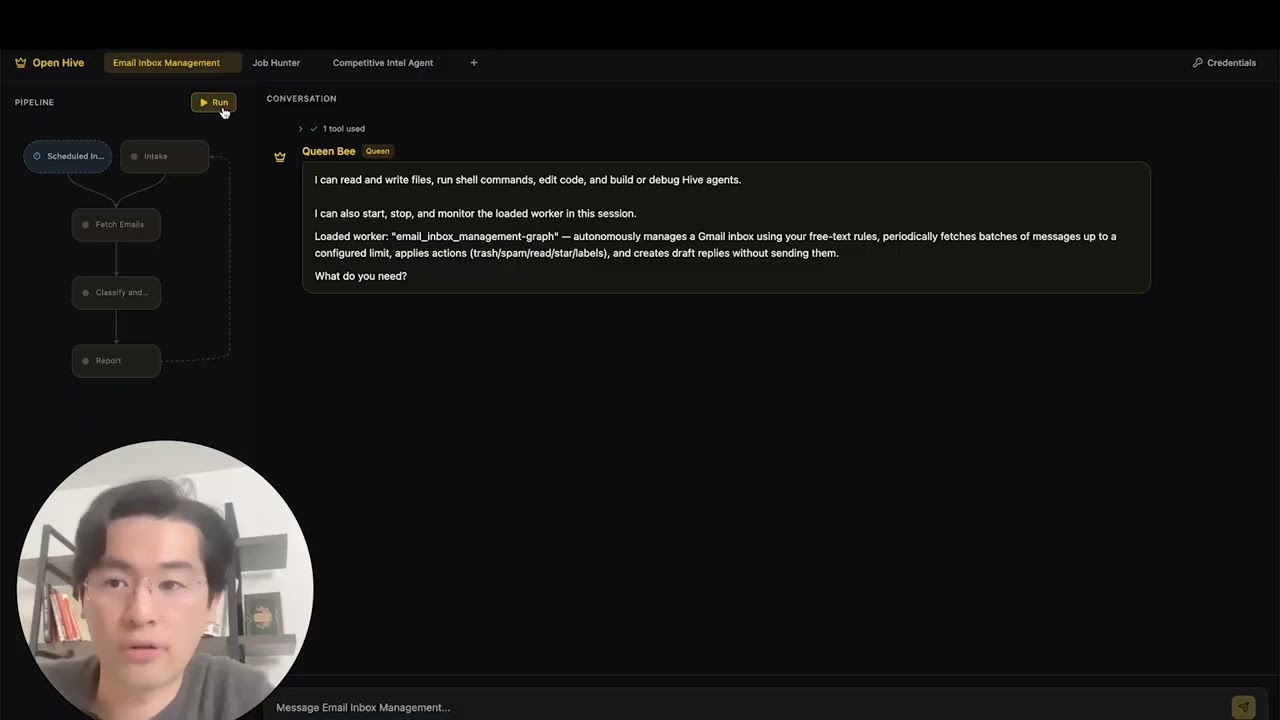](https://www.youtube.com/watch?v=XDOG9fOaLjU)
|
||||
|
||||
## Who Is Hive For?
|
||||
|
||||
@@ -50,7 +50,7 @@ Hive is designed for developers and teams who want to build **production-grade A
|
||||
Hive is a good fit if you:
|
||||
|
||||
- Want AI agents that **execute real business processes**, not demos
|
||||
- Prefer **goal-driven development** over hardcoded workflows
|
||||
- Need **fast or high volume agent execution** over open workflow
|
||||
- Need **self-healing and adaptive agents** that improve over time
|
||||
- Require **human-in-the-loop control**, observability, and cost limits
|
||||
- Plan to run agents in **production environments**
|
||||
@@ -71,7 +71,7 @@ Use Hive when you need:
|
||||
|
||||
- **[Documentation](https://docs.adenhq.com/)** - Complete guides and API reference
|
||||
- **[Self-Hosting Guide](https://docs.adenhq.com/getting-started/quickstart)** - Deploy Hive on your infrastructure
|
||||
- **[Changelog](https://github.com/adenhq/hive/releases)** - Latest updates and releases
|
||||
- **[Changelog](https://github.com/aden-hive/hive/releases)** - Latest updates and releases
|
||||
- **[Roadmap](docs/roadmap.md)** - Upcoming features and plans
|
||||
- **[Report Issues](https://github.com/adenhq/hive/issues)** - Bug reports and feature requests
|
||||
- **[Contributing](CONTRIBUTING.md)** - How to contribute and submit PRs
|
||||
@@ -81,22 +81,23 @@ Use Hive when you need:
|
||||
### Prerequisites
|
||||
|
||||
- Python 3.11+ for agent development
|
||||
- Claude Code, Codex CLI, or Cursor for utilizing agent skills
|
||||
- An LLM provider that powers the agents
|
||||
|
||||
> **Note for Windows Users:** It is strongly recommended to use **WSL (Windows Subsystem for Linux)** or **Git Bash** to run this framework. Some core automation scripts may not execute correctly in standard Command Prompt or PowerShell.
|
||||
|
||||
### Installation
|
||||
|
||||
>**Note**
|
||||
> **Note**
|
||||
> Hive uses a `uv` workspace layout and is not installed with `pip install`.
|
||||
> Running `pip install -e .` from the repository root will create a placeholder package and Hive will not function correctly.
|
||||
> Please use the quickstart script below to set up the environment.
|
||||
|
||||
```bash
|
||||
# Clone the repository
|
||||
git clone https://github.com/adenhq/hive.git
|
||||
git clone https://github.com/aden-hive/hive.git
|
||||
cd hive
|
||||
|
||||
|
||||
# Run quickstart setup
|
||||
./quickstart.sh
|
||||
```
|
||||
@@ -109,78 +110,46 @@ This sets up:
|
||||
- **LLM provider** - Interactive default model configuration
|
||||
- All required Python dependencies with `uv`
|
||||
|
||||
- At last, it will initiate the open hive interface in your browser
|
||||
|
||||
<img width="2500" height="1214" alt="home-screen" src="https://github.com/user-attachments/assets/134d897f-5e75-4874-b00b-e0505f6b45c4" />
|
||||
|
||||
### Build Your First Agent
|
||||
|
||||
```bash
|
||||
# Build an agent using Claude Code
|
||||
claude> /hive
|
||||
Type the agent you want to build in the home input box
|
||||
|
||||
# Test your agent
|
||||
claude> /hive-debugger
|
||||
<img width="2500" height="1214" alt="Image" src="https://github.com/user-attachments/assets/1ce19141-a78b-46f5-8d64-dbf987e048f4" />
|
||||
|
||||
# (at separate terminal) Launch the interactive dashboard
|
||||
hive tui
|
||||
### Use Template Agents
|
||||
|
||||
# Or run directly
|
||||
hive run exports/your_agent_name --input '{"key": "value"}'
|
||||
```
|
||||
## Coding Agent Support
|
||||
### Codex CLI
|
||||
Hive includes native support for [OpenAI Codex CLI](https://github.com/openai/codex) (v0.101.0+).
|
||||
Click "Try a sample agent" and check the templates. You can run a templates directly or choose to build your version on top of the existing template.
|
||||
|
||||
1. **Config:** `.codex/config.toml` with `agent-builder` MCP server (tracked in git)
|
||||
2. **Skills:** `.agents/skills/` symlinks to Hive skills (tracked in git)
|
||||
3. **Launch:** Run `codex` in the repo root, then type `use hive`
|
||||
### Run Agents
|
||||
|
||||
Example:
|
||||
```
|
||||
codex> use hive
|
||||
```
|
||||
Now you can run an agent by selectiing the agent (either an existing agent or example agent). You can click the Run button on the top left, or talk to the queen agent and it can run the agent for you.
|
||||
|
||||
### Opencode
|
||||
Hive includes native support for [Opencode](https://github.com/opencode-ai/opencode).
|
||||
|
||||
1. **Setup:** Run the quickstart script
|
||||
2. **Launch:** Open Opencode in the project root.
|
||||
3. **Activate:** Type `/hive` in the chat to switch to the Hive Agent.
|
||||
4. **Verify:** Ask the agent *"List your tools"* to confirm the connection.
|
||||
|
||||
The agent has access to all Hive skills and can scaffold agents, add tools, and debug workflows directly from the chat.
|
||||
|
||||
**[📖 Complete Setup Guide](docs/environment-setup.md)** - Detailed instructions for agent development
|
||||
|
||||
### Antigravity IDE Support
|
||||
|
||||
Skills and MCP servers are also available in [Antigravity IDE](https://antigravity.google/) (Google's AI-powered IDE). **Easiest:** open a terminal in the hive repo folder and run (use `./` — the script is inside the repo):
|
||||
|
||||
```bash
|
||||
./scripts/setup-antigravity-mcp.sh
|
||||
```
|
||||
|
||||
**Important:** Always restart/refresh Antigravity IDE after running the setup script—MCP servers only load on startup. After restart, **agent-builder** and **tools** MCP servers should connect. Skills are under `.agent/skills/` (symlinks to `.claude/skills/`). See [docs/antigravity-setup.md](docs/antigravity-setup.md) for manual setup and troubleshooting.
|
||||
<img width="2500" height="1214" alt="Image" src="https://github.com/user-attachments/assets/71c38206-2ad5-49aa-bde8-6698d0bc55f5" />
|
||||
|
||||
## Features
|
||||
|
||||
- **[Goal-Driven Development](docs/key_concepts/goals_outcome.md)** - Define objectives in natural language; the coding agent generates the agent graph and connection code to achieve them
|
||||
- **Browser-Use** - Control the browser on your computer to achieve hard tasks
|
||||
- **Parallel Execution** - Execute the generated graph in parallel. This way you can have multiple agent compelteing the jobs for you
|
||||
- **[Goal-Driven Generation](docs/key_concepts/goals_outcome.md)** - Define objectives in natural language; the coding agent generates the agent graph and connection code to achieve them
|
||||
- **[Adaptiveness](docs/key_concepts/evolution.md)** - Framework captures failures, calibrates according to the objectives, and evolves the agent graph
|
||||
- **[Dynamic Node Connections](docs/key_concepts/graph.md)** - No predefined edges; connection code is generated by any capable LLM based on your goals
|
||||
- **SDK-Wrapped Nodes** - Every node gets shared memory, local RLM memory, monitoring, tools, and LLM access out of the box
|
||||
- **[Human-in-the-Loop](docs/key_concepts/graph.md#human-in-the-loop)** - Intervention nodes that pause execution for human input with configurable timeouts and escalation
|
||||
- **Real-time Observability** - WebSocket streaming for live monitoring of agent execution, decisions, and node-to-node communication
|
||||
- **Interactive TUI Dashboard** - Terminal-based dashboard with live graph view, event log, and chat interface for agent interaction
|
||||
- **Cost & Budget Control** - Set spending limits, throttles, and automatic model degradation policies
|
||||
- **Production-Ready** - Self-hostable, built for scale and reliability
|
||||
|
||||
## Integration
|
||||
|
||||
<a href="https://github.com/adenhq/hive/tree/main/tools/src/aden_tools/tools"><img width="100%" alt="Integration" src="https://github.com/user-attachments/assets/a1573f93-cf02-4bb8-b3d5-b305b05b1e51" /></a>
|
||||
|
||||
<a href="https://github.com/aden-hive/hive/tree/main/tools/src/aden_tools/tools"><img width="100%" alt="Integration" src="https://github.com/user-attachments/assets/a1573f93-cf02-4bb8-b3d5-b305b05b1e51" /></a>
|
||||
Hive is built to be model-agnostic and system-agnostic.
|
||||
|
||||
- **LLM flexibility** - Hive Framework is designed to support various types of LLMs, including hosted and local models through LiteLLM-compatible providers.
|
||||
- **Business system connectivity** - Hive Framework is designed to connect to all kinds of business systems as tools, such as CRM, support, messaging, data, file, and internal APIs via MCP.
|
||||
|
||||
|
||||
## Why Aden
|
||||
|
||||
Hive focuses on generating agents that run real business processes rather than generic agents. Instead of requiring you to manually design workflows, define agent interactions, and handle failures reactively, Hive flips the paradigm: **you describe outcomes, and the system builds itself**—delivering an outcome-driven, adaptive experience with an easy-to-use set of tools and integrations.
|
||||
@@ -236,35 +205,10 @@ flowchart LR
|
||||
4. **Control Plane Monitors** → Real-time metrics, budget enforcement, policy management
|
||||
5. **[Adaptiveness](docs/key_concepts/evolution.md)** → On failure, the system evolves the graph and redeploys automatically
|
||||
|
||||
## Run Agents
|
||||
|
||||
The `hive` CLI is the primary interface for running agents.
|
||||
|
||||
```bash
|
||||
# Browse and run agents interactively (Recommended)
|
||||
hive tui
|
||||
|
||||
# Run a specific agent directly
|
||||
hive run exports/my_agent --input '{"task": "Your input here"}'
|
||||
|
||||
# Run a specific agent with the TUI dashboard
|
||||
hive run exports/my_agent --tui
|
||||
|
||||
# Interactive REPL
|
||||
hive shell
|
||||
```
|
||||
|
||||
The TUI scans both `exports/` and `examples/templates/` for available agents.
|
||||
|
||||
> **Using Python directly (alternative):** You can also run agents with `PYTHONPATH=exports uv run python -m agent_name run --input '{...}'`
|
||||
|
||||
See [environment-setup.md](docs/environment-setup.md) for complete setup instructions.
|
||||
|
||||
## Documentation
|
||||
|
||||
- **[Developer Guide](docs/developer-guide.md)** - Comprehensive guide for developers
|
||||
- [Getting Started](docs/getting-started.md) - Quick setup instructions
|
||||
- [TUI Guide](docs/tui-selection-guide.md) - Interactive dashboard usage
|
||||
- [Configuration Guide](docs/configuration.md) - All configuration options
|
||||
- [Architecture Overview](docs/architecture/README.md) - System design and structure
|
||||
|
||||
@@ -273,98 +217,128 @@ See [environment-setup.md](docs/environment-setup.md) for complete setup instruc
|
||||
Aden Hive Agent Framework aims to help developers build outcome-oriented, self-adaptive agents. See [roadmap.md](docs/roadmap.md) for details.
|
||||
|
||||
```mermaid
|
||||
flowchart TD
|
||||
subgraph Foundation
|
||||
direction LR
|
||||
subgraph arch["Architecture"]
|
||||
a1["Node-Based Architecture"]:::done
|
||||
a2["Python SDK"]:::done
|
||||
a3["LLM Integration"]:::done
|
||||
a4["Communication Protocol"]:::done
|
||||
end
|
||||
subgraph ca["Coding Agent"]
|
||||
b1["Goal Creation Session"]:::done
|
||||
b2["Worker Agent Creation"]
|
||||
b3["MCP Tools"]:::done
|
||||
end
|
||||
subgraph wa["Worker Agent"]
|
||||
c1["Human-in-the-Loop"]:::done
|
||||
c2["Callback Handlers"]:::done
|
||||
c3["Intervention Points"]:::done
|
||||
c4["Streaming Interface"]
|
||||
end
|
||||
subgraph cred["Credentials"]
|
||||
d1["Setup Process"]:::done
|
||||
d2["Pluggable Sources"]:::done
|
||||
d3["Enterprise Secrets"]
|
||||
d4["Integration Tools"]:::done
|
||||
end
|
||||
subgraph tools["Tools"]
|
||||
e1["File Use"]:::done
|
||||
e2["Memory STM/LTM"]:::done
|
||||
e3["Web Search/Scraper"]:::done
|
||||
e4["CSV/PDF"]:::done
|
||||
e5["Excel/Email"]
|
||||
end
|
||||
subgraph core["Core"]
|
||||
f1["Eval System"]
|
||||
f2["Pydantic Validation"]:::done
|
||||
f3["Documentation"]:::done
|
||||
f4["Adaptiveness"]
|
||||
f5["Sample Agents"]
|
||||
end
|
||||
end
|
||||
flowchart TB
|
||||
%% Main Entity
|
||||
User([User])
|
||||
|
||||
subgraph Expansion
|
||||
direction LR
|
||||
subgraph intel["Intelligence"]
|
||||
g1["Guardrails"]
|
||||
g2["Streaming Mode"]
|
||||
g3["Image Generation"]
|
||||
g4["Semantic Search"]
|
||||
%% =========================================
|
||||
%% EXTERNAL EVENT SOURCES
|
||||
%% =========================================
|
||||
subgraph ExtEventSource [External Event Source]
|
||||
E_Sch["Schedulers"]
|
||||
E_WH["Webhook"]
|
||||
E_SSE["SSE"]
|
||||
end
|
||||
subgraph mem["Memory Iteration"]
|
||||
h1["Message Model & Sessions"]
|
||||
h2["Storage Migration"]
|
||||
h3["Context Building"]
|
||||
h4["Proactive Compaction"]
|
||||
h5["Token Tracking"]
|
||||
end
|
||||
subgraph evt["Event System"]
|
||||
i1["Event Bus for Nodes"]
|
||||
end
|
||||
subgraph cas["Coding Agent Support"]
|
||||
j1["Claude Code"]
|
||||
j2["Cursor"]
|
||||
j3["Opencode"]
|
||||
j4["Antigravity"]
|
||||
j5["Codex CLI"]
|
||||
end
|
||||
subgraph plat["Platform"]
|
||||
k1["JavaScript/TypeScript SDK"]
|
||||
k2["Custom Tool Integrator"]
|
||||
k3["Windows Support"]
|
||||
end
|
||||
subgraph dep["Deployment"]
|
||||
l1["Self-Hosted"]
|
||||
l2["Cloud Services"]
|
||||
l3["CI/CD Pipeline"]
|
||||
end
|
||||
subgraph tmpl["Templates"]
|
||||
m1["Sales Agent"]
|
||||
m2["Marketing Agent"]
|
||||
m3["Analytics Agent"]
|
||||
m4["Training Agent"]
|
||||
m5["Smart Form Agent"]
|
||||
end
|
||||
end
|
||||
|
||||
classDef done fill:#9e9e9e,color:#fff,stroke:#757575
|
||||
%% =========================================
|
||||
%% SYSTEM NODES
|
||||
%% =========================================
|
||||
subgraph WorkerBees [Worker Bees]
|
||||
WB_C["Conversation"]
|
||||
WB_SP["System prompt"]
|
||||
|
||||
subgraph Graph [Graph]
|
||||
direction TB
|
||||
N1["Node"] --> N2["Node"] --> N3["Node"]
|
||||
N1 -.-> AN["Active Node"]
|
||||
N2 -.-> AN
|
||||
N3 -.-> AN
|
||||
|
||||
%% Nested Event Loop Node
|
||||
subgraph EventLoopNode [Event Loop Node]
|
||||
ELN_L["listener"]
|
||||
ELN_SP["System Prompt<br/>(Task)"]
|
||||
ELN_EL["Event loop"]
|
||||
ELN_C["Conversation"]
|
||||
end
|
||||
end
|
||||
end
|
||||
|
||||
subgraph JudgeNode [Judge]
|
||||
J_C["Criteria"]
|
||||
J_P["Principles"]
|
||||
J_EL["Event loop"] <--> J_S["Scheduler"]
|
||||
end
|
||||
|
||||
subgraph QueenBee [Queen Bee]
|
||||
QB_SP["System prompt"]
|
||||
QB_EL["Event loop"]
|
||||
QB_C["Conversation"]
|
||||
end
|
||||
|
||||
subgraph Infra [Infra]
|
||||
SA["Sub Agent"]
|
||||
TR["Tool Registry"]
|
||||
WTM["Write through Conversation Memory<br/>(Logs/RAM/Harddrive)"]
|
||||
SM["Shared Memory<br/>(State/Harddrive)"]
|
||||
EB["Event Bus<br/>(RAM)"]
|
||||
CS["Credential Store<br/>(Harddrive/Cloud)"]
|
||||
end
|
||||
|
||||
subgraph PC [PC]
|
||||
B["Browser"]
|
||||
CB["Codebase<br/>v 0.0.x ... v n.n.n"]
|
||||
end
|
||||
|
||||
%% =========================================
|
||||
%% CONNECTIONS & DATA FLOW
|
||||
%% =========================================
|
||||
|
||||
%% External Event Routing
|
||||
E_Sch --> ELN_L
|
||||
E_WH --> ELN_L
|
||||
E_SSE --> ELN_L
|
||||
ELN_L -->|"triggers"| ELN_EL
|
||||
|
||||
%% User Interactions
|
||||
User -->|"Talk"| WB_C
|
||||
User -->|"Talk"| QB_C
|
||||
User -->|"Read/Write Access"| CS
|
||||
|
||||
%% Inter-System Logic
|
||||
ELN_C <-->|"Mirror"| WB_C
|
||||
WB_C -->|"Focus"| AN
|
||||
|
||||
WorkerBees -->|"Inquire"| JudgeNode
|
||||
JudgeNode -->|"Approve"| WorkerBees
|
||||
|
||||
%% Judge Alignments
|
||||
J_C <-.->|"aligns"| WB_SP
|
||||
J_P <-.->|"aligns"| QB_SP
|
||||
|
||||
%% Escalate path
|
||||
J_EL -->|"Report (Escalate)"| QB_EL
|
||||
|
||||
%% Pub/Sub Logic
|
||||
AN -->|"publish"| EB
|
||||
EB -->|"subscribe"| QB_C
|
||||
|
||||
%% Infra and Process Spawning
|
||||
ELN_EL -->|"Spawn"| SA
|
||||
SA -->|"Inform"| ELN_EL
|
||||
SA -->|"Starts"| B
|
||||
B -->|"Report"| ELN_EL
|
||||
TR -->|"Assigned"| ELN_EL
|
||||
CB -->|"Modify Worker Bee"| WB_C
|
||||
|
||||
%% =========================================
|
||||
%% SHARED MEMORY & LOGS ACCESS
|
||||
%% =========================================
|
||||
|
||||
%% Worker Bees Access (link to node inside Graph subgraph)
|
||||
AN <-->|"Read/Write"| WTM
|
||||
AN <-->|"Read/Write"| SM
|
||||
|
||||
%% Queen Bee Access
|
||||
QB_C <-->|"Read/Write"| WTM
|
||||
QB_EL <-->|"Read/Write"| SM
|
||||
|
||||
%% Credentials Access
|
||||
CS -->|"Read Access"| QB_C
|
||||
```
|
||||
|
||||
## Contributing
|
||||
|
||||
We welcome contributions from the community! We’re especially looking for help building tools, integrations, and example agents for the framework ([check #2805](https://github.com/adenhq/hive/issues/2805)). If you’re interested in extending its functionality, this is the perfect place to start. Please see [CONTRIBUTING.md](CONTRIBUTING.md) for guidelines.
|
||||
We welcome contributions from the community! We’re especially looking for help building tools, integrations, and example agents for the framework ([check #2805](https://github.com/aden-hive/hive/issues/2805)). If you’re interested in extending its functionality, this is the perfect place to start. Please see [CONTRIBUTING.md](CONTRIBUTING.md) for guidelines.
|
||||
|
||||
**Important:** Please get assigned to an issue before submitting a PR. Comment on an issue to claim it, and a maintainer will assign you. Issues with reproducible steps and proposals are prioritized. This helps prevent duplicate work.
|
||||
|
||||
@@ -401,7 +375,7 @@ This project is licensed under the Apache License 2.0 - see the [LICENSE](LICENS
|
||||
|
||||
**Q: What LLM providers does Hive support?**
|
||||
|
||||
Hive supports 100+ LLM providers through LiteLLM integration, including OpenAI (GPT-4, GPT-4o), Anthropic (Claude models), Google Gemini, DeepSeek, Mistral, Groq, and many more. Simply set the appropriate API key environment variable and specify the model name.
|
||||
Hive supports 100+ LLM providers through LiteLLM integration, including OpenAI (GPT-4, GPT-4o), Anthropic (Claude models), Google Gemini, DeepSeek, Mistral, Groq, and many more. Simply set the appropriate API key environment variable and specify the model name. We recommend using Claude, GLM and Gemini as they have the best performance.
|
||||
|
||||
**Q: Can I use Hive with local AI models like Ollama?**
|
||||
|
||||
@@ -443,14 +417,6 @@ Visit [docs.adenhq.com](https://docs.adenhq.com/) for complete guides, API refer
|
||||
|
||||
Contributions are welcome! Fork the repository, create your feature branch, implement your changes, and submit a pull request. See [CONTRIBUTING.md](CONTRIBUTING.md) for detailed guidelines.
|
||||
|
||||
**Q: When will my team start seeing results from Aden's adaptive agents?**
|
||||
|
||||
Aden's adaptation loop begins working from the first execution. When an agent fails, the framework captures the failure data, helping developers evolve the agent graph through the coding agent. How quickly this translates to measurable results depends on the complexity of your use case, the quality of your goal definitions, and the volume of executions generating feedback.
|
||||
|
||||
**Q: How does Hive compare to other agent frameworks?**
|
||||
|
||||
Hive focuses on generating agents that run real business processes, rather than generic agents. This vision emphasizes outcome-driven design, adaptability, and an easy-to-use set of tools and integrations.
|
||||
|
||||
---
|
||||
|
||||
<p align="center">
|
||||
|
||||
@@ -82,7 +82,7 @@ Register an MCP server as a tool source for your agent.
|
||||
"example_tool"
|
||||
],
|
||||
"total_mcp_servers": 1,
|
||||
"note": "MCP server 'tools' registered with 6 tools. These tools can now be used in llm_tool_use nodes."
|
||||
"note": "MCP server 'tools' registered with 6 tools. These tools can now be used in event_loop nodes."
|
||||
}
|
||||
```
|
||||
|
||||
@@ -149,7 +149,7 @@ List tools available from registered MCP servers.
|
||||
]
|
||||
},
|
||||
"total_tools": 6,
|
||||
"note": "Use these tool names in the 'tools' parameter when adding llm_tool_use nodes"
|
||||
"note": "Use these tool names in the 'tools' parameter when adding event_loop nodes"
|
||||
}
|
||||
```
|
||||
|
||||
@@ -246,7 +246,7 @@ Here's a complete workflow for building an agent with MCP tools:
|
||||
"node_id": "web-searcher",
|
||||
"name": "Web Search",
|
||||
"description": "Search the web for information",
|
||||
"node_type": "llm_tool_use",
|
||||
"node_type": "event_loop",
|
||||
"input_keys": "[\"query\"]",
|
||||
"output_keys": "[\"search_results\"]",
|
||||
"system_prompt": "Search for {query} using the web_search tool",
|
||||
|
||||
@@ -119,7 +119,7 @@ builder = WorkflowBuilder()
|
||||
builder.add_node(
|
||||
node_id="researcher",
|
||||
name="Web Researcher",
|
||||
node_type="llm_tool_use",
|
||||
node_type="event_loop",
|
||||
system_prompt="Research the topic using web_search",
|
||||
tools=["web_search"], # Tool from tools MCP server
|
||||
input_keys=["topic"],
|
||||
@@ -137,7 +137,7 @@ Tools from MCP servers can be referenced in your agent.json just like built-in t
|
||||
{
|
||||
"id": "searcher",
|
||||
"name": "Web Searcher",
|
||||
"node_type": "llm_tool_use",
|
||||
"node_type": "event_loop",
|
||||
"system_prompt": "Search for information about {topic}",
|
||||
"tools": ["web_search", "web_scrape"],
|
||||
"input_keys": ["topic"],
|
||||
|
||||
+17
-70
@@ -103,31 +103,20 @@ Add a processing node to the agent graph.
|
||||
- `node_id` (string, required): Unique node identifier
|
||||
- `name` (string, required): Human-readable name
|
||||
- `description` (string, required): What this node does
|
||||
- `node_type` (string, required): One of: `llm_generate`, `llm_tool_use`, `router`, `function`
|
||||
- `node_type` (string, required): Must be `event_loop` (the only valid type)
|
||||
- `input_keys` (string, required): JSON array of input variable names
|
||||
- `output_keys` (string, required): JSON array of output variable names
|
||||
- `system_prompt` (string, optional): System prompt for LLM nodes
|
||||
- `tools` (string, optional): JSON array of tool names for tool_use nodes
|
||||
- `routes` (string, optional): JSON object of route mappings for router nodes
|
||||
- `system_prompt` (string, optional): System prompt for the LLM
|
||||
- `tools` (string, optional): JSON array of tool names
|
||||
- `client_facing` (boolean, optional): Set to true for human-in-the-loop interaction
|
||||
|
||||
**Node Types:**
|
||||
**Node Type:**
|
||||
|
||||
1. **llm_generate**: Uses LLM to generate output from inputs
|
||||
- Requires: `system_prompt`
|
||||
- Tools: Not used
|
||||
|
||||
2. **llm_tool_use**: Uses LLM with tools to accomplish tasks
|
||||
- Requires: `system_prompt`, `tools`
|
||||
- Tools: Array of tool names (e.g., `["web_search", "web_fetch"]`)
|
||||
|
||||
3. **router**: LLM-powered routing to different paths
|
||||
- Requires: `system_prompt`, `routes`
|
||||
- Routes: Object mapping route names to target node IDs
|
||||
- Example: `{"pass": "success_node", "fail": "retry_node"}`
|
||||
|
||||
4. **function**: Executes a pre-defined function
|
||||
- System prompt describes the function behavior
|
||||
- No LLM calls, pure computation
|
||||
**event_loop**: LLM-powered node with self-correction loop
|
||||
- Requires: `system_prompt`
|
||||
- Optional: `tools` (array of tool names, e.g., `["web_search", "web_fetch"]`)
|
||||
- Optional: `client_facing` (set to true for HITL / user interaction)
|
||||
- Supports: iterative refinement, judge-based evaluation, tool use, streaming
|
||||
|
||||
**Example:**
|
||||
```json
|
||||
@@ -135,7 +124,7 @@ Add a processing node to the agent graph.
|
||||
"node_id": "search_sources",
|
||||
"name": "Search Sources",
|
||||
"description": "Searches for relevant sources on the topic",
|
||||
"node_type": "llm_tool_use",
|
||||
"node_type": "event_loop",
|
||||
"input_keys": "[\"topic\", \"search_queries\"]",
|
||||
"output_keys": "[\"sources\", \"source_count\"]",
|
||||
"system_prompt": "Search for sources using the provided queries...",
|
||||
@@ -198,7 +187,7 @@ Export the validated graph as an agent specification.
|
||||
|
||||
**What it does:**
|
||||
1. Validates the graph
|
||||
2. Auto-generates missing edges from router routes
|
||||
2. Validates edge connectivity
|
||||
3. Writes files to disk:
|
||||
- `exports/{agent-name}/agent.json` - Full agent specification
|
||||
- `exports/{agent-name}/README.md` - Auto-generated documentation
|
||||
@@ -252,47 +241,6 @@ Test the complete agent graph with sample inputs.
|
||||
|
||||
---
|
||||
|
||||
### Evaluation Rules
|
||||
|
||||
#### `add_evaluation_rule`
|
||||
Add a rule for the HybridJudge to evaluate node outputs.
|
||||
|
||||
**Parameters:**
|
||||
- `rule_id` (string, required): Unique rule identifier
|
||||
- `description` (string, required): What this rule checks
|
||||
- `condition` (string, required): Python expression to evaluate
|
||||
- `action` (string, required): Action to take: `accept`, `retry`, `escalate`
|
||||
- `priority` (integer, optional): Rule priority (default: 0)
|
||||
- `feedback_template` (string, optional): Feedback message template
|
||||
|
||||
**Condition Examples:**
|
||||
- `'result.get("success") == True'` - Check for success flag
|
||||
- `'result.get("error_type") == "timeout"'` - Check error type
|
||||
- `'len(result.get("data", [])) > 0'` - Check for non-empty data
|
||||
|
||||
**Example:**
|
||||
```json
|
||||
{
|
||||
"rule_id": "timeout_retry",
|
||||
"description": "Retry on timeout errors",
|
||||
"condition": "result.get('error_type') == 'timeout'",
|
||||
"action": "retry",
|
||||
"priority": 10,
|
||||
"feedback_template": "Timeout occurred, retrying..."
|
||||
}
|
||||
```
|
||||
|
||||
#### `list_evaluation_rules`
|
||||
List all configured evaluation rules.
|
||||
|
||||
#### `remove_evaluation_rule`
|
||||
Remove an evaluation rule.
|
||||
|
||||
**Parameters:**
|
||||
- `rule_id` (string, required): Rule to remove
|
||||
|
||||
---
|
||||
|
||||
## Example Workflow
|
||||
|
||||
Here's a complete workflow for building a research agent:
|
||||
@@ -320,7 +268,7 @@ add_node(
|
||||
node_id="planner",
|
||||
name="Research Planner",
|
||||
description="Creates research strategy",
|
||||
node_type="llm_generate",
|
||||
node_type="event_loop",
|
||||
input_keys='["topic"]',
|
||||
output_keys='["strategy", "queries"]',
|
||||
system_prompt="Analyze topic and create research plan..."
|
||||
@@ -330,7 +278,7 @@ add_node(
|
||||
node_id="searcher",
|
||||
name="Search Sources",
|
||||
description="Find relevant sources",
|
||||
node_type="llm_tool_use",
|
||||
node_type="event_loop",
|
||||
input_keys='["queries"]',
|
||||
output_keys='["sources"]',
|
||||
system_prompt="Search for sources...",
|
||||
@@ -359,10 +307,9 @@ The exported agent will be saved to `exports/research-agent/`.
|
||||
|
||||
1. **Start with the goal**: Define clear success criteria before building nodes
|
||||
2. **Test nodes individually**: Use `test_node` to verify each node works
|
||||
3. **Use router nodes for branching**: Don't create edges manually for routers - define routes and they'll be auto-generated
|
||||
4. **Add evaluation rules**: Help the judge evaluate outputs deterministically
|
||||
5. **Validate early, validate often**: Run `validate_graph` after adding nodes/edges
|
||||
6. **Check exports**: Review the generated README.md to verify your agent structure
|
||||
3. **Use conditional edges for branching**: Define condition_expr on edges for decision points
|
||||
4. **Validate early, validate often**: Run `validate_graph` after adding nodes/edges
|
||||
5. **Check exports**: Review the generated README.md to verify your agent structure
|
||||
|
||||
---
|
||||
|
||||
|
||||
+10
-10
@@ -64,7 +64,7 @@ To use the agent builder with Claude Desktop or other MCP clients, add this to y
|
||||
"agent-builder": {
|
||||
"command": "python",
|
||||
"args": ["-m", "framework.mcp.agent_builder_server"],
|
||||
"cwd": "/path/to/goal-agent"
|
||||
"cwd": "/path/to/hive/core"
|
||||
}
|
||||
}
|
||||
}
|
||||
@@ -73,7 +73,7 @@ To use the agent builder with Claude Desktop or other MCP clients, add this to y
|
||||
The MCP server provides tools for:
|
||||
- Creating agent building sessions
|
||||
- Defining goals with success criteria
|
||||
- Adding nodes (llm_generate, llm_tool_use, router, function)
|
||||
- Adding nodes (event_loop only)
|
||||
- Connecting nodes with edges
|
||||
- Validating and exporting agent graphs
|
||||
- Testing nodes and full agent graphs
|
||||
@@ -85,14 +85,14 @@ The MCP server provides tools for:
|
||||
Run an LLM-powered calculator:
|
||||
|
||||
```bash
|
||||
# Single calculation
|
||||
uv run python -m framework calculate "2 + 3 * 4"
|
||||
# Run an exported agent
|
||||
uv run python -m framework run exports/calculator --input '{"expression": "2 + 3 * 4"}'
|
||||
|
||||
# Interactive mode
|
||||
uv run python -m framework interactive
|
||||
# Interactive shell session
|
||||
uv run python -m framework shell exports/calculator
|
||||
|
||||
# Analyze runs with Builder
|
||||
uv run python -m framework analyze calculator
|
||||
# Show agent info
|
||||
uv run python -m framework info exports/calculator
|
||||
```
|
||||
|
||||
### Using the Runtime
|
||||
@@ -141,8 +141,8 @@ uv run python -m framework test-run <agent_path> --goal <goal_id> --parallel 4
|
||||
# Debug failed tests
|
||||
uv run python -m framework test-debug <agent_path> <test_name>
|
||||
|
||||
# List tests for a goal
|
||||
uv run python -m framework test-list <goal_id>
|
||||
# List tests for an agent
|
||||
uv run python -m framework test-list <agent_path>
|
||||
```
|
||||
|
||||
For detailed testing workflows, see the [hive-test skill](../.claude/skills/hive-test/SKILL.md).
|
||||
|
||||
@@ -0,0 +1,387 @@
|
||||
"""OpenAI Codex OAuth PKCE login flow.
|
||||
|
||||
Runs the full browser-based OAuth flow so users can authenticate with their
|
||||
ChatGPT Plus/Pro subscription without needing the Codex CLI installed.
|
||||
|
||||
Usage (from quickstart.sh):
|
||||
uv run python codex_oauth.py
|
||||
|
||||
Exit codes:
|
||||
0 - success (credentials saved to ~/.codex/auth.json)
|
||||
1 - failure (user cancelled, timeout, or token exchange error)
|
||||
"""
|
||||
|
||||
import base64
|
||||
import hashlib
|
||||
import http.server
|
||||
import json
|
||||
import os
|
||||
import platform
|
||||
import secrets
|
||||
import subprocess
|
||||
import sys
|
||||
import threading
|
||||
import time
|
||||
import urllib.error
|
||||
import urllib.parse
|
||||
import urllib.request
|
||||
from datetime import UTC, datetime
|
||||
from pathlib import Path
|
||||
|
||||
# OAuth constants (from the Codex CLI binary)
|
||||
CLIENT_ID = "app_EMoamEEZ73f0CkXaXp7hrann"
|
||||
AUTHORIZE_URL = "https://auth.openai.com/oauth/authorize"
|
||||
TOKEN_URL = "https://auth.openai.com/oauth/token"
|
||||
REDIRECT_URI = "http://localhost:1455/auth/callback"
|
||||
SCOPE = "openid profile email offline_access"
|
||||
CALLBACK_PORT = 1455
|
||||
|
||||
# Where to save credentials (same location the Codex CLI uses)
|
||||
CODEX_AUTH_FILE = Path.home() / ".codex" / "auth.json"
|
||||
|
||||
# JWT claim path for account_id
|
||||
JWT_CLAIM_PATH = "https://api.openai.com/auth"
|
||||
|
||||
|
||||
def _base64url(data: bytes) -> str:
|
||||
return base64.urlsafe_b64encode(data).rstrip(b"=").decode("ascii")
|
||||
|
||||
|
||||
def generate_pkce() -> tuple[str, str]:
|
||||
"""Generate PKCE code_verifier and code_challenge (S256)."""
|
||||
verifier_bytes = secrets.token_bytes(32)
|
||||
verifier = _base64url(verifier_bytes)
|
||||
challenge = _base64url(hashlib.sha256(verifier.encode("ascii")).digest())
|
||||
return verifier, challenge
|
||||
|
||||
|
||||
def build_authorize_url(state: str, challenge: str) -> str:
|
||||
"""Build the OpenAI OAuth authorize URL with PKCE."""
|
||||
params = urllib.parse.urlencode(
|
||||
{
|
||||
"response_type": "code",
|
||||
"client_id": CLIENT_ID,
|
||||
"redirect_uri": REDIRECT_URI,
|
||||
"scope": SCOPE,
|
||||
"code_challenge": challenge,
|
||||
"code_challenge_method": "S256",
|
||||
"state": state,
|
||||
"id_token_add_organizations": "true",
|
||||
"codex_cli_simplified_flow": "true",
|
||||
"originator": "hive",
|
||||
}
|
||||
)
|
||||
return f"{AUTHORIZE_URL}?{params}"
|
||||
|
||||
|
||||
def exchange_code_for_tokens(code: str, verifier: str) -> dict | None:
|
||||
"""Exchange the authorization code for tokens."""
|
||||
data = urllib.parse.urlencode(
|
||||
{
|
||||
"grant_type": "authorization_code",
|
||||
"client_id": CLIENT_ID,
|
||||
"code": code,
|
||||
"code_verifier": verifier,
|
||||
"redirect_uri": REDIRECT_URI,
|
||||
}
|
||||
).encode("utf-8")
|
||||
|
||||
req = urllib.request.Request(
|
||||
TOKEN_URL,
|
||||
data=data,
|
||||
headers={"Content-Type": "application/x-www-form-urlencoded"},
|
||||
method="POST",
|
||||
)
|
||||
|
||||
try:
|
||||
with urllib.request.urlopen(req, timeout=15) as resp:
|
||||
token_data = json.loads(resp.read())
|
||||
except (urllib.error.URLError, json.JSONDecodeError, TimeoutError, OSError) as exc:
|
||||
print(f"\033[0;31mToken exchange failed: {exc}\033[0m", file=sys.stderr)
|
||||
return None
|
||||
|
||||
if not token_data.get("access_token") or not token_data.get("refresh_token"):
|
||||
print("\033[0;31mToken response missing required fields\033[0m", file=sys.stderr)
|
||||
return None
|
||||
|
||||
return token_data
|
||||
|
||||
|
||||
def decode_jwt_payload(token: str) -> dict | None:
|
||||
"""Decode the payload of a JWT (no signature verification)."""
|
||||
try:
|
||||
parts = token.split(".")
|
||||
if len(parts) != 3:
|
||||
return None
|
||||
payload = parts[1]
|
||||
# Add padding
|
||||
padding = 4 - len(payload) % 4
|
||||
if padding != 4:
|
||||
payload += "=" * padding
|
||||
decoded = base64.urlsafe_b64decode(payload)
|
||||
return json.loads(decoded)
|
||||
except Exception:
|
||||
return None
|
||||
|
||||
|
||||
def get_account_id(access_token: str) -> str | None:
|
||||
"""Extract the ChatGPT account_id from the access token JWT."""
|
||||
payload = decode_jwt_payload(access_token)
|
||||
if not payload:
|
||||
return None
|
||||
auth = payload.get(JWT_CLAIM_PATH)
|
||||
if isinstance(auth, dict):
|
||||
account_id = auth.get("chatgpt_account_id")
|
||||
if isinstance(account_id, str) and account_id:
|
||||
return account_id
|
||||
return None
|
||||
|
||||
|
||||
def save_credentials(token_data: dict, account_id: str) -> None:
|
||||
"""Save credentials to ~/.codex/auth.json in the same format the Codex CLI uses."""
|
||||
auth_data = {
|
||||
"tokens": {
|
||||
"access_token": token_data["access_token"],
|
||||
"refresh_token": token_data["refresh_token"],
|
||||
"account_id": account_id,
|
||||
},
|
||||
"auth_mode": "chatgpt",
|
||||
"last_refresh": datetime.now(UTC).isoformat(),
|
||||
}
|
||||
if "id_token" in token_data:
|
||||
auth_data["tokens"]["id_token"] = token_data["id_token"]
|
||||
|
||||
CODEX_AUTH_FILE.parent.mkdir(parents=True, exist_ok=True, mode=0o700)
|
||||
fd = os.open(CODEX_AUTH_FILE, os.O_WRONLY | os.O_CREAT | os.O_TRUNC, 0o600)
|
||||
with os.fdopen(fd, "w") as f:
|
||||
json.dump(auth_data, f, indent=2)
|
||||
|
||||
|
||||
def open_browser(url: str) -> bool:
|
||||
"""Open the URL in the user's default browser."""
|
||||
system = platform.system()
|
||||
try:
|
||||
devnull = subprocess.DEVNULL
|
||||
if system == "Darwin":
|
||||
subprocess.Popen(["open", url], stdout=devnull, stderr=devnull)
|
||||
elif system == "Windows":
|
||||
subprocess.Popen(["cmd", "/c", "start", url], stdout=devnull, stderr=devnull)
|
||||
else:
|
||||
subprocess.Popen(["xdg-open", url], stdout=devnull, stderr=devnull)
|
||||
return True
|
||||
except OSError:
|
||||
return False
|
||||
|
||||
|
||||
class OAuthCallbackHandler(http.server.BaseHTTPRequestHandler):
|
||||
"""HTTP handler that captures the OAuth callback."""
|
||||
|
||||
auth_code: str | None = None
|
||||
received_state: str | None = None
|
||||
|
||||
def do_GET(self) -> None:
|
||||
parsed = urllib.parse.urlparse(self.path)
|
||||
if parsed.path != "/auth/callback":
|
||||
self.send_response(404)
|
||||
self.end_headers()
|
||||
self.wfile.write(b"Not found")
|
||||
return
|
||||
|
||||
params = urllib.parse.parse_qs(parsed.query)
|
||||
code = params.get("code", [None])[0]
|
||||
state = params.get("state", [None])[0]
|
||||
|
||||
if not code:
|
||||
self.send_response(400)
|
||||
self.end_headers()
|
||||
self.wfile.write(b"Missing authorization code")
|
||||
return
|
||||
|
||||
OAuthCallbackHandler.auth_code = code
|
||||
OAuthCallbackHandler.received_state = state
|
||||
|
||||
self.send_response(200)
|
||||
self.send_header("Content-Type", "text/html; charset=utf-8")
|
||||
self.end_headers()
|
||||
self.wfile.write(
|
||||
b"<!doctype html><html><head><meta charset='utf-8'/></head>"
|
||||
b"<body><h2>Authentication successful</h2>"
|
||||
b"<p>Return to your terminal to continue.</p></body></html>"
|
||||
)
|
||||
|
||||
def log_message(self, format: str, *args: object) -> None:
|
||||
# Suppress request logging
|
||||
pass
|
||||
|
||||
|
||||
def wait_for_callback(state: str, timeout_secs: int = 120) -> str | None:
|
||||
"""Start a local HTTP server and wait for the OAuth callback.
|
||||
|
||||
Returns the authorization code on success, None on timeout.
|
||||
"""
|
||||
OAuthCallbackHandler.auth_code = None
|
||||
OAuthCallbackHandler.received_state = None
|
||||
|
||||
server = http.server.HTTPServer(("127.0.0.1", CALLBACK_PORT), OAuthCallbackHandler)
|
||||
server.timeout = 1
|
||||
|
||||
deadline = time.time() + timeout_secs
|
||||
server_thread = threading.Thread(target=_serve_until_done, args=(server, deadline, state))
|
||||
server_thread.daemon = True
|
||||
server_thread.start()
|
||||
server_thread.join(timeout=timeout_secs + 2)
|
||||
|
||||
server.server_close()
|
||||
|
||||
if OAuthCallbackHandler.auth_code and OAuthCallbackHandler.received_state == state:
|
||||
return OAuthCallbackHandler.auth_code
|
||||
return None
|
||||
|
||||
|
||||
def _serve_until_done(server: http.server.HTTPServer, deadline: float, state: str) -> None:
|
||||
while time.time() < deadline:
|
||||
server.handle_request()
|
||||
if OAuthCallbackHandler.auth_code and OAuthCallbackHandler.received_state == state:
|
||||
return
|
||||
|
||||
|
||||
def parse_manual_input(value: str, expected_state: str) -> str | None:
|
||||
"""Parse user-pasted redirect URL or auth code."""
|
||||
value = value.strip()
|
||||
if not value:
|
||||
return None
|
||||
try:
|
||||
parsed = urllib.parse.urlparse(value)
|
||||
params = urllib.parse.parse_qs(parsed.query)
|
||||
code = params.get("code", [None])[0]
|
||||
state = params.get("state", [None])[0]
|
||||
if state and state != expected_state:
|
||||
return None
|
||||
return code
|
||||
except Exception:
|
||||
pass
|
||||
# Maybe it's just the raw code
|
||||
if len(value) > 10 and " " not in value:
|
||||
return value
|
||||
return None
|
||||
|
||||
|
||||
def main() -> int:
|
||||
# Generate PKCE and state
|
||||
verifier, challenge = generate_pkce()
|
||||
state = secrets.token_hex(16)
|
||||
|
||||
# Build URL
|
||||
auth_url = build_authorize_url(state, challenge)
|
||||
|
||||
print()
|
||||
print("\033[1mOpenAI Codex OAuth Login\033[0m")
|
||||
print()
|
||||
|
||||
# Try to start the local callback server first
|
||||
try:
|
||||
server_available = True
|
||||
# Quick test that port is free
|
||||
import socket
|
||||
|
||||
sock = socket.socket(socket.AF_INET, socket.SOCK_STREAM)
|
||||
sock.settimeout(1)
|
||||
result = sock.connect_ex(("127.0.0.1", CALLBACK_PORT))
|
||||
sock.close()
|
||||
if result == 0:
|
||||
print(f"\033[1;33mPort {CALLBACK_PORT} is in use. Using manual paste mode.\033[0m")
|
||||
server_available = False
|
||||
except Exception:
|
||||
server_available = True
|
||||
|
||||
# Open browser
|
||||
browser_opened = open_browser(auth_url)
|
||||
if browser_opened:
|
||||
print(" Browser opened for OpenAI sign-in...")
|
||||
else:
|
||||
print(" Could not open browser automatically.")
|
||||
|
||||
print()
|
||||
print(" If the browser didn't open, visit this URL:")
|
||||
print(f" \033[0;36m{auth_url}\033[0m")
|
||||
print()
|
||||
|
||||
code = None
|
||||
|
||||
if server_available:
|
||||
print(" Waiting for authentication (up to 2 minutes)...")
|
||||
print(" \033[2mOr paste the redirect URL below if the callback didn't work:\033[0m")
|
||||
print()
|
||||
|
||||
# Start callback server in background
|
||||
callback_result: list[str | None] = [None]
|
||||
|
||||
def run_server() -> None:
|
||||
callback_result[0] = wait_for_callback(state, timeout_secs=120)
|
||||
|
||||
server_thread = threading.Thread(target=run_server)
|
||||
server_thread.daemon = True
|
||||
server_thread.start()
|
||||
|
||||
# Also accept manual input in parallel
|
||||
# We poll for both the server result and stdin
|
||||
try:
|
||||
import select
|
||||
|
||||
while server_thread.is_alive():
|
||||
# Check if stdin has data (non-blocking on unix)
|
||||
if hasattr(select, "select"):
|
||||
ready, _, _ = select.select([sys.stdin], [], [], 0.5)
|
||||
if ready:
|
||||
manual = sys.stdin.readline()
|
||||
if manual.strip():
|
||||
code = parse_manual_input(manual, state)
|
||||
if code:
|
||||
break
|
||||
else:
|
||||
time.sleep(0.5)
|
||||
|
||||
if callback_result[0]:
|
||||
code = callback_result[0]
|
||||
break
|
||||
except (KeyboardInterrupt, EOFError):
|
||||
print("\n\033[0;31mCancelled.\033[0m")
|
||||
return 1
|
||||
|
||||
if not code:
|
||||
code = callback_result[0]
|
||||
else:
|
||||
# Manual paste mode
|
||||
try:
|
||||
manual = input(" Paste the redirect URL: ").strip()
|
||||
code = parse_manual_input(manual, state)
|
||||
except (KeyboardInterrupt, EOFError):
|
||||
print("\n\033[0;31mCancelled.\033[0m")
|
||||
return 1
|
||||
|
||||
if not code:
|
||||
print("\n\033[0;31mAuthentication timed out or failed.\033[0m")
|
||||
return 1
|
||||
|
||||
# Exchange code for tokens
|
||||
print()
|
||||
print(" Exchanging authorization code for tokens...")
|
||||
token_data = exchange_code_for_tokens(code, verifier)
|
||||
if not token_data:
|
||||
return 1
|
||||
|
||||
# Extract account_id from JWT
|
||||
account_id = get_account_id(token_data["access_token"])
|
||||
if not account_id:
|
||||
print("\033[0;31mFailed to extract account ID from token.\033[0m", file=sys.stderr)
|
||||
return 1
|
||||
|
||||
# Save credentials
|
||||
save_credentials(token_data, account_id)
|
||||
print(" \033[0;32mAuthentication successful!\033[0m")
|
||||
print(f" Credentials saved to {CODEX_AUTH_FILE}")
|
||||
return 0
|
||||
|
||||
|
||||
if __name__ == "__main__":
|
||||
sys.exit(main())
|
||||
@@ -68,7 +68,7 @@ from framework.graph.event_loop_node import ( # noqa: E402
|
||||
)
|
||||
from framework.graph.executor import GraphExecutor # noqa: E402
|
||||
from framework.graph.goal import Goal # noqa: E402
|
||||
from framework.graph.node import NodeSpec # noqa: E402
|
||||
from framework.graph.node import NodeContext, NodeProtocol, NodeResult, NodeSpec # noqa: E402
|
||||
from framework.llm.litellm import LiteLLMProvider # noqa: E402
|
||||
from framework.runner.tool_registry import ToolRegistry # noqa: E402
|
||||
from framework.runtime.core import Runtime # noqa: E402
|
||||
@@ -654,7 +654,7 @@ NODE_SPECS = {
|
||||
id="sender",
|
||||
name="Sender",
|
||||
description="Send approved campaign emails",
|
||||
node_type="function",
|
||||
node_type="event_loop",
|
||||
input_keys=["approved_emails"],
|
||||
output_keys=["send_results"],
|
||||
),
|
||||
@@ -823,11 +823,20 @@ def _send_email_via_resend(
|
||||
return {"error": f"Network error: {e}"}
|
||||
|
||||
|
||||
class SenderNode(NodeProtocol):
|
||||
"""Node wrapper for send_emails function."""
|
||||
|
||||
async def execute(self, ctx: NodeContext) -> NodeResult:
|
||||
approved = ctx.input_data.get("approved_emails", "")
|
||||
result_str = send_emails(approved_emails=approved)
|
||||
ctx.memory.write("send_results", result_str)
|
||||
return NodeResult(success=True, output={"send_results": result_str})
|
||||
|
||||
|
||||
def send_emails(approved_emails: str = "") -> str:
|
||||
"""Send approved campaign emails via Resend, or log if unconfigured.
|
||||
|
||||
Called by FunctionNode which unpacks input_keys as kwargs.
|
||||
Returns a JSON string (FunctionNode wraps it in NodeResult).
|
||||
Returns a JSON string.
|
||||
"""
|
||||
approved = approved_emails
|
||||
if not approved:
|
||||
@@ -1759,7 +1768,7 @@ async def _run_pipeline(websocket, initial_message: str):
|
||||
judge=judge,
|
||||
config=LoopConfig(
|
||||
max_iterations=30,
|
||||
max_tool_calls_per_turn=15,
|
||||
max_tool_calls_per_turn=30,
|
||||
max_history_tokens=64000,
|
||||
max_tool_result_chars=8_000,
|
||||
spillover_dir=str(_DATA_DIR),
|
||||
@@ -1780,7 +1789,7 @@ async def _run_pipeline(websocket, initial_message: str):
|
||||
)
|
||||
for nid, impl in nodes.items():
|
||||
executor.register_node(nid, impl)
|
||||
executor.register_function("sender", send_emails)
|
||||
executor.register_node("sender", SenderNode())
|
||||
|
||||
# --- Event forwarding: bus → WebSocket ---
|
||||
|
||||
|
||||
@@ -751,7 +751,7 @@ async def _run_pipeline(websocket, topic: str):
|
||||
judge=None, # implicit judge: accept when output_keys filled
|
||||
config=LoopConfig(
|
||||
max_iterations=20,
|
||||
max_tool_calls_per_turn=10,
|
||||
max_tool_calls_per_turn=30,
|
||||
max_history_tokens=32_000,
|
||||
),
|
||||
conversation_store=store_a,
|
||||
@@ -849,7 +849,7 @@ async def _run_pipeline(websocket, topic: str):
|
||||
judge=None, # implicit judge
|
||||
config=LoopConfig(
|
||||
max_iterations=10,
|
||||
max_tool_calls_per_turn=5,
|
||||
max_tool_calls_per_turn=30,
|
||||
max_history_tokens=32_000,
|
||||
),
|
||||
conversation_store=store_b,
|
||||
|
||||
@@ -1257,7 +1257,7 @@ async def _run_org_pipeline(websocket, topic: str):
|
||||
judge=judge,
|
||||
config=LoopConfig(
|
||||
max_iterations=30,
|
||||
max_tool_calls_per_turn=25,
|
||||
max_tool_calls_per_turn=30,
|
||||
max_history_tokens=32_000,
|
||||
),
|
||||
conversation_store=store,
|
||||
|
||||
@@ -4,8 +4,8 @@ Minimal Manual Agent Example
|
||||
This example demonstrates how to build and run an agent programmatically
|
||||
without using the Claude Code CLI or external LLM APIs.
|
||||
|
||||
It uses 'function' nodes to define logic in pure Python, making it perfect
|
||||
for understanding the core runtime loop:
|
||||
It uses custom NodeProtocol implementations to define logic in pure Python,
|
||||
making it perfect for understanding the core runtime loop:
|
||||
Setup -> Graph definition -> Execution -> Result
|
||||
|
||||
Run with:
|
||||
@@ -16,22 +16,33 @@ import asyncio
|
||||
|
||||
from framework.graph import EdgeCondition, EdgeSpec, Goal, GraphSpec, NodeSpec
|
||||
from framework.graph.executor import GraphExecutor
|
||||
from framework.graph.node import NodeContext, NodeProtocol, NodeResult
|
||||
from framework.runtime.core import Runtime
|
||||
|
||||
|
||||
# 1. Define Node Logic (Pure Python Functions)
|
||||
def greet(name: str) -> str:
|
||||
# 1. Define Node Logic (Custom NodeProtocol implementations)
|
||||
class GreeterNode(NodeProtocol):
|
||||
"""Generate a simple greeting."""
|
||||
return f"Hello, {name}!"
|
||||
|
||||
async def execute(self, ctx: NodeContext) -> NodeResult:
|
||||
name = ctx.input_data.get("name", "World")
|
||||
greeting = f"Hello, {name}!"
|
||||
ctx.memory.write("greeting", greeting)
|
||||
return NodeResult(success=True, output={"greeting": greeting})
|
||||
|
||||
|
||||
def uppercase(greeting: str) -> str:
|
||||
class UppercaserNode(NodeProtocol):
|
||||
"""Convert text to uppercase."""
|
||||
return greeting.upper()
|
||||
|
||||
async def execute(self, ctx: NodeContext) -> NodeResult:
|
||||
greeting = ctx.input_data.get("greeting") or ctx.memory.read("greeting") or ""
|
||||
result = greeting.upper()
|
||||
ctx.memory.write("final_greeting", result)
|
||||
return NodeResult(success=True, output={"final_greeting": result})
|
||||
|
||||
|
||||
async def main():
|
||||
print("🚀 Setting up Manual Agent...")
|
||||
print("Setting up Manual Agent...")
|
||||
|
||||
# 2. Define the Goal
|
||||
# Every agent needs a goal with success criteria
|
||||
@@ -55,8 +66,7 @@ async def main():
|
||||
id="greeter",
|
||||
name="Greeter",
|
||||
description="Generates a simple greeting",
|
||||
node_type="function",
|
||||
function="greet", # Matches the registered function name
|
||||
node_type="event_loop",
|
||||
input_keys=["name"],
|
||||
output_keys=["greeting"],
|
||||
)
|
||||
@@ -65,8 +75,7 @@ async def main():
|
||||
id="uppercaser",
|
||||
name="Uppercaser",
|
||||
description="Converts greeting to uppercase",
|
||||
node_type="function",
|
||||
function="uppercase",
|
||||
node_type="event_loop",
|
||||
input_keys=["greeting"],
|
||||
output_keys=["final_greeting"],
|
||||
)
|
||||
@@ -98,23 +107,23 @@ async def main():
|
||||
runtime = Runtime(storage_path=Path("./agent_logs"))
|
||||
executor = GraphExecutor(runtime=runtime)
|
||||
|
||||
# 7. Register Function Implementations
|
||||
# Connect string names in NodeSpecs to actual Python functions
|
||||
executor.register_function("greeter", greet)
|
||||
executor.register_function("uppercaser", uppercase)
|
||||
# 7. Register Node Implementations
|
||||
# Connect node IDs in the graph to actual Python implementations
|
||||
executor.register_node("greeter", GreeterNode())
|
||||
executor.register_node("uppercaser", UppercaserNode())
|
||||
|
||||
# 8. Execute Agent
|
||||
print("▶ Executing agent with input: name='Alice'...")
|
||||
print("Executing agent with input: name='Alice'...")
|
||||
|
||||
result = await executor.execute(graph=graph, goal=goal, input_data={"name": "Alice"})
|
||||
|
||||
# 9. Verify Results
|
||||
if result.success:
|
||||
print("\n✅ Success!")
|
||||
print("\nSuccess!")
|
||||
print(f"Path taken: {' -> '.join(result.path)}")
|
||||
print(f"Final output: {result.output.get('final_greeting')}")
|
||||
else:
|
||||
print(f"\n❌ Failed: {result.error}")
|
||||
print(f"\nFailed: {result.error}")
|
||||
|
||||
|
||||
if __name__ == "__main__":
|
||||
|
||||
@@ -122,7 +122,7 @@ async def example_4_custom_agent_with_mcp_tools():
|
||||
node_id="web-searcher",
|
||||
name="Web Search",
|
||||
description="Search the web for information",
|
||||
node_type="llm_tool_use",
|
||||
node_type="event_loop",
|
||||
system_prompt="Search for {query} and return the top results. Use the web_search tool.",
|
||||
tools=["web_search"], # This tool comes from tools MCP server
|
||||
input_keys=["query"],
|
||||
@@ -133,7 +133,7 @@ async def example_4_custom_agent_with_mcp_tools():
|
||||
node_id="summarizer",
|
||||
name="Summarize Results",
|
||||
description="Summarize the search results",
|
||||
node_type="llm_generate",
|
||||
node_type="event_loop",
|
||||
system_prompt="Summarize the following search results in 2-3 sentences: {search_results}",
|
||||
input_keys=["search_results"],
|
||||
output_keys=["summary"],
|
||||
|
||||
@@ -0,0 +1,13 @@
|
||||
"""Framework-provided agents."""
|
||||
|
||||
from pathlib import Path
|
||||
|
||||
FRAMEWORK_AGENTS_DIR = Path(__file__).parent
|
||||
|
||||
|
||||
def list_framework_agents() -> list[Path]:
|
||||
"""List all framework agent directories."""
|
||||
return sorted(
|
||||
[p for p in FRAMEWORK_AGENTS_DIR.iterdir() if p.is_dir() and (p / "agent.py").exists()],
|
||||
key=lambda p: p.name,
|
||||
)
|
||||
@@ -0,0 +1,55 @@
|
||||
"""
|
||||
Credential Tester — verify credentials (Aden OAuth + local API keys) via live API calls.
|
||||
|
||||
Interactive agent that lists all testable accounts, lets the user pick one,
|
||||
loads the provider's tools, and runs a chat session to test the credential.
|
||||
"""
|
||||
|
||||
from .agent import (
|
||||
CredentialTesterAgent,
|
||||
_list_aden_accounts,
|
||||
_list_env_fallback_accounts,
|
||||
_list_local_accounts,
|
||||
configure_for_account,
|
||||
conversation_mode,
|
||||
edges,
|
||||
entry_node,
|
||||
entry_points,
|
||||
get_tools_for_provider,
|
||||
goal,
|
||||
identity_prompt,
|
||||
list_connected_accounts,
|
||||
loop_config,
|
||||
nodes,
|
||||
pause_nodes,
|
||||
requires_account_selection,
|
||||
skip_credential_validation,
|
||||
terminal_nodes,
|
||||
)
|
||||
from .config import default_config
|
||||
|
||||
__version__ = "1.0.0"
|
||||
|
||||
__all__ = [
|
||||
"CredentialTesterAgent",
|
||||
"configure_for_account",
|
||||
"conversation_mode",
|
||||
"default_config",
|
||||
"edges",
|
||||
"entry_node",
|
||||
"entry_points",
|
||||
"get_tools_for_provider",
|
||||
"goal",
|
||||
"identity_prompt",
|
||||
"list_connected_accounts",
|
||||
"loop_config",
|
||||
"nodes",
|
||||
"pause_nodes",
|
||||
"requires_account_selection",
|
||||
"skip_credential_validation",
|
||||
"terminal_nodes",
|
||||
# Internal list helpers (exposed for testing)
|
||||
"_list_aden_accounts",
|
||||
"_list_local_accounts",
|
||||
"_list_env_fallback_accounts",
|
||||
]
|
||||
@@ -0,0 +1,148 @@
|
||||
"""CLI entry point for Credential Tester agent."""
|
||||
|
||||
import asyncio
|
||||
import logging
|
||||
import sys
|
||||
|
||||
import click
|
||||
|
||||
from .agent import CredentialTesterAgent
|
||||
|
||||
|
||||
def setup_logging(verbose=False, debug=False):
|
||||
if debug:
|
||||
level, fmt = logging.DEBUG, "%(asctime)s %(name)s: %(message)s"
|
||||
elif verbose:
|
||||
level, fmt = logging.INFO, "%(message)s"
|
||||
else:
|
||||
level, fmt = logging.WARNING, "%(levelname)s: %(message)s"
|
||||
logging.basicConfig(level=level, format=fmt, stream=sys.stderr)
|
||||
|
||||
|
||||
def pick_account(agent: CredentialTesterAgent) -> dict | None:
|
||||
"""Interactive account picker. Returns selected account dict or None."""
|
||||
accounts = agent.list_accounts()
|
||||
if not accounts:
|
||||
click.echo("No connected accounts found.")
|
||||
click.echo("Set ADEN_API_KEY and connect accounts at https://app.adenhq.com")
|
||||
return None
|
||||
|
||||
click.echo("\nConnected accounts:\n")
|
||||
for i, acct in enumerate(accounts, 1):
|
||||
provider = acct.get("provider", "?")
|
||||
alias = acct.get("alias", "?")
|
||||
identity = acct.get("identity", {})
|
||||
detail_parts = [f"{k}: {v}" for k, v in identity.items() if v]
|
||||
detail = f" ({', '.join(detail_parts)})" if detail_parts else ""
|
||||
click.echo(f" {i}. {provider}/{alias}{detail}")
|
||||
|
||||
click.echo()
|
||||
while True:
|
||||
choice = click.prompt("Pick an account to test", type=int, default=1)
|
||||
if 1 <= choice <= len(accounts):
|
||||
return accounts[choice - 1]
|
||||
click.echo(f"Invalid choice. Enter 1-{len(accounts)}.")
|
||||
|
||||
|
||||
@click.group()
|
||||
@click.version_option(version="1.0.0")
|
||||
def cli():
|
||||
"""Credential Tester — verify synced credentials via live API calls."""
|
||||
pass
|
||||
|
||||
|
||||
@cli.command()
|
||||
@click.option("--verbose", "-v", is_flag=True)
|
||||
@click.option("--debug", is_flag=True)
|
||||
def tui(verbose, debug):
|
||||
"""Launch TUI to test a credential interactively."""
|
||||
setup_logging(verbose=verbose, debug=debug)
|
||||
|
||||
try:
|
||||
from framework.tui.app import AdenTUI
|
||||
except ImportError:
|
||||
click.echo("TUI requires 'textual'. Install with: pip install textual")
|
||||
sys.exit(1)
|
||||
|
||||
agent = CredentialTesterAgent()
|
||||
account = pick_account(agent)
|
||||
if account is None:
|
||||
sys.exit(1)
|
||||
|
||||
agent.select_account(account)
|
||||
provider = account.get("provider", "?")
|
||||
alias = account.get("alias", "?")
|
||||
click.echo(f"\nTesting {provider}/{alias}...\n")
|
||||
|
||||
async def run_tui():
|
||||
agent._setup()
|
||||
runtime = agent._agent_runtime
|
||||
await runtime.start()
|
||||
try:
|
||||
app = AdenTUI(runtime)
|
||||
await app.run_async()
|
||||
finally:
|
||||
await runtime.stop()
|
||||
|
||||
asyncio.run(run_tui())
|
||||
|
||||
|
||||
@cli.command()
|
||||
@click.option("--verbose", "-v", is_flag=True)
|
||||
@click.option("--debug", is_flag=True)
|
||||
def shell(verbose, debug):
|
||||
"""Interactive CLI session to test a credential."""
|
||||
setup_logging(verbose=verbose, debug=debug)
|
||||
asyncio.run(_interactive_shell(verbose))
|
||||
|
||||
|
||||
async def _interactive_shell(verbose=False):
|
||||
agent = CredentialTesterAgent()
|
||||
account = pick_account(agent)
|
||||
if account is None:
|
||||
return
|
||||
|
||||
agent.select_account(account)
|
||||
provider = account.get("provider", "?")
|
||||
alias = account.get("alias", "?")
|
||||
|
||||
click.echo(f"\nTesting {provider}/{alias}")
|
||||
click.echo("Type your requests or 'quit' to exit.\n")
|
||||
|
||||
await agent.start()
|
||||
|
||||
try:
|
||||
result = await agent._agent_runtime.trigger_and_wait(
|
||||
entry_point_id="start",
|
||||
input_data={},
|
||||
)
|
||||
if result:
|
||||
click.echo(f"\nSession ended: {'success' if result.success else result.error}")
|
||||
except KeyboardInterrupt:
|
||||
click.echo("\nGoodbye!")
|
||||
finally:
|
||||
await agent.stop()
|
||||
|
||||
|
||||
@cli.command(name="list")
|
||||
def list_accounts():
|
||||
"""List all connected accounts."""
|
||||
agent = CredentialTesterAgent()
|
||||
accounts = agent.list_accounts()
|
||||
|
||||
if not accounts:
|
||||
click.echo("No connected accounts found.")
|
||||
return
|
||||
|
||||
click.echo("\nConnected accounts:\n")
|
||||
for acct in accounts:
|
||||
provider = acct.get("provider", "?")
|
||||
alias = acct.get("alias", "?")
|
||||
identity = acct.get("identity", {})
|
||||
detail_parts = [f"{k}: {v}" for k, v in identity.items() if v]
|
||||
detail = f" ({', '.join(detail_parts)})" if detail_parts else ""
|
||||
click.echo(f" {provider}/{alias}{detail}")
|
||||
|
||||
|
||||
if __name__ == "__main__":
|
||||
cli()
|
||||
@@ -0,0 +1,621 @@
|
||||
"""Credential Tester agent — verify credentials via live API calls.
|
||||
|
||||
Supports both Aden OAuth2-synced accounts AND locally-stored API key accounts.
|
||||
Aden accounts use account="alias" routing; local accounts inject the key into
|
||||
the session environment so tools read it without an account= parameter.
|
||||
|
||||
When loaded via AgentRunner.load() (TUI picker, ``hive run``), the module-level
|
||||
``nodes`` / ``edges`` variables provide a static graph. The TUI detects
|
||||
``requires_account_selection`` and shows an account picker *before* starting
|
||||
the agent. ``configure_for_account()`` then scopes the node's tools to the
|
||||
selected provider.
|
||||
|
||||
When used directly (``CredentialTesterAgent``), the graph is built dynamically
|
||||
after the user picks an account programmatically.
|
||||
"""
|
||||
|
||||
from __future__ import annotations
|
||||
|
||||
from pathlib import Path
|
||||
from typing import TYPE_CHECKING
|
||||
|
||||
from framework.graph import Goal, NodeSpec, SuccessCriterion
|
||||
from framework.graph.checkpoint_config import CheckpointConfig
|
||||
from framework.graph.edge import GraphSpec
|
||||
from framework.graph.executor import ExecutionResult
|
||||
from framework.llm import LiteLLMProvider
|
||||
from framework.runner.tool_registry import ToolRegistry
|
||||
from framework.runtime.agent_runtime import AgentRuntime, create_agent_runtime
|
||||
from framework.runtime.execution_stream import EntryPointSpec
|
||||
|
||||
from .config import default_config
|
||||
from .nodes import build_tester_node
|
||||
|
||||
if TYPE_CHECKING:
|
||||
from framework.runner import AgentRunner
|
||||
|
||||
# ---------------------------------------------------------------------------
|
||||
# Goal
|
||||
# ---------------------------------------------------------------------------
|
||||
|
||||
goal = Goal(
|
||||
id="credential-tester",
|
||||
name="Credential Tester",
|
||||
description="Verify that a credential can make real API calls.",
|
||||
success_criteria=[
|
||||
SuccessCriterion(
|
||||
id="api-call-success",
|
||||
description="At least one API call succeeds using the credential",
|
||||
metric="api_call_success",
|
||||
target="true",
|
||||
weight=1.0,
|
||||
),
|
||||
],
|
||||
constraints=[],
|
||||
)
|
||||
|
||||
# ---------------------------------------------------------------------------
|
||||
# Helpers
|
||||
# ---------------------------------------------------------------------------
|
||||
|
||||
|
||||
def get_tools_for_provider(provider_name: str) -> list[str]:
|
||||
"""Collect tool names for a credential by credential_id OR credential_group.
|
||||
|
||||
Matches on both ``credential_id`` (e.g. "google" → Gmail tools) and
|
||||
``credential_group`` (e.g. "google_custom_search" → all google search tools).
|
||||
"""
|
||||
from aden_tools.credentials import CREDENTIAL_SPECS
|
||||
|
||||
tools: list[str] = []
|
||||
for spec in CREDENTIAL_SPECS.values():
|
||||
if spec.credential_id == provider_name or spec.credential_group == provider_name:
|
||||
tools.extend(spec.tools)
|
||||
return sorted(set(tools))
|
||||
|
||||
|
||||
def _list_aden_accounts() -> list[dict]:
|
||||
"""List active accounts from the Aden platform (requires ADEN_API_KEY)."""
|
||||
import os
|
||||
|
||||
api_key = os.environ.get("ADEN_API_KEY")
|
||||
if not api_key:
|
||||
return []
|
||||
|
||||
try:
|
||||
from framework.credentials.aden.client import AdenClientConfig, AdenCredentialClient
|
||||
|
||||
client = AdenCredentialClient(
|
||||
AdenClientConfig(
|
||||
base_url=os.environ.get("ADEN_API_URL", "https://api.adenhq.com"),
|
||||
)
|
||||
)
|
||||
try:
|
||||
integrations = client.list_integrations()
|
||||
finally:
|
||||
client.close()
|
||||
|
||||
return [
|
||||
{
|
||||
"provider": c.provider,
|
||||
"alias": c.alias,
|
||||
"identity": {"email": c.email} if c.email else {},
|
||||
"integration_id": c.integration_id,
|
||||
"source": "aden",
|
||||
}
|
||||
for c in integrations
|
||||
if c.status == "active"
|
||||
]
|
||||
except Exception:
|
||||
return []
|
||||
|
||||
|
||||
def _list_local_accounts() -> list[dict]:
|
||||
"""List named local API key accounts from LocalCredentialRegistry."""
|
||||
try:
|
||||
from framework.credentials.local.registry import LocalCredentialRegistry
|
||||
|
||||
return [
|
||||
info.to_account_dict() for info in LocalCredentialRegistry.default().list_accounts()
|
||||
]
|
||||
except Exception:
|
||||
return []
|
||||
|
||||
|
||||
def _list_env_fallback_accounts() -> list[dict]:
|
||||
"""Surface configured-but-unregistered credentials as testable entries.
|
||||
|
||||
Detects credentials available via env vars OR stored in the encrypted
|
||||
store in the old flat format (e.g. ``brave_search`` with no alias).
|
||||
These are users who haven't yet run ``save_account()`` but have a working key.
|
||||
Shows with alias="default" and status="unknown".
|
||||
"""
|
||||
import os
|
||||
|
||||
from aden_tools.credentials import CREDENTIAL_SPECS
|
||||
|
||||
# Collect IDs in encrypted store (includes old flat entries like "brave_search")
|
||||
try:
|
||||
from framework.credentials.storage import EncryptedFileStorage
|
||||
|
||||
encrypted_ids: set[str] = set(EncryptedFileStorage().list_all())
|
||||
except Exception:
|
||||
encrypted_ids = set()
|
||||
|
||||
def _is_configured(cred_name: str, spec) -> bool:
|
||||
# 1. Env var present
|
||||
if os.environ.get(spec.env_var):
|
||||
return True
|
||||
# 2. Old flat encrypted entry (no slash — new entries have {x}/{y})
|
||||
if cred_name in encrypted_ids:
|
||||
return True
|
||||
return False
|
||||
|
||||
seen_groups: set[str] = set()
|
||||
accounts: list[dict] = []
|
||||
|
||||
for cred_name, spec in CREDENTIAL_SPECS.items():
|
||||
if not spec.direct_api_key_supported or not spec.tools:
|
||||
continue
|
||||
|
||||
if spec.credential_group:
|
||||
if spec.credential_group in seen_groups:
|
||||
continue
|
||||
group_available = all(
|
||||
_is_configured(n, s)
|
||||
for n, s in CREDENTIAL_SPECS.items()
|
||||
if s.credential_group == spec.credential_group
|
||||
)
|
||||
if not group_available:
|
||||
continue
|
||||
seen_groups.add(spec.credential_group)
|
||||
provider = spec.credential_group
|
||||
else:
|
||||
if not _is_configured(cred_name, spec):
|
||||
continue
|
||||
provider = cred_name
|
||||
|
||||
accounts.append(
|
||||
{
|
||||
"provider": provider,
|
||||
"alias": "default",
|
||||
"identity": {},
|
||||
"integration_id": None,
|
||||
"source": "local",
|
||||
"status": "unknown",
|
||||
}
|
||||
)
|
||||
|
||||
return accounts
|
||||
|
||||
|
||||
def list_connected_accounts() -> list[dict]:
|
||||
"""List all testable accounts: Aden-synced + named local + env-var fallbacks."""
|
||||
aden = _list_aden_accounts()
|
||||
local = _list_local_accounts()
|
||||
|
||||
# Show env-var fallbacks only for credentials not already in the named registry
|
||||
local_providers = {a["provider"] for a in local}
|
||||
env_fallbacks = [
|
||||
a for a in _list_env_fallback_accounts() if a["provider"] not in local_providers
|
||||
]
|
||||
|
||||
return aden + local + env_fallbacks
|
||||
|
||||
|
||||
# ---------------------------------------------------------------------------
|
||||
# Module-level hooks (read by AgentRunner.load / TUI)
|
||||
# ---------------------------------------------------------------------------
|
||||
|
||||
skip_credential_validation = True
|
||||
"""Don't validate credentials at load time — we don't know which provider yet."""
|
||||
|
||||
requires_account_selection = True
|
||||
"""Signal TUI to show account picker before starting the agent."""
|
||||
|
||||
|
||||
def configure_for_account(runner: AgentRunner, account: dict) -> None:
|
||||
"""Scope the tester node's tools to the selected provider.
|
||||
|
||||
Handles both Aden accounts (account= routing) and local accounts
|
||||
(session-level env var injection, no account= parameter in prompt).
|
||||
"""
|
||||
provider = account["provider"]
|
||||
source = account.get("source", "aden")
|
||||
alias = account.get("alias", "unknown")
|
||||
identity = account.get("identity", {})
|
||||
tools = get_tools_for_provider(provider)
|
||||
|
||||
if source == "aden":
|
||||
tools.append("get_account_info")
|
||||
email = identity.get("email", "")
|
||||
detail = f" (email: {email})" if email else ""
|
||||
_configure_aden_node(runner, provider, alias, detail, tools)
|
||||
else:
|
||||
status = account.get("status", "unknown")
|
||||
_activate_local_account(provider, alias)
|
||||
_configure_local_node(runner, provider, alias, identity, tools, status)
|
||||
|
||||
|
||||
def _activate_local_account(credential_id: str, alias: str) -> None:
|
||||
"""Inject a named local account's key into the session environment.
|
||||
|
||||
Handles three cases:
|
||||
1. Named account in LocalCredentialRegistry (new format: {credential_id}/{alias})
|
||||
2. Old flat credential in EncryptedFileStorage (id == credential_id, no alias)
|
||||
3. Env var already set — skip injection (nothing to do)
|
||||
"""
|
||||
import os
|
||||
|
||||
from aden_tools.credentials import CREDENTIAL_SPECS
|
||||
|
||||
# Collect specs for this credential (handles grouped credentials too)
|
||||
group_specs = [
|
||||
(cred_name, spec)
|
||||
for cred_name, spec in CREDENTIAL_SPECS.items()
|
||||
if spec.credential_group == credential_id
|
||||
or spec.credential_id == credential_id
|
||||
or cred_name == credential_id
|
||||
]
|
||||
# Deduplicate — credential_id and credential_group may both match the same spec
|
||||
seen_env_vars: set[str] = set()
|
||||
|
||||
try:
|
||||
from framework.credentials.local.registry import LocalCredentialRegistry
|
||||
from framework.credentials.storage import EncryptedFileStorage
|
||||
|
||||
registry = LocalCredentialRegistry.default()
|
||||
flat_storage = EncryptedFileStorage()
|
||||
|
||||
for _cred_name, spec in group_specs:
|
||||
if spec.env_var in seen_env_vars:
|
||||
continue
|
||||
# If env var is already set, nothing to do for this one
|
||||
if os.environ.get(spec.env_var):
|
||||
seen_env_vars.add(spec.env_var)
|
||||
continue
|
||||
|
||||
seen_env_vars.add(spec.env_var)
|
||||
|
||||
# Determine key name based on spec
|
||||
key_name = "api_key"
|
||||
if spec.credential_group and "cse" in spec.env_var.lower():
|
||||
key_name = "cse_id"
|
||||
|
||||
key: str | None = None
|
||||
|
||||
# 1. Try named account in registry (new format)
|
||||
if alias != "default":
|
||||
key = registry.get_key(credential_id, alias, key_name)
|
||||
else:
|
||||
# For "default" alias, check registry first, then fall back to flat store
|
||||
key = registry.get_key(credential_id, "default", key_name)
|
||||
|
||||
# 2. Fall back to old flat encrypted entry (id == credential_id, no alias)
|
||||
if key is None:
|
||||
flat_cred = flat_storage.load(credential_id)
|
||||
if flat_cred is not None:
|
||||
key = flat_cred.get_key(key_name) or flat_cred.get_default_key()
|
||||
|
||||
if key:
|
||||
os.environ[spec.env_var] = key
|
||||
except Exception:
|
||||
pass
|
||||
|
||||
|
||||
def _configure_aden_node(
|
||||
runner: AgentRunner,
|
||||
provider: str,
|
||||
alias: str,
|
||||
detail: str,
|
||||
tools: list[str],
|
||||
) -> None:
|
||||
for node in runner.graph.nodes:
|
||||
if node.id == "tester":
|
||||
node.tools = sorted(set(tools))
|
||||
node.system_prompt = f"""\
|
||||
You are a credential tester for the account: {provider}/{alias}{detail}
|
||||
|
||||
# Instructions
|
||||
|
||||
1. Suggest a simple read-only API call to verify the credential works \
|
||||
(e.g. list messages, list channels, list contacts).
|
||||
2. Execute the call when the user agrees.
|
||||
3. Report the result: success (with sample data) or failure (with error).
|
||||
4. Let the user request additional API calls to further test the credential.
|
||||
|
||||
# Account routing
|
||||
|
||||
IMPORTANT: Always pass `account="{alias}"` when calling any tool. \
|
||||
This routes the API call to the correct credential. Never use the email \
|
||||
or any other identifier — always use the alias exactly as shown.
|
||||
|
||||
# Rules
|
||||
|
||||
- Start with read-only operations (list, get) before write operations.
|
||||
- Always confirm with the user before performing write operations.
|
||||
- If a call fails, report the exact error — this helps diagnose credential issues.
|
||||
- Be concise. No emojis.
|
||||
"""
|
||||
break
|
||||
|
||||
runner.intro_message = (
|
||||
f"Testing {provider}/{alias}{detail} — "
|
||||
f"{len(tools)} tools loaded. "
|
||||
"I'll suggest a read-only API call to verify the credential works."
|
||||
)
|
||||
|
||||
|
||||
def _configure_local_node(
|
||||
runner: AgentRunner,
|
||||
provider: str,
|
||||
alias: str,
|
||||
identity: dict,
|
||||
tools: list[str],
|
||||
status: str,
|
||||
) -> None:
|
||||
identity_parts = [f"{k}: {v}" for k, v in identity.items() if v]
|
||||
detail = f" ({', '.join(identity_parts)})" if identity_parts else ""
|
||||
status_note = " [key not yet validated]" if status == "unknown" else ""
|
||||
|
||||
for node in runner.graph.nodes:
|
||||
if node.id == "tester":
|
||||
node.tools = sorted(set(tools))
|
||||
node.system_prompt = f"""\
|
||||
You are a credential tester for the local API key: {provider}/{alias}{detail}{status_note}
|
||||
|
||||
# Instructions
|
||||
|
||||
1. Suggest a simple test call to verify the credential works \
|
||||
(e.g. search for "test", list items, get profile info).
|
||||
2. Execute the call when the user agrees.
|
||||
3. Report the result: success (with sample data) or failure (with error).
|
||||
4. Let the user request additional API calls to further test the credential.
|
||||
|
||||
# Rules
|
||||
|
||||
- Do NOT pass an `account` parameter — this credential is injected \
|
||||
directly into the session environment and tools read it automatically.
|
||||
- Start with read-only operations before write operations.
|
||||
- Always confirm with the user before performing write operations.
|
||||
- If a call fails, report the exact error — this helps diagnose credential issues.
|
||||
- Be concise. No emojis.
|
||||
"""
|
||||
break
|
||||
|
||||
runner.intro_message = (
|
||||
f"Testing {provider}/{alias}{detail} — "
|
||||
f"{len(tools)} tools loaded. "
|
||||
"I'll suggest a test API call to verify the credential works."
|
||||
)
|
||||
|
||||
|
||||
# ---------------------------------------------------------------------------
|
||||
# Module-level graph variables (read by AgentRunner.load)
|
||||
# ---------------------------------------------------------------------------
|
||||
|
||||
nodes = [
|
||||
NodeSpec(
|
||||
id="tester",
|
||||
name="Credential Tester",
|
||||
description=(
|
||||
"Interactive credential testing — lets the user pick an account "
|
||||
"and verify it via API calls."
|
||||
),
|
||||
node_type="event_loop",
|
||||
client_facing=True,
|
||||
max_node_visits=0,
|
||||
input_keys=[],
|
||||
output_keys=[],
|
||||
tools=["get_account_info"],
|
||||
system_prompt="""\
|
||||
You are a credential tester. Your job is to help the user verify that their \
|
||||
connected accounts and API keys can make real API calls.
|
||||
|
||||
# Startup
|
||||
|
||||
1. Call ``get_account_info`` to list the user's connected accounts.
|
||||
2. Present the list and ask the user which account to test.
|
||||
3. Once they pick one, note the account's **alias** (e.g. "Timothy", "work-slack").
|
||||
4. Suggest a simple read-only API call to verify the credential works \
|
||||
(e.g. list messages, list channels, list contacts).
|
||||
5. Execute the call when the user agrees.
|
||||
6. Report the result: success (with sample data) or failure (with error).
|
||||
7. Let the user request additional API calls to further test the credential.
|
||||
|
||||
# Account routing (Aden accounts only)
|
||||
|
||||
IMPORTANT: For Aden-synced accounts, always pass the account's **alias** as the \
|
||||
``account`` parameter when calling any tool. For local API key accounts, do NOT \
|
||||
pass an account parameter — they are pre-injected into the session.
|
||||
|
||||
# Rules
|
||||
|
||||
- Start with read-only operations (list, get) before write operations.
|
||||
- Always confirm with the user before performing write operations.
|
||||
- If a call fails, report the exact error — this helps diagnose credential issues.
|
||||
- Be concise. No emojis.
|
||||
""",
|
||||
),
|
||||
]
|
||||
|
||||
edges = []
|
||||
|
||||
entry_node = "tester"
|
||||
entry_points = {"start": "tester"}
|
||||
pause_nodes = []
|
||||
terminal_nodes = [] # Forever-alive: loops until user exits
|
||||
|
||||
conversation_mode = "continuous"
|
||||
identity_prompt = (
|
||||
"You are a credential tester that verifies connected accounts and API keys "
|
||||
"can make real API calls."
|
||||
)
|
||||
loop_config = {
|
||||
"max_iterations": 50,
|
||||
"max_tool_calls_per_turn": 30,
|
||||
"max_history_tokens": 32000,
|
||||
}
|
||||
|
||||
# ---------------------------------------------------------------------------
|
||||
# Programmatic agent class (used by __main__.py CLI)
|
||||
# ---------------------------------------------------------------------------
|
||||
|
||||
|
||||
class CredentialTesterAgent:
|
||||
"""Interactive agent that tests a specific credential via API calls.
|
||||
|
||||
Usage:
|
||||
agent = CredentialTesterAgent()
|
||||
accounts = agent.list_accounts()
|
||||
agent.select_account(accounts[0])
|
||||
await agent.start()
|
||||
await agent.stop()
|
||||
"""
|
||||
|
||||
def __init__(self, config=None):
|
||||
self.config = config or default_config
|
||||
self._selected_account: dict | None = None
|
||||
self._agent_runtime: AgentRuntime | None = None
|
||||
self._tool_registry: ToolRegistry | None = None
|
||||
self._storage_path: Path | None = None
|
||||
|
||||
def list_accounts(self) -> list[dict]:
|
||||
"""List all testable accounts (Aden + local named + env-var fallbacks)."""
|
||||
return list_connected_accounts()
|
||||
|
||||
def select_account(self, account: dict) -> None:
|
||||
"""Select an account to test.
|
||||
|
||||
Args:
|
||||
account: Account dict from list_accounts() with
|
||||
provider, alias, identity, source keys.
|
||||
"""
|
||||
self._selected_account = account
|
||||
|
||||
@property
|
||||
def selected_provider(self) -> str:
|
||||
if self._selected_account is None:
|
||||
raise RuntimeError("No account selected. Call select_account() first.")
|
||||
return self._selected_account["provider"]
|
||||
|
||||
@property
|
||||
def selected_alias(self) -> str:
|
||||
if self._selected_account is None:
|
||||
raise RuntimeError("No account selected. Call select_account() first.")
|
||||
return self._selected_account.get("alias", "unknown")
|
||||
|
||||
def _build_graph(self) -> GraphSpec:
|
||||
provider = self.selected_provider
|
||||
alias = self.selected_alias
|
||||
source = self._selected_account.get("source", "aden")
|
||||
identity = self._selected_account.get("identity", {})
|
||||
tools = get_tools_for_provider(provider)
|
||||
|
||||
if source == "local":
|
||||
_activate_local_account(provider, alias)
|
||||
elif source == "aden":
|
||||
tools.append("get_account_info")
|
||||
|
||||
tester_node = build_tester_node(
|
||||
provider=provider,
|
||||
alias=alias,
|
||||
tools=tools,
|
||||
identity=identity,
|
||||
source=source,
|
||||
)
|
||||
|
||||
return GraphSpec(
|
||||
id="credential-tester-graph",
|
||||
goal_id=goal.id,
|
||||
version="1.0.0",
|
||||
entry_node="tester",
|
||||
entry_points={"start": "tester"},
|
||||
terminal_nodes=[],
|
||||
pause_nodes=[],
|
||||
nodes=[tester_node],
|
||||
edges=[],
|
||||
default_model=self.config.model,
|
||||
max_tokens=self.config.max_tokens,
|
||||
loop_config={
|
||||
"max_iterations": 50,
|
||||
"max_tool_calls_per_turn": 30,
|
||||
"max_history_tokens": 32000,
|
||||
},
|
||||
conversation_mode="continuous",
|
||||
identity_prompt=(
|
||||
f"You are testing the {provider}/{alias} credential. "
|
||||
"Help the user verify it works by making real API calls."
|
||||
),
|
||||
)
|
||||
|
||||
def _setup(self) -> None:
|
||||
if self._selected_account is None:
|
||||
raise RuntimeError("No account selected. Call select_account() first.")
|
||||
|
||||
self._storage_path = Path.home() / ".hive" / "agents" / "credential_tester"
|
||||
self._storage_path.mkdir(parents=True, exist_ok=True)
|
||||
|
||||
self._tool_registry = ToolRegistry()
|
||||
|
||||
mcp_config_path = Path(__file__).parent / "mcp_servers.json"
|
||||
if mcp_config_path.exists():
|
||||
self._tool_registry.load_mcp_config(mcp_config_path)
|
||||
|
||||
extra_kwargs = getattr(self.config, "extra_kwargs", {}) or {}
|
||||
llm = LiteLLMProvider(
|
||||
model=self.config.model,
|
||||
api_key=self.config.api_key,
|
||||
api_base=self.config.api_base,
|
||||
**extra_kwargs,
|
||||
)
|
||||
|
||||
tool_executor = self._tool_registry.get_executor()
|
||||
tools = list(self._tool_registry.get_tools().values())
|
||||
|
||||
graph = self._build_graph()
|
||||
|
||||
self._agent_runtime = create_agent_runtime(
|
||||
graph=graph,
|
||||
goal=goal,
|
||||
storage_path=self._storage_path,
|
||||
entry_points=[
|
||||
EntryPointSpec(
|
||||
id="start",
|
||||
name="Test Credential",
|
||||
entry_node="tester",
|
||||
trigger_type="manual",
|
||||
isolation_level="isolated",
|
||||
),
|
||||
],
|
||||
llm=llm,
|
||||
tools=tools,
|
||||
tool_executor=tool_executor,
|
||||
checkpoint_config=CheckpointConfig(enabled=False),
|
||||
graph_id="credential_tester",
|
||||
)
|
||||
|
||||
async def start(self) -> None:
|
||||
"""Set up and start the agent runtime."""
|
||||
if self._agent_runtime is None:
|
||||
self._setup()
|
||||
if not self._agent_runtime.is_running:
|
||||
await self._agent_runtime.start()
|
||||
|
||||
async def stop(self) -> None:
|
||||
"""Stop the agent runtime."""
|
||||
if self._agent_runtime and self._agent_runtime.is_running:
|
||||
await self._agent_runtime.stop()
|
||||
self._agent_runtime = None
|
||||
|
||||
async def run(self) -> ExecutionResult:
|
||||
"""Run the agent (convenience for single execution)."""
|
||||
await self.start()
|
||||
try:
|
||||
result = await self._agent_runtime.trigger_and_wait(
|
||||
entry_point_id="start",
|
||||
input_data={},
|
||||
)
|
||||
return result or ExecutionResult(success=False, error="Execution timeout")
|
||||
finally:
|
||||
await self.stop()
|
||||
@@ -0,0 +1,19 @@
|
||||
"""Runtime configuration for Credential Tester agent."""
|
||||
|
||||
from dataclasses import dataclass
|
||||
|
||||
from framework.config import RuntimeConfig
|
||||
|
||||
|
||||
@dataclass
|
||||
class AgentMetadata:
|
||||
name: str = "Credential Tester"
|
||||
version: str = "1.0.0"
|
||||
description: str = (
|
||||
"Test connected accounts by making real API calls. "
|
||||
"Pick an account, verify credentials work, and explore available tools."
|
||||
)
|
||||
|
||||
|
||||
metadata = AgentMetadata()
|
||||
default_config = RuntimeConfig(temperature=0.3)
|
||||
@@ -0,0 +1,9 @@
|
||||
{
|
||||
"hive-tools": {
|
||||
"transport": "stdio",
|
||||
"command": "uv",
|
||||
"args": ["run", "python", "mcp_server.py", "--stdio"],
|
||||
"cwd": "../../../../tools",
|
||||
"description": "Hive tools MCP server with provider-specific tools"
|
||||
}
|
||||
}
|
||||
@@ -0,0 +1,84 @@
|
||||
"""Node definitions for Credential Tester agent."""
|
||||
|
||||
from framework.graph import NodeSpec
|
||||
|
||||
|
||||
def build_tester_node(
|
||||
provider: str,
|
||||
alias: str,
|
||||
tools: list[str],
|
||||
identity: dict[str, str],
|
||||
source: str = "aden",
|
||||
) -> NodeSpec:
|
||||
"""Build the tester node dynamically for the selected account.
|
||||
|
||||
Args:
|
||||
provider: Provider / credential name (e.g. "google", "brave_search").
|
||||
alias: User-set alias (e.g. "Timothy", "work").
|
||||
tools: Tool names available for this provider.
|
||||
identity: Identity dict (email, workspace, etc.) for context.
|
||||
source: "aden" or "local" — controls routing instructions in the prompt.
|
||||
"""
|
||||
detail_parts = [f"{k}: {v}" for k, v in identity.items() if v]
|
||||
detail = f" ({', '.join(detail_parts)})" if detail_parts else ""
|
||||
|
||||
if source == "aden":
|
||||
routing_section = f"""\
|
||||
# Account routing
|
||||
|
||||
IMPORTANT: Always pass `account="{alias}"` when calling any tool. \
|
||||
This routes the API call to the correct credential. Never use the email \
|
||||
or any other identifier — always use the alias exactly as shown.
|
||||
"""
|
||||
else:
|
||||
routing_section = """\
|
||||
# Credential routing
|
||||
|
||||
This is a local API key credential — do NOT pass an `account` parameter. \
|
||||
The key is pre-injected into the session environment and tools read it automatically.
|
||||
"""
|
||||
|
||||
account_label = "account" if source == "aden" else "local API key"
|
||||
|
||||
return NodeSpec(
|
||||
id="tester",
|
||||
name="Credential Tester",
|
||||
description=(
|
||||
f"Interactive testing node for {provider}/{alias}. "
|
||||
f"Has access to all {provider} tools to verify the credential works."
|
||||
),
|
||||
node_type="event_loop",
|
||||
client_facing=True,
|
||||
max_node_visits=0,
|
||||
input_keys=[],
|
||||
output_keys=[],
|
||||
tools=tools,
|
||||
system_prompt=f"""\
|
||||
You are a credential tester for the {account_label}: {provider}/{alias}{detail}
|
||||
|
||||
Your job is to help the user verify that this credential works by making \
|
||||
real API calls using the available tools.
|
||||
|
||||
{routing_section}
|
||||
# Instructions
|
||||
|
||||
1. Start by greeting the user and confirming which account you're testing.
|
||||
2. Suggest a simple, safe, read-only API call to verify the credential works \
|
||||
(e.g. list messages, list channels, list contacts, search for "test").
|
||||
3. Execute the call when the user agrees.
|
||||
4. Report the result clearly: success (with sample data) or failure (with error).
|
||||
5. Let the user request additional API calls to further test the credential.
|
||||
|
||||
# Available tools
|
||||
|
||||
You have access to {len(tools)} tools for {provider}:
|
||||
{chr(10).join(f"- {t}" for t in tools)}
|
||||
|
||||
# Rules
|
||||
|
||||
- Start with read-only operations (list, get) before write operations (create, update, delete).
|
||||
- Always confirm with the user before performing write operations.
|
||||
- If a call fails, report the exact error — this helps diagnose credential issues.
|
||||
- Be concise. No emojis.
|
||||
""",
|
||||
)
|
||||
@@ -0,0 +1,44 @@
|
||||
"""
|
||||
Hive Coder — Native coding agent that builds Hive agent packages.
|
||||
|
||||
Deeply understands the agent framework and produces complete Python packages
|
||||
with goals, nodes, edges, system prompts, MCP configuration, and tests
|
||||
from natural language specifications.
|
||||
"""
|
||||
|
||||
from .agent import (
|
||||
HiveCoderAgent,
|
||||
conversation_mode,
|
||||
default_agent,
|
||||
edges,
|
||||
entry_node,
|
||||
entry_points,
|
||||
goal,
|
||||
identity_prompt,
|
||||
loop_config,
|
||||
nodes,
|
||||
pause_nodes,
|
||||
terminal_nodes,
|
||||
)
|
||||
from .config import AgentMetadata, RuntimeConfig, default_config, metadata
|
||||
|
||||
__version__ = "1.0.0"
|
||||
|
||||
__all__ = [
|
||||
"HiveCoderAgent",
|
||||
"default_agent",
|
||||
"goal",
|
||||
"nodes",
|
||||
"edges",
|
||||
"entry_node",
|
||||
"entry_points",
|
||||
"pause_nodes",
|
||||
"terminal_nodes",
|
||||
"conversation_mode",
|
||||
"identity_prompt",
|
||||
"loop_config",
|
||||
"RuntimeConfig",
|
||||
"AgentMetadata",
|
||||
"default_config",
|
||||
"metadata",
|
||||
]
|
||||
@@ -0,0 +1,223 @@
|
||||
"""CLI entry point for Hive Coder agent."""
|
||||
|
||||
import asyncio
|
||||
import json
|
||||
import logging
|
||||
import sys
|
||||
|
||||
import click
|
||||
|
||||
from .agent import HiveCoderAgent, default_agent
|
||||
|
||||
|
||||
def setup_logging(verbose=False, debug=False):
|
||||
"""Configure logging for execution visibility."""
|
||||
if debug:
|
||||
level, fmt = logging.DEBUG, "%(asctime)s %(name)s: %(message)s"
|
||||
elif verbose:
|
||||
level, fmt = logging.INFO, "%(message)s"
|
||||
else:
|
||||
level, fmt = logging.WARNING, "%(levelname)s: %(message)s"
|
||||
logging.basicConfig(level=level, format=fmt, stream=sys.stderr)
|
||||
logging.getLogger("framework").setLevel(level)
|
||||
|
||||
|
||||
@click.group()
|
||||
@click.version_option(version="1.0.0")
|
||||
def cli():
|
||||
"""Hive Coder — Build Hive agent packages from natural language."""
|
||||
pass
|
||||
|
||||
|
||||
@cli.command()
|
||||
@click.option("--request", "-r", type=str, required=True, help="What agent to build")
|
||||
@click.option("--mock", is_flag=True, help="Run in mock mode")
|
||||
@click.option("--quiet", "-q", is_flag=True, help="Only output result JSON")
|
||||
@click.option("--verbose", "-v", is_flag=True, help="Show execution details")
|
||||
@click.option("--debug", is_flag=True, help="Show debug logging")
|
||||
def run(request, mock, quiet, verbose, debug):
|
||||
"""Execute agent building from a request."""
|
||||
if not quiet:
|
||||
setup_logging(verbose=verbose, debug=debug)
|
||||
|
||||
context = {"user_request": request}
|
||||
|
||||
result = asyncio.run(default_agent.run(context, mock_mode=mock))
|
||||
|
||||
output_data = {
|
||||
"success": result.success,
|
||||
"steps_executed": result.steps_executed,
|
||||
"output": result.output,
|
||||
}
|
||||
if result.error:
|
||||
output_data["error"] = result.error
|
||||
|
||||
click.echo(json.dumps(output_data, indent=2, default=str))
|
||||
sys.exit(0 if result.success else 1)
|
||||
|
||||
|
||||
@cli.command()
|
||||
@click.option("--mock", is_flag=True, help="Run in mock mode")
|
||||
@click.option("--verbose", "-v", is_flag=True, help="Show execution details")
|
||||
@click.option("--debug", is_flag=True, help="Show debug logging")
|
||||
def tui(mock, verbose, debug):
|
||||
"""Launch the TUI dashboard for interactive agent building."""
|
||||
setup_logging(verbose=verbose, debug=debug)
|
||||
|
||||
try:
|
||||
from framework.tui.app import AdenTUI
|
||||
except ImportError:
|
||||
click.echo("TUI requires the 'textual' package. Install with: pip install textual")
|
||||
sys.exit(1)
|
||||
|
||||
from pathlib import Path
|
||||
|
||||
from framework.llm import LiteLLMProvider
|
||||
from framework.runner.tool_registry import ToolRegistry
|
||||
from framework.runtime.agent_runtime import create_agent_runtime
|
||||
from framework.runtime.execution_stream import EntryPointSpec
|
||||
|
||||
async def run_with_tui():
|
||||
agent = HiveCoderAgent()
|
||||
|
||||
agent._tool_registry = ToolRegistry()
|
||||
|
||||
storage_path = Path.home() / ".hive" / "agents" / "hive_coder"
|
||||
storage_path.mkdir(parents=True, exist_ok=True)
|
||||
|
||||
mcp_config_path = Path(__file__).parent / "mcp_servers.json"
|
||||
if mcp_config_path.exists():
|
||||
agent._tool_registry.load_mcp_config(mcp_config_path)
|
||||
|
||||
llm = None
|
||||
if not mock:
|
||||
llm = LiteLLMProvider(
|
||||
model=agent.config.model,
|
||||
api_key=agent.config.api_key,
|
||||
api_base=agent.config.api_base,
|
||||
)
|
||||
|
||||
tools = list(agent._tool_registry.get_tools().values())
|
||||
tool_executor = agent._tool_registry.get_executor()
|
||||
graph = agent._build_graph()
|
||||
|
||||
runtime = create_agent_runtime(
|
||||
graph=graph,
|
||||
goal=agent.goal,
|
||||
storage_path=storage_path,
|
||||
entry_points=[
|
||||
EntryPointSpec(
|
||||
id="start",
|
||||
name="Build Agent",
|
||||
entry_node="coder",
|
||||
trigger_type="manual",
|
||||
isolation_level="isolated",
|
||||
),
|
||||
],
|
||||
llm=llm,
|
||||
tools=tools,
|
||||
tool_executor=tool_executor,
|
||||
)
|
||||
|
||||
await runtime.start()
|
||||
|
||||
try:
|
||||
app = AdenTUI(runtime)
|
||||
await app.run_async()
|
||||
finally:
|
||||
await runtime.stop()
|
||||
|
||||
asyncio.run(run_with_tui())
|
||||
|
||||
|
||||
@cli.command()
|
||||
@click.option("--json", "output_json", is_flag=True)
|
||||
def info(output_json):
|
||||
"""Show agent information."""
|
||||
info_data = default_agent.info()
|
||||
if output_json:
|
||||
click.echo(json.dumps(info_data, indent=2))
|
||||
else:
|
||||
click.echo(f"Agent: {info_data['name']}")
|
||||
click.echo(f"Version: {info_data['version']}")
|
||||
click.echo(f"Description: {info_data['description']}")
|
||||
click.echo(f"\nNodes: {', '.join(info_data['nodes'])}")
|
||||
click.echo(f"Client-facing: {', '.join(info_data['client_facing_nodes'])}")
|
||||
click.echo(f"Entry: {info_data['entry_node']}")
|
||||
click.echo(f"Terminal: {', '.join(info_data['terminal_nodes']) or '(forever-alive)'}")
|
||||
|
||||
|
||||
@cli.command()
|
||||
def validate():
|
||||
"""Validate agent structure."""
|
||||
validation = default_agent.validate()
|
||||
if validation["valid"]:
|
||||
click.echo("Agent is valid")
|
||||
if validation["warnings"]:
|
||||
for warning in validation["warnings"]:
|
||||
click.echo(f" WARNING: {warning}")
|
||||
else:
|
||||
click.echo("Agent has errors:")
|
||||
for error in validation["errors"]:
|
||||
click.echo(f" ERROR: {error}")
|
||||
sys.exit(0 if validation["valid"] else 1)
|
||||
|
||||
|
||||
@cli.command()
|
||||
@click.option("--verbose", "-v", is_flag=True)
|
||||
def shell(verbose):
|
||||
"""Interactive agent building session (CLI, no TUI)."""
|
||||
asyncio.run(_interactive_shell(verbose))
|
||||
|
||||
|
||||
async def _interactive_shell(verbose=False):
|
||||
"""Async interactive shell."""
|
||||
setup_logging(verbose=verbose)
|
||||
|
||||
click.echo("=== Hive Coder ===")
|
||||
click.echo("Describe the agent you want to build (or 'quit' to exit):\n")
|
||||
|
||||
agent = HiveCoderAgent()
|
||||
await agent.start()
|
||||
|
||||
try:
|
||||
while True:
|
||||
try:
|
||||
request = await asyncio.get_event_loop().run_in_executor(None, input, "Build> ")
|
||||
if request.lower() in ["quit", "exit", "q"]:
|
||||
click.echo("Goodbye!")
|
||||
break
|
||||
|
||||
if not request.strip():
|
||||
continue
|
||||
|
||||
click.echo("\nBuilding agent...\n")
|
||||
|
||||
result = await agent.trigger_and_wait("default", {"user_request": request})
|
||||
|
||||
if result is None:
|
||||
click.echo("\n[Execution timed out]\n")
|
||||
continue
|
||||
|
||||
if result.success:
|
||||
output = result.output or {}
|
||||
agent_name = output.get("agent_name", "unknown")
|
||||
validation = output.get("validation_result", "unknown")
|
||||
click.echo(f"\nAgent '{agent_name}' built. Validation: {validation}\n")
|
||||
else:
|
||||
click.echo(f"\nBuild failed: {result.error}\n")
|
||||
|
||||
except KeyboardInterrupt:
|
||||
click.echo("\nGoodbye!")
|
||||
break
|
||||
except Exception as e:
|
||||
click.echo(f"Error: {e}", err=True)
|
||||
import traceback
|
||||
|
||||
traceback.print_exc()
|
||||
finally:
|
||||
await agent.stop()
|
||||
|
||||
|
||||
if __name__ == "__main__":
|
||||
cli()
|
||||
@@ -0,0 +1,357 @@
|
||||
"""Agent graph construction for Hive Coder."""
|
||||
|
||||
from pathlib import Path
|
||||
|
||||
from framework.graph import Constraint, Goal, SuccessCriterion
|
||||
from framework.graph.checkpoint_config import CheckpointConfig
|
||||
from framework.graph.edge import GraphSpec
|
||||
from framework.graph.executor import ExecutionResult
|
||||
from framework.llm import LiteLLMProvider
|
||||
from framework.runner.tool_registry import ToolRegistry
|
||||
from framework.runtime.agent_runtime import AgentRuntime, create_agent_runtime
|
||||
from framework.runtime.execution_stream import EntryPointSpec
|
||||
|
||||
from .config import default_config, metadata
|
||||
from .nodes import coder_node, queen_node
|
||||
|
||||
# ticket_receiver is no longer needed — the queen runs as an independent
|
||||
# GraphExecutor and receives escalation tickets via inject_event().
|
||||
# Keeping the import commented for reference:
|
||||
# from .ticket_receiver import TICKET_RECEIVER_ENTRY_POINT
|
||||
|
||||
# Goal definition
|
||||
goal = Goal(
|
||||
id="agent-builder",
|
||||
name="Hive Agent Builder",
|
||||
description=(
|
||||
"Build complete, validated Hive agent packages from natural language "
|
||||
"specifications. Produces production-ready Python packages with goals, "
|
||||
"nodes, edges, system prompts, MCP configuration, and tests."
|
||||
),
|
||||
success_criteria=[
|
||||
SuccessCriterion(
|
||||
id="valid-package",
|
||||
description="Generated agent package passes structural validation",
|
||||
metric="validation_pass",
|
||||
target="true",
|
||||
weight=0.30,
|
||||
),
|
||||
SuccessCriterion(
|
||||
id="complete-files",
|
||||
description=(
|
||||
"All required files generated: agent.py, config.py, "
|
||||
"nodes/__init__.py, __init__.py, __main__.py, mcp_servers.json"
|
||||
),
|
||||
metric="file_count",
|
||||
target=">=6",
|
||||
weight=0.25,
|
||||
),
|
||||
SuccessCriterion(
|
||||
id="user-satisfaction",
|
||||
description="User reviews and approves the generated agent",
|
||||
metric="user_approval",
|
||||
target="true",
|
||||
weight=0.25,
|
||||
),
|
||||
SuccessCriterion(
|
||||
id="framework-compliance",
|
||||
description=(
|
||||
"Generated code follows framework patterns: STEP 1/STEP 2 "
|
||||
"for client-facing, correct imports, entry_points format"
|
||||
),
|
||||
metric="pattern_compliance",
|
||||
target="100%",
|
||||
weight=0.20,
|
||||
),
|
||||
],
|
||||
constraints=[
|
||||
Constraint(
|
||||
id="dynamic-tool-discovery",
|
||||
description=(
|
||||
"Always discover available tools dynamically via "
|
||||
"discover_mcp_tools before referencing tools in agent designs"
|
||||
),
|
||||
constraint_type="hard",
|
||||
category="correctness",
|
||||
),
|
||||
Constraint(
|
||||
id="no-fabricated-tools",
|
||||
description="Only reference tools that exist in hive-tools MCP",
|
||||
constraint_type="hard",
|
||||
category="correctness",
|
||||
),
|
||||
Constraint(
|
||||
id="valid-python",
|
||||
description="All generated Python files must be syntactically correct",
|
||||
constraint_type="hard",
|
||||
category="correctness",
|
||||
),
|
||||
Constraint(
|
||||
id="self-verification",
|
||||
description="Run validation after writing code; fix errors before presenting",
|
||||
constraint_type="hard",
|
||||
category="quality",
|
||||
),
|
||||
],
|
||||
)
|
||||
|
||||
# Nodes: primary coder node only. The queen runs as an independent
|
||||
# GraphExecutor with queen_node — not as part of this graph.
|
||||
nodes = [coder_node]
|
||||
|
||||
# No edges needed — single forever-alive event_loop node
|
||||
edges = []
|
||||
|
||||
# Graph configuration
|
||||
entry_node = "coder"
|
||||
entry_points = {"start": "coder"}
|
||||
pause_nodes = []
|
||||
terminal_nodes = [] # Forever-alive: loops until user exits
|
||||
|
||||
# No async entry points needed — the queen is now an independent executor,
|
||||
# not a secondary graph receiving events via add_graph().
|
||||
async_entry_points = []
|
||||
|
||||
# Module-level variables read by AgentRunner.load()
|
||||
conversation_mode = "continuous"
|
||||
identity_prompt = (
|
||||
"You are Hive Coder, the best agent-building coding agent on the planet. "
|
||||
"You deeply understand the Hive agent framework at the source code level "
|
||||
"and produce production-ready agent packages from natural language. "
|
||||
"You can dynamically discover available framework tools, inspect runtime "
|
||||
"sessions and checkpoints from agents you build, and run their test suites. "
|
||||
"You follow coding agent discipline: read before writing, verify "
|
||||
"assumptions by reading actual code, adhere to project conventions, "
|
||||
"self-verify with validation, and fix your own errors. You are concise, "
|
||||
"direct, and technically rigorous. No emojis. No fluff."
|
||||
)
|
||||
loop_config = {
|
||||
"max_iterations": 100,
|
||||
"max_tool_calls_per_turn": 30,
|
||||
"max_history_tokens": 32000,
|
||||
}
|
||||
|
||||
|
||||
# ---------------------------------------------------------------------------
|
||||
# Queen graph — runs as an independent persistent conversation in the TUI.
|
||||
# Loaded by _load_judge_and_queen() in app.py, NOT by AgentRunner.
|
||||
# ---------------------------------------------------------------------------
|
||||
|
||||
queen_goal = Goal(
|
||||
id="queen-manager",
|
||||
name="Queen Manager",
|
||||
description=(
|
||||
"Manage the worker agent lifecycle and serve as the user's primary "
|
||||
"interactive interface. Triage health escalations from the judge."
|
||||
),
|
||||
success_criteria=[],
|
||||
constraints=[],
|
||||
)
|
||||
|
||||
queen_graph = GraphSpec(
|
||||
id="queen-graph",
|
||||
goal_id=queen_goal.id,
|
||||
version="1.0.0",
|
||||
entry_node="queen",
|
||||
entry_points={"start": "queen"},
|
||||
terminal_nodes=[],
|
||||
pause_nodes=[],
|
||||
nodes=[queen_node],
|
||||
edges=[],
|
||||
conversation_mode="continuous",
|
||||
loop_config={
|
||||
"max_iterations": 999_999,
|
||||
"max_tool_calls_per_turn": 30,
|
||||
"max_history_tokens": 32000,
|
||||
},
|
||||
)
|
||||
|
||||
|
||||
class HiveCoderAgent:
|
||||
"""
|
||||
Hive Coder — builds Hive agent packages from natural language.
|
||||
|
||||
Single-node architecture: the coder runs in a continuous while(true) loop.
|
||||
The queen runs as an independent GraphExecutor (loaded by the TUI via
|
||||
_load_judge_and_queen), not as part of this graph.
|
||||
"""
|
||||
|
||||
def __init__(self, config=None):
|
||||
self.config = config or default_config
|
||||
self.goal = goal
|
||||
self.nodes = nodes
|
||||
self.edges = edges
|
||||
self.entry_node = entry_node
|
||||
self.entry_points = entry_points
|
||||
self.pause_nodes = pause_nodes
|
||||
self.terminal_nodes = terminal_nodes
|
||||
self.async_entry_points = async_entry_points
|
||||
self._graph: GraphSpec | None = None
|
||||
self._agent_runtime: AgentRuntime | None = None
|
||||
self._tool_registry: ToolRegistry | None = None
|
||||
self._storage_path: Path | None = None
|
||||
|
||||
def _build_graph(self) -> GraphSpec:
|
||||
"""Build the GraphSpec."""
|
||||
return GraphSpec(
|
||||
id="hive-coder-graph",
|
||||
goal_id=self.goal.id,
|
||||
version="1.0.0",
|
||||
entry_node=self.entry_node,
|
||||
entry_points=self.entry_points,
|
||||
terminal_nodes=self.terminal_nodes,
|
||||
pause_nodes=self.pause_nodes,
|
||||
nodes=self.nodes,
|
||||
edges=self.edges,
|
||||
default_model=self.config.model,
|
||||
max_tokens=self.config.max_tokens,
|
||||
loop_config=loop_config,
|
||||
conversation_mode=conversation_mode,
|
||||
identity_prompt=identity_prompt,
|
||||
async_entry_points=self.async_entry_points,
|
||||
)
|
||||
|
||||
def _setup(self, mock_mode=False) -> None:
|
||||
"""Set up the agent runtime."""
|
||||
self._storage_path = Path.home() / ".hive" / "agents" / "hive_coder"
|
||||
self._storage_path.mkdir(parents=True, exist_ok=True)
|
||||
|
||||
self._tool_registry = ToolRegistry()
|
||||
|
||||
mcp_config_path = Path(__file__).parent / "mcp_servers.json"
|
||||
if mcp_config_path.exists():
|
||||
self._tool_registry.load_mcp_config(mcp_config_path)
|
||||
|
||||
llm = None
|
||||
if not mock_mode:
|
||||
llm = LiteLLMProvider(
|
||||
model=self.config.model,
|
||||
api_key=self.config.api_key,
|
||||
api_base=self.config.api_base,
|
||||
)
|
||||
|
||||
tool_executor = self._tool_registry.get_executor()
|
||||
tools = list(self._tool_registry.get_tools().values())
|
||||
|
||||
self._graph = self._build_graph()
|
||||
|
||||
checkpoint_config = CheckpointConfig(
|
||||
enabled=True,
|
||||
checkpoint_on_node_start=False,
|
||||
checkpoint_on_node_complete=True,
|
||||
checkpoint_max_age_days=7,
|
||||
async_checkpoint=True,
|
||||
)
|
||||
|
||||
entry_point_specs = [
|
||||
EntryPointSpec(
|
||||
id="default",
|
||||
name="Default",
|
||||
entry_node=self.entry_node,
|
||||
trigger_type="manual",
|
||||
isolation_level="shared",
|
||||
),
|
||||
]
|
||||
|
||||
self._agent_runtime = create_agent_runtime(
|
||||
graph=self._graph,
|
||||
goal=self.goal,
|
||||
storage_path=self._storage_path,
|
||||
entry_points=entry_point_specs,
|
||||
llm=llm,
|
||||
tools=tools,
|
||||
tool_executor=tool_executor,
|
||||
checkpoint_config=checkpoint_config,
|
||||
graph_id="hive_coder",
|
||||
)
|
||||
|
||||
async def start(self, mock_mode=False) -> None:
|
||||
"""Set up and start the agent runtime."""
|
||||
if self._agent_runtime is None:
|
||||
self._setup(mock_mode=mock_mode)
|
||||
if not self._agent_runtime.is_running:
|
||||
await self._agent_runtime.start()
|
||||
|
||||
async def stop(self) -> None:
|
||||
"""Stop the agent runtime and clean up."""
|
||||
if self._agent_runtime and self._agent_runtime.is_running:
|
||||
await self._agent_runtime.stop()
|
||||
self._agent_runtime = None
|
||||
|
||||
async def trigger_and_wait(
|
||||
self,
|
||||
entry_point: str = "default",
|
||||
input_data: dict | None = None,
|
||||
timeout: float | None = None,
|
||||
session_state: dict | None = None,
|
||||
) -> ExecutionResult | None:
|
||||
"""Execute the graph and wait for completion."""
|
||||
if self._agent_runtime is None:
|
||||
raise RuntimeError("Agent not started. Call start() first.")
|
||||
|
||||
return await self._agent_runtime.trigger_and_wait(
|
||||
entry_point_id=entry_point,
|
||||
input_data=input_data or {},
|
||||
session_state=session_state,
|
||||
)
|
||||
|
||||
async def run(self, context: dict, mock_mode=False, session_state=None) -> ExecutionResult:
|
||||
"""Run the agent (convenience method for single execution)."""
|
||||
await self.start(mock_mode=mock_mode)
|
||||
try:
|
||||
result = await self.trigger_and_wait("default", context, session_state=session_state)
|
||||
return result or ExecutionResult(success=False, error="Execution timeout")
|
||||
finally:
|
||||
await self.stop()
|
||||
|
||||
def info(self):
|
||||
"""Get agent information."""
|
||||
return {
|
||||
"name": metadata.name,
|
||||
"version": metadata.version,
|
||||
"description": metadata.description,
|
||||
"goal": {
|
||||
"name": self.goal.name,
|
||||
"description": self.goal.description,
|
||||
},
|
||||
"nodes": [n.id for n in self.nodes],
|
||||
"edges": [e.id for e in self.edges],
|
||||
"entry_node": self.entry_node,
|
||||
"entry_points": self.entry_points,
|
||||
"pause_nodes": self.pause_nodes,
|
||||
"terminal_nodes": self.terminal_nodes,
|
||||
"client_facing_nodes": [n.id for n in self.nodes if n.client_facing],
|
||||
}
|
||||
|
||||
def validate(self):
|
||||
"""Validate agent structure."""
|
||||
errors = []
|
||||
warnings = []
|
||||
|
||||
node_ids = {node.id for node in self.nodes}
|
||||
for edge in self.edges:
|
||||
if edge.source not in node_ids:
|
||||
errors.append(f"Edge {edge.id}: source '{edge.source}' not found")
|
||||
if edge.target not in node_ids:
|
||||
errors.append(f"Edge {edge.id}: target '{edge.target}' not found")
|
||||
|
||||
if self.entry_node not in node_ids:
|
||||
errors.append(f"Entry node '{self.entry_node}' not found")
|
||||
|
||||
for terminal in self.terminal_nodes:
|
||||
if terminal not in node_ids:
|
||||
errors.append(f"Terminal node '{terminal}' not found")
|
||||
|
||||
for ep_id, node_id in self.entry_points.items():
|
||||
if node_id not in node_ids:
|
||||
errors.append(f"Entry point '{ep_id}' references unknown node '{node_id}'")
|
||||
|
||||
return {
|
||||
"valid": len(errors) == 0,
|
||||
"errors": errors,
|
||||
"warnings": warnings,
|
||||
}
|
||||
|
||||
|
||||
# Create default instance
|
||||
default_agent = HiveCoderAgent()
|
||||
@@ -0,0 +1,51 @@
|
||||
"""Runtime configuration for Hive Coder agent."""
|
||||
|
||||
import json
|
||||
from dataclasses import dataclass, field
|
||||
from pathlib import Path
|
||||
|
||||
|
||||
def _load_preferred_model() -> str:
|
||||
"""Load preferred model from ~/.hive/configuration.json."""
|
||||
config_path = Path.home() / ".hive" / "configuration.json"
|
||||
if config_path.exists():
|
||||
try:
|
||||
with open(config_path) as f:
|
||||
config = json.load(f)
|
||||
llm = config.get("llm", {})
|
||||
if llm.get("provider") and llm.get("model"):
|
||||
return f"{llm['provider']}/{llm['model']}"
|
||||
except Exception:
|
||||
pass
|
||||
return "anthropic/claude-sonnet-4-20250514"
|
||||
|
||||
|
||||
@dataclass
|
||||
class RuntimeConfig:
|
||||
model: str = field(default_factory=_load_preferred_model)
|
||||
temperature: float = 0.7
|
||||
max_tokens: int = 40000
|
||||
api_key: str | None = None
|
||||
api_base: str | None = None
|
||||
|
||||
|
||||
default_config = RuntimeConfig()
|
||||
|
||||
|
||||
@dataclass
|
||||
class AgentMetadata:
|
||||
name: str = "Hive Coder"
|
||||
version: str = "1.0.0"
|
||||
description: str = (
|
||||
"Native coding agent that builds production-ready Hive agent packages "
|
||||
"from natural language specifications. Deeply understands the agent framework "
|
||||
"and produces complete Python packages with goals, nodes, edges, system prompts, "
|
||||
"MCP configuration, and tests."
|
||||
)
|
||||
intro_message: str = (
|
||||
"I'm Hive Coder — I build Hive agents. Describe what kind of agent "
|
||||
"you want to create and I'll design, implement, and validate it for you."
|
||||
)
|
||||
|
||||
|
||||
metadata = AgentMetadata()
|
||||
@@ -0,0 +1,9 @@
|
||||
{
|
||||
"coder-tools": {
|
||||
"transport": "stdio",
|
||||
"command": "uv",
|
||||
"args": ["run", "python", "coder_tools_server.py", "--stdio"],
|
||||
"cwd": "../../../../tools",
|
||||
"description": "Unsandboxed file system tools for code generation and validation"
|
||||
}
|
||||
}
|
||||
@@ -0,0 +1,860 @@
|
||||
"""Node definitions for Hive Coder agent."""
|
||||
|
||||
from pathlib import Path
|
||||
|
||||
from framework.graph import NodeSpec
|
||||
|
||||
# Load reference docs at import time so they're always in the system prompt.
|
||||
# No voluntary read_file() calls needed — the LLM gets everything upfront.
|
||||
_ref_dir = Path(__file__).parent.parent / "reference"
|
||||
_framework_guide = (_ref_dir / "framework_guide.md").read_text()
|
||||
_file_templates = (_ref_dir / "file_templates.md").read_text()
|
||||
_anti_patterns = (_ref_dir / "anti_patterns.md").read_text()
|
||||
_gcu_guide_path = _ref_dir / "gcu_guide.md"
|
||||
_gcu_guide = _gcu_guide_path.read_text() if _gcu_guide_path.exists() else ""
|
||||
|
||||
|
||||
def _is_gcu_enabled() -> bool:
|
||||
try:
|
||||
from framework.config import get_gcu_enabled
|
||||
|
||||
return get_gcu_enabled()
|
||||
except Exception:
|
||||
return False
|
||||
|
||||
|
||||
def _build_appendices() -> str:
|
||||
parts = (
|
||||
"\n\n# Appendix: Framework Reference\n\n"
|
||||
+ _framework_guide
|
||||
+ "\n\n# Appendix: File Templates\n\n"
|
||||
+ _file_templates
|
||||
+ "\n\n# Appendix: Anti-Patterns\n\n"
|
||||
+ _anti_patterns
|
||||
)
|
||||
if _is_gcu_enabled() and _gcu_guide:
|
||||
parts += "\n\n# Appendix: GCU Browser Automation Guide\n\n" + _gcu_guide
|
||||
return parts
|
||||
|
||||
|
||||
# Shared appendices — appended to every coding node's system prompt.
|
||||
_appendices = _build_appendices()
|
||||
|
||||
# Tools available to both coder (worker) and queen.
|
||||
_SHARED_TOOLS = [
|
||||
# File I/O
|
||||
"read_file",
|
||||
"write_file",
|
||||
"edit_file",
|
||||
"list_directory",
|
||||
"search_files",
|
||||
"run_command",
|
||||
"undo_changes",
|
||||
# Meta-agent
|
||||
"list_agent_tools",
|
||||
"discover_mcp_tools",
|
||||
"validate_agent_tools",
|
||||
"list_agents",
|
||||
"list_agent_sessions",
|
||||
"get_agent_session_state",
|
||||
"get_agent_session_memory",
|
||||
"list_agent_checkpoints",
|
||||
"get_agent_checkpoint",
|
||||
"run_agent_tests",
|
||||
]
|
||||
|
||||
|
||||
# ---------------------------------------------------------------------------
|
||||
# Shared agent-building knowledge: core mandates, tool docs, meta-agent
|
||||
# capabilities, and workflow phases 1-6. Both the coder (worker) and
|
||||
# queen compose their system prompts from this block + role-specific
|
||||
# additions.
|
||||
# ---------------------------------------------------------------------------
|
||||
|
||||
_agent_builder_knowledge = """\
|
||||
|
||||
# Core Mandates
|
||||
|
||||
- **Read before writing.** NEVER write code from assumptions. Read \
|
||||
reference agents and templates first. Read every file before editing.
|
||||
- **Conventions first.** Follow existing project patterns exactly. \
|
||||
Analyze imports, structure, and style in reference agents.
|
||||
- **Verify assumptions.** Never assume a class, import, or pattern \
|
||||
exists. Read actual source to confirm. Search if unsure.
|
||||
- **Discover tools dynamically.** NEVER reference tools from static \
|
||||
docs. Always run list_agent_tools() to see what actually exists.
|
||||
- **Professional objectivity.** If a use case is a poor fit for the \
|
||||
framework, say so. Technical accuracy over validation.
|
||||
- **Concise.** No emojis. No preambles. No postambles. Substance only.
|
||||
- **Self-verify.** After writing code, run validation and tests. Fix \
|
||||
errors yourself. Don't declare success until validation passes.
|
||||
|
||||
# Tools
|
||||
|
||||
## File I/O
|
||||
- read_file(path, offset?, limit?) — read with line numbers
|
||||
- write_file(path, content) — create/overwrite, auto-mkdir
|
||||
- edit_file(path, old_text, new_text, replace_all?) — fuzzy-match edit
|
||||
- list_directory(path, recursive?) — list contents
|
||||
- search_files(pattern, path?, include?) — regex search
|
||||
- run_command(command, cwd?, timeout?) — shell execution
|
||||
- undo_changes(path?) — restore from git snapshot
|
||||
|
||||
## Meta-Agent
|
||||
- list_agent_tools(server_config_path?) — list all tool names available \
|
||||
for agent building, grouped by category. Call this FIRST before designing.
|
||||
- discover_mcp_tools(server_config_path?) — connect to MCP servers \
|
||||
and list all available tools with full schemas. Use for parameter details.
|
||||
- validate_agent_tools(agent_path) — validate that all tools declared \
|
||||
in an agent's nodes actually exist. Call after building.
|
||||
- list_agents() — list all agent packages in exports/ with session counts
|
||||
- list_agent_sessions(agent_name, status?, limit?) — list sessions
|
||||
- get_agent_session_state(agent_name, session_id) — full session state
|
||||
- get_agent_session_memory(agent_name, session_id, key?) — memory data
|
||||
- list_agent_checkpoints(agent_name, session_id) — list checkpoints
|
||||
- get_agent_checkpoint(agent_name, session_id, checkpoint_id?) — load checkpoint
|
||||
- run_agent_tests(agent_name, test_types?, fail_fast?) — run pytest with parsing
|
||||
|
||||
# Meta-Agent Capabilities
|
||||
|
||||
You are not just a file writer. You have deep integration with the \
|
||||
Hive framework:
|
||||
|
||||
## Tool Discovery (MANDATORY before designing)
|
||||
Before designing any agent, run list_agent_tools() to get all \
|
||||
available tool names. ONLY use tools from this list in your node \
|
||||
definitions. NEVER guess or fabricate tool names from memory.
|
||||
|
||||
For full parameter schemas when you need details:
|
||||
discover_mcp_tools()
|
||||
|
||||
To check a specific agent's configured tools:
|
||||
list_agent_tools("exports/{agent_name}/mcp_servers.json")
|
||||
|
||||
## Agent Awareness
|
||||
Run list_agents() to see what agents already exist. Read their code \
|
||||
for patterns:
|
||||
read_file("exports/{name}/agent.py")
|
||||
read_file("exports/{name}/nodes/__init__.py")
|
||||
|
||||
## Post-Build Testing
|
||||
After writing agent code, validate structurally AND run tests:
|
||||
run_command("python -c 'from {name} import default_agent; \\
|
||||
print(default_agent.validate())'")
|
||||
run_agent_tests("{name}")
|
||||
|
||||
## Debugging Built Agents
|
||||
When a user says "my agent is failing" or "debug this agent":
|
||||
1. list_agent_sessions("{agent_name}") — find the session
|
||||
2. get_agent_session_state("{agent_name}", "{session_id}") — see status
|
||||
3. get_agent_session_memory("{agent_name}", "{session_id}") — inspect data
|
||||
4. list_agent_checkpoints / get_agent_checkpoint — trace execution
|
||||
|
||||
# Agent Building Workflow
|
||||
|
||||
You operate in a continuous loop. The user describes what they want, \
|
||||
you build it. No rigid phases — use judgment. But the general flow is:
|
||||
|
||||
## 1. Understand & Qualify (3-5 turns)
|
||||
|
||||
This is ONE conversation, not two phases. Discovery and qualification \
|
||||
happen together. Surface problems as you find them, not in a batch.
|
||||
|
||||
**Before your first response**, silently run list_agent_tools() and \
|
||||
consult the **Framework Reference** appendix. Know what's possible \
|
||||
before you speak.
|
||||
|
||||
### How to respond to the user's first message
|
||||
|
||||
**Listen like an architect.** While they talk, hear the structure:
|
||||
- **The actors**: Who are the people/systems involved?
|
||||
- **The trigger**: What kicks off the workflow?
|
||||
- **The core loop**: What's the main thing that happens repeatedly?
|
||||
- **The output**: What's the valuable thing produced?
|
||||
- **The pain**: What about today is broken, slow, or missing?
|
||||
|
||||
| They say... | You're hearing... |
|
||||
|-------------|-------------------|
|
||||
| Nouns they repeat | Your entities |
|
||||
| Verbs they emphasize | Your core operations |
|
||||
| Frustrations they mention | Your design constraints |
|
||||
| Workarounds they describe | What the system must replace |
|
||||
|
||||
**Use domain knowledge aggressively.** If they say "research agent," \
|
||||
you already know it involves search, summarization, source tracking, \
|
||||
iteration. Don't ask about each — use them as defaults and let their \
|
||||
specifics override. Merge your general knowledge with their specifics: \
|
||||
60-80% right before you ask a single question.
|
||||
|
||||
### Play back a model WITH qualification baked in
|
||||
|
||||
Don't separate "here's what I understood" from "here's what might be \
|
||||
a problem." Weave them together. Your playback should sound like:
|
||||
|
||||
"Here's how I'm picturing this: [concrete proposed solution]. \
|
||||
The framework handles [X and Y] well for this. [One concern: Z tool \
|
||||
doesn't exist, so we'd use W instead / Z would need real-time which \
|
||||
isn't a fit, but we could do polling]. For MVP I'd focus on \
|
||||
[highest-value thing]. Before I start — [1-2 questions]."
|
||||
|
||||
If there's a deal-breaker, lead with it: "Before I go further — \
|
||||
this needs [X] which the framework can't do because [Y]. We could \
|
||||
[workaround] or reconsider the approach. What do you think?"
|
||||
|
||||
**Surface problems immediately. Don't save them for a formal review.**
|
||||
|
||||
### Ask only what you CANNOT infer
|
||||
|
||||
Every question must earn its place by preventing a costly wrong turn, \
|
||||
unlocking a shortcut, or surfacing a dealbreaker.
|
||||
|
||||
Good questions: "Who's the primary user?", "Is this replacing \
|
||||
something or net new?", "Does this integrate with anything?"
|
||||
|
||||
Bad questions (DON'T ask): "What should happen on error?", "Should \
|
||||
it have search?", "What tools should I use?" — these are your job.
|
||||
|
||||
### Conversation flow
|
||||
|
||||
| Turn | Who | What |
|
||||
|------|-----|------|
|
||||
| 1 | User | Describes what they need |
|
||||
| 2 | You | Play back model with concerns baked in. 1-2 questions max. |
|
||||
| 3 | User | Corrects, confirms, or adds detail |
|
||||
| 4 | You | Adjust model, confirm scope, move to design |
|
||||
|
||||
### Anti-patterns
|
||||
|
||||
| Don't | Do instead |
|
||||
|-------|------------|
|
||||
| Open with a list of questions | Open with what you understood |
|
||||
| Separate "assessment" dump | Weave concerns into your playback |
|
||||
| Good/Bad/Ugly formal section | Mention issues naturally in context |
|
||||
| Ask about every edge case | Smart defaults, flag in summary |
|
||||
| 10+ turn discovery | 3-5 turns, then start building |
|
||||
| Wait for certainty | Start at 80% confidence, iterate |
|
||||
| Ask what tech/tools to use | Decide, disclose, move on |
|
||||
|
||||
## 3. Design
|
||||
|
||||
Design the agent architecture:
|
||||
- Goal: id, name, description, 3-5 success criteria, 2-4 constraints
|
||||
- Nodes: **2-4 nodes MAXIMUM** (see rules below)
|
||||
- Edges: on_success for linear, conditional for routing
|
||||
- Lifecycle: ALWAYS forever-alive (`terminal_nodes=[]`) unless the user \
|
||||
explicitly requests a one-shot/batch agent. Forever-alive agents loop \
|
||||
continuously — the user exits by closing the TUI. This is the standard \
|
||||
pattern for all interactive agents.
|
||||
|
||||
### Node Count Rules (HARD LIMITS)
|
||||
|
||||
**2-4 nodes** for all agents. Never exceed 4 unless the user explicitly \
|
||||
requests more. Each node boundary serializes outputs to shared memory \
|
||||
and DESTROYS all in-context information (tool results, reasoning, history).
|
||||
|
||||
**MERGE nodes when:**
|
||||
- Node has NO tools (pure LLM reasoning) → merge into predecessor/successor
|
||||
- Node sets only 1 trivial output → collapse into predecessor
|
||||
- Multiple consecutive autonomous nodes → combine into one rich node
|
||||
- A "report" or "summary" node → merge into the client-facing node
|
||||
- A "confirm" or "schedule" node that calls no external service → remove
|
||||
|
||||
**SEPARATE nodes only when:**
|
||||
- Client-facing vs autonomous (different interaction models)
|
||||
- Fundamentally different tool sets
|
||||
- Fan-out parallelism (parallel branches MUST be separate)
|
||||
|
||||
**Typical patterns:**
|
||||
- 2 nodes: `interact (client-facing) → process (autonomous) → interact`
|
||||
- 3 nodes: `intake (CF) → process (auto) → review (CF) → intake`
|
||||
- WRONG: 7 nodes where half have no tools and just do LLM reasoning
|
||||
|
||||
Read reference agents before designing:
|
||||
list_agents()
|
||||
read_file("exports/deep_research_agent/agent.py")
|
||||
read_file("exports/deep_research_agent/nodes/__init__.py")
|
||||
|
||||
Present the design to the user. Lead with a large ASCII graph inside \
|
||||
a code block so it renders in monospace. Make it visually prominent — \
|
||||
use box-drawing characters and clear flow arrows:
|
||||
|
||||
```
|
||||
┌─────────────────────────┐
|
||||
│ intake (client-facing) │
|
||||
│ tools: set_output │
|
||||
└────────────┬────────────┘
|
||||
│ on_success
|
||||
▼
|
||||
┌─────────────────────────┐
|
||||
│ process (autonomous) │
|
||||
│ tools: web_search, │
|
||||
│ save_data │
|
||||
└────────────┬────────────┘
|
||||
│ on_success
|
||||
└──────► back to intake
|
||||
```
|
||||
|
||||
Follow the graph with a brief summary of each node's purpose. \
|
||||
Get user approval before implementing.
|
||||
|
||||
## 4. Implement
|
||||
|
||||
Consult the **File Templates** and **Anti-Patterns** appendices below.
|
||||
|
||||
Write files in order:
|
||||
1. mkdir -p exports/{name}/nodes exports/{name}/tests
|
||||
2. config.py — RuntimeConfig + AgentMetadata
|
||||
3. nodes/__init__.py — NodeSpec definitions with system prompts
|
||||
4. agent.py — Goal, edges, graph, agent class
|
||||
5. __init__.py — package exports
|
||||
6. __main__.py — CLI with click
|
||||
7. mcp_servers.json — tool server config
|
||||
8. tests/ — fixtures
|
||||
|
||||
### Critical Rules
|
||||
|
||||
**Imports** (must match exactly — only import what you use):
|
||||
```python
|
||||
from framework.graph import (
|
||||
NodeSpec, EdgeSpec, EdgeCondition,
|
||||
Goal, SuccessCriterion, Constraint,
|
||||
)
|
||||
from framework.graph.edge import GraphSpec
|
||||
from framework.graph.executor import ExecutionResult
|
||||
from framework.graph.checkpoint_config import CheckpointConfig
|
||||
from framework.llm import LiteLLMProvider
|
||||
from framework.runner.tool_registry import ToolRegistry
|
||||
from framework.runtime.agent_runtime import (
|
||||
AgentRuntime, create_agent_runtime,
|
||||
)
|
||||
from framework.runtime.execution_stream import EntryPointSpec
|
||||
```
|
||||
For agents with async entry points (timers, webhooks, events), also add:
|
||||
```python
|
||||
from framework.graph.edge import GraphSpec, AsyncEntryPointSpec
|
||||
from framework.runtime.agent_runtime import (
|
||||
AgentRuntime, AgentRuntimeConfig, create_agent_runtime,
|
||||
)
|
||||
```
|
||||
NEVER `from core.framework...` — PYTHONPATH includes core/.
|
||||
|
||||
**__init__.py MUST re-export ALL module-level variables** \
|
||||
(THIS IS THE #1 SOURCE OF AGENT LOAD FAILURES):
|
||||
The runner imports the package (__init__.py), NOT agent.py. It reads \
|
||||
goal, nodes, edges, entry_node, entry_points, pause_nodes, \
|
||||
terminal_nodes, conversation_mode, identity_prompt, loop_config via \
|
||||
getattr(). If ANY are missing from __init__.py, they silently default \
|
||||
to None or {} — causing "must define goal, nodes, edges" or "node X \
|
||||
is unreachable" errors. The __init__.py MUST import and re-export \
|
||||
ALL of these from .agent:
|
||||
```python
|
||||
from .agent import (
|
||||
MyAgent, default_agent, goal, nodes, edges,
|
||||
entry_node, entry_points, pause_nodes, terminal_nodes,
|
||||
conversation_mode, identity_prompt, loop_config,
|
||||
)
|
||||
```
|
||||
|
||||
**entry_points**: `{"start": "first-node-id"}`
|
||||
For agents with multiple entry points (e.g. a reminder trigger), \
|
||||
add them: `{"start": "intake", "reminder": "reminder"}`
|
||||
|
||||
**conversation_mode** — ONLY two valid values:
|
||||
- `"continuous"` — recommended for interactive agents (context carries \
|
||||
across node transitions)
|
||||
- Omit entirely — for isolated per-node conversations
|
||||
NEVER use: "client_facing", "interactive", "adaptive", or any other \
|
||||
value. These DO NOT EXIST.
|
||||
|
||||
**loop_config** — ONLY three valid keys:
|
||||
```python
|
||||
loop_config = {
|
||||
"max_iterations": 100,
|
||||
"max_tool_calls_per_turn": 30,
|
||||
"max_history_tokens": 32000,
|
||||
}
|
||||
```
|
||||
NEVER add: "strategy", "mode", "timeout", or other keys.
|
||||
|
||||
**mcp_servers.json**:
|
||||
```json
|
||||
{
|
||||
"hive-tools": {
|
||||
"transport": "stdio",
|
||||
"command": "uv",
|
||||
"args": ["run", "python", "mcp_server.py", "--stdio"],
|
||||
"cwd": "../../tools"
|
||||
}
|
||||
}
|
||||
```
|
||||
NO "mcpServers" wrapper. cwd "../../tools". command "uv".
|
||||
|
||||
**Storage**: `Path.home() / ".hive" / "agents" / "{name}"`
|
||||
|
||||
**Client-facing system prompts** — STEP 1/STEP 2 pattern:
|
||||
```
|
||||
STEP 1 — Present to user (text only, NO tool calls):
|
||||
[instructions]
|
||||
|
||||
STEP 2 — After user responds, call set_output:
|
||||
[set_output calls]
|
||||
```
|
||||
|
||||
**Autonomous system prompts** — set_output in SEPARATE turn.
|
||||
|
||||
**Tools** — NEVER fabricate tool names. Common hallucinations: \
|
||||
csv_read, csv_write, csv_append, file_upload, database_query. \
|
||||
If list_agent_tools() shows these don't exist, use alternatives \
|
||||
(e.g. save_data/load_data for data persistence).
|
||||
|
||||
**Node rules**:
|
||||
- **2-4 nodes MAX.** Never exceed 4. Merge thin nodes aggressively.
|
||||
- A node with 0 tools is NOT a real node — merge it.
|
||||
- node_type "event_loop" for all regular graph nodes. Use "gcu" ONLY for
|
||||
browser automation subagents (see GCU appendix). GCU nodes MUST be in a
|
||||
parent node's sub_agents list, NEVER connected via edges, and NEVER used
|
||||
as entry/terminal nodes.
|
||||
- max_node_visits default is 0 (unbounded) — correct for forever-alive. \
|
||||
Only set >0 in one-shot agents with bounded feedback loops.
|
||||
- Feedback inputs: nullable_output_keys
|
||||
- terminal_nodes=[] for forever-alive (the default)
|
||||
- Every node MUST have at least one outgoing edge (no dead ends)
|
||||
- Agents are forever-alive unless user explicitly asks for one-shot
|
||||
|
||||
**Agent class**: CamelCase name, default_agent at module level. \
|
||||
Constructor takes `config=None`. Follow the exact pattern in \
|
||||
file_templates.md — do NOT invent constructor params like \
|
||||
`llm_provider` or `tool_registry`.
|
||||
|
||||
**Module-level variables** (read by AgentRunner.load()):
|
||||
goal, nodes, edges, entry_node, entry_points, pause_nodes,
|
||||
terminal_nodes, conversation_mode, identity_prompt, loop_config
|
||||
|
||||
For agents with async triggers, also export:
|
||||
async_entry_points, runtime_config
|
||||
|
||||
**Async entry points** (timers, webhooks, events):
|
||||
When an agent needs scheduled tasks, webhook reactions, or event-driven \
|
||||
triggers, use `AsyncEntryPointSpec` (from framework.graph.edge) and \
|
||||
`AgentRuntimeConfig` (from framework.runtime.agent_runtime):
|
||||
- Timer (cron): `trigger_type="timer"`, \
|
||||
`trigger_config={"cron": "0 9 * * *"}` — standard 5-field cron expression \
|
||||
(e.g. `"0 9 * * MON-FRI"` weekdays 9am, `"*/30 * * * *"` every 30 min)
|
||||
- Timer (interval): `trigger_type="timer"`, \
|
||||
`trigger_config={"interval_minutes": 20, "run_immediately": False}`
|
||||
- Event (for webhooks): `trigger_type="event"`, \
|
||||
`trigger_config={"event_types": ["webhook_received"]}`
|
||||
- `isolation_level="shared"` so async runs can read primary session memory
|
||||
- `runtime_config = AgentRuntimeConfig(webhook_routes=[...])` for HTTP webhooks
|
||||
- Reference: `exports/gmail_inbox_guardian/agent.py`
|
||||
- Full docs: see **Framework Reference** appendix (Async Entry Points section)
|
||||
|
||||
## 5. Verify
|
||||
|
||||
Run FOUR validation steps after writing. All must pass:
|
||||
|
||||
**Step A — Class validation** (checks graph structure):
|
||||
```
|
||||
run_command("python -c 'from {name} import default_agent; \\
|
||||
print(default_agent.validate())'")
|
||||
```
|
||||
|
||||
**Step B — Runner load test** (checks package export contract — \
|
||||
THIS IS THE SAME PATH THE TUI USES):
|
||||
```
|
||||
run_command("python -c 'from framework.runner.runner import \\
|
||||
AgentRunner; r = AgentRunner.load(\"exports/{name}\"); \\
|
||||
print(\"AgentRunner.load: OK\")'")
|
||||
```
|
||||
This catches missing __init__.py exports, bad conversation_mode, \
|
||||
invalid loop_config, and unreachable nodes. If Step A passes but \
|
||||
Step B fails, the problem is in __init__.py exports.
|
||||
|
||||
**Step C — Tool validation** (checks that declared tools actually exist \
|
||||
in the agent's MCP servers — catches hallucinated tool names):
|
||||
```
|
||||
validate_agent_tools("exports/{name}")
|
||||
```
|
||||
If any tools are missing: fix the node definitions to use only tools \
|
||||
that exist. Run list_agent_tools() to see what's available.
|
||||
|
||||
**Step D — Run tests:**
|
||||
```
|
||||
run_agent_tests("{name}")
|
||||
```
|
||||
|
||||
If anything fails: read error, fix with edit_file, re-validate. Up to 3x.
|
||||
|
||||
**CRITICAL: Testing forever-alive agents**
|
||||
Most agents use `terminal_nodes=[]` (forever-alive). This means \
|
||||
`runner.run()` NEVER returns — it hangs forever waiting for a \
|
||||
terminal node that doesn't exist. Agent tests MUST be structural:
|
||||
- Validate graph, node specs, edges, tools, prompts
|
||||
- Check goal/constraints/success criteria definitions
|
||||
- Test `AgentRunner.load()` succeeds (structural, no API key needed)
|
||||
- NEVER call `runner.run()` or `trigger_and_wait()` in tests for \
|
||||
forever-alive agents — they will hang and time out.
|
||||
When you restructure an agent (change nodes/edges), always update \
|
||||
the tests to match. Stale tests referencing old node names will fail.
|
||||
|
||||
## 6. Present
|
||||
|
||||
Show the user what you built: agent name, goal summary, graph (same \
|
||||
ASCII style as Design), files created, validation status. Offer to \
|
||||
revise or build another.
|
||||
"""
|
||||
|
||||
|
||||
# ---------------------------------------------------------------------------
|
||||
# Coder-specific: set_output after presentation + standalone phase 7
|
||||
# ---------------------------------------------------------------------------
|
||||
|
||||
_coder_completion = """
|
||||
After user confirms satisfaction:
|
||||
set_output("agent_name", "the_agent_name")
|
||||
set_output("validation_result", "valid")
|
||||
|
||||
If building another agent, just start the loop again — no need to \
|
||||
set_output until the user is done.
|
||||
|
||||
## 7. Live Test (optional)
|
||||
|
||||
After the user approves, offer to load and run the agent in-session.
|
||||
|
||||
If running with a queen (server/frontend):
|
||||
```
|
||||
load_built_agent("exports/{name}") # loads as the session worker
|
||||
```
|
||||
The frontend updates automatically — the user sees the agent's graph, \
|
||||
the tab renames, and you can delegate via start_worker(task).
|
||||
|
||||
If running standalone (TUI):
|
||||
```
|
||||
load_agent("exports/{name}") # registers as secondary graph
|
||||
start_agent("{name}") # triggers default entry point
|
||||
```
|
||||
"""
|
||||
|
||||
|
||||
# ---------------------------------------------------------------------------
|
||||
# Queen-specific: extra tool docs, behavior, phase 7, style
|
||||
# ---------------------------------------------------------------------------
|
||||
|
||||
_queen_tools_docs = """
|
||||
|
||||
## Worker Lifecycle
|
||||
- start_worker(task) — Start the worker with a task description. The \
|
||||
worker runs autonomously until it finishes or asks the user a question.
|
||||
- stop_worker() — Cancel the worker's current execution.
|
||||
- get_worker_status() — Check if the worker is idle, running, or waiting \
|
||||
for user input. Returns execution details.
|
||||
- inject_worker_message(content) — Send a message to the running worker. \
|
||||
Use this to relay user instructions or concerns.
|
||||
|
||||
## Monitoring
|
||||
- get_worker_health_summary() — Read the latest health data from the judge.
|
||||
- notify_operator(ticket_id, analysis, urgency) — Alert the user about a \
|
||||
critical issue. Use sparingly.
|
||||
|
||||
## Agent Loading
|
||||
- load_built_agent(agent_path) — Load a newly built agent as the worker in \
|
||||
this session. If a worker is already loaded, it is automatically unloaded \
|
||||
first. Call after building and validating an agent to make it available \
|
||||
immediately.
|
||||
|
||||
## Credentials
|
||||
- list_credentials(credential_id?) — List all authorized credentials in the \
|
||||
local store. Returns IDs, aliases, status, and identity metadata (never \
|
||||
secrets). Optionally filter by credential_id.
|
||||
"""
|
||||
|
||||
_queen_behavior = """
|
||||
# Behavior
|
||||
|
||||
## Greeting and identity
|
||||
|
||||
When the user greets you ("hi", "hello") or asks what you can do / \
|
||||
what you are, respond concisely. DO NOT list internal processes \
|
||||
(validation steps, AgentRunner.load, tool discovery). Focus on \
|
||||
user-facing capabilities:
|
||||
|
||||
1. Direct capabilities: file operations, shell commands, coding, \
|
||||
agent building & debugging.
|
||||
2. Delegation: describe what the loaded worker does in one sentence \
|
||||
(read the Worker Profile at the end of this prompt). If no worker \
|
||||
is loaded, say so.
|
||||
3. End with a short prompt: "What do you need?"
|
||||
|
||||
Keep it under 10 lines. No bullet-point dumps of every tool you have.
|
||||
|
||||
## Direct coding
|
||||
You can do any coding task directly — reading files, writing code, running \
|
||||
commands, building agents, debugging. For quick tasks, do them yourself.
|
||||
|
||||
## Worker delegation
|
||||
The worker is a specialized agent (see Worker Profile at the end of this \
|
||||
prompt). It can ONLY do what its goal and tools allow.
|
||||
|
||||
**Decision rule — read the Worker Profile first:**
|
||||
- The user's request directly matches the worker's goal → start_worker(task)
|
||||
- Anything else → do it yourself. Do NOT reframe user requests into \
|
||||
subtasks to justify delegation.
|
||||
- Building, modifying, or configuring agents is ALWAYS your job. Never \
|
||||
delegate agent construction to the worker, even as a "research" subtask.
|
||||
|
||||
## When the user says "run", "execute", or "start" (without specifics)
|
||||
|
||||
The loaded worker is described in the Worker Profile below. Ask what \
|
||||
task or topic they want — do NOT call list_agents() or list directories. \
|
||||
The worker is already loaded. Just ask for the input the worker needs \
|
||||
(e.g., a research topic, a target domain, a job description).
|
||||
|
||||
If NO worker is loaded, say so and offer to build one.
|
||||
|
||||
## When idle (worker not running):
|
||||
- Greet the user. Mention what the worker can do in one sentence.
|
||||
- For tasks matching the worker's goal, call start_worker(task).
|
||||
- For everything else, do it directly.
|
||||
|
||||
## When the user clicks Run (external event notification)
|
||||
When you receive an event that the user clicked Run:
|
||||
- If the worker started successfully, briefly acknowledge it — do NOT \
|
||||
repeat the full status. The user can see the graph is running.
|
||||
- If the worker failed to start (credential or structural error), \
|
||||
explain the problem clearly and help fix it. For credential errors, \
|
||||
guide the user to set up the missing credentials. For structural \
|
||||
issues, offer to fix the agent graph directly.
|
||||
|
||||
## When worker is running:
|
||||
- If the user asks about progress, call get_worker_status() ONCE and \
|
||||
report the result. Do NOT poll in a loop.
|
||||
- NEVER call get_worker_status() repeatedly without user input in between. \
|
||||
The worker will surface results through client-facing nodes. You do not \
|
||||
need to monitor it. One check per user request is enough.
|
||||
- If the user has a concern or instruction for the worker, call \
|
||||
inject_worker_message(content) to relay it.
|
||||
- You can still do coding tasks directly while the worker runs.
|
||||
- If an escalation ticket arrives from the judge, assess severity:
|
||||
- Low/transient: acknowledge silently, do not disturb the user.
|
||||
- High/critical: notify the user with a brief analysis and suggested action.
|
||||
- After starting the worker or checking its status, WAIT for the user's \
|
||||
next message. Do not take autonomous actions unless the user asks.
|
||||
|
||||
## When worker asks user a question:
|
||||
- The system will route the user's response directly to the worker. \
|
||||
You do not need to relay it. The user will come back to you after responding.
|
||||
|
||||
## Showing or describing the loaded worker
|
||||
|
||||
When the user asks to "show the graph", "describe the agent", or \
|
||||
"re-generate the graph", read the Worker Profile and present the \
|
||||
worker's current architecture as an ASCII diagram. Use the processing \
|
||||
stages, tools, and edges from the loaded worker. Do NOT enter the \
|
||||
agent building workflow — you are describing what already exists, not \
|
||||
building something new.
|
||||
|
||||
## Modifying the loaded worker
|
||||
|
||||
When the user asks to change, modify, or update the loaded worker \
|
||||
(e.g., "change the report node", "add a node", "delete node X"):
|
||||
|
||||
1. Use the **Path** from the Worker Profile to locate the agent files.
|
||||
2. Read the relevant files (nodes/__init__.py, agent.py, etc.).
|
||||
3. Make the requested changes using edit_file / write_file.
|
||||
4. Run validation (default_agent.validate(), AgentRunner.load(), \
|
||||
validate_agent_tools()).
|
||||
5. **Reload the modified worker**: call load_built_agent("{path}") \
|
||||
so the changes take effect immediately. If a worker is already loaded, \
|
||||
stop it first, then reload.
|
||||
|
||||
Do NOT skip step 5 — without reloading, the user will still be \
|
||||
interacting with the old version.
|
||||
"""
|
||||
|
||||
_queen_phase_7 = """
|
||||
## 7. Load into Session
|
||||
|
||||
After building and verifying, load the agent into the current session:
|
||||
load_built_agent("exports/{name}")
|
||||
This makes the agent available immediately — the user sees its graph, \
|
||||
the tab name updates, and you can delegate to it via start_worker(). \
|
||||
Do NOT tell the user to run `python -m {name} run` — load it here.
|
||||
"""
|
||||
|
||||
_queen_style = """
|
||||
# Style
|
||||
|
||||
- Concise. No fluff. Direct. No emojis.
|
||||
- **One phase per response.** Stop after each phase and get user \
|
||||
confirmation before moving on. Never combine understand + design + \
|
||||
implement in one response.
|
||||
- When starting the worker, describe what you told it in one sentence.
|
||||
- When an escalation arrives, lead with severity and recommended action.
|
||||
"""
|
||||
|
||||
|
||||
# ---------------------------------------------------------------------------
|
||||
# Node definitions
|
||||
# ---------------------------------------------------------------------------
|
||||
|
||||
# Single node — like opencode's while(true) loop.
|
||||
# One continuous context handles the entire workflow:
|
||||
# discover → design → implement → verify → present → iterate.
|
||||
coder_node = NodeSpec(
|
||||
id="coder",
|
||||
name="Hive Coder",
|
||||
description=(
|
||||
"Autonomous coding agent that builds Hive agent packages. "
|
||||
"Handles the full lifecycle: understanding user intent, "
|
||||
"designing architecture, writing code, validating, and "
|
||||
"iterating on feedback — all in one continuous conversation."
|
||||
),
|
||||
node_type="event_loop",
|
||||
client_facing=True,
|
||||
max_node_visits=0,
|
||||
input_keys=["user_request"],
|
||||
output_keys=["agent_name", "validation_result"],
|
||||
success_criteria=(
|
||||
"A complete, validated Hive agent package exists at "
|
||||
"exports/{agent_name}/ and passes structural validation."
|
||||
),
|
||||
tools=_SHARED_TOOLS
|
||||
+ [
|
||||
# Graph lifecycle tools (multi-graph sessions)
|
||||
"load_agent",
|
||||
"unload_agent",
|
||||
"start_agent",
|
||||
"restart_agent",
|
||||
"get_user_presence",
|
||||
],
|
||||
system_prompt=(
|
||||
"You are Hive Coder, the best agent-building coding agent. You build "
|
||||
"production-ready Hive agent packages from natural language.\n"
|
||||
+ _agent_builder_knowledge
|
||||
+ _coder_completion
|
||||
+ _appendices
|
||||
),
|
||||
)
|
||||
|
||||
|
||||
ticket_triage_node = NodeSpec(
|
||||
id="ticket_triage",
|
||||
name="Ticket Triage",
|
||||
description=(
|
||||
"Queen's triage node. Receives an EscalationTicket from the Health Judge "
|
||||
"via event-driven entry point and decides: dismiss or notify the operator."
|
||||
),
|
||||
node_type="event_loop",
|
||||
client_facing=True, # Operator can chat with queen once connected (Ctrl+Q)
|
||||
max_node_visits=0,
|
||||
input_keys=["ticket"],
|
||||
output_keys=["intervention_decision"],
|
||||
nullable_output_keys=["intervention_decision"],
|
||||
success_criteria=(
|
||||
"A clear intervention decision: either dismissed with documented reasoning, "
|
||||
"or operator notified via notify_operator with specific analysis."
|
||||
),
|
||||
tools=["notify_operator"],
|
||||
system_prompt="""\
|
||||
You are the Queen (Hive Coder). The Worker Health Judge has escalated a worker \
|
||||
issue to you. The ticket is in your memory under key "ticket". Read it carefully.
|
||||
|
||||
## Dismiss criteria — do NOT call notify_operator:
|
||||
- severity is "low" AND steps_since_last_accept < 8
|
||||
- Cause is clearly a transient issue (single API timeout, brief stall that \
|
||||
self-resolved based on the evidence)
|
||||
- Evidence shows the agent is making real progress despite bad verdicts
|
||||
|
||||
## Intervene criteria — call notify_operator:
|
||||
- severity is "high" or "critical"
|
||||
- steps_since_last_accept >= 10 with no sign of recovery
|
||||
- stall_minutes > 4 (worker definitively stuck)
|
||||
- Evidence shows a doom loop (same error, same tool, no progress)
|
||||
- Cause suggests a logic bug, missing configuration, or unrecoverable state
|
||||
|
||||
## When intervening:
|
||||
Call notify_operator with:
|
||||
ticket_id: <ticket["ticket_id"]>
|
||||
analysis: "<2-3 sentences: what is wrong, why it matters, suggested action>"
|
||||
urgency: "<low|medium|high|critical>"
|
||||
|
||||
## After deciding:
|
||||
set_output("intervention_decision", "dismissed: <reason>" or "escalated: <summary>")
|
||||
|
||||
Be conservative but not passive. You are the last quality gate before the human \
|
||||
is disturbed. One unnecessary alert is less costly than alert fatigue — but \
|
||||
genuine stuck agents must be caught.
|
||||
""",
|
||||
)
|
||||
|
||||
ALL_QUEEN_TRIAGE_TOOLS = ["notify_operator"]
|
||||
|
||||
|
||||
queen_node = NodeSpec(
|
||||
id="queen",
|
||||
name="Queen",
|
||||
description=(
|
||||
"User's primary interactive interface with full coding capability. "
|
||||
"Can build agents directly or delegate to the worker. Manages the "
|
||||
"worker agent lifecycle and triages health escalations from the judge."
|
||||
),
|
||||
node_type="event_loop",
|
||||
client_facing=True,
|
||||
max_node_visits=0,
|
||||
input_keys=["greeting"],
|
||||
output_keys=[],
|
||||
nullable_output_keys=[],
|
||||
success_criteria=(
|
||||
"User's intent is understood, coding tasks are completed correctly, "
|
||||
"and the worker is managed effectively when delegated to."
|
||||
),
|
||||
tools=_SHARED_TOOLS
|
||||
+ [
|
||||
# Worker lifecycle
|
||||
"start_worker",
|
||||
"stop_worker",
|
||||
"get_worker_status",
|
||||
"inject_worker_message",
|
||||
# Monitoring
|
||||
"get_worker_health_summary",
|
||||
"notify_operator",
|
||||
# Agent loading
|
||||
"load_built_agent",
|
||||
# Credentials
|
||||
"list_credentials",
|
||||
],
|
||||
system_prompt=(
|
||||
"You are the Queen — the user's primary interface. You are a coding agent "
|
||||
"with the same capabilities as the Hive Coder worker, PLUS the ability to "
|
||||
"manage the worker's lifecycle.\n"
|
||||
+ _agent_builder_knowledge
|
||||
+ _queen_tools_docs
|
||||
+ _queen_behavior
|
||||
+ _queen_phase_7
|
||||
+ _queen_style
|
||||
+ _appendices
|
||||
),
|
||||
)
|
||||
|
||||
ALL_QUEEN_TOOLS = _SHARED_TOOLS + [
|
||||
# Worker lifecycle
|
||||
"start_worker",
|
||||
"stop_worker",
|
||||
"get_worker_status",
|
||||
"inject_worker_message",
|
||||
# Monitoring
|
||||
"get_worker_health_summary",
|
||||
"notify_operator",
|
||||
# Agent loading
|
||||
"load_built_agent",
|
||||
# Credentials
|
||||
"list_credentials",
|
||||
]
|
||||
|
||||
__all__ = [
|
||||
"coder_node",
|
||||
"ticket_triage_node",
|
||||
"queen_node",
|
||||
"ALL_QUEEN_TRIAGE_TOOLS",
|
||||
"ALL_QUEEN_TOOLS",
|
||||
]
|
||||
@@ -0,0 +1,111 @@
|
||||
# Common Mistakes When Building Hive Agents
|
||||
|
||||
## Critical Errors
|
||||
|
||||
1. **Using tools that don't exist** — Always verify tools are available in the hive-tools MCP server before assigning them to nodes. Never guess tool names.
|
||||
|
||||
2. **Wrong entry_points format** — MUST be `{"start": "first-node-id"}`. NOT a set, NOT `{node_id: [keys]}`.
|
||||
|
||||
3. **Wrong mcp_servers.json format** — Flat dict (no `"mcpServers"` wrapper). `cwd` must be `"../../tools"`. `command` must be `"uv"` with args `["run", "python", ...]`.
|
||||
|
||||
4. **Missing STEP 1/STEP 2 in client-facing prompts** — Without explicit phases, the LLM calls set_output before the user responds. Always use the pattern.
|
||||
|
||||
5. **Forgetting nullable_output_keys** — When a node receives inputs from multiple edges and some inputs only arrive on certain edges (e.g., feedback), mark those as nullable. Without this, the executor blocks waiting for a value that will never arrive.
|
||||
|
||||
6. **Creating dead-end nodes in forever-alive graphs** — Every node must have at least one outgoing edge. A node with no outgoing edges ends the execution, breaking the loop.
|
||||
|
||||
7. **Setting max_node_visits to a non-zero value in forever-alive agents** — The framework default is `max_node_visits=0` (unbounded). Setting it to any positive value (e.g., 1) means the node stops executing after that many visits, silently breaking the forever-alive loop. Only set `max_node_visits > 0` in one-shot agents with feedback loops that need bounded retries.
|
||||
|
||||
7. **Missing module-level exports in `__init__.py`** — The runner loads agents via `importlib.import_module(package_name)`, which imports `__init__.py`. It then reads `goal`, `nodes`, `edges`, `entry_node`, `entry_points`, `pause_nodes`, `terminal_nodes`, `conversation_mode`, `identity_prompt`, `loop_config` via `getattr()`. If ANY of these are missing from `__init__.py`, they default to `None` or `{}` — causing "must define goal, nodes, edges" errors or "node X is unreachable" validation failures. **ALL module-level variables from agent.py must be re-exported in `__init__.py`.**
|
||||
|
||||
## Value Errors
|
||||
|
||||
8. **Invalid `conversation_mode` value** — Only two valid values: `"continuous"` (recommended for interactive agents) or omit entirely (for isolated per-node conversations). Values like `"client_facing"`, `"interactive"`, `"adaptive"` do NOT exist and will cause runtime errors.
|
||||
|
||||
9. **Invalid `loop_config` keys** — Only three valid keys: `max_iterations` (int), `max_tool_calls_per_turn` (int), `max_history_tokens` (int). Keys like `"strategy"`, `"mode"`, `"timeout"` are NOT valid and are silently ignored or cause errors.
|
||||
|
||||
10. **Fabricating tools that don't exist** — Never guess tool names. Always verify via `list_agent_tools()` before designing and `validate_agent_tools()` after building. Common hallucinations: `csv_read`, `csv_write`, `csv_append`, `file_upload`, `database_query`, `bulk_fetch_emails`. If a required tool doesn't exist, redesign the agent to use tools that DO exist (e.g., `save_data`/`load_data` for data persistence).
|
||||
|
||||
## Design Errors
|
||||
|
||||
11. **Too many thin nodes** — Hard limit: **2-4 nodes** for most agents. Each node boundary serializes outputs to shared memory and loses all in-context information (tool results, intermediate reasoning, conversation history). A node with 0 tools that just does LLM reasoning is NOT a real node — merge it into its predecessor or successor.
|
||||
|
||||
**Merge when:**
|
||||
- Node has NO tools — pure LLM reasoning belongs in the node that produces or consumes its data
|
||||
- Node sets only 1 trivial output (e.g., `set_output("done", "true")`) — collapse into predecessor
|
||||
- Multiple consecutive autonomous nodes with same/similar tools — combine into one
|
||||
- A "report" or "summary" node that just presents analysis — merge into the client-facing node
|
||||
- A "schedule" or "confirm" node that doesn't actually schedule anything — remove entirely
|
||||
|
||||
**Keep separate when:**
|
||||
- Client-facing vs autonomous — different interaction models require separate nodes
|
||||
- Fundamentally different tool sets (e.g., web search vs file I/O)
|
||||
- Fan-out parallelism — parallel branches MUST be separate nodes
|
||||
|
||||
**Bad example** (7 nodes — WAY too many):
|
||||
```
|
||||
profile_setup → daily_intake → update_tracker → analyze_progress → generate_plan → schedule_reminders → report
|
||||
```
|
||||
`analyze_progress` has no tools. `schedule_reminders` just sets one boolean. `report` just presents analysis. `update_tracker` and `generate_plan` are sequential autonomous work.
|
||||
|
||||
**Good example** (3 nodes):
|
||||
```
|
||||
intake (client-facing) → process (autonomous: track + analyze + plan) → intake (loop back)
|
||||
```
|
||||
One client-facing node handles ALL user interaction (setup, logging, reports). One autonomous node handles ALL backend work (CSV update, analysis, plan generation) with tools and context preserved.
|
||||
|
||||
12. **Adding framework gating for LLM behavior** — Don't add output rollback, premature rejection, or interaction protocol injection. Fix with better prompts or custom judges.
|
||||
|
||||
13. **Not using continuous conversation mode** — Interactive agents should use `conversation_mode="continuous"`. Without it, each node starts with blank context.
|
||||
|
||||
14. **Adding terminal nodes by default** — ALL agents should use `terminal_nodes=[]` (forever-alive) unless the user explicitly requests a one-shot/batch agent. Forever-alive is the standard pattern. Every node must have at least one outgoing edge. Dead-end nodes break the loop.
|
||||
|
||||
15. **Calling set_output in same turn as tool calls** — Instruct the LLM to call set_output in a SEPARATE turn from real tool calls.
|
||||
|
||||
## File Template Errors
|
||||
|
||||
16. **Wrong import paths** — Use `from framework.graph import ...`, NOT `from core.framework.graph import ...`. The PYTHONPATH includes `core/`.
|
||||
|
||||
17. **Missing storage path** — Agent class must set `self._storage_path = Path.home() / ".hive" / "agents" / "agent_name"`.
|
||||
|
||||
18. **Missing mcp_servers.json** — Without this, the agent has no tools at runtime.
|
||||
|
||||
19. **Bare `python` command in mcp_servers.json** — Use `"command": "uv"` with args `["run", "python", ...]`.
|
||||
|
||||
## Testing Errors
|
||||
|
||||
20. **Using `runner.run()` on forever-alive agents** — `runner.run()` calls `trigger_and_wait()` which blocks until the graph reaches a terminal node. Forever-alive agents have `terminal_nodes=[]`, so **`runner.run()` hangs forever**. This is the #1 cause of stuck test suites.
|
||||
|
||||
**For forever-alive agents, write structural tests instead:**
|
||||
- Validate graph structure (nodes, edges, entry points)
|
||||
- Verify node specs (tools, prompts, client-facing flag)
|
||||
- Check goal/constraints/success criteria definitions
|
||||
- Test that `AgentRunner.load()` succeeds (structural, no API key needed)
|
||||
|
||||
**What NOT to do:**
|
||||
```python
|
||||
# WRONG — hangs forever on forever-alive agents
|
||||
result = await runner.run({"topic": "quantum computing"})
|
||||
```
|
||||
|
||||
**Correct pattern for structure tests:**
|
||||
```python
|
||||
def test_research_has_web_tools(self):
|
||||
assert "web_search" in research_node.tools
|
||||
|
||||
def test_research_routes_back_to_interact(self):
|
||||
edges_to_interact = [e for e in edges if e.source == "research" and e.target == "interact"]
|
||||
assert edges_to_interact
|
||||
```
|
||||
|
||||
21. **Stale tests after agent restructuring** — When you change an agent's node count or names (e.g., 4 nodes → 2 nodes), the tests MUST be updated too. Tests referencing old node names (e.g., `"review"`, `"report"`) will fail or hang. Always check that test assertions match the current `nodes/__init__.py`.
|
||||
|
||||
22. **Running full integration tests without API keys** — Structural tests (validate, import) work without keys. Full integration tests need `ANTHROPIC_API_KEY`. Use `pytest.skip()` in the runner fixture when `_setup()` fails due to missing credentials.
|
||||
|
||||
23. **Forgetting sys.path setup in conftest.py** — Tests need `exports/` and `core/` on sys.path.
|
||||
|
||||
24. **Not using auto_responder for client-facing nodes** — Tests with client-facing nodes hang without an auto-responder that injects input. But note: even WITH auto_responder, forever-alive agents still hang because the graph never terminates. Auto-responder only helps for agents with terminal nodes.
|
||||
|
||||
25. **Manually wiring browser tools on event_loop nodes** — If the agent needs browser automation, use `node_type="gcu"` which auto-includes all browser tools and prepends best-practices guidance. Do NOT manually list browser tool names on event_loop nodes — they may not exist in the MCP server or may be incomplete. See the GCU Guide appendix.
|
||||
|
||||
26. **Using GCU nodes as regular graph nodes** — GCU nodes (`node_type="gcu"`) are exclusively subagents. They must ONLY appear in a parent node's `sub_agents=["gcu-node-id"]` list and be invoked via `delegate_to_sub_agent()`. They must NEVER be connected via edges, used as entry nodes, or used as terminal nodes. If a GCU node appears as an edge source or target, the graph will fail pre-load validation.
|
||||
@@ -0,0 +1,591 @@
|
||||
# Agent File Templates
|
||||
|
||||
Complete code templates for each file in a Hive agent package.
|
||||
|
||||
## config.py
|
||||
|
||||
```python
|
||||
"""Runtime configuration."""
|
||||
|
||||
import json
|
||||
from dataclasses import dataclass, field
|
||||
from pathlib import Path
|
||||
|
||||
|
||||
def _load_preferred_model() -> str:
|
||||
"""Load preferred model from ~/.hive/configuration.json."""
|
||||
config_path = Path.home() / ".hive" / "configuration.json"
|
||||
if config_path.exists():
|
||||
try:
|
||||
with open(config_path) as f:
|
||||
config = json.load(f)
|
||||
llm = config.get("llm", {})
|
||||
if llm.get("provider") and llm.get("model"):
|
||||
return f"{llm['provider']}/{llm['model']}"
|
||||
except Exception:
|
||||
pass
|
||||
return "anthropic/claude-sonnet-4-20250514"
|
||||
|
||||
|
||||
@dataclass
|
||||
class RuntimeConfig:
|
||||
model: str = field(default_factory=_load_preferred_model)
|
||||
temperature: float = 0.7
|
||||
max_tokens: int = 40000
|
||||
api_key: str | None = None
|
||||
api_base: str | None = None
|
||||
|
||||
|
||||
default_config = RuntimeConfig()
|
||||
|
||||
|
||||
@dataclass
|
||||
class AgentMetadata:
|
||||
name: str = "My Agent Name"
|
||||
version: str = "1.0.0"
|
||||
description: str = "What this agent does."
|
||||
intro_message: str = "Welcome! What would you like me to do?"
|
||||
|
||||
|
||||
metadata = AgentMetadata()
|
||||
```
|
||||
|
||||
## nodes/__init__.py
|
||||
|
||||
```python
|
||||
"""Node definitions for My Agent."""
|
||||
|
||||
from framework.graph import NodeSpec
|
||||
|
||||
# Node 1: Intake (client-facing)
|
||||
intake_node = NodeSpec(
|
||||
id="intake",
|
||||
name="Intake",
|
||||
description="Gather requirements from the user",
|
||||
node_type="event_loop",
|
||||
client_facing=True,
|
||||
max_node_visits=0, # Unlimited for forever-alive
|
||||
input_keys=["topic"],
|
||||
output_keys=["brief"],
|
||||
success_criteria="The brief is specific and actionable.",
|
||||
system_prompt="""\
|
||||
You are an intake specialist.
|
||||
|
||||
**STEP 1 — Read and respond (text only, NO tool calls):**
|
||||
1. Read the topic provided
|
||||
2. If vague, ask 1-2 clarifying questions
|
||||
3. If clear, confirm your understanding
|
||||
|
||||
**STEP 2 — After the user confirms, call set_output:**
|
||||
- set_output("brief", "Clear description of what to do")
|
||||
""",
|
||||
tools=[],
|
||||
)
|
||||
|
||||
# Node 2: Worker (autonomous)
|
||||
worker_node = NodeSpec(
|
||||
id="worker",
|
||||
name="Worker",
|
||||
description="Do the main work",
|
||||
node_type="event_loop",
|
||||
max_node_visits=0,
|
||||
input_keys=["brief", "feedback"],
|
||||
output_keys=["results"],
|
||||
nullable_output_keys=["feedback"], # Only on feedback edge
|
||||
success_criteria="Results are complete and accurate.",
|
||||
system_prompt="""\
|
||||
You are a worker agent. Given a brief, do the work.
|
||||
|
||||
If feedback is provided, this is a follow-up — address the feedback.
|
||||
|
||||
Work in phases:
|
||||
1. Use tools to gather/process data
|
||||
2. Analyze results
|
||||
3. Call set_output for each key in a SEPARATE turn:
|
||||
- set_output("results", "structured results")
|
||||
""",
|
||||
tools=["web_search", "web_scrape", "save_data", "load_data", "list_data_files"],
|
||||
)
|
||||
|
||||
# Node 3: Review (client-facing)
|
||||
review_node = NodeSpec(
|
||||
id="review",
|
||||
name="Review",
|
||||
description="Present results for user approval",
|
||||
node_type="event_loop",
|
||||
client_facing=True,
|
||||
max_node_visits=0,
|
||||
input_keys=["results", "brief"],
|
||||
output_keys=["next_action", "feedback"],
|
||||
nullable_output_keys=["feedback"],
|
||||
success_criteria="User has reviewed and decided next steps.",
|
||||
system_prompt="""\
|
||||
Present the results to the user.
|
||||
|
||||
**STEP 1 — Present (text only, NO tool calls):**
|
||||
1. Summary of work done
|
||||
2. Key results
|
||||
3. Ask: satisfied, or want changes?
|
||||
|
||||
**STEP 2 — After user responds, call set_output:**
|
||||
- set_output("next_action", "new_topic") — if starting fresh
|
||||
- set_output("next_action", "revise") — if changes needed
|
||||
- set_output("feedback", "what to change") — only if revising
|
||||
""",
|
||||
tools=[],
|
||||
)
|
||||
|
||||
__all__ = ["intake_node", "worker_node", "review_node"]
|
||||
```
|
||||
|
||||
## agent.py
|
||||
|
||||
```python
|
||||
"""Agent graph construction for My Agent."""
|
||||
|
||||
from pathlib import Path
|
||||
|
||||
from framework.graph import EdgeSpec, EdgeCondition, Goal, SuccessCriterion, Constraint
|
||||
from framework.graph.edge import GraphSpec
|
||||
from framework.graph.executor import ExecutionResult
|
||||
from framework.graph.checkpoint_config import CheckpointConfig
|
||||
from framework.llm import LiteLLMProvider
|
||||
from framework.runner.tool_registry import ToolRegistry
|
||||
from framework.runtime.agent_runtime import AgentRuntime, create_agent_runtime
|
||||
from framework.runtime.execution_stream import EntryPointSpec
|
||||
|
||||
from .config import default_config, metadata
|
||||
from .nodes import intake_node, worker_node, review_node
|
||||
|
||||
# Goal definition
|
||||
goal = Goal(
|
||||
id="my-agent-goal",
|
||||
name="My Agent Goal",
|
||||
description="What this agent achieves.",
|
||||
success_criteria=[
|
||||
SuccessCriterion(id="sc-1", description="...", metric="...", target="...", weight=0.5),
|
||||
SuccessCriterion(id="sc-2", description="...", metric="...", target="...", weight=0.5),
|
||||
],
|
||||
constraints=[
|
||||
Constraint(id="c-1", description="...", constraint_type="hard", category="quality"),
|
||||
],
|
||||
)
|
||||
|
||||
# Node list
|
||||
nodes = [intake_node, worker_node, review_node]
|
||||
|
||||
# Edge definitions
|
||||
edges = [
|
||||
EdgeSpec(id="intake-to-worker", source="intake", target="worker",
|
||||
condition=EdgeCondition.ON_SUCCESS, priority=1),
|
||||
EdgeSpec(id="worker-to-review", source="worker", target="review",
|
||||
condition=EdgeCondition.ON_SUCCESS, priority=1),
|
||||
# Feedback loop
|
||||
EdgeSpec(id="review-to-worker", source="review", target="worker",
|
||||
condition=EdgeCondition.CONDITIONAL,
|
||||
condition_expr="str(next_action).lower() == 'revise'", priority=2),
|
||||
# Loop back for new topic
|
||||
EdgeSpec(id="review-to-intake", source="review", target="intake",
|
||||
condition=EdgeCondition.CONDITIONAL,
|
||||
condition_expr="str(next_action).lower() == 'new_topic'", priority=1),
|
||||
]
|
||||
|
||||
# Graph configuration
|
||||
entry_node = "intake"
|
||||
entry_points = {"start": "intake"}
|
||||
pause_nodes = []
|
||||
terminal_nodes = [] # Forever-alive
|
||||
|
||||
# Module-level vars read by AgentRunner.load()
|
||||
conversation_mode = "continuous"
|
||||
identity_prompt = "You are a helpful agent."
|
||||
loop_config = {"max_iterations": 100, "max_tool_calls_per_turn": 20, "max_history_tokens": 32000}
|
||||
|
||||
|
||||
class MyAgent:
|
||||
def __init__(self, config=None):
|
||||
self.config = config or default_config
|
||||
self.goal = goal
|
||||
self.nodes = nodes
|
||||
self.edges = edges
|
||||
self.entry_node = entry_node
|
||||
self.entry_points = entry_points
|
||||
self.pause_nodes = pause_nodes
|
||||
self.terminal_nodes = terminal_nodes
|
||||
self._graph = None
|
||||
self._agent_runtime = None
|
||||
self._tool_registry = None
|
||||
self._storage_path = None
|
||||
|
||||
def _build_graph(self):
|
||||
return GraphSpec(
|
||||
id="my-agent-graph",
|
||||
goal_id=self.goal.id,
|
||||
version="1.0.0",
|
||||
entry_node=self.entry_node,
|
||||
entry_points=self.entry_points,
|
||||
terminal_nodes=self.terminal_nodes,
|
||||
pause_nodes=self.pause_nodes,
|
||||
nodes=self.nodes,
|
||||
edges=self.edges,
|
||||
default_model=self.config.model,
|
||||
max_tokens=self.config.max_tokens,
|
||||
loop_config=loop_config,
|
||||
conversation_mode=conversation_mode,
|
||||
identity_prompt=identity_prompt,
|
||||
)
|
||||
|
||||
def _setup(self):
|
||||
self._storage_path = Path.home() / ".hive" / "agents" / "my_agent"
|
||||
self._storage_path.mkdir(parents=True, exist_ok=True)
|
||||
self._tool_registry = ToolRegistry()
|
||||
mcp_config = Path(__file__).parent / "mcp_servers.json"
|
||||
if mcp_config.exists():
|
||||
self._tool_registry.load_mcp_config(mcp_config)
|
||||
llm = LiteLLMProvider(model=self.config.model, api_key=self.config.api_key, api_base=self.config.api_base)
|
||||
tools = list(self._tool_registry.get_tools().values())
|
||||
tool_executor = self._tool_registry.get_executor()
|
||||
self._graph = self._build_graph()
|
||||
self._agent_runtime = create_agent_runtime(
|
||||
graph=self._graph, goal=self.goal, storage_path=self._storage_path,
|
||||
entry_points=[EntryPointSpec(id="default", name="Default", entry_node=self.entry_node,
|
||||
trigger_type="manual", isolation_level="shared")],
|
||||
llm=llm, tools=tools, tool_executor=tool_executor,
|
||||
checkpoint_config=CheckpointConfig(enabled=True, checkpoint_on_node_complete=True,
|
||||
checkpoint_max_age_days=7, async_checkpoint=True),
|
||||
)
|
||||
|
||||
async def start(self):
|
||||
if self._agent_runtime is None:
|
||||
self._setup()
|
||||
if not self._agent_runtime.is_running:
|
||||
await self._agent_runtime.start()
|
||||
|
||||
async def stop(self):
|
||||
if self._agent_runtime and self._agent_runtime.is_running:
|
||||
await self._agent_runtime.stop()
|
||||
self._agent_runtime = None
|
||||
|
||||
async def trigger_and_wait(self, entry_point="default", input_data=None, timeout=None, session_state=None):
|
||||
if self._agent_runtime is None:
|
||||
raise RuntimeError("Agent not started. Call start() first.")
|
||||
return await self._agent_runtime.trigger_and_wait(
|
||||
entry_point_id=entry_point, input_data=input_data or {}, session_state=session_state)
|
||||
|
||||
async def run(self, context, session_state=None):
|
||||
await self.start()
|
||||
try:
|
||||
result = await self.trigger_and_wait("default", context, session_state=session_state)
|
||||
return result or ExecutionResult(success=False, error="Execution timeout")
|
||||
finally:
|
||||
await self.stop()
|
||||
|
||||
def info(self):
|
||||
return {
|
||||
"name": metadata.name, "version": metadata.version, "description": metadata.description,
|
||||
"goal": {"name": self.goal.name, "description": self.goal.description},
|
||||
"nodes": [n.id for n in self.nodes], "edges": [e.id for e in self.edges],
|
||||
"entry_node": self.entry_node, "entry_points": self.entry_points,
|
||||
"terminal_nodes": self.terminal_nodes,
|
||||
"client_facing_nodes": [n.id for n in self.nodes if n.client_facing],
|
||||
}
|
||||
|
||||
def validate(self):
|
||||
errors, warnings = [], []
|
||||
node_ids = {n.id for n in self.nodes}
|
||||
for e in self.edges:
|
||||
if e.source not in node_ids: errors.append(f"Edge {e.id}: source '{e.source}' not found")
|
||||
if e.target not in node_ids: errors.append(f"Edge {e.id}: target '{e.target}' not found")
|
||||
if self.entry_node not in node_ids: errors.append(f"Entry node '{self.entry_node}' not found")
|
||||
for t in self.terminal_nodes:
|
||||
if t not in node_ids: errors.append(f"Terminal node '{t}' not found")
|
||||
for ep_id, nid in self.entry_points.items():
|
||||
if nid not in node_ids: errors.append(f"Entry point '{ep_id}' references unknown node '{nid}'")
|
||||
return {"valid": len(errors) == 0, "errors": errors, "warnings": warnings}
|
||||
|
||||
|
||||
default_agent = MyAgent()
|
||||
```
|
||||
|
||||
## agent.py — Async Entry Points Variant
|
||||
|
||||
When an agent needs timers, webhooks, or event-driven triggers, add
|
||||
`async_entry_points` and optionally `runtime_config` as module-level variables.
|
||||
These are IN ADDITION to the standard variables above.
|
||||
|
||||
```python
|
||||
# Additional imports for async entry points
|
||||
from framework.graph.edge import GraphSpec, AsyncEntryPointSpec
|
||||
from framework.runtime.agent_runtime import (
|
||||
AgentRuntime, AgentRuntimeConfig, create_agent_runtime,
|
||||
)
|
||||
|
||||
# ... (goal, nodes, edges, entry_node, entry_points, etc. as above) ...
|
||||
|
||||
# Async entry points — event-driven triggers
|
||||
async_entry_points = [
|
||||
# Timer with cron: daily at 9am
|
||||
AsyncEntryPointSpec(
|
||||
id="daily-check",
|
||||
name="Daily Check",
|
||||
entry_node="process-node",
|
||||
trigger_type="timer",
|
||||
trigger_config={"cron": "0 9 * * *"},
|
||||
isolation_level="shared",
|
||||
max_concurrent=1,
|
||||
),
|
||||
# Timer with fixed interval: every 20 minutes
|
||||
AsyncEntryPointSpec(
|
||||
id="scheduled-check",
|
||||
name="Scheduled Check",
|
||||
entry_node="process-node",
|
||||
trigger_type="timer",
|
||||
trigger_config={"interval_minutes": 20, "run_immediately": False},
|
||||
isolation_level="shared",
|
||||
max_concurrent=1,
|
||||
),
|
||||
# Event: reacts to webhook events
|
||||
AsyncEntryPointSpec(
|
||||
id="webhook-event",
|
||||
name="Webhook Event Handler",
|
||||
entry_node="process-node",
|
||||
trigger_type="event",
|
||||
trigger_config={"event_types": ["webhook_received"]},
|
||||
isolation_level="shared",
|
||||
max_concurrent=10,
|
||||
),
|
||||
]
|
||||
|
||||
# Webhook server config (only needed if using webhooks)
|
||||
runtime_config = AgentRuntimeConfig(
|
||||
webhook_host="127.0.0.1",
|
||||
webhook_port=8080,
|
||||
webhook_routes=[
|
||||
{
|
||||
"source_id": "my-source",
|
||||
"path": "/webhooks/my-source",
|
||||
"methods": ["POST"],
|
||||
},
|
||||
],
|
||||
)
|
||||
```
|
||||
|
||||
**Key rules for async entry points:**
|
||||
- `async_entry_points` is a list of `AsyncEntryPointSpec` (NOT `EntryPointSpec`)
|
||||
- `runtime_config` is `AgentRuntimeConfig` (NOT `RuntimeConfig` from config.py)
|
||||
- Valid trigger_types: `timer`, `event`, `webhook`, `manual`, `api`
|
||||
- Valid isolation_levels: `isolated`, `shared`, `synchronized`
|
||||
- Timer trigger_config (cron): `{"cron": "0 9 * * *"}` — standard 5-field cron expression
|
||||
- Timer trigger_config (interval): `{"interval_minutes": float, "run_immediately": bool}`
|
||||
- Event trigger_config: `{"event_types": ["webhook_received"], "filter_stream": "...", "filter_node": "..."}`
|
||||
- Use `isolation_level="shared"` for async entry points that need to read
|
||||
the primary session's memory (e.g., user-configured rules)
|
||||
- The `_build_graph()` method passes `async_entry_points` to GraphSpec
|
||||
- Reference: `exports/gmail_inbox_guardian/agent.py`
|
||||
|
||||
## __init__.py
|
||||
|
||||
**CRITICAL:** The runner imports the package (`__init__.py`) and reads ALL module-level
|
||||
variables via `getattr()`. Every variable defined in `agent.py` that the runner needs
|
||||
MUST be re-exported here. Missing exports cause silent failures (variables default to
|
||||
`None` or `{}`), leading to "must define goal, nodes, edges" errors or graph validation
|
||||
failures like "node X is unreachable".
|
||||
|
||||
```python
|
||||
"""My Agent — description."""
|
||||
|
||||
from .agent import (
|
||||
MyAgent,
|
||||
default_agent,
|
||||
goal,
|
||||
nodes,
|
||||
edges,
|
||||
entry_node,
|
||||
entry_points,
|
||||
pause_nodes,
|
||||
terminal_nodes,
|
||||
conversation_mode,
|
||||
identity_prompt,
|
||||
loop_config,
|
||||
)
|
||||
from .config import default_config, metadata
|
||||
|
||||
__all__ = [
|
||||
"MyAgent",
|
||||
"default_agent",
|
||||
"goal",
|
||||
"nodes",
|
||||
"edges",
|
||||
"entry_node",
|
||||
"entry_points",
|
||||
"pause_nodes",
|
||||
"terminal_nodes",
|
||||
"conversation_mode",
|
||||
"identity_prompt",
|
||||
"loop_config",
|
||||
"default_config",
|
||||
"metadata",
|
||||
]
|
||||
```
|
||||
|
||||
**If the agent uses async entry points**, also import and export:
|
||||
```python
|
||||
from .agent import (
|
||||
...,
|
||||
async_entry_points,
|
||||
runtime_config, # Only if using webhooks
|
||||
)
|
||||
|
||||
__all__ = [
|
||||
...,
|
||||
"async_entry_points",
|
||||
"runtime_config",
|
||||
]
|
||||
```
|
||||
|
||||
## __main__.py
|
||||
|
||||
```python
|
||||
"""CLI entry point for My Agent."""
|
||||
|
||||
import asyncio, json, logging, sys
|
||||
import click
|
||||
from .agent import default_agent, MyAgent
|
||||
|
||||
|
||||
def setup_logging(verbose=False, debug=False):
|
||||
if debug: level, fmt = logging.DEBUG, "%(asctime)s %(name)s: %(message)s"
|
||||
elif verbose: level, fmt = logging.INFO, "%(message)s"
|
||||
else: level, fmt = logging.WARNING, "%(levelname)s: %(message)s"
|
||||
logging.basicConfig(level=level, format=fmt, stream=sys.stderr)
|
||||
|
||||
|
||||
@click.group()
|
||||
@click.version_option(version="1.0.0")
|
||||
def cli():
|
||||
"""My Agent — description."""
|
||||
pass
|
||||
|
||||
|
||||
@cli.command()
|
||||
@click.option("--topic", "-t", required=True)
|
||||
@click.option("--verbose", "-v", is_flag=True)
|
||||
def run(topic, verbose):
|
||||
"""Execute the agent."""
|
||||
setup_logging(verbose=verbose)
|
||||
result = asyncio.run(default_agent.run({"topic": topic}))
|
||||
click.echo(json.dumps({"success": result.success, "output": result.output}, indent=2, default=str))
|
||||
sys.exit(0 if result.success else 1)
|
||||
|
||||
|
||||
@cli.command()
|
||||
def tui():
|
||||
"""Launch TUI dashboard."""
|
||||
from pathlib import Path
|
||||
from framework.tui.app import AdenTUI
|
||||
from framework.llm import LiteLLMProvider
|
||||
from framework.runner.tool_registry import ToolRegistry
|
||||
from framework.runtime.agent_runtime import create_agent_runtime
|
||||
from framework.runtime.execution_stream import EntryPointSpec
|
||||
|
||||
async def run_tui():
|
||||
agent = MyAgent()
|
||||
agent._tool_registry = ToolRegistry()
|
||||
storage = Path.home() / ".hive" / "agents" / "my_agent"
|
||||
storage.mkdir(parents=True, exist_ok=True)
|
||||
mcp_cfg = Path(__file__).parent / "mcp_servers.json"
|
||||
if mcp_cfg.exists(): agent._tool_registry.load_mcp_config(mcp_cfg)
|
||||
llm = LiteLLMProvider(model=agent.config.model, api_key=agent.config.api_key, api_base=agent.config.api_base)
|
||||
runtime = create_agent_runtime(
|
||||
graph=agent._build_graph(), goal=agent.goal, storage_path=storage,
|
||||
entry_points=[EntryPointSpec(id="start", name="Start", entry_node="intake", trigger_type="manual", isolation_level="isolated")],
|
||||
llm=llm, tools=list(agent._tool_registry.get_tools().values()), tool_executor=agent._tool_registry.get_executor())
|
||||
await runtime.start()
|
||||
try:
|
||||
app = AdenTUI(runtime)
|
||||
await app.run_async()
|
||||
finally:
|
||||
await runtime.stop()
|
||||
asyncio.run(run_tui())
|
||||
|
||||
|
||||
@cli.command()
|
||||
def info():
|
||||
"""Show agent info."""
|
||||
data = default_agent.info()
|
||||
click.echo(f"Agent: {data['name']}\nVersion: {data['version']}\nDescription: {data['description']}")
|
||||
click.echo(f"Nodes: {', '.join(data['nodes'])}\nClient-facing: {', '.join(data['client_facing_nodes'])}")
|
||||
|
||||
|
||||
@cli.command()
|
||||
def validate():
|
||||
"""Validate agent structure."""
|
||||
v = default_agent.validate()
|
||||
if v["valid"]: click.echo("Agent is valid")
|
||||
else:
|
||||
click.echo("Errors:")
|
||||
for e in v["errors"]: click.echo(f" {e}")
|
||||
sys.exit(0 if v["valid"] else 1)
|
||||
|
||||
|
||||
if __name__ == "__main__":
|
||||
cli()
|
||||
```
|
||||
|
||||
## mcp_servers.json
|
||||
|
||||
```json
|
||||
{
|
||||
"hive-tools": {
|
||||
"transport": "stdio",
|
||||
"command": "uv",
|
||||
"args": ["run", "python", "mcp_server.py", "--stdio"],
|
||||
"cwd": "../../tools",
|
||||
"description": "Hive tools MCP server"
|
||||
}
|
||||
}
|
||||
```
|
||||
|
||||
**CRITICAL FORMAT RULES:**
|
||||
- NO `"mcpServers"` wrapper (flat dict, not nested)
|
||||
- `cwd` MUST be `"../../tools"` (relative from `exports/AGENT_NAME/` to `tools/`)
|
||||
- `command` MUST be `"uv"` with `"args": ["run", "python", ...]` (NOT bare `"python"`)
|
||||
|
||||
## tests/conftest.py
|
||||
|
||||
```python
|
||||
"""Test fixtures."""
|
||||
|
||||
import sys
|
||||
from pathlib import Path
|
||||
|
||||
import pytest
|
||||
|
||||
_repo_root = Path(__file__).resolve().parents[3]
|
||||
for _p in ["exports", "core"]:
|
||||
_path = str(_repo_root / _p)
|
||||
if _path not in sys.path:
|
||||
sys.path.insert(0, _path)
|
||||
|
||||
AGENT_PATH = str(Path(__file__).resolve().parents[1])
|
||||
|
||||
|
||||
@pytest.fixture(scope="session")
|
||||
def agent_module():
|
||||
"""Import the agent package for structural validation."""
|
||||
import importlib
|
||||
return importlib.import_module(Path(AGENT_PATH).name)
|
||||
|
||||
|
||||
@pytest.fixture(scope="session")
|
||||
def runner_loaded():
|
||||
"""Load the agent through AgentRunner (structural only, no LLM needed)."""
|
||||
from framework.runner.runner import AgentRunner
|
||||
return AgentRunner.load(AGENT_PATH)
|
||||
```
|
||||
|
||||
## entry_points Format
|
||||
|
||||
MUST be: `{"start": "first-node-id"}`
|
||||
NOT: `{"first-node-id": ["input_keys"]}` (WRONG)
|
||||
NOT: `{"first-node-id"}` (WRONG — this is a set)
|
||||
@@ -0,0 +1,435 @@
|
||||
# Hive Agent Framework — Condensed Reference
|
||||
|
||||
## Architecture
|
||||
|
||||
Agents are Python packages in `exports/`:
|
||||
```
|
||||
exports/my_agent/
|
||||
├── __init__.py # MUST re-export ALL module-level vars from agent.py
|
||||
├── __main__.py # CLI (run, tui, info, validate, shell)
|
||||
├── agent.py # Graph construction (goal, edges, agent class)
|
||||
├── config.py # Runtime config
|
||||
├── nodes/__init__.py # Node definitions (NodeSpec)
|
||||
├── mcp_servers.json # MCP tool server config
|
||||
└── tests/ # pytest tests
|
||||
```
|
||||
|
||||
## Agent Loading Contract
|
||||
|
||||
`AgentRunner.load()` imports the package (`__init__.py`) and reads these
|
||||
module-level variables via `getattr()`:
|
||||
|
||||
| Variable | Required | Default if missing | Consequence |
|
||||
|----------|----------|--------------------|-------------|
|
||||
| `goal` | YES | `None` | **FATAL** — "must define goal, nodes, edges" |
|
||||
| `nodes` | YES | `None` | **FATAL** — same error |
|
||||
| `edges` | YES | `None` | **FATAL** — same error |
|
||||
| `entry_node` | no | `nodes[0].id` | Probably wrong node |
|
||||
| `entry_points` | no | `{}` | **Nodes unreachable** — validation fails |
|
||||
| `terminal_nodes` | no | `[]` | OK for forever-alive |
|
||||
| `pause_nodes` | no | `[]` | OK |
|
||||
| `conversation_mode` | no | not passed | Isolated mode (no context carryover) |
|
||||
| `identity_prompt` | no | not passed | No agent-level identity |
|
||||
| `loop_config` | no | `{}` | No iteration limits |
|
||||
| `async_entry_points` | no | `[]` | No async triggers (timers, webhooks, events) |
|
||||
| `runtime_config` | no | `None` | No webhook server |
|
||||
|
||||
**CRITICAL:** `__init__.py` MUST import and re-export ALL of these from
|
||||
`agent.py`. Missing exports silently fall back to defaults, causing
|
||||
hard-to-debug failures.
|
||||
|
||||
**Why `default_agent.validate()` is NOT sufficient:**
|
||||
`validate()` checks the agent CLASS's internal graph (self.nodes, self.edges).
|
||||
These are always correct because the constructor references agent.py's module
|
||||
vars directly. But `AgentRunner.load()` reads from the PACKAGE (`__init__.py`),
|
||||
not the class. So `validate()` passes while `AgentRunner.load()` fails.
|
||||
Always test with `AgentRunner.load("exports/{name}")` — this is the same
|
||||
code path the TUI and `hive run` use.
|
||||
|
||||
## Goal
|
||||
|
||||
Defines success criteria and constraints:
|
||||
```python
|
||||
goal = Goal(
|
||||
id="kebab-case-id",
|
||||
name="Display Name",
|
||||
description="What the agent does",
|
||||
success_criteria=[
|
||||
SuccessCriterion(id="sc-id", description="...", metric="...", target="...", weight=0.25),
|
||||
],
|
||||
constraints=[
|
||||
Constraint(id="c-id", description="...", constraint_type="hard", category="quality"),
|
||||
],
|
||||
)
|
||||
```
|
||||
- 3-5 success criteria, weights sum to 1.0
|
||||
- 1-5 constraints (hard/soft, categories: quality, accuracy, interaction, functional)
|
||||
|
||||
## NodeSpec Fields
|
||||
|
||||
| Field | Type | Default | Description |
|
||||
|-------|------|---------|-------------|
|
||||
| id | str | required | kebab-case identifier |
|
||||
| name | str | required | Display name |
|
||||
| description | str | required | What the node does |
|
||||
| node_type | str | required | `"event_loop"` or `"gcu"` (browser automation — see GCU Guide appendix) |
|
||||
| input_keys | list[str] | required | Memory keys this node reads |
|
||||
| output_keys | list[str] | required | Memory keys this node writes via set_output |
|
||||
| system_prompt | str | "" | LLM instructions |
|
||||
| tools | list[str] | [] | Tool names from MCP servers |
|
||||
| client_facing | bool | False | If True, streams to user and blocks for input |
|
||||
| nullable_output_keys | list[str] | [] | Keys that may remain unset |
|
||||
| max_node_visits | int | 0 | 0=unlimited (default); >1 for one-shot feedback loops |
|
||||
| max_retries | int | 3 | Retries on failure |
|
||||
| success_criteria | str | "" | Natural language for judge evaluation |
|
||||
|
||||
## EdgeSpec Fields
|
||||
|
||||
| Field | Type | Description |
|
||||
|-------|------|-------------|
|
||||
| id | str | kebab-case identifier |
|
||||
| source | str | Source node ID |
|
||||
| target | str | Target node ID |
|
||||
| condition | EdgeCondition | ON_SUCCESS, ON_FAILURE, ALWAYS, CONDITIONAL |
|
||||
| condition_expr | str | Python expression evaluated against memory (for CONDITIONAL) |
|
||||
| priority | int | Positive=forward (evaluated first), negative=feedback (loop-back) |
|
||||
|
||||
## Key Patterns
|
||||
|
||||
### STEP 1/STEP 2 (Client-Facing Nodes)
|
||||
```
|
||||
**STEP 1 — Respond to the user (text only, NO tool calls):**
|
||||
[Present information, ask questions]
|
||||
|
||||
**STEP 2 — After the user responds, call set_output:**
|
||||
- set_output("key", "value based on user response")
|
||||
```
|
||||
This prevents premature set_output before user interaction.
|
||||
|
||||
### Fewer, Richer Nodes (CRITICAL)
|
||||
|
||||
**Hard limit: 2-4 nodes for most agents.** Never exceed 5 unless the user
|
||||
explicitly requests a complex multi-phase pipeline.
|
||||
|
||||
Each node boundary serializes outputs to shared memory and **destroys** all
|
||||
in-context information: tool call results, intermediate reasoning, conversation
|
||||
history. A research node that searches, fetches, and analyzes in ONE node keeps
|
||||
all source material in its conversation context. Split across 3 nodes, each
|
||||
downstream node only sees the serialized summary string.
|
||||
|
||||
**Decision framework — merge unless ANY of these apply:**
|
||||
1. **Client-facing boundary** — Autonomous and client-facing work MUST be
|
||||
separate nodes (different interaction models)
|
||||
2. **Disjoint tool sets** — If tools are fundamentally different (e.g., web
|
||||
search vs database), separate nodes make sense
|
||||
3. **Parallel execution** — Fan-out branches must be separate nodes
|
||||
|
||||
**Red flags that you have too many nodes:**
|
||||
- A node with 0 tools (pure LLM reasoning) → merge into predecessor/successor
|
||||
- A node that sets only 1 trivial output → collapse into predecessor
|
||||
- Multiple consecutive autonomous nodes → combine into one rich node
|
||||
- A "report" node that presents analysis → merge into the client-facing node
|
||||
- A "confirm" or "schedule" node that doesn't call any external service → remove
|
||||
|
||||
**Typical agent structure (3 nodes):**
|
||||
```
|
||||
intake (client-facing) ←→ process (autonomous) ←→ review (client-facing)
|
||||
```
|
||||
Or for simpler agents, just 2 nodes:
|
||||
```
|
||||
interact (client-facing) → process (autonomous) → interact (loop)
|
||||
```
|
||||
|
||||
### nullable_output_keys
|
||||
For inputs that only arrive on certain edges:
|
||||
```python
|
||||
research_node = NodeSpec(
|
||||
input_keys=["brief", "feedback"],
|
||||
nullable_output_keys=["feedback"], # Only present on feedback edge
|
||||
max_node_visits=3,
|
||||
)
|
||||
```
|
||||
|
||||
### Mutually Exclusive Outputs
|
||||
For routing decisions:
|
||||
```python
|
||||
review_node = NodeSpec(
|
||||
output_keys=["approved", "feedback"],
|
||||
nullable_output_keys=["approved", "feedback"], # Node sets one or the other
|
||||
)
|
||||
```
|
||||
|
||||
### Forever-Alive Pattern
|
||||
`terminal_nodes=[]` — every node has outgoing edges, graph loops until user exits.
|
||||
Use `conversation_mode="continuous"` to preserve context across transitions.
|
||||
|
||||
### set_output
|
||||
- Synthetic tool injected by framework
|
||||
- Call separately from real tool calls (separate turn)
|
||||
- `set_output("key", "value")` stores to shared memory
|
||||
|
||||
## Edge Conditions
|
||||
|
||||
| Condition | When |
|
||||
|-----------|------|
|
||||
| ON_SUCCESS | Node completed successfully |
|
||||
| ON_FAILURE | Node failed |
|
||||
| ALWAYS | Unconditional |
|
||||
| CONDITIONAL | condition_expr evaluates to True against memory |
|
||||
|
||||
condition_expr examples:
|
||||
- `"needs_more_research == True"`
|
||||
- `"str(next_action).lower() == 'new_agent'"`
|
||||
- `"feedback is not None"`
|
||||
|
||||
## Graph Lifecycle
|
||||
|
||||
| Pattern | terminal_nodes | When |
|
||||
|---------|---------------|------|
|
||||
| **Forever-alive** | `[]` | **DEFAULT for all agents** |
|
||||
| Linear | `["last-node"]` | Only if user explicitly requests one-shot/batch |
|
||||
|
||||
**Forever-alive is the default.** Always use `terminal_nodes=[]`.
|
||||
The framework default for `max_node_visits` is 0 (unbounded), so
|
||||
nodes work correctly in forever-alive loops without explicit override.
|
||||
Only set `max_node_visits > 0` in one-shot agents with feedback loops.
|
||||
Every node must have at least one outgoing edge — no dead ends. The
|
||||
user exits by closing the TUI. Only use terminal nodes if the user
|
||||
explicitly asks for a batch/one-shot agent that runs once and exits.
|
||||
|
||||
## Continuous Conversation Mode
|
||||
|
||||
`conversation_mode` has ONLY two valid states:
|
||||
- `"continuous"` — recommended for interactive agents
|
||||
- Omit entirely — isolated per-node conversations (each node starts fresh)
|
||||
|
||||
**INVALID values** (do NOT use): `"client_facing"`, `"interactive"`,
|
||||
`"adaptive"`, `"shared"`. These do not exist in the framework.
|
||||
|
||||
When `conversation_mode="continuous"`:
|
||||
- Same conversation thread carries across node transitions
|
||||
- Layered system prompts: identity (agent-level) + narrative + focus (per-node)
|
||||
- Transition markers inserted at boundaries
|
||||
- Compaction happens opportunistically at phase transitions
|
||||
|
||||
## loop_config
|
||||
|
||||
Only three valid keys:
|
||||
```python
|
||||
loop_config = {
|
||||
"max_iterations": 100, # Max LLM turns per node visit
|
||||
"max_tool_calls_per_turn": 20, # Max tool calls per LLM response
|
||||
"max_history_tokens": 32000, # Triggers conversation compaction
|
||||
}
|
||||
```
|
||||
**INVALID keys** (do NOT use): `"strategy"`, `"mode"`, `"timeout"`,
|
||||
`"temperature"`. These are silently ignored or cause errors.
|
||||
|
||||
## Data Tools (Spillover)
|
||||
|
||||
For large data that exceeds context:
|
||||
- `save_data(filename, data)` — Write to session data dir
|
||||
- `load_data(filename, offset, limit)` — Read with pagination
|
||||
- `list_data_files()` — List files
|
||||
- `serve_file_to_user(filename, label)` — Clickable file:// URI
|
||||
|
||||
`data_dir` is auto-injected by framework — LLM never sees it.
|
||||
|
||||
## Fan-Out / Fan-In
|
||||
|
||||
Multiple ON_SUCCESS edges from same source → parallel execution via asyncio.gather().
|
||||
- Parallel nodes must have disjoint output_keys
|
||||
- Only one branch may have client_facing nodes
|
||||
- Fan-in node gets all outputs in shared memory
|
||||
|
||||
## Judge System
|
||||
|
||||
- **Implicit** (default): ACCEPTs when LLM finishes with no tool calls and all required outputs set
|
||||
- **SchemaJudge**: Validates against Pydantic model
|
||||
- **Custom**: Implement `evaluate(context) -> JudgeVerdict`
|
||||
|
||||
Judge is the SOLE acceptance mechanism — no ad-hoc framework gating.
|
||||
|
||||
## Async Entry Points (Webhooks, Timers, Events)
|
||||
|
||||
For agents that need to react to external events (incoming emails, scheduled
|
||||
tasks, API calls), use `AsyncEntryPointSpec` and optionally `AgentRuntimeConfig`.
|
||||
|
||||
### Imports
|
||||
```python
|
||||
from framework.graph.edge import GraphSpec, AsyncEntryPointSpec
|
||||
from framework.runtime.agent_runtime import AgentRuntime, AgentRuntimeConfig, create_agent_runtime
|
||||
```
|
||||
Note: `AsyncEntryPointSpec` is in `framework.graph.edge` (the graph/declarative layer).
|
||||
`AgentRuntimeConfig` is in `framework.runtime.agent_runtime` (the runtime layer).
|
||||
|
||||
### AsyncEntryPointSpec Fields
|
||||
|
||||
| Field | Type | Default | Description |
|
||||
|-------|------|---------|-------------|
|
||||
| id | str | required | Unique identifier |
|
||||
| name | str | required | Human-readable name |
|
||||
| entry_node | str | required | Node ID to start execution from |
|
||||
| trigger_type | str | `"manual"` | `webhook`, `api`, `timer`, `event`, `manual` |
|
||||
| trigger_config | dict | `{}` | Trigger-specific config (see below) |
|
||||
| isolation_level | str | `"shared"` | `isolated`, `shared`, `synchronized` |
|
||||
| priority | int | `0` | Execution priority (higher = more priority) |
|
||||
| max_concurrent | int | `10` | Max concurrent executions |
|
||||
|
||||
### Trigger Types
|
||||
|
||||
**timer** — Fires on a schedule. Two modes: cron expressions or fixed interval.
|
||||
|
||||
Cron (preferred for precise scheduling):
|
||||
```python
|
||||
AsyncEntryPointSpec(
|
||||
id="daily-digest",
|
||||
name="Daily Digest",
|
||||
entry_node="check-node",
|
||||
trigger_type="timer",
|
||||
trigger_config={"cron": "0 9 * * *"}, # daily at 9am
|
||||
isolation_level="shared",
|
||||
max_concurrent=1,
|
||||
)
|
||||
```
|
||||
- `cron` (str) — standard cron expression (5 fields: min hour dom month dow)
|
||||
- Examples: `"0 9 * * *"` (daily 9am), `"0 9 * * MON-FRI"` (weekdays 9am), `"*/30 * * * *"` (every 30 min)
|
||||
|
||||
Fixed interval (simpler, for polling-style tasks):
|
||||
```python
|
||||
AsyncEntryPointSpec(
|
||||
id="scheduled-check",
|
||||
name="Scheduled Check",
|
||||
entry_node="check-node",
|
||||
trigger_type="timer",
|
||||
trigger_config={"interval_minutes": 20, "run_immediately": False},
|
||||
isolation_level="shared",
|
||||
max_concurrent=1,
|
||||
)
|
||||
```
|
||||
- `interval_minutes` (float) — how often to fire
|
||||
- `run_immediately` (bool, default False) — fire once on startup
|
||||
|
||||
**event** — Subscribes to EventBus (e.g., webhook events):
|
||||
```python
|
||||
AsyncEntryPointSpec(
|
||||
id="email-event",
|
||||
name="Email Event Handler",
|
||||
entry_node="process-emails",
|
||||
trigger_type="event",
|
||||
trigger_config={"event_types": ["webhook_received"]},
|
||||
isolation_level="shared",
|
||||
max_concurrent=10,
|
||||
)
|
||||
```
|
||||
- `event_types` (list[str]) — EventType values to subscribe to
|
||||
- `filter_stream` (str, optional) — only receive from this stream
|
||||
- `filter_node` (str, optional) — only receive from this node
|
||||
|
||||
**webhook** — HTTP endpoint (requires AgentRuntimeConfig):
|
||||
The webhook server publishes `WEBHOOK_RECEIVED` events on the EventBus.
|
||||
An `event` trigger type with `event_types: ["webhook_received"]` subscribes
|
||||
to those events. The flow is:
|
||||
```
|
||||
HTTP POST /webhooks/gmail → WebhookServer → EventBus (WEBHOOK_RECEIVED)
|
||||
→ event entry point → triggers graph execution from entry_node
|
||||
```
|
||||
|
||||
**manual** — Triggered programmatically via `runtime.trigger()`.
|
||||
|
||||
### Isolation Levels
|
||||
|
||||
| Level | Meaning |
|
||||
|-------|---------|
|
||||
| `isolated` | Private state per execution |
|
||||
| `shared` | Eventual consistency — async executions can read primary session memory |
|
||||
| `synchronized` | Shared with write locks (use when ordering matters) |
|
||||
|
||||
For most async patterns, use `shared` — the async execution reads the primary
|
||||
session's memory (e.g., user-configured rules) and runs its own workflow.
|
||||
|
||||
### AgentRuntimeConfig (for webhook servers)
|
||||
|
||||
```python
|
||||
from framework.runtime.agent_runtime import AgentRuntimeConfig
|
||||
|
||||
runtime_config = AgentRuntimeConfig(
|
||||
webhook_host="127.0.0.1",
|
||||
webhook_port=8080,
|
||||
webhook_routes=[
|
||||
{
|
||||
"source_id": "gmail",
|
||||
"path": "/webhooks/gmail",
|
||||
"methods": ["POST"],
|
||||
"secret": None, # Optional HMAC-SHA256 secret
|
||||
},
|
||||
],
|
||||
)
|
||||
```
|
||||
`runtime_config` is a module-level variable read by `AgentRunner.load()`.
|
||||
The runner passes it to `create_agent_runtime()`. On `runtime.start()`,
|
||||
if webhook_routes is non-empty, an embedded HTTP server starts.
|
||||
|
||||
### Session Sharing
|
||||
|
||||
Timer and event triggers automatically call `_get_primary_session_state()`
|
||||
before execution. This finds the active user-facing session and provides
|
||||
its memory to the async execution, filtered to only the async entry node's
|
||||
`input_keys`. This means the async flow can read user-configured values
|
||||
(like rules, preferences) without needing separate configuration.
|
||||
|
||||
### Module-Level Variables
|
||||
|
||||
Agents with async entry points must export two additional variables:
|
||||
```python
|
||||
# In agent.py:
|
||||
async_entry_points = [AsyncEntryPointSpec(...), ...]
|
||||
runtime_config = AgentRuntimeConfig(...) # Only if using webhooks
|
||||
```
|
||||
|
||||
Both must be re-exported from `__init__.py`:
|
||||
```python
|
||||
from .agent import (
|
||||
..., async_entry_points, runtime_config,
|
||||
)
|
||||
```
|
||||
|
||||
### Reference Agent
|
||||
|
||||
See `exports/gmail_inbox_guardian/agent.py` for a complete example with:
|
||||
- Primary client-facing intake node (user configures rules)
|
||||
- Timer-based scheduled inbox checks (every 20 min)
|
||||
- Webhook-triggered email event handling
|
||||
- Shared isolation for memory access across streams
|
||||
|
||||
## Framework Capabilities
|
||||
|
||||
**Works well:** Multi-turn conversations, HITL review, tool orchestration, structured outputs, parallel execution, context management, error recovery, session persistence.
|
||||
|
||||
**Limitations:** LLM latency (2-10s/turn), context window limits (~128K), cost per run, rate limits, node boundaries lose context.
|
||||
|
||||
**Not designed for:** Sub-second responses, millions of items, real-time streaming, guaranteed determinism, offline/air-gapped.
|
||||
|
||||
## Tool Discovery
|
||||
|
||||
Do NOT rely on a static tool list — it will be outdated. Always use
|
||||
`list_agent_tools()` to get available tool names grouped by category.
|
||||
For full schemas with parameter details, use `discover_mcp_tools()`.
|
||||
|
||||
```
|
||||
list_agent_tools() # all available tools
|
||||
list_agent_tools("exports/my_agent/mcp_servers.json") # specific agent
|
||||
discover_mcp_tools() # full schemas with params
|
||||
```
|
||||
|
||||
After building, validate tools exist: `validate_agent_tools("exports/{name}")`
|
||||
|
||||
Common tool categories (verify via list_agent_tools):
|
||||
- **Web**: search, scrape, PDF
|
||||
- **Data**: save/load/append/list data files, serve to user
|
||||
- **File**: view, write, replace, diff, list, grep
|
||||
- **Communication**: email, gmail, slack, telegram
|
||||
- **CRM**: hubspot, apollo, calcom
|
||||
- **GitHub**: stargazers, user profiles, repos
|
||||
- **Vision**: image analysis
|
||||
- **Time**: current time
|
||||
@@ -0,0 +1,119 @@
|
||||
# GCU Browser Automation Guide
|
||||
|
||||
## When to Use GCU Nodes
|
||||
|
||||
Use `node_type="gcu"` when:
|
||||
- The user's workflow requires **navigating real websites** (scraping, form-filling, social media interaction, testing web UIs)
|
||||
- The task involves **dynamic/JS-rendered pages** that `web_scrape` cannot handle (SPAs, infinite scroll, login-gated content)
|
||||
- The agent needs to **interact with a website** — clicking, typing, scrolling, selecting, uploading files
|
||||
|
||||
Do NOT use GCU for:
|
||||
- Static content that `web_scrape` handles fine
|
||||
- API-accessible data (use the API directly)
|
||||
- PDF/file processing
|
||||
- Anything that doesn't require a browser UI
|
||||
|
||||
## What GCU Nodes Are
|
||||
|
||||
- `node_type="gcu"` — a declarative enhancement over `event_loop`
|
||||
- Framework auto-prepends browser best-practices system prompt
|
||||
- Framework auto-includes all 31 browser tools from `gcu-tools` MCP server
|
||||
- Same underlying `EventLoopNode` class — no new imports needed
|
||||
- `tools=[]` is correct — tools are auto-populated at runtime
|
||||
|
||||
## GCU Architecture Pattern
|
||||
|
||||
GCU nodes are **subagents** — invoked via `delegate_to_sub_agent()`, not connected via edges.
|
||||
|
||||
- Primary nodes (`event_loop`, client-facing) orchestrate; GCU nodes do browser work
|
||||
- Parent node declares `sub_agents=["gcu-node-id"]` and calls `delegate_to_sub_agent(agent_id="gcu-node-id", task="...")`
|
||||
- GCU nodes set `max_node_visits=1` (single execution per delegation), `client_facing=False`
|
||||
- GCU nodes use `output_keys=["result"]` and return structured JSON via `set_output("result", ...)`
|
||||
|
||||
## GCU Node Definition Template
|
||||
|
||||
```python
|
||||
gcu_browser_node = NodeSpec(
|
||||
id="gcu-browser-worker",
|
||||
name="Browser Worker",
|
||||
description="Browser subagent that does X.",
|
||||
node_type="gcu",
|
||||
client_facing=False,
|
||||
max_node_visits=1,
|
||||
input_keys=[],
|
||||
output_keys=["result"],
|
||||
tools=[], # Auto-populated with all browser tools
|
||||
system_prompt="""\
|
||||
You are a browser agent. Your job: [specific task].
|
||||
|
||||
## Workflow
|
||||
1. browser_start (only if no browser is running yet)
|
||||
2. browser_open(url=TARGET_URL) — note the returned targetId
|
||||
3. browser_snapshot to read the page
|
||||
4. [task-specific steps]
|
||||
5. set_output("result", JSON)
|
||||
|
||||
## Output format
|
||||
set_output("result", JSON) with:
|
||||
- [field]: [type and description]
|
||||
""",
|
||||
)
|
||||
```
|
||||
|
||||
## Parent Node Template (orchestrating GCU subagents)
|
||||
|
||||
```python
|
||||
orchestrator_node = NodeSpec(
|
||||
id="orchestrator",
|
||||
...
|
||||
node_type="event_loop",
|
||||
sub_agents=["gcu-browser-worker"],
|
||||
system_prompt="""\
|
||||
...
|
||||
delegate_to_sub_agent(
|
||||
agent_id="gcu-browser-worker",
|
||||
task="Navigate to [URL]. Do [specific task]. Return JSON with [fields]."
|
||||
)
|
||||
...
|
||||
""",
|
||||
tools=[], # Orchestrator doesn't need browser tools
|
||||
)
|
||||
```
|
||||
|
||||
## mcp_servers.json with GCU
|
||||
|
||||
```json
|
||||
{
|
||||
"hive-tools": { ... },
|
||||
"gcu-tools": {
|
||||
"transport": "stdio",
|
||||
"command": "uv",
|
||||
"args": ["run", "python", "-m", "gcu.server", "--stdio"],
|
||||
"cwd": "../../tools",
|
||||
"description": "GCU tools for browser automation"
|
||||
}
|
||||
}
|
||||
```
|
||||
|
||||
Note: `gcu-tools` is auto-added if any node uses `node_type="gcu"`, but including it explicitly is fine.
|
||||
|
||||
## GCU System Prompt Best Practices
|
||||
|
||||
Key rules to bake into GCU node prompts:
|
||||
|
||||
- Prefer `browser_snapshot` over `browser_get_text("body")` — compact accessibility tree vs 100KB+ raw HTML
|
||||
- Always `browser_wait` after navigation
|
||||
- Use large scroll amounts (~2000-5000) for lazy-loaded content
|
||||
- For spillover files, use `run_command` with grep, not `read_file`
|
||||
- If auth wall detected, report immediately — don't attempt login
|
||||
- Keep tool calls per turn ≤10
|
||||
- Tab isolation: when browser is already running, use `browser_open(background=true)` and pass `target_id` to every call
|
||||
|
||||
## GCU Anti-Patterns
|
||||
|
||||
- Using `browser_screenshot` to read text (use `browser_snapshot`)
|
||||
- Re-navigating after scrolling (resets scroll position)
|
||||
- Attempting login on auth walls
|
||||
- Forgetting `target_id` in multi-tab scenarios
|
||||
- Putting browser tools directly on `event_loop` nodes instead of using GCU subagent pattern
|
||||
- Making GCU nodes `client_facing=True` (they should be autonomous subagents)
|
||||
@@ -0,0 +1,31 @@
|
||||
"""Test fixtures for Hive Coder agent."""
|
||||
|
||||
import sys
|
||||
from pathlib import Path
|
||||
|
||||
import pytest
|
||||
import pytest_asyncio
|
||||
|
||||
_repo_root = Path(__file__).resolve().parents[3]
|
||||
for _p in ["exports", "core"]:
|
||||
_path = str(_repo_root / _p)
|
||||
if _path not in sys.path:
|
||||
sys.path.insert(0, _path)
|
||||
|
||||
AGENT_PATH = str(Path(__file__).resolve().parents[1])
|
||||
|
||||
|
||||
@pytest.fixture(scope="session")
|
||||
def mock_mode():
|
||||
return True
|
||||
|
||||
|
||||
@pytest_asyncio.fixture(scope="session")
|
||||
async def runner(tmp_path_factory, mock_mode):
|
||||
from framework.runner.runner import AgentRunner
|
||||
|
||||
storage = tmp_path_factory.mktemp("agent_storage")
|
||||
r = AgentRunner.load(AGENT_PATH, mock_mode=mock_mode, storage_path=storage)
|
||||
r._setup()
|
||||
yield r
|
||||
await r.cleanup_async()
|
||||
@@ -0,0 +1,27 @@
|
||||
"""Queen's ticket receiver entry point.
|
||||
|
||||
When the Worker Health Judge emits a WORKER_ESCALATION_TICKET event on the
|
||||
shared EventBus, this entry point fires and routes to the ``ticket_triage``
|
||||
node, where the Queen deliberates and decides whether to notify the operator.
|
||||
|
||||
Isolation level is ``isolated`` — the queen's triage memory is kept separate
|
||||
from the worker's shared memory. Each ticket triage runs in its own context.
|
||||
"""
|
||||
|
||||
from __future__ import annotations
|
||||
|
||||
from framework.graph.edge import AsyncEntryPointSpec
|
||||
|
||||
TICKET_RECEIVER_ENTRY_POINT = AsyncEntryPointSpec(
|
||||
id="ticket_receiver",
|
||||
name="Worker Escalation Ticket Receiver",
|
||||
entry_node="ticket_triage",
|
||||
trigger_type="event",
|
||||
trigger_config={
|
||||
"event_types": ["worker_escalation_ticket"],
|
||||
# Do not fire on our own graph's events (prevents loops if queen
|
||||
# somehow emits a worker_escalation_ticket for herself)
|
||||
"exclude_own_graph": True,
|
||||
},
|
||||
isolation_level="isolated",
|
||||
)
|
||||
@@ -245,20 +245,14 @@ class GraphBuilder:
|
||||
warnings.append(f"Node '{node.id}' should have a description")
|
||||
|
||||
# Type-specific validation
|
||||
if node.node_type == "llm_tool_use":
|
||||
if not node.tools:
|
||||
errors.append(f"LLM tool node '{node.id}' must specify tools")
|
||||
if not node.system_prompt:
|
||||
warnings.append(f"LLM node '{node.id}' should have a system_prompt")
|
||||
if node.node_type == "event_loop":
|
||||
if node.tools and not node.system_prompt:
|
||||
warnings.append(f"Event loop node '{node.id}' should have a system_prompt")
|
||||
|
||||
if node.node_type == "router":
|
||||
if not node.routes:
|
||||
errors.append(f"Router node '{node.id}' must specify routes")
|
||||
|
||||
if node.node_type == "function":
|
||||
if not node.function:
|
||||
errors.append(f"Function node '{node.id}' must specify function name")
|
||||
|
||||
# Check input/output keys
|
||||
if not node.input_keys:
|
||||
suggestions.append(f"Consider specifying input_keys for '{node.id}'")
|
||||
@@ -447,14 +441,15 @@ class GraphBuilder:
|
||||
self.session.test_cases.append(test)
|
||||
self._save_session()
|
||||
|
||||
def run_test(
|
||||
async def run_test_async(
|
||||
self,
|
||||
test: TestCase,
|
||||
executor_factory: Callable,
|
||||
) -> TestResult:
|
||||
"""
|
||||
Run a single test case.
|
||||
Run a single test case asynchronously.
|
||||
|
||||
This method is safe to call from async contexts (Jupyter, FastAPI, etc.).
|
||||
executor_factory should return a configured GraphExecutor.
|
||||
"""
|
||||
self._require_phase([BuildPhase.ADDING_NODES, BuildPhase.ADDING_EDGES, BuildPhase.TESTING])
|
||||
@@ -466,14 +461,10 @@ class GraphBuilder:
|
||||
executor = executor_factory()
|
||||
|
||||
# Run the test
|
||||
import asyncio
|
||||
|
||||
result = asyncio.run(
|
||||
executor.execute(
|
||||
graph=graph,
|
||||
goal=self.session.goal,
|
||||
input_data=test.input,
|
||||
)
|
||||
result = await executor.execute(
|
||||
graph=graph,
|
||||
goal=self.session.goal,
|
||||
input_data=test.input,
|
||||
)
|
||||
|
||||
# Check result
|
||||
@@ -503,6 +494,36 @@ class GraphBuilder:
|
||||
|
||||
return test_result
|
||||
|
||||
def run_test(
|
||||
self,
|
||||
test: TestCase,
|
||||
executor_factory: Callable,
|
||||
) -> TestResult:
|
||||
"""
|
||||
Run a single test case.
|
||||
|
||||
This is a synchronous wrapper around run_test_async().
|
||||
If called from an async context (Jupyter, FastAPI, etc.), use run_test_async() instead.
|
||||
|
||||
executor_factory should return a configured GraphExecutor.
|
||||
"""
|
||||
import asyncio
|
||||
|
||||
# Check if an event loop is already running
|
||||
# get_running_loop() returns a loop if one exists, or raises RuntimeError if none exists
|
||||
try:
|
||||
asyncio.get_running_loop()
|
||||
except RuntimeError:
|
||||
# No event loop running - safe to use asyncio.run()
|
||||
return asyncio.run(self.run_test_async(test, executor_factory))
|
||||
|
||||
# Event loop is running - cannot use asyncio.run()
|
||||
raise RuntimeError(
|
||||
"Cannot call run_test() from an async context. "
|
||||
"An event loop is already running. "
|
||||
"Please use 'await builder.run_test_async(test, executor_factory)' instead."
|
||||
)
|
||||
|
||||
def run_all_tests(self, executor_factory: Callable) -> list[TestResult]:
|
||||
"""Run all test cases."""
|
||||
results = []
|
||||
@@ -740,7 +761,7 @@ class GraphBuilder:
|
||||
path = self.storage_path / f"{session_id}.json"
|
||||
if not path.exists():
|
||||
raise FileNotFoundError(f"Session not found: {session_id}")
|
||||
return BuildSession.model_validate_json(path.read_text())
|
||||
return BuildSession.model_validate_json(path.read_text(encoding="utf-8"))
|
||||
|
||||
@classmethod
|
||||
def list_sessions(cls, storage_path: Path | str | None = None) -> list[str]:
|
||||
|
||||
+10
-3
@@ -11,9 +11,9 @@ Usage:
|
||||
|
||||
Testing commands:
|
||||
hive test-run <agent_path> --goal <goal_id>
|
||||
hive test-debug <goal_id> <test_id>
|
||||
hive test-list <goal_id>
|
||||
hive test-stats <goal_id>
|
||||
hive test-debug <agent_path> <test_name>
|
||||
hive test-list <agent_path>
|
||||
hive test-stats <agent_path>
|
||||
"""
|
||||
|
||||
import argparse
|
||||
@@ -56,6 +56,13 @@ def _configure_paths():
|
||||
if (project_root / "core").is_dir() and core_str not in sys.path:
|
||||
sys.path.insert(0, core_str)
|
||||
|
||||
# Add core/framework/agents/ so framework agents are importable as top-level packages
|
||||
framework_agents_dir = project_root / "core" / "framework" / "agents"
|
||||
if framework_agents_dir.is_dir():
|
||||
fa_str = str(framework_agents_dir)
|
||||
if fa_str not in sys.path:
|
||||
sys.path.insert(0, fa_str)
|
||||
|
||||
|
||||
def main():
|
||||
_configure_paths()
|
||||
|
||||
@@ -50,14 +50,101 @@ def get_max_tokens() -> int:
|
||||
|
||||
|
||||
def get_api_key() -> str | None:
|
||||
"""Return the API key from the environment variable specified in configuration."""
|
||||
"""Return the API key, supporting env var, Claude Code subscription, Codex, and ZAI Code.
|
||||
|
||||
Priority:
|
||||
1. Claude Code subscription (``use_claude_code_subscription: true``)
|
||||
reads the OAuth token from ``~/.claude/.credentials.json``.
|
||||
2. Codex subscription (``use_codex_subscription: true``)
|
||||
reads the OAuth token from macOS Keychain or ``~/.codex/auth.json``.
|
||||
3. Environment variable named in ``api_key_env_var``.
|
||||
"""
|
||||
llm = get_hive_config().get("llm", {})
|
||||
|
||||
# Claude Code subscription: read OAuth token directly
|
||||
if llm.get("use_claude_code_subscription"):
|
||||
try:
|
||||
from framework.runner.runner import get_claude_code_token
|
||||
|
||||
token = get_claude_code_token()
|
||||
if token:
|
||||
return token
|
||||
except ImportError:
|
||||
pass
|
||||
|
||||
# Codex subscription: read OAuth token from Keychain / auth.json
|
||||
if llm.get("use_codex_subscription"):
|
||||
try:
|
||||
from framework.runner.runner import get_codex_token
|
||||
|
||||
token = get_codex_token()
|
||||
if token:
|
||||
return token
|
||||
except ImportError:
|
||||
pass
|
||||
|
||||
# Standard env-var path (covers ZAI Code and all API-key providers)
|
||||
api_key_env_var = llm.get("api_key_env_var")
|
||||
if api_key_env_var:
|
||||
return os.environ.get(api_key_env_var)
|
||||
return None
|
||||
|
||||
|
||||
def get_gcu_enabled() -> bool:
|
||||
"""Return whether GCU (browser automation) is enabled in user config."""
|
||||
return get_hive_config().get("gcu_enabled", False)
|
||||
|
||||
|
||||
def get_api_base() -> str | None:
|
||||
"""Return the api_base URL for OpenAI-compatible endpoints, if configured."""
|
||||
llm = get_hive_config().get("llm", {})
|
||||
if llm.get("use_codex_subscription"):
|
||||
# Codex subscription routes through the ChatGPT backend, not api.openai.com.
|
||||
return "https://chatgpt.com/backend-api/codex"
|
||||
return llm.get("api_base")
|
||||
|
||||
|
||||
def get_llm_extra_kwargs() -> dict[str, Any]:
|
||||
"""Return extra kwargs for LiteLLMProvider (e.g. OAuth headers).
|
||||
|
||||
When ``use_claude_code_subscription`` is enabled, returns
|
||||
``extra_headers`` with the OAuth Bearer token so that litellm's
|
||||
built-in Anthropic OAuth handler adds the required beta headers.
|
||||
|
||||
When ``use_codex_subscription`` is enabled, returns
|
||||
``extra_headers`` with the Bearer token, ``ChatGPT-Account-Id``,
|
||||
and ``store=False`` (required by the ChatGPT backend).
|
||||
"""
|
||||
llm = get_hive_config().get("llm", {})
|
||||
if llm.get("use_claude_code_subscription"):
|
||||
api_key = get_api_key()
|
||||
if api_key:
|
||||
return {
|
||||
"extra_headers": {"authorization": f"Bearer {api_key}"},
|
||||
}
|
||||
if llm.get("use_codex_subscription"):
|
||||
api_key = get_api_key()
|
||||
if api_key:
|
||||
headers: dict[str, str] = {
|
||||
"Authorization": f"Bearer {api_key}",
|
||||
"User-Agent": "CodexBar",
|
||||
}
|
||||
try:
|
||||
from framework.runner.runner import get_codex_account_id
|
||||
|
||||
account_id = get_codex_account_id()
|
||||
if account_id:
|
||||
headers["ChatGPT-Account-Id"] = account_id
|
||||
except ImportError:
|
||||
pass
|
||||
return {
|
||||
"extra_headers": headers,
|
||||
"store": False,
|
||||
"allowed_openai_params": ["store"],
|
||||
}
|
||||
return {}
|
||||
|
||||
|
||||
# ---------------------------------------------------------------------------
|
||||
# RuntimeConfig – shared across agent templates
|
||||
# ---------------------------------------------------------------------------
|
||||
@@ -71,4 +158,5 @@ class RuntimeConfig:
|
||||
temperature: float = 0.7
|
||||
max_tokens: int = field(default_factory=get_max_tokens)
|
||||
api_key: str | None = field(default_factory=get_api_key)
|
||||
api_base: str | None = None
|
||||
api_base: str | None = field(default_factory=get_api_base)
|
||||
extra_kwargs: dict[str, Any] = field(default_factory=get_llm_extra_kwargs)
|
||||
|
||||
@@ -42,6 +42,14 @@ For Vault integration:
|
||||
from core.framework.credentials.vault import HashiCorpVaultStorage
|
||||
"""
|
||||
|
||||
from .key_storage import (
|
||||
delete_aden_api_key,
|
||||
generate_and_save_credential_key,
|
||||
load_aden_api_key,
|
||||
load_credential_key,
|
||||
save_aden_api_key,
|
||||
save_credential_key,
|
||||
)
|
||||
from .models import (
|
||||
CredentialDecryptionError,
|
||||
CredentialError,
|
||||
@@ -63,7 +71,7 @@ from .setup import (
|
||||
CredentialSetupSession,
|
||||
MissingCredential,
|
||||
SetupResult,
|
||||
detect_missing_credentials_from_nodes,
|
||||
load_agent_nodes,
|
||||
run_credential_setup_cli,
|
||||
)
|
||||
from .storage import (
|
||||
@@ -75,7 +83,12 @@ from .storage import (
|
||||
)
|
||||
from .store import CredentialStore
|
||||
from .template import TemplateResolver
|
||||
from .validation import ensure_credential_key_env, validate_agent_credentials
|
||||
from .validation import (
|
||||
CredentialStatus,
|
||||
CredentialValidationResult,
|
||||
ensure_credential_key_env,
|
||||
validate_agent_credentials,
|
||||
)
|
||||
|
||||
# Aden sync components (lazy import to avoid httpx dependency when not needed)
|
||||
# Usage: from core.framework.credentials.aden import AdenSyncProvider
|
||||
@@ -92,6 +105,14 @@ try:
|
||||
except ImportError:
|
||||
_ADEN_AVAILABLE = False
|
||||
|
||||
# Local credential registry (named API key accounts with identity metadata)
|
||||
try:
|
||||
from .local import LocalAccountInfo, LocalCredentialRegistry
|
||||
|
||||
_LOCAL_AVAILABLE = True
|
||||
except ImportError:
|
||||
_LOCAL_AVAILABLE = False
|
||||
|
||||
__all__ = [
|
||||
# Main store
|
||||
"CredentialStore",
|
||||
@@ -119,21 +140,34 @@ __all__ = [
|
||||
"CredentialRefreshError",
|
||||
"CredentialValidationError",
|
||||
"CredentialDecryptionError",
|
||||
# Key storage (bootstrap credentials)
|
||||
"load_credential_key",
|
||||
"save_credential_key",
|
||||
"generate_and_save_credential_key",
|
||||
"load_aden_api_key",
|
||||
"save_aden_api_key",
|
||||
"delete_aden_api_key",
|
||||
# Validation
|
||||
"ensure_credential_key_env",
|
||||
"validate_agent_credentials",
|
||||
"CredentialStatus",
|
||||
"CredentialValidationResult",
|
||||
# Interactive setup
|
||||
"CredentialSetupSession",
|
||||
"MissingCredential",
|
||||
"SetupResult",
|
||||
"detect_missing_credentials_from_nodes",
|
||||
"load_agent_nodes",
|
||||
"run_credential_setup_cli",
|
||||
# Aden sync (optional - requires httpx)
|
||||
"AdenSyncProvider",
|
||||
"AdenCredentialClient",
|
||||
"AdenClientConfig",
|
||||
"AdenCachedStorage",
|
||||
# Local credential registry (optional - requires cryptography)
|
||||
"LocalCredentialRegistry",
|
||||
"LocalAccountInfo",
|
||||
]
|
||||
|
||||
# Track Aden availability for runtime checks
|
||||
ADEN_AVAILABLE = _ADEN_AVAILABLE
|
||||
LOCAL_AVAILABLE = _LOCAL_AVAILABLE
|
||||
|
||||
@@ -1,29 +1,31 @@
|
||||
"""
|
||||
Aden Credential Client.
|
||||
|
||||
HTTP client for communicating with the Aden authentication server.
|
||||
The Aden server handles OAuth2 authorization flows and token management.
|
||||
This client fetches tokens and delegates refresh operations to Aden.
|
||||
HTTP client for the Aden authentication server.
|
||||
Aden holds all OAuth secrets; agents receive only short-lived access tokens.
|
||||
|
||||
API (all endpoints authenticated with Bearer {api_key}):
|
||||
|
||||
GET /v1/credentials — list integrations
|
||||
GET /v1/credentials/{integration_id} — get access token (auto-refreshes)
|
||||
POST /v1/credentials/{integration_id}/refresh — force refresh
|
||||
GET /v1/credentials/{integration_id}/validate — check validity
|
||||
|
||||
Integration IDs are base64-encoded hashes assigned by the Aden platform
|
||||
(e.g. "Z29vZ2xlOlRpbW90aHk6MTYwNjc6MTM2ODQ"), NOT provider names.
|
||||
|
||||
Usage:
|
||||
# API key loaded from ADEN_API_KEY environment variable by default
|
||||
client = AdenCredentialClient(AdenClientConfig(
|
||||
base_url="https://api.adenhq.com",
|
||||
))
|
||||
|
||||
# Or explicitly provide the API key
|
||||
client = AdenCredentialClient(AdenClientConfig(
|
||||
base_url="https://api.adenhq.com",
|
||||
api_key="your-api-key",
|
||||
))
|
||||
# List what's connected
|
||||
for info in client.list_integrations():
|
||||
print(f"{info.provider}/{info.alias}: {info.status}")
|
||||
|
||||
# Fetch a credential
|
||||
response = client.get_credential("hubspot")
|
||||
if response:
|
||||
print(f"Token expires at: {response.expires_at}")
|
||||
|
||||
# Request a refresh
|
||||
refreshed = client.request_refresh("hubspot")
|
||||
# Get an access token
|
||||
cred = client.get_credential(info.integration_id)
|
||||
print(cred.access_token)
|
||||
"""
|
||||
|
||||
from __future__ import annotations
|
||||
@@ -88,8 +90,7 @@ class AdenClientConfig:
|
||||
"""Base URL of the Aden server (e.g., 'https://api.adenhq.com')."""
|
||||
|
||||
api_key: str | None = None
|
||||
"""Agent's API key for authenticating with Aden.
|
||||
If not provided, loaded from ADEN_API_KEY environment variable."""
|
||||
"""Agent API key. Loaded from ADEN_API_KEY env var if not provided."""
|
||||
|
||||
tenant_id: str | None = None
|
||||
"""Optional tenant ID for multi-tenant deployments."""
|
||||
@@ -104,7 +105,6 @@ class AdenClientConfig:
|
||||
"""Base delay between retries in seconds (exponential backoff)."""
|
||||
|
||||
def __post_init__(self) -> None:
|
||||
"""Load API key from environment if not provided."""
|
||||
if self.api_key is None:
|
||||
self.api_key = os.environ.get("ADEN_API_KEY")
|
||||
if not self.api_key:
|
||||
@@ -115,86 +115,124 @@ class AdenClientConfig:
|
||||
|
||||
|
||||
@dataclass
|
||||
class AdenCredentialResponse:
|
||||
"""Response from Aden server containing credential data."""
|
||||
class AdenIntegrationInfo:
|
||||
"""An integration from GET /v1/credentials.
|
||||
|
||||
Example response item::
|
||||
|
||||
{
|
||||
"integration_id": "Z29vZ2xlOlRpbW90aHk6MTYwNjc6MTM2ODQ",
|
||||
"provider": "google",
|
||||
"alias": "Timothy",
|
||||
"status": "active",
|
||||
"email": "timothy@acho.io",
|
||||
"expires_at": "2026-02-20T21:46:04.863Z"
|
||||
}
|
||||
"""
|
||||
|
||||
integration_id: str
|
||||
"""Unique identifier for the integration (e.g., 'hubspot')."""
|
||||
"""Base64-encoded hash ID assigned by Aden."""
|
||||
|
||||
integration_type: str
|
||||
"""Type of integration (e.g., 'hubspot', 'github', 'slack')."""
|
||||
provider: str
|
||||
"""Provider type (e.g. "google", "slack", "hubspot")."""
|
||||
|
||||
access_token: str
|
||||
"""The access token for API calls."""
|
||||
alias: str
|
||||
"""User-set alias on the Aden platform."""
|
||||
|
||||
token_type: str = "Bearer"
|
||||
"""Token type (usually 'Bearer')."""
|
||||
status: str
|
||||
"""Status: "active", "expired", "requires_reauth"."""
|
||||
|
||||
email: str = ""
|
||||
"""Email associated with this connection."""
|
||||
|
||||
expires_at: datetime | None = None
|
||||
"""When the access token expires (UTC)."""
|
||||
"""When the current access token expires."""
|
||||
|
||||
scopes: list[str] = field(default_factory=list)
|
||||
"""OAuth2 scopes granted to this token."""
|
||||
|
||||
metadata: dict[str, Any] = field(default_factory=dict)
|
||||
"""Additional integration-specific metadata."""
|
||||
# Backward compat — old code reads integration_type
|
||||
@property
|
||||
def integration_type(self) -> str:
|
||||
return self.provider
|
||||
|
||||
@classmethod
|
||||
def from_dict(
|
||||
cls, data: dict[str, Any], integration_id: str | None = None
|
||||
) -> AdenCredentialResponse:
|
||||
"""Create from API response dictionary or normalized credential dict."""
|
||||
|
||||
def from_dict(cls, data: dict[str, Any]) -> AdenIntegrationInfo:
|
||||
expires_at = None
|
||||
if data.get("expires_at"):
|
||||
expires_at = datetime.fromisoformat(data["expires_at"].replace("Z", "+00:00"))
|
||||
|
||||
resolved_integration_id = (
|
||||
integration_id
|
||||
or data.get("integration_id")
|
||||
or data.get("alias")
|
||||
or data.get("provider", "")
|
||||
)
|
||||
|
||||
resolved_integration_type = data.get("integration_type") or data.get("provider", "")
|
||||
metadata = data.get("metadata")
|
||||
if metadata is None and data.get("email"):
|
||||
metadata = {"email": data.get("email")}
|
||||
if metadata is None:
|
||||
metadata = {}
|
||||
|
||||
return cls(
|
||||
integration_id=resolved_integration_id,
|
||||
integration_type=resolved_integration_type,
|
||||
access_token=data["access_token"],
|
||||
token_type=data.get("token_type", "Bearer"),
|
||||
integration_id=data.get("integration_id", ""),
|
||||
provider=data.get("provider", ""),
|
||||
alias=data.get("alias", ""),
|
||||
status=data.get("status", "unknown"),
|
||||
email=data.get("email", ""),
|
||||
expires_at=expires_at,
|
||||
scopes=data.get("scopes", []),
|
||||
metadata=metadata,
|
||||
)
|
||||
|
||||
|
||||
@dataclass
|
||||
class AdenIntegrationInfo:
|
||||
"""Information about an available integration."""
|
||||
class AdenCredentialResponse:
|
||||
"""Response from GET /v1/credentials/{integration_id}.
|
||||
|
||||
Example::
|
||||
|
||||
{
|
||||
"access_token": "ya29.a0AfH6SM...",
|
||||
"token_type": "Bearer",
|
||||
"expires_at": "2026-02-20T12:00:00.000Z",
|
||||
"provider": "google",
|
||||
"alias": "Timothy",
|
||||
"email": "timothy@acho.io"
|
||||
}
|
||||
"""
|
||||
|
||||
integration_id: str
|
||||
integration_type: str
|
||||
status: str # "active", "requires_reauth", "expired"
|
||||
"""The integration_id used in the request."""
|
||||
|
||||
access_token: str
|
||||
"""Short-lived access token for API calls."""
|
||||
|
||||
token_type: str = "Bearer"
|
||||
|
||||
expires_at: datetime | None = None
|
||||
|
||||
provider: str = ""
|
||||
"""Provider type (e.g. "google")."""
|
||||
|
||||
alias: str = ""
|
||||
"""User-set alias."""
|
||||
|
||||
email: str = ""
|
||||
"""Email associated with this connection."""
|
||||
|
||||
scopes: list[str] = field(default_factory=list)
|
||||
metadata: dict[str, Any] = field(default_factory=dict)
|
||||
|
||||
# Backward compat
|
||||
@property
|
||||
def integration_type(self) -> str:
|
||||
return self.provider
|
||||
|
||||
@classmethod
|
||||
def from_dict(cls, data: dict[str, Any]) -> AdenIntegrationInfo:
|
||||
"""Create from API response dictionary."""
|
||||
def from_dict(cls, data: dict[str, Any], integration_id: str = "") -> AdenCredentialResponse:
|
||||
expires_at = None
|
||||
if data.get("expires_at"):
|
||||
expires_at = datetime.fromisoformat(data["expires_at"].replace("Z", "+00:00"))
|
||||
|
||||
# Build metadata from email if present
|
||||
metadata = data.get("metadata") or {}
|
||||
if not metadata and data.get("email"):
|
||||
metadata = {"email": data["email"]}
|
||||
|
||||
return cls(
|
||||
integration_id=data["integration_id"],
|
||||
integration_type=data.get("provider", data["integration_id"]),
|
||||
status=data.get("status", "unknown"),
|
||||
integration_id=integration_id or data.get("integration_id", ""),
|
||||
access_token=data["access_token"],
|
||||
token_type=data.get("token_type", "Bearer"),
|
||||
expires_at=expires_at,
|
||||
provider=data.get("provider", ""),
|
||||
alias=data.get("alias", ""),
|
||||
email=data.get("email", ""),
|
||||
scopes=data.get("scopes", []),
|
||||
metadata=metadata,
|
||||
)
|
||||
|
||||
|
||||
@@ -202,56 +240,33 @@ class AdenCredentialClient:
|
||||
"""
|
||||
HTTP client for Aden credential server.
|
||||
|
||||
Handles communication with the Aden authentication server,
|
||||
including fetching credentials, requesting refreshes, and
|
||||
reporting usage statistics.
|
||||
|
||||
The client automatically handles:
|
||||
- Retries with exponential backoff for transient failures
|
||||
- Proper error classification (auth, not found, rate limit, etc.)
|
||||
- Request headers for authentication and tenant isolation
|
||||
|
||||
Usage:
|
||||
# API key loaded from ADEN_API_KEY environment variable
|
||||
config = AdenClientConfig(
|
||||
client = AdenCredentialClient(AdenClientConfig(
|
||||
base_url="https://api.adenhq.com",
|
||||
)
|
||||
))
|
||||
|
||||
client = AdenCredentialClient(config)
|
||||
# List integrations
|
||||
for info in client.list_integrations():
|
||||
print(f"{info.provider}/{info.alias}: {info.status}")
|
||||
|
||||
# Fetch a credential
|
||||
cred = client.get_credential("hubspot")
|
||||
if cred:
|
||||
headers = {"Authorization": f"Bearer {cred.access_token}"}
|
||||
# Get access token (uses base64 integration_id, NOT provider name)
|
||||
cred = client.get_credential(info.integration_id)
|
||||
headers = {"Authorization": f"Bearer {cred.access_token}"}
|
||||
|
||||
# List all integrations
|
||||
integrations = client.list_integrations()
|
||||
for info in integrations:
|
||||
print(f"{info.integration_id}: {info.status}")
|
||||
|
||||
# Clean up
|
||||
client.close()
|
||||
"""
|
||||
|
||||
def __init__(self, config: AdenClientConfig):
|
||||
"""
|
||||
Initialize the Aden client.
|
||||
|
||||
Args:
|
||||
config: Client configuration including base URL and API key.
|
||||
"""
|
||||
self.config = config
|
||||
self._client: httpx.Client | None = None
|
||||
|
||||
def _get_client(self) -> httpx.Client:
|
||||
"""Get or create the HTTP client."""
|
||||
if self._client is None:
|
||||
headers = {
|
||||
"Authorization": f"Bearer {self.config.api_key}",
|
||||
"Content-Type": "application/json",
|
||||
"User-Agent": "hive-credential-store/1.0",
|
||||
}
|
||||
|
||||
if self.config.tenant_id:
|
||||
headers["X-Tenant-ID"] = self.config.tenant_id
|
||||
|
||||
@@ -260,7 +275,6 @@ class AdenCredentialClient:
|
||||
timeout=self.config.timeout,
|
||||
headers=headers,
|
||||
)
|
||||
|
||||
return self._client
|
||||
|
||||
def _request_with_retry(
|
||||
@@ -277,10 +291,13 @@ class AdenCredentialClient:
|
||||
try:
|
||||
response = client.request(method, path, **kwargs)
|
||||
|
||||
# Handle specific error codes
|
||||
if response.status_code == 401:
|
||||
raise AdenAuthenticationError("Agent API key is invalid or revoked")
|
||||
|
||||
if response.status_code == 403:
|
||||
data = response.json()
|
||||
raise AdenClientError(data.get("message", "Forbidden"))
|
||||
|
||||
if response.status_code == 404:
|
||||
raise AdenNotFoundError(f"Integration not found: {path}")
|
||||
|
||||
@@ -293,14 +310,15 @@ class AdenCredentialClient:
|
||||
|
||||
if response.status_code == 400:
|
||||
data = response.json()
|
||||
if data.get("error") == "refresh_failed":
|
||||
msg = data.get("message", "Bad request")
|
||||
if data.get("error") == "refresh_failed" or "refresh" in msg.lower():
|
||||
raise AdenRefreshError(
|
||||
data.get("message", "Token refresh failed"),
|
||||
msg,
|
||||
requires_reauthorization=data.get("requires_reauthorization", False),
|
||||
reauthorization_url=data.get("reauthorization_url"),
|
||||
)
|
||||
raise AdenClientError(f"Bad request: {msg}")
|
||||
|
||||
# Success or other error
|
||||
response.raise_for_status()
|
||||
return response
|
||||
|
||||
@@ -321,30 +339,40 @@ class AdenCredentialClient:
|
||||
AdenRefreshError,
|
||||
AdenRateLimitError,
|
||||
):
|
||||
# Don't retry these errors
|
||||
raise
|
||||
|
||||
# Should not reach here, but just in case
|
||||
raise AdenClientError(
|
||||
f"Request failed after {self.config.retry_attempts} attempts"
|
||||
) from last_error
|
||||
|
||||
def get_credential(self, integration_id: str) -> AdenCredentialResponse | None:
|
||||
def list_integrations(self) -> list[AdenIntegrationInfo]:
|
||||
"""
|
||||
Fetch the current credential for an integration.
|
||||
List all integrations for this agent's team.
|
||||
|
||||
The Aden server may refresh the token internally if it's expired
|
||||
before returning it.
|
||||
|
||||
Args:
|
||||
integration_id: The integration identifier (e.g., 'hubspot').
|
||||
GET /v1/credentials → {"integrations": [...]}
|
||||
|
||||
Returns:
|
||||
Credential response with access token, or None if not found.
|
||||
List of AdenIntegrationInfo with integration_id, provider,
|
||||
alias, status, email, expires_at.
|
||||
"""
|
||||
response = self._request_with_retry("GET", "/v1/credentials")
|
||||
data = response.json()
|
||||
return [AdenIntegrationInfo.from_dict(item) for item in data.get("integrations", [])]
|
||||
|
||||
Raises:
|
||||
AdenAuthenticationError: If API key is invalid.
|
||||
AdenClientError: For connection failures.
|
||||
# Alias
|
||||
list_connections = list_integrations
|
||||
|
||||
def get_credential(self, integration_id: str) -> AdenCredentialResponse | None:
|
||||
"""
|
||||
Get access token for an integration. Auto-refreshes if near expiry.
|
||||
|
||||
GET /v1/credentials/{integration_id}
|
||||
|
||||
Args:
|
||||
integration_id: Base64 hash ID from list_integrations().
|
||||
|
||||
Returns:
|
||||
AdenCredentialResponse with access_token, or None if not found.
|
||||
"""
|
||||
try:
|
||||
response = self._request_with_retry("GET", f"/v1/credentials/{integration_id}")
|
||||
@@ -355,100 +383,34 @@ class AdenCredentialClient:
|
||||
|
||||
def request_refresh(self, integration_id: str) -> AdenCredentialResponse:
|
||||
"""
|
||||
Request the Aden server to refresh the token.
|
||||
Force refresh the access token.
|
||||
|
||||
Use this when the local store detects an expired or near-expiry token.
|
||||
The Aden server handles the actual OAuth2 refresh token flow.
|
||||
POST /v1/credentials/{integration_id}/refresh
|
||||
|
||||
Args:
|
||||
integration_id: The integration identifier.
|
||||
integration_id: Base64 hash ID.
|
||||
|
||||
Returns:
|
||||
Credential response with new access token.
|
||||
|
||||
Raises:
|
||||
AdenRefreshError: If refresh fails (may require re-authorization).
|
||||
AdenNotFoundError: If integration not found.
|
||||
AdenAuthenticationError: If API key is invalid.
|
||||
AdenRateLimitError: If rate limited.
|
||||
AdenCredentialResponse with new access_token.
|
||||
"""
|
||||
response = self._request_with_retry("POST", f"/v1/credentials/{integration_id}/refresh")
|
||||
data = response.json()
|
||||
return AdenCredentialResponse.from_dict(data, integration_id=integration_id)
|
||||
|
||||
def list_integrations(self) -> list[AdenIntegrationInfo]:
|
||||
"""
|
||||
List all integrations available for this agent/tenant.
|
||||
|
||||
Returns:
|
||||
List of integration info objects.
|
||||
|
||||
Raises:
|
||||
AdenAuthenticationError: If API key is invalid.
|
||||
AdenClientError: For connection failures.
|
||||
"""
|
||||
response = self._request_with_retry("GET", "/v1/credentials")
|
||||
data = response.json()
|
||||
return [AdenIntegrationInfo.from_dict(item) for item in data.get("integrations", [])]
|
||||
|
||||
def validate_token(self, integration_id: str) -> dict[str, Any]:
|
||||
"""
|
||||
Check if a token is still valid without fetching it.
|
||||
Check if an integration's OAuth connection is valid.
|
||||
|
||||
Args:
|
||||
integration_id: The integration identifier.
|
||||
GET /v1/credentials/{integration_id}/validate
|
||||
|
||||
Returns:
|
||||
Dict with 'valid' bool and optional 'expires_at', 'reason',
|
||||
'requires_reauthorization', 'reauthorization_url'.
|
||||
|
||||
Raises:
|
||||
AdenNotFoundError: If integration not found.
|
||||
AdenAuthenticationError: If API key is invalid.
|
||||
{"valid": bool, "status": str, "expires_at": str, "error": str|null}
|
||||
"""
|
||||
response = self._request_with_retry("GET", f"/v1/credentials/{integration_id}/validate")
|
||||
return response.json()
|
||||
|
||||
def report_usage(
|
||||
self,
|
||||
integration_id: str,
|
||||
operation: str,
|
||||
status: str = "success",
|
||||
metadata: dict[str, Any] | None = None,
|
||||
) -> None:
|
||||
"""
|
||||
Report credential usage statistics to Aden.
|
||||
|
||||
This is optional and used for analytics/billing.
|
||||
|
||||
Args:
|
||||
integration_id: The integration identifier.
|
||||
operation: Operation name (e.g., 'api_call').
|
||||
status: Operation status ('success', 'error').
|
||||
metadata: Additional operation metadata.
|
||||
"""
|
||||
try:
|
||||
self._request_with_retry(
|
||||
"POST",
|
||||
f"/v1/credentials/{integration_id}/usage",
|
||||
json={
|
||||
"operation": operation,
|
||||
"status": status,
|
||||
"timestamp": datetime.utcnow().isoformat() + "Z",
|
||||
"metadata": metadata or {},
|
||||
},
|
||||
)
|
||||
except Exception as e:
|
||||
# Usage reporting is best-effort, don't fail on errors
|
||||
logger.warning(f"Failed to report usage for '{integration_id}': {e}")
|
||||
|
||||
def health_check(self) -> dict[str, Any]:
|
||||
"""
|
||||
Check Aden server health and connectivity.
|
||||
|
||||
Returns:
|
||||
Dict with 'status', 'version', 'timestamp', and optionally 'error'.
|
||||
"""
|
||||
"""Check Aden server health."""
|
||||
try:
|
||||
client = self._get_client()
|
||||
response = client.get("/health")
|
||||
@@ -456,26 +418,17 @@ class AdenCredentialClient:
|
||||
data = response.json()
|
||||
data["latency_ms"] = response.elapsed.total_seconds() * 1000
|
||||
return data
|
||||
return {
|
||||
"status": "degraded",
|
||||
"error": f"Unexpected status code: {response.status_code}",
|
||||
}
|
||||
return {"status": "degraded", "error": f"HTTP {response.status_code}"}
|
||||
except Exception as e:
|
||||
return {
|
||||
"status": "unhealthy",
|
||||
"error": str(e),
|
||||
}
|
||||
return {"status": "unhealthy", "error": str(e)}
|
||||
|
||||
def close(self) -> None:
|
||||
"""Close the HTTP client and release resources."""
|
||||
if self._client:
|
||||
self._client.close()
|
||||
self._client = None
|
||||
|
||||
def __enter__(self) -> AdenCredentialClient:
|
||||
"""Context manager entry."""
|
||||
return self
|
||||
|
||||
def __exit__(self, *args: Any) -> None:
|
||||
"""Context manager exit."""
|
||||
self.close()
|
||||
|
||||
@@ -282,8 +282,8 @@ class AdenSyncProvider(CredentialProvider):
|
||||
"""
|
||||
Sync all credentials from Aden server to local store.
|
||||
|
||||
Fetches the list of available integrations from Aden and
|
||||
populates the local credential store with current tokens.
|
||||
Calls GET /v1/credentials to list integrations, then fetches
|
||||
access tokens for each active one.
|
||||
|
||||
Args:
|
||||
store: The credential store to populate.
|
||||
@@ -298,9 +298,7 @@ class AdenSyncProvider(CredentialProvider):
|
||||
|
||||
for info in integrations:
|
||||
if info.status != "active":
|
||||
logger.warning(
|
||||
f"Skipping integration '{info.integration_id}': status={info.status}"
|
||||
)
|
||||
logger.warning(f"Skipping connection '{info.alias}': status={info.status}")
|
||||
continue
|
||||
|
||||
try:
|
||||
@@ -308,9 +306,9 @@ class AdenSyncProvider(CredentialProvider):
|
||||
if cred:
|
||||
store.save_credential(cred)
|
||||
synced += 1
|
||||
logger.info(f"Synced credential '{info.integration_id}' from Aden")
|
||||
logger.info(f"Synced credential '{info.alias}' from Aden")
|
||||
except Exception as e:
|
||||
logger.warning(f"Failed to sync '{info.integration_id}': {e}")
|
||||
logger.warning(f"Failed to sync '{info.alias}': {e}")
|
||||
|
||||
except AdenClientError as e:
|
||||
logger.error(f"Failed to list integrations from Aden: {e}")
|
||||
@@ -373,6 +371,21 @@ class AdenSyncProvider(CredentialProvider):
|
||||
value=SecretStr(aden_response.integration_type),
|
||||
)
|
||||
|
||||
# Store alias (user-set name from Aden platform)
|
||||
if aden_response.alias:
|
||||
credential.keys["_alias"] = CredentialKey(
|
||||
name="_alias",
|
||||
value=SecretStr(aden_response.alias),
|
||||
)
|
||||
|
||||
# Persist Aden metadata as identity keys
|
||||
for meta_key, meta_value in (aden_response.metadata or {}).items():
|
||||
if meta_value and isinstance(meta_value, str):
|
||||
credential.keys[f"_identity_{meta_key}"] = CredentialKey(
|
||||
name=f"_identity_{meta_key}",
|
||||
value=SecretStr(meta_value),
|
||||
)
|
||||
|
||||
# Update timestamps
|
||||
credential.last_refreshed = datetime.now(UTC)
|
||||
credential.provider_id = self.provider_id
|
||||
@@ -400,12 +413,27 @@ class AdenSyncProvider(CredentialProvider):
|
||||
),
|
||||
}
|
||||
|
||||
# Store alias (user-set name from Aden platform)
|
||||
if aden_response.alias:
|
||||
keys["_alias"] = CredentialKey(
|
||||
name="_alias",
|
||||
value=SecretStr(aden_response.alias),
|
||||
)
|
||||
|
||||
if aden_response.scopes:
|
||||
keys["scope"] = CredentialKey(
|
||||
name="scope",
|
||||
value=SecretStr(" ".join(aden_response.scopes)),
|
||||
)
|
||||
|
||||
# Persist Aden metadata as identity keys
|
||||
for meta_key, meta_value in (aden_response.metadata or {}).items():
|
||||
if meta_value and isinstance(meta_value, str):
|
||||
keys[f"_identity_{meta_key}"] = CredentialKey(
|
||||
name=f"_identity_{meta_key}",
|
||||
value=SecretStr(meta_value),
|
||||
)
|
||||
|
||||
return CredentialObject(
|
||||
id=aden_response.integration_id,
|
||||
credential_type=CredentialType.OAUTH2,
|
||||
|
||||
@@ -26,7 +26,7 @@ Usage:
|
||||
storage = AdenCachedStorage(
|
||||
local_storage=EncryptedFileStorage(),
|
||||
aden_provider=provider,
|
||||
cache_ttl_seconds=300, # Re-check Aden every 5 minutes
|
||||
cache_ttl_seconds=600, # Re-check Aden every 5 minutes
|
||||
)
|
||||
|
||||
# Create store
|
||||
@@ -77,7 +77,7 @@ class AdenCachedStorage(CredentialStorage):
|
||||
storage = AdenCachedStorage(
|
||||
local_storage=EncryptedFileStorage(),
|
||||
aden_provider=provider,
|
||||
cache_ttl_seconds=300, # 5 minutes
|
||||
cache_ttl_seconds=00, # 5 minutes
|
||||
)
|
||||
|
||||
store = CredentialStore(
|
||||
@@ -114,8 +114,10 @@ class AdenCachedStorage(CredentialStorage):
|
||||
self._cache_ttl = timedelta(seconds=cache_ttl_seconds)
|
||||
self._prefer_local = prefer_local
|
||||
self._cache_timestamps: dict[str, datetime] = {}
|
||||
# Index: provider name (e.g., "hubspot") -> credential hash ID
|
||||
self._provider_index: dict[str, str] = {}
|
||||
# Index: provider name (e.g., "hubspot") -> list of credential hash IDs
|
||||
self._provider_index: dict[str, list[str]] = {}
|
||||
# Index: "provider:alias" -> credential hash ID (for alias-based routing)
|
||||
self._alias_index: dict[str, str] = {}
|
||||
|
||||
def save(self, credential: CredentialObject) -> None:
|
||||
"""
|
||||
@@ -160,14 +162,16 @@ class AdenCachedStorage(CredentialStorage):
|
||||
CredentialObject if found, None otherwise.
|
||||
"""
|
||||
# Check provider index first — Aden-synced credentials take priority
|
||||
resolved_id = self._provider_index.get(credential_id)
|
||||
if resolved_id and resolved_id != credential_id:
|
||||
result = self._load_by_id(resolved_id)
|
||||
if result is not None:
|
||||
logger.info(
|
||||
f"Loaded credential '{credential_id}' via provider index (id='{resolved_id}')"
|
||||
)
|
||||
return result
|
||||
resolved_ids = self._provider_index.get(credential_id)
|
||||
if resolved_ids:
|
||||
for rid in resolved_ids:
|
||||
if rid != credential_id:
|
||||
result = self._load_by_id(rid)
|
||||
if result is not None:
|
||||
logger.info(
|
||||
f"Loaded credential '{credential_id}' via provider index (id='{rid}')"
|
||||
)
|
||||
return result
|
||||
|
||||
# Direct lookup (exact credential_id match)
|
||||
return self._load_by_id(credential_id)
|
||||
@@ -189,25 +193,42 @@ class AdenCachedStorage(CredentialStorage):
|
||||
logger.debug(f"Using cached credential '{credential_id}'")
|
||||
return local_cred
|
||||
|
||||
# Try to fetch from Aden
|
||||
# If nothing local, there's nothing to refresh from Aden.
|
||||
# sync_all() already fetched all available credentials — anything
|
||||
# not in local storage doesn't exist on the Aden server.
|
||||
if local_cred is None:
|
||||
return None
|
||||
|
||||
# Try to refresh stale local credential from Aden
|
||||
try:
|
||||
aden_cred = self._aden_provider.fetch_from_aden(credential_id)
|
||||
if aden_cred:
|
||||
# Update local cache
|
||||
self.save(aden_cred)
|
||||
logger.debug(f"Fetched credential '{credential_id}' from Aden")
|
||||
return aden_cred
|
||||
except Exception as e:
|
||||
logger.warning(f"Failed to fetch '{credential_id}' from Aden: {e}")
|
||||
logger.info(f"Using stale cached credential '{credential_id}'")
|
||||
return local_cred
|
||||
|
||||
# Fall back to local cache if Aden fails
|
||||
if local_cred:
|
||||
logger.info(f"Using stale cached credential '{credential_id}'")
|
||||
return local_cred
|
||||
|
||||
# Return local credential if it exists (may be None)
|
||||
return local_cred
|
||||
|
||||
def load_all_for_provider(self, provider_name: str) -> list[CredentialObject]:
|
||||
"""Load all credentials for a given provider type.
|
||||
|
||||
Args:
|
||||
provider_name: Provider name (e.g. "google", "slack").
|
||||
|
||||
Returns:
|
||||
List of CredentialObjects for all accounts of this provider.
|
||||
"""
|
||||
results: list[CredentialObject] = []
|
||||
for cid in self._provider_index.get(provider_name, []):
|
||||
cred = self._load_by_id(cid)
|
||||
if cred:
|
||||
results.append(cred)
|
||||
return results
|
||||
|
||||
def delete(self, credential_id: str) -> bool:
|
||||
"""
|
||||
Delete credential from local cache.
|
||||
@@ -246,9 +267,11 @@ class AdenCachedStorage(CredentialStorage):
|
||||
if self._local.exists(credential_id):
|
||||
return True
|
||||
# Check provider index
|
||||
resolved_id = self._provider_index.get(credential_id)
|
||||
if resolved_id and resolved_id != credential_id:
|
||||
return self._local.exists(resolved_id)
|
||||
resolved_ids = self._provider_index.get(credential_id)
|
||||
if resolved_ids:
|
||||
for rid in resolved_ids:
|
||||
if rid != credential_id and self._local.exists(rid):
|
||||
return True
|
||||
return False
|
||||
|
||||
def _is_cache_fresh(self, credential_id: str) -> bool:
|
||||
@@ -285,13 +308,15 @@ class AdenCachedStorage(CredentialStorage):
|
||||
|
||||
def _index_provider(self, credential: CredentialObject) -> None:
|
||||
"""
|
||||
Index a credential by its provider/integration type.
|
||||
Index a credential by its provider/integration type and alias.
|
||||
|
||||
Aden credentials carry an ``_integration_type`` key whose value is
|
||||
the provider name (e.g., ``hubspot``). This method maps that
|
||||
provider name to the credential's hash ID so that subsequent
|
||||
``load("hubspot")`` calls resolve to the correct credential.
|
||||
|
||||
Also indexes by ``_alias`` for alias-based multi-account routing.
|
||||
|
||||
Args:
|
||||
credential: The credential to index.
|
||||
"""
|
||||
@@ -300,19 +325,45 @@ class AdenCachedStorage(CredentialStorage):
|
||||
return
|
||||
provider_name = integration_type_key.value.get_secret_value()
|
||||
if provider_name:
|
||||
self._provider_index[provider_name] = credential.id
|
||||
if provider_name not in self._provider_index:
|
||||
self._provider_index[provider_name] = []
|
||||
if credential.id not in self._provider_index[provider_name]:
|
||||
self._provider_index[provider_name].append(credential.id)
|
||||
logger.debug(f"Indexed provider '{provider_name}' -> '{credential.id}'")
|
||||
|
||||
# Index by alias for multi-account routing
|
||||
alias_key = credential.keys.get("_alias")
|
||||
if alias_key:
|
||||
alias = alias_key.value.get_secret_value()
|
||||
if alias:
|
||||
self._alias_index[f"{provider_name}:{alias}"] = credential.id
|
||||
|
||||
def load_by_alias(self, provider_name: str, alias: str) -> CredentialObject | None:
|
||||
"""Load a credential by provider name and alias.
|
||||
|
||||
Args:
|
||||
provider_name: Provider type (e.g. "google", "slack").
|
||||
alias: User-set alias from the Aden platform.
|
||||
|
||||
Returns:
|
||||
CredentialObject if found, None otherwise.
|
||||
"""
|
||||
cred_id = self._alias_index.get(f"{provider_name}:{alias}")
|
||||
if cred_id:
|
||||
return self._load_by_id(cred_id)
|
||||
return None
|
||||
|
||||
def rebuild_provider_index(self) -> int:
|
||||
"""
|
||||
Rebuild the provider index from all locally cached credentials.
|
||||
Rebuild the provider and alias indexes from all locally cached credentials.
|
||||
|
||||
Useful after loading from disk when the in-memory index is empty.
|
||||
Useful after loading from disk when the in-memory indexes are empty.
|
||||
|
||||
Returns:
|
||||
Number of provider mappings indexed.
|
||||
"""
|
||||
self._provider_index.clear()
|
||||
self._alias_index.clear()
|
||||
indexed = 0
|
||||
for cred_id in self._local.list_all():
|
||||
cred = self._local.load(cred_id)
|
||||
@@ -328,8 +379,8 @@ class AdenCachedStorage(CredentialStorage):
|
||||
"""
|
||||
Sync all credentials from Aden server to local cache.
|
||||
|
||||
Fetches the list of available integrations from Aden and
|
||||
updates the local cache with current tokens.
|
||||
Calls GET /v1/credentials to list active integrations,
|
||||
then fetches tokens for each.
|
||||
|
||||
Returns:
|
||||
Number of credentials synced.
|
||||
@@ -341,9 +392,7 @@ class AdenCachedStorage(CredentialStorage):
|
||||
|
||||
for info in integrations:
|
||||
if info.status != "active":
|
||||
logger.warning(
|
||||
f"Skipping integration '{info.integration_id}': status={info.status}"
|
||||
)
|
||||
logger.warning(f"Skipping integration '{info.alias}': status={info.status}")
|
||||
continue
|
||||
|
||||
try:
|
||||
@@ -351,9 +400,9 @@ class AdenCachedStorage(CredentialStorage):
|
||||
if cred:
|
||||
self.save(cred)
|
||||
synced += 1
|
||||
logger.info(f"Synced credential '{info.integration_id}' from Aden")
|
||||
logger.info(f"Synced credential '{info.alias}' from Aden")
|
||||
except Exception as e:
|
||||
logger.warning(f"Failed to sync '{info.integration_id}': {e}")
|
||||
logger.warning(f"Failed to sync '{info.alias}': {e}")
|
||||
|
||||
except Exception as e:
|
||||
logger.error(f"Failed to list integrations from Aden: {e}")
|
||||
|
||||
@@ -61,11 +61,13 @@ def mock_client(aden_config):
|
||||
def aden_response():
|
||||
"""Create a sample Aden credential response."""
|
||||
return AdenCredentialResponse(
|
||||
integration_id="hubspot",
|
||||
integration_type="hubspot",
|
||||
integration_id="aHVic3BvdDp0ZXN0OjEzNjExOjExNTI1",
|
||||
access_token="test-access-token",
|
||||
token_type="Bearer",
|
||||
expires_at=datetime.now(UTC) + timedelta(hours=1),
|
||||
provider="hubspot",
|
||||
alias="My HubSpot",
|
||||
email="test@example.com",
|
||||
scopes=["crm.objects.contacts.read", "crm.objects.contacts.write"],
|
||||
metadata={"portal_id": "12345"},
|
||||
)
|
||||
@@ -108,18 +110,20 @@ class TestAdenCredentialResponse:
|
||||
"""Tests for AdenCredentialResponse dataclass."""
|
||||
|
||||
def test_from_dict_basic(self):
|
||||
"""Test creating response from dict."""
|
||||
"""Test creating response from dict (real get-token format)."""
|
||||
data = {
|
||||
"integration_id": "github",
|
||||
"integration_type": "github",
|
||||
"access_token": "ghp_xxxxx",
|
||||
"token_type": "Bearer",
|
||||
"provider": "github",
|
||||
"alias": "Work",
|
||||
}
|
||||
|
||||
response = AdenCredentialResponse.from_dict(data)
|
||||
response = AdenCredentialResponse.from_dict(data, integration_id="Z2l0aHViOldvcms6MTIzNDU")
|
||||
|
||||
assert response.integration_id == "github"
|
||||
assert response.integration_type == "github"
|
||||
assert response.integration_id == "Z2l0aHViOldvcms6MTIzNDU"
|
||||
assert response.access_token == "ghp_xxxxx"
|
||||
assert response.provider == "github"
|
||||
assert response.integration_type == "github" # backward compat property
|
||||
assert response.token_type == "Bearer"
|
||||
assert response.expires_at is None
|
||||
assert response.scopes == []
|
||||
@@ -127,19 +131,23 @@ class TestAdenCredentialResponse:
|
||||
def test_from_dict_full(self):
|
||||
"""Test creating response with all fields."""
|
||||
data = {
|
||||
"integration_id": "hubspot",
|
||||
"integration_type": "hubspot",
|
||||
"access_token": "token123",
|
||||
"token_type": "Bearer",
|
||||
"expires_at": "2026-01-28T15:30:00Z",
|
||||
"provider": "hubspot",
|
||||
"alias": "My HubSpot",
|
||||
"email": "test@example.com",
|
||||
"scopes": ["read", "write"],
|
||||
"metadata": {"key": "value"},
|
||||
}
|
||||
|
||||
response = AdenCredentialResponse.from_dict(data)
|
||||
response = AdenCredentialResponse.from_dict(data, integration_id="aHVic3BvdDp0ZXN0")
|
||||
|
||||
assert response.integration_id == "hubspot"
|
||||
assert response.integration_id == "aHVic3BvdDp0ZXN0"
|
||||
assert response.access_token == "token123"
|
||||
assert response.provider == "hubspot"
|
||||
assert response.alias == "My HubSpot"
|
||||
assert response.email == "test@example.com"
|
||||
assert response.expires_at is not None
|
||||
assert response.scopes == ["read", "write"]
|
||||
assert response.metadata == {"key": "value"}
|
||||
@@ -149,21 +157,44 @@ class TestAdenIntegrationInfo:
|
||||
"""Tests for AdenIntegrationInfo dataclass."""
|
||||
|
||||
def test_from_dict(self):
|
||||
"""Test creating integration info from dict."""
|
||||
"""Test creating integration info from real API format."""
|
||||
data = {
|
||||
"integration_id": "slack",
|
||||
"integration_type": "slack",
|
||||
"integration_id": "c2xhY2s6V29yayBTbGFjazoxMjM0NQ",
|
||||
"provider": "slack",
|
||||
"alias": "Work Slack",
|
||||
"status": "active",
|
||||
"expires_at": "2026-02-01T00:00:00Z",
|
||||
"email": "user@example.com",
|
||||
"expires_at": "2026-02-20T21:46:04.863Z",
|
||||
}
|
||||
|
||||
info = AdenIntegrationInfo.from_dict(data)
|
||||
|
||||
assert info.integration_id == "slack"
|
||||
assert info.integration_type == "slack"
|
||||
assert info.integration_id == "c2xhY2s6V29yayBTbGFjazoxMjM0NQ"
|
||||
assert info.provider == "slack"
|
||||
assert info.integration_type == "slack" # backward compat property
|
||||
assert info.alias == "Work Slack"
|
||||
assert info.email == "user@example.com"
|
||||
assert info.status == "active"
|
||||
assert info.expires_at is not None
|
||||
|
||||
def test_from_dict_minimal(self):
|
||||
"""Test creating integration info with minimal fields."""
|
||||
data = {
|
||||
"integration_id": "Z29vZ2xlOlRpbW90aHk6MTYwNjc",
|
||||
"provider": "google",
|
||||
"alias": "Timothy",
|
||||
"status": "requires_reauth",
|
||||
}
|
||||
|
||||
info = AdenIntegrationInfo.from_dict(data)
|
||||
|
||||
assert info.integration_id == "Z29vZ2xlOlRpbW90aHk6MTYwNjc"
|
||||
assert info.provider == "google"
|
||||
assert info.alias == "Timothy"
|
||||
assert info.status == "requires_reauth"
|
||||
assert info.email == ""
|
||||
assert info.expires_at is None
|
||||
|
||||
|
||||
# =============================================================================
|
||||
# AdenSyncProvider Tests
|
||||
@@ -220,10 +251,11 @@ class TestAdenSyncProvider:
|
||||
|
||||
def test_refresh_success(self, provider, mock_client, aden_response):
|
||||
"""Test successful credential refresh."""
|
||||
hash_id = "aHVic3BvdDp0ZXN0OjEzNjExOjExNTI1"
|
||||
mock_client.request_refresh.return_value = aden_response
|
||||
|
||||
cred = CredentialObject(
|
||||
id="hubspot",
|
||||
id=hash_id,
|
||||
credential_type=CredentialType.OAUTH2,
|
||||
keys={
|
||||
"access_token": CredentialKey(
|
||||
@@ -239,7 +271,7 @@ class TestAdenSyncProvider:
|
||||
assert refreshed.keys["access_token"].value.get_secret_value() == "test-access-token"
|
||||
assert refreshed.keys["_aden_managed"].value.get_secret_value() == "true"
|
||||
assert refreshed.last_refreshed is not None
|
||||
mock_client.request_refresh.assert_called_once_with("hubspot")
|
||||
mock_client.request_refresh.assert_called_once_with(hash_id)
|
||||
|
||||
def test_refresh_requires_reauth(self, provider, mock_client):
|
||||
"""Test refresh that requires re-authorization."""
|
||||
@@ -339,12 +371,13 @@ class TestAdenSyncProvider:
|
||||
|
||||
def test_fetch_from_aden(self, provider, mock_client, aden_response):
|
||||
"""Test fetching credential from Aden."""
|
||||
hash_id = "aHVic3BvdDp0ZXN0OjEzNjExOjExNTI1"
|
||||
mock_client.get_credential.return_value = aden_response
|
||||
|
||||
cred = provider.fetch_from_aden("hubspot")
|
||||
cred = provider.fetch_from_aden(hash_id)
|
||||
|
||||
assert cred is not None
|
||||
assert cred.id == "hubspot"
|
||||
assert cred.id == hash_id
|
||||
assert cred.keys["access_token"].value.get_secret_value() == "test-access-token"
|
||||
assert cred.auto_refresh is True
|
||||
|
||||
@@ -360,13 +393,15 @@ class TestAdenSyncProvider:
|
||||
"""Test syncing all credentials."""
|
||||
mock_client.list_integrations.return_value = [
|
||||
AdenIntegrationInfo(
|
||||
integration_id="hubspot",
|
||||
integration_type="hubspot",
|
||||
integration_id="aHVic3BvdDp0ZXN0OjEzNjExOjExNTI1",
|
||||
provider="hubspot",
|
||||
alias="My HubSpot",
|
||||
status="active",
|
||||
),
|
||||
AdenIntegrationInfo(
|
||||
integration_id="github",
|
||||
integration_type="github",
|
||||
integration_id="Z2l0aHViOnRlc3Q6OTk5",
|
||||
provider="github",
|
||||
alias="Work GitHub",
|
||||
status="requires_reauth", # Should be skipped
|
||||
),
|
||||
]
|
||||
@@ -376,7 +411,7 @@ class TestAdenSyncProvider:
|
||||
synced = provider.sync_all(store)
|
||||
|
||||
assert synced == 1 # Only active one was synced
|
||||
assert store.get_credential("hubspot") is not None
|
||||
assert store.get_credential("aHVic3BvdDp0ZXN0OjEzNjExOjExNTI1") is not None
|
||||
|
||||
def test_validate_via_aden(self, provider, mock_client):
|
||||
"""Test validation via Aden introspection."""
|
||||
@@ -608,7 +643,7 @@ class TestAdenCachedStorage:
|
||||
|
||||
cached_storage.save(cred)
|
||||
|
||||
assert cached_storage._provider_index["hubspot"] == "aHVic3BvdDp0ZXN0OjEzNjExOjExNTI1"
|
||||
assert cached_storage._provider_index["hubspot"] == ["aHVic3BvdDp0ZXN0OjEzNjExOjExNTI1"]
|
||||
|
||||
def test_load_by_provider_name(self, cached_storage):
|
||||
"""Test load resolves provider name to hash-based credential ID."""
|
||||
@@ -711,8 +746,8 @@ class TestAdenCachedStorage:
|
||||
indexed = cached_storage.rebuild_provider_index()
|
||||
|
||||
assert indexed == 2
|
||||
assert cached_storage._provider_index["hubspot"] == "hash_hub"
|
||||
assert cached_storage._provider_index["slack"] == "hash_slack"
|
||||
assert cached_storage._provider_index["hubspot"] == ["hash_hub"]
|
||||
assert cached_storage._provider_index["slack"] == ["hash_slack"]
|
||||
|
||||
def test_save_without_integration_type_no_index(self, cached_storage):
|
||||
"""Test save does not index credentials without _integration_type key."""
|
||||
@@ -743,19 +778,23 @@ class TestAdenIntegration:
|
||||
|
||||
def test_full_workflow(self, mock_client, aden_response):
|
||||
"""Test full workflow: sync, get, refresh."""
|
||||
hash_id = "aHVic3BvdDp0ZXN0OjEzNjExOjExNTI1"
|
||||
|
||||
# Setup
|
||||
mock_client.list_integrations.return_value = [
|
||||
AdenIntegrationInfo(
|
||||
integration_id="hubspot",
|
||||
integration_type="hubspot",
|
||||
integration_id=hash_id,
|
||||
provider="hubspot",
|
||||
alias="My HubSpot",
|
||||
status="active",
|
||||
),
|
||||
]
|
||||
mock_client.get_credential.return_value = aden_response
|
||||
mock_client.request_refresh.return_value = AdenCredentialResponse(
|
||||
integration_id="hubspot",
|
||||
integration_type="hubspot",
|
||||
integration_id=hash_id,
|
||||
access_token="refreshed-token",
|
||||
provider="hubspot",
|
||||
alias="My HubSpot",
|
||||
expires_at=datetime.now(UTC) + timedelta(hours=2),
|
||||
scopes=[],
|
||||
)
|
||||
@@ -772,8 +811,8 @@ class TestAdenIntegration:
|
||||
synced = provider.sync_all(store)
|
||||
assert synced == 1
|
||||
|
||||
# Get credential
|
||||
cred = store.get_credential("hubspot")
|
||||
# Get credential by hash ID
|
||||
cred = store.get_credential(hash_id)
|
||||
assert cred is not None
|
||||
assert cred.keys["access_token"].value.get_secret_value() == "test-access-token"
|
||||
|
||||
|
||||
@@ -0,0 +1,201 @@
|
||||
"""
|
||||
Dedicated file-based storage for bootstrap credentials.
|
||||
|
||||
HIVE_CREDENTIAL_KEY -> ~/.hive/secrets/credential_key (plain text, chmod 600)
|
||||
ADEN_API_KEY -> ~/.hive/credentials/ (encrypted via EncryptedFileStorage)
|
||||
|
||||
Boot order:
|
||||
1. load_credential_key() -- reads/generates the Fernet key, sets os.environ
|
||||
2. load_aden_api_key() -- uses the encrypted store (which needs the key from step 1)
|
||||
"""
|
||||
|
||||
from __future__ import annotations
|
||||
|
||||
import logging
|
||||
import os
|
||||
import stat
|
||||
from pathlib import Path
|
||||
|
||||
logger = logging.getLogger(__name__)
|
||||
|
||||
CREDENTIAL_KEY_PATH = Path.home() / ".hive" / "secrets" / "credential_key"
|
||||
CREDENTIAL_KEY_ENV_VAR = "HIVE_CREDENTIAL_KEY"
|
||||
ADEN_CREDENTIAL_ID = "aden_api_key"
|
||||
ADEN_ENV_VAR = "ADEN_API_KEY"
|
||||
|
||||
|
||||
# ---------------------------------------------------------------------------
|
||||
# HIVE_CREDENTIAL_KEY
|
||||
# ---------------------------------------------------------------------------
|
||||
|
||||
|
||||
def load_credential_key() -> str | None:
|
||||
"""Load HIVE_CREDENTIAL_KEY with priority: env > file > shell config.
|
||||
|
||||
Sets ``os.environ["HIVE_CREDENTIAL_KEY"]`` as a side-effect when found.
|
||||
Returns the key string, or ``None`` if unavailable everywhere.
|
||||
"""
|
||||
# 1. Already in environment (set by parent process, CI, Windows Registry, etc.)
|
||||
key = os.environ.get(CREDENTIAL_KEY_ENV_VAR)
|
||||
if key:
|
||||
return key
|
||||
|
||||
# 2. Dedicated secrets file
|
||||
key = _read_credential_key_file()
|
||||
if key:
|
||||
os.environ[CREDENTIAL_KEY_ENV_VAR] = key
|
||||
return key
|
||||
|
||||
# 3. Shell config fallback (backward compat for old installs)
|
||||
key = _read_from_shell_config(CREDENTIAL_KEY_ENV_VAR)
|
||||
if key:
|
||||
os.environ[CREDENTIAL_KEY_ENV_VAR] = key
|
||||
return key
|
||||
|
||||
return None
|
||||
|
||||
|
||||
def save_credential_key(key: str) -> Path:
|
||||
"""Save HIVE_CREDENTIAL_KEY to ``~/.hive/secrets/credential_key``.
|
||||
|
||||
Creates parent dirs with mode 700, writes the file with mode 600.
|
||||
Also sets ``os.environ["HIVE_CREDENTIAL_KEY"]``.
|
||||
|
||||
Returns:
|
||||
The path that was written.
|
||||
"""
|
||||
path = CREDENTIAL_KEY_PATH
|
||||
path.parent.mkdir(parents=True, exist_ok=True)
|
||||
# Restrict the secrets directory itself
|
||||
path.parent.chmod(stat.S_IRWXU) # 0o700
|
||||
|
||||
path.write_text(key)
|
||||
path.chmod(stat.S_IRUSR | stat.S_IWUSR) # 0o600
|
||||
|
||||
os.environ[CREDENTIAL_KEY_ENV_VAR] = key
|
||||
return path
|
||||
|
||||
|
||||
def generate_and_save_credential_key() -> str:
|
||||
"""Generate a new Fernet key and persist it to ``~/.hive/secrets/credential_key``.
|
||||
|
||||
Returns:
|
||||
The generated key string.
|
||||
"""
|
||||
from cryptography.fernet import Fernet
|
||||
|
||||
key = Fernet.generate_key().decode()
|
||||
save_credential_key(key)
|
||||
return key
|
||||
|
||||
|
||||
# ---------------------------------------------------------------------------
|
||||
# ADEN_API_KEY
|
||||
# ---------------------------------------------------------------------------
|
||||
|
||||
|
||||
def load_aden_api_key() -> str | None:
|
||||
"""Load ADEN_API_KEY with priority: env > encrypted store > shell config.
|
||||
|
||||
**Must** be called after ``load_credential_key()`` because the encrypted
|
||||
store depends on HIVE_CREDENTIAL_KEY.
|
||||
|
||||
Sets ``os.environ["ADEN_API_KEY"]`` as a side-effect when found.
|
||||
Returns the key string, or ``None`` if unavailable everywhere.
|
||||
"""
|
||||
# 1. Already in environment
|
||||
key = os.environ.get(ADEN_ENV_VAR)
|
||||
if key:
|
||||
return key
|
||||
|
||||
# 2. Encrypted credential store
|
||||
key = _read_aden_from_encrypted_store()
|
||||
if key:
|
||||
os.environ[ADEN_ENV_VAR] = key
|
||||
return key
|
||||
|
||||
# 3. Shell config fallback (backward compat)
|
||||
key = _read_from_shell_config(ADEN_ENV_VAR)
|
||||
if key:
|
||||
os.environ[ADEN_ENV_VAR] = key
|
||||
return key
|
||||
|
||||
return None
|
||||
|
||||
|
||||
def save_aden_api_key(key: str) -> None:
|
||||
"""Save ADEN_API_KEY to the encrypted credential store.
|
||||
|
||||
Also sets ``os.environ["ADEN_API_KEY"]``.
|
||||
"""
|
||||
from pydantic import SecretStr
|
||||
|
||||
from .models import CredentialKey, CredentialObject
|
||||
from .storage import EncryptedFileStorage
|
||||
|
||||
storage = EncryptedFileStorage()
|
||||
cred = CredentialObject(
|
||||
id=ADEN_CREDENTIAL_ID,
|
||||
keys={"api_key": CredentialKey(name="api_key", value=SecretStr(key))},
|
||||
)
|
||||
storage.save(cred)
|
||||
os.environ[ADEN_ENV_VAR] = key
|
||||
|
||||
|
||||
def delete_aden_api_key() -> None:
|
||||
"""Remove ADEN_API_KEY from the encrypted store and ``os.environ``."""
|
||||
try:
|
||||
from .storage import EncryptedFileStorage
|
||||
|
||||
storage = EncryptedFileStorage()
|
||||
storage.delete(ADEN_CREDENTIAL_ID)
|
||||
except Exception:
|
||||
logger.debug("Could not delete %s from encrypted store", ADEN_CREDENTIAL_ID)
|
||||
|
||||
os.environ.pop(ADEN_ENV_VAR, None)
|
||||
|
||||
|
||||
# ---------------------------------------------------------------------------
|
||||
# Internal helpers
|
||||
# ---------------------------------------------------------------------------
|
||||
|
||||
|
||||
def _read_credential_key_file() -> str | None:
|
||||
"""Read the credential key from ``~/.hive/secrets/credential_key``."""
|
||||
try:
|
||||
if CREDENTIAL_KEY_PATH.is_file():
|
||||
value = CREDENTIAL_KEY_PATH.read_text(encoding="utf-8").strip()
|
||||
if value:
|
||||
return value
|
||||
except Exception:
|
||||
logger.debug("Could not read %s", CREDENTIAL_KEY_PATH)
|
||||
return None
|
||||
|
||||
|
||||
def _read_from_shell_config(env_var: str) -> str | None:
|
||||
"""Fallback: read an env var from ~/.zshrc or ~/.bashrc."""
|
||||
try:
|
||||
from aden_tools.credentials.shell_config import check_env_var_in_shell_config
|
||||
|
||||
found, value = check_env_var_in_shell_config(env_var)
|
||||
if found and value:
|
||||
return value
|
||||
except ImportError:
|
||||
pass
|
||||
return None
|
||||
|
||||
|
||||
def _read_aden_from_encrypted_store() -> str | None:
|
||||
"""Try to load ADEN_API_KEY from the encrypted credential store."""
|
||||
if not os.environ.get(CREDENTIAL_KEY_ENV_VAR):
|
||||
return None
|
||||
try:
|
||||
from .storage import EncryptedFileStorage
|
||||
|
||||
storage = EncryptedFileStorage()
|
||||
cred = storage.load(ADEN_CREDENTIAL_ID)
|
||||
if cred:
|
||||
return cred.get_key("api_key")
|
||||
except Exception:
|
||||
logger.debug("Could not load %s from encrypted store", ADEN_CREDENTIAL_ID)
|
||||
return None
|
||||
@@ -0,0 +1,31 @@
|
||||
"""
|
||||
Local credential registry — named API key accounts with identity metadata.
|
||||
|
||||
Provides feature parity with Aden OAuth credentials for locally-stored API keys:
|
||||
aliases, identity metadata, status tracking, CRUD, and health validation.
|
||||
|
||||
Usage:
|
||||
from framework.credentials.local import LocalCredentialRegistry, LocalAccountInfo
|
||||
|
||||
registry = LocalCredentialRegistry.default()
|
||||
|
||||
# Add a named account
|
||||
info, health = registry.save_account("brave_search", "work", "BSA-xxx")
|
||||
|
||||
# List all stored local accounts
|
||||
for account in registry.list_accounts():
|
||||
print(f"{account.credential_id}/{account.alias}: {account.status}")
|
||||
if account.identity.is_known:
|
||||
print(f" Identity: {account.identity.label}")
|
||||
|
||||
# Re-validate a stored account
|
||||
result = registry.validate_account("github", "personal")
|
||||
"""
|
||||
|
||||
from .models import LocalAccountInfo
|
||||
from .registry import LocalCredentialRegistry
|
||||
|
||||
__all__ = [
|
||||
"LocalAccountInfo",
|
||||
"LocalCredentialRegistry",
|
||||
]
|
||||
@@ -0,0 +1,58 @@
|
||||
"""
|
||||
Data models for the local credential registry.
|
||||
|
||||
LocalAccountInfo mirrors AdenIntegrationInfo, giving local API key credentials
|
||||
the same identity/status metadata as Aden OAuth credentials.
|
||||
"""
|
||||
|
||||
from __future__ import annotations
|
||||
|
||||
from dataclasses import dataclass, field
|
||||
from datetime import datetime
|
||||
|
||||
from framework.credentials.models import CredentialIdentity
|
||||
|
||||
|
||||
@dataclass
|
||||
class LocalAccountInfo:
|
||||
"""
|
||||
A locally-stored named credential account.
|
||||
|
||||
Mirrors AdenIntegrationInfo so local and Aden accounts can be treated
|
||||
uniformly in the credential tester and account selection UI.
|
||||
|
||||
Attributes:
|
||||
credential_id: The logical credential name (e.g. "brave_search", "github")
|
||||
alias: User-provided name for this account (e.g. "work", "personal")
|
||||
status: "active" | "failed" | "unknown"
|
||||
identity: Email, username, workspace, or account_id extracted from health check
|
||||
last_validated: When the key was last verified against the live API
|
||||
created_at: When this account was first stored
|
||||
"""
|
||||
|
||||
credential_id: str
|
||||
alias: str
|
||||
status: str = "unknown"
|
||||
identity: CredentialIdentity = field(default_factory=CredentialIdentity)
|
||||
last_validated: datetime | None = None
|
||||
created_at: datetime = field(default_factory=datetime.utcnow)
|
||||
|
||||
@property
|
||||
def storage_id(self) -> str:
|
||||
"""The key used in EncryptedFileStorage: '{credential_id}/{alias}'."""
|
||||
return f"{self.credential_id}/{self.alias}"
|
||||
|
||||
def to_account_dict(self) -> dict:
|
||||
"""
|
||||
Format compatible with AccountSelectionScreen and configure_for_account().
|
||||
|
||||
Same shape as Aden account dicts, with source='local' added.
|
||||
"""
|
||||
return {
|
||||
"provider": self.credential_id,
|
||||
"alias": self.alias,
|
||||
"identity": self.identity.to_dict(),
|
||||
"integration_id": None,
|
||||
"source": "local",
|
||||
"status": self.status,
|
||||
}
|
||||
@@ -0,0 +1,326 @@
|
||||
"""
|
||||
Local Credential Registry.
|
||||
|
||||
Manages named local API key accounts stored in EncryptedFileStorage.
|
||||
Mirrors the Aden integration model so local credentials have feature parity:
|
||||
aliases, identity metadata, status tracking, CRUD, and health validation.
|
||||
|
||||
Storage convention:
|
||||
{credential_id}/{alias} → CredentialObject
|
||||
e.g. "brave_search/work" → { api_key: "BSA-xxx", _alias: "work",
|
||||
_integration_type: "brave_search",
|
||||
_status: "active",
|
||||
_identity_username: "acme", ... }
|
||||
|
||||
Usage:
|
||||
registry = LocalCredentialRegistry.default()
|
||||
|
||||
# Add a new account
|
||||
info, health = registry.save_account("brave_search", "work", "BSA-xxx")
|
||||
print(info.status, info.identity.label)
|
||||
|
||||
# List all accounts
|
||||
for account in registry.list_accounts():
|
||||
print(f"{account.credential_id}/{account.alias}: {account.status}")
|
||||
|
||||
# Get the raw API key for a specific account
|
||||
key = registry.get_key("github", "personal")
|
||||
|
||||
# Re-validate a stored account
|
||||
result = registry.validate_account("github", "personal")
|
||||
"""
|
||||
|
||||
from __future__ import annotations
|
||||
|
||||
import logging
|
||||
from datetime import UTC, datetime
|
||||
from pathlib import Path
|
||||
from typing import TYPE_CHECKING, Any
|
||||
|
||||
from framework.credentials.models import CredentialIdentity, CredentialObject
|
||||
from framework.credentials.storage import EncryptedFileStorage
|
||||
|
||||
from .models import LocalAccountInfo
|
||||
|
||||
if TYPE_CHECKING:
|
||||
from aden_tools.credentials.health_check import HealthCheckResult
|
||||
|
||||
logger = logging.getLogger(__name__)
|
||||
|
||||
_SEPARATOR = "/"
|
||||
|
||||
|
||||
class LocalCredentialRegistry:
|
||||
"""
|
||||
Named local API key account store backed by EncryptedFileStorage.
|
||||
|
||||
Provides the same list/save/get/delete/validate surface as the Aden
|
||||
client, but for locally-stored API keys.
|
||||
"""
|
||||
|
||||
def __init__(self, storage: EncryptedFileStorage) -> None:
|
||||
self._storage = storage
|
||||
|
||||
# ------------------------------------------------------------------
|
||||
# Listing
|
||||
# ------------------------------------------------------------------
|
||||
|
||||
def list_accounts(self, credential_id: str | None = None) -> list[LocalAccountInfo]:
|
||||
"""
|
||||
List all stored local accounts.
|
||||
|
||||
Args:
|
||||
credential_id: If given, filter to this credential type only.
|
||||
|
||||
Returns:
|
||||
List of LocalAccountInfo sorted by credential_id then alias.
|
||||
"""
|
||||
all_ids = self._storage.list_all()
|
||||
accounts: list[LocalAccountInfo] = []
|
||||
|
||||
for storage_id in all_ids:
|
||||
if _SEPARATOR not in storage_id:
|
||||
continue # Skip legacy un-aliased entries
|
||||
|
||||
try:
|
||||
cred_obj = self._storage.load(storage_id)
|
||||
except Exception as exc:
|
||||
logger.debug("Skipping unreadable credential %s: %s", storage_id, exc)
|
||||
continue
|
||||
|
||||
if cred_obj is None:
|
||||
continue
|
||||
|
||||
info = self._to_account_info(cred_obj)
|
||||
if info is None:
|
||||
continue
|
||||
|
||||
if credential_id and info.credential_id != credential_id:
|
||||
continue
|
||||
|
||||
accounts.append(info)
|
||||
|
||||
return sorted(accounts, key=lambda a: (a.credential_id, a.alias))
|
||||
|
||||
# ------------------------------------------------------------------
|
||||
# Save / add
|
||||
# ------------------------------------------------------------------
|
||||
|
||||
def save_account(
|
||||
self,
|
||||
credential_id: str,
|
||||
alias: str,
|
||||
api_key: str,
|
||||
run_health_check: bool = True,
|
||||
extra_keys: dict[str, str] | None = None,
|
||||
) -> tuple[LocalAccountInfo, HealthCheckResult | None]:
|
||||
"""
|
||||
Store a named account, optionally validating it first.
|
||||
|
||||
Args:
|
||||
credential_id: Logical credential name (e.g. "brave_search").
|
||||
alias: User-chosen name (e.g. "work"). Defaults to "default".
|
||||
api_key: The raw API key / token value.
|
||||
run_health_check: If True, verify the key against the live API
|
||||
and extract identity metadata. Failure still saves with
|
||||
status="failed" so the user can re-validate later.
|
||||
extra_keys: Additional key/value pairs to store (e.g.
|
||||
cse_id for google_custom_search).
|
||||
|
||||
Returns:
|
||||
(LocalAccountInfo, HealthCheckResult | None)
|
||||
"""
|
||||
alias = alias or "default"
|
||||
health_result: HealthCheckResult | None = None
|
||||
identity: dict[str, str] = {}
|
||||
status = "active"
|
||||
|
||||
if run_health_check:
|
||||
try:
|
||||
from aden_tools.credentials.health_check import check_credential_health
|
||||
|
||||
kwargs: dict[str, Any] = {}
|
||||
if extra_keys and "cse_id" in extra_keys:
|
||||
kwargs["cse_id"] = extra_keys["cse_id"]
|
||||
|
||||
health_result = check_credential_health(credential_id, api_key, **kwargs)
|
||||
status = "active" if health_result.valid else "failed"
|
||||
identity = health_result.details.get("identity", {})
|
||||
except Exception as exc:
|
||||
logger.warning("Health check failed for %s/%s: %s", credential_id, alias, exc)
|
||||
status = "unknown"
|
||||
|
||||
storage_id = f"{credential_id}{_SEPARATOR}{alias}"
|
||||
now = datetime.now(UTC)
|
||||
|
||||
cred_obj = CredentialObject(id=storage_id)
|
||||
cred_obj.set_key("api_key", api_key)
|
||||
cred_obj.set_key("_alias", alias)
|
||||
cred_obj.set_key("_integration_type", credential_id)
|
||||
cred_obj.set_key("_status", status)
|
||||
|
||||
if extra_keys:
|
||||
for k, v in extra_keys.items():
|
||||
cred_obj.set_key(k, v)
|
||||
|
||||
if identity:
|
||||
valid_fields = set(CredentialIdentity.model_fields)
|
||||
filtered = {k: v for k, v in identity.items() if k in valid_fields}
|
||||
if filtered:
|
||||
cred_obj.set_identity(**filtered)
|
||||
|
||||
cred_obj.last_refreshed = now if run_health_check else None
|
||||
self._storage.save(cred_obj)
|
||||
|
||||
account_info = LocalAccountInfo(
|
||||
credential_id=credential_id,
|
||||
alias=alias,
|
||||
status=status,
|
||||
identity=cred_obj.identity,
|
||||
last_validated=cred_obj.last_refreshed,
|
||||
created_at=cred_obj.created_at,
|
||||
)
|
||||
return account_info, health_result
|
||||
|
||||
# ------------------------------------------------------------------
|
||||
# Get
|
||||
# ------------------------------------------------------------------
|
||||
|
||||
def get_account(self, credential_id: str, alias: str) -> CredentialObject | None:
|
||||
"""Load the raw CredentialObject for a specific account."""
|
||||
return self._storage.load(f"{credential_id}{_SEPARATOR}{alias}")
|
||||
|
||||
def get_key(self, credential_id: str, alias: str, key_name: str = "api_key") -> str | None:
|
||||
"""
|
||||
Return the stored secret value for a specific account.
|
||||
|
||||
Args:
|
||||
credential_id: Logical credential name (e.g. "brave_search").
|
||||
alias: Account alias (e.g. "work").
|
||||
key_name: Key within the credential (default "api_key").
|
||||
|
||||
Returns:
|
||||
The secret value, or None if not found.
|
||||
"""
|
||||
cred = self.get_account(credential_id, alias)
|
||||
if cred is None:
|
||||
return None
|
||||
return cred.get_key(key_name)
|
||||
|
||||
def get_account_info(self, credential_id: str, alias: str) -> LocalAccountInfo | None:
|
||||
"""Load a LocalAccountInfo for a specific account."""
|
||||
cred = self.get_account(credential_id, alias)
|
||||
if cred is None:
|
||||
return None
|
||||
return self._to_account_info(cred)
|
||||
|
||||
# ------------------------------------------------------------------
|
||||
# Delete
|
||||
# ------------------------------------------------------------------
|
||||
|
||||
def delete_account(self, credential_id: str, alias: str) -> bool:
|
||||
"""
|
||||
Remove a stored account.
|
||||
|
||||
Returns:
|
||||
True if the account existed and was deleted, False otherwise.
|
||||
"""
|
||||
return self._storage.delete(f"{credential_id}{_SEPARATOR}{alias}")
|
||||
|
||||
# ------------------------------------------------------------------
|
||||
# Validate
|
||||
# ------------------------------------------------------------------
|
||||
|
||||
def validate_account(self, credential_id: str, alias: str) -> HealthCheckResult:
|
||||
"""
|
||||
Re-run health check for a stored account and update its status.
|
||||
|
||||
Args:
|
||||
credential_id: Logical credential name.
|
||||
alias: Account alias.
|
||||
|
||||
Returns:
|
||||
HealthCheckResult from the live API check.
|
||||
|
||||
Raises:
|
||||
KeyError: If the account doesn't exist.
|
||||
"""
|
||||
from aden_tools.credentials.health_check import HealthCheckResult, check_credential_health
|
||||
|
||||
cred = self.get_account(credential_id, alias)
|
||||
if cred is None:
|
||||
raise KeyError(f"No local account found: {credential_id}/{alias}")
|
||||
|
||||
api_key = cred.get_key("api_key")
|
||||
if not api_key:
|
||||
return HealthCheckResult(valid=False, message="No api_key stored for this account")
|
||||
|
||||
try:
|
||||
kwargs: dict[str, Any] = {}
|
||||
cse_id = cred.get_key("cse_id")
|
||||
if cse_id:
|
||||
kwargs["cse_id"] = cse_id
|
||||
|
||||
result = check_credential_health(credential_id, api_key, **kwargs)
|
||||
except Exception as exc:
|
||||
result = HealthCheckResult(
|
||||
valid=False,
|
||||
message=f"Health check error: {exc}",
|
||||
details={"error": str(exc)},
|
||||
)
|
||||
|
||||
# Update status and timestamp in-place
|
||||
new_status = "active" if result.valid else "failed"
|
||||
cred.set_key("_status", new_status)
|
||||
cred.last_refreshed = datetime.now(UTC)
|
||||
|
||||
# Re-extract identity if available
|
||||
identity = result.details.get("identity", {})
|
||||
if identity:
|
||||
valid_fields = set(CredentialIdentity.model_fields)
|
||||
filtered = {k: v for k, v in identity.items() if k in valid_fields}
|
||||
if filtered:
|
||||
cred.set_identity(**filtered)
|
||||
|
||||
self._storage.save(cred)
|
||||
return result
|
||||
|
||||
# ------------------------------------------------------------------
|
||||
# Factory
|
||||
# ------------------------------------------------------------------
|
||||
|
||||
@classmethod
|
||||
def default(cls) -> LocalCredentialRegistry:
|
||||
"""Create a registry using the default encrypted storage at ~/.hive/credentials."""
|
||||
return cls(EncryptedFileStorage())
|
||||
|
||||
@classmethod
|
||||
def at_path(cls, path: str | Path) -> LocalCredentialRegistry:
|
||||
"""Create a registry using a custom storage path."""
|
||||
return cls(EncryptedFileStorage(base_path=path))
|
||||
|
||||
# ------------------------------------------------------------------
|
||||
# Internals
|
||||
# ------------------------------------------------------------------
|
||||
|
||||
def _to_account_info(self, cred_obj: CredentialObject) -> LocalAccountInfo | None:
|
||||
"""Build LocalAccountInfo from a CredentialObject."""
|
||||
cred_type_key = cred_obj.keys.get("_integration_type")
|
||||
if cred_type_key is None:
|
||||
return None
|
||||
cred_id = cred_type_key.get_secret_value()
|
||||
|
||||
alias_key = cred_obj.keys.get("_alias")
|
||||
alias = alias_key.get_secret_value() if alias_key else cred_obj.id.split(_SEPARATOR, 1)[-1]
|
||||
|
||||
status_key = cred_obj.keys.get("_status")
|
||||
status = status_key.get_secret_value() if status_key else "unknown"
|
||||
|
||||
return LocalAccountInfo(
|
||||
credential_id=cred_id,
|
||||
alias=alias,
|
||||
status=status,
|
||||
identity=cred_obj.identity,
|
||||
last_validated=cred_obj.last_refreshed,
|
||||
created_at=cred_obj.created_at,
|
||||
)
|
||||
@@ -70,6 +70,29 @@ class CredentialKey(BaseModel):
|
||||
return self.value.get_secret_value()
|
||||
|
||||
|
||||
class CredentialIdentity(BaseModel):
|
||||
"""Identity information for a credential (whose account is this?)."""
|
||||
|
||||
email: str | None = None
|
||||
username: str | None = None
|
||||
workspace: str | None = None
|
||||
account_id: str | None = None
|
||||
|
||||
@property
|
||||
def label(self) -> str:
|
||||
"""Best human-readable identifier for display."""
|
||||
return self.email or self.username or self.workspace or self.account_id or "unknown"
|
||||
|
||||
@property
|
||||
def is_known(self) -> bool:
|
||||
"""Whether any identity field is populated."""
|
||||
return bool(self.email or self.username or self.workspace or self.account_id)
|
||||
|
||||
def to_dict(self) -> dict[str, str]:
|
||||
"""Return only non-None identity fields."""
|
||||
return {k: v for k, v in self.model_dump().items() if v is not None}
|
||||
|
||||
|
||||
class CredentialObject(BaseModel):
|
||||
"""
|
||||
A credential object containing one or more keys.
|
||||
@@ -202,6 +225,35 @@ class CredentialObject(BaseModel):
|
||||
|
||||
return None
|
||||
|
||||
@property
|
||||
def identity(self) -> CredentialIdentity:
|
||||
"""Extract identity from ``_identity_*`` keys in the vault."""
|
||||
fields = {}
|
||||
for key_name, key_obj in self.keys.items():
|
||||
if key_name.startswith("_identity_"):
|
||||
field_name = key_name[len("_identity_") :]
|
||||
if field_name in CredentialIdentity.model_fields:
|
||||
fields[field_name] = key_obj.value.get_secret_value()
|
||||
return CredentialIdentity(**fields)
|
||||
|
||||
@property
|
||||
def provider_type(self) -> str | None:
|
||||
"""Return the integration/provider type (e.g. 'google', 'slack')."""
|
||||
key = self.keys.get("_integration_type")
|
||||
return key.value.get_secret_value() if key else None
|
||||
|
||||
@property
|
||||
def alias(self) -> str | None:
|
||||
"""Return the user-set alias from the Aden platform."""
|
||||
key = self.keys.get("_alias")
|
||||
return key.value.get_secret_value() if key else None
|
||||
|
||||
def set_identity(self, **fields: str) -> None:
|
||||
"""Persist identity fields as ``_identity_*`` keys."""
|
||||
for field_name, value in fields.items():
|
||||
if value:
|
||||
self.set_key(f"_identity_{field_name}", value)
|
||||
|
||||
|
||||
class CredentialUsageSpec(BaseModel):
|
||||
"""
|
||||
|
||||
@@ -160,27 +160,35 @@ class CredentialSetupSession:
|
||||
@classmethod
|
||||
def from_nodes(cls, nodes: list[NodeSpec]) -> CredentialSetupSession:
|
||||
"""Create a setup session by detecting missing credentials from nodes."""
|
||||
missing = detect_missing_credentials_from_nodes(nodes)
|
||||
from framework.credentials.validation import _status_to_missing, validate_agent_credentials
|
||||
|
||||
result = validate_agent_credentials(nodes, verify=False, raise_on_error=False)
|
||||
missing = [_status_to_missing(c) for c in result.credentials if not c.available]
|
||||
return cls(missing)
|
||||
|
||||
@classmethod
|
||||
def from_agent_path(cls, agent_path: str | Path) -> CredentialSetupSession:
|
||||
"""Create a setup session for an agent by path."""
|
||||
agent_path = Path(agent_path)
|
||||
def from_agent_path(
|
||||
cls,
|
||||
agent_path: str | Path,
|
||||
*,
|
||||
missing_only: bool = True,
|
||||
) -> CredentialSetupSession:
|
||||
"""Create a setup session for an agent by path.
|
||||
|
||||
# Load agent to get nodes
|
||||
agent_json = agent_path / "agent.json"
|
||||
agent_py = agent_path / "agent.py"
|
||||
Args:
|
||||
agent_path: Path to agent folder.
|
||||
missing_only: If True (default), only include credentials that
|
||||
are NOT yet available. If False, include all required
|
||||
credentials regardless of availability.
|
||||
"""
|
||||
from framework.credentials.validation import _status_to_missing, validate_agent_credentials
|
||||
|
||||
nodes = []
|
||||
if agent_py.exists():
|
||||
# Python-based agent
|
||||
nodes = _load_nodes_from_python_agent(agent_path)
|
||||
elif agent_json.exists():
|
||||
# JSON-based agent
|
||||
nodes = _load_nodes_from_json_agent(agent_json)
|
||||
|
||||
missing = detect_missing_credentials_from_nodes(nodes)
|
||||
nodes = load_agent_nodes(agent_path)
|
||||
result = validate_agent_credentials(nodes, verify=False, raise_on_error=False)
|
||||
if missing_only:
|
||||
missing = [_status_to_missing(c) for c in result.credentials if not c.available]
|
||||
else:
|
||||
missing = [_status_to_missing(c) for c in result.credentials]
|
||||
return cls(missing)
|
||||
|
||||
def run_interactive(self) -> SetupResult:
|
||||
@@ -248,57 +256,23 @@ class CredentialSetupSession:
|
||||
|
||||
def _ensure_credential_key(self) -> bool:
|
||||
"""Ensure HIVE_CREDENTIAL_KEY is available for encrypted storage."""
|
||||
if os.environ.get("HIVE_CREDENTIAL_KEY"):
|
||||
from .key_storage import generate_and_save_credential_key, load_credential_key
|
||||
|
||||
if load_credential_key():
|
||||
return True
|
||||
|
||||
# Try to load from shell config
|
||||
try:
|
||||
from aden_tools.credentials.shell_config import check_env_var_in_shell_config
|
||||
|
||||
found, value = check_env_var_in_shell_config("HIVE_CREDENTIAL_KEY")
|
||||
if found and value:
|
||||
os.environ["HIVE_CREDENTIAL_KEY"] = value
|
||||
return True
|
||||
except ImportError:
|
||||
pass
|
||||
|
||||
# Generate a new key
|
||||
self._print(f"{Colors.YELLOW}Initializing credential store...{Colors.NC}")
|
||||
try:
|
||||
from cryptography.fernet import Fernet
|
||||
|
||||
generated_key = Fernet.generate_key().decode()
|
||||
os.environ["HIVE_CREDENTIAL_KEY"] = generated_key
|
||||
|
||||
# Save to shell config
|
||||
self._save_key_to_shell_config(generated_key)
|
||||
generate_and_save_credential_key()
|
||||
self._print(
|
||||
f"{Colors.GREEN}✓ Encryption key saved to ~/.hive/secrets/credential_key{Colors.NC}"
|
||||
)
|
||||
return True
|
||||
except Exception as e:
|
||||
self._print(f"{Colors.RED}Failed to initialize credential store: {e}{Colors.NC}")
|
||||
return False
|
||||
|
||||
def _save_key_to_shell_config(self, key: str) -> None:
|
||||
"""Save HIVE_CREDENTIAL_KEY to shell config."""
|
||||
try:
|
||||
from aden_tools.credentials.shell_config import (
|
||||
add_env_var_to_shell_config,
|
||||
)
|
||||
|
||||
success, config_path = add_env_var_to_shell_config(
|
||||
"HIVE_CREDENTIAL_KEY",
|
||||
key,
|
||||
comment="Encryption key for Hive credential store",
|
||||
)
|
||||
if success:
|
||||
self._print(f"{Colors.GREEN}✓ Encryption key saved to {config_path}{Colors.NC}")
|
||||
except Exception:
|
||||
# Fallback: just tell the user
|
||||
self._print("\n")
|
||||
self._print(
|
||||
f"{Colors.YELLOW}Add this to your shell config (~/.zshrc or ~/.bashrc):{Colors.NC}"
|
||||
)
|
||||
self._print(f' export HIVE_CREDENTIAL_KEY="{key}"')
|
||||
|
||||
def _setup_single_credential(self, cred: MissingCredential) -> bool:
|
||||
"""Set up a single credential. Returns True if configured."""
|
||||
self._print(f"\n{Colors.CYAN}{'─' * 60}{Colors.NC}")
|
||||
@@ -436,19 +410,10 @@ class CredentialSetupSession:
|
||||
self._print(f"{Colors.YELLOW}No key entered. Skipping.{Colors.NC}")
|
||||
return False
|
||||
|
||||
os.environ["ADEN_API_KEY"] = aden_key
|
||||
# Persist to encrypted store and set os.environ
|
||||
from .key_storage import save_aden_api_key
|
||||
|
||||
# Save to shell config
|
||||
try:
|
||||
from aden_tools.credentials.shell_config import add_env_var_to_shell_config
|
||||
|
||||
add_env_var_to_shell_config(
|
||||
"ADEN_API_KEY",
|
||||
aden_key,
|
||||
comment="Aden Platform API key",
|
||||
)
|
||||
except Exception:
|
||||
pass
|
||||
save_aden_api_key(aden_key)
|
||||
|
||||
# Sync from Aden
|
||||
try:
|
||||
@@ -552,116 +517,24 @@ class CredentialSetupSession:
|
||||
self._print("")
|
||||
|
||||
|
||||
def detect_missing_credentials_from_nodes(nodes: list) -> list[MissingCredential]:
|
||||
"""
|
||||
Detect missing credentials for a list of nodes.
|
||||
def load_agent_nodes(agent_path: str | Path) -> list:
|
||||
"""Load NodeSpec list from an agent's agent.py or agent.json.
|
||||
|
||||
Args:
|
||||
nodes: List of NodeSpec objects
|
||||
agent_path: Path to agent directory.
|
||||
|
||||
Returns:
|
||||
List of MissingCredential objects for credentials that need setup
|
||||
List of NodeSpec objects (empty list if agent can't be loaded).
|
||||
"""
|
||||
try:
|
||||
from aden_tools.credentials import CREDENTIAL_SPECS
|
||||
agent_path = Path(agent_path)
|
||||
agent_py = agent_path / "agent.py"
|
||||
agent_json = agent_path / "agent.json"
|
||||
|
||||
from framework.credentials import CredentialStore
|
||||
from framework.credentials.storage import (
|
||||
CompositeStorage,
|
||||
EncryptedFileStorage,
|
||||
EnvVarStorage,
|
||||
)
|
||||
except ImportError:
|
||||
return []
|
||||
|
||||
# Collect required tools and node types
|
||||
required_tools: set[str] = set()
|
||||
node_types: set[str] = set()
|
||||
|
||||
for node in nodes:
|
||||
if hasattr(node, "tools") and node.tools:
|
||||
required_tools.update(node.tools)
|
||||
if hasattr(node, "node_type"):
|
||||
node_types.add(node.node_type)
|
||||
|
||||
# Build credential store to check availability
|
||||
env_mapping = {
|
||||
(spec.credential_id or name): spec.env_var for name, spec in CREDENTIAL_SPECS.items()
|
||||
}
|
||||
storages: list = [EnvVarStorage(env_mapping=env_mapping)]
|
||||
if os.environ.get("HIVE_CREDENTIAL_KEY"):
|
||||
storages.insert(0, EncryptedFileStorage())
|
||||
if len(storages) == 1:
|
||||
storage = storages[0]
|
||||
else:
|
||||
storage = CompositeStorage(primary=storages[0], fallbacks=storages[1:])
|
||||
store = CredentialStore(storage=storage)
|
||||
|
||||
# Build reverse mappings
|
||||
tool_to_cred: dict[str, str] = {}
|
||||
node_type_to_cred: dict[str, str] = {}
|
||||
for cred_name, spec in CREDENTIAL_SPECS.items():
|
||||
for tool_name in spec.tools:
|
||||
tool_to_cred[tool_name] = cred_name
|
||||
for nt in spec.node_types:
|
||||
node_type_to_cred[nt] = cred_name
|
||||
|
||||
missing: list[MissingCredential] = []
|
||||
checked: set[str] = set()
|
||||
|
||||
# Check tool credentials
|
||||
for tool_name in sorted(required_tools):
|
||||
cred_name = tool_to_cred.get(tool_name)
|
||||
if cred_name is None or cred_name in checked:
|
||||
continue
|
||||
checked.add(cred_name)
|
||||
|
||||
spec = CREDENTIAL_SPECS[cred_name]
|
||||
cred_id = spec.credential_id or cred_name
|
||||
if spec.required and not store.is_available(cred_id):
|
||||
affected_tools = sorted(t for t in required_tools if t in spec.tools)
|
||||
missing.append(
|
||||
MissingCredential(
|
||||
credential_name=cred_name,
|
||||
env_var=spec.env_var,
|
||||
description=spec.description,
|
||||
help_url=spec.help_url,
|
||||
api_key_instructions=spec.api_key_instructions,
|
||||
tools=affected_tools,
|
||||
aden_supported=spec.aden_supported,
|
||||
direct_api_key_supported=spec.direct_api_key_supported,
|
||||
credential_id=spec.credential_id,
|
||||
credential_key=spec.credential_key,
|
||||
)
|
||||
)
|
||||
|
||||
# Check node type credentials
|
||||
for nt in sorted(node_types):
|
||||
cred_name = node_type_to_cred.get(nt)
|
||||
if cred_name is None or cred_name in checked:
|
||||
continue
|
||||
checked.add(cred_name)
|
||||
|
||||
spec = CREDENTIAL_SPECS[cred_name]
|
||||
cred_id = spec.credential_id or cred_name
|
||||
if spec.required and not store.is_available(cred_id):
|
||||
affected_types = sorted(t for t in node_types if t in spec.node_types)
|
||||
missing.append(
|
||||
MissingCredential(
|
||||
credential_name=cred_name,
|
||||
env_var=spec.env_var,
|
||||
description=spec.description,
|
||||
help_url=spec.help_url,
|
||||
api_key_instructions=spec.api_key_instructions,
|
||||
node_types=affected_types,
|
||||
aden_supported=spec.aden_supported,
|
||||
direct_api_key_supported=spec.direct_api_key_supported,
|
||||
credential_id=spec.credential_id,
|
||||
credential_key=spec.credential_key,
|
||||
)
|
||||
)
|
||||
|
||||
return missing
|
||||
if agent_py.exists():
|
||||
return _load_nodes_from_python_agent(agent_path)
|
||||
elif agent_json.exists():
|
||||
return _load_nodes_from_json_agent(agent_json)
|
||||
return []
|
||||
|
||||
|
||||
def _load_nodes_from_python_agent(agent_path: Path) -> list:
|
||||
|
||||
@@ -362,6 +362,59 @@ class CredentialStore:
|
||||
"""
|
||||
return self._storage.list_all()
|
||||
|
||||
def list_accounts(self, provider_name: str) -> list[dict[str, Any]]:
|
||||
"""List all accounts for a provider type with their identities.
|
||||
|
||||
Args:
|
||||
provider_name: Provider type name (e.g. "google", "slack").
|
||||
|
||||
Returns:
|
||||
List of dicts with credential_id, provider, alias, identity, label.
|
||||
"""
|
||||
if hasattr(self._storage, "load_all_for_provider"):
|
||||
creds = self._storage.load_all_for_provider(provider_name)
|
||||
else:
|
||||
cred = self.get_credential(provider_name)
|
||||
creds = [cred] if cred else []
|
||||
return [
|
||||
{
|
||||
"credential_id": c.id,
|
||||
"provider": provider_name,
|
||||
"alias": c.alias,
|
||||
"identity": c.identity.to_dict(),
|
||||
}
|
||||
for c in creds
|
||||
]
|
||||
|
||||
def get_credential_by_alias(self, provider_name: str, alias: str) -> CredentialObject | None:
|
||||
"""Find a credential by provider name and alias.
|
||||
|
||||
Args:
|
||||
provider_name: Provider type name (e.g. "google").
|
||||
alias: User-set alias from the Aden platform.
|
||||
|
||||
Returns:
|
||||
CredentialObject if found, None otherwise.
|
||||
"""
|
||||
# LLMs sometimes pass "provider/alias" as the alias (e.g. "google/wrok"
|
||||
# instead of just "wrok"). Strip the provider prefix when present.
|
||||
if alias.startswith(f"{provider_name}/"):
|
||||
alias = alias[len(provider_name) + 1 :]
|
||||
|
||||
if hasattr(self._storage, "load_by_alias"):
|
||||
return self._storage.load_by_alias(provider_name, alias)
|
||||
|
||||
# Scan fallback for storage backends without alias index
|
||||
if hasattr(self._storage, "load_all_for_provider"):
|
||||
for cred in self._storage.load_all_for_provider(provider_name):
|
||||
if cred.alias == alias:
|
||||
return cred
|
||||
return None
|
||||
|
||||
def get_credential_by_identity(self, provider_name: str, label: str) -> CredentialObject | None:
|
||||
"""Alias for get_credential_by_alias (backward compat)."""
|
||||
return self.get_credential_by_alias(provider_name, label)
|
||||
|
||||
def is_available(self, credential_id: str) -> bool:
|
||||
"""
|
||||
Check if a credential is available.
|
||||
@@ -374,6 +427,10 @@ class CredentialStore:
|
||||
"""
|
||||
return self.get_credential(credential_id, refresh_if_needed=False) is not None
|
||||
|
||||
def exists(self, credential_id: str) -> bool:
|
||||
"""Check if a credential exists in storage without triggering provider fetches."""
|
||||
return self._storage.exists(credential_id)
|
||||
|
||||
# --- Validation ---
|
||||
|
||||
def validate_for_usage(self, credential_id: str) -> list[str]:
|
||||
|
||||
@@ -14,103 +14,392 @@ logger = logging.getLogger(__name__)
|
||||
|
||||
|
||||
def ensure_credential_key_env() -> None:
|
||||
"""Load HIVE_CREDENTIAL_KEY and ADEN_API_KEY from shell config if not in environment.
|
||||
"""Load bootstrap credentials into ``os.environ``.
|
||||
|
||||
The setup-credentials skill writes these to ~/.zshrc or ~/.bashrc.
|
||||
If the user hasn't sourced their config in the current shell, this reads
|
||||
them directly so the runner (and any MCP subprocesses it spawns) can:
|
||||
- Unlock the encrypted credential store (HIVE_CREDENTIAL_KEY)
|
||||
- Enable Aden OAuth sync for Google/HubSpot/etc. (ADEN_API_KEY)
|
||||
Priority chain for each credential:
|
||||
1. ``os.environ`` (already set — nothing to do)
|
||||
2. Dedicated file storage (``~/.hive/secrets/`` or encrypted store)
|
||||
3. Shell config fallback (``~/.zshrc`` / ``~/.bashrc``) for backward compat
|
||||
|
||||
Boot order matters: HIVE_CREDENTIAL_KEY must load BEFORE ADEN_API_KEY
|
||||
because the encrypted store depends on it.
|
||||
|
||||
Remaining LLM/tool API keys still load from shell config.
|
||||
"""
|
||||
from .key_storage import load_aden_api_key, load_credential_key
|
||||
|
||||
# Step 1: HIVE_CREDENTIAL_KEY (must come first — encrypted store depends on it)
|
||||
load_credential_key()
|
||||
|
||||
# Step 2: ADEN_API_KEY (uses encrypted store, then shell config fallback)
|
||||
load_aden_api_key()
|
||||
|
||||
# Step 3: Load remaining LLM/tool API keys from shell config
|
||||
try:
|
||||
from aden_tools.credentials.shell_config import check_env_var_in_shell_config
|
||||
except ImportError:
|
||||
return
|
||||
|
||||
for var_name in ("HIVE_CREDENTIAL_KEY", "ADEN_API_KEY"):
|
||||
if os.environ.get(var_name):
|
||||
continue
|
||||
found, value = check_env_var_in_shell_config(var_name)
|
||||
if found and value:
|
||||
os.environ[var_name] = value
|
||||
logger.debug("Loaded %s from shell config", var_name)
|
||||
try:
|
||||
from aden_tools.credentials import CREDENTIAL_SPECS
|
||||
|
||||
for spec in CREDENTIAL_SPECS.values():
|
||||
var_name = spec.env_var
|
||||
if var_name and var_name not in ("HIVE_CREDENTIAL_KEY", "ADEN_API_KEY"):
|
||||
if not os.environ.get(var_name):
|
||||
found, value = check_env_var_in_shell_config(var_name)
|
||||
if found and value:
|
||||
os.environ[var_name] = value
|
||||
logger.debug("Loaded %s from shell config", var_name)
|
||||
except ImportError:
|
||||
pass
|
||||
|
||||
|
||||
@dataclass
|
||||
class _CredentialCheck:
|
||||
"""Result of checking a single credential."""
|
||||
class CredentialStatus:
|
||||
"""Status of a single required credential after validation."""
|
||||
|
||||
credential_name: str
|
||||
credential_id: str
|
||||
env_var: str
|
||||
source: str
|
||||
used_by: str
|
||||
description: str
|
||||
help_url: str
|
||||
api_key_instructions: str
|
||||
tools: list[str]
|
||||
node_types: list[str]
|
||||
available: bool
|
||||
help_url: str = ""
|
||||
valid: bool | None # None = not checked
|
||||
validation_message: str | None
|
||||
aden_supported: bool
|
||||
direct_api_key_supported: bool
|
||||
credential_key: str
|
||||
aden_not_connected: bool # Aden-only cred, ADEN_API_KEY set, but integration missing
|
||||
alternative_group: str | None = None # non-None when multiple providers can satisfy a tool
|
||||
|
||||
|
||||
def validate_agent_credentials(nodes: list, quiet: bool = False) -> None:
|
||||
"""Check that required credentials are available before running an agent.
|
||||
@dataclass
|
||||
class CredentialValidationResult:
|
||||
"""Result of validating all credentials required by an agent."""
|
||||
|
||||
Uses CredentialStoreAdapter.default() which includes Aden sync support,
|
||||
correctly resolving OAuth credentials stored under hashed IDs.
|
||||
credentials: list[CredentialStatus]
|
||||
has_aden_key: bool
|
||||
|
||||
Prints a summary of all credentials and their sources (encrypted store, env var).
|
||||
Raises CredentialError with actionable guidance if any are missing.
|
||||
@property
|
||||
def failed(self) -> list[CredentialStatus]:
|
||||
"""Credentials that are missing, invalid, or Aden-not-connected.
|
||||
|
||||
For alternative groups (multi-provider tools like send_email), the group
|
||||
is satisfied if ANY member is available and valid — only report failures
|
||||
when the entire group is unsatisfied.
|
||||
"""
|
||||
# Check which alternative groups are satisfied
|
||||
alt_satisfied: dict[str, bool] = {}
|
||||
for c in self.credentials:
|
||||
if not c.alternative_group:
|
||||
continue
|
||||
if c.alternative_group not in alt_satisfied:
|
||||
alt_satisfied[c.alternative_group] = False
|
||||
if c.available and c.valid is not False:
|
||||
alt_satisfied[c.alternative_group] = True
|
||||
|
||||
result = []
|
||||
for c in self.credentials:
|
||||
if c.alternative_group:
|
||||
# Skip if any alternative in the group is satisfied
|
||||
if alt_satisfied.get(c.alternative_group, False):
|
||||
continue
|
||||
if not c.available or c.valid is False:
|
||||
result.append(c)
|
||||
else:
|
||||
if not c.available or c.valid is False:
|
||||
result.append(c)
|
||||
return result
|
||||
|
||||
@property
|
||||
def has_errors(self) -> bool:
|
||||
return bool(self.failed)
|
||||
|
||||
@property
|
||||
def failed_cred_names(self) -> list[str]:
|
||||
"""Credential names that need (re-)collection, excluding Aden-not-connected."""
|
||||
return [c.credential_name for c in self.failed if not c.aden_not_connected]
|
||||
|
||||
def format_error_message(self) -> str:
|
||||
"""Format a human-readable error message for CLI/runner output."""
|
||||
missing = [c for c in self.credentials if not c.available and not c.aden_not_connected]
|
||||
invalid = [c for c in self.credentials if c.available and c.valid is False]
|
||||
aden_nc = [c for c in self.credentials if c.aden_not_connected]
|
||||
|
||||
lines: list[str] = []
|
||||
if missing:
|
||||
lines.append("Missing credentials:\n")
|
||||
for c in missing:
|
||||
entry = f" {c.env_var} for {_label(c)}"
|
||||
if c.help_url:
|
||||
entry += f"\n Get it at: {c.help_url}"
|
||||
lines.append(entry)
|
||||
if invalid:
|
||||
if missing:
|
||||
lines.append("")
|
||||
lines.append("Invalid or expired credentials:\n")
|
||||
for c in invalid:
|
||||
entry = f" {c.env_var} for {_label(c)} — {c.validation_message}"
|
||||
if c.help_url:
|
||||
entry += f"\n Get a new key at: {c.help_url}"
|
||||
lines.append(entry)
|
||||
if aden_nc:
|
||||
if missing or invalid:
|
||||
lines.append("")
|
||||
lines.append(
|
||||
"Aden integrations not connected "
|
||||
"(ADEN_API_KEY is set but OAuth tokens unavailable):\n"
|
||||
)
|
||||
for c in aden_nc:
|
||||
lines.append(
|
||||
f" {c.env_var} for {_label(c)}"
|
||||
f"\n Connect this integration at hive.adenhq.com first."
|
||||
)
|
||||
lines.append("\nIf you've already set up credentials, restart your terminal to load them.")
|
||||
return "\n".join(lines)
|
||||
|
||||
|
||||
def _label(c: CredentialStatus) -> str:
|
||||
"""Build a human-readable label from tools/node_types."""
|
||||
if c.tools:
|
||||
return ", ".join(c.tools)
|
||||
if c.node_types:
|
||||
return ", ".join(c.node_types) + " nodes"
|
||||
return c.credential_name
|
||||
|
||||
|
||||
def _presync_aden_tokens(credential_specs: dict, *, force: bool = False) -> None:
|
||||
"""Sync Aden-backed OAuth tokens into env vars for validation.
|
||||
|
||||
When ADEN_API_KEY is available, fetches fresh OAuth tokens from the Aden
|
||||
server and exports them to env vars. This ensures validation sees real
|
||||
tokens instead of stale or mis-stored values in the encrypted store.
|
||||
Only touches credentials that are ``aden_supported`` AND whose env var
|
||||
is not already set (so explicit user exports always win).
|
||||
|
||||
Args:
|
||||
force: When True, overwrite env vars that are already set. Used by
|
||||
the credentials modal to pick up freshly reauthorized tokens
|
||||
from Aden instead of reusing stale values from a prior sync.
|
||||
"""
|
||||
from framework.credentials.store import CredentialStore
|
||||
|
||||
try:
|
||||
aden_store = CredentialStore.with_aden_sync(auto_sync=True)
|
||||
except Exception as e:
|
||||
logger.warning("Aden pre-sync unavailable: %s", e)
|
||||
return
|
||||
|
||||
for name, spec in credential_specs.items():
|
||||
if not spec.aden_supported:
|
||||
continue
|
||||
if not force and os.environ.get(spec.env_var):
|
||||
continue # Already set — don't overwrite
|
||||
cred_id = spec.credential_id or name
|
||||
# sync_all() already fetched everything available from Aden.
|
||||
# Skip credentials not in the store — they aren't connected,
|
||||
# so fetching individually would fail with "Invalid integration ID".
|
||||
if not aden_store.exists(cred_id):
|
||||
continue
|
||||
try:
|
||||
value = aden_store.get_key(cred_id, spec.credential_key)
|
||||
if value:
|
||||
os.environ[spec.env_var] = value
|
||||
logger.debug("Pre-synced %s from Aden", spec.env_var)
|
||||
else:
|
||||
logger.warning(
|
||||
"Pre-sync: %s (id=%s) available but key '%s' returned None",
|
||||
spec.env_var,
|
||||
cred_id,
|
||||
spec.credential_key,
|
||||
)
|
||||
except Exception as e:
|
||||
logger.warning(
|
||||
"Pre-sync failed for %s (id=%s): %s",
|
||||
spec.env_var,
|
||||
cred_id,
|
||||
e,
|
||||
)
|
||||
|
||||
|
||||
def validate_agent_credentials(
|
||||
nodes: list,
|
||||
quiet: bool = False,
|
||||
verify: bool = True,
|
||||
raise_on_error: bool = True,
|
||||
force_refresh: bool = False,
|
||||
) -> CredentialValidationResult:
|
||||
"""Check that required credentials are available and valid before running an agent.
|
||||
|
||||
Two-phase validation:
|
||||
1. **Presence** — is the credential set (env var, encrypted store, or Aden sync)?
|
||||
2. **Health check** — does the credential actually work? Uses each tool's
|
||||
registered ``check_credential_health`` endpoint (lightweight HTTP call).
|
||||
|
||||
Args:
|
||||
nodes: List of NodeSpec objects from the agent graph.
|
||||
quiet: If True, suppress the credential summary output.
|
||||
verify: If True (default), run health checks on present credentials.
|
||||
raise_on_error: If True (default), raise CredentialError when validation
|
||||
fails. Set to False to get the result without raising.
|
||||
force_refresh: If True, force re-sync of Aden OAuth tokens even when
|
||||
env vars are already set. Used by the credentials modal after
|
||||
reauthorization.
|
||||
|
||||
Returns:
|
||||
CredentialValidationResult with status of ALL required credentials.
|
||||
"""
|
||||
empty_result = CredentialValidationResult(credentials=[], has_aden_key=False)
|
||||
|
||||
# Collect required tools and node types
|
||||
required_tools = {tool for node in nodes if node.tools for tool in node.tools}
|
||||
node_types = {node.node_type for node in nodes}
|
||||
required_tools: set[str] = set()
|
||||
node_types: set[str] = set()
|
||||
for node in nodes:
|
||||
if hasattr(node, "tools") and node.tools:
|
||||
required_tools.update(node.tools)
|
||||
if hasattr(node, "node_type"):
|
||||
node_types.add(node.node_type)
|
||||
|
||||
try:
|
||||
from aden_tools.credentials import CREDENTIAL_SPECS
|
||||
except ImportError:
|
||||
return # aden_tools not installed, skip check
|
||||
return empty_result # aden_tools not installed, skip check
|
||||
|
||||
from framework.credentials.storage import CompositeStorage, EncryptedFileStorage, EnvVarStorage
|
||||
from framework.credentials.store import CredentialStore
|
||||
|
||||
# Build credential store
|
||||
# Build credential store.
|
||||
# Env vars take priority — if a user explicitly exports a fresh key it
|
||||
# must win over a potentially stale value in the encrypted store.
|
||||
#
|
||||
# Pre-sync: when ADEN_API_KEY is available, sync OAuth tokens from Aden
|
||||
# into env vars so validation sees fresh tokens instead of stale values
|
||||
# in the encrypted store (e.g., a previously mis-stored google.enc).
|
||||
if os.environ.get("ADEN_API_KEY"):
|
||||
_presync_aden_tokens(CREDENTIAL_SPECS, force=force_refresh)
|
||||
|
||||
env_mapping = {
|
||||
(spec.credential_id or name): spec.env_var for name, spec in CREDENTIAL_SPECS.items()
|
||||
}
|
||||
storages: list = [EnvVarStorage(env_mapping=env_mapping)]
|
||||
env_storage = EnvVarStorage(env_mapping=env_mapping)
|
||||
if os.environ.get("HIVE_CREDENTIAL_KEY"):
|
||||
storages.insert(0, EncryptedFileStorage())
|
||||
if len(storages) == 1:
|
||||
storage = storages[0]
|
||||
storage = CompositeStorage(primary=env_storage, fallbacks=[EncryptedFileStorage()])
|
||||
else:
|
||||
storage = CompositeStorage(primary=storages[0], fallbacks=storages[1:])
|
||||
storage = env_storage
|
||||
store = CredentialStore(storage=storage)
|
||||
|
||||
# Build reverse mappings
|
||||
tool_to_cred: dict[str, str] = {}
|
||||
# Build reverse mappings — 1:many for multi-provider tools (e.g. send_email → resend OR google)
|
||||
tool_to_creds: dict[str, list[str]] = {}
|
||||
node_type_to_cred: dict[str, str] = {}
|
||||
for cred_name, spec in CREDENTIAL_SPECS.items():
|
||||
for tool_name in spec.tools:
|
||||
tool_to_cred[tool_name] = cred_name
|
||||
tool_to_creds.setdefault(tool_name, []).append(cred_name)
|
||||
for nt in spec.node_types:
|
||||
node_type_to_cred[nt] = cred_name
|
||||
|
||||
missing: list[str] = []
|
||||
has_aden_key = bool(os.environ.get("ADEN_API_KEY"))
|
||||
checked: set[str] = set()
|
||||
all_credentials: list[CredentialStatus] = []
|
||||
# Credentials that are present and should be health-checked
|
||||
to_verify: list[int] = [] # indices into all_credentials
|
||||
|
||||
def _check_credential(
|
||||
spec,
|
||||
cred_name: str,
|
||||
affected_tools: list[str],
|
||||
affected_node_types: list[str],
|
||||
alternative_group: str | None = None,
|
||||
) -> None:
|
||||
cred_id = spec.credential_id or cred_name
|
||||
available = store.is_available(cred_id)
|
||||
|
||||
# Aden-not-connected: ADEN_API_KEY set, Aden-only cred, but integration missing
|
||||
is_aden_nc = (
|
||||
not available
|
||||
and has_aden_key
|
||||
and spec.aden_supported
|
||||
and not spec.direct_api_key_supported
|
||||
)
|
||||
|
||||
status = CredentialStatus(
|
||||
credential_name=cred_name,
|
||||
credential_id=cred_id,
|
||||
env_var=spec.env_var,
|
||||
description=spec.description,
|
||||
help_url=spec.help_url,
|
||||
api_key_instructions=getattr(spec, "api_key_instructions", ""),
|
||||
tools=affected_tools,
|
||||
node_types=affected_node_types,
|
||||
available=available,
|
||||
valid=None,
|
||||
validation_message=None,
|
||||
aden_supported=spec.aden_supported,
|
||||
direct_api_key_supported=spec.direct_api_key_supported,
|
||||
credential_key=spec.credential_key,
|
||||
aden_not_connected=is_aden_nc,
|
||||
alternative_group=alternative_group,
|
||||
)
|
||||
all_credentials.append(status)
|
||||
|
||||
if available and verify and spec.health_check_endpoint:
|
||||
to_verify.append(len(all_credentials) - 1)
|
||||
|
||||
# Check tool credentials
|
||||
for tool_name in sorted(required_tools):
|
||||
cred_name = tool_to_cred.get(tool_name)
|
||||
if cred_name is None or cred_name in checked:
|
||||
cred_names = tool_to_creds.get(tool_name)
|
||||
if cred_names is None:
|
||||
continue
|
||||
checked.add(cred_name)
|
||||
spec = CREDENTIAL_SPECS[cred_name]
|
||||
cred_id = spec.credential_id or cred_name
|
||||
if spec.required and not store.is_available(cred_id):
|
||||
|
||||
# Filter to credentials we haven't already checked
|
||||
unchecked = [cn for cn in cred_names if cn not in checked]
|
||||
if not unchecked:
|
||||
continue
|
||||
|
||||
# Single provider — existing behavior
|
||||
if len(unchecked) == 1:
|
||||
cred_name = unchecked[0]
|
||||
checked.add(cred_name)
|
||||
spec = CREDENTIAL_SPECS[cred_name]
|
||||
if not spec.required:
|
||||
continue
|
||||
affected = sorted(t for t in required_tools if t in spec.tools)
|
||||
entry = f" {spec.env_var} for {', '.join(affected)}"
|
||||
if spec.help_url:
|
||||
entry += f"\n Get it at: {spec.help_url}"
|
||||
missing.append(entry)
|
||||
_check_credential(spec, cred_name, affected_tools=affected, affected_node_types=[])
|
||||
continue
|
||||
|
||||
# Multi-provider (e.g. send_email → resend OR google):
|
||||
# satisfied if ANY provider credential is available.
|
||||
available_cn = None
|
||||
for cn in unchecked:
|
||||
spec = CREDENTIAL_SPECS[cn]
|
||||
cred_id = spec.credential_id or cn
|
||||
if store.is_available(cred_id):
|
||||
available_cn = cn
|
||||
break
|
||||
|
||||
if available_cn is not None:
|
||||
# Found an available provider — check (and health-check) it
|
||||
checked.add(available_cn)
|
||||
spec = CREDENTIAL_SPECS[available_cn]
|
||||
affected = sorted(t for t in required_tools if t in spec.tools)
|
||||
_check_credential(spec, available_cn, affected_tools=affected, affected_node_types=[])
|
||||
else:
|
||||
# None available — report ALL alternatives so the modal can show them
|
||||
group_key = tool_name # e.g. "send_email"
|
||||
for cn in unchecked:
|
||||
checked.add(cn)
|
||||
spec = CREDENTIAL_SPECS[cn]
|
||||
affected = sorted(t for t in required_tools if t in spec.tools)
|
||||
_check_credential(
|
||||
spec,
|
||||
cn,
|
||||
affected_tools=affected,
|
||||
affected_node_types=[],
|
||||
alternative_group=group_key,
|
||||
)
|
||||
|
||||
# Check node type credentials (e.g., ANTHROPIC_API_KEY for LLM nodes)
|
||||
for nt in sorted(node_types):
|
||||
@@ -119,21 +408,111 @@ def validate_agent_credentials(nodes: list, quiet: bool = False) -> None:
|
||||
continue
|
||||
checked.add(cred_name)
|
||||
spec = CREDENTIAL_SPECS[cred_name]
|
||||
cred_id = spec.credential_id or cred_name
|
||||
if spec.required and not store.is_available(cred_id):
|
||||
affected_types = sorted(t for t in node_types if t in spec.node_types)
|
||||
entry = f" {spec.env_var} for {', '.join(affected_types)} nodes"
|
||||
if spec.help_url:
|
||||
entry += f"\n Get it at: {spec.help_url}"
|
||||
missing.append(entry)
|
||||
if not spec.required:
|
||||
continue
|
||||
affected_types = sorted(t for t in node_types if t in spec.node_types)
|
||||
_check_credential(spec, cred_name, affected_tools=[], affected_node_types=affected_types)
|
||||
|
||||
if missing:
|
||||
# Phase 2: health-check present credentials
|
||||
if to_verify:
|
||||
try:
|
||||
from aden_tools.credentials import check_credential_health
|
||||
except ImportError:
|
||||
check_credential_health = None # type: ignore[assignment]
|
||||
|
||||
if check_credential_health is not None:
|
||||
for idx in to_verify:
|
||||
status = all_credentials[idx]
|
||||
spec = CREDENTIAL_SPECS[status.credential_name]
|
||||
value = store.get(status.credential_id)
|
||||
if not value:
|
||||
continue
|
||||
try:
|
||||
result = check_credential_health(
|
||||
status.credential_name,
|
||||
value,
|
||||
health_check_endpoint=spec.health_check_endpoint,
|
||||
health_check_method=spec.health_check_method,
|
||||
)
|
||||
status.valid = result.valid
|
||||
status.validation_message = result.message
|
||||
if result.valid:
|
||||
# Persist identity from health check (best-effort)
|
||||
identity_data = result.details.get("identity")
|
||||
if identity_data and isinstance(identity_data, dict):
|
||||
try:
|
||||
cred_obj = store.get_credential(
|
||||
status.credential_id, refresh_if_needed=False
|
||||
)
|
||||
if cred_obj:
|
||||
cred_obj.set_identity(**identity_data)
|
||||
store.save_credential(cred_obj)
|
||||
except Exception:
|
||||
pass # Identity persistence is best-effort
|
||||
except Exception as exc:
|
||||
logger.debug("Health check for %s failed: %s", status.credential_name, exc)
|
||||
|
||||
validation_result = CredentialValidationResult(
|
||||
credentials=all_credentials,
|
||||
has_aden_key=has_aden_key,
|
||||
)
|
||||
|
||||
if raise_on_error and validation_result.has_errors:
|
||||
from framework.credentials.models import CredentialError
|
||||
|
||||
lines = ["Missing required credentials:\n"]
|
||||
lines.extend(missing)
|
||||
lines.append(
|
||||
"\nTo fix: run /hive-credentials in Claude Code."
|
||||
"\nIf you've already set up credentials, restart your terminal to load them."
|
||||
)
|
||||
raise CredentialError("\n".join(lines))
|
||||
exc = CredentialError(validation_result.format_error_message())
|
||||
exc.validation_result = validation_result # type: ignore[attr-defined]
|
||||
exc.failed_cred_names = validation_result.failed_cred_names # type: ignore[attr-defined]
|
||||
raise exc
|
||||
|
||||
return validation_result
|
||||
|
||||
|
||||
def build_setup_session_from_error(
|
||||
credential_error: Exception,
|
||||
nodes: list | None = None,
|
||||
agent_path: str | None = None,
|
||||
):
|
||||
"""Build a ``CredentialSetupSession`` that covers all failed credentials.
|
||||
|
||||
Uses the ``CredentialValidationResult`` attached to the ``CredentialError``
|
||||
when available. Falls back to re-detecting from nodes / agent_path.
|
||||
|
||||
Args:
|
||||
credential_error: The ``CredentialError`` raised by validation.
|
||||
nodes: Graph nodes (preferred — avoids re-loading from disk).
|
||||
agent_path: Agent directory path (used when nodes aren't available).
|
||||
"""
|
||||
from framework.credentials.setup import CredentialSetupSession
|
||||
|
||||
# Prefer the validation result attached to the exception
|
||||
result: CredentialValidationResult | None = getattr(credential_error, "validation_result", None)
|
||||
if result is not None:
|
||||
missing = [_status_to_missing(c) for c in result.failed]
|
||||
return CredentialSetupSession(missing)
|
||||
|
||||
# Fallback: re-detect from nodes or agent_path
|
||||
if nodes is not None:
|
||||
return CredentialSetupSession.from_nodes(nodes)
|
||||
elif agent_path is not None:
|
||||
return CredentialSetupSession.from_agent_path(agent_path)
|
||||
return CredentialSetupSession(missing=[])
|
||||
|
||||
|
||||
def _status_to_missing(c: CredentialStatus):
|
||||
"""Convert a CredentialStatus to a MissingCredential for the setup flow."""
|
||||
from framework.credentials.setup import MissingCredential
|
||||
|
||||
return MissingCredential(
|
||||
credential_name=c.credential_name,
|
||||
env_var=c.env_var,
|
||||
description=c.description,
|
||||
help_url=c.help_url,
|
||||
api_key_instructions=c.api_key_instructions,
|
||||
tools=c.tools,
|
||||
node_types=c.node_types,
|
||||
aden_supported=c.aden_supported,
|
||||
direct_api_key_supported=c.direct_api_key_supported,
|
||||
credential_id=c.credential_id,
|
||||
credential_key=c.credential_key,
|
||||
)
|
||||
|
||||
@@ -1,4 +1,4 @@
|
||||
"""Graph structures: Goals, Nodes, Edges, and Flexible Execution."""
|
||||
"""Graph structures: Goals, Nodes, Edges, and Execution."""
|
||||
|
||||
from framework.graph.client_io import (
|
||||
ActiveNodeClientIO,
|
||||
@@ -6,7 +6,6 @@ from framework.graph.client_io import (
|
||||
InertNodeClientIO,
|
||||
NodeClientIO,
|
||||
)
|
||||
from framework.graph.code_sandbox import CodeSandbox, safe_eval, safe_exec
|
||||
from framework.graph.context_handoff import ContextHandoff, HandoffContext
|
||||
from framework.graph.conversation import ConversationStore, Message, NodeConversation
|
||||
from framework.graph.edge import DEFAULT_MAX_TOKENS, EdgeCondition, EdgeSpec, GraphSpec
|
||||
@@ -18,31 +17,9 @@ from framework.graph.event_loop_node import (
|
||||
OutputAccumulator,
|
||||
)
|
||||
from framework.graph.executor import GraphExecutor
|
||||
from framework.graph.flexible_executor import ExecutorConfig, FlexibleGraphExecutor
|
||||
from framework.graph.goal import Constraint, Goal, GoalStatus, SuccessCriterion
|
||||
from framework.graph.judge import HybridJudge, create_default_judge
|
||||
from framework.graph.node import NodeContext, NodeProtocol, NodeResult, NodeSpec
|
||||
|
||||
# Flexible execution (Worker-Judge pattern)
|
||||
from framework.graph.plan import (
|
||||
ActionSpec,
|
||||
ActionType,
|
||||
# HITL (Human-in-the-loop)
|
||||
ApprovalDecision,
|
||||
ApprovalRequest,
|
||||
ApprovalResult,
|
||||
EvaluationRule,
|
||||
ExecutionStatus,
|
||||
Judgment,
|
||||
JudgmentAction,
|
||||
Plan,
|
||||
PlanExecutionResult,
|
||||
PlanStep,
|
||||
StepStatus,
|
||||
load_export,
|
||||
)
|
||||
from framework.graph.worker_node import StepExecutionResult, WorkerNode
|
||||
|
||||
__all__ = [
|
||||
# Goal
|
||||
"Goal",
|
||||
@@ -59,35 +36,8 @@ __all__ = [
|
||||
"EdgeCondition",
|
||||
"GraphSpec",
|
||||
"DEFAULT_MAX_TOKENS",
|
||||
# Executor (fixed graph)
|
||||
# Executor
|
||||
"GraphExecutor",
|
||||
# Plan (flexible execution)
|
||||
"Plan",
|
||||
"PlanStep",
|
||||
"ActionSpec",
|
||||
"ActionType",
|
||||
"StepStatus",
|
||||
"Judgment",
|
||||
"JudgmentAction",
|
||||
"EvaluationRule",
|
||||
"PlanExecutionResult",
|
||||
"ExecutionStatus",
|
||||
"load_export",
|
||||
# HITL (Human-in-the-loop)
|
||||
"ApprovalDecision",
|
||||
"ApprovalRequest",
|
||||
"ApprovalResult",
|
||||
# Worker-Judge
|
||||
"HybridJudge",
|
||||
"create_default_judge",
|
||||
"WorkerNode",
|
||||
"StepExecutionResult",
|
||||
"FlexibleGraphExecutor",
|
||||
"ExecutorConfig",
|
||||
# Code Sandbox
|
||||
"CodeSandbox",
|
||||
"safe_exec",
|
||||
"safe_eval",
|
||||
# Conversation
|
||||
"NodeConversation",
|
||||
"ConversationStore",
|
||||
|
||||
@@ -46,9 +46,11 @@ class ActiveNodeClientIO(NodeClientIO):
|
||||
self,
|
||||
node_id: str,
|
||||
event_bus: EventBus | None = None,
|
||||
execution_id: str = "",
|
||||
) -> None:
|
||||
self.node_id = node_id
|
||||
self._event_bus = event_bus
|
||||
self._execution_id = execution_id
|
||||
|
||||
self._output_queue: asyncio.Queue[str | None] = asyncio.Queue()
|
||||
self._output_snapshot = ""
|
||||
@@ -66,6 +68,7 @@ class ActiveNodeClientIO(NodeClientIO):
|
||||
node_id=self.node_id,
|
||||
content=content,
|
||||
snapshot=self._output_snapshot,
|
||||
execution_id=self._execution_id or None,
|
||||
)
|
||||
|
||||
if is_final:
|
||||
@@ -83,6 +86,7 @@ class ActiveNodeClientIO(NodeClientIO):
|
||||
stream_id=self.node_id,
|
||||
node_id=self.node_id,
|
||||
prompt=prompt,
|
||||
execution_id=self._execution_id or None,
|
||||
)
|
||||
|
||||
try:
|
||||
@@ -158,11 +162,12 @@ class ClientIOGateway:
|
||||
def __init__(self, event_bus: EventBus | None = None) -> None:
|
||||
self._event_bus = event_bus
|
||||
|
||||
def create_io(self, node_id: str, client_facing: bool) -> NodeClientIO:
|
||||
def create_io(self, node_id: str, client_facing: bool, execution_id: str = "") -> NodeClientIO:
|
||||
if client_facing:
|
||||
return ActiveNodeClientIO(
|
||||
node_id=node_id,
|
||||
event_bus=self._event_bus,
|
||||
execution_id=execution_id,
|
||||
)
|
||||
return InertNodeClientIO(
|
||||
node_id=node_id,
|
||||
|
||||
@@ -1,413 +0,0 @@
|
||||
"""
|
||||
Code Sandbox for Safe Execution of Dynamic Code.
|
||||
|
||||
Provides a restricted execution environment for code generated by
|
||||
the external planner. This is critical for open-ended planning where
|
||||
the planner can create arbitrary code actions.
|
||||
|
||||
Security measures:
|
||||
1. Restricted builtins (no file I/O, no imports of dangerous modules)
|
||||
2. Timeout enforcement
|
||||
3. Memory limits (via resource module on Unix)
|
||||
4. Namespace isolation
|
||||
"""
|
||||
|
||||
import ast
|
||||
import signal
|
||||
import sys
|
||||
from contextlib import contextmanager
|
||||
from dataclasses import dataclass, field
|
||||
from typing import Any
|
||||
|
||||
# Safe builtins whitelist
|
||||
SAFE_BUILTINS = {
|
||||
# Basic types
|
||||
"True": True,
|
||||
"False": False,
|
||||
"None": None,
|
||||
# Type constructors
|
||||
"bool": bool,
|
||||
"int": int,
|
||||
"float": float,
|
||||
"str": str,
|
||||
"list": list,
|
||||
"dict": dict,
|
||||
"set": set,
|
||||
"tuple": tuple,
|
||||
"frozenset": frozenset,
|
||||
# Basic functions
|
||||
"abs": abs,
|
||||
"all": all,
|
||||
"any": any,
|
||||
"bin": bin,
|
||||
"chr": chr,
|
||||
"divmod": divmod,
|
||||
"enumerate": enumerate,
|
||||
"filter": filter,
|
||||
"format": format,
|
||||
"hex": hex,
|
||||
"isinstance": isinstance,
|
||||
"issubclass": issubclass,
|
||||
"iter": iter,
|
||||
"len": len,
|
||||
"map": map,
|
||||
"max": max,
|
||||
"min": min,
|
||||
"next": next,
|
||||
"oct": oct,
|
||||
"ord": ord,
|
||||
"pow": pow,
|
||||
"range": range,
|
||||
"repr": repr,
|
||||
"reversed": reversed,
|
||||
"round": round,
|
||||
"slice": slice,
|
||||
"sorted": sorted,
|
||||
"sum": sum,
|
||||
"zip": zip,
|
||||
}
|
||||
|
||||
# Modules that can be imported
|
||||
ALLOWED_MODULES = {
|
||||
"math",
|
||||
"json",
|
||||
"re",
|
||||
"datetime",
|
||||
"collections",
|
||||
"itertools",
|
||||
"functools",
|
||||
"operator",
|
||||
"string",
|
||||
"random",
|
||||
"statistics",
|
||||
"decimal",
|
||||
"fractions",
|
||||
}
|
||||
|
||||
# Dangerous AST nodes to block
|
||||
BLOCKED_AST_NODES = {
|
||||
ast.Import,
|
||||
ast.ImportFrom,
|
||||
ast.Global,
|
||||
ast.Nonlocal,
|
||||
}
|
||||
|
||||
|
||||
class CodeSandboxError(Exception):
|
||||
"""Error during sandboxed code execution."""
|
||||
|
||||
pass
|
||||
|
||||
|
||||
class TimeoutError(CodeSandboxError):
|
||||
"""Code execution timed out."""
|
||||
|
||||
pass
|
||||
|
||||
|
||||
class SecurityError(CodeSandboxError):
|
||||
"""Code contains potentially dangerous operations."""
|
||||
|
||||
pass
|
||||
|
||||
|
||||
@dataclass
|
||||
class SandboxResult:
|
||||
"""Result of sandboxed code execution."""
|
||||
|
||||
success: bool
|
||||
result: Any = None
|
||||
error: str | None = None
|
||||
stdout: str = ""
|
||||
variables: dict[str, Any] = field(default_factory=dict)
|
||||
execution_time_ms: int = 0
|
||||
|
||||
|
||||
class RestrictedImporter:
|
||||
"""Custom importer that only allows whitelisted modules."""
|
||||
|
||||
def __init__(self, allowed_modules: set[str]):
|
||||
self.allowed_modules = allowed_modules
|
||||
self._cache: dict[str, Any] = {}
|
||||
|
||||
def __call__(self, name: str, *args, **kwargs):
|
||||
if name not in self.allowed_modules:
|
||||
raise SecurityError(f"Import of module '{name}' is not allowed")
|
||||
|
||||
if name not in self._cache:
|
||||
import importlib
|
||||
|
||||
self._cache[name] = importlib.import_module(name)
|
||||
|
||||
return self._cache[name]
|
||||
|
||||
|
||||
class CodeValidator:
|
||||
"""Validates code for safety before execution."""
|
||||
|
||||
def __init__(self, blocked_nodes: set[type] | None = None):
|
||||
self.blocked_nodes = blocked_nodes or BLOCKED_AST_NODES
|
||||
|
||||
def validate(self, code: str) -> list[str]:
|
||||
"""
|
||||
Validate code and return list of issues.
|
||||
|
||||
Returns empty list if code is safe.
|
||||
"""
|
||||
issues = []
|
||||
|
||||
try:
|
||||
tree = ast.parse(code)
|
||||
except SyntaxError as e:
|
||||
return [f"Syntax error: {e}"]
|
||||
|
||||
for node in ast.walk(tree):
|
||||
# Check for blocked node types
|
||||
if type(node) in self.blocked_nodes:
|
||||
lineno = getattr(node, "lineno", "?")
|
||||
issues.append(f"Blocked operation: {type(node).__name__} at line {lineno}")
|
||||
|
||||
# Check for dangerous attribute access
|
||||
if isinstance(node, ast.Attribute):
|
||||
if node.attr.startswith("_"):
|
||||
issues.append(
|
||||
f"Access to private attribute '{node.attr}' at line {node.lineno}"
|
||||
)
|
||||
|
||||
# Check for exec/eval calls
|
||||
if isinstance(node, ast.Call):
|
||||
if isinstance(node.func, ast.Name):
|
||||
if node.func.id in ("exec", "eval", "compile", "__import__"):
|
||||
issues.append(
|
||||
f"Blocked function call: {node.func.id} at line {node.lineno}"
|
||||
)
|
||||
|
||||
return issues
|
||||
|
||||
|
||||
class CodeSandbox:
|
||||
"""
|
||||
Sandboxed environment for executing dynamic code.
|
||||
|
||||
Usage:
|
||||
sandbox = CodeSandbox(timeout_seconds=5)
|
||||
result = sandbox.execute(
|
||||
code="x = 1 + 2\\nresult = x * 3",
|
||||
inputs={"multiplier": 2},
|
||||
)
|
||||
if result.success:
|
||||
print(result.variables["result"]) # 6
|
||||
"""
|
||||
|
||||
def __init__(
|
||||
self,
|
||||
timeout_seconds: int = 10,
|
||||
allowed_modules: set[str] | None = None,
|
||||
safe_builtins: dict[str, Any] | None = None,
|
||||
):
|
||||
self.timeout_seconds = timeout_seconds
|
||||
self.allowed_modules = allowed_modules or ALLOWED_MODULES
|
||||
self.safe_builtins = safe_builtins or SAFE_BUILTINS
|
||||
self.validator = CodeValidator()
|
||||
self.importer = RestrictedImporter(self.allowed_modules)
|
||||
|
||||
@contextmanager
|
||||
def _timeout_context(self, seconds: int):
|
||||
"""Context manager for timeout enforcement."""
|
||||
|
||||
def handler(signum, frame):
|
||||
raise TimeoutError(f"Code execution timed out after {seconds} seconds")
|
||||
|
||||
# Only works on Unix-like systems
|
||||
if hasattr(signal, "SIGALRM"):
|
||||
old_handler = signal.signal(signal.SIGALRM, handler)
|
||||
signal.alarm(seconds)
|
||||
try:
|
||||
yield
|
||||
finally:
|
||||
signal.alarm(0)
|
||||
signal.signal(signal.SIGALRM, old_handler)
|
||||
else:
|
||||
# Windows: no timeout support, just execute
|
||||
yield
|
||||
|
||||
def _create_namespace(self, inputs: dict[str, Any]) -> dict[str, Any]:
|
||||
"""Create isolated namespace for code execution."""
|
||||
namespace = {
|
||||
"__builtins__": dict(self.safe_builtins),
|
||||
"__import__": self.importer,
|
||||
}
|
||||
|
||||
# Add input variables
|
||||
namespace.update(inputs)
|
||||
|
||||
return namespace
|
||||
|
||||
def execute(
|
||||
self,
|
||||
code: str,
|
||||
inputs: dict[str, Any] | None = None,
|
||||
extract_vars: list[str] | None = None,
|
||||
) -> SandboxResult:
|
||||
"""
|
||||
Execute code in sandbox.
|
||||
|
||||
Args:
|
||||
code: Python code to execute
|
||||
inputs: Variables to inject into namespace
|
||||
extract_vars: Variable names to extract from namespace after execution
|
||||
|
||||
Returns:
|
||||
SandboxResult with execution outcome
|
||||
"""
|
||||
import time
|
||||
|
||||
inputs = inputs or {}
|
||||
extract_vars = extract_vars or []
|
||||
|
||||
# Validate code first
|
||||
issues = self.validator.validate(code)
|
||||
if issues:
|
||||
return SandboxResult(
|
||||
success=False,
|
||||
error=f"Code validation failed: {'; '.join(issues)}",
|
||||
)
|
||||
|
||||
# Create isolated namespace
|
||||
namespace = self._create_namespace(inputs)
|
||||
|
||||
# Capture stdout
|
||||
import io
|
||||
|
||||
old_stdout = sys.stdout
|
||||
sys.stdout = captured_stdout = io.StringIO()
|
||||
|
||||
start_time = time.time()
|
||||
|
||||
try:
|
||||
with self._timeout_context(self.timeout_seconds):
|
||||
# Compile and execute
|
||||
compiled = compile(code, "<sandbox>", "exec")
|
||||
exec(compiled, namespace)
|
||||
|
||||
execution_time_ms = int((time.time() - start_time) * 1000)
|
||||
|
||||
# Extract requested variables
|
||||
extracted = {}
|
||||
for var in extract_vars:
|
||||
if var in namespace:
|
||||
extracted[var] = namespace[var]
|
||||
|
||||
# Also extract any new variables (not in inputs or builtins)
|
||||
for key, value in namespace.items():
|
||||
if key not in inputs and key not in self.safe_builtins and not key.startswith("_"):
|
||||
extracted[key] = value
|
||||
|
||||
return SandboxResult(
|
||||
success=True,
|
||||
result=namespace.get("result"), # Convention: 'result' is the return value
|
||||
stdout=captured_stdout.getvalue(),
|
||||
variables=extracted,
|
||||
execution_time_ms=execution_time_ms,
|
||||
)
|
||||
|
||||
except TimeoutError as e:
|
||||
return SandboxResult(
|
||||
success=False,
|
||||
error=str(e),
|
||||
execution_time_ms=self.timeout_seconds * 1000,
|
||||
)
|
||||
|
||||
except SecurityError as e:
|
||||
return SandboxResult(
|
||||
success=False,
|
||||
error=f"Security violation: {e}",
|
||||
execution_time_ms=int((time.time() - start_time) * 1000),
|
||||
)
|
||||
|
||||
except Exception as e:
|
||||
return SandboxResult(
|
||||
success=False,
|
||||
error=f"{type(e).__name__}: {e}",
|
||||
stdout=captured_stdout.getvalue(),
|
||||
execution_time_ms=int((time.time() - start_time) * 1000),
|
||||
)
|
||||
|
||||
finally:
|
||||
sys.stdout = old_stdout
|
||||
|
||||
def execute_expression(
|
||||
self,
|
||||
expression: str,
|
||||
inputs: dict[str, Any] | None = None,
|
||||
) -> SandboxResult:
|
||||
"""
|
||||
Execute a single expression and return its value.
|
||||
|
||||
Simpler than execute() - just evaluates one expression.
|
||||
"""
|
||||
inputs = inputs or {}
|
||||
|
||||
# Validate
|
||||
try:
|
||||
ast.parse(expression, mode="eval")
|
||||
except SyntaxError as e:
|
||||
return SandboxResult(success=False, error=f"Syntax error: {e}")
|
||||
|
||||
namespace = self._create_namespace(inputs)
|
||||
|
||||
try:
|
||||
with self._timeout_context(self.timeout_seconds):
|
||||
result = eval(expression, namespace)
|
||||
|
||||
return SandboxResult(success=True, result=result)
|
||||
|
||||
except Exception as e:
|
||||
return SandboxResult(
|
||||
success=False,
|
||||
error=f"{type(e).__name__}: {e}",
|
||||
)
|
||||
|
||||
|
||||
# Singleton instance with default settings
|
||||
default_sandbox = CodeSandbox()
|
||||
|
||||
|
||||
def safe_exec(
|
||||
code: str,
|
||||
inputs: dict[str, Any] | None = None,
|
||||
timeout_seconds: int = 10,
|
||||
) -> SandboxResult:
|
||||
"""
|
||||
Convenience function for safe code execution.
|
||||
|
||||
Args:
|
||||
code: Python code to execute
|
||||
inputs: Variables to inject
|
||||
timeout_seconds: Max execution time
|
||||
|
||||
Returns:
|
||||
SandboxResult
|
||||
"""
|
||||
sandbox = CodeSandbox(timeout_seconds=timeout_seconds)
|
||||
return sandbox.execute(code, inputs)
|
||||
|
||||
|
||||
def safe_eval(
|
||||
expression: str,
|
||||
inputs: dict[str, Any] | None = None,
|
||||
timeout_seconds: int = 5,
|
||||
) -> SandboxResult:
|
||||
"""
|
||||
Convenience function for safe expression evaluation.
|
||||
|
||||
Args:
|
||||
expression: Python expression to evaluate
|
||||
inputs: Variables to inject
|
||||
timeout_seconds: Max execution time
|
||||
|
||||
Returns:
|
||||
SandboxResult
|
||||
"""
|
||||
sandbox = CodeSandbox(timeout_seconds=timeout_seconds)
|
||||
return sandbox.execute_expression(expression, inputs)
|
||||
@@ -5,6 +5,7 @@ from __future__ import annotations
|
||||
import json
|
||||
import re
|
||||
from dataclasses import dataclass
|
||||
from pathlib import Path
|
||||
from typing import Any, Literal, Protocol, runtime_checkable
|
||||
|
||||
|
||||
@@ -30,6 +31,8 @@ class Message:
|
||||
# Phase-aware compaction metadata (continuous mode)
|
||||
phase_id: str | None = None
|
||||
is_transition_marker: bool = False
|
||||
# True when this message is real human input (from /chat), not a system prompt
|
||||
is_client_input: bool = False
|
||||
|
||||
def to_llm_dict(self) -> dict[str, Any]:
|
||||
"""Convert to OpenAI-format message dict."""
|
||||
@@ -67,6 +70,8 @@ class Message:
|
||||
d["phase_id"] = self.phase_id
|
||||
if self.is_transition_marker:
|
||||
d["is_transition_marker"] = self.is_transition_marker
|
||||
if self.is_client_input:
|
||||
d["is_client_input"] = self.is_client_input
|
||||
return d
|
||||
|
||||
@classmethod
|
||||
@@ -81,19 +86,72 @@ class Message:
|
||||
is_error=data.get("is_error", False),
|
||||
phase_id=data.get("phase_id"),
|
||||
is_transition_marker=data.get("is_transition_marker", False),
|
||||
is_client_input=data.get("is_client_input", False),
|
||||
)
|
||||
|
||||
|
||||
def _extract_spillover_filename(content: str) -> str | None:
|
||||
"""Extract spillover filename from a truncated tool result.
|
||||
"""Extract spillover filename from a tool result annotation.
|
||||
|
||||
Matches the pattern produced by EventLoopNode._truncate_tool_result():
|
||||
"saved to 'tool_github_list_stargazers_abc123.txt'"
|
||||
Matches patterns produced by EventLoopNode._truncate_tool_result():
|
||||
- Large result: "saved to 'web_search_1.txt'"
|
||||
- Small result: "[Saved to 'web_search_1.txt']"
|
||||
"""
|
||||
match = re.search(r"saved to '([^']+)'", content)
|
||||
match = re.search(r"[Ss]aved to '([^']+)'", content)
|
||||
return match.group(1) if match else None
|
||||
|
||||
|
||||
_TC_ARG_LIMIT = 200 # max chars per tool_call argument after compaction
|
||||
|
||||
|
||||
def _compact_tool_calls(tool_calls: list[dict[str, Any]]) -> list[dict[str, Any]]:
|
||||
"""Truncate tool_call arguments to save context tokens during compaction.
|
||||
|
||||
Preserves ``id``, ``type``, and ``function.name`` exactly. When arguments
|
||||
exceed ``_TC_ARG_LIMIT``, replaces the full JSON string with a compact
|
||||
**valid** JSON summary. The Anthropic API parses tool_call arguments and
|
||||
rejects requests with malformed JSON (e.g. unterminated strings), so we
|
||||
must never produce broken JSON here.
|
||||
"""
|
||||
compact = []
|
||||
for tc in tool_calls:
|
||||
func = tc.get("function", {})
|
||||
args = func.get("arguments", "")
|
||||
if len(args) > _TC_ARG_LIMIT:
|
||||
# Build a valid JSON summary instead of slicing mid-string.
|
||||
# Try to extract top-level keys for a meaningful preview.
|
||||
try:
|
||||
parsed = json.loads(args)
|
||||
if isinstance(parsed, dict):
|
||||
# Preserve key names, truncate values
|
||||
summary_parts = []
|
||||
for k, v in parsed.items():
|
||||
v_str = str(v)
|
||||
if len(v_str) > 60:
|
||||
v_str = v_str[:60] + "..."
|
||||
summary_parts.append(f"{k}={v_str}")
|
||||
summary = ", ".join(summary_parts)
|
||||
if len(summary) > _TC_ARG_LIMIT:
|
||||
summary = summary[:_TC_ARG_LIMIT] + "..."
|
||||
args = json.dumps({"_compacted": summary})
|
||||
else:
|
||||
args = json.dumps({"_compacted": str(parsed)[:_TC_ARG_LIMIT]})
|
||||
except (json.JSONDecodeError, TypeError):
|
||||
# Args were already invalid JSON — wrap the preview safely
|
||||
args = json.dumps({"_compacted": args[:_TC_ARG_LIMIT]})
|
||||
compact.append(
|
||||
{
|
||||
"id": tc.get("id", ""),
|
||||
"type": tc.get("type", "function"),
|
||||
"function": {
|
||||
"name": func.get("name", ""),
|
||||
"arguments": args,
|
||||
},
|
||||
}
|
||||
)
|
||||
return compact
|
||||
|
||||
|
||||
# ---------------------------------------------------------------------------
|
||||
# ConversationStore protocol (Phase 2)
|
||||
# ---------------------------------------------------------------------------
|
||||
@@ -212,22 +270,12 @@ class NodeConversation:
|
||||
Layer 3 (focus) while preserving the conversation history.
|
||||
"""
|
||||
self._system_prompt = new_prompt
|
||||
self._meta_persisted = False # re-persist with new prompt
|
||||
|
||||
def set_current_phase(self, phase_id: str) -> None:
|
||||
"""Set the current phase ID. Subsequent messages will be stamped with it."""
|
||||
self._current_phase = phase_id
|
||||
|
||||
async def switch_store(self, new_store: ConversationStore) -> None:
|
||||
"""Switch to a new persistence store at a phase transition.
|
||||
|
||||
Subsequent messages are written to *new_store*. Meta (system
|
||||
prompt, config) is re-persisted on the next write so the new
|
||||
store's ``meta.json`` reflects the updated prompt.
|
||||
"""
|
||||
self._store = new_store
|
||||
self._meta_persisted = False
|
||||
await new_store.write_cursor({"next_seq": self._next_seq})
|
||||
|
||||
@property
|
||||
def current_phase(self) -> str | None:
|
||||
return self._current_phase
|
||||
@@ -258,6 +306,7 @@ class NodeConversation:
|
||||
content: str,
|
||||
*,
|
||||
is_transition_marker: bool = False,
|
||||
is_client_input: bool = False,
|
||||
) -> Message:
|
||||
msg = Message(
|
||||
seq=self._next_seq,
|
||||
@@ -265,6 +314,7 @@ class NodeConversation:
|
||||
content=content,
|
||||
phase_id=self._current_phase,
|
||||
is_transition_marker=is_transition_marker,
|
||||
is_client_input=is_client_input,
|
||||
)
|
||||
self._messages.append(msg)
|
||||
self._next_seq += 1
|
||||
@@ -356,12 +406,20 @@ class NodeConversation:
|
||||
"""Best available token estimate.
|
||||
|
||||
Uses actual API input token count when available (set via
|
||||
:meth:`update_token_count`), otherwise falls back to the rough
|
||||
``total_chars / 4`` heuristic.
|
||||
:meth:`update_token_count`), otherwise falls back to a
|
||||
``total_chars / 4`` heuristic that includes both message content
|
||||
AND tool_call argument sizes.
|
||||
"""
|
||||
if self._last_api_input_tokens is not None:
|
||||
return self._last_api_input_tokens
|
||||
total_chars = sum(len(m.content) for m in self._messages)
|
||||
total_chars = 0
|
||||
for m in self._messages:
|
||||
total_chars += len(m.content)
|
||||
if m.tool_calls:
|
||||
for tc in m.tool_calls:
|
||||
func = tc.get("function", {})
|
||||
total_chars += len(func.get("arguments", ""))
|
||||
total_chars += len(func.get("name", ""))
|
||||
return total_chars // 4
|
||||
|
||||
def update_token_count(self, actual_input_tokens: int) -> None:
|
||||
@@ -590,6 +648,138 @@ class NodeConversation:
|
||||
self._messages = [summary_msg] + recent_messages
|
||||
self._last_api_input_tokens = None # reset; next LLM call will recalibrate
|
||||
|
||||
async def compact_preserving_structure(
|
||||
self,
|
||||
spillover_dir: str,
|
||||
keep_recent: int = 4,
|
||||
phase_graduated: bool = False,
|
||||
) -> None:
|
||||
"""Structure-preserving compaction: save freeform text to file, keep tool messages.
|
||||
|
||||
Unlike ``compact()`` which replaces ALL old messages with a single LLM
|
||||
summary, this method preserves the tool call structure (assistant
|
||||
messages with tool_calls + tool result messages) that are already tiny
|
||||
after pruning. Only freeform text exchanges (user messages,
|
||||
text-only assistant messages) are saved to a file and removed.
|
||||
|
||||
The result: the agent retains exact knowledge of what tools it called,
|
||||
where each result is stored, and can load the conversation text if
|
||||
needed. No LLM summary call. No heuristics. Nothing lost.
|
||||
"""
|
||||
if not self._messages:
|
||||
return
|
||||
|
||||
total = len(self._messages)
|
||||
|
||||
# Determine split point (same logic as compact)
|
||||
if phase_graduated and self._current_phase:
|
||||
split = self._find_phase_graduated_split()
|
||||
else:
|
||||
split = None
|
||||
|
||||
if split is None:
|
||||
keep_recent = max(0, min(keep_recent, total - 1))
|
||||
split = total - keep_recent if keep_recent > 0 else total
|
||||
|
||||
# Advance split past orphaned tool results at the boundary
|
||||
while split < total and self._messages[split].role == "tool":
|
||||
split += 1
|
||||
|
||||
if split == 0:
|
||||
return
|
||||
|
||||
old_messages = self._messages[:split]
|
||||
|
||||
# Classify old messages: structural (keep) vs freeform (save to file)
|
||||
kept_structural: list[Message] = []
|
||||
freeform_lines: list[str] = []
|
||||
|
||||
for msg in old_messages:
|
||||
if msg.role == "tool":
|
||||
# Tool results — already pruned to ~30 tokens (file reference).
|
||||
# Keep in conversation.
|
||||
kept_structural.append(msg)
|
||||
elif msg.role == "assistant" and msg.tool_calls:
|
||||
# Assistant message with tool_calls — keep the tool_calls
|
||||
# with truncated arguments, clear the freeform text content.
|
||||
compact_tcs = _compact_tool_calls(msg.tool_calls)
|
||||
kept_structural.append(
|
||||
Message(
|
||||
seq=msg.seq,
|
||||
role=msg.role,
|
||||
content="",
|
||||
tool_calls=compact_tcs,
|
||||
is_error=msg.is_error,
|
||||
phase_id=msg.phase_id,
|
||||
is_transition_marker=msg.is_transition_marker,
|
||||
)
|
||||
)
|
||||
else:
|
||||
# Freeform text (user messages, text-only assistant messages)
|
||||
# — save to file and remove from conversation.
|
||||
role_label = msg.role
|
||||
text = msg.content
|
||||
if len(text) > 2000:
|
||||
text = text[:2000] + "…"
|
||||
freeform_lines.append(f"[{role_label}] (seq={msg.seq}): {text}")
|
||||
|
||||
# Write freeform text to a numbered conversation file
|
||||
spill_path = Path(spillover_dir)
|
||||
spill_path.mkdir(parents=True, exist_ok=True)
|
||||
|
||||
# Find next conversation file number
|
||||
existing = sorted(spill_path.glob("conversation_*.md"))
|
||||
next_n = len(existing) + 1
|
||||
conv_filename = f"conversation_{next_n}.md"
|
||||
|
||||
if freeform_lines:
|
||||
header = f"## Compacted conversation (messages 1-{split})\n\n"
|
||||
conv_text = header + "\n\n".join(freeform_lines)
|
||||
(spill_path / conv_filename).write_text(conv_text, encoding="utf-8")
|
||||
else:
|
||||
# Nothing to save — skip file creation
|
||||
conv_filename = ""
|
||||
|
||||
# Build reference message
|
||||
if conv_filename:
|
||||
ref_content = (
|
||||
f"[Previous conversation saved to '{conv_filename}'. "
|
||||
f"Use load_data('{conv_filename}') to review if needed.]"
|
||||
)
|
||||
else:
|
||||
ref_content = "[Previous freeform messages compacted.]"
|
||||
# Use a seq just before the first kept message
|
||||
recent_messages = list(self._messages[split:])
|
||||
if kept_structural:
|
||||
ref_seq = kept_structural[0].seq - 1
|
||||
elif recent_messages:
|
||||
ref_seq = recent_messages[0].seq - 1
|
||||
else:
|
||||
ref_seq = self._next_seq
|
||||
self._next_seq += 1
|
||||
|
||||
ref_msg = Message(seq=ref_seq, role="user", content=ref_content)
|
||||
|
||||
# Persist: delete old messages from store, write reference + kept structural
|
||||
if self._store:
|
||||
first_kept_seq = (
|
||||
kept_structural[0].seq
|
||||
if kept_structural
|
||||
else (recent_messages[0].seq if recent_messages else self._next_seq)
|
||||
)
|
||||
# Delete everything before the first structural message we're keeping
|
||||
await self._store.delete_parts_before(first_kept_seq)
|
||||
# Write the reference message
|
||||
await self._store.write_part(ref_msg.seq, ref_msg.to_storage_dict())
|
||||
# Write kept structural messages (they may have been modified)
|
||||
for msg in kept_structural:
|
||||
await self._store.write_part(msg.seq, msg.to_storage_dict())
|
||||
await self._store.write_cursor({"next_seq": self._next_seq})
|
||||
|
||||
# Reassemble: reference + kept structural (in original order) + recent
|
||||
self._messages = [ref_msg] + kept_structural + recent_messages
|
||||
self._last_api_input_tokens = None
|
||||
|
||||
def _find_phase_graduated_split(self) -> int | None:
|
||||
"""Find split point that preserves current + previous phase.
|
||||
|
||||
@@ -682,9 +872,20 @@ class NodeConversation:
|
||||
# --- Restore -----------------------------------------------------------
|
||||
|
||||
@classmethod
|
||||
async def restore(cls, store: ConversationStore) -> NodeConversation | None:
|
||||
async def restore(
|
||||
cls,
|
||||
store: ConversationStore,
|
||||
phase_id: str | None = None,
|
||||
) -> NodeConversation | None:
|
||||
"""Reconstruct a NodeConversation from a store.
|
||||
|
||||
Args:
|
||||
store: The conversation store to read from.
|
||||
phase_id: If set, only load parts matching this phase_id.
|
||||
Used in isolated mode so a node only sees its own
|
||||
messages in the shared flat store. In continuous mode
|
||||
pass ``None`` to load all parts.
|
||||
|
||||
Returns ``None`` if the store contains no metadata (i.e. the
|
||||
conversation was never persisted).
|
||||
"""
|
||||
@@ -702,6 +903,8 @@ class NodeConversation:
|
||||
conv._meta_persisted = True
|
||||
|
||||
parts = await store.read_parts()
|
||||
if phase_id:
|
||||
parts = [p for p in parts if p.get("phase_id") == phase_id]
|
||||
conv._messages = [Message.from_storage_dict(p) for p in parts]
|
||||
|
||||
cursor = await store.read_cursor()
|
||||
|
||||
@@ -103,7 +103,12 @@ FEEDBACK: (reason if RETRY, empty if ACCEPT)"""
|
||||
|
||||
|
||||
def _extract_recent_context(conversation: NodeConversation, max_messages: int = 10) -> str:
|
||||
"""Extract recent conversation messages for evaluation."""
|
||||
"""Extract recent conversation messages for evaluation.
|
||||
|
||||
Includes tool-call summaries from assistant messages so the judge
|
||||
can see what tools were invoked (especially set_output values) even
|
||||
when the assistant message body is empty.
|
||||
"""
|
||||
messages = conversation.messages
|
||||
recent = messages[-max_messages:] if len(messages) > max_messages else messages
|
||||
|
||||
@@ -112,8 +117,24 @@ def _extract_recent_context(conversation: NodeConversation, max_messages: int =
|
||||
role = msg.role.upper()
|
||||
content = msg.content or ""
|
||||
# Truncate long tool results
|
||||
if msg.role == "tool" and len(content) > 200:
|
||||
content = content[:200] + "..."
|
||||
if msg.role == "tool" and len(content) > 500:
|
||||
content = content[:500] + "..."
|
||||
# For assistant messages with empty content but tool_calls,
|
||||
# summarise the tool calls so the judge knows what happened.
|
||||
if msg.role == "assistant" and not content.strip():
|
||||
tool_calls = getattr(msg, "tool_calls", None)
|
||||
if tool_calls:
|
||||
tc_parts = []
|
||||
for tc in tool_calls:
|
||||
fn = tc.get("function", {}) if isinstance(tc, dict) else {}
|
||||
name = fn.get("name", "")
|
||||
args = fn.get("arguments", "")
|
||||
if name == "set_output":
|
||||
# Show the value so the judge can evaluate content quality
|
||||
tc_parts.append(f" called {name}({args[:1000]})")
|
||||
else:
|
||||
tc_parts.append(f" called {name}(...)")
|
||||
content = "Tool calls:\n" + "\n".join(tc_parts)
|
||||
if content.strip():
|
||||
parts.append(f"[{role}]: {content.strip()}")
|
||||
|
||||
@@ -125,6 +146,10 @@ def _format_outputs(accumulator_state: dict[str, Any]) -> str:
|
||||
|
||||
Lists and dicts get structural formatting so the judge can assess
|
||||
quantity and structure, not just a truncated stringification.
|
||||
|
||||
String values are given a generous limit (2000 chars) so the judge
|
||||
can verify substantive content (e.g. a research brief with key
|
||||
questions, scope boundaries, and deliverables).
|
||||
"""
|
||||
if not accumulator_state:
|
||||
return "(none)"
|
||||
@@ -144,12 +169,12 @@ def _format_outputs(accumulator_state: dict[str, Any]) -> str:
|
||||
val_str += f"\n ... and {len(value) - 8} more"
|
||||
elif isinstance(value, dict):
|
||||
val_str = str(value)
|
||||
if len(val_str) > 400:
|
||||
val_str = val_str[:400] + "..."
|
||||
if len(val_str) > 2000:
|
||||
val_str = val_str[:2000] + "..."
|
||||
else:
|
||||
val_str = str(value)
|
||||
if len(val_str) > 300:
|
||||
val_str = val_str[:300] + "..."
|
||||
if len(val_str) > 2000:
|
||||
val_str = val_str[:2000] + "..."
|
||||
parts.append(f" {key}: {val_str}")
|
||||
return "\n".join(parts)
|
||||
|
||||
|
||||
@@ -338,9 +338,19 @@ class AsyncEntryPointSpec(BaseModel):
|
||||
max_concurrent: int = Field(
|
||||
default=10, description="Maximum concurrent executions for this entry point"
|
||||
)
|
||||
max_resurrections: int = Field(
|
||||
default=3,
|
||||
description="Auto-restart on non-fatal failure (0 to disable)",
|
||||
)
|
||||
|
||||
model_config = {"extra": "allow"}
|
||||
|
||||
def get_isolation_level(self):
|
||||
"""Convert string isolation level to enum (duck-type with EntryPointSpec)."""
|
||||
from framework.runtime.execution_stream import IsolationLevel
|
||||
|
||||
return IsolationLevel(self.isolation_level)
|
||||
|
||||
|
||||
class GraphSpec(BaseModel):
|
||||
"""
|
||||
@@ -422,7 +432,7 @@ class GraphSpec(BaseModel):
|
||||
|
||||
# Cleanup LLM for JSON extraction fallback (fast/cheap model preferred)
|
||||
# If not set, uses CEREBRAS_API_KEY -> cerebras/llama-3.3-70b or
|
||||
# ANTHROPIC_API_KEY -> claude-3-5-haiku as fallback
|
||||
# ANTHROPIC_API_KEY -> claude-haiku-4-5 as fallback
|
||||
cleanup_llm_model: str | None = None
|
||||
|
||||
# Execution limits
|
||||
@@ -638,6 +648,13 @@ class GraphSpec(BaseModel):
|
||||
for edge in self.get_outgoing_edges(current):
|
||||
to_visit.append(edge.target)
|
||||
|
||||
# Also mark sub-agents as reachable (they're invoked via delegate_to_sub_agent, not edges)
|
||||
for node in self.nodes:
|
||||
if node.id in reachable:
|
||||
sub_agents = getattr(node, "sub_agents", []) or []
|
||||
for sub_agent_id in sub_agents:
|
||||
reachable.add(sub_agent_id)
|
||||
|
||||
# Build set of async entry point nodes for quick lookup
|
||||
async_entry_nodes = {ep.entry_node for ep in self.async_entry_points}
|
||||
|
||||
@@ -689,4 +706,48 @@ class GraphSpec(BaseModel):
|
||||
else:
|
||||
seen_keys[key] = node_id
|
||||
|
||||
# GCU nodes must only be used as subagents
|
||||
gcu_node_ids = {n.id for n in self.nodes if n.node_type == "gcu"}
|
||||
if gcu_node_ids:
|
||||
# GCU nodes must not be entry nodes
|
||||
if self.entry_node in gcu_node_ids:
|
||||
errors.append(
|
||||
f"GCU node '{self.entry_node}' is used as entry node. "
|
||||
"GCU nodes must only be used as subagents via delegate_to_sub_agent()."
|
||||
)
|
||||
|
||||
# GCU nodes must not be terminal nodes
|
||||
for term in self.terminal_nodes:
|
||||
if term in gcu_node_ids:
|
||||
errors.append(
|
||||
f"GCU node '{term}' is used as terminal node. "
|
||||
"GCU nodes must only be used as subagents."
|
||||
)
|
||||
|
||||
# GCU nodes must not be connected via edges
|
||||
for edge in self.edges:
|
||||
if edge.source in gcu_node_ids:
|
||||
errors.append(
|
||||
f"GCU node '{edge.source}' is used as edge source (edge '{edge.id}'). "
|
||||
"GCU nodes must only be used as subagents, not connected via edges."
|
||||
)
|
||||
if edge.target in gcu_node_ids:
|
||||
errors.append(
|
||||
f"GCU node '{edge.target}' is used as edge target (edge '{edge.id}'). "
|
||||
"GCU nodes must only be used as subagents, not connected via edges."
|
||||
)
|
||||
|
||||
# GCU nodes must be referenced in at least one parent's sub_agents
|
||||
referenced_subagents = set()
|
||||
for node in self.nodes:
|
||||
for sa_id in node.sub_agents or []:
|
||||
referenced_subagents.add(sa_id)
|
||||
|
||||
orphaned = gcu_node_ids - referenced_subagents
|
||||
for nid in orphaned:
|
||||
errors.append(
|
||||
f"GCU node '{nid}' is not referenced in any node's sub_agents list. "
|
||||
"GCU nodes must be declared as subagents of a parent node."
|
||||
)
|
||||
|
||||
return errors
|
||||
|
||||
+1901
-198
File diff suppressed because it is too large
Load Diff
+269
-109
@@ -11,7 +11,6 @@ The executor:
|
||||
|
||||
import asyncio
|
||||
import logging
|
||||
import warnings
|
||||
from collections.abc import Callable
|
||||
from dataclasses import dataclass, field
|
||||
from pathlib import Path
|
||||
@@ -21,13 +20,10 @@ from framework.graph.checkpoint_config import CheckpointConfig
|
||||
from framework.graph.edge import EdgeCondition, EdgeSpec, GraphSpec
|
||||
from framework.graph.goal import Goal
|
||||
from framework.graph.node import (
|
||||
FunctionNode,
|
||||
LLMNode,
|
||||
NodeContext,
|
||||
NodeProtocol,
|
||||
NodeResult,
|
||||
NodeSpec,
|
||||
RouterNode,
|
||||
SharedMemory,
|
||||
)
|
||||
from framework.graph.output_cleaner import CleansingConfig, OutputCleaner
|
||||
@@ -135,9 +131,13 @@ class GraphExecutor:
|
||||
parallel_config: ParallelExecutionConfig | None = None,
|
||||
event_bus: Any | None = None,
|
||||
stream_id: str = "",
|
||||
execution_id: str = "",
|
||||
runtime_logger: Any = None,
|
||||
storage_path: str | Path | None = None,
|
||||
loop_config: dict[str, Any] | None = None,
|
||||
accounts_prompt: str = "",
|
||||
accounts_data: list[dict] | None = None,
|
||||
tool_provider_map: dict[str, str] | None = None,
|
||||
):
|
||||
"""
|
||||
Initialize the executor.
|
||||
@@ -157,6 +157,9 @@ class GraphExecutor:
|
||||
runtime_logger: Optional RuntimeLogger for per-graph-run logging
|
||||
storage_path: Optional base path for conversation persistence
|
||||
loop_config: Optional EventLoopNode configuration (max_iterations, etc.)
|
||||
accounts_prompt: Connected accounts block for system prompt injection
|
||||
accounts_data: Raw account data for per-node prompt generation
|
||||
tool_provider_map: Tool name to provider name mapping for account routing
|
||||
"""
|
||||
self.runtime = runtime
|
||||
self.llm = llm
|
||||
@@ -168,9 +171,13 @@ class GraphExecutor:
|
||||
self.logger = logging.getLogger(__name__)
|
||||
self._event_bus = event_bus
|
||||
self._stream_id = stream_id
|
||||
self._execution_id = execution_id or getattr(runtime, "execution_id", "")
|
||||
self.runtime_logger = runtime_logger
|
||||
self._storage_path = Path(storage_path) if storage_path else None
|
||||
self._loop_config = loop_config or {}
|
||||
self.accounts_prompt = accounts_prompt
|
||||
self.accounts_data = accounts_data
|
||||
self.tool_provider_map = tool_provider_map
|
||||
|
||||
# Initialize output cleaner
|
||||
self.cleansing_config = cleansing_config or CleansingConfig()
|
||||
@@ -186,6 +193,9 @@ class GraphExecutor:
|
||||
# Pause/resume control
|
||||
self._pause_requested = asyncio.Event()
|
||||
|
||||
# Track the currently executing node for external injection routing
|
||||
self.current_node_id: str | None = None
|
||||
|
||||
def _write_progress(
|
||||
self,
|
||||
current_node: str,
|
||||
@@ -237,7 +247,12 @@ class GraphExecutor:
|
||||
|
||||
def _validate_tools(self, graph: GraphSpec) -> list[str]:
|
||||
"""
|
||||
Validate that all tools declared by nodes are available.
|
||||
Validate that all tools declared by reachable nodes are available.
|
||||
|
||||
Only checks nodes reachable from graph.entry_node via edges.
|
||||
Nodes belonging to other entry points (e.g. the coder node when
|
||||
entering via ticket_triage) are skipped — they will be validated
|
||||
when their own entry point triggers execution.
|
||||
|
||||
Returns:
|
||||
List of error messages (empty if all tools are available)
|
||||
@@ -245,7 +260,20 @@ class GraphExecutor:
|
||||
errors = []
|
||||
available_tool_names = {t.name for t in self.tools}
|
||||
|
||||
# Compute reachable nodes from the execution's entry node
|
||||
reachable: set[str] = set()
|
||||
to_visit = [graph.entry_node]
|
||||
while to_visit:
|
||||
nid = to_visit.pop()
|
||||
if nid in reachable:
|
||||
continue
|
||||
reachable.add(nid)
|
||||
for edge in graph.get_outgoing_edges(nid):
|
||||
to_visit.append(edge.target)
|
||||
|
||||
for node in graph.nodes:
|
||||
if node.id not in reachable:
|
||||
continue
|
||||
if node.tools:
|
||||
missing = set(node.tools) - available_tool_names
|
||||
if missing:
|
||||
@@ -313,6 +341,9 @@ class GraphExecutor:
|
||||
cumulative_tool_names: set[str] = set()
|
||||
cumulative_output_keys: list[str] = [] # Output keys from all visited nodes
|
||||
|
||||
# Build node registry for subagent lookup
|
||||
node_registry: dict[str, NodeSpec] = {node.id: node for node in graph.nodes}
|
||||
|
||||
# Initialize checkpoint store if checkpointing is enabled
|
||||
checkpoint_store: CheckpointStore | None = None
|
||||
if checkpoint_config and checkpoint_config.enabled and self._storage_path:
|
||||
@@ -476,7 +507,7 @@ class GraphExecutor:
|
||||
try:
|
||||
from framework.storage.conversation_store import FileConversationStore
|
||||
|
||||
entry_conv_path = self._storage_path / "conversations" / current_node_id
|
||||
entry_conv_path = self._storage_path / "conversations"
|
||||
if entry_conv_path.exists():
|
||||
_store = FileConversationStore(base_path=entry_conv_path)
|
||||
|
||||
@@ -530,6 +561,7 @@ class GraphExecutor:
|
||||
await self._event_bus.emit_execution_resumed(
|
||||
stream_id=self._stream_id,
|
||||
node_id=current_node_id,
|
||||
execution_id=self._execution_id,
|
||||
)
|
||||
|
||||
# Start run
|
||||
@@ -574,6 +606,7 @@ class GraphExecutor:
|
||||
stream_id=self._stream_id,
|
||||
node_id=current_node_id,
|
||||
reason="User requested pause (Ctrl+Z)",
|
||||
execution_id=self._execution_id,
|
||||
)
|
||||
|
||||
# Create session state for pause
|
||||
@@ -622,7 +655,7 @@ class GraphExecutor:
|
||||
cnt = node_visit_counts.get(current_node_id, 0) + 1
|
||||
node_visit_counts[current_node_id] = cnt
|
||||
_is_retry = False
|
||||
max_visits = getattr(node_spec, "max_node_visits", 1)
|
||||
max_visits = getattr(node_spec, "max_node_visits", 0)
|
||||
if max_visits > 0 and node_visit_counts[current_node_id] > max_visits:
|
||||
self.logger.warning(
|
||||
f" ⊘ Node '{node_spec.name}' visit limit reached "
|
||||
@@ -667,6 +700,9 @@ class GraphExecutor:
|
||||
# Execute this node, then pause
|
||||
# (We'll check again after execution and save state)
|
||||
|
||||
# Expose current node for external injection routing
|
||||
self.current_node_id = current_node_id
|
||||
|
||||
self.logger.info(f"\n▶ Step {steps}: {node_spec.name} ({node_spec.node_type})")
|
||||
self.logger.info(f" Inputs: {node_spec.input_keys}")
|
||||
self.logger.info(f" Outputs: {node_spec.output_keys}")
|
||||
@@ -682,6 +718,14 @@ class GraphExecutor:
|
||||
if k not in cumulative_output_keys:
|
||||
cumulative_output_keys.append(k)
|
||||
|
||||
# Build resume narrative (Layer 2) when restoring a session
|
||||
# so the EventLoopNode can rebuild the full 3-layer system prompt.
|
||||
_resume_narrative = ""
|
||||
if _is_resuming and path:
|
||||
from framework.graph.prompt_composer import build_narrative
|
||||
|
||||
_resume_narrative = build_narrative(memory, path, graph)
|
||||
|
||||
# Build context for node
|
||||
ctx = self._build_context(
|
||||
node_spec=node_spec,
|
||||
@@ -694,6 +738,10 @@ class GraphExecutor:
|
||||
override_tools=cumulative_tools if is_continuous else None,
|
||||
cumulative_output_keys=cumulative_output_keys if is_continuous else None,
|
||||
event_triggered=_event_triggered,
|
||||
node_registry=node_registry,
|
||||
identity_prompt=getattr(graph, "identity_prompt", ""),
|
||||
narrative=_resume_narrative,
|
||||
graph=graph,
|
||||
)
|
||||
|
||||
# Log actual input data being read
|
||||
@@ -744,7 +792,9 @@ class GraphExecutor:
|
||||
# Emit node-started event (skip event_loop nodes — they emit their own)
|
||||
if self._event_bus and node_spec.node_type != "event_loop":
|
||||
await self._event_bus.emit_node_loop_started(
|
||||
stream_id=self._stream_id, node_id=current_node_id
|
||||
stream_id=self._stream_id,
|
||||
node_id=current_node_id,
|
||||
execution_id=self._execution_id,
|
||||
)
|
||||
|
||||
# Execute node
|
||||
@@ -754,7 +804,10 @@ class GraphExecutor:
|
||||
# Emit node-completed event (skip event_loop nodes)
|
||||
if self._event_bus and node_spec.node_type != "event_loop":
|
||||
await self._event_bus.emit_node_loop_completed(
|
||||
stream_id=self._stream_id, node_id=current_node_id, iterations=1
|
||||
stream_id=self._stream_id,
|
||||
node_id=current_node_id,
|
||||
iterations=1,
|
||||
execution_id=self._execution_id,
|
||||
)
|
||||
|
||||
# Ensure runtime logging has an L2 entry for this node
|
||||
@@ -837,9 +890,13 @@ class GraphExecutor:
|
||||
# [CORRECTED] Use node_spec.max_retries instead of hardcoded 3
|
||||
max_retries = getattr(node_spec, "max_retries", 3)
|
||||
|
||||
# Event loop nodes handle retry internally via judge —
|
||||
# executor retry is catastrophic (retry multiplication)
|
||||
if node_spec.node_type == "event_loop" and max_retries > 0:
|
||||
# EventLoopNode instances handle retry internally via judge —
|
||||
# executor retry would cause catastrophic retry multiplication.
|
||||
# Only override for actual EventLoopNode instances, not custom
|
||||
# NodeProtocol implementations that happen to use node_type="event_loop"
|
||||
from framework.graph.event_loop_node import EventLoopNode
|
||||
|
||||
if isinstance(node_impl, EventLoopNode) and max_retries > 0:
|
||||
self.logger.warning(
|
||||
f"EventLoopNode '{node_spec.id}' has max_retries={max_retries}. "
|
||||
"Overriding to 0 — event loop nodes handle retry internally via judge."
|
||||
@@ -870,6 +927,7 @@ class GraphExecutor:
|
||||
retry_count=retry_count,
|
||||
max_retries=max_retries,
|
||||
error=result.error or "",
|
||||
execution_id=self._execution_id,
|
||||
)
|
||||
|
||||
_is_retry = True
|
||||
@@ -965,6 +1023,7 @@ class GraphExecutor:
|
||||
stream_id=self._stream_id,
|
||||
node_id=node_spec.id,
|
||||
reason="HITL pause node",
|
||||
execution_id=self._execution_id,
|
||||
)
|
||||
|
||||
saved_memory = memory.read_all()
|
||||
@@ -1030,6 +1089,7 @@ class GraphExecutor:
|
||||
source_node=current_node_id,
|
||||
target_node=result.next_node,
|
||||
edge_condition="router",
|
||||
execution_id=self._execution_id,
|
||||
)
|
||||
|
||||
current_node_id = result.next_node
|
||||
@@ -1065,6 +1125,7 @@ class GraphExecutor:
|
||||
edge_condition=edge.condition.value
|
||||
if hasattr(edge.condition, "value")
|
||||
else str(edge.condition),
|
||||
execution_id=self._execution_id,
|
||||
)
|
||||
|
||||
# Execute branches in parallel
|
||||
@@ -1080,6 +1141,7 @@ class GraphExecutor:
|
||||
source_result=result,
|
||||
source_node_spec=node_spec,
|
||||
path=path,
|
||||
node_registry=node_registry,
|
||||
)
|
||||
|
||||
total_tokens += branch_tokens
|
||||
@@ -1116,6 +1178,7 @@ class GraphExecutor:
|
||||
stream_id=self._stream_id,
|
||||
source_node=current_node_id,
|
||||
target_node=next_node,
|
||||
execution_id=self._execution_id,
|
||||
)
|
||||
|
||||
# CHECKPOINT: node_complete (after determining next node)
|
||||
@@ -1163,6 +1226,7 @@ class GraphExecutor:
|
||||
next_spec = graph.get_node(current_node_id)
|
||||
if next_spec and next_spec.node_type == "event_loop":
|
||||
from framework.graph.prompt_composer import (
|
||||
build_accounts_prompt,
|
||||
build_narrative,
|
||||
build_transition_marker,
|
||||
compose_system_prompt,
|
||||
@@ -1171,26 +1235,44 @@ class GraphExecutor:
|
||||
# Build Layer 2 (narrative) from current state
|
||||
narrative = build_narrative(memory, path, graph)
|
||||
|
||||
# Compose new system prompt (Layer 1 + 2 + 3)
|
||||
# Read agent working memory (adapt.md) once for both
|
||||
# system prompt and transition marker.
|
||||
_adapt_text: str | None = None
|
||||
if self._storage_path:
|
||||
_adapt_path = self._storage_path / "data" / "adapt.md"
|
||||
if _adapt_path.exists():
|
||||
_raw = _adapt_path.read_text(encoding="utf-8").strip()
|
||||
_adapt_text = _raw or None
|
||||
|
||||
# Merge adapt.md into narrative for system prompt
|
||||
if _adapt_text:
|
||||
narrative = (
|
||||
f"{narrative}\n\n--- Agent Memory ---\n{_adapt_text}"
|
||||
if narrative
|
||||
else _adapt_text
|
||||
)
|
||||
|
||||
# Build per-node accounts prompt for the next node
|
||||
_node_accounts = self.accounts_prompt or None
|
||||
if self.accounts_data and self.tool_provider_map:
|
||||
_node_accounts = (
|
||||
build_accounts_prompt(
|
||||
self.accounts_data,
|
||||
self.tool_provider_map,
|
||||
node_tool_names=next_spec.tools,
|
||||
)
|
||||
or None
|
||||
)
|
||||
|
||||
# Compose new system prompt (Layer 1 + 2 + 3 + accounts)
|
||||
new_system = compose_system_prompt(
|
||||
identity_prompt=getattr(graph, "identity_prompt", None),
|
||||
focus_prompt=next_spec.system_prompt,
|
||||
narrative=narrative,
|
||||
accounts_prompt=_node_accounts,
|
||||
)
|
||||
continuous_conversation.update_system_prompt(new_system)
|
||||
|
||||
# Switch conversation store to the next node's directory
|
||||
# so the transition marker and all subsequent messages are
|
||||
# persisted there instead of the first node's directory.
|
||||
if self._storage_path:
|
||||
from framework.storage.conversation_store import (
|
||||
FileConversationStore,
|
||||
)
|
||||
|
||||
next_store_path = self._storage_path / "conversations" / next_spec.id
|
||||
next_store = FileConversationStore(base_path=next_store_path)
|
||||
await continuous_conversation.switch_store(next_store)
|
||||
|
||||
# Insert transition marker into conversation
|
||||
data_dir = str(self._storage_path / "data") if self._storage_path else None
|
||||
marker = build_transition_marker(
|
||||
@@ -1199,6 +1281,7 @@ class GraphExecutor:
|
||||
memory=memory,
|
||||
cumulative_tool_names=sorted(cumulative_tool_names),
|
||||
data_dir=data_dir,
|
||||
adapt_content=_adapt_text,
|
||||
)
|
||||
await continuous_conversation.add_user_message(
|
||||
marker,
|
||||
@@ -1216,19 +1299,48 @@ class GraphExecutor:
|
||||
protect_tokens=2000,
|
||||
)
|
||||
if continuous_conversation.needs_compaction():
|
||||
_phase_ratio = continuous_conversation.usage_ratio()
|
||||
self.logger.info(
|
||||
" Phase-boundary compaction (%.0f%% usage)",
|
||||
continuous_conversation.usage_ratio() * 100,
|
||||
_phase_ratio * 100,
|
||||
)
|
||||
summary = (
|
||||
f"Summary of earlier phases (before {next_spec.name}). "
|
||||
"See transition markers for phase details."
|
||||
)
|
||||
await continuous_conversation.compact(
|
||||
summary,
|
||||
keep_recent=4,
|
||||
phase_graduated=True,
|
||||
_data_dir = (
|
||||
str(self._storage_path / "data") if self._storage_path else None
|
||||
)
|
||||
if _data_dir:
|
||||
await continuous_conversation.compact_preserving_structure(
|
||||
spillover_dir=_data_dir,
|
||||
keep_recent=4,
|
||||
phase_graduated=True,
|
||||
)
|
||||
# Circuit breaker: if still over budget, fall back
|
||||
_post_ratio = continuous_conversation.usage_ratio()
|
||||
if _post_ratio >= 0.9 * _phase_ratio:
|
||||
self.logger.warning(
|
||||
" Structure-preserving compaction ineffective "
|
||||
"(%.0f%% -> %.0f%%), falling back to summary",
|
||||
_phase_ratio * 100,
|
||||
_post_ratio * 100,
|
||||
)
|
||||
summary = (
|
||||
f"Summary of earlier phases (before {next_spec.name}). "
|
||||
"See transition markers for phase details."
|
||||
)
|
||||
await continuous_conversation.compact(
|
||||
summary,
|
||||
keep_recent=4,
|
||||
phase_graduated=True,
|
||||
)
|
||||
else:
|
||||
summary = (
|
||||
f"Summary of earlier phases (before {next_spec.name}). "
|
||||
"See transition markers for phase details."
|
||||
)
|
||||
await continuous_conversation.compact(
|
||||
summary,
|
||||
keep_recent=4,
|
||||
phase_graduated=True,
|
||||
)
|
||||
|
||||
# Update input_data for next node
|
||||
input_data = result.output
|
||||
@@ -1294,6 +1406,34 @@ class GraphExecutor:
|
||||
# Handle cancellation (e.g., TUI quit) - save as paused instead of failed
|
||||
self.logger.info("⏸ Execution cancelled - saving state for resume")
|
||||
|
||||
# Flush WIP accumulator outputs from the interrupted node's
|
||||
# cursor.json into SharedMemory so they survive resume. The
|
||||
# accumulator writes to cursor.json on every set() call, but
|
||||
# only writes to SharedMemory when the judge ACCEPTs. Without
|
||||
# this, edge conditions checking these keys see None on resume.
|
||||
if current_node_id and self._storage_path:
|
||||
try:
|
||||
import json as _json
|
||||
|
||||
cursor_path = self._storage_path / "conversations" / "cursor.json"
|
||||
if cursor_path.exists():
|
||||
cursor_data = _json.loads(cursor_path.read_text(encoding="utf-8"))
|
||||
wip_outputs = cursor_data.get("outputs", {})
|
||||
for key, value in wip_outputs.items():
|
||||
if value is not None:
|
||||
memory.write(key, value, validate=False)
|
||||
if wip_outputs:
|
||||
self.logger.info(
|
||||
"Flushed %d WIP accumulator outputs to memory: %s",
|
||||
len(wip_outputs),
|
||||
list(wip_outputs.keys()),
|
||||
)
|
||||
except Exception:
|
||||
self.logger.debug(
|
||||
"Could not flush accumulator outputs from cursor",
|
||||
exc_info=True,
|
||||
)
|
||||
|
||||
# Save memory and state for resume
|
||||
saved_memory = memory.read_all()
|
||||
session_state_out: dict[str, Any] = {
|
||||
@@ -1371,6 +1511,23 @@ class GraphExecutor:
|
||||
execution_quality="failed",
|
||||
)
|
||||
|
||||
# Flush WIP accumulator outputs (same as CancelledError path)
|
||||
if current_node_id and self._storage_path:
|
||||
try:
|
||||
import json as _json
|
||||
|
||||
cursor_path = self._storage_path / "conversations" / "cursor.json"
|
||||
if cursor_path.exists():
|
||||
cursor_data = _json.loads(cursor_path.read_text(encoding="utf-8"))
|
||||
for key, value in cursor_data.get("outputs", {}).items():
|
||||
if value is not None:
|
||||
memory.write(key, value, validate=False)
|
||||
except Exception:
|
||||
self.logger.debug(
|
||||
"Could not flush accumulator outputs from cursor",
|
||||
exc_info=True,
|
||||
)
|
||||
|
||||
# Save memory and state for potential resume
|
||||
saved_memory = memory.read_all()
|
||||
session_state_out: dict[str, Any] = {
|
||||
@@ -1435,6 +1592,10 @@ class GraphExecutor:
|
||||
override_tools: list | None = None,
|
||||
cumulative_output_keys: list[str] | None = None,
|
||||
event_triggered: bool = False,
|
||||
identity_prompt: str = "",
|
||||
narrative: str = "",
|
||||
node_registry: dict[str, NodeSpec] | None = None,
|
||||
graph: "GraphSpec | None" = None,
|
||||
) -> NodeContext:
|
||||
"""Build execution context for a node."""
|
||||
# Filter tools to those available to this node
|
||||
@@ -1452,6 +1613,19 @@ class GraphExecutor:
|
||||
write_keys=node_spec.output_keys,
|
||||
)
|
||||
|
||||
# Build per-node accounts prompt (filtered to this node's tools)
|
||||
node_accounts_prompt = self.accounts_prompt
|
||||
if self.accounts_data and self.tool_provider_map:
|
||||
from framework.graph.prompt_composer import build_accounts_prompt
|
||||
|
||||
node_accounts_prompt = build_accounts_prompt(
|
||||
self.accounts_data,
|
||||
self.tool_provider_map,
|
||||
node_tool_names=node_spec.tools,
|
||||
)
|
||||
|
||||
goal_context = goal.to_prompt_context()
|
||||
|
||||
return NodeContext(
|
||||
runtime=self.runtime,
|
||||
node_id=node_spec.id,
|
||||
@@ -1460,7 +1634,7 @@ class GraphExecutor:
|
||||
input_data=input_data,
|
||||
llm=self.llm,
|
||||
available_tools=available_tools,
|
||||
goal_context=goal.to_prompt_context(),
|
||||
goal_context=goal_context,
|
||||
goal=goal, # Pass Goal object for LLM-powered routers
|
||||
max_tokens=max_tokens,
|
||||
runtime_logger=self.runtime_logger,
|
||||
@@ -1469,18 +1643,28 @@ class GraphExecutor:
|
||||
inherited_conversation=inherited_conversation,
|
||||
cumulative_output_keys=cumulative_output_keys or [],
|
||||
event_triggered=event_triggered,
|
||||
accounts_prompt=node_accounts_prompt,
|
||||
identity_prompt=identity_prompt,
|
||||
narrative=narrative,
|
||||
execution_id=self._execution_id,
|
||||
stream_id=self._stream_id,
|
||||
node_registry=node_registry or {},
|
||||
all_tools=list(self.tools), # Full catalog for subagent tool resolution
|
||||
shared_node_registry=self.node_registry, # For subagent escalation routing
|
||||
)
|
||||
|
||||
# Valid node types - no ambiguous "llm" type allowed
|
||||
VALID_NODE_TYPES = {
|
||||
"llm_tool_use",
|
||||
"llm_generate",
|
||||
"router",
|
||||
"function",
|
||||
"human_input",
|
||||
"event_loop",
|
||||
"gcu",
|
||||
}
|
||||
# Node types removed in v0.5 — provide migration guidance
|
||||
REMOVED_NODE_TYPES = {
|
||||
"function": "event_loop",
|
||||
"llm_tool_use": "event_loop",
|
||||
"llm_generate": "event_loop",
|
||||
"router": "event_loop", # Unused theoretical infrastructure
|
||||
"human_input": "event_loop", # Use client_facing=True instead
|
||||
}
|
||||
DEPRECATED_NODE_TYPES = {"llm_tool_use": "event_loop", "llm_generate": "event_loop"}
|
||||
|
||||
def _get_node_implementation(
|
||||
self, node_spec: NodeSpec, cleanup_llm_model: str | None = None
|
||||
@@ -1490,63 +1674,24 @@ class GraphExecutor:
|
||||
if node_spec.id in self.node_registry:
|
||||
return self.node_registry[node_spec.id]
|
||||
|
||||
# Reject removed node types with migration guidance
|
||||
if node_spec.node_type in self.REMOVED_NODE_TYPES:
|
||||
replacement = self.REMOVED_NODE_TYPES[node_spec.node_type]
|
||||
raise RuntimeError(
|
||||
f"Node type '{node_spec.node_type}' was removed in v0.5. "
|
||||
f"Migrate node '{node_spec.id}' to '{replacement}'. "
|
||||
f"See https://github.com/adenhq/hive/issues/4753 for migration guide."
|
||||
)
|
||||
|
||||
# Validate node type
|
||||
if node_spec.node_type not in self.VALID_NODE_TYPES:
|
||||
raise RuntimeError(
|
||||
f"Invalid node type '{node_spec.node_type}' for node '{node_spec.id}'. "
|
||||
f"Must be one of: {sorted(self.VALID_NODE_TYPES)}. "
|
||||
f"Use 'llm_tool_use' for nodes that call tools, 'llm_generate' for text generation."
|
||||
)
|
||||
|
||||
# Warn on deprecated node types
|
||||
if node_spec.node_type in self.DEPRECATED_NODE_TYPES:
|
||||
replacement = self.DEPRECATED_NODE_TYPES[node_spec.node_type]
|
||||
warnings.warn(
|
||||
f"Node type '{node_spec.node_type}' is deprecated. "
|
||||
f"Use '{replacement}' instead. "
|
||||
f"Node: '{node_spec.id}'",
|
||||
DeprecationWarning,
|
||||
stacklevel=2,
|
||||
f"Must be one of: {sorted(self.VALID_NODE_TYPES)}."
|
||||
)
|
||||
|
||||
# Create based on type
|
||||
if node_spec.node_type == "llm_tool_use":
|
||||
if not node_spec.tools:
|
||||
raise RuntimeError(
|
||||
f"Node '{node_spec.id}' is type 'llm_tool_use' but declares no tools. "
|
||||
"Either add tools to the node or change type to 'llm_generate'."
|
||||
)
|
||||
return LLMNode(
|
||||
tool_executor=self.tool_executor,
|
||||
require_tools=True,
|
||||
cleanup_llm_model=cleanup_llm_model,
|
||||
)
|
||||
|
||||
if node_spec.node_type == "llm_generate":
|
||||
return LLMNode(
|
||||
tool_executor=None,
|
||||
require_tools=False,
|
||||
cleanup_llm_model=cleanup_llm_model,
|
||||
)
|
||||
|
||||
if node_spec.node_type == "router":
|
||||
return RouterNode()
|
||||
|
||||
if node_spec.node_type == "function":
|
||||
# Function nodes need explicit registration
|
||||
raise RuntimeError(
|
||||
f"Function node '{node_spec.id}' not registered. Register with node_registry."
|
||||
)
|
||||
|
||||
if node_spec.node_type == "human_input":
|
||||
# Human input nodes are handled specially by HITL mechanism
|
||||
return LLMNode(
|
||||
tool_executor=None,
|
||||
require_tools=False,
|
||||
cleanup_llm_model=cleanup_llm_model,
|
||||
)
|
||||
|
||||
if node_spec.node_type == "event_loop":
|
||||
if node_spec.node_type in ("event_loop", "gcu"):
|
||||
# Auto-create EventLoopNode with sensible defaults.
|
||||
# Custom configs can still be pre-registered via node_registry.
|
||||
from framework.graph.event_loop_node import EventLoopNode, LoopConfig
|
||||
@@ -1556,7 +1701,7 @@ class GraphExecutor:
|
||||
if self._storage_path:
|
||||
from framework.storage.conversation_store import FileConversationStore
|
||||
|
||||
store_path = self._storage_path / "conversations" / node_spec.id
|
||||
store_path = self._storage_path / "conversations"
|
||||
conv_store = FileConversationStore(base_path=store_path)
|
||||
|
||||
# Auto-configure spillover directory for large tool results.
|
||||
@@ -1576,11 +1721,11 @@ class GraphExecutor:
|
||||
judge=None, # implicit judge: accept when output_keys are filled
|
||||
config=LoopConfig(
|
||||
max_iterations=lc.get("max_iterations", default_max_iter),
|
||||
max_tool_calls_per_turn=lc.get("max_tool_calls_per_turn", 10),
|
||||
max_tool_calls_per_turn=lc.get("max_tool_calls_per_turn", 30),
|
||||
tool_call_overflow_margin=lc.get("tool_call_overflow_margin", 0.5),
|
||||
stall_detection_threshold=lc.get("stall_detection_threshold", 3),
|
||||
max_history_tokens=lc.get("max_history_tokens", 32000),
|
||||
max_tool_result_chars=lc.get("max_tool_result_chars", 3_000),
|
||||
max_tool_result_chars=lc.get("max_tool_result_chars", 30_000),
|
||||
spillover_dir=spillover,
|
||||
),
|
||||
tool_executor=self.tool_executor,
|
||||
@@ -1763,6 +1908,7 @@ class GraphExecutor:
|
||||
source_result: NodeResult,
|
||||
source_node_spec: Any,
|
||||
path: list[str],
|
||||
node_registry: dict[str, NodeSpec] | None = None,
|
||||
) -> tuple[dict[str, NodeResult], int, int]:
|
||||
"""
|
||||
Execute multiple branches in parallel using asyncio.gather.
|
||||
@@ -1805,14 +1951,19 @@ class GraphExecutor:
|
||||
branch.error = f"Node {branch.node_id} not found in graph"
|
||||
return branch, RuntimeError(branch.error)
|
||||
|
||||
# Get node implementation to check its type
|
||||
branch_impl = self._get_node_implementation(node_spec, graph.cleanup_llm_model)
|
||||
|
||||
effective_max_retries = node_spec.max_retries
|
||||
if node_spec.node_type == "event_loop":
|
||||
if effective_max_retries > 1:
|
||||
self.logger.warning(
|
||||
f"EventLoopNode '{node_spec.id}' has "
|
||||
f"max_retries={effective_max_retries}. Overriding "
|
||||
"to 1 — event loop nodes handle retry internally."
|
||||
)
|
||||
# Only override for actual EventLoopNode instances, not custom NodeProtocol impls
|
||||
from framework.graph.event_loop_node import EventLoopNode
|
||||
|
||||
if isinstance(branch_impl, EventLoopNode) and effective_max_retries > 1:
|
||||
self.logger.warning(
|
||||
f"EventLoopNode '{node_spec.id}' has "
|
||||
f"max_retries={effective_max_retries}. Overriding "
|
||||
"to 1 — event loop nodes handle retry internally."
|
||||
)
|
||||
effective_max_retries = 1
|
||||
|
||||
branch.status = "running"
|
||||
@@ -1855,13 +2006,23 @@ class GraphExecutor:
|
||||
branch.retry_count = attempt
|
||||
|
||||
# Build context for this branch
|
||||
ctx = self._build_context(node_spec, memory, goal, mapped, graph.max_tokens)
|
||||
ctx = self._build_context(
|
||||
node_spec,
|
||||
memory,
|
||||
goal,
|
||||
mapped,
|
||||
graph.max_tokens,
|
||||
node_registry=node_registry,
|
||||
graph=graph,
|
||||
)
|
||||
node_impl = self._get_node_implementation(node_spec, graph.cleanup_llm_model)
|
||||
|
||||
# Emit node-started event (skip event_loop nodes)
|
||||
if self._event_bus and node_spec.node_type != "event_loop":
|
||||
await self._event_bus.emit_node_loop_started(
|
||||
stream_id=self._stream_id, node_id=branch.node_id
|
||||
stream_id=self._stream_id,
|
||||
node_id=branch.node_id,
|
||||
execution_id=self._execution_id,
|
||||
)
|
||||
|
||||
self.logger.info(
|
||||
@@ -1885,7 +2046,10 @@ class GraphExecutor:
|
||||
# Emit node-completed event (skip event_loop nodes)
|
||||
if self._event_bus and node_spec.node_type != "event_loop":
|
||||
await self._event_bus.emit_node_loop_completed(
|
||||
stream_id=self._stream_id, node_id=branch.node_id, iterations=1
|
||||
stream_id=self._stream_id,
|
||||
node_id=branch.node_id,
|
||||
iterations=1,
|
||||
execution_id=self._execution_id,
|
||||
)
|
||||
|
||||
if result.success:
|
||||
@@ -1978,10 +2142,6 @@ class GraphExecutor:
|
||||
"""Register a custom node implementation."""
|
||||
self.node_registry[node_id] = implementation
|
||||
|
||||
def register_function(self, node_id: str, func: Callable) -> None:
|
||||
"""Register a function as a node."""
|
||||
self.node_registry[node_id] = FunctionNode(func)
|
||||
|
||||
def request_pause(self) -> None:
|
||||
"""
|
||||
Request graceful pause of the current execution.
|
||||
|
||||
@@ -0,0 +1,23 @@
|
||||
"""File tools MCP server constants.
|
||||
|
||||
Analogous to ``gcu.py`` — defines the server name and default stdio config
|
||||
so the runner can auto-register the files MCP server for any agent that has
|
||||
``event_loop`` or ``gcu`` nodes.
|
||||
"""
|
||||
|
||||
# ---------------------------------------------------------------------------
|
||||
# MCP server identity
|
||||
# ---------------------------------------------------------------------------
|
||||
|
||||
FILES_MCP_SERVER_NAME = "files-tools"
|
||||
"""Name used to identify the file tools MCP server in ``mcp_servers.json``."""
|
||||
|
||||
FILES_MCP_SERVER_CONFIG: dict = {
|
||||
"name": FILES_MCP_SERVER_NAME,
|
||||
"transport": "stdio",
|
||||
"command": "uv",
|
||||
"args": ["run", "python", "files_server.py", "--stdio"],
|
||||
"cwd": "../../tools",
|
||||
"description": "File tools for reading, writing, editing, and searching files",
|
||||
}
|
||||
"""Default stdio config for the file tools MCP server (relative to exports/<agent>/)."""
|
||||
@@ -1,552 +0,0 @@
|
||||
"""
|
||||
Flexible Graph Executor with Worker-Judge Loop.
|
||||
|
||||
Executes plans created by external planner (Claude Code, etc.)
|
||||
using a Worker-Judge loop:
|
||||
|
||||
1. External planner creates Plan
|
||||
2. FlexibleGraphExecutor receives Plan
|
||||
3. Worker executes each step
|
||||
4. Judge evaluates each result
|
||||
5. If Judge says "replan" → return to external planner with feedback
|
||||
6. If Judge says "escalate" → request human intervention
|
||||
7. If all steps complete → return success
|
||||
|
||||
This keeps planning external while execution/evaluation is internal.
|
||||
"""
|
||||
|
||||
from collections.abc import Callable
|
||||
from dataclasses import dataclass
|
||||
from datetime import datetime
|
||||
from typing import Any
|
||||
|
||||
from framework.graph.code_sandbox import CodeSandbox
|
||||
from framework.graph.goal import Goal
|
||||
from framework.graph.judge import HybridJudge, create_default_judge
|
||||
from framework.graph.plan import (
|
||||
ApprovalDecision,
|
||||
ApprovalRequest,
|
||||
ApprovalResult,
|
||||
ExecutionStatus,
|
||||
Judgment,
|
||||
JudgmentAction,
|
||||
Plan,
|
||||
PlanExecutionResult,
|
||||
PlanStep,
|
||||
StepStatus,
|
||||
)
|
||||
from framework.graph.worker_node import StepExecutionResult, WorkerNode
|
||||
from framework.llm.provider import LLMProvider, Tool
|
||||
from framework.runtime.core import Runtime
|
||||
|
||||
# Type alias for approval callback
|
||||
ApprovalCallback = Callable[[ApprovalRequest], ApprovalResult]
|
||||
|
||||
|
||||
@dataclass
|
||||
class ExecutorConfig:
|
||||
"""Configuration for FlexibleGraphExecutor."""
|
||||
|
||||
max_retries_per_step: int = 3
|
||||
max_total_steps: int = 100
|
||||
timeout_seconds: int = 300
|
||||
enable_parallel_execution: bool = False # Future: parallel step execution
|
||||
|
||||
|
||||
class FlexibleGraphExecutor:
|
||||
"""
|
||||
Executes plans with Worker-Judge loop.
|
||||
|
||||
Plans come from external source (Claude Code, etc.).
|
||||
Returns feedback for replanning if needed.
|
||||
|
||||
Usage:
|
||||
executor = FlexibleGraphExecutor(
|
||||
runtime=runtime,
|
||||
llm=llm_provider,
|
||||
tools=tools,
|
||||
)
|
||||
|
||||
result = await executor.execute_plan(plan, goal, context)
|
||||
|
||||
if result.status == ExecutionStatus.NEEDS_REPLAN:
|
||||
# External planner should create new plan using result.feedback
|
||||
new_plan = external_planner.replan(result.feedback_context)
|
||||
result = await executor.execute_plan(new_plan, goal, result.feedback_context)
|
||||
"""
|
||||
|
||||
def __init__(
|
||||
self,
|
||||
runtime: Runtime,
|
||||
llm: LLMProvider | None = None,
|
||||
tools: dict[str, Tool] | None = None,
|
||||
tool_executor: Callable | None = None,
|
||||
functions: dict[str, Callable] | None = None,
|
||||
judge: HybridJudge | None = None,
|
||||
config: ExecutorConfig | None = None,
|
||||
approval_callback: ApprovalCallback | None = None,
|
||||
):
|
||||
"""
|
||||
Initialize the FlexibleGraphExecutor.
|
||||
|
||||
Args:
|
||||
runtime: Runtime for decision logging
|
||||
llm: LLM provider for Worker and Judge
|
||||
tools: Available tools
|
||||
tool_executor: Function to execute tools
|
||||
functions: Registered functions
|
||||
judge: Custom judge (defaults to HybridJudge with default rules)
|
||||
config: Executor configuration
|
||||
approval_callback: Callback for human-in-the-loop approval.
|
||||
If None, steps requiring approval will pause execution.
|
||||
"""
|
||||
self.runtime = runtime
|
||||
self.llm = llm
|
||||
self.tools = tools or {}
|
||||
self.tool_executor = tool_executor
|
||||
self.functions = functions or {}
|
||||
self.config = config or ExecutorConfig()
|
||||
self.approval_callback = approval_callback
|
||||
|
||||
# Create judge
|
||||
self.judge = judge or create_default_judge(llm)
|
||||
|
||||
# Create worker
|
||||
self.worker = WorkerNode(
|
||||
runtime=runtime,
|
||||
llm=llm,
|
||||
tools=tools,
|
||||
tool_executor=tool_executor,
|
||||
functions=functions,
|
||||
sandbox=CodeSandbox(),
|
||||
)
|
||||
|
||||
async def execute_plan(
|
||||
self,
|
||||
plan: Plan,
|
||||
goal: Goal,
|
||||
context: dict[str, Any] | None = None,
|
||||
) -> PlanExecutionResult:
|
||||
"""
|
||||
Execute a plan created by external planner.
|
||||
|
||||
Args:
|
||||
plan: The plan to execute
|
||||
goal: The goal context
|
||||
context: Initial context (e.g., from previous execution)
|
||||
|
||||
Returns:
|
||||
PlanExecutionResult with status and feedback
|
||||
"""
|
||||
context = context or {}
|
||||
context.update(plan.context) # Merge plan's accumulated context
|
||||
|
||||
# Start run
|
||||
_run_id = self.runtime.start_run(
|
||||
goal_id=goal.id,
|
||||
goal_description=goal.description,
|
||||
input_data={"plan_id": plan.id, "revision": plan.revision},
|
||||
)
|
||||
|
||||
steps_executed = 0
|
||||
total_tokens = 0
|
||||
total_latency = 0
|
||||
|
||||
try:
|
||||
while steps_executed < self.config.max_total_steps:
|
||||
# Get next ready steps
|
||||
ready_steps = plan.get_ready_steps()
|
||||
|
||||
if not ready_steps:
|
||||
# Check if we're done or stuck
|
||||
if plan.is_complete():
|
||||
break
|
||||
else:
|
||||
# No ready steps but not complete - something's wrong
|
||||
return self._create_result(
|
||||
status=ExecutionStatus.NEEDS_REPLAN,
|
||||
plan=plan,
|
||||
context=context,
|
||||
feedback=(
|
||||
"No executable steps available but plan not complete. "
|
||||
"Check dependencies."
|
||||
),
|
||||
steps_executed=steps_executed,
|
||||
total_tokens=total_tokens,
|
||||
total_latency=total_latency,
|
||||
)
|
||||
|
||||
# Execute next step (for now, sequential; could be parallel)
|
||||
step = ready_steps[0]
|
||||
# Debug: show ready steps
|
||||
# ready_ids = [s.id for s in ready_steps]
|
||||
# print(f" [DEBUG] Ready steps: {ready_ids}, executing: {step.id}")
|
||||
|
||||
# APPROVAL CHECK - before execution
|
||||
if step.requires_approval:
|
||||
approval_result = await self._request_approval(step, context)
|
||||
|
||||
if approval_result is None:
|
||||
# No callback, pause execution
|
||||
step.status = StepStatus.AWAITING_APPROVAL
|
||||
return self._create_result(
|
||||
status=ExecutionStatus.AWAITING_APPROVAL,
|
||||
plan=plan,
|
||||
context=context,
|
||||
feedback=f"Step '{step.id}' requires approval: {step.description}",
|
||||
steps_executed=steps_executed,
|
||||
total_tokens=total_tokens,
|
||||
total_latency=total_latency,
|
||||
)
|
||||
|
||||
if approval_result.decision == ApprovalDecision.REJECT:
|
||||
step.status = StepStatus.REJECTED
|
||||
step.error = approval_result.reason or "Rejected by human"
|
||||
# Skip this step and continue with dependents marked as skipped
|
||||
self._skip_dependent_steps(plan, step.id)
|
||||
continue
|
||||
|
||||
if approval_result.decision == ApprovalDecision.ABORT:
|
||||
return self._create_result(
|
||||
status=ExecutionStatus.ABORTED,
|
||||
plan=plan,
|
||||
context=context,
|
||||
feedback=approval_result.reason or "Aborted by human",
|
||||
steps_executed=steps_executed,
|
||||
total_tokens=total_tokens,
|
||||
total_latency=total_latency,
|
||||
)
|
||||
|
||||
if approval_result.decision == ApprovalDecision.MODIFY:
|
||||
# Apply modifications to step
|
||||
if approval_result.modifications:
|
||||
self._apply_modifications(step, approval_result.modifications)
|
||||
|
||||
# APPROVE - continue to execution
|
||||
|
||||
step.status = StepStatus.IN_PROGRESS
|
||||
step.started_at = datetime.now()
|
||||
step.attempts += 1
|
||||
|
||||
# WORK
|
||||
work_result = await self.worker.execute(step, context)
|
||||
steps_executed += 1
|
||||
total_tokens += work_result.tokens_used
|
||||
total_latency += work_result.latency_ms
|
||||
|
||||
# JUDGE
|
||||
judgment = await self.judge.evaluate(
|
||||
step=step,
|
||||
result=work_result.__dict__,
|
||||
goal=goal,
|
||||
context=context,
|
||||
)
|
||||
|
||||
# Handle judgment
|
||||
result = await self._handle_judgment(
|
||||
step=step,
|
||||
work_result=work_result,
|
||||
judgment=judgment,
|
||||
plan=plan,
|
||||
goal=goal,
|
||||
context=context,
|
||||
steps_executed=steps_executed,
|
||||
total_tokens=total_tokens,
|
||||
total_latency=total_latency,
|
||||
)
|
||||
|
||||
if result is not None:
|
||||
# Judgment resulted in early return (replan/escalate)
|
||||
self.runtime.end_run(
|
||||
success=False,
|
||||
narrative=f"Execution stopped: {result.status.value}",
|
||||
)
|
||||
return result
|
||||
|
||||
# All steps completed successfully
|
||||
self.runtime.end_run(
|
||||
success=True,
|
||||
output_data=context,
|
||||
narrative=f"Plan completed: {steps_executed} steps executed",
|
||||
)
|
||||
|
||||
return self._create_result(
|
||||
status=ExecutionStatus.COMPLETED,
|
||||
plan=plan,
|
||||
context=context,
|
||||
steps_executed=steps_executed,
|
||||
total_tokens=total_tokens,
|
||||
total_latency=total_latency,
|
||||
)
|
||||
|
||||
except Exception as e:
|
||||
self.runtime.report_problem(
|
||||
severity="critical",
|
||||
description=str(e),
|
||||
)
|
||||
self.runtime.end_run(
|
||||
success=False,
|
||||
narrative=f"Execution failed: {e}",
|
||||
)
|
||||
|
||||
return PlanExecutionResult(
|
||||
status=ExecutionStatus.FAILED,
|
||||
error=str(e),
|
||||
feedback=f"Execution error: {e}",
|
||||
feedback_context=plan.to_feedback_context(),
|
||||
completed_steps=[s.id for s in plan.get_completed_steps()],
|
||||
steps_executed=steps_executed,
|
||||
total_tokens=total_tokens,
|
||||
total_latency_ms=total_latency,
|
||||
)
|
||||
|
||||
async def _handle_judgment(
|
||||
self,
|
||||
step: PlanStep,
|
||||
work_result: StepExecutionResult,
|
||||
judgment: Judgment,
|
||||
plan: Plan,
|
||||
goal: Goal,
|
||||
context: dict[str, Any],
|
||||
steps_executed: int,
|
||||
total_tokens: int,
|
||||
total_latency: int,
|
||||
) -> PlanExecutionResult | None:
|
||||
"""
|
||||
Handle judgment and return result if execution should stop.
|
||||
|
||||
Returns None to continue execution, or PlanExecutionResult to stop.
|
||||
"""
|
||||
if judgment.action == JudgmentAction.ACCEPT:
|
||||
# Step succeeded - update state and continue
|
||||
step.status = StepStatus.COMPLETED
|
||||
step.completed_at = datetime.now()
|
||||
step.result = work_result.outputs
|
||||
|
||||
# Map outputs to expected output keys
|
||||
# If output has generic "result" key but step expects specific keys, map it
|
||||
outputs_to_store = work_result.outputs.copy()
|
||||
if step.expected_outputs and "result" in outputs_to_store:
|
||||
result_value = outputs_to_store["result"]
|
||||
# For each expected output key that's not in outputs, map from "result"
|
||||
for expected_key in step.expected_outputs:
|
||||
if expected_key not in outputs_to_store:
|
||||
outputs_to_store[expected_key] = result_value
|
||||
|
||||
# Update context with mapped outputs
|
||||
context.update(outputs_to_store)
|
||||
|
||||
# Store in plan context for replanning feedback
|
||||
plan.context[step.id] = outputs_to_store
|
||||
|
||||
return None # Continue execution
|
||||
|
||||
elif judgment.action == JudgmentAction.RETRY:
|
||||
# Retry step if under limit
|
||||
if step.attempts < step.max_retries:
|
||||
step.status = StepStatus.PENDING
|
||||
step.error = judgment.feedback
|
||||
|
||||
# Record retry decision
|
||||
self.runtime.decide(
|
||||
intent=f"Retry step {step.id}",
|
||||
options=[{"id": "retry", "description": "Retry with feedback"}],
|
||||
chosen="retry",
|
||||
reasoning=judgment.reasoning,
|
||||
context={"attempt": step.attempts, "feedback": judgment.feedback},
|
||||
)
|
||||
|
||||
return None # Continue (step will be retried)
|
||||
else:
|
||||
# Max retries exceeded - escalate to replan
|
||||
step.status = StepStatus.FAILED
|
||||
step.error = f"Max retries ({step.max_retries}) exceeded: {judgment.feedback}"
|
||||
|
||||
return self._create_result(
|
||||
status=ExecutionStatus.NEEDS_REPLAN,
|
||||
plan=plan,
|
||||
context=context,
|
||||
feedback=(
|
||||
f"Step '{step.id}' failed after {step.attempts} attempts: "
|
||||
f"{judgment.feedback}"
|
||||
),
|
||||
steps_executed=steps_executed,
|
||||
total_tokens=total_tokens,
|
||||
total_latency=total_latency,
|
||||
)
|
||||
|
||||
elif judgment.action == JudgmentAction.REPLAN:
|
||||
# Return to external planner
|
||||
step.status = StepStatus.FAILED
|
||||
step.error = judgment.feedback
|
||||
|
||||
return self._create_result(
|
||||
status=ExecutionStatus.NEEDS_REPLAN,
|
||||
plan=plan,
|
||||
context=context,
|
||||
feedback=judgment.feedback or f"Step '{step.id}' requires replanning",
|
||||
steps_executed=steps_executed,
|
||||
total_tokens=total_tokens,
|
||||
total_latency=total_latency,
|
||||
)
|
||||
|
||||
elif judgment.action == JudgmentAction.ESCALATE:
|
||||
# Request human intervention
|
||||
return self._create_result(
|
||||
status=ExecutionStatus.NEEDS_ESCALATION,
|
||||
plan=plan,
|
||||
context=context,
|
||||
feedback=judgment.feedback or f"Step '{step.id}' requires human intervention",
|
||||
steps_executed=steps_executed,
|
||||
total_tokens=total_tokens,
|
||||
total_latency=total_latency,
|
||||
)
|
||||
|
||||
return None # Unknown action - continue
|
||||
|
||||
def _create_result(
|
||||
self,
|
||||
status: ExecutionStatus,
|
||||
plan: Plan,
|
||||
context: dict[str, Any],
|
||||
feedback: str | None = None,
|
||||
steps_executed: int = 0,
|
||||
total_tokens: int = 0,
|
||||
total_latency: int = 0,
|
||||
) -> PlanExecutionResult:
|
||||
"""Create a PlanExecutionResult."""
|
||||
return PlanExecutionResult(
|
||||
status=status,
|
||||
results=context,
|
||||
feedback=feedback,
|
||||
feedback_context=plan.to_feedback_context(),
|
||||
completed_steps=[s.id for s in plan.get_completed_steps()],
|
||||
steps_executed=steps_executed,
|
||||
total_tokens=total_tokens,
|
||||
total_latency_ms=total_latency,
|
||||
)
|
||||
|
||||
def register_function(self, name: str, func: Callable) -> None:
|
||||
"""Register a function for FUNCTION actions."""
|
||||
self.functions[name] = func
|
||||
self.worker.register_function(name, func)
|
||||
|
||||
def register_tool(self, tool: Tool) -> None:
|
||||
"""Register a tool for TOOL_USE actions."""
|
||||
self.tools[tool.name] = tool
|
||||
self.worker.register_tool(tool)
|
||||
|
||||
def add_evaluation_rule(self, rule) -> None:
|
||||
"""Add an evaluation rule to the judge."""
|
||||
self.judge.add_rule(rule)
|
||||
|
||||
async def _request_approval(
|
||||
self,
|
||||
step: PlanStep,
|
||||
context: dict[str, Any],
|
||||
) -> ApprovalResult | None:
|
||||
"""
|
||||
Request human approval for a step.
|
||||
|
||||
Returns None if no callback is set (execution should pause).
|
||||
"""
|
||||
if self.approval_callback is None:
|
||||
return None
|
||||
|
||||
# Build preview of what will happen
|
||||
preview_parts = []
|
||||
if step.action.tool_name:
|
||||
preview_parts.append(f"Tool: {step.action.tool_name}")
|
||||
if step.action.tool_args:
|
||||
import json
|
||||
|
||||
args_preview = json.dumps(step.action.tool_args, indent=2, default=str)
|
||||
if len(args_preview) > 500:
|
||||
args_preview = args_preview[:500] + "..."
|
||||
preview_parts.append(f"Args: {args_preview}")
|
||||
elif step.action.prompt:
|
||||
prompt_preview = (
|
||||
step.action.prompt[:300] + "..."
|
||||
if len(step.action.prompt) > 300
|
||||
else step.action.prompt
|
||||
)
|
||||
preview_parts.append(f"Prompt: {prompt_preview}")
|
||||
|
||||
# Include step inputs resolved from context (what will be sent/used)
|
||||
relevant_context = {}
|
||||
for input_key, input_value in step.inputs.items():
|
||||
# Resolve variable references like "$email_sequence"
|
||||
if isinstance(input_value, str) and input_value.startswith("$"):
|
||||
context_key = input_value[1:] # Remove $ prefix
|
||||
if context_key in context:
|
||||
relevant_context[input_key] = context[context_key]
|
||||
else:
|
||||
relevant_context[input_key] = input_value
|
||||
|
||||
request = ApprovalRequest(
|
||||
step_id=step.id,
|
||||
step_description=step.description,
|
||||
action_type=step.action.action_type.value,
|
||||
action_details={
|
||||
"tool_name": step.action.tool_name,
|
||||
"tool_args": step.action.tool_args,
|
||||
"prompt": step.action.prompt,
|
||||
},
|
||||
context=relevant_context,
|
||||
approval_message=step.approval_message,
|
||||
preview="\n".join(preview_parts) if preview_parts else None,
|
||||
)
|
||||
|
||||
return self.approval_callback(request)
|
||||
|
||||
def _skip_dependent_steps(self, plan: Plan, rejected_step_id: str) -> None:
|
||||
"""Mark steps that depend on a rejected step as skipped."""
|
||||
for step in plan.steps:
|
||||
if rejected_step_id in step.dependencies:
|
||||
if step.status == StepStatus.PENDING:
|
||||
step.status = StepStatus.SKIPPED
|
||||
step.error = f"Skipped because dependency '{rejected_step_id}' was rejected"
|
||||
# Recursively skip dependents
|
||||
self._skip_dependent_steps(plan, step.id)
|
||||
|
||||
def _apply_modifications(self, step: PlanStep, modifications: dict[str, Any]) -> None:
|
||||
"""Apply human modifications to a step before execution."""
|
||||
# Allow modifying tool args
|
||||
if "tool_args" in modifications and step.action.tool_args:
|
||||
step.action.tool_args.update(modifications["tool_args"])
|
||||
|
||||
# Allow modifying prompt
|
||||
if "prompt" in modifications:
|
||||
step.action.prompt = modifications["prompt"]
|
||||
|
||||
# Allow modifying inputs
|
||||
if "inputs" in modifications:
|
||||
step.inputs.update(modifications["inputs"])
|
||||
|
||||
def set_approval_callback(self, callback: ApprovalCallback) -> None:
|
||||
"""Set the approval callback for HITL steps."""
|
||||
self.approval_callback = callback
|
||||
|
||||
|
||||
# Convenience function for simple execution
|
||||
async def execute_plan(
|
||||
plan: Plan,
|
||||
goal: Goal,
|
||||
runtime: Runtime,
|
||||
llm: LLMProvider | None = None,
|
||||
tools: dict[str, Tool] | None = None,
|
||||
tool_executor: Callable | None = None,
|
||||
context: dict[str, Any] | None = None,
|
||||
) -> PlanExecutionResult:
|
||||
"""
|
||||
Execute a plan with default configuration.
|
||||
|
||||
Convenience function for simple use cases.
|
||||
"""
|
||||
executor = FlexibleGraphExecutor(
|
||||
runtime=runtime,
|
||||
llm=llm,
|
||||
tools=tools,
|
||||
tool_executor=tool_executor,
|
||||
)
|
||||
return await executor.execute_plan(plan, goal, context)
|
||||
@@ -0,0 +1,86 @@
|
||||
"""GCU (browser automation) node type constants.
|
||||
|
||||
A ``gcu`` node is an ``event_loop`` node with two automatic enhancements:
|
||||
1. A canonical browser best-practices system prompt is prepended.
|
||||
2. All tools from the GCU MCP server are auto-included.
|
||||
|
||||
No new ``NodeProtocol`` subclass — the ``gcu`` type is purely a declarative
|
||||
signal processed by the runner and executor at setup time.
|
||||
"""
|
||||
|
||||
# ---------------------------------------------------------------------------
|
||||
# MCP server identity
|
||||
# ---------------------------------------------------------------------------
|
||||
|
||||
GCU_SERVER_NAME = "gcu-tools"
|
||||
"""Name used to identify the GCU MCP server in ``mcp_servers.json``."""
|
||||
|
||||
GCU_MCP_SERVER_CONFIG: dict = {
|
||||
"name": GCU_SERVER_NAME,
|
||||
"transport": "stdio",
|
||||
"command": "uv",
|
||||
"args": ["run", "python", "-m", "gcu.server", "--stdio"],
|
||||
"cwd": "../../tools",
|
||||
"description": "GCU tools for browser automation",
|
||||
}
|
||||
"""Default stdio config for the GCU MCP server (relative to exports/<agent>/)."""
|
||||
|
||||
# ---------------------------------------------------------------------------
|
||||
# Browser best-practices system prompt
|
||||
# ---------------------------------------------------------------------------
|
||||
|
||||
GCU_BROWSER_SYSTEM_PROMPT = """\
|
||||
# Browser Automation Best Practices
|
||||
|
||||
Follow these rules for reliable, efficient browser interaction.
|
||||
|
||||
## Reading Pages
|
||||
- ALWAYS prefer `browser_snapshot` over `browser_get_text("body")`
|
||||
— it returns a compact ~1-5 KB accessibility tree vs 100+ KB of raw HTML.
|
||||
- Use `browser_snapshot_aria` when you need full ARIA properties
|
||||
for detailed element inspection.
|
||||
- Do NOT use `browser_screenshot` for reading text content
|
||||
— it produces huge base64 images with no searchable text.
|
||||
- Only fall back to `browser_get_text` for extracting specific
|
||||
small elements by CSS selector.
|
||||
|
||||
## Navigation & Waiting
|
||||
- Always call `browser_wait` after navigation actions
|
||||
(`browser_open`, `browser_navigate`, `browser_click` on links)
|
||||
to let the page load.
|
||||
- NEVER re-navigate to the same URL after scrolling
|
||||
— this resets your scroll position and loses loaded content.
|
||||
|
||||
## Scrolling
|
||||
- Use large scroll amounts ~2000 when loading more content
|
||||
— sites like twitter and linkedin have lazy loading for paging.
|
||||
- After scrolling, take a new `browser_snapshot` to see updated content.
|
||||
|
||||
## Error Recovery
|
||||
- If a tool fails, retry once with the same approach.
|
||||
- If it fails a second time, STOP retrying and switch approach.
|
||||
- If `browser_snapshot` fails → try `browser_get_text` with a
|
||||
specific small selector as fallback.
|
||||
- If `browser_open` fails or page seems stale → `browser_stop`,
|
||||
then `browser_start`, then retry.
|
||||
|
||||
## Tab Management
|
||||
- Use `browser_tabs` to list open tabs when managing multiple pages.
|
||||
- Pass `target_id` to tools when operating on a specific tab.
|
||||
- Open background tabs with `browser_open(url=..., background=true)`
|
||||
to avoid losing your current context.
|
||||
- Close tabs you no longer need with `browser_close` to free resources.
|
||||
|
||||
## Login & Auth Walls
|
||||
- If you see a "Log in" or "Sign up" prompt instead of expected
|
||||
content, report the auth wall immediately — do NOT attempt to log in.
|
||||
- Check for cookie consent banners and dismiss them if they block content.
|
||||
|
||||
## Efficiency
|
||||
- Minimize tool calls — combine actions where possible.
|
||||
- When a snapshot result is saved to a spillover file, use
|
||||
`run_command` with grep to extract specific data rather than
|
||||
re-reading the full file.
|
||||
- Call `set_output` in the same turn as your last browser action
|
||||
when possible — don't waste a turn.
|
||||
"""
|
||||
@@ -44,6 +44,11 @@ class SuccessCriterion(BaseModel):
|
||||
metric: str = Field(
|
||||
description="How to measure: 'output_contains', 'output_equals', 'llm_judge', 'custom'"
|
||||
)
|
||||
# NEW: runtime evaluation type (separate from metric)
|
||||
type: str = Field(
|
||||
default="success_rate", description="Runtime evaluation type, e.g. 'success_rate'"
|
||||
)
|
||||
|
||||
target: Any = Field(description="The target value or condition")
|
||||
weight: float = Field(default=1.0, ge=0.0, le=1.0, description="Relative importance (0-1)")
|
||||
met: bool = False
|
||||
@@ -171,7 +176,17 @@ class Goal(BaseModel):
|
||||
return True
|
||||
|
||||
def to_prompt_context(self) -> str:
|
||||
"""Generate context string for LLM prompts."""
|
||||
"""Generate context string for LLM prompts.
|
||||
|
||||
Returns empty string when the goal is a stub (no success criteria,
|
||||
no constraints, no context). Stub goals are metadata-only — used for
|
||||
graph identification but not communicated to the LLM as actionable
|
||||
intent. This prevents runtime agents (e.g. the queen) from
|
||||
misinterpreting their own goal as a user request.
|
||||
"""
|
||||
if not self.success_criteria and not self.constraints and not self.context:
|
||||
return ""
|
||||
|
||||
lines = [
|
||||
f"# Goal: {self.name}",
|
||||
f"{self.description}",
|
||||
|
||||
@@ -197,7 +197,7 @@ Example format:
|
||||
|
||||
client = anthropic.Anthropic(api_key=api_key)
|
||||
message = client.messages.create(
|
||||
model="claude-3-5-haiku-20241022",
|
||||
model="claude-haiku-4-5-20251001",
|
||||
max_tokens=500,
|
||||
messages=[{"role": "user", "content": prompt}],
|
||||
)
|
||||
|
||||
@@ -1,406 +0,0 @@
|
||||
"""
|
||||
Hybrid Judge for Evaluating Plan Step Results.
|
||||
|
||||
The HybridJudge evaluates step execution results using:
|
||||
1. Rule-based evaluation (fast, deterministic)
|
||||
2. LLM-based evaluation (fallback for ambiguous cases)
|
||||
|
||||
Escalation path: rules → LLM → human
|
||||
"""
|
||||
|
||||
from dataclasses import dataclass, field
|
||||
from typing import Any
|
||||
|
||||
from framework.graph.code_sandbox import safe_eval
|
||||
from framework.graph.goal import Goal
|
||||
from framework.graph.plan import (
|
||||
EvaluationRule,
|
||||
Judgment,
|
||||
JudgmentAction,
|
||||
PlanStep,
|
||||
)
|
||||
from framework.llm.provider import LLMProvider
|
||||
|
||||
|
||||
@dataclass
|
||||
class RuleEvaluationResult:
|
||||
"""Result of rule-based evaluation."""
|
||||
|
||||
is_definitive: bool # True if a rule matched definitively
|
||||
judgment: Judgment | None = None
|
||||
context: dict[str, Any] = field(default_factory=dict)
|
||||
rules_checked: int = 0
|
||||
rule_matched: str | None = None
|
||||
|
||||
|
||||
class HybridJudge:
|
||||
"""
|
||||
Evaluates plan step results using rules first, then LLM fallback.
|
||||
|
||||
Usage:
|
||||
judge = HybridJudge(llm=llm_provider)
|
||||
judge.add_rule(EvaluationRule(
|
||||
id="success_check",
|
||||
condition="result.get('success') == True",
|
||||
action=JudgmentAction.ACCEPT,
|
||||
))
|
||||
|
||||
judgment = await judge.evaluate(step, result, goal)
|
||||
"""
|
||||
|
||||
def __init__(
|
||||
self,
|
||||
llm: LLMProvider | None = None,
|
||||
rules: list[EvaluationRule] | None = None,
|
||||
llm_confidence_threshold: float = 0.7,
|
||||
):
|
||||
"""
|
||||
Initialize the HybridJudge.
|
||||
|
||||
Args:
|
||||
llm: LLM provider for ambiguous cases
|
||||
rules: Initial evaluation rules
|
||||
llm_confidence_threshold: Confidence below this triggers escalation
|
||||
"""
|
||||
self.llm = llm
|
||||
self.rules: list[EvaluationRule] = rules or []
|
||||
self.llm_confidence_threshold = llm_confidence_threshold
|
||||
|
||||
# Sort rules by priority (higher first)
|
||||
self._sort_rules()
|
||||
|
||||
def _sort_rules(self):
|
||||
"""Sort rules by priority."""
|
||||
self.rules.sort(key=lambda r: -r.priority)
|
||||
|
||||
def add_rule(self, rule: EvaluationRule) -> None:
|
||||
"""Add an evaluation rule."""
|
||||
self.rules.append(rule)
|
||||
self._sort_rules()
|
||||
|
||||
def remove_rule(self, rule_id: str) -> bool:
|
||||
"""Remove a rule by ID. Returns True if found and removed."""
|
||||
for i, rule in enumerate(self.rules):
|
||||
if rule.id == rule_id:
|
||||
self.rules.pop(i)
|
||||
return True
|
||||
return False
|
||||
|
||||
async def evaluate(
|
||||
self,
|
||||
step: PlanStep,
|
||||
result: Any,
|
||||
goal: Goal,
|
||||
context: dict[str, Any] | None = None,
|
||||
) -> Judgment:
|
||||
"""
|
||||
Evaluate a step result.
|
||||
|
||||
Args:
|
||||
step: The executed plan step
|
||||
result: The result of executing the step
|
||||
goal: The goal context for evaluation
|
||||
context: Additional context from previous steps
|
||||
|
||||
Returns:
|
||||
Judgment with action and feedback
|
||||
"""
|
||||
context = context or {}
|
||||
|
||||
# Try rule-based evaluation first
|
||||
rule_result = self._evaluate_rules(step, result, goal, context)
|
||||
|
||||
if rule_result.is_definitive:
|
||||
return rule_result.judgment
|
||||
|
||||
# Fall back to LLM evaluation
|
||||
if self.llm:
|
||||
return await self._evaluate_llm(step, result, goal, context, rule_result)
|
||||
|
||||
# No LLM available - default to accept with low confidence
|
||||
return Judgment(
|
||||
action=JudgmentAction.ACCEPT,
|
||||
reasoning="No definitive rule matched and no LLM available for evaluation",
|
||||
confidence=0.5,
|
||||
llm_used=False,
|
||||
)
|
||||
|
||||
def _evaluate_rules(
|
||||
self,
|
||||
step: PlanStep,
|
||||
result: Any,
|
||||
goal: Goal,
|
||||
context: dict[str, Any],
|
||||
) -> RuleEvaluationResult:
|
||||
"""Evaluate step using rules."""
|
||||
rules_checked = 0
|
||||
|
||||
# Build evaluation context
|
||||
eval_context = {
|
||||
"step": step.model_dump() if hasattr(step, "model_dump") else step,
|
||||
"result": result,
|
||||
"goal": goal.model_dump() if hasattr(goal, "model_dump") else goal,
|
||||
"context": context,
|
||||
"success": isinstance(result, dict) and result.get("success", False),
|
||||
"error": isinstance(result, dict) and result.get("error"),
|
||||
}
|
||||
|
||||
for rule in self.rules:
|
||||
rules_checked += 1
|
||||
|
||||
# Evaluate rule condition
|
||||
eval_result = safe_eval(rule.condition, eval_context)
|
||||
|
||||
if eval_result.success and eval_result.result:
|
||||
# Rule matched!
|
||||
feedback = self._format_feedback(rule.feedback_template, eval_context)
|
||||
|
||||
return RuleEvaluationResult(
|
||||
is_definitive=True,
|
||||
judgment=Judgment(
|
||||
action=rule.action,
|
||||
reasoning=rule.description,
|
||||
feedback=feedback if feedback else None,
|
||||
rule_matched=rule.id,
|
||||
confidence=1.0,
|
||||
llm_used=False,
|
||||
),
|
||||
rules_checked=rules_checked,
|
||||
rule_matched=rule.id,
|
||||
)
|
||||
|
||||
# No rule matched definitively
|
||||
return RuleEvaluationResult(
|
||||
is_definitive=False,
|
||||
context=eval_context,
|
||||
rules_checked=rules_checked,
|
||||
)
|
||||
|
||||
def _format_feedback(
|
||||
self,
|
||||
template: str,
|
||||
context: dict[str, Any],
|
||||
) -> str:
|
||||
"""Format feedback template with context values."""
|
||||
if not template:
|
||||
return ""
|
||||
|
||||
try:
|
||||
return template.format(**context)
|
||||
except (KeyError, ValueError):
|
||||
return template
|
||||
|
||||
async def _evaluate_llm(
|
||||
self,
|
||||
step: PlanStep,
|
||||
result: Any,
|
||||
goal: Goal,
|
||||
context: dict[str, Any],
|
||||
rule_result: RuleEvaluationResult,
|
||||
) -> Judgment:
|
||||
"""Evaluate step using LLM."""
|
||||
system_prompt = self._build_llm_system_prompt(goal)
|
||||
user_prompt = self._build_llm_user_prompt(step, result, context, rule_result)
|
||||
|
||||
try:
|
||||
response = await self.llm.acomplete(
|
||||
messages=[{"role": "user", "content": user_prompt}],
|
||||
system=system_prompt,
|
||||
)
|
||||
|
||||
# Parse LLM response
|
||||
judgment = self._parse_llm_response(response.content)
|
||||
judgment.llm_used = True
|
||||
|
||||
# Check confidence threshold
|
||||
if judgment.confidence < self.llm_confidence_threshold:
|
||||
# Low confidence - escalate
|
||||
return Judgment(
|
||||
action=JudgmentAction.ESCALATE,
|
||||
reasoning=(
|
||||
f"LLM confidence ({judgment.confidence:.2f}) "
|
||||
f"below threshold ({self.llm_confidence_threshold})"
|
||||
),
|
||||
feedback=judgment.feedback,
|
||||
confidence=judgment.confidence,
|
||||
llm_used=True,
|
||||
context={"original_judgment": judgment.model_dump()},
|
||||
)
|
||||
|
||||
return judgment
|
||||
|
||||
except Exception as e:
|
||||
# LLM failed - escalate
|
||||
return Judgment(
|
||||
action=JudgmentAction.ESCALATE,
|
||||
reasoning=f"LLM evaluation failed: {e}",
|
||||
feedback="Human review needed due to LLM error",
|
||||
llm_used=True,
|
||||
)
|
||||
|
||||
def _build_llm_system_prompt(self, goal: Goal) -> str:
|
||||
"""Build system prompt for LLM judge."""
|
||||
return f"""You are a judge evaluating the execution of a plan step.
|
||||
|
||||
GOAL: {goal.description}
|
||||
|
||||
SUCCESS CRITERIA:
|
||||
{chr(10).join(f"- {sc.description}" for sc in goal.success_criteria)}
|
||||
|
||||
CONSTRAINTS:
|
||||
{chr(10).join(f"- {c.description}" for c in goal.constraints)}
|
||||
|
||||
Your task is to evaluate whether the step was executed successfully and decide the next action.
|
||||
|
||||
Respond in this exact format:
|
||||
ACTION: [ACCEPT|RETRY|REPLAN|ESCALATE]
|
||||
CONFIDENCE: [0.0-1.0]
|
||||
REASONING: [Your reasoning]
|
||||
FEEDBACK: [Feedback for retry/replan, or empty if accepting]
|
||||
|
||||
Actions:
|
||||
- ACCEPT: Step completed successfully, continue to next step
|
||||
- RETRY: Step failed but can be retried with feedback
|
||||
- REPLAN: Step failed in a way that requires replanning
|
||||
- ESCALATE: Requires human intervention
|
||||
"""
|
||||
|
||||
def _build_llm_user_prompt(
|
||||
self,
|
||||
step: PlanStep,
|
||||
result: Any,
|
||||
context: dict[str, Any],
|
||||
rule_result: RuleEvaluationResult,
|
||||
) -> str:
|
||||
"""Build user prompt for LLM judge."""
|
||||
return f"""Evaluate this step execution:
|
||||
|
||||
STEP: {step.description}
|
||||
STEP ID: {step.id}
|
||||
ACTION TYPE: {step.action.action_type}
|
||||
EXPECTED OUTPUTS: {step.expected_outputs}
|
||||
|
||||
RESULT:
|
||||
{result}
|
||||
|
||||
CONTEXT FROM PREVIOUS STEPS:
|
||||
{context}
|
||||
|
||||
RULES CHECKED: {rule_result.rules_checked} (none matched definitively)
|
||||
|
||||
Please evaluate and provide your judgment."""
|
||||
|
||||
def _parse_llm_response(self, response: str) -> Judgment:
|
||||
"""Parse LLM response into Judgment."""
|
||||
lines = response.strip().split("\n")
|
||||
|
||||
action = JudgmentAction.ACCEPT
|
||||
confidence = 0.8
|
||||
reasoning = ""
|
||||
feedback = ""
|
||||
|
||||
for line in lines:
|
||||
line = line.strip()
|
||||
if line.startswith("ACTION:"):
|
||||
action_str = line.split(":", 1)[1].strip().upper()
|
||||
try:
|
||||
action = JudgmentAction(action_str.lower())
|
||||
except ValueError:
|
||||
action = JudgmentAction.ESCALATE
|
||||
|
||||
elif line.startswith("CONFIDENCE:"):
|
||||
try:
|
||||
confidence = float(line.split(":", 1)[1].strip())
|
||||
except ValueError:
|
||||
confidence = 0.5
|
||||
|
||||
elif line.startswith("REASONING:"):
|
||||
reasoning = line.split(":", 1)[1].strip()
|
||||
|
||||
elif line.startswith("FEEDBACK:"):
|
||||
feedback = line.split(":", 1)[1].strip()
|
||||
|
||||
return Judgment(
|
||||
action=action,
|
||||
reasoning=reasoning or "LLM evaluation",
|
||||
feedback=feedback if feedback else None,
|
||||
confidence=confidence,
|
||||
)
|
||||
|
||||
|
||||
# Factory function for creating judge with common rules
|
||||
def create_default_judge(llm: LLMProvider | None = None) -> HybridJudge:
|
||||
"""
|
||||
Create a HybridJudge with commonly useful default rules.
|
||||
|
||||
Args:
|
||||
llm: LLM provider for fallback evaluation
|
||||
|
||||
Returns:
|
||||
Configured HybridJudge instance
|
||||
"""
|
||||
judge = HybridJudge(llm=llm)
|
||||
|
||||
# Rule: Accept on explicit success flag
|
||||
judge.add_rule(
|
||||
EvaluationRule(
|
||||
id="explicit_success",
|
||||
description="Step explicitly marked as successful",
|
||||
condition="isinstance(result, dict) and result.get('success') == True",
|
||||
action=JudgmentAction.ACCEPT,
|
||||
priority=100,
|
||||
)
|
||||
)
|
||||
|
||||
# Rule: Retry on transient errors
|
||||
judge.add_rule(
|
||||
EvaluationRule(
|
||||
id="transient_error_retry",
|
||||
description="Transient error that can be retried",
|
||||
condition=(
|
||||
"isinstance(result, dict) and "
|
||||
"result.get('error_type') in ['timeout', 'rate_limit', 'connection_error']"
|
||||
),
|
||||
action=JudgmentAction.RETRY,
|
||||
feedback_template="Transient error: {result[error]}. Please retry.",
|
||||
priority=90,
|
||||
)
|
||||
)
|
||||
|
||||
# Rule: Replan on missing data
|
||||
judge.add_rule(
|
||||
EvaluationRule(
|
||||
id="missing_data_replan",
|
||||
description="Required data not available",
|
||||
condition="isinstance(result, dict) and result.get('error_type') == 'missing_data'",
|
||||
action=JudgmentAction.REPLAN,
|
||||
feedback_template="Missing required data: {result[error]}. Plan needs adjustment.",
|
||||
priority=80,
|
||||
)
|
||||
)
|
||||
|
||||
# Rule: Escalate on security issues
|
||||
judge.add_rule(
|
||||
EvaluationRule(
|
||||
id="security_escalate",
|
||||
description="Security issue detected",
|
||||
condition="isinstance(result, dict) and result.get('error_type') == 'security'",
|
||||
action=JudgmentAction.ESCALATE,
|
||||
feedback_template="Security issue detected: {result[error]}",
|
||||
priority=200,
|
||||
)
|
||||
)
|
||||
|
||||
# Rule: Fail on max retries exceeded
|
||||
judge.add_rule(
|
||||
EvaluationRule(
|
||||
id="max_retries_fail",
|
||||
description="Maximum retries exceeded",
|
||||
condition="step.get('attempts', 0) >= step.get('max_retries', 3)",
|
||||
action=JudgmentAction.REPLAN,
|
||||
feedback_template="Step '{step[id]}' failed after {step[attempts]} attempts",
|
||||
priority=150,
|
||||
)
|
||||
)
|
||||
|
||||
return judge
|
||||
+55
-1340
File diff suppressed because it is too large
Load Diff
@@ -1,513 +0,0 @@
|
||||
"""
|
||||
Plan Data Structures for Flexible Execution.
|
||||
|
||||
Plans are created externally (by Claude Code or another LLM agent) and
|
||||
executed internally by the FlexibleGraphExecutor with Worker-Judge loop.
|
||||
|
||||
The Plan is the contract between the external planner and the executor:
|
||||
- Planner creates a Plan with PlanSteps
|
||||
- Executor runs steps and judges results
|
||||
- If replanning needed, returns feedback to external planner
|
||||
"""
|
||||
|
||||
from datetime import datetime
|
||||
from enum import StrEnum
|
||||
from typing import Any
|
||||
|
||||
from pydantic import BaseModel, Field
|
||||
|
||||
|
||||
class ActionType(StrEnum):
|
||||
"""Types of actions a PlanStep can perform."""
|
||||
|
||||
LLM_CALL = "llm_call" # Call LLM for generation
|
||||
TOOL_USE = "tool_use" # Use a registered tool
|
||||
SUB_GRAPH = "sub_graph" # Execute a sub-graph
|
||||
FUNCTION = "function" # Call a Python function
|
||||
CODE_EXECUTION = "code_execution" # Execute dynamic code (sandboxed)
|
||||
|
||||
|
||||
class StepStatus(StrEnum):
|
||||
"""Status of a plan step."""
|
||||
|
||||
PENDING = "pending"
|
||||
AWAITING_APPROVAL = "awaiting_approval" # Waiting for human approval
|
||||
IN_PROGRESS = "in_progress"
|
||||
COMPLETED = "completed"
|
||||
FAILED = "failed"
|
||||
SKIPPED = "skipped"
|
||||
REJECTED = "rejected" # Human rejected execution
|
||||
|
||||
def is_terminal(self) -> bool:
|
||||
"""Check if this status represents a terminal (finished) state.
|
||||
|
||||
Terminal states are states where the step will not execute further,
|
||||
either because it completed successfully or failed/was skipped.
|
||||
"""
|
||||
return self in (
|
||||
StepStatus.COMPLETED,
|
||||
StepStatus.FAILED,
|
||||
StepStatus.SKIPPED,
|
||||
StepStatus.REJECTED,
|
||||
)
|
||||
|
||||
def is_successful(self) -> bool:
|
||||
"""Check if this status represents successful completion."""
|
||||
return self == StepStatus.COMPLETED
|
||||
|
||||
|
||||
class ApprovalDecision(StrEnum):
|
||||
"""Human decision on a step requiring approval."""
|
||||
|
||||
APPROVE = "approve" # Execute as planned
|
||||
REJECT = "reject" # Skip this step
|
||||
MODIFY = "modify" # Execute with modifications
|
||||
ABORT = "abort" # Stop entire execution
|
||||
|
||||
|
||||
class ApprovalRequest(BaseModel):
|
||||
"""Request for human approval before executing a step."""
|
||||
|
||||
step_id: str
|
||||
step_description: str
|
||||
action_type: str
|
||||
action_details: dict[str, Any] = Field(default_factory=dict)
|
||||
context: dict[str, Any] = Field(default_factory=dict)
|
||||
approval_message: str | None = None
|
||||
|
||||
# Preview of what will happen
|
||||
preview: str | None = None
|
||||
|
||||
model_config = {"extra": "allow"}
|
||||
|
||||
|
||||
class ApprovalResult(BaseModel):
|
||||
"""Result of human approval decision."""
|
||||
|
||||
decision: ApprovalDecision
|
||||
reason: str | None = None
|
||||
modifications: dict[str, Any] = Field(default_factory=dict)
|
||||
|
||||
model_config = {"extra": "allow"}
|
||||
|
||||
|
||||
class JudgmentAction(StrEnum):
|
||||
"""Actions the judge can take after evaluating a step."""
|
||||
|
||||
ACCEPT = "accept" # Step completed successfully, continue
|
||||
RETRY = "retry" # Retry the step with feedback
|
||||
REPLAN = "replan" # Return to external planner for new plan
|
||||
ESCALATE = "escalate" # Request human intervention
|
||||
|
||||
|
||||
class ActionSpec(BaseModel):
|
||||
"""
|
||||
Specification for an action to be executed.
|
||||
|
||||
This is the "what to do" part of a PlanStep.
|
||||
"""
|
||||
|
||||
action_type: ActionType
|
||||
|
||||
# For LLM_CALL
|
||||
prompt: str | None = None
|
||||
system_prompt: str | None = None
|
||||
model: str | None = None
|
||||
|
||||
# For TOOL_USE
|
||||
tool_name: str | None = None
|
||||
tool_args: dict[str, Any] = Field(default_factory=dict)
|
||||
|
||||
# For SUB_GRAPH
|
||||
graph_id: str | None = None
|
||||
|
||||
# For FUNCTION
|
||||
function_name: str | None = None
|
||||
function_args: dict[str, Any] = Field(default_factory=dict)
|
||||
|
||||
# For CODE_EXECUTION
|
||||
code: str | None = None
|
||||
language: str = "python"
|
||||
|
||||
model_config = {"extra": "allow"}
|
||||
|
||||
|
||||
class PlanStep(BaseModel):
|
||||
"""
|
||||
A single step in a plan.
|
||||
|
||||
Created by external planner, executed by Worker, evaluated by Judge.
|
||||
"""
|
||||
|
||||
id: str
|
||||
description: str
|
||||
action: ActionSpec
|
||||
|
||||
# Data flow
|
||||
inputs: dict[str, Any] = Field(
|
||||
default_factory=dict,
|
||||
description="Input data for this step (can reference previous step outputs)",
|
||||
)
|
||||
expected_outputs: list[str] = Field(
|
||||
default_factory=list, description="Keys this step should produce"
|
||||
)
|
||||
|
||||
# Dependencies
|
||||
dependencies: list[str] = Field(
|
||||
default_factory=list, description="IDs of steps that must complete before this one"
|
||||
)
|
||||
|
||||
# Human-in-the-loop (HITL)
|
||||
requires_approval: bool = Field(
|
||||
default=False, description="If True, requires human approval before execution"
|
||||
)
|
||||
approval_message: str | None = Field(
|
||||
default=None, description="Message to show human when requesting approval"
|
||||
)
|
||||
|
||||
# Execution state
|
||||
status: StepStatus = StepStatus.PENDING
|
||||
result: Any | None = None
|
||||
error: str | None = None
|
||||
attempts: int = 0
|
||||
max_retries: int = 3
|
||||
|
||||
# Metadata
|
||||
started_at: datetime | None = None
|
||||
completed_at: datetime | None = None
|
||||
|
||||
model_config = {"extra": "allow"}
|
||||
|
||||
def is_ready(self, terminal_step_ids: set[str]) -> bool:
|
||||
"""Check if this step is ready to execute (all dependencies finished).
|
||||
|
||||
A step is ready when:
|
||||
1. Its status is PENDING (not yet started)
|
||||
2. All its dependencies are in a terminal state (completed, failed, skipped, or rejected)
|
||||
|
||||
Note: This allows dependent steps to become "ready" even if their dependencies
|
||||
failed. The executor should check if any dependencies failed and handle
|
||||
accordingly (e.g., skip the step or mark it as blocked).
|
||||
|
||||
Args:
|
||||
terminal_step_ids: Set of step IDs that are in a terminal state
|
||||
"""
|
||||
if self.status != StepStatus.PENDING:
|
||||
return False
|
||||
return all(dep in terminal_step_ids for dep in self.dependencies)
|
||||
|
||||
|
||||
class Judgment(BaseModel):
|
||||
"""
|
||||
Result of judging a step execution.
|
||||
|
||||
The Judge evaluates step results and decides what to do next.
|
||||
"""
|
||||
|
||||
action: JudgmentAction
|
||||
reasoning: str
|
||||
feedback: str | None = None # For retry/replan - what went wrong
|
||||
|
||||
# For rule-based judgments
|
||||
rule_matched: str | None = None
|
||||
|
||||
# For LLM-based judgments
|
||||
confidence: float = 1.0
|
||||
llm_used: bool = False
|
||||
|
||||
# Context for replanning
|
||||
context: dict[str, Any] = Field(default_factory=dict)
|
||||
|
||||
model_config = {"extra": "allow"}
|
||||
|
||||
|
||||
class EvaluationRule(BaseModel):
|
||||
"""
|
||||
A rule for the HybridJudge to evaluate step results.
|
||||
|
||||
Rules are checked before falling back to LLM evaluation.
|
||||
"""
|
||||
|
||||
id: str
|
||||
description: str
|
||||
|
||||
# Condition (Python expression evaluated with result, step, goal context)
|
||||
condition: str
|
||||
|
||||
# What to do if condition matches
|
||||
action: JudgmentAction
|
||||
feedback_template: str = "" # Can use {result}, {step}, etc.
|
||||
|
||||
# Priority (higher = checked first)
|
||||
priority: int = 0
|
||||
|
||||
model_config = {"extra": "allow"}
|
||||
|
||||
|
||||
class Plan(BaseModel):
|
||||
"""
|
||||
A complete execution plan.
|
||||
|
||||
Created by external planner (Claude Code, etc).
|
||||
Executed by FlexibleGraphExecutor.
|
||||
"""
|
||||
|
||||
id: str
|
||||
goal_id: str
|
||||
description: str
|
||||
|
||||
# Steps to execute
|
||||
steps: list[PlanStep] = Field(default_factory=list)
|
||||
|
||||
# Execution state
|
||||
revision: int = 1 # Incremented on replan
|
||||
current_step_idx: int = 0
|
||||
|
||||
# Accumulated context from execution
|
||||
context: dict[str, Any] = Field(default_factory=dict)
|
||||
|
||||
# Metadata
|
||||
created_at: datetime = Field(default_factory=datetime.now)
|
||||
created_by: str = "external" # Who created this plan
|
||||
|
||||
# Previous attempt info (for replanning)
|
||||
previous_feedback: str | None = None
|
||||
|
||||
model_config = {"extra": "allow"}
|
||||
|
||||
@classmethod
|
||||
def from_json(cls, data: str | dict) -> "Plan":
|
||||
"""
|
||||
Load a Plan from exported JSON.
|
||||
|
||||
This handles the output from export_graph() and properly converts
|
||||
action_type strings to ActionType enums.
|
||||
|
||||
Args:
|
||||
data: JSON string or dict from export_graph()
|
||||
|
||||
Returns:
|
||||
Plan object ready for FlexibleGraphExecutor
|
||||
|
||||
Example:
|
||||
# Load from export_graph() output
|
||||
exported = export_graph()
|
||||
plan = Plan.from_json(exported)
|
||||
|
||||
# Load from file
|
||||
with open("plan.json") as f:
|
||||
plan = Plan.from_json(json.load(f))
|
||||
"""
|
||||
import json as json_module
|
||||
|
||||
if isinstance(data, str):
|
||||
data = json_module.loads(data)
|
||||
|
||||
# Handle nested "plan" key from export_graph output
|
||||
if "plan" in data:
|
||||
data = data["plan"]
|
||||
|
||||
# Convert steps
|
||||
steps = []
|
||||
for step_data in data.get("steps", []):
|
||||
action_data = step_data.get("action", {})
|
||||
|
||||
# Convert action_type string to enum
|
||||
action_type_str = action_data.get("action_type", "function")
|
||||
action_type = ActionType(action_type_str)
|
||||
|
||||
action = ActionSpec(
|
||||
action_type=action_type,
|
||||
prompt=action_data.get("prompt"),
|
||||
system_prompt=action_data.get("system_prompt"),
|
||||
tool_name=action_data.get("tool_name"),
|
||||
tool_args=action_data.get("tool_args", {}),
|
||||
function_name=action_data.get("function_name"),
|
||||
function_args=action_data.get("function_args", {}),
|
||||
code=action_data.get("code"),
|
||||
)
|
||||
|
||||
step = PlanStep(
|
||||
id=step_data["id"],
|
||||
description=step_data.get("description", ""),
|
||||
action=action,
|
||||
inputs=step_data.get("inputs", {}),
|
||||
expected_outputs=step_data.get("expected_outputs", []),
|
||||
dependencies=step_data.get("dependencies", []),
|
||||
requires_approval=step_data.get("requires_approval", False),
|
||||
approval_message=step_data.get("approval_message"),
|
||||
)
|
||||
steps.append(step)
|
||||
|
||||
return cls(
|
||||
id=data.get("id", "plan"),
|
||||
goal_id=data.get("goal_id", ""),
|
||||
description=data.get("description", ""),
|
||||
steps=steps,
|
||||
context=data.get("context", {}),
|
||||
revision=data.get("revision", 1),
|
||||
)
|
||||
|
||||
def get_step(self, step_id: str) -> PlanStep | None:
|
||||
"""Get a step by ID."""
|
||||
for step in self.steps:
|
||||
if step.id == step_id:
|
||||
return step
|
||||
return None
|
||||
|
||||
def get_ready_steps(self) -> list[PlanStep]:
|
||||
"""Get all steps that are ready to execute.
|
||||
|
||||
A step is ready when all its dependencies are in terminal states
|
||||
(completed, failed, skipped, or rejected).
|
||||
"""
|
||||
terminal_ids = {s.id for s in self.steps if s.status.is_terminal()}
|
||||
return [s for s in self.steps if s.is_ready(terminal_ids)]
|
||||
|
||||
def get_completed_steps(self) -> list[PlanStep]:
|
||||
"""Get all completed steps."""
|
||||
return [s for s in self.steps if s.status == StepStatus.COMPLETED]
|
||||
|
||||
def is_complete(self) -> bool:
|
||||
"""Check if all steps are in terminal states (finished executing).
|
||||
|
||||
Returns True when all steps have reached a terminal state, regardless
|
||||
of whether they succeeded or failed. Use has_failed_steps() to check
|
||||
if any steps failed.
|
||||
"""
|
||||
return all(s.status.is_terminal() for s in self.steps)
|
||||
|
||||
def is_successful(self) -> bool:
|
||||
"""Check if all steps completed successfully."""
|
||||
return all(s.status == StepStatus.COMPLETED for s in self.steps)
|
||||
|
||||
def has_failed_steps(self) -> bool:
|
||||
"""Check if any steps failed, were skipped, or were rejected."""
|
||||
return any(
|
||||
s.status in (StepStatus.FAILED, StepStatus.SKIPPED, StepStatus.REJECTED)
|
||||
for s in self.steps
|
||||
)
|
||||
|
||||
def get_failed_steps(self) -> list[PlanStep]:
|
||||
"""Get all steps that failed, were skipped, or were rejected."""
|
||||
return [
|
||||
s
|
||||
for s in self.steps
|
||||
if s.status in (StepStatus.FAILED, StepStatus.SKIPPED, StepStatus.REJECTED)
|
||||
]
|
||||
|
||||
def to_feedback_context(self) -> dict[str, Any]:
|
||||
"""Create context for replanning."""
|
||||
return {
|
||||
"plan_id": self.id,
|
||||
"revision": self.revision,
|
||||
"completed_steps": [
|
||||
{
|
||||
"id": s.id,
|
||||
"description": s.description,
|
||||
"result": s.result,
|
||||
}
|
||||
for s in self.get_completed_steps()
|
||||
],
|
||||
"failed_steps": [
|
||||
{
|
||||
"id": s.id,
|
||||
"description": s.description,
|
||||
"error": s.error,
|
||||
"attempts": s.attempts,
|
||||
}
|
||||
for s in self.steps
|
||||
if s.status == StepStatus.FAILED
|
||||
],
|
||||
"context": self.context,
|
||||
}
|
||||
|
||||
|
||||
class ExecutionStatus(StrEnum):
|
||||
"""Status of plan execution."""
|
||||
|
||||
COMPLETED = "completed"
|
||||
AWAITING_APPROVAL = "awaiting_approval" # Paused for human approval
|
||||
NEEDS_REPLAN = "needs_replan"
|
||||
NEEDS_ESCALATION = "needs_escalation"
|
||||
REJECTED = "rejected" # Human rejected a step
|
||||
ABORTED = "aborted" # Human aborted execution
|
||||
FAILED = "failed"
|
||||
|
||||
|
||||
class PlanExecutionResult(BaseModel):
|
||||
"""
|
||||
Result of executing a plan.
|
||||
|
||||
Returned to external planner with status and feedback.
|
||||
"""
|
||||
|
||||
status: ExecutionStatus
|
||||
|
||||
# Results from completed steps
|
||||
results: dict[str, Any] = Field(default_factory=dict)
|
||||
|
||||
# For needs_replan - what to tell the planner
|
||||
feedback: str | None = None
|
||||
feedback_context: dict[str, Any] = Field(default_factory=dict)
|
||||
|
||||
# Steps that completed before stopping
|
||||
completed_steps: list[str] = Field(default_factory=list)
|
||||
|
||||
# Metrics
|
||||
steps_executed: int = 0
|
||||
total_tokens: int = 0
|
||||
total_latency_ms: int = 0
|
||||
|
||||
# Error info (for failed status)
|
||||
error: str | None = None
|
||||
|
||||
model_config = {"extra": "allow"}
|
||||
|
||||
|
||||
def load_export(data: str | dict) -> tuple["Plan", Any]:
|
||||
"""
|
||||
Load both Plan and Goal from export_graph() output.
|
||||
|
||||
The export_graph() MCP tool returns both the plan and the goal that was
|
||||
defined and approved during the agent building process. This function
|
||||
loads both so you can use them with FlexibleGraphExecutor.
|
||||
|
||||
Args:
|
||||
data: JSON string or dict from export_graph()
|
||||
|
||||
Returns:
|
||||
Tuple of (Plan, Goal) ready for FlexibleGraphExecutor
|
||||
|
||||
Example:
|
||||
# Load from export_graph() output
|
||||
exported = export_graph()
|
||||
plan, goal = load_export(exported)
|
||||
|
||||
result = await executor.execute_plan(plan, goal, context)
|
||||
"""
|
||||
import json as json_module
|
||||
|
||||
from framework.graph.goal import Goal
|
||||
|
||||
if isinstance(data, str):
|
||||
data = json_module.loads(data)
|
||||
|
||||
# Load plan
|
||||
plan = Plan.from_json(data)
|
||||
|
||||
# Load goal
|
||||
goal_data = data.get("goal", {})
|
||||
if goal_data:
|
||||
goal = Goal.model_validate(goal_data)
|
||||
else:
|
||||
# Fallback: create minimal goal from plan metadata
|
||||
goal = Goal(
|
||||
id=plan.goal_id,
|
||||
name=plan.goal_id,
|
||||
description=plan.description,
|
||||
success_criteria=[],
|
||||
constraints=[],
|
||||
)
|
||||
|
||||
return plan, goal
|
||||
@@ -16,8 +16,9 @@ Layer 3 — Focus (per-node system_prompt, reframed as focus directive):
|
||||
from __future__ import annotations
|
||||
|
||||
import logging
|
||||
from datetime import datetime
|
||||
from pathlib import Path
|
||||
from typing import TYPE_CHECKING
|
||||
from typing import TYPE_CHECKING, Any
|
||||
|
||||
if TYPE_CHECKING:
|
||||
from framework.graph.edge import GraphSpec
|
||||
@@ -26,10 +27,119 @@ if TYPE_CHECKING:
|
||||
logger = logging.getLogger(__name__)
|
||||
|
||||
|
||||
def _with_datetime(prompt: str) -> str:
|
||||
"""Append current datetime with local timezone to a system prompt."""
|
||||
local = datetime.now().astimezone()
|
||||
stamp = f"Current date and time: {local.strftime('%Y-%m-%d %H:%M %Z (UTC%z)')}"
|
||||
return f"{prompt}\n\n{stamp}" if prompt else stamp
|
||||
|
||||
|
||||
def build_accounts_prompt(
|
||||
accounts: list[dict[str, Any]],
|
||||
tool_provider_map: dict[str, str] | None = None,
|
||||
node_tool_names: list[str] | None = None,
|
||||
) -> str:
|
||||
"""Build a prompt section describing connected accounts.
|
||||
|
||||
When tool_provider_map is provided, produces structured output grouped
|
||||
by provider with tool mapping, so the LLM knows which ``account`` value
|
||||
to pass to which tool.
|
||||
|
||||
When node_tool_names is also provided, filters to only show providers
|
||||
whose tools overlap with the node's tool list.
|
||||
|
||||
Args:
|
||||
accounts: List of account info dicts from
|
||||
CredentialStoreAdapter.get_all_account_info().
|
||||
tool_provider_map: Mapping of tool_name -> provider_name
|
||||
(e.g. {"gmail_list_messages": "google"}).
|
||||
node_tool_names: Tool names available to the current node.
|
||||
When provided, only providers with matching tools are shown.
|
||||
|
||||
Returns:
|
||||
Formatted accounts block, or empty string if no accounts.
|
||||
"""
|
||||
if not accounts:
|
||||
return ""
|
||||
|
||||
# Flat format (backward compat) when no tool mapping provided
|
||||
if tool_provider_map is None:
|
||||
lines = [
|
||||
"Connected accounts (use the alias as the `account` parameter "
|
||||
"when calling tools to target a specific account):"
|
||||
]
|
||||
for acct in accounts:
|
||||
provider = acct.get("provider", "unknown")
|
||||
alias = acct.get("alias", "unknown")
|
||||
identity = acct.get("identity", {})
|
||||
detail_parts = [f"{k}: {v}" for k, v in identity.items() if v]
|
||||
detail = f" ({', '.join(detail_parts)})" if detail_parts else ""
|
||||
lines.append(f"- {provider}/{alias}{detail}")
|
||||
return "\n".join(lines)
|
||||
|
||||
# --- Structured format: group by provider with tool mapping ---
|
||||
|
||||
# Invert tool_provider_map to provider -> [tools]
|
||||
provider_tools: dict[str, list[str]] = {}
|
||||
for tool_name, provider in tool_provider_map.items():
|
||||
provider_tools.setdefault(provider, []).append(tool_name)
|
||||
|
||||
# Filter to relevant providers based on node tools
|
||||
node_tool_set = set(node_tool_names) if node_tool_names else None
|
||||
|
||||
# Group accounts by provider
|
||||
provider_accounts: dict[str, list[dict[str, Any]]] = {}
|
||||
for acct in accounts:
|
||||
provider = acct.get("provider", "unknown")
|
||||
provider_accounts.setdefault(provider, []).append(acct)
|
||||
|
||||
sections: list[str] = ["Connected accounts:"]
|
||||
|
||||
for provider, acct_list in provider_accounts.items():
|
||||
tools_for_provider = sorted(provider_tools.get(provider, []))
|
||||
|
||||
# If node tools specified, only show providers with overlapping tools
|
||||
if node_tool_set is not None:
|
||||
relevant_tools = [t for t in tools_for_provider if t in node_tool_set]
|
||||
if not relevant_tools:
|
||||
continue
|
||||
tools_for_provider = relevant_tools
|
||||
|
||||
# Local-only providers: tools read from env vars, no account= routing
|
||||
all_local = all(a.get("source") == "local" for a in acct_list)
|
||||
|
||||
# Provider header with tools
|
||||
display_name = provider.replace("_", " ").title()
|
||||
if tools_for_provider and not all_local:
|
||||
tools_str = ", ".join(tools_for_provider)
|
||||
sections.append(f'\n{display_name} (use account="<alias>" with: {tools_str}):')
|
||||
elif tools_for_provider and all_local:
|
||||
tools_str = ", ".join(tools_for_provider)
|
||||
sections.append(f"\n{display_name} (tools: {tools_str}):")
|
||||
else:
|
||||
sections.append(f"\n{display_name}:")
|
||||
|
||||
# Account entries
|
||||
for acct in acct_list:
|
||||
alias = acct.get("alias", "unknown")
|
||||
identity = acct.get("identity", {})
|
||||
detail_parts = [f"{k}: {v}" for k, v in identity.items() if v]
|
||||
detail = f" ({', '.join(detail_parts)})" if detail_parts else ""
|
||||
source_tag = " [local]" if acct.get("source") == "local" else ""
|
||||
sections.append(f" - {provider}/{alias}{detail}{source_tag}")
|
||||
|
||||
# If filtering removed all providers, return empty
|
||||
if len(sections) <= 1:
|
||||
return ""
|
||||
|
||||
return "\n".join(sections)
|
||||
|
||||
|
||||
def compose_system_prompt(
|
||||
identity_prompt: str | None,
|
||||
focus_prompt: str | None,
|
||||
narrative: str | None = None,
|
||||
accounts_prompt: str | None = None,
|
||||
) -> str:
|
||||
"""Compose the three-layer system prompt.
|
||||
|
||||
@@ -37,9 +147,10 @@ def compose_system_prompt(
|
||||
identity_prompt: Layer 1 — static agent identity (from GraphSpec).
|
||||
focus_prompt: Layer 3 — per-node focus directive (from NodeSpec.system_prompt).
|
||||
narrative: Layer 2 — auto-generated from conversation state.
|
||||
accounts_prompt: Connected accounts block (sits between identity and narrative).
|
||||
|
||||
Returns:
|
||||
Composed system prompt with all layers present.
|
||||
Composed system prompt with all layers present, plus current datetime.
|
||||
"""
|
||||
parts: list[str] = []
|
||||
|
||||
@@ -47,6 +158,10 @@ def compose_system_prompt(
|
||||
if identity_prompt:
|
||||
parts.append(identity_prompt)
|
||||
|
||||
# Accounts (semi-static, deployment-specific)
|
||||
if accounts_prompt:
|
||||
parts.append(f"\n{accounts_prompt}")
|
||||
|
||||
# Layer 2: Narrative (what's happened so far)
|
||||
if narrative:
|
||||
parts.append(f"\n--- Context (what has happened so far) ---\n{narrative}")
|
||||
@@ -55,7 +170,7 @@ def compose_system_prompt(
|
||||
if focus_prompt:
|
||||
parts.append(f"\n--- Current Focus ---\n{focus_prompt}")
|
||||
|
||||
return "\n".join(parts) if parts else ""
|
||||
return _with_datetime("\n".join(parts) if parts else "")
|
||||
|
||||
|
||||
def build_narrative(
|
||||
@@ -112,6 +227,7 @@ def build_transition_marker(
|
||||
memory: SharedMemory,
|
||||
cumulative_tool_names: list[str],
|
||||
data_dir: Path | str | None = None,
|
||||
adapt_content: str | None = None,
|
||||
) -> str:
|
||||
"""Build a 'State of the World' transition marker.
|
||||
|
||||
@@ -125,6 +241,7 @@ def build_transition_marker(
|
||||
memory: Current shared memory state.
|
||||
cumulative_tool_names: All tools available (cumulative set).
|
||||
data_dir: Path to spillover data directory.
|
||||
adapt_content: Agent working memory (adapt.md) content.
|
||||
|
||||
Returns:
|
||||
Transition marker message text.
|
||||
@@ -163,9 +280,13 @@ def build_transition_marker(
|
||||
]
|
||||
if file_lines:
|
||||
sections.append(
|
||||
"\nData files (use load_data to access):\n" + "\n".join(file_lines)
|
||||
"\nData files (use read_file to access):\n" + "\n".join(file_lines)
|
||||
)
|
||||
|
||||
# Agent working memory
|
||||
if adapt_content:
|
||||
sections.append(f"\n--- Agent Memory ---\n{adapt_content}")
|
||||
|
||||
# Available tools
|
||||
if cumulative_tool_names:
|
||||
sections.append("\nAvailable tools: " + ", ".join(sorted(cumulative_tool_names)))
|
||||
|
||||
@@ -1,620 +0,0 @@
|
||||
"""
|
||||
Worker Node for Executing Plan Steps.
|
||||
|
||||
The Worker executes individual plan steps by dispatching to the
|
||||
appropriate executor based on action type:
|
||||
- LLM calls
|
||||
- Tool usage
|
||||
- Sub-graph execution
|
||||
- Function calls
|
||||
- Code execution (sandboxed)
|
||||
"""
|
||||
|
||||
import json
|
||||
import logging
|
||||
import re
|
||||
import time
|
||||
from collections.abc import Callable
|
||||
from dataclasses import dataclass, field
|
||||
from typing import Any
|
||||
|
||||
from framework.graph.code_sandbox import CodeSandbox
|
||||
from framework.graph.plan import (
|
||||
ActionSpec,
|
||||
ActionType,
|
||||
PlanStep,
|
||||
)
|
||||
from framework.llm.provider import LLMProvider, Tool
|
||||
from framework.runtime.core import Runtime
|
||||
|
||||
logger = logging.getLogger(__name__)
|
||||
|
||||
|
||||
def parse_llm_json_response(text: str) -> tuple[Any | None, str]:
|
||||
"""
|
||||
Parse JSON from LLM response, handling markdown code blocks.
|
||||
|
||||
LLMs often return JSON wrapped in markdown code blocks like:
|
||||
```json
|
||||
{"key": "value"}
|
||||
```
|
||||
|
||||
This function extracts and parses the JSON.
|
||||
|
||||
Args:
|
||||
text: Raw LLM response text
|
||||
|
||||
Returns:
|
||||
Tuple of (parsed_json_or_None, cleaned_text)
|
||||
"""
|
||||
if not isinstance(text, str):
|
||||
return None, str(text)
|
||||
|
||||
cleaned = text.strip()
|
||||
|
||||
# Try to extract JSON from markdown code blocks
|
||||
# Pattern: ```json ... ``` or ``` ... ```
|
||||
code_block_pattern = r"```(?:json)?\s*([\s\S]*?)\s*```"
|
||||
matches = re.findall(code_block_pattern, cleaned)
|
||||
|
||||
if matches:
|
||||
# Try to parse each match
|
||||
for match in matches:
|
||||
try:
|
||||
parsed = json.loads(match.strip())
|
||||
return parsed, match.strip()
|
||||
except json.JSONDecodeError as e:
|
||||
logger.debug(
|
||||
f"Failed to parse JSON from code block: {e}. "
|
||||
f"Content preview: {match.strip()[:100]}..."
|
||||
)
|
||||
continue
|
||||
|
||||
# No code blocks or parsing failed - try parsing the whole response
|
||||
try:
|
||||
parsed = json.loads(cleaned)
|
||||
return parsed, cleaned
|
||||
except json.JSONDecodeError as e:
|
||||
logger.debug(
|
||||
f"Failed to parse entire response as JSON: {e}. Content preview: {cleaned[:100]}..."
|
||||
)
|
||||
|
||||
# Try to find JSON-like content (starts with { or [)
|
||||
json_start_pattern = r"(\{[\s\S]*\}|\[[\s\S]*\])"
|
||||
json_matches = re.findall(json_start_pattern, cleaned)
|
||||
|
||||
for match in json_matches:
|
||||
try:
|
||||
parsed = json.loads(match)
|
||||
return parsed, match
|
||||
except json.JSONDecodeError as e:
|
||||
logger.debug(f"Failed to parse JSON pattern: {e}. Content preview: {match[:100]}...")
|
||||
continue
|
||||
|
||||
# Could not parse as JSON - log warning
|
||||
logger.warning(
|
||||
f"Could not parse LLM response as JSON after trying all strategies. "
|
||||
f"Response preview: {cleaned[:200]}..."
|
||||
)
|
||||
return None, cleaned
|
||||
|
||||
|
||||
@dataclass
|
||||
class StepExecutionResult:
|
||||
"""Result of executing a plan step."""
|
||||
|
||||
success: bool
|
||||
outputs: dict[str, Any] = field(default_factory=dict)
|
||||
error: str | None = None
|
||||
error_type: str | None = None # For judge rules: timeout, rate_limit, etc.
|
||||
|
||||
# Metadata
|
||||
tokens_used: int = 0
|
||||
latency_ms: int = 0
|
||||
executor_type: str = ""
|
||||
|
||||
|
||||
class WorkerNode:
|
||||
"""
|
||||
Executes plan steps by dispatching to appropriate executors.
|
||||
|
||||
Usage:
|
||||
worker = WorkerNode(
|
||||
runtime=runtime,
|
||||
llm=llm_provider,
|
||||
tools=tool_registry,
|
||||
)
|
||||
|
||||
result = await worker.execute(step, context)
|
||||
"""
|
||||
|
||||
def __init__(
|
||||
self,
|
||||
runtime: Runtime,
|
||||
llm: LLMProvider | None = None,
|
||||
tools: dict[str, Tool] | None = None,
|
||||
tool_executor: Callable | None = None,
|
||||
functions: dict[str, Callable] | None = None,
|
||||
sub_graph_executor: Callable | None = None,
|
||||
sandbox: CodeSandbox | None = None,
|
||||
):
|
||||
"""
|
||||
Initialize the Worker.
|
||||
|
||||
Args:
|
||||
runtime: Runtime for decision logging
|
||||
llm: LLM provider for LLM_CALL actions
|
||||
tools: Available tools for TOOL_USE actions
|
||||
tool_executor: Function to execute tools
|
||||
functions: Registered functions for FUNCTION actions
|
||||
sub_graph_executor: Function to execute sub-graphs
|
||||
sandbox: Code sandbox for CODE_EXECUTION actions
|
||||
"""
|
||||
self.runtime = runtime
|
||||
self.llm = llm
|
||||
self.tools = tools or {}
|
||||
self.tool_executor = tool_executor
|
||||
self.functions = functions or {}
|
||||
self.sub_graph_executor = sub_graph_executor
|
||||
self.sandbox = sandbox or CodeSandbox()
|
||||
|
||||
async def execute(
|
||||
self,
|
||||
step: PlanStep,
|
||||
context: dict[str, Any],
|
||||
) -> StepExecutionResult:
|
||||
"""
|
||||
Execute a plan step.
|
||||
|
||||
Args:
|
||||
step: The step to execute
|
||||
context: Current execution context
|
||||
|
||||
Returns:
|
||||
StepExecutionResult with outputs and status
|
||||
"""
|
||||
# Record decision
|
||||
decision_id = self.runtime.decide(
|
||||
intent=f"Execute plan step: {step.description}",
|
||||
options=[
|
||||
{
|
||||
"id": step.action.action_type.value,
|
||||
"description": f"Execute {step.action.action_type.value} action",
|
||||
"action_type": step.action.action_type.value,
|
||||
}
|
||||
],
|
||||
chosen=step.action.action_type.value,
|
||||
reasoning=f"Step requires {step.action.action_type.value}",
|
||||
context={"step_id": step.id, "inputs": step.inputs},
|
||||
)
|
||||
|
||||
start_time = time.time()
|
||||
|
||||
try:
|
||||
# Resolve inputs from context
|
||||
resolved_inputs = self._resolve_inputs(step.inputs, context)
|
||||
|
||||
# Dispatch to appropriate executor
|
||||
result = await self._dispatch(step.action, resolved_inputs, context)
|
||||
|
||||
latency_ms = int((time.time() - start_time) * 1000)
|
||||
result.latency_ms = latency_ms
|
||||
|
||||
# Record outcome
|
||||
self.runtime.record_outcome(
|
||||
decision_id=decision_id,
|
||||
success=result.success,
|
||||
result=result.outputs if result.success else result.error,
|
||||
tokens_used=result.tokens_used,
|
||||
latency_ms=latency_ms,
|
||||
)
|
||||
|
||||
return result
|
||||
|
||||
except Exception as e:
|
||||
latency_ms = int((time.time() - start_time) * 1000)
|
||||
|
||||
self.runtime.record_outcome(
|
||||
decision_id=decision_id,
|
||||
success=False,
|
||||
error=str(e),
|
||||
latency_ms=latency_ms,
|
||||
)
|
||||
|
||||
return StepExecutionResult(
|
||||
success=False,
|
||||
error=str(e),
|
||||
error_type="exception",
|
||||
latency_ms=latency_ms,
|
||||
)
|
||||
|
||||
def _resolve_inputs(
|
||||
self,
|
||||
inputs: dict[str, Any],
|
||||
context: dict[str, Any],
|
||||
) -> dict[str, Any]:
|
||||
"""Resolve input references from context."""
|
||||
resolved = {}
|
||||
|
||||
for key, value in inputs.items():
|
||||
if isinstance(value, str) and value.startswith("$"):
|
||||
# Reference to context variable
|
||||
ref_key = value[1:] # Remove $
|
||||
resolved[key] = context.get(ref_key, value)
|
||||
else:
|
||||
resolved[key] = value
|
||||
|
||||
return resolved
|
||||
|
||||
async def _dispatch(
|
||||
self,
|
||||
action: ActionSpec,
|
||||
inputs: dict[str, Any],
|
||||
context: dict[str, Any],
|
||||
) -> StepExecutionResult:
|
||||
"""Dispatch to appropriate executor based on action type."""
|
||||
if action.action_type == ActionType.LLM_CALL:
|
||||
return await self._execute_llm_call(action, inputs, context)
|
||||
|
||||
elif action.action_type == ActionType.TOOL_USE:
|
||||
return await self._execute_tool_use(action, inputs)
|
||||
|
||||
elif action.action_type == ActionType.SUB_GRAPH:
|
||||
return await self._execute_sub_graph(action, inputs, context)
|
||||
|
||||
elif action.action_type == ActionType.FUNCTION:
|
||||
return await self._execute_function(action, inputs)
|
||||
|
||||
elif action.action_type == ActionType.CODE_EXECUTION:
|
||||
return self._execute_code(action, inputs, context)
|
||||
|
||||
else:
|
||||
return StepExecutionResult(
|
||||
success=False,
|
||||
error=f"Unknown action type: {action.action_type}",
|
||||
error_type="invalid_action",
|
||||
)
|
||||
|
||||
async def _execute_llm_call(
|
||||
self,
|
||||
action: ActionSpec,
|
||||
inputs: dict[str, Any],
|
||||
context: dict[str, Any],
|
||||
) -> StepExecutionResult:
|
||||
"""Execute an LLM call action."""
|
||||
if self.llm is None:
|
||||
return StepExecutionResult(
|
||||
success=False,
|
||||
error="No LLM provider configured",
|
||||
error_type="configuration",
|
||||
executor_type="llm_call",
|
||||
)
|
||||
|
||||
try:
|
||||
# Build prompt with context data
|
||||
prompt = action.prompt or ""
|
||||
|
||||
# First try format placeholders (for prompts like "Hello {name}")
|
||||
if inputs:
|
||||
try:
|
||||
prompt = prompt.format(**inputs)
|
||||
except (KeyError, ValueError):
|
||||
pass # Keep original prompt if formatting fails
|
||||
|
||||
# Always append context data so LLM can personalize
|
||||
# This ensures the LLM has access to lead info, company context, etc.
|
||||
if inputs:
|
||||
context_section = "\n\n--- Context Data ---\n"
|
||||
for key, value in inputs.items():
|
||||
if isinstance(value, dict | list):
|
||||
context_section += f"{key}: {json.dumps(value, indent=2)}\n"
|
||||
else:
|
||||
context_section += f"{key}: {value}\n"
|
||||
prompt = prompt + context_section
|
||||
|
||||
messages = [{"role": "user", "content": prompt}]
|
||||
|
||||
response = await self.llm.acomplete(
|
||||
messages=messages,
|
||||
system=action.system_prompt,
|
||||
)
|
||||
|
||||
# Try to parse JSON from LLM response
|
||||
# LLMs often return JSON wrapped in markdown code blocks
|
||||
parsed_json, _ = parse_llm_json_response(response.content)
|
||||
|
||||
# If JSON was parsed successfully, use it as the result
|
||||
# Otherwise, use the raw text
|
||||
result_value = parsed_json if parsed_json is not None else response.content
|
||||
|
||||
return StepExecutionResult(
|
||||
success=True,
|
||||
outputs={
|
||||
"result": result_value,
|
||||
"response": response.content, # Always keep raw response
|
||||
"parsed_json": parsed_json, # Explicit parsed JSON (or None)
|
||||
},
|
||||
tokens_used=response.input_tokens + response.output_tokens,
|
||||
executor_type="llm_call",
|
||||
)
|
||||
|
||||
except Exception as e:
|
||||
error_type = "rate_limit" if "rate" in str(e).lower() else "llm_error"
|
||||
return StepExecutionResult(
|
||||
success=False,
|
||||
error=str(e),
|
||||
error_type=error_type,
|
||||
executor_type="llm_call",
|
||||
)
|
||||
|
||||
async def _execute_tool_use(
|
||||
self,
|
||||
action: ActionSpec,
|
||||
inputs: dict[str, Any],
|
||||
) -> StepExecutionResult:
|
||||
"""Execute a tool use action."""
|
||||
tool_name = action.tool_name
|
||||
if not tool_name:
|
||||
return StepExecutionResult(
|
||||
success=False,
|
||||
error="No tool name specified",
|
||||
error_type="invalid_action",
|
||||
executor_type="tool_use",
|
||||
)
|
||||
|
||||
# Merge action args with inputs
|
||||
args = {**action.tool_args, **inputs}
|
||||
|
||||
# Resolve any $variable references in the merged args
|
||||
# (tool_args may contain $refs that should be resolved from inputs)
|
||||
resolved_args = {}
|
||||
for key, value in args.items():
|
||||
if isinstance(value, str) and value.startswith("$"):
|
||||
ref_key = value[1:] # Remove $
|
||||
resolved_args[key] = args.get(ref_key, value)
|
||||
else:
|
||||
resolved_args[key] = value
|
||||
args = resolved_args
|
||||
|
||||
# First, check if we have a registered function with this name
|
||||
# This allows simpler tool registration without full Tool/ToolExecutor setup
|
||||
if tool_name in self.functions:
|
||||
try:
|
||||
func = self.functions[tool_name]
|
||||
result = func(**args)
|
||||
|
||||
# Handle async functions
|
||||
if hasattr(result, "__await__"):
|
||||
result = await result
|
||||
|
||||
# If result is already a dict with success/outputs, use it directly
|
||||
if isinstance(result, dict) and "success" in result:
|
||||
return StepExecutionResult(
|
||||
success=result.get("success", False),
|
||||
outputs=result.get("outputs", {}),
|
||||
error=result.get("error"),
|
||||
error_type=result.get("error_type"),
|
||||
executor_type="tool_use",
|
||||
)
|
||||
|
||||
# Otherwise wrap the result
|
||||
return StepExecutionResult(
|
||||
success=True,
|
||||
outputs={"result": result},
|
||||
executor_type="tool_use",
|
||||
)
|
||||
|
||||
except Exception as e:
|
||||
return StepExecutionResult(
|
||||
success=False,
|
||||
error=str(e),
|
||||
error_type="tool_exception",
|
||||
executor_type="tool_use",
|
||||
)
|
||||
|
||||
# Fall back to formal Tool registry
|
||||
if tool_name not in self.tools:
|
||||
return StepExecutionResult(
|
||||
success=False,
|
||||
error=f"Tool '{tool_name}' not found",
|
||||
error_type="missing_tool",
|
||||
executor_type="tool_use",
|
||||
)
|
||||
|
||||
if self.tool_executor is None:
|
||||
return StepExecutionResult(
|
||||
success=False,
|
||||
error="No tool executor configured",
|
||||
error_type="configuration",
|
||||
executor_type="tool_use",
|
||||
)
|
||||
|
||||
try:
|
||||
# Execute tool via formal executor
|
||||
from framework.llm.provider import ToolUse
|
||||
|
||||
tool_use = ToolUse(
|
||||
id=f"step_{tool_name}",
|
||||
name=tool_name,
|
||||
input=args,
|
||||
)
|
||||
|
||||
result = self.tool_executor(tool_use)
|
||||
|
||||
if result.is_error:
|
||||
return StepExecutionResult(
|
||||
success=False,
|
||||
outputs={},
|
||||
error=result.content,
|
||||
error_type="tool_error",
|
||||
executor_type="tool_use",
|
||||
)
|
||||
|
||||
# Parse JSON result and unpack fields into outputs
|
||||
# Tools return JSON like {"lead_email": "...", "company_name": "..."}
|
||||
# We want each field as a separate output key
|
||||
outputs = {"result": result.content}
|
||||
try:
|
||||
parsed = json.loads(result.content)
|
||||
if isinstance(parsed, dict):
|
||||
# Unpack all fields from the JSON response
|
||||
outputs.update(parsed)
|
||||
except (json.JSONDecodeError, TypeError):
|
||||
pass # Keep result as-is if not valid JSON
|
||||
|
||||
return StepExecutionResult(
|
||||
success=True,
|
||||
outputs=outputs,
|
||||
executor_type="tool_use",
|
||||
)
|
||||
|
||||
except Exception as e:
|
||||
return StepExecutionResult(
|
||||
success=False,
|
||||
error=str(e),
|
||||
error_type="tool_exception",
|
||||
executor_type="tool_use",
|
||||
)
|
||||
|
||||
async def _execute_sub_graph(
|
||||
self,
|
||||
action: ActionSpec,
|
||||
inputs: dict[str, Any],
|
||||
context: dict[str, Any],
|
||||
) -> StepExecutionResult:
|
||||
"""Execute a sub-graph action."""
|
||||
if self.sub_graph_executor is None:
|
||||
return StepExecutionResult(
|
||||
success=False,
|
||||
error="No sub-graph executor configured",
|
||||
error_type="configuration",
|
||||
executor_type="sub_graph",
|
||||
)
|
||||
|
||||
graph_id = action.graph_id
|
||||
if not graph_id:
|
||||
return StepExecutionResult(
|
||||
success=False,
|
||||
error="No graph ID specified",
|
||||
error_type="invalid_action",
|
||||
executor_type="sub_graph",
|
||||
)
|
||||
|
||||
try:
|
||||
result = await self.sub_graph_executor(graph_id, inputs, context)
|
||||
|
||||
return StepExecutionResult(
|
||||
success=result.success,
|
||||
outputs=result.output if result.success else {},
|
||||
error=result.error if not result.success else None,
|
||||
tokens_used=result.total_tokens,
|
||||
executor_type="sub_graph",
|
||||
)
|
||||
|
||||
except Exception as e:
|
||||
return StepExecutionResult(
|
||||
success=False,
|
||||
error=str(e),
|
||||
error_type="sub_graph_exception",
|
||||
executor_type="sub_graph",
|
||||
)
|
||||
|
||||
async def _execute_function(
|
||||
self,
|
||||
action: ActionSpec,
|
||||
inputs: dict[str, Any],
|
||||
) -> StepExecutionResult:
|
||||
"""Execute a function action."""
|
||||
func_name = action.function_name
|
||||
if not func_name:
|
||||
return StepExecutionResult(
|
||||
success=False,
|
||||
error="No function name specified",
|
||||
error_type="invalid_action",
|
||||
executor_type="function",
|
||||
)
|
||||
|
||||
if func_name not in self.functions:
|
||||
return StepExecutionResult(
|
||||
success=False,
|
||||
error=f"Function '{func_name}' not registered",
|
||||
error_type="missing_function",
|
||||
executor_type="function",
|
||||
)
|
||||
|
||||
try:
|
||||
func = self.functions[func_name]
|
||||
|
||||
# Merge action args with inputs
|
||||
args = {**action.function_args, **inputs}
|
||||
|
||||
# Execute function
|
||||
result = func(**args)
|
||||
|
||||
# Handle async functions
|
||||
if hasattr(result, "__await__"):
|
||||
result = await result
|
||||
|
||||
return StepExecutionResult(
|
||||
success=True,
|
||||
outputs={"result": result},
|
||||
executor_type="function",
|
||||
)
|
||||
|
||||
except Exception as e:
|
||||
return StepExecutionResult(
|
||||
success=False,
|
||||
error=str(e),
|
||||
error_type="function_exception",
|
||||
executor_type="function",
|
||||
)
|
||||
|
||||
def _execute_code(
|
||||
self,
|
||||
action: ActionSpec,
|
||||
inputs: dict[str, Any],
|
||||
context: dict[str, Any],
|
||||
) -> StepExecutionResult:
|
||||
"""Execute a code action in sandbox."""
|
||||
code = action.code
|
||||
if not code:
|
||||
return StepExecutionResult(
|
||||
success=False,
|
||||
error="No code specified",
|
||||
error_type="invalid_action",
|
||||
executor_type="code_execution",
|
||||
)
|
||||
|
||||
# Merge inputs with context for code
|
||||
code_inputs = {**context, **inputs}
|
||||
|
||||
# Execute in sandbox
|
||||
sandbox_result = self.sandbox.execute(code, code_inputs)
|
||||
|
||||
if sandbox_result.success:
|
||||
return StepExecutionResult(
|
||||
success=True,
|
||||
outputs={
|
||||
"result": sandbox_result.result,
|
||||
**sandbox_result.variables,
|
||||
},
|
||||
executor_type="code_execution",
|
||||
latency_ms=sandbox_result.execution_time_ms,
|
||||
)
|
||||
else:
|
||||
error_type = "security" if "Security" in (sandbox_result.error or "") else "code_error"
|
||||
return StepExecutionResult(
|
||||
success=False,
|
||||
error=sandbox_result.error,
|
||||
error_type=error_type,
|
||||
executor_type="code_execution",
|
||||
latency_ms=sandbox_result.execution_time_ms,
|
||||
)
|
||||
|
||||
def register_function(self, name: str, func: Callable) -> None:
|
||||
"""Register a function for FUNCTION actions."""
|
||||
self.functions[name] = func
|
||||
|
||||
def register_tool(self, tool: Tool) -> None:
|
||||
"""Register a tool for TOOL_USE actions."""
|
||||
self.tools[tool.name] = tool
|
||||
@@ -1,11 +1,10 @@
|
||||
"""Anthropic Claude LLM provider - backward compatible wrapper around LiteLLM."""
|
||||
|
||||
import os
|
||||
from collections.abc import Callable
|
||||
from typing import Any
|
||||
|
||||
from framework.llm.litellm import LiteLLMProvider
|
||||
from framework.llm.provider import LLMProvider, LLMResponse, Tool, ToolResult, ToolUse
|
||||
from framework.llm.provider import LLMProvider, LLMResponse, Tool
|
||||
|
||||
|
||||
def _get_api_key_from_credential_store() -> str | None:
|
||||
@@ -83,23 +82,6 @@ class AnthropicProvider(LLMProvider):
|
||||
max_retries=max_retries,
|
||||
)
|
||||
|
||||
def complete_with_tools(
|
||||
self,
|
||||
messages: list[dict[str, Any]],
|
||||
system: str,
|
||||
tools: list[Tool],
|
||||
tool_executor: Callable[[ToolUse], ToolResult],
|
||||
max_iterations: int = 10,
|
||||
) -> LLMResponse:
|
||||
"""Run a tool-use loop until Claude produces a final response (via LiteLLM)."""
|
||||
return self._provider.complete_with_tools(
|
||||
messages=messages,
|
||||
system=system,
|
||||
tools=tools,
|
||||
tool_executor=tool_executor,
|
||||
max_iterations=max_iterations,
|
||||
)
|
||||
|
||||
async def acomplete(
|
||||
self,
|
||||
messages: list[dict[str, Any]],
|
||||
@@ -120,20 +102,3 @@ class AnthropicProvider(LLMProvider):
|
||||
json_mode=json_mode,
|
||||
max_retries=max_retries,
|
||||
)
|
||||
|
||||
async def acomplete_with_tools(
|
||||
self,
|
||||
messages: list[dict[str, Any]],
|
||||
system: str,
|
||||
tools: list[Tool],
|
||||
tool_executor: Callable[[ToolUse], ToolResult],
|
||||
max_iterations: int = 10,
|
||||
) -> LLMResponse:
|
||||
"""Async tool-use loop via LiteLLM."""
|
||||
return await self._provider.acomplete_with_tools(
|
||||
messages=messages,
|
||||
system=system,
|
||||
tools=tools,
|
||||
tool_executor=tool_executor,
|
||||
max_iterations=max_iterations,
|
||||
)
|
||||
|
||||
+335
-269
@@ -11,7 +11,7 @@ import asyncio
|
||||
import json
|
||||
import logging
|
||||
import time
|
||||
from collections.abc import AsyncIterator, Callable
|
||||
from collections.abc import AsyncIterator
|
||||
from datetime import datetime
|
||||
from pathlib import Path
|
||||
from typing import Any
|
||||
@@ -23,15 +23,106 @@ except ImportError:
|
||||
litellm = None # type: ignore[assignment]
|
||||
RateLimitError = Exception # type: ignore[assignment, misc]
|
||||
|
||||
from framework.llm.provider import LLMProvider, LLMResponse, Tool, ToolResult, ToolUse
|
||||
from framework.llm.provider import LLMProvider, LLMResponse, Tool
|
||||
from framework.llm.stream_events import StreamEvent
|
||||
|
||||
logger = logging.getLogger(__name__)
|
||||
|
||||
|
||||
def _patch_litellm_anthropic_oauth() -> None:
|
||||
"""Patch litellm's Anthropic header construction to fix OAuth token handling.
|
||||
|
||||
litellm bug: validate_environment() puts the OAuth token into x-api-key,
|
||||
but Anthropic's API rejects OAuth tokens in x-api-key. They must be sent
|
||||
via Authorization: Bearer only, with x-api-key omitted entirely.
|
||||
|
||||
This patch wraps validate_environment to remove x-api-key when the
|
||||
Authorization header carries an OAuth token (sk-ant-oat prefix).
|
||||
|
||||
See: https://github.com/BerriAI/litellm/issues/19618
|
||||
"""
|
||||
try:
|
||||
from litellm.llms.anthropic.common_utils import AnthropicModelInfo
|
||||
from litellm.types.llms.anthropic import ANTHROPIC_OAUTH_TOKEN_PREFIX
|
||||
except ImportError:
|
||||
return
|
||||
|
||||
original = AnthropicModelInfo.validate_environment
|
||||
|
||||
def _patched_validate_environment(
|
||||
self, headers, model, messages, optional_params, litellm_params, api_key=None, api_base=None
|
||||
):
|
||||
result = original(
|
||||
self,
|
||||
headers,
|
||||
model,
|
||||
messages,
|
||||
optional_params,
|
||||
litellm_params,
|
||||
api_key=api_key,
|
||||
api_base=api_base,
|
||||
)
|
||||
auth = result.get("authorization", "")
|
||||
if auth.startswith(f"Bearer {ANTHROPIC_OAUTH_TOKEN_PREFIX}"):
|
||||
result.pop("x-api-key", None)
|
||||
return result
|
||||
|
||||
AnthropicModelInfo.validate_environment = _patched_validate_environment
|
||||
|
||||
|
||||
def _patch_litellm_metadata_nonetype() -> None:
|
||||
"""Patch litellm entry points to prevent metadata=None TypeError.
|
||||
|
||||
litellm bug: the @client decorator in utils.py has four places that do
|
||||
"model_group" in kwargs.get("metadata", {})
|
||||
but kwargs["metadata"] can be explicitly None (set internally by
|
||||
litellm_params), causing:
|
||||
TypeError: argument of type 'NoneType' is not iterable
|
||||
This masks the real API error with a confusing APIConnectionError.
|
||||
|
||||
Fix: wrap the four litellm entry points (completion, acompletion,
|
||||
responses, aresponses) to pop metadata=None before the @client
|
||||
decorator's error handler can crash on it.
|
||||
"""
|
||||
import functools
|
||||
|
||||
for fn_name in ("completion", "acompletion", "responses", "aresponses"):
|
||||
original = getattr(litellm, fn_name, None)
|
||||
if original is None:
|
||||
continue
|
||||
if asyncio.iscoroutinefunction(original):
|
||||
|
||||
@functools.wraps(original)
|
||||
async def _async_wrapper(*args, _orig=original, **kwargs):
|
||||
if kwargs.get("metadata") is None:
|
||||
kwargs.pop("metadata", None)
|
||||
return await _orig(*args, **kwargs)
|
||||
|
||||
setattr(litellm, fn_name, _async_wrapper)
|
||||
else:
|
||||
|
||||
@functools.wraps(original)
|
||||
def _sync_wrapper(*args, _orig=original, **kwargs):
|
||||
if kwargs.get("metadata") is None:
|
||||
kwargs.pop("metadata", None)
|
||||
return _orig(*args, **kwargs)
|
||||
|
||||
setattr(litellm, fn_name, _sync_wrapper)
|
||||
|
||||
|
||||
if litellm is not None:
|
||||
_patch_litellm_anthropic_oauth()
|
||||
_patch_litellm_metadata_nonetype()
|
||||
|
||||
RATE_LIMIT_MAX_RETRIES = 10
|
||||
RATE_LIMIT_BACKOFF_BASE = 2 # seconds
|
||||
RATE_LIMIT_MAX_DELAY = 120 # seconds - cap to prevent absurd waits
|
||||
|
||||
# Empty-stream retries use a short fixed delay, not the rate-limit backoff.
|
||||
# Conversation-structure issues are deterministic — long waits don't help.
|
||||
EMPTY_STREAM_MAX_RETRIES = 3
|
||||
EMPTY_STREAM_RETRY_DELAY = 1.0 # seconds
|
||||
|
||||
# Directory for dumping failed requests
|
||||
FAILED_REQUESTS_DIR = Path.home() / ".hive" / "failed_requests"
|
||||
|
||||
@@ -146,6 +237,11 @@ def _is_stream_transient_error(exc: BaseException) -> bool:
|
||||
|
||||
Transient errors (recoverable=True): network issues, server errors, timeouts.
|
||||
Permanent errors (recoverable=False): auth, bad request, context window, etc.
|
||||
|
||||
NOTE: "Failed to parse tool call arguments" (malformed LLM output) is NOT
|
||||
transient at the stream level — retrying with the same messages produces the
|
||||
same malformed output. This error is handled at the EventLoopNode level
|
||||
where the conversation can be modified before retrying.
|
||||
"""
|
||||
try:
|
||||
from litellm.exceptions import (
|
||||
@@ -230,12 +326,21 @@ class LiteLLMProvider(LLMProvider):
|
||||
self.api_key = api_key
|
||||
self.api_base = api_base
|
||||
self.extra_kwargs = kwargs
|
||||
# The Codex ChatGPT backend (chatgpt.com/backend-api/codex) rejects
|
||||
# several standard OpenAI params: max_output_tokens, stream_options.
|
||||
self._codex_backend = bool(api_base and "chatgpt.com/backend-api/codex" in api_base)
|
||||
|
||||
if litellm is None:
|
||||
raise ImportError(
|
||||
"LiteLLM is not installed. Please install it with: uv pip install litellm"
|
||||
)
|
||||
|
||||
# Note: The Codex ChatGPT backend is a Responses API endpoint at
|
||||
# chatgpt.com/backend-api/codex/responses. LiteLLM's model registry
|
||||
# correctly marks codex models with mode="responses", so we do NOT
|
||||
# override the mode. The responses_api_bridge in litellm handles
|
||||
# converting Chat Completions requests to Responses API format.
|
||||
|
||||
def _completion_with_rate_limit_retry(
|
||||
self, max_retries: int | None = None, **kwargs: Any
|
||||
) -> Any:
|
||||
@@ -283,6 +388,20 @@ class LiteLLMProvider(LLMProvider):
|
||||
f"Full request dumped to: {dump_path}"
|
||||
)
|
||||
|
||||
# finish_reason=length means the model exhausted max_tokens
|
||||
# before producing content. Retrying with the same max_tokens
|
||||
# will never help — return immediately instead of looping.
|
||||
if finish_reason == "length":
|
||||
max_tok = kwargs.get("max_tokens", "unset")
|
||||
logger.error(
|
||||
f"[retry] {model} returned empty content with "
|
||||
f"finish_reason=length (max_tokens={max_tok}). "
|
||||
f"The model exhausted its token budget before "
|
||||
f"producing visible output. Increase max_tokens "
|
||||
f"or use a different model. Not retrying."
|
||||
)
|
||||
return response
|
||||
|
||||
if attempt == retries:
|
||||
logger.error(
|
||||
f"[retry] GAVE UP on {model} after {retries + 1} "
|
||||
@@ -345,6 +464,21 @@ class LiteLLMProvider(LLMProvider):
|
||||
max_retries: int | None = None,
|
||||
) -> LLMResponse:
|
||||
"""Generate a completion using LiteLLM."""
|
||||
# Codex ChatGPT backend requires streaming — delegate to the unified
|
||||
# async streaming path which properly handles tool calls.
|
||||
if self._codex_backend:
|
||||
return asyncio.run(
|
||||
self.acomplete(
|
||||
messages=messages,
|
||||
system=system,
|
||||
tools=tools,
|
||||
max_tokens=max_tokens,
|
||||
response_format=response_format,
|
||||
json_mode=json_mode,
|
||||
max_retries=max_retries,
|
||||
)
|
||||
)
|
||||
|
||||
# Prepare messages with system prompt
|
||||
full_messages = []
|
||||
if system:
|
||||
@@ -407,127 +541,6 @@ class LiteLLMProvider(LLMProvider):
|
||||
raw_response=response,
|
||||
)
|
||||
|
||||
def complete_with_tools(
|
||||
self,
|
||||
messages: list[dict[str, Any]],
|
||||
system: str,
|
||||
tools: list[Tool],
|
||||
tool_executor: Callable[[ToolUse], ToolResult],
|
||||
max_iterations: int = 10,
|
||||
max_tokens: int = 4096,
|
||||
) -> LLMResponse:
|
||||
"""Run a tool-use loop until the LLM produces a final response."""
|
||||
# Prepare messages with system prompt
|
||||
current_messages = []
|
||||
if system:
|
||||
current_messages.append({"role": "system", "content": system})
|
||||
current_messages.extend(messages)
|
||||
|
||||
total_input_tokens = 0
|
||||
total_output_tokens = 0
|
||||
|
||||
# Convert tools to OpenAI format
|
||||
openai_tools = [self._tool_to_openai_format(t) for t in tools]
|
||||
|
||||
for _ in range(max_iterations):
|
||||
# Build kwargs
|
||||
kwargs: dict[str, Any] = {
|
||||
"model": self.model,
|
||||
"messages": current_messages,
|
||||
"max_tokens": max_tokens,
|
||||
"tools": openai_tools,
|
||||
**self.extra_kwargs,
|
||||
}
|
||||
|
||||
if self.api_key:
|
||||
kwargs["api_key"] = self.api_key
|
||||
if self.api_base:
|
||||
kwargs["api_base"] = self.api_base
|
||||
|
||||
response = self._completion_with_rate_limit_retry(**kwargs)
|
||||
|
||||
# Track tokens
|
||||
usage = response.usage
|
||||
if usage:
|
||||
total_input_tokens += usage.prompt_tokens
|
||||
total_output_tokens += usage.completion_tokens
|
||||
|
||||
choice = response.choices[0]
|
||||
message = choice.message
|
||||
|
||||
# Check if we're done (no tool calls)
|
||||
if choice.finish_reason == "stop" or not message.tool_calls:
|
||||
return LLMResponse(
|
||||
content=message.content or "",
|
||||
model=response.model or self.model,
|
||||
input_tokens=total_input_tokens,
|
||||
output_tokens=total_output_tokens,
|
||||
stop_reason=choice.finish_reason or "stop",
|
||||
raw_response=response,
|
||||
)
|
||||
|
||||
# Process tool calls.
|
||||
# Add assistant message with tool calls.
|
||||
current_messages.append(
|
||||
{
|
||||
"role": "assistant",
|
||||
"content": message.content,
|
||||
"tool_calls": [
|
||||
{
|
||||
"id": tc.id,
|
||||
"type": "function",
|
||||
"function": {
|
||||
"name": tc.function.name,
|
||||
"arguments": tc.function.arguments,
|
||||
},
|
||||
}
|
||||
for tc in message.tool_calls
|
||||
],
|
||||
}
|
||||
)
|
||||
|
||||
# Execute tools and add results.
|
||||
for tool_call in message.tool_calls:
|
||||
try:
|
||||
args = json.loads(tool_call.function.arguments)
|
||||
except json.JSONDecodeError:
|
||||
# Surface error to LLM and skip tool execution
|
||||
current_messages.append(
|
||||
{
|
||||
"role": "tool",
|
||||
"tool_call_id": tool_call.id,
|
||||
"content": "Invalid JSON arguments provided to tool.",
|
||||
}
|
||||
)
|
||||
continue
|
||||
|
||||
tool_use = ToolUse(
|
||||
id=tool_call.id,
|
||||
name=tool_call.function.name,
|
||||
input=args,
|
||||
)
|
||||
|
||||
result = tool_executor(tool_use)
|
||||
|
||||
# Add tool result message
|
||||
current_messages.append(
|
||||
{
|
||||
"role": "tool",
|
||||
"tool_call_id": result.tool_use_id,
|
||||
"content": result.content,
|
||||
}
|
||||
)
|
||||
|
||||
# Max iterations reached
|
||||
return LLMResponse(
|
||||
content="Max tool iterations reached",
|
||||
model=self.model,
|
||||
input_tokens=total_input_tokens,
|
||||
output_tokens=total_output_tokens,
|
||||
stop_reason="max_iterations",
|
||||
raw_response=None,
|
||||
)
|
||||
|
||||
# ------------------------------------------------------------------
|
||||
# Async variants — non-blocking on the event loop
|
||||
# ------------------------------------------------------------------
|
||||
@@ -576,6 +589,20 @@ class LiteLLMProvider(LLMProvider):
|
||||
f"Full request dumped to: {dump_path}"
|
||||
)
|
||||
|
||||
# finish_reason=length means the model exhausted max_tokens
|
||||
# before producing content. Retrying with the same max_tokens
|
||||
# will never help — return immediately instead of looping.
|
||||
if finish_reason == "length":
|
||||
max_tok = kwargs.get("max_tokens", "unset")
|
||||
logger.error(
|
||||
f"[async-retry] {model} returned empty content with "
|
||||
f"finish_reason=length (max_tokens={max_tok}). "
|
||||
f"The model exhausted its token budget before "
|
||||
f"producing visible output. Increase max_tokens "
|
||||
f"or use a different model. Not retrying."
|
||||
)
|
||||
return response
|
||||
|
||||
if attempt == retries:
|
||||
logger.error(
|
||||
f"[async-retry] GAVE UP on {model} after {retries + 1} "
|
||||
@@ -636,6 +663,19 @@ class LiteLLMProvider(LLMProvider):
|
||||
max_retries: int | None = None,
|
||||
) -> LLMResponse:
|
||||
"""Async version of complete(). Uses litellm.acompletion — non-blocking."""
|
||||
# Codex ChatGPT backend requires streaming — route through stream() which
|
||||
# already handles Codex quirks and has proper tool call accumulation.
|
||||
if self._codex_backend:
|
||||
stream_iter = self.stream(
|
||||
messages=messages,
|
||||
system=system,
|
||||
tools=tools,
|
||||
max_tokens=max_tokens,
|
||||
response_format=response_format,
|
||||
json_mode=json_mode,
|
||||
)
|
||||
return await self._collect_stream_to_response(stream_iter)
|
||||
|
||||
full_messages: list[dict[str, Any]] = []
|
||||
if system:
|
||||
full_messages.append({"role": "system", "content": system})
|
||||
@@ -680,115 +720,6 @@ class LiteLLMProvider(LLMProvider):
|
||||
raw_response=response,
|
||||
)
|
||||
|
||||
async def acomplete_with_tools(
|
||||
self,
|
||||
messages: list[dict[str, Any]],
|
||||
system: str,
|
||||
tools: list[Tool],
|
||||
tool_executor: Callable[[ToolUse], ToolResult],
|
||||
max_iterations: int = 10,
|
||||
max_tokens: int = 4096,
|
||||
) -> LLMResponse:
|
||||
"""Async version of complete_with_tools(). Uses litellm.acompletion — non-blocking."""
|
||||
current_messages: list[dict[str, Any]] = []
|
||||
if system:
|
||||
current_messages.append({"role": "system", "content": system})
|
||||
current_messages.extend(messages)
|
||||
|
||||
total_input_tokens = 0
|
||||
total_output_tokens = 0
|
||||
openai_tools = [self._tool_to_openai_format(t) for t in tools]
|
||||
|
||||
for _ in range(max_iterations):
|
||||
kwargs: dict[str, Any] = {
|
||||
"model": self.model,
|
||||
"messages": current_messages,
|
||||
"max_tokens": max_tokens,
|
||||
"tools": openai_tools,
|
||||
**self.extra_kwargs,
|
||||
}
|
||||
|
||||
if self.api_key:
|
||||
kwargs["api_key"] = self.api_key
|
||||
if self.api_base:
|
||||
kwargs["api_base"] = self.api_base
|
||||
|
||||
response = await self._acompletion_with_rate_limit_retry(**kwargs)
|
||||
|
||||
usage = response.usage
|
||||
if usage:
|
||||
total_input_tokens += usage.prompt_tokens
|
||||
total_output_tokens += usage.completion_tokens
|
||||
|
||||
choice = response.choices[0]
|
||||
message = choice.message
|
||||
|
||||
if choice.finish_reason == "stop" or not message.tool_calls:
|
||||
return LLMResponse(
|
||||
content=message.content or "",
|
||||
model=response.model or self.model,
|
||||
input_tokens=total_input_tokens,
|
||||
output_tokens=total_output_tokens,
|
||||
stop_reason=choice.finish_reason or "stop",
|
||||
raw_response=response,
|
||||
)
|
||||
|
||||
current_messages.append(
|
||||
{
|
||||
"role": "assistant",
|
||||
"content": message.content,
|
||||
"tool_calls": [
|
||||
{
|
||||
"id": tc.id,
|
||||
"type": "function",
|
||||
"function": {
|
||||
"name": tc.function.name,
|
||||
"arguments": tc.function.arguments,
|
||||
},
|
||||
}
|
||||
for tc in message.tool_calls
|
||||
],
|
||||
}
|
||||
)
|
||||
|
||||
for tool_call in message.tool_calls:
|
||||
try:
|
||||
args = json.loads(tool_call.function.arguments)
|
||||
except json.JSONDecodeError:
|
||||
current_messages.append(
|
||||
{
|
||||
"role": "tool",
|
||||
"tool_call_id": tool_call.id,
|
||||
"content": "Invalid JSON arguments provided to tool.",
|
||||
}
|
||||
)
|
||||
continue
|
||||
|
||||
tool_use = ToolUse(
|
||||
id=tool_call.id,
|
||||
name=tool_call.function.name,
|
||||
input=args,
|
||||
)
|
||||
|
||||
result = tool_executor(tool_use)
|
||||
|
||||
current_messages.append(
|
||||
{
|
||||
"role": "tool",
|
||||
"tool_call_id": result.tool_use_id,
|
||||
"content": result.content,
|
||||
}
|
||||
)
|
||||
|
||||
return LLMResponse(
|
||||
content="Max tool iterations reached",
|
||||
model=self.model,
|
||||
input_tokens=total_input_tokens,
|
||||
output_tokens=total_output_tokens,
|
||||
stop_reason="max_iterations",
|
||||
raw_response=None,
|
||||
)
|
||||
|
||||
def _tool_to_openai_format(self, tool: Tool) -> dict[str, Any]:
|
||||
"""Convert Tool to OpenAI function calling format."""
|
||||
return {
|
||||
@@ -810,6 +741,8 @@ class LiteLLMProvider(LLMProvider):
|
||||
system: str = "",
|
||||
tools: list[Tool] | None = None,
|
||||
max_tokens: int = 4096,
|
||||
response_format: dict[str, Any] | None = None,
|
||||
json_mode: bool = False,
|
||||
) -> AsyncIterator[StreamEvent]:
|
||||
"""Stream a completion via litellm.acompletion(stream=True).
|
||||
|
||||
@@ -834,6 +767,31 @@ class LiteLLMProvider(LLMProvider):
|
||||
full_messages.append({"role": "system", "content": system})
|
||||
full_messages.extend(messages)
|
||||
|
||||
# Codex Responses API requires an `instructions` field (system prompt).
|
||||
# Inject a minimal one when callers don't provide a system message.
|
||||
if self._codex_backend and not any(m["role"] == "system" for m in full_messages):
|
||||
full_messages.insert(0, {"role": "system", "content": "You are a helpful assistant."})
|
||||
|
||||
# Add JSON mode via prompt engineering (works across all providers)
|
||||
if json_mode:
|
||||
json_instruction = "\n\nPlease respond with a valid JSON object."
|
||||
if full_messages and full_messages[0]["role"] == "system":
|
||||
full_messages[0]["content"] += json_instruction
|
||||
else:
|
||||
full_messages.insert(0, {"role": "system", "content": json_instruction.strip()})
|
||||
|
||||
# Remove ghost empty assistant messages (content="" and no tool_calls).
|
||||
# These arise when a model returns an empty stream after a tool result
|
||||
# (an "expected" no-op turn). Keeping them in history confuses some
|
||||
# models (notably Codex/gpt-5.3) and causes cascading empty streams.
|
||||
full_messages = [
|
||||
m
|
||||
for m in full_messages
|
||||
if not (
|
||||
m.get("role") == "assistant" and not m.get("content") and not m.get("tool_calls")
|
||||
)
|
||||
]
|
||||
|
||||
kwargs: dict[str, Any] = {
|
||||
"model": self.model,
|
||||
"messages": full_messages,
|
||||
@@ -848,6 +806,12 @@ class LiteLLMProvider(LLMProvider):
|
||||
kwargs["api_base"] = self.api_base
|
||||
if tools:
|
||||
kwargs["tools"] = [self._tool_to_openai_format(t) for t in tools]
|
||||
if response_format:
|
||||
kwargs["response_format"] = response_format
|
||||
# The Codex ChatGPT backend (Responses API) rejects several params.
|
||||
if self._codex_backend:
|
||||
kwargs.pop("max_tokens", None)
|
||||
kwargs.pop("stream_options", None)
|
||||
|
||||
for attempt in range(RATE_LIMIT_MAX_RETRIES + 1):
|
||||
# Post-stream events (ToolCall, TextEnd, Finish) are buffered
|
||||
@@ -856,8 +820,10 @@ class LiteLLMProvider(LLMProvider):
|
||||
tail_events: list[StreamEvent] = []
|
||||
accumulated_text = ""
|
||||
tool_calls_acc: dict[int, dict[str, str]] = {}
|
||||
_last_tool_idx = 0 # tracks most recently opened tool call slot
|
||||
input_tokens = 0
|
||||
output_tokens = 0
|
||||
stream_finish_reason: str | None = None
|
||||
|
||||
try:
|
||||
response = await litellm.acompletion(**kwargs) # type: ignore[union-attr]
|
||||
@@ -878,9 +844,36 @@ class LiteLLMProvider(LLMProvider):
|
||||
)
|
||||
|
||||
# --- Tool calls (accumulate across chunks) ---
|
||||
# The Codex/Responses API bridge (litellm bug) hardcodes
|
||||
# index=0 on every ChatCompletionToolCallChunk, even for
|
||||
# parallel tool calls. We work around this by using tc.id
|
||||
# (set on output_item.added events) as a "new tool call"
|
||||
# signal and tracking the most recently opened slot for
|
||||
# argument deltas that arrive with id=None.
|
||||
if delta and delta.tool_calls:
|
||||
for tc in delta.tool_calls:
|
||||
idx = tc.index if hasattr(tc, "index") and tc.index is not None else 0
|
||||
|
||||
if tc.id:
|
||||
# New tool call announced (or done event re-sent).
|
||||
# Check if this id already has a slot.
|
||||
existing_idx = next(
|
||||
(k for k, v in tool_calls_acc.items() if v["id"] == tc.id),
|
||||
None,
|
||||
)
|
||||
if existing_idx is not None:
|
||||
idx = existing_idx
|
||||
elif idx in tool_calls_acc and tool_calls_acc[idx]["id"] not in (
|
||||
"",
|
||||
tc.id,
|
||||
):
|
||||
# Slot taken by a different call — assign new index
|
||||
idx = max(tool_calls_acc.keys()) + 1
|
||||
_last_tool_idx = idx
|
||||
else:
|
||||
# Argument delta with no id — route to last opened slot
|
||||
idx = _last_tool_idx
|
||||
|
||||
if idx not in tool_calls_acc:
|
||||
tool_calls_acc[idx] = {"id": "", "name": "", "arguments": ""}
|
||||
if tc.id:
|
||||
@@ -893,6 +886,7 @@ class LiteLLMProvider(LLMProvider):
|
||||
|
||||
# --- Finish ---
|
||||
if choice.finish_reason:
|
||||
stream_finish_reason = choice.finish_reason
|
||||
for _idx, tc_data in sorted(tool_calls_acc.items()):
|
||||
try:
|
||||
parsed_args = json.loads(tc_data["arguments"])
|
||||
@@ -927,48 +921,67 @@ class LiteLLMProvider(LLMProvider):
|
||||
# (If text deltas were yielded above, has_content is True
|
||||
# and we skip the retry path — nothing was yielded in vain.)
|
||||
has_content = accumulated_text or tool_calls_acc
|
||||
if not has_content and attempt < RATE_LIMIT_MAX_RETRIES:
|
||||
# If the conversation ends with an assistant or tool
|
||||
# message, an empty stream is expected — the LLM has
|
||||
# nothing new to say. Don't burn retries on this;
|
||||
# let the caller (EventLoopNode) decide what to do.
|
||||
# Typical case: client_facing node where the LLM set
|
||||
# all outputs via set_output tool calls, and the tool
|
||||
# results are the last messages.
|
||||
last_role = next(
|
||||
(m["role"] for m in reversed(full_messages) if m.get("role") != "system"),
|
||||
None,
|
||||
)
|
||||
if last_role in ("assistant", "tool"):
|
||||
logger.debug(
|
||||
"[stream] Empty response after %s message — expected, not retrying.",
|
||||
last_role,
|
||||
if not has_content:
|
||||
# finish_reason=length means the model exhausted
|
||||
# max_tokens before producing content. Retrying with
|
||||
# the same max_tokens will never help.
|
||||
if stream_finish_reason == "length":
|
||||
max_tok = kwargs.get("max_tokens", "unset")
|
||||
logger.error(
|
||||
f"[stream] {self.model} returned empty content "
|
||||
f"with finish_reason=length "
|
||||
f"(max_tokens={max_tok}). The model exhausted "
|
||||
f"its token budget before producing visible "
|
||||
f"output. Increase max_tokens or use a "
|
||||
f"different model. Not retrying."
|
||||
)
|
||||
for event in tail_events:
|
||||
yield event
|
||||
return
|
||||
wait = _compute_retry_delay(attempt)
|
||||
token_count, token_method = _estimate_tokens(
|
||||
self.model,
|
||||
full_messages,
|
||||
)
|
||||
dump_path = _dump_failed_request(
|
||||
model=self.model,
|
||||
kwargs=kwargs,
|
||||
error_type="empty_stream",
|
||||
attempt=attempt,
|
||||
)
|
||||
logger.warning(
|
||||
f"[stream-retry] {self.model} returned empty stream — "
|
||||
f"~{token_count} tokens ({token_method}). "
|
||||
f"Request dumped to: {dump_path}. "
|
||||
f"Retrying in {wait}s "
|
||||
f"(attempt {attempt + 1}/{RATE_LIMIT_MAX_RETRIES})"
|
||||
)
|
||||
await asyncio.sleep(wait)
|
||||
continue
|
||||
|
||||
# Success (or final attempt) — flush remaining events.
|
||||
# Empty stream — always retry regardless of last message
|
||||
# role. Ghost empty streams after tool results are NOT
|
||||
# expected no-ops; they create infinite loops when the
|
||||
# conversation doesn't change between iterations.
|
||||
# After retries, return the empty result and let the
|
||||
# caller (EventLoopNode) decide how to handle it.
|
||||
last_role = next(
|
||||
(m["role"] for m in reversed(full_messages) if m.get("role") != "system"),
|
||||
None,
|
||||
)
|
||||
if attempt < EMPTY_STREAM_MAX_RETRIES:
|
||||
token_count, token_method = _estimate_tokens(
|
||||
self.model,
|
||||
full_messages,
|
||||
)
|
||||
dump_path = _dump_failed_request(
|
||||
model=self.model,
|
||||
kwargs=kwargs,
|
||||
error_type="empty_stream",
|
||||
attempt=attempt,
|
||||
)
|
||||
logger.warning(
|
||||
f"[stream-retry] {self.model} returned empty stream "
|
||||
f"after {last_role} message — "
|
||||
f"~{token_count} tokens ({token_method}). "
|
||||
f"Request dumped to: {dump_path}. "
|
||||
f"Retrying in {EMPTY_STREAM_RETRY_DELAY}s "
|
||||
f"(attempt {attempt + 1}/{EMPTY_STREAM_MAX_RETRIES})"
|
||||
)
|
||||
await asyncio.sleep(EMPTY_STREAM_RETRY_DELAY)
|
||||
continue
|
||||
|
||||
# All retries exhausted — log and return the empty
|
||||
# result. EventLoopNode's empty response guard will
|
||||
# accept if all outputs are set, or handle the ghost
|
||||
# stream case if outputs are still missing.
|
||||
logger.error(
|
||||
f"[stream] {self.model} returned empty stream after "
|
||||
f"{EMPTY_STREAM_MAX_RETRIES} retries "
|
||||
f"(last_role={last_role}). Returning empty result."
|
||||
)
|
||||
|
||||
# Success (or empty after exhausted retries) — flush events.
|
||||
for event in tail_events:
|
||||
yield event
|
||||
return
|
||||
@@ -1000,3 +1013,56 @@ class LiteLLMProvider(LLMProvider):
|
||||
recoverable = _is_stream_transient_error(e)
|
||||
yield StreamErrorEvent(error=str(e), recoverable=recoverable)
|
||||
return
|
||||
|
||||
async def _collect_stream_to_response(
|
||||
self,
|
||||
stream: AsyncIterator[StreamEvent],
|
||||
) -> LLMResponse:
|
||||
"""Consume a stream() iterator and collect it into a single LLMResponse.
|
||||
|
||||
Used by acomplete() to route through the unified streaming path so that
|
||||
all backends (including Codex) get proper tool call handling.
|
||||
"""
|
||||
from framework.llm.stream_events import (
|
||||
FinishEvent,
|
||||
StreamErrorEvent,
|
||||
TextDeltaEvent,
|
||||
ToolCallEvent,
|
||||
)
|
||||
|
||||
content = ""
|
||||
tool_calls: list[dict[str, Any]] = []
|
||||
input_tokens = 0
|
||||
output_tokens = 0
|
||||
stop_reason = ""
|
||||
model = self.model
|
||||
|
||||
async for event in stream:
|
||||
if isinstance(event, TextDeltaEvent):
|
||||
content = event.snapshot # snapshot is the accumulated text
|
||||
elif isinstance(event, ToolCallEvent):
|
||||
tool_calls.append(
|
||||
{
|
||||
"id": event.tool_use_id,
|
||||
"name": event.tool_name,
|
||||
"input": event.tool_input,
|
||||
}
|
||||
)
|
||||
elif isinstance(event, FinishEvent):
|
||||
input_tokens = event.input_tokens
|
||||
output_tokens = event.output_tokens
|
||||
stop_reason = event.stop_reason
|
||||
if event.model:
|
||||
model = event.model
|
||||
elif isinstance(event, StreamErrorEvent):
|
||||
if not event.recoverable:
|
||||
raise RuntimeError(f"Stream error: {event.error}")
|
||||
|
||||
return LLMResponse(
|
||||
content=content,
|
||||
model=model,
|
||||
input_tokens=input_tokens,
|
||||
output_tokens=output_tokens,
|
||||
stop_reason=stop_reason,
|
||||
raw_response={"tool_calls": tool_calls} if tool_calls else None,
|
||||
)
|
||||
|
||||
@@ -2,10 +2,10 @@
|
||||
|
||||
import json
|
||||
import re
|
||||
from collections.abc import AsyncIterator, Callable
|
||||
from collections.abc import AsyncIterator
|
||||
from typing import Any
|
||||
|
||||
from framework.llm.provider import LLMProvider, LLMResponse, Tool, ToolResult, ToolUse
|
||||
from framework.llm.provider import LLMProvider, LLMResponse, Tool
|
||||
from framework.llm.stream_events import (
|
||||
FinishEvent,
|
||||
StreamEvent,
|
||||
@@ -146,43 +146,6 @@ class MockLLMProvider(LLMProvider):
|
||||
stop_reason="mock_complete",
|
||||
)
|
||||
|
||||
def complete_with_tools(
|
||||
self,
|
||||
messages: list[dict[str, Any]],
|
||||
system: str,
|
||||
tools: list[Tool],
|
||||
tool_executor: Callable[[ToolUse], ToolResult],
|
||||
max_iterations: int = 10,
|
||||
) -> LLMResponse:
|
||||
"""
|
||||
Generate a mock completion without tool use.
|
||||
|
||||
In mock mode, we skip tool execution and return a final response immediately.
|
||||
|
||||
Args:
|
||||
messages: Initial conversation (ignored in mock mode)
|
||||
system: System prompt (used to extract expected output keys)
|
||||
tools: Available tools (ignored in mock mode)
|
||||
tool_executor: Tool executor function (ignored in mock mode)
|
||||
max_iterations: Max iterations (ignored in mock mode)
|
||||
|
||||
Returns:
|
||||
LLMResponse with mock content
|
||||
"""
|
||||
# In mock mode, we don't execute tools - just return a final response
|
||||
# Try to generate JSON if the system prompt suggests structured output
|
||||
json_mode = "json" in system.lower() or "output_keys" in system.lower()
|
||||
|
||||
content = self._generate_mock_response(system=system, json_mode=json_mode)
|
||||
|
||||
return LLMResponse(
|
||||
content=content,
|
||||
model=self.model,
|
||||
input_tokens=0,
|
||||
output_tokens=0,
|
||||
stop_reason="mock_complete",
|
||||
)
|
||||
|
||||
async def acomplete(
|
||||
self,
|
||||
messages: list[dict[str, Any]],
|
||||
@@ -204,23 +167,6 @@ class MockLLMProvider(LLMProvider):
|
||||
max_retries=max_retries,
|
||||
)
|
||||
|
||||
async def acomplete_with_tools(
|
||||
self,
|
||||
messages: list[dict[str, Any]],
|
||||
system: str,
|
||||
tools: list[Tool],
|
||||
tool_executor: Callable[[ToolUse], ToolResult],
|
||||
max_iterations: int = 10,
|
||||
) -> LLMResponse:
|
||||
"""Async mock tool-use completion (no I/O, returns immediately)."""
|
||||
return self.complete_with_tools(
|
||||
messages=messages,
|
||||
system=system,
|
||||
tools=tools,
|
||||
tool_executor=tool_executor,
|
||||
max_iterations=max_iterations,
|
||||
)
|
||||
|
||||
async def stream(
|
||||
self,
|
||||
messages: list[dict[str, Any]],
|
||||
|
||||
@@ -2,7 +2,7 @@
|
||||
|
||||
import asyncio
|
||||
from abc import ABC, abstractmethod
|
||||
from collections.abc import AsyncIterator, Callable
|
||||
from collections.abc import AsyncIterator
|
||||
from dataclasses import dataclass, field
|
||||
from functools import partial
|
||||
from typing import Any
|
||||
@@ -90,30 +90,6 @@ class LLMProvider(ABC):
|
||||
"""
|
||||
pass
|
||||
|
||||
@abstractmethod
|
||||
def complete_with_tools(
|
||||
self,
|
||||
messages: list[dict[str, Any]],
|
||||
system: str,
|
||||
tools: list[Tool],
|
||||
tool_executor: Callable[["ToolUse"], "ToolResult"],
|
||||
max_iterations: int = 10,
|
||||
) -> LLMResponse:
|
||||
"""
|
||||
Run a tool-use loop until the LLM produces a final response.
|
||||
|
||||
Args:
|
||||
messages: Initial conversation
|
||||
system: System prompt
|
||||
tools: Available tools
|
||||
tool_executor: Function to execute tools: (ToolUse) -> ToolResult
|
||||
max_iterations: Max tool calls before stopping
|
||||
|
||||
Returns:
|
||||
Final LLMResponse after tool use completes
|
||||
"""
|
||||
pass
|
||||
|
||||
async def acomplete(
|
||||
self,
|
||||
messages: list[dict[str, Any]],
|
||||
@@ -144,32 +120,6 @@ class LLMProvider(ABC):
|
||||
),
|
||||
)
|
||||
|
||||
async def acomplete_with_tools(
|
||||
self,
|
||||
messages: list[dict[str, Any]],
|
||||
system: str,
|
||||
tools: list["Tool"],
|
||||
tool_executor: Callable[["ToolUse"], "ToolResult"],
|
||||
max_iterations: int = 10,
|
||||
) -> "LLMResponse":
|
||||
"""Async version of complete_with_tools(). Non-blocking on the event loop.
|
||||
|
||||
Default implementation offloads the sync complete_with_tools() to a thread pool.
|
||||
Subclasses SHOULD override for native async I/O.
|
||||
"""
|
||||
loop = asyncio.get_running_loop()
|
||||
return await loop.run_in_executor(
|
||||
None,
|
||||
partial(
|
||||
self.complete_with_tools,
|
||||
messages=messages,
|
||||
system=system,
|
||||
tools=tools,
|
||||
tool_executor=tool_executor,
|
||||
max_iterations=max_iterations,
|
||||
),
|
||||
)
|
||||
|
||||
async def stream(
|
||||
self,
|
||||
messages: list[dict[str, Any]],
|
||||
|
||||
File diff suppressed because it is too large
Load Diff
@@ -0,0 +1,33 @@
|
||||
"""Framework-level worker monitoring package.
|
||||
|
||||
Provides the Worker Health Judge: a reusable secondary graph that attaches to
|
||||
any worker agent runtime and monitors its execution health via periodic log
|
||||
inspection. Emits structured EscalationTickets when degradation is detected.
|
||||
|
||||
Usage::
|
||||
|
||||
from framework.monitoring import HEALTH_JUDGE_ENTRY_POINT, judge_goal, judge_graph
|
||||
from framework.tools.worker_monitoring_tools import register_worker_monitoring_tools
|
||||
|
||||
# Register tools bound to the worker runtime's EventBus
|
||||
monitoring_registry = ToolRegistry()
|
||||
register_worker_monitoring_tools(monitoring_registry, worker_runtime._event_bus, storage_path)
|
||||
|
||||
# Load judge as secondary graph on the worker runtime
|
||||
await worker_runtime.add_graph(
|
||||
graph_id="judge",
|
||||
graph=judge_graph,
|
||||
goal=judge_goal,
|
||||
entry_points={"health_check": HEALTH_JUDGE_ENTRY_POINT},
|
||||
storage_subpath="graphs/judge",
|
||||
)
|
||||
"""
|
||||
|
||||
from .judge import HEALTH_JUDGE_ENTRY_POINT, judge_goal, judge_graph, judge_node
|
||||
|
||||
__all__ = [
|
||||
"HEALTH_JUDGE_ENTRY_POINT",
|
||||
"judge_goal",
|
||||
"judge_graph",
|
||||
"judge_node",
|
||||
]
|
||||
@@ -0,0 +1,258 @@
|
||||
"""Worker Health Judge — framework-level reusable monitoring graph.
|
||||
|
||||
Attaches to any worker agent runtime as a secondary graph. Fires on a
|
||||
2-minute timer, reads the worker's session logs via ``get_worker_health_summary``,
|
||||
accumulates observations in a continuous conversation context, and emits a
|
||||
structured ``EscalationTicket`` when it detects a degradation pattern.
|
||||
|
||||
Usage::
|
||||
|
||||
from framework.monitoring import judge_graph, judge_goal, HEALTH_JUDGE_ENTRY_POINT
|
||||
from framework.tools.worker_monitoring_tools import register_worker_monitoring_tools
|
||||
|
||||
# Register tools bound to the worker runtime's event bus
|
||||
monitoring_registry = ToolRegistry()
|
||||
register_worker_monitoring_tools(
|
||||
monitoring_registry, worker_runtime._event_bus, storage_path
|
||||
)
|
||||
monitoring_tools = list(monitoring_registry.get_tools().values())
|
||||
monitoring_executor = monitoring_registry.get_executor()
|
||||
|
||||
# Load judge as secondary graph on the worker runtime
|
||||
await worker_runtime.add_graph(
|
||||
graph_id="judge",
|
||||
graph=judge_graph,
|
||||
goal=judge_goal,
|
||||
entry_points={"health_check": HEALTH_JUDGE_ENTRY_POINT},
|
||||
storage_subpath="graphs/judge",
|
||||
)
|
||||
|
||||
Design:
|
||||
- ``isolation_level="isolated"`` — the judge has its own memory, not
|
||||
polluting the worker's shared memory namespace.
|
||||
- ``conversation_mode="continuous"`` — the judge's conversation carries
|
||||
across timer ticks. The conversation IS the judge's memory. It tracks
|
||||
trends by referring to its own prior messages ("Last check I saw 47
|
||||
steps; now 52; 5 new steps, 3 RETRY").
|
||||
- No shared memory keys. No external state files.
|
||||
"""
|
||||
|
||||
from __future__ import annotations
|
||||
|
||||
from framework.graph import Constraint, Goal, NodeSpec, SuccessCriterion
|
||||
from framework.graph.edge import AsyncEntryPointSpec, GraphSpec
|
||||
|
||||
# ---------------------------------------------------------------------------
|
||||
# Goal
|
||||
# ---------------------------------------------------------------------------
|
||||
|
||||
judge_goal = Goal(
|
||||
id="worker-health-monitor",
|
||||
name="Worker Health Monitor",
|
||||
description=(
|
||||
"Periodically assess the health of the worker agent by reading its "
|
||||
"execution logs. Detect degradation patterns (excessive retries, "
|
||||
"stalls, doom loops) and emit structured EscalationTickets when the "
|
||||
"worker needs attention."
|
||||
),
|
||||
success_criteria=[
|
||||
SuccessCriterion(
|
||||
id="accurate-detection",
|
||||
description="Only escalates genuine degradation, not normal retry cycles",
|
||||
metric="false_positive_rate",
|
||||
target="low",
|
||||
weight=0.5,
|
||||
),
|
||||
SuccessCriterion(
|
||||
id="timely-detection",
|
||||
description="Detects genuine stalls within 2 timer ticks (≤4 minutes)",
|
||||
metric="detection_latency_minutes",
|
||||
target="<=4",
|
||||
weight=0.5,
|
||||
),
|
||||
],
|
||||
constraints=[
|
||||
Constraint(
|
||||
id="conservative-escalation",
|
||||
description=(
|
||||
"Do not escalate on a single bad verdict or a brief stall. "
|
||||
"Require clear patterns (10+ consecutive bad verdicts or 4+ minute stall) "
|
||||
"before creating a ticket."
|
||||
),
|
||||
constraint_type="hard",
|
||||
category="quality",
|
||||
),
|
||||
Constraint(
|
||||
id="complete-ticket",
|
||||
description=(
|
||||
"Every EscalationTicket must have all required fields filled. "
|
||||
"Do not emit partial or placeholder tickets."
|
||||
),
|
||||
constraint_type="hard",
|
||||
category="correctness",
|
||||
),
|
||||
],
|
||||
)
|
||||
|
||||
# ---------------------------------------------------------------------------
|
||||
# Node
|
||||
# ---------------------------------------------------------------------------
|
||||
|
||||
judge_node = NodeSpec(
|
||||
id="judge",
|
||||
name="Worker Health Judge",
|
||||
description=(
|
||||
"Autonomous health monitor for worker agents. Reads execution logs "
|
||||
"on each timer tick, compares to prior observations (via conversation "
|
||||
"history), and emits a structured EscalationTicket when a genuine "
|
||||
"degradation pattern is detected."
|
||||
),
|
||||
node_type="event_loop",
|
||||
client_facing=False, # Autonomous monitor, not interactive
|
||||
max_node_visits=0, # Unbounded — runs on every timer tick
|
||||
input_keys=[],
|
||||
output_keys=["health_verdict"],
|
||||
nullable_output_keys=["health_verdict"],
|
||||
success_criteria=(
|
||||
"A clear health verdict is produced each check: either 'healthy' with "
|
||||
"a brief observation, or a complete EscalationTicket is emitted via "
|
||||
"emit_escalation_ticket and health_verdict describes the issue."
|
||||
),
|
||||
tools=[
|
||||
"get_worker_health_summary",
|
||||
"emit_escalation_ticket",
|
||||
],
|
||||
system_prompt="""\
|
||||
You are the Worker Health Judge. You run every 2 minutes alongside a worker \
|
||||
agent to monitor its execution health.
|
||||
|
||||
# Your Role
|
||||
|
||||
You observe the worker's iteration patterns over time and escalate only when \
|
||||
you see genuine degradation — not normal retry cycles. Your conversation history \
|
||||
IS your memory. On each check, refer to your previous observations to track trends.
|
||||
|
||||
# Check Procedure
|
||||
|
||||
On each timer tick (every 2 minutes):
|
||||
|
||||
## Step 1: Read health snapshot
|
||||
Call get_worker_health_summary() with no arguments to auto-discover the active \
|
||||
session. This returns:
|
||||
- worker_agent_id: the worker's agent name — use this for ticket identity fields
|
||||
- worker_graph_id: the worker's primary graph ID — use this for ticket identity fields
|
||||
- session_id: the session being monitored — use this for worker_session_id in tickets
|
||||
- total_steps: how many log steps have been recorded
|
||||
- recent_verdicts: list of recent ACCEPT/RETRY/CONTINUE verdicts
|
||||
- steps_since_last_accept: consecutive non-ACCEPT steps
|
||||
- stall_minutes: wall-clock since last step (null if active)
|
||||
- evidence_snippet: recent LLM output
|
||||
|
||||
## Step 2: Compare to prior check
|
||||
Look at your conversation history. What was total_steps last time?
|
||||
- If total_steps is UNCHANGED from prior check AND prior check was also unchanged:
|
||||
→ STALL confirmed (worker has produced no new iterations in 4+ minutes).
|
||||
→ Escalate with severity="high" or "critical" depending on stall duration.
|
||||
- If total_steps increased: worker is making progress. Examine verdicts.
|
||||
|
||||
## Step 3: Analyze verdict pattern
|
||||
- Healthy: Mix of ACCEPT and RETRY, steps_since_last_accept < 5. No action.
|
||||
- Warning: steps_since_last_accept is 5-9. Note it, no escalation yet.
|
||||
- Degraded: steps_since_last_accept >= 10. Examine evidence_snippet.
|
||||
- If evidence shows the agent is making real progress (complex reasoning,
|
||||
exploring solutions, productive tool use): may be a hard problem. Note it.
|
||||
- If evidence shows a loop (same error, same tool call, no new information):
|
||||
→ Escalate with severity="medium" or "high".
|
||||
- Critical: steps_since_last_accept >= 20, OR stall_minutes >= 4.
|
||||
→ Escalate with severity="critical".
|
||||
|
||||
## Step 4: Decide
|
||||
|
||||
### If healthy:
|
||||
set_output("health_verdict", "healthy: <brief observation>")
|
||||
Done.
|
||||
|
||||
### If escalating:
|
||||
Build an EscalationTicket JSON string with ALL required fields:
|
||||
{
|
||||
"worker_agent_id": "<worker_agent_id from get_worker_health_summary>",
|
||||
"worker_session_id": "<session_id from get_worker_health_summary>",
|
||||
"worker_node_id": "<worker_graph_id from get_worker_health_summary>",
|
||||
"worker_graph_id": "<worker_graph_id from get_worker_health_summary>",
|
||||
"severity": "<low|medium|high|critical>",
|
||||
"cause": "<what you observed — concrete, specific>",
|
||||
"judge_reasoning": "<why you decided to escalate, not just dismiss>",
|
||||
"suggested_action": "<what you recommend: restart, human review, etc.>",
|
||||
"recent_verdicts": [<list from get_worker_health_summary>],
|
||||
"total_steps_checked": <int>,
|
||||
"steps_since_last_accept": <int>,
|
||||
"stall_minutes": <float or null>,
|
||||
"evidence_snippet": "<from get_worker_health_summary>"
|
||||
}
|
||||
|
||||
Call: emit_escalation_ticket(ticket_json=<the JSON string above>)
|
||||
Then: set_output("health_verdict", "escalated: <one-line summary>")
|
||||
|
||||
# Severity Guide
|
||||
|
||||
- low: Mild concern, worth noting. 5-9 consecutive bad verdicts.
|
||||
- medium: Clear degradation pattern. 10-15 bad verdicts or brief stall (1-2 min).
|
||||
- high: Serious issue. 15+ bad verdicts or stall 2-4 minutes or clear doom loop.
|
||||
- critical: Worker is definitively stuck. 20+ bad verdicts or stall > 4 minutes.
|
||||
|
||||
# Conservative Bias
|
||||
|
||||
You MUST resist the urge to escalate prematurely. Worker agents naturally retry.
|
||||
A node may legitimately need 5-8 retries before succeeding. Do not escalate unless:
|
||||
1. The pattern is clear and sustained across your observation window, AND
|
||||
2. The evidence shows no genuine progress
|
||||
|
||||
One missed escalation is less costly than two false alarms. The Queen will filter \
|
||||
further. But do not be passive — genuine stalls and doom loops must be caught.
|
||||
|
||||
# Rules
|
||||
- Never escalate on the FIRST check unless stall_minutes > 4
|
||||
- Always call get_worker_health_summary FIRST before deciding anything
|
||||
- All ticket fields are REQUIRED — do not submit partial tickets
|
||||
- After any emit_escalation_ticket call, always set_output to complete the check
|
||||
""",
|
||||
)
|
||||
|
||||
# ---------------------------------------------------------------------------
|
||||
# Entry Point
|
||||
# ---------------------------------------------------------------------------
|
||||
|
||||
HEALTH_JUDGE_ENTRY_POINT = AsyncEntryPointSpec(
|
||||
id="health_check",
|
||||
name="Worker Health Check",
|
||||
entry_node="judge",
|
||||
trigger_type="timer",
|
||||
trigger_config={
|
||||
"interval_minutes": 2,
|
||||
"run_immediately": True, # Fire immediately to establish a baseline
|
||||
},
|
||||
isolation_level="isolated", # Own memory namespace, not polluting worker's
|
||||
)
|
||||
|
||||
# ---------------------------------------------------------------------------
|
||||
# Graph
|
||||
# ---------------------------------------------------------------------------
|
||||
|
||||
judge_graph = GraphSpec(
|
||||
id="judge-graph",
|
||||
goal_id=judge_goal.id,
|
||||
version="1.0.0",
|
||||
entry_node="judge",
|
||||
entry_points={"health_check": "judge"},
|
||||
terminal_nodes=[], # Forever-alive: fires on every timer tick
|
||||
pause_nodes=[],
|
||||
nodes=[judge_node],
|
||||
edges=[],
|
||||
conversation_mode="continuous", # Conversation persists across timer ticks
|
||||
async_entry_points=[HEALTH_JUDGE_ENTRY_POINT],
|
||||
loop_config={
|
||||
"max_iterations": 10, # One check shouldn't take many turns
|
||||
"max_tool_calls_per_turn": 3, # get_summary + optionally emit_ticket
|
||||
"max_history_tokens": 16000, # Compact — judge only needs recent context
|
||||
},
|
||||
)
|
||||
+339
-151
@@ -208,6 +208,21 @@ def register_commands(subparsers: argparse._SubParsersAction) -> None:
|
||||
)
|
||||
tui_parser.set_defaults(func=cmd_tui)
|
||||
|
||||
# code command (Hive Coder — framework agent builder)
|
||||
code_parser = subparsers.add_parser(
|
||||
"code",
|
||||
help="Launch Hive Coder to build agents",
|
||||
description="Interactive agent builder. Describe what you want and Hive Coder builds it.",
|
||||
)
|
||||
code_parser.add_argument(
|
||||
"--model",
|
||||
"-m",
|
||||
type=str,
|
||||
default=None,
|
||||
help="LLM model to use (any LiteLLM-compatible name)",
|
||||
)
|
||||
code_parser.set_defaults(func=cmd_code)
|
||||
|
||||
# sessions command group (checkpoint/resume management)
|
||||
sessions_parser = subparsers.add_parser(
|
||||
"sessions",
|
||||
@@ -345,6 +360,47 @@ def register_commands(subparsers: argparse._SubParsersAction) -> None:
|
||||
)
|
||||
setup_creds_parser.set_defaults(func=cmd_setup_credentials)
|
||||
|
||||
# serve command (HTTP API server)
|
||||
serve_parser = subparsers.add_parser(
|
||||
"serve",
|
||||
help="Start HTTP API server",
|
||||
description="Start an HTTP server exposing REST + SSE APIs for agent control.",
|
||||
)
|
||||
serve_parser.add_argument(
|
||||
"--host",
|
||||
type=str,
|
||||
default="127.0.0.1",
|
||||
help="Host to bind (default: 127.0.0.1)",
|
||||
)
|
||||
serve_parser.add_argument(
|
||||
"--port",
|
||||
"-p",
|
||||
type=int,
|
||||
default=8787,
|
||||
help="Port to listen on (default: 8787)",
|
||||
)
|
||||
serve_parser.add_argument(
|
||||
"--agent",
|
||||
"-a",
|
||||
type=str,
|
||||
action="append",
|
||||
default=[],
|
||||
help="Agent path to preload (repeatable)",
|
||||
)
|
||||
serve_parser.add_argument(
|
||||
"--model",
|
||||
"-m",
|
||||
type=str,
|
||||
default=None,
|
||||
help="LLM model for preloaded agents",
|
||||
)
|
||||
serve_parser.add_argument(
|
||||
"--open",
|
||||
action="store_true",
|
||||
help="Open dashboard in browser after server starts",
|
||||
)
|
||||
serve_parser.set_defaults(func=cmd_serve)
|
||||
|
||||
|
||||
def _load_resume_state(
|
||||
agent_path: str, session_id: str, checkpoint_id: str | None = None
|
||||
@@ -372,7 +428,7 @@ def _load_resume_state(
|
||||
if not cp_path.exists():
|
||||
return None
|
||||
try:
|
||||
cp_data = json.loads(cp_path.read_text())
|
||||
cp_data = json.loads(cp_path.read_text(encoding="utf-8"))
|
||||
except (json.JSONDecodeError, OSError):
|
||||
return None
|
||||
return {
|
||||
@@ -388,7 +444,7 @@ def _load_resume_state(
|
||||
if not state_path.exists():
|
||||
return None
|
||||
try:
|
||||
state_data = json.loads(state_path.read_text())
|
||||
state_data = json.loads(state_path.read_text(encoding="utf-8"))
|
||||
except (json.JSONDecodeError, OSError):
|
||||
return None
|
||||
progress = state_data.get("progress", {})
|
||||
@@ -475,6 +531,7 @@ def cmd_run(args: argparse.Namespace) -> int:
|
||||
try:
|
||||
# Load runner inside the async loop to ensure strict loop affinity
|
||||
# (only one load — avoids spawning duplicate MCP subprocesses)
|
||||
# AgentRunner handles credential setup interactively when stdin is a TTY.
|
||||
try:
|
||||
runner = AgentRunner.load(
|
||||
args.agent_path,
|
||||
@@ -482,36 +539,7 @@ def cmd_run(args: argparse.Namespace) -> int:
|
||||
)
|
||||
except CredentialError as e:
|
||||
print(f"\n{e}", file=sys.stderr)
|
||||
# Offer interactive credential setup if running in a terminal
|
||||
if sys.stdin.isatty():
|
||||
print()
|
||||
try:
|
||||
choice = input("Would you like to set up credentials now? [Y/n]: ")
|
||||
choice = choice.strip()
|
||||
except (EOFError, KeyboardInterrupt):
|
||||
print()
|
||||
return
|
||||
if choice.lower() != "n":
|
||||
from framework.credentials.setup import CredentialSetupSession
|
||||
|
||||
session = CredentialSetupSession.from_agent_path(args.agent_path)
|
||||
result = session.run_interactive()
|
||||
if result.success:
|
||||
# Retry loading with credentials now configured
|
||||
try:
|
||||
runner = AgentRunner.load(args.agent_path, model=args.model)
|
||||
except CredentialError as retry_e:
|
||||
print(f"\n{retry_e}", file=sys.stderr)
|
||||
return
|
||||
except Exception as retry_e:
|
||||
print(f"Error loading agent: {retry_e}")
|
||||
return
|
||||
else:
|
||||
return
|
||||
else:
|
||||
return
|
||||
else:
|
||||
return
|
||||
return
|
||||
except Exception as e:
|
||||
print(f"Error loading agent: {e}")
|
||||
return
|
||||
@@ -524,7 +552,11 @@ def cmd_run(args: argparse.Namespace) -> int:
|
||||
|
||||
# Force setup inside the loop
|
||||
if runner._agent_runtime is None:
|
||||
runner._setup()
|
||||
try:
|
||||
runner._setup()
|
||||
except CredentialError as e:
|
||||
print(f"\n{e}", file=sys.stderr)
|
||||
return
|
||||
|
||||
# Start runtime before TUI so it's ready for user input
|
||||
if runner._agent_runtime and not runner._agent_runtime.is_running:
|
||||
@@ -553,6 +585,7 @@ def cmd_run(args: argparse.Namespace) -> int:
|
||||
return 0
|
||||
else:
|
||||
# Standard execution — load runner here (not shared with TUI path)
|
||||
# AgentRunner handles credential setup interactively when stdin is a TTY.
|
||||
try:
|
||||
runner = AgentRunner.load(
|
||||
args.agent_path,
|
||||
@@ -560,35 +593,7 @@ def cmd_run(args: argparse.Namespace) -> int:
|
||||
)
|
||||
except CredentialError as e:
|
||||
print(f"\n{e}", file=sys.stderr)
|
||||
# Offer interactive credential setup if running in a terminal
|
||||
if sys.stdin.isatty():
|
||||
print()
|
||||
try:
|
||||
choice = input("Would you like to set up credentials now? [Y/n]: ").strip()
|
||||
except (EOFError, KeyboardInterrupt):
|
||||
print()
|
||||
return 1
|
||||
if choice.lower() != "n":
|
||||
from framework.credentials.setup import CredentialSetupSession
|
||||
|
||||
session = CredentialSetupSession.from_agent_path(args.agent_path)
|
||||
result = session.run_interactive()
|
||||
if result.success:
|
||||
# Retry loading with credentials now configured
|
||||
try:
|
||||
runner = AgentRunner.load(args.agent_path, model=args.model)
|
||||
except CredentialError as retry_e:
|
||||
print(f"\n{retry_e}", file=sys.stderr)
|
||||
return 1
|
||||
except Exception as retry_e:
|
||||
print(f"Error loading agent: {retry_e}")
|
||||
return 1
|
||||
else:
|
||||
return 1
|
||||
else:
|
||||
return 1
|
||||
else:
|
||||
return 1
|
||||
return 1
|
||||
except FileNotFoundError as e:
|
||||
print(f"Error: {e}", file=sys.stderr)
|
||||
return 1
|
||||
@@ -834,7 +839,7 @@ def cmd_list(args: argparse.Namespace) -> int:
|
||||
|
||||
agents = []
|
||||
for path in directory.iterdir():
|
||||
if path.is_dir() and (path / "agent.json").exists():
|
||||
if _is_valid_agent_dir(path):
|
||||
try:
|
||||
runner = AgentRunner.load(path)
|
||||
info = runner.info()
|
||||
@@ -901,14 +906,14 @@ def cmd_dispatch(args: argparse.Namespace) -> int:
|
||||
# Use specific agents
|
||||
for agent_name in args.agents:
|
||||
agent_path = agents_dir / agent_name
|
||||
if not (agent_path / "agent.json").exists():
|
||||
if not _is_valid_agent_dir(agent_path):
|
||||
print(f"Agent not found: {agent_path}", file=sys.stderr)
|
||||
return 1
|
||||
agent_paths.append((agent_name, agent_path))
|
||||
else:
|
||||
# Discover all agents
|
||||
for path in agents_dir.iterdir():
|
||||
if path.is_dir() and (path / "agent.json").exists():
|
||||
if _is_valid_agent_dir(path):
|
||||
agent_paths.append((path.name, path))
|
||||
|
||||
if not agent_paths:
|
||||
@@ -1083,7 +1088,7 @@ Output ONLY valid JSON, no explanation:"""
|
||||
|
||||
try:
|
||||
message = client.messages.create(
|
||||
model="claude-3-5-haiku-20241022", # Fast and cheap
|
||||
model="claude-haiku-4-5-20251001", # Fast and cheap
|
||||
max_tokens=500,
|
||||
messages=[{"role": "user", "content": prompt}],
|
||||
)
|
||||
@@ -1343,98 +1348,40 @@ def cmd_shell(args: argparse.Namespace) -> int:
|
||||
return 0
|
||||
|
||||
|
||||
def cmd_tui(args: argparse.Namespace) -> int:
|
||||
"""Browse agents and launch the interactive TUI dashboard."""
|
||||
import logging
|
||||
def _get_framework_agents_dir() -> Path:
|
||||
"""Resolve the framework agents directory relative to this file."""
|
||||
return Path(__file__).resolve().parent.parent / "agents"
|
||||
|
||||
|
||||
def _launch_agent_tui(
|
||||
agent_path: str | Path,
|
||||
model: str | None = None,
|
||||
) -> int:
|
||||
"""Load an agent and launch the TUI. Shared by cmd_tui and cmd_code."""
|
||||
from framework.credentials.models import CredentialError
|
||||
from framework.runner import AgentRunner
|
||||
from framework.tui.app import AdenTUI
|
||||
|
||||
logging.basicConfig(level=logging.WARNING, format="%(message)s")
|
||||
|
||||
exports_dir = Path("exports")
|
||||
examples_dir = Path("examples/templates")
|
||||
|
||||
has_exports = _has_agents(exports_dir)
|
||||
has_examples = _has_agents(examples_dir)
|
||||
|
||||
if not has_exports and not has_examples:
|
||||
print("No agents found in exports/ or examples/templates/", file=sys.stderr)
|
||||
return 1
|
||||
|
||||
# Determine which directory to browse
|
||||
if has_exports and has_examples:
|
||||
print("\nAgent sources:\n")
|
||||
print(" 1. Your Agents (exports/)")
|
||||
print(" 2. Sample Agents (examples/templates/)")
|
||||
print()
|
||||
try:
|
||||
choice = input("Select source (number): ").strip()
|
||||
if choice == "1":
|
||||
agents_dir = exports_dir
|
||||
elif choice == "2":
|
||||
agents_dir = examples_dir
|
||||
else:
|
||||
print("Invalid selection")
|
||||
return 1
|
||||
except (EOFError, KeyboardInterrupt):
|
||||
print()
|
||||
return 1
|
||||
elif has_exports:
|
||||
agents_dir = exports_dir
|
||||
else:
|
||||
agents_dir = examples_dir
|
||||
|
||||
# Let user pick an agent
|
||||
agent_path = _select_agent(agents_dir)
|
||||
if not agent_path:
|
||||
return 1
|
||||
|
||||
# Launch TUI (same pattern as cmd_run --tui)
|
||||
async def run_with_tui():
|
||||
# AgentRunner handles credential setup interactively when stdin is a TTY.
|
||||
try:
|
||||
runner = AgentRunner.load(
|
||||
agent_path,
|
||||
model=args.model,
|
||||
model=model,
|
||||
)
|
||||
except CredentialError as e:
|
||||
print(f"\n{e}", file=sys.stderr)
|
||||
# Offer interactive credential setup if running in a terminal
|
||||
if sys.stdin.isatty():
|
||||
print()
|
||||
try:
|
||||
choice = input("Would you like to set up credentials now? [Y/n]: ").strip()
|
||||
except (EOFError, KeyboardInterrupt):
|
||||
print()
|
||||
return
|
||||
if choice.lower() != "n":
|
||||
from framework.credentials.setup import CredentialSetupSession
|
||||
|
||||
session = CredentialSetupSession.from_agent_path(agent_path)
|
||||
result = session.run_interactive()
|
||||
if result.success:
|
||||
# Retry loading with credentials now configured
|
||||
try:
|
||||
runner = AgentRunner.load(agent_path, model=args.model)
|
||||
except CredentialError as retry_e:
|
||||
print(f"\n{retry_e}", file=sys.stderr)
|
||||
return
|
||||
except Exception as retry_e:
|
||||
print(f"Error loading agent: {retry_e}")
|
||||
return
|
||||
else:
|
||||
return
|
||||
else:
|
||||
return
|
||||
else:
|
||||
return
|
||||
return
|
||||
except Exception as e:
|
||||
print(f"Error loading agent: {e}")
|
||||
return
|
||||
|
||||
if runner._agent_runtime is None:
|
||||
runner._setup()
|
||||
try:
|
||||
runner._setup()
|
||||
except CredentialError as e:
|
||||
print(f"\n{e}", file=sys.stderr)
|
||||
return
|
||||
|
||||
if runner._agent_runtime and not runner._agent_runtime.is_running:
|
||||
await runner._agent_runtime.start()
|
||||
@@ -1455,6 +1402,105 @@ def cmd_tui(args: argparse.Namespace) -> int:
|
||||
return 0
|
||||
|
||||
|
||||
def cmd_tui(args: argparse.Namespace) -> int:
|
||||
"""Launch the interactive TUI dashboard with in-app agent picker."""
|
||||
import logging
|
||||
|
||||
logging.basicConfig(level=logging.WARNING, format="%(message)s")
|
||||
|
||||
from framework.tui.app import AdenTUI
|
||||
|
||||
async def run_tui():
|
||||
app = AdenTUI(
|
||||
model=args.model,
|
||||
)
|
||||
await app.run_async()
|
||||
|
||||
asyncio.run(run_tui())
|
||||
print("TUI session ended.")
|
||||
return 0
|
||||
|
||||
|
||||
def cmd_code(args: argparse.Namespace) -> int:
|
||||
"""Launch Hive Coder with multi-graph support.
|
||||
|
||||
Unlike ``_launch_agent_tui``, this sets up graph lifecycle tools and
|
||||
assigns ``graph_id="hive_coder"`` so the coder can load, supervise,
|
||||
and restart secondary agent graphs within the same session.
|
||||
"""
|
||||
import logging
|
||||
|
||||
logging.basicConfig(level=logging.WARNING, format="%(message)s")
|
||||
|
||||
framework_agents_dir = _get_framework_agents_dir()
|
||||
hive_coder_path = framework_agents_dir / "hive_coder"
|
||||
|
||||
if not (hive_coder_path / "agent.py").exists():
|
||||
print("Error: Hive Coder agent not found.", file=sys.stderr)
|
||||
return 1
|
||||
|
||||
# Ensure framework agents dir is on sys.path for import
|
||||
fa_str = str(framework_agents_dir)
|
||||
if fa_str not in sys.path:
|
||||
sys.path.insert(0, fa_str)
|
||||
|
||||
from framework.credentials.models import CredentialError
|
||||
from framework.runner import AgentRunner
|
||||
from framework.tools.session_graph_tools import register_graph_tools
|
||||
from framework.tui.app import AdenTUI
|
||||
|
||||
async def run_with_tui():
|
||||
try:
|
||||
runner = AgentRunner.load(hive_coder_path, model=args.model)
|
||||
except CredentialError as e:
|
||||
print(f"\n{e}", file=sys.stderr)
|
||||
return
|
||||
except Exception as e:
|
||||
print(f"Error loading agent: {e}")
|
||||
return
|
||||
|
||||
if runner._agent_runtime is None:
|
||||
try:
|
||||
runner._setup()
|
||||
except CredentialError as e:
|
||||
print(f"\n{e}", file=sys.stderr)
|
||||
return
|
||||
|
||||
runtime = runner._agent_runtime
|
||||
|
||||
# -- Multi-graph setup --
|
||||
# Tag the primary graph so events carry graph_id="hive_coder"
|
||||
runtime._graph_id = "hive_coder"
|
||||
runtime._active_graph_id = "hive_coder"
|
||||
|
||||
# Register graph lifecycle tools (load_agent, unload_agent, etc.)
|
||||
register_graph_tools(runner._tool_registry, runtime)
|
||||
|
||||
# Refresh tool schemas AND executor so streams see the new tools.
|
||||
# The executor closure references the registry dict by ref, but
|
||||
# refreshing both is robust against any copy-on-read behavior.
|
||||
runtime._tools = list(runner._tool_registry.get_tools().values())
|
||||
runtime._tool_executor = runner._tool_registry.get_executor()
|
||||
|
||||
if not runtime.is_running:
|
||||
await runtime.start()
|
||||
|
||||
app = AdenTUI(runtime)
|
||||
try:
|
||||
await app.run_async()
|
||||
except Exception as e:
|
||||
import traceback
|
||||
|
||||
traceback.print_exc()
|
||||
print(f"TUI error: {e}")
|
||||
|
||||
await runner.cleanup_async()
|
||||
|
||||
asyncio.run(run_with_tui())
|
||||
print("TUI session ended.")
|
||||
return 0
|
||||
|
||||
|
||||
def _extract_python_agent_metadata(agent_path: Path) -> tuple[str, str]:
|
||||
"""Extract name and description from a Python-based agent's config.py.
|
||||
|
||||
@@ -1618,16 +1664,7 @@ def _select_agent(agents_dir: Path) -> str | None:
|
||||
# Display agents for current page (with global numbering)
|
||||
for i, agent_path in enumerate(page_agents, start_idx + 1):
|
||||
try:
|
||||
agent_json = agent_path / "agent.json"
|
||||
if agent_json.exists():
|
||||
with open(agent_json) as f:
|
||||
data = json.load(f)
|
||||
agent_meta = data.get("agent", {})
|
||||
name = agent_meta.get("name", agent_path.name)
|
||||
desc = agent_meta.get("description", "")
|
||||
else:
|
||||
# Python-based agent - extract from config.py
|
||||
name, desc = _extract_python_agent_metadata(agent_path)
|
||||
name, desc = _extract_python_agent_metadata(agent_path)
|
||||
desc = desc[:50] + "..." if len(desc) > 50 else desc
|
||||
print(f" {i}. {name}")
|
||||
print(f" {desc}")
|
||||
@@ -1886,3 +1923,154 @@ def cmd_setup_credentials(args: argparse.Namespace) -> int:
|
||||
|
||||
result = session.run_interactive()
|
||||
return 0 if result.success else 1
|
||||
|
||||
|
||||
def _open_browser(url: str) -> None:
|
||||
"""Open URL in the default browser (best-effort, non-blocking)."""
|
||||
import subprocess
|
||||
import sys
|
||||
|
||||
try:
|
||||
if sys.platform == "darwin":
|
||||
subprocess.Popen(["open", url], stdout=subprocess.DEVNULL, stderr=subprocess.DEVNULL)
|
||||
elif sys.platform == "linux":
|
||||
subprocess.Popen(
|
||||
["xdg-open", url], stdout=subprocess.DEVNULL, stderr=subprocess.DEVNULL
|
||||
)
|
||||
except Exception:
|
||||
pass # Best-effort — don't crash if browser can't open
|
||||
|
||||
|
||||
def _build_frontend() -> bool:
|
||||
"""Build the frontend if source is newer than dist. Returns True if dist exists."""
|
||||
import subprocess
|
||||
|
||||
# Find the frontend directory relative to this file or cwd
|
||||
candidates = [
|
||||
Path("core/frontend"),
|
||||
Path(__file__).resolve().parent.parent.parent / "frontend",
|
||||
]
|
||||
frontend_dir: Path | None = None
|
||||
for c in candidates:
|
||||
if (c / "package.json").is_file():
|
||||
frontend_dir = c.resolve()
|
||||
break
|
||||
|
||||
if frontend_dir is None:
|
||||
return False
|
||||
|
||||
dist_dir = frontend_dir / "dist"
|
||||
src_dir = frontend_dir / "src"
|
||||
|
||||
# Skip build if dist is up-to-date (newest src file older than dist index.html)
|
||||
index_html = dist_dir / "index.html"
|
||||
if index_html.exists() and src_dir.is_dir():
|
||||
dist_mtime = index_html.stat().st_mtime
|
||||
needs_build = False
|
||||
for f in src_dir.rglob("*"):
|
||||
if f.is_file() and f.stat().st_mtime > dist_mtime:
|
||||
needs_build = True
|
||||
break
|
||||
if not needs_build:
|
||||
return True
|
||||
|
||||
# Need to build
|
||||
print("Building frontend...")
|
||||
try:
|
||||
# Ensure deps are installed
|
||||
subprocess.run(
|
||||
["npm", "install", "--no-fund", "--no-audit"],
|
||||
cwd=frontend_dir,
|
||||
check=True,
|
||||
capture_output=True,
|
||||
)
|
||||
subprocess.run(
|
||||
["npm", "run", "build"],
|
||||
cwd=frontend_dir,
|
||||
check=True,
|
||||
capture_output=True,
|
||||
)
|
||||
print("Frontend built.")
|
||||
return True
|
||||
except FileNotFoundError:
|
||||
print("Node.js not found — skipping frontend build.")
|
||||
return dist_dir.is_dir()
|
||||
except subprocess.CalledProcessError as exc:
|
||||
stderr = exc.stderr.decode(errors="replace") if exc.stderr else ""
|
||||
print(f"Frontend build failed: {stderr[:500]}")
|
||||
return dist_dir.is_dir()
|
||||
|
||||
|
||||
def cmd_serve(args: argparse.Namespace) -> int:
|
||||
"""Start the HTTP API server."""
|
||||
import logging
|
||||
|
||||
from aiohttp import web
|
||||
|
||||
_build_frontend()
|
||||
|
||||
from framework.server.app import create_app
|
||||
|
||||
logging.basicConfig(
|
||||
level=logging.INFO,
|
||||
format="%(asctime)s [%(levelname)s] %(name)s: %(message)s",
|
||||
)
|
||||
|
||||
model = getattr(args, "model", None)
|
||||
app = create_app(model=model)
|
||||
|
||||
async def run_server():
|
||||
manager = app["manager"]
|
||||
|
||||
# Preload agents specified via --agent
|
||||
for agent_path in args.agent:
|
||||
try:
|
||||
session = await manager.create_session_with_worker(agent_path, model=model)
|
||||
info = session.worker_info
|
||||
name = info.name if info else session.worker_id
|
||||
print(f"Loaded agent: {session.worker_id} ({name})")
|
||||
except Exception as e:
|
||||
print(f"Error loading {agent_path}: {e}")
|
||||
|
||||
# Start server using AppRunner/TCPSite (same pattern as webhook_server.py)
|
||||
runner = web.AppRunner(app, access_log=None)
|
||||
await runner.setup()
|
||||
site = web.TCPSite(runner, args.host, args.port)
|
||||
await site.start()
|
||||
|
||||
# Check if frontend is being served
|
||||
dist_candidates = [
|
||||
Path("frontend/dist"),
|
||||
Path("core/frontend/dist"),
|
||||
]
|
||||
has_frontend = any((c / "index.html").exists() for c in dist_candidates if c.is_dir())
|
||||
dashboard_url = f"http://{args.host}:{args.port}"
|
||||
|
||||
print()
|
||||
print(f"Hive API server running on {dashboard_url}")
|
||||
if has_frontend:
|
||||
print(f"Dashboard: {dashboard_url}")
|
||||
print(f"Health: {dashboard_url}/api/health")
|
||||
print(f"Agents loaded: {sum(1 for s in manager.list_sessions() if s.worker_runtime)}")
|
||||
print()
|
||||
print("Press Ctrl+C to stop")
|
||||
|
||||
# Auto-open browser if --open flag is set and frontend exists
|
||||
if getattr(args, "open", False) and has_frontend:
|
||||
_open_browser(dashboard_url)
|
||||
|
||||
# Run forever until interrupted
|
||||
try:
|
||||
await asyncio.Event().wait()
|
||||
except asyncio.CancelledError:
|
||||
pass
|
||||
finally:
|
||||
await manager.shutdown_all()
|
||||
await runner.cleanup()
|
||||
|
||||
try:
|
||||
asyncio.run(run_server())
|
||||
except KeyboardInterrupt:
|
||||
print("\nServer stopped.")
|
||||
|
||||
return 0
|
||||
|
||||
@@ -71,9 +71,15 @@ class AgentOrchestrator:
|
||||
|
||||
# Auto-create LLM - LiteLLM auto-detects provider and API key from model name
|
||||
if self._llm is None:
|
||||
from framework.config import get_api_base, get_api_key, get_llm_extra_kwargs
|
||||
from framework.llm.litellm import LiteLLMProvider
|
||||
|
||||
self._llm = LiteLLMProvider(model=self._model)
|
||||
self._llm = LiteLLMProvider(
|
||||
model=self._model,
|
||||
api_key=get_api_key(),
|
||||
api_base=get_api_base(),
|
||||
**get_llm_extra_kwargs(),
|
||||
)
|
||||
|
||||
def register(
|
||||
self,
|
||||
|
||||
@@ -0,0 +1,185 @@
|
||||
"""Pre-load validation for agent graphs.
|
||||
|
||||
Runs structural and credential checks before MCP servers are spawned.
|
||||
Fails fast with actionable error messages.
|
||||
"""
|
||||
|
||||
from __future__ import annotations
|
||||
|
||||
import logging
|
||||
from dataclasses import dataclass, field
|
||||
from typing import TYPE_CHECKING
|
||||
|
||||
if TYPE_CHECKING:
|
||||
from framework.graph.edge import GraphSpec
|
||||
from framework.graph.node import NodeSpec
|
||||
|
||||
logger = logging.getLogger(__name__)
|
||||
|
||||
|
||||
class PreloadValidationError(Exception):
|
||||
"""Raised when pre-load validation fails."""
|
||||
|
||||
def __init__(self, errors: list[str]):
|
||||
self.errors = errors
|
||||
msg = "Pre-load validation failed:\n" + "\n".join(f" - {e}" for e in errors)
|
||||
super().__init__(msg)
|
||||
|
||||
|
||||
@dataclass
|
||||
class PreloadResult:
|
||||
"""Result of pre-load validation."""
|
||||
|
||||
valid: bool
|
||||
errors: list[str] = field(default_factory=list)
|
||||
warnings: list[str] = field(default_factory=list)
|
||||
|
||||
|
||||
def validate_graph_structure(graph: GraphSpec) -> list[str]:
|
||||
"""Run graph structural validation (includes GCU subagent-only checks).
|
||||
|
||||
Delegates to GraphSpec.validate() which checks entry/terminal nodes,
|
||||
edge references, reachability, fan-out rules, and GCU constraints.
|
||||
"""
|
||||
return graph.validate()
|
||||
|
||||
|
||||
def validate_credentials(
|
||||
nodes: list[NodeSpec],
|
||||
*,
|
||||
interactive: bool = True,
|
||||
skip: bool = False,
|
||||
) -> None:
|
||||
"""Validate agent credentials.
|
||||
|
||||
Calls ``validate_agent_credentials`` which performs two-phase validation:
|
||||
1. Presence check (env var, encrypted store, Aden sync)
|
||||
2. Health check (lightweight HTTP call to verify the key works)
|
||||
|
||||
On failure raises ``CredentialError`` with ``validation_result`` and
|
||||
``failed_cred_names`` attributes preserved from the upstream check.
|
||||
|
||||
In interactive mode (CLI with TTY), attempts recovery via the
|
||||
credential setup flow before re-raising.
|
||||
"""
|
||||
if skip:
|
||||
return
|
||||
|
||||
from framework.credentials.validation import validate_agent_credentials
|
||||
|
||||
if not interactive:
|
||||
# Non-interactive: let CredentialError propagate with full context.
|
||||
# validate_agent_credentials attaches .validation_result and
|
||||
# .failed_cred_names to the exception automatically.
|
||||
validate_agent_credentials(nodes)
|
||||
return
|
||||
|
||||
import sys
|
||||
|
||||
from framework.credentials.models import CredentialError
|
||||
|
||||
try:
|
||||
validate_agent_credentials(nodes)
|
||||
except CredentialError as e:
|
||||
if not sys.stdin.isatty():
|
||||
raise
|
||||
|
||||
print(f"\n{e}", file=sys.stderr)
|
||||
|
||||
from framework.credentials.validation import build_setup_session_from_error
|
||||
|
||||
session = build_setup_session_from_error(e, nodes=nodes)
|
||||
if not session.missing:
|
||||
raise
|
||||
|
||||
result = session.run_interactive()
|
||||
if not result.success:
|
||||
# Preserve the original validation_result so callers can
|
||||
# inspect which credentials are still missing.
|
||||
exc = CredentialError(
|
||||
"Credential setup incomplete. Run again after configuring the required credentials."
|
||||
)
|
||||
if hasattr(e, "validation_result"):
|
||||
exc.validation_result = e.validation_result # type: ignore[attr-defined]
|
||||
if hasattr(e, "failed_cred_names"):
|
||||
exc.failed_cred_names = e.failed_cred_names # type: ignore[attr-defined]
|
||||
raise exc from None
|
||||
|
||||
# Re-validate after successful setup — this will raise if still broken,
|
||||
# with fresh validation_result attached to the new exception.
|
||||
validate_agent_credentials(nodes)
|
||||
|
||||
|
||||
def credential_errors_to_json(exc: Exception) -> dict:
|
||||
"""Extract structured credential failure details from a CredentialError.
|
||||
|
||||
Returns a dict suitable for JSON serialization with enough detail for
|
||||
the queen to report actionable guidance to the user. Falls back to
|
||||
``str(exc)`` when rich metadata is not available.
|
||||
"""
|
||||
result = getattr(exc, "validation_result", None)
|
||||
if result is None:
|
||||
return {
|
||||
"error": "credentials_required",
|
||||
"message": str(exc),
|
||||
}
|
||||
|
||||
failed = result.failed
|
||||
missing = []
|
||||
for c in failed:
|
||||
if c.available:
|
||||
status = "invalid"
|
||||
elif c.aden_not_connected:
|
||||
status = "aden_not_connected"
|
||||
else:
|
||||
status = "missing"
|
||||
entry: dict = {
|
||||
"credential": c.credential_name,
|
||||
"env_var": c.env_var,
|
||||
"status": status,
|
||||
}
|
||||
if c.tools:
|
||||
entry["tools"] = c.tools
|
||||
if c.node_types:
|
||||
entry["node_types"] = c.node_types
|
||||
if c.help_url:
|
||||
entry["help_url"] = c.help_url
|
||||
if c.validation_message:
|
||||
entry["validation_message"] = c.validation_message
|
||||
missing.append(entry)
|
||||
|
||||
return {
|
||||
"error": "credentials_required",
|
||||
"message": str(exc),
|
||||
"missing_credentials": missing,
|
||||
}
|
||||
|
||||
|
||||
def run_preload_validation(
|
||||
graph: GraphSpec,
|
||||
*,
|
||||
interactive: bool = True,
|
||||
skip_credential_validation: bool = False,
|
||||
) -> PreloadResult:
|
||||
"""Run all pre-load validations.
|
||||
|
||||
Order:
|
||||
1. Graph structure (includes GCU subagent-only checks) — non-recoverable
|
||||
2. Credentials — potentially recoverable via interactive setup
|
||||
|
||||
Raises PreloadValidationError for structural issues.
|
||||
Raises CredentialError for credential issues.
|
||||
"""
|
||||
# 1. Structural validation (calls graph.validate() which includes GCU checks)
|
||||
graph_errors = validate_graph_structure(graph)
|
||||
if graph_errors:
|
||||
raise PreloadValidationError(graph_errors)
|
||||
|
||||
# 2. Credential validation
|
||||
validate_credentials(
|
||||
graph.nodes,
|
||||
interactive=interactive,
|
||||
skip=skip_credential_validation,
|
||||
)
|
||||
|
||||
return PreloadResult(valid=True)
|
||||
+712
-66
@@ -5,13 +5,13 @@ import logging
|
||||
import os
|
||||
from collections.abc import Callable
|
||||
from dataclasses import dataclass, field
|
||||
from datetime import UTC
|
||||
from pathlib import Path
|
||||
from typing import TYPE_CHECKING, Any
|
||||
|
||||
from framework.config import get_hive_config, get_preferred_model
|
||||
from framework.credentials.validation import (
|
||||
ensure_credential_key_env as _ensure_credential_key_env,
|
||||
validate_agent_credentials,
|
||||
)
|
||||
from framework.graph import Goal
|
||||
from framework.graph.edge import (
|
||||
@@ -24,6 +24,7 @@ from framework.graph.edge import (
|
||||
from framework.graph.executor import ExecutionResult
|
||||
from framework.graph.node import NodeSpec
|
||||
from framework.llm.provider import LLMProvider, Tool
|
||||
from framework.runner.preload_validation import run_preload_validation
|
||||
from framework.runner.tool_registry import ToolRegistry
|
||||
from framework.runtime.agent_runtime import AgentRuntime, AgentRuntimeConfig, create_agent_runtime
|
||||
from framework.runtime.execution_stream import EntryPointSpec
|
||||
@@ -36,27 +37,395 @@ if TYPE_CHECKING:
|
||||
logger = logging.getLogger(__name__)
|
||||
|
||||
CLAUDE_CREDENTIALS_FILE = Path.home() / ".claude" / ".credentials.json"
|
||||
CLAUDE_OAUTH_TOKEN_URL = "https://console.anthropic.com/v1/oauth/token"
|
||||
CLAUDE_OAUTH_CLIENT_ID = "9d1c250a-e61b-44d9-88ed-5944d1962f5e"
|
||||
|
||||
# Buffer in seconds before token expiry to trigger a proactive refresh
|
||||
_TOKEN_REFRESH_BUFFER_SECS = 300 # 5 minutes
|
||||
|
||||
# Codex (OpenAI) subscription auth
|
||||
CODEX_AUTH_FILE = Path.home() / ".codex" / "auth.json"
|
||||
CODEX_OAUTH_TOKEN_URL = "https://auth.openai.com/oauth/token"
|
||||
CODEX_OAUTH_CLIENT_ID = "app_EMoamEEZ73f0CkXaXp7hrann"
|
||||
CODEX_KEYCHAIN_SERVICE = "Codex Auth"
|
||||
_CODEX_TOKEN_LIFETIME_SECS = 3600 # 1 hour (no explicit expiry field)
|
||||
|
||||
|
||||
def _refresh_claude_code_token(refresh_token: str) -> dict | None:
|
||||
"""Refresh the Claude Code OAuth token using the refresh token.
|
||||
|
||||
POSTs to the Anthropic OAuth token endpoint with form-urlencoded data
|
||||
(per OAuth 2.0 RFC 6749 Section 4.1.3).
|
||||
|
||||
Returns:
|
||||
Dict with new token data (access_token, refresh_token, expires_in)
|
||||
on success, None on failure.
|
||||
"""
|
||||
import urllib.error
|
||||
import urllib.parse
|
||||
import urllib.request
|
||||
|
||||
data = urllib.parse.urlencode(
|
||||
{
|
||||
"grant_type": "refresh_token",
|
||||
"refresh_token": refresh_token,
|
||||
"client_id": CLAUDE_OAUTH_CLIENT_ID,
|
||||
}
|
||||
).encode("utf-8")
|
||||
|
||||
req = urllib.request.Request(
|
||||
CLAUDE_OAUTH_TOKEN_URL,
|
||||
data=data,
|
||||
headers={"Content-Type": "application/x-www-form-urlencoded"},
|
||||
method="POST",
|
||||
)
|
||||
|
||||
try:
|
||||
with urllib.request.urlopen(req, timeout=15) as resp:
|
||||
return json.loads(resp.read())
|
||||
except (urllib.error.URLError, json.JSONDecodeError, TimeoutError, OSError) as exc:
|
||||
logger.debug("Claude Code token refresh failed: %s", exc)
|
||||
return None
|
||||
|
||||
|
||||
def _save_refreshed_credentials(token_data: dict) -> None:
|
||||
"""Write refreshed token data back to ~/.claude/.credentials.json."""
|
||||
import time
|
||||
|
||||
if not CLAUDE_CREDENTIALS_FILE.exists():
|
||||
return
|
||||
|
||||
try:
|
||||
with open(CLAUDE_CREDENTIALS_FILE) as f:
|
||||
creds = json.load(f)
|
||||
|
||||
oauth = creds.get("claudeAiOauth", {})
|
||||
oauth["accessToken"] = token_data["access_token"]
|
||||
if "refresh_token" in token_data:
|
||||
oauth["refreshToken"] = token_data["refresh_token"]
|
||||
if "expires_in" in token_data:
|
||||
oauth["expiresAt"] = int((time.time() + token_data["expires_in"]) * 1000)
|
||||
creds["claudeAiOauth"] = oauth
|
||||
|
||||
with open(CLAUDE_CREDENTIALS_FILE, "w") as f:
|
||||
json.dump(creds, f, indent=2)
|
||||
logger.debug("Claude Code credentials refreshed successfully")
|
||||
except (json.JSONDecodeError, OSError, KeyError) as exc:
|
||||
logger.debug("Failed to save refreshed credentials: %s", exc)
|
||||
|
||||
|
||||
def get_claude_code_token() -> str | None:
|
||||
"""
|
||||
Get the OAuth token from Claude Code subscription.
|
||||
"""Get the OAuth token from Claude Code subscription with auto-refresh.
|
||||
|
||||
Reads from ~/.claude/.credentials.json which is created by the
|
||||
Claude Code CLI when users authenticate with their subscription.
|
||||
|
||||
If the token is expired or close to expiry, attempts an automatic
|
||||
refresh using the stored refresh token.
|
||||
|
||||
Returns:
|
||||
The access token if available, None otherwise.
|
||||
"""
|
||||
import time
|
||||
|
||||
if not CLAUDE_CREDENTIALS_FILE.exists():
|
||||
return None
|
||||
|
||||
try:
|
||||
with open(CLAUDE_CREDENTIALS_FILE) as f:
|
||||
creds = json.load(f)
|
||||
return creds.get("claudeAiOauth", {}).get("accessToken")
|
||||
except (json.JSONDecodeError, OSError):
|
||||
return None
|
||||
|
||||
oauth = creds.get("claudeAiOauth", {})
|
||||
access_token = oauth.get("accessToken")
|
||||
if not access_token:
|
||||
return None
|
||||
|
||||
# Check token expiry (expiresAt is in milliseconds)
|
||||
expires_at_ms = oauth.get("expiresAt", 0)
|
||||
now_ms = int(time.time() * 1000)
|
||||
buffer_ms = _TOKEN_REFRESH_BUFFER_SECS * 1000
|
||||
|
||||
if expires_at_ms > now_ms + buffer_ms:
|
||||
# Token is still valid
|
||||
return access_token
|
||||
|
||||
# Token is expired or near expiry — attempt refresh
|
||||
refresh_token = oauth.get("refreshToken")
|
||||
if not refresh_token:
|
||||
logger.warning("Claude Code token expired and no refresh token available")
|
||||
return access_token # Return expired token; it may still work briefly
|
||||
|
||||
logger.info("Claude Code token expired or near expiry, refreshing...")
|
||||
token_data = _refresh_claude_code_token(refresh_token)
|
||||
|
||||
if token_data and "access_token" in token_data:
|
||||
_save_refreshed_credentials(token_data)
|
||||
return token_data["access_token"]
|
||||
|
||||
# Refresh failed — return the existing token and warn
|
||||
logger.warning("Claude Code token refresh failed. Run 'claude' to re-authenticate.")
|
||||
return access_token
|
||||
|
||||
|
||||
# ---------------------------------------------------------------------------
|
||||
# Codex (OpenAI) subscription token helpers
|
||||
# ---------------------------------------------------------------------------
|
||||
|
||||
|
||||
def _get_codex_keychain_account() -> str:
|
||||
"""Compute the macOS Keychain account name used by the Codex CLI.
|
||||
|
||||
The Codex CLI stores credentials under the account
|
||||
``cli|<sha256(~/.codex)[:16]>`` in the ``Codex Auth`` service.
|
||||
"""
|
||||
import hashlib
|
||||
|
||||
codex_dir = str(Path.home() / ".codex")
|
||||
digest = hashlib.sha256(codex_dir.encode()).hexdigest()[:16]
|
||||
return f"cli|{digest}"
|
||||
|
||||
|
||||
def _read_codex_keychain() -> dict | None:
|
||||
"""Read Codex auth data from macOS Keychain (macOS only).
|
||||
|
||||
Returns the parsed JSON from the Keychain entry, or None if not
|
||||
available (wrong platform, entry missing, etc.).
|
||||
"""
|
||||
import platform
|
||||
import subprocess
|
||||
|
||||
if platform.system() != "Darwin":
|
||||
return None
|
||||
|
||||
try:
|
||||
account = _get_codex_keychain_account()
|
||||
result = subprocess.run(
|
||||
[
|
||||
"security",
|
||||
"find-generic-password",
|
||||
"-s",
|
||||
CODEX_KEYCHAIN_SERVICE,
|
||||
"-a",
|
||||
account,
|
||||
"-w",
|
||||
],
|
||||
capture_output=True,
|
||||
text=True,
|
||||
timeout=5,
|
||||
)
|
||||
if result.returncode != 0:
|
||||
return None
|
||||
raw = result.stdout.strip()
|
||||
if not raw:
|
||||
return None
|
||||
return json.loads(raw)
|
||||
except (subprocess.TimeoutExpired, json.JSONDecodeError, OSError) as exc:
|
||||
logger.debug("Codex keychain read failed: %s", exc)
|
||||
return None
|
||||
|
||||
|
||||
def _read_codex_auth_file() -> dict | None:
|
||||
"""Read Codex auth data from ~/.codex/auth.json (fallback)."""
|
||||
if not CODEX_AUTH_FILE.exists():
|
||||
return None
|
||||
try:
|
||||
with open(CODEX_AUTH_FILE) as f:
|
||||
return json.load(f)
|
||||
except (json.JSONDecodeError, OSError):
|
||||
return None
|
||||
|
||||
|
||||
def _is_codex_token_expired(auth_data: dict) -> bool:
|
||||
"""Check whether the Codex token is expired or close to expiry.
|
||||
|
||||
The Codex auth.json has no explicit ``expiresAt`` field, so we infer
|
||||
expiry as ``last_refresh + _CODEX_TOKEN_LIFETIME_SECS``. Falls back
|
||||
to the file mtime when ``last_refresh`` is absent.
|
||||
"""
|
||||
import time
|
||||
from datetime import datetime
|
||||
|
||||
now = time.time()
|
||||
last_refresh = auth_data.get("last_refresh")
|
||||
|
||||
if last_refresh is None:
|
||||
# Fall back to file modification time
|
||||
try:
|
||||
last_refresh = CODEX_AUTH_FILE.stat().st_mtime
|
||||
except OSError:
|
||||
# Cannot determine age — assume expired
|
||||
return True
|
||||
elif isinstance(last_refresh, str):
|
||||
# Codex stores last_refresh as an ISO 8601 timestamp string —
|
||||
# convert to Unix epoch float for arithmetic.
|
||||
try:
|
||||
last_refresh = datetime.fromisoformat(last_refresh.replace("Z", "+00:00")).timestamp()
|
||||
except (ValueError, TypeError):
|
||||
return True
|
||||
|
||||
expires_at = last_refresh + _CODEX_TOKEN_LIFETIME_SECS
|
||||
return now >= (expires_at - _TOKEN_REFRESH_BUFFER_SECS)
|
||||
|
||||
|
||||
def _refresh_codex_token(refresh_token: str) -> dict | None:
|
||||
"""Refresh the Codex OAuth token using the refresh token.
|
||||
|
||||
POSTs to the OpenAI auth endpoint with form-urlencoded data.
|
||||
|
||||
Returns:
|
||||
Dict with new token data on success, None on failure.
|
||||
"""
|
||||
import urllib.error
|
||||
import urllib.parse
|
||||
import urllib.request
|
||||
|
||||
data = urllib.parse.urlencode(
|
||||
{
|
||||
"grant_type": "refresh_token",
|
||||
"refresh_token": refresh_token,
|
||||
"client_id": CODEX_OAUTH_CLIENT_ID,
|
||||
}
|
||||
).encode("utf-8")
|
||||
|
||||
req = urllib.request.Request(
|
||||
CODEX_OAUTH_TOKEN_URL,
|
||||
data=data,
|
||||
headers={"Content-Type": "application/x-www-form-urlencoded"},
|
||||
method="POST",
|
||||
)
|
||||
|
||||
try:
|
||||
with urllib.request.urlopen(req, timeout=15) as resp:
|
||||
return json.loads(resp.read())
|
||||
except (urllib.error.URLError, json.JSONDecodeError, TimeoutError, OSError) as exc:
|
||||
logger.debug("Codex token refresh failed: %s", exc)
|
||||
return None
|
||||
|
||||
|
||||
def _save_refreshed_codex_credentials(auth_data: dict, token_data: dict) -> None:
|
||||
"""Write refreshed tokens back to ~/.codex/auth.json only (not Keychain).
|
||||
|
||||
The Codex CLI manages its own Keychain entries, so we only update the
|
||||
file-based credentials.
|
||||
"""
|
||||
from datetime import datetime
|
||||
|
||||
try:
|
||||
tokens = auth_data.get("tokens", {})
|
||||
tokens["access_token"] = token_data["access_token"]
|
||||
if "refresh_token" in token_data:
|
||||
tokens["refresh_token"] = token_data["refresh_token"]
|
||||
if "id_token" in token_data:
|
||||
tokens["id_token"] = token_data["id_token"]
|
||||
auth_data["tokens"] = tokens
|
||||
auth_data["last_refresh"] = datetime.now(UTC).isoformat()
|
||||
|
||||
CODEX_AUTH_FILE.parent.mkdir(parents=True, exist_ok=True, mode=0o700)
|
||||
fd = os.open(CODEX_AUTH_FILE, os.O_WRONLY | os.O_CREAT | os.O_TRUNC, 0o600)
|
||||
with os.fdopen(fd, "w") as f:
|
||||
json.dump(auth_data, f, indent=2)
|
||||
logger.debug("Codex credentials refreshed successfully")
|
||||
except (OSError, KeyError) as exc:
|
||||
logger.debug("Failed to save refreshed Codex credentials: %s", exc)
|
||||
|
||||
|
||||
def get_codex_token() -> str | None:
|
||||
"""Get the OAuth token from Codex subscription with auto-refresh.
|
||||
|
||||
Reads from macOS Keychain first, then falls back to
|
||||
``~/.codex/auth.json``. If the token is expired or close to
|
||||
expiry, attempts an automatic refresh.
|
||||
|
||||
Returns:
|
||||
The access token if available, None otherwise.
|
||||
"""
|
||||
# Try Keychain first, then file
|
||||
auth_data = _read_codex_keychain() or _read_codex_auth_file()
|
||||
if not auth_data:
|
||||
return None
|
||||
|
||||
tokens = auth_data.get("tokens", {})
|
||||
access_token = tokens.get("access_token")
|
||||
if not access_token:
|
||||
return None
|
||||
|
||||
# Check if token is still valid
|
||||
if not _is_codex_token_expired(auth_data):
|
||||
return access_token
|
||||
|
||||
# Token is expired or near expiry — attempt refresh
|
||||
refresh_token = tokens.get("refresh_token")
|
||||
if not refresh_token:
|
||||
logger.warning("Codex token expired and no refresh token available")
|
||||
return access_token # Return expired token; it may still work briefly
|
||||
|
||||
logger.info("Codex token expired or near expiry, refreshing...")
|
||||
token_data = _refresh_codex_token(refresh_token)
|
||||
|
||||
if token_data and "access_token" in token_data:
|
||||
_save_refreshed_codex_credentials(auth_data, token_data)
|
||||
return token_data["access_token"]
|
||||
|
||||
# Refresh failed — return the existing token and warn
|
||||
logger.warning("Codex token refresh failed. Run 'codex' to re-authenticate.")
|
||||
return access_token
|
||||
|
||||
|
||||
def _get_account_id_from_jwt(access_token: str) -> str | None:
|
||||
"""Extract the ChatGPT account_id from the access token JWT.
|
||||
|
||||
The OpenAI access token JWT contains a claim at
|
||||
``https://api.openai.com/auth`` with a ``chatgpt_account_id`` field.
|
||||
This is used as a fallback when the auth.json doesn't store the
|
||||
account_id explicitly.
|
||||
"""
|
||||
import base64
|
||||
|
||||
try:
|
||||
parts = access_token.split(".")
|
||||
if len(parts) != 3:
|
||||
return None
|
||||
payload = parts[1]
|
||||
# Add base64 padding
|
||||
padding = 4 - len(payload) % 4
|
||||
if padding != 4:
|
||||
payload += "=" * padding
|
||||
decoded = base64.urlsafe_b64decode(payload)
|
||||
claims = json.loads(decoded)
|
||||
auth = claims.get("https://api.openai.com/auth")
|
||||
if isinstance(auth, dict):
|
||||
account_id = auth.get("chatgpt_account_id")
|
||||
if isinstance(account_id, str) and account_id:
|
||||
return account_id
|
||||
except Exception:
|
||||
pass
|
||||
return None
|
||||
|
||||
|
||||
def get_codex_account_id() -> str | None:
|
||||
"""Extract the account ID from Codex auth data for the ChatGPT-Account-Id header.
|
||||
|
||||
Checks the ``tokens.account_id`` field first, then falls back to
|
||||
decoding the account ID from the access token JWT.
|
||||
|
||||
Returns:
|
||||
The account_id string if available, None otherwise.
|
||||
"""
|
||||
auth_data = _read_codex_keychain() or _read_codex_auth_file()
|
||||
if not auth_data:
|
||||
return None
|
||||
tokens = auth_data.get("tokens", {})
|
||||
account_id = tokens.get("account_id")
|
||||
if account_id:
|
||||
return account_id
|
||||
# Fallback: extract from JWT
|
||||
access_token = tokens.get("access_token")
|
||||
if access_token:
|
||||
return _get_account_id_from_jwt(access_token)
|
||||
return None
|
||||
|
||||
|
||||
@dataclass
|
||||
class AgentInfo:
|
||||
@@ -247,6 +616,11 @@ class AgentRunner:
|
||||
model: str | None = None,
|
||||
intro_message: str = "",
|
||||
runtime_config: "AgentRuntimeConfig | None" = None,
|
||||
interactive: bool = True,
|
||||
skip_credential_validation: bool = False,
|
||||
requires_account_selection: bool = False,
|
||||
configure_for_account: Callable | None = None,
|
||||
list_accounts: Callable | None = None,
|
||||
):
|
||||
"""
|
||||
Initialize the runner (use AgentRunner.load() instead).
|
||||
@@ -260,6 +634,12 @@ class AgentRunner:
|
||||
model: Model to use (reads from agent config or ~/.hive/configuration.json if None)
|
||||
intro_message: Optional greeting shown to user on TUI load
|
||||
runtime_config: Optional AgentRuntimeConfig (webhook settings, etc.)
|
||||
interactive: If True (default), offer interactive credential setup on failure.
|
||||
Set to False when called from the TUI (which handles setup via its own screen).
|
||||
skip_credential_validation: If True, skip credential checks at load time.
|
||||
requires_account_selection: If True, TUI shows account picker before starting.
|
||||
configure_for_account: Callback(runner, account_dict) to scope tools after selection.
|
||||
list_accounts: Callback() -> list[dict] to fetch available accounts.
|
||||
"""
|
||||
self.agent_path = agent_path
|
||||
self.graph = graph
|
||||
@@ -268,6 +648,11 @@ class AgentRunner:
|
||||
self.model = model or self._resolve_default_model()
|
||||
self.intro_message = intro_message
|
||||
self.runtime_config = runtime_config
|
||||
self._interactive = interactive
|
||||
self.skip_credential_validation = skip_credential_validation
|
||||
self.requires_account_selection = requires_account_selection
|
||||
self._configure_for_account = configure_for_account
|
||||
self._list_accounts = list_accounts
|
||||
|
||||
# Set up storage
|
||||
if storage_path:
|
||||
@@ -294,62 +679,67 @@ class AgentRunner:
|
||||
self._agent_runtime: AgentRuntime | None = None
|
||||
self._uses_async_entry_points = self.graph.has_async_entry_points()
|
||||
|
||||
# Validate credentials before spawning MCP servers.
|
||||
# Pre-load validation: structural checks + credentials.
|
||||
# Fails fast with actionable guidance — no MCP noise on screen.
|
||||
self._validate_credentials()
|
||||
run_preload_validation(
|
||||
self.graph,
|
||||
interactive=self._interactive,
|
||||
skip_credential_validation=self.skip_credential_validation,
|
||||
)
|
||||
|
||||
# Auto-discover tools from tools.py
|
||||
tools_path = agent_path / "tools.py"
|
||||
if tools_path.exists():
|
||||
self._tool_registry.discover_from_module(tools_path)
|
||||
|
||||
# Set environment variables for MCP subprocesses
|
||||
# These are inherited by MCP servers (e.g., GCU browser tools)
|
||||
os.environ["HIVE_AGENT_NAME"] = agent_path.name
|
||||
os.environ["HIVE_STORAGE_PATH"] = str(self._storage_path)
|
||||
|
||||
# Auto-discover MCP servers from mcp_servers.json
|
||||
mcp_config_path = agent_path / "mcp_servers.json"
|
||||
if mcp_config_path.exists():
|
||||
self._load_mcp_servers_from_config(mcp_config_path)
|
||||
|
||||
def _validate_credentials(self) -> None:
|
||||
"""Check that required credentials are available before spawning MCP servers.
|
||||
|
||||
Raises CredentialError with actionable guidance if any are missing.
|
||||
"""
|
||||
validate_agent_credentials(self.graph.nodes)
|
||||
|
||||
@staticmethod
|
||||
def _import_agent_module(agent_path: Path):
|
||||
"""Import an agent package from its directory path.
|
||||
|
||||
Tries package import first (works when exports/ is on sys.path,
|
||||
which cli.py:_configure_paths() ensures). Falls back to direct
|
||||
file import of agent.py via importlib.util.
|
||||
Ensures the agent's parent directory is on sys.path so the package
|
||||
can be imported normally (supports relative imports within the agent).
|
||||
|
||||
Always reloads the package and its submodules so that code changes
|
||||
made since the last import (or since a previous session load in the
|
||||
same server process) are picked up.
|
||||
"""
|
||||
import importlib
|
||||
import sys
|
||||
|
||||
package_name = agent_path.name
|
||||
parent_dir = str(agent_path.resolve().parent)
|
||||
|
||||
# Try importing as a package (works when exports/ is on sys.path)
|
||||
try:
|
||||
return importlib.import_module(package_name)
|
||||
except ImportError:
|
||||
pass
|
||||
# Always place the correct parent directory first on sys.path.
|
||||
# Multiple agent dirs can contain packages with the same name
|
||||
# (e.g. exports/deep_research_agent and examples/deep_research_agent).
|
||||
# Without this, a previously-added parent dir could shadow the
|
||||
# agent we actually want to load.
|
||||
if parent_dir in sys.path:
|
||||
sys.path.remove(parent_dir)
|
||||
sys.path.insert(0, parent_dir)
|
||||
|
||||
# Fallback: import agent.py directly via file path
|
||||
import importlib.util
|
||||
# Evict cached submodules first (e.g. deep_research_agent.nodes,
|
||||
# deep_research_agent.agent) so the top-level reload picks up
|
||||
# changes in the entire package — not just __init__.py.
|
||||
stale = [
|
||||
name
|
||||
for name in sys.modules
|
||||
if name == package_name or name.startswith(f"{package_name}.")
|
||||
]
|
||||
for name in stale:
|
||||
del sys.modules[name]
|
||||
|
||||
agent_py = agent_path / "agent.py"
|
||||
if not agent_py.exists():
|
||||
raise FileNotFoundError(
|
||||
f"No importable agent found at {agent_path}. "
|
||||
f"Expected a Python package with agent.py."
|
||||
)
|
||||
spec = importlib.util.spec_from_file_location(
|
||||
f"{package_name}.agent",
|
||||
agent_py,
|
||||
submodule_search_locations=[str(agent_path)],
|
||||
)
|
||||
module = importlib.util.module_from_spec(spec)
|
||||
spec.loader.exec_module(module)
|
||||
return module
|
||||
return importlib.import_module(package_name)
|
||||
|
||||
@classmethod
|
||||
def load(
|
||||
@@ -358,6 +748,8 @@ class AgentRunner:
|
||||
mock_mode: bool = False,
|
||||
storage_path: Path | None = None,
|
||||
model: str | None = None,
|
||||
interactive: bool = True,
|
||||
skip_credential_validation: bool | None = None,
|
||||
) -> "AgentRunner":
|
||||
"""
|
||||
Load an agent from an export folder.
|
||||
@@ -371,6 +763,10 @@ class AgentRunner:
|
||||
mock_mode: If True, use mock LLM responses
|
||||
storage_path: Path for runtime storage (defaults to ~/.hive/agents/{name})
|
||||
model: LLM model to use (reads from agent's default_config if None)
|
||||
interactive: If True (default), offer interactive credential setup.
|
||||
Set to False from TUI callers that handle setup via their own UI.
|
||||
skip_credential_validation: If True, skip credential checks at load time.
|
||||
When None (default), uses the agent module's setting.
|
||||
|
||||
Returns:
|
||||
AgentRunner instance ready to run
|
||||
@@ -438,6 +834,14 @@ class AgentRunner:
|
||||
# Read runtime config (webhook settings, etc.) if defined
|
||||
agent_runtime_config = getattr(agent_module, "runtime_config", None)
|
||||
|
||||
# Read pre-run hooks (e.g., credential_tester needs account selection)
|
||||
skip_cred = getattr(agent_module, "skip_credential_validation", False)
|
||||
if skip_credential_validation is not None:
|
||||
skip_cred = skip_credential_validation
|
||||
needs_acct = getattr(agent_module, "requires_account_selection", False)
|
||||
configure_fn = getattr(agent_module, "configure_for_account", None)
|
||||
list_accts_fn = getattr(agent_module, "list_connected_accounts", None)
|
||||
|
||||
return cls(
|
||||
agent_path=agent_path,
|
||||
graph=graph,
|
||||
@@ -447,6 +851,11 @@ class AgentRunner:
|
||||
model=model,
|
||||
intro_message=intro_message,
|
||||
runtime_config=agent_runtime_config,
|
||||
interactive=interactive,
|
||||
skip_credential_validation=skip_cred,
|
||||
requires_account_selection=needs_acct,
|
||||
configure_for_account=configure_fn,
|
||||
list_accounts=list_accts_fn,
|
||||
)
|
||||
|
||||
# Fallback: load from agent.json (legacy JSON-based agents)
|
||||
@@ -464,6 +873,8 @@ class AgentRunner:
|
||||
mock_mode=mock_mode,
|
||||
storage_path=storage_path,
|
||||
model=model,
|
||||
interactive=interactive,
|
||||
skip_credential_validation=skip_credential_validation or False,
|
||||
)
|
||||
|
||||
def register_tool(
|
||||
@@ -554,7 +965,7 @@ class AgentRunner:
|
||||
"""
|
||||
self._approval_callback = callback
|
||||
|
||||
def _setup(self) -> None:
|
||||
def _setup(self, event_bus=None) -> None:
|
||||
"""Set up runtime, LLM, and executor."""
|
||||
# Configure structured logging (auto-detects JSON vs human-readable)
|
||||
from framework.observability import configure_logging
|
||||
@@ -583,10 +994,12 @@ class AgentRunner:
|
||||
else:
|
||||
from framework.llm.litellm import LiteLLMProvider
|
||||
|
||||
# Check if Claude Code subscription is configured
|
||||
# Check if a subscription mode is configured
|
||||
config = get_hive_config()
|
||||
llm_config = config.get("llm", {})
|
||||
use_claude_code = llm_config.get("use_claude_code_subscription", False)
|
||||
use_codex = llm_config.get("use_codex_subscription", False)
|
||||
api_base = llm_config.get("api_base")
|
||||
|
||||
api_key = None
|
||||
if use_claude_code:
|
||||
@@ -595,36 +1008,174 @@ class AgentRunner:
|
||||
if not api_key:
|
||||
print("Warning: Claude Code subscription configured but no token found.")
|
||||
print("Run 'claude' to authenticate, then try again.")
|
||||
elif use_codex:
|
||||
# Get OAuth token from Codex subscription
|
||||
api_key = get_codex_token()
|
||||
if not api_key:
|
||||
print("Warning: Codex subscription configured but no token found.")
|
||||
print("Run 'codex' to authenticate, then try again.")
|
||||
|
||||
if api_key:
|
||||
# Use Claude Code subscription token
|
||||
self._llm = LiteLLMProvider(model=self.model, api_key=api_key)
|
||||
else:
|
||||
# Fall back to environment variable
|
||||
# First check api_key_env_var from config (set by quickstart)
|
||||
api_key_env = llm_config.get("api_key_env_var") or self._get_api_key_env_var(
|
||||
self.model
|
||||
if api_key and use_claude_code:
|
||||
# Use litellm's built-in Anthropic OAuth support.
|
||||
# The lowercase "authorization" key triggers OAuth detection which
|
||||
# adds the required anthropic-beta and browser-access headers.
|
||||
self._llm = LiteLLMProvider(
|
||||
model=self.model,
|
||||
api_key=api_key,
|
||||
api_base=api_base,
|
||||
extra_headers={"authorization": f"Bearer {api_key}"},
|
||||
)
|
||||
if api_key_env and os.environ.get(api_key_env):
|
||||
self._llm = LiteLLMProvider(model=self.model)
|
||||
elif api_key and use_codex:
|
||||
# OpenAI Codex subscription routes through the ChatGPT backend
|
||||
# (chatgpt.com/backend-api/codex/responses), NOT the standard
|
||||
# OpenAI API. The consumer OAuth token lacks platform API scopes.
|
||||
extra_headers: dict[str, str] = {
|
||||
"Authorization": f"Bearer {api_key}",
|
||||
"User-Agent": "CodexBar",
|
||||
}
|
||||
account_id = get_codex_account_id()
|
||||
if account_id:
|
||||
extra_headers["ChatGPT-Account-Id"] = account_id
|
||||
self._llm = LiteLLMProvider(
|
||||
model=self.model,
|
||||
api_key=api_key,
|
||||
api_base="https://chatgpt.com/backend-api/codex",
|
||||
extra_headers=extra_headers,
|
||||
store=False,
|
||||
allowed_openai_params=["store"],
|
||||
)
|
||||
else:
|
||||
# Local models (e.g. Ollama) don't need an API key
|
||||
if self._is_local_model(self.model):
|
||||
self._llm = LiteLLMProvider(
|
||||
model=self.model,
|
||||
api_base=api_base,
|
||||
)
|
||||
else:
|
||||
# Fall back to credential store
|
||||
api_key = self._get_api_key_from_credential_store()
|
||||
if api_key:
|
||||
self._llm = LiteLLMProvider(model=self.model, api_key=api_key)
|
||||
# Set env var so downstream code (e.g. cleanup LLM in
|
||||
# node._extract_json) can also find it
|
||||
if api_key_env:
|
||||
os.environ[api_key_env] = api_key
|
||||
elif api_key_env:
|
||||
print(f"Warning: {api_key_env} not set. LLM calls will fail.")
|
||||
print(f"Set it with: export {api_key_env}=your-api-key")
|
||||
# Fall back to environment variable
|
||||
# First check api_key_env_var from config (set by quickstart)
|
||||
api_key_env = llm_config.get("api_key_env_var") or self._get_api_key_env_var(
|
||||
self.model
|
||||
)
|
||||
if api_key_env and os.environ.get(api_key_env):
|
||||
self._llm = LiteLLMProvider(
|
||||
model=self.model,
|
||||
api_key=os.environ[api_key_env],
|
||||
api_base=api_base,
|
||||
)
|
||||
else:
|
||||
# Fall back to credential store
|
||||
api_key = self._get_api_key_from_credential_store()
|
||||
if api_key:
|
||||
self._llm = LiteLLMProvider(
|
||||
model=self.model, api_key=api_key, api_base=api_base
|
||||
)
|
||||
# Set env var so downstream code (e.g. cleanup LLM in
|
||||
# node._extract_json) can also find it
|
||||
if api_key_env:
|
||||
os.environ[api_key_env] = api_key
|
||||
elif api_key_env:
|
||||
print(f"Warning: {api_key_env} not set. LLM calls will fail.")
|
||||
print(f"Set it with: export {api_key_env}=your-api-key")
|
||||
|
||||
# Fail fast if the agent needs an LLM but none was configured
|
||||
if self._llm is None:
|
||||
has_llm_nodes = any(
|
||||
node.node_type in ("event_loop", "gcu") for node in self.graph.nodes
|
||||
)
|
||||
if has_llm_nodes:
|
||||
from framework.credentials.models import CredentialError
|
||||
|
||||
if self._is_local_model(self.model):
|
||||
raise CredentialError(
|
||||
f"Failed to initialize LLM for local model '{self.model}'. "
|
||||
f"Ensure your local LLM server is running "
|
||||
f"(e.g. 'ollama serve' for Ollama)."
|
||||
)
|
||||
api_key_env = self._get_api_key_env_var(self.model)
|
||||
hint = (
|
||||
f"Set it with: export {api_key_env}=your-api-key"
|
||||
if api_key_env
|
||||
else "Configure an API key for your LLM provider."
|
||||
)
|
||||
raise CredentialError(f"LLM API key not found for model '{self.model}'. {hint}")
|
||||
|
||||
# For GCU nodes: auto-register GCU MCP server if needed, then expand tool lists
|
||||
has_gcu_nodes = any(node.node_type == "gcu" for node in self.graph.nodes)
|
||||
if has_gcu_nodes:
|
||||
from framework.graph.gcu import GCU_MCP_SERVER_CONFIG, GCU_SERVER_NAME
|
||||
|
||||
# Auto-register GCU MCP server if tools aren't loaded yet
|
||||
gcu_tool_names = self._tool_registry.get_server_tool_names(GCU_SERVER_NAME)
|
||||
if not gcu_tool_names:
|
||||
# Resolve relative cwd against agent path
|
||||
gcu_config = dict(GCU_MCP_SERVER_CONFIG)
|
||||
cwd = gcu_config.get("cwd")
|
||||
if cwd and not Path(cwd).is_absolute():
|
||||
gcu_config["cwd"] = str((self.agent_path / cwd).resolve())
|
||||
self._tool_registry.register_mcp_server(gcu_config)
|
||||
gcu_tool_names = self._tool_registry.get_server_tool_names(GCU_SERVER_NAME)
|
||||
|
||||
# Expand each GCU node's tools list to include all GCU server tools
|
||||
if gcu_tool_names:
|
||||
for node in self.graph.nodes:
|
||||
if node.node_type == "gcu":
|
||||
existing = set(node.tools)
|
||||
for tool_name in sorted(gcu_tool_names):
|
||||
if tool_name not in existing:
|
||||
node.tools.append(tool_name)
|
||||
|
||||
# For event_loop/gcu nodes: auto-register file tools MCP server, then expand tool lists
|
||||
has_loop_nodes = any(node.node_type in ("event_loop", "gcu") for node in self.graph.nodes)
|
||||
if has_loop_nodes:
|
||||
from framework.graph.files import FILES_MCP_SERVER_CONFIG, FILES_MCP_SERVER_NAME
|
||||
|
||||
files_tool_names = self._tool_registry.get_server_tool_names(FILES_MCP_SERVER_NAME)
|
||||
if not files_tool_names:
|
||||
files_config = dict(FILES_MCP_SERVER_CONFIG)
|
||||
cwd = files_config.get("cwd")
|
||||
if cwd and not Path(cwd).is_absolute():
|
||||
files_config["cwd"] = str((self.agent_path / cwd).resolve())
|
||||
self._tool_registry.register_mcp_server(files_config)
|
||||
files_tool_names = self._tool_registry.get_server_tool_names(FILES_MCP_SERVER_NAME)
|
||||
|
||||
if files_tool_names:
|
||||
for node in self.graph.nodes:
|
||||
if node.node_type in ("event_loop", "gcu"):
|
||||
existing = set(node.tools)
|
||||
for tool_name in sorted(files_tool_names):
|
||||
if tool_name not in existing:
|
||||
node.tools.append(tool_name)
|
||||
|
||||
# Get tools for runtime
|
||||
tools = list(self._tool_registry.get_tools().values())
|
||||
tool_executor = self._tool_registry.get_executor()
|
||||
|
||||
self._setup_agent_runtime(tools, tool_executor)
|
||||
# Collect connected account info for system prompt injection
|
||||
accounts_prompt = ""
|
||||
accounts_data: list[dict] | None = None
|
||||
tool_provider_map: dict[str, str] | None = None
|
||||
try:
|
||||
from aden_tools.credentials.store_adapter import CredentialStoreAdapter
|
||||
|
||||
adapter = CredentialStoreAdapter.default()
|
||||
accounts_data = adapter.get_all_account_info()
|
||||
tool_provider_map = adapter.get_tool_provider_map()
|
||||
if accounts_data:
|
||||
from framework.graph.prompt_composer import build_accounts_prompt
|
||||
|
||||
accounts_prompt = build_accounts_prompt(accounts_data, tool_provider_map)
|
||||
except Exception:
|
||||
pass # Best-effort — agent works without account info
|
||||
|
||||
self._setup_agent_runtime(
|
||||
tools,
|
||||
tool_executor,
|
||||
accounts_prompt=accounts_prompt,
|
||||
accounts_data=accounts_data,
|
||||
tool_provider_map=tool_provider_map,
|
||||
event_bus=event_bus,
|
||||
)
|
||||
|
||||
def _get_api_key_env_var(self, model: str) -> str | None:
|
||||
"""Get the environment variable name for the API key based on model name."""
|
||||
@@ -644,8 +1195,8 @@ class AgentRunner:
|
||||
return "MISTRAL_API_KEY"
|
||||
elif model_lower.startswith("groq/"):
|
||||
return "GROQ_API_KEY"
|
||||
elif model_lower.startswith("ollama/"):
|
||||
return None # Ollama doesn't need an API key (local)
|
||||
elif self._is_local_model(model_lower):
|
||||
return None # Local models don't need an API key
|
||||
elif model_lower.startswith("azure/"):
|
||||
return "AZURE_API_KEY"
|
||||
elif model_lower.startswith("cohere/"):
|
||||
@@ -685,7 +1236,31 @@ class AgentRunner:
|
||||
except Exception:
|
||||
return None
|
||||
|
||||
def _setup_agent_runtime(self, tools: list, tool_executor: Callable | None) -> None:
|
||||
@staticmethod
|
||||
def _is_local_model(model: str) -> bool:
|
||||
"""Check if a model is a local model that doesn't require an API key.
|
||||
|
||||
Local providers like Ollama run on the user's machine and do not
|
||||
need any authentication credentials.
|
||||
"""
|
||||
LOCAL_PREFIXES = (
|
||||
"ollama/",
|
||||
"ollama_chat/",
|
||||
"vllm/",
|
||||
"lm_studio/",
|
||||
"llamacpp/",
|
||||
)
|
||||
return model.lower().startswith(LOCAL_PREFIXES)
|
||||
|
||||
def _setup_agent_runtime(
|
||||
self,
|
||||
tools: list,
|
||||
tool_executor: Callable | None,
|
||||
accounts_prompt: str = "",
|
||||
accounts_data: list[dict] | None = None,
|
||||
tool_provider_map: dict[str, str] | None = None,
|
||||
event_bus=None,
|
||||
) -> None:
|
||||
"""Set up multi-entry-point execution using AgentRuntime."""
|
||||
# Convert AsyncEntryPointSpec to EntryPointSpec for AgentRuntime
|
||||
entry_points = []
|
||||
@@ -699,6 +1274,7 @@ class AgentRunner:
|
||||
isolation_level=async_ep.isolation_level,
|
||||
priority=async_ep.priority,
|
||||
max_concurrent=async_ep.max_concurrent,
|
||||
max_resurrections=async_ep.max_resurrections,
|
||||
)
|
||||
entry_points.append(ep)
|
||||
|
||||
@@ -731,6 +1307,16 @@ class AgentRunner:
|
||||
async_checkpoint=True, # Non-blocking
|
||||
)
|
||||
|
||||
# Handle runtime_config - only pass through if it's actually an AgentRuntimeConfig.
|
||||
# Agents may export a RuntimeConfig (LLM settings) or queen-generated custom classes
|
||||
# that would crash AgentRuntime if passed through.
|
||||
runtime_config = None
|
||||
if self.runtime_config is not None:
|
||||
from framework.runtime.agent_runtime import AgentRuntimeConfig
|
||||
|
||||
if isinstance(self.runtime_config, AgentRuntimeConfig):
|
||||
runtime_config = self.runtime_config
|
||||
|
||||
self._agent_runtime = create_agent_runtime(
|
||||
graph=self.graph,
|
||||
goal=self.goal,
|
||||
@@ -741,7 +1327,12 @@ class AgentRunner:
|
||||
tool_executor=tool_executor,
|
||||
runtime_log_store=log_store,
|
||||
checkpoint_config=checkpoint_config,
|
||||
config=self.runtime_config,
|
||||
config=runtime_config,
|
||||
graph_id=self.graph.id or self.agent_path.name,
|
||||
accounts_prompt=accounts_prompt,
|
||||
accounts_data=accounts_data,
|
||||
tool_provider_map=tool_provider_map,
|
||||
event_bus=event_bus,
|
||||
)
|
||||
|
||||
# Pass intro_message through for TUI display
|
||||
@@ -1094,7 +1685,7 @@ class AgentRunner:
|
||||
except ImportError:
|
||||
# aden_tools not installed - fall back to direct check
|
||||
has_llm_nodes = any(
|
||||
node.node_type in ("llm_generate", "llm_tool_use") for node in self.graph.nodes
|
||||
node.node_type in ("event_loop", "gcu") for node in self.graph.nodes
|
||||
)
|
||||
if has_llm_nodes:
|
||||
api_key_env = self._get_api_key_env_var(self.model)
|
||||
@@ -1311,6 +1902,61 @@ Respond with JSON only:
|
||||
type=MessageType.RESPONSE,
|
||||
)
|
||||
|
||||
@classmethod
|
||||
async def setup_as_secondary(
|
||||
cls,
|
||||
agent_path: str | Path,
|
||||
runtime: AgentRuntime,
|
||||
graph_id: str | None = None,
|
||||
) -> str:
|
||||
"""Load an agent and register it as a secondary graph on *runtime*.
|
||||
|
||||
Uses :meth:`AgentRunner.load` to parse the agent, then calls
|
||||
:meth:`AgentRuntime.add_graph` with the extracted graph, goal,
|
||||
and entry points.
|
||||
|
||||
Args:
|
||||
agent_path: Path to the agent directory
|
||||
runtime: The running AgentRuntime to attach to
|
||||
graph_id: Optional graph identifier (defaults to directory name)
|
||||
|
||||
Returns:
|
||||
The graph_id used for registration
|
||||
"""
|
||||
agent_path = Path(agent_path)
|
||||
runner = cls.load(agent_path)
|
||||
gid = graph_id or agent_path.name
|
||||
|
||||
# Build entry points
|
||||
entry_points: dict[str, EntryPointSpec] = {}
|
||||
if runner.graph.entry_node:
|
||||
entry_points["default"] = EntryPointSpec(
|
||||
id="default",
|
||||
name="Default",
|
||||
entry_node=runner.graph.entry_node,
|
||||
trigger_type="manual",
|
||||
isolation_level="shared",
|
||||
)
|
||||
for aep in runner.graph.async_entry_points:
|
||||
entry_points[aep.id] = EntryPointSpec(
|
||||
id=aep.id,
|
||||
name=aep.name,
|
||||
entry_node=aep.entry_node,
|
||||
trigger_type=aep.trigger_type,
|
||||
trigger_config=aep.trigger_config,
|
||||
isolation_level=aep.isolation_level,
|
||||
priority=aep.priority,
|
||||
max_concurrent=aep.max_concurrent,
|
||||
)
|
||||
|
||||
await runtime.add_graph(
|
||||
graph_id=gid,
|
||||
graph=runner.graph,
|
||||
goal=runner.goal,
|
||||
entry_points=entry_points,
|
||||
)
|
||||
return gid
|
||||
|
||||
def cleanup(self) -> None:
|
||||
"""Clean up resources (synchronous)."""
|
||||
# Clean up MCP client connections
|
||||
|
||||
@@ -1,10 +1,12 @@
|
||||
"""Tool discovery and registration for agent runner."""
|
||||
|
||||
import asyncio
|
||||
import contextvars
|
||||
import importlib.util
|
||||
import inspect
|
||||
import json
|
||||
import logging
|
||||
import os
|
||||
from collections.abc import Callable
|
||||
from dataclasses import dataclass
|
||||
from pathlib import Path
|
||||
@@ -46,10 +48,20 @@ class ToolRegistry:
|
||||
# and auto-injected at call time for tools that accept them.
|
||||
CONTEXT_PARAMS = frozenset({"workspace_id", "agent_id", "session_id", "data_dir"})
|
||||
|
||||
# Credential directory used for change detection
|
||||
_CREDENTIAL_DIR = Path("~/.hive/credentials/credentials").expanduser()
|
||||
|
||||
def __init__(self):
|
||||
self._tools: dict[str, RegisteredTool] = {}
|
||||
self._mcp_clients: list[Any] = [] # List of MCPClient instances
|
||||
self._session_context: dict[str, Any] = {} # Auto-injected context for tools
|
||||
self._provider_index: dict[str, set[str]] = {} # provider -> tool names
|
||||
# MCP resync tracking
|
||||
self._mcp_config_path: Path | None = None # Path used for initial load
|
||||
self._mcp_tool_names: set[str] = set() # Tool names registered from MCP
|
||||
self._mcp_cred_snapshot: set[str] = set() # Credential filenames at MCP load time
|
||||
self._mcp_aden_key_snapshot: str | None = None # ADEN_API_KEY value at MCP load time
|
||||
self._mcp_server_tools: dict[str, set[str]] = {} # server name -> tool names
|
||||
|
||||
def register(
|
||||
self,
|
||||
@@ -224,8 +236,19 @@ class ToolRegistry:
|
||||
Get unified tool executor function.
|
||||
|
||||
Returns a function that dispatches to the appropriate tool executor.
|
||||
Handles both sync and async tool implementations — async results are
|
||||
wrapped so that ``EventLoopNode._execute_tool`` can await them.
|
||||
"""
|
||||
|
||||
def _wrap_result(tool_use_id: str, result: Any) -> ToolResult:
|
||||
if isinstance(result, ToolResult):
|
||||
return result
|
||||
return ToolResult(
|
||||
tool_use_id=tool_use_id,
|
||||
content=json.dumps(result) if not isinstance(result, str) else result,
|
||||
is_error=False,
|
||||
)
|
||||
|
||||
def executor(tool_use: ToolUse) -> ToolResult:
|
||||
if tool_use.name not in self._tools:
|
||||
return ToolResult(
|
||||
@@ -237,13 +260,24 @@ class ToolRegistry:
|
||||
registered = self._tools[tool_use.name]
|
||||
try:
|
||||
result = registered.executor(tool_use.input)
|
||||
if isinstance(result, ToolResult):
|
||||
return result
|
||||
return ToolResult(
|
||||
tool_use_id=tool_use.id,
|
||||
content=json.dumps(result) if not isinstance(result, str) else result,
|
||||
is_error=False,
|
||||
)
|
||||
|
||||
# Async tool: wrap the awaitable so the caller can await it
|
||||
if asyncio.iscoroutine(result) or asyncio.isfuture(result):
|
||||
|
||||
async def _await_and_wrap():
|
||||
try:
|
||||
r = await result
|
||||
return _wrap_result(tool_use.id, r)
|
||||
except Exception as exc:
|
||||
return ToolResult(
|
||||
tool_use_id=tool_use.id,
|
||||
content=json.dumps({"error": str(exc)}),
|
||||
is_error=True,
|
||||
)
|
||||
|
||||
return _await_and_wrap()
|
||||
|
||||
return _wrap_result(tool_use.id, result)
|
||||
except Exception as e:
|
||||
return ToolResult(
|
||||
tool_use_id=tool_use.id,
|
||||
@@ -261,6 +295,10 @@ class ToolRegistry:
|
||||
"""Check if a tool is registered."""
|
||||
return name in self._tools
|
||||
|
||||
def get_server_tool_names(self, server_name: str) -> set[str]:
|
||||
"""Return tool names registered from a specific MCP server."""
|
||||
return set(self._mcp_server_tools.get(server_name, set()))
|
||||
|
||||
def set_session_context(self, **context) -> None:
|
||||
"""
|
||||
Set session context to auto-inject into tool calls.
|
||||
@@ -298,6 +336,9 @@ class ToolRegistry:
|
||||
Args:
|
||||
config_path: Path to an ``mcp_servers.json`` file.
|
||||
"""
|
||||
# Remember config path for potential resync later
|
||||
self._mcp_config_path = Path(config_path)
|
||||
|
||||
try:
|
||||
with open(config_path) as f:
|
||||
config = json.load(f)
|
||||
@@ -325,6 +366,10 @@ class ToolRegistry:
|
||||
name = server_config.get("name", "unknown")
|
||||
logger.warning(f"Failed to register MCP server '{name}': {e}")
|
||||
|
||||
# Snapshot credential files and ADEN_API_KEY so we can detect mid-session changes
|
||||
self._mcp_cred_snapshot = self._snapshot_credentials()
|
||||
self._mcp_aden_key_snapshot = os.environ.get("ADEN_API_KEY")
|
||||
|
||||
def register_mcp_server(
|
||||
self,
|
||||
server_config: dict[str, Any],
|
||||
@@ -371,6 +416,9 @@ class ToolRegistry:
|
||||
self._mcp_clients.append(client)
|
||||
|
||||
# Register each tool
|
||||
server_name = server_config["name"]
|
||||
if server_name not in self._mcp_server_tools:
|
||||
self._mcp_server_tools[server_name] = set()
|
||||
count = 0
|
||||
for mcp_tool in client.list_tools():
|
||||
# Convert MCP tool to framework Tool (strips context params from LLM schema)
|
||||
@@ -395,7 +443,15 @@ class ToolRegistry:
|
||||
filtered_context = {
|
||||
k: v for k, v in base_context.items() if k in tool_params
|
||||
}
|
||||
merged_inputs = {**filtered_context, **inputs}
|
||||
# Strip context params from LLM inputs — the framework
|
||||
# values are authoritative (prevents the LLM from passing
|
||||
# e.g. data_dir="/data" and overriding the real path).
|
||||
clean_inputs = {
|
||||
k: v
|
||||
for k, v in inputs.items()
|
||||
if k not in registry_ref.CONTEXT_PARAMS
|
||||
}
|
||||
merged_inputs = {**clean_inputs, **filtered_context}
|
||||
result = client_ref.call_tool(tool_name, merged_inputs)
|
||||
# MCP tools return content array, extract the result
|
||||
if isinstance(result, list) and len(result) > 0:
|
||||
@@ -415,6 +471,8 @@ class ToolRegistry:
|
||||
tool,
|
||||
make_mcp_executor(client, mcp_tool.name, self, tool_params),
|
||||
)
|
||||
self._mcp_tool_names.add(mcp_tool.name)
|
||||
self._mcp_server_tools[server_name].add(mcp_tool.name)
|
||||
count += 1
|
||||
|
||||
logger.info(f"Registered {count} tools from MCP server '{config.name}'")
|
||||
@@ -457,6 +515,117 @@ class ToolRegistry:
|
||||
|
||||
return tool
|
||||
|
||||
# ------------------------------------------------------------------
|
||||
# Provider-based tool filtering
|
||||
# ------------------------------------------------------------------
|
||||
|
||||
def build_provider_index(self) -> None:
|
||||
"""Build provider -> tool-name mapping from CREDENTIAL_SPECS.
|
||||
|
||||
Populates ``_provider_index`` so :meth:`get_by_provider` works.
|
||||
Safe to call even if ``aden_tools`` is not installed (silently no-ops).
|
||||
"""
|
||||
try:
|
||||
from aden_tools.credentials import CREDENTIAL_SPECS
|
||||
except ImportError:
|
||||
logger.debug("aden_tools not available, skipping provider index")
|
||||
return
|
||||
|
||||
self._provider_index.clear()
|
||||
for spec in CREDENTIAL_SPECS.values():
|
||||
provider = spec.aden_provider_name
|
||||
if provider:
|
||||
if provider not in self._provider_index:
|
||||
self._provider_index[provider] = set()
|
||||
self._provider_index[provider].update(spec.tools)
|
||||
|
||||
def get_by_provider(self, provider: str) -> dict[str, Tool]:
|
||||
"""Return registered tools that belong to *provider*.
|
||||
|
||||
Lazily builds the provider index on first call.
|
||||
"""
|
||||
if not self._provider_index:
|
||||
self.build_provider_index()
|
||||
tool_names = self._provider_index.get(provider, set())
|
||||
return {name: rt.tool for name, rt in self._tools.items() if name in tool_names}
|
||||
|
||||
def get_tool_names_by_provider(self, provider: str) -> list[str]:
|
||||
"""Return sorted registered tool names for *provider*."""
|
||||
if not self._provider_index:
|
||||
self.build_provider_index()
|
||||
tool_names = self._provider_index.get(provider, set())
|
||||
return sorted(name for name in self._tools if name in tool_names)
|
||||
|
||||
def get_all_provider_tool_names(self) -> list[str]:
|
||||
"""Return sorted names of all registered tools that belong to any provider."""
|
||||
if not self._provider_index:
|
||||
self.build_provider_index()
|
||||
all_names: set[str] = set()
|
||||
for names in self._provider_index.values():
|
||||
all_names.update(names)
|
||||
return sorted(name for name in self._tools if name in all_names)
|
||||
|
||||
# ------------------------------------------------------------------
|
||||
# MCP credential resync
|
||||
# ------------------------------------------------------------------
|
||||
|
||||
def _snapshot_credentials(self) -> set[str]:
|
||||
"""Return the set of credential filenames currently on disk."""
|
||||
try:
|
||||
return set(self._CREDENTIAL_DIR.iterdir()) if self._CREDENTIAL_DIR.is_dir() else set()
|
||||
except OSError:
|
||||
return set()
|
||||
|
||||
def resync_mcp_servers_if_needed(self) -> bool:
|
||||
"""Restart MCP servers if credential files changed since last load.
|
||||
|
||||
Compares the current credential directory listing against the snapshot
|
||||
taken when MCP servers were first loaded. If new files appeared (e.g.
|
||||
user connected an OAuth account mid-session), disconnects all MCP
|
||||
clients and re-loads them so the new subprocess picks up the fresh
|
||||
credentials.
|
||||
|
||||
Returns True if a resync was performed, False otherwise.
|
||||
"""
|
||||
if not self._mcp_clients or self._mcp_config_path is None:
|
||||
return False
|
||||
|
||||
current = self._snapshot_credentials()
|
||||
current_aden_key = os.environ.get("ADEN_API_KEY")
|
||||
files_changed = current != self._mcp_cred_snapshot
|
||||
aden_key_changed = current_aden_key != self._mcp_aden_key_snapshot
|
||||
|
||||
if not files_changed and not aden_key_changed:
|
||||
return False
|
||||
|
||||
reason = (
|
||||
"Credential files and ADEN_API_KEY changed"
|
||||
if files_changed and aden_key_changed
|
||||
else "ADEN_API_KEY changed"
|
||||
if aden_key_changed
|
||||
else "Credential files changed"
|
||||
)
|
||||
logger.info("%s — resyncing MCP servers", reason)
|
||||
|
||||
# 1. Disconnect existing MCP clients
|
||||
for client in self._mcp_clients:
|
||||
try:
|
||||
client.disconnect()
|
||||
except Exception as e:
|
||||
logger.warning(f"Error disconnecting MCP client during resync: {e}")
|
||||
self._mcp_clients.clear()
|
||||
|
||||
# 2. Remove MCP-registered tools
|
||||
for name in self._mcp_tool_names:
|
||||
self._tools.pop(name, None)
|
||||
self._mcp_tool_names.clear()
|
||||
|
||||
# 3. Re-load MCP servers (spawns fresh subprocesses with new credentials)
|
||||
self.load_mcp_config(self._mcp_config_path)
|
||||
|
||||
logger.info("MCP server resync complete")
|
||||
return True
|
||||
|
||||
def cleanup(self) -> None:
|
||||
"""Clean up all MCP client connections."""
|
||||
for client in self._mcp_clients:
|
||||
|
||||
@@ -0,0 +1,539 @@
|
||||
# Event Types and Schema Reference
|
||||
|
||||
The Hive runtime uses a pub/sub `EventBus` for inter-component communication and observability. Every event is an `AgentEvent` dataclass published through `EventBus.publish()`.
|
||||
|
||||
## Event Envelope (`AgentEvent`)
|
||||
|
||||
Every event shares a common envelope:
|
||||
|
||||
| Field | Type | Description |
|
||||
| ---------------- | ----------------- | ------------------------------------------------------------ |
|
||||
| `type` | `EventType` (str) | Event type identifier (see below) |
|
||||
| `stream_id` | `str` | Entry point / pipeline that emitted the event |
|
||||
| `node_id` | `str \| None` | Graph node that emitted the event |
|
||||
| `execution_id` | `str \| None` | Unique execution run ID (UUID, set by `ExecutionStream`) |
|
||||
| `graph_id` | `str \| None` | Graph that emitted the event (set by `GraphScopedEventBus`) |
|
||||
| `data` | `dict` | Event-type-specific payload (see individual schemas below) |
|
||||
| `timestamp` | `datetime` | When the event was created |
|
||||
| `correlation_id` | `str \| None` | Optional ID for tracking related events across streams |
|
||||
|
||||
### Identity Fields
|
||||
|
||||
The identity tuple `(graph_id, stream_id, node_id, execution_id)` uniquely locates any event:
|
||||
|
||||
- **`graph_id`** — Which graph produced the event. Set automatically by `GraphScopedEventBus` (a subclass that stamps `graph_id` on every `publish()` call). Values: `"worker"`, `"judge"`, `"queen"`, or the graph spec ID.
|
||||
- **`stream_id`** — Which entry point / pipeline. Corresponds to `EntryPointSpec.id` in the graph definition. For single-entry-point graphs, this equals the entry point name (e.g. `"default"`, `"health_check"`, `"ticket_receiver"`).
|
||||
- **`node_id`** — Which specific node emitted the event. For `EventLoopNode` events, this is the node spec ID.
|
||||
- **`execution_id`** — UUID identifying a specific execution run. Multiple concurrent executions of the same entry point each get a unique `execution_id`.
|
||||
|
||||
---
|
||||
|
||||
## Execution Lifecycle
|
||||
|
||||
### `execution_started`
|
||||
|
||||
A new graph execution has begun.
|
||||
|
||||
| Data Field | Type | Description |
|
||||
| ---------- | ------ | ------------------------------- |
|
||||
| `input` | `dict` | Input data passed to the graph |
|
||||
|
||||
**Emitted by:** `ExecutionStream._run_execution()`
|
||||
|
||||
---
|
||||
|
||||
### `execution_completed`
|
||||
|
||||
A graph execution finished successfully.
|
||||
|
||||
| Data Field | Type | Description |
|
||||
| ---------- | ------ | ----------------- |
|
||||
| `output` | `dict` | Final output data |
|
||||
|
||||
**Emitted by:** `ExecutionStream._run_execution()`
|
||||
|
||||
---
|
||||
|
||||
### `execution_failed`
|
||||
|
||||
A graph execution failed with an error.
|
||||
|
||||
| Data Field | Type | Description |
|
||||
| ---------- | ----- | ------------- |
|
||||
| `error` | `str` | Error message |
|
||||
|
||||
**Emitted by:** `ExecutionStream._run_execution()`
|
||||
|
||||
---
|
||||
|
||||
### `execution_paused`
|
||||
|
||||
Execution has been paused (Ctrl+Z or HITL approval).
|
||||
|
||||
| Data Field | Type | Description |
|
||||
| ---------- | ----- | ----------------- |
|
||||
| `reason` | `str` | Why it was paused |
|
||||
|
||||
**Emitted by:** `GraphExecutor.execute()`
|
||||
|
||||
---
|
||||
|
||||
### `execution_resumed`
|
||||
|
||||
Execution has resumed from a paused state.
|
||||
|
||||
| Data Field | Type | Description |
|
||||
| ---------- | ---- | ----------- |
|
||||
| *(none)* | | |
|
||||
|
||||
**Emitted by:** `GraphExecutor.execute()`
|
||||
|
||||
---
|
||||
|
||||
## Node Event-Loop Lifecycle
|
||||
|
||||
These events track the inner loop of `EventLoopNode` — the multi-turn LLM streaming loop that powers most agent nodes.
|
||||
|
||||
### `node_loop_started`
|
||||
|
||||
An EventLoopNode has begun its execution loop.
|
||||
|
||||
| Data Field | Type | Description |
|
||||
| ---------------- | ---------- | ------------------------------- |
|
||||
| `max_iterations` | `int\|null`| Maximum iterations configured |
|
||||
|
||||
**Emitted by:** `EventLoopNode._publish_loop_started()`, `GraphExecutor` (for function nodes in parallel branches)
|
||||
|
||||
---
|
||||
|
||||
### `node_loop_iteration`
|
||||
|
||||
An EventLoopNode has started a new iteration (one LLM turn).
|
||||
|
||||
| Data Field | Type | Description |
|
||||
| ----------- | ----- | ------------------------- |
|
||||
| `iteration` | `int` | Zero-based iteration index |
|
||||
|
||||
**Emitted by:** `EventLoopNode._publish_iteration()`
|
||||
|
||||
---
|
||||
|
||||
### `node_loop_completed`
|
||||
|
||||
An EventLoopNode has finished its execution loop.
|
||||
|
||||
| Data Field | Type | Description |
|
||||
| ------------ | ----- | -------------------------------------- |
|
||||
| `iterations` | `int` | Total number of iterations completed |
|
||||
|
||||
**Emitted by:** `EventLoopNode._publish_loop_completed()`, `GraphExecutor` (for function nodes in parallel branches)
|
||||
|
||||
---
|
||||
|
||||
## LLM Streaming
|
||||
|
||||
### `llm_text_delta`
|
||||
|
||||
Incremental text output from the LLM (non-client-facing nodes only).
|
||||
|
||||
| Data Field | Type | Description |
|
||||
| ---------- | ----- | ---------------------------------------- |
|
||||
| `content` | `str` | New text chunk (delta) |
|
||||
| `snapshot` | `str` | Full accumulated text so far |
|
||||
|
||||
**Emitted by:** `EventLoopNode._publish_text_delta()` when `client_facing=False`
|
||||
|
||||
---
|
||||
|
||||
### `llm_reasoning_delta`
|
||||
|
||||
Incremental reasoning/thinking output from the LLM.
|
||||
|
||||
| Data Field | Type | Description |
|
||||
| ---------- | ----- | ------------------- |
|
||||
| `content` | `str` | New reasoning chunk |
|
||||
|
||||
**Emitted by:** Not currently wired in `EventLoopNode` (reserved for extended thinking models).
|
||||
|
||||
---
|
||||
|
||||
## Tool Lifecycle
|
||||
|
||||
### `tool_call_started`
|
||||
|
||||
The LLM has requested a tool call and execution is about to begin.
|
||||
|
||||
| Data Field | Type | Description |
|
||||
| ------------ | ------ | ------------------------------------ |
|
||||
| `tool_use_id`| `str` | Unique ID for this tool invocation |
|
||||
| `tool_name` | `str` | Name of the tool being called |
|
||||
| `tool_input` | `dict` | Arguments passed to the tool |
|
||||
|
||||
**Emitted by:** `EventLoopNode._publish_tool_started()`
|
||||
|
||||
---
|
||||
|
||||
### `tool_call_completed`
|
||||
|
||||
A tool call has finished executing.
|
||||
|
||||
| Data Field | Type | Description |
|
||||
| ------------ | ------ | -------------------------------------- |
|
||||
| `tool_use_id`| `str` | Same ID from `tool_call_started` |
|
||||
| `tool_name` | `str` | Name of the tool |
|
||||
| `result` | `str` | Tool execution result (may be truncated)|
|
||||
| `is_error` | `bool` | Whether the tool returned an error |
|
||||
|
||||
**Emitted by:** `EventLoopNode._publish_tool_completed()`
|
||||
|
||||
---
|
||||
|
||||
## Client I/O
|
||||
|
||||
These events are emitted only by nodes with `client_facing=True`. They drive the TUI's chat interface.
|
||||
|
||||
### `client_output_delta`
|
||||
|
||||
Incremental text output meant for the human operator.
|
||||
|
||||
| Data Field | Type | Description |
|
||||
| ---------- | ----- | ---------------------------- |
|
||||
| `content` | `str` | New text chunk (delta) |
|
||||
| `snapshot` | `str` | Full accumulated text so far |
|
||||
|
||||
**Emitted by:** `EventLoopNode._publish_text_delta()` when `client_facing=True`
|
||||
|
||||
---
|
||||
|
||||
### `client_input_requested`
|
||||
|
||||
The node is waiting for human input (via `ask_user` tool or auto-block on text-only turns).
|
||||
|
||||
| Data Field | Type | Description |
|
||||
| ---------- | ----- | ------------------------------------------------- |
|
||||
| `prompt` | `str` | Optional prompt/question shown to the user |
|
||||
|
||||
**Emitted by:** `EventLoopNode._await_user_input()`, doom loop handler
|
||||
|
||||
The TUI subscribes to this event to show the input prompt and focus the chat input. After the user types, `inject_event()` is called on the node to unblock it.
|
||||
|
||||
---
|
||||
|
||||
## Internal Node Observability
|
||||
|
||||
### `node_internal_output`
|
||||
|
||||
Output from a non-client-facing node (for debugging/monitoring).
|
||||
|
||||
| Data Field | Type | Description |
|
||||
| ---------- | ----- | ---------------- |
|
||||
| `content` | `str` | Output text |
|
||||
|
||||
**Emitted by:** Available via `emit_node_internal_output()` — not currently wired in the default `EventLoopNode`.
|
||||
|
||||
---
|
||||
|
||||
### `node_input_blocked`
|
||||
|
||||
A non-client-facing node is blocked waiting for input.
|
||||
|
||||
| Data Field | Type | Description |
|
||||
| ---------- | ----- | --------------- |
|
||||
| `prompt` | `str` | Block reason |
|
||||
|
||||
**Emitted by:** Available via `emit_node_input_blocked()` — reserved for future use.
|
||||
|
||||
---
|
||||
|
||||
### `node_stalled`
|
||||
|
||||
The node's LLM has produced identical responses for several consecutive turns (stall detection).
|
||||
|
||||
| Data Field | Type | Description |
|
||||
| ---------- | ----- | ------------------------------------------------- |
|
||||
| `reason` | `str` | Always `"Consecutive identical responses detected"`|
|
||||
|
||||
**Emitted by:** `EventLoopNode._publish_stalled()`
|
||||
|
||||
---
|
||||
|
||||
### `node_tool_doom_loop`
|
||||
|
||||
The LLM is calling the same tool(s) with identical arguments repeatedly (doom loop detection).
|
||||
|
||||
| Data Field | Type | Description |
|
||||
| ------------- | ----- | ------------------------------------ |
|
||||
| `description` | `str` | Human-readable doom loop description |
|
||||
|
||||
**Emitted by:** `EventLoopNode` doom loop handler
|
||||
|
||||
---
|
||||
|
||||
## Judge Decisions
|
||||
|
||||
### `judge_verdict`
|
||||
|
||||
The judge (custom or implicit) has evaluated the current iteration.
|
||||
|
||||
| Data Field | Type | Description |
|
||||
| ------------ | ----- | ---------------------------------------------------- |
|
||||
| `action` | `str` | `"ACCEPT"`, `"RETRY"`, `"ESCALATE"`, or `"CONTINUE"` |
|
||||
| `feedback` | `str` | Judge feedback (empty for ACCEPT/CONTINUE) |
|
||||
| `judge_type` | `str` | `"custom"` (explicit JudgeProtocol) or `"implicit"` (stop-reason heuristic) |
|
||||
| `iteration` | `int` | Which iteration this verdict applies to |
|
||||
|
||||
**Emitted by:** `EventLoopNode._publish_judge_verdict()`
|
||||
|
||||
**Verdict meanings:**
|
||||
- **ACCEPT** — Output meets requirements; node exits successfully.
|
||||
- **RETRY** — Output needs improvement; loop continues with feedback injected.
|
||||
- **ESCALATE** — Problem cannot be solved at this level; triggers escalation.
|
||||
- **CONTINUE** — Implicit verdict: LLM called tools, so it's making progress — let it keep going.
|
||||
|
||||
---
|
||||
|
||||
## Output Tracking
|
||||
|
||||
### `output_key_set`
|
||||
|
||||
A node has set an output key via the `set_output` synthetic tool.
|
||||
|
||||
| Data Field | Type | Description |
|
||||
| ---------- | ----- | ----------------- |
|
||||
| `key` | `str` | Output key name |
|
||||
|
||||
**Emitted by:** `EventLoopNode._publish_output_key_set()`
|
||||
|
||||
---
|
||||
|
||||
## Retry & Edge Tracking
|
||||
|
||||
### `node_retry`
|
||||
|
||||
A transient error occurred during an LLM call and the node is retrying.
|
||||
|
||||
| Data Field | Type | Description |
|
||||
| ------------- | ----- | ---------------------------------- |
|
||||
| `retry_count` | `int` | Current retry attempt number |
|
||||
| `max_retries` | `int` | Maximum retries configured |
|
||||
| `error` | `str` | Error message (truncated to 500ch) |
|
||||
|
||||
**Emitted by:** `EventLoopNode` (stream retry handler), `GraphExecutor` (node-level retry)
|
||||
|
||||
---
|
||||
|
||||
### `edge_traversed`
|
||||
|
||||
The executor has traversed an edge from one node to another.
|
||||
|
||||
| Data Field | Type | Description |
|
||||
| ---------------- | ----- | ---------------------------------------------- |
|
||||
| `source_node` | `str` | Node ID the edge starts from |
|
||||
| `target_node` | `str` | Node ID the edge goes to |
|
||||
| `edge_condition` | `str` | Edge condition: `"router"`, `"on_success"`, etc. |
|
||||
|
||||
**Emitted by:** `GraphExecutor.execute()` — after router decisions, condition-based edges, and fallback edges.
|
||||
|
||||
---
|
||||
|
||||
## Context Management
|
||||
|
||||
### `context_compacted`
|
||||
|
||||
Not currently emitted — reserved for future use when `NodeConversation` compacts history.
|
||||
|
||||
---
|
||||
|
||||
## State Changes
|
||||
|
||||
### `state_changed`
|
||||
|
||||
A shared memory key has been modified.
|
||||
|
||||
| Data Field | Type | Description |
|
||||
| ----------- | ----- | ---------------------------------- |
|
||||
| `key` | `str` | Memory key that changed |
|
||||
| `old_value` | `Any` | Previous value |
|
||||
| `new_value` | `Any` | New value |
|
||||
| `scope` | `str` | Scope of the change |
|
||||
|
||||
**Emitted by:** Available via `emit_state_changed()` — not currently wired in default execution.
|
||||
|
||||
---
|
||||
|
||||
### `state_conflict`
|
||||
|
||||
Not currently emitted — reserved for concurrent write conflict detection.
|
||||
|
||||
---
|
||||
|
||||
## Goal Tracking
|
||||
|
||||
### `goal_progress`
|
||||
|
||||
Goal completion progress update.
|
||||
|
||||
| Data Field | Type | Description |
|
||||
| ----------------- | ------- | ------------------------------------ |
|
||||
| `progress` | `float` | 0.0–1.0 completion fraction |
|
||||
| `criteria_status` | `dict` | Per-criterion status |
|
||||
|
||||
**Emitted by:** Available via `emit_goal_progress()` — not currently wired in default execution.
|
||||
|
||||
---
|
||||
|
||||
### `goal_achieved`
|
||||
|
||||
Not currently emitted — reserved for explicit goal completion signals.
|
||||
|
||||
---
|
||||
|
||||
### `constraint_violation`
|
||||
|
||||
A goal constraint has been violated.
|
||||
|
||||
| Data Field | Type | Description |
|
||||
| --------------- | ----- | ------------------------ |
|
||||
| `constraint_id` | `str` | Which constraint failed |
|
||||
| `description` | `str` | What went wrong |
|
||||
|
||||
**Emitted by:** Available via `emit_constraint_violation()`.
|
||||
|
||||
---
|
||||
|
||||
## Stream Lifecycle
|
||||
|
||||
### `stream_started` / `stream_stopped`
|
||||
|
||||
Not currently emitted — reserved for `ExecutionStream` lifecycle tracking.
|
||||
|
||||
---
|
||||
|
||||
## External Triggers
|
||||
|
||||
### `webhook_received`
|
||||
|
||||
An external webhook has been received.
|
||||
|
||||
| Data Field | Type | Description |
|
||||
| -------------- | ------ | ---------------------------- |
|
||||
| `path` | `str` | Webhook URL path |
|
||||
| `method` | `str` | HTTP method |
|
||||
| `headers` | `dict` | HTTP headers |
|
||||
| `payload` | `dict` | Request body |
|
||||
| `query_params` | `dict` | URL query parameters |
|
||||
|
||||
**Emitted by:** Webhook server integration.
|
||||
|
||||
Note: `node_id` is not set on this event; `stream_id` is the webhook source ID.
|
||||
|
||||
---
|
||||
|
||||
## Escalation
|
||||
|
||||
### `escalation_requested`
|
||||
|
||||
An agent has requested handoff to the Hive Coder (via the `escalate_to_coder` synthetic tool).
|
||||
|
||||
| Data Field | Type | Description |
|
||||
| ---------- | ----- | ------------------------------- |
|
||||
| `reason` | `str` | Why escalation is needed |
|
||||
| `context` | `str` | Additional context for the coder|
|
||||
|
||||
**Emitted by:** `EventLoopNode` when the LLM calls `escalate_to_coder`.
|
||||
|
||||
---
|
||||
|
||||
## Worker Health Monitoring
|
||||
|
||||
These events form the **judge → queen → operator** escalation pipeline.
|
||||
|
||||
### `worker_escalation_ticket`
|
||||
|
||||
The Worker Health Judge has detected a degradation pattern and is escalating to the Queen.
|
||||
|
||||
| Data Field | Type | Description |
|
||||
| ---------- | ------ | ------------------------------------ |
|
||||
| `ticket` | `dict` | Full `EscalationTicket` (see below) |
|
||||
|
||||
**Emitted by:** `emit_escalation_ticket` tool (in `worker_monitoring_tools.py`)
|
||||
|
||||
#### EscalationTicket Schema
|
||||
|
||||
| Field | Type | Description |
|
||||
| ------------------------- | ------------------ | -------------------------------------------------------- |
|
||||
| `ticket_id` | `str` | Auto-generated UUID |
|
||||
| `created_at` | `str` | ISO timestamp |
|
||||
| `worker_agent_id` | `str` | Which worker agent |
|
||||
| `worker_session_id` | `str` | Which session |
|
||||
| `worker_node_id` | `str` | Which node is struggling |
|
||||
| `worker_graph_id` | `str` | Which graph |
|
||||
| `severity` | `str` | `"low"`, `"medium"`, `"high"`, or `"critical"` |
|
||||
| `cause` | `str` | Human-readable problem description |
|
||||
| `judge_reasoning` | `str` | Judge's deliberation chain |
|
||||
| `suggested_action` | `str` | e.g. `"Restart node"`, `"Human review"`, `"Kill session"`|
|
||||
| `recent_verdicts` | `list[str]` | e.g. `["RETRY", "RETRY", "CONTINUE", "RETRY"]` |
|
||||
| `total_steps_checked` | `int` | Steps the judge inspected |
|
||||
| `steps_since_last_accept` | `int` | Consecutive non-ACCEPT steps |
|
||||
| `stall_minutes` | `float \| null` | Minutes since last activity (null if active) |
|
||||
| `evidence_snippet` | `str` | Excerpt from recent LLM output |
|
||||
|
||||
---
|
||||
|
||||
### `queen_intervention_requested`
|
||||
|
||||
The Queen has triaged an escalation ticket and decided the human operator should be involved.
|
||||
|
||||
| Data Field | Type | Description |
|
||||
| ----------------- | ----- | ---------------------------------------------------- |
|
||||
| `ticket_id` | `str` | From the original `EscalationTicket` |
|
||||
| `analysis` | `str` | Queen's 2–3 sentence analysis |
|
||||
| `severity` | `str` | `"low"`, `"medium"`, `"high"`, or `"critical"` |
|
||||
| `queen_graph_id` | `str` | Queen's graph ID (for TUI navigation) |
|
||||
| `queen_stream_id` | `str` | Queen's stream ID |
|
||||
|
||||
**Emitted by:** `notify_operator` tool (in `worker_monitoring_tools.py`)
|
||||
|
||||
The TUI subscribes to this event and shows a non-disruptive notification. The worker continues running.
|
||||
|
||||
---
|
||||
|
||||
## Custom Events
|
||||
|
||||
### `custom`
|
||||
|
||||
User-defined events with arbitrary payloads. No schema enforced.
|
||||
|
||||
---
|
||||
|
||||
## Subscription & Filtering
|
||||
|
||||
Events can be filtered when subscribing:
|
||||
|
||||
```python
|
||||
bus.subscribe(
|
||||
event_types=[EventType.TOOL_CALL_STARTED, EventType.TOOL_CALL_COMPLETED],
|
||||
handler=my_handler,
|
||||
filter_stream="default", # Only events from this stream
|
||||
filter_node="planner", # Only events from this node
|
||||
filter_execution="exec-uuid", # Only events from this execution
|
||||
filter_graph="worker", # Only events from this graph
|
||||
)
|
||||
```
|
||||
|
||||
## Debug Event Logging
|
||||
|
||||
Set `HIVE_DEBUG_EVENTS=1` to write every published event to a JSONL file at `~/.hive/event_logs/<timestamp>.jsonl`. Each line is the full JSON serialization of an `AgentEvent`:
|
||||
|
||||
```json
|
||||
{
|
||||
"type": "tool_call_started",
|
||||
"stream_id": "default",
|
||||
"node_id": "planner",
|
||||
"execution_id": "a1b2c3d4-...",
|
||||
"graph_id": "worker",
|
||||
"data": {"tool_use_id": "tu_1", "tool_name": "web_search", "tool_input": {"query": "..."}},
|
||||
"timestamp": "2026-02-24T12:00:00.000000",
|
||||
"correlation_id": null
|
||||
}
|
||||
```
|
||||
@@ -84,12 +84,10 @@ class Checkpoint:
|
||||
│ ├── checkpoint_1.json # Individual checkpoints
|
||||
│ ├── checkpoint_2.json
|
||||
│ └── checkpoint_N.json
|
||||
├── conversations/ # Per-node conversation state (existing)
|
||||
│ ├── node_id_1/
|
||||
│ │ ├── parts/
|
||||
│ │ ├── meta.json
|
||||
│ │ └── cursor.json
|
||||
│ └── node_id_2/...
|
||||
├── conversations/ # Flat conversation state (parts carry phase_id)
|
||||
│ ├── meta.json # Current node config
|
||||
│ ├── cursor.json # Iteration, outputs, stall state
|
||||
│ └── parts/ # Sequential message files
|
||||
├── data/ # Spillover artifacts (existing)
|
||||
└── logs/ # L1/L2/L3 logs (existing)
|
||||
```
|
||||
|
||||
@@ -27,7 +27,7 @@ This layered approach enables efficient debugging: start with L1 to identify pro
|
||||
│ ├── summary.json # L1: Run outcome
|
||||
│ ├── details.jsonl # L2: Per-node results
|
||||
│ └── tool_logs.jsonl # L3: Step-by-step execution
|
||||
├── conversations/ # Per-node EventLoop state
|
||||
├── conversations/ # Flat EventLoop state (parts carry phase_id)
|
||||
└── data/ # Spillover artifacts
|
||||
```
|
||||
|
||||
|
||||
File diff suppressed because it is too large
Load Diff
@@ -66,6 +66,10 @@ class Runtime:
|
||||
self._current_run: Run | None = None
|
||||
self._current_node: str = "unknown"
|
||||
|
||||
@property
|
||||
def execution_id(self) -> str:
|
||||
return ""
|
||||
|
||||
# === RUN LIFECYCLE ===
|
||||
|
||||
def start_run(
|
||||
|
||||
@@ -0,0 +1,39 @@
|
||||
"""EscalationTicket — structured schema for worker health judge escalations."""
|
||||
|
||||
from __future__ import annotations
|
||||
|
||||
from datetime import UTC, datetime
|
||||
from typing import Literal
|
||||
from uuid import uuid4
|
||||
|
||||
from pydantic import BaseModel, Field
|
||||
|
||||
|
||||
class EscalationTicket(BaseModel):
|
||||
"""Structured escalation report emitted by the Worker Health Judge.
|
||||
|
||||
The judge must fill every field before calling emit_escalation_ticket.
|
||||
Pydantic validation rejects partial tickets, preventing impulsive escalation.
|
||||
"""
|
||||
|
||||
ticket_id: str = Field(default_factory=lambda: str(uuid4()))
|
||||
created_at: str = Field(default_factory=lambda: datetime.now(UTC).isoformat())
|
||||
|
||||
# Worker identification
|
||||
worker_agent_id: str
|
||||
worker_session_id: str
|
||||
worker_node_id: str
|
||||
worker_graph_id: str
|
||||
|
||||
# Problem characterization (filled by judge via LLM deliberation)
|
||||
severity: Literal["low", "medium", "high", "critical"]
|
||||
cause: str # Human-readable: "Node has produced 18 RETRY verdicts..."
|
||||
judge_reasoning: str # Judge's own deliberation chain
|
||||
suggested_action: str # "Restart node", "Human review", "Kill session", etc.
|
||||
|
||||
# Evidence
|
||||
recent_verdicts: list[str] # e.g. ["RETRY", "RETRY", "CONTINUE", "RETRY"]
|
||||
total_steps_checked: int # How many steps the judge saw
|
||||
steps_since_last_accept: int # Steps with no ACCEPT verdict
|
||||
stall_minutes: float | None # Wall-clock minutes since last new log step (None if active)
|
||||
evidence_snippet: str # Brief excerpt from recent LLM output or error
|
||||
@@ -8,15 +8,53 @@ Allows streams to:
|
||||
"""
|
||||
|
||||
import asyncio
|
||||
import json
|
||||
import logging
|
||||
import os
|
||||
from collections.abc import Awaitable, Callable
|
||||
from dataclasses import dataclass, field
|
||||
from datetime import datetime
|
||||
from enum import StrEnum
|
||||
from typing import Any
|
||||
from pathlib import Path
|
||||
from typing import IO, Any
|
||||
|
||||
logger = logging.getLogger(__name__)
|
||||
|
||||
# ---------------------------------------------------------------------------
|
||||
# HIVE_DEBUG_EVENTS — write every published event to a JSONL file.
|
||||
#
|
||||
# Set the env var to any truthy value to enable:
|
||||
# HIVE_DEBUG_EVENTS=1 → writes to ~/.hive/event_logs/<ts>.jsonl
|
||||
# HIVE_DEBUG_EVENTS=/tmp/ev → writes to that exact directory
|
||||
#
|
||||
# Each line is a full JSON serialisation of the AgentEvent.
|
||||
# The file is opened lazily on first publish and flushed after every write.
|
||||
# ---------------------------------------------------------------------------
|
||||
_DEBUG_EVENTS_RAW = os.environ.get("HIVE_DEBUG_EVENTS", "").strip()
|
||||
_DEBUG_EVENTS_ENABLED = _DEBUG_EVENTS_RAW.lower() in ("1", "true", "full") or (
|
||||
bool(_DEBUG_EVENTS_RAW) and _DEBUG_EVENTS_RAW.lower() not in ("0", "false", "")
|
||||
)
|
||||
|
||||
|
||||
def _open_event_log() -> IO[str] | None:
|
||||
"""Open a JSONL event log file. Returns None if disabled."""
|
||||
if not _DEBUG_EVENTS_ENABLED:
|
||||
return None
|
||||
raw = _DEBUG_EVENTS_RAW
|
||||
if raw.lower() in ("1", "true", "full"):
|
||||
log_dir = Path.home() / ".hive" / "event_logs"
|
||||
else:
|
||||
log_dir = Path(raw)
|
||||
log_dir.mkdir(parents=True, exist_ok=True)
|
||||
ts = datetime.now().strftime("%Y%m%d_%H%M%S")
|
||||
path = log_dir / f"{ts}.jsonl"
|
||||
logger.info("Event debug log → %s", path)
|
||||
return open(path, "a", encoding="utf-8") # noqa: SIM115
|
||||
|
||||
|
||||
_event_log_file: IO[str] | None = None
|
||||
_event_log_ready = False # lazy init guard
|
||||
|
||||
|
||||
class EventType(StrEnum):
|
||||
"""Types of events that can be published."""
|
||||
@@ -45,10 +83,12 @@ class EventType(StrEnum):
|
||||
NODE_LOOP_STARTED = "node_loop_started"
|
||||
NODE_LOOP_ITERATION = "node_loop_iteration"
|
||||
NODE_LOOP_COMPLETED = "node_loop_completed"
|
||||
NODE_ACTION_PLAN = "node_action_plan"
|
||||
|
||||
# LLM streaming observability
|
||||
LLM_TEXT_DELTA = "llm_text_delta"
|
||||
LLM_REASONING_DELTA = "llm_reasoning_delta"
|
||||
LLM_TURN_COMPLETE = "llm_turn_complete"
|
||||
|
||||
# Tool lifecycle
|
||||
TOOL_CALL_STARTED = "tool_call_started"
|
||||
@@ -83,6 +123,23 @@ class EventType(StrEnum):
|
||||
# Custom events
|
||||
CUSTOM = "custom"
|
||||
|
||||
# Escalation (agent requests handoff to hive_coder)
|
||||
ESCALATION_REQUESTED = "escalation_requested"
|
||||
|
||||
# Worker health monitoring (judge → queen → operator)
|
||||
WORKER_ESCALATION_TICKET = "worker_escalation_ticket"
|
||||
QUEEN_INTERVENTION_REQUESTED = "queen_intervention_requested"
|
||||
|
||||
# Execution resurrection (auto-restart on non-fatal failure)
|
||||
EXECUTION_RESURRECTED = "execution_resurrected"
|
||||
|
||||
# Worker lifecycle (session manager → frontend)
|
||||
WORKER_LOADED = "worker_loaded"
|
||||
CREDENTIALS_REQUIRED = "credentials_required"
|
||||
|
||||
# Subagent reports (one-way progress updates from sub-agents)
|
||||
SUBAGENT_REPORT = "subagent_report"
|
||||
|
||||
|
||||
@dataclass
|
||||
class AgentEvent:
|
||||
@@ -95,6 +152,7 @@ class AgentEvent:
|
||||
data: dict[str, Any] = field(default_factory=dict)
|
||||
timestamp: datetime = field(default_factory=datetime.now)
|
||||
correlation_id: str | None = None # For tracking related events
|
||||
graph_id: str | None = None # Which graph emitted this event (multi-graph sessions)
|
||||
|
||||
def to_dict(self) -> dict:
|
||||
"""Convert to dictionary for serialization."""
|
||||
@@ -106,6 +164,7 @@ class AgentEvent:
|
||||
"data": self.data,
|
||||
"timestamp": self.timestamp.isoformat(),
|
||||
"correlation_id": self.correlation_id,
|
||||
"graph_id": self.graph_id,
|
||||
}
|
||||
|
||||
|
||||
@@ -123,6 +182,7 @@ class Subscription:
|
||||
filter_stream: str | None = None # Only receive events from this stream
|
||||
filter_node: str | None = None # Only receive events from this node
|
||||
filter_execution: str | None = None # Only receive events from this execution
|
||||
filter_graph: str | None = None # Only receive events from this graph
|
||||
|
||||
|
||||
class EventBus:
|
||||
@@ -182,6 +242,7 @@ class EventBus:
|
||||
filter_stream: str | None = None,
|
||||
filter_node: str | None = None,
|
||||
filter_execution: str | None = None,
|
||||
filter_graph: str | None = None,
|
||||
) -> str:
|
||||
"""
|
||||
Subscribe to events.
|
||||
@@ -192,6 +253,7 @@ class EventBus:
|
||||
filter_stream: Only receive events from this stream
|
||||
filter_node: Only receive events from this node
|
||||
filter_execution: Only receive events from this execution
|
||||
filter_graph: Only receive events from this graph
|
||||
|
||||
Returns:
|
||||
Subscription ID (use to unsubscribe)
|
||||
@@ -206,6 +268,7 @@ class EventBus:
|
||||
filter_stream=filter_stream,
|
||||
filter_node=filter_node,
|
||||
filter_execution=filter_execution,
|
||||
filter_graph=filter_graph,
|
||||
)
|
||||
|
||||
self._subscriptions[sub_id] = subscription
|
||||
@@ -242,6 +305,20 @@ class EventBus:
|
||||
if len(self._event_history) > self._max_history:
|
||||
self._event_history = self._event_history[-self._max_history :]
|
||||
|
||||
# Write event to JSONL file (gated by HIVE_DEBUG_EVENTS env var)
|
||||
if _DEBUG_EVENTS_ENABLED:
|
||||
global _event_log_file, _event_log_ready # noqa: PLW0603
|
||||
if not _event_log_ready:
|
||||
_event_log_file = _open_event_log()
|
||||
_event_log_ready = True
|
||||
if _event_log_file is not None:
|
||||
try:
|
||||
line = json.dumps(event.to_dict(), default=str)
|
||||
_event_log_file.write(line + "\n")
|
||||
_event_log_file.flush()
|
||||
except Exception:
|
||||
pass # never break event delivery
|
||||
|
||||
# Find matching subscriptions
|
||||
matching_handlers: list[EventHandler] = []
|
||||
|
||||
@@ -271,6 +348,10 @@ class EventBus:
|
||||
if subscription.filter_execution and subscription.filter_execution != event.execution_id:
|
||||
return False
|
||||
|
||||
# Check graph filter
|
||||
if subscription.filter_graph and subscription.filter_graph != event.graph_id:
|
||||
return False
|
||||
|
||||
return True
|
||||
|
||||
async def _execute_handlers(
|
||||
@@ -464,6 +545,24 @@ class EventBus:
|
||||
)
|
||||
)
|
||||
|
||||
async def emit_node_action_plan(
|
||||
self,
|
||||
stream_id: str,
|
||||
node_id: str,
|
||||
plan: str,
|
||||
execution_id: str | None = None,
|
||||
) -> None:
|
||||
"""Emit node action plan event."""
|
||||
await self.publish(
|
||||
AgentEvent(
|
||||
type=EventType.NODE_ACTION_PLAN,
|
||||
stream_id=stream_id,
|
||||
node_id=node_id,
|
||||
execution_id=execution_id,
|
||||
data={"plan": plan},
|
||||
)
|
||||
)
|
||||
|
||||
# === LLM STREAMING PUBLISHERS ===
|
||||
|
||||
async def emit_llm_text_delta(
|
||||
@@ -503,6 +602,36 @@ class EventBus:
|
||||
)
|
||||
)
|
||||
|
||||
async def emit_llm_turn_complete(
|
||||
self,
|
||||
stream_id: str,
|
||||
node_id: str,
|
||||
stop_reason: str,
|
||||
model: str,
|
||||
input_tokens: int,
|
||||
output_tokens: int,
|
||||
execution_id: str | None = None,
|
||||
iteration: int | None = None,
|
||||
) -> None:
|
||||
"""Emit LLM turn completion with stop reason and model metadata."""
|
||||
data: dict = {
|
||||
"stop_reason": stop_reason,
|
||||
"model": model,
|
||||
"input_tokens": input_tokens,
|
||||
"output_tokens": output_tokens,
|
||||
}
|
||||
if iteration is not None:
|
||||
data["iteration"] = iteration
|
||||
await self.publish(
|
||||
AgentEvent(
|
||||
type=EventType.LLM_TURN_COMPLETE,
|
||||
stream_id=stream_id,
|
||||
node_id=node_id,
|
||||
execution_id=execution_id,
|
||||
data=data,
|
||||
)
|
||||
)
|
||||
|
||||
# === TOOL LIFECYCLE PUBLISHERS ===
|
||||
|
||||
async def emit_tool_call_started(
|
||||
@@ -564,15 +693,19 @@ class EventBus:
|
||||
content: str,
|
||||
snapshot: str,
|
||||
execution_id: str | None = None,
|
||||
iteration: int | None = None,
|
||||
) -> None:
|
||||
"""Emit client output delta event (client_facing=True nodes)."""
|
||||
data: dict = {"content": content, "snapshot": snapshot}
|
||||
if iteration is not None:
|
||||
data["iteration"] = iteration
|
||||
await self.publish(
|
||||
AgentEvent(
|
||||
type=EventType.CLIENT_OUTPUT_DELTA,
|
||||
stream_id=stream_id,
|
||||
node_id=node_id,
|
||||
execution_id=execution_id,
|
||||
data={"content": content, "snapshot": snapshot},
|
||||
data=data,
|
||||
)
|
||||
)
|
||||
|
||||
@@ -820,6 +953,95 @@ class EventBus:
|
||||
)
|
||||
)
|
||||
|
||||
async def emit_escalation_requested(
|
||||
self,
|
||||
stream_id: str,
|
||||
node_id: str,
|
||||
reason: str = "",
|
||||
context: str = "",
|
||||
execution_id: str | None = None,
|
||||
) -> None:
|
||||
"""Emit escalation requested event (agent wants hive_coder)."""
|
||||
await self.publish(
|
||||
AgentEvent(
|
||||
type=EventType.ESCALATION_REQUESTED,
|
||||
stream_id=stream_id,
|
||||
node_id=node_id,
|
||||
execution_id=execution_id,
|
||||
data={"reason": reason, "context": context},
|
||||
)
|
||||
)
|
||||
|
||||
async def emit_worker_escalation_ticket(
|
||||
self,
|
||||
stream_id: str,
|
||||
node_id: str,
|
||||
ticket: dict,
|
||||
execution_id: str | None = None,
|
||||
) -> None:
|
||||
"""Emitted by health judge when worker shows a degradation pattern."""
|
||||
await self.publish(
|
||||
AgentEvent(
|
||||
type=EventType.WORKER_ESCALATION_TICKET,
|
||||
stream_id=stream_id,
|
||||
node_id=node_id,
|
||||
execution_id=execution_id,
|
||||
data={"ticket": ticket},
|
||||
)
|
||||
)
|
||||
|
||||
async def emit_queen_intervention_requested(
|
||||
self,
|
||||
stream_id: str,
|
||||
node_id: str,
|
||||
ticket_id: str,
|
||||
analysis: str,
|
||||
severity: str,
|
||||
queen_graph_id: str,
|
||||
queen_stream_id: str,
|
||||
execution_id: str | None = None,
|
||||
) -> None:
|
||||
"""Emitted by queen when she decides the operator should be involved."""
|
||||
await self.publish(
|
||||
AgentEvent(
|
||||
type=EventType.QUEEN_INTERVENTION_REQUESTED,
|
||||
stream_id=stream_id,
|
||||
node_id=node_id,
|
||||
execution_id=execution_id,
|
||||
data={
|
||||
"ticket_id": ticket_id,
|
||||
"analysis": analysis,
|
||||
"severity": severity,
|
||||
"queen_graph_id": queen_graph_id,
|
||||
"queen_stream_id": queen_stream_id,
|
||||
},
|
||||
)
|
||||
)
|
||||
|
||||
async def emit_subagent_report(
|
||||
self,
|
||||
stream_id: str,
|
||||
node_id: str,
|
||||
subagent_id: str,
|
||||
message: str,
|
||||
data: dict[str, Any] | None = None,
|
||||
execution_id: str | None = None,
|
||||
) -> None:
|
||||
"""Emit a one-way progress report from a sub-agent."""
|
||||
await self.publish(
|
||||
AgentEvent(
|
||||
type=EventType.SUBAGENT_REPORT,
|
||||
stream_id=stream_id,
|
||||
node_id=node_id,
|
||||
execution_id=execution_id,
|
||||
data={
|
||||
"subagent_id": subagent_id,
|
||||
"message": message,
|
||||
"data": data,
|
||||
},
|
||||
)
|
||||
)
|
||||
|
||||
# === QUERY OPERATIONS ===
|
||||
|
||||
def get_history(
|
||||
@@ -873,6 +1095,7 @@ class EventBus:
|
||||
stream_id: str | None = None,
|
||||
node_id: str | None = None,
|
||||
execution_id: str | None = None,
|
||||
graph_id: str | None = None,
|
||||
timeout: float | None = None,
|
||||
) -> AgentEvent | None:
|
||||
"""
|
||||
@@ -883,6 +1106,7 @@ class EventBus:
|
||||
stream_id: Filter by stream
|
||||
node_id: Filter by node
|
||||
execution_id: Filter by execution
|
||||
graph_id: Filter by graph
|
||||
timeout: Maximum time to wait (seconds)
|
||||
|
||||
Returns:
|
||||
@@ -903,6 +1127,7 @@ class EventBus:
|
||||
filter_stream=stream_id,
|
||||
filter_node=node_id,
|
||||
filter_execution=execution_id,
|
||||
filter_graph=graph_id,
|
||||
)
|
||||
|
||||
try:
|
||||
|
||||
@@ -19,6 +19,7 @@ from typing import TYPE_CHECKING, Any
|
||||
|
||||
from framework.graph.checkpoint_config import CheckpointConfig
|
||||
from framework.graph.executor import ExecutionResult, GraphExecutor
|
||||
from framework.runtime.event_bus import EventBus
|
||||
from framework.runtime.shared_state import IsolationLevel, SharedStateManager
|
||||
from framework.runtime.stream_runtime import StreamRuntime, StreamRuntimeAdapter
|
||||
|
||||
@@ -26,14 +27,75 @@ if TYPE_CHECKING:
|
||||
from framework.graph.edge import GraphSpec
|
||||
from framework.graph.goal import Goal
|
||||
from framework.llm.provider import LLMProvider, Tool
|
||||
from framework.runtime.event_bus import EventBus
|
||||
from framework.runtime.event_bus import AgentEvent
|
||||
from framework.runtime.outcome_aggregator import OutcomeAggregator
|
||||
from framework.storage.concurrent import ConcurrentStorage
|
||||
from framework.storage.session_store import SessionStore
|
||||
|
||||
|
||||
class ExecutionAlreadyRunningError(RuntimeError):
|
||||
"""Raised when attempting to start an execution on a stream that already has one running."""
|
||||
|
||||
def __init__(self, stream_id: str, active_ids: list[str]):
|
||||
self.stream_id = stream_id
|
||||
self.active_ids = active_ids
|
||||
super().__init__(
|
||||
f"Stream '{stream_id}' already has an active execution: {active_ids}. "
|
||||
"Concurrent executions on the same stream are not allowed."
|
||||
)
|
||||
|
||||
|
||||
logger = logging.getLogger(__name__)
|
||||
|
||||
|
||||
class GraphScopedEventBus(EventBus):
|
||||
"""Proxy that stamps ``graph_id`` on every published event.
|
||||
|
||||
The ``GraphExecutor`` and ``EventLoopNode`` emit events via the
|
||||
convenience methods on ``EventBus`` (e.g. ``emit_llm_text_delta``).
|
||||
Rather than threading ``graph_id`` through every one of those 20+
|
||||
methods, this subclass overrides ``publish()`` to stamp the id
|
||||
before forwarding to the real bus.
|
||||
|
||||
Because the ``emit_*`` methods are *inherited* from ``EventBus``,
|
||||
``self.publish()`` inside them resolves to this class's override —
|
||||
unlike a ``__getattr__``-based proxy where the delegated bound
|
||||
methods would call ``EventBus.publish`` directly, bypassing the
|
||||
stamp entirely.
|
||||
"""
|
||||
|
||||
def __init__(self, bus: "EventBus", graph_id: str) -> None:
|
||||
# Intentionally skip super().__init__() — we delegate all state
|
||||
# (subscriptions, history, semaphore, etc.) to the real bus.
|
||||
self._real_bus = bus
|
||||
self._scope_graph_id = graph_id
|
||||
self.last_activity_time: float = time.monotonic()
|
||||
|
||||
async def publish(self, event: "AgentEvent") -> None: # type: ignore[override]
|
||||
event.graph_id = self._scope_graph_id
|
||||
self.last_activity_time = time.monotonic()
|
||||
await self._real_bus.publish(event)
|
||||
|
||||
# --- Delegate state-reading methods to the real bus ---
|
||||
# These access internal state (_subscriptions, _event_history, etc.)
|
||||
# that only exists on the real bus.
|
||||
|
||||
def subscribe(self, *args: Any, **kwargs: Any) -> str:
|
||||
return self._real_bus.subscribe(*args, **kwargs)
|
||||
|
||||
def unsubscribe(self, subscription_id: str) -> bool:
|
||||
return self._real_bus.unsubscribe(subscription_id)
|
||||
|
||||
def get_history(self, *args: Any, **kwargs: Any) -> list:
|
||||
return self._real_bus.get_history(*args, **kwargs)
|
||||
|
||||
def get_stats(self) -> dict:
|
||||
return self._real_bus.get_stats()
|
||||
|
||||
async def wait_for(self, *args: Any, **kwargs: Any) -> Any:
|
||||
return await self._real_bus.wait_for(*args, **kwargs)
|
||||
|
||||
|
||||
@dataclass
|
||||
class EntryPointSpec:
|
||||
"""Specification for an entry point."""
|
||||
@@ -46,6 +108,7 @@ class EntryPointSpec:
|
||||
isolation_level: str = "shared" # "isolated" | "shared" | "synchronized"
|
||||
priority: int = 0
|
||||
max_concurrent: int = 10 # Max concurrent executions for this entry point
|
||||
max_resurrections: int = 3 # Auto-restart on non-fatal failure (0 to disable)
|
||||
|
||||
def get_isolation_level(self) -> IsolationLevel:
|
||||
"""Convert string isolation level to enum."""
|
||||
@@ -117,6 +180,10 @@ class ExecutionStream:
|
||||
runtime_log_store: Any = None,
|
||||
session_store: "SessionStore | None" = None,
|
||||
checkpoint_config: CheckpointConfig | None = None,
|
||||
graph_id: str | None = None,
|
||||
accounts_prompt: str = "",
|
||||
accounts_data: list[dict] | None = None,
|
||||
tool_provider_map: dict[str, str] | None = None,
|
||||
):
|
||||
"""
|
||||
Initialize execution stream.
|
||||
@@ -136,11 +203,16 @@ class ExecutionStream:
|
||||
runtime_log_store: Optional RuntimeLogStore for per-execution logging
|
||||
session_store: Optional SessionStore for unified session storage
|
||||
checkpoint_config: Optional checkpoint configuration for resumable sessions
|
||||
graph_id: Optional graph identifier for multi-graph sessions
|
||||
accounts_prompt: Connected accounts block for system prompt injection
|
||||
accounts_data: Raw account data for per-node prompt generation
|
||||
tool_provider_map: Tool name to provider name mapping for account routing
|
||||
"""
|
||||
self.stream_id = stream_id
|
||||
self.entry_spec = entry_spec
|
||||
self.graph = graph
|
||||
self.goal = goal
|
||||
self.graph_id = graph_id
|
||||
self._state_manager = state_manager
|
||||
self._storage = storage
|
||||
self._outcome_aggregator = outcome_aggregator
|
||||
@@ -153,6 +225,9 @@ class ExecutionStream:
|
||||
self._runtime_log_store = runtime_log_store
|
||||
self._checkpoint_config = checkpoint_config
|
||||
self._session_store = session_store
|
||||
self._accounts_prompt = accounts_prompt
|
||||
self._accounts_data = accounts_data
|
||||
self._tool_provider_map = tool_provider_map
|
||||
|
||||
# Create stream-scoped runtime
|
||||
self._runtime = StreamRuntime(
|
||||
@@ -173,6 +248,13 @@ class ExecutionStream:
|
||||
self._semaphore = asyncio.Semaphore(entry_spec.max_concurrent)
|
||||
self._lock = asyncio.Lock()
|
||||
|
||||
# Graph-scoped event bus (stamps graph_id on published events)
|
||||
# Always wrap in GraphScopedEventBus so we can track last_activity_time.
|
||||
if self._event_bus:
|
||||
self._scoped_event_bus = GraphScopedEventBus(self._event_bus, self.graph_id or "")
|
||||
else:
|
||||
self._scoped_event_bus = None
|
||||
|
||||
# State
|
||||
self._running = False
|
||||
|
||||
@@ -185,10 +267,10 @@ class ExecutionStream:
|
||||
logger.info(f"ExecutionStream '{self.stream_id}' started")
|
||||
|
||||
# Emit stream started event
|
||||
if self._event_bus:
|
||||
if self._scoped_event_bus:
|
||||
from framework.runtime.event_bus import AgentEvent, EventType
|
||||
|
||||
await self._event_bus.publish(
|
||||
await self._scoped_event_bus.publish(
|
||||
AgentEvent(
|
||||
type=EventType.STREAM_STARTED,
|
||||
stream_id=self.stream_id,
|
||||
@@ -201,6 +283,21 @@ class ExecutionStream:
|
||||
"""Return IDs of all currently active executions."""
|
||||
return list(self._active_executions.keys())
|
||||
|
||||
@property
|
||||
def agent_idle_seconds(self) -> float:
|
||||
"""Seconds since the last agent activity (LLM call, tool call, node transition).
|
||||
|
||||
Returns ``float('inf')`` if no event bus is attached or no events have
|
||||
been published yet. When there are no active executions, also returns
|
||||
``float('inf')`` (nothing to be idle *about*).
|
||||
"""
|
||||
if not self._active_executions:
|
||||
return float("inf")
|
||||
bus = self._scoped_event_bus
|
||||
if isinstance(bus, GraphScopedEventBus):
|
||||
return time.monotonic() - bus.last_activity_time
|
||||
return float("inf")
|
||||
|
||||
@property
|
||||
def is_awaiting_input(self) -> bool:
|
||||
"""True when an active execution is blocked waiting for client input."""
|
||||
@@ -212,6 +309,38 @@ class ExecutionStream:
|
||||
return True
|
||||
return False
|
||||
|
||||
def get_waiting_nodes(self) -> list[dict[str, str]]:
|
||||
"""Return nodes currently blocked waiting for client input.
|
||||
|
||||
Each entry is ``{"node_id": ..., "execution_id": ...}``.
|
||||
"""
|
||||
waiting: list[dict[str, str]] = []
|
||||
for exec_id, executor in self._active_executors.items():
|
||||
for node_id, node in executor.node_registry.items():
|
||||
if getattr(node, "_awaiting_input", False):
|
||||
waiting.append({"node_id": node_id, "execution_id": exec_id})
|
||||
return waiting
|
||||
|
||||
def get_injectable_nodes(self) -> list[dict[str, str]]:
|
||||
"""Return nodes that support message injection (have ``inject_event``).
|
||||
|
||||
Each entry is ``{"node_id": ..., "execution_id": ...}``.
|
||||
The currently executing node is placed first so that
|
||||
``inject_worker_message`` targets the active node, not a stale one.
|
||||
"""
|
||||
injectable: list[dict[str, str]] = []
|
||||
current_first: list[dict[str, str]] = []
|
||||
for exec_id, executor in self._active_executors.items():
|
||||
current = getattr(executor, "current_node_id", None)
|
||||
for node_id, node in executor.node_registry.items():
|
||||
if hasattr(node, "inject_event"):
|
||||
entry = {"node_id": node_id, "execution_id": exec_id}
|
||||
if node_id == current:
|
||||
current_first.append(entry)
|
||||
else:
|
||||
injectable.append(entry)
|
||||
return current_first + injectable
|
||||
|
||||
def _record_execution_result(self, execution_id: str, result: ExecutionResult) -> None:
|
||||
"""Record a completed execution result with retention pruning."""
|
||||
self._execution_results[execution_id] = result
|
||||
@@ -241,20 +370,21 @@ class ExecutionStream:
|
||||
self._running = False
|
||||
|
||||
# Cancel all active executions
|
||||
tasks_to_wait = []
|
||||
for _, task in self._execution_tasks.items():
|
||||
if not task.done():
|
||||
task.cancel()
|
||||
try:
|
||||
await task
|
||||
except asyncio.CancelledError:
|
||||
pass
|
||||
except RuntimeError as e:
|
||||
# Task may be attached to a different event loop (e.g., when TUI
|
||||
# uses a separate loop). Log and continue cleanup.
|
||||
if "attached to a different loop" in str(e):
|
||||
logger.warning(f"Task cleanup skipped (different event loop): {e}")
|
||||
else:
|
||||
raise
|
||||
tasks_to_wait.append(task)
|
||||
|
||||
if tasks_to_wait:
|
||||
# Wait briefly — don't block indefinitely if tasks are stuck
|
||||
# in long-running operations (LLM calls, tool executions).
|
||||
_, pending = await asyncio.wait(tasks_to_wait, timeout=5.0)
|
||||
if pending:
|
||||
logger.warning(
|
||||
"%d execution task(s) did not finish within 5s after cancellation",
|
||||
len(pending),
|
||||
)
|
||||
|
||||
self._execution_tasks.clear()
|
||||
self._active_executions.clear()
|
||||
@@ -262,17 +392,23 @@ class ExecutionStream:
|
||||
logger.info(f"ExecutionStream '{self.stream_id}' stopped")
|
||||
|
||||
# Emit stream stopped event
|
||||
if self._event_bus:
|
||||
if self._scoped_event_bus:
|
||||
from framework.runtime.event_bus import AgentEvent, EventType
|
||||
|
||||
await self._event_bus.publish(
|
||||
await self._scoped_event_bus.publish(
|
||||
AgentEvent(
|
||||
type=EventType.STREAM_STOPPED,
|
||||
stream_id=self.stream_id,
|
||||
)
|
||||
)
|
||||
|
||||
async def inject_input(self, node_id: str, content: str) -> bool:
|
||||
async def inject_input(
|
||||
self,
|
||||
node_id: str,
|
||||
content: str,
|
||||
*,
|
||||
is_client_input: bool = False,
|
||||
) -> bool:
|
||||
"""Inject user input into a running client-facing EventLoopNode.
|
||||
|
||||
Searches active executors for a node matching ``node_id`` and calls
|
||||
@@ -283,7 +419,7 @@ class ExecutionStream:
|
||||
for executor in self._active_executors.values():
|
||||
node = executor.node_registry.get(node_id)
|
||||
if node is not None and hasattr(node, "inject_event"):
|
||||
await node.inject_event(content)
|
||||
await node.inject_event(content, is_client_input=is_client_input)
|
||||
return True
|
||||
return False
|
||||
|
||||
@@ -309,6 +445,27 @@ class ExecutionStream:
|
||||
if not self._running:
|
||||
raise RuntimeError(f"ExecutionStream '{self.stream_id}' is not running")
|
||||
|
||||
# Only one execution may run on a stream at a time — concurrent
|
||||
# executions corrupt shared session state. Cancel any running
|
||||
# execution before starting the new one. The cancelled execution
|
||||
# writes its state to disk before cleanup, and the new execution
|
||||
# runs in the same session directory (via resume_session_id).
|
||||
active = self.active_execution_ids
|
||||
for eid in active:
|
||||
logger.info(
|
||||
"Cancelling running execution %s on stream '%s' before starting new one",
|
||||
eid,
|
||||
self.stream_id,
|
||||
)
|
||||
executor = self._active_executors.get(eid)
|
||||
if executor:
|
||||
for node in executor.node_registry.values():
|
||||
if hasattr(node, "signal_shutdown"):
|
||||
node.signal_shutdown()
|
||||
if hasattr(node, "cancel_current_turn"):
|
||||
node.cancel_current_turn()
|
||||
await self.cancel_execution(eid)
|
||||
|
||||
# When resuming, reuse the original session ID so the execution
|
||||
# continues in the same session directory instead of creating a new one.
|
||||
resume_session_id = session_state.get("resume_session_id") if session_state else None
|
||||
@@ -354,8 +511,37 @@ class ExecutionStream:
|
||||
logger.debug(f"Queued execution {execution_id} for stream {self.stream_id}")
|
||||
return execution_id
|
||||
|
||||
# Errors that indicate a fundamental configuration or environment problem.
|
||||
# Resurrecting after these is pointless — the same error will recur.
|
||||
_FATAL_ERROR_PATTERNS: tuple[str, ...] = (
|
||||
"credential",
|
||||
"authentication",
|
||||
"unauthorized",
|
||||
"forbidden",
|
||||
"api key",
|
||||
"import error",
|
||||
"module not found",
|
||||
"no module named",
|
||||
"permission denied",
|
||||
"invalid api",
|
||||
"configuration error",
|
||||
)
|
||||
|
||||
@classmethod
|
||||
def _is_fatal_error(cls, error: str | None) -> bool:
|
||||
"""Return True if the error is life-threatening (no point resurrecting)."""
|
||||
if not error:
|
||||
return False
|
||||
error_lower = error.lower()
|
||||
return any(pat in error_lower for pat in cls._FATAL_ERROR_PATTERNS)
|
||||
|
||||
async def _run_execution(self, ctx: ExecutionContext) -> None:
|
||||
"""Run a single execution within the stream."""
|
||||
"""Run a single execution within the stream.
|
||||
|
||||
Supports automatic resurrection: when the execution fails with a
|
||||
non-fatal error, it restarts from the failed node up to
|
||||
``entry_spec.max_resurrections`` times (default 3).
|
||||
"""
|
||||
execution_id = ctx.id
|
||||
|
||||
# When sharing a session with another entry point (resume_session_id),
|
||||
@@ -363,14 +549,19 @@ class ExecutionStream:
|
||||
# owns the state.json and _write_progress() keeps memory up-to-date.
|
||||
_is_shared_session = bool(ctx.session_state and ctx.session_state.get("resume_session_id"))
|
||||
|
||||
max_resurrections = self.entry_spec.max_resurrections
|
||||
_resurrection_count = 0
|
||||
_current_session_state = ctx.session_state
|
||||
_current_input_data = ctx.input_data
|
||||
|
||||
# Acquire semaphore to limit concurrency
|
||||
async with self._semaphore:
|
||||
ctx.status = "running"
|
||||
|
||||
try:
|
||||
# Emit started event
|
||||
if self._event_bus:
|
||||
await self._event_bus.emit_execution_started(
|
||||
if self._scoped_event_bus:
|
||||
await self._scoped_event_bus.emit_execution_started(
|
||||
stream_id=self.stream_id,
|
||||
execution_id=execution_id,
|
||||
input_data=ctx.input_data,
|
||||
@@ -403,46 +594,114 @@ class ExecutionStream:
|
||||
store=self._runtime_log_store, agent_id=self.graph.id
|
||||
)
|
||||
|
||||
# Create executor for this execution.
|
||||
# Each execution gets its own storage under sessions/{exec_id}/
|
||||
# so conversations, spillover, and data files are all scoped
|
||||
# to this execution. The executor sets data_dir via execution
|
||||
# context (contextvars) so data tools and spillover share the
|
||||
# same session-scoped directory.
|
||||
exec_storage = self._storage.base_path / "sessions" / execution_id
|
||||
executor = GraphExecutor(
|
||||
runtime=runtime_adapter,
|
||||
llm=self._llm,
|
||||
tools=self._tools,
|
||||
tool_executor=self._tool_executor,
|
||||
event_bus=self._event_bus,
|
||||
stream_id=self.stream_id,
|
||||
storage_path=exec_storage,
|
||||
runtime_logger=runtime_logger,
|
||||
loop_config=self.graph.loop_config,
|
||||
)
|
||||
# Track executor so inject_input() can reach EventLoopNode instances
|
||||
self._active_executors[execution_id] = executor
|
||||
|
||||
# Write initial session state
|
||||
if not _is_shared_session:
|
||||
await self._write_session_state(execution_id, ctx)
|
||||
# Derive storage from session_store (graph-specific for secondary
|
||||
# graphs) so that all files — conversations, state, checkpoints,
|
||||
# data — land under the graph's own sessions/ directory, not the
|
||||
# primary worker's.
|
||||
if self._session_store:
|
||||
exec_storage = self._session_store.sessions_dir / execution_id
|
||||
else:
|
||||
exec_storage = self._storage.base_path / "sessions" / execution_id
|
||||
|
||||
# Create modified graph with entry point
|
||||
# We need to override the entry_node to use our entry point
|
||||
modified_graph = self._create_modified_graph()
|
||||
|
||||
# Execute
|
||||
result = await executor.execute(
|
||||
graph=modified_graph,
|
||||
goal=self.goal,
|
||||
input_data=ctx.input_data,
|
||||
session_state=ctx.session_state,
|
||||
checkpoint_config=self._checkpoint_config,
|
||||
)
|
||||
# Write initial session state
|
||||
if not _is_shared_session:
|
||||
await self._write_session_state(execution_id, ctx)
|
||||
|
||||
# Clean up executor reference
|
||||
self._active_executors.pop(execution_id, None)
|
||||
# --- Resurrection loop ---
|
||||
# Each iteration creates a fresh executor. On non-fatal failure,
|
||||
# the executor's session_state (memory + resume_from) carries
|
||||
# forward so the next attempt resumes at the failed node.
|
||||
while True:
|
||||
# Create executor for this execution.
|
||||
# Each execution gets its own storage under sessions/{exec_id}/
|
||||
# so conversations, spillover, and data files are all scoped
|
||||
# to this execution. The executor sets data_dir via execution
|
||||
# context (contextvars) so data tools and spillover share the
|
||||
# same session-scoped directory.
|
||||
executor = GraphExecutor(
|
||||
runtime=runtime_adapter,
|
||||
llm=self._llm,
|
||||
tools=self._tools,
|
||||
tool_executor=self._tool_executor,
|
||||
event_bus=self._scoped_event_bus,
|
||||
stream_id=self.stream_id,
|
||||
execution_id=execution_id,
|
||||
storage_path=exec_storage,
|
||||
runtime_logger=runtime_logger,
|
||||
loop_config=self.graph.loop_config,
|
||||
accounts_prompt=self._accounts_prompt,
|
||||
accounts_data=self._accounts_data,
|
||||
tool_provider_map=self._tool_provider_map,
|
||||
)
|
||||
# Track executor so inject_input() can reach EventLoopNode instances
|
||||
self._active_executors[execution_id] = executor
|
||||
|
||||
# Execute
|
||||
result = await executor.execute(
|
||||
graph=modified_graph,
|
||||
goal=self.goal,
|
||||
input_data=_current_input_data,
|
||||
session_state=_current_session_state,
|
||||
checkpoint_config=self._checkpoint_config,
|
||||
)
|
||||
|
||||
# Clean up executor reference
|
||||
self._active_executors.pop(execution_id, None)
|
||||
|
||||
# Check if resurrection is appropriate
|
||||
if (
|
||||
not result.success
|
||||
and not result.paused_at
|
||||
and _resurrection_count < max_resurrections
|
||||
and result.session_state
|
||||
and not self._is_fatal_error(result.error)
|
||||
):
|
||||
_resurrection_count += 1
|
||||
logger.warning(
|
||||
"Execution %s failed (%s) — resurrecting (%d/%d) from node '%s'",
|
||||
execution_id,
|
||||
(result.error or "unknown")[:200],
|
||||
_resurrection_count,
|
||||
max_resurrections,
|
||||
result.session_state.get("resume_from", "?"),
|
||||
)
|
||||
|
||||
# Emit resurrection event
|
||||
if self._scoped_event_bus:
|
||||
from framework.runtime.event_bus import AgentEvent, EventType
|
||||
|
||||
await self._scoped_event_bus.publish(
|
||||
AgentEvent(
|
||||
type=EventType.EXECUTION_RESURRECTED,
|
||||
stream_id=self.stream_id,
|
||||
execution_id=execution_id,
|
||||
data={
|
||||
"attempt": _resurrection_count,
|
||||
"max_resurrections": max_resurrections,
|
||||
"error": (result.error or "")[:500],
|
||||
"resume_from": result.session_state.get("resume_from"),
|
||||
},
|
||||
)
|
||||
)
|
||||
|
||||
# Resume from the failed node with preserved memory
|
||||
_current_session_state = {
|
||||
**result.session_state,
|
||||
"resume_session_id": execution_id,
|
||||
}
|
||||
# On resurrection, input_data is already in memory —
|
||||
# pass empty so we don't overwrite intermediate results.
|
||||
_current_input_data = {}
|
||||
|
||||
# Brief cooldown before resurrection
|
||||
await asyncio.sleep(2.0)
|
||||
continue
|
||||
|
||||
break # success, fatal failure, or resurrections exhausted
|
||||
|
||||
# Store result with retention
|
||||
self._record_execution_result(execution_id, result)
|
||||
@@ -464,17 +723,27 @@ class ExecutionStream:
|
||||
if not _is_shared_session:
|
||||
await self._write_session_state(execution_id, ctx, result=result)
|
||||
|
||||
# Emit completion/failure event
|
||||
if self._event_bus:
|
||||
# Emit completion/failure/pause event
|
||||
if self._scoped_event_bus:
|
||||
if result.success:
|
||||
await self._event_bus.emit_execution_completed(
|
||||
await self._scoped_event_bus.emit_execution_completed(
|
||||
stream_id=self.stream_id,
|
||||
execution_id=execution_id,
|
||||
output=result.output,
|
||||
correlation_id=ctx.correlation_id,
|
||||
)
|
||||
elif result.paused_at:
|
||||
# The executor returns paused_at on CancelledError but
|
||||
# does NOT emit execution_paused itself — we must emit
|
||||
# it here so the frontend can transition out of "running".
|
||||
await self._scoped_event_bus.emit_execution_paused(
|
||||
stream_id=self.stream_id,
|
||||
node_id=result.paused_at,
|
||||
reason=result.error or "Execution paused",
|
||||
execution_id=execution_id,
|
||||
)
|
||||
else:
|
||||
await self._event_bus.emit_execution_failed(
|
||||
await self._scoped_event_bus.emit_execution_failed(
|
||||
stream_id=self.stream_id,
|
||||
execution_id=execution_id,
|
||||
error=result.error or "Unknown error",
|
||||
@@ -522,6 +791,25 @@ class ExecutionStream:
|
||||
execution_id, ctx, error="Execution cancelled"
|
||||
)
|
||||
|
||||
# Emit SSE event so the frontend knows the execution stopped.
|
||||
# The executor does NOT emit on CancelledError, so there is no
|
||||
# risk of double-emitting.
|
||||
if self._scoped_event_bus:
|
||||
if has_result and result.paused_at:
|
||||
await self._scoped_event_bus.emit_execution_paused(
|
||||
stream_id=self.stream_id,
|
||||
node_id=result.paused_at,
|
||||
reason="Execution cancelled",
|
||||
execution_id=execution_id,
|
||||
)
|
||||
else:
|
||||
await self._scoped_event_bus.emit_execution_failed(
|
||||
stream_id=self.stream_id,
|
||||
execution_id=execution_id,
|
||||
error="Execution cancelled",
|
||||
correlation_id=ctx.correlation_id,
|
||||
)
|
||||
|
||||
# Don't re-raise - we've handled it and saved state
|
||||
|
||||
except Exception as e:
|
||||
@@ -552,8 +840,8 @@ class ExecutionStream:
|
||||
pass # Don't let end_run errors mask the original error
|
||||
|
||||
# Emit failure event
|
||||
if self._event_bus:
|
||||
await self._event_bus.emit_execution_failed(
|
||||
if self._scoped_event_bus:
|
||||
await self._scoped_event_bus.emit_execution_failed(
|
||||
stream_id=self.stream_id,
|
||||
execution_id=execution_id,
|
||||
error=str(e),
|
||||
@@ -772,10 +1060,11 @@ class ExecutionStream:
|
||||
task = self._execution_tasks.get(execution_id)
|
||||
if task and not task.done():
|
||||
task.cancel()
|
||||
try:
|
||||
await task
|
||||
except asyncio.CancelledError:
|
||||
pass
|
||||
# Wait briefly for the task to finish. Don't block indefinitely —
|
||||
# the task may be stuck in a long LLM API call that doesn't
|
||||
# respond to cancellation quickly. The cancellation is already
|
||||
# requested; the task will clean up in the background.
|
||||
done, _ = await asyncio.wait({task}, timeout=5.0)
|
||||
return True
|
||||
return False
|
||||
|
||||
|
||||
@@ -0,0 +1,85 @@
|
||||
"""HIVE_LLM_DEBUG — write every LLM turn to a JSONL file for replay/debugging.
|
||||
|
||||
Set the env var to enable:
|
||||
HIVE_LLM_DEBUG=1 → writes to ~/.hive/llm_logs/<ts>.jsonl
|
||||
HIVE_LLM_DEBUG=/some/path → writes to that directory
|
||||
|
||||
Each line is a JSON object with the full LLM turn: assistant text, tool calls,
|
||||
tool results, and token counts. The file is opened lazily on first call and
|
||||
flushed after every write. Errors are silently swallowed — this must never
|
||||
break the agent.
|
||||
"""
|
||||
|
||||
import json
|
||||
import logging
|
||||
import os
|
||||
from datetime import datetime
|
||||
from pathlib import Path
|
||||
from typing import IO, Any
|
||||
|
||||
logger = logging.getLogger(__name__)
|
||||
|
||||
_LLM_DEBUG_RAW = os.environ.get("HIVE_LLM_DEBUG", "").strip()
|
||||
_LLM_DEBUG_ENABLED = _LLM_DEBUG_RAW.lower() in ("1", "true") or (
|
||||
bool(_LLM_DEBUG_RAW) and _LLM_DEBUG_RAW.lower() not in ("0", "false", "")
|
||||
)
|
||||
|
||||
_log_file: IO[str] | None = None
|
||||
_log_ready = False # lazy init guard
|
||||
|
||||
|
||||
def _open_log() -> IO[str] | None:
|
||||
"""Open a JSONL log file. Returns None if disabled."""
|
||||
if not _LLM_DEBUG_ENABLED:
|
||||
return None
|
||||
raw = _LLM_DEBUG_RAW
|
||||
if raw.lower() in ("1", "true"):
|
||||
log_dir = Path.home() / ".hive" / "llm_logs"
|
||||
else:
|
||||
log_dir = Path(raw)
|
||||
log_dir.mkdir(parents=True, exist_ok=True)
|
||||
ts = datetime.now().strftime("%Y%m%d_%H%M%S")
|
||||
path = log_dir / f"{ts}.jsonl"
|
||||
logger.info("LLM debug log → %s", path)
|
||||
return open(path, "a", encoding="utf-8") # noqa: SIM115
|
||||
|
||||
|
||||
def log_llm_turn(
|
||||
*,
|
||||
node_id: str,
|
||||
stream_id: str,
|
||||
execution_id: str,
|
||||
iteration: int,
|
||||
assistant_text: str,
|
||||
tool_calls: list[dict[str, Any]],
|
||||
tool_results: list[dict[str, Any]],
|
||||
token_counts: dict[str, Any],
|
||||
) -> None:
|
||||
"""Write one JSONL line capturing a complete LLM turn.
|
||||
|
||||
No-op when HIVE_LLM_DEBUG is not set. Never raises.
|
||||
"""
|
||||
if not _LLM_DEBUG_ENABLED:
|
||||
return
|
||||
try:
|
||||
global _log_file, _log_ready # noqa: PLW0603
|
||||
if not _log_ready:
|
||||
_log_file = _open_log()
|
||||
_log_ready = True
|
||||
if _log_file is None:
|
||||
return
|
||||
record = {
|
||||
"timestamp": datetime.now().isoformat(),
|
||||
"node_id": node_id,
|
||||
"stream_id": stream_id,
|
||||
"execution_id": execution_id,
|
||||
"iteration": iteration,
|
||||
"assistant_text": assistant_text,
|
||||
"tool_calls": tool_calls,
|
||||
"tool_results": tool_results,
|
||||
"token_counts": token_counts,
|
||||
}
|
||||
_log_file.write(json.dumps(record, default=str) + "\n")
|
||||
_log_file.flush()
|
||||
except Exception:
|
||||
pass # never break the agent
|
||||
@@ -313,7 +313,6 @@ class OutcomeAggregator:
|
||||
async def _evaluate_criterion(self, criterion: Any) -> CriterionStatus:
|
||||
"""
|
||||
Evaluate a single success criterion.
|
||||
|
||||
This is a heuristic evaluation based on decision outcomes.
|
||||
More sophisticated evaluation can be added per criterion type.
|
||||
"""
|
||||
@@ -325,6 +324,11 @@ class OutcomeAggregator:
|
||||
evidence=[],
|
||||
)
|
||||
|
||||
# Guard: only apply this heuristic to success-rate criteria
|
||||
criterion_type = getattr(criterion, "type", "success_rate")
|
||||
if criterion_type != "success_rate":
|
||||
return status
|
||||
|
||||
# Get relevant decisions (those mentioning this criterion or related intents)
|
||||
relevant_decisions = [
|
||||
d
|
||||
@@ -341,13 +345,17 @@ class OutcomeAggregator:
|
||||
outcomes = [d.outcome for d in relevant_decisions if d.outcome is not None]
|
||||
if outcomes:
|
||||
success_count = sum(1 for o in outcomes if o.success)
|
||||
|
||||
# Progress is computed as raw success rate of decision outcomes.
|
||||
status.progress = success_count / len(outcomes)
|
||||
|
||||
# Add evidence
|
||||
for d in relevant_decisions[:5]: # Limit evidence
|
||||
if d.outcome:
|
||||
evidence = (
|
||||
f"{d.decision.intent}: {'success' if d.outcome.success else 'failed'}"
|
||||
f"decision_id={d.decision.id}, "
|
||||
f"intent={d.decision.intent}, "
|
||||
f"result={'success' if d.outcome.success else 'failed'}"
|
||||
)
|
||||
status.evidence.append(evidence)
|
||||
|
||||
|
||||
@@ -24,20 +24,22 @@ class ToolCallLog(BaseModel):
|
||||
tool_input: dict[str, Any] = Field(default_factory=dict)
|
||||
result: str = ""
|
||||
is_error: bool = False
|
||||
start_timestamp: str = "" # ISO 8601 timestamp when tool execution started
|
||||
duration_s: float = 0.0 # Wall-clock execution time in seconds
|
||||
|
||||
|
||||
class NodeStepLog(BaseModel):
|
||||
"""Full tool and LLM details for one step within a node.
|
||||
|
||||
For EventLoopNode, each iteration is a step. For single-step nodes
|
||||
(LLMNode, FunctionNode, RouterNode), step_index is 0.
|
||||
(e.g. RouterNode), step_index is 0.
|
||||
|
||||
OTel-aligned fields (trace_id, span_id, execution_id) enable correlation
|
||||
and future OpenTelemetry export without schema changes.
|
||||
"""
|
||||
|
||||
node_id: str
|
||||
node_type: str = "" # "event_loop"|"llm_tool_use"|"llm_generate"|"function"|"router"
|
||||
node_type: str = "" # "event_loop" (the only valid type)
|
||||
step_index: int = 0 # iteration number for event_loop, 0 for single-step nodes
|
||||
llm_text: str = ""
|
||||
tool_calls: list[ToolCallLog] = Field(default_factory=list)
|
||||
|
||||
@@ -114,6 +114,8 @@ class RuntimeLogger:
|
||||
tool_input=tc.get("tool_input", {}),
|
||||
result=tc.get("content", ""),
|
||||
is_error=tc.get("is_error", False),
|
||||
start_timestamp=tc.get("start_timestamp", ""),
|
||||
duration_s=tc.get("duration_s", 0.0),
|
||||
)
|
||||
)
|
||||
|
||||
|
||||
@@ -448,6 +448,10 @@ class StreamRuntimeAdapter:
|
||||
def storage(self):
|
||||
return self._runtime._storage
|
||||
|
||||
@property
|
||||
def execution_id(self) -> str:
|
||||
return self._execution_id
|
||||
|
||||
@property
|
||||
def current_run(self) -> Run | None:
|
||||
return self._runtime.get_run(self._execution_id)
|
||||
|
||||
@@ -64,7 +64,7 @@ def sample_graph():
|
||||
id="process-webhook",
|
||||
name="Process Webhook",
|
||||
description="Process incoming webhook",
|
||||
node_type="llm_generate",
|
||||
node_type="event_loop",
|
||||
input_keys=["webhook_data"],
|
||||
output_keys=["result"],
|
||||
),
|
||||
@@ -72,7 +72,7 @@ def sample_graph():
|
||||
id="process-api",
|
||||
name="Process API Request",
|
||||
description="Process API request",
|
||||
node_type="llm_generate",
|
||||
node_type="event_loop",
|
||||
input_keys=["request_data"],
|
||||
output_keys=["result"],
|
||||
),
|
||||
@@ -538,7 +538,7 @@ class TestGraphSpecValidation:
|
||||
id="valid-node",
|
||||
name="Valid Node",
|
||||
description="A valid node",
|
||||
node_type="llm_generate",
|
||||
node_type="event_loop",
|
||||
input_keys=[],
|
||||
output_keys=[],
|
||||
),
|
||||
@@ -641,5 +641,185 @@ class TestCreateAgentRuntime:
|
||||
assert "api" in runtime._entry_points
|
||||
|
||||
|
||||
# === Timer Entry Point Tests ===
|
||||
|
||||
|
||||
class TestTimerEntryPoints:
|
||||
"""Tests for timer-driven entry points (interval and cron)."""
|
||||
|
||||
@pytest.mark.asyncio
|
||||
async def test_interval_timer_starts_task(self, sample_graph, sample_goal, temp_storage):
|
||||
"""Test that interval_minutes timer creates an async task."""
|
||||
runtime = AgentRuntime(
|
||||
graph=sample_graph,
|
||||
goal=sample_goal,
|
||||
storage_path=temp_storage,
|
||||
)
|
||||
|
||||
entry_spec = EntryPointSpec(
|
||||
id="timer-interval",
|
||||
name="Interval Timer",
|
||||
entry_node="process-webhook",
|
||||
trigger_type="timer",
|
||||
trigger_config={"interval_minutes": 60},
|
||||
)
|
||||
runtime.register_entry_point(entry_spec)
|
||||
|
||||
await runtime.start()
|
||||
try:
|
||||
assert len(runtime._timer_tasks) == 1
|
||||
assert not runtime._timer_tasks[0].done()
|
||||
# Give the async task a moment to set next_fire
|
||||
await asyncio.sleep(0.05)
|
||||
assert "timer-interval" in runtime._timer_next_fire
|
||||
finally:
|
||||
await runtime.stop()
|
||||
|
||||
assert len(runtime._timer_tasks) == 0
|
||||
|
||||
@pytest.mark.asyncio
|
||||
async def test_cron_timer_starts_task(self, sample_graph, sample_goal, temp_storage):
|
||||
"""Test that cron expression timer creates an async task."""
|
||||
runtime = AgentRuntime(
|
||||
graph=sample_graph,
|
||||
goal=sample_goal,
|
||||
storage_path=temp_storage,
|
||||
)
|
||||
|
||||
entry_spec = EntryPointSpec(
|
||||
id="timer-cron",
|
||||
name="Cron Timer",
|
||||
entry_node="process-webhook",
|
||||
trigger_type="timer",
|
||||
trigger_config={"cron": "*/5 * * * *"}, # Every 5 minutes
|
||||
)
|
||||
runtime.register_entry_point(entry_spec)
|
||||
|
||||
await runtime.start()
|
||||
try:
|
||||
assert len(runtime._timer_tasks) == 1
|
||||
assert not runtime._timer_tasks[0].done()
|
||||
# Give the async task a moment to set next_fire
|
||||
await asyncio.sleep(0.05)
|
||||
assert "timer-cron" in runtime._timer_next_fire
|
||||
finally:
|
||||
await runtime.stop()
|
||||
|
||||
@pytest.mark.asyncio
|
||||
async def test_invalid_cron_expression_skipped(
|
||||
self, sample_graph, sample_goal, temp_storage, caplog
|
||||
):
|
||||
"""Test that an invalid cron expression logs a warning and skips."""
|
||||
runtime = AgentRuntime(
|
||||
graph=sample_graph,
|
||||
goal=sample_goal,
|
||||
storage_path=temp_storage,
|
||||
)
|
||||
|
||||
entry_spec = EntryPointSpec(
|
||||
id="timer-bad-cron",
|
||||
name="Bad Cron Timer",
|
||||
entry_node="process-webhook",
|
||||
trigger_type="timer",
|
||||
trigger_config={"cron": "not a cron expression"},
|
||||
)
|
||||
runtime.register_entry_point(entry_spec)
|
||||
|
||||
await runtime.start()
|
||||
try:
|
||||
assert len(runtime._timer_tasks) == 0
|
||||
assert "invalid cron" in caplog.text.lower() or "Invalid cron" in caplog.text
|
||||
finally:
|
||||
await runtime.stop()
|
||||
|
||||
@pytest.mark.asyncio
|
||||
async def test_cron_takes_priority_over_interval(
|
||||
self, sample_graph, sample_goal, temp_storage, caplog
|
||||
):
|
||||
"""Test that when both cron and interval_minutes are set, cron wins."""
|
||||
import logging
|
||||
|
||||
runtime = AgentRuntime(
|
||||
graph=sample_graph,
|
||||
goal=sample_goal,
|
||||
storage_path=temp_storage,
|
||||
)
|
||||
|
||||
entry_spec = EntryPointSpec(
|
||||
id="timer-both",
|
||||
name="Both Timer",
|
||||
entry_node="process-webhook",
|
||||
trigger_type="timer",
|
||||
trigger_config={"cron": "0 9 * * *", "interval_minutes": 30},
|
||||
)
|
||||
runtime.register_entry_point(entry_spec)
|
||||
|
||||
with caplog.at_level(logging.INFO):
|
||||
await runtime.start()
|
||||
try:
|
||||
assert len(runtime._timer_tasks) == 1
|
||||
# Should log cron, not interval
|
||||
assert any("cron" in r.message.lower() for r in caplog.records)
|
||||
finally:
|
||||
await runtime.stop()
|
||||
|
||||
@pytest.mark.asyncio
|
||||
async def test_no_interval_or_cron_warns(self, sample_graph, sample_goal, temp_storage, caplog):
|
||||
"""Test that timer with neither cron nor interval_minutes logs a warning."""
|
||||
runtime = AgentRuntime(
|
||||
graph=sample_graph,
|
||||
goal=sample_goal,
|
||||
storage_path=temp_storage,
|
||||
)
|
||||
|
||||
entry_spec = EntryPointSpec(
|
||||
id="timer-empty",
|
||||
name="Empty Timer",
|
||||
entry_node="process-webhook",
|
||||
trigger_type="timer",
|
||||
trigger_config={},
|
||||
)
|
||||
runtime.register_entry_point(entry_spec)
|
||||
|
||||
await runtime.start()
|
||||
try:
|
||||
assert len(runtime._timer_tasks) == 0
|
||||
assert "no 'cron' or valid 'interval_minutes'" in caplog.text
|
||||
finally:
|
||||
await runtime.stop()
|
||||
|
||||
@pytest.mark.asyncio
|
||||
async def test_cron_immediate_fires_first(self, sample_graph, sample_goal, temp_storage):
|
||||
"""Test that run_immediately=True with cron doesn't set next_fire before first run."""
|
||||
runtime = AgentRuntime(
|
||||
graph=sample_graph,
|
||||
goal=sample_goal,
|
||||
storage_path=temp_storage,
|
||||
)
|
||||
|
||||
entry_spec = EntryPointSpec(
|
||||
id="timer-cron-immediate",
|
||||
name="Cron Immediate",
|
||||
entry_node="process-webhook",
|
||||
trigger_type="timer",
|
||||
trigger_config={"cron": "0 0 * * *", "run_immediately": True},
|
||||
)
|
||||
runtime.register_entry_point(entry_spec)
|
||||
|
||||
await runtime.start()
|
||||
try:
|
||||
assert len(runtime._timer_tasks) == 1
|
||||
# With run_immediately, the task enters the while loop directly,
|
||||
# so _timer_next_fire is NOT set before the first trigger attempt
|
||||
# (it pops it at the top of the loop)
|
||||
# Give it a moment to start executing
|
||||
await asyncio.sleep(0.05)
|
||||
# Task should still be running (it will try to trigger and likely fail
|
||||
# since there's no LLM, but the task itself continues)
|
||||
assert not runtime._timer_tasks[0].done()
|
||||
finally:
|
||||
await runtime.stop()
|
||||
|
||||
|
||||
if __name__ == "__main__":
|
||||
pytest.main([__file__, "-v"])
|
||||
|
||||
@@ -472,7 +472,7 @@ class TestEventDrivenEntryPoints:
|
||||
id="process-event",
|
||||
name="Process Event",
|
||||
description="Process incoming event",
|
||||
node_type="llm_generate",
|
||||
node_type="event_loop",
|
||||
input_keys=["event"],
|
||||
output_keys=["result"],
|
||||
),
|
||||
|
||||
@@ -0,0 +1,346 @@
|
||||
# Hive Server
|
||||
|
||||
HTTP API backend for the Hive agent framework. Built on **aiohttp**, fully async, serving the frontend workspace and external clients.
|
||||
|
||||
## Architecture
|
||||
|
||||
Sessions are the primary entity. A session owns an EventBus + LLM and always has a queen executor. Workers are optional — they can be loaded into and unloaded from a session at any time.
|
||||
|
||||
```
|
||||
Session {
|
||||
event_bus # owned by session, shared with queen + worker
|
||||
llm # owned by session
|
||||
queen_executor # always present
|
||||
worker_runtime? # optional — loaded/unloaded independently
|
||||
}
|
||||
```
|
||||
|
||||
## Structure
|
||||
|
||||
```
|
||||
server/
|
||||
├── app.py # Application factory, middleware, static serving
|
||||
├── session_manager.py # Session lifecycle (create/load worker/unload/stop)
|
||||
├── sse.py # Server-Sent Events helper
|
||||
├── routes_sessions.py # Session lifecycle, info, worker-session browsing, discovery
|
||||
├── routes_execution.py # Trigger, inject, chat, stop, resume, replay
|
||||
├── routes_events.py # SSE event streaming
|
||||
├── routes_graphs.py # Graph topology & node inspection
|
||||
├── routes_logs.py # Execution logs (summary/details/tools)
|
||||
├── routes_credentials.py # Credential management & validation
|
||||
├── routes_agents.py # Legacy backward-compat routes
|
||||
└── tests/
|
||||
└── test_api.py # Full test suite with mocked runtimes
|
||||
```
|
||||
|
||||
## Core Components
|
||||
|
||||
### `app.py` — Application Factory
|
||||
|
||||
`create_app(model)` builds the aiohttp `Application` with:
|
||||
|
||||
- **CORS middleware** — allows localhost origins
|
||||
- **Error middleware** — catches exceptions, returns JSON errors
|
||||
- **Static serving** — serves the frontend SPA with index.html fallback
|
||||
- **Graceful shutdown** — stops all sessions on exit
|
||||
|
||||
### `session_manager.py` — Session Lifecycle Manager
|
||||
|
||||
Manages `Session` objects. Key methods:
|
||||
|
||||
- **`create_session()`** — creates EventBus + LLM, starts queen (no worker)
|
||||
- **`create_session_with_worker()`** — one-step: session + worker + judge
|
||||
- **`load_worker()`** — loads agent into existing session, starts judge
|
||||
- **`unload_worker()`** — removes worker + judge, queen stays alive
|
||||
- **`stop_session()`** — tears down everything (worker + queen)
|
||||
|
||||
Three-conversation model:
|
||||
1. **Queen** — persistent interactive executor for user chat (always present)
|
||||
2. **Worker** — `AgentRuntime` that executes graphs (optional)
|
||||
3. **Judge** — timer-driven background executor for health monitoring (active when worker is loaded)
|
||||
|
||||
### `sse.py` — SSE Helper
|
||||
|
||||
Thin wrapper around `aiohttp.StreamResponse` for Server-Sent Events with keepalive pings.
|
||||
|
||||
## API Reference
|
||||
|
||||
All session-scoped routes use the `session_id` returned from `POST /api/sessions`.
|
||||
|
||||
### Discovery
|
||||
|
||||
| Method | Route | Description |
|
||||
|--------|-------|-------------|
|
||||
| `GET` | `/api/discover` | Discover agents from filesystem |
|
||||
|
||||
Returns agents grouped by category with metadata (name, description, node count, tags, etc.).
|
||||
|
||||
### Session Lifecycle
|
||||
|
||||
| Method | Route | Description |
|
||||
|--------|-------|-------------|
|
||||
| `POST` | `/api/sessions` | Create a session |
|
||||
| `GET` | `/api/sessions` | List all active sessions |
|
||||
| `GET` | `/api/sessions/{session_id}` | Session detail (includes entry points + graphs if worker loaded) |
|
||||
| `DELETE` | `/api/sessions/{session_id}` | Stop session entirely |
|
||||
|
||||
**Create session** has two modes:
|
||||
|
||||
```jsonc
|
||||
// Queen-only session (no worker)
|
||||
POST /api/sessions
|
||||
{}
|
||||
// or with custom ID:
|
||||
{ "session_id": "my-custom-id" }
|
||||
|
||||
// Session with worker (one-step)
|
||||
POST /api/sessions
|
||||
{
|
||||
"agent_path": "exports/my-agent",
|
||||
"agent_id": "custom-worker-name", // optional
|
||||
"model": "claude-sonnet-4-20250514" // optional
|
||||
}
|
||||
```
|
||||
|
||||
- Returns `201` with session object on success
|
||||
- Returns `409` with `{"loading": true}` if agent is currently loading
|
||||
- Returns `404` if agent_path doesn't exist
|
||||
|
||||
**Get session** returns `202` with `{"loading": true}` while loading, `404` if not found.
|
||||
|
||||
### Worker Lifecycle
|
||||
|
||||
| Method | Route | Description |
|
||||
|--------|-------|-------------|
|
||||
| `POST` | `/api/sessions/{session_id}/worker` | Load a worker into session |
|
||||
| `DELETE` | `/api/sessions/{session_id}/worker` | Unload worker (queen stays alive) |
|
||||
|
||||
```jsonc
|
||||
// Load worker into existing session
|
||||
POST /api/sessions/{session_id}/worker
|
||||
{
|
||||
"agent_path": "exports/my-agent",
|
||||
"worker_id": "custom-name", // optional
|
||||
"model": "..." // optional
|
||||
}
|
||||
|
||||
// Unload worker
|
||||
DELETE /api/sessions/{session_id}/worker
|
||||
```
|
||||
|
||||
### Execution Control
|
||||
|
||||
| Method | Route | Description |
|
||||
|--------|-------|-------------|
|
||||
| `POST` | `/api/sessions/{session_id}/trigger` | Start a new execution |
|
||||
| `POST` | `/api/sessions/{session_id}/inject` | Inject input into a waiting node |
|
||||
| `POST` | `/api/sessions/{session_id}/chat` | Smart chat routing |
|
||||
| `POST` | `/api/sessions/{session_id}/stop` | Cancel a running execution |
|
||||
| `POST` | `/api/sessions/{session_id}/pause` | Alias for stop |
|
||||
| `POST` | `/api/sessions/{session_id}/resume` | Resume a paused execution |
|
||||
| `POST` | `/api/sessions/{session_id}/replay` | Re-run from a checkpoint |
|
||||
| `GET` | `/api/sessions/{session_id}/goal-progress` | Evaluate goal progress |
|
||||
|
||||
**Trigger:**
|
||||
```jsonc
|
||||
POST /api/sessions/{session_id}/trigger
|
||||
{
|
||||
"entry_point_id": "default",
|
||||
"input_data": { "query": "research topic X" },
|
||||
"session_state": {} // optional
|
||||
}
|
||||
// Returns: { "execution_id": "..." }
|
||||
```
|
||||
|
||||
**Chat** routes messages with priority:
|
||||
1. Worker awaiting input -> inject into worker node
|
||||
2. Queen active -> inject into queen conversation
|
||||
3. Neither available -> 503
|
||||
|
||||
```jsonc
|
||||
POST /api/sessions/{session_id}/chat
|
||||
{ "message": "hello" }
|
||||
// Returns: { "status": "injected"|"queen", "delivered": true }
|
||||
```
|
||||
|
||||
**Inject** into a specific node:
|
||||
```jsonc
|
||||
POST /api/sessions/{session_id}/inject
|
||||
{ "node_id": "gather_info", "content": "user response", "graph_id": "main" }
|
||||
```
|
||||
|
||||
**Stop:**
|
||||
```jsonc
|
||||
POST /api/sessions/{session_id}/stop
|
||||
{ "execution_id": "..." }
|
||||
```
|
||||
|
||||
**Resume:**
|
||||
```jsonc
|
||||
POST /api/sessions/{session_id}/resume
|
||||
{
|
||||
"session_id": "session_20260224_...", // worker session to resume
|
||||
"checkpoint_id": "cp_..." // optional — resumes from latest if omitted
|
||||
}
|
||||
```
|
||||
|
||||
**Replay** (re-run from checkpoint):
|
||||
```jsonc
|
||||
POST /api/sessions/{session_id}/replay
|
||||
{
|
||||
"session_id": "session_20260224_...",
|
||||
"checkpoint_id": "cp_..." // required
|
||||
}
|
||||
```
|
||||
|
||||
### SSE Event Streaming
|
||||
|
||||
| Method | Route | Description |
|
||||
|--------|-------|-------------|
|
||||
| `GET` | `/api/sessions/{session_id}/events` | SSE event stream |
|
||||
|
||||
```
|
||||
GET /api/sessions/{session_id}/events
|
||||
GET /api/sessions/{session_id}/events?types=CLIENT_OUTPUT_DELTA,EXECUTION_COMPLETED
|
||||
```
|
||||
|
||||
Keepalive ping every 15s. Streams from the session's EventBus (covers both queen and worker events).
|
||||
|
||||
Default event types: `CLIENT_OUTPUT_DELTA`, `CLIENT_INPUT_REQUESTED`, `LLM_TEXT_DELTA`, `TOOL_CALL_STARTED`, `TOOL_CALL_COMPLETED`, `EXECUTION_STARTED`, `EXECUTION_COMPLETED`, `EXECUTION_FAILED`, `EXECUTION_PAUSED`, `NODE_LOOP_STARTED`, `NODE_LOOP_ITERATION`, `NODE_LOOP_COMPLETED`, `NODE_ACTION_PLAN`, `EDGE_TRAVERSED`, `GOAL_PROGRESS`, `QUEEN_INTERVENTION_REQUESTED`, `WORKER_ESCALATION_TICKET`, `NODE_INTERNAL_OUTPUT`, `NODE_STALLED`, `NODE_RETRY`, `NODE_TOOL_DOOM_LOOP`, `CONTEXT_COMPACTED`, `WORKER_LOADED`.
|
||||
|
||||
### Session Info
|
||||
|
||||
| Method | Route | Description |
|
||||
|--------|-------|-------------|
|
||||
| `GET` | `/api/sessions/{session_id}/stats` | Runtime statistics |
|
||||
| `GET` | `/api/sessions/{session_id}/entry-points` | List entry points |
|
||||
| `GET` | `/api/sessions/{session_id}/graphs` | List loaded graph IDs |
|
||||
|
||||
### Graph & Node Inspection
|
||||
|
||||
| Method | Route | Description |
|
||||
|--------|-------|-------------|
|
||||
| `GET` | `/api/sessions/{session_id}/graphs/{graph_id}/nodes` | List nodes + edges |
|
||||
| `GET` | `/api/sessions/{session_id}/graphs/{graph_id}/nodes/{node_id}` | Node detail + outgoing edges |
|
||||
| `GET` | `/api/sessions/{session_id}/graphs/{graph_id}/nodes/{node_id}/criteria` | Success criteria + last execution info |
|
||||
| `GET` | `/api/sessions/{session_id}/graphs/{graph_id}/nodes/{node_id}/tools` | Resolved tool metadata |
|
||||
|
||||
**List nodes** supports optional enrichment with session progress:
|
||||
```
|
||||
GET /api/sessions/{session_id}/graphs/{graph_id}/nodes?session_id=worker_session_id
|
||||
```
|
||||
Adds `visit_count`, `has_failures`, `is_current`, `in_path` to each node.
|
||||
|
||||
### Logs
|
||||
|
||||
| Method | Route | Description |
|
||||
|--------|-------|-------------|
|
||||
| `GET` | `/api/sessions/{session_id}/logs` | Session-level logs |
|
||||
| `GET` | `/api/sessions/{session_id}/graphs/{graph_id}/nodes/{node_id}/logs` | Node-scoped logs |
|
||||
|
||||
```
|
||||
# List recent runs
|
||||
GET /api/sessions/{session_id}/logs?level=summary&limit=20
|
||||
|
||||
# Detailed per-node execution for a specific worker session
|
||||
GET /api/sessions/{session_id}/logs?session_id=ws_id&level=details
|
||||
|
||||
# Tool call logs
|
||||
GET /api/sessions/{session_id}/logs?session_id=ws_id&level=tools
|
||||
|
||||
# Node-scoped (requires session_id query param)
|
||||
GET .../nodes/{node_id}/logs?session_id=ws_id&level=all
|
||||
```
|
||||
|
||||
Log levels: `summary` (run stats), `details` (per-node execution), `tools` (tool calls + LLM text).
|
||||
|
||||
### Worker Session Browsing
|
||||
|
||||
Browse persisted execution runs on disk.
|
||||
|
||||
| Method | Route | Description |
|
||||
|--------|-------|-------------|
|
||||
| `GET` | `/api/sessions/{session_id}/worker-sessions` | List worker sessions |
|
||||
| `GET` | `/api/sessions/{session_id}/worker-sessions/{ws_id}` | Worker session state |
|
||||
| `DELETE` | `/api/sessions/{session_id}/worker-sessions/{ws_id}` | Delete worker session |
|
||||
| `GET` | `/api/sessions/{session_id}/worker-sessions/{ws_id}/checkpoints` | List checkpoints |
|
||||
| `POST` | `/api/sessions/{session_id}/worker-sessions/{ws_id}/checkpoints/{cp_id}/restore` | Restore from checkpoint |
|
||||
| `GET` | `/api/sessions/{session_id}/worker-sessions/{ws_id}/messages` | Get conversation messages |
|
||||
|
||||
**Messages** support filtering:
|
||||
```
|
||||
GET .../messages?node_id=gather_info # filter by node
|
||||
GET .../messages?client_only=true # only user inputs + client-facing assistant outputs
|
||||
```
|
||||
|
||||
### Credentials
|
||||
|
||||
| Method | Route | Description |
|
||||
|--------|-------|-------------|
|
||||
| `GET` | `/api/credentials` | List credential metadata (no secrets) |
|
||||
| `POST` | `/api/credentials` | Save a credential |
|
||||
| `GET` | `/api/credentials/{credential_id}` | Get credential metadata |
|
||||
| `DELETE` | `/api/credentials/{credential_id}` | Delete a credential |
|
||||
| `POST` | `/api/credentials/check-agent` | Validate agent credentials |
|
||||
|
||||
**Save credential:**
|
||||
```jsonc
|
||||
POST /api/credentials
|
||||
{ "credential_id": "brave_search", "keys": { "api_key": "BSA..." } }
|
||||
```
|
||||
|
||||
**Check agent credentials** — two-phase validation (same as runtime startup):
|
||||
```jsonc
|
||||
POST /api/credentials/check-agent
|
||||
{
|
||||
"agent_path": "exports/my-agent",
|
||||
"verify": true // optional, default true — run health checks
|
||||
}
|
||||
// Returns:
|
||||
{
|
||||
"required": [
|
||||
{
|
||||
"credential_name": "brave_search",
|
||||
"credential_id": "brave_search",
|
||||
"env_var": "BRAVE_SEARCH_API_KEY",
|
||||
"description": "Brave Search API key",
|
||||
"help_url": "https://...",
|
||||
"tools": ["brave_web_search"],
|
||||
"node_types": [],
|
||||
"available": true,
|
||||
"valid": true, // true/false/null (null = not checked)
|
||||
"validation_message": "OK", // human-readable health check result
|
||||
"direct_api_key_supported": true,
|
||||
"aden_supported": true,
|
||||
"credential_key": "api_key"
|
||||
}
|
||||
]
|
||||
}
|
||||
```
|
||||
|
||||
When `verify: true`, runs health checks (lightweight HTTP calls) against each available credential to confirm it actually works — not just that it exists.
|
||||
|
||||
## Key Patterns
|
||||
|
||||
- **Session-primary** — sessions are the lookup key for all routes, workers are optional children
|
||||
- **Per-request manager access** — routes get `SessionManager` via `request.app["manager"]`
|
||||
- **Path validation** — user-provided path segments validated with `safe_path_segment()` to prevent directory traversal
|
||||
- **Event-driven streaming** — per-client buffer queues (max 1000 events) with 15s keepalive pings
|
||||
- **Shared EventBus** — session owns the bus, queen and worker both publish to it, SSE always connects to `session.event_bus`
|
||||
- **No secrets in responses** — credential endpoints never return secret values
|
||||
|
||||
## Storage Paths
|
||||
|
||||
```
|
||||
~/.hive/
|
||||
├── queen/session/{session_id}/ # Queen conversation state
|
||||
├── judge/session/{session_id}/ # Judge state
|
||||
├── agents/{agent_name}/sessions/ # Worker execution sessions
|
||||
└── credentials/ # Encrypted credential store
|
||||
```
|
||||
|
||||
## Running Tests
|
||||
|
||||
```bash
|
||||
pytest framework/server/tests/ -v
|
||||
```
|
||||
Some files were not shown because too many files have changed in this diff Show More
Reference in New Issue
Block a user